NCERT Solutions for Class 8 Social Science Chapter 4 The Colonial Era in India provide clear, step-by-step answers to every exercise and in-text question from the chapter The Colonial Era in India of the NCERT textbook Exploring Society: India and Beyond. Prepared by subject experts as per the latest NCERT (CBSE) syllabus for 2026-27, these NCERT Solutions for Class 8 Social Science help you understand each concept, write exam-ready answers, and check your own solutions. You can read them online below or download the free Class 8 Social Science Chapter 4 question-answer PDF.
NCERT Solutions for Class 8 Social Science Chapter 4 The Colonial Era in India
- Class: Class 8
- Subject: Social Science
- Chapter: Chapter 4 – The Colonial Era in India
- Textbook: Exploring Society: India and Beyond (NCERT)
- Study material: NCERT Solutions – questions with answers, free PDF
These solutions answer all the exercise questions of Chapter 4 The Colonial Era in India — including the in-text questions, short-answer and long-answer questions, and activities — with complete explanations so you can follow the method, not just the final answer. Read the full solutions below.
NCERT Solutions Class 8 Social Science Chapter 4 the Colonial Era in India View Download
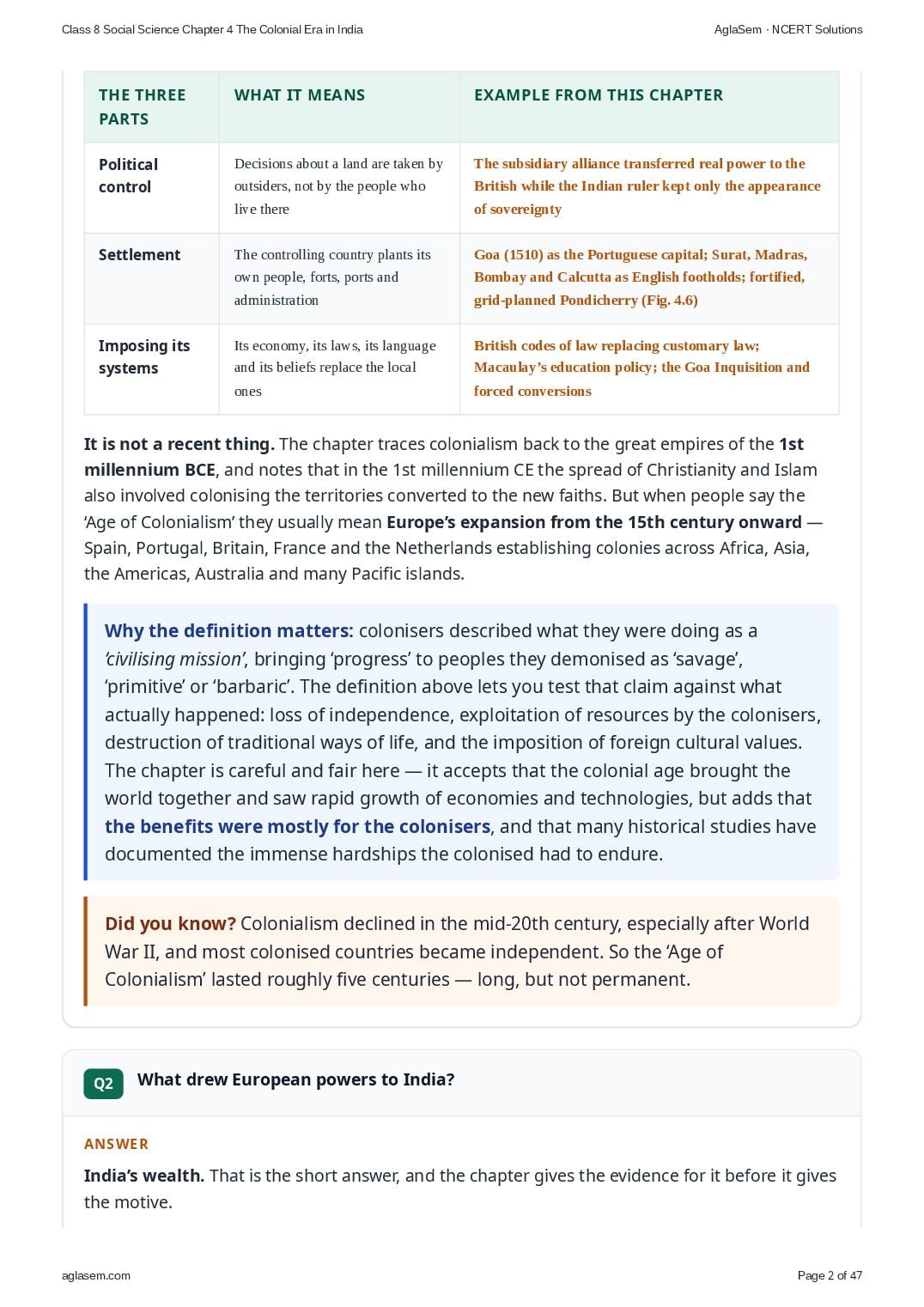
NCERT Solutions for Class 8 Social Science Chapter 4 PDF Download
You can read the NCERT Solutions for Class 8 Social Science Chapter 4 online above, or download the complete question-answer PDF to study The Colonial Era in India offline at any time.
NCERT Solutions for Class 8 Social Science Chapter 4 PDF Download Link – Click Here to Download Solutions PDF
Questions Covered in This Chapter
These NCERT Solutions answer all 29 questions of this chapter. The questions solved are:
- What is colonialism?
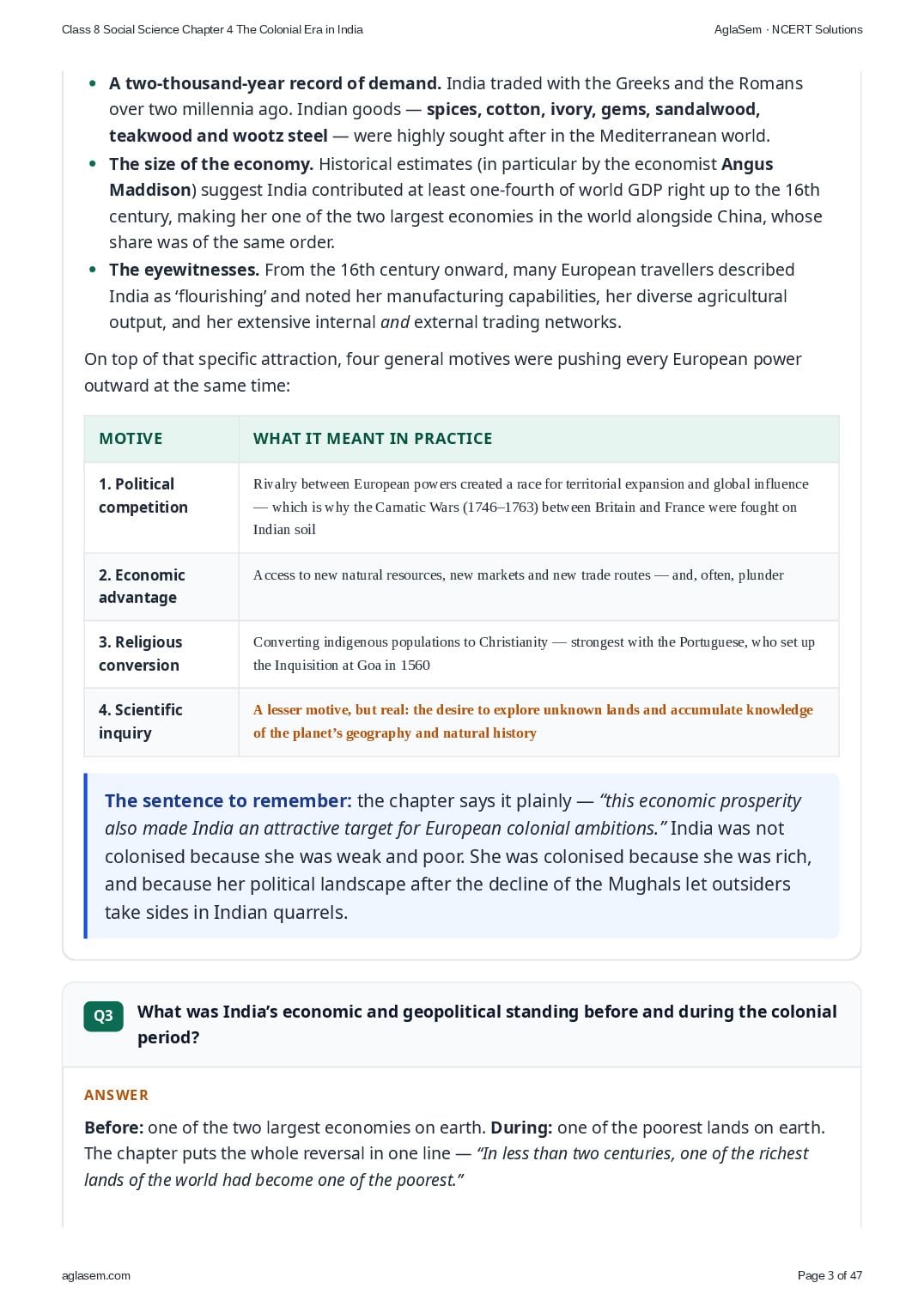
- What drew European powers to India?
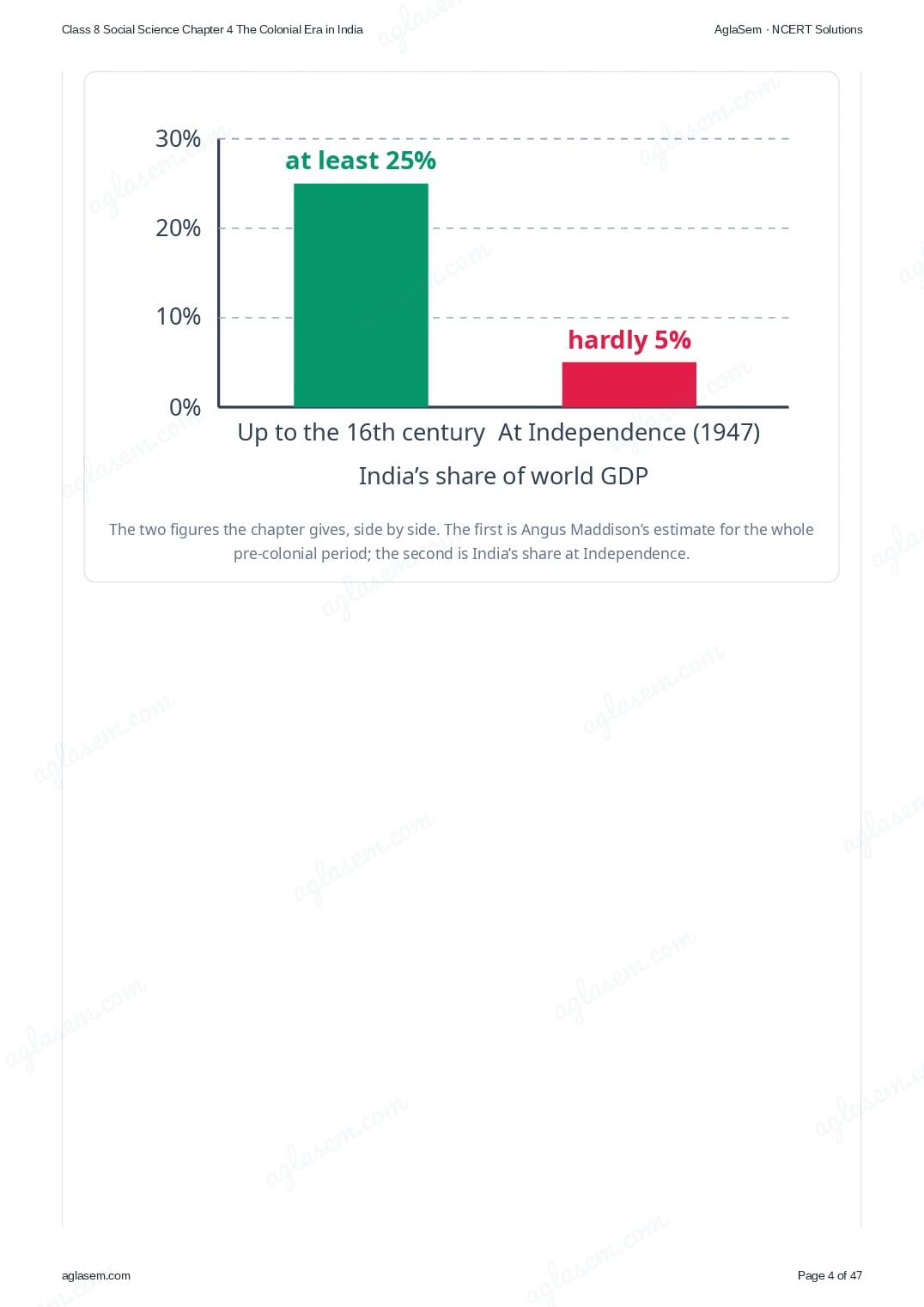
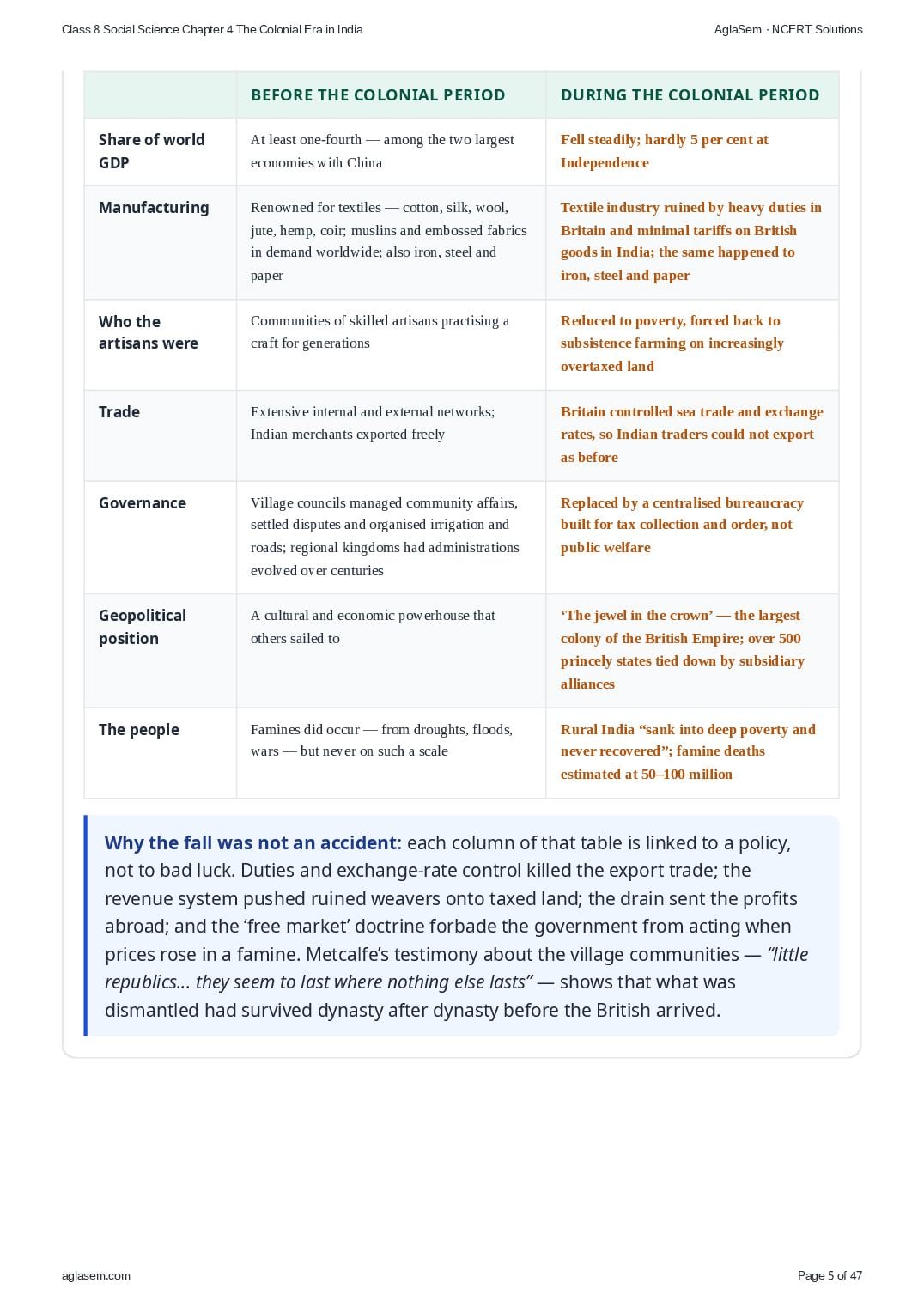
- What was India’s economic and geopolitical standing before and during the colonial period?
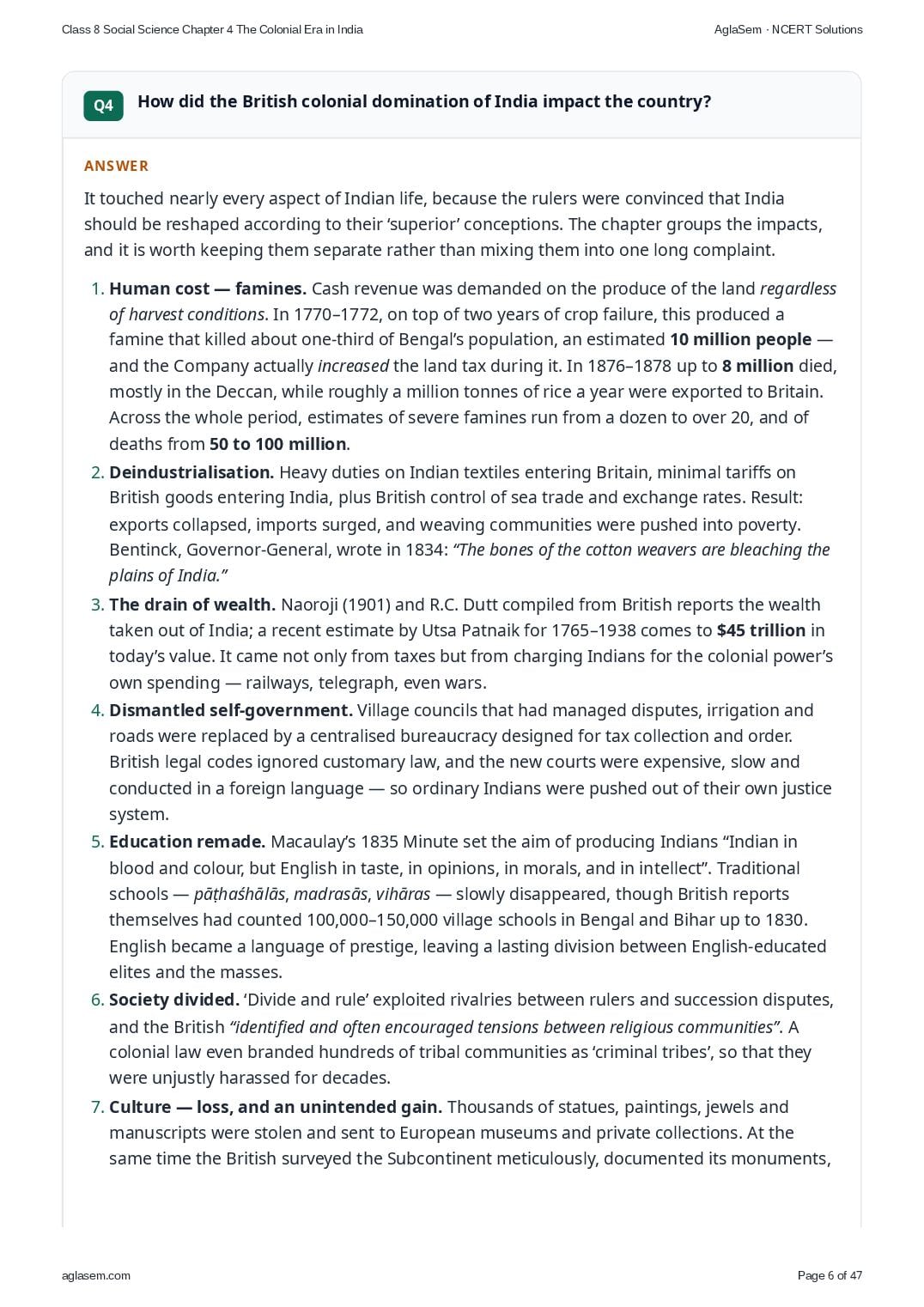
- How did the British colonial domination of India impact the country?
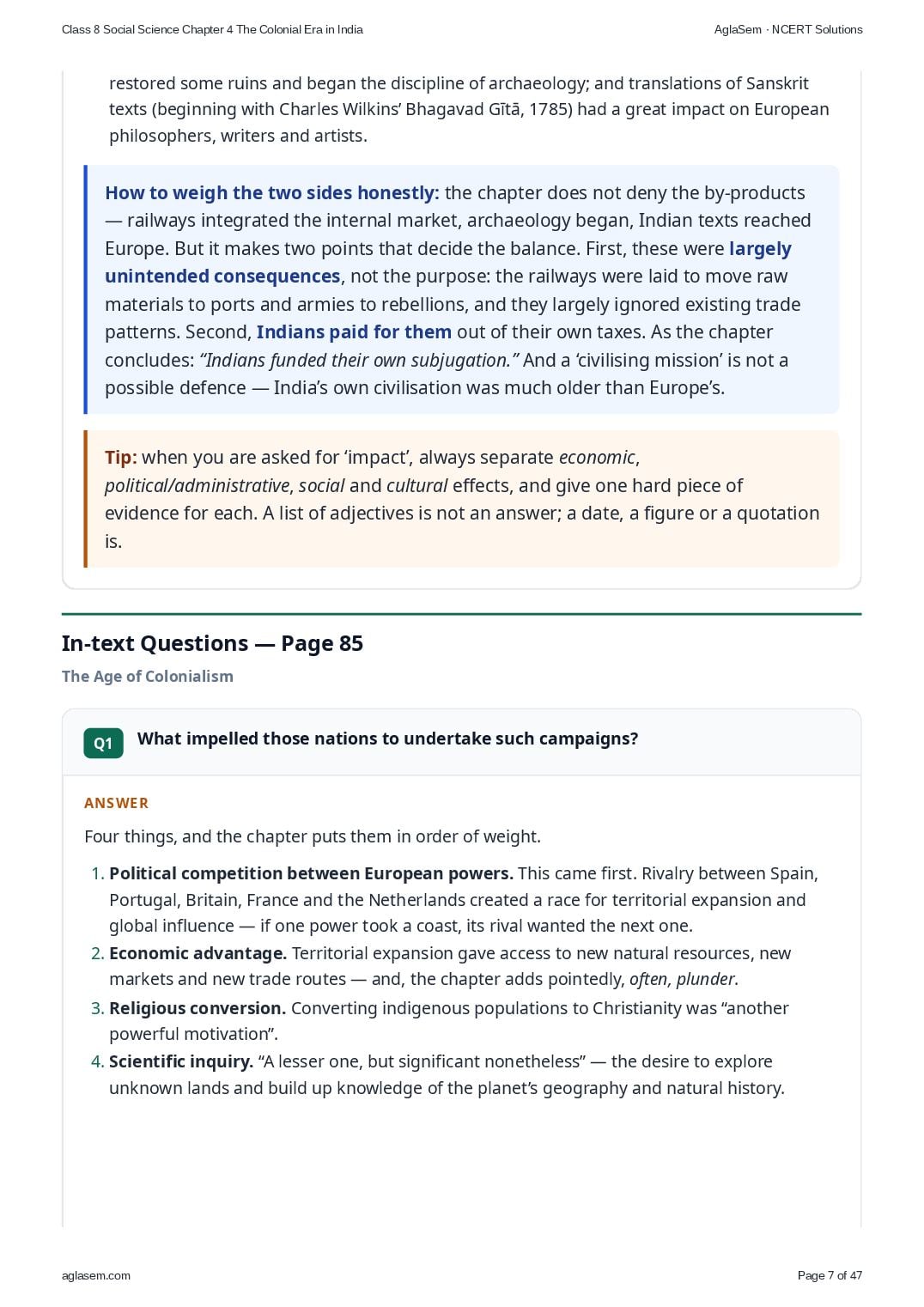
- What impelled those nations to undertake such campaigns?
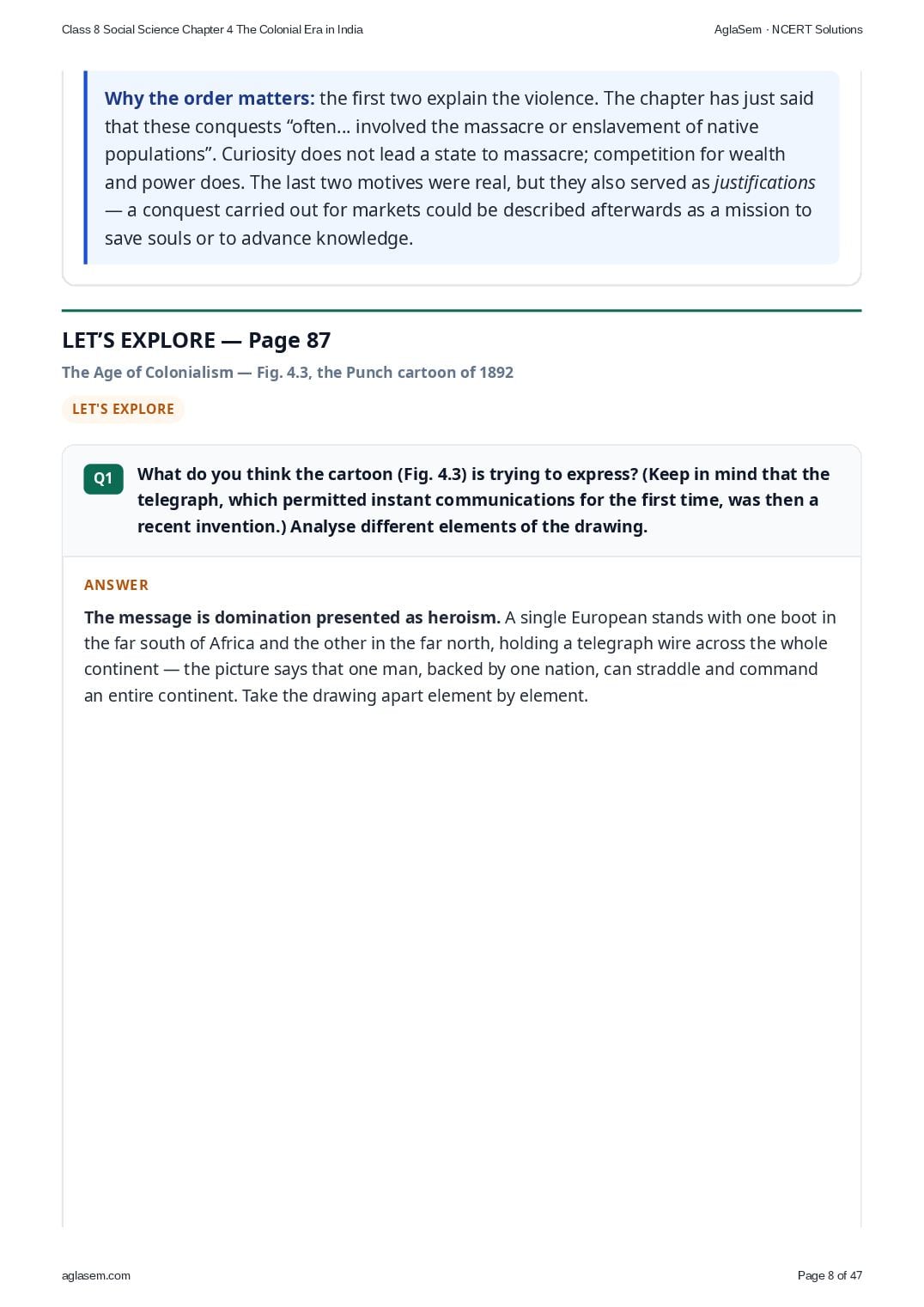
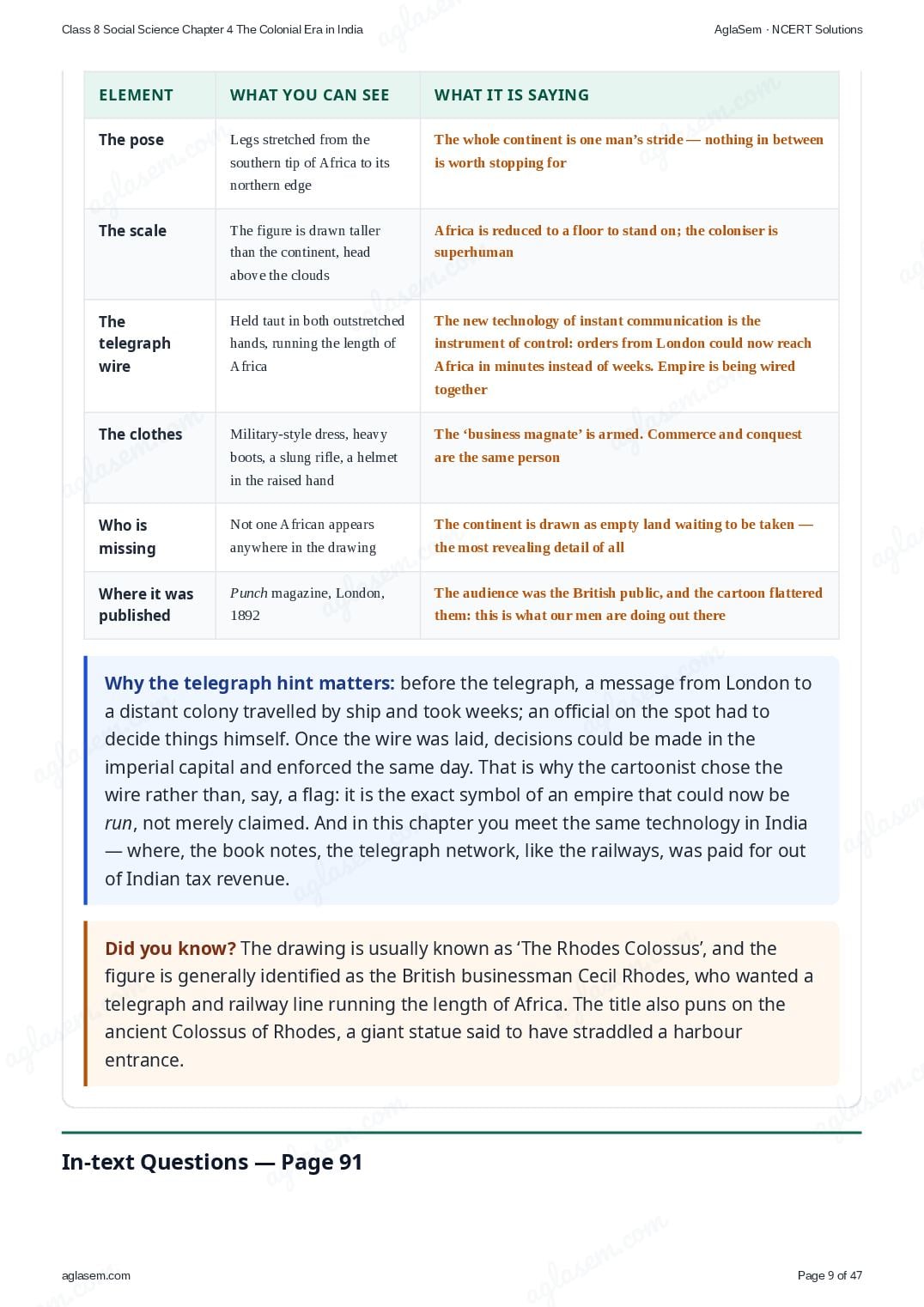
- What do you think the cartoon (Fig. 4.3) is trying to express? (Keep in mind that the telegraph, which permitted instant communications for the first time, was then a recent invention.) Analyse different elements of the drawing.
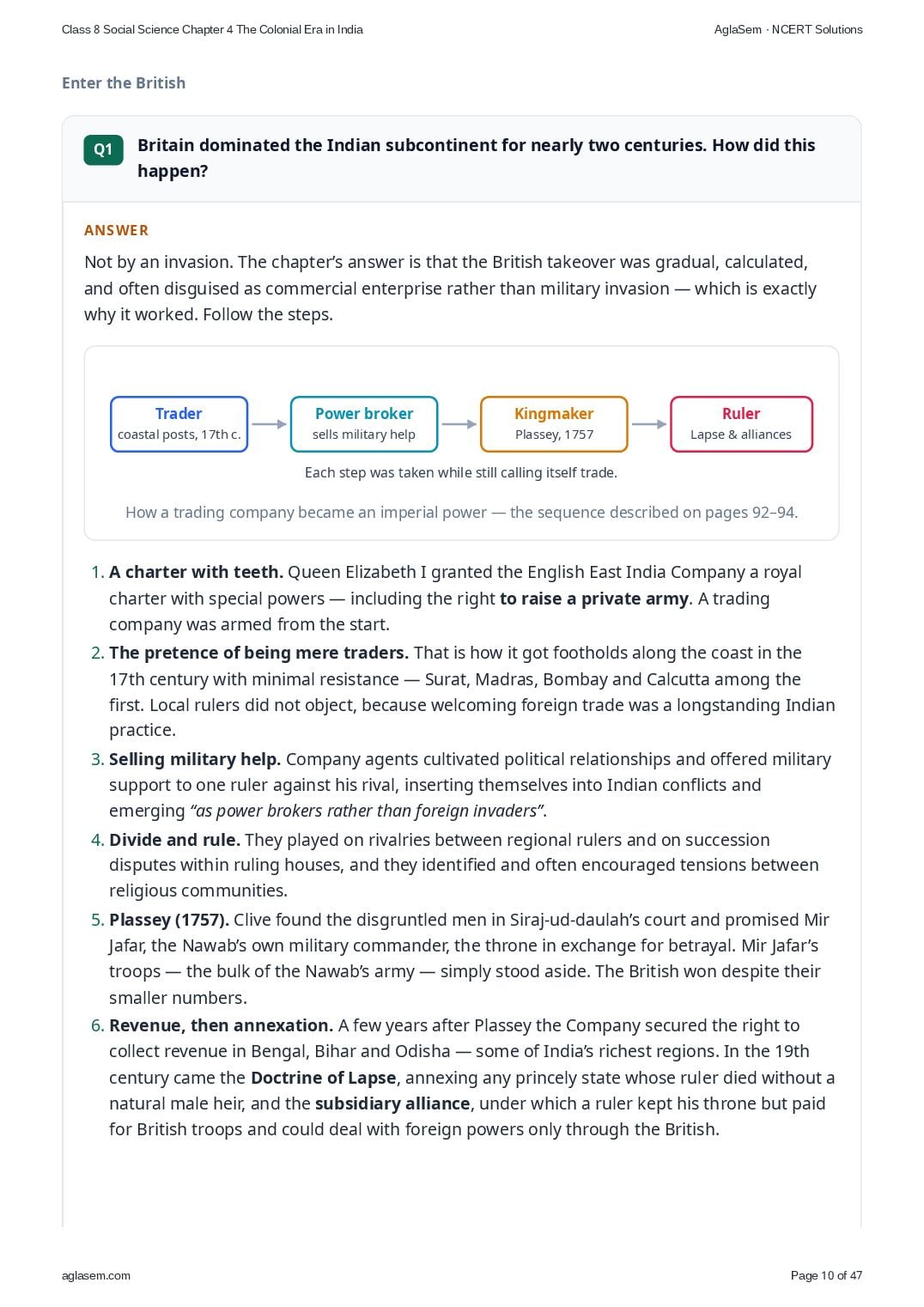
- Britain dominated the Indian subcontinent for nearly two centuries. How did this happen?
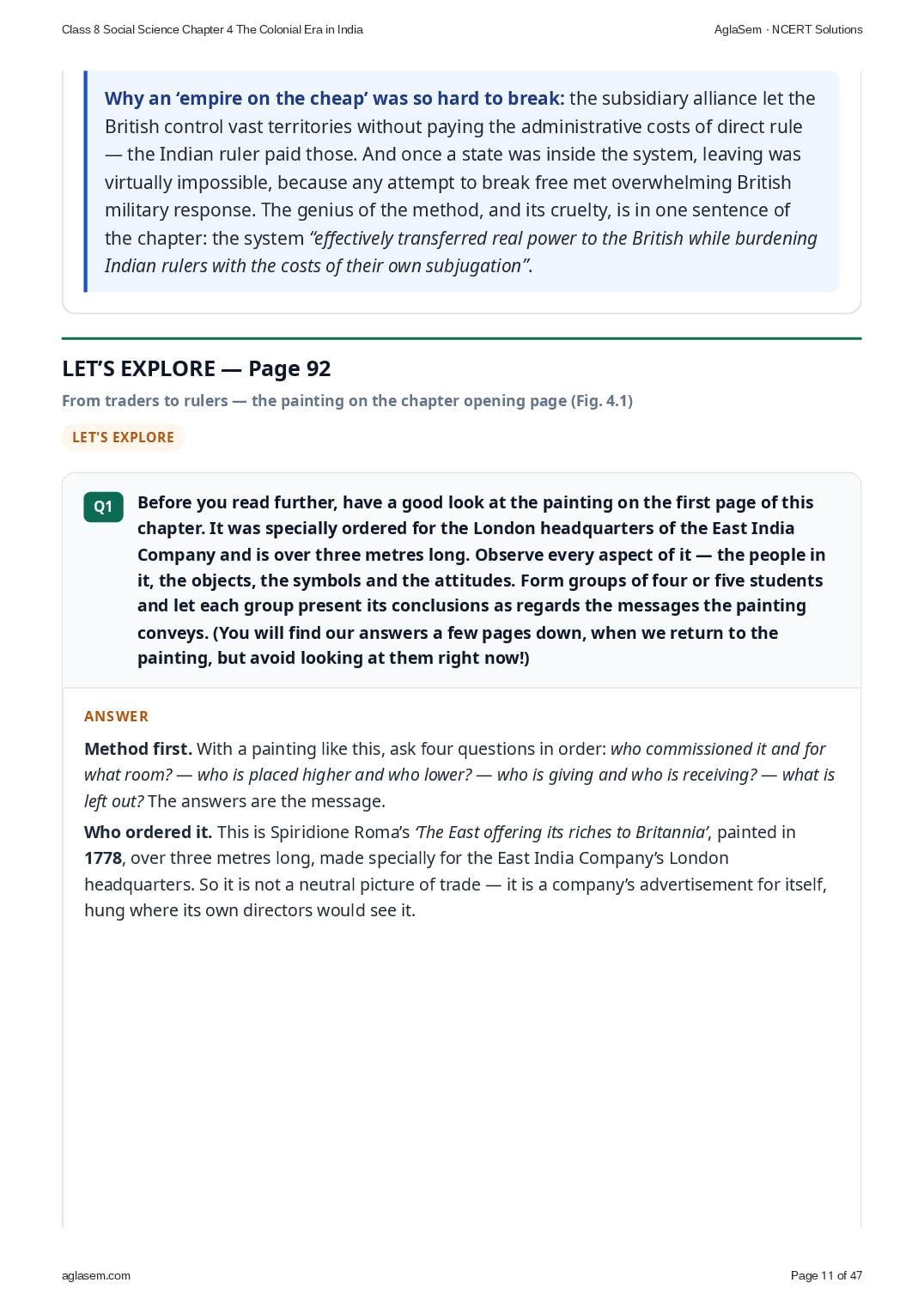
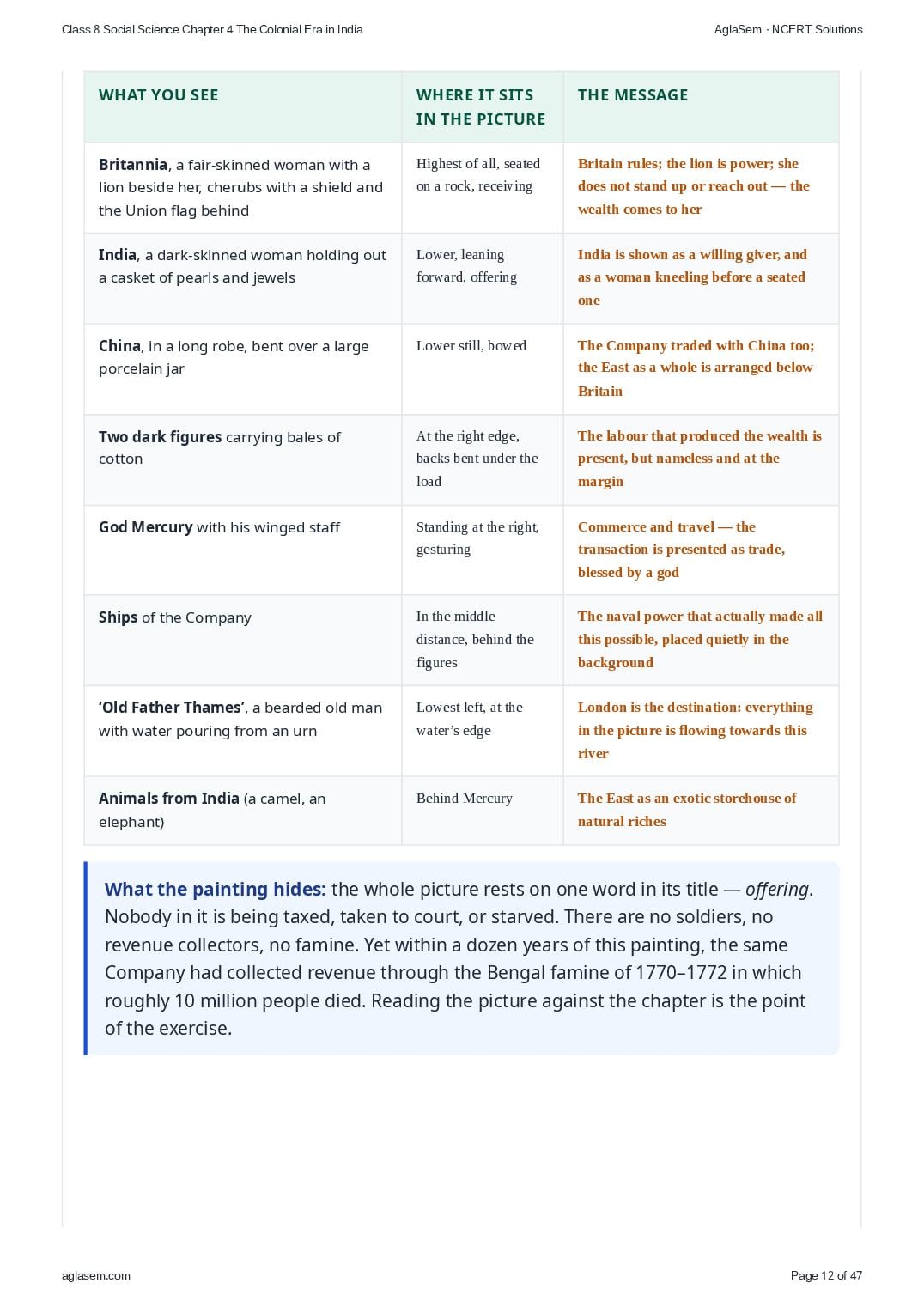
- Before you read further, have a good look at the painting on the first page of this chapter. It was specially ordered for the London headquarters of the East India Company and is over three metres long. Observe every aspect of it — the people in it, the objects, the symbols and the attitudes. Form groups of four or five students and let each group present its conclusions as regards the messages the painting conveys. (You will find our answers a few pages down, when we return to the painting, but avoid looking at them right now!)
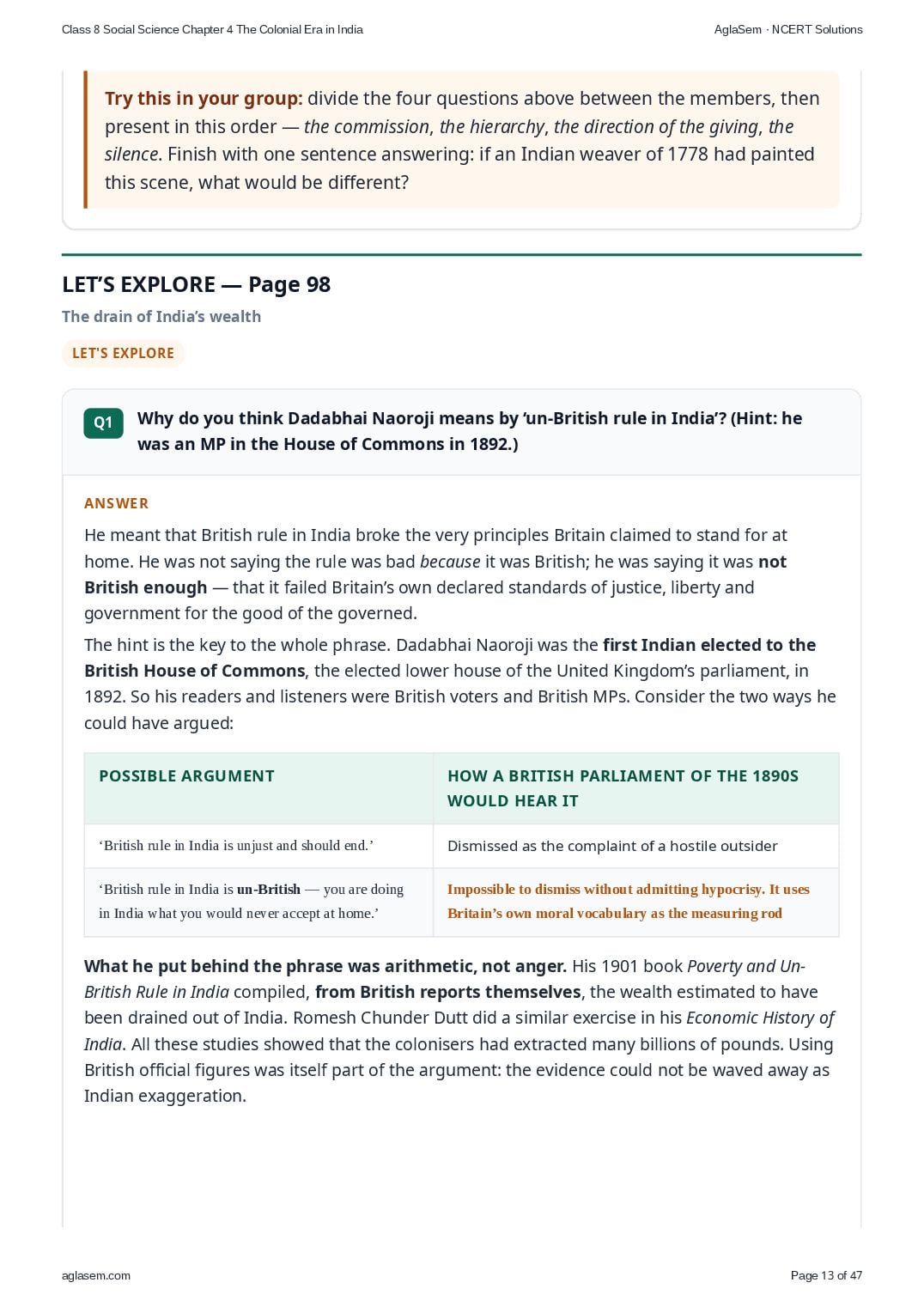
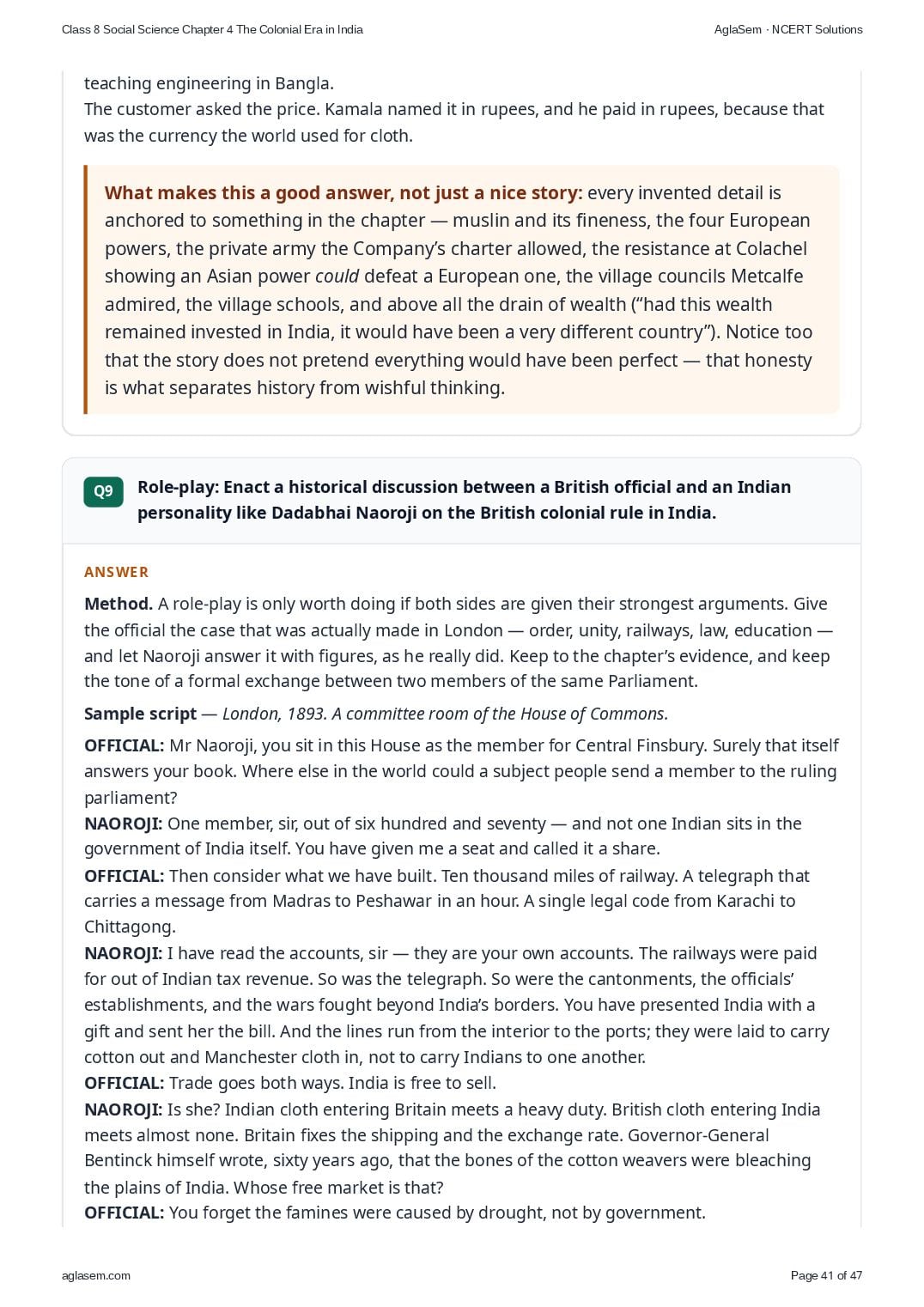
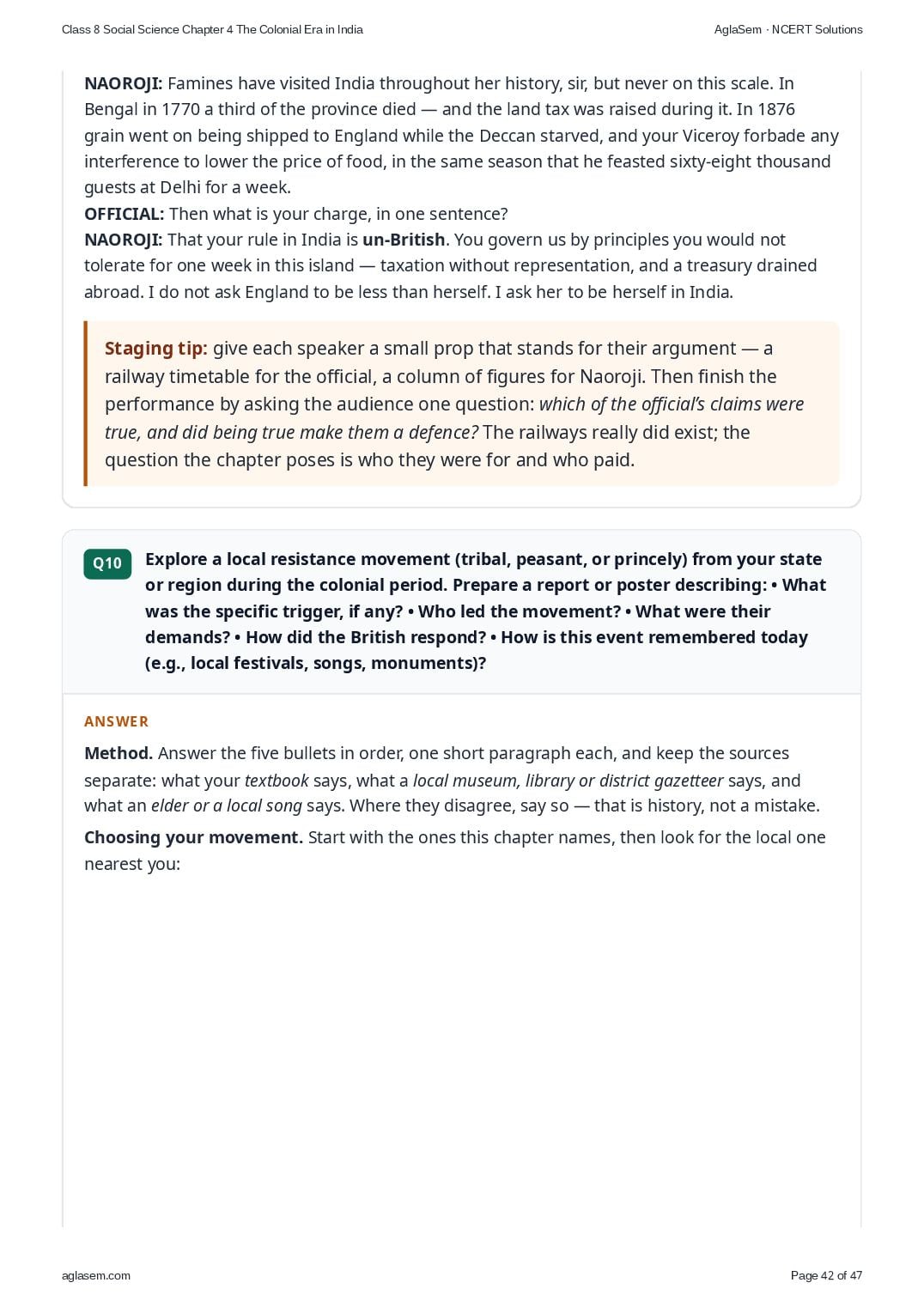
- Why do you think Dadabhai Naoroji means by ‘un-British rule in India’? (Hint: he was an MP in the House of Commons in 1892.)
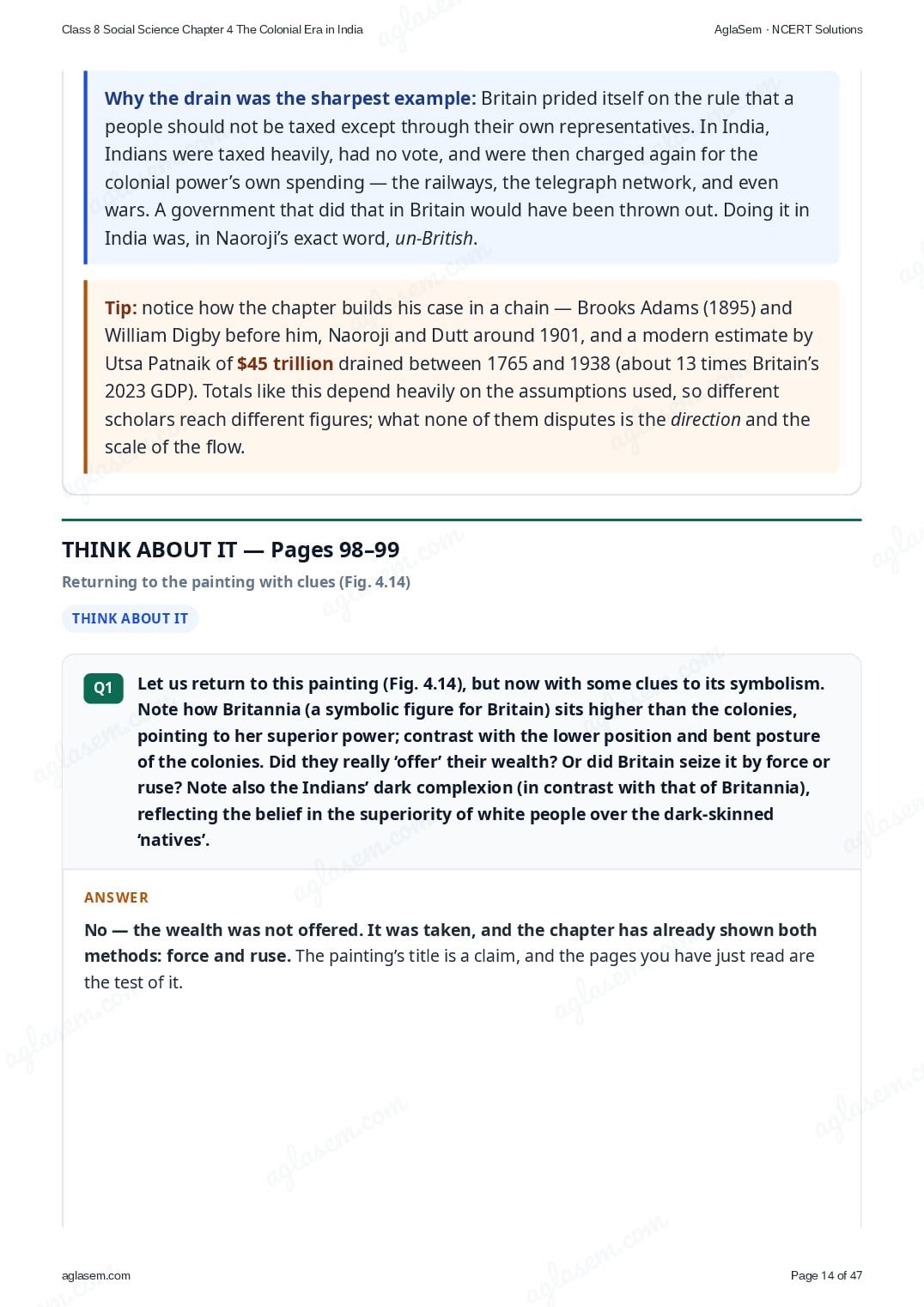
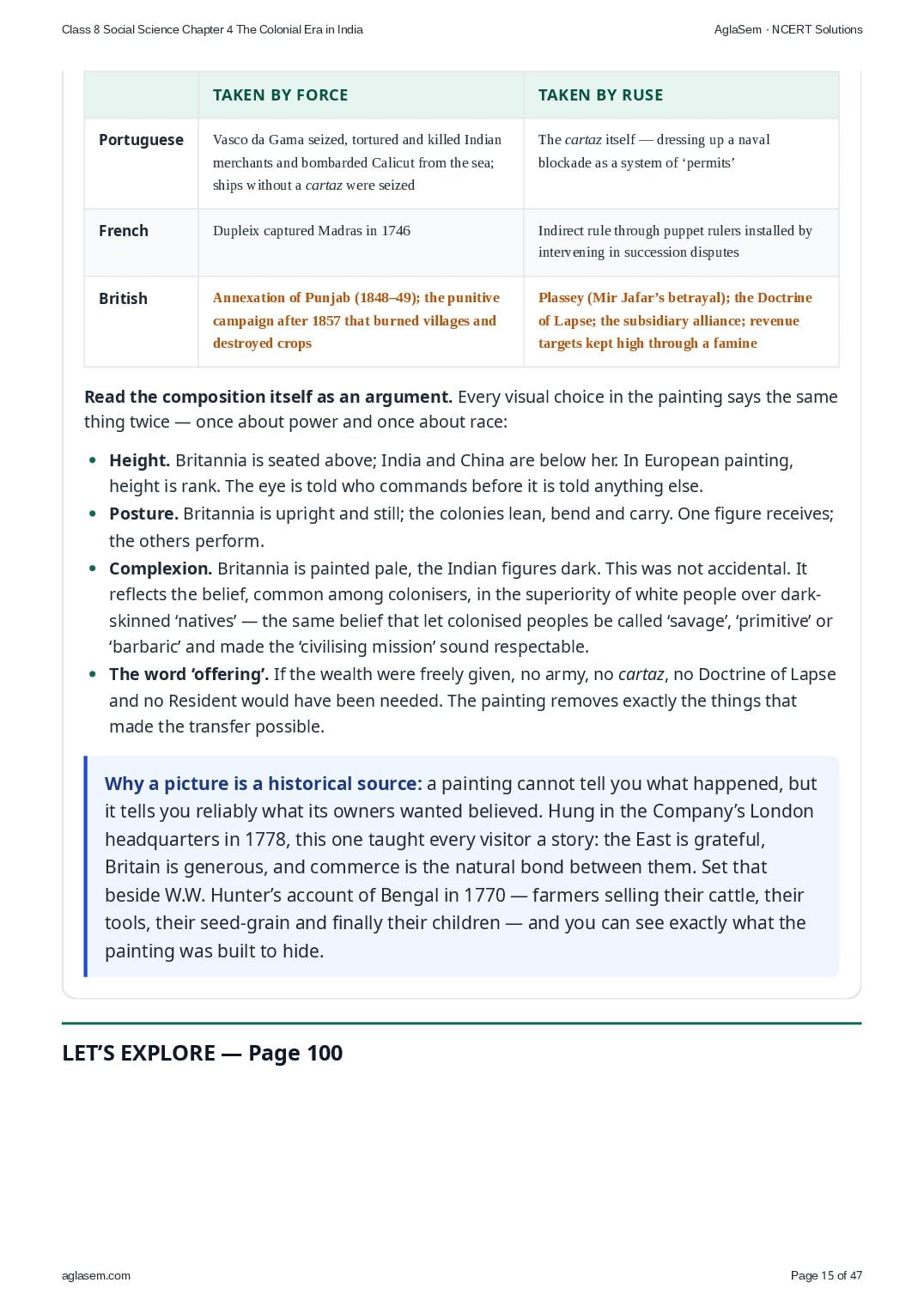
- Let us return to this painting (Fig. 4.14), but now with some clues to its symbolism. Note how Britannia (a symbolic figure for Britain) sits higher than the colonies, pointing to her superior power; contrast with the lower position and bent posture of the colonies. Did they really ‘offer’ their wealth? Or did Britain seize it by force or ruse? Note also the Indians’ dark complexion (in contrast with that of Britannia), reflecting the belief in the superiority of white people over the dark-skinned ‘natives’.
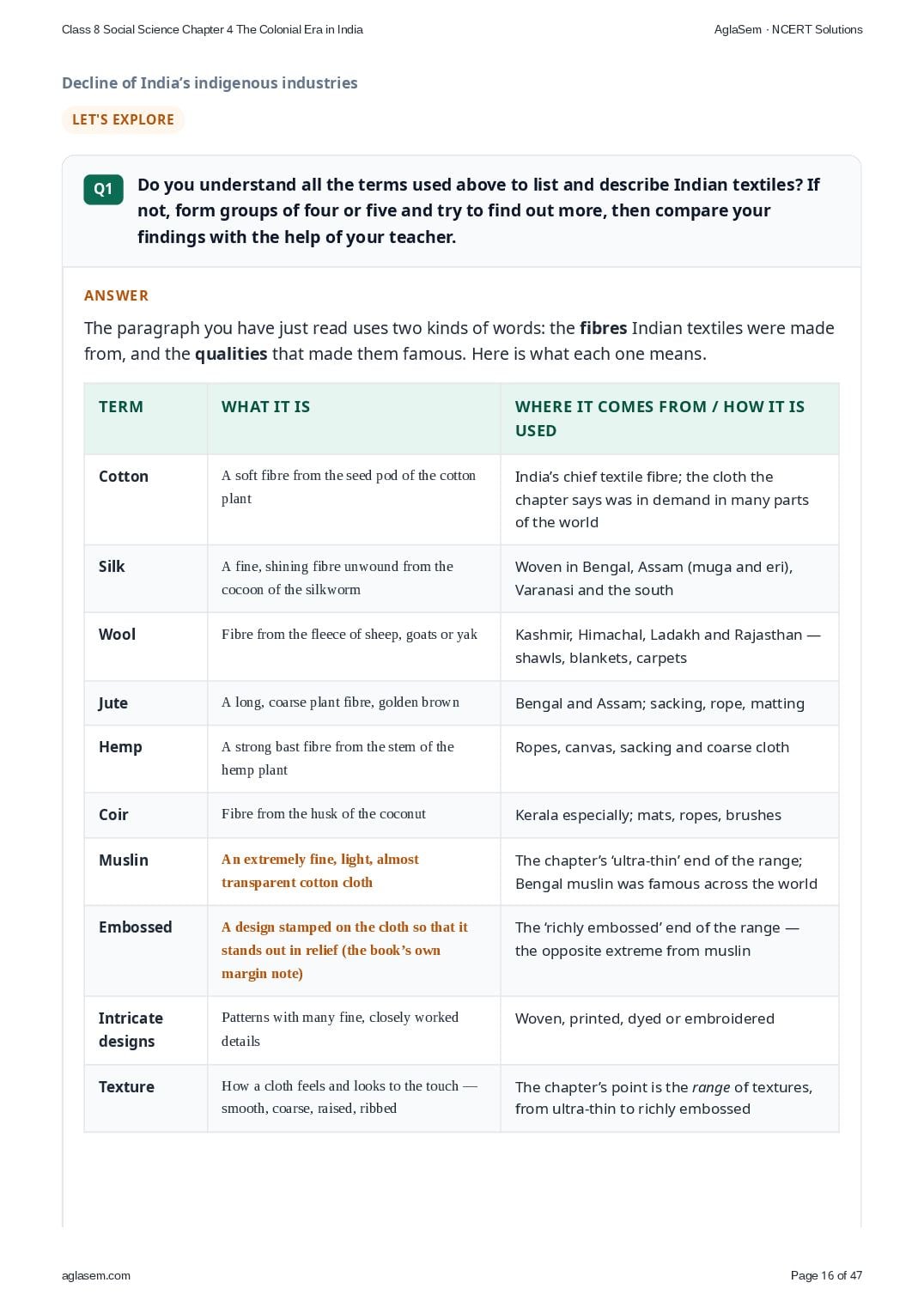
- Do you understand all the terms used above to list and describe Indian textiles? If not, form groups of four or five and try to find out more, then compare your findings with the help of your teacher.
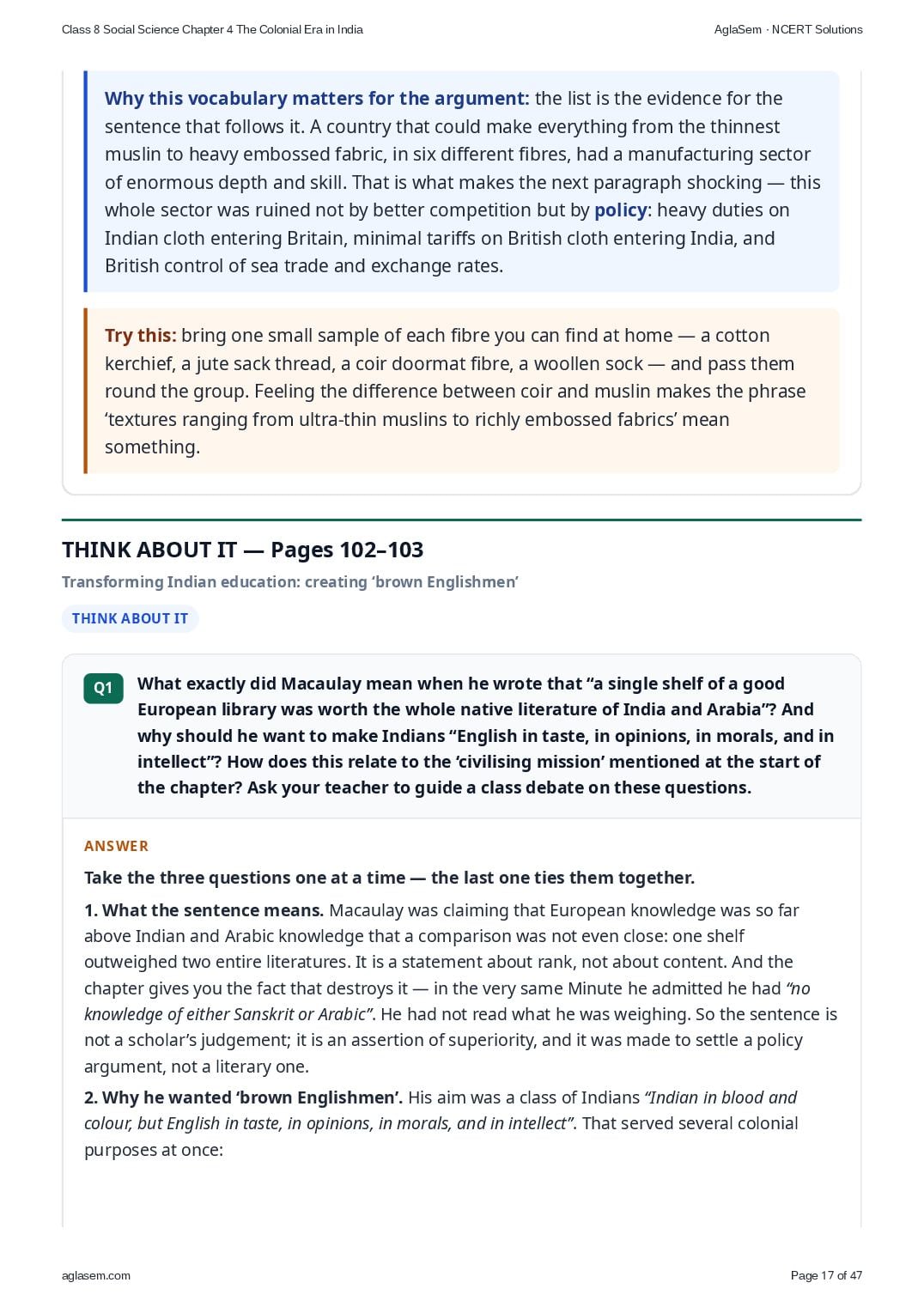
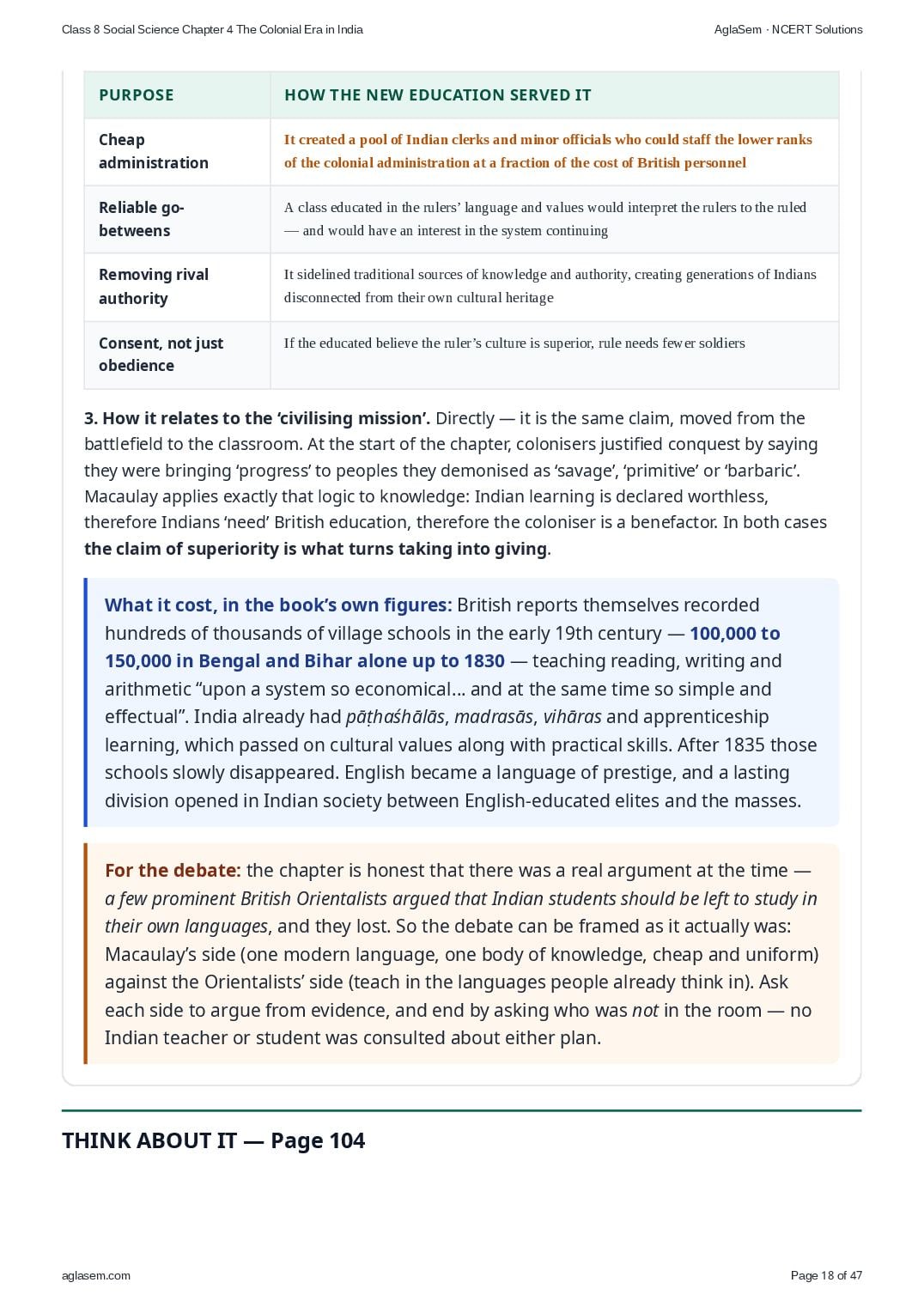
- What exactly did Macaulay mean when he wrote that “a single shelf of a good European library was worth the whole native literature of India and Arabia”? And why should he want to make Indians “English in taste, in opinions, in morals, and in intellect”? How does this relate to the ‘civilising mission’ mentioned at the start of the chapter? Ask your teacher to guide a class debate on these questions.
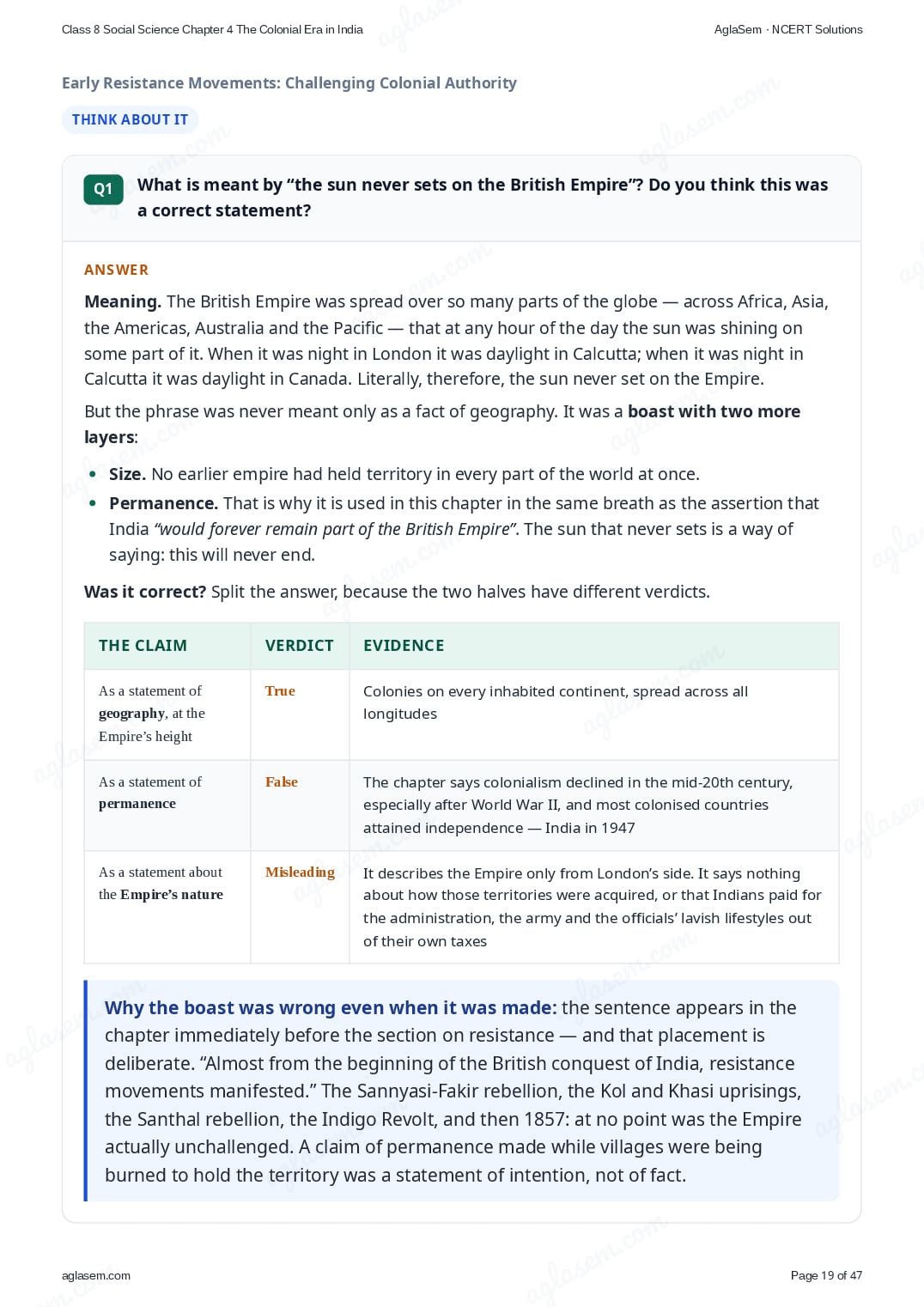
- What is meant by “the sun never sets on the British Empire”? Do you think this was a correct statement?
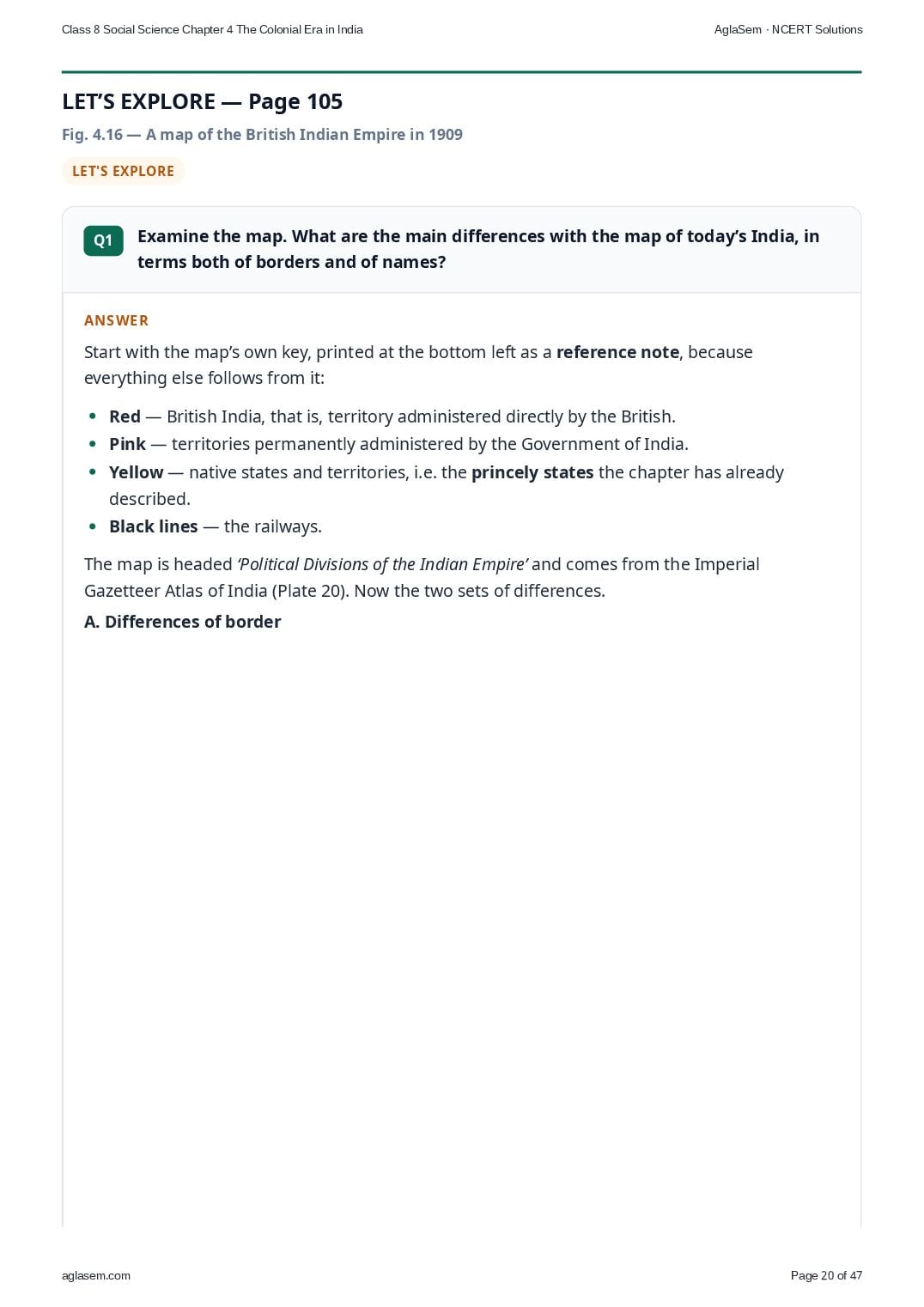
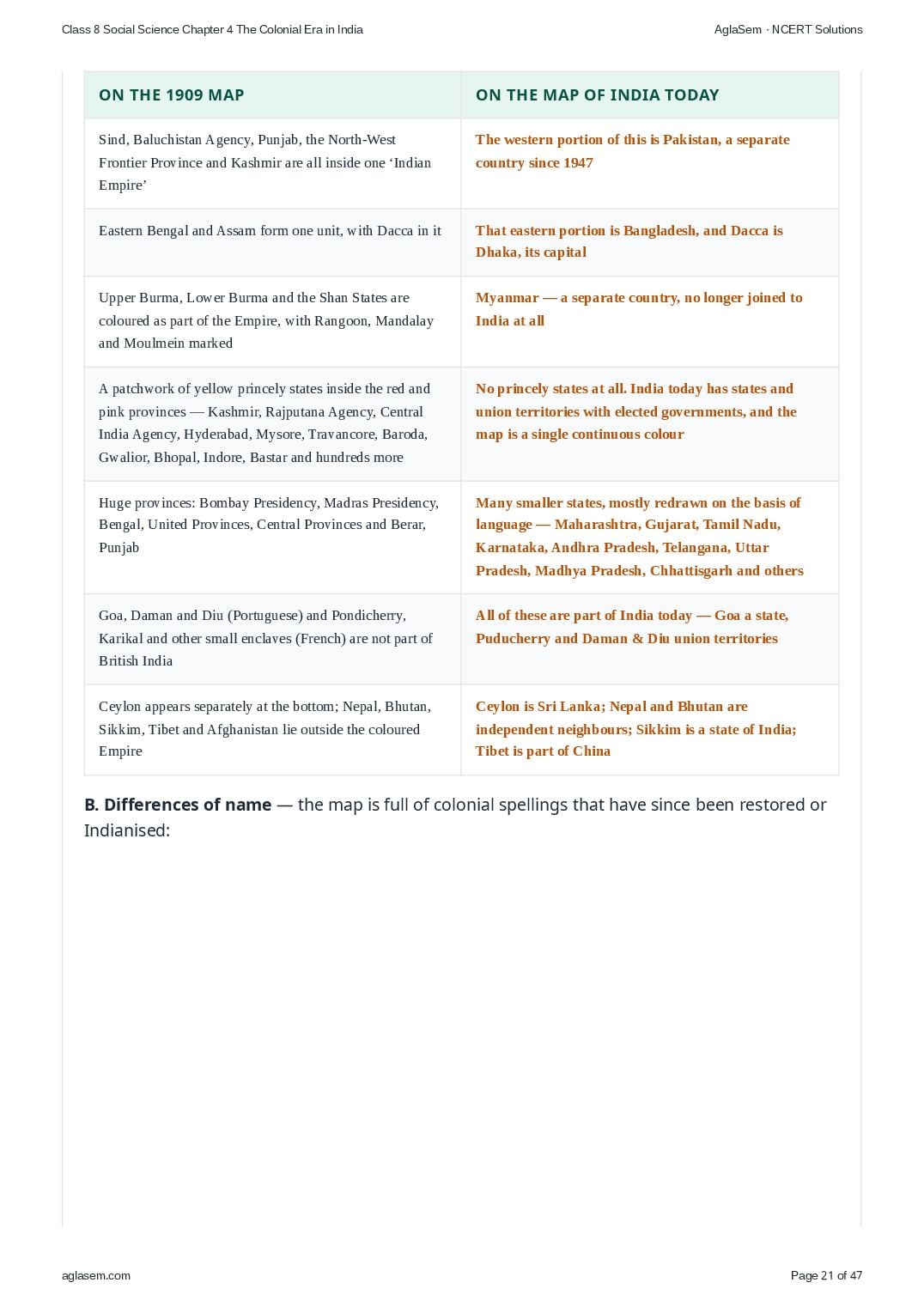
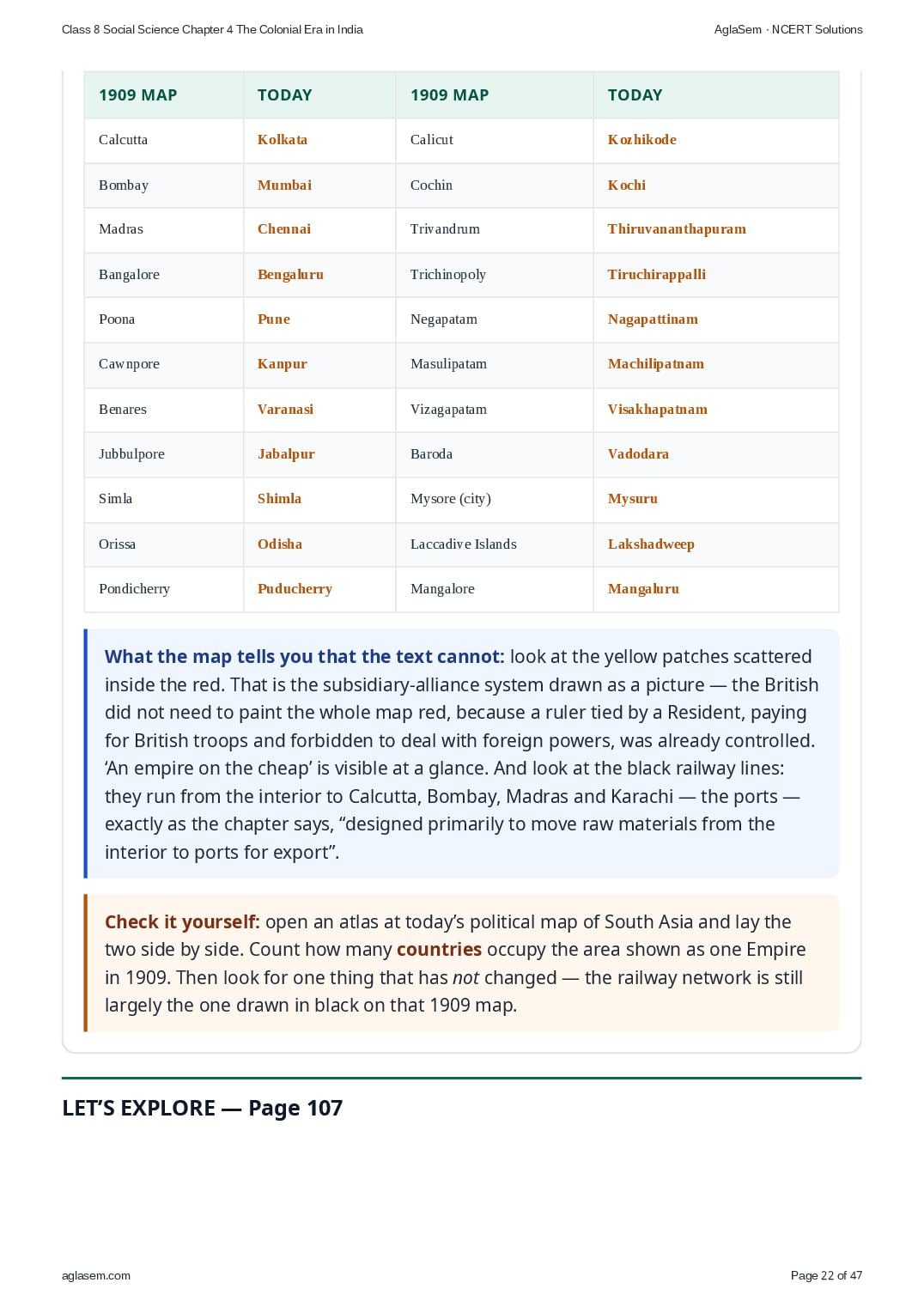
- Examine the map. What are the main differences with the map of today’s India, in terms both of borders and of names?
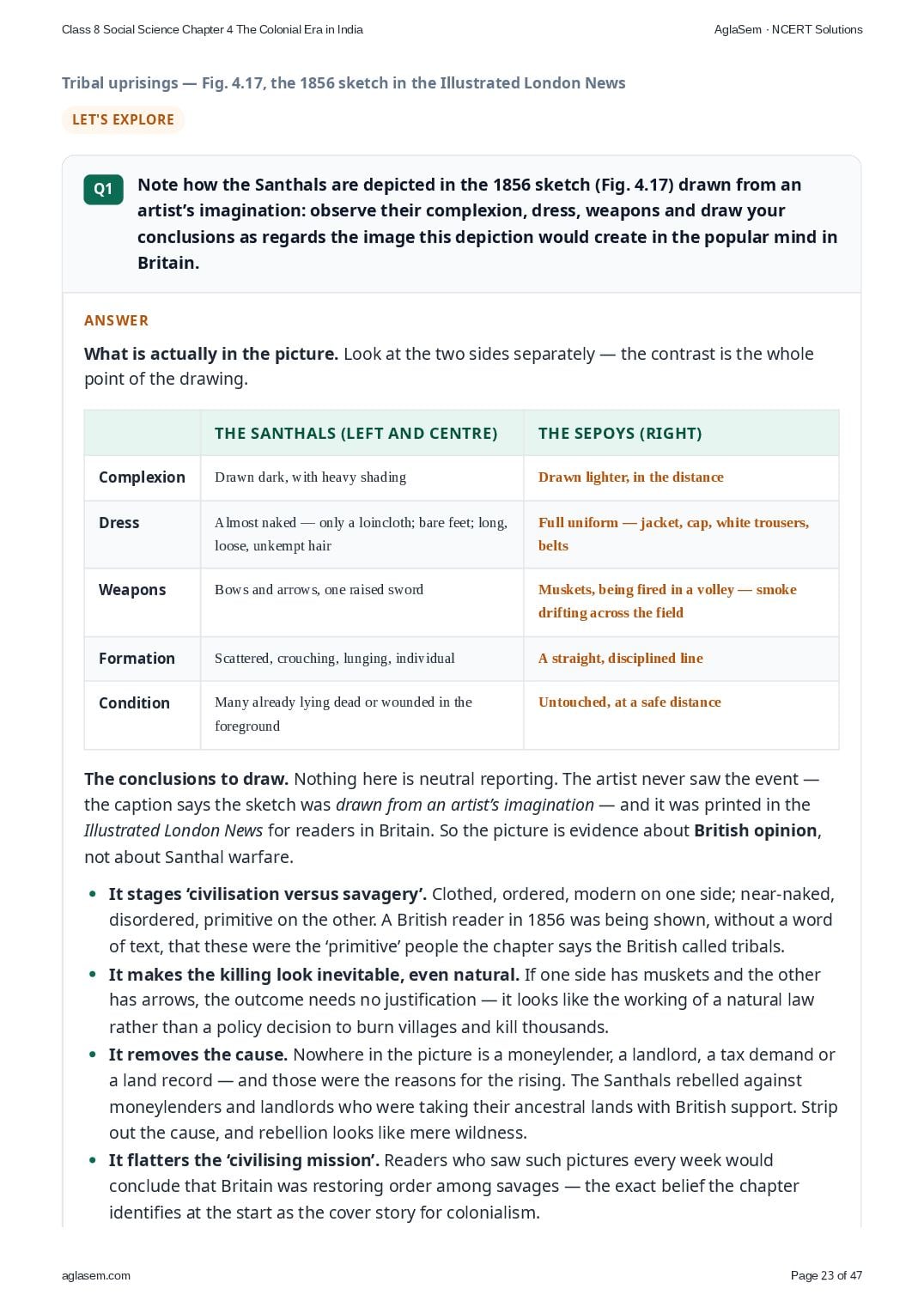
- Note how the Santhals are depicted in the 1856 sketch (Fig. 4.17) drawn from an artist’s imagination: observe their complexion, dress, weapons and draw your conclusions as regards the image this depiction would create in the popular mind in Britain.
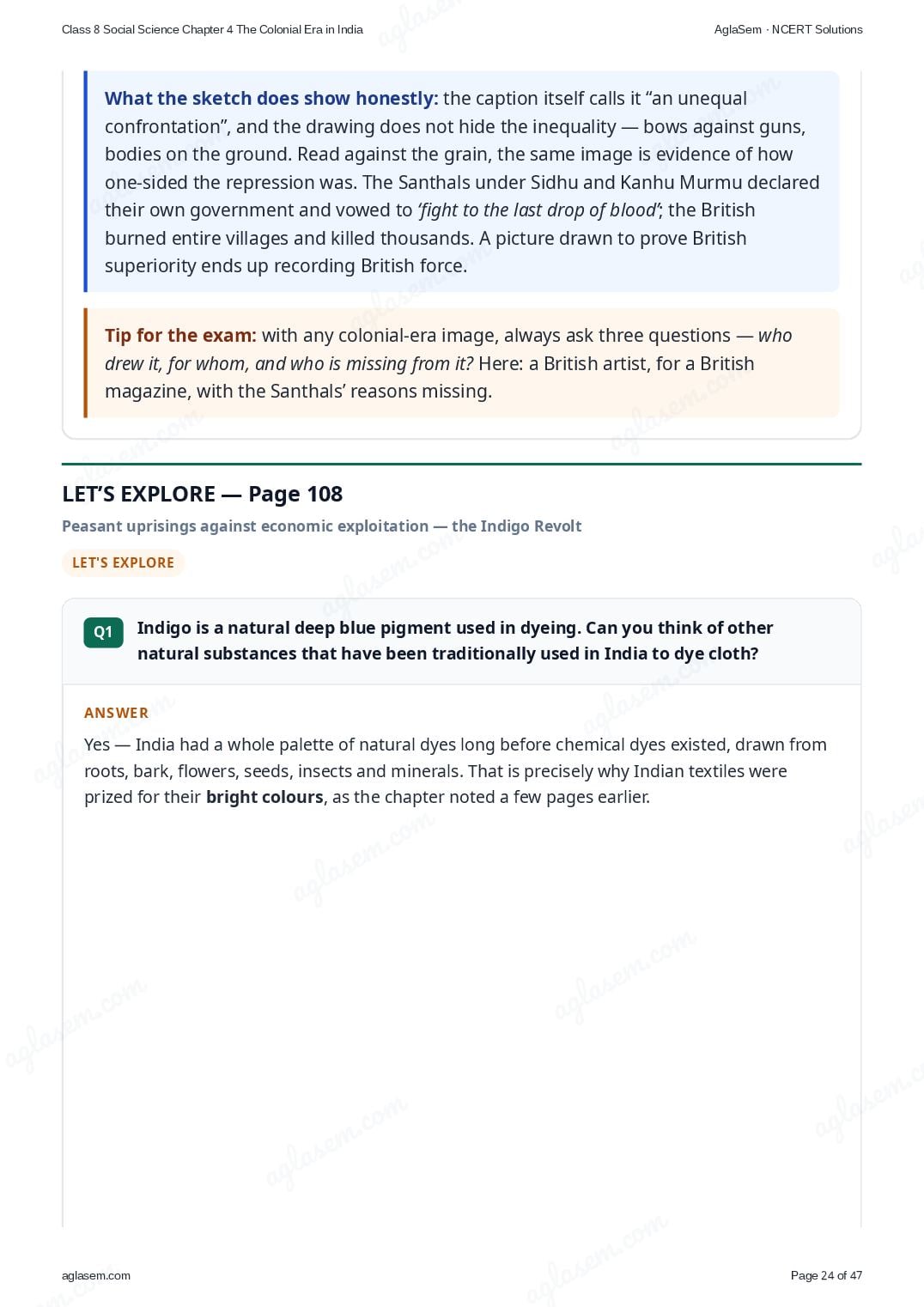
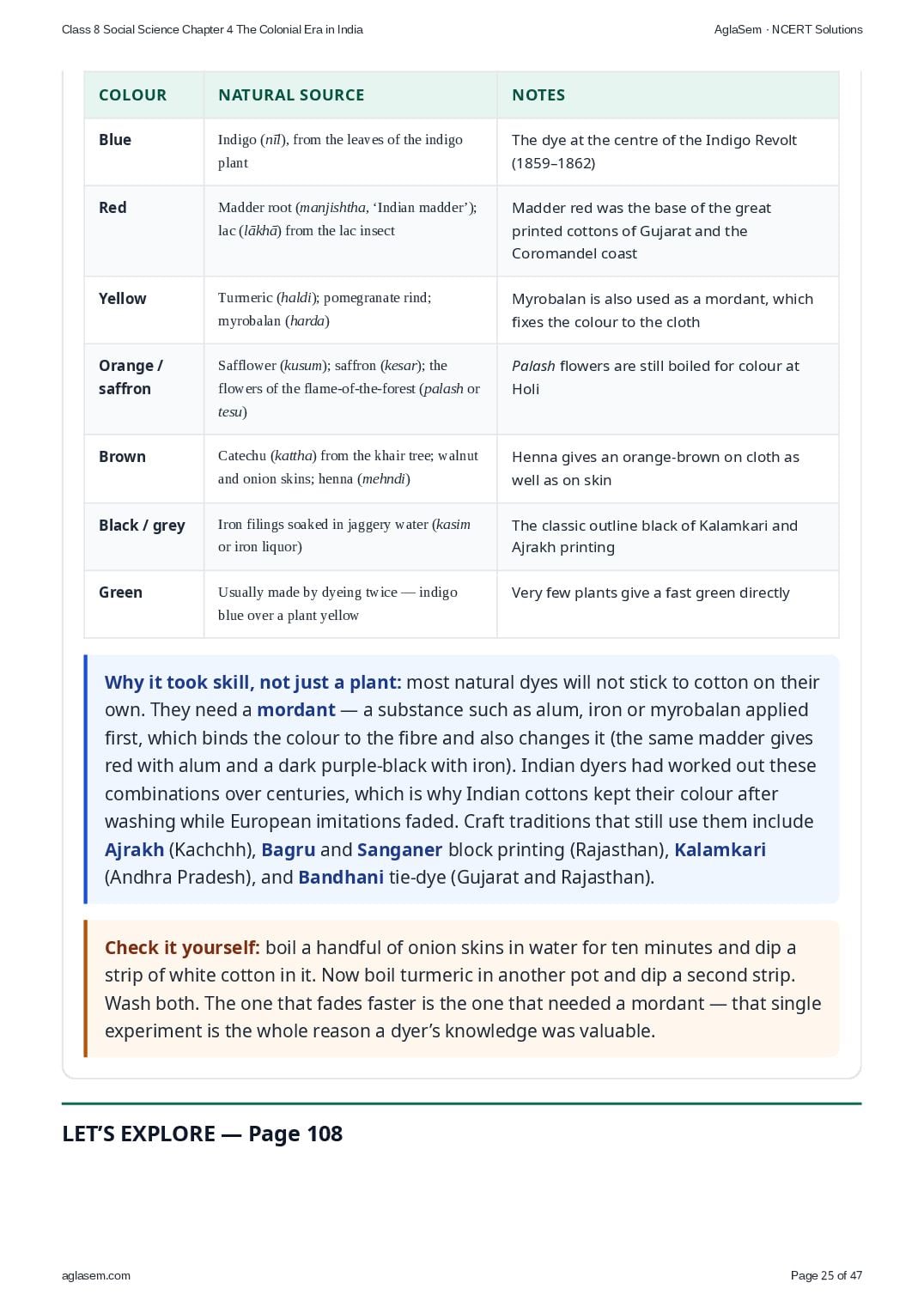
- Indigo is a natural deep blue pigment used in dyeing. Can you think of other natural substances that have been traditionally used in India to dye cloth?
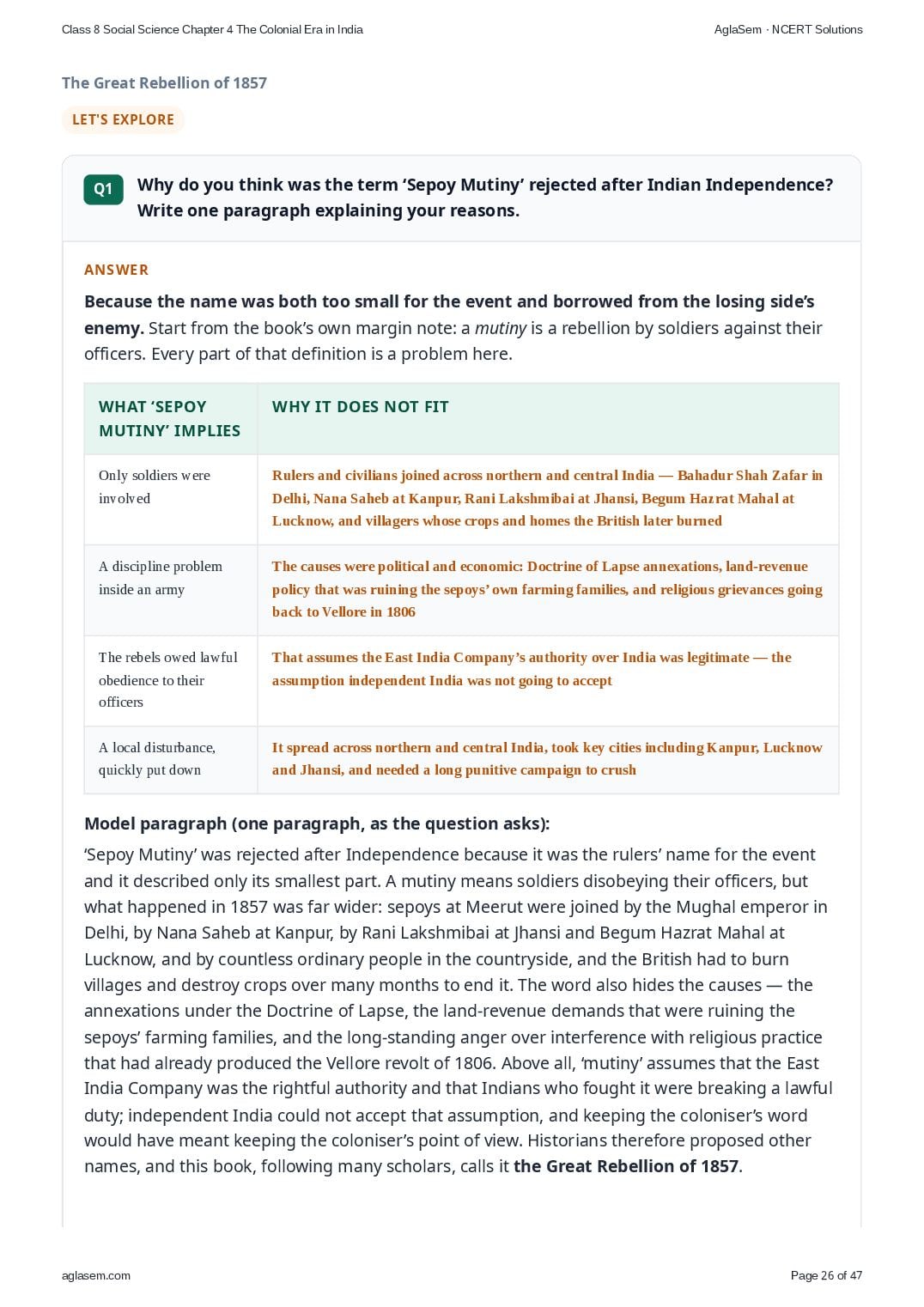
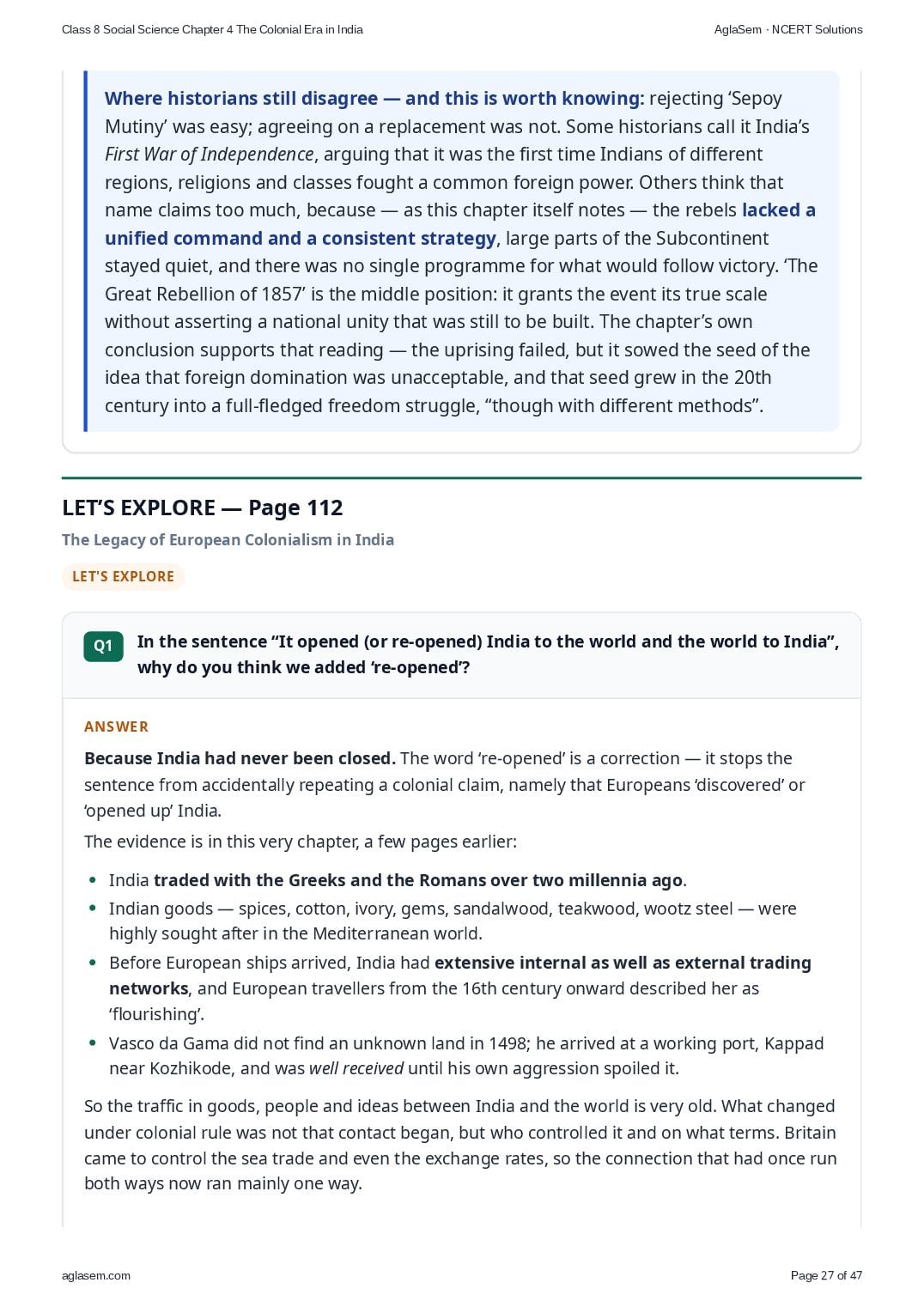
- Why do you think was the term ‘Sepoy Mutiny’ rejected after Indian Independence? Write one paragraph explaining your reasons.
- In the sentence “It opened (or re-opened) India to the world and the world to India”, why do you think we added ‘re-opened’?
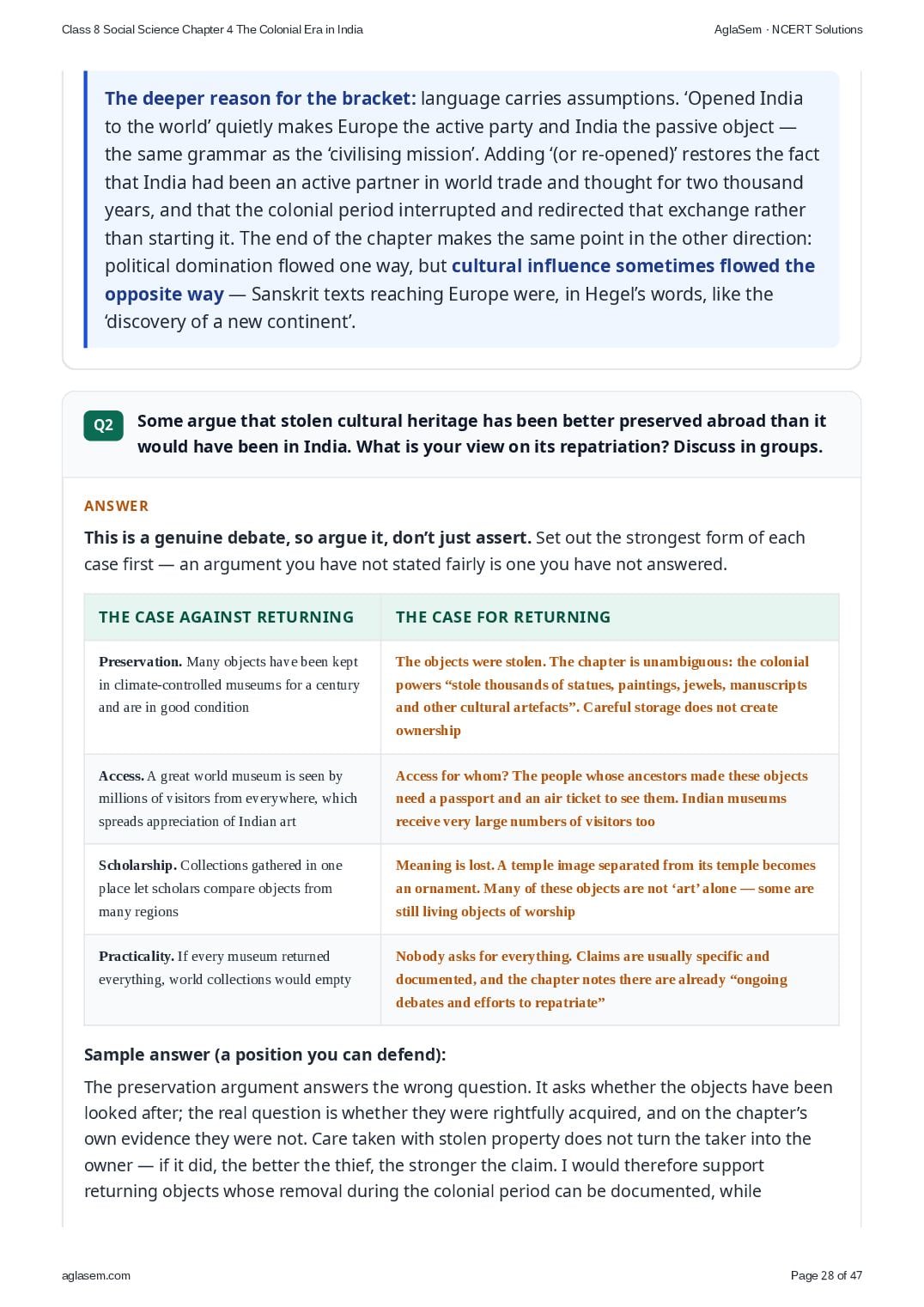
- Some argue that stolen cultural heritage has been better preserved abroad than it would have been in India. What is your view on its repatriation? Discuss in groups.
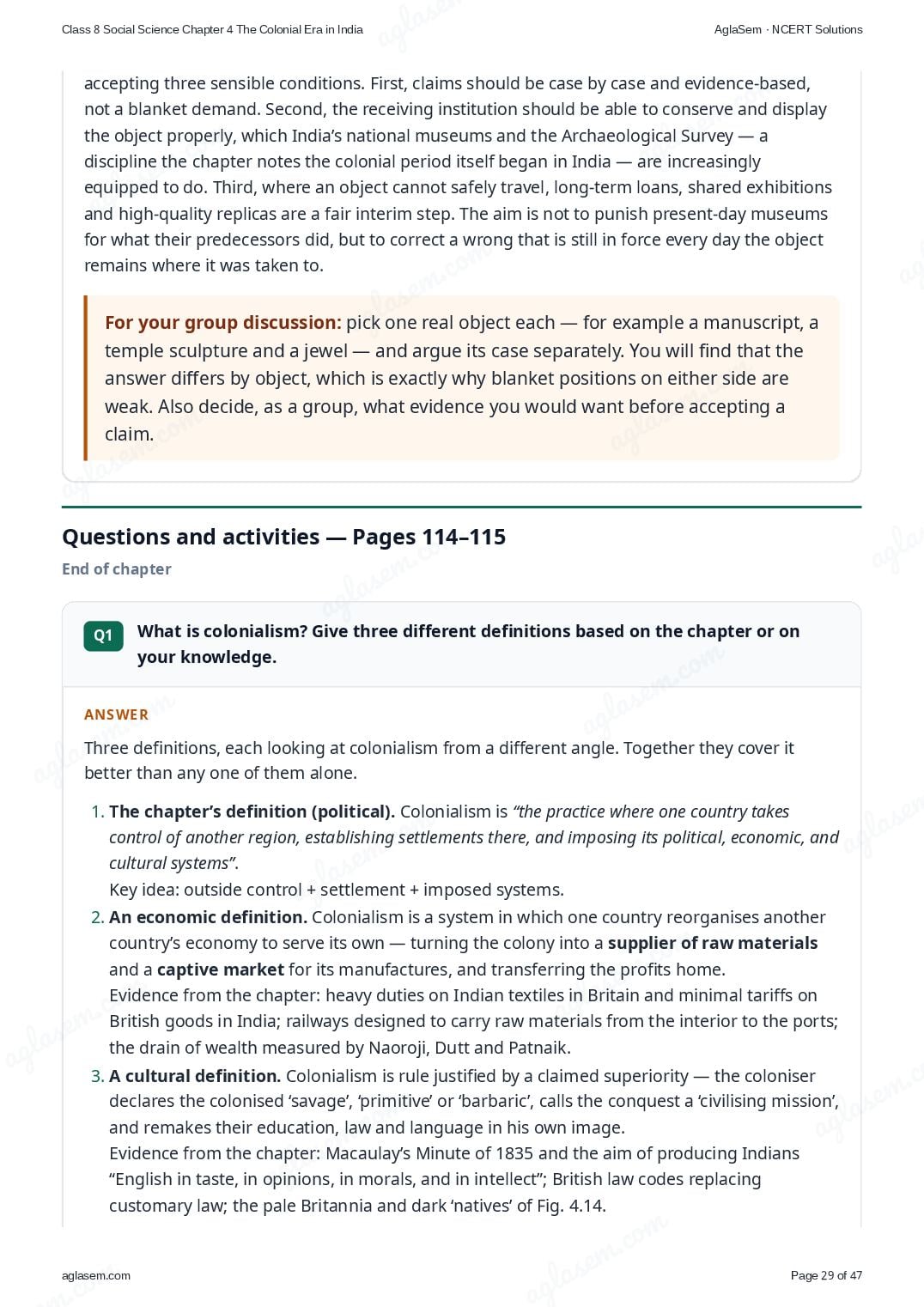
- What is colonialism? Give three different definitions based on the chapter or on your knowledge.
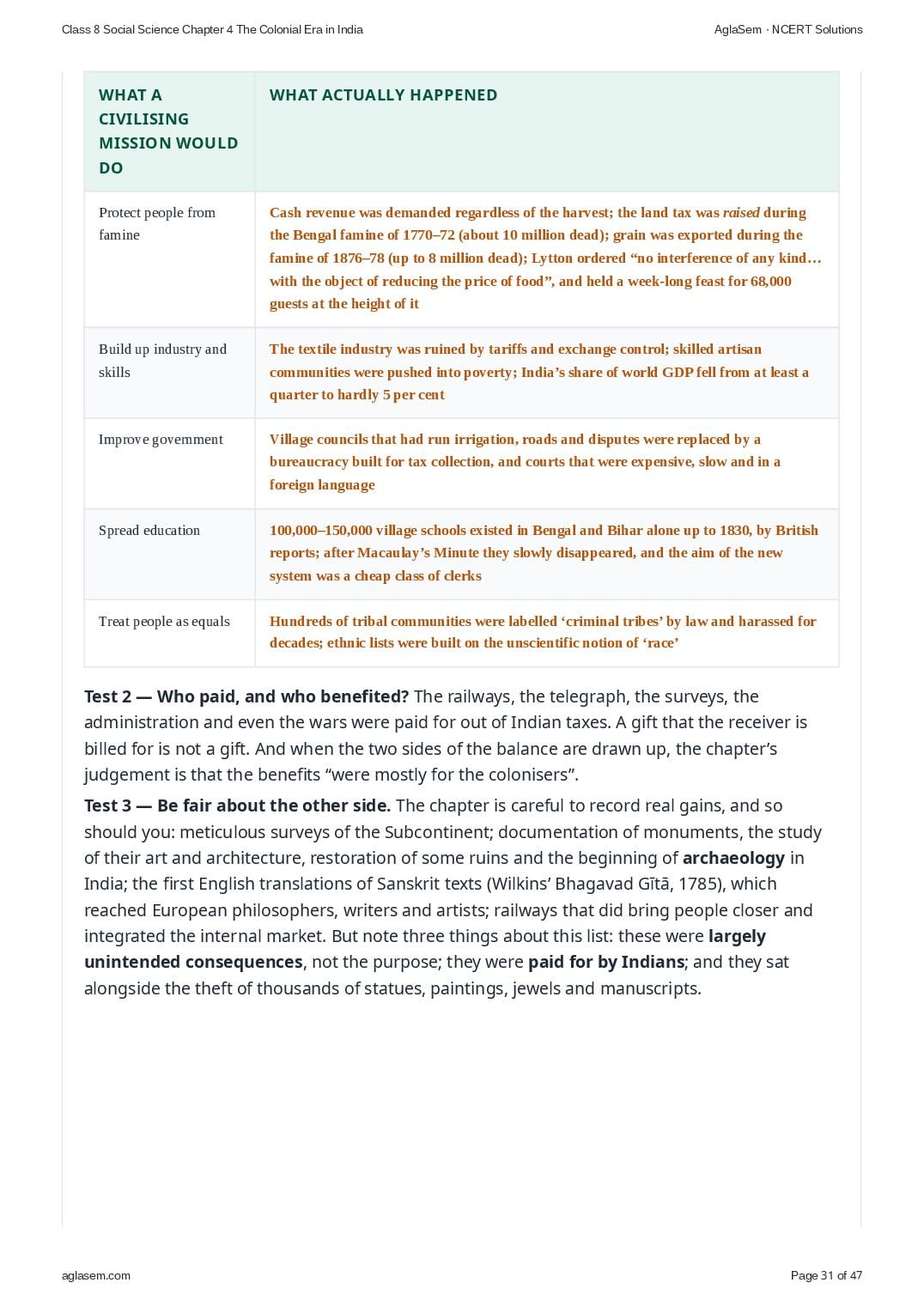
- Colonial rulers often claimed that their mission was to ‘civilise’ the people they ruled. Based on the evidence in this chapter, do you think this was true in the case of India? Why or why not?
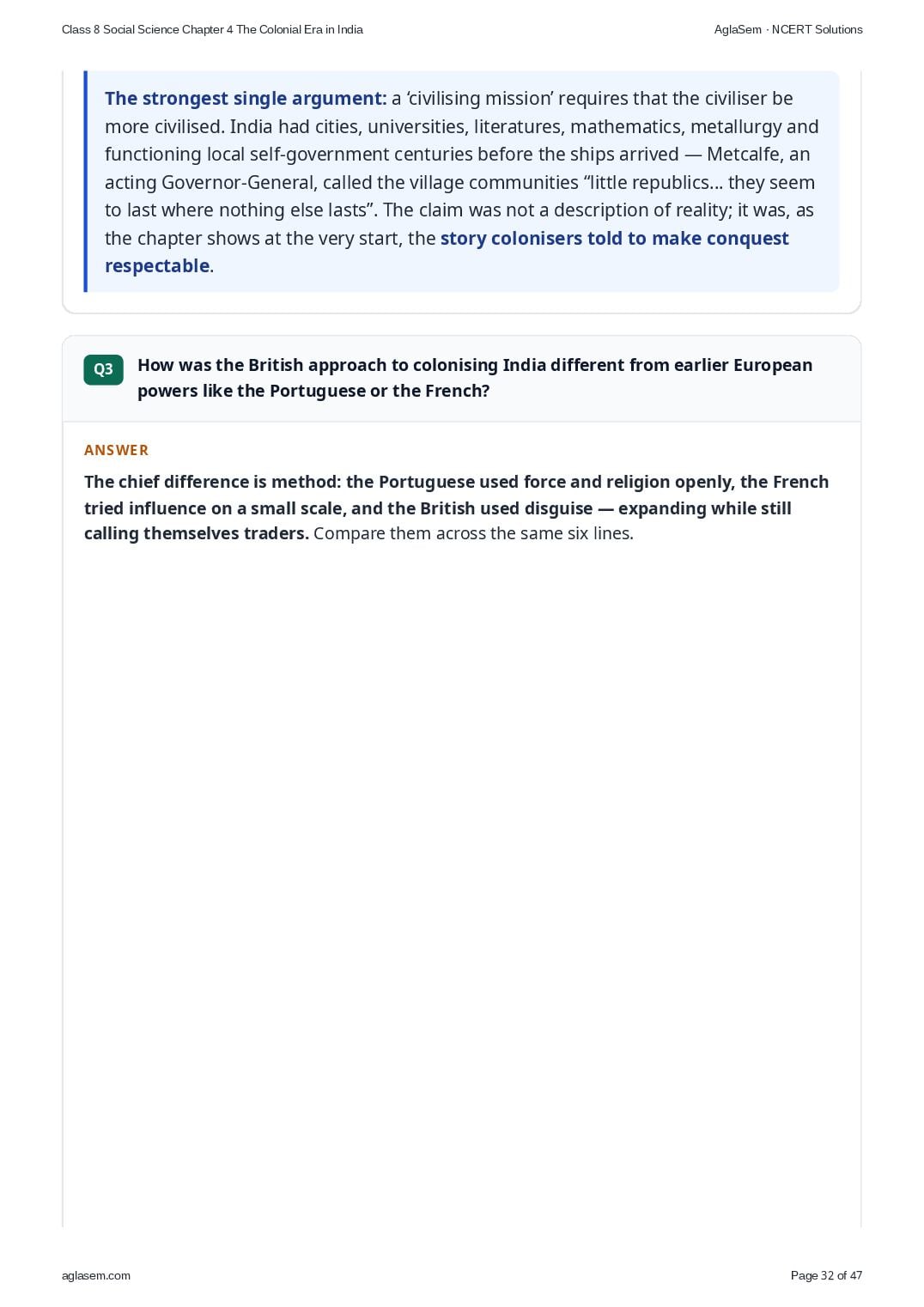
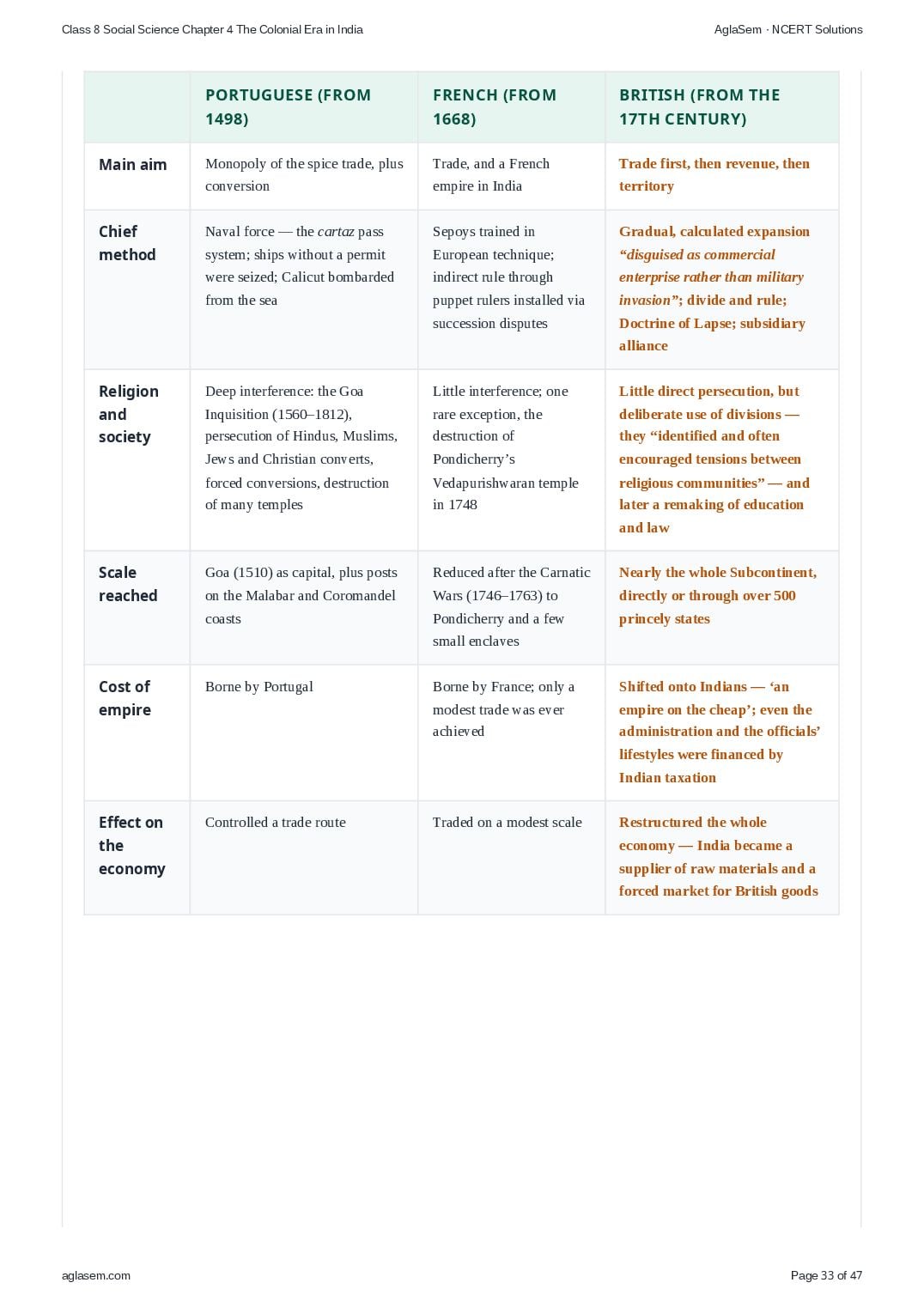
- How was the British approach to colonising India different from earlier European powers like the Portuguese or the French?
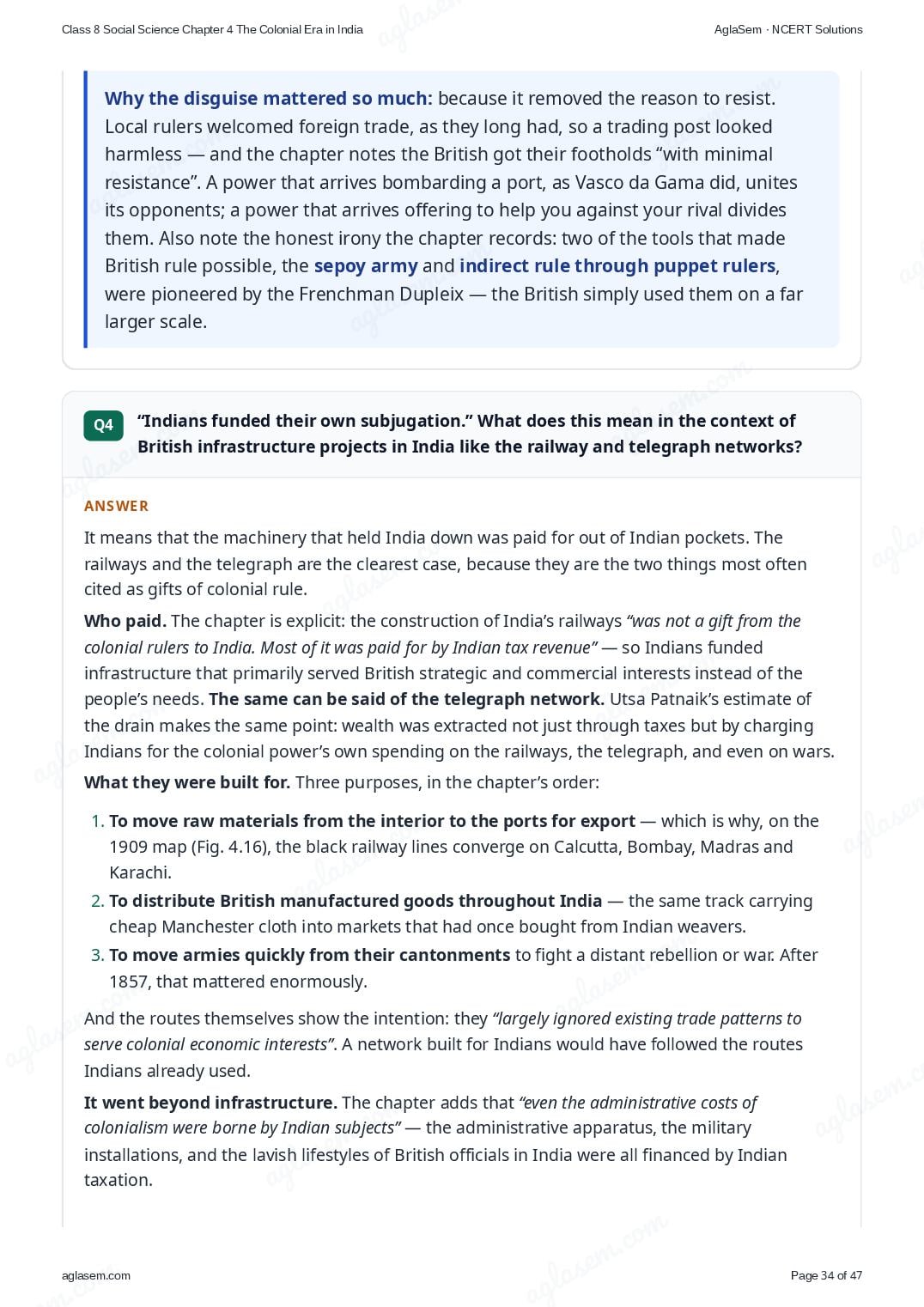
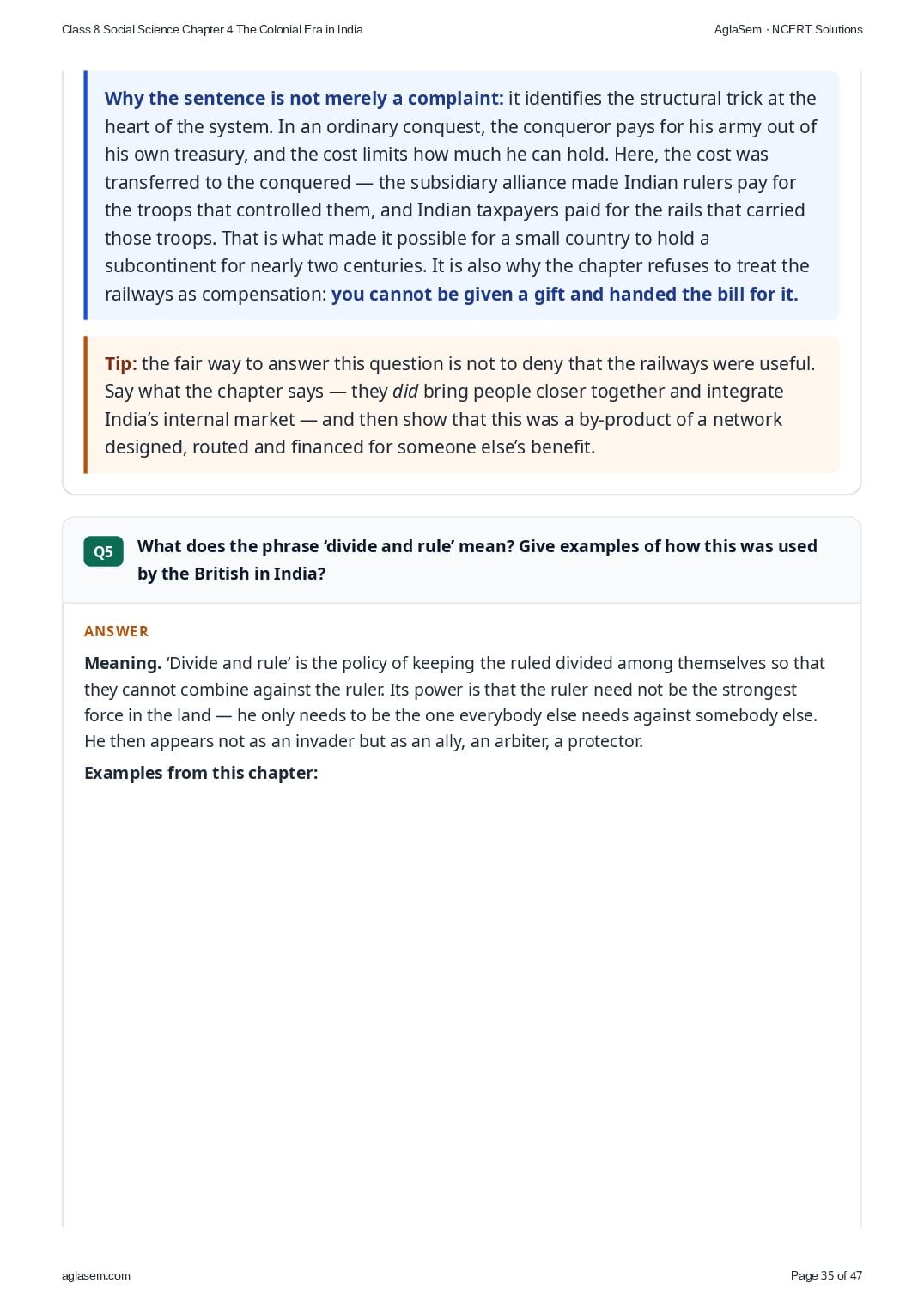
- “Indians funded their own subjugation.” What does this mean in the context of British infrastructure projects in India like the railway and telegraph networks?
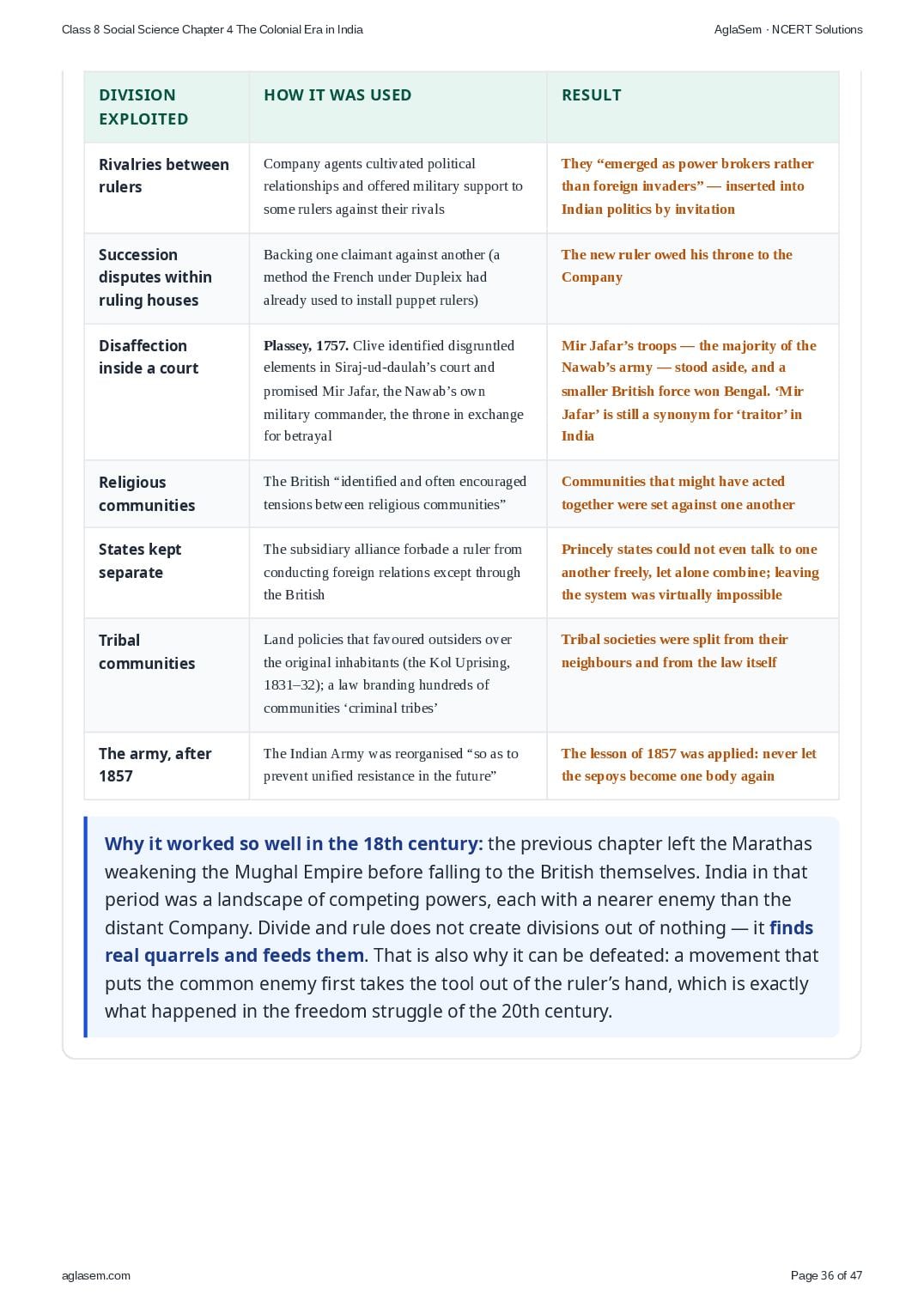
- What does the phrase ‘divide and rule’ mean? Give examples of how this was used by the British in India?
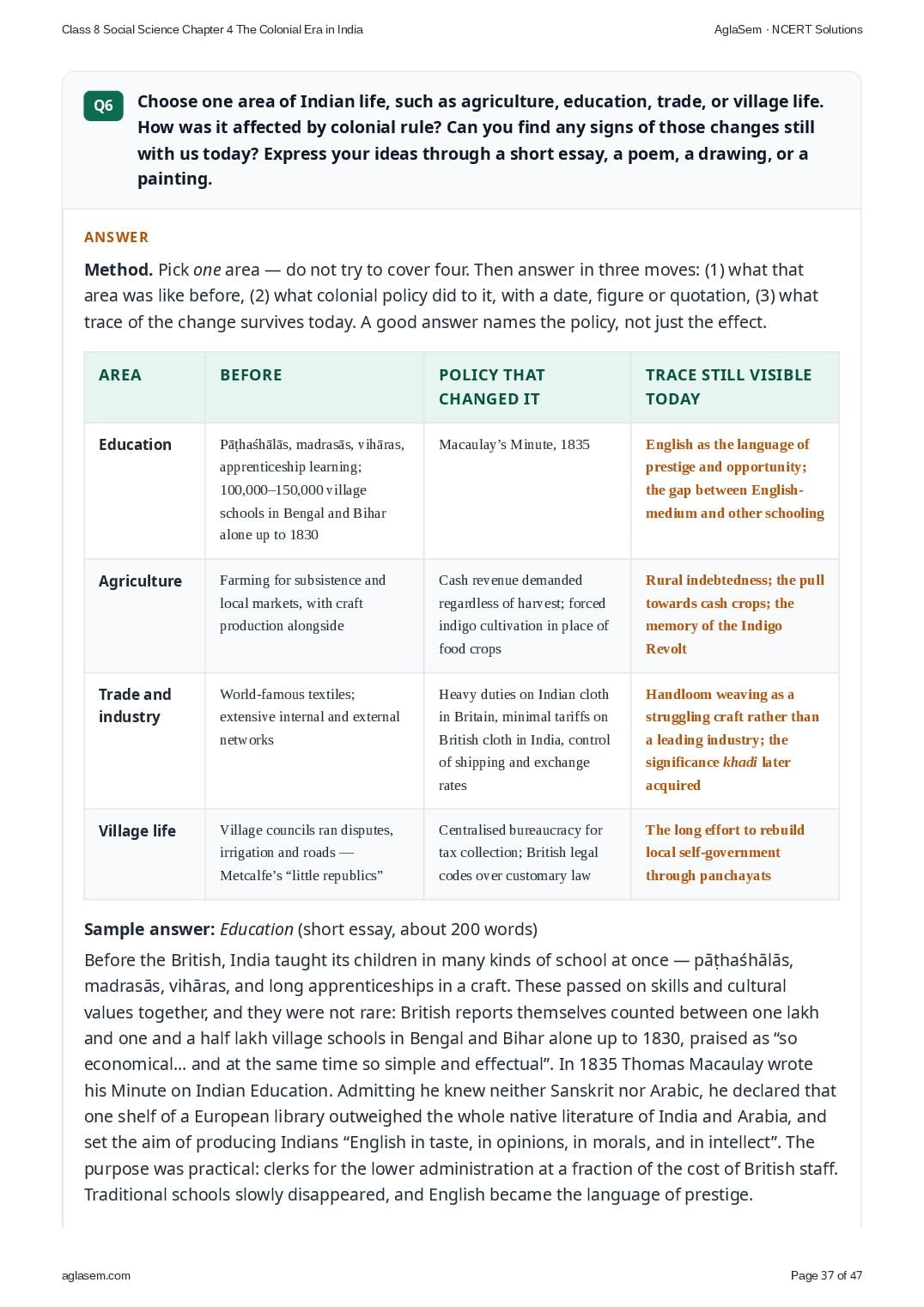
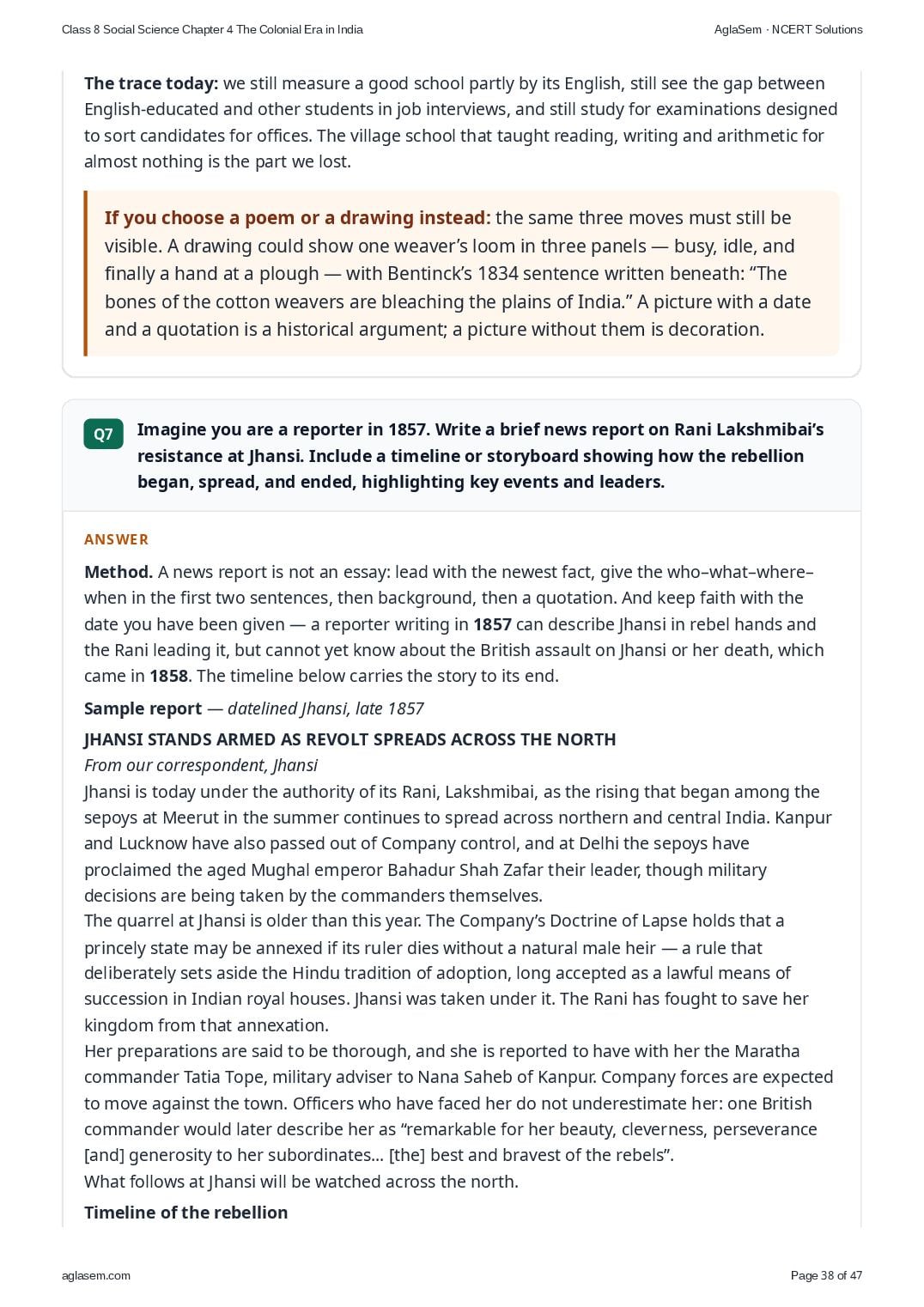
- Choose one area of Indian life, such as agriculture, education, trade, or village life. How was it affected by colonial rule? Can you find any signs of those changes still with us today? Express your ideas through a short essay, a poem, a drawing, or a painting.
- Imagine you are a reporter in 1857. Write a brief news report on Rani Lakshmibai’s resistance at Jhansi. Include a timeline or storyboard showing how the rebellion began, spread, and ended, highlighting key events and leaders.
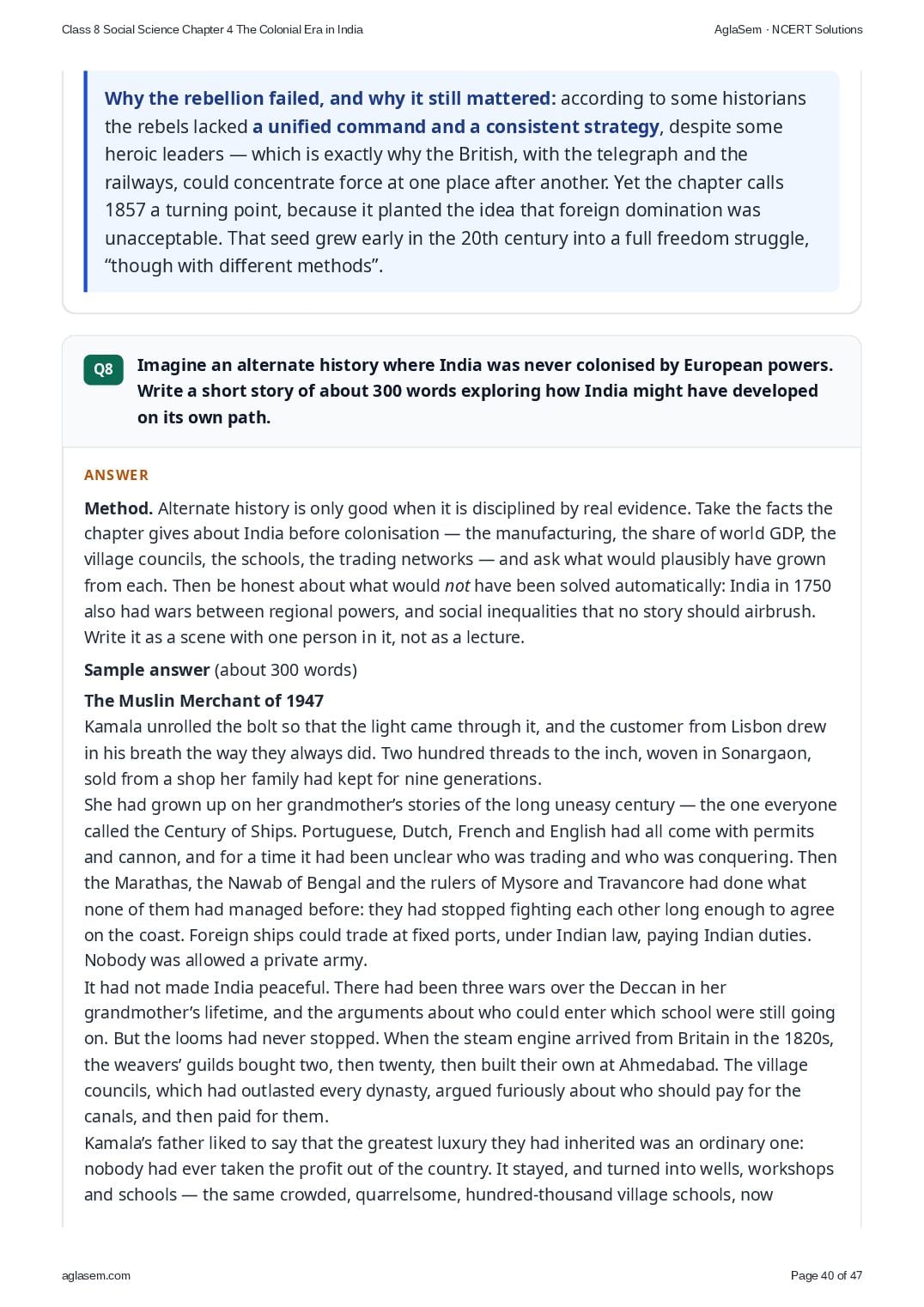
- Imagine an alternate history where India was never colonised by European powers. Write a short story of about 300 words exploring how India might have developed on its own path.
- Role-play: Enact a historical discussion between a British official and an Indian personality like Dadabhai Naoroji on the British colonial rule in India.
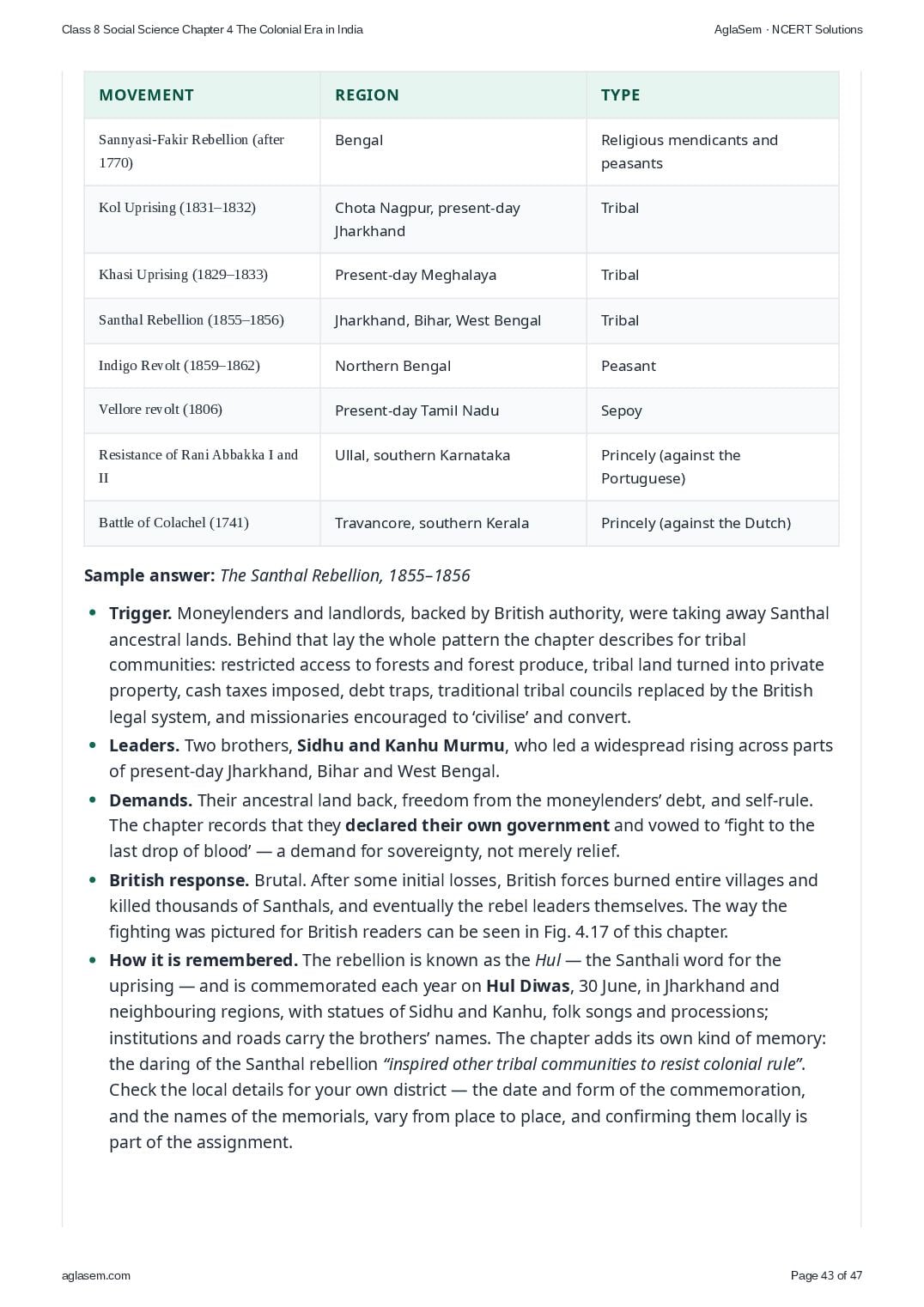
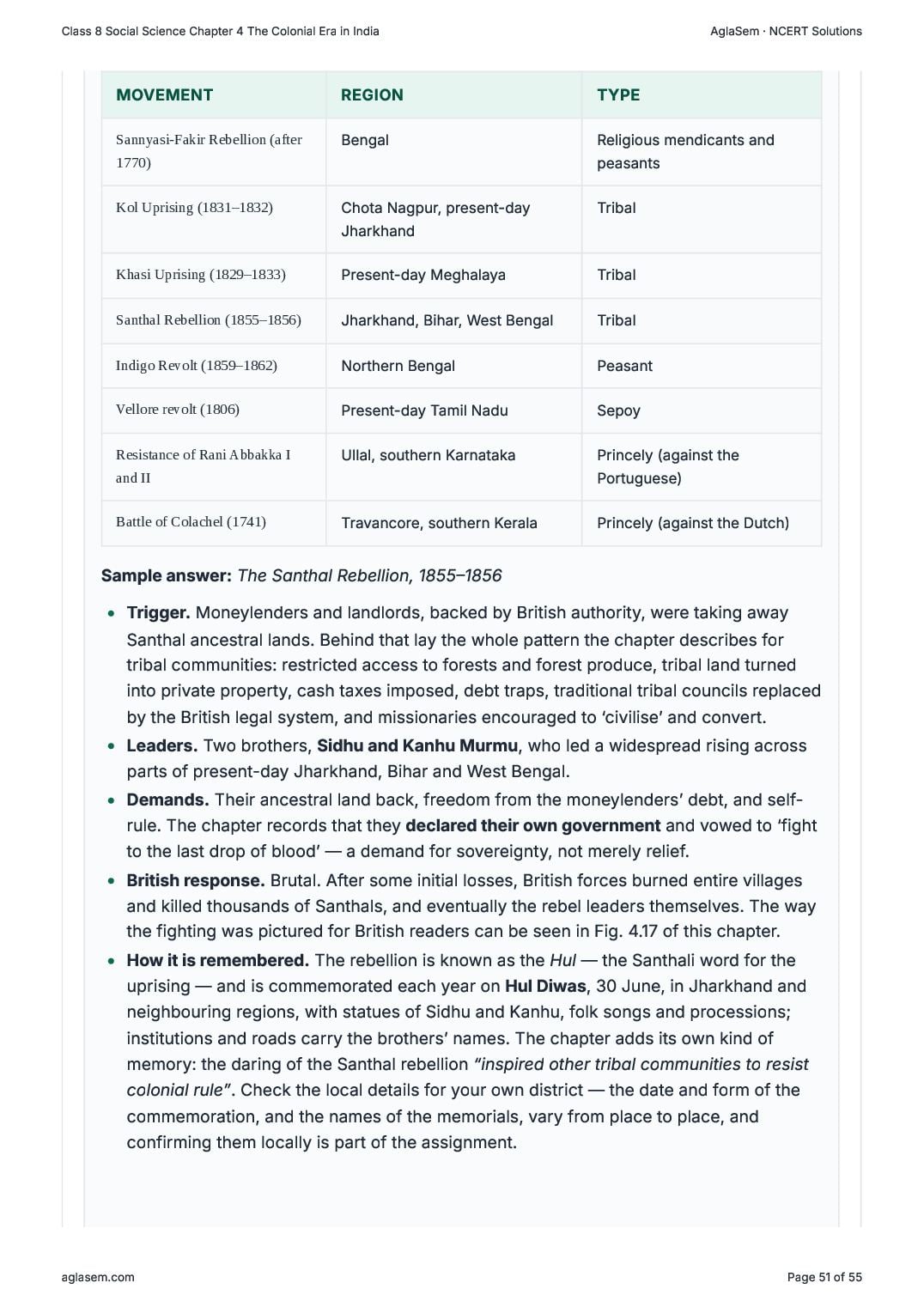
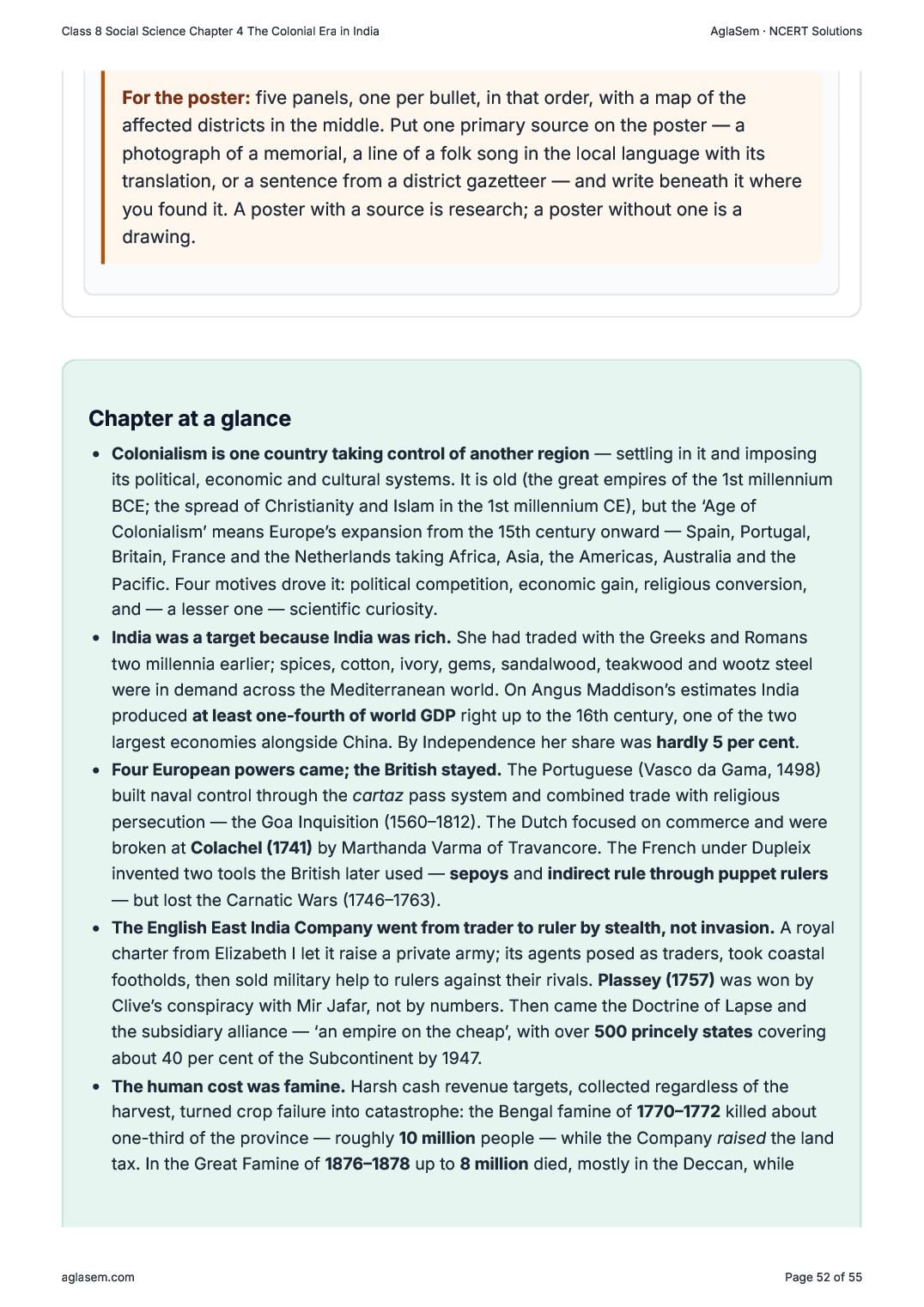
- Explore a local resistance movement (tribal, peasant, or princely) from your state or region during the colonial period. Prepare a report or poster describing: • What was the specific trigger, if any? • Who led the movement? • What were their demands? • How did the British respond? • How is this event remembered today (e.g., local festivals, songs, monuments)?
Chapter at a Glance
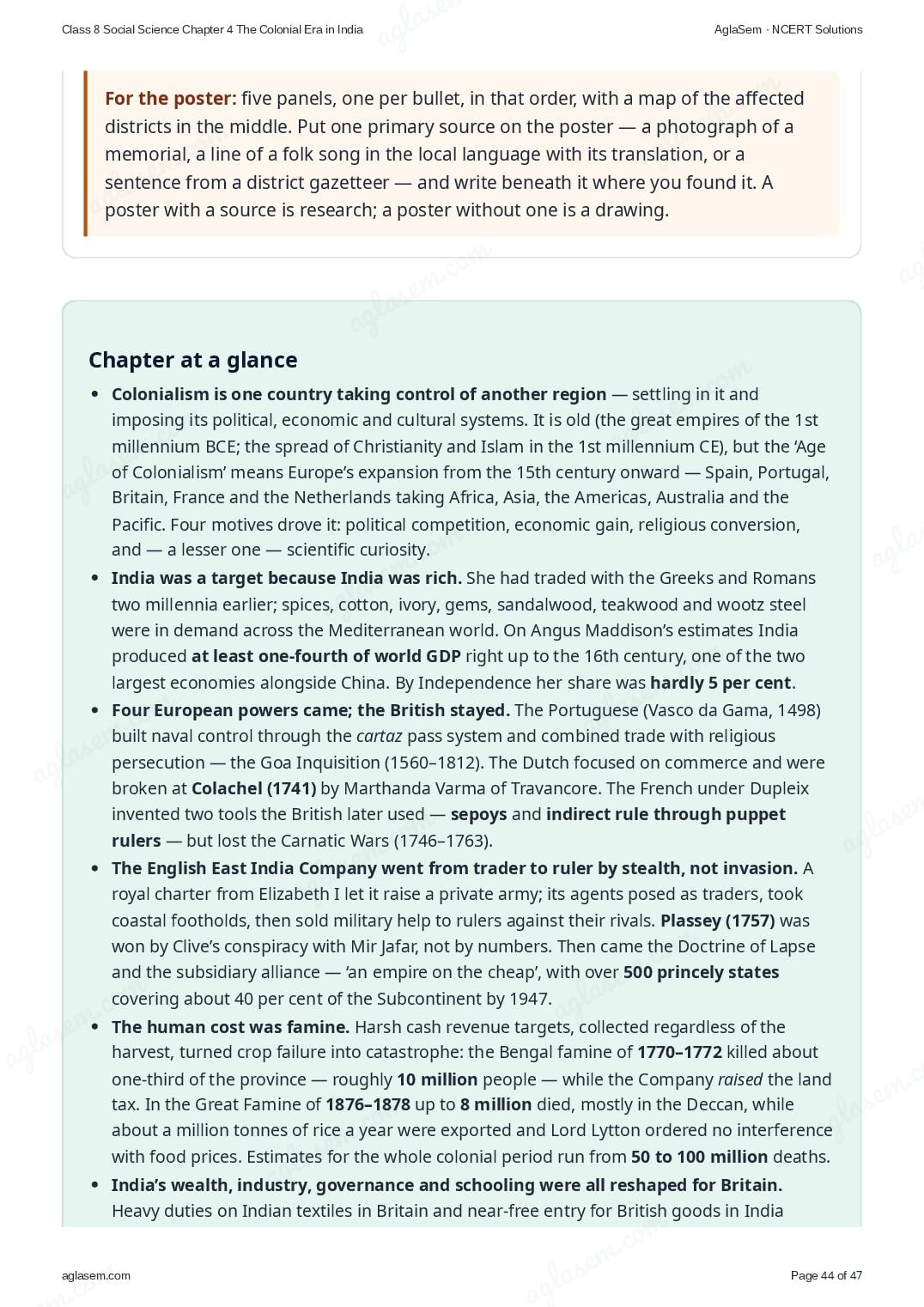
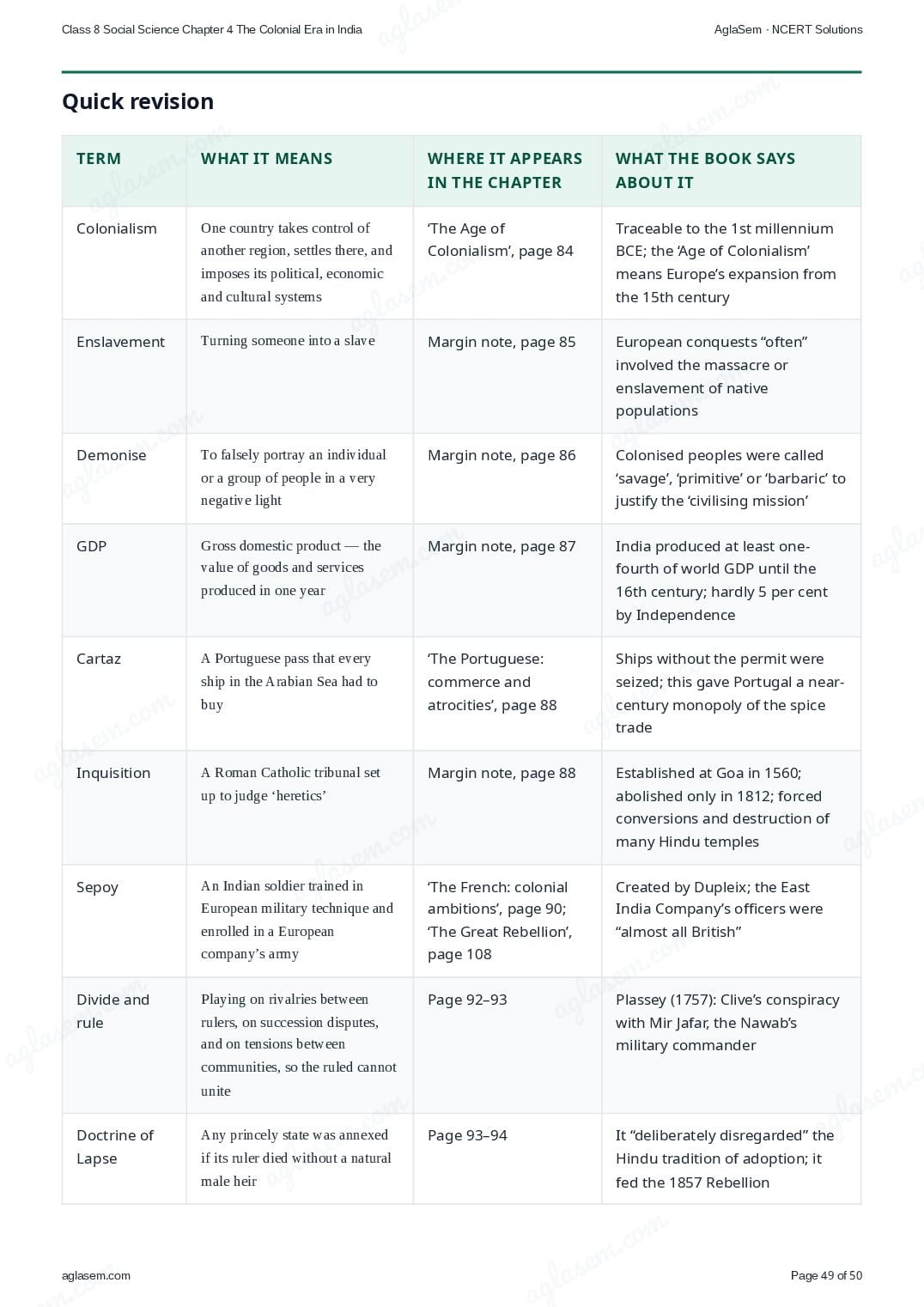
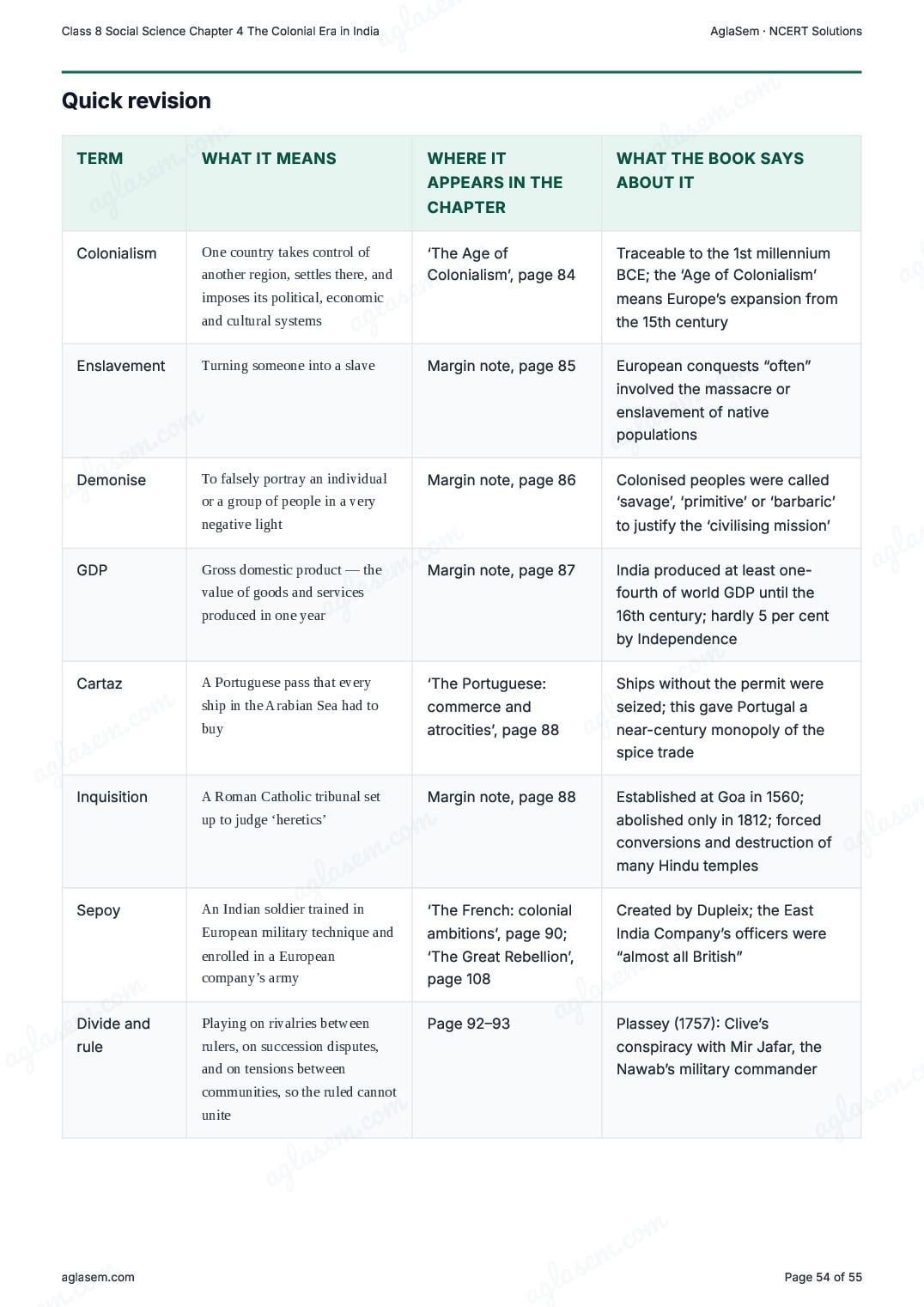
- Colonialism is one country taking control of another region — settling in it and imposing its political, economic and cultural systems. It is old (the great empires of the 1st millennium BCE; the spread of Christianity and Islam in the 1st millennium CE), but the ‘Age of Colonialism’ means Europe’s expansion from the 15th century onward — Spain, Portugal, Britain, France and the Netherlands taking Africa, Asia, the Americas, Australia and the Pacific. Four motives drove it: political competition, economic gain, religious conversion, and — a lesser one — scientific curiosity.
- India was a target because India was rich. She had traded with the Greeks and Romans two millennia earlier; spices, cotton, ivory, gems, sandalwood, teakwood and wootz steel were in demand across the Mediterranean world. On Angus Maddison’s estimates India produced at least one-fourth of world GDP right up to the 16th century, one of the two largest economies alongside China. By Independence her share was hardly 5 per cent .
- Four European powers came; the British stayed. The Portuguese (Vasco da Gama, 1498) built naval control through the cartaz pass system and combined trade with religious persecution — the Goa Inquisition (1560–1812). The Dutch focused on commerce and were broken at Colachel (1741) by Marthanda Varma of Travancore. The French under Dupleix invented two tools the British later used — sepoys and indirect rule through puppet rulers — but lost the Carnatic Wars (1746–1763).
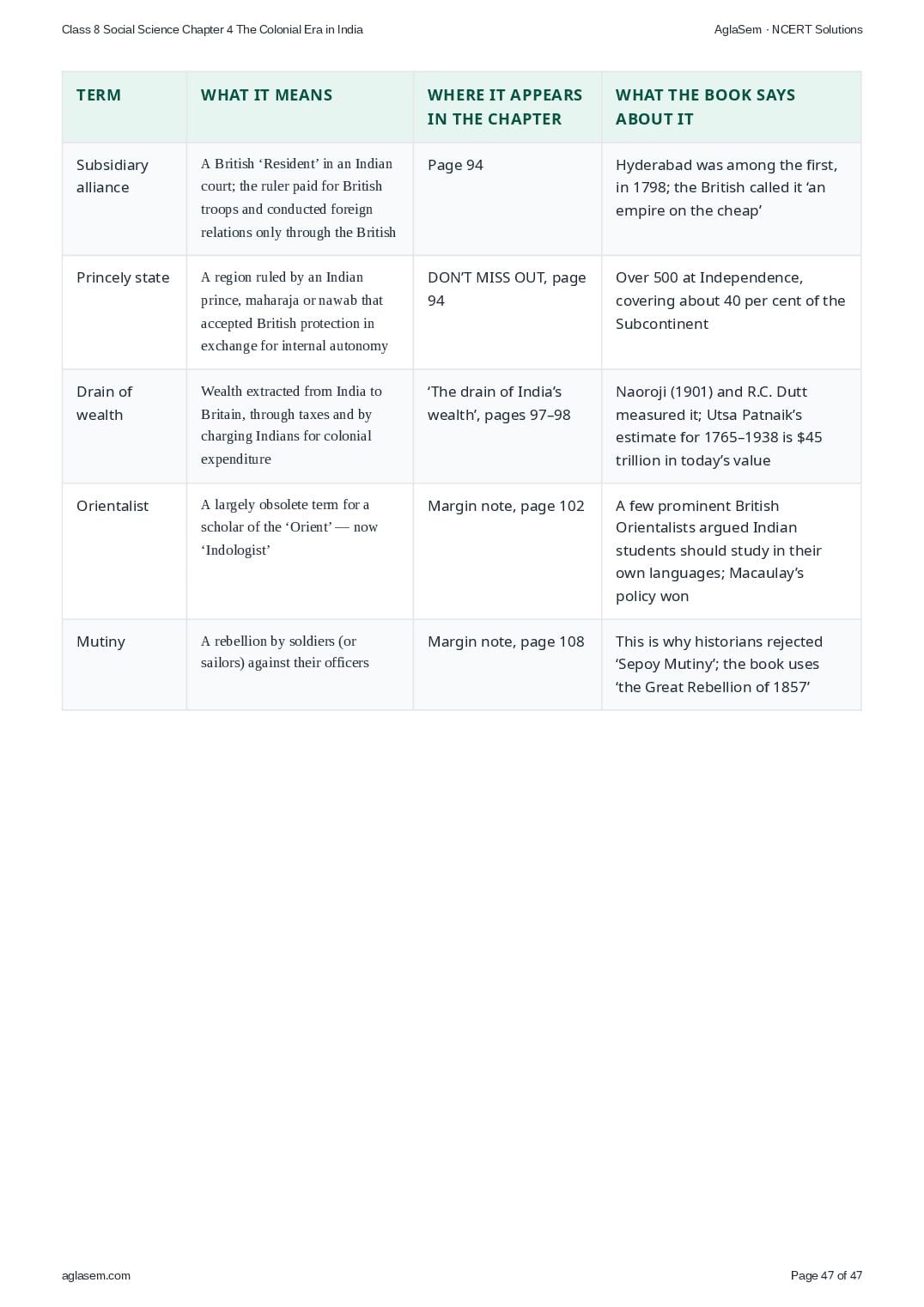
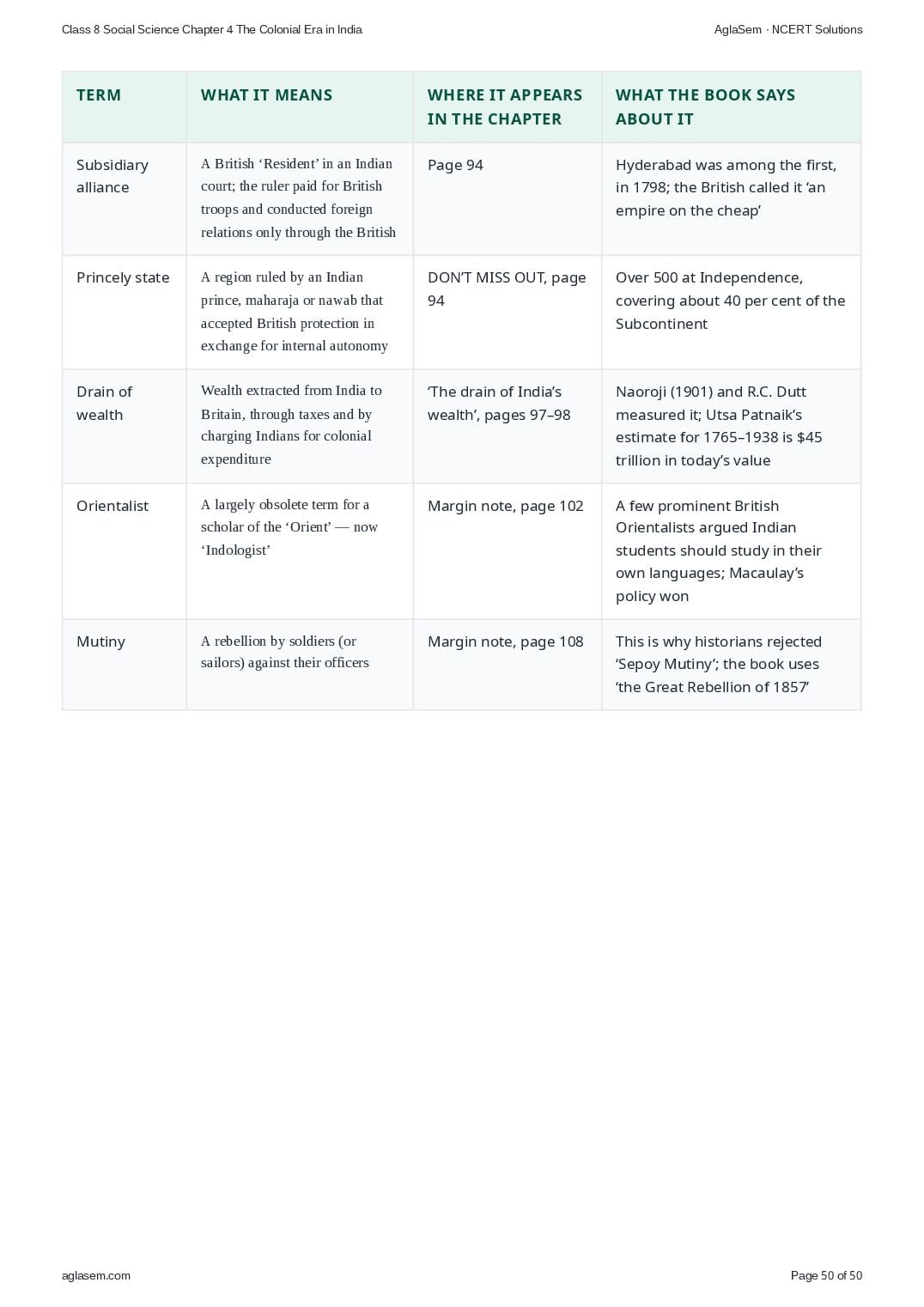
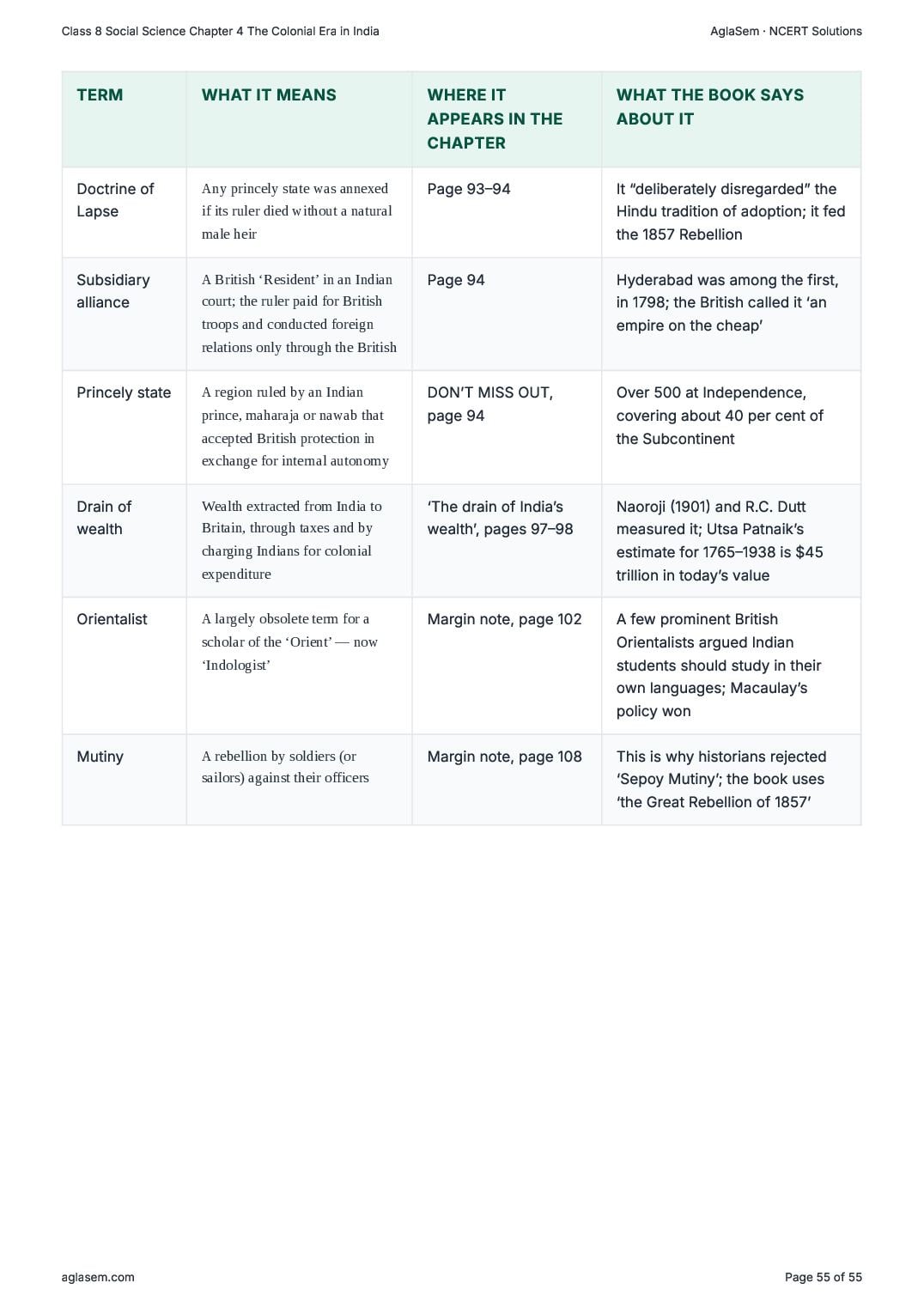
- The English East India Company went from trader to ruler by stealth, not invasion. A royal charter from Elizabeth I let it raise a private army; its agents posed as traders, took coastal footholds, then sold military help to rulers against their rivals. Plassey (1757) was won by Clive’s conspiracy with Mir Jafar, not by numbers. Then came the Doctrine of Lapse and the subsidiary alliance — ‘an empire on the cheap’, with over 500 princely states covering about 40 per cent of the Subcontinent by 1947.
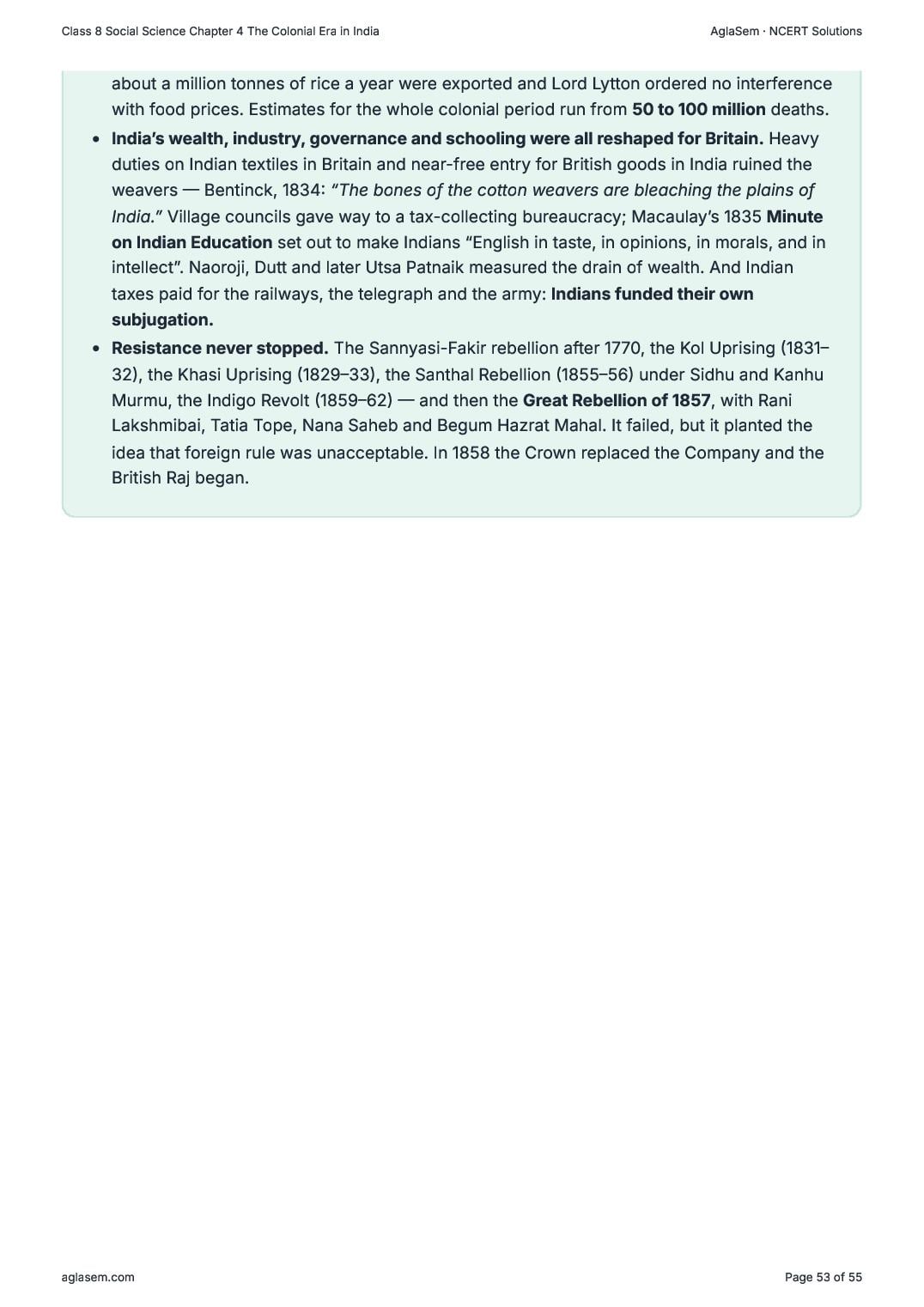
- The human cost was famine. Harsh cash revenue targets, collected regardless of the harvest, turned crop failure into catastrophe: the Bengal famine of 1770–1772 killed about one-third of the province — roughly 10 million people — while the Company raised the land tax. In the Great Famine of 1876–1878 up to 8 million died, mostly in the Deccan, while about a million tonnes of rice a year were exported and Lord Lytton ordered no interference with food prices. Estimates for the whole colonial period run from 50 to 100 million deaths.
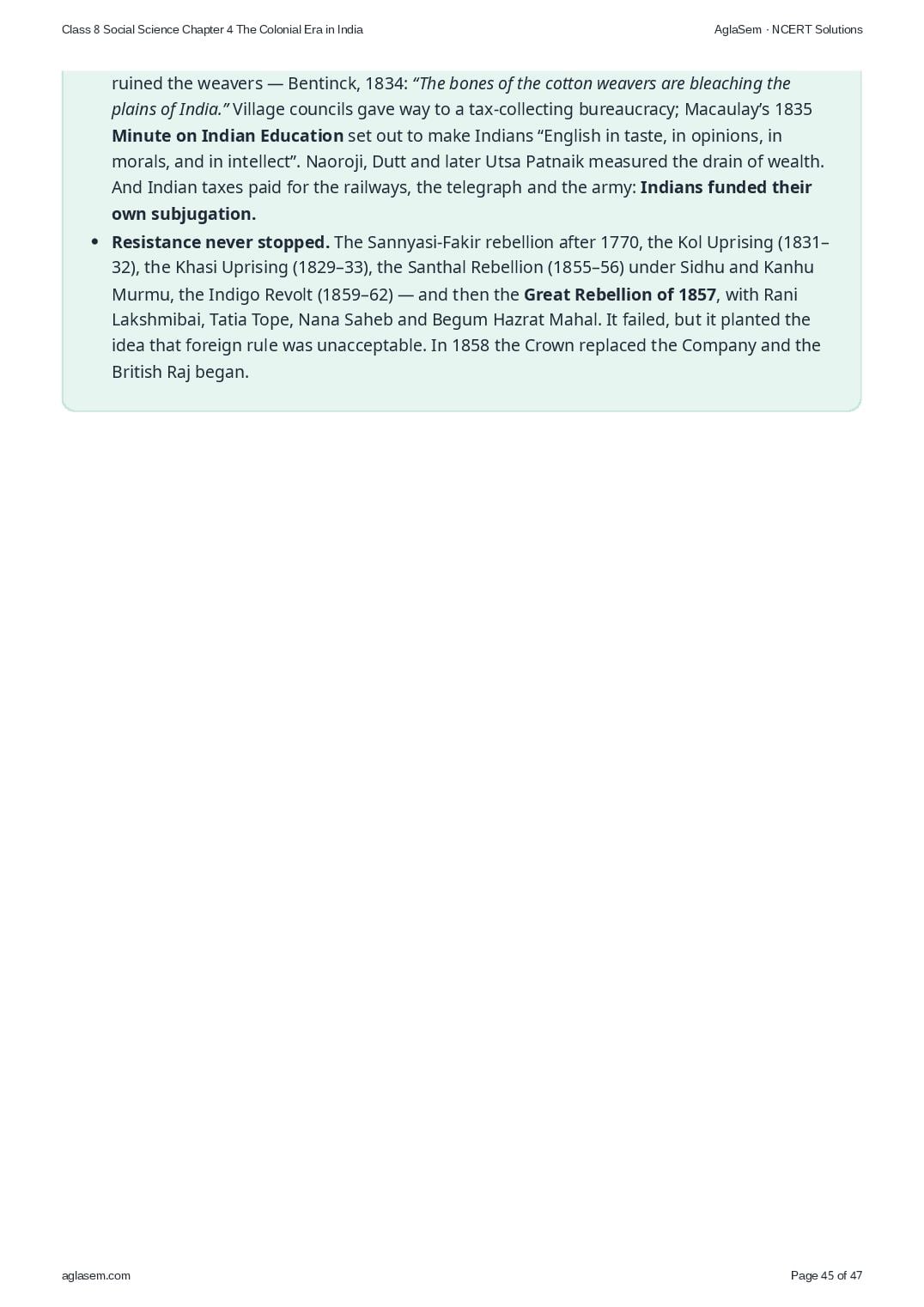
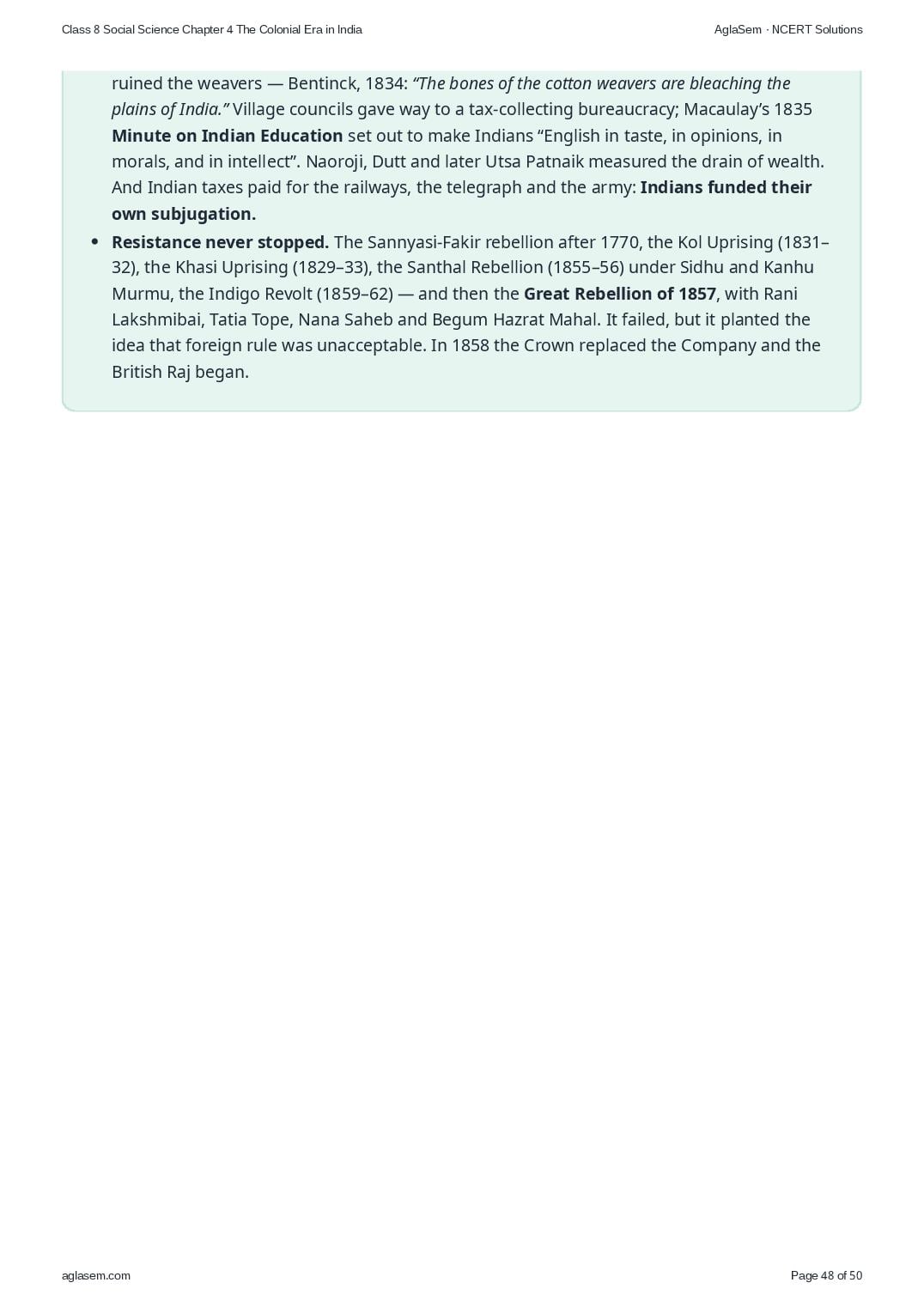
- India’s wealth, industry, governance and schooling were all reshaped for Britain. Heavy duties on Indian textiles in Britain and near-free entry for British goods in India ruined the weavers — Bentinck, 1834: “The bones of the cotton weavers are bleaching the plains of India.” Village councils gave way to a tax-collecting bureaucracy; Macaulay’s 1835 Minute on Indian Education set out to make Indians “English in taste, in opinions, in morals, and in intellect”. Naoroji, Dutt and later Utsa Patnaik measured the drain of wealth . And Indian taxes paid for the railways, the telegraph and the army: Indians funded their own subjugation.
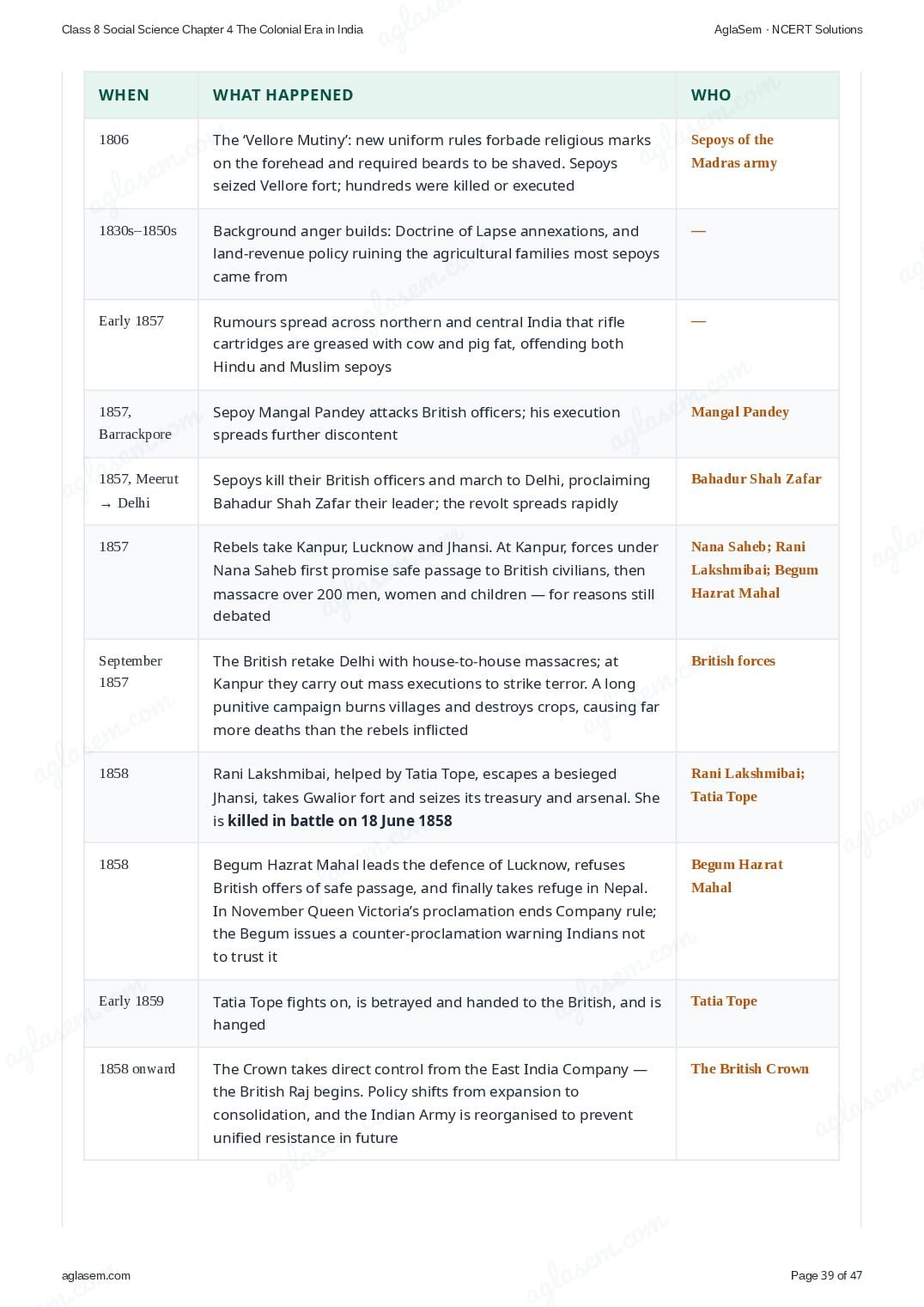
- Resistance never stopped. The Sannyasi-Fakir rebellion after 1770, the Kol Uprising (1831–32), the Khasi Uprising (1829–33), the Santhal Rebellion (1855–56) under Sidhu and Kanhu Murmu, the Indigo Revolt (1859–62) — and then the Great Rebellion of 1857 , with Rani Lakshmibai, Tatia Tope, Nana Saheb and Begum Hazrat Mahal. It failed, but it planted the idea that foreign rule was unacceptable. In 1858 the Crown replaced the Company and the British Raj began.
How to Download NCERT Solutions for Class 8 Social Science Chapter 4 PDF
Follow these simple steps to get the The Colonial Era in India questions-and-answers PDF from Exploring Society: India and Beyond.
- Search NCERT Solutions for Class 8 Social Science Chapter 4 aglasem and open this page.
- Read the exercise questions with answers for The Colonial Era in India shown above.
- Click the Download PDF link to save the The Colonial Era in India solutions to your device.
NCERT Solutions for Class 8 Social Science – All Chapters
There are more chapters to study besides The Colonial Era in India in Social Science. Here are the NCERT Solutions for all chapters of Class 8 Social Science.
- Chapter 1 Natural Resources and Their Use
- Chapter 2 Reshaping India’s Political Map
- Chapter 3 The Rise of the Marathas
- Chapter 4 The Colonial Era in India
- Chapter 5 Universal Franchise and India’s Electoral System
- Chapter 6 The Parliamentary System Legislature and Executive
- Chapter 7 Factors of Production
- Chapter 8 World Geography Some Glimpses
- Chapter 9 India’s Long Road to Independence
- Chapter 10 A Journey Through Indian Architecture
- Chapter 11 The Role of the Judiciary in Our Society
- Chapter 12 Citizenship Rights and Duties
- Chapter 13 Dynamics of Population
- Chapter 14 India’s Urban Landscape
- Chapter 15 Cultural Currents 13th to 17th Centuries
NCERT Solutions for Class 8 – All Subjects
Just like Chapter 4 of Social Science, you can get the exercise questions with answers for every other subject of Class 8. Here are the NCERT Solutions for all subjects of Class 8.
NCERT Solutions for Class 8 Social Science Chapter 4 – An Overview
The key highlights of this study material are as follows.
| Aspects | Details |
|---|---|
| Class | Class 8 |
| Subject | Social Science |
| Chapter Number | Chapter 4 |
| Chapter Name | The Colonial Era in India |
| Book Name | Exploring Society: India and Beyond |
| Book By | NCERT (National Council of Educational Research and Training) |
| Educational Resource Here | NCERT Solutions of Class 8 Social Science Chapter 4 for all exercises |
| More Questions Answers of This Subject | NCERT Solutions for Class 8 Social Science |
| Download Book Chapter | NCERT Book Class 8 Social Science |
| All Questions Answers For This Class | NCERT Solutions for Class 8 |
| Complete Solutions | NCERT Solutions |
NCERT Solutions for Class 8 Social Science Chapter 4 The Colonial Era in India – FAQs
What are the NCERT Solutions for Class 8 Social Science Chapter 4 The Colonial Era in India?
They are the complete, step-by-step answers to all the exercise and in-text questions of Chapter 4 The Colonial Era in India from the NCERT Class 8 Social Science textbook Exploring Society: India and Beyond, written by experts as per the latest NCERT syllabus.
How can I download the Class 8 Social Science Chapter 4 solutions PDF for free?
Open this page on aglasem, read the The Colonial Era in India questions with answers, and click the “Download Solutions PDF” link. The Class 8 Social Science Chapter 4 NCERT Solutions PDF is completely free to download.
Are these NCERT Solutions as per the latest 2026-27 syllabus?
Yes. The NCERT Solutions for Class 8 Social Science Chapter 4 are based on the latest NCERT textbook Exploring Society: India and Beyond and the current 2026-27 CBSE syllabus, so the questions and answers match what you study in class.
Where can I get NCERT Solutions for the other chapters of Class 8 Social Science?
You can find the answers to every chapter on the NCERT Solutions for Class 8 Social Science page, and solutions for every subject on the NCERT Solutions for Class 8 page.
How do NCERT Solutions help in exam preparation?
They show the correct method to solve each question, help you write answers the way they are expected in exams, let you check and correct your own work, and save revision time — which together improve your marks in Class 8 Social Science.
If you have any queries on NCERT Solutions for Class 8 Social Science Chapter 4 The Colonial Era in India, then please ask in the comments below.