NCERT Solutions for Class 8 Social Science Chapter 14 India’s Urban Landscape provide clear, step-by-step answers to every exercise and in-text question from the chapter India’s Urban Landscape of the NCERT textbook Exploring Society: India and Beyond. Prepared by subject experts as per the latest NCERT (CBSE) syllabus for 2026-27, these NCERT Solutions for Class 8 Social Science help you understand each concept, write exam-ready answers, and check your own solutions. You can read them online below or download the free Class 8 Social Science Chapter 14 question-answer PDF.
NCERT Solutions for Class 8 Social Science Chapter 14 India’s Urban Landscape
- Class: Class 8
- Subject: Social Science
- Chapter: Chapter 14 – India’s Urban Landscape
- Textbook: Exploring Society: India and Beyond (NCERT)
- Study material: NCERT Solutions – questions with answers, free PDF
These solutions answer all the exercise questions of Chapter 14 India’s Urban Landscape — including the in-text questions, short-answer and long-answer questions, and activities — with complete explanations so you can follow the method, not just the final answer. Read the full solutions below.
NCERT Solutions Class 8 Social Science Chapter 14 India s Urban Landscape View Download



NCERT Solutions for Class 8 Social Science Chapter 14 PDF Download
You can read the NCERT Solutions for Class 8 Social Science Chapter 14 online above, or download the complete question-answer PDF to study India’s Urban Landscape offline at any time.
NCERT Solutions for Class 8 Social Science Chapter 14 PDF Download Link – Click Here to Download Solutions PDF
Questions Covered in This Chapter
These NCERT Solutions answer all 25 questions of this chapter. The questions solved are:
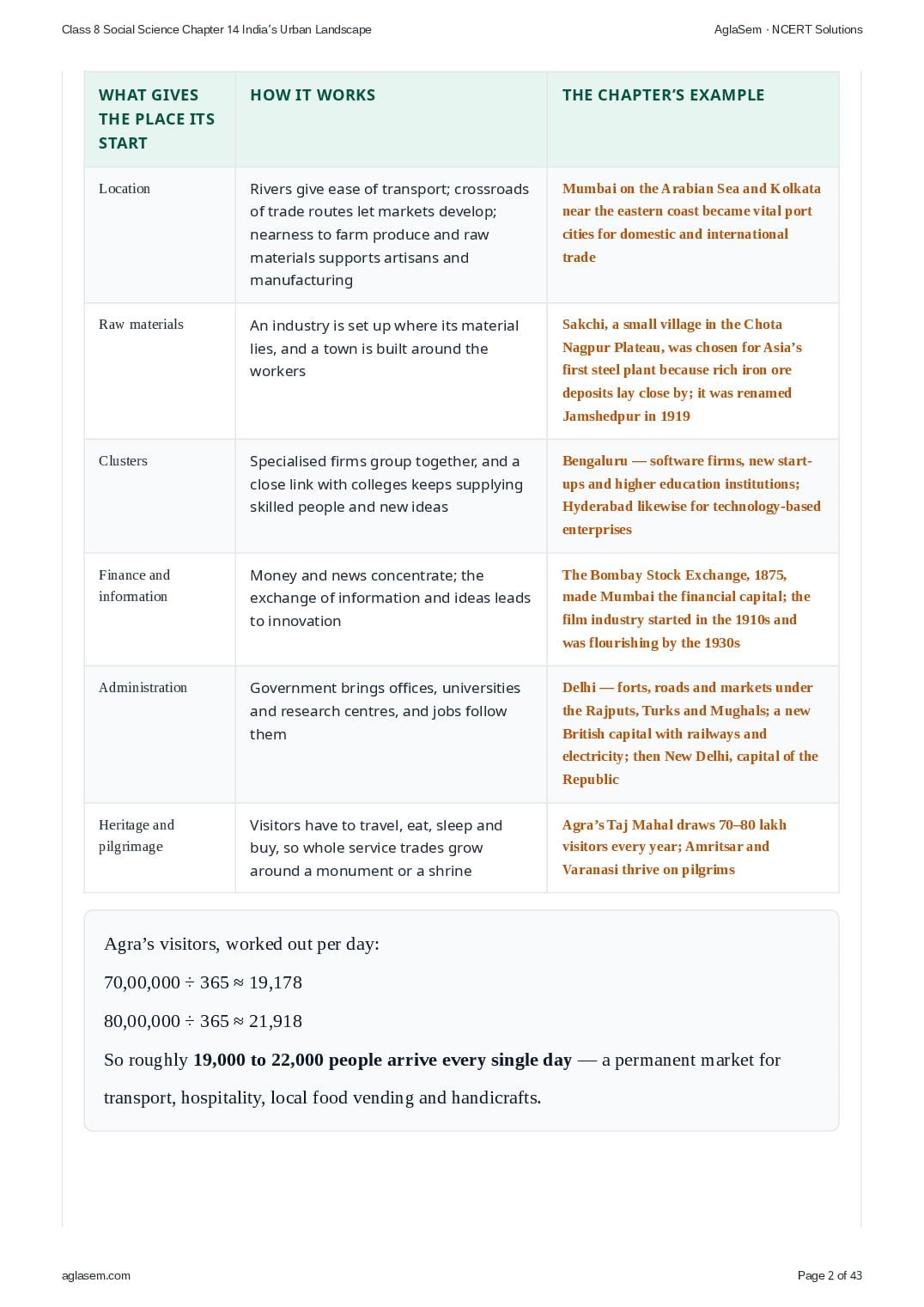
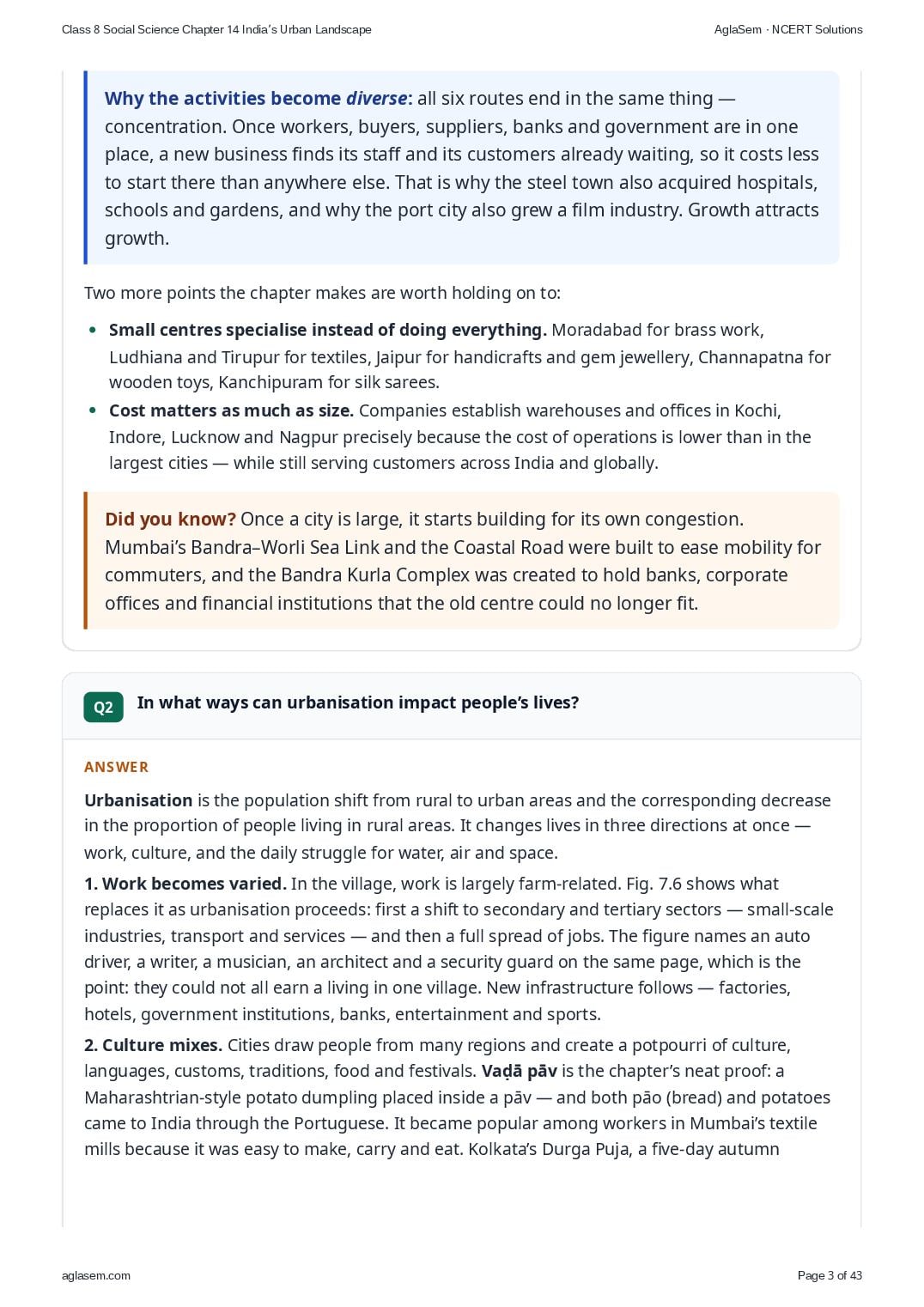
- How do cities become the centre of diverse economic activities?
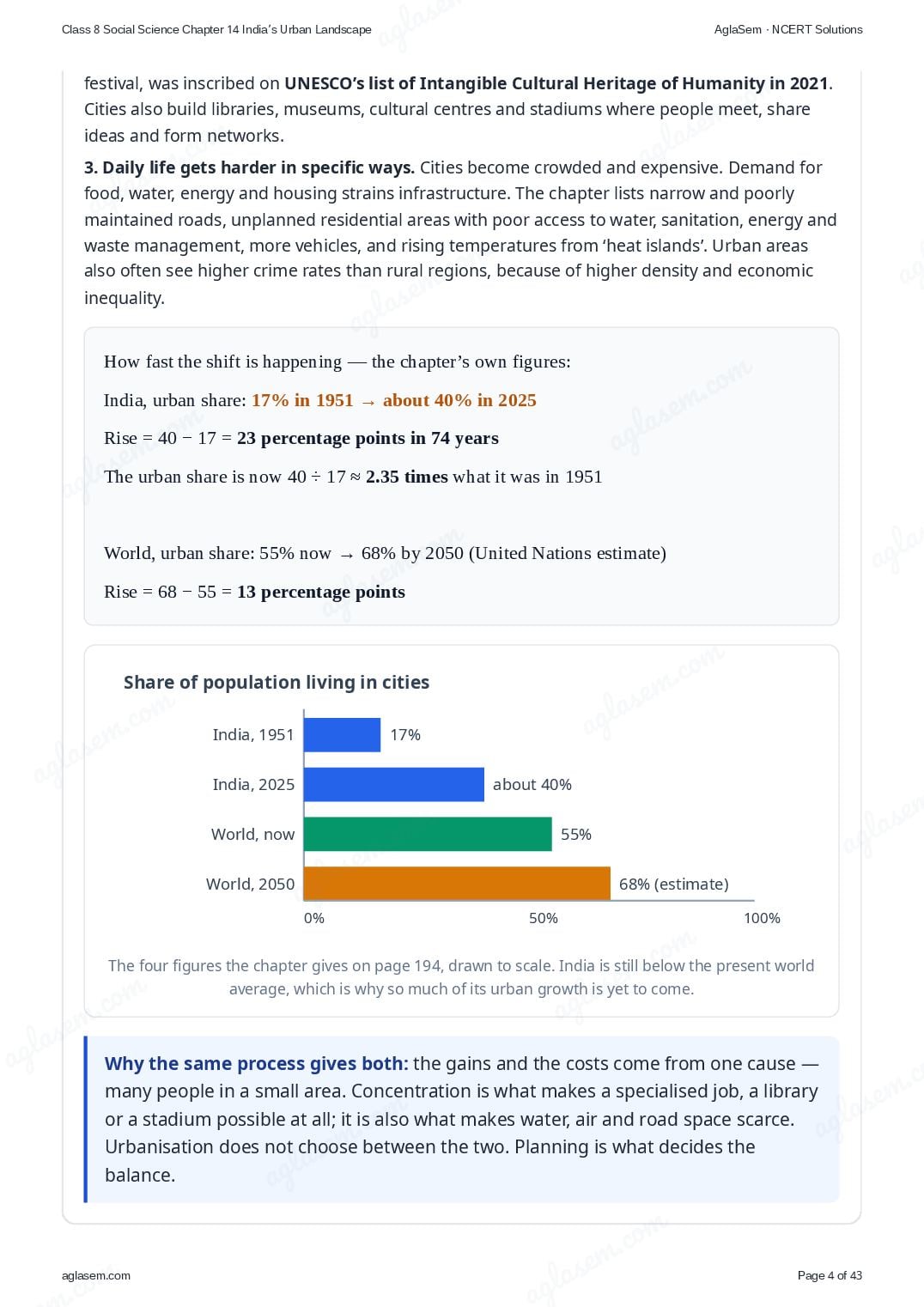
- In what ways can urbanisation impact people’s lives?
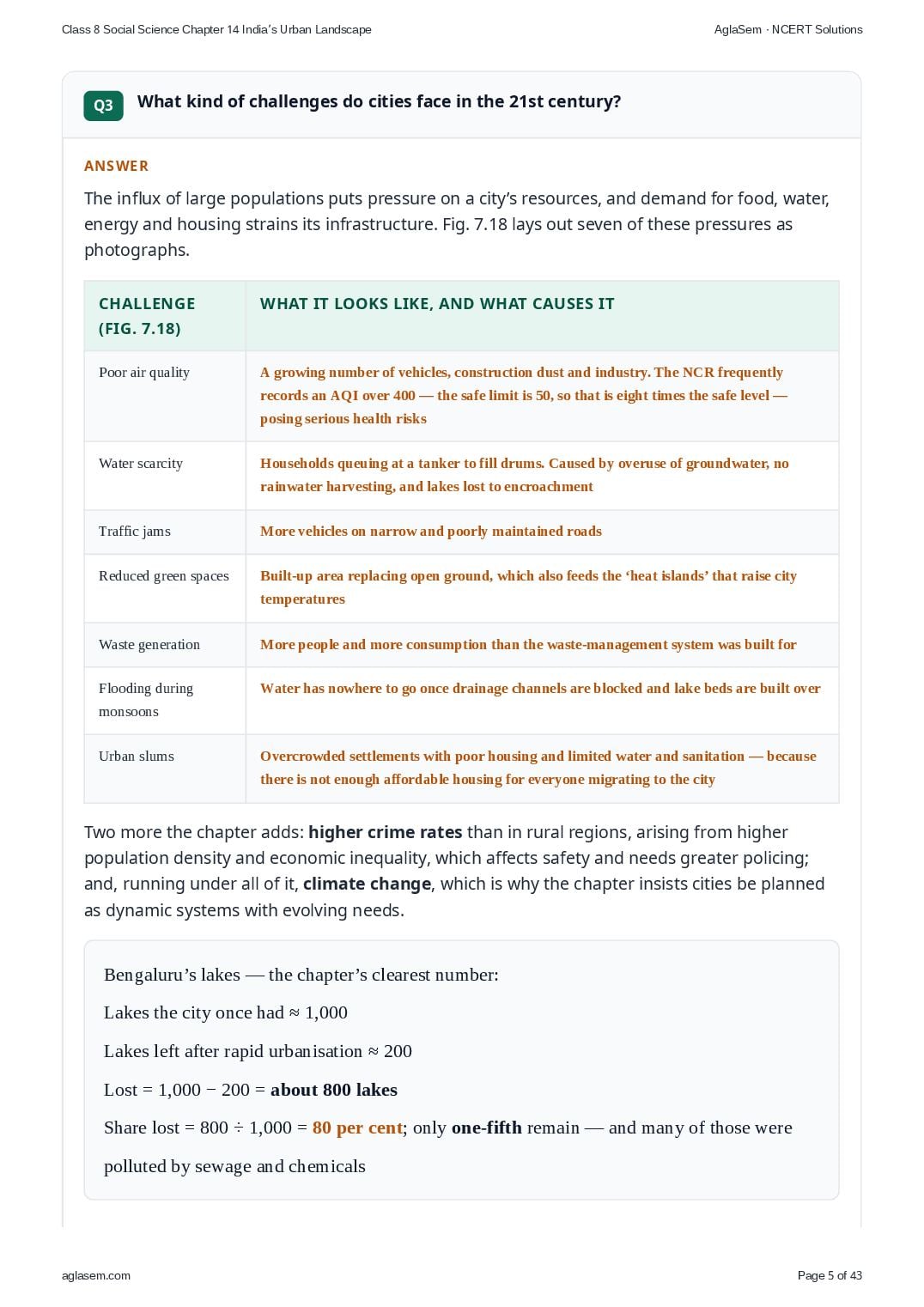
- What kind of challenges do cities face in the 21st century?
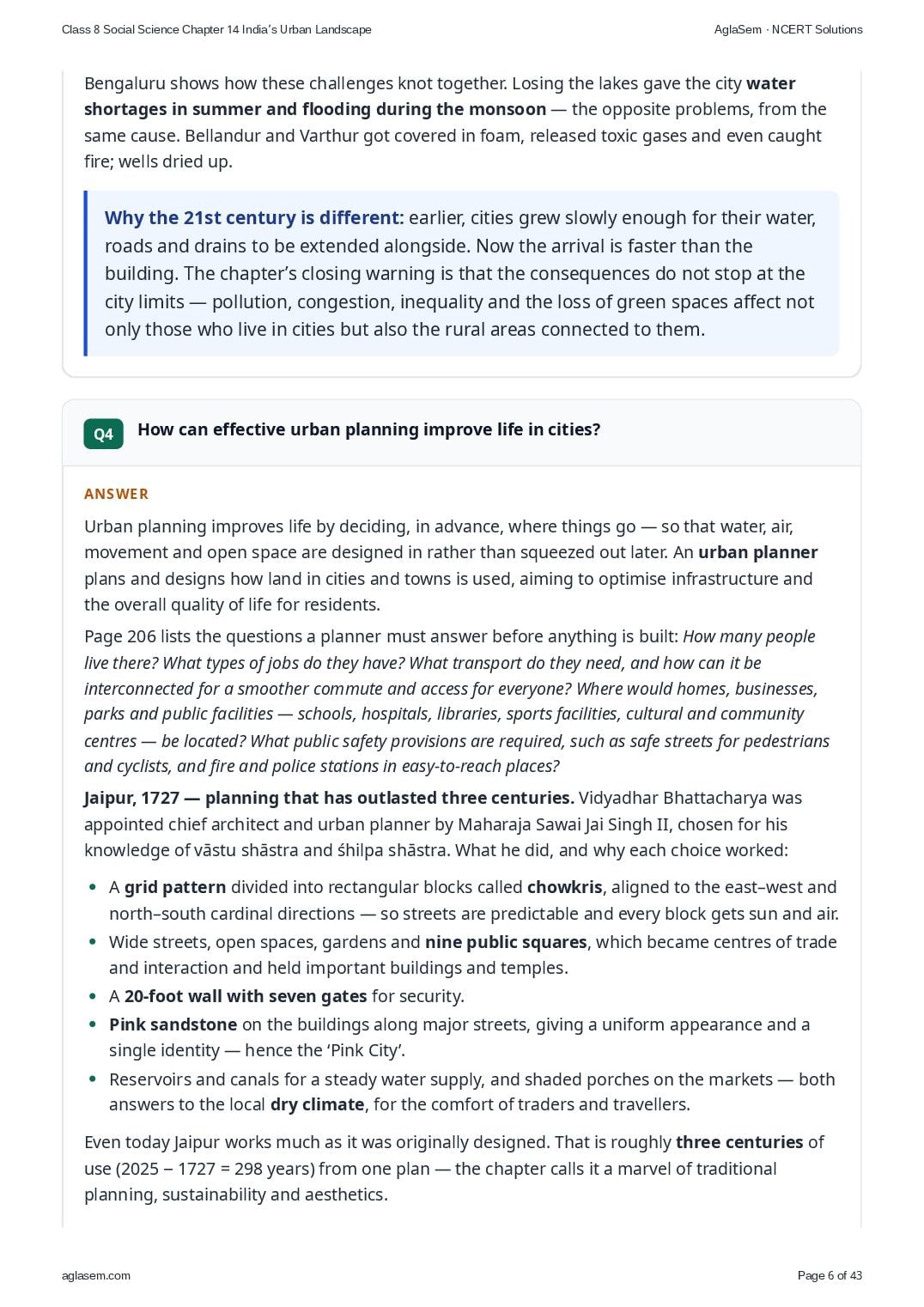
- How can effective urban planning improve life in cities?
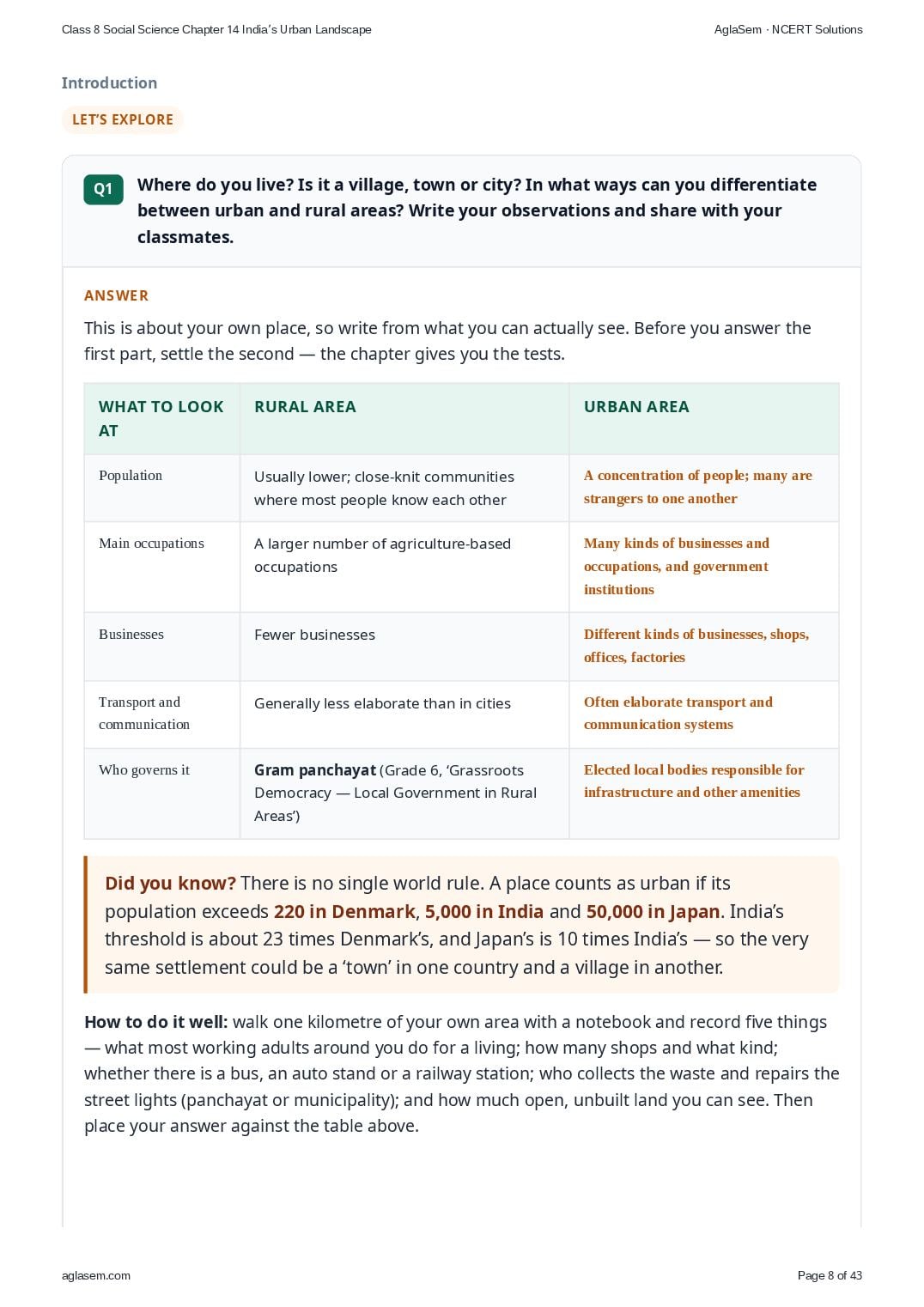
- Where do you live? Is it a village, town or city? In what ways can you differentiate between urban and rural areas? Write your observations and share with your classmates.
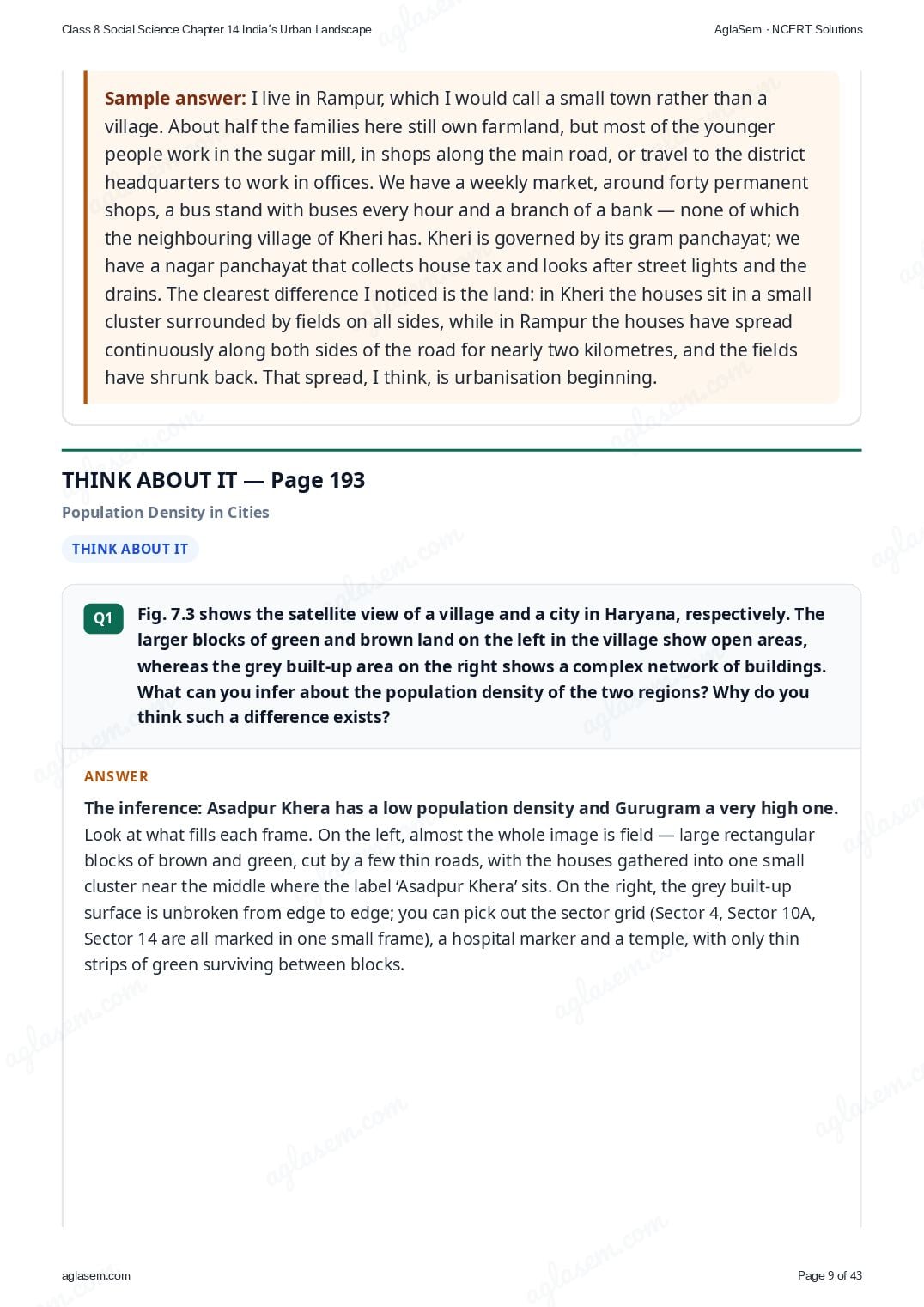
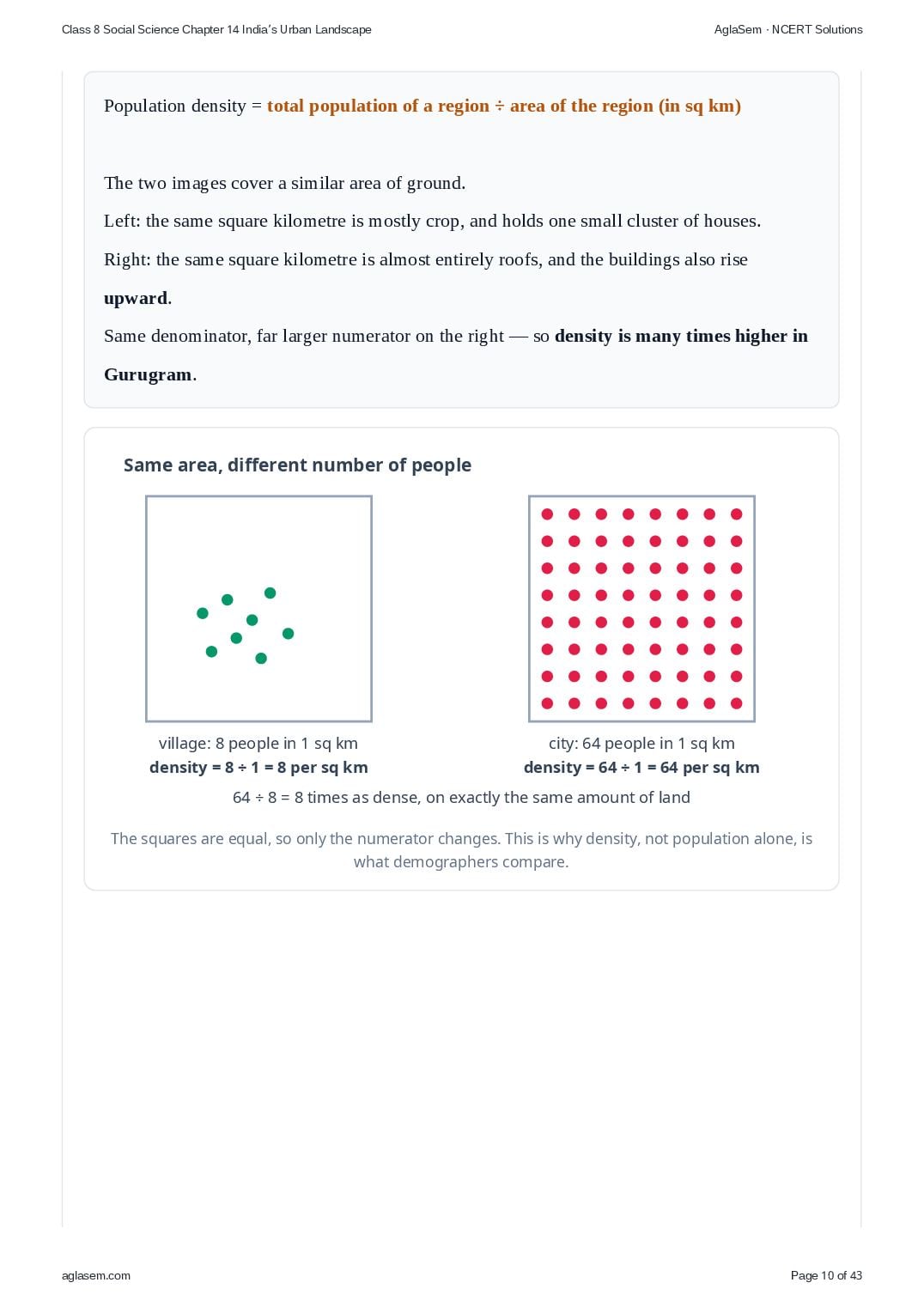
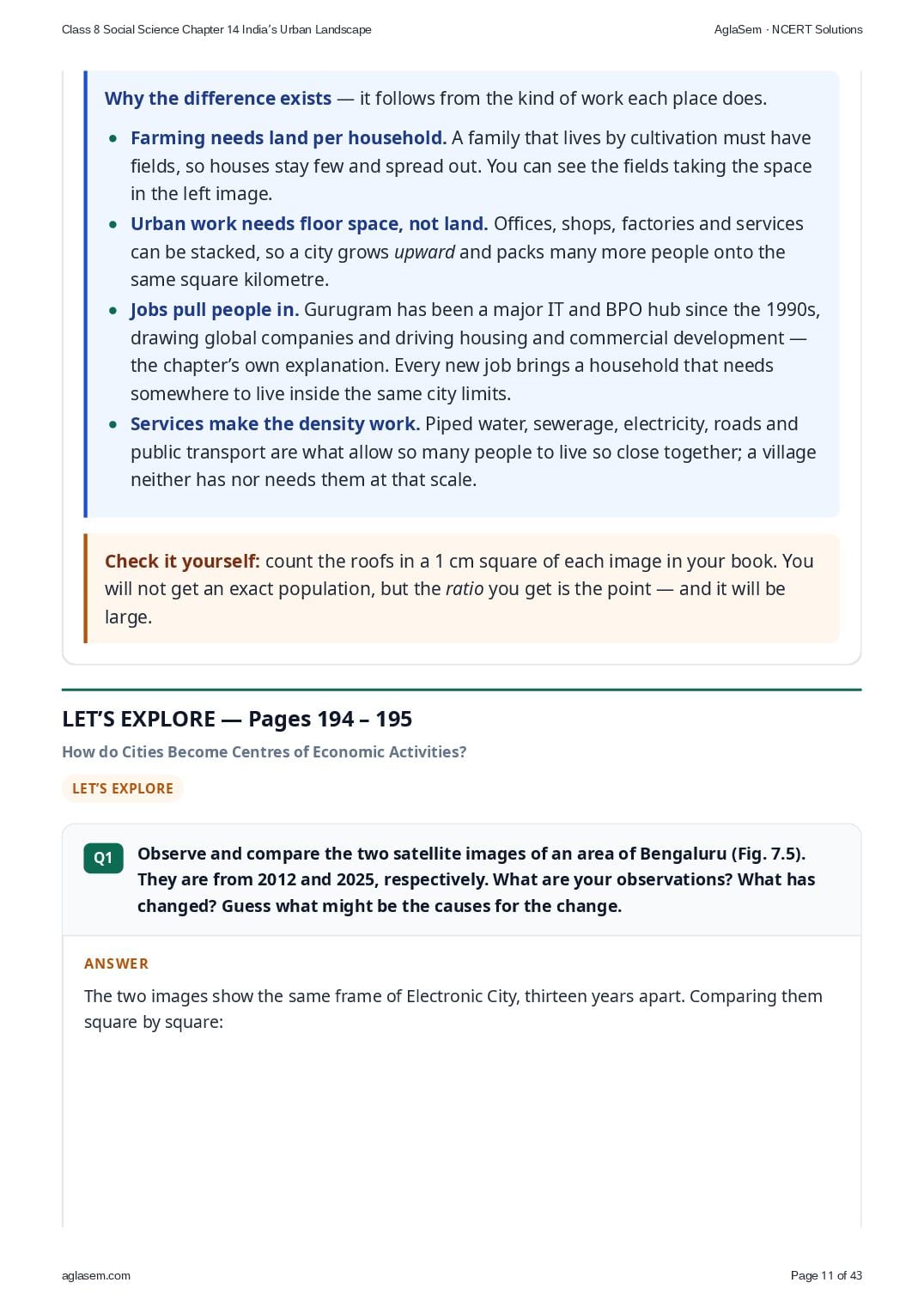
- Fig. 7.3 shows the satellite view of a village and a city in Haryana, respectively. The larger blocks of green and brown land on the left in the village show open areas, whereas the grey built-up area on the right shows a complex network of buildings. What can you infer about the population density of the two regions? Why do you think such a difference exists?
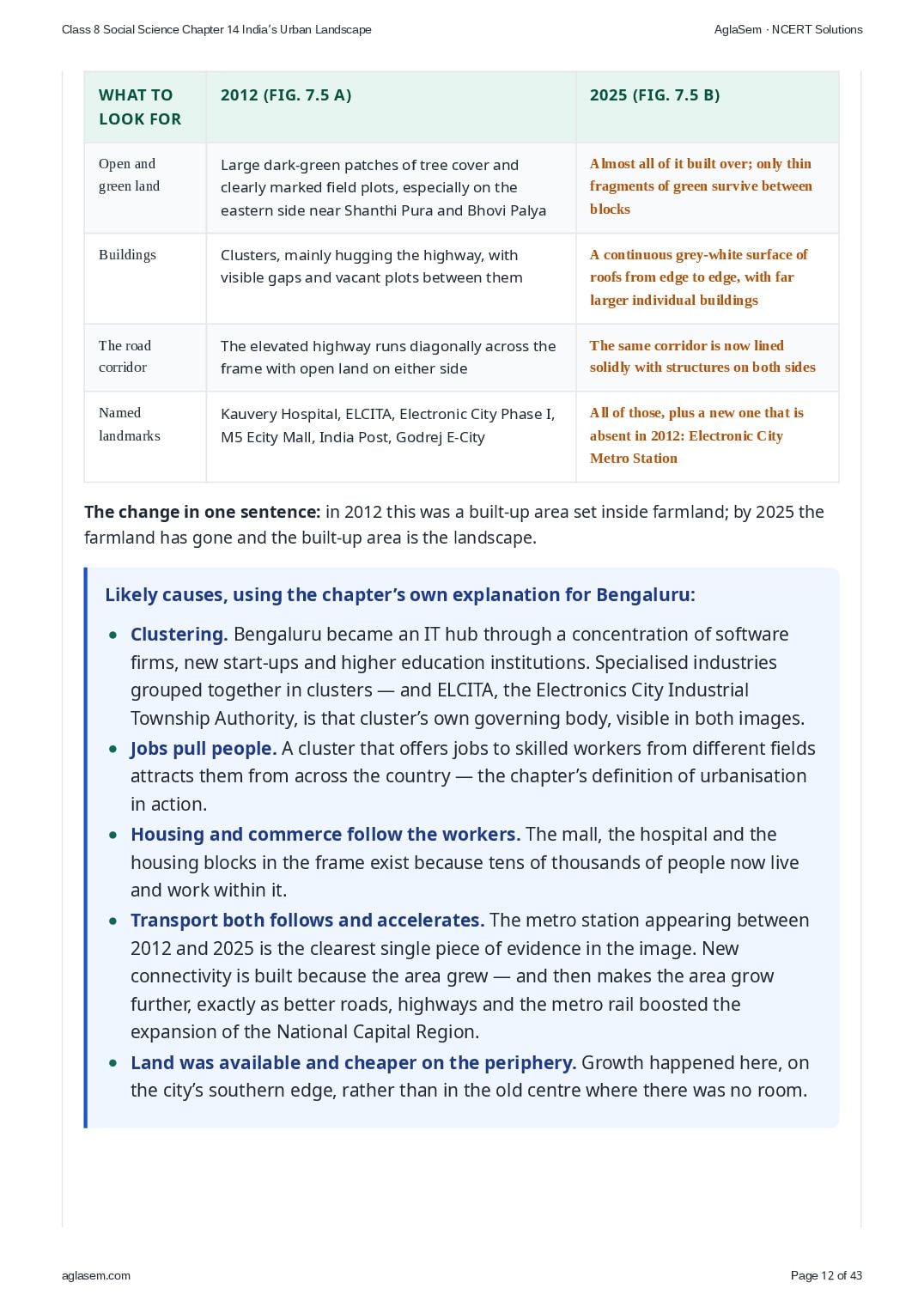
- Observe and compare the two satellite images of an area of Bengaluru (Fig. 7.5). They are from 2012 and 2025, respectively. What are your observations? What has changed? Guess what might be the causes for the change.
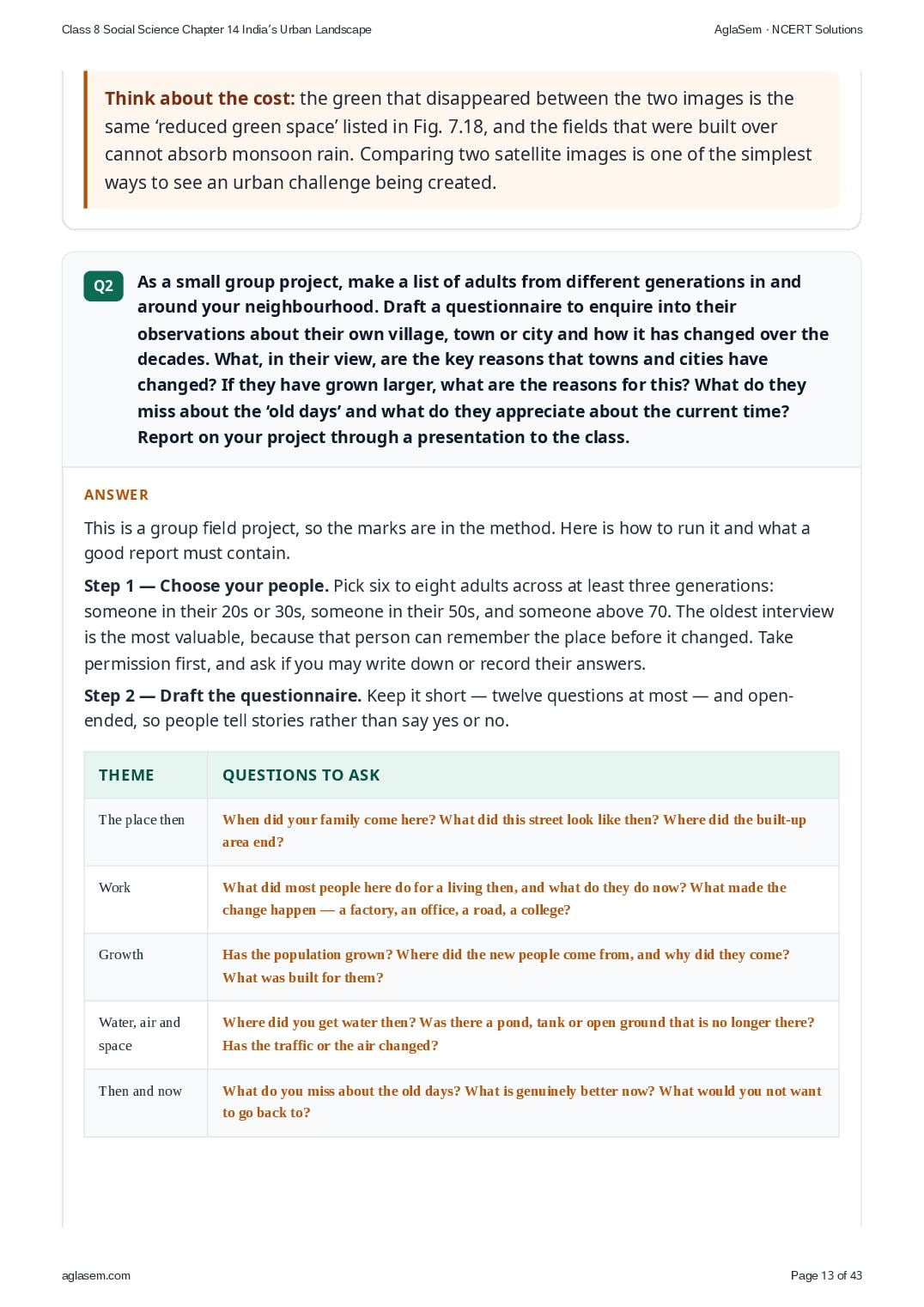
- As a small group project, make a list of adults from different generations in and around your neighbourhood. Draft a questionnaire to enquire into their observations about their own village, town or city and how it has changed over the decades. What, in their view, are the key reasons that towns and cities have changed? If they have grown larger, what are the reasons for this? What do they miss about the ‘old days’ and what do they appreciate about the current time? Report on your project through a presentation to the class.
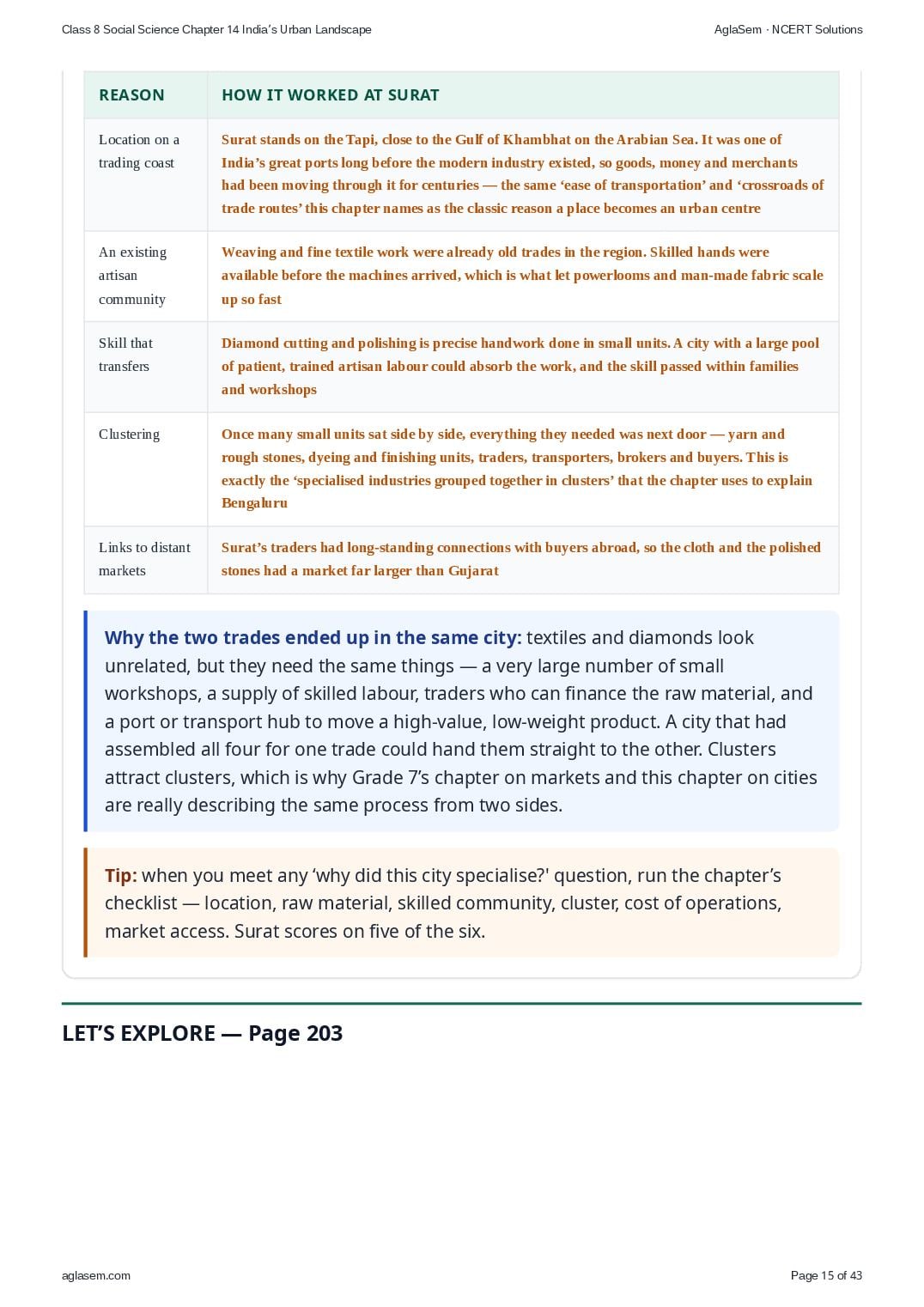
- What were the reasons that Surat became a textile manufacturing and diamond-cutting hub? (Hint: Recall from your Grade 7 Chapter ‘Understanding Markets’.)
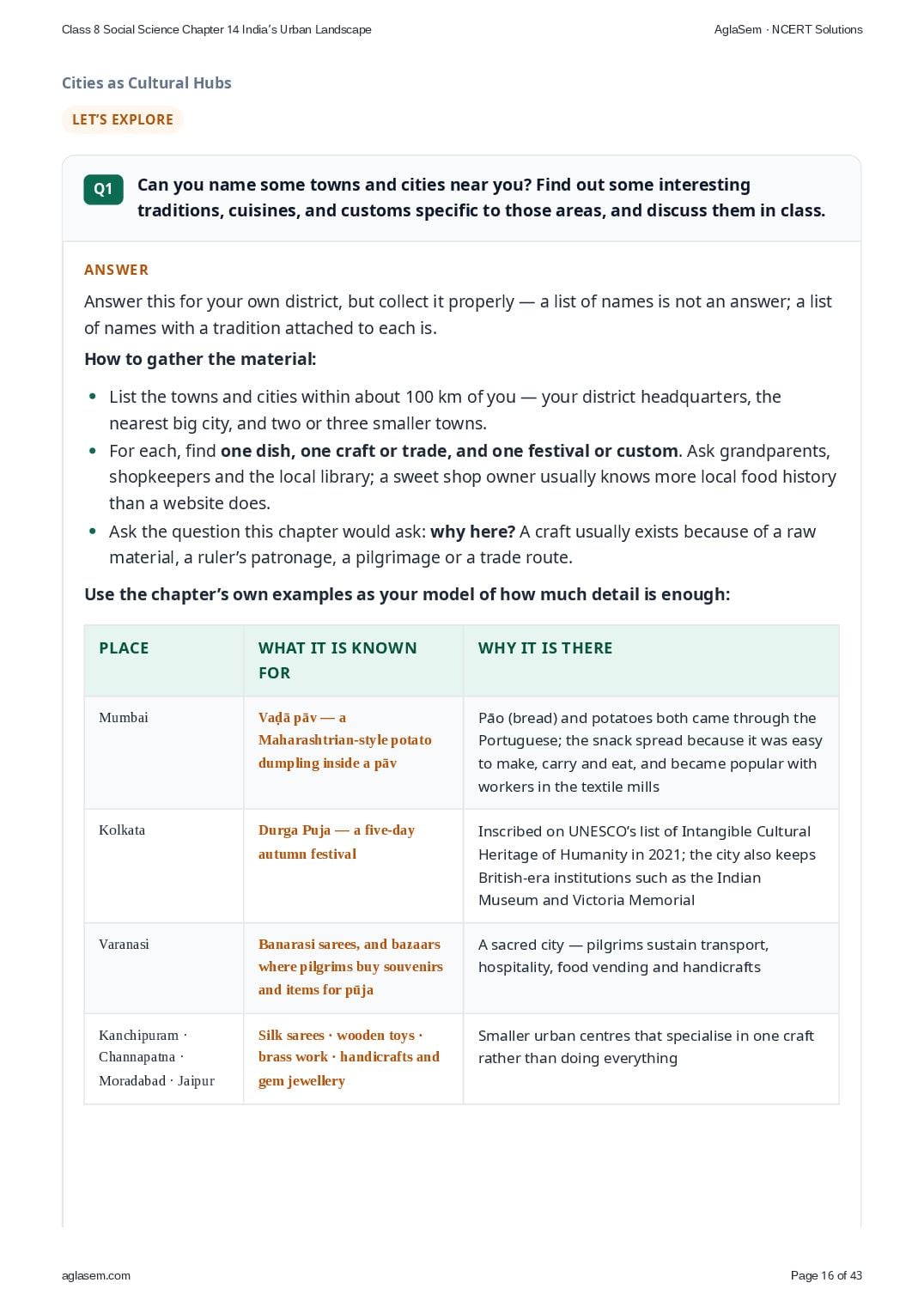
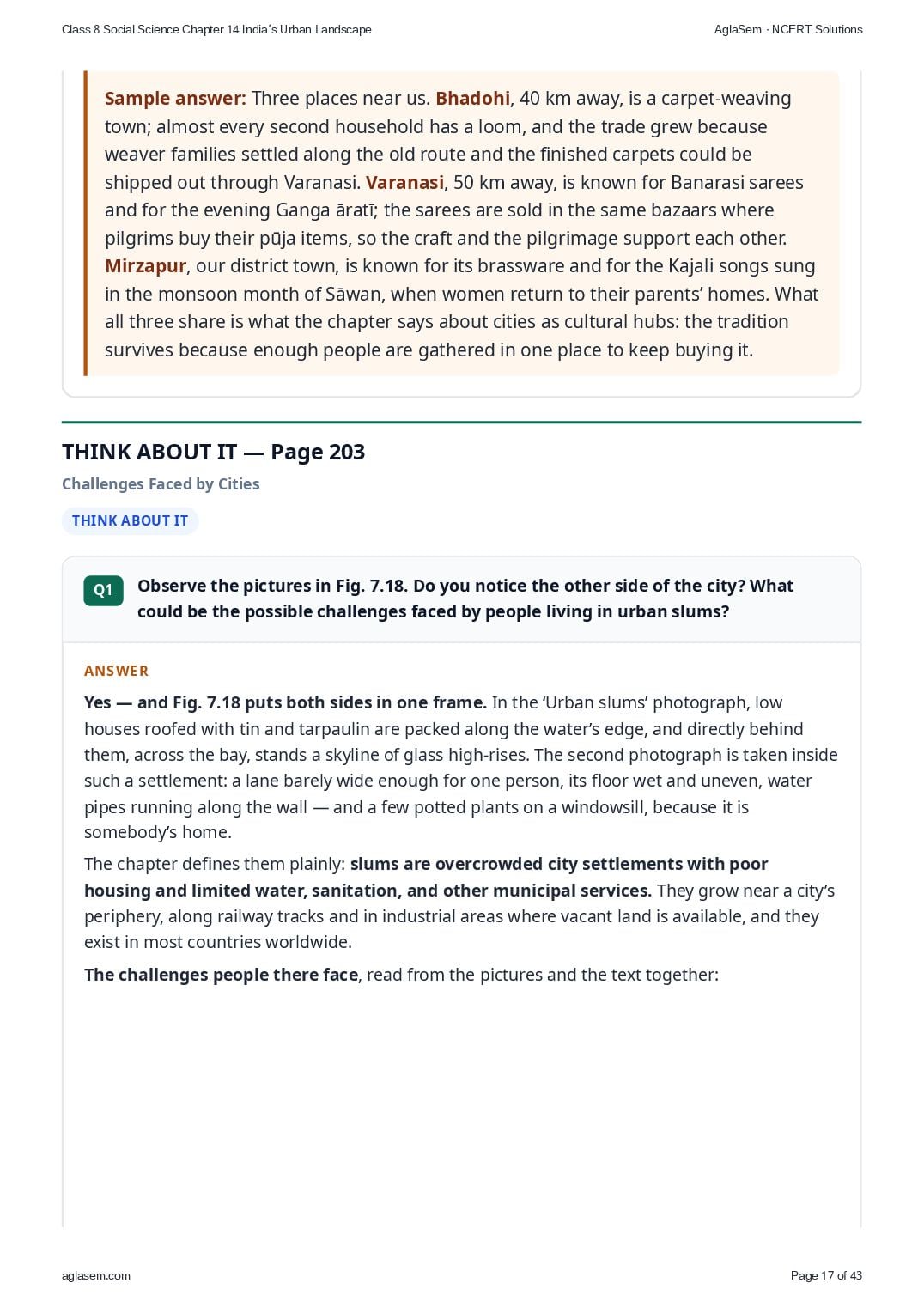
- Can you name some towns and cities near you? Find out some interesting traditions, cuisines, and customs specific to those areas, and discuss them in class.
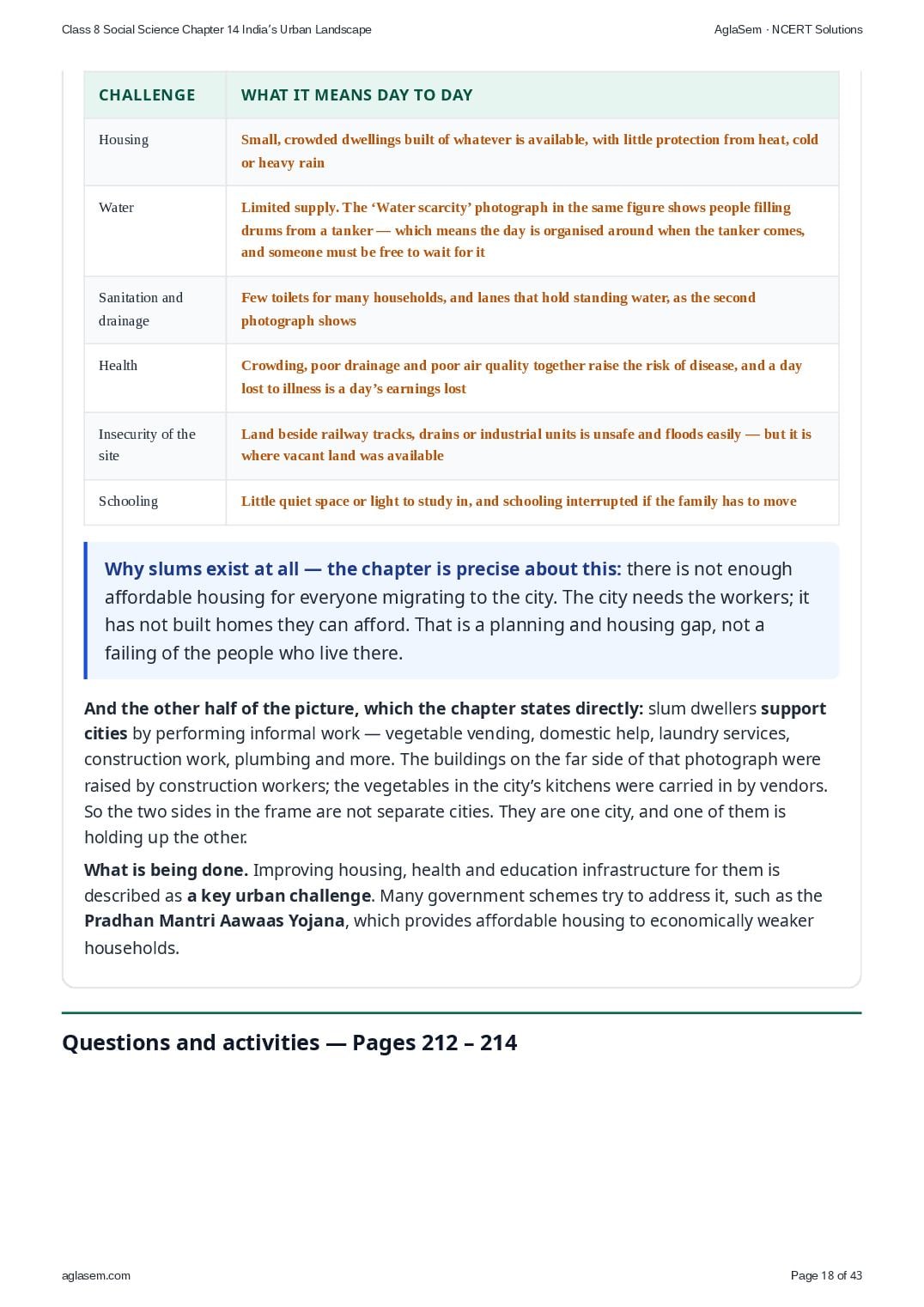
- Observe the pictures in Fig. 7.18. Do you notice the other side of the city? What could be the possible challenges faced by people living in urban slums?
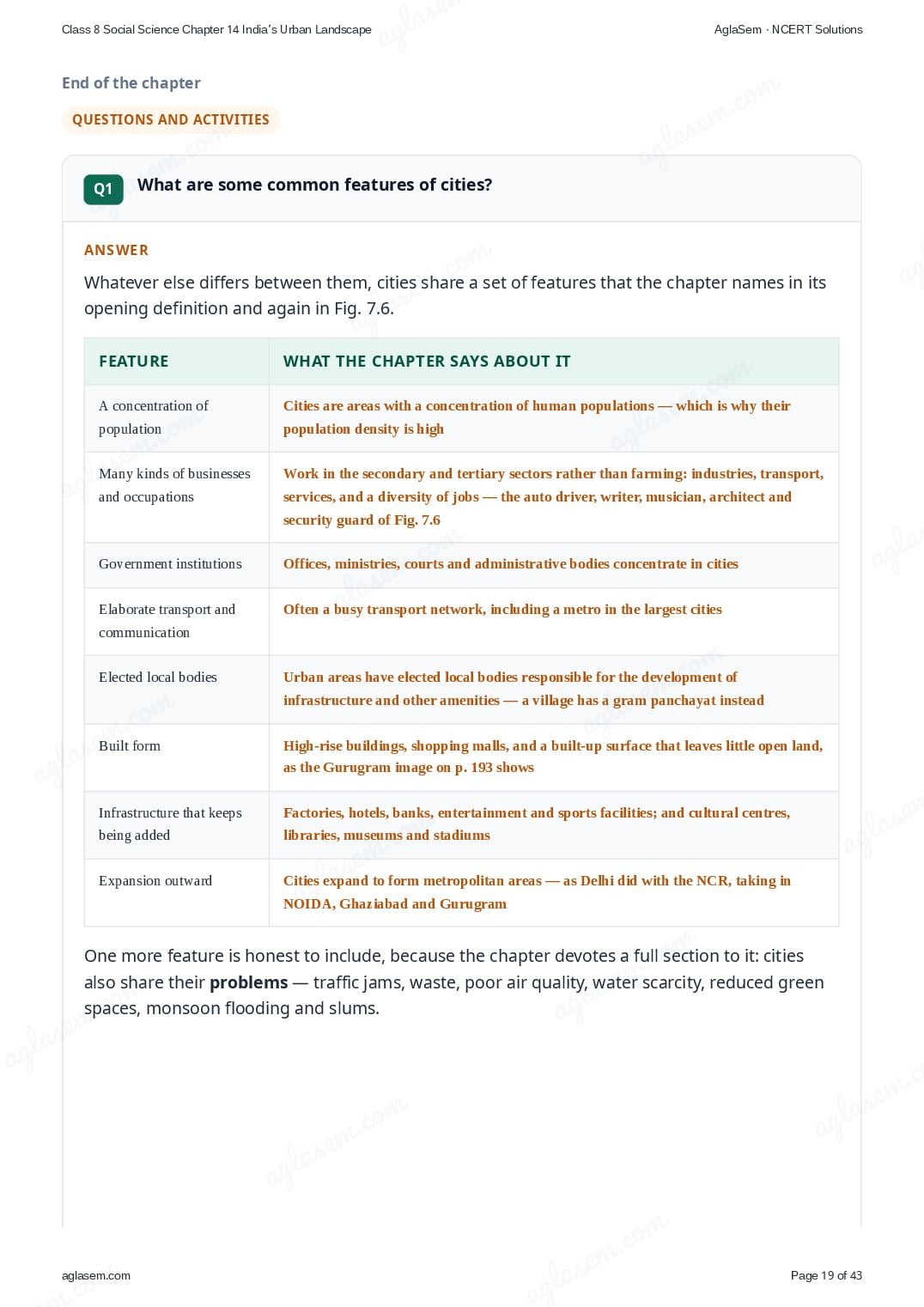
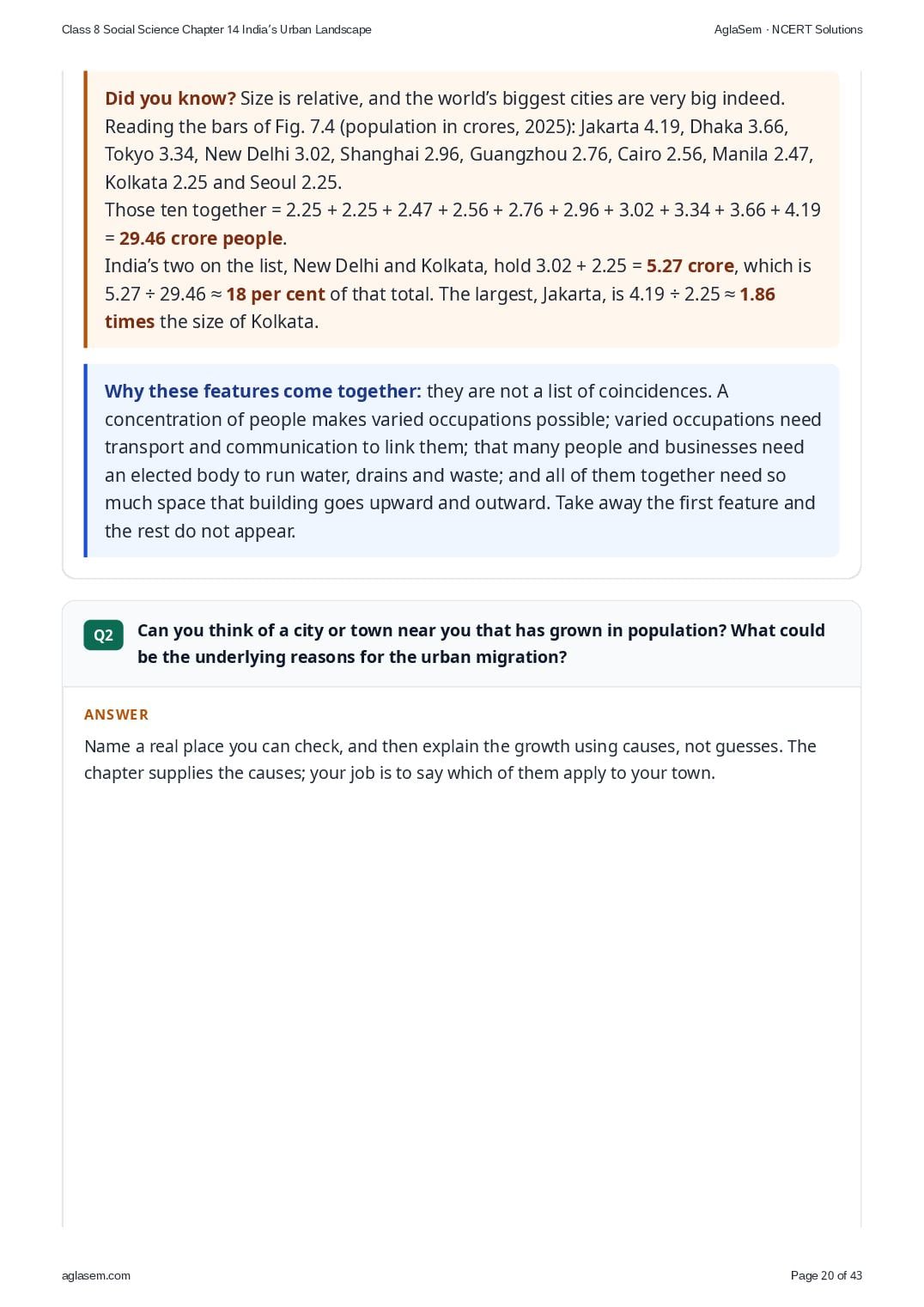
- What are some common features of cities?
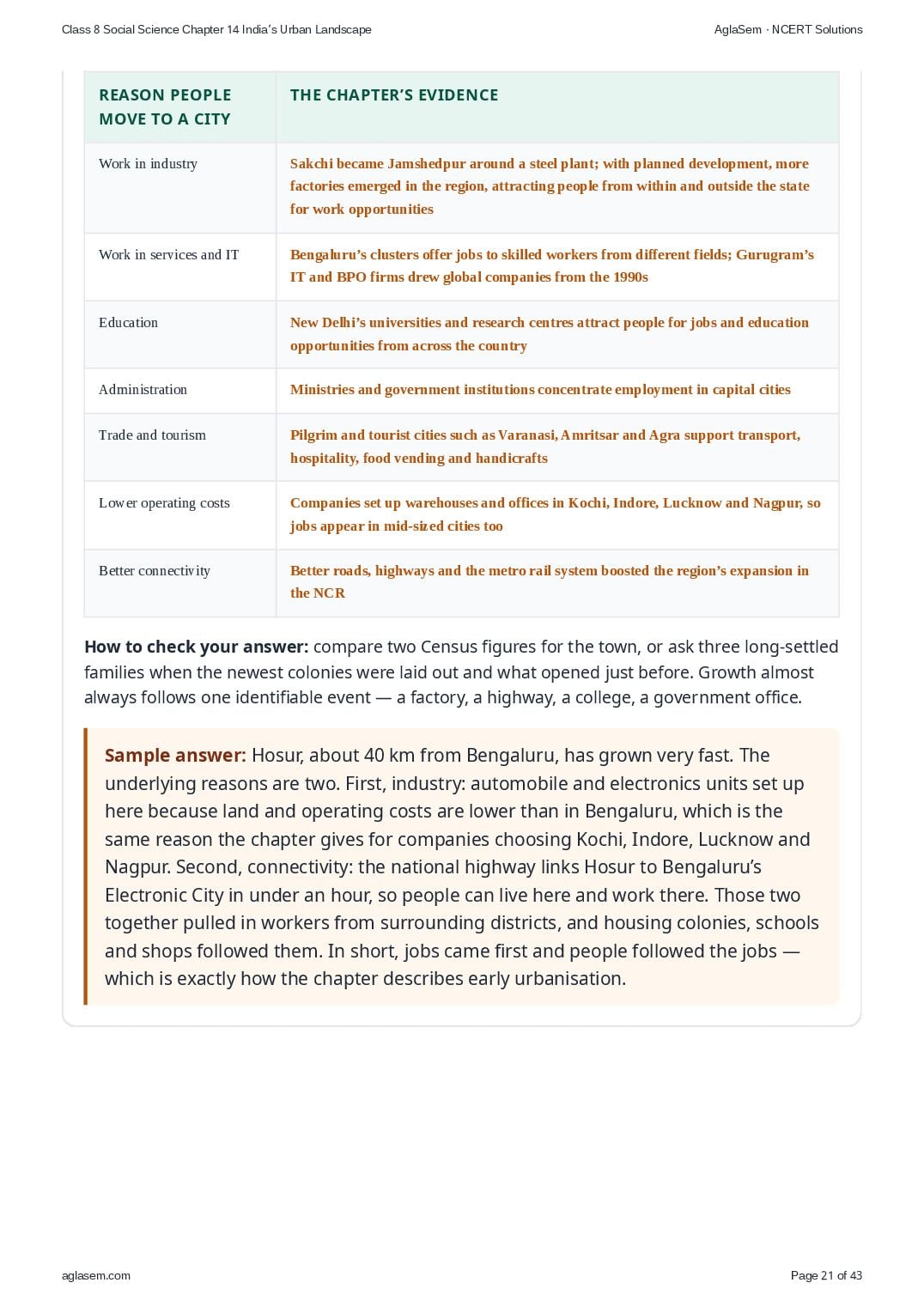
- Can you think of a city or town near you that has grown in population? What could be the underlying reasons for the urban migration?
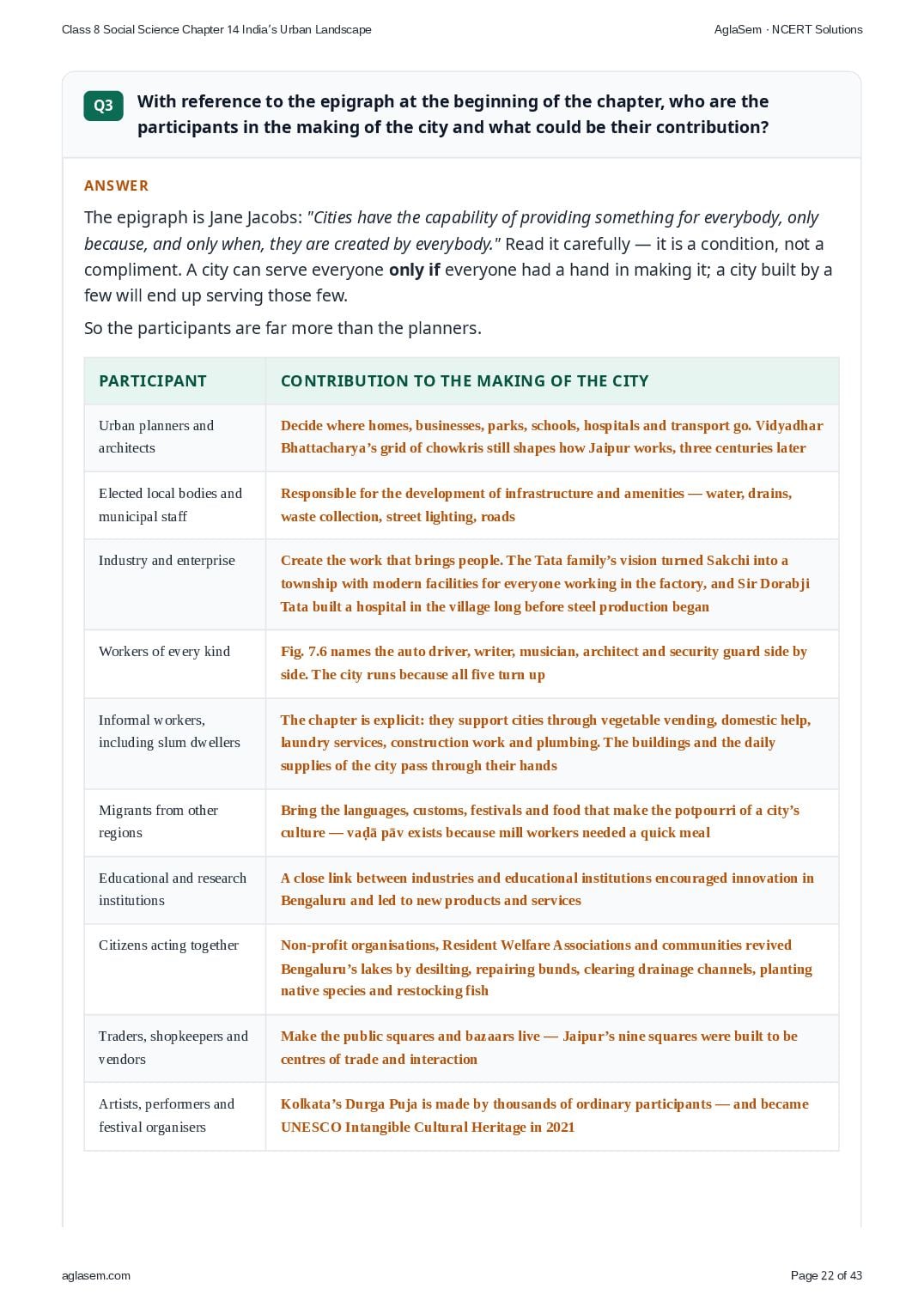
- With reference to the epigraph at the beginning of the chapter, who are the participants in the making of the city and what could be their contribution?
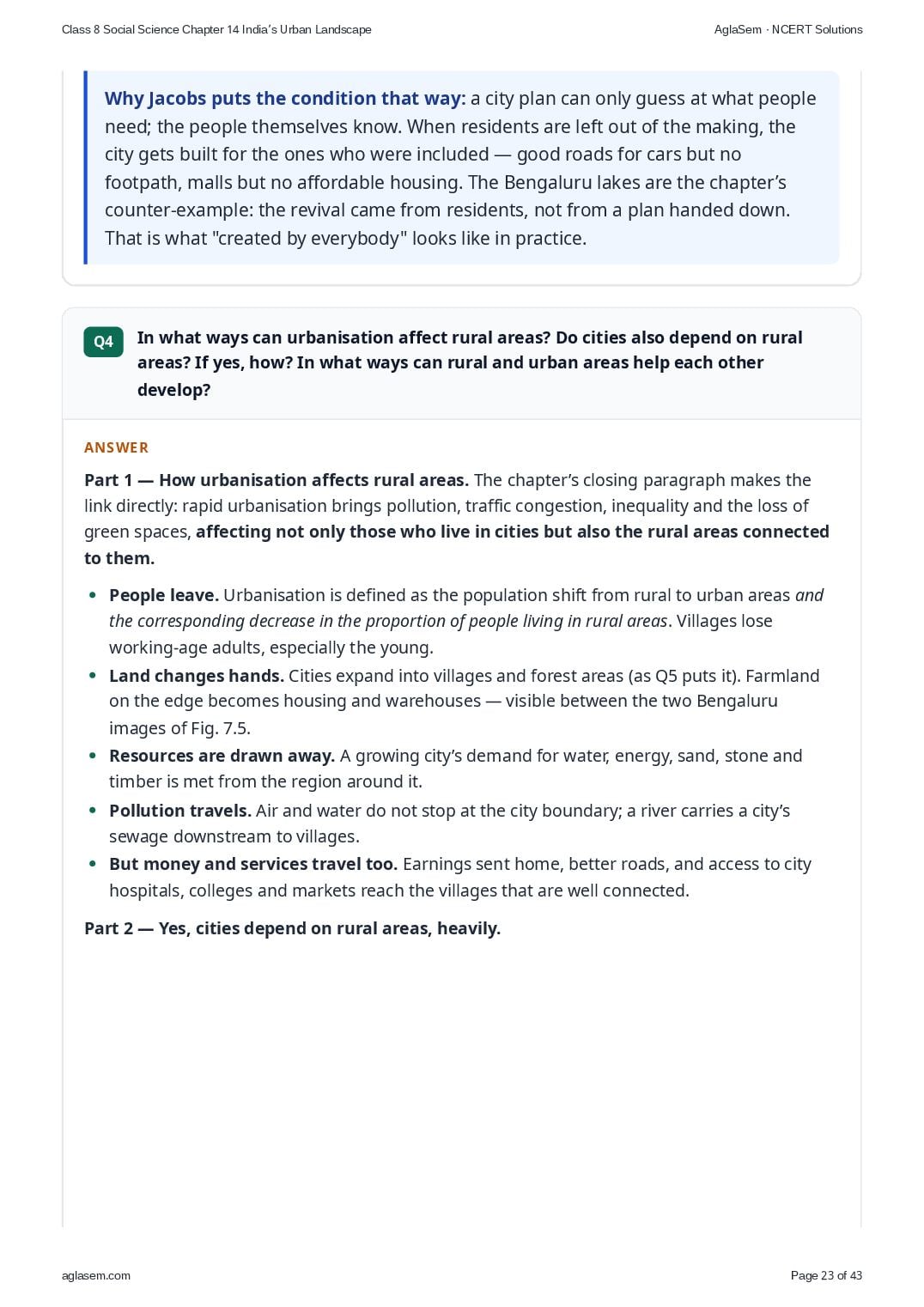
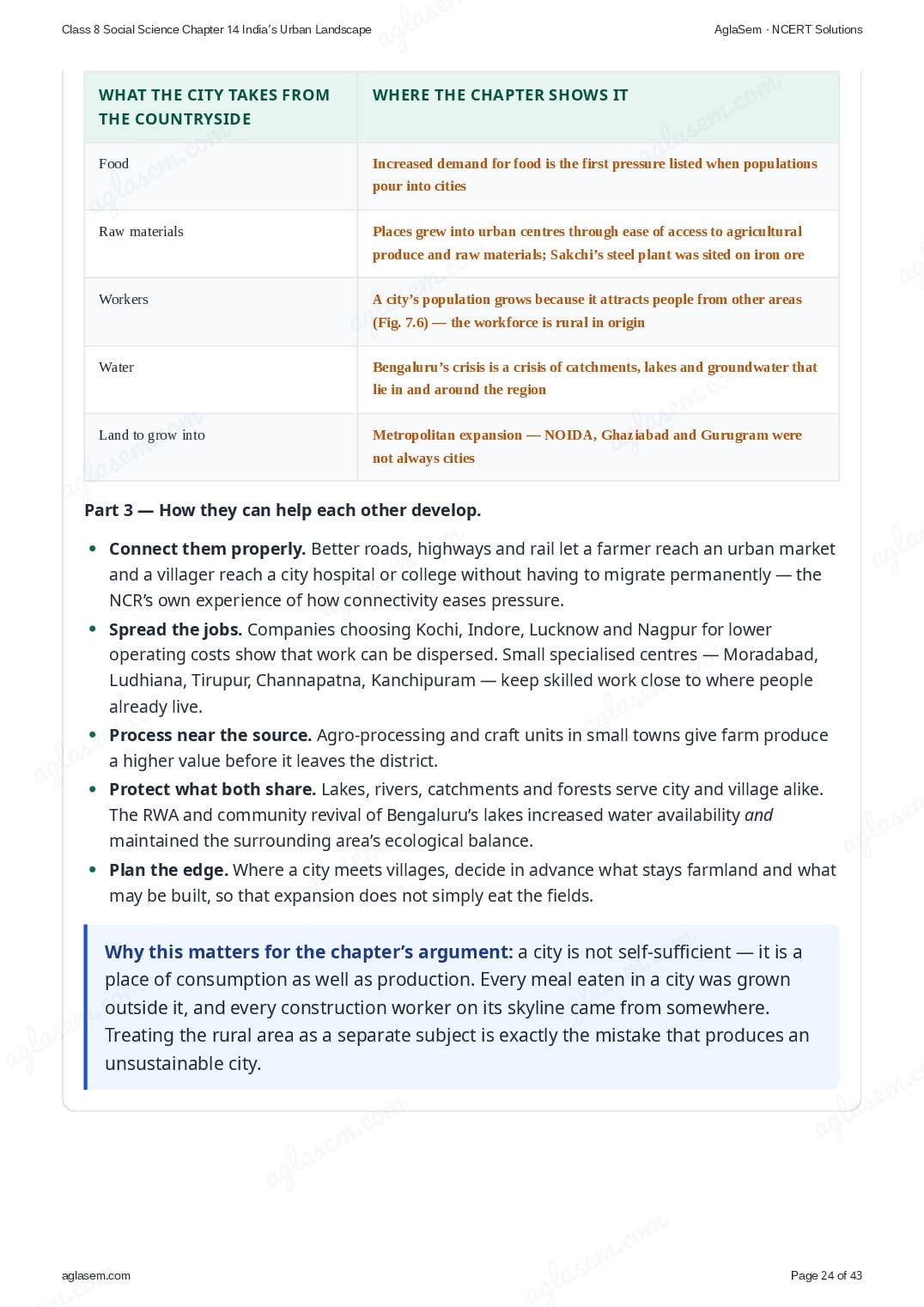
- In what ways can urbanisation affect rural areas? Do cities also depend on rural areas? If yes, how? In what ways can rural and urban areas help each other develop?
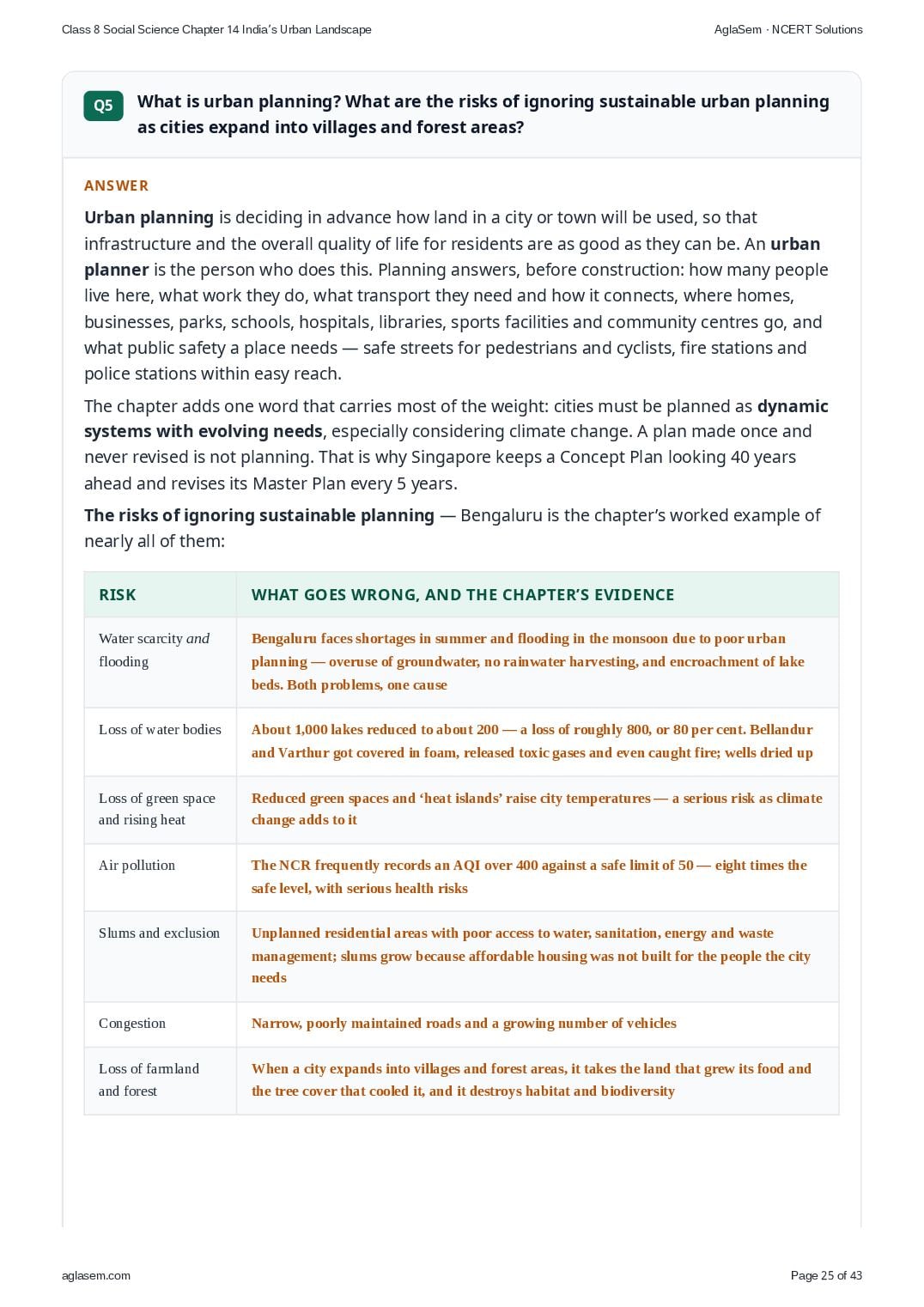
- What is urban planning? What are the risks of ignoring sustainable urban planning as cities expand into villages and forest areas?
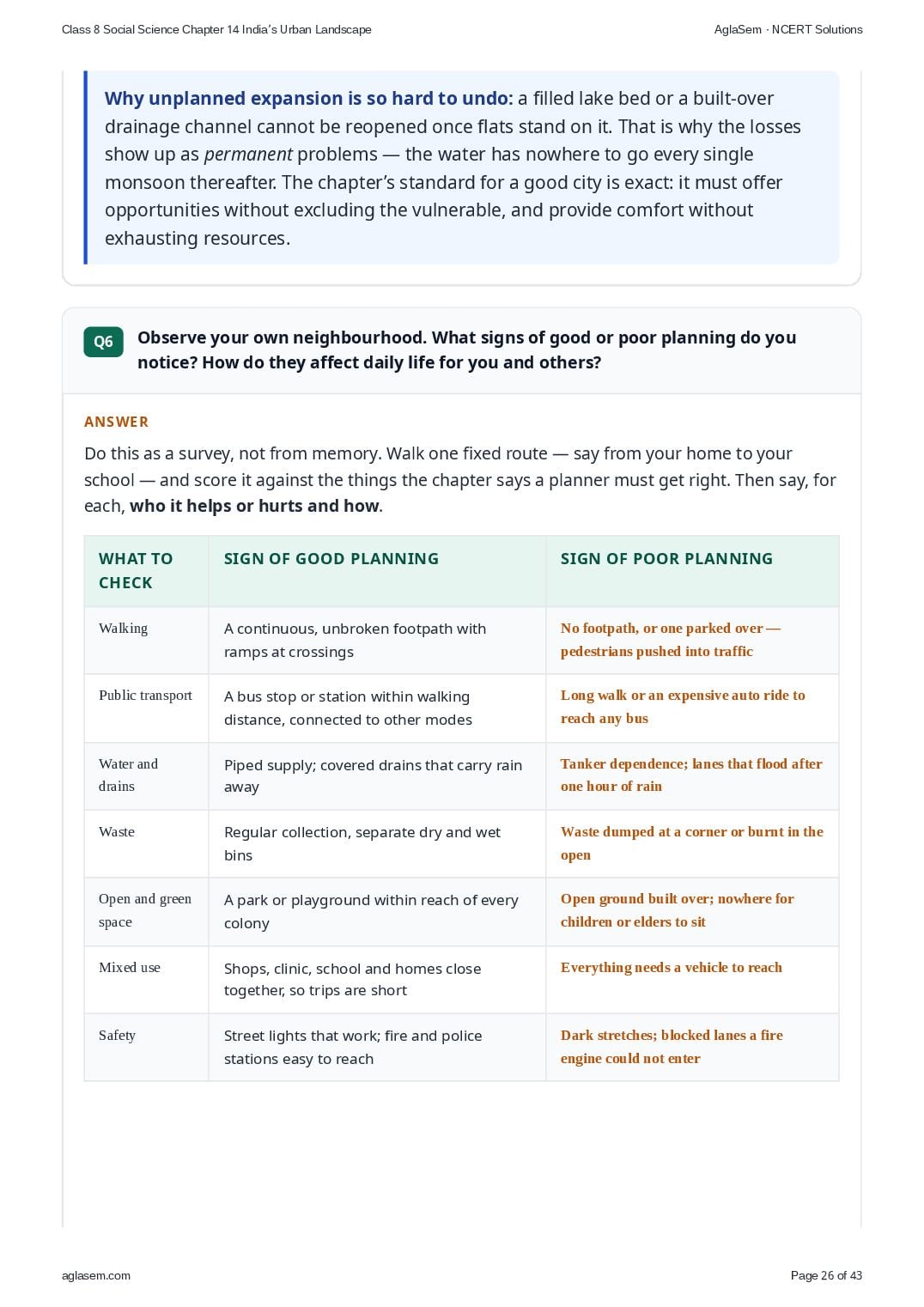
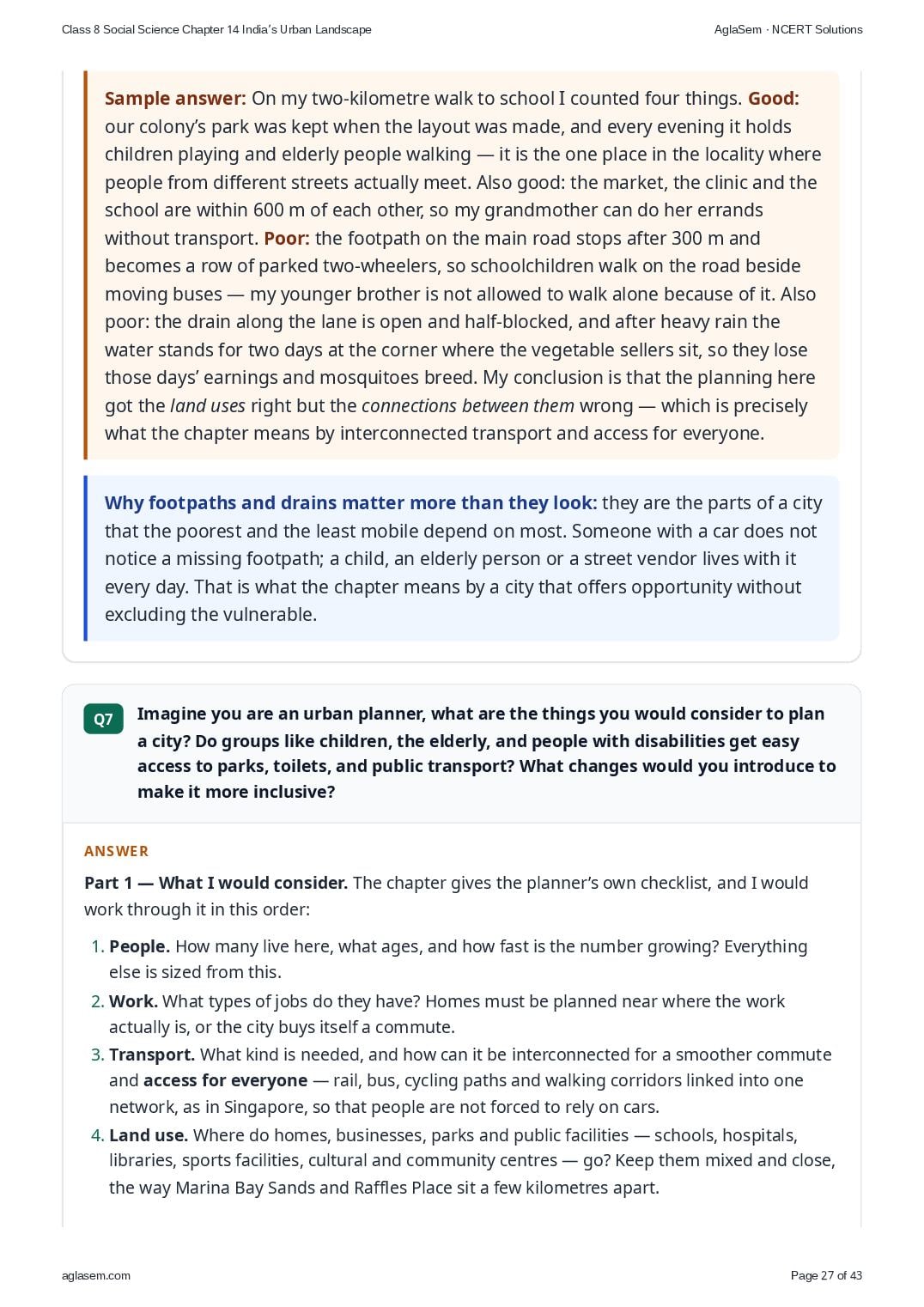
- Observe your own neighbourhood. What signs of good or poor planning do you notice? How do they affect daily life for you and others?
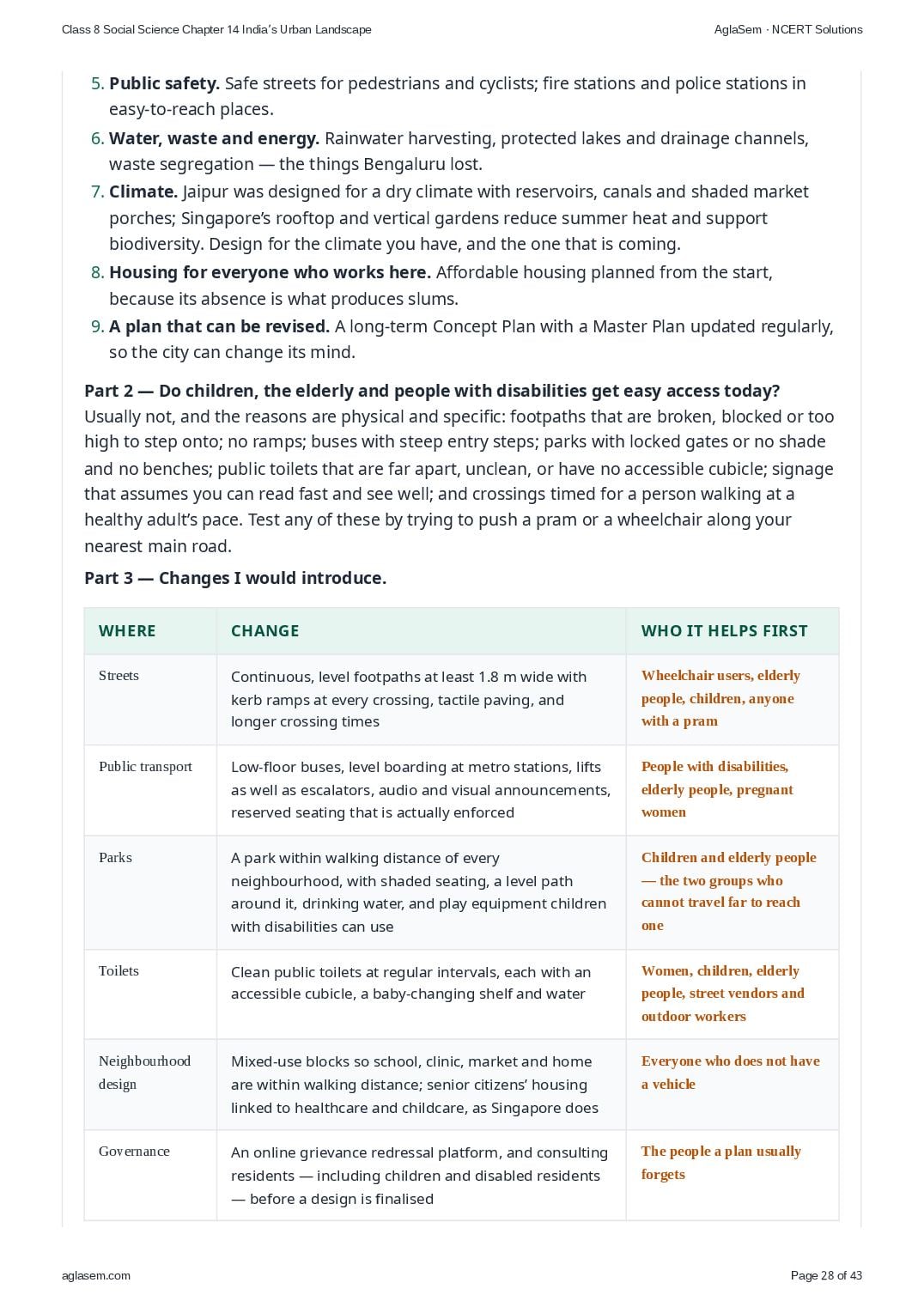
- Imagine you are an urban planner, what are the things you would consider to plan a city? Do groups like children, the elderly, and people with disabilities get easy access to parks, toilets, and public transport? What changes would you introduce to make it more inclusive?
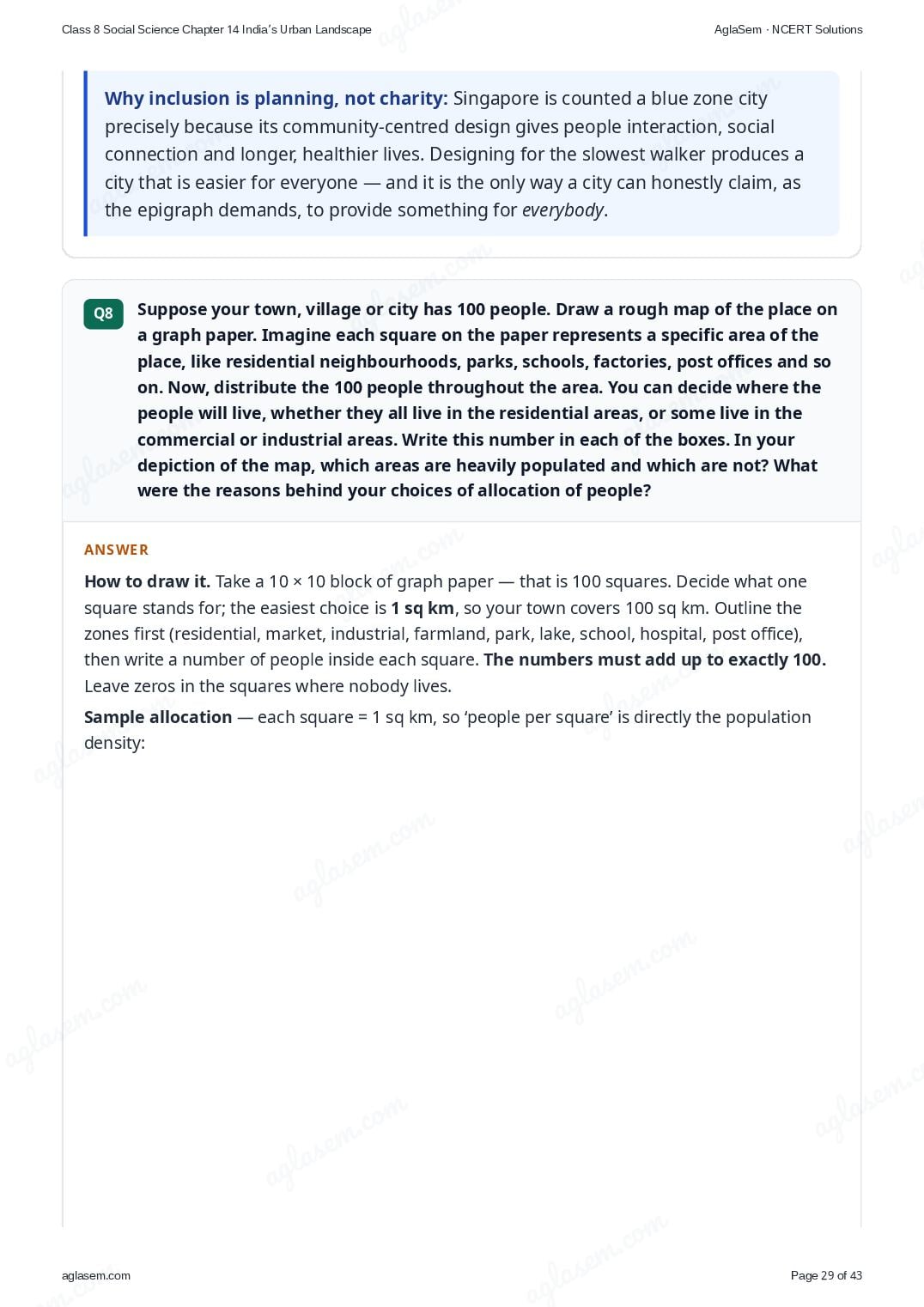
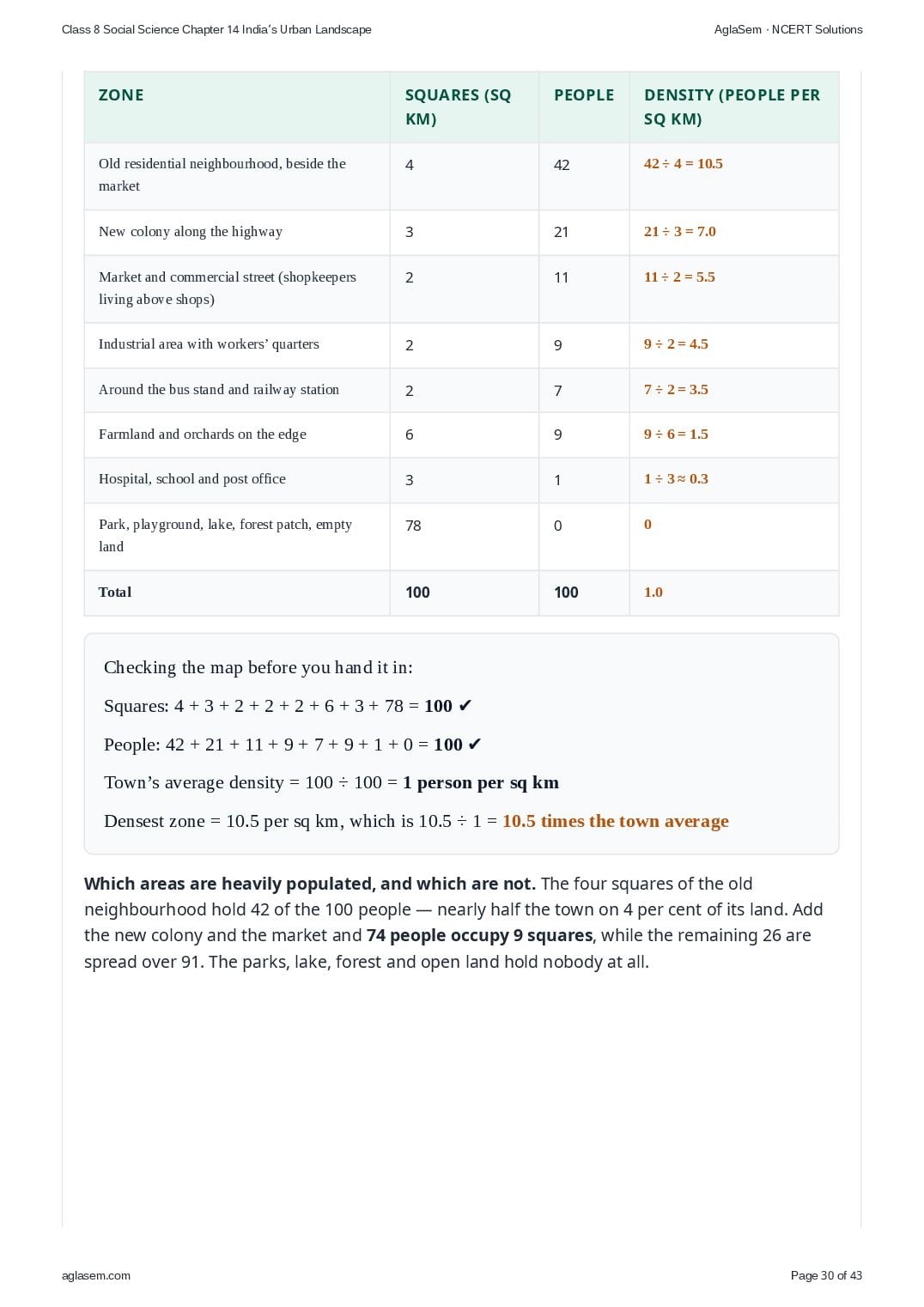
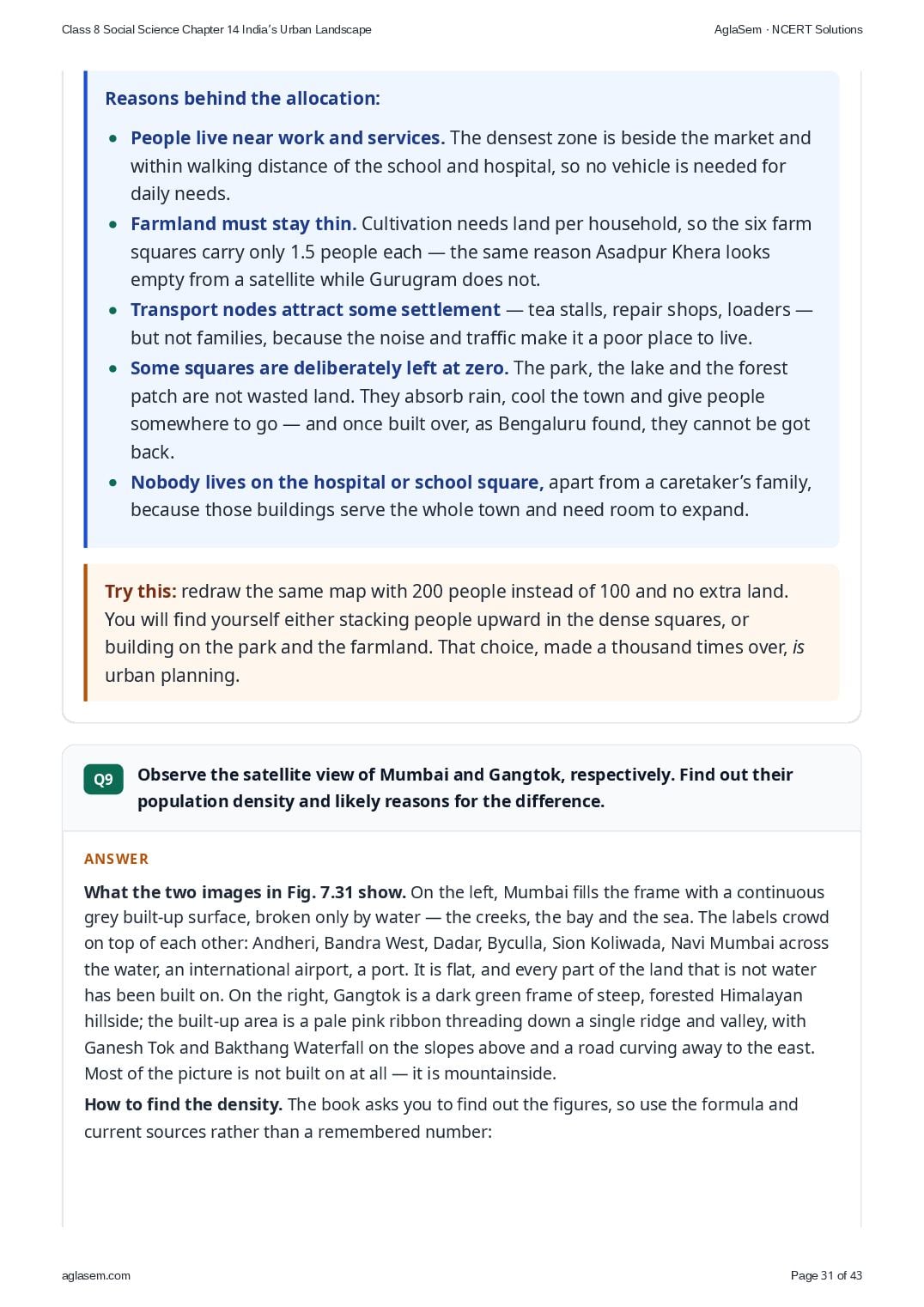
- Suppose your town, village or city has 100 people. Draw a rough map of the place on a graph paper. Imagine each square on the paper represents a specific area of the place, like residential neighbourhoods, parks, schools, factories, post offices and so on. Now, distribute the 100 people throughout the area. You can decide where the people will live, whether they all live in the residential areas, or some live in the commercial or industrial areas. Write this number in each of the boxes. In your depiction of the map, which areas are heavily populated and which are not? What were the reasons behind your choices of allocation of people?
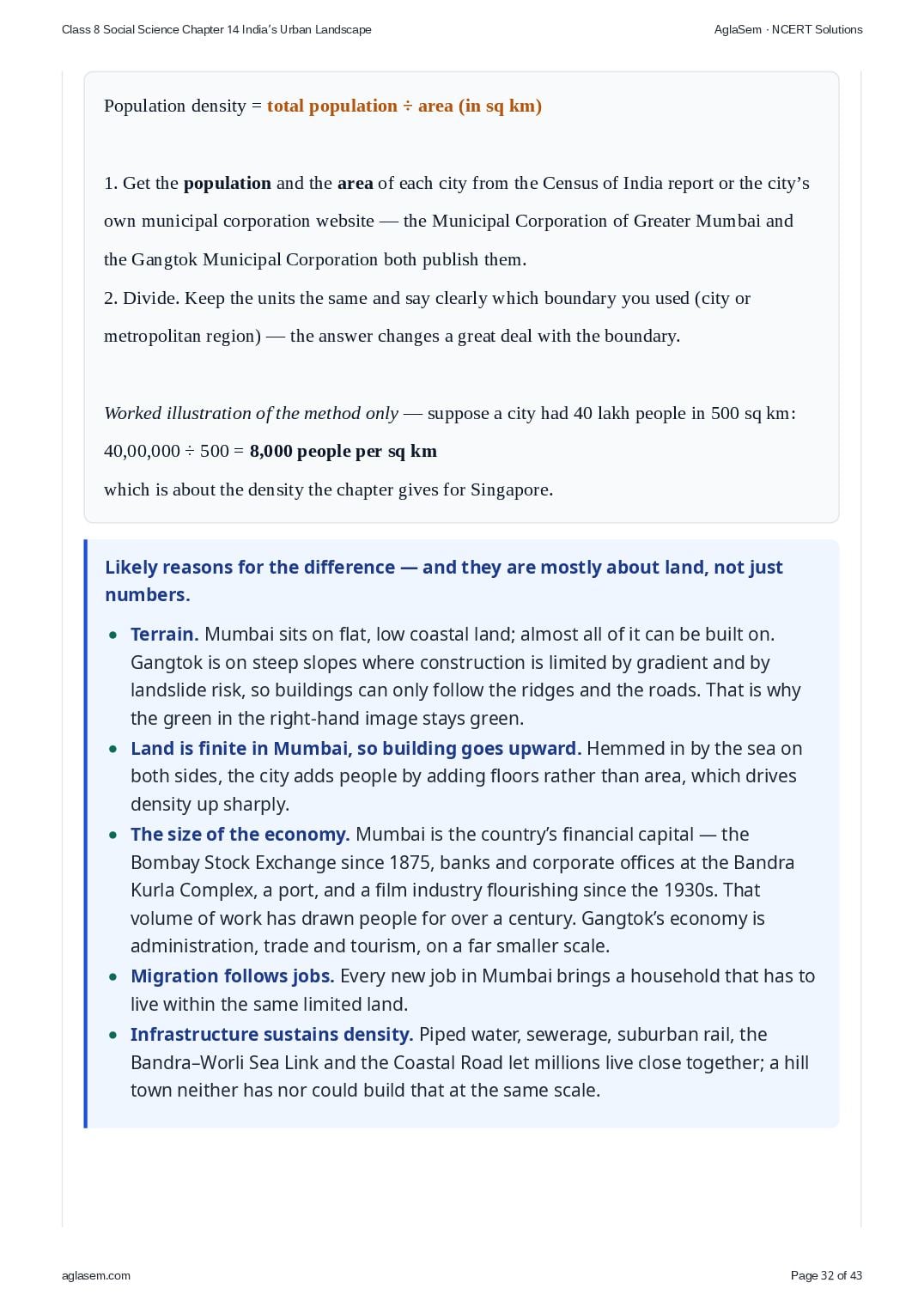
- Observe the satellite view of Mumbai and Gangtok, respectively. Find out their population density and likely reasons for the difference.
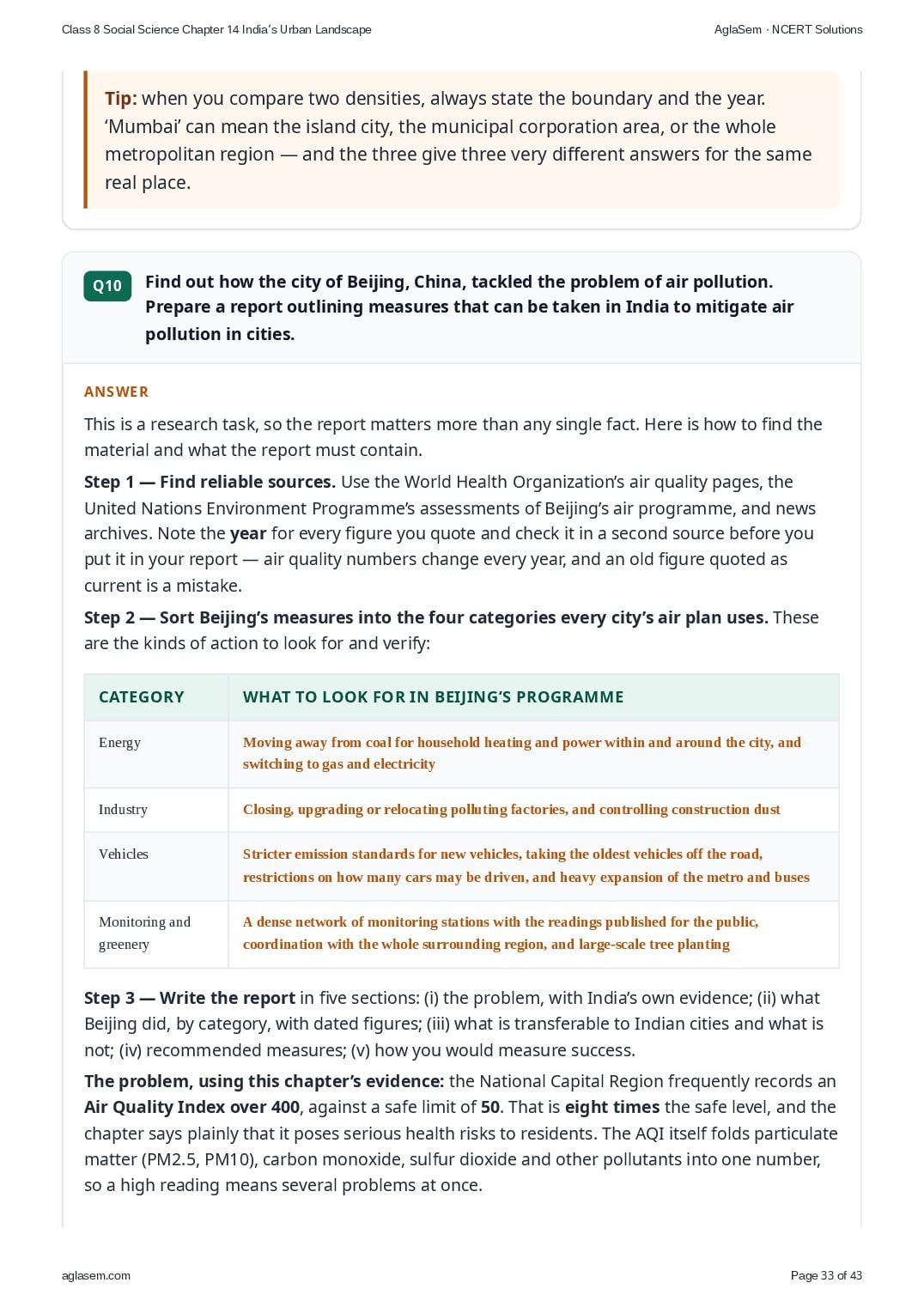
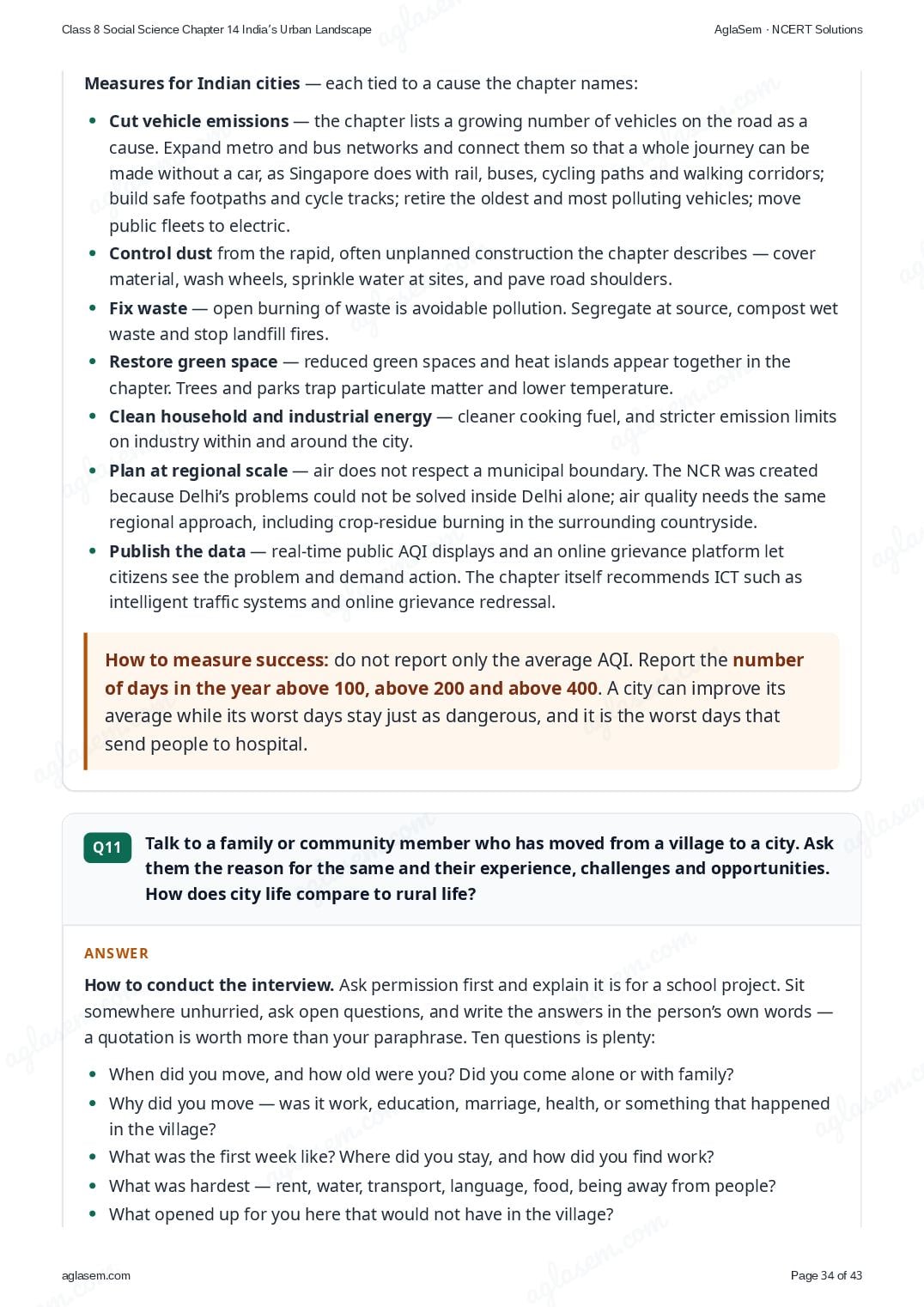
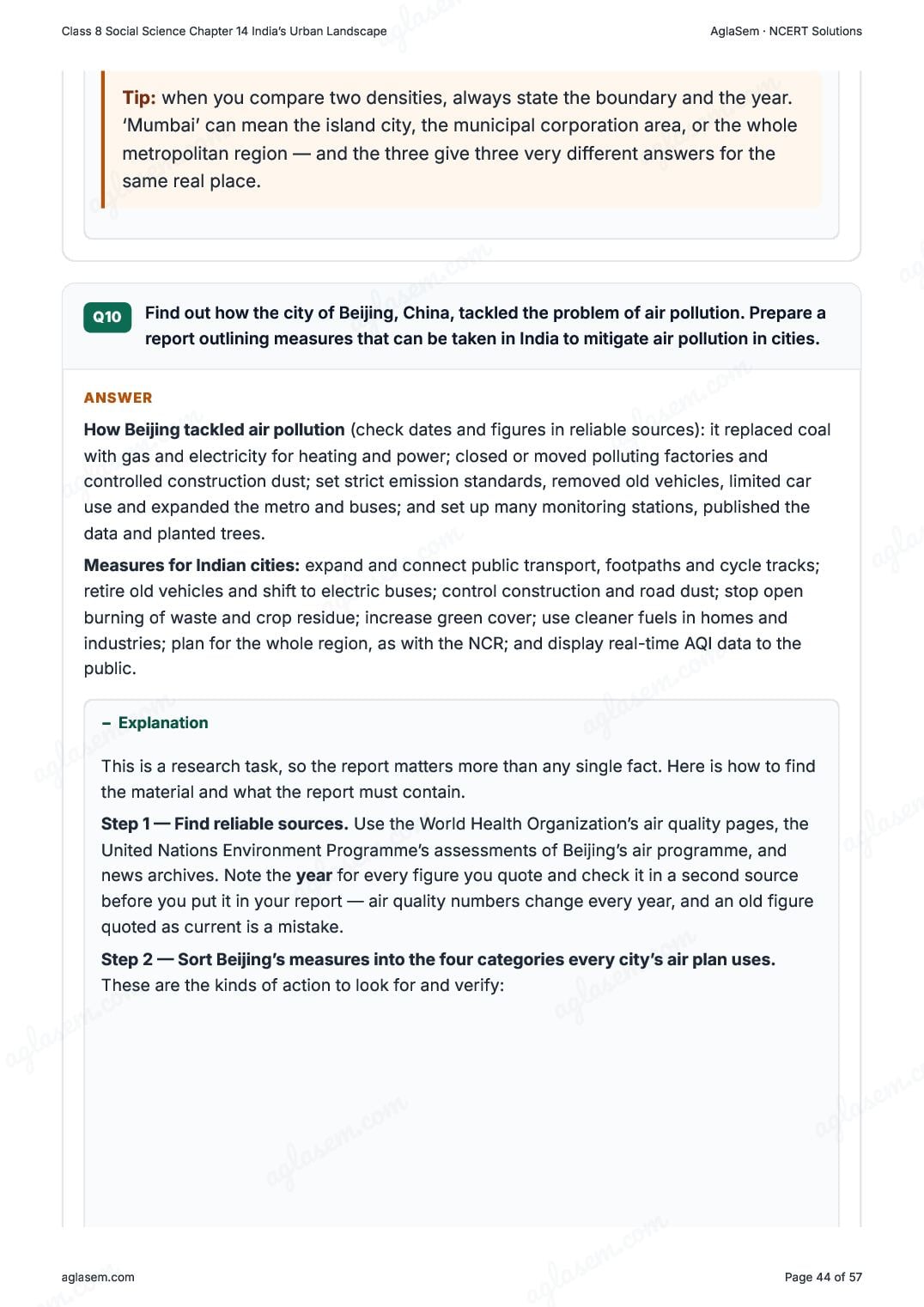
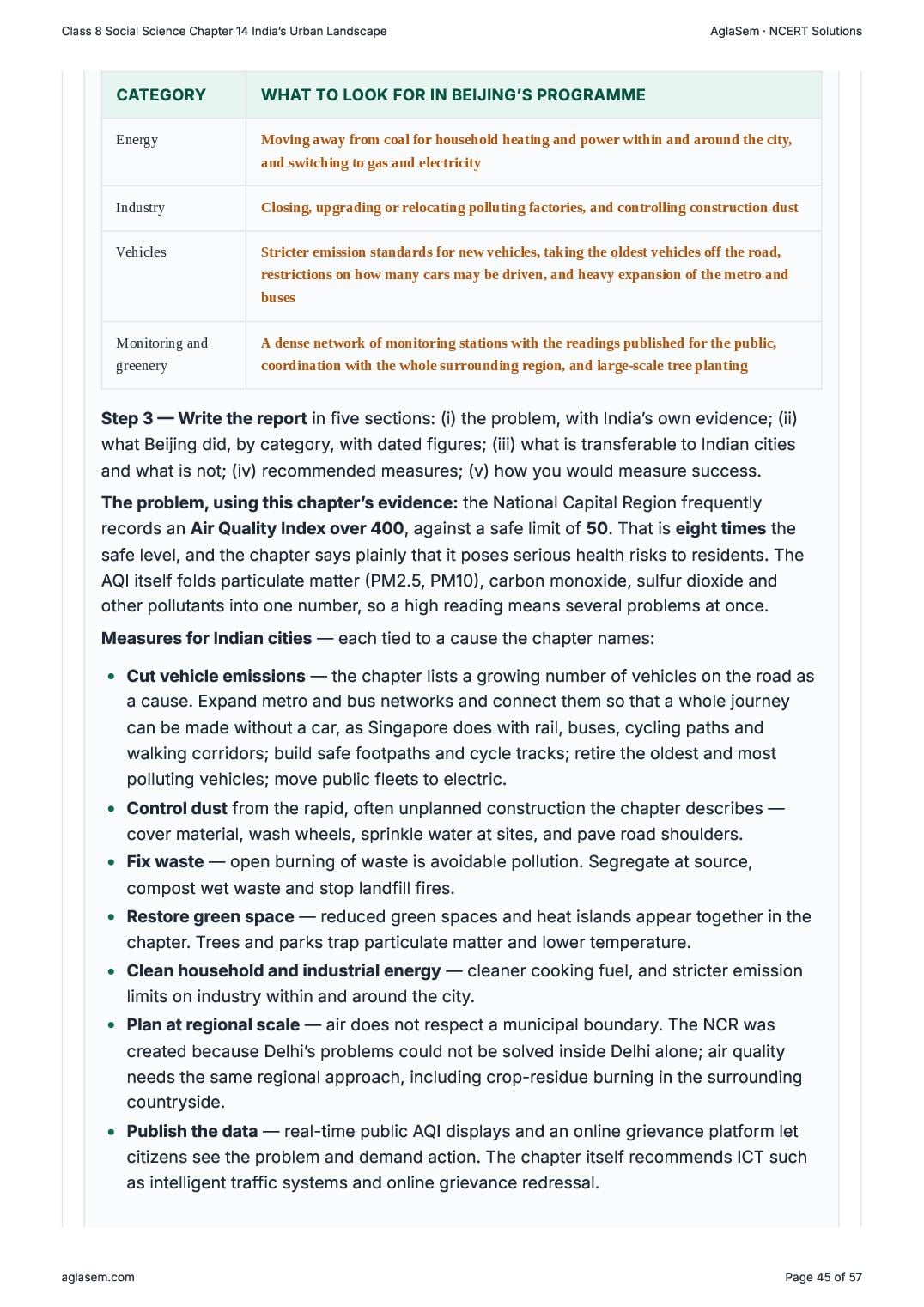
- Find out how the city of Beijing, China, tackled the problem of air pollution. Prepare a report outlining measures that can be taken in India to mitigate air pollution in cities.
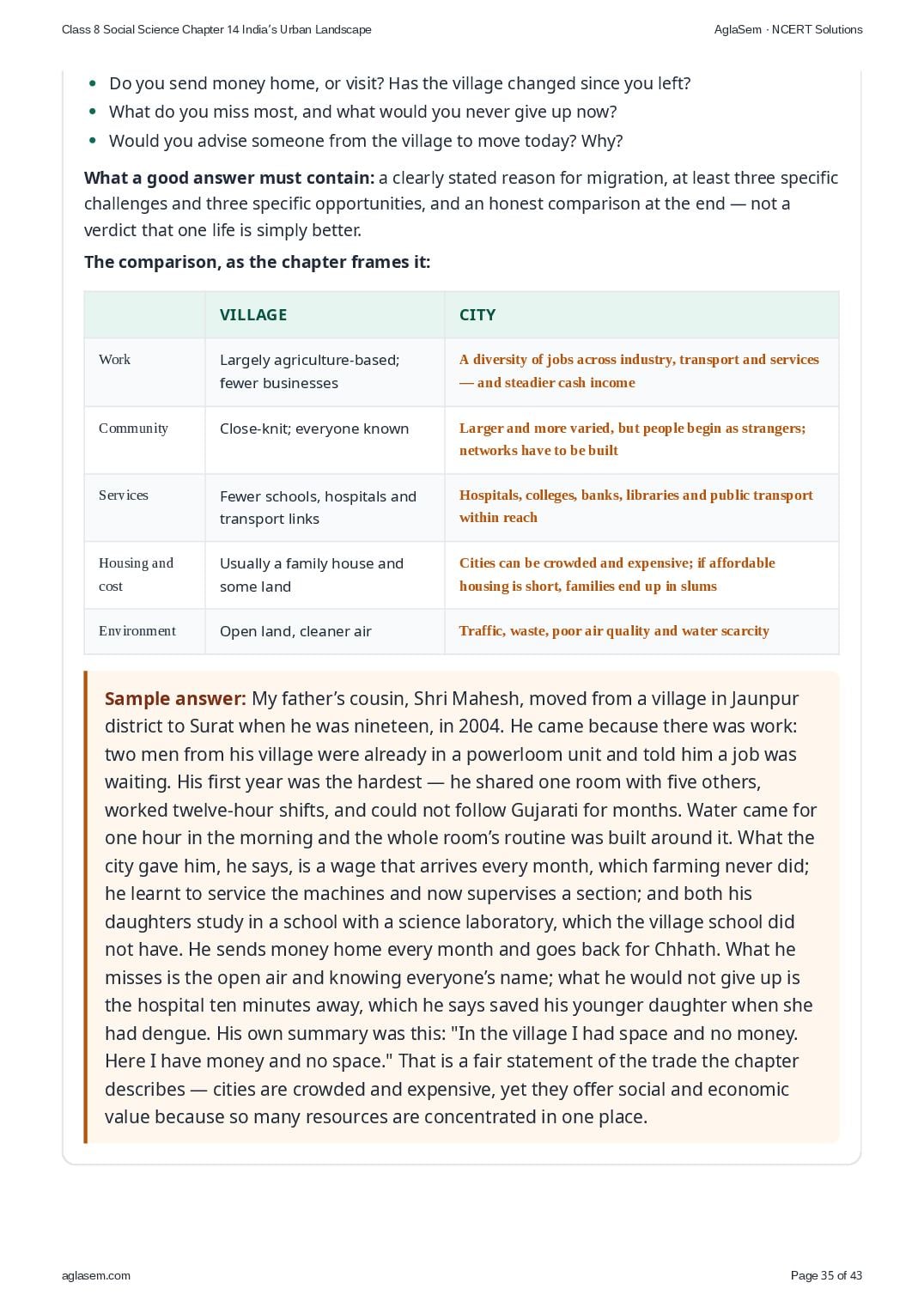
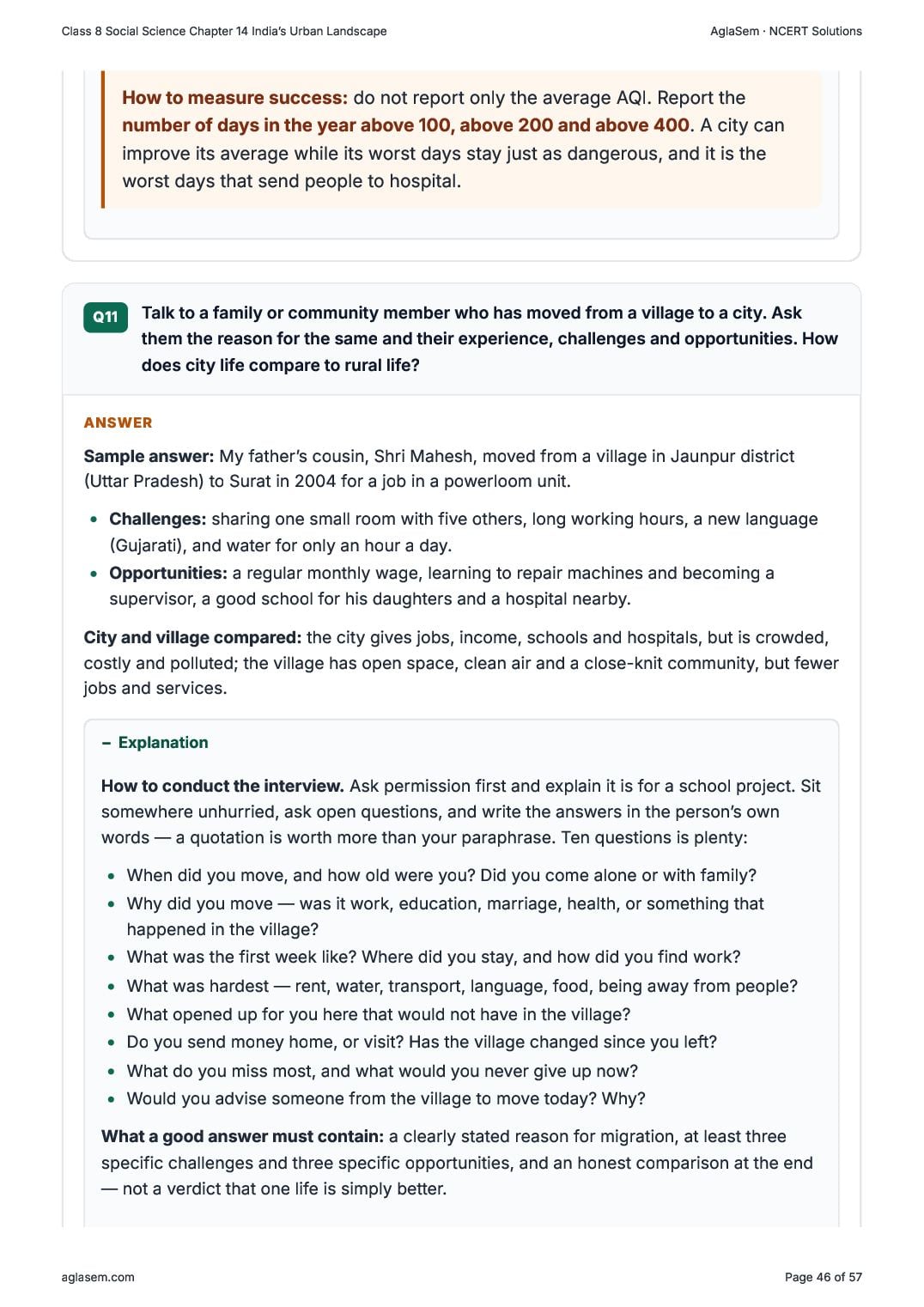
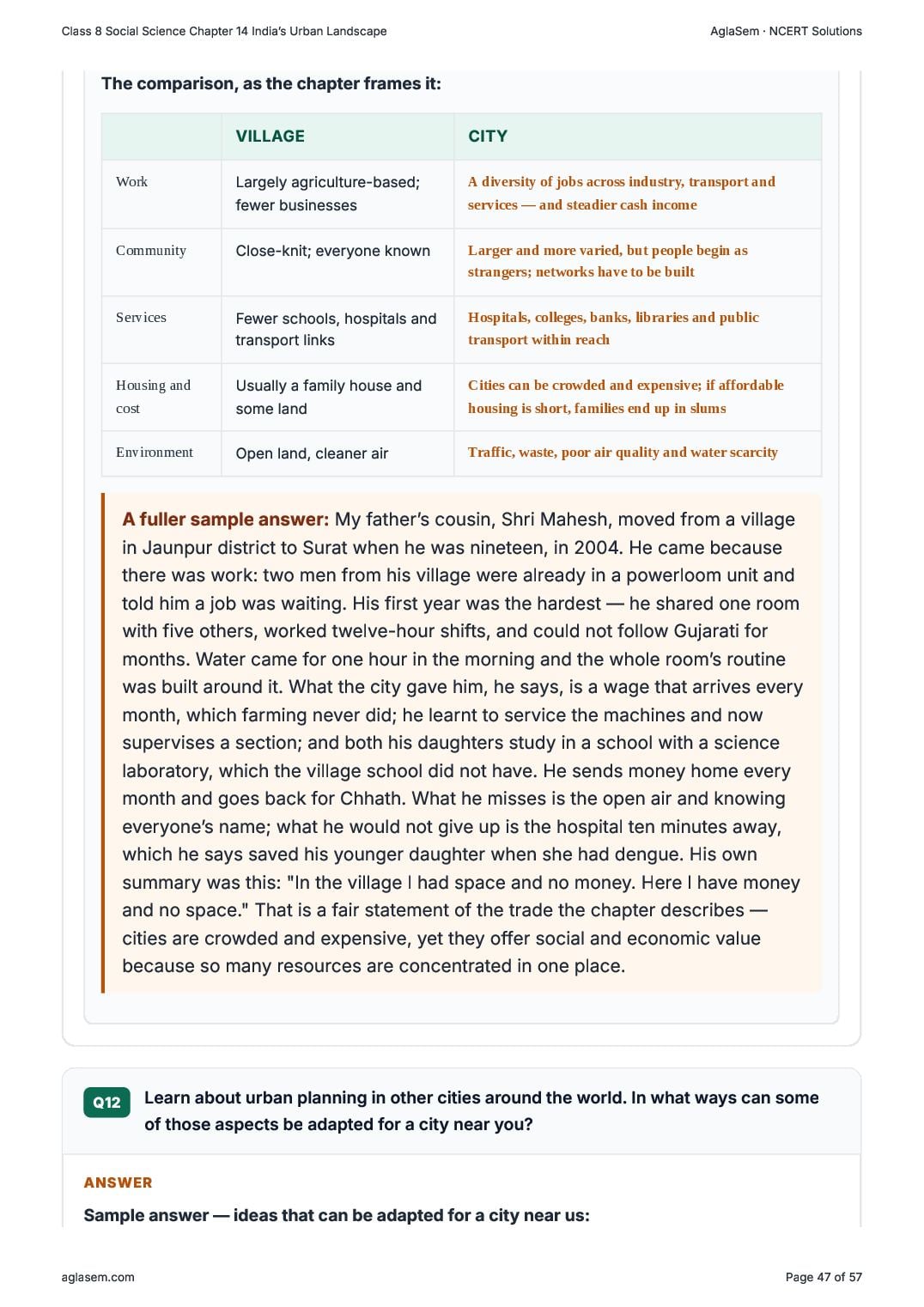
- Talk to a family or community member who has moved from a village to a city. Ask them the reason for the same and their experience, challenges and opportunities. How does city life compare to rural life?
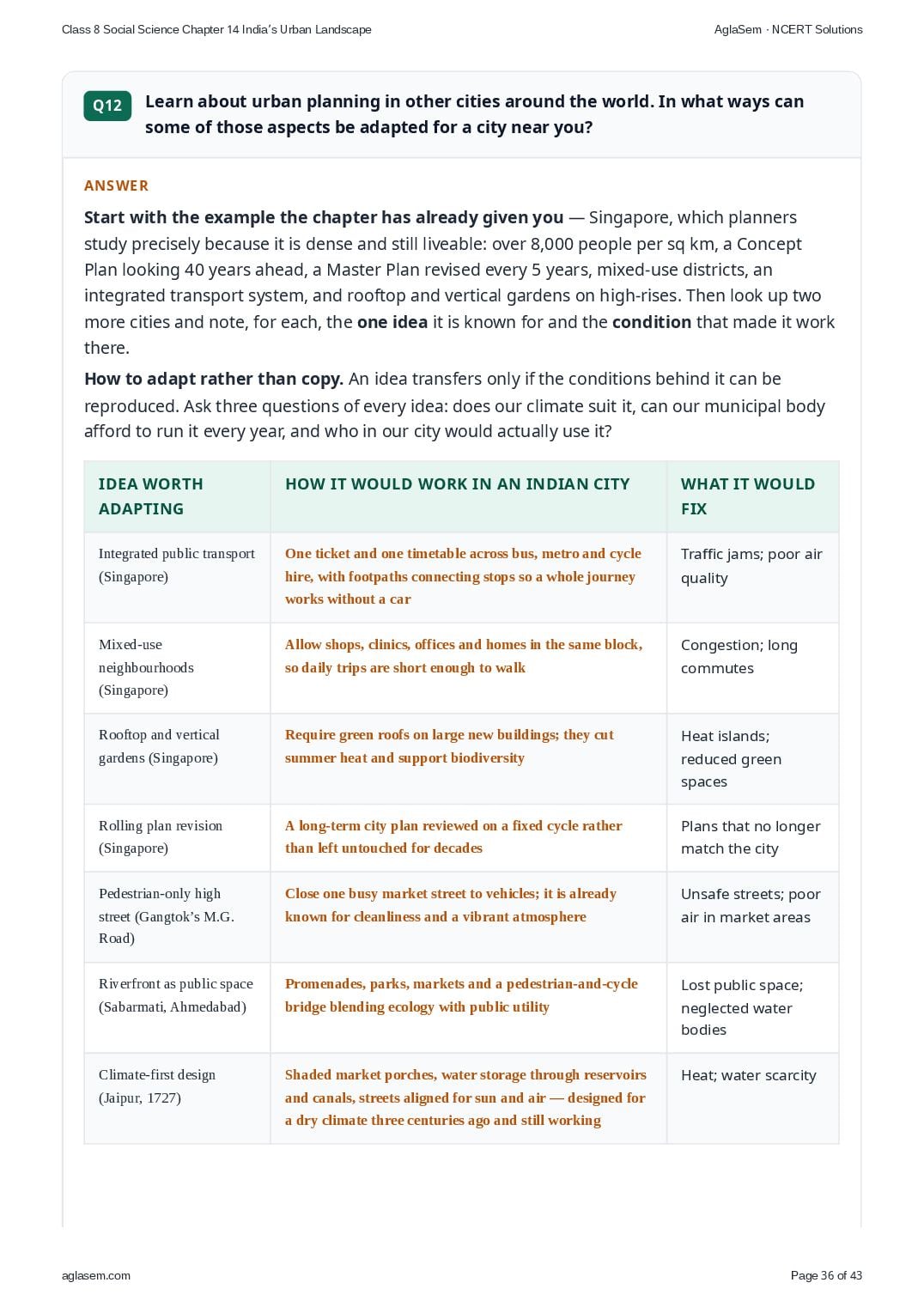
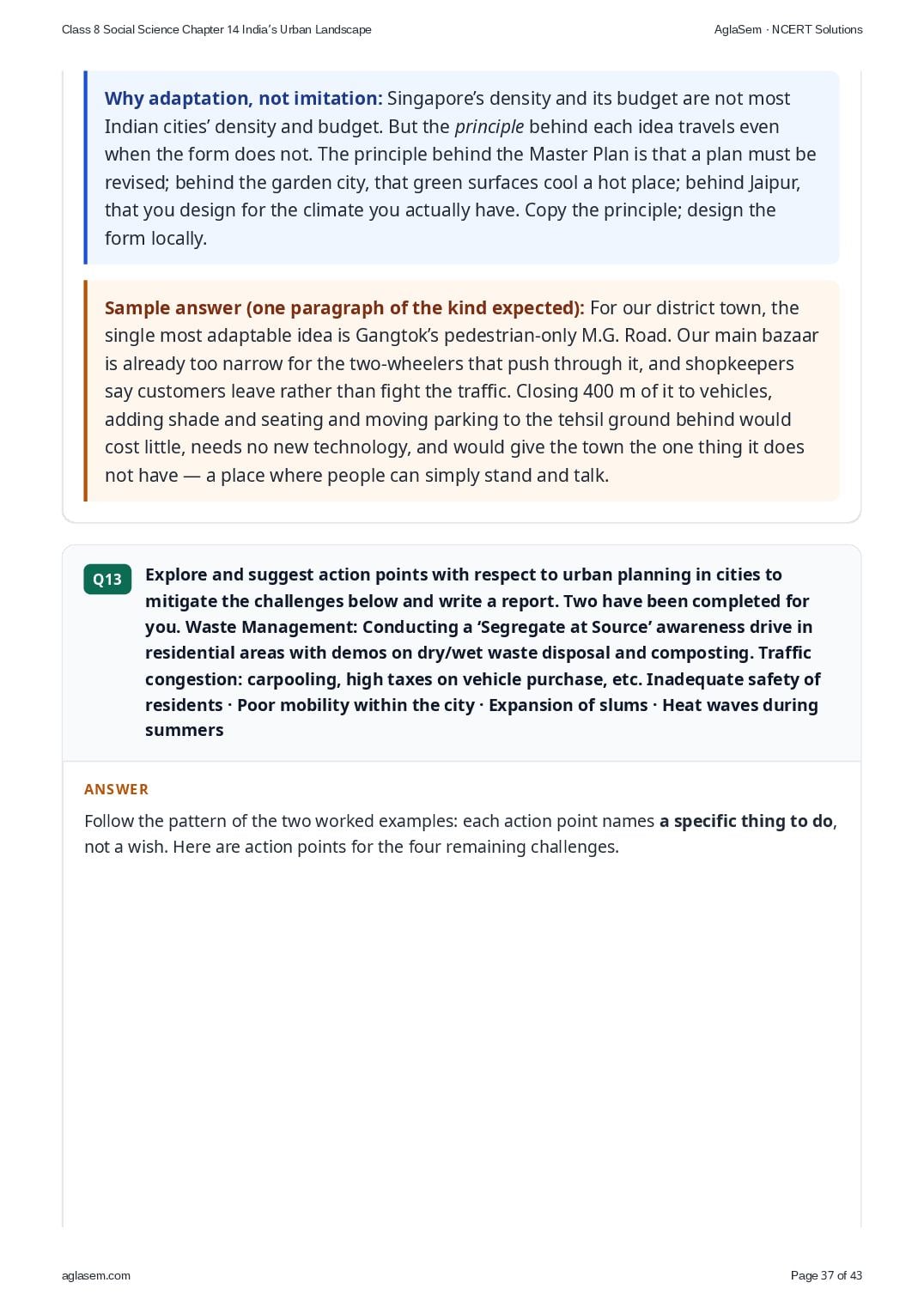
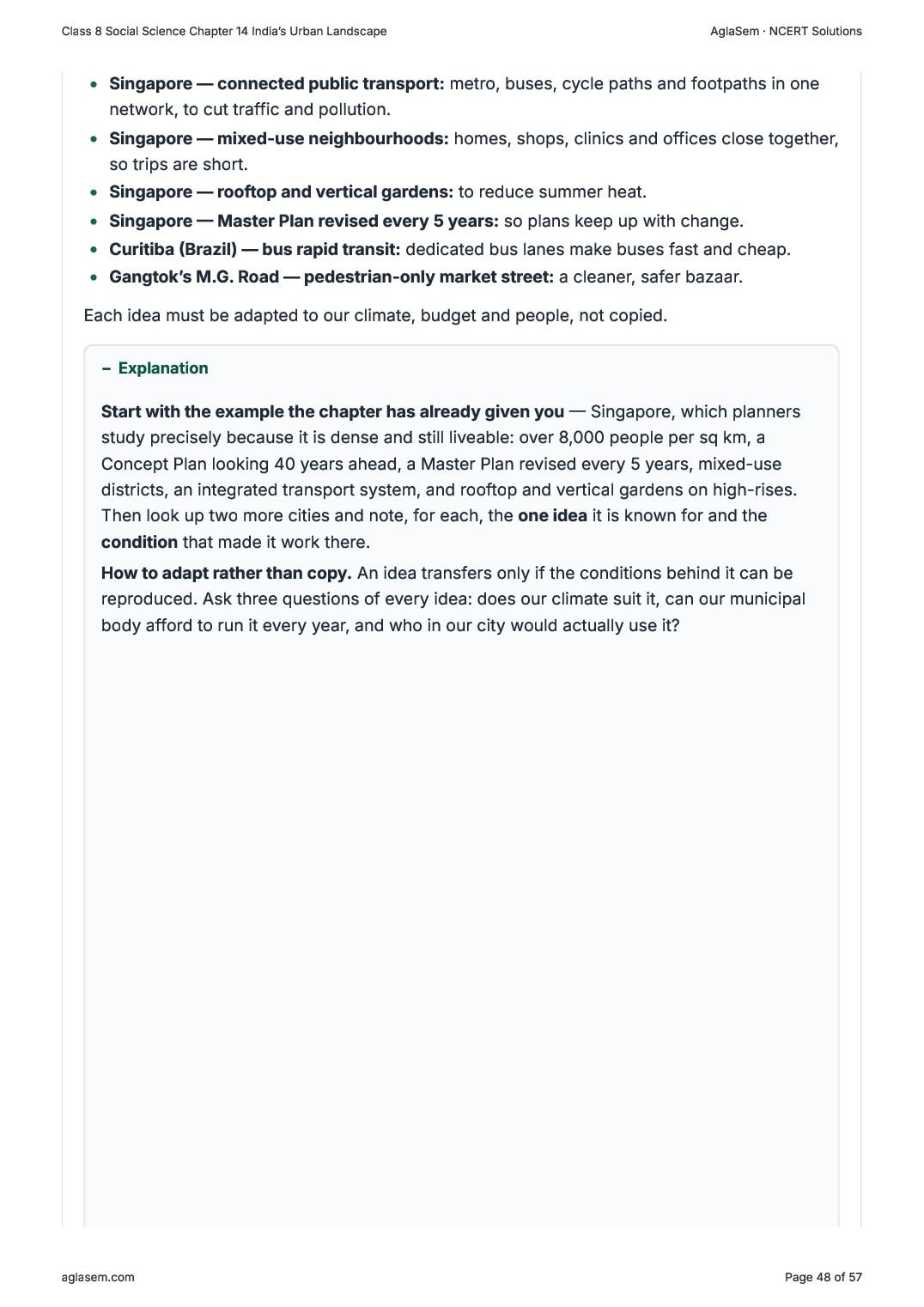
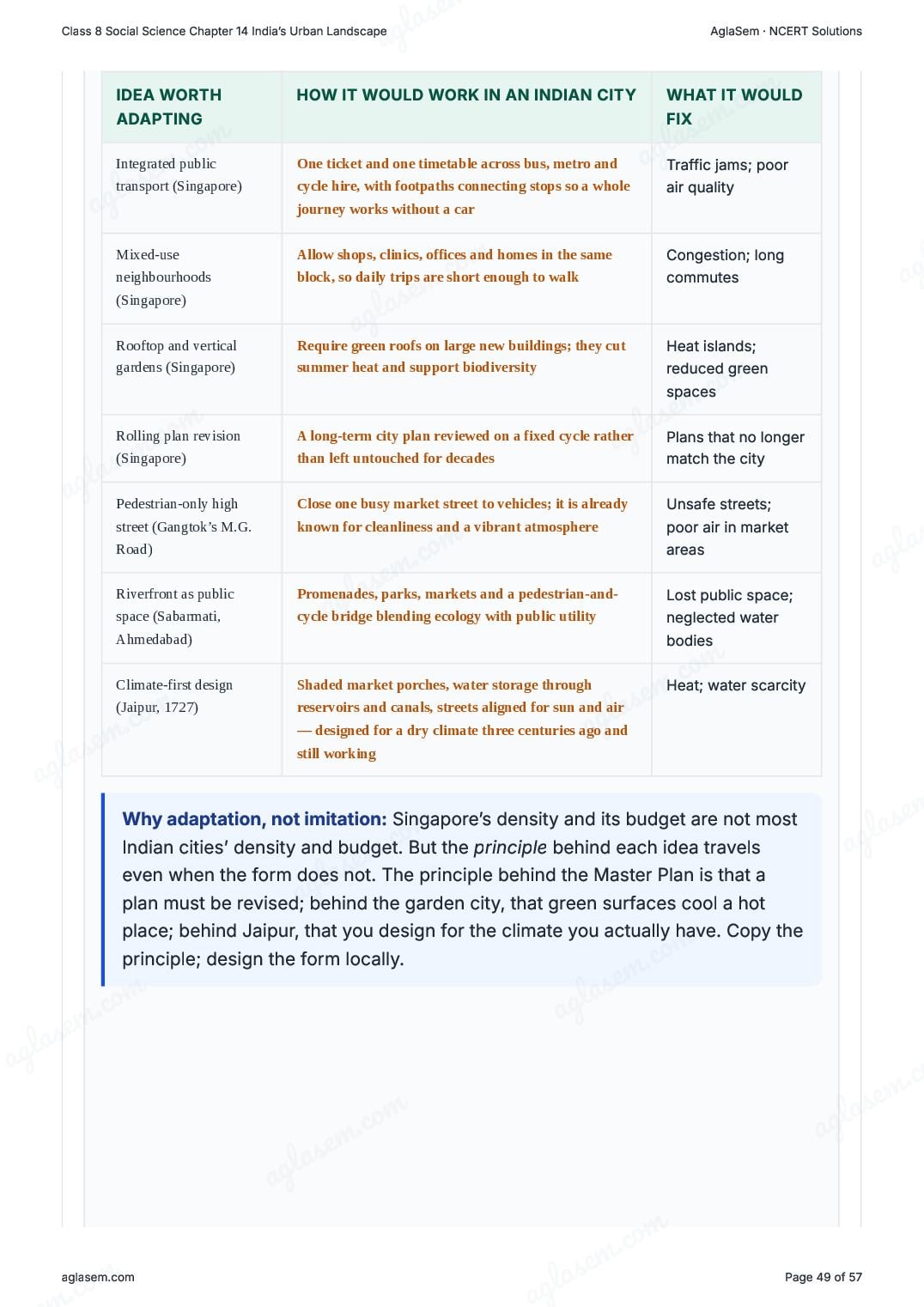
- Learn about urban planning in other cities around the world. In what ways can some of those aspects be adapted for a city near you?
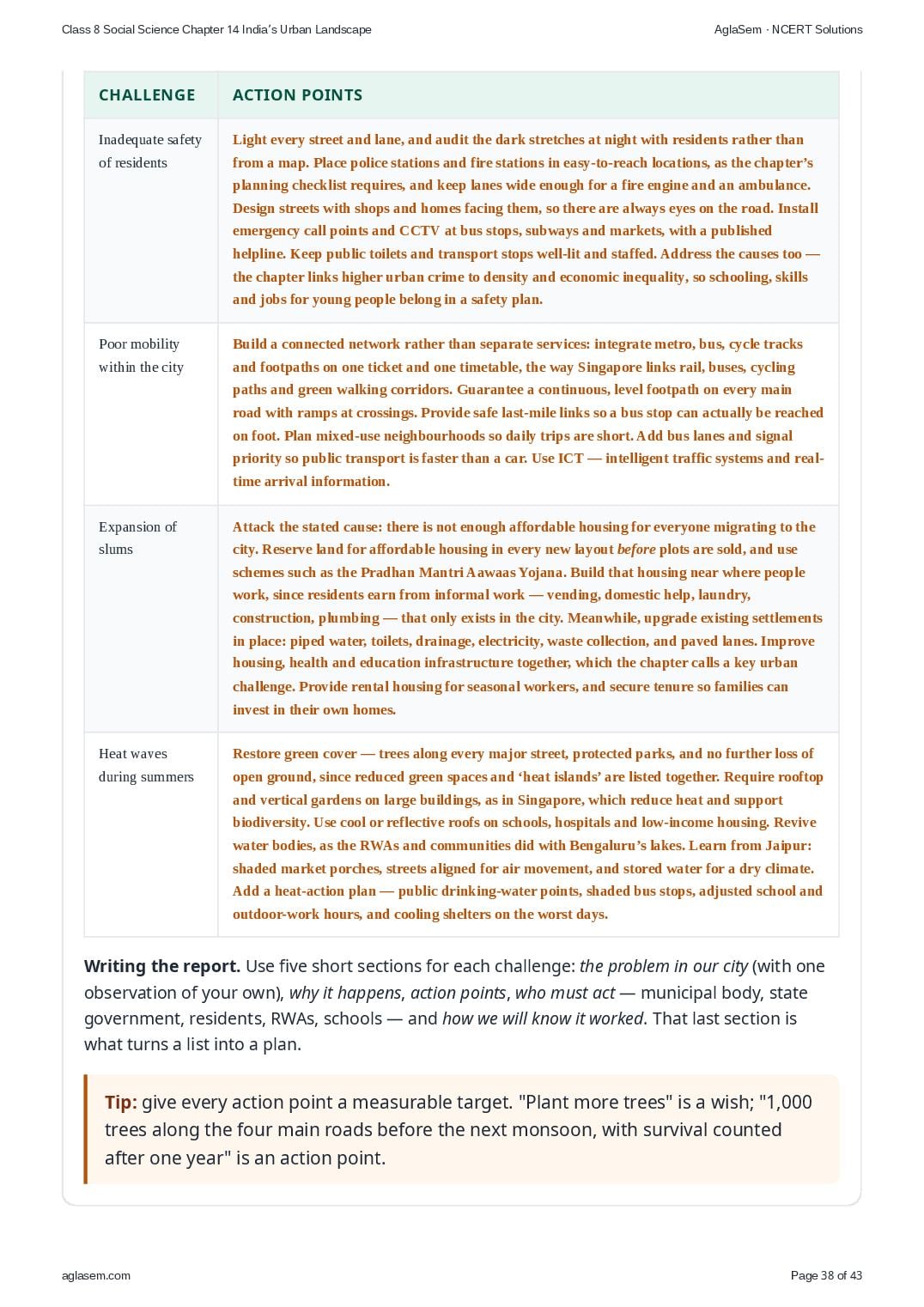
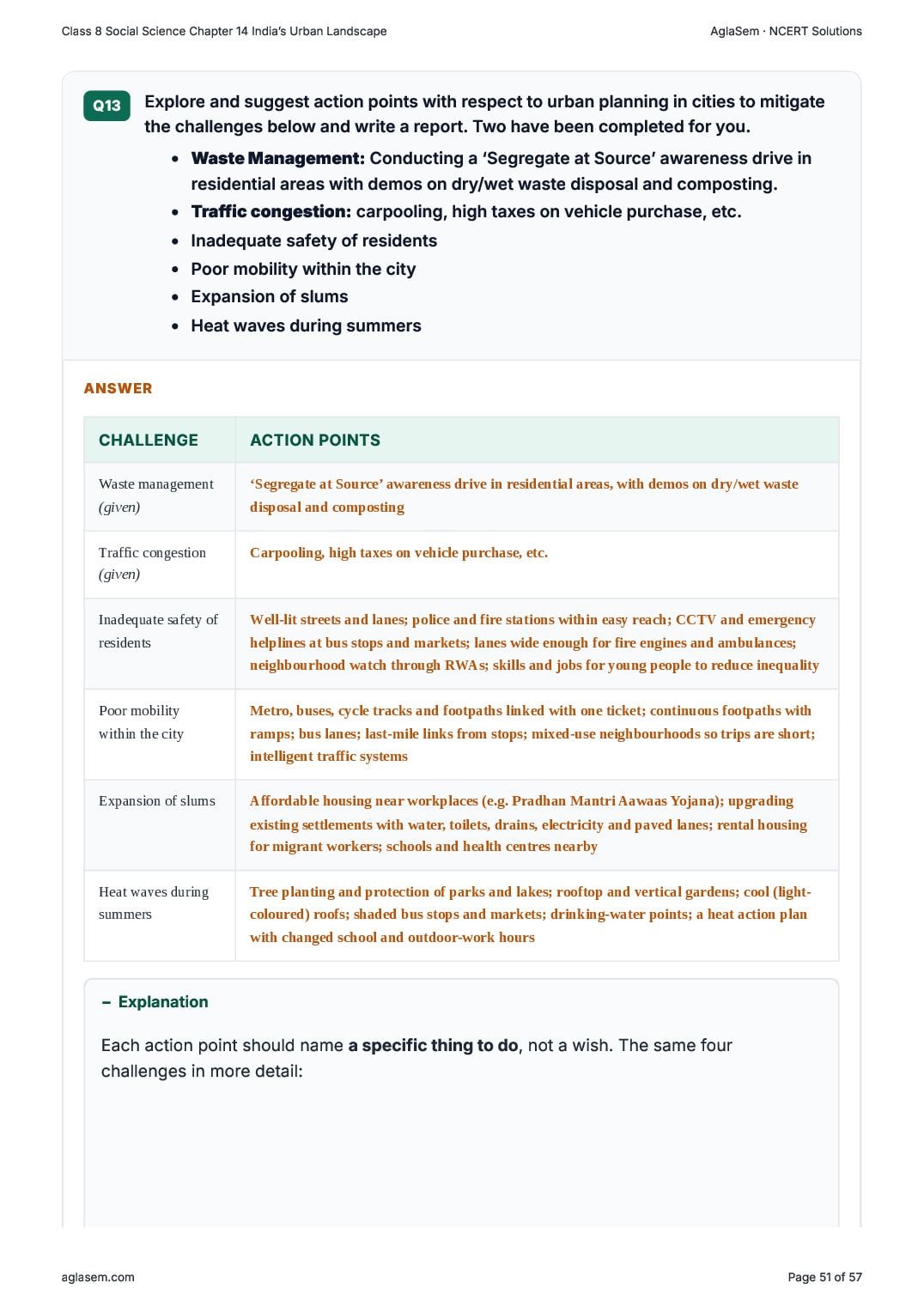
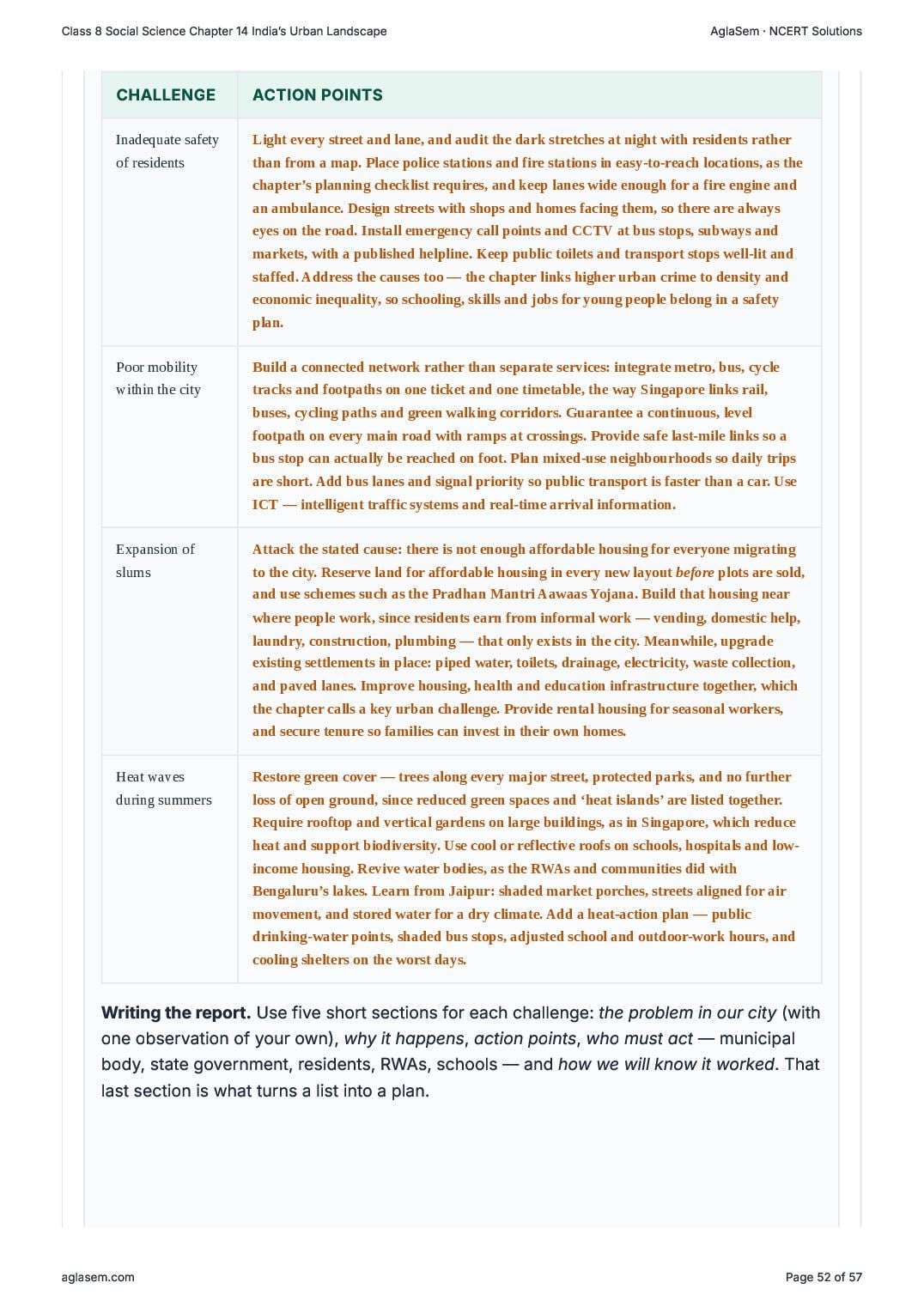
- Explore and suggest action points with respect to urban planning in cities to mitigate the challenges below and write a report. Two have been completed for you. Waste Management: Conducting a ‘Segregate at Source’ awareness drive in residential areas with demos on dry/wet waste disposal and composting. Traffic congestion: carpooling, high taxes on vehicle purchase, etc. Inadequate safety of residents · Poor mobility within the city · Expansion of slums · Heat waves during summers
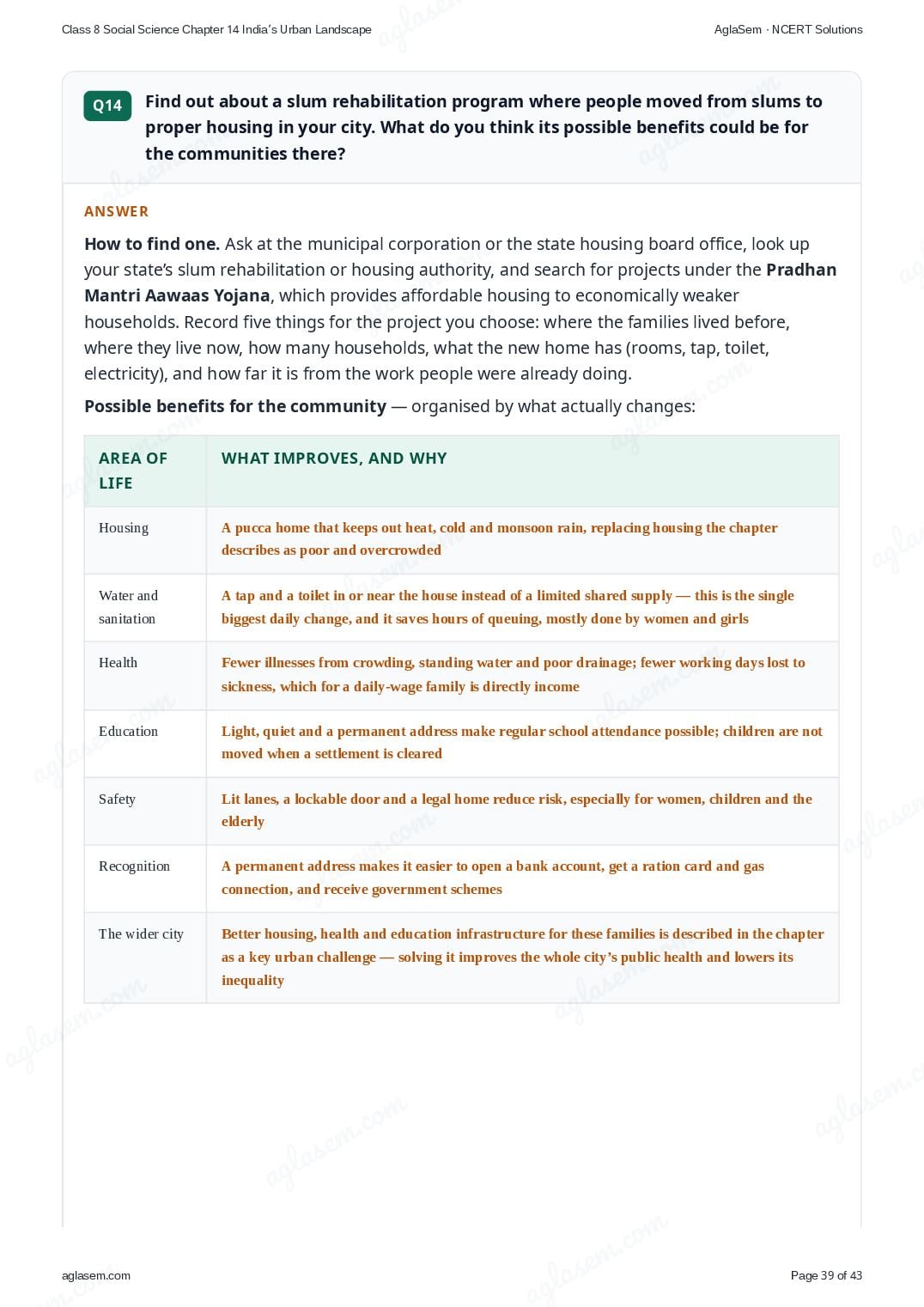
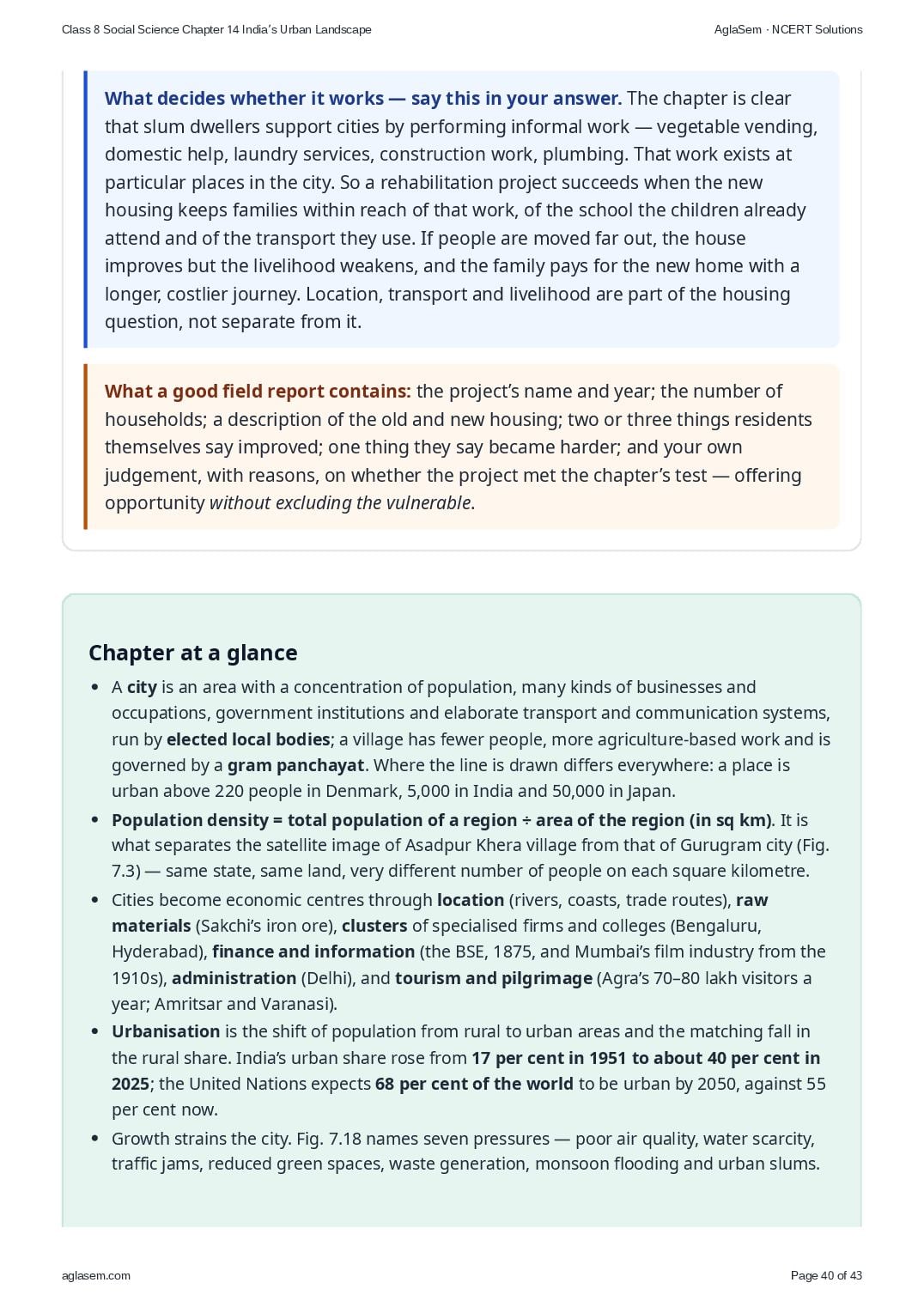
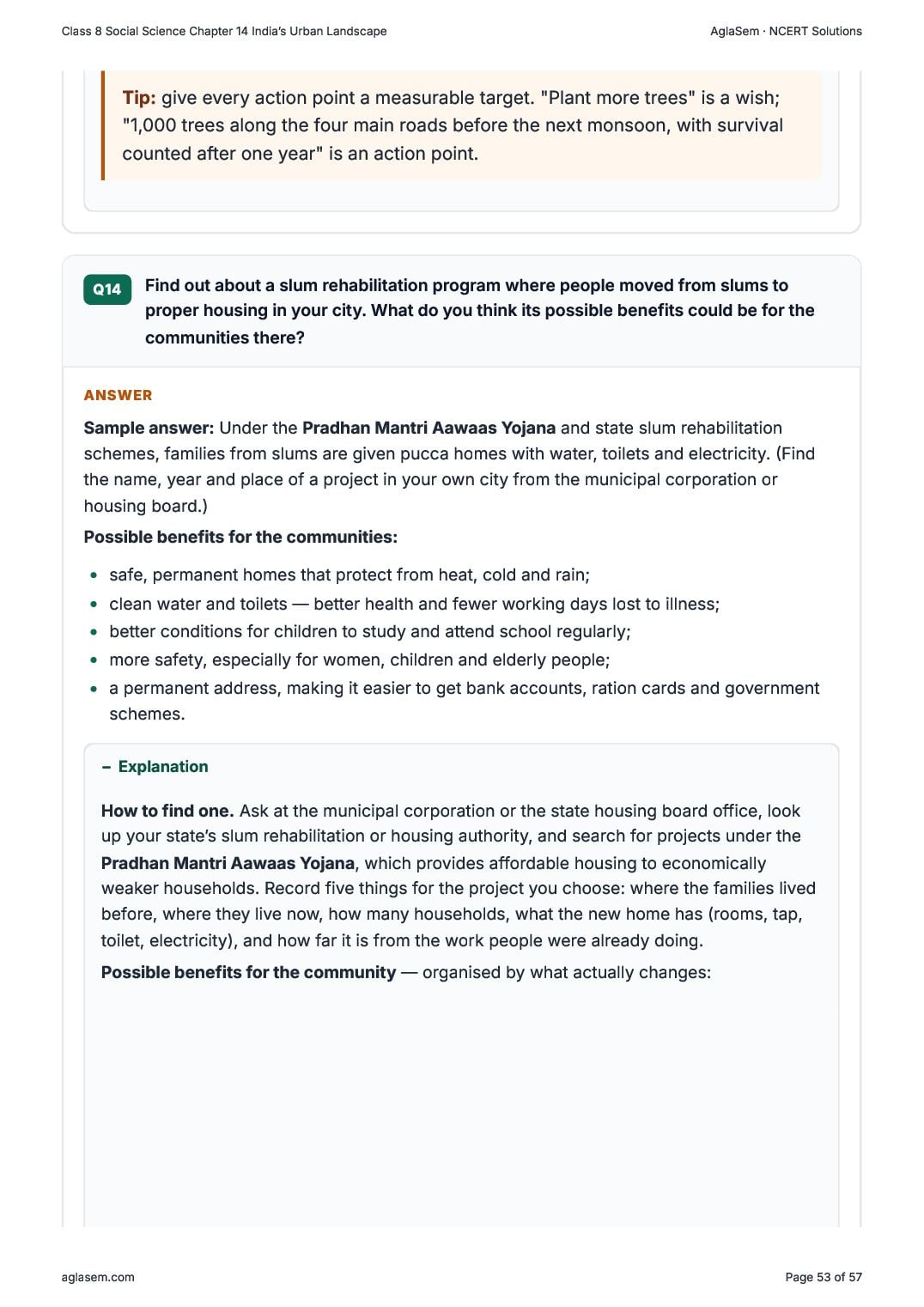
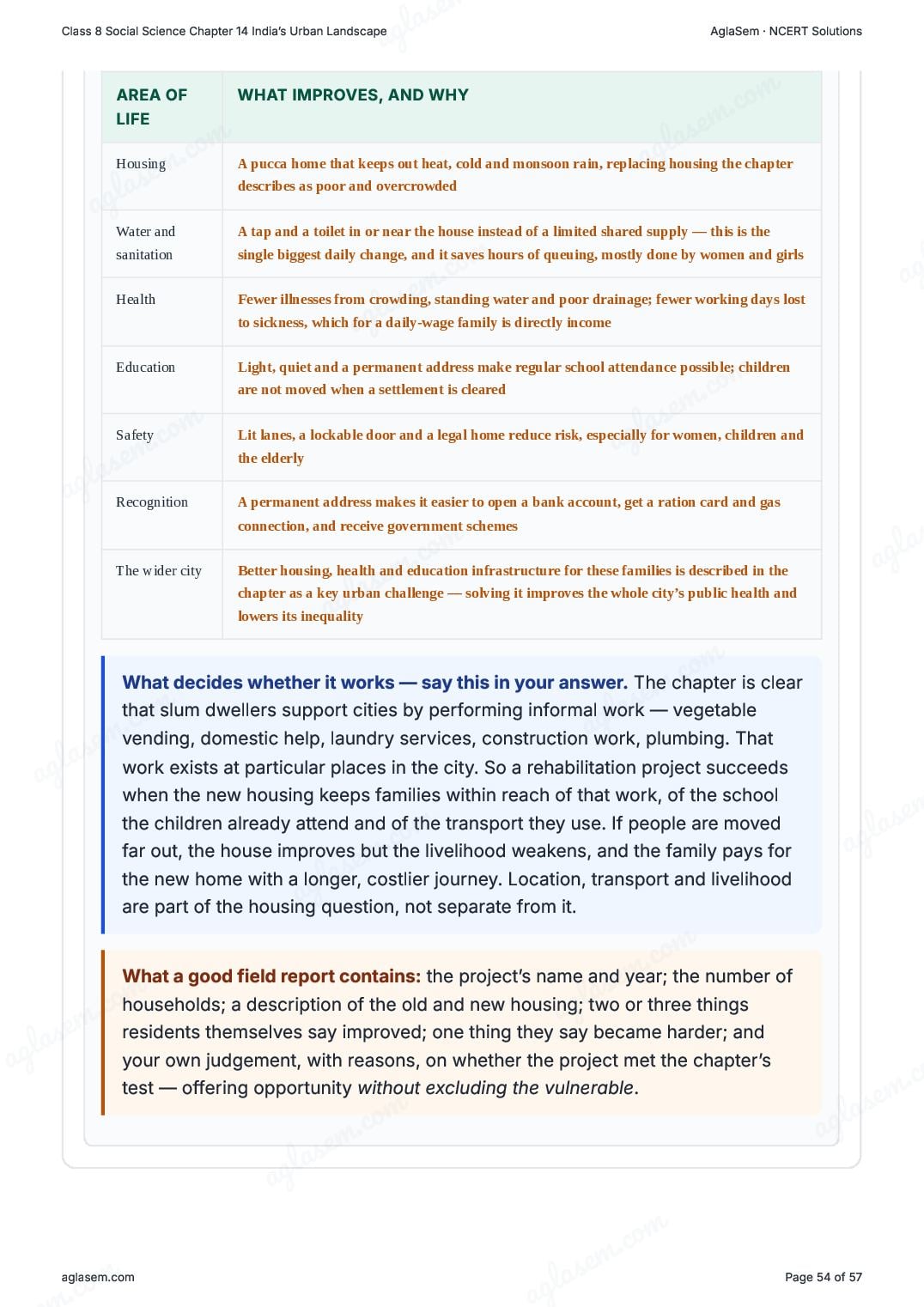
- Find out about a slum rehabilitation program where people moved from slums to proper housing in your city. What do you think its possible benefits could be for the communities there?
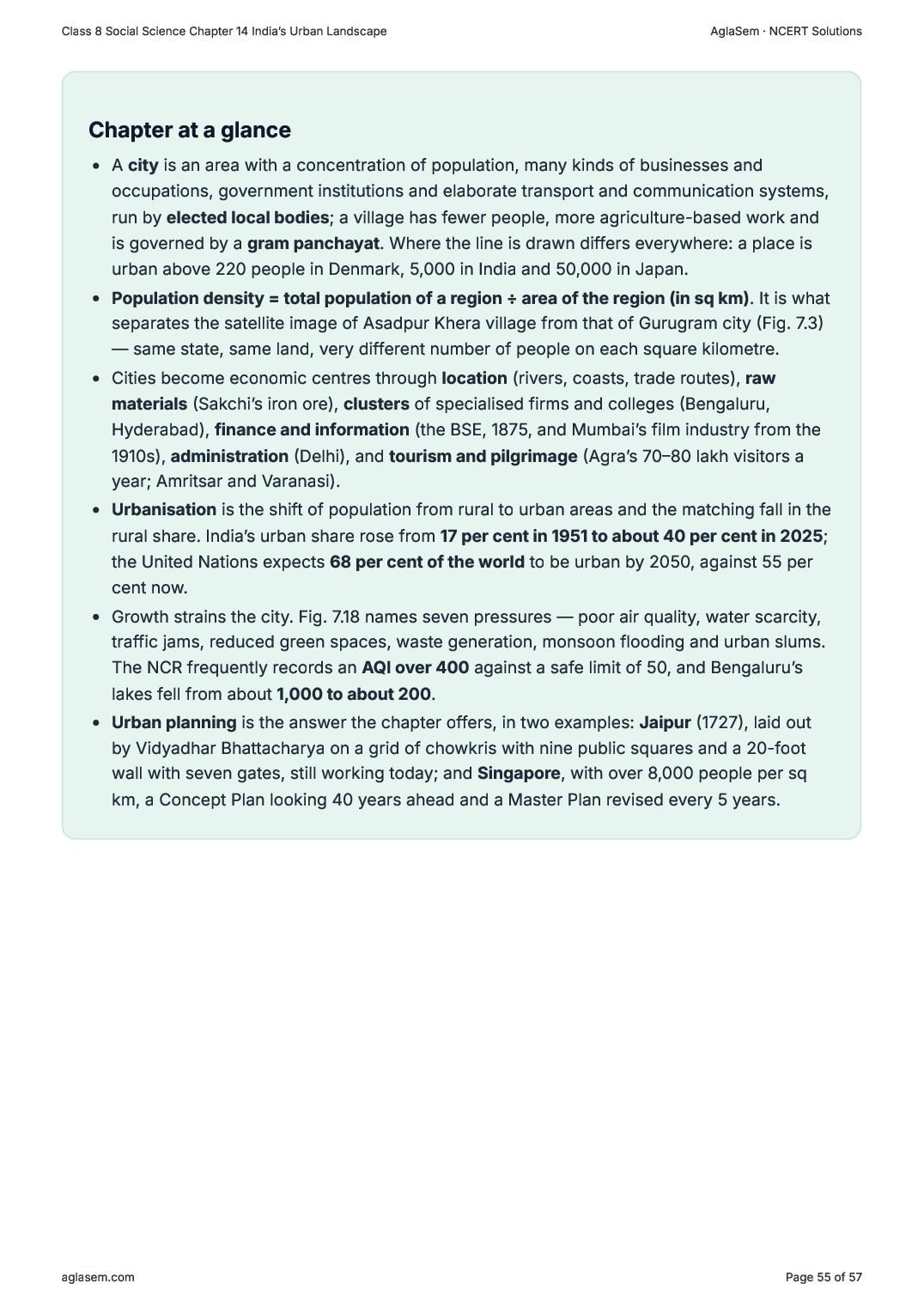
Chapter at a Glance
- A city is an area with a concentration of population, many kinds of businesses and occupations, government institutions and elaborate transport and communication systems, run by elected local bodies ; a village has fewer people, more agriculture-based work and is governed by a gram panchayat . Where the line is drawn differs everywhere: a place is urban above 220 people in Denmark, 5,000 in India and 50,000 in Japan.
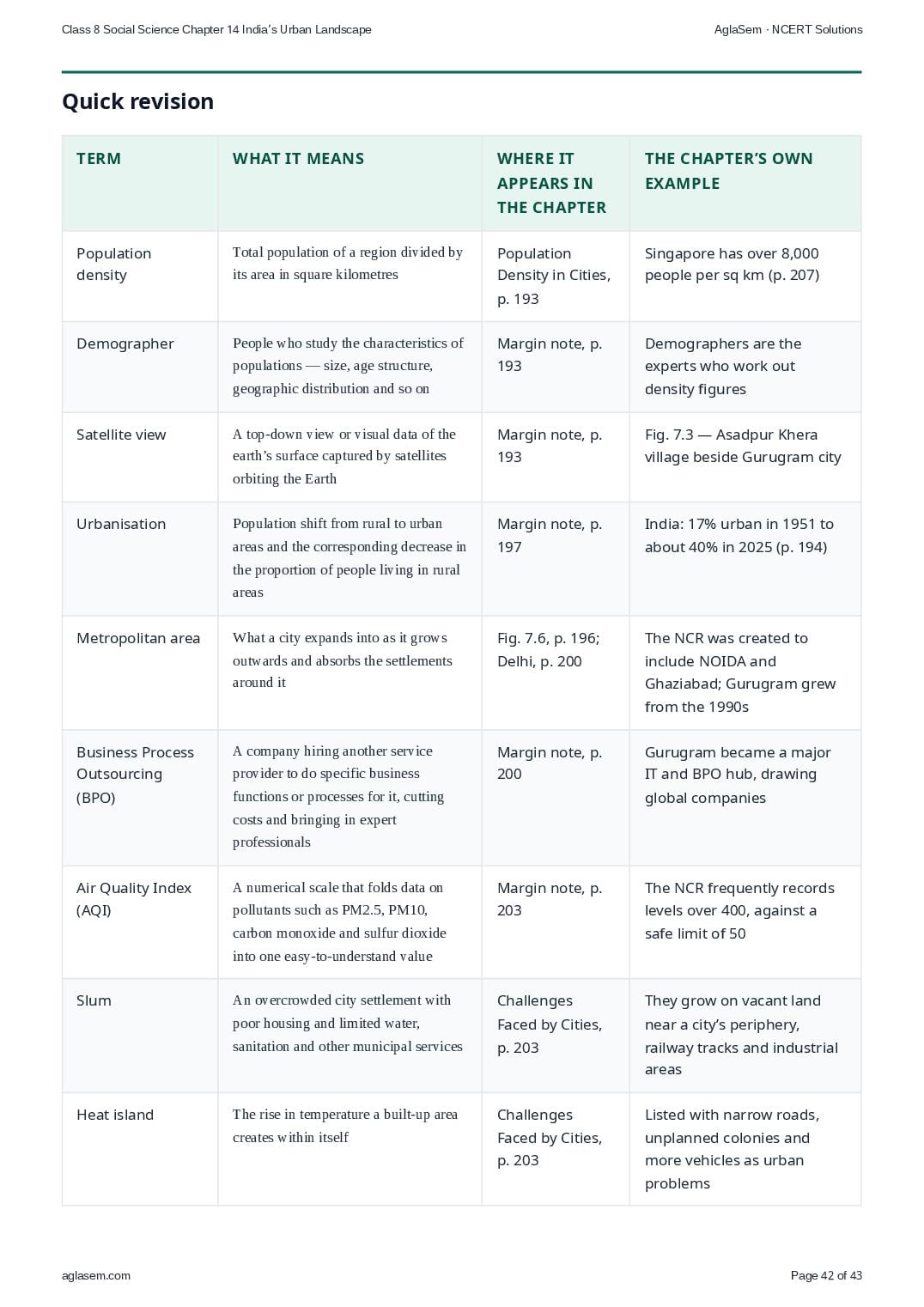
- Population density = total population of a region ÷ area of the region (in sq km) . It is what separates the satellite image of Asadpur Khera village from that of Gurugram city (Fig. 7.3) — same state, same land, very different number of people on each square kilometre.
- Cities become economic centres through location (rivers, coasts, trade routes), raw materials (Sakchi’s iron ore), clusters of specialised firms and colleges (Bengaluru, Hyderabad), finance and information (the BSE, 1875, and Mumbai’s film industry from the 1910s), administration (Delhi), and tourism and pilgrimage (Agra’s 70–80 lakh visitors a year; Amritsar and Varanasi).
- Urbanisation is the shift of population from rural to urban areas and the matching fall in the rural share. India’s urban share rose from 17 per cent in 1951 to about 40 per cent in 2025 ; the United Nations expects 68 per cent of the world to be urban by 2050, against 55 per cent now.
- Growth strains the city. Fig. 7.18 names seven pressures — poor air quality, water scarcity, traffic jams, reduced green spaces, waste generation, monsoon flooding and urban slums. The NCR frequently records an AQI over 400 against a safe limit of 50, and Bengaluru’s lakes fell from about 1,000 to about 200 .
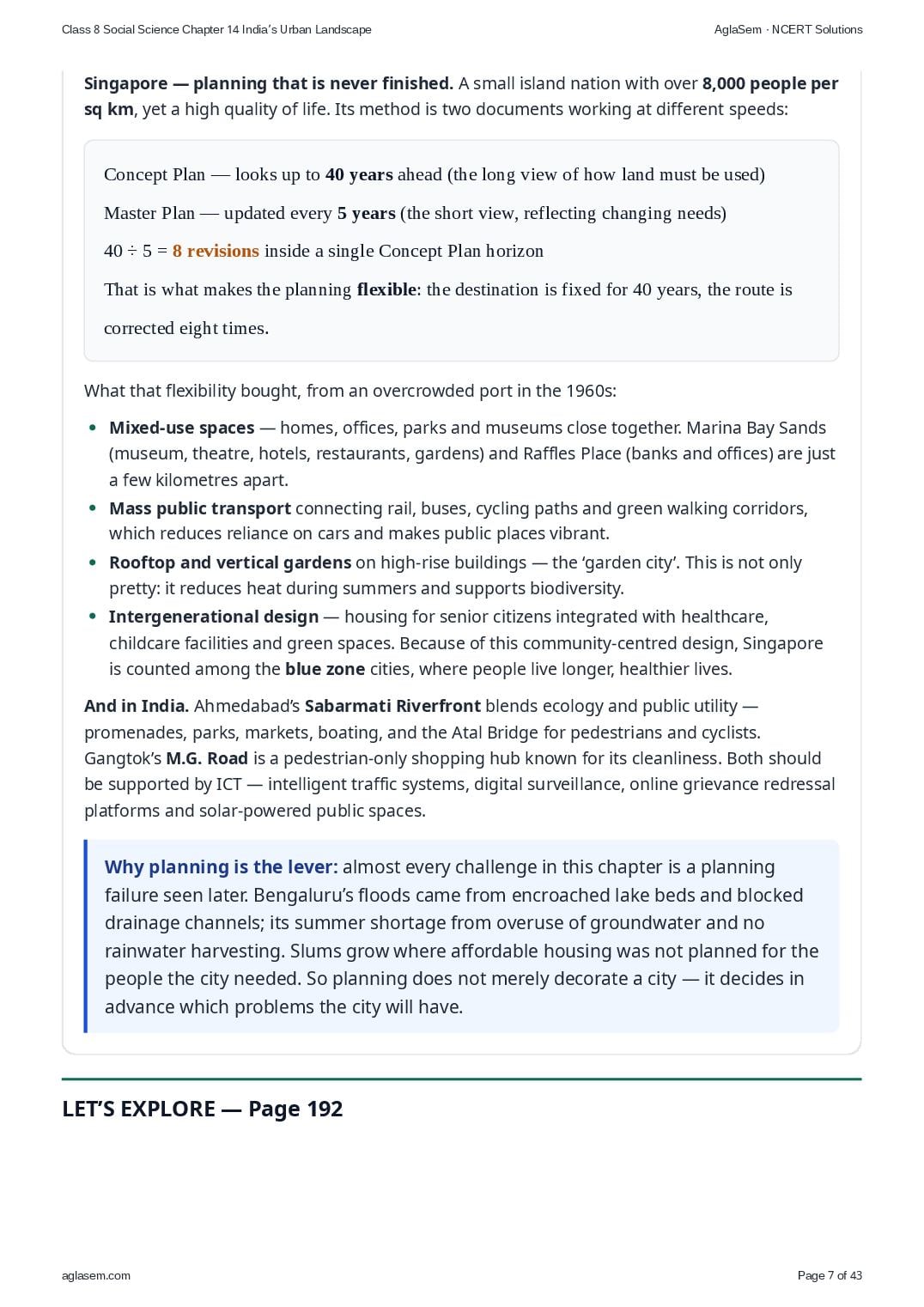
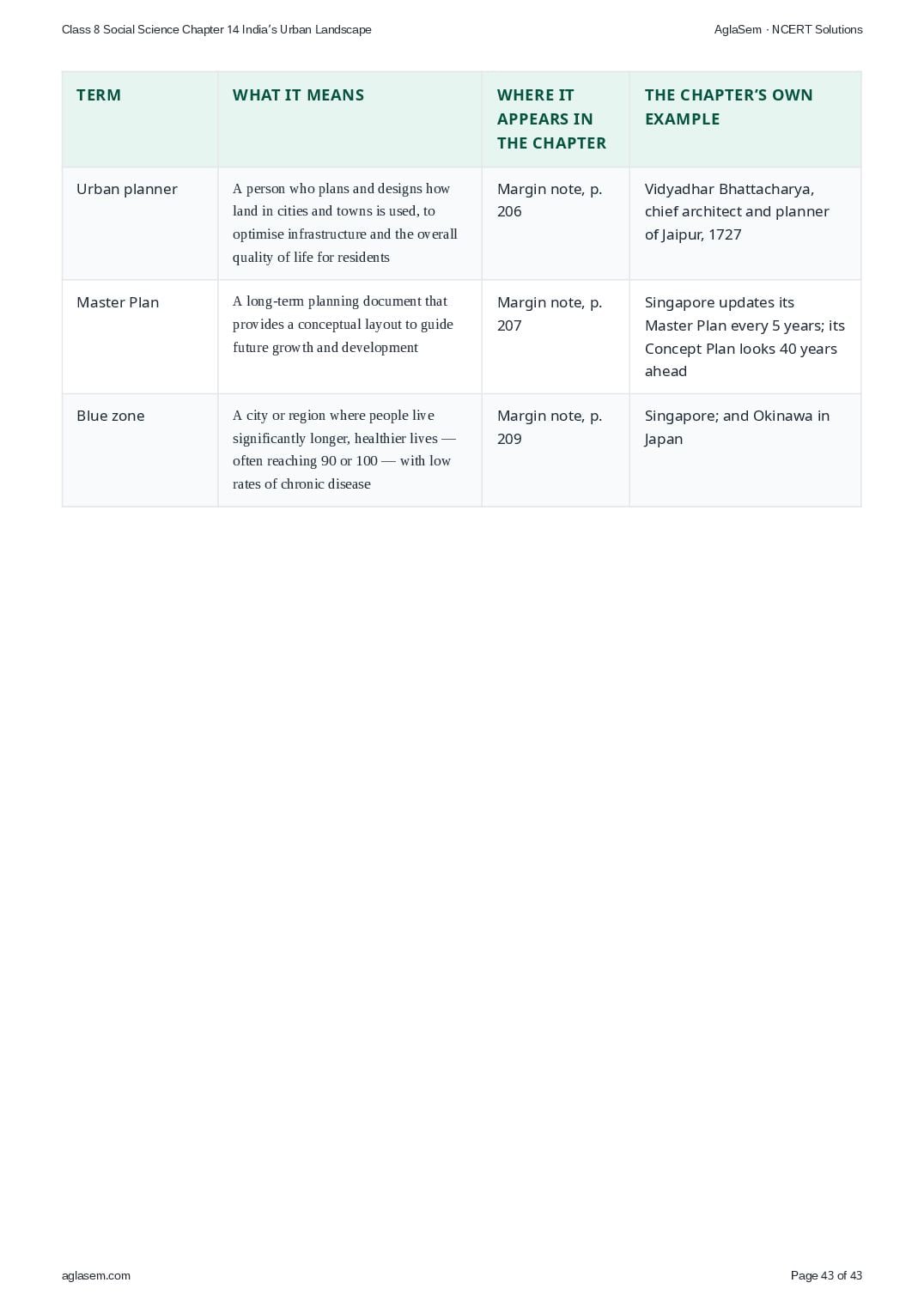
- Urban planning is the answer the chapter offers, in two examples: Jaipur (1727), laid out by Vidyadhar Bhattacharya on a grid of chowkris with nine public squares and a 20-foot wall with seven gates, still working today; and Singapore , with over 8,000 people per sq km, a Concept Plan looking 40 years ahead and a Master Plan revised every 5 years.
How to Download NCERT Solutions for Class 8 Social Science Chapter 14 PDF
Follow these simple steps to get the India’s Urban Landscape questions-and-answers PDF from Exploring Society: India and Beyond.
- Search NCERT Solutions for Class 8 Social Science Chapter 14 aglasem and open this page.
- Read the exercise questions with answers for India’s Urban Landscape shown above.
- Click the Download PDF link to save the India’s Urban Landscape solutions to your device.
NCERT Solutions for Class 8 Social Science – All Chapters
There are more chapters to study besides India’s Urban Landscape in Social Science. Here are the NCERT Solutions for all chapters of Class 8 Social Science.
- Chapter 1 Natural Resources and Their Use
- Chapter 2 Reshaping India’s Political Map
- Chapter 3 The Rise of the Marathas
- Chapter 4 The Colonial Era in India
- Chapter 5 Universal Franchise and India’s Electoral System
- Chapter 6 The Parliamentary System Legislature and Executive
- Chapter 7 Factors of Production
- Chapter 8 World Geography Some Glimpses
- Chapter 9 India’s Long Road to Independence
- Chapter 10 A Journey Through Indian Architecture
- Chapter 11 The Role of the Judiciary in Our Society
- Chapter 12 Citizenship Rights and Duties
- Chapter 13 Dynamics of Population
- Chapter 14 India’s Urban Landscape
- Chapter 15 Cultural Currents 13th to 17th Centuries
NCERT Solutions for Class 8 – All Subjects
Just like Chapter 14 of Social Science, you can get the exercise questions with answers for every other subject of Class 8. Here are the NCERT Solutions for all subjects of Class 8.
NCERT Solutions for Class 8 Social Science Chapter 14 – An Overview
The key highlights of this study material are as follows.
| Aspects | Details |
|---|---|
| Class | Class 8 |
| Subject | Social Science |
| Chapter Number | Chapter 14 |
| Chapter Name | India’s Urban Landscape |
| Book Name | Exploring Society: India and Beyond |
| Book By | NCERT (National Council of Educational Research and Training) |
| Educational Resource Here | NCERT Solutions of Class 8 Social Science Chapter 14 for all exercises |
| More Questions Answers of This Subject | NCERT Solutions for Class 8 Social Science |
| Download Book Chapter | NCERT Book Class 8 Social Science |
| All Questions Answers For This Class | NCERT Solutions for Class 8 |
| Complete Solutions | NCERT Solutions |
NCERT Solutions for Class 8 Social Science Chapter 14 India’s Urban Landscape – FAQs
What are the NCERT Solutions for Class 8 Social Science Chapter 14 India’s Urban Landscape?
They are the complete, step-by-step answers to all the exercise and in-text questions of Chapter 14 India’s Urban Landscape from the NCERT Class 8 Social Science textbook Exploring Society: India and Beyond, written by experts as per the latest NCERT syllabus.
How can I download the Class 8 Social Science Chapter 14 solutions PDF for free?
Open this page on aglasem, read the India’s Urban Landscape questions with answers, and click the “Download Solutions PDF” link. The Class 8 Social Science Chapter 14 NCERT Solutions PDF is completely free to download.
Are these NCERT Solutions as per the latest 2026-27 syllabus?
Yes. The NCERT Solutions for Class 8 Social Science Chapter 14 are based on the latest NCERT textbook Exploring Society: India and Beyond and the current 2026-27 CBSE syllabus, so the questions and answers match what you study in class.
Where can I get NCERT Solutions for the other chapters of Class 8 Social Science?
You can find the answers to every chapter on the NCERT Solutions for Class 8 Social Science page, and solutions for every subject on the NCERT Solutions for Class 8 page.
How do NCERT Solutions help in exam preparation?
They show the correct method to solve each question, help you write answers the way they are expected in exams, let you check and correct your own work, and save revision time — which together improve your marks in Class 8 Social Science.
If you have any queries on NCERT Solutions for Class 8 Social Science Chapter 14 India’s Urban Landscape, then please ask in the comments below.