NCERT Solutions for Class 8 Social Science Chapter 10 A Journey Through Indian Architecture provide clear, step-by-step answers to every exercise and in-text question from the chapter A Journey Through Indian Architecture of the NCERT textbook Exploring Society: India and Beyond. Prepared by subject experts as per the latest NCERT (CBSE) syllabus for 2026-27, these NCERT Solutions for Class 8 Social Science help you understand each concept, write exam-ready answers, and check your own solutions. You can read them online below or download the free Class 8 Social Science Chapter 10 question-answer PDF.
NCERT Solutions for Class 8 Social Science Chapter 10 A Journey Through Indian Architecture
- Class: Class 8
- Subject: Social Science
- Chapter: Chapter 10 – A Journey Through Indian Architecture
- Textbook: Exploring Society: India and Beyond (NCERT)
- Study material: NCERT Solutions – questions with answers, free PDF
These solutions answer all the exercise questions of Chapter 10 A Journey Through Indian Architecture — including the in-text questions, short-answer and long-answer questions, and activities — with complete explanations so you can follow the method, not just the final answer. Read the full solutions below.
NCERT Solutions Class 8 Social Science Chapter 10 a Journey Through Indian Architecture View Download
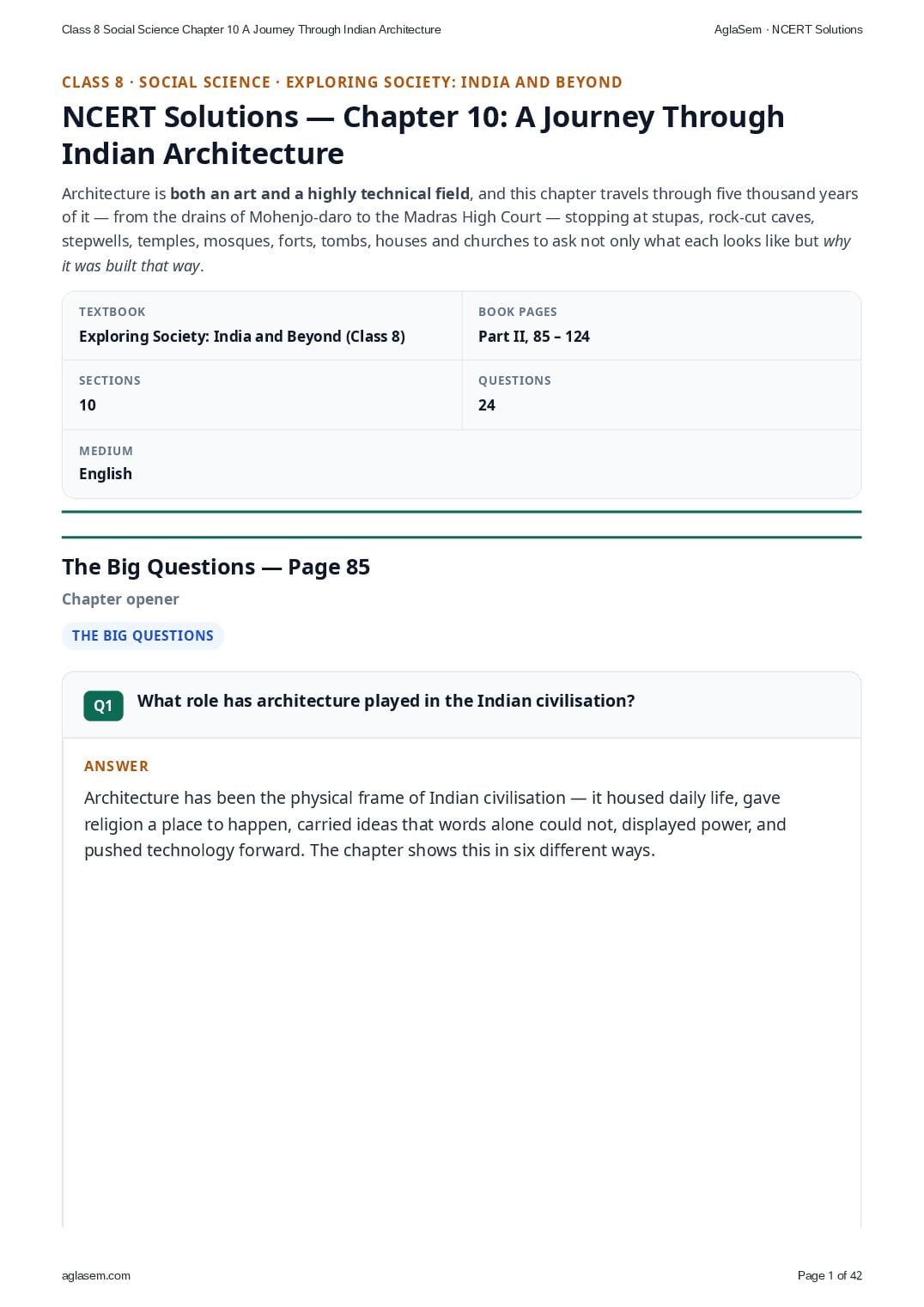
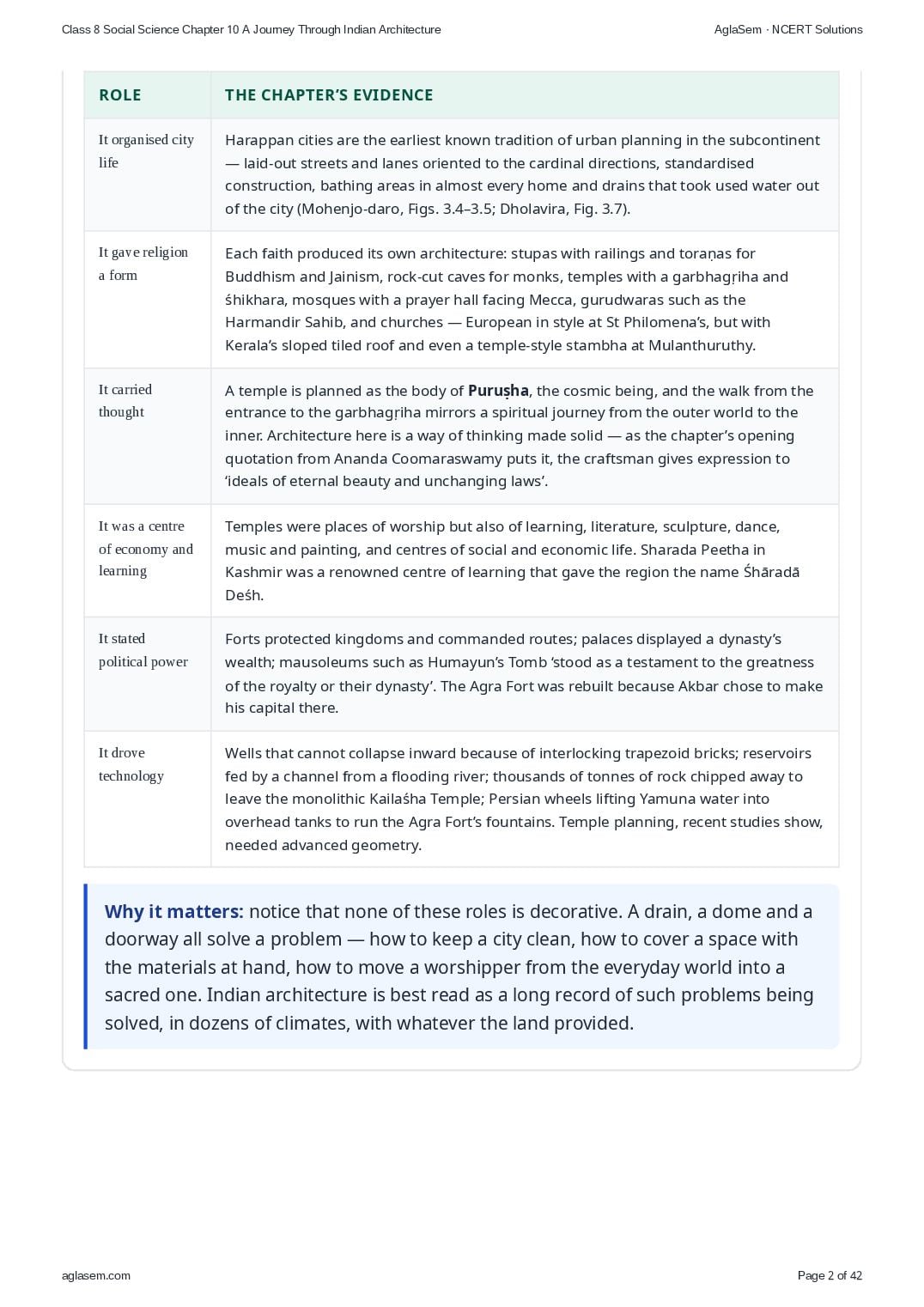
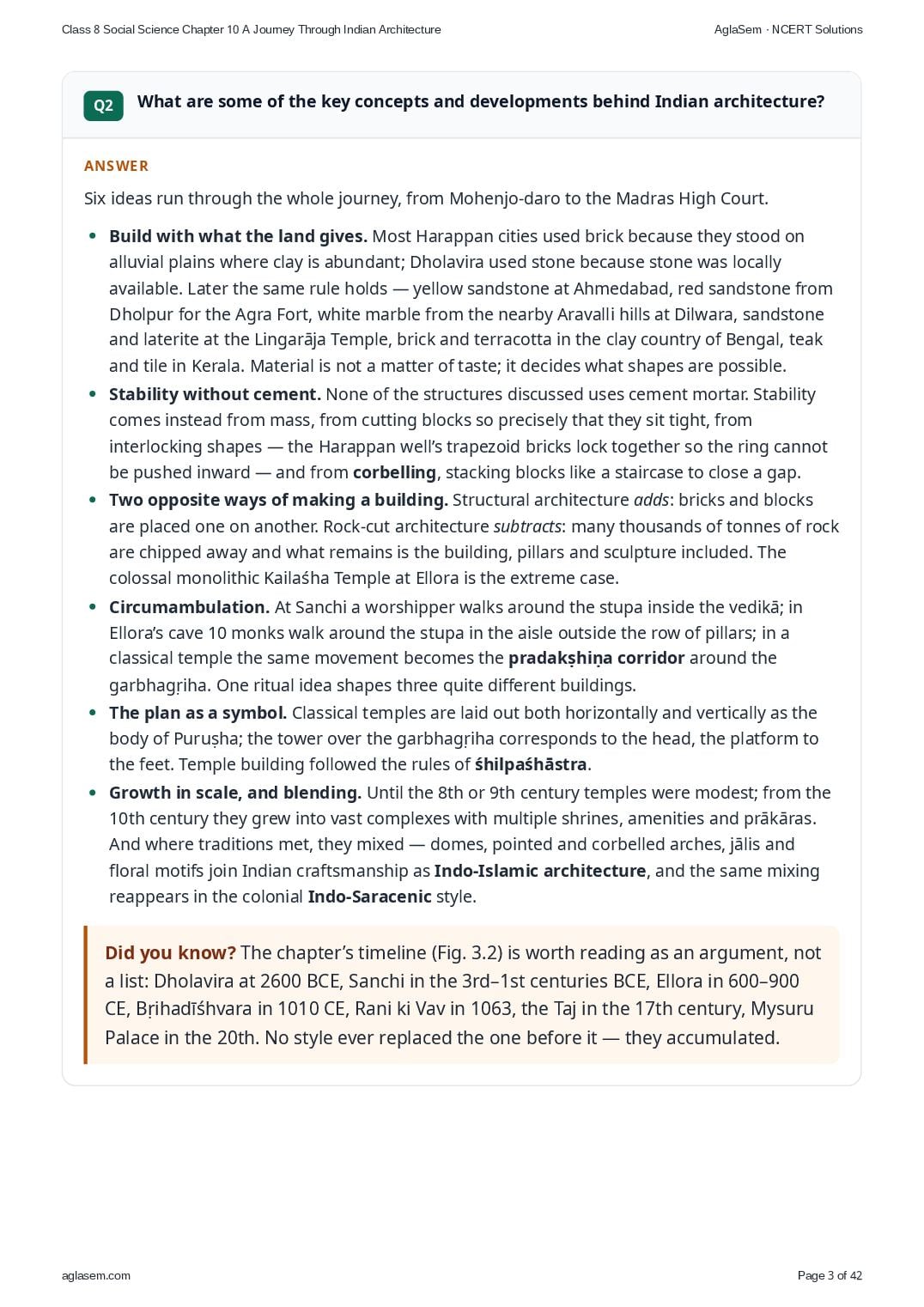











NCERT Solutions for Class 8 Social Science Chapter 10 PDF Download
You can read the NCERT Solutions for Class 8 Social Science Chapter 10 online above, or download the complete question-answer PDF to study A Journey Through Indian Architecture offline at any time.
NCERT Solutions for Class 8 Social Science Chapter 10 PDF Download Link – Click Here to Download Solutions PDF
Questions Covered in This Chapter
These NCERT Solutions answer all 24 questions of this chapter. The questions solved are:
- What role has architecture played in the Indian civilisation?
- What are some of the key concepts and developments behind Indian architecture?
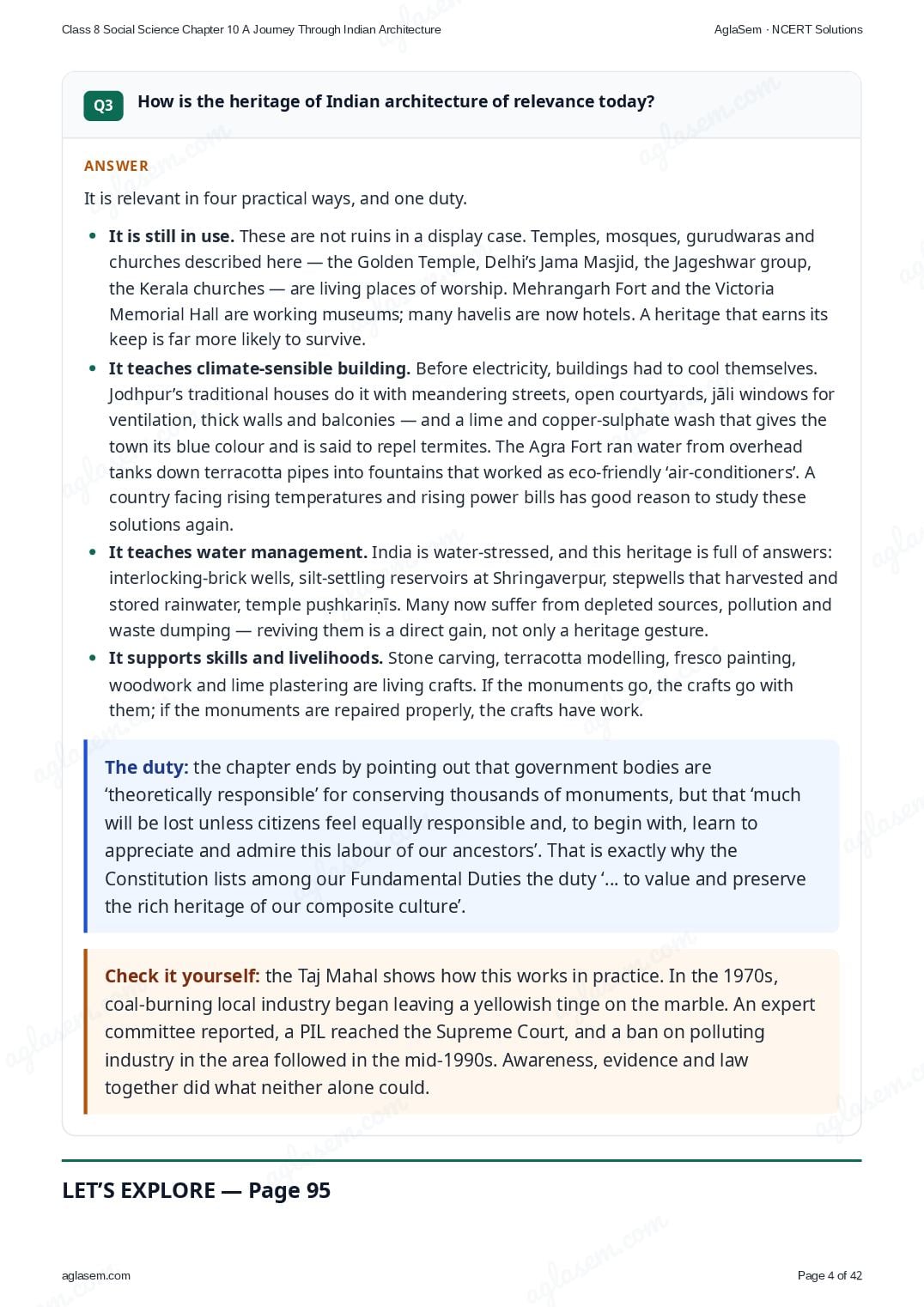
- How is the heritage of Indian architecture of relevance today?
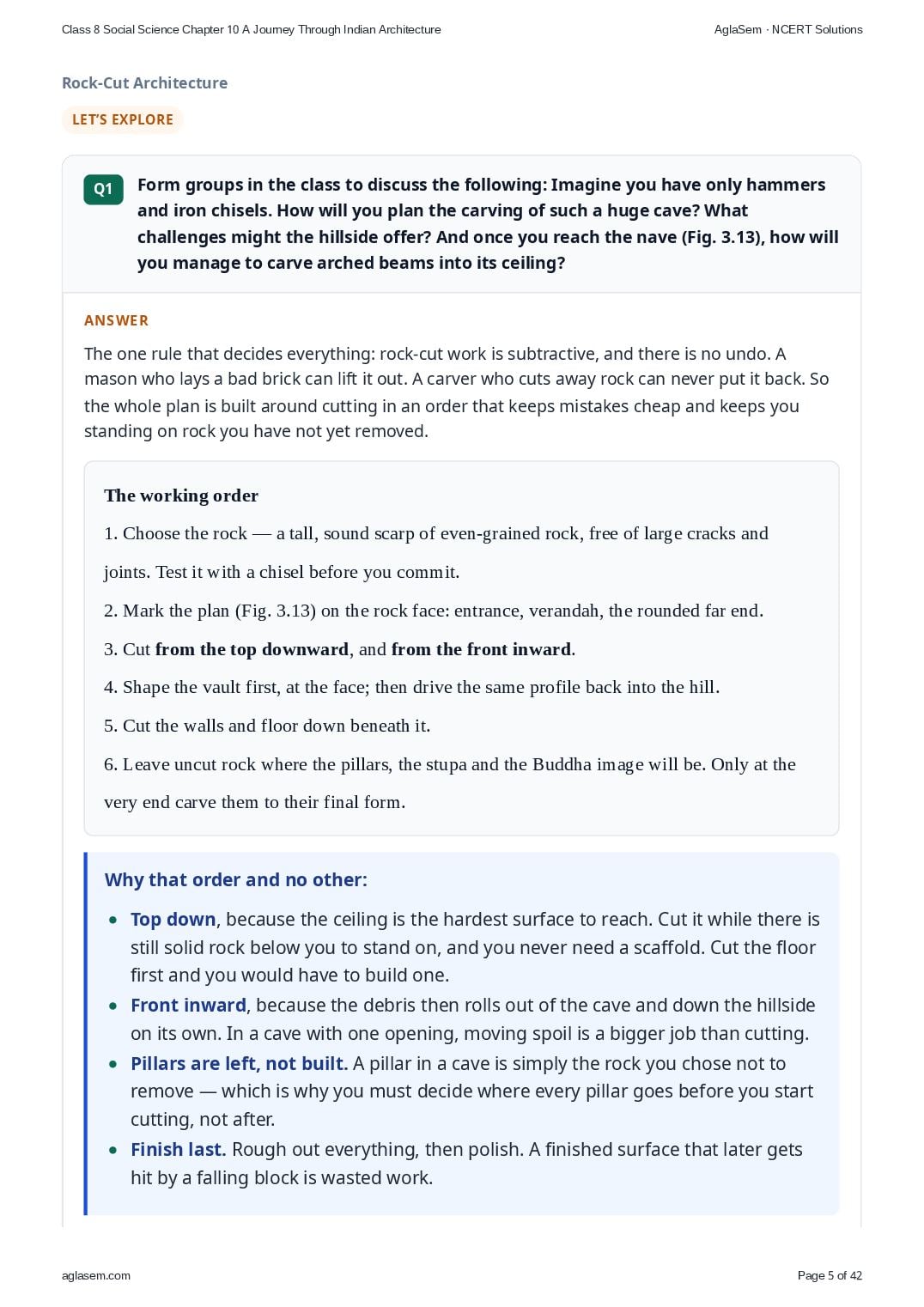
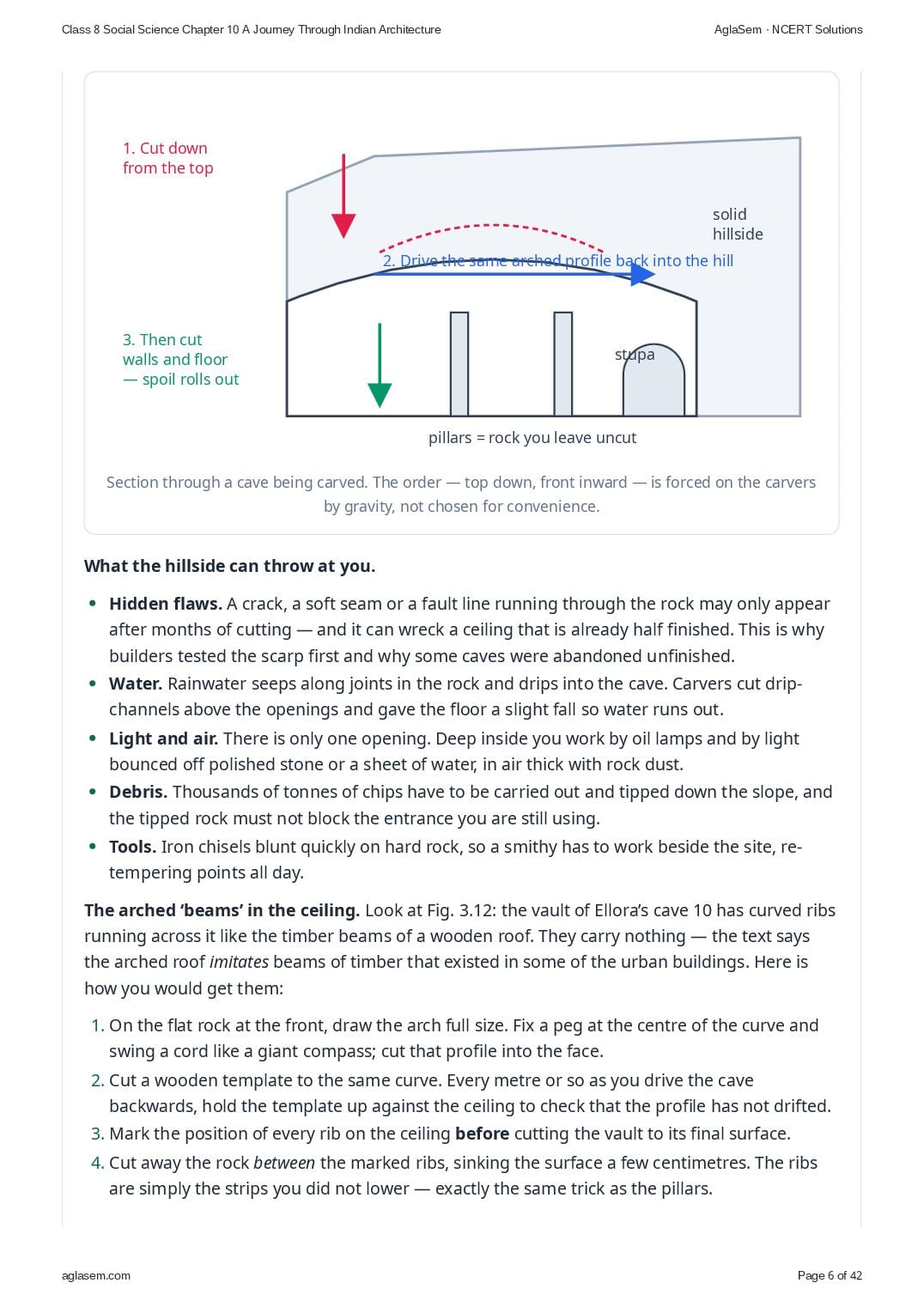
- Form groups in the class to discuss the following: Imagine you have only hammers and iron chisels. How will you plan the carving of such a huge cave? What challenges might the hillside offer? And once you reach the nave (Fig. 3.13), how will you manage to carve arched beams into its ceiling?
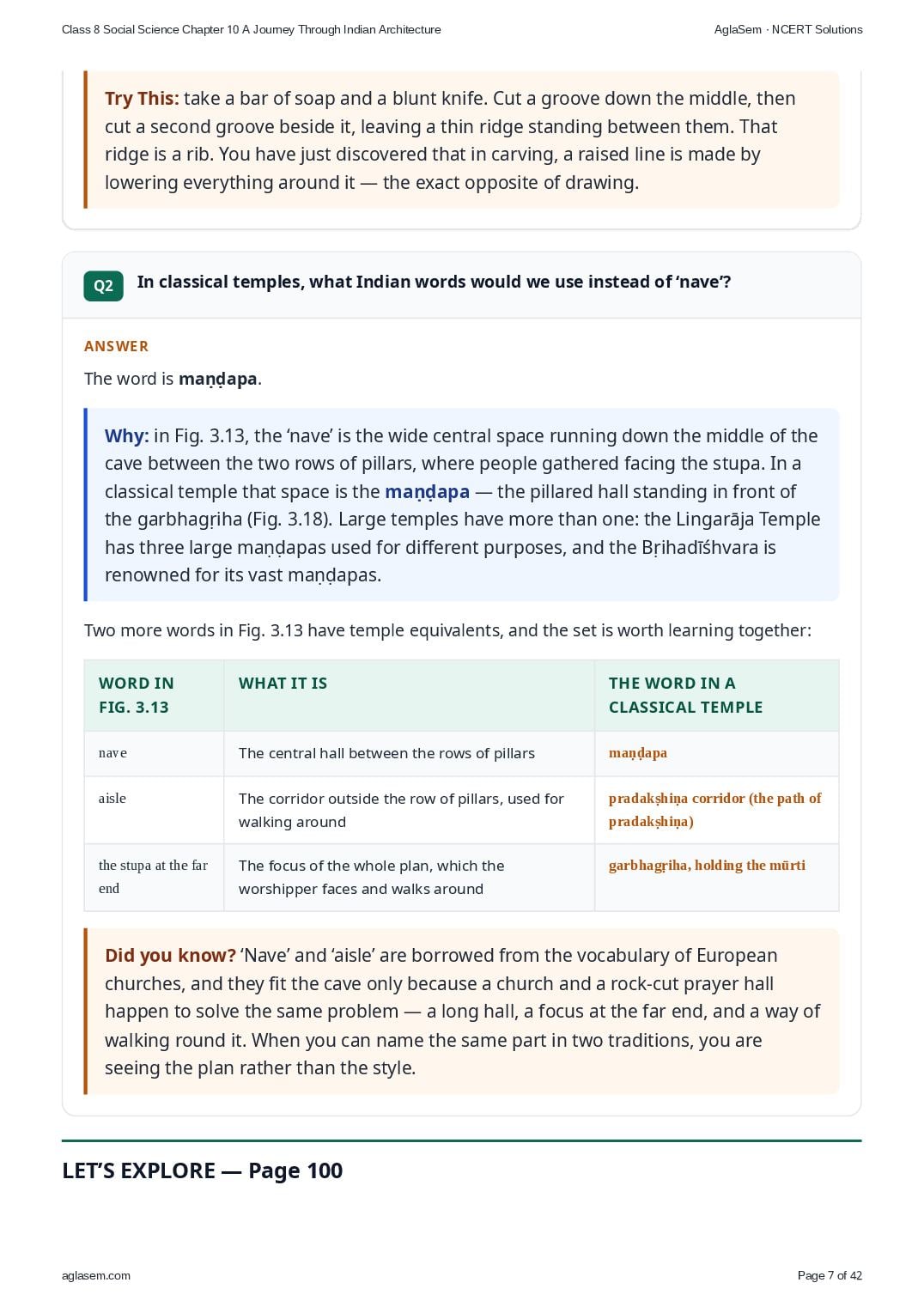
- In classical temples, what Indian words would we use instead of ‘nave’?
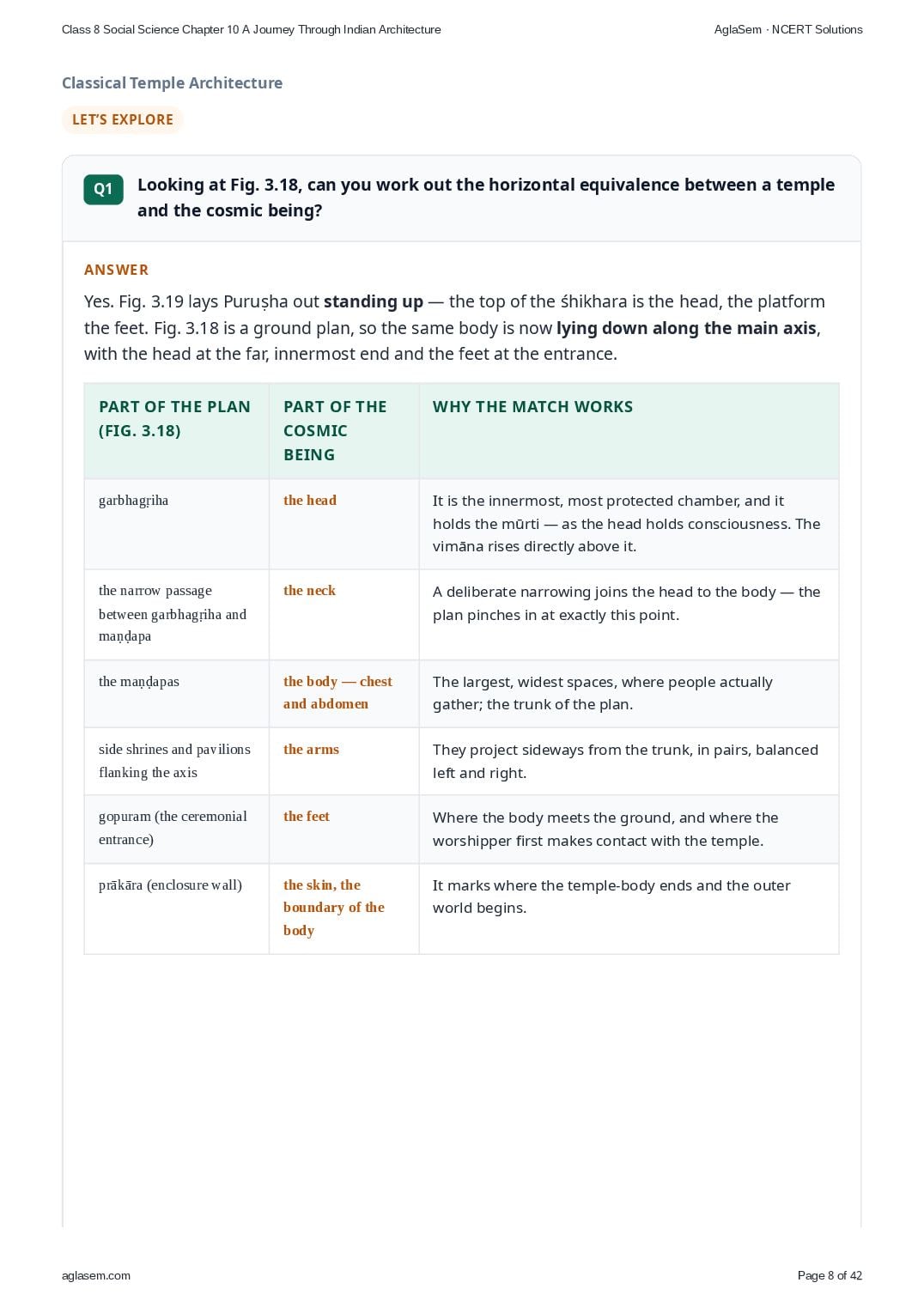
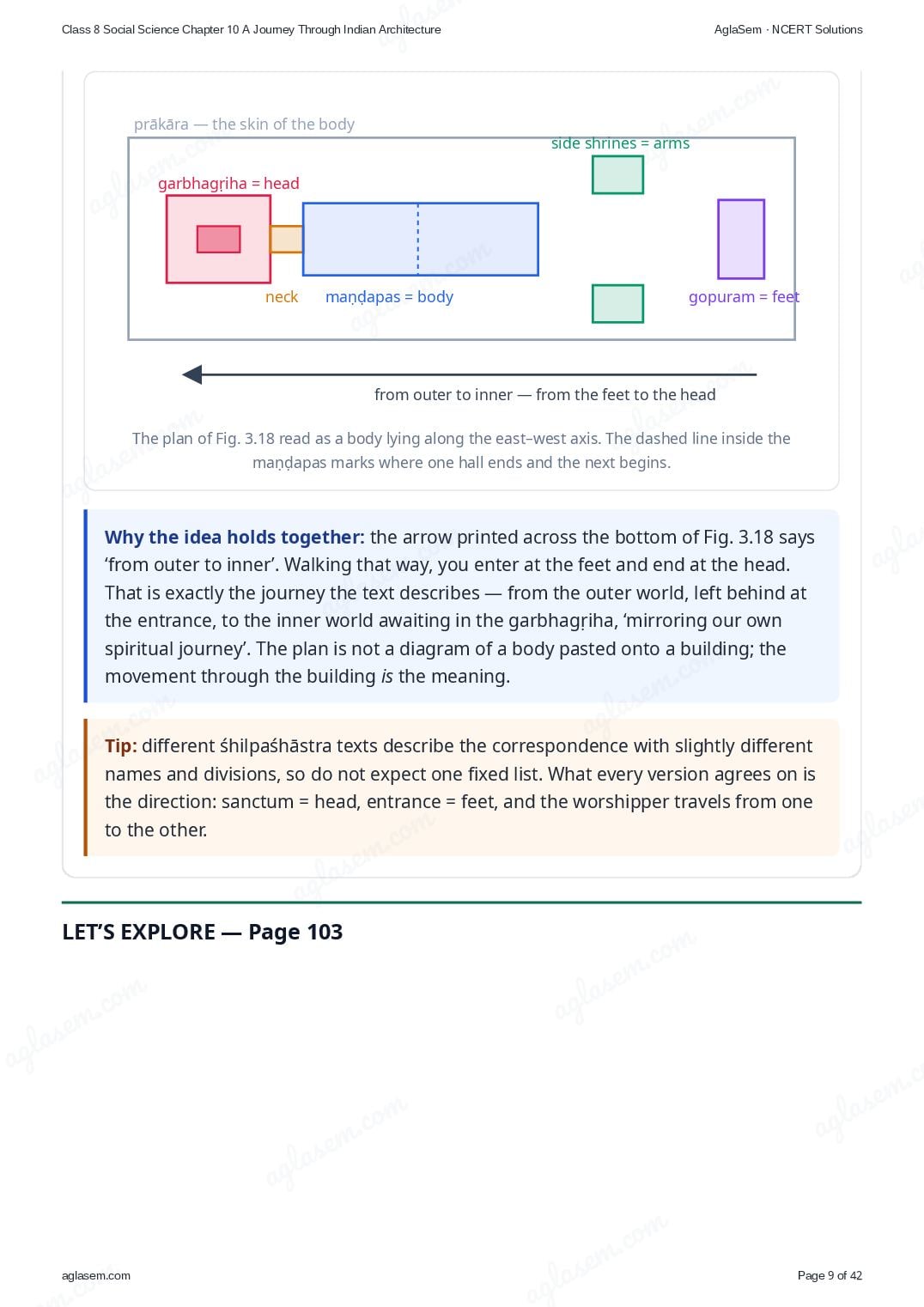
- Looking at Fig. 3.18, can you work out the horizontal equivalence between a temple and the cosmic being?
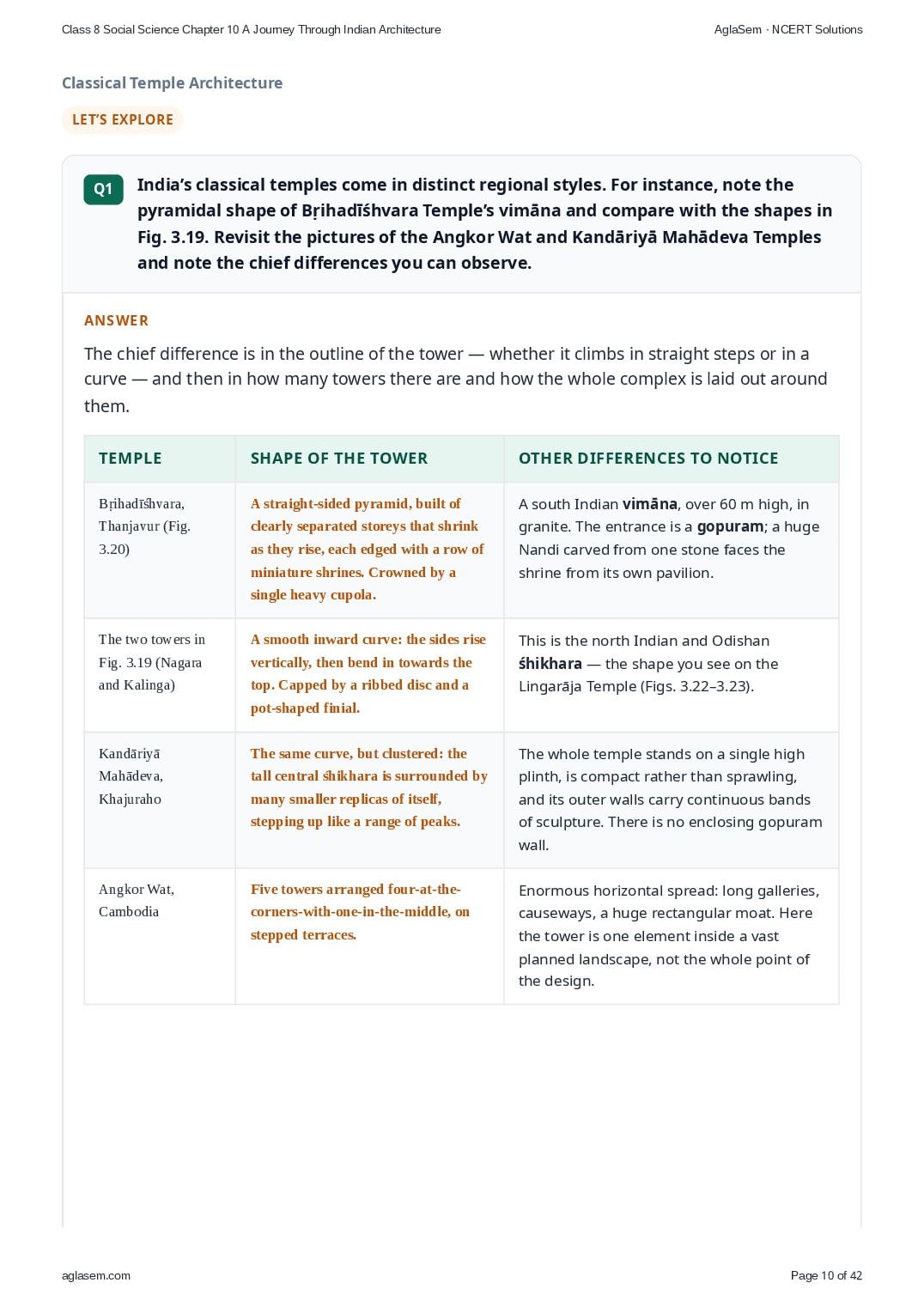
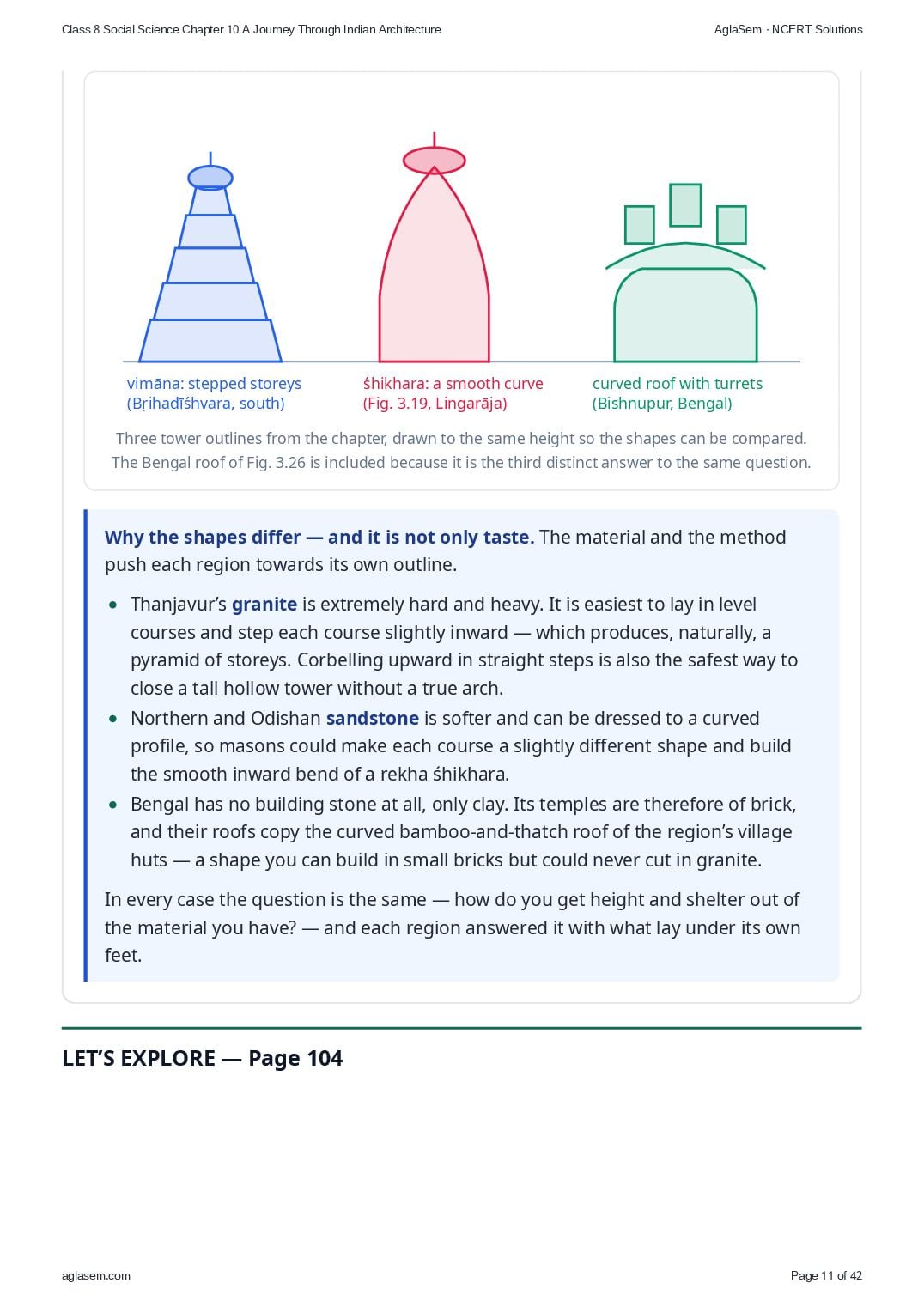
- India’s classical temples come in distinct regional styles. For instance, note the pyramidal shape of Bṛihadīśhvara Temple’s vimāna and compare with the shapes in Fig. 3.19. Revisit the pictures of the Angkor Wat and Kandāriyā Mahādeva Temples and note the chief differences you can observe.
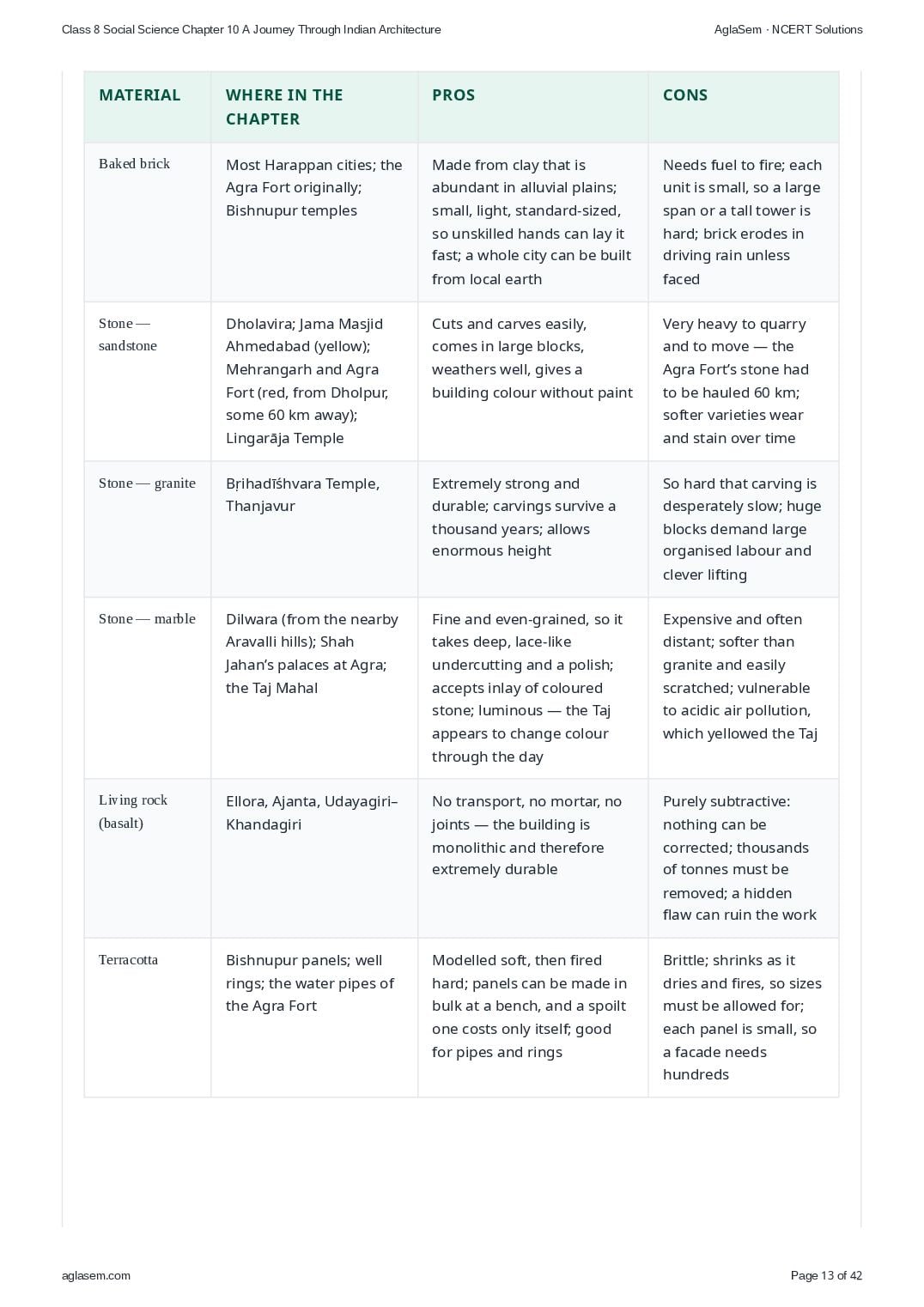
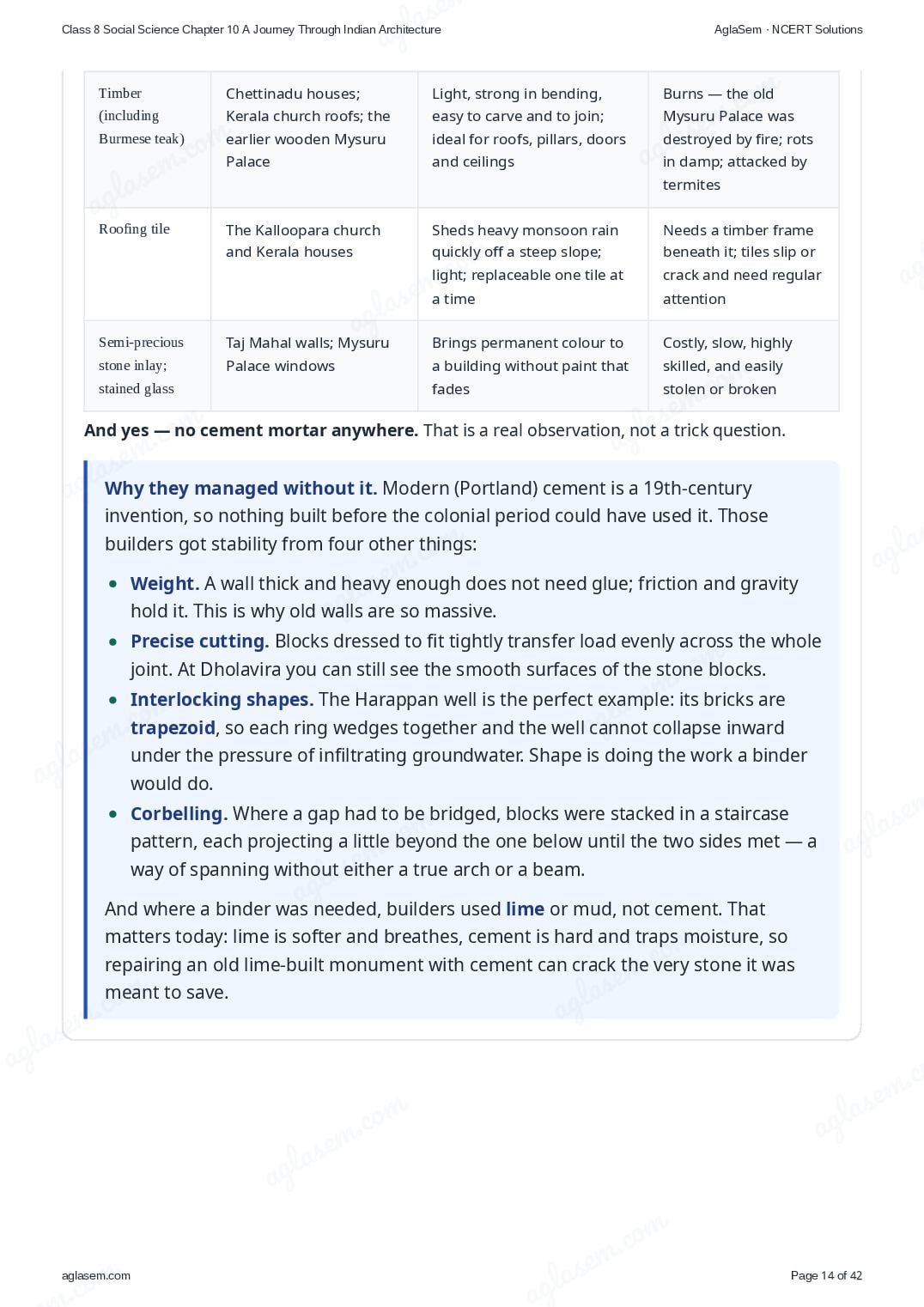
- Make a list of all the materials we have encountered so far in the carving or construction of structures; make a list of pros and cons for each of them. Did you notice that none of the structures discussed so far use any cement mortar?
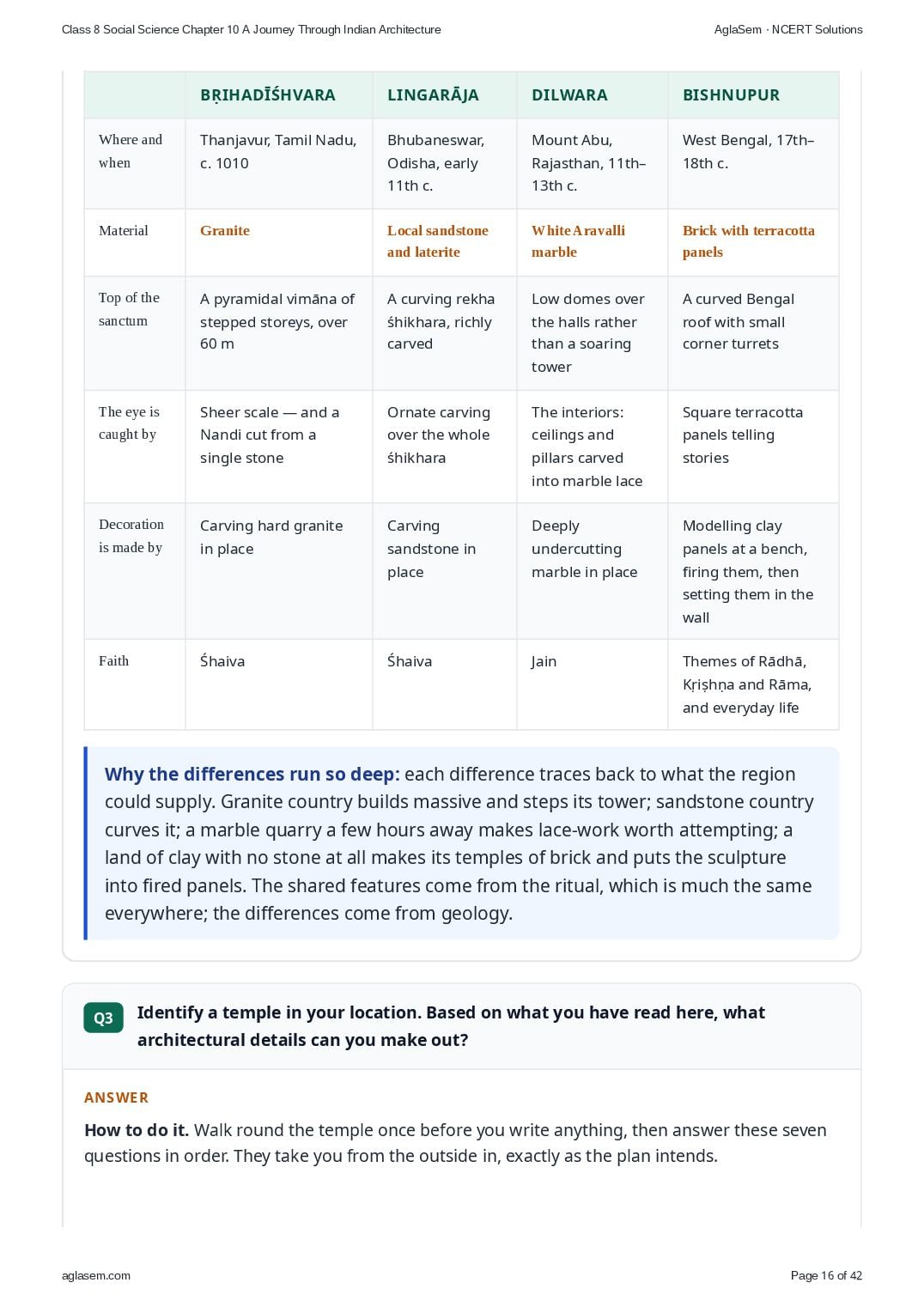
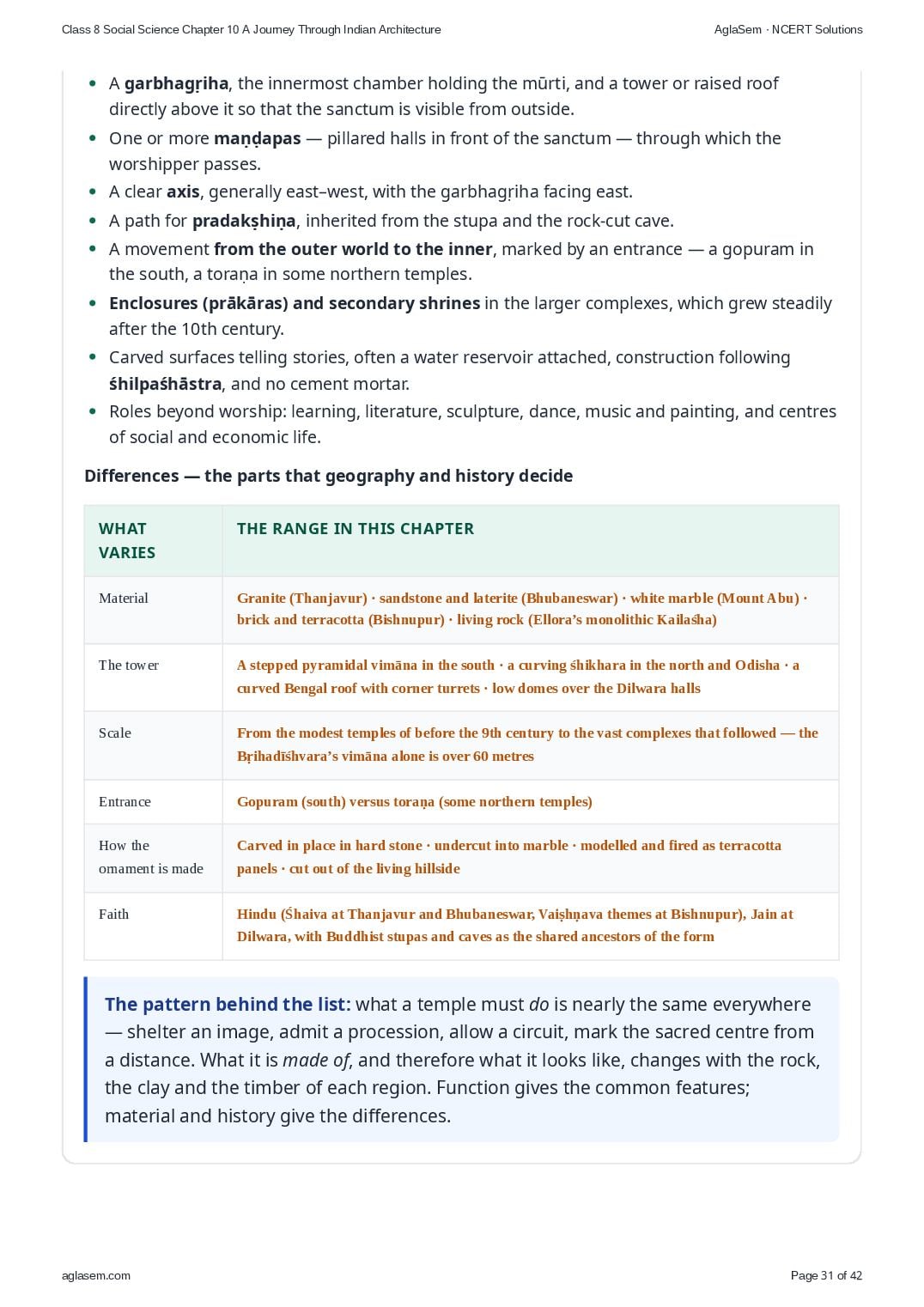
- Observe the pictures of the four temples featured here. What common features and what differences can you notice?
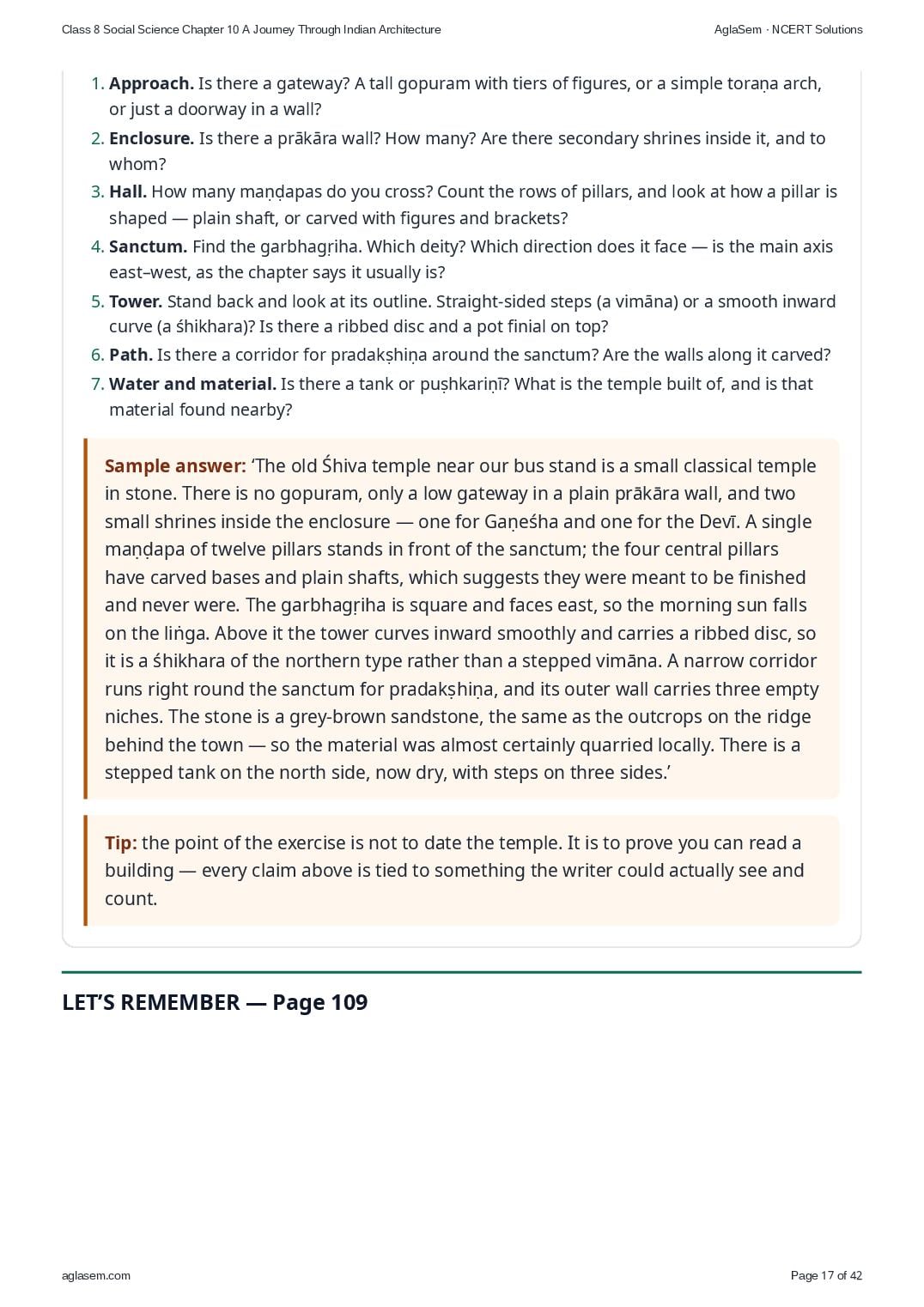
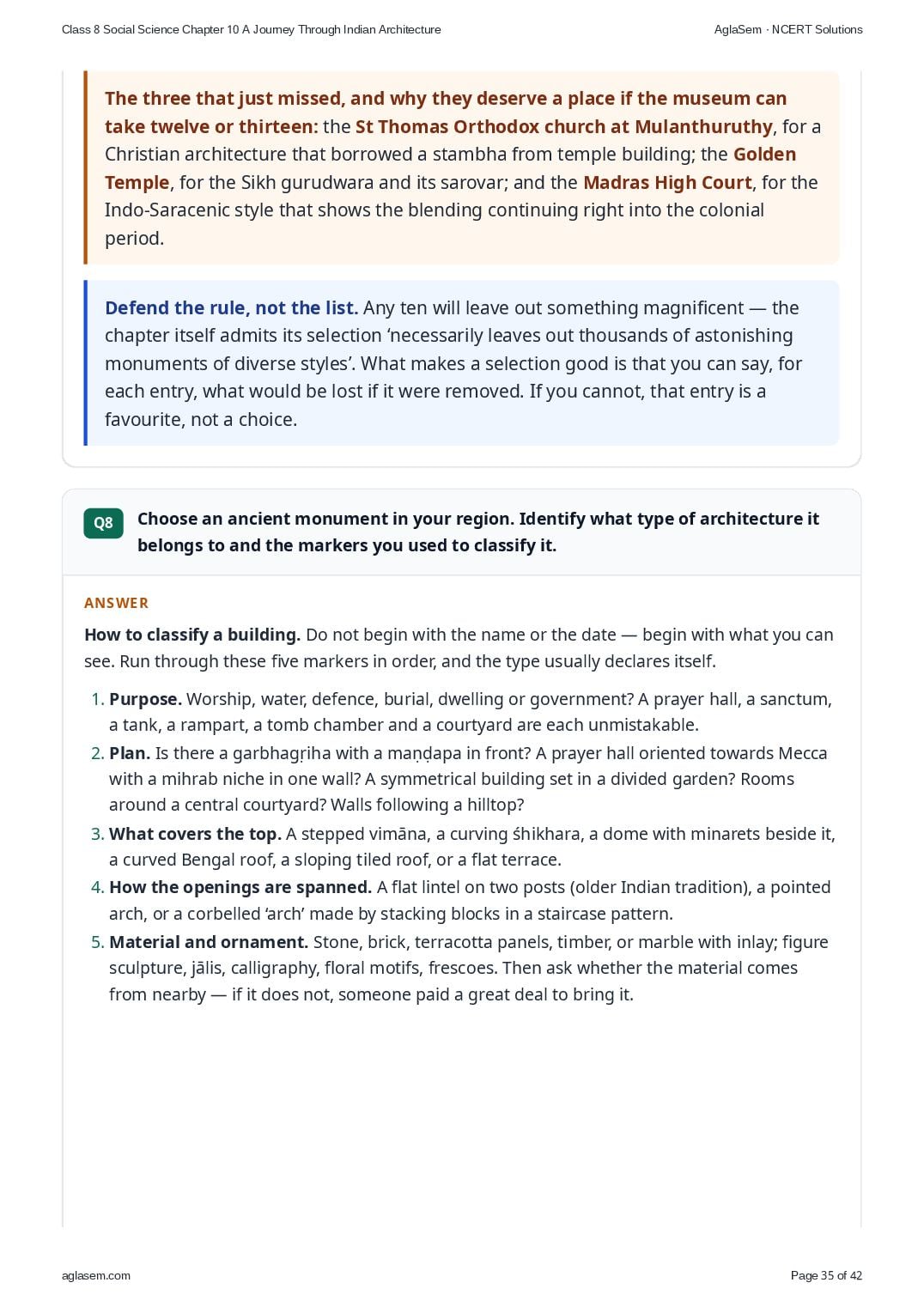
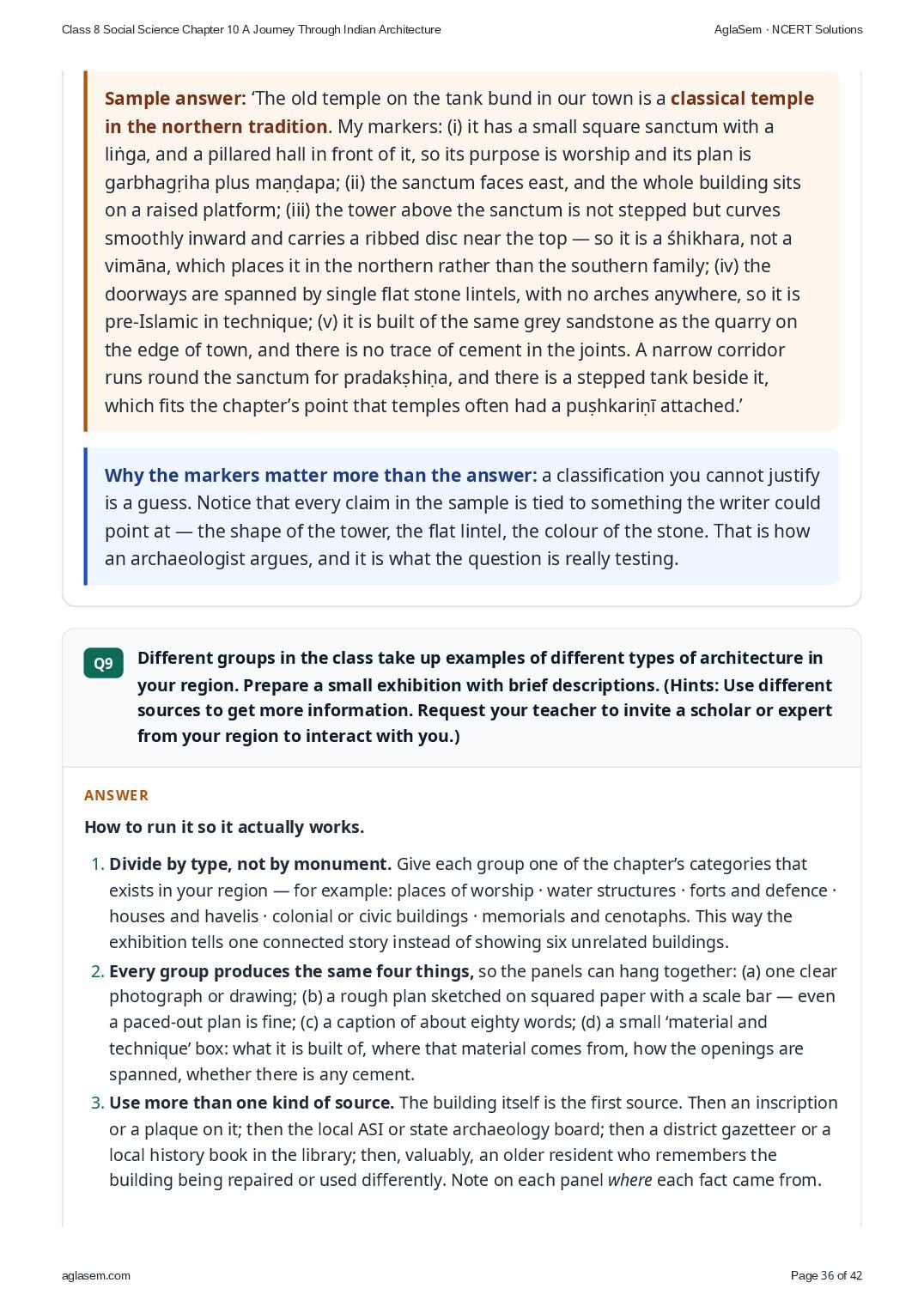
- Identify a temple in your location. Based on what you have read here, what architectural details can you make out?
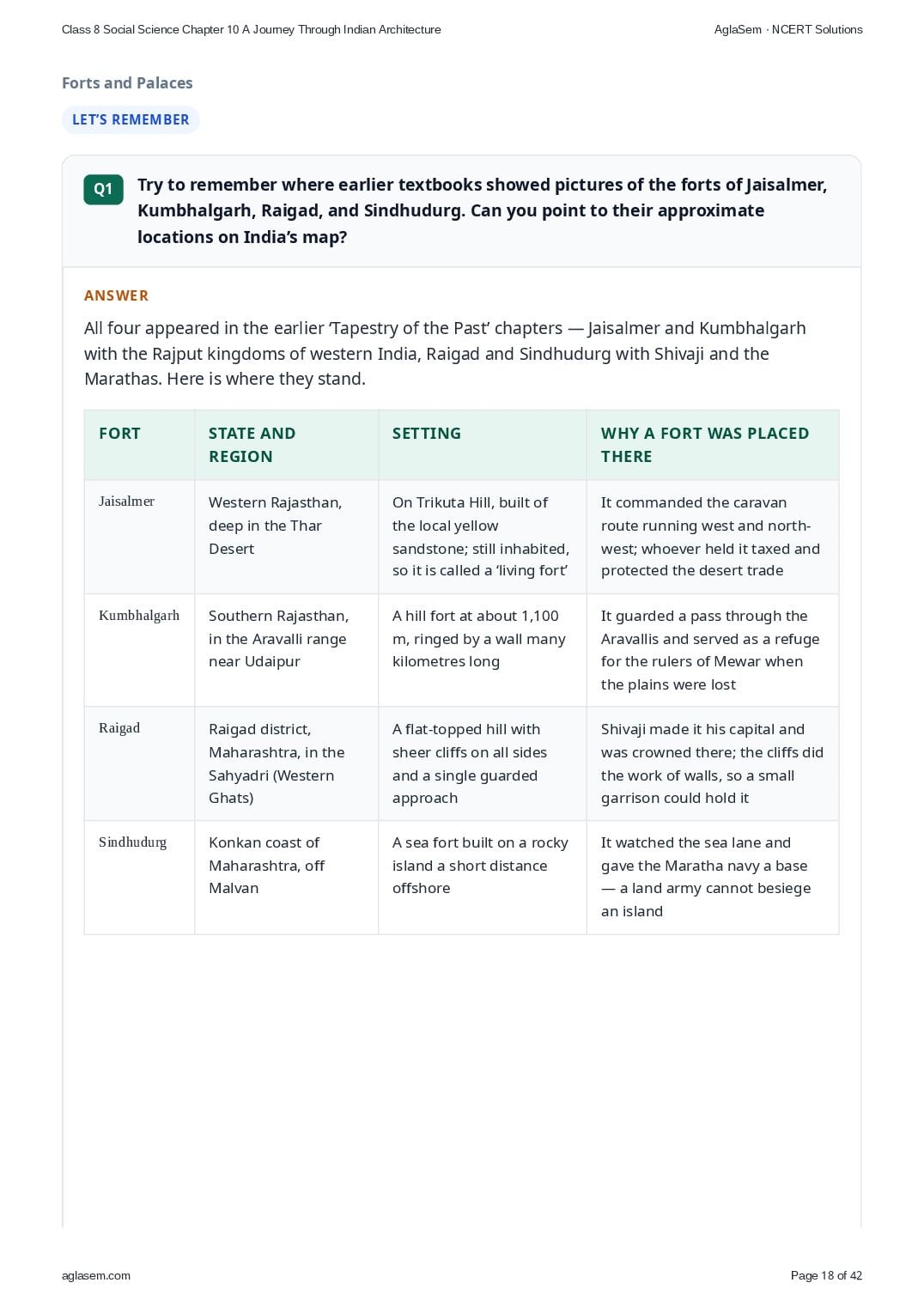
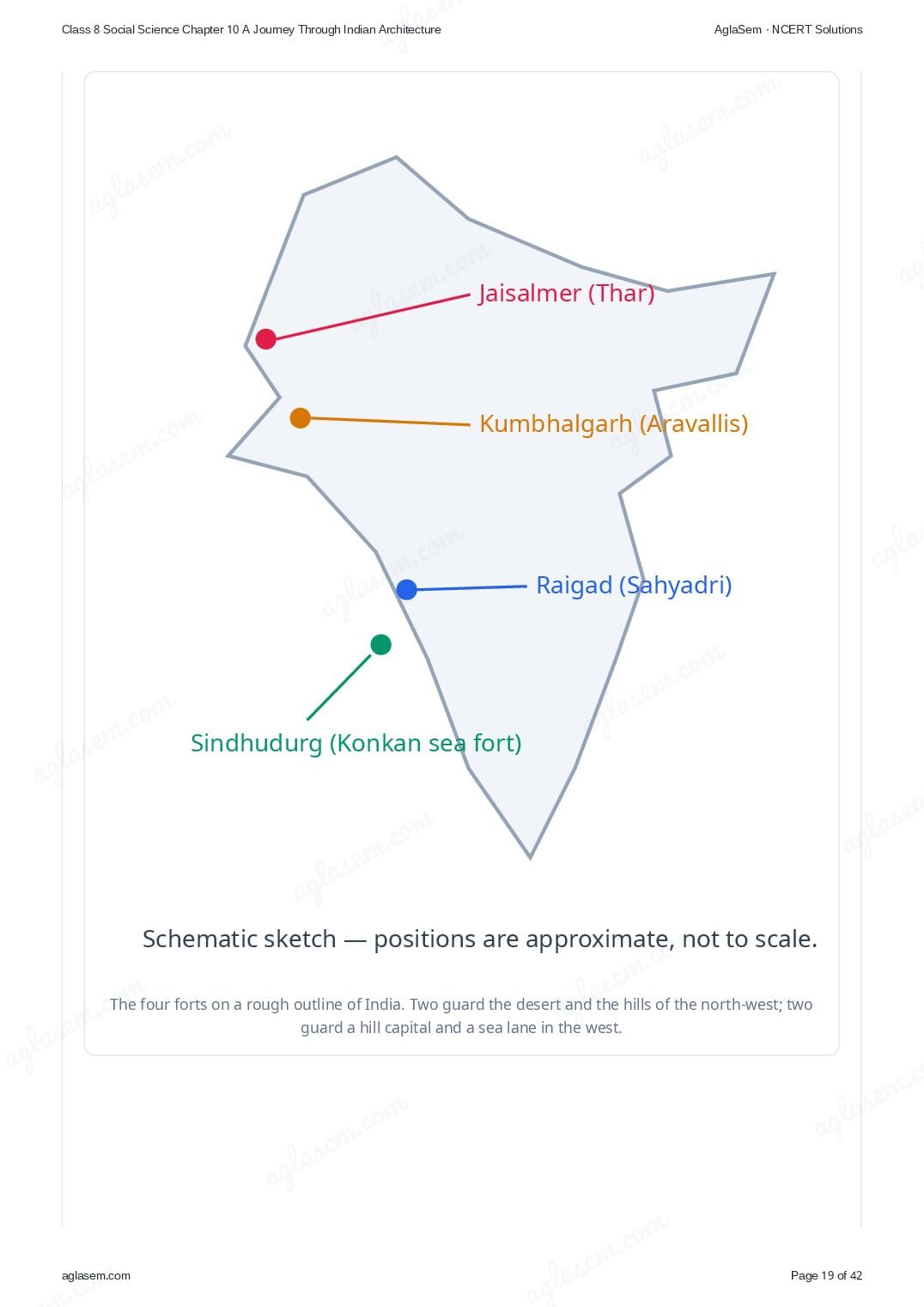
- Try to remember where earlier textbooks showed pictures of the forts of Jaisalmer, Kumbhalgarh, Raigad, and Sindhudurg. Can you point to their approximate locations on India’s map?
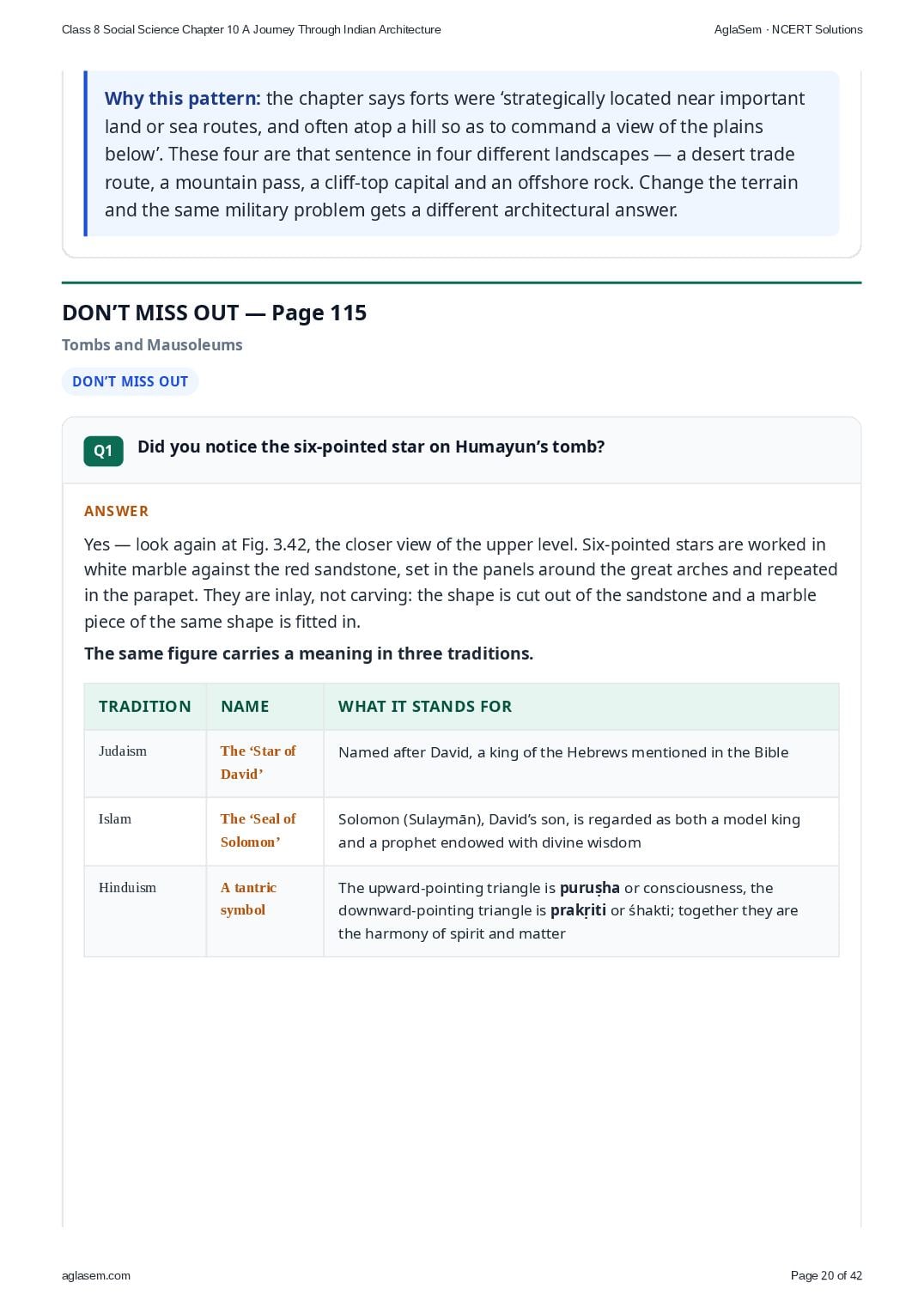
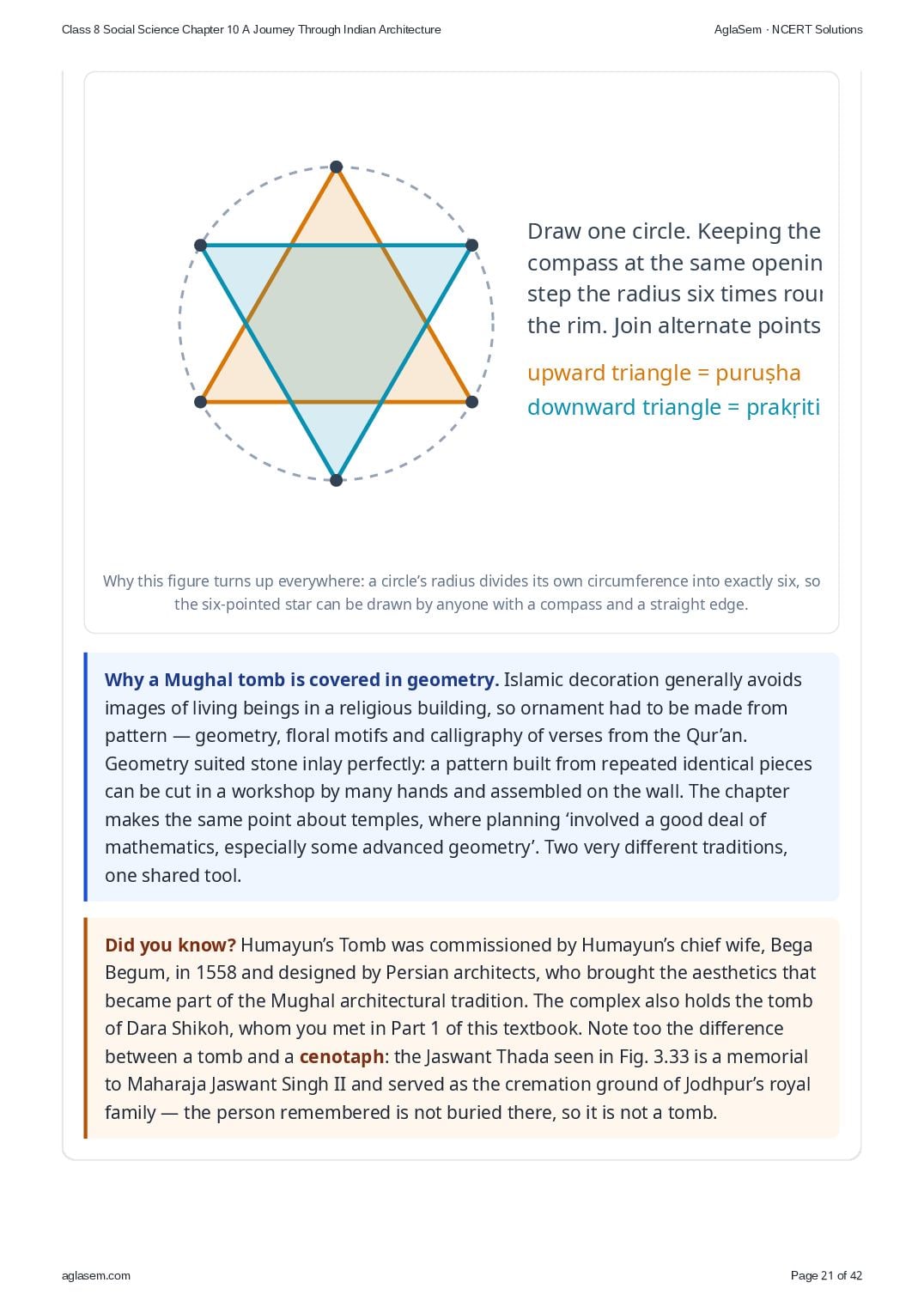
- Did you notice the six-pointed star on Humayun’s tomb?
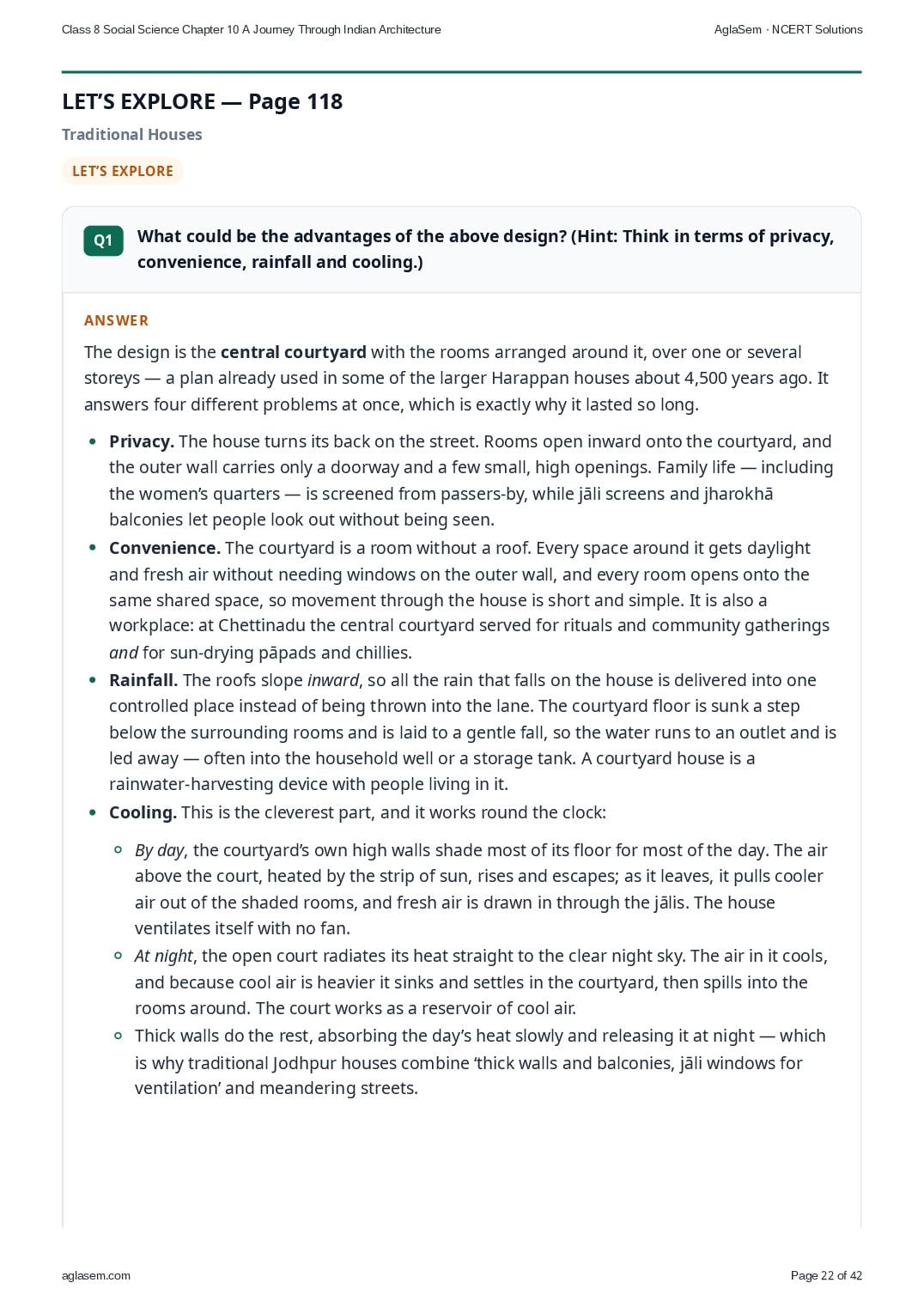
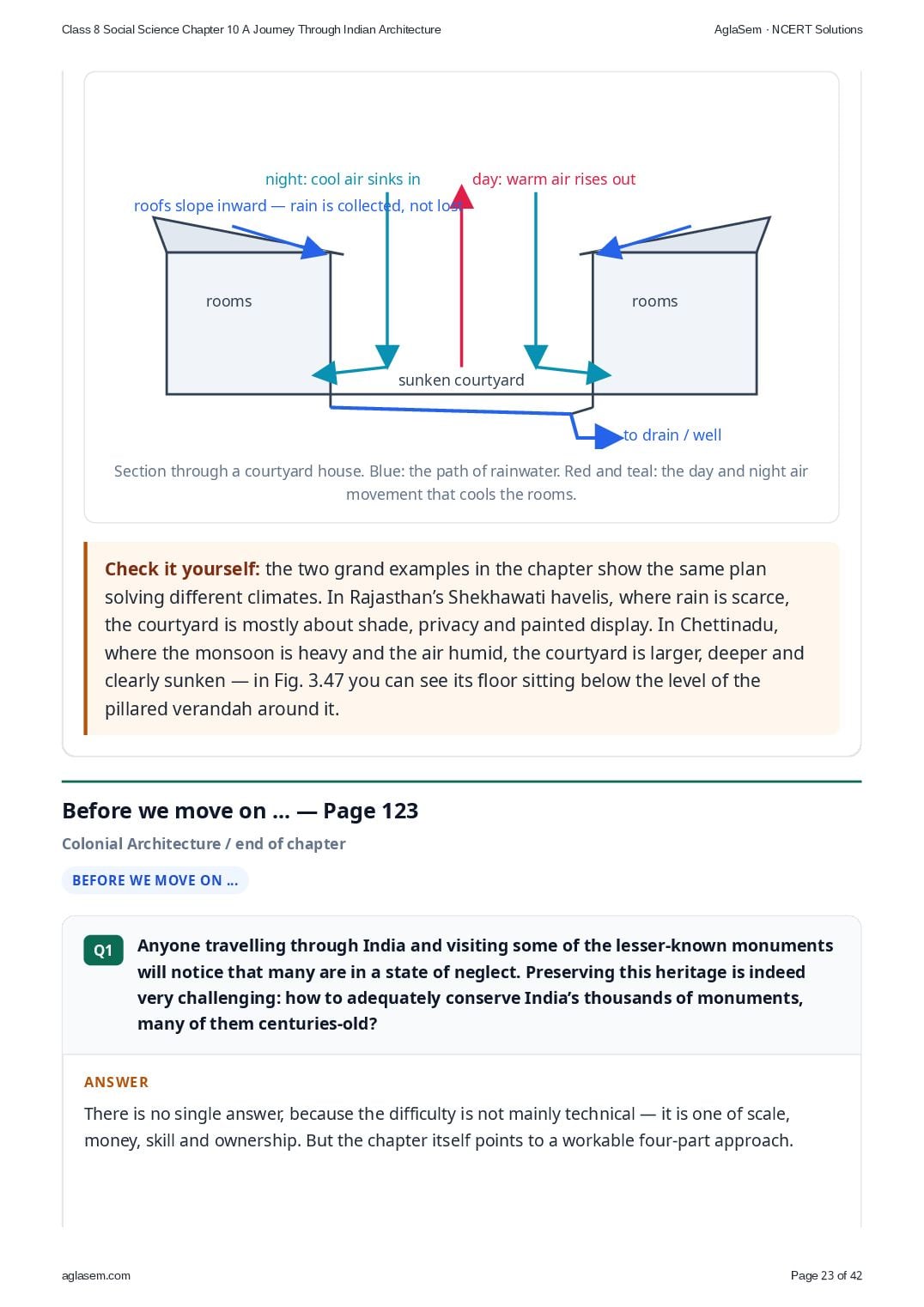
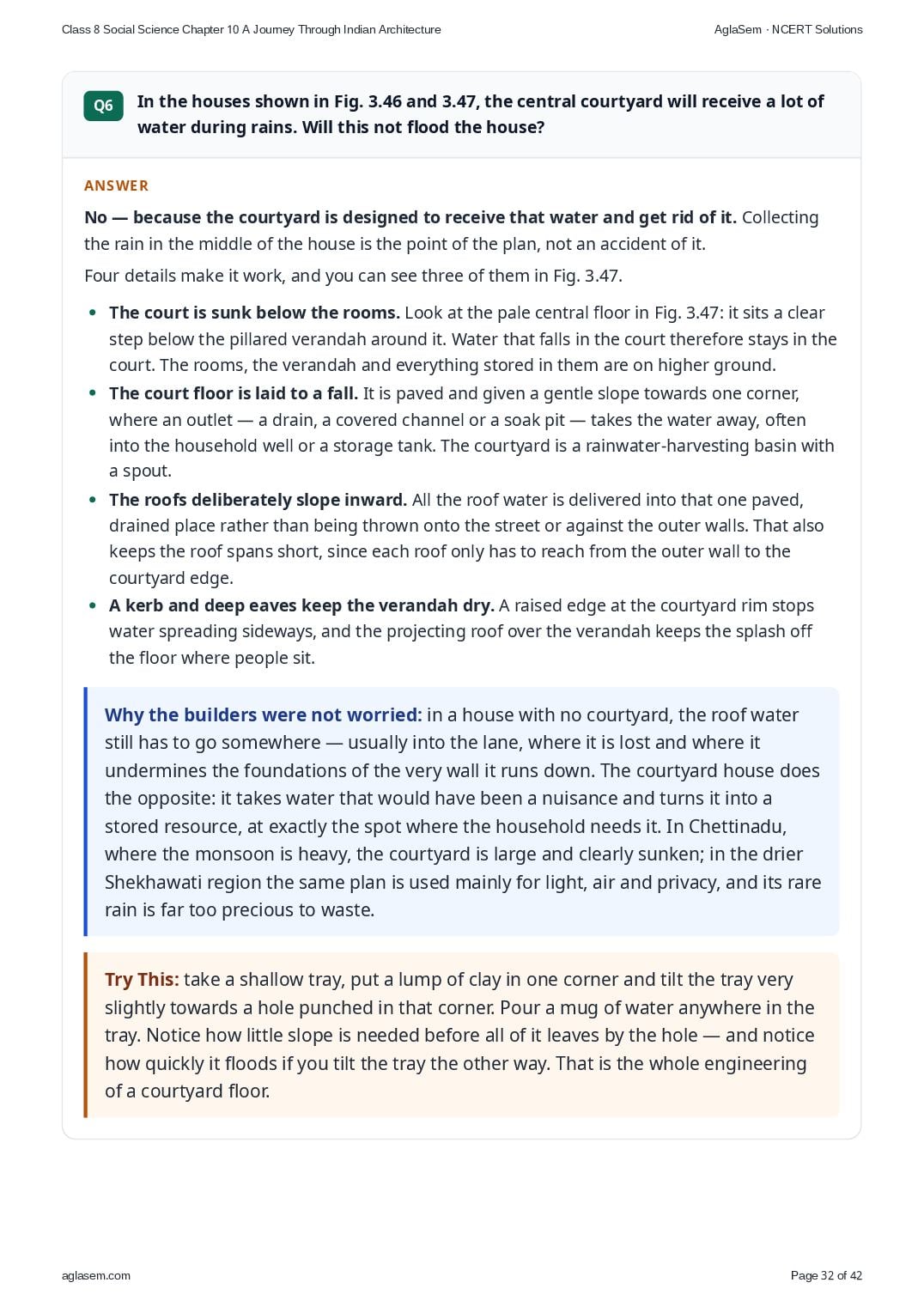
- What could be the advantages of the above design? (Hint: Think in terms of privacy, convenience, rainfall and cooling.)
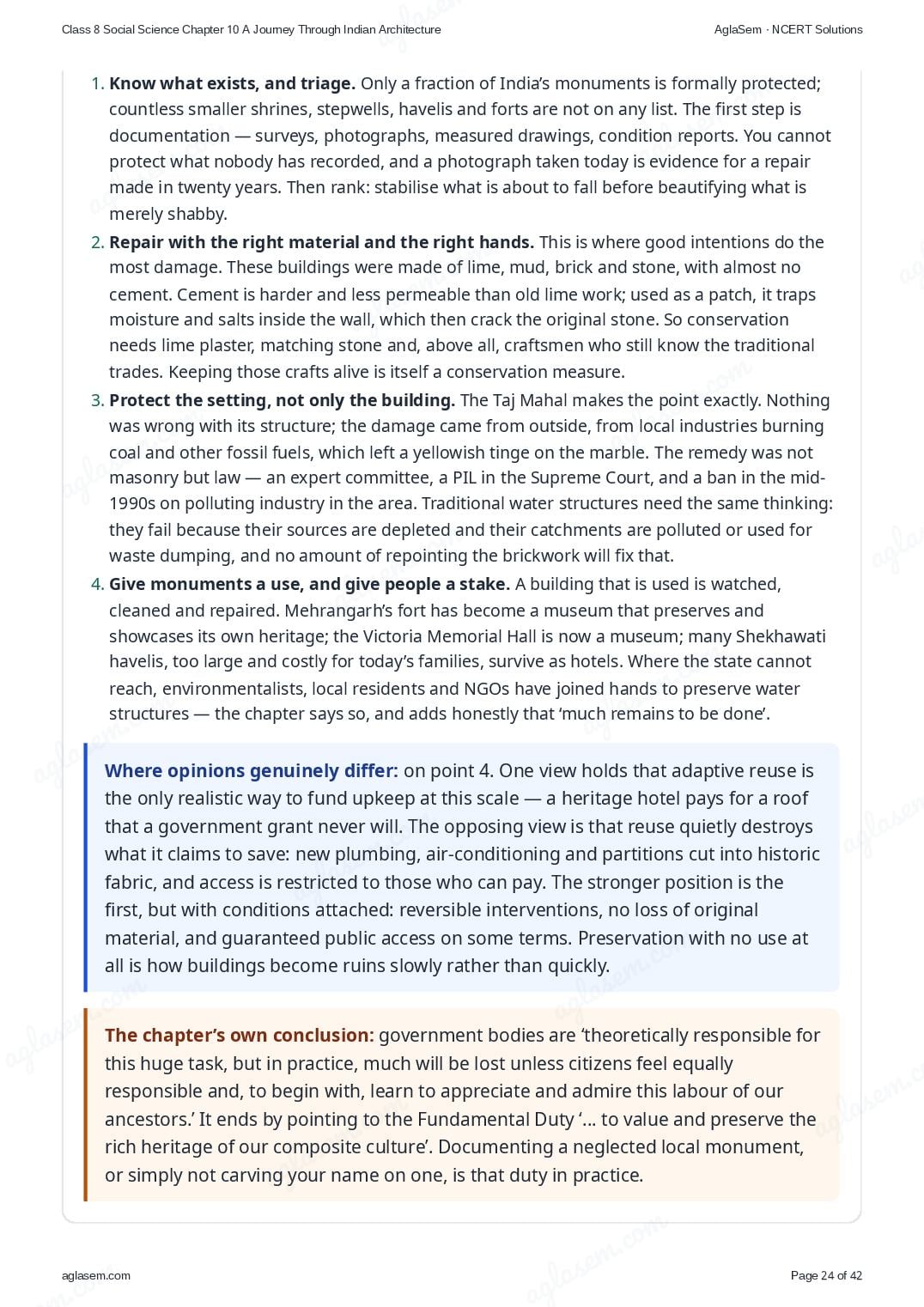
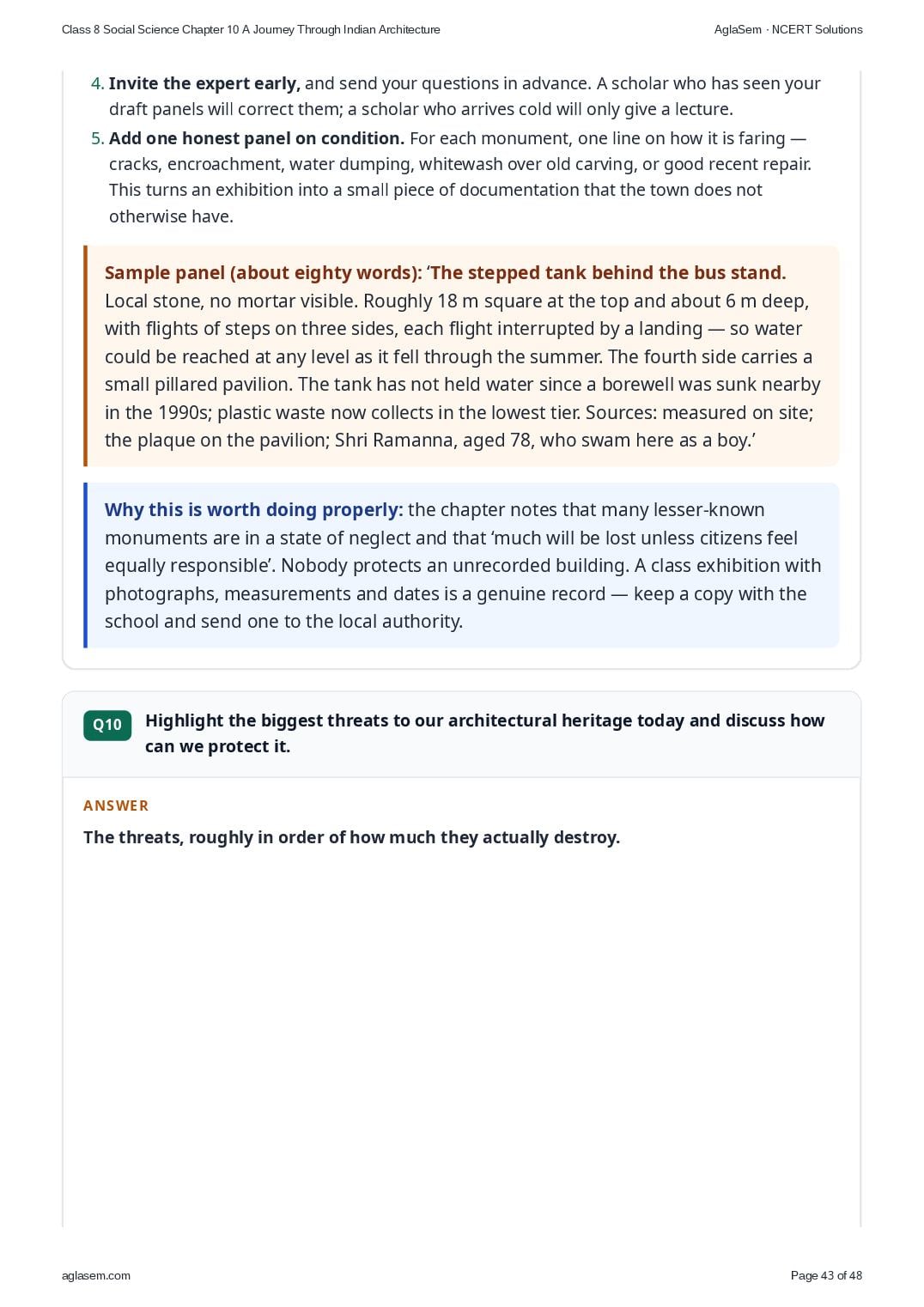
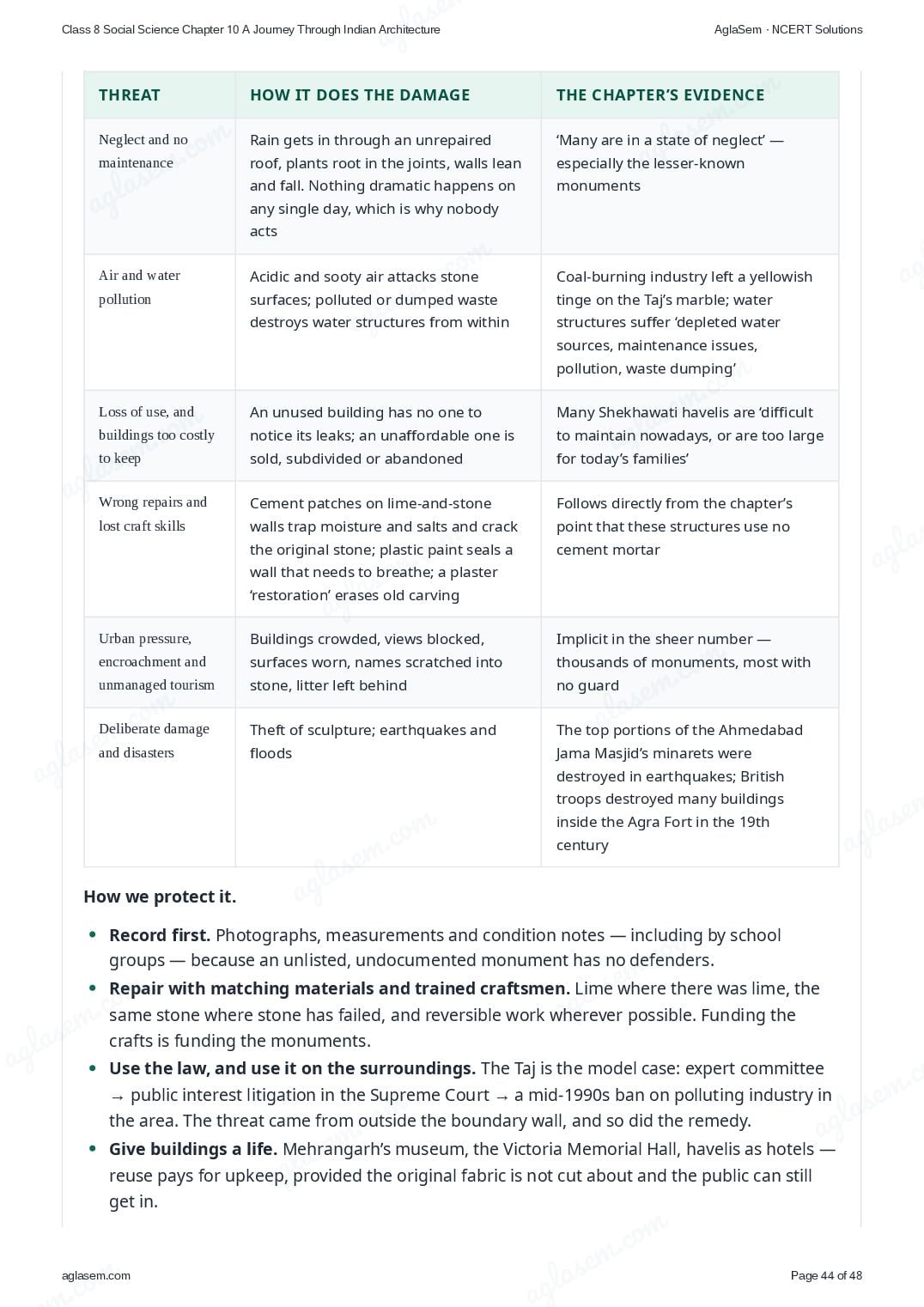
- Anyone travelling through India and visiting some of the lesser-known monuments will notice that many are in a state of neglect. Preserving this heritage is indeed very challenging: how to adequately conserve India’s thousands of monuments, many of them centuries-old?
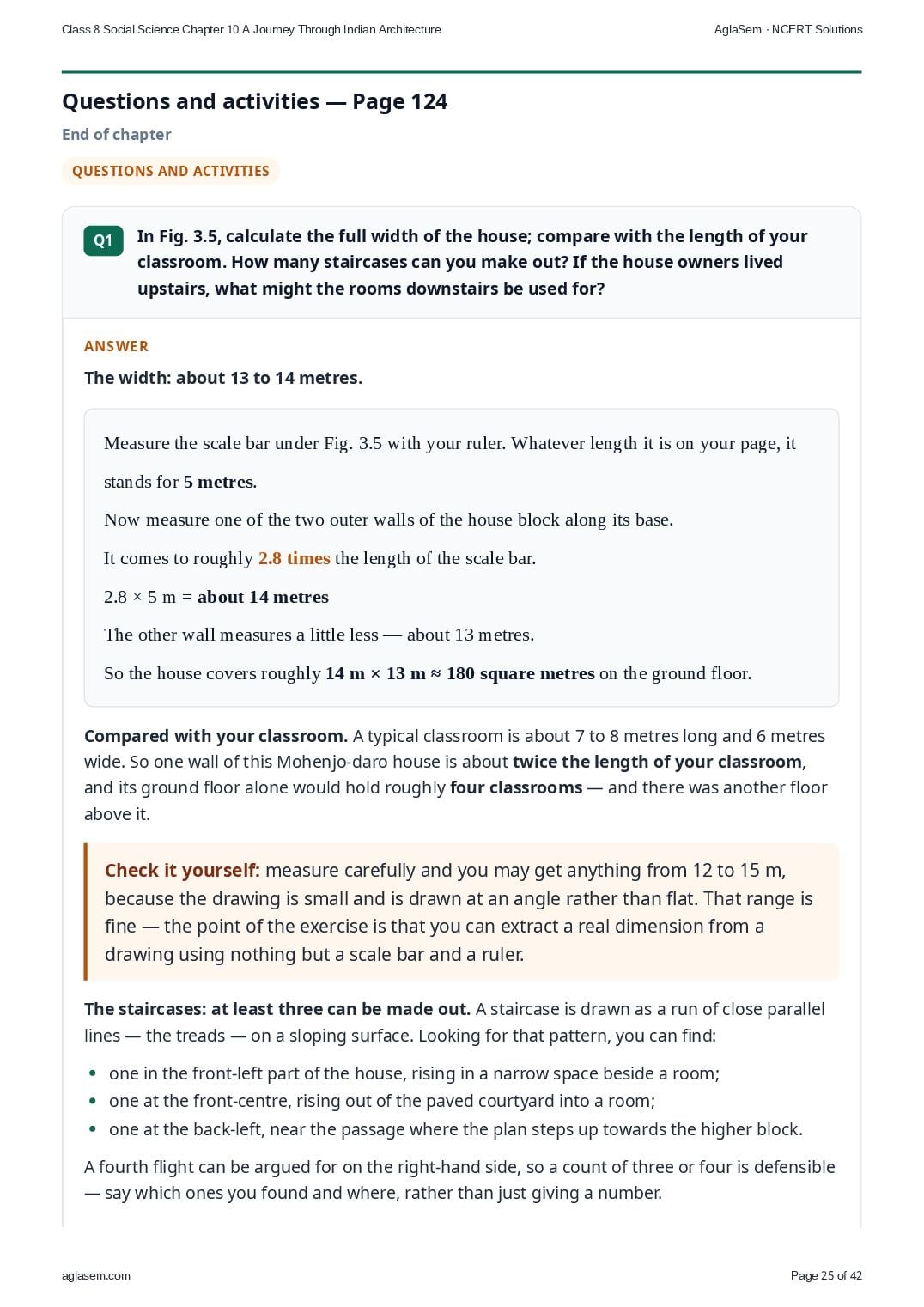
- In Fig. 3.5, calculate the full width of the house; compare with the length of your classroom. How many staircases can you make out? If the house owners lived upstairs, what might the rooms downstairs be used for?
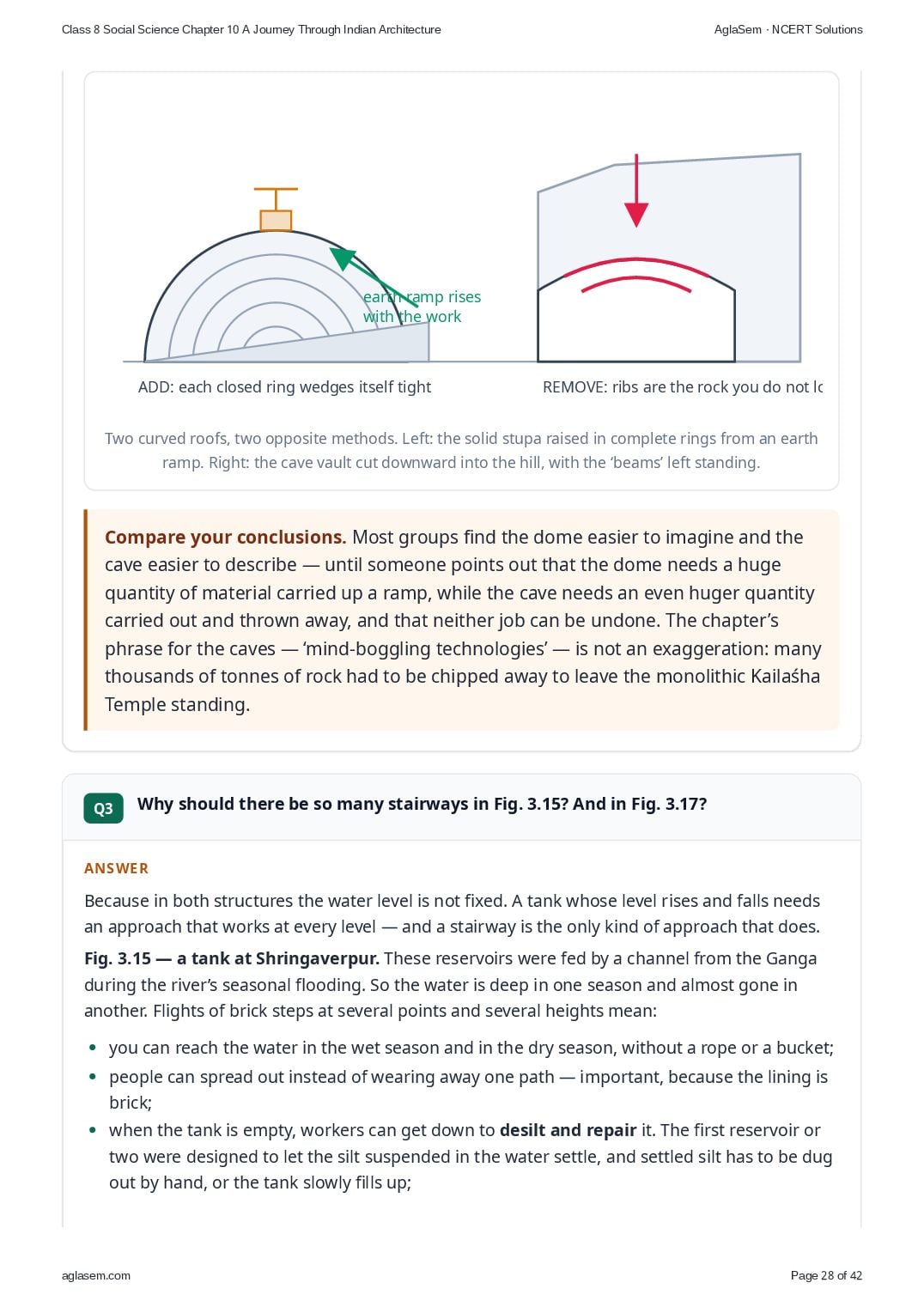
- Form groups of four or five students and imagine you are artisans with just simple tools. Looking at Fig. 3.8, how would you go about building a dome of bricks? Looking at Fig. 3.12, how would you carve such a ceiling? Discuss and compare the different groups’ conclusions.
- Why should there be so many stairways in Fig. 3.15? And in Fig. 3.17?
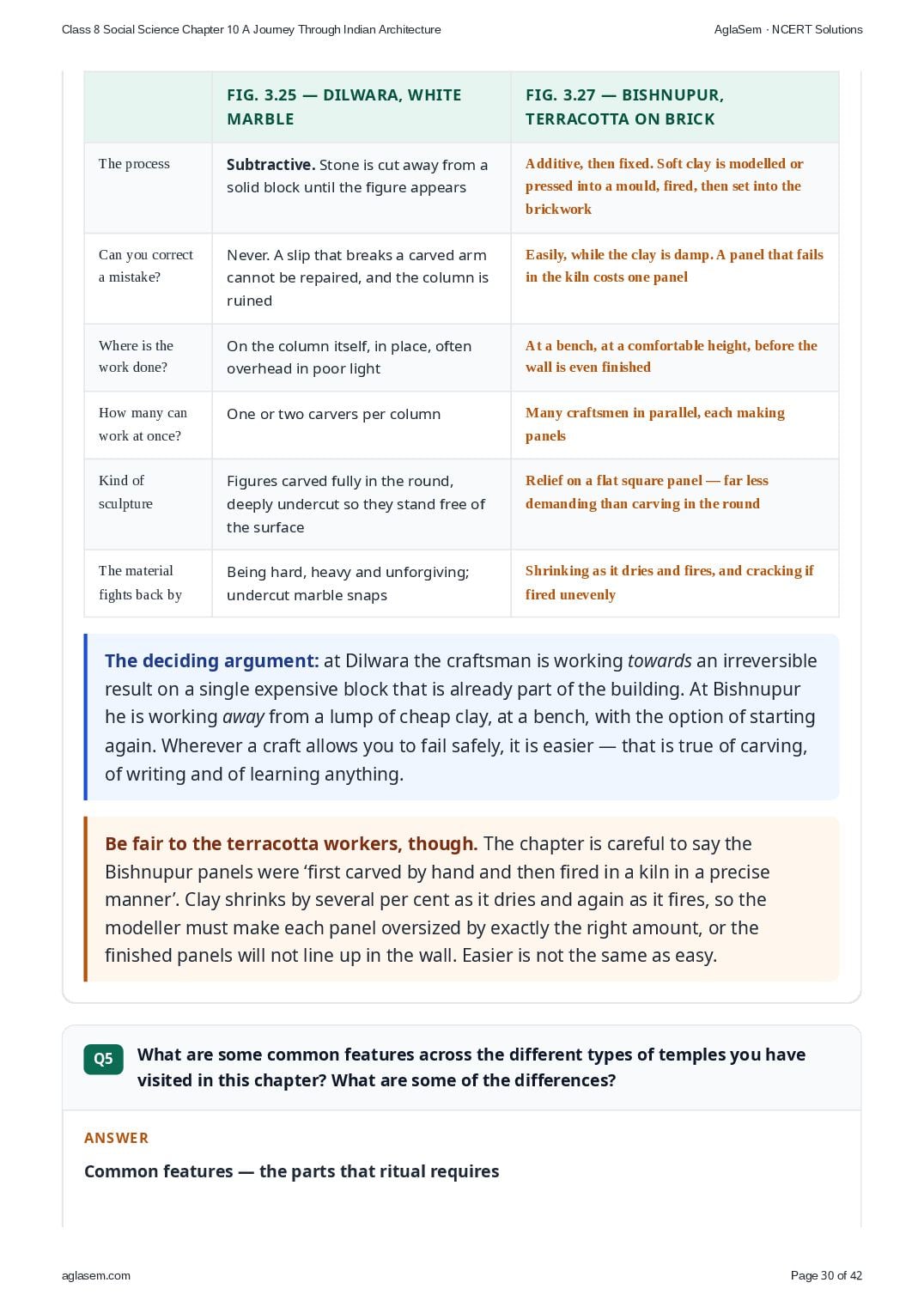
- Which pillars are easier to sculpt in your opinion—those in Fig. 3.25 or 3.27? Justify your answer.
- What are some common features across the different types of temples you have visited in this chapter? What are some of the differences?
- In the houses shown in Fig. 3.46 and 3.47, the central courtyard will receive a lot of water during rains. Will this not flood the house?
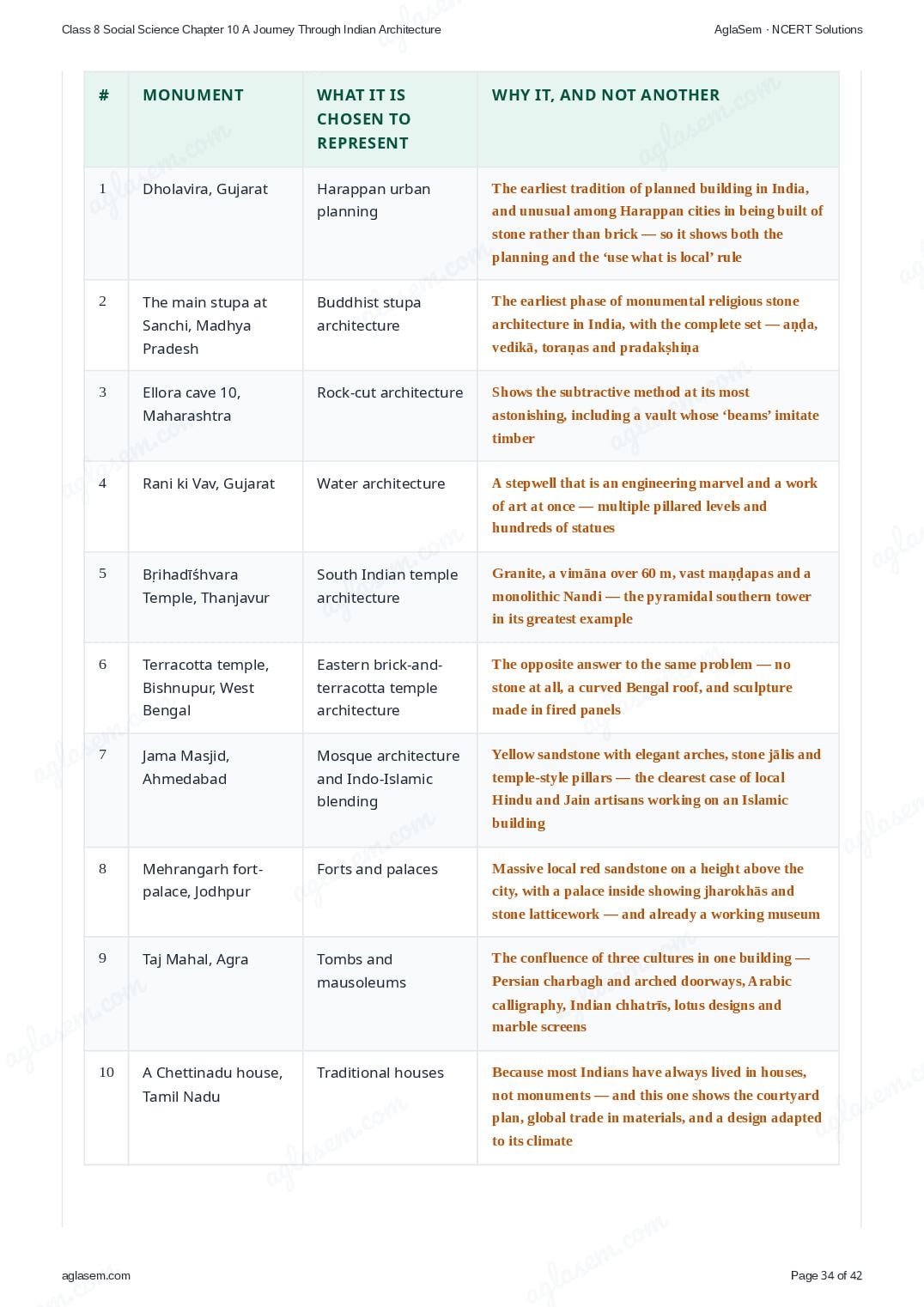
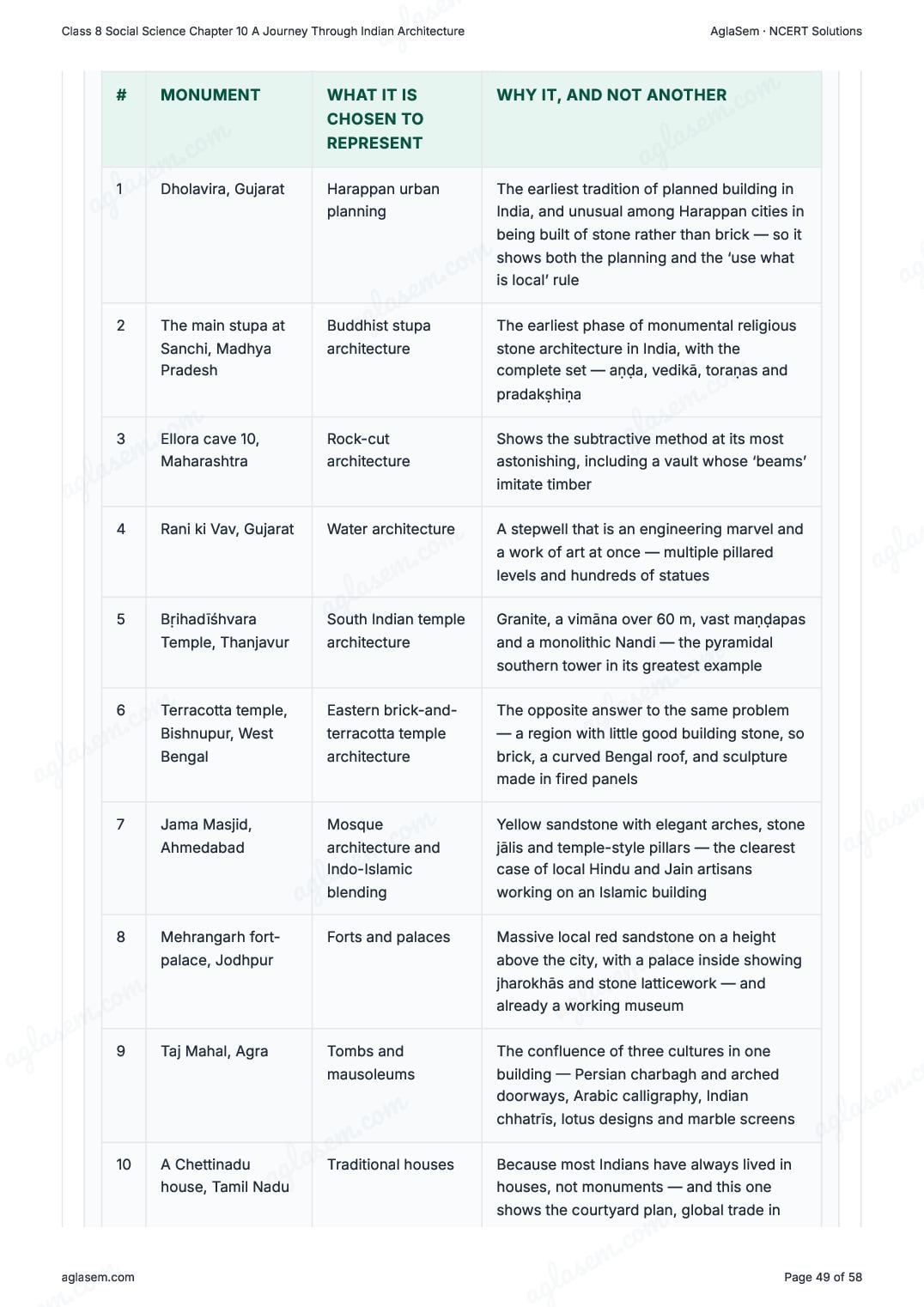
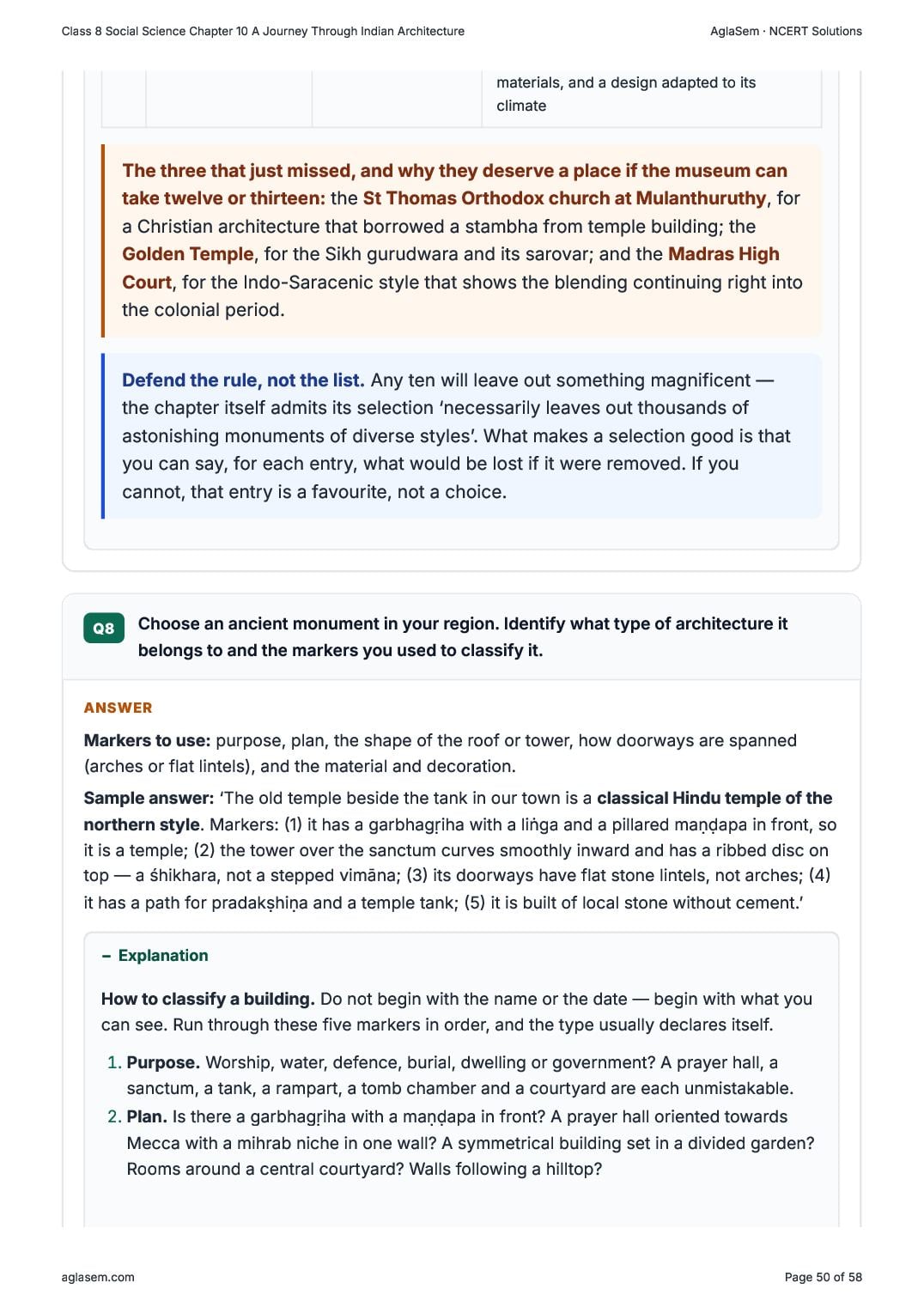
- If you had to create a Pan-India Architecture Museum, which ten monuments would you select to represent India’s diversity and why?
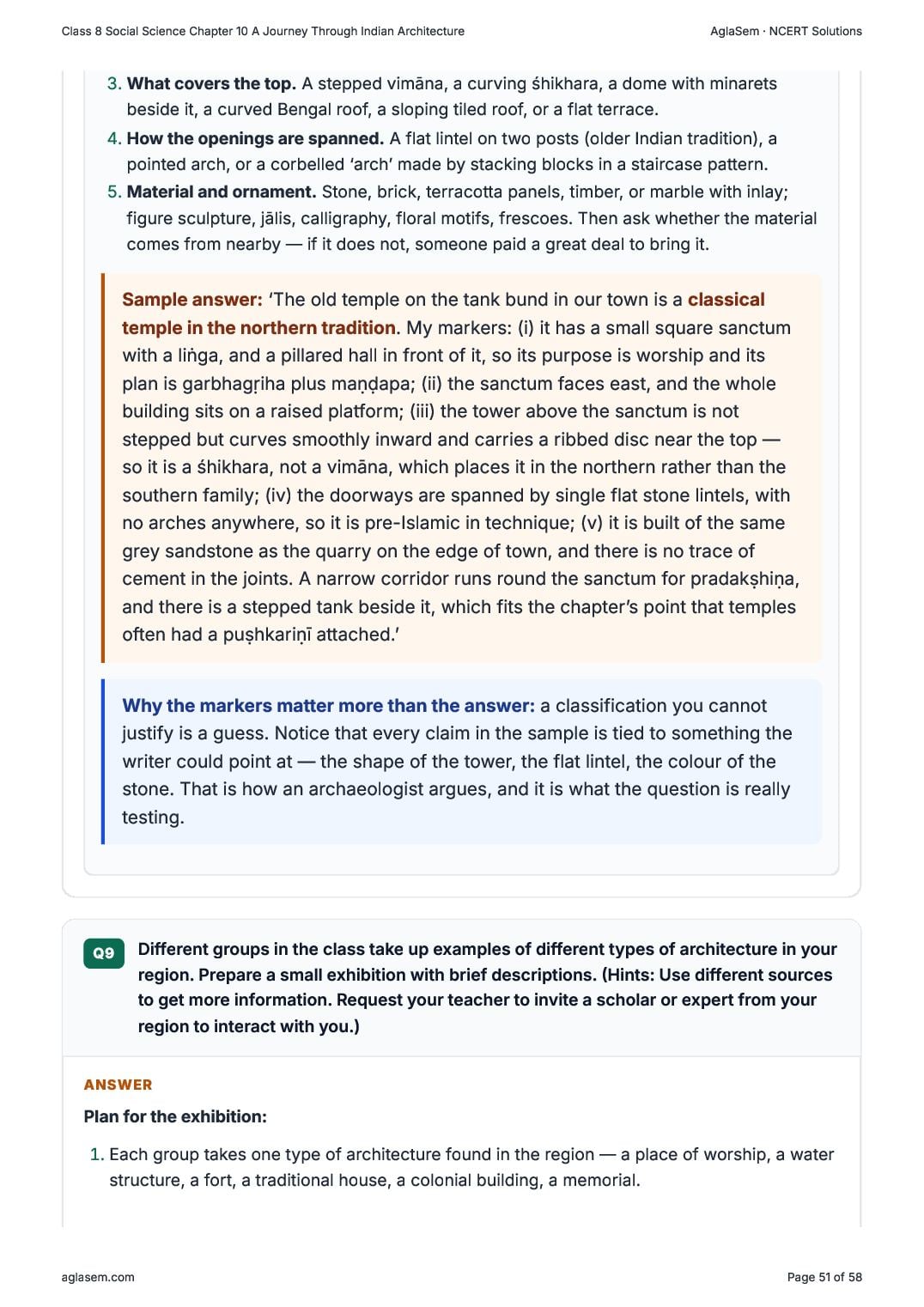
- Choose an ancient monument in your region. Identify what type of architecture it belongs to and the markers you used to classify it.
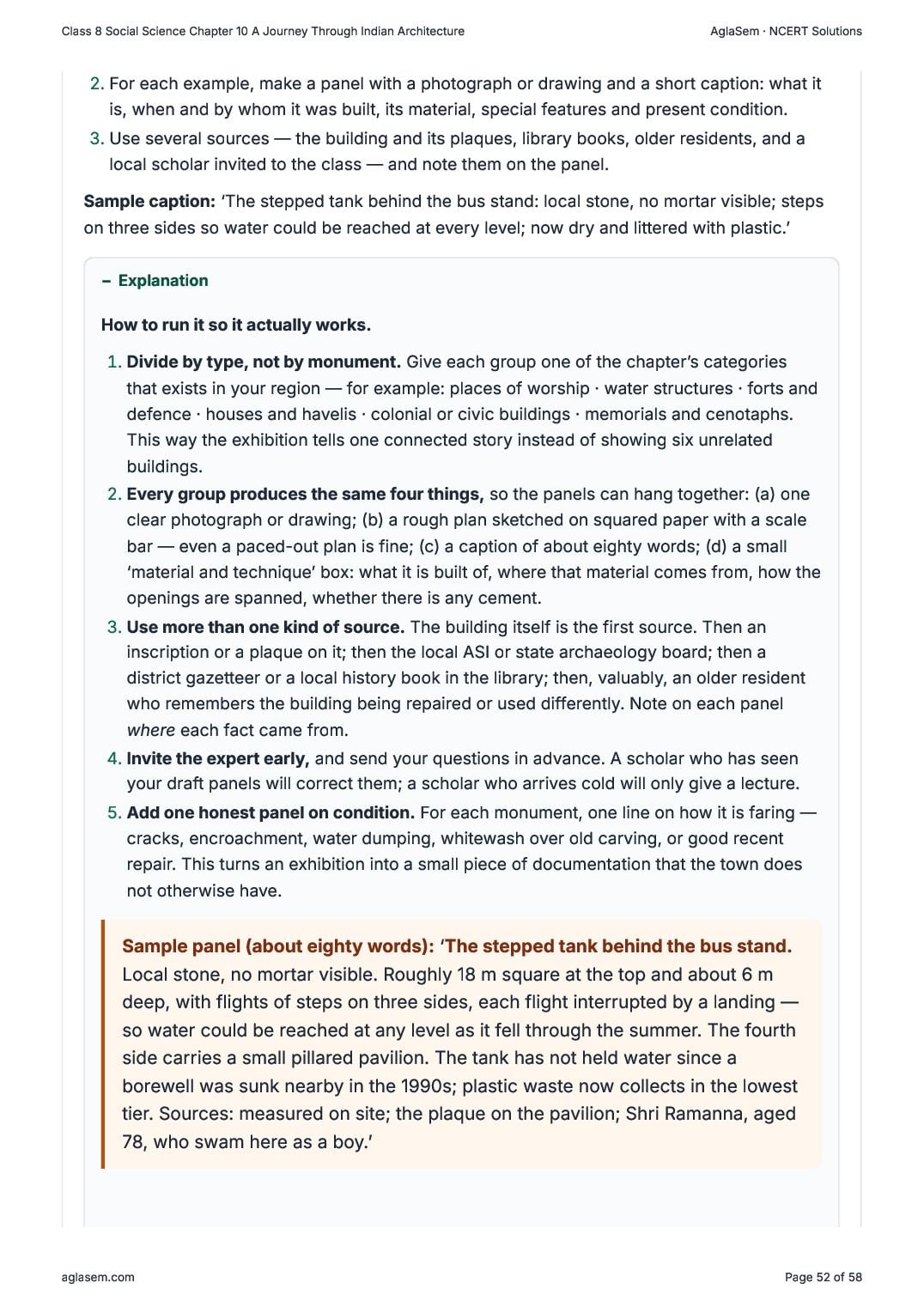
- Different groups in the class take up examples of different types of architecture in your region. Prepare a small exhibition with brief descriptions. (Hints: Use different sources to get more information. Request your teacher to invite a scholar or expert from your region to interact with you.)
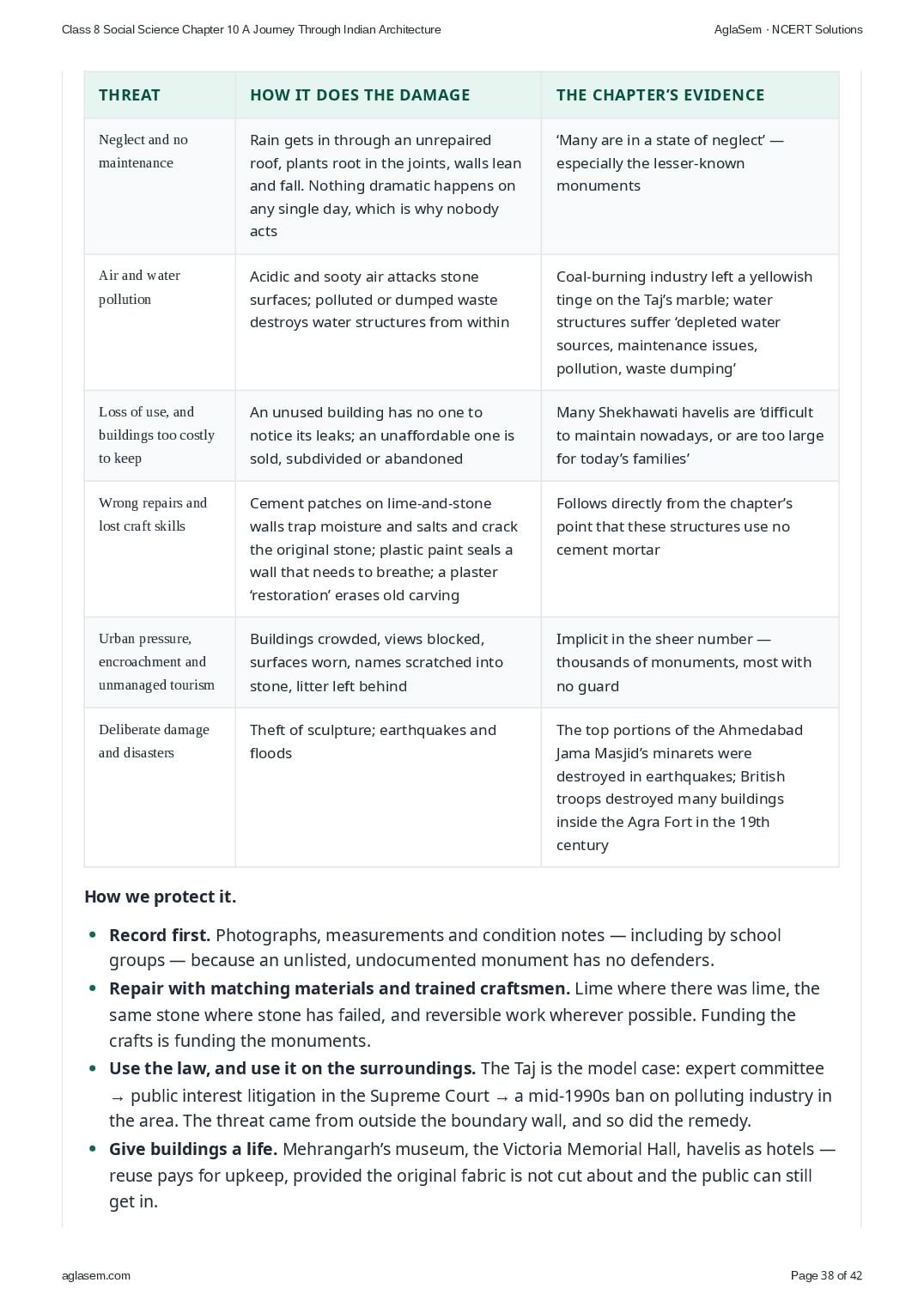
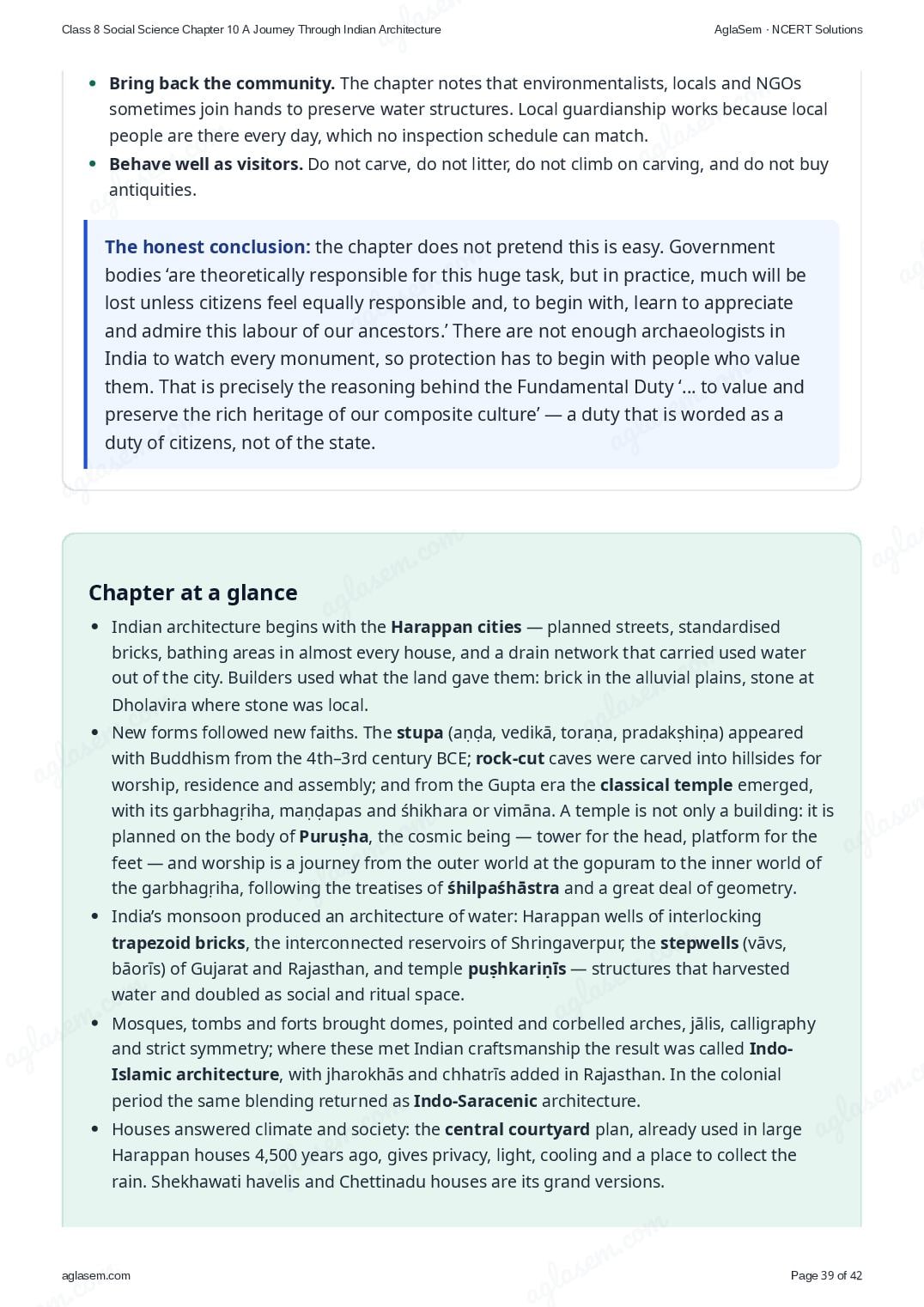
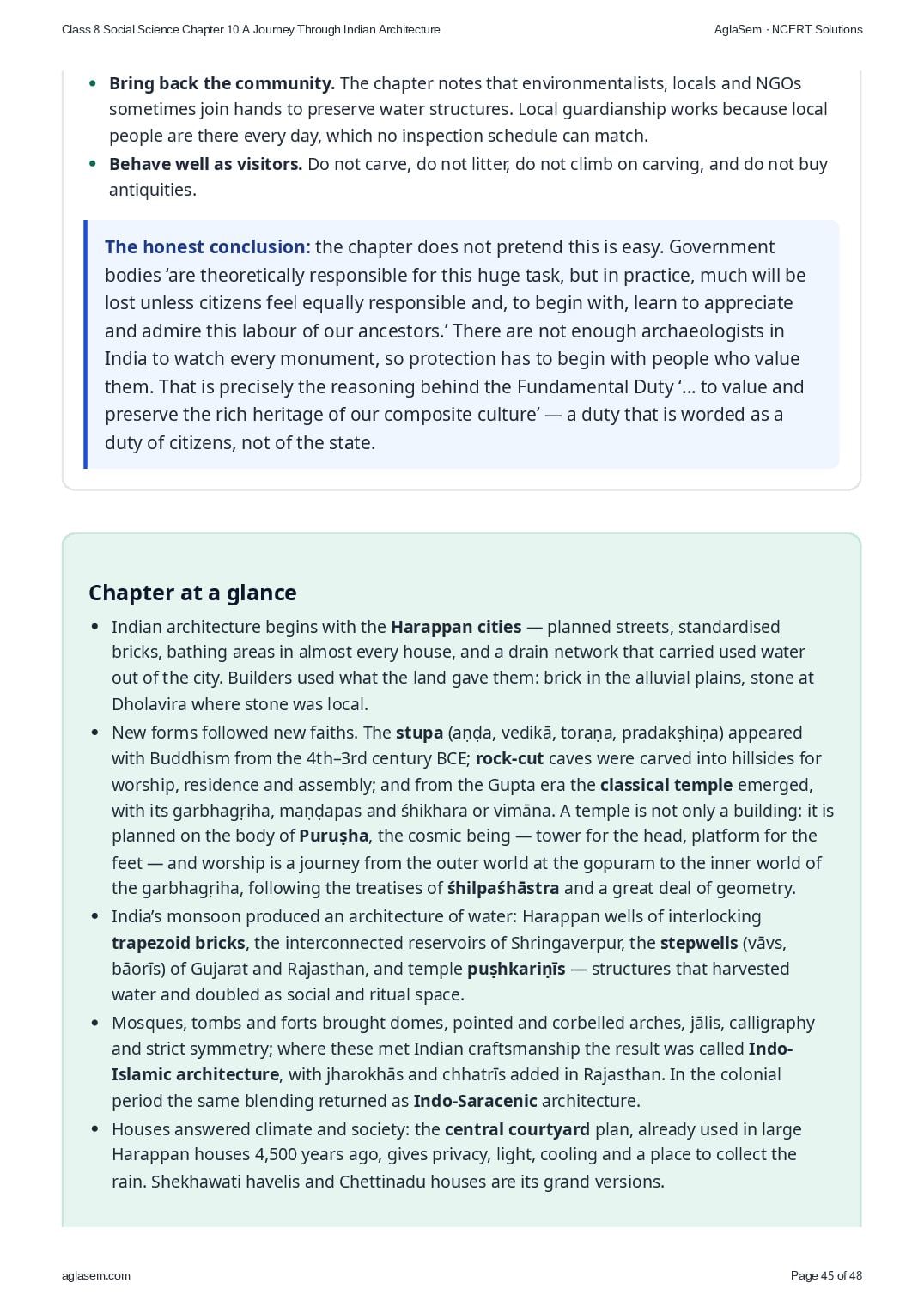
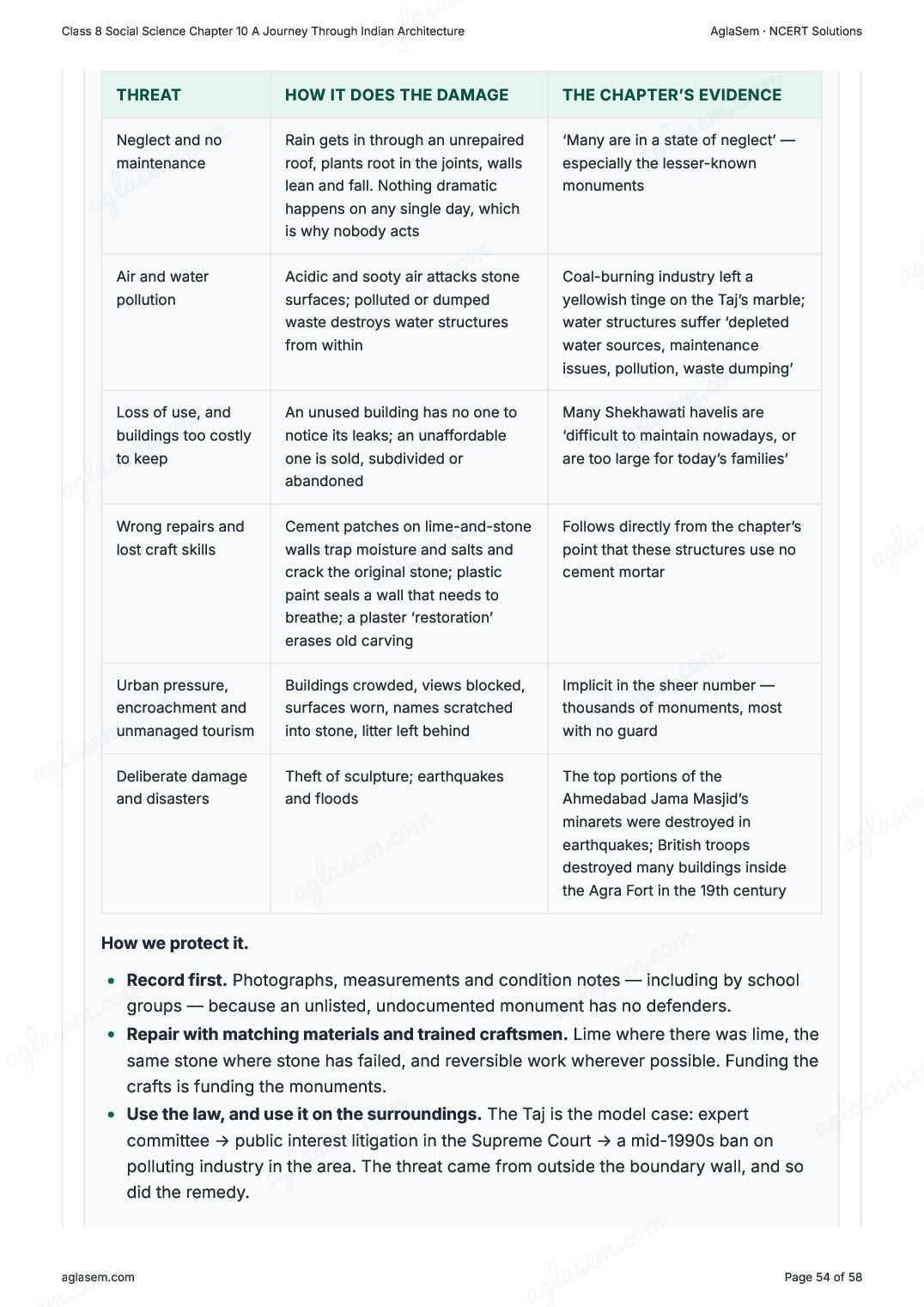
- Highlight the biggest threats to our architectural heritage today and discuss how can we protect it.
Chapter at a Glance
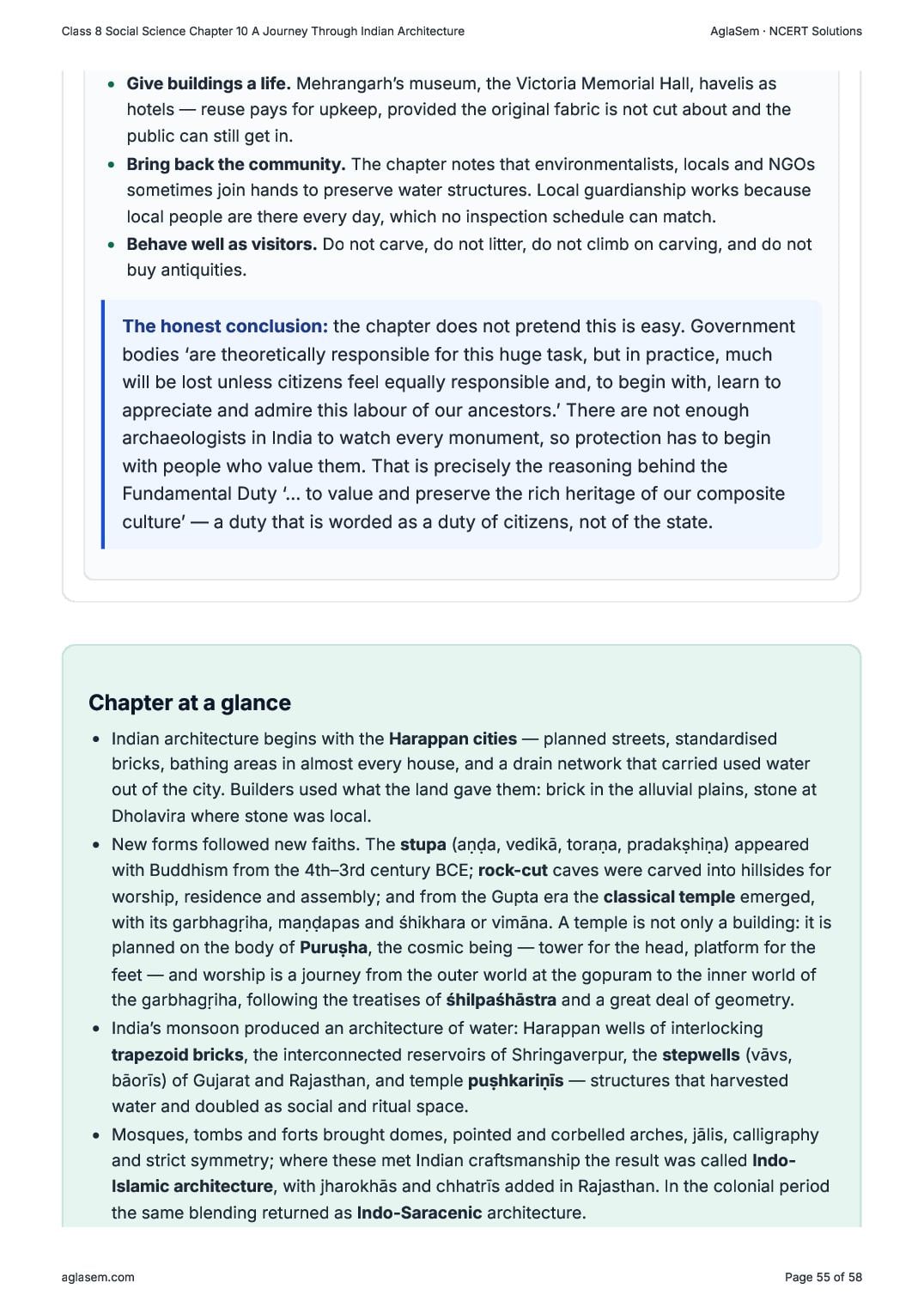
- Indian architecture begins with the Harappan cities — planned streets, standardised bricks, bathing areas in almost every house, and a drain network that carried used water out of the city. Builders used what the land gave them: brick in the alluvial plains, stone at Dholavira where stone was local.
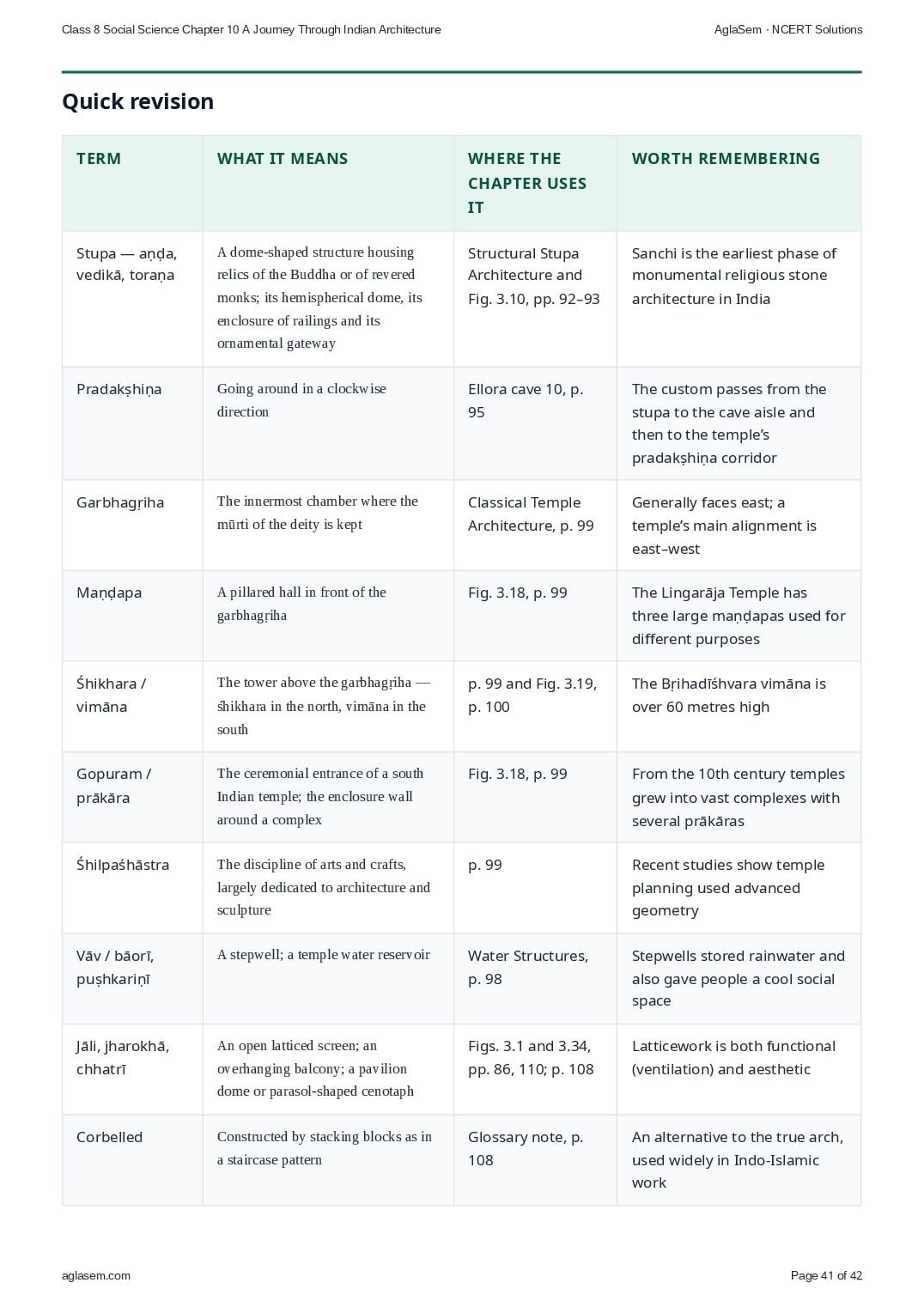
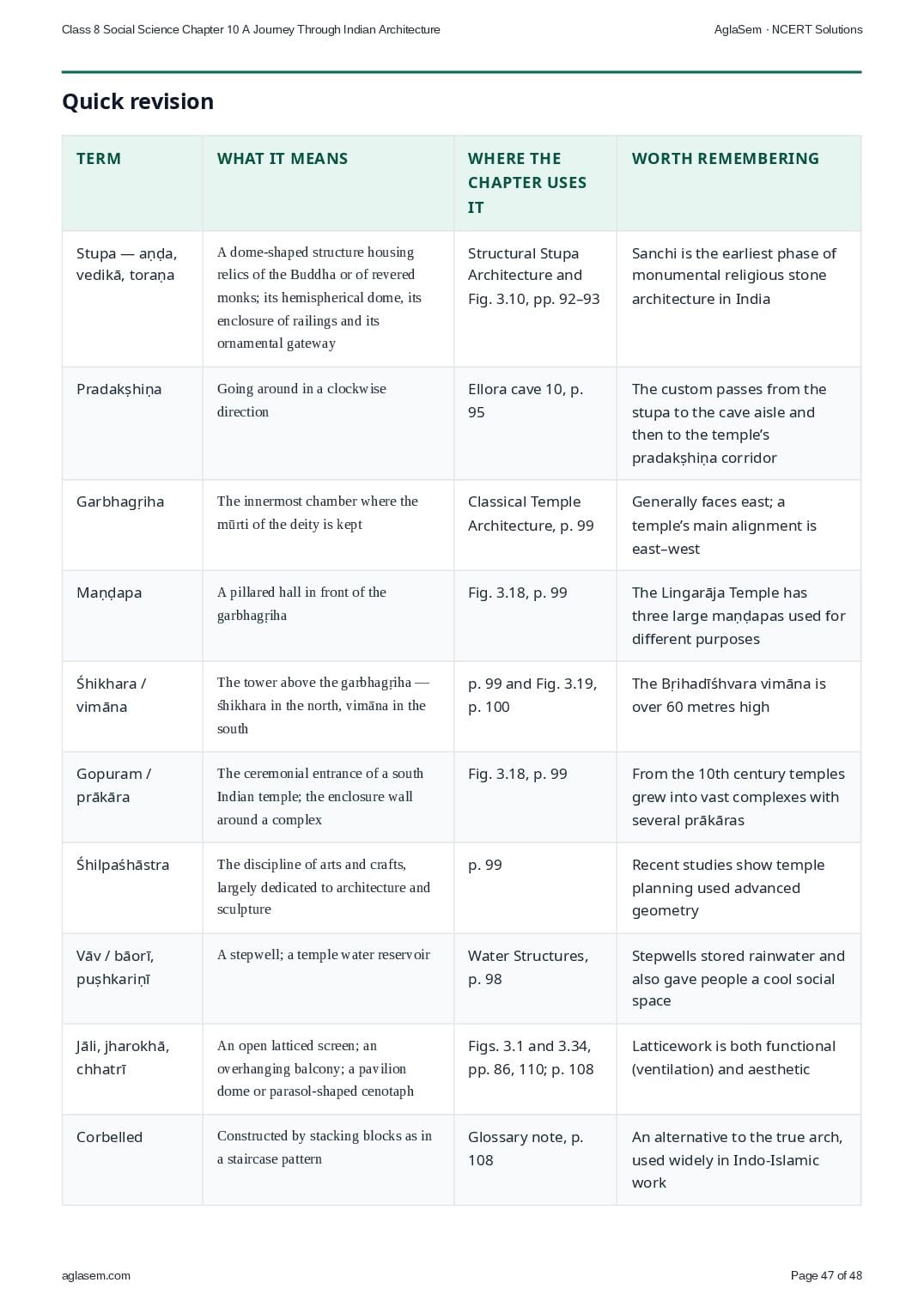
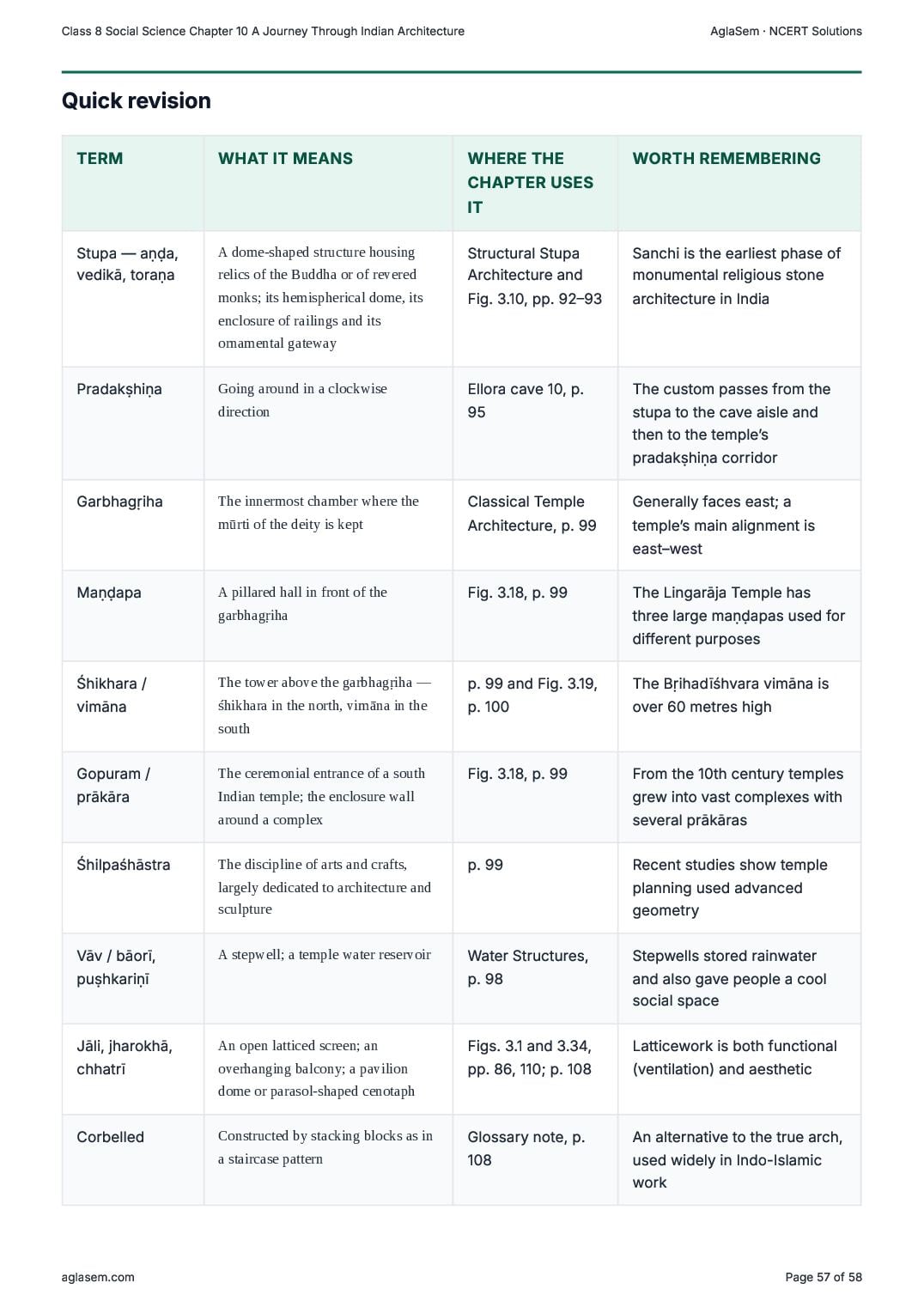
- New forms followed new faiths. The stupa (aṇḍa, vedikā, toraṇa, pradakṣhiṇa) appeared with Buddhism from the 4th–3rd century BCE; rock-cut caves were carved into hillsides for worship, residence and assembly; and from the Gupta era the classical temple emerged, with its garbhagṛiha, maṇḍapas and śhikhara or vimāna. A temple is not only a building: it is planned on the body of Puruṣha , the cosmic being — tower for the head, platform for the feet — and worship is a journey from the outer world at the gopuram to the inner world of the garbhagṛiha, following the treatises of śhilpaśhāstra and a great deal of geometry.
- India’s monsoon produced an architecture of water: Harappan wells of interlocking trapezoid bricks , the interconnected reservoirs of Shringaverpur, the stepwells (vāvs, bāorīs) of Gujarat and Rajasthan, and temple puṣhkariṇīs — structures that harvested water and doubled as social and ritual space.
- Mosques, tombs and forts brought domes, pointed and corbelled arches, jālis, calligraphy and strict symmetry; where these met Indian craftsmanship the result was called Indo-Islamic architecture , with jharokhās and chhatrīs added in Rajasthan. In the colonial period the same blending returned as Indo-Saracenic architecture.
- Houses answered climate and society: the central courtyard plan, already used in large Harappan houses 4,500 years ago, gives privacy, light, cooling and a place to collect the rain. Shekhawati havelis and Chettinadu houses are its grand versions.
- Almost none of these structures used cement mortar. They stand by mass, precise cutting and interlocking . Many are now threatened by neglect, pollution and lost skills — which is why the Constitution’s Fundamental Duty ‘to value and preserve the rich heritage of our composite culture’ matters.
How to Download NCERT Solutions for Class 8 Social Science Chapter 10 PDF
Follow these simple steps to get the A Journey Through Indian Architecture questions-and-answers PDF from Exploring Society: India and Beyond.
- Search NCERT Solutions for Class 8 Social Science Chapter 10 aglasem and open this page.
- Read the exercise questions with answers for A Journey Through Indian Architecture shown above.
- Click the Download PDF link to save the A Journey Through Indian Architecture solutions to your device.
NCERT Solutions for Class 8 Social Science – All Chapters
There are more chapters to study besides A Journey Through Indian Architecture in Social Science. Here are the NCERT Solutions for all chapters of Class 8 Social Science.
- Chapter 1 Natural Resources and Their Use
- Chapter 2 Reshaping India’s Political Map
- Chapter 3 The Rise of the Marathas
- Chapter 4 The Colonial Era in India
- Chapter 5 Universal Franchise and India’s Electoral System
- Chapter 6 The Parliamentary System Legislature and Executive
- Chapter 7 Factors of Production
- Chapter 8 World Geography Some Glimpses
- Chapter 9 India’s Long Road to Independence
- Chapter 10 A Journey Through Indian Architecture
- Chapter 11 The Role of the Judiciary in Our Society
- Chapter 12 Citizenship Rights and Duties
- Chapter 13 Dynamics of Population
- Chapter 14 India’s Urban Landscape
- Chapter 15 Cultural Currents 13th to 17th Centuries
NCERT Solutions for Class 8 – All Subjects
Just like Chapter 10 of Social Science, you can get the exercise questions with answers for every other subject of Class 8. Here are the NCERT Solutions for all subjects of Class 8.
NCERT Solutions for Class 8 Social Science Chapter 10 – An Overview
The key highlights of this study material are as follows.
| Aspects | Details |
|---|---|
| Class | Class 8 |
| Subject | Social Science |
| Chapter Number | Chapter 10 |
| Chapter Name | A Journey Through Indian Architecture |
| Book Name | Exploring Society: India and Beyond |
| Book By | NCERT (National Council of Educational Research and Training) |
| Educational Resource Here | NCERT Solutions of Class 8 Social Science Chapter 10 for all exercises |
| More Questions Answers of This Subject | NCERT Solutions for Class 8 Social Science |
| Download Book Chapter | NCERT Book Class 8 Social Science |
| All Questions Answers For This Class | NCERT Solutions for Class 8 |
| Complete Solutions | NCERT Solutions |
NCERT Solutions for Class 8 Social Science Chapter 10 A Journey Through Indian Architecture – FAQs
What are the NCERT Solutions for Class 8 Social Science Chapter 10 A Journey Through Indian Architecture?
They are the complete, step-by-step answers to all the exercise and in-text questions of Chapter 10 A Journey Through Indian Architecture from the NCERT Class 8 Social Science textbook Exploring Society: India and Beyond, written by experts as per the latest NCERT syllabus.
How can I download the Class 8 Social Science Chapter 10 solutions PDF for free?
Open this page on aglasem, read the A Journey Through Indian Architecture questions with answers, and click the “Download Solutions PDF” link. The Class 8 Social Science Chapter 10 NCERT Solutions PDF is completely free to download.
Are these NCERT Solutions as per the latest 2026-27 syllabus?
Yes. The NCERT Solutions for Class 8 Social Science Chapter 10 are based on the latest NCERT textbook Exploring Society: India and Beyond and the current 2026-27 CBSE syllabus, so the questions and answers match what you study in class.
Where can I get NCERT Solutions for the other chapters of Class 8 Social Science?
You can find the answers to every chapter on the NCERT Solutions for Class 8 Social Science page, and solutions for every subject on the NCERT Solutions for Class 8 page.
How do NCERT Solutions help in exam preparation?
They show the correct method to solve each question, help you write answers the way they are expected in exams, let you check and correct your own work, and save revision time — which together improve your marks in Class 8 Social Science.
If you have any queries on NCERT Solutions for Class 8 Social Science Chapter 10 A Journey Through Indian Architecture, then please ask in the comments below.