NCERT Solutions for Class 9 Sanskrit Chapter 16 Parishisht 5 धातुरूपाणि provide clear, step-by-step answers to every exercise and in-text question from the chapter Parishisht 5 धातुरूपाणि of the NCERT textbook शारदा. Prepared by subject experts as per the latest NCERT (CBSE) syllabus for 2026-27, these NCERT Solutions for Class 9 Sanskrit help you understand each concept, write exam-ready answers, and check your own solutions. You can read them online below or download the free Class 9 Sanskrit Chapter 16 question-answer PDF.
NCERT Solutions for Class 9 Sanskrit Chapter 16 Parishisht 5 धातुरूपाणि
- Class: Class 9
- Subject: Sanskrit
- Chapter: Chapter 16 – Parishisht 5 धातुरूपाणि
- Textbook: शारदा (NCERT)
- Study material: NCERT Solutions – questions with answers, free PDF
These solutions answer all the exercise questions of Chapter 16 Parishisht 5 धातुरूपाणि — including the in-text questions, short-answer and long-answer questions, and activities — with complete explanations so you can follow the method, not just the final answer. Read the full solutions below.
NCERT Solutions Class 9 Sanskrit Parishisht 5 धातुरूपाणि View Download
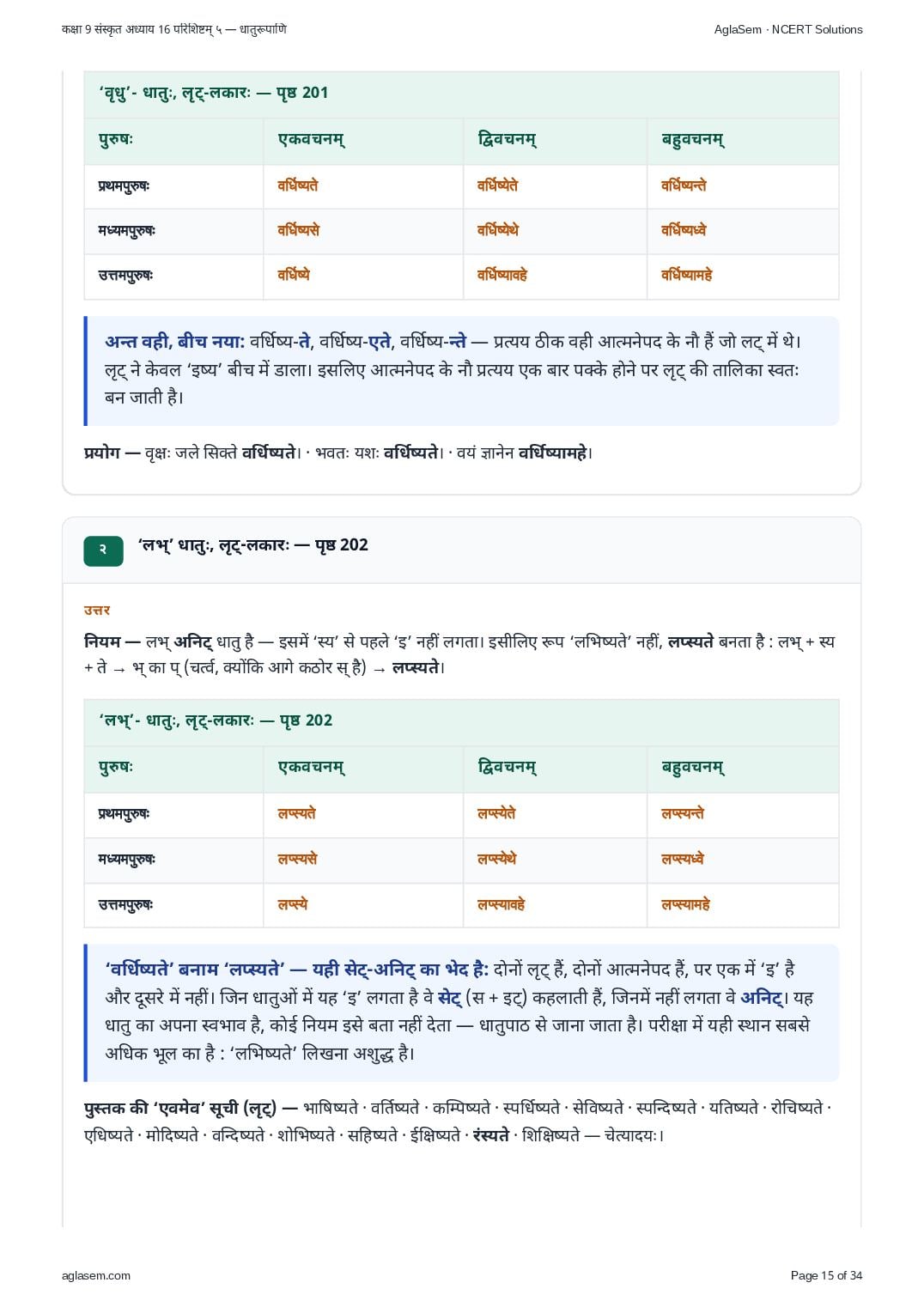
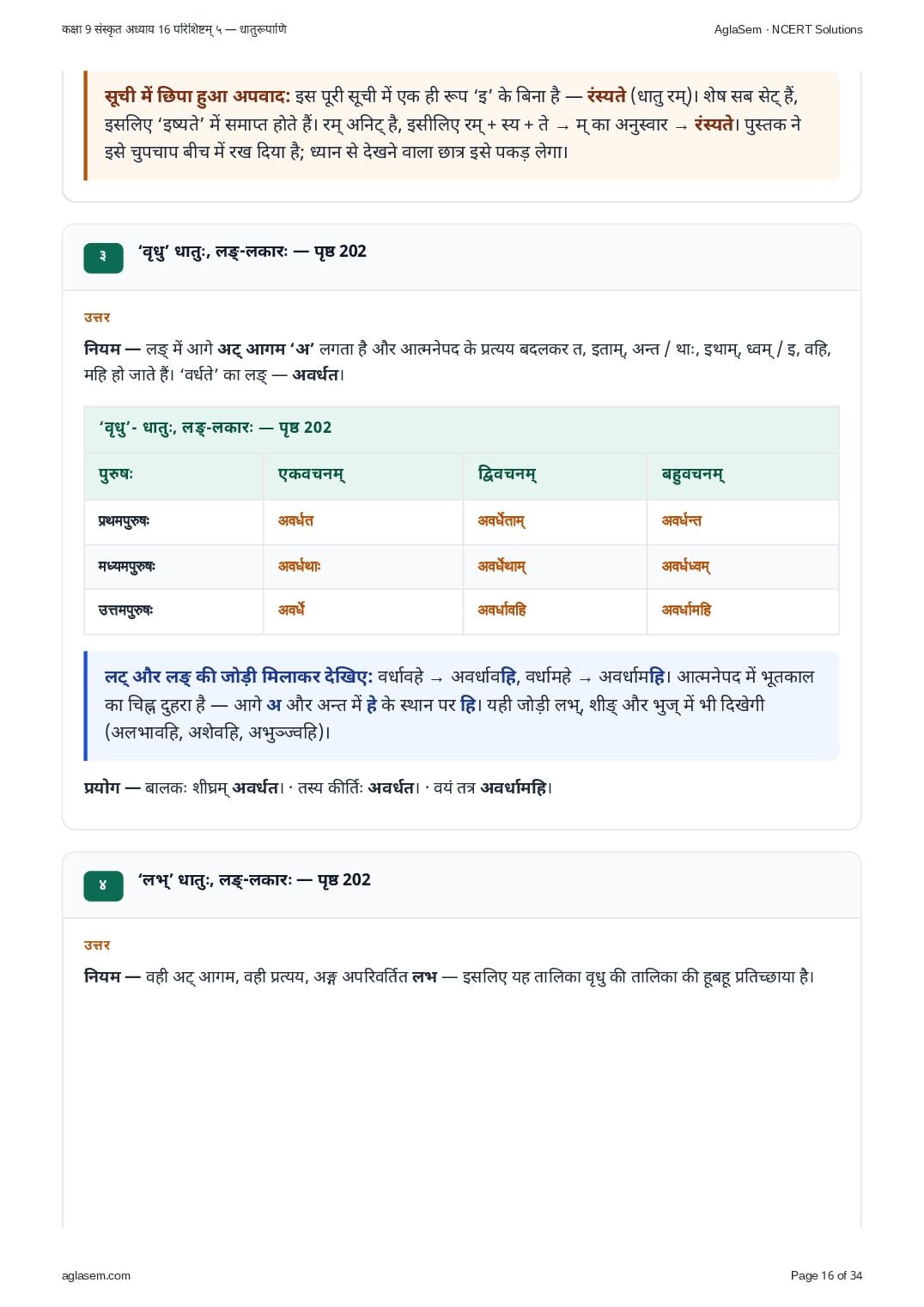
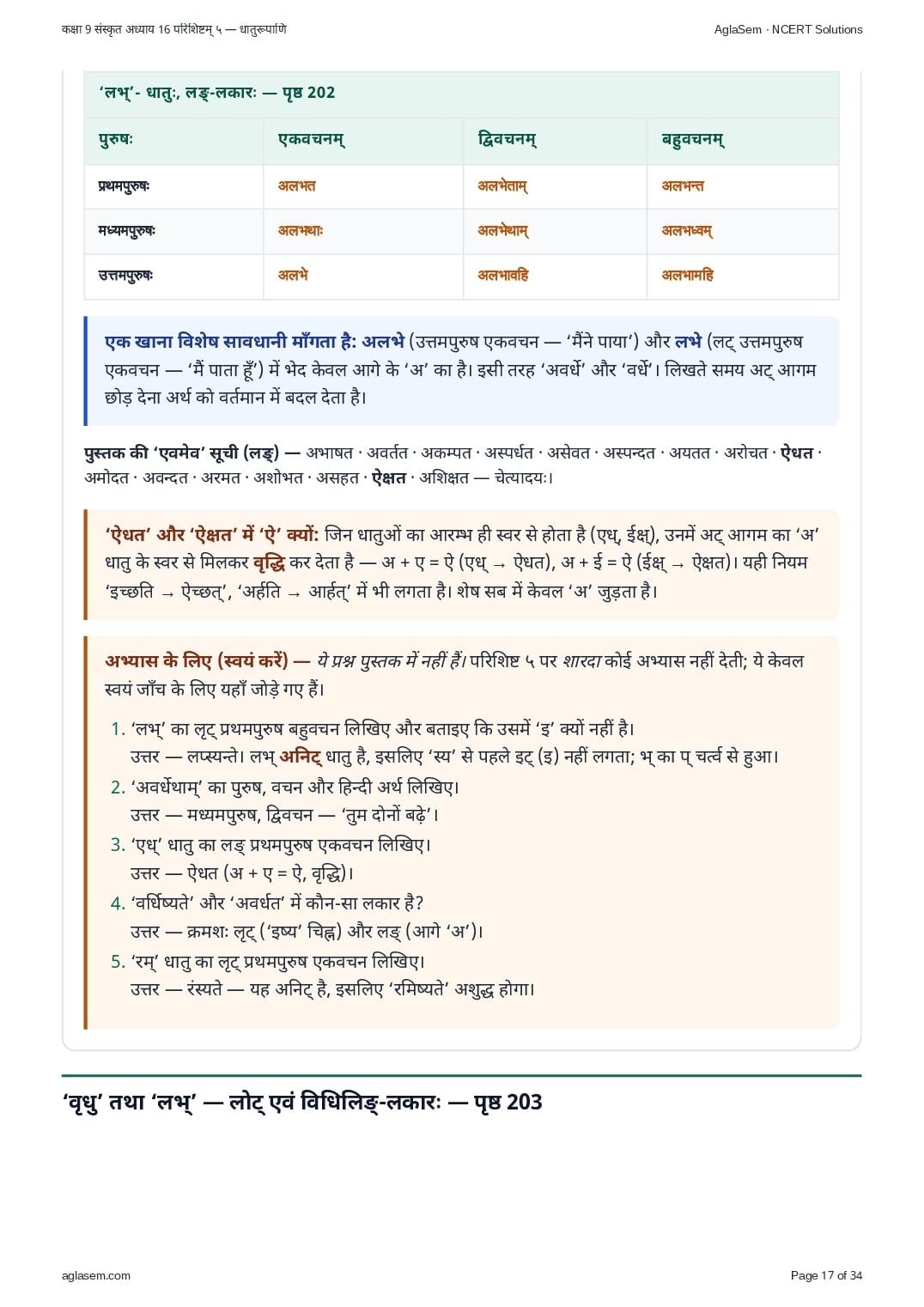
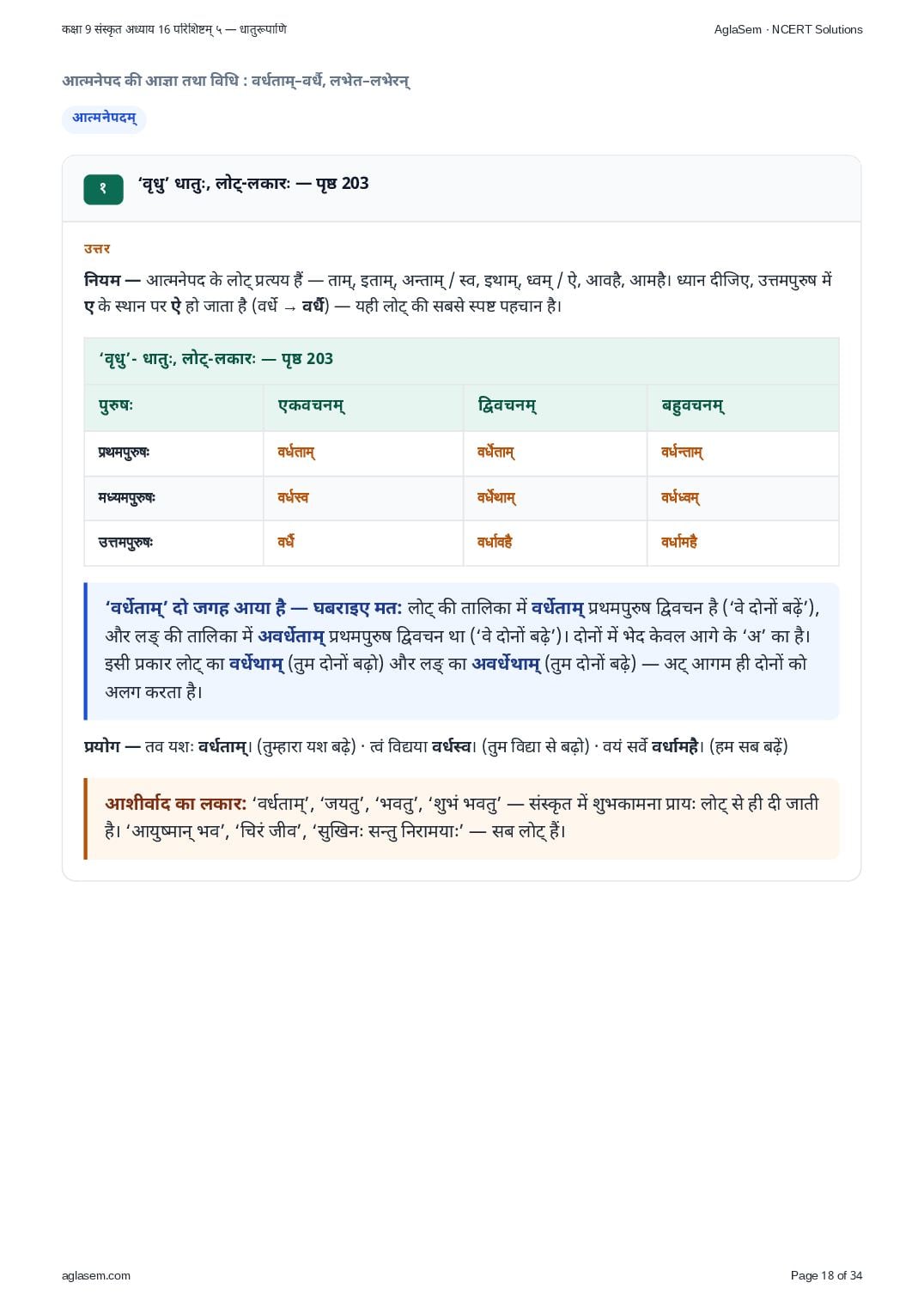
NCERT Solutions for Class 9 Sanskrit Chapter 16 PDF Download
You can read the NCERT Solutions for Class 9 Sanskrit Chapter 16 online above, or download the complete question-answer PDF to study Parishisht 5 धातुरूपाणि offline at any time.
NCERT Solutions for Class 9 Sanskrit Chapter 16 PDF Download Link – Click Here to Download Solutions PDF
Questions Covered in This Chapter
These NCERT Solutions answer all 32 questions of this chapter. The questions solved are:
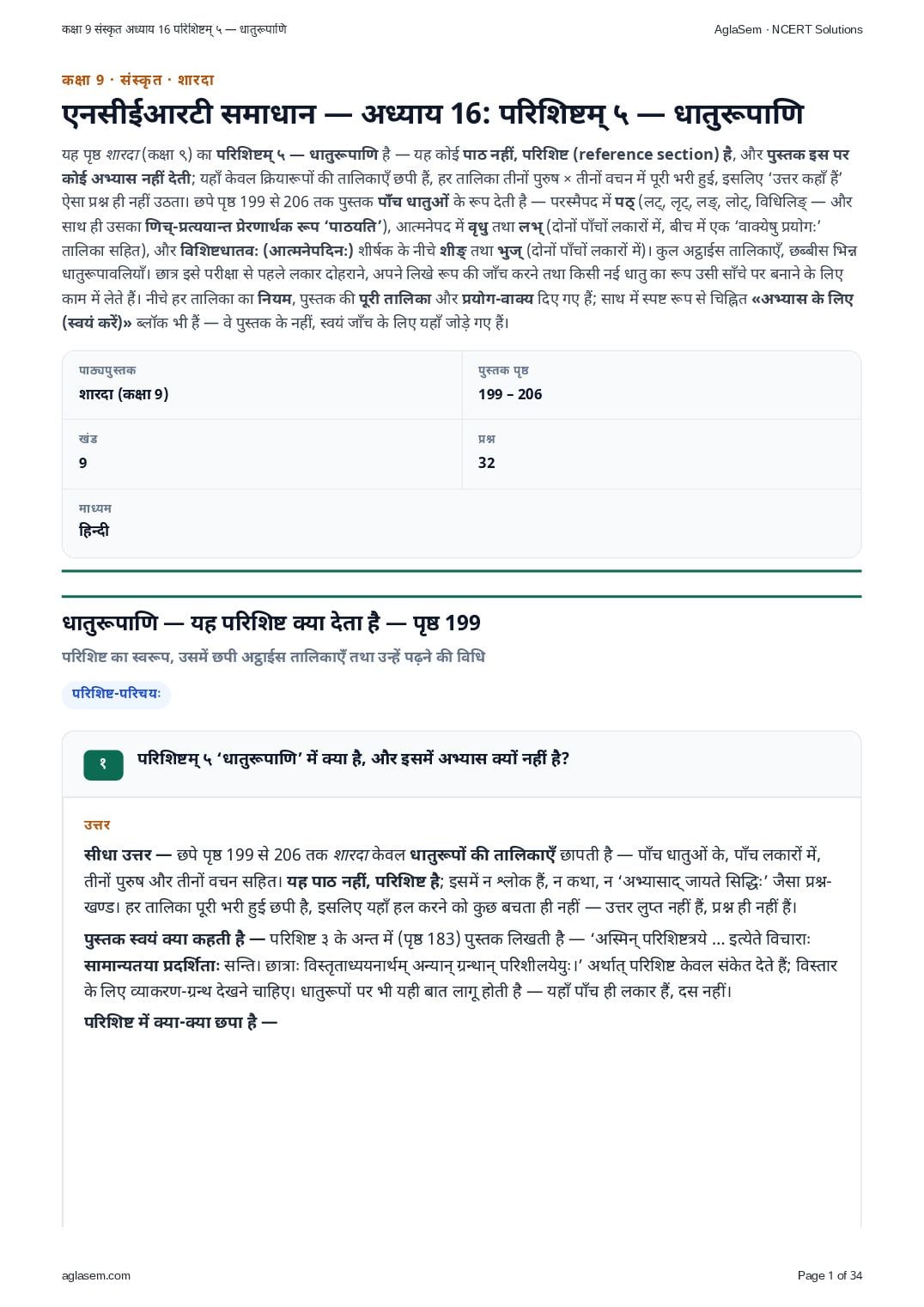
- परिशिष्टम् ५ ‘धातुरूपाणि’ में क्या है, और इसमें अभ्यास क्यों नहीं है?
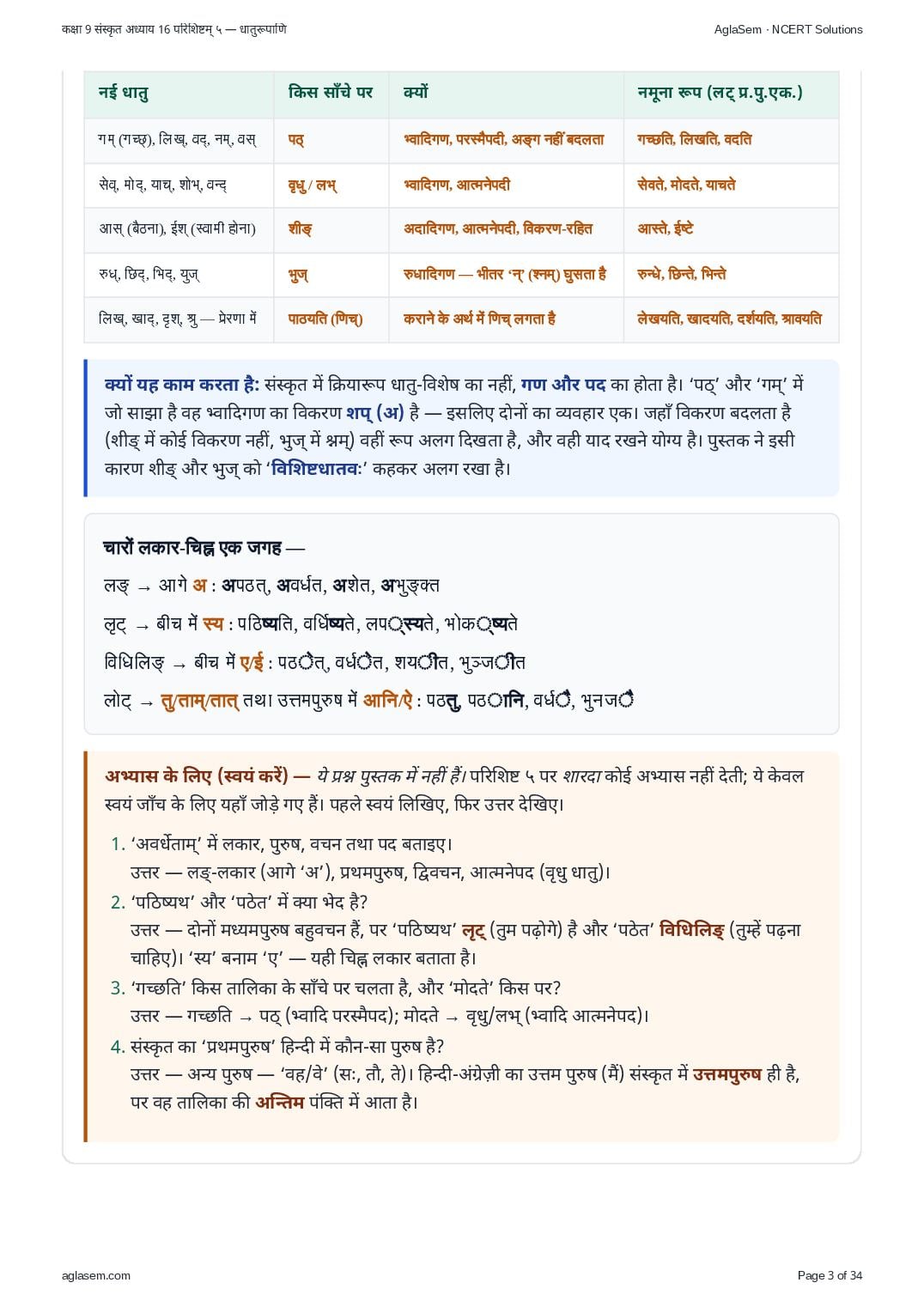
- किसी नई धातु का रूप बनाना हो तो किस तालिका के साँचे पर चलें?
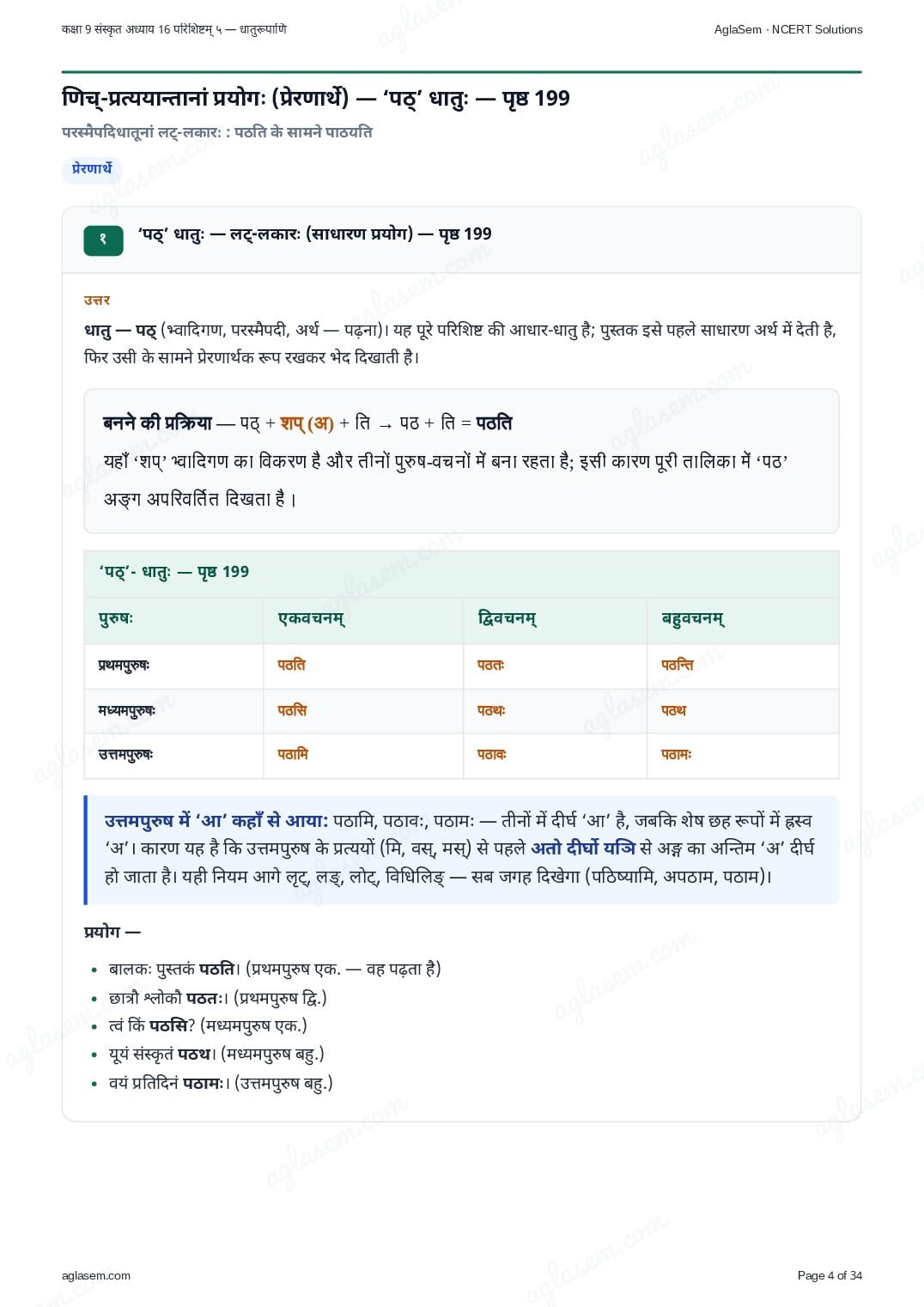
- ‘पठ्’ धातुः — लट्-लकारः (साधारण प्रयोग) — पृष्ठ 199
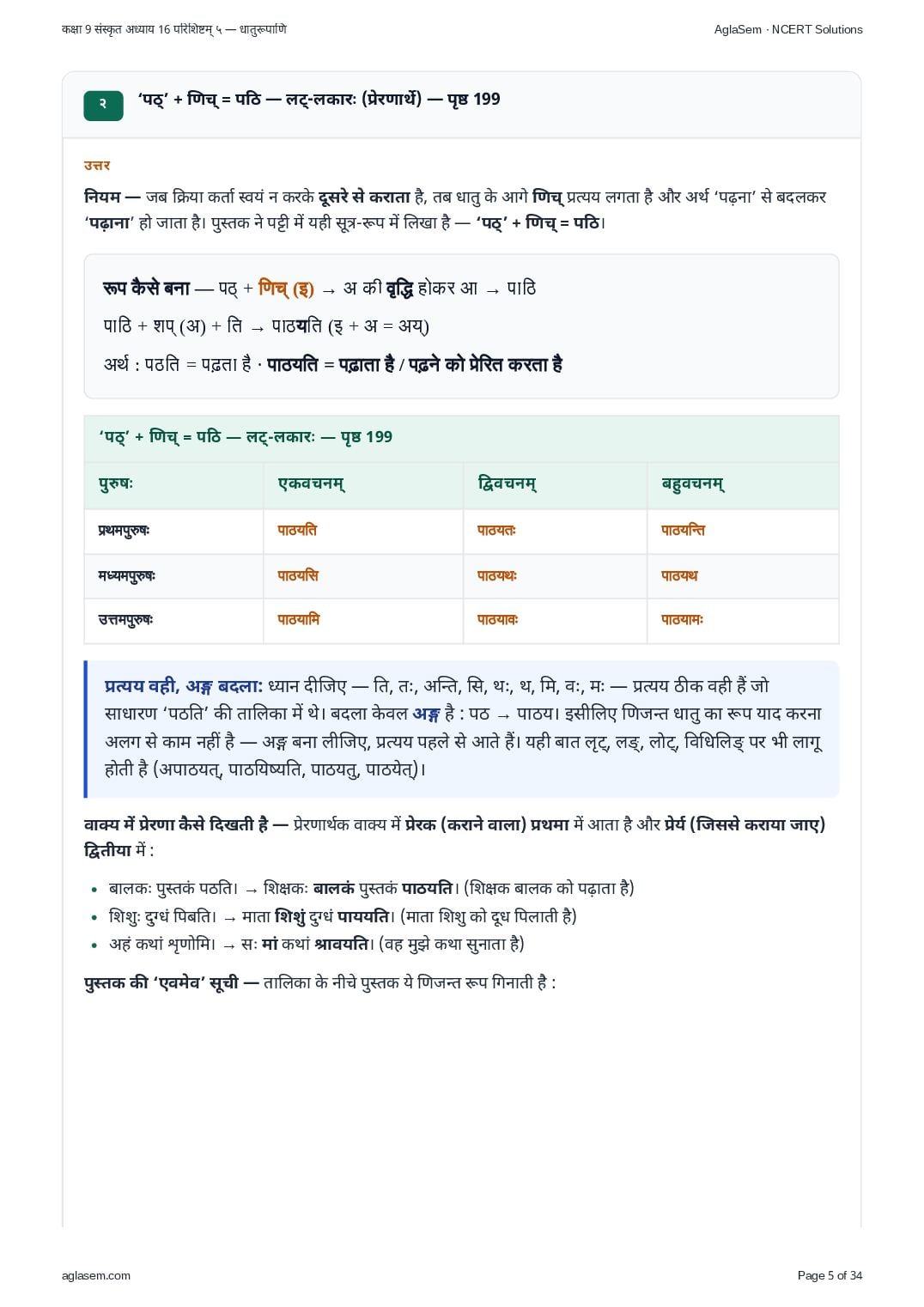
- ‘पठ्’ + णिच् = पठि — लट्-लकारः (प्रेरणार्थे) — पृष्ठ 199
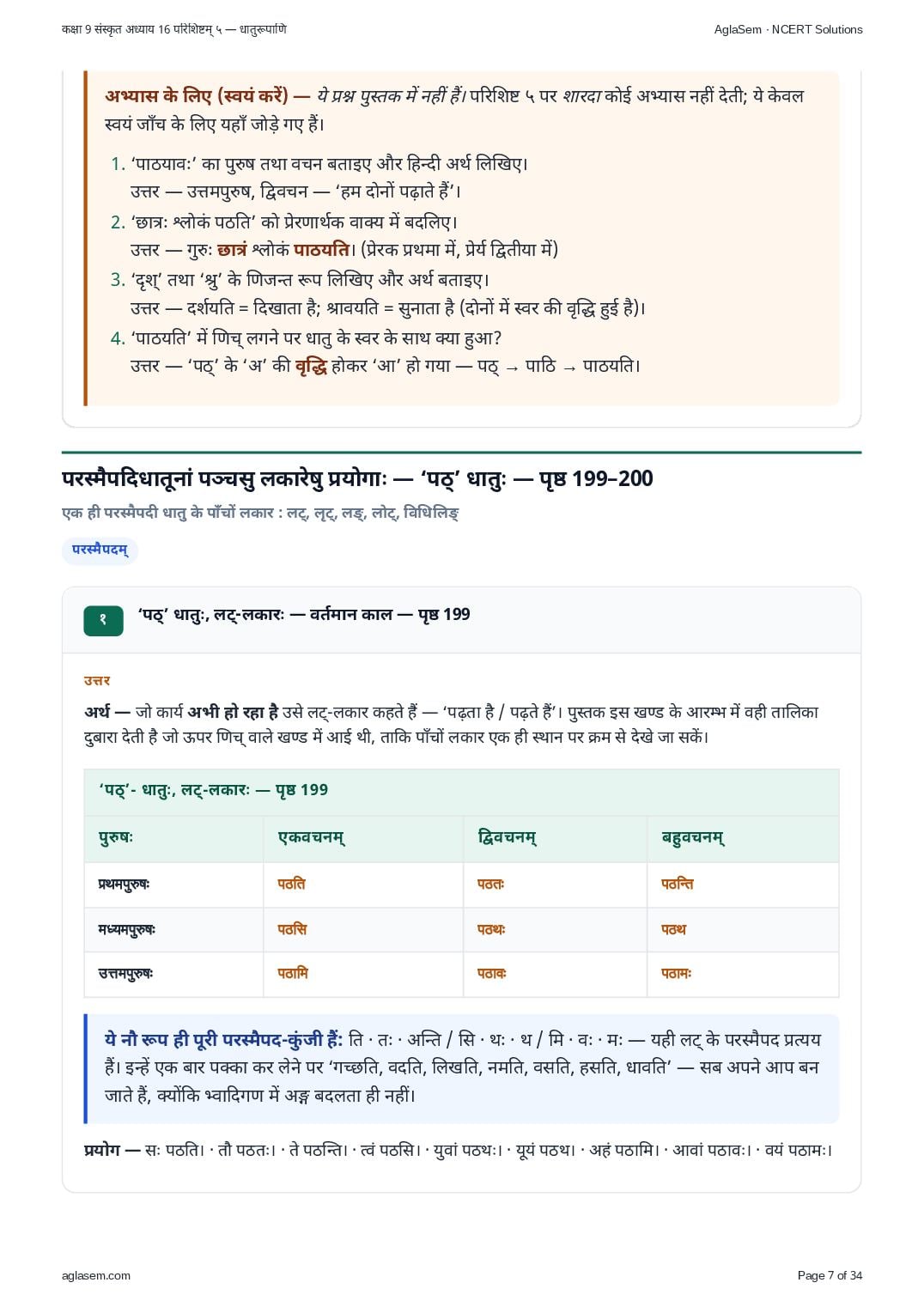
- ‘पठ्’ धातुः, लट्-लकारः — वर्तमान काल — पृष्ठ 199
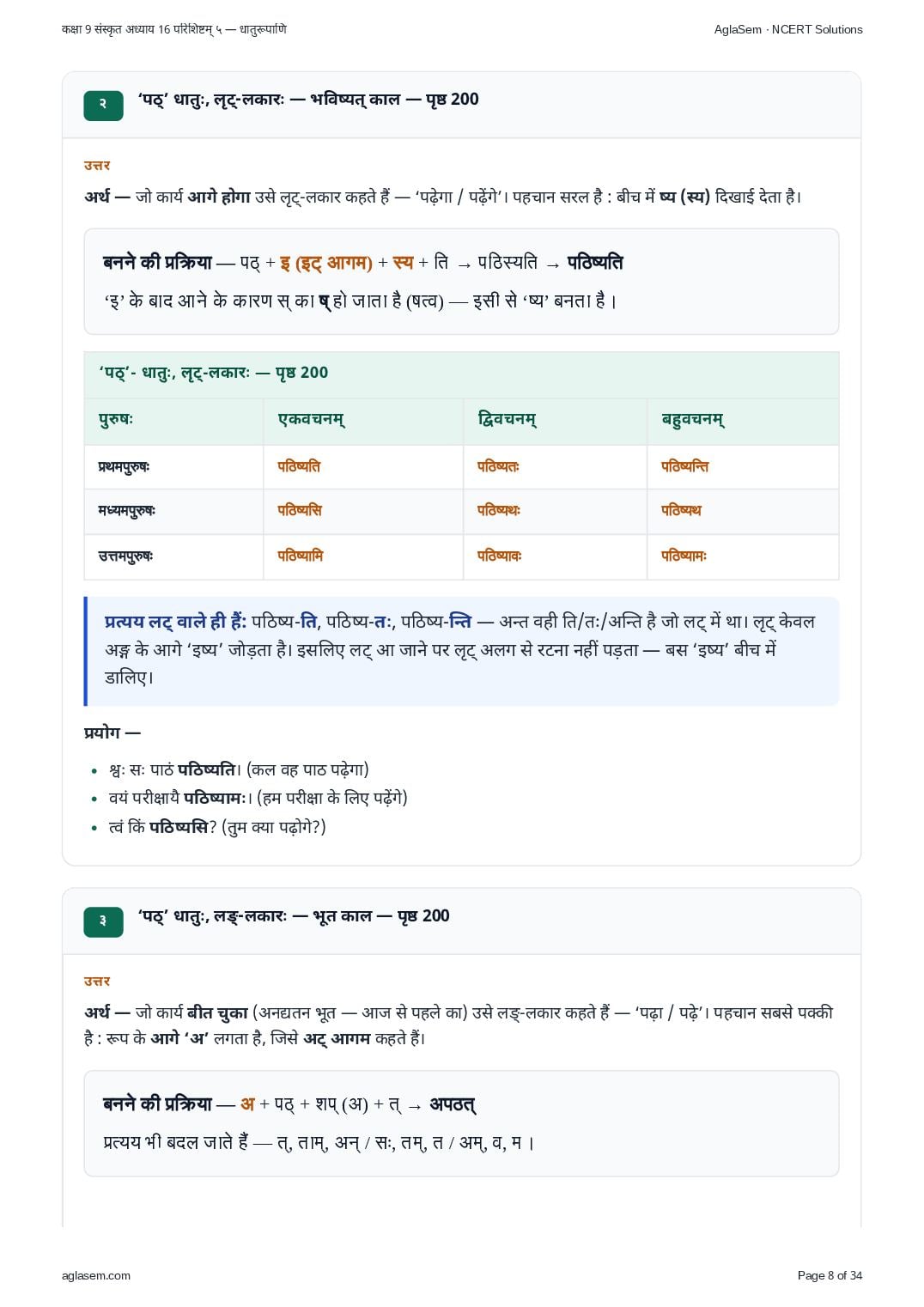
- ‘पठ्’ धातुः, लृट्-लकारः — भविष्यत् काल — पृष्ठ 200
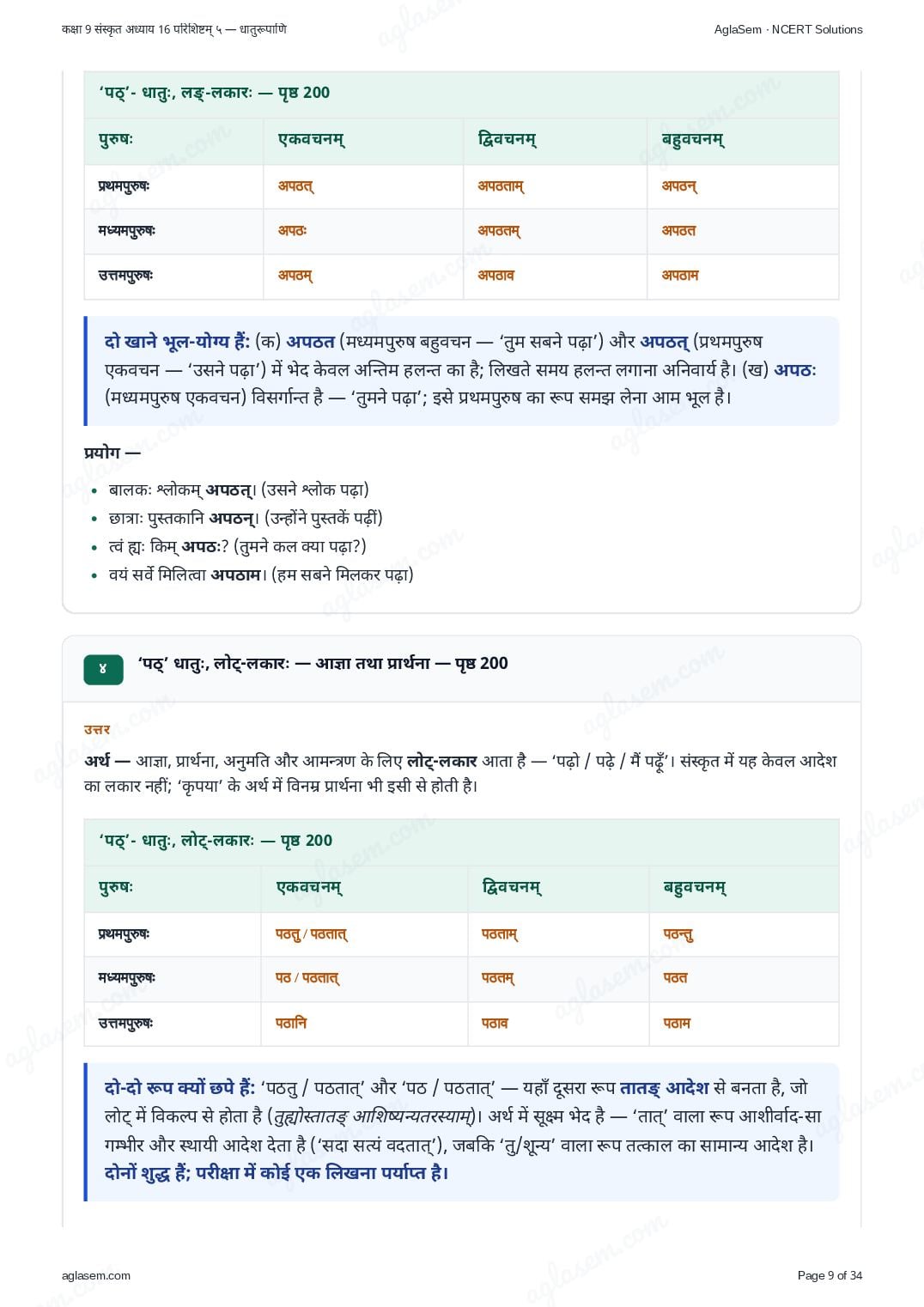
- ‘पठ्’ धातुः, लङ्-लकारः — भूत काल — पृष्ठ 200
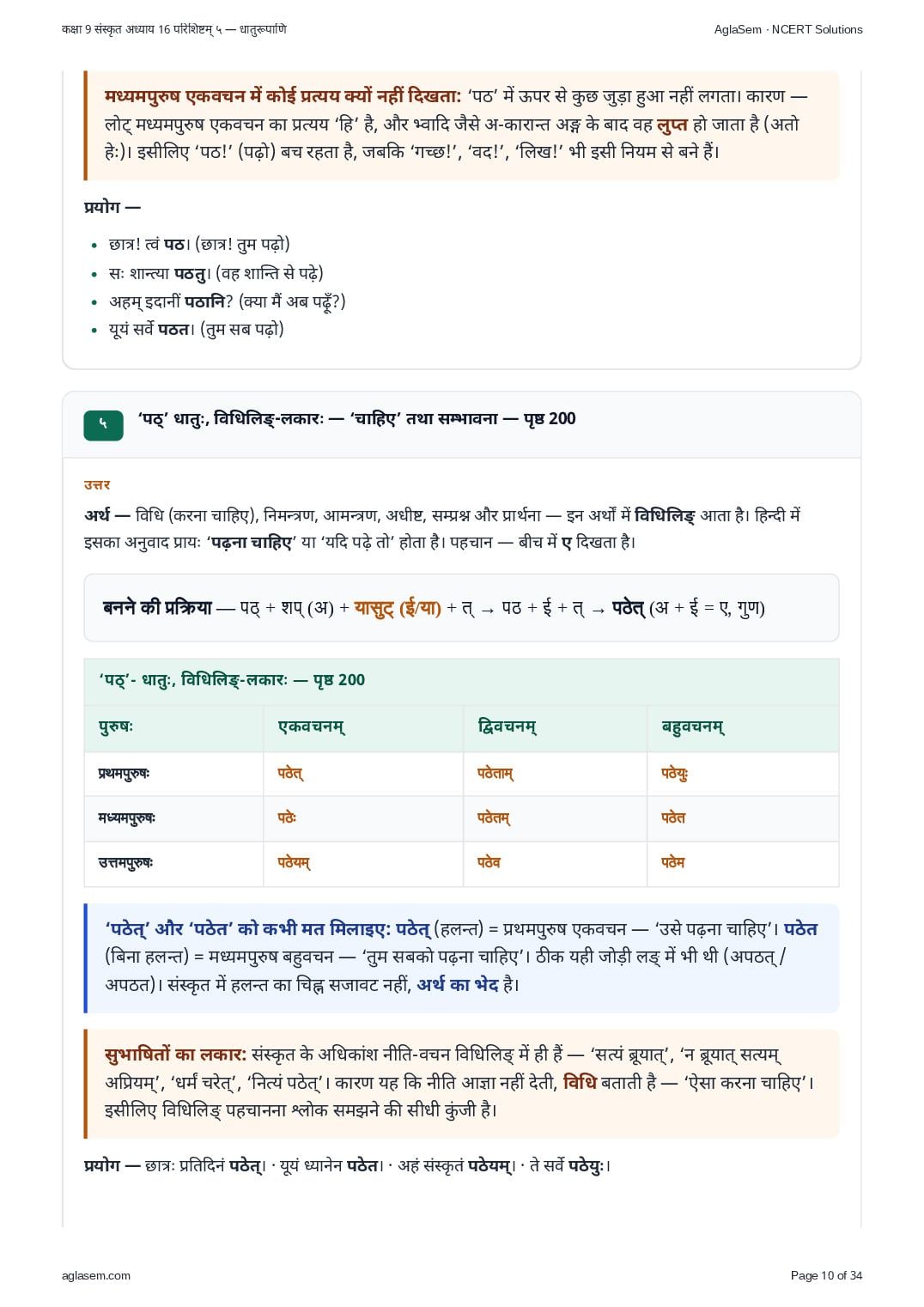
- ‘पठ्’ धातुः, लोट्-लकारः — आज्ञा तथा प्रार्थना — पृष्ठ 200
- ‘पठ्’ धातुः, विधिलिङ्-लकारः — ‘चाहिए’ तथा सम्भावना — पृष्ठ 200
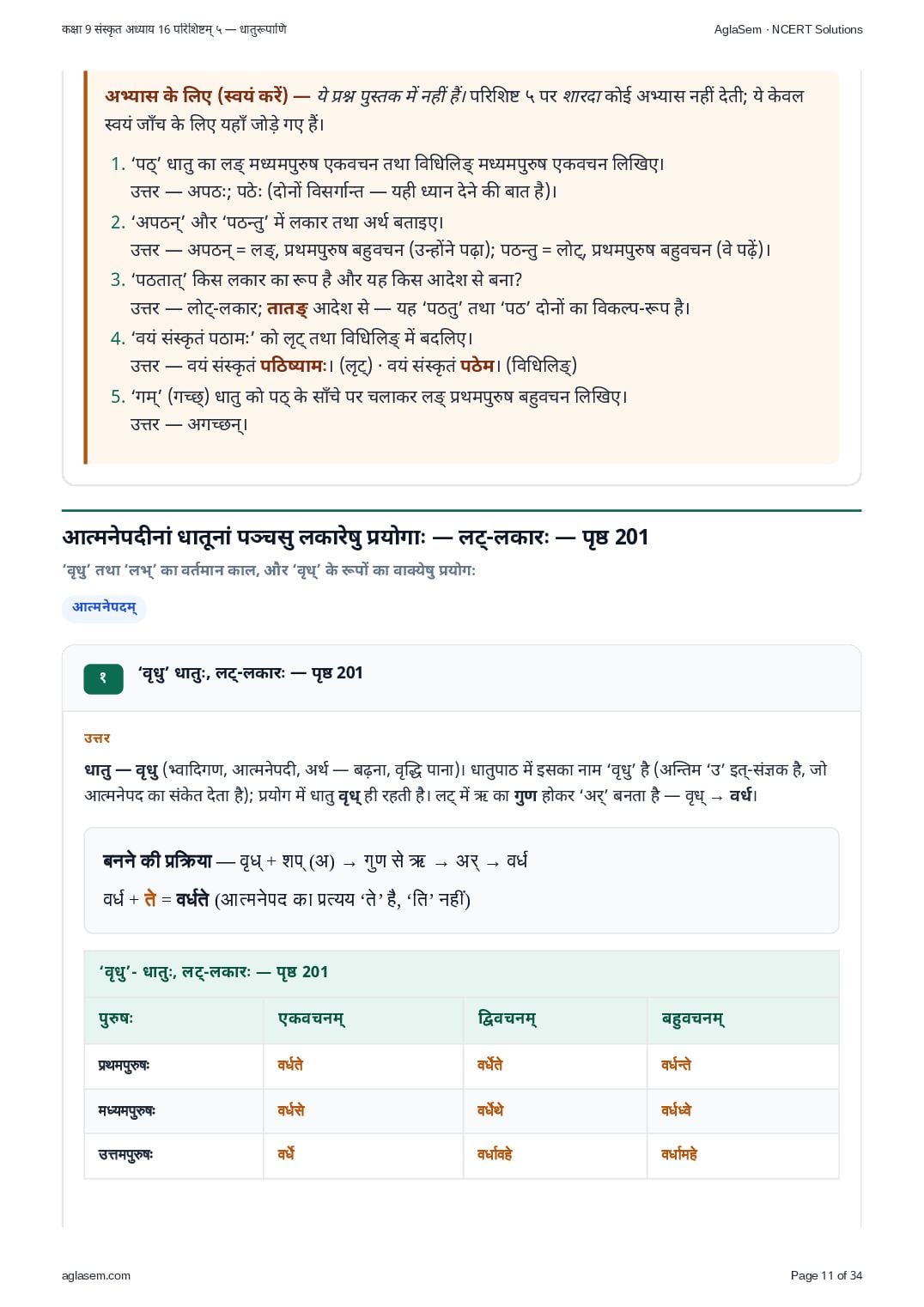
- ‘वृधु’ धातुः, लट्-लकारः — पृष्ठ 201
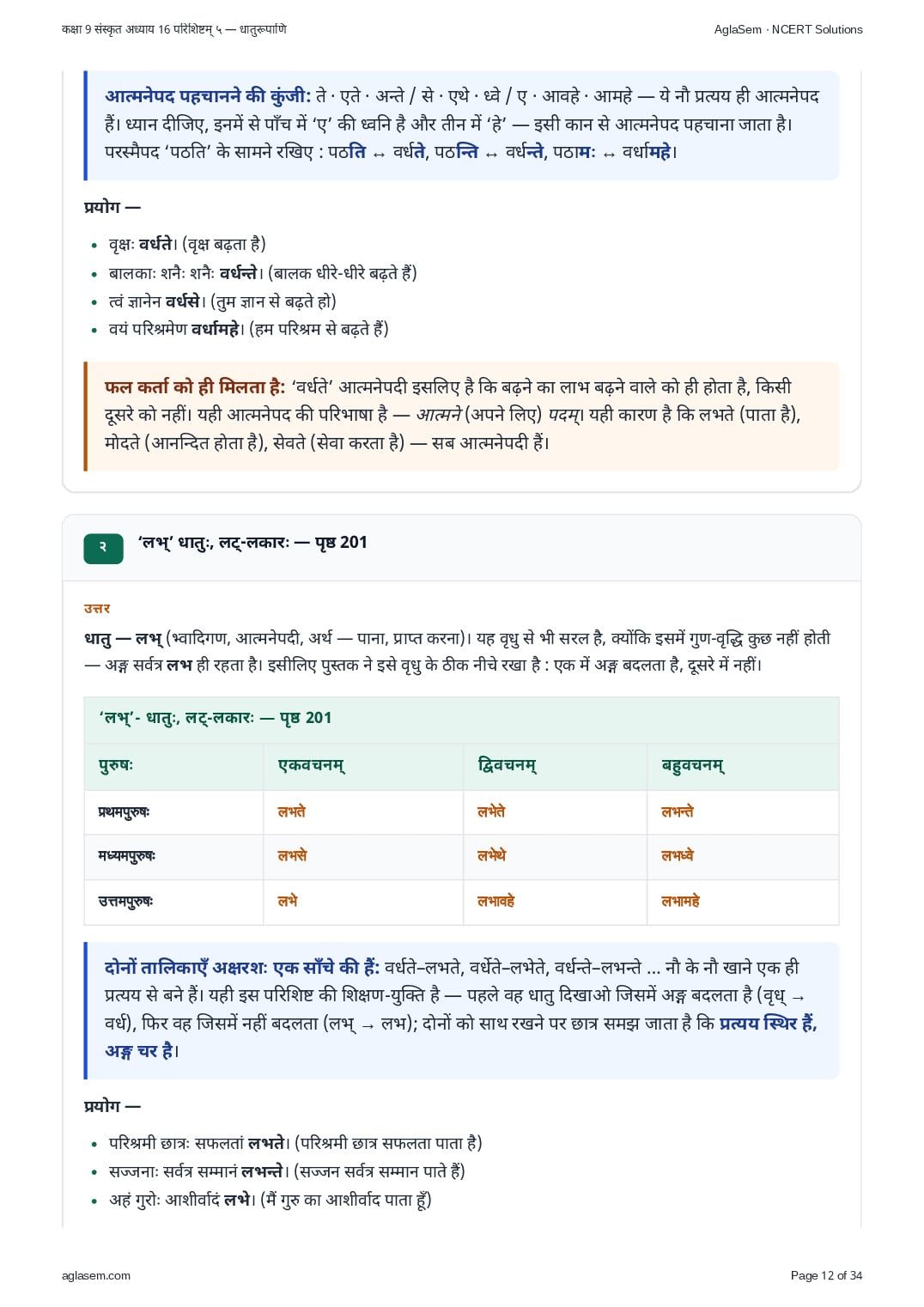
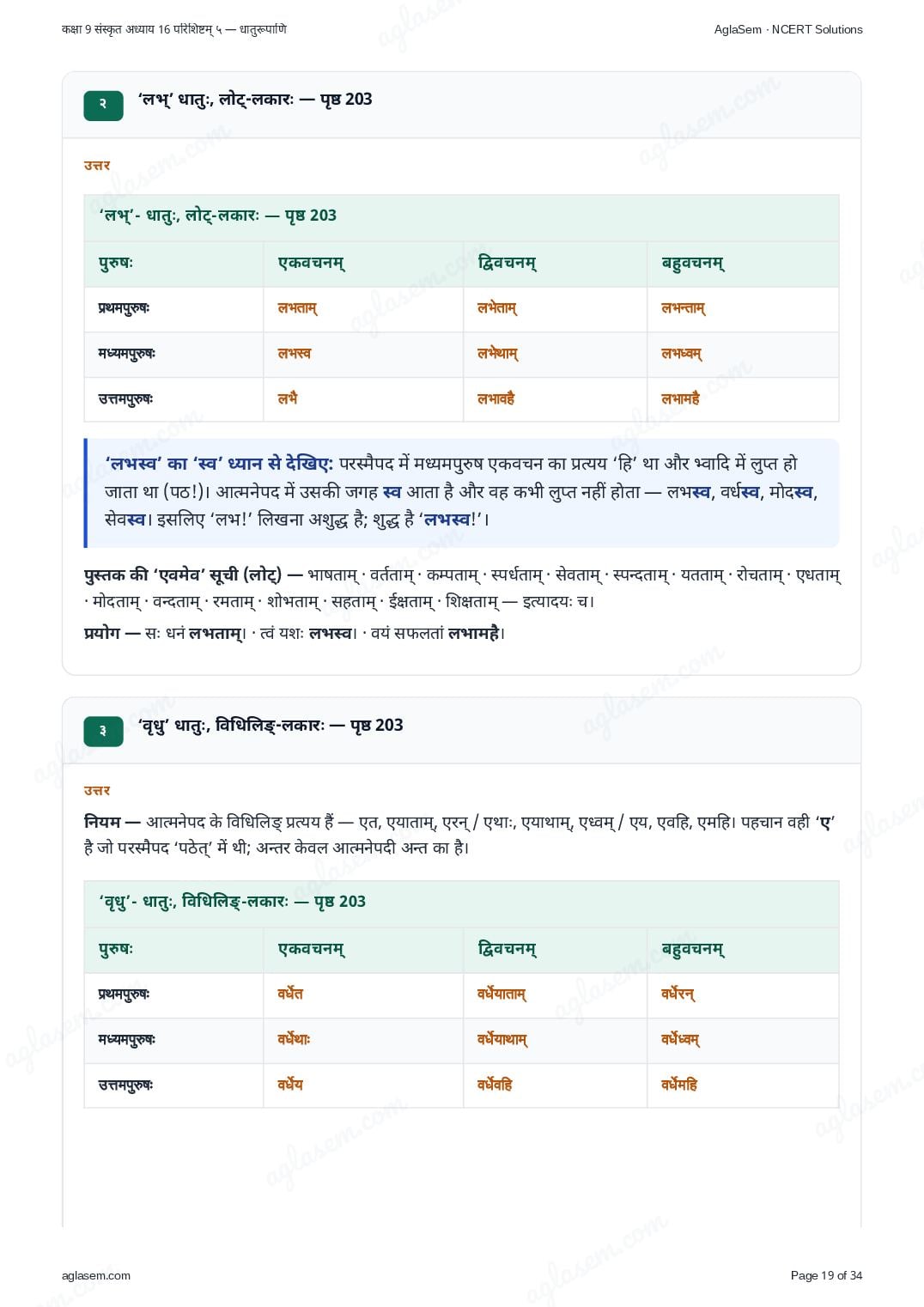
- ‘लभ्’ धातुः, लट्-लकारः — पृष्ठ 201
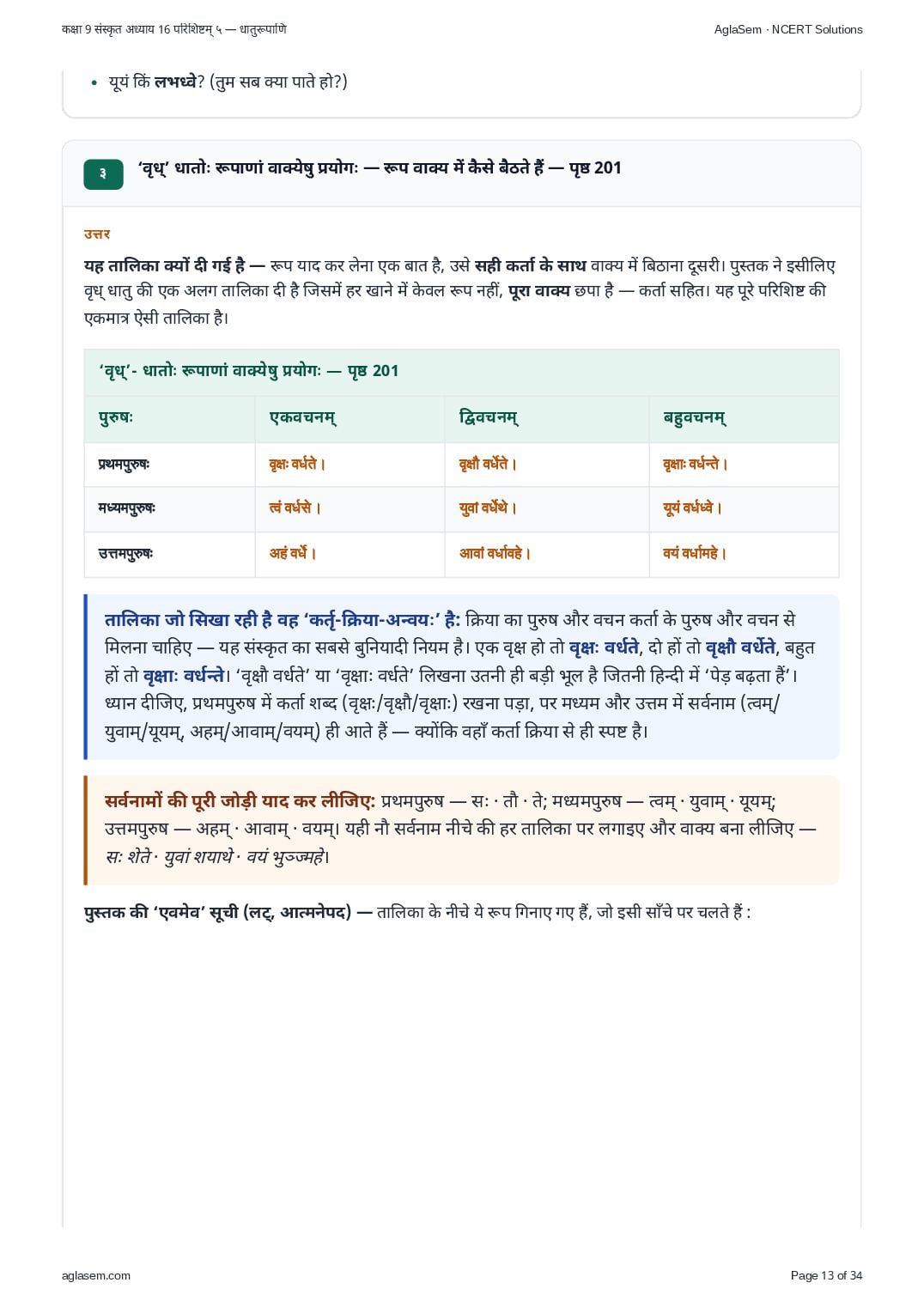
- ‘वृध्’ धातोः रूपाणां वाक्येषु प्रयोगः — रूप वाक्य में कैसे बैठते हैं — पृष्ठ 201
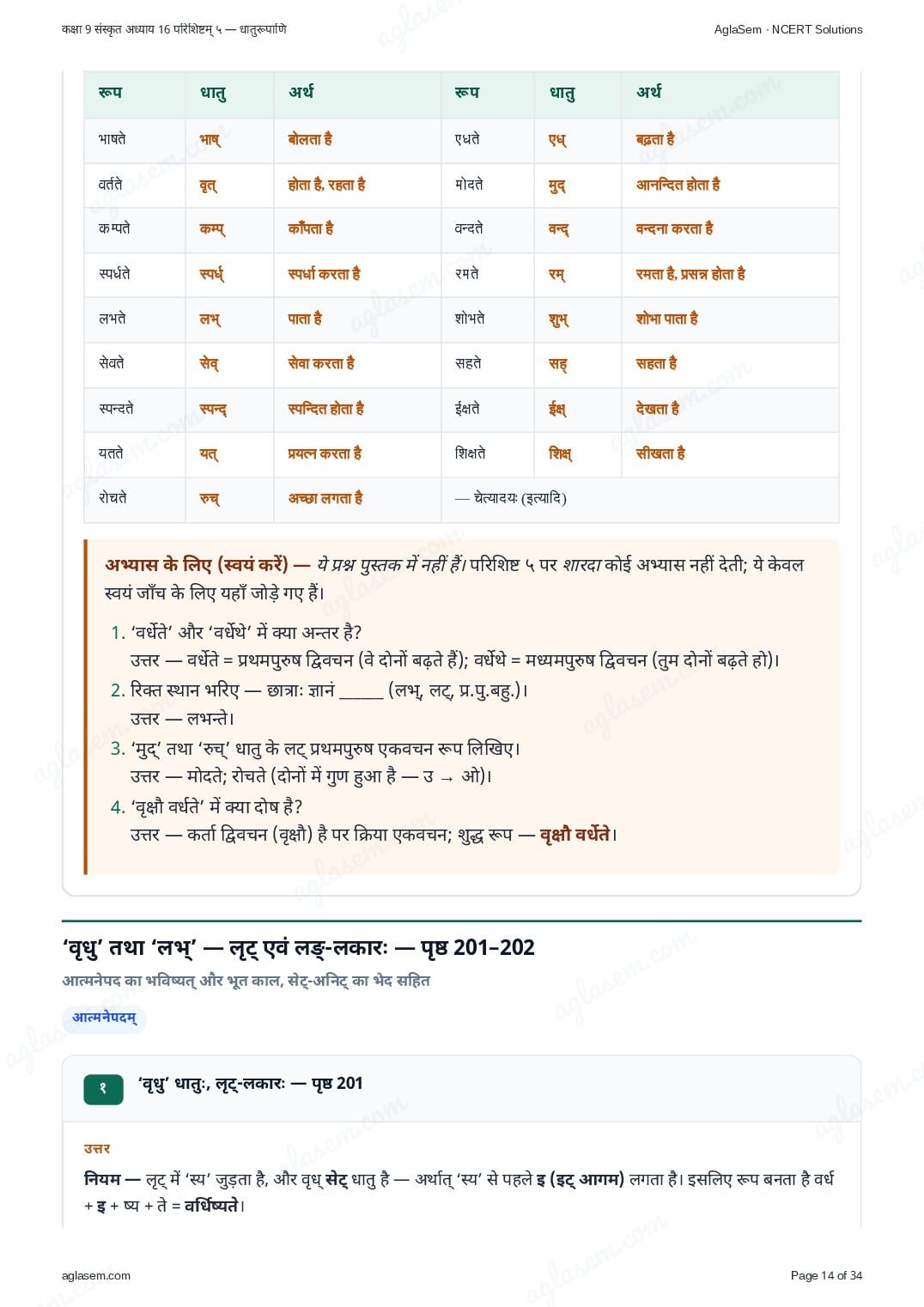
- ‘वृधु’ धातुः, लृट्-लकारः — पृष्ठ 201
- ‘लभ्’ धातुः, लृट्-लकारः — पृष्ठ 202
- ‘वृधु’ धातुः, लङ्-लकारः — पृष्ठ 202
- ‘लभ्’ धातुः, लङ्-लकारः — पृष्ठ 202
- ‘वृधु’ धातुः, लोट्-लकारः — पृष्ठ 203
- ‘लभ्’ धातुः, लोट्-लकारः — पृष्ठ 203
- ‘वृधु’ धातुः, विधिलिङ्-लकारः — पृष्ठ 203
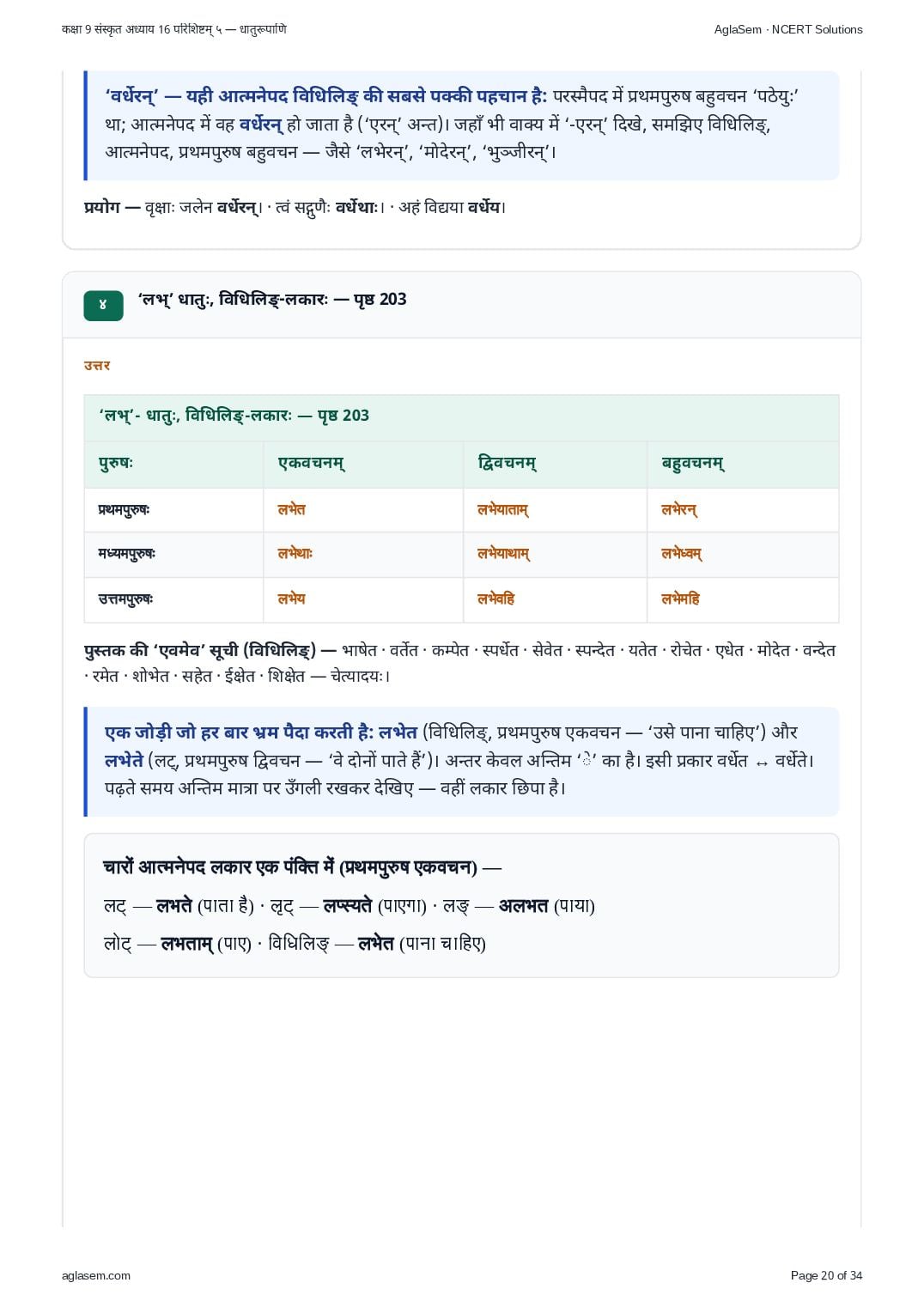
- ‘लभ्’ धातुः, विधिलिङ्-लकारः — पृष्ठ 203
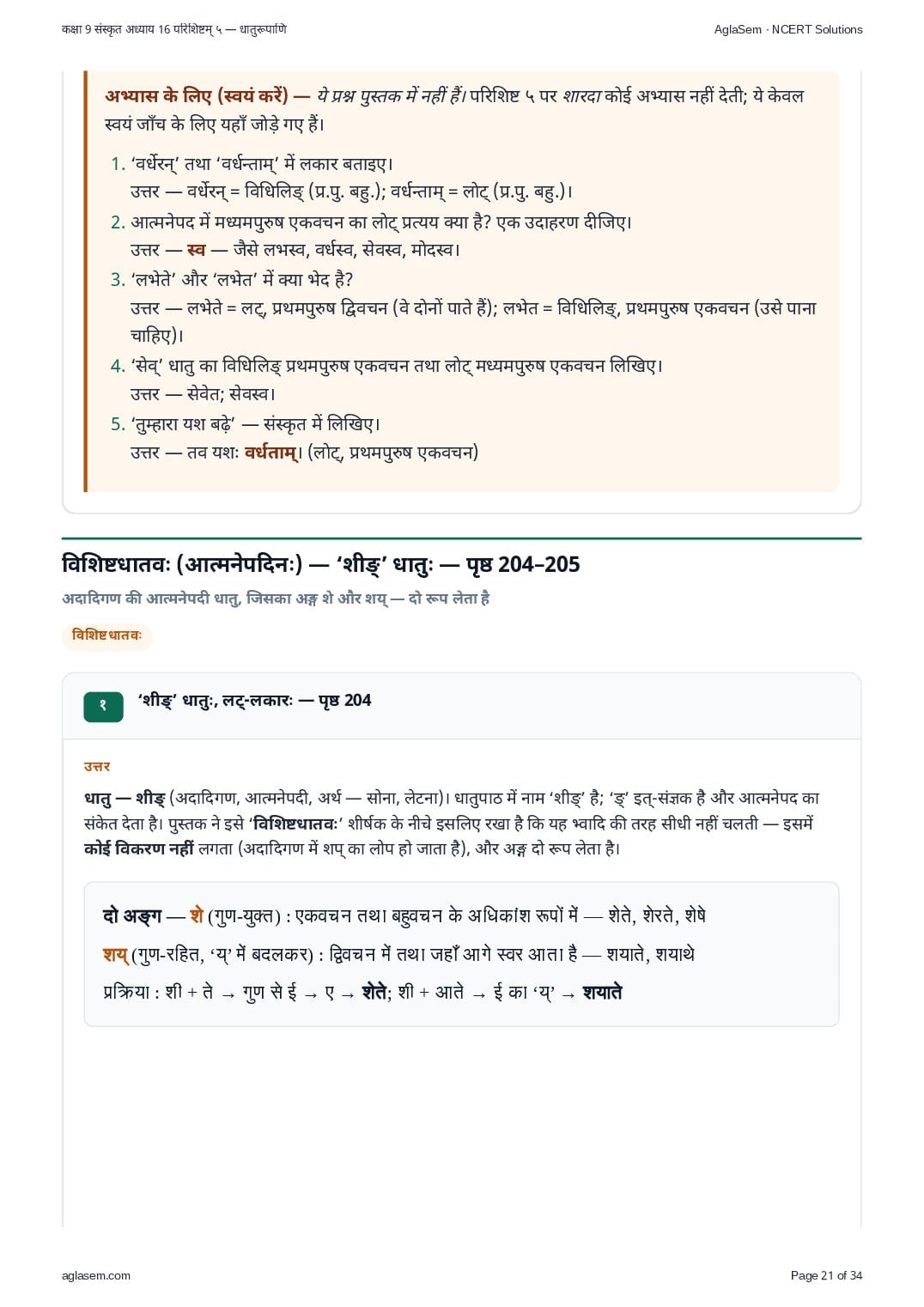
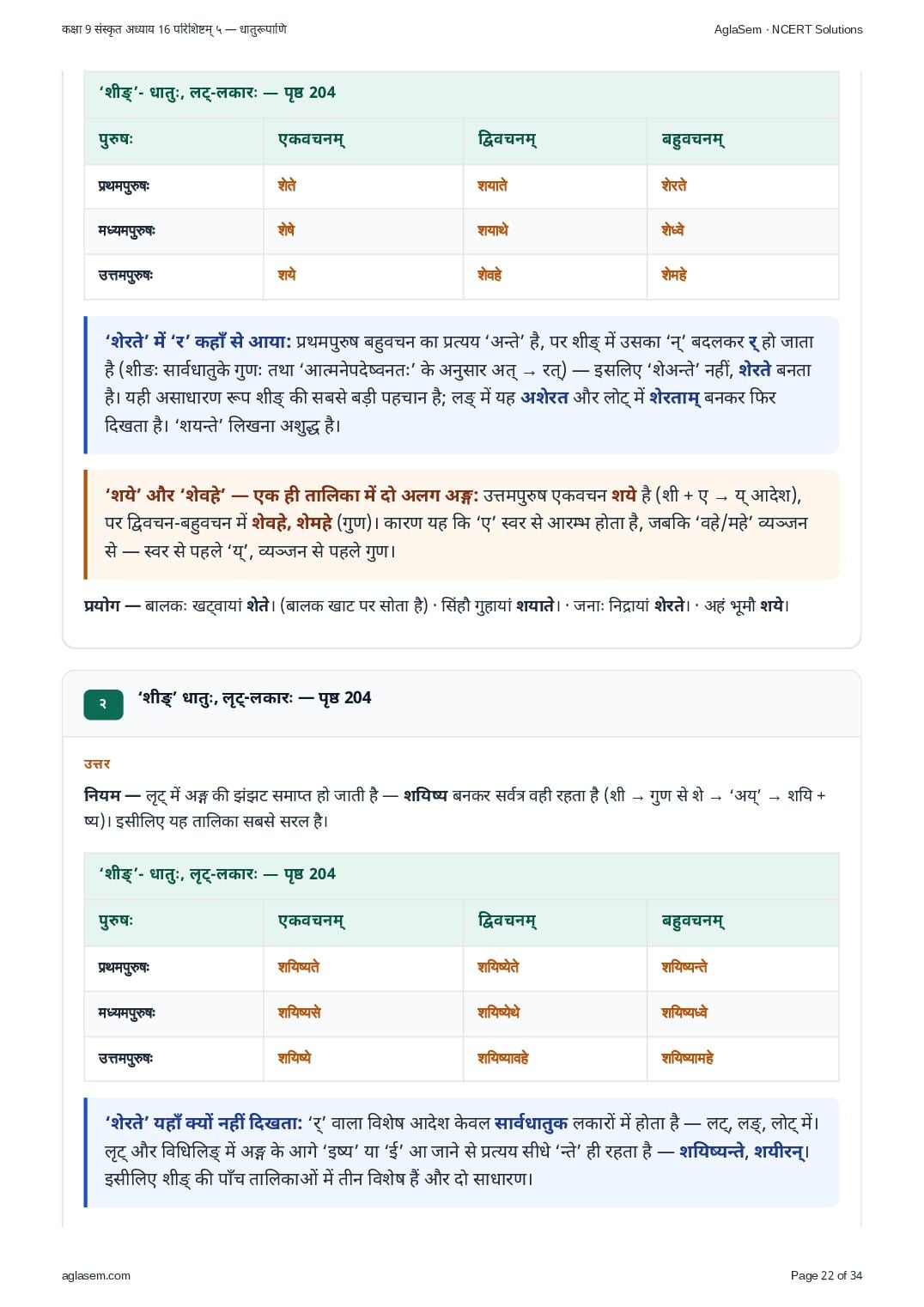
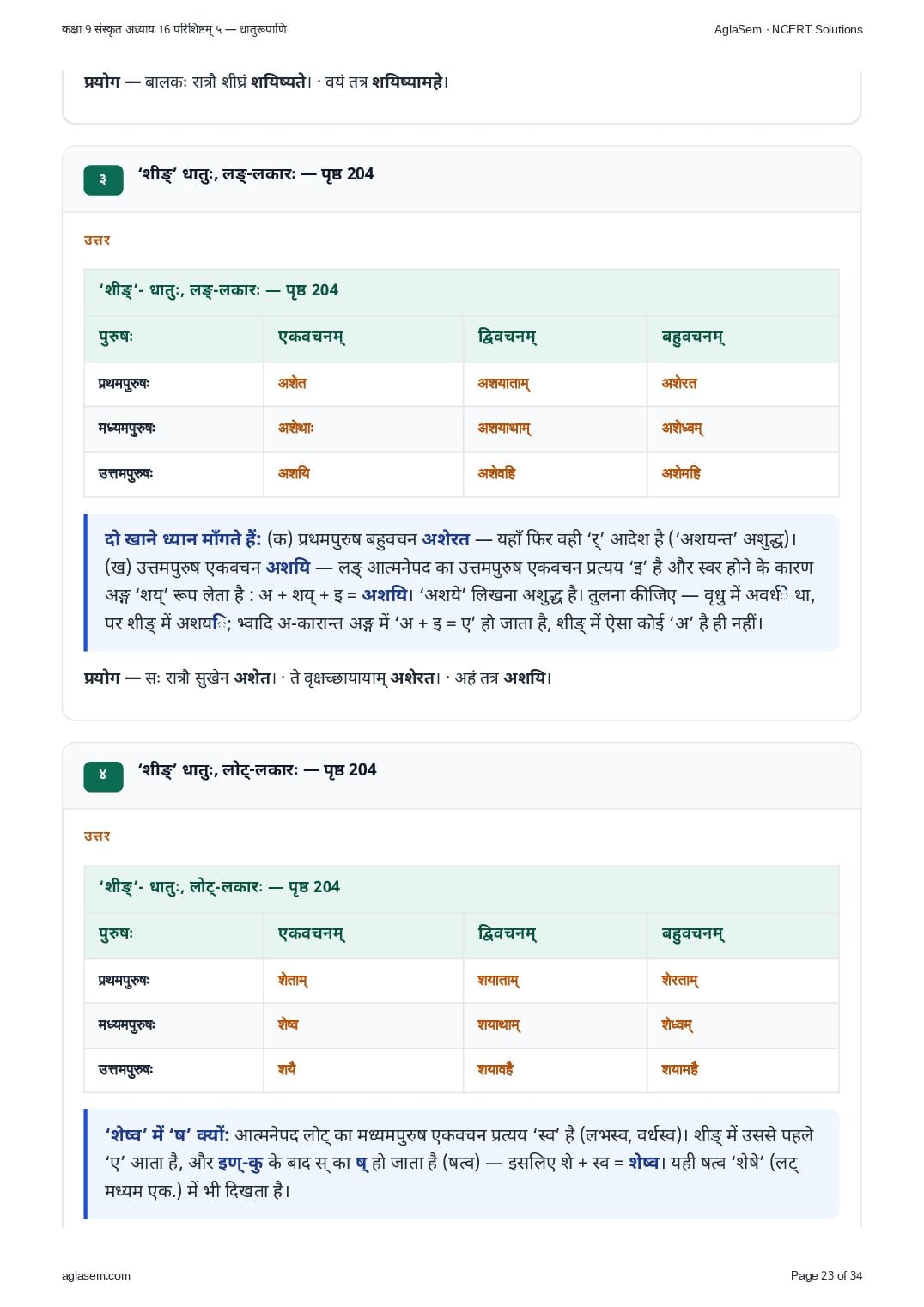
- ‘शीङ्’ धातुः, लट्-लकारः — पृष्ठ 204
- ‘शीङ्’ धातुः, लृट्-लकारः — पृष्ठ 204
- ‘शीङ्’ धातुः, लङ्-लकारः — पृष्ठ 204
- ‘शीङ्’ धातुः, लोट्-लकारः — पृष्ठ 204
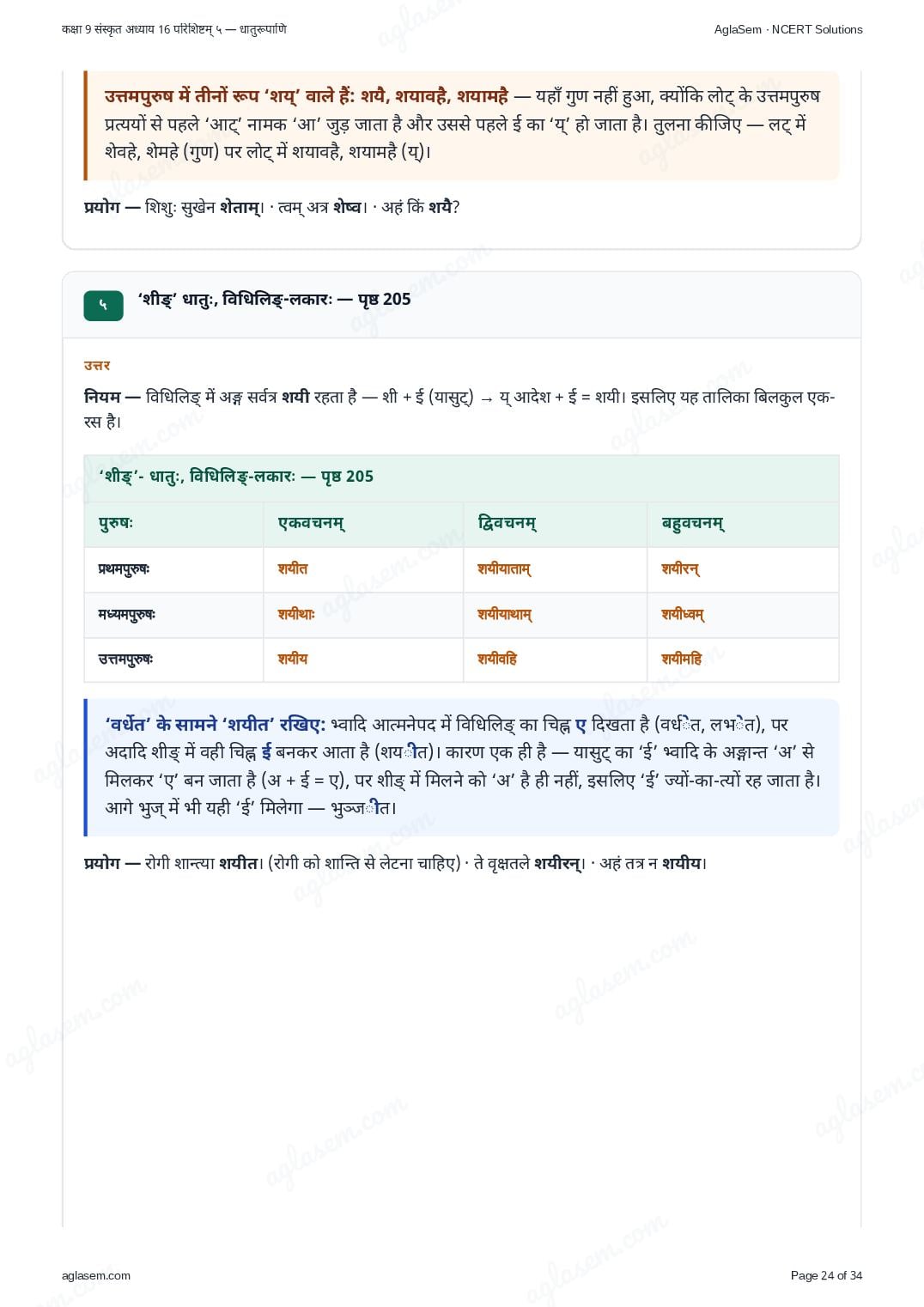
- ‘शीङ्’ धातुः, विधिलिङ्-लकारः — पृष्ठ 205
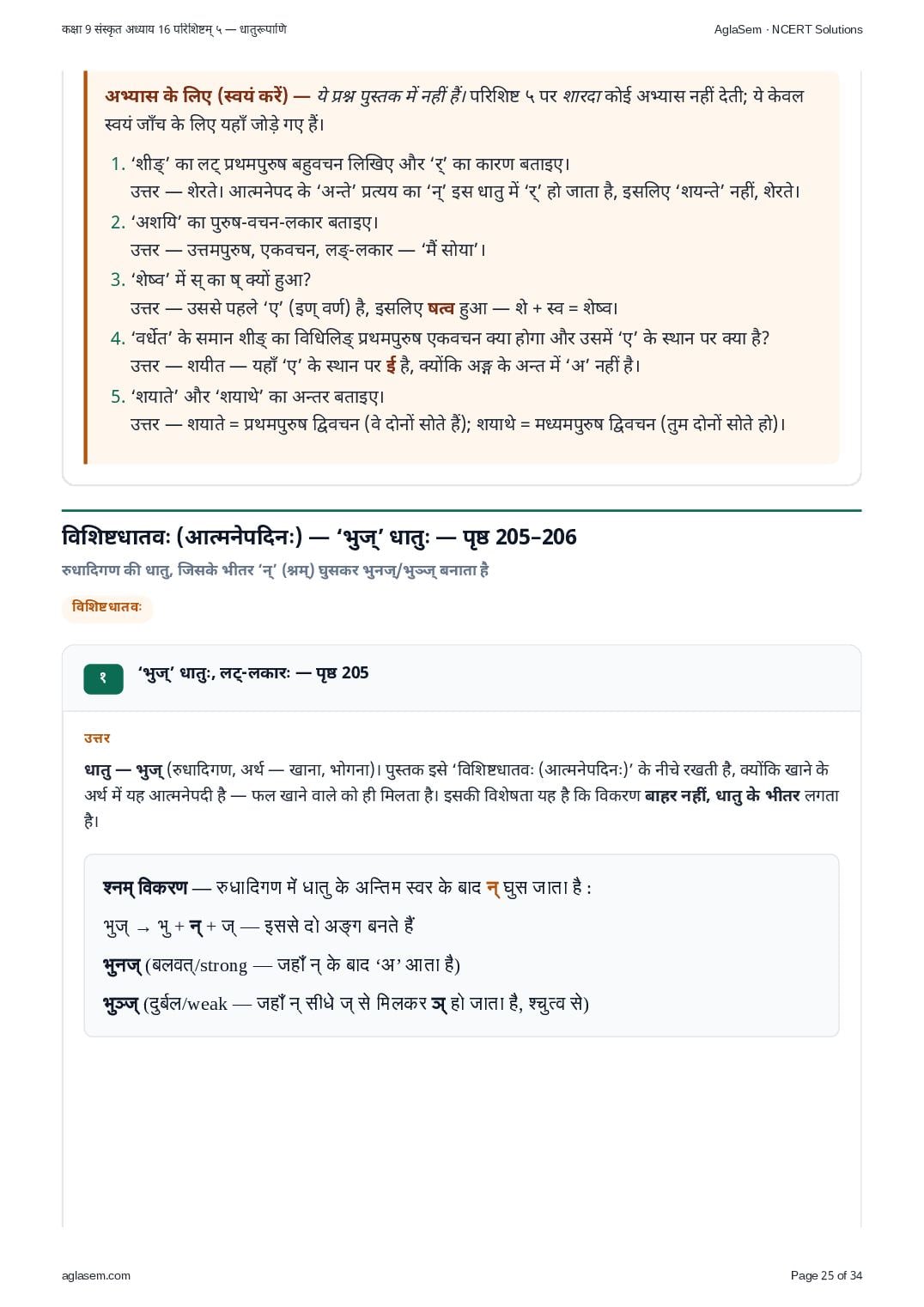
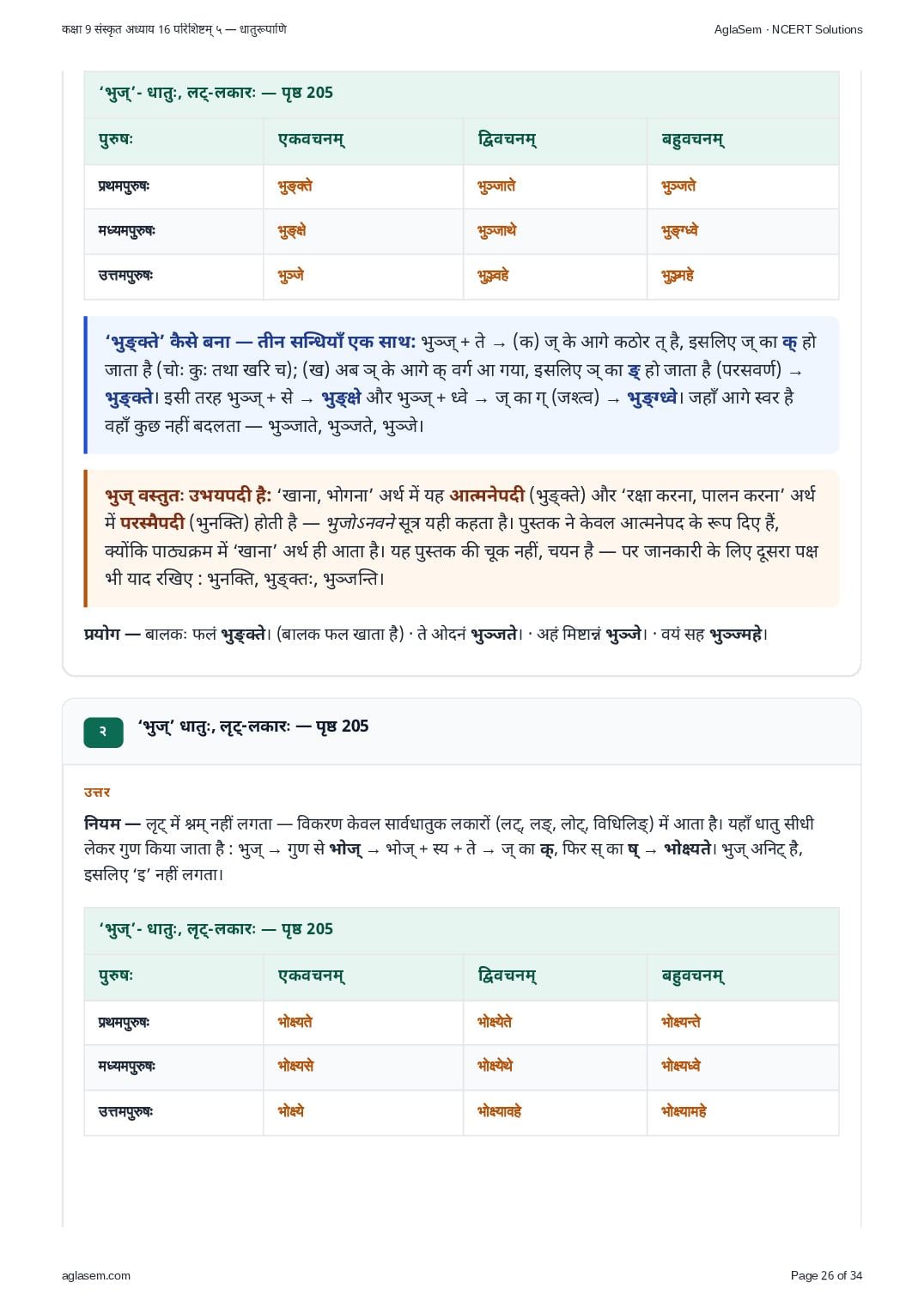
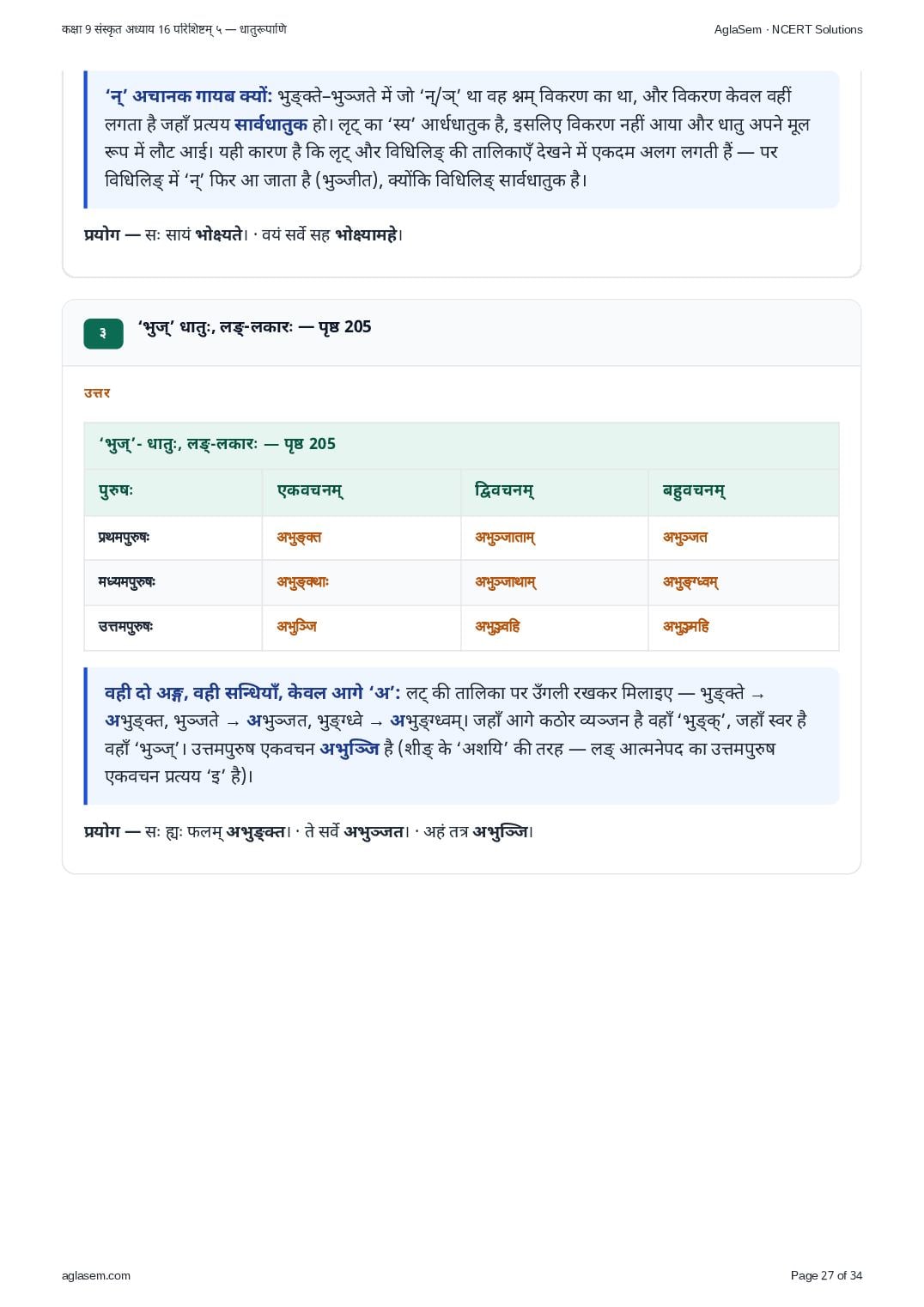
- ‘भुज्’ धातुः, लट्-लकारः — पृष्ठ 205
- ‘भुज्’ धातुः, लृट्-लकारः — पृष्ठ 205
- ‘भुज्’ धातुः, लङ्-लकारः — पृष्ठ 205
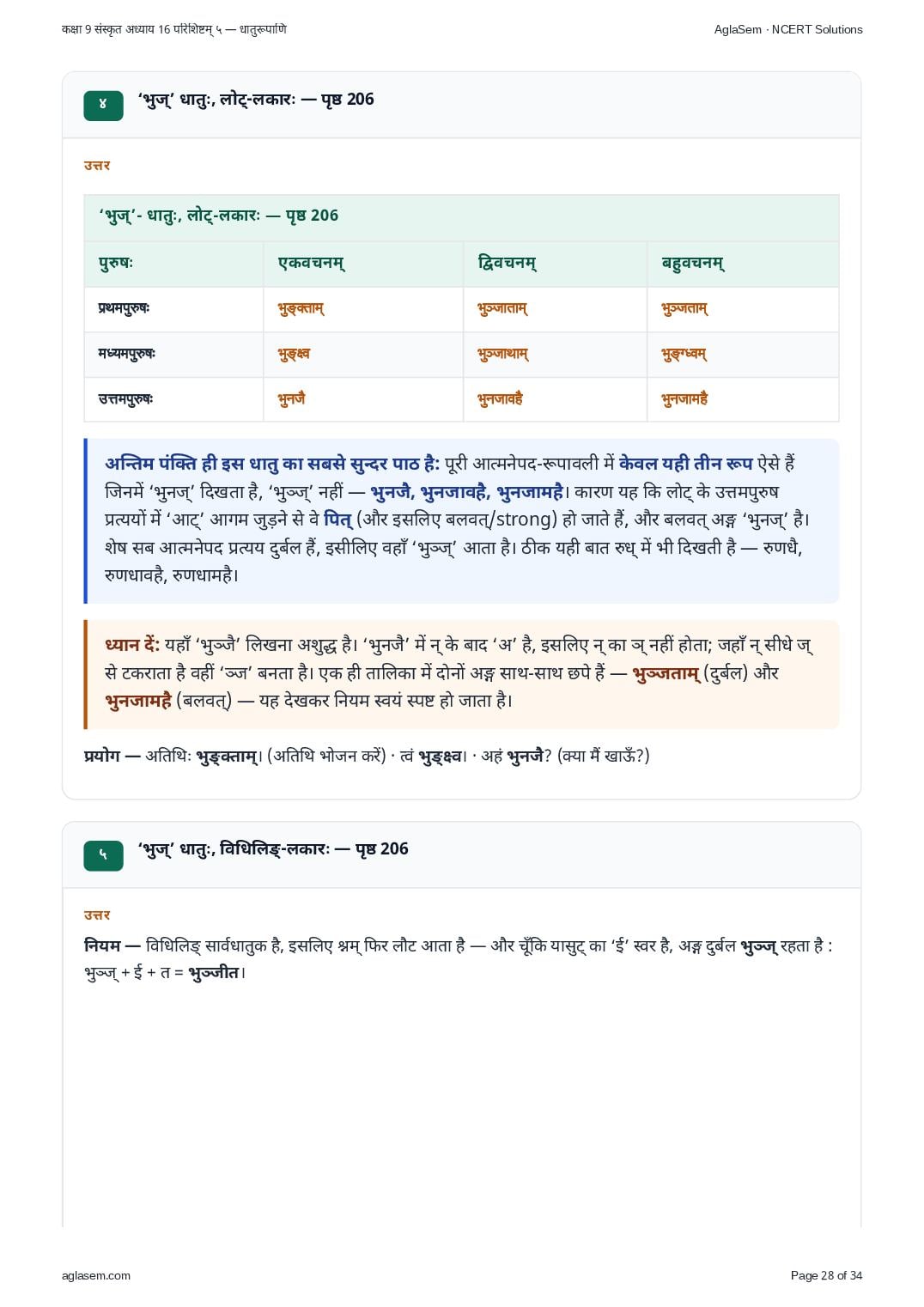
- ‘भुज्’ धातुः, लोट्-लकारः — पृष्ठ 206
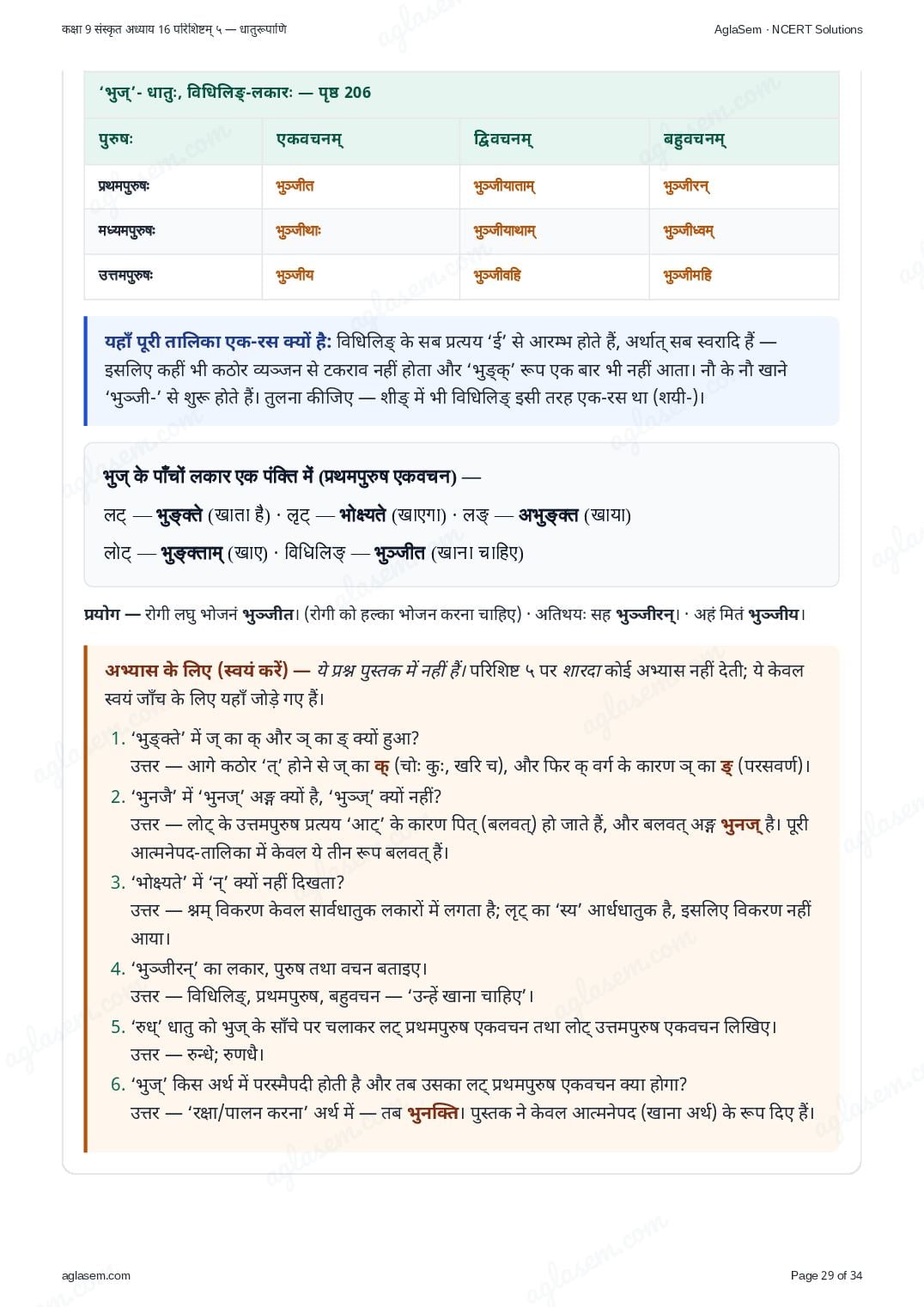
- ‘भुज्’ धातुः, विधिलिङ्-लकारः — पृष्ठ 206
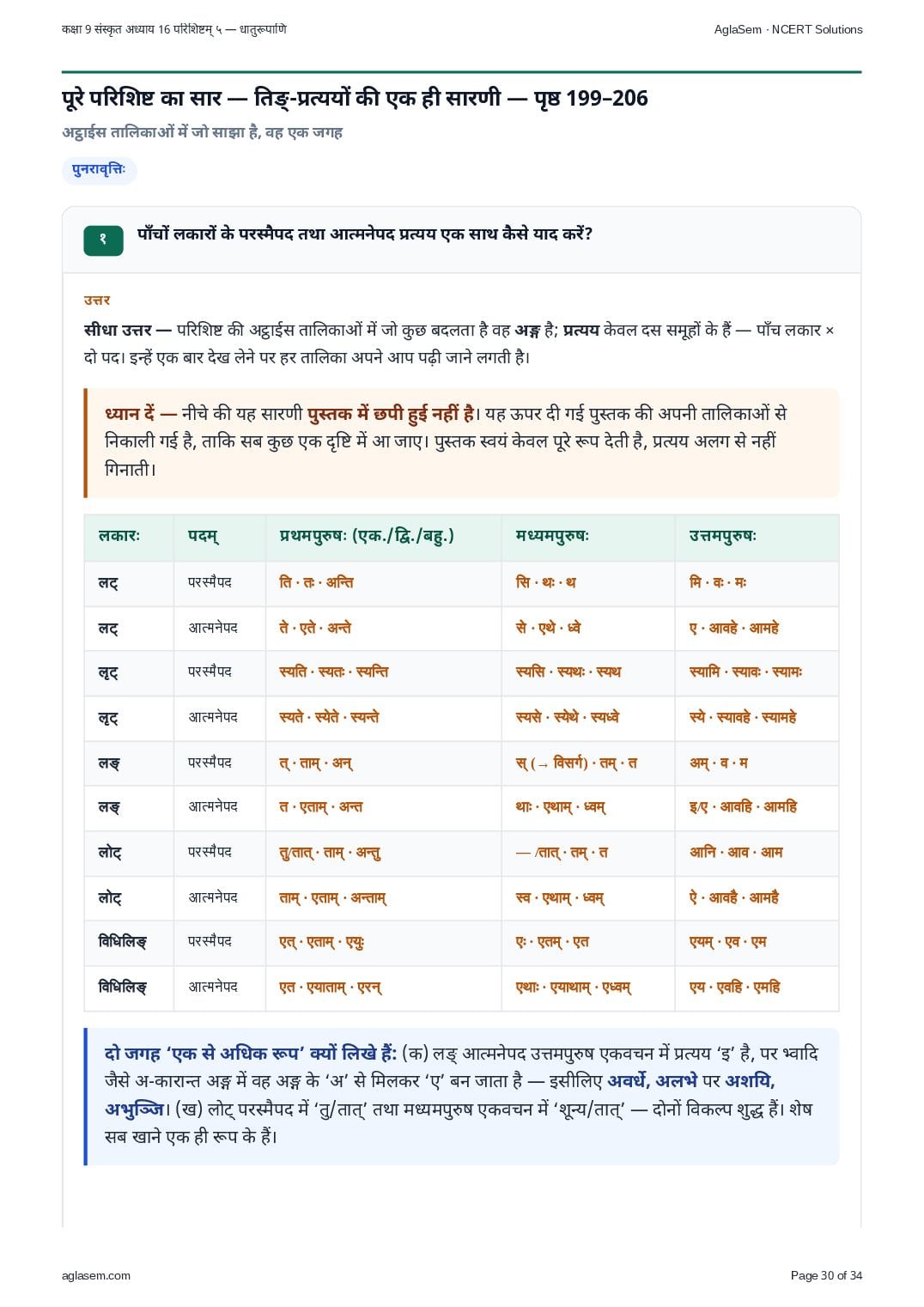
- पाँचों लकारों के परस्मैपद तथा आत्मनेपद प्रत्यय एक साथ कैसे याद करें?
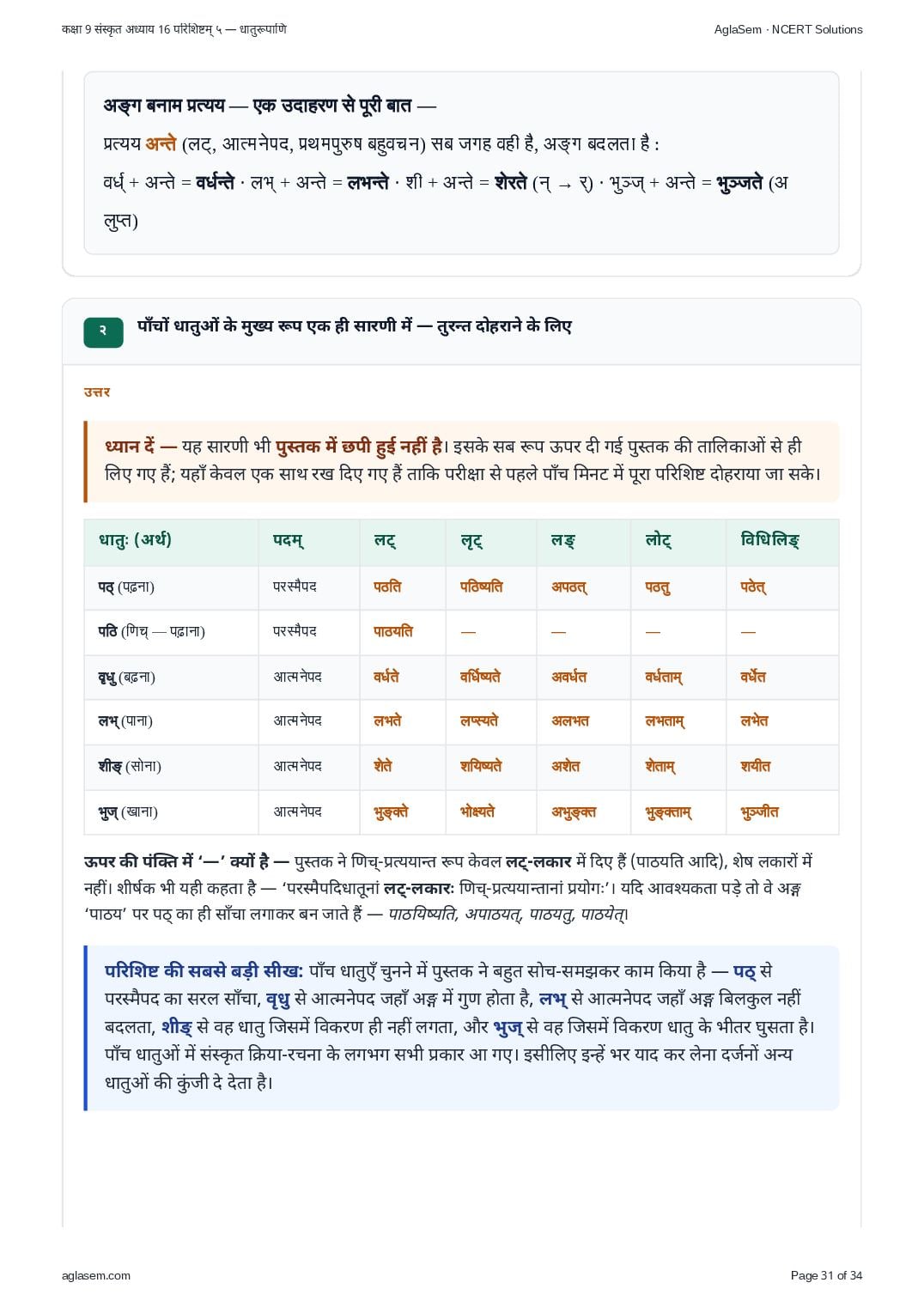
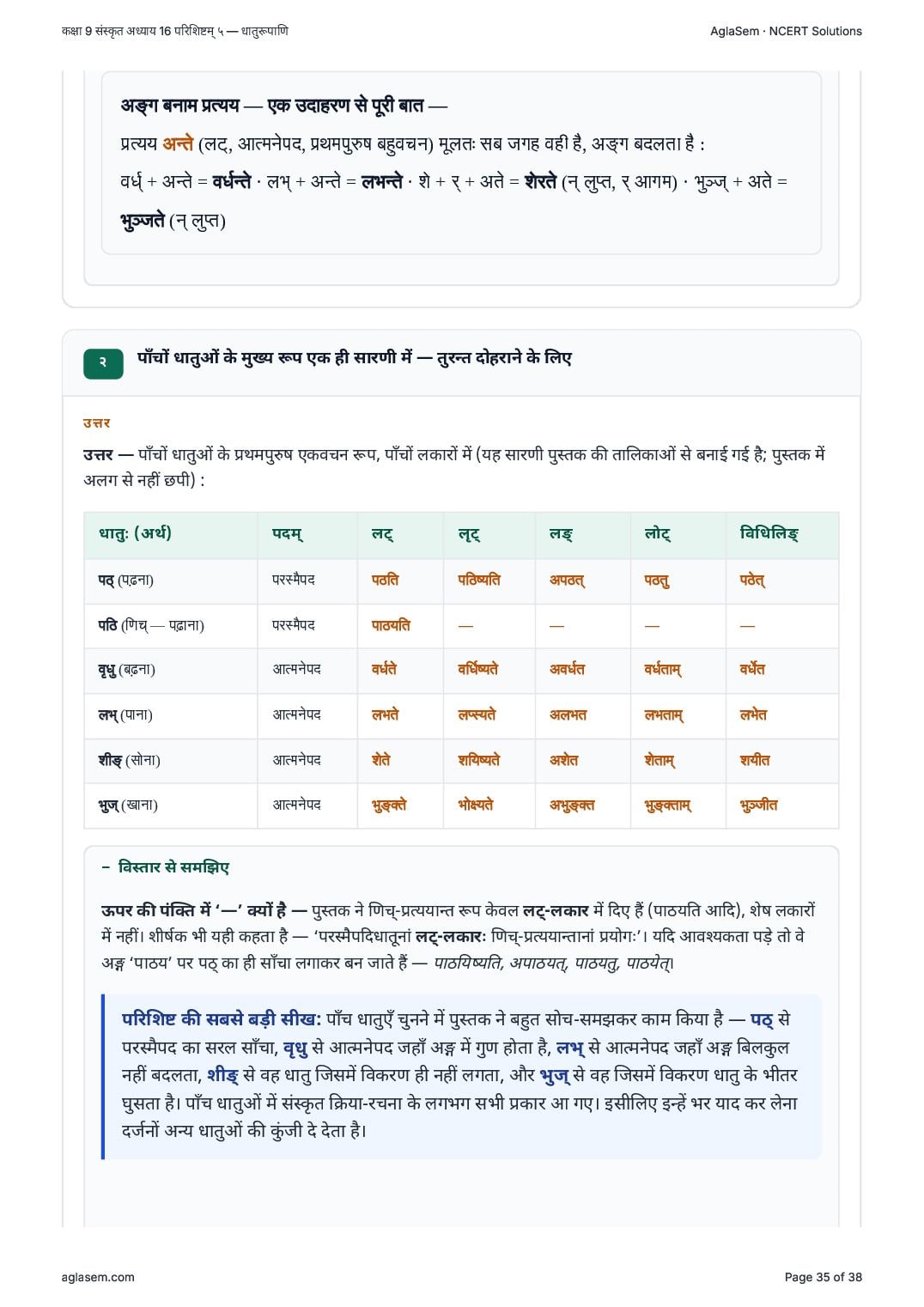
- पाँचों धातुओं के मुख्य रूप एक ही सारणी में — तुरन्त दोहराने के लिए
Chapter at a Glance
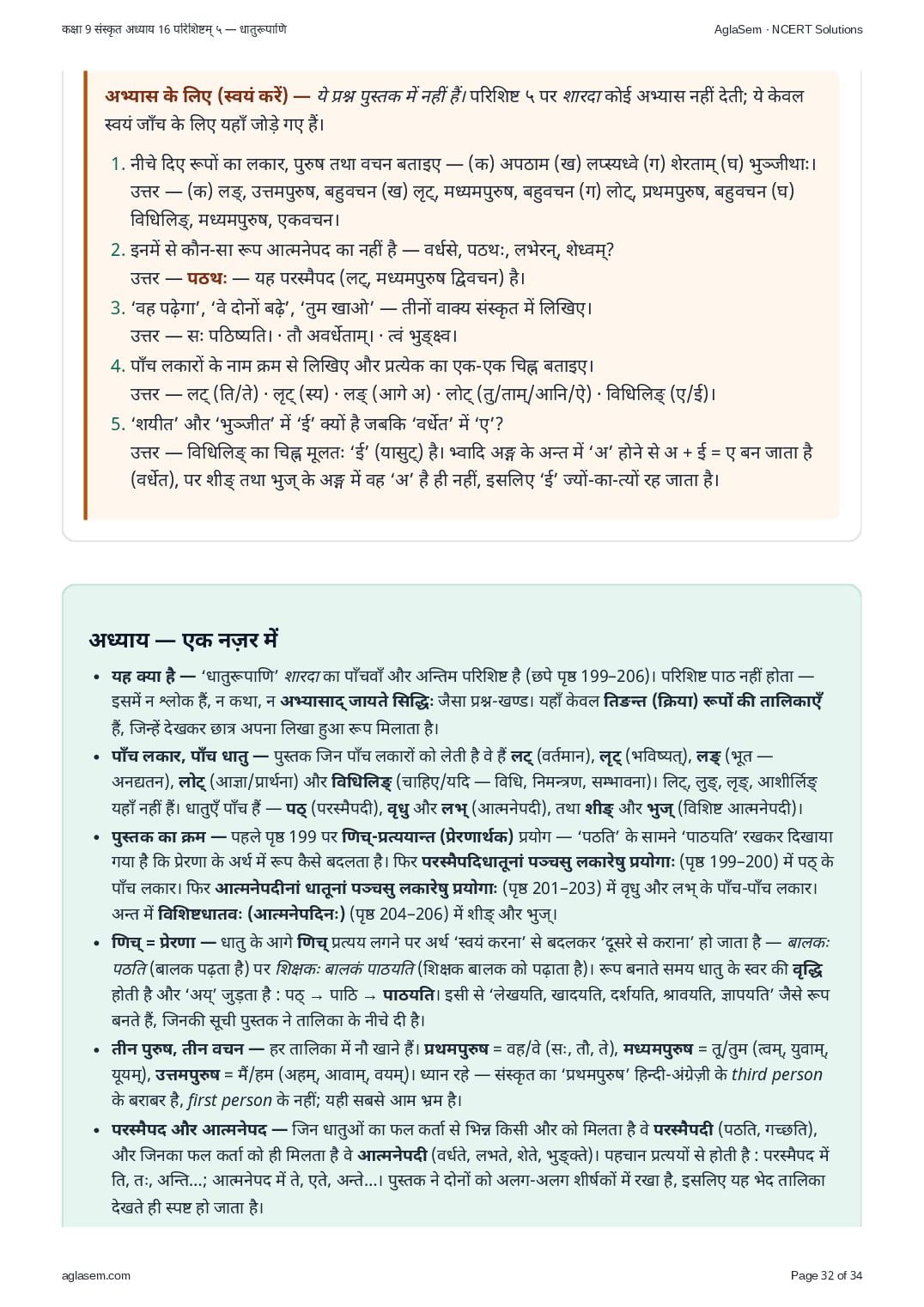
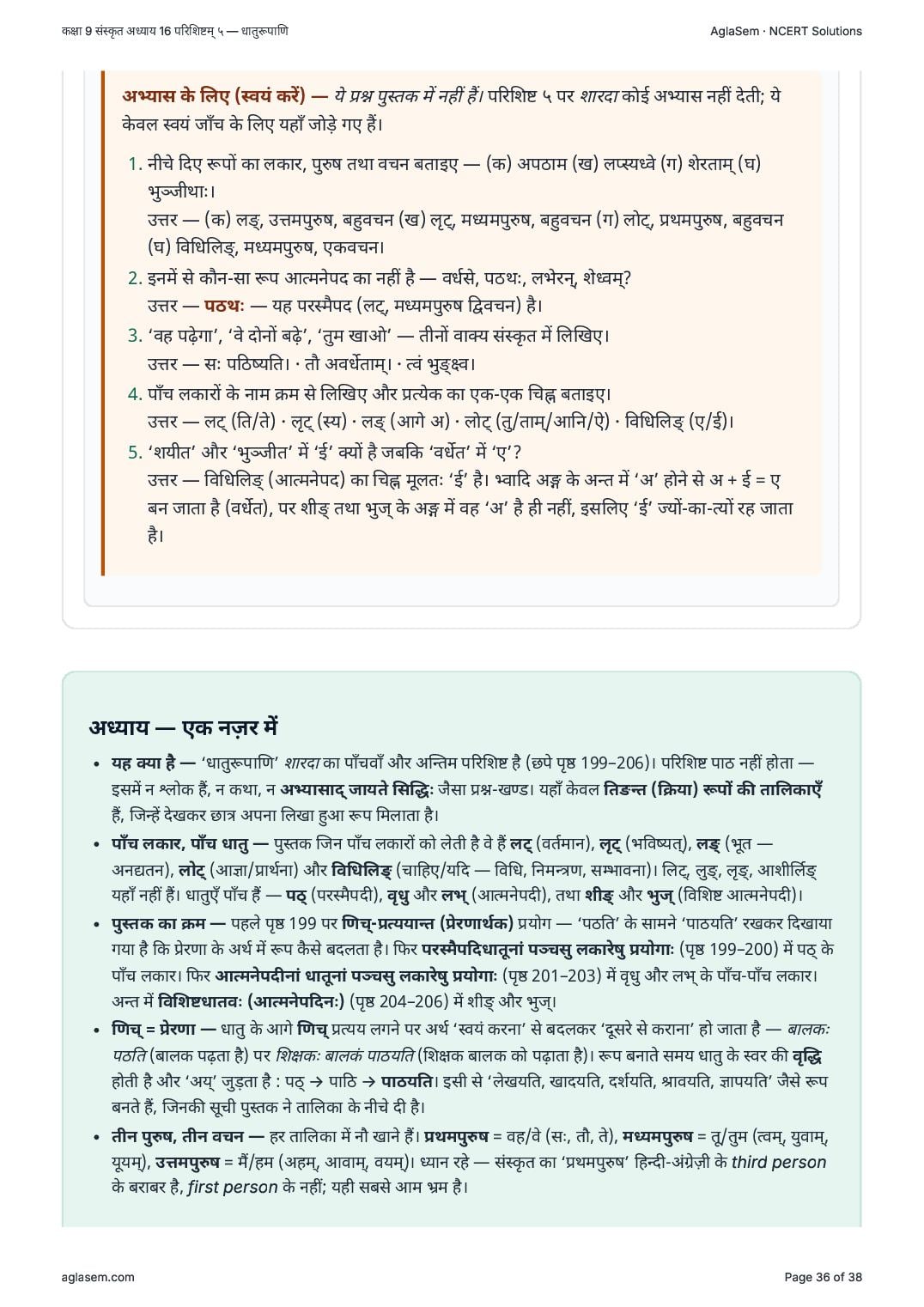
- यह क्या है — ‘धातुरूपाणि’ शारदा का पाँचवाँ और अन्तिम परिशिष्ट है (छपे पृष्ठ 199–206)। परिशिष्ट पाठ नहीं होता — इसमें न श्लोक हैं, न कथा, न अभ्यासाद् जायते सिद्धिः जैसा प्रश्न-खण्ड। यहाँ केवल तिङन्त (क्रिया) रूपों की तालिकाएँ हैं, जिन्हें देखकर छात्र अपना लिखा हुआ रूप मिलाता है।
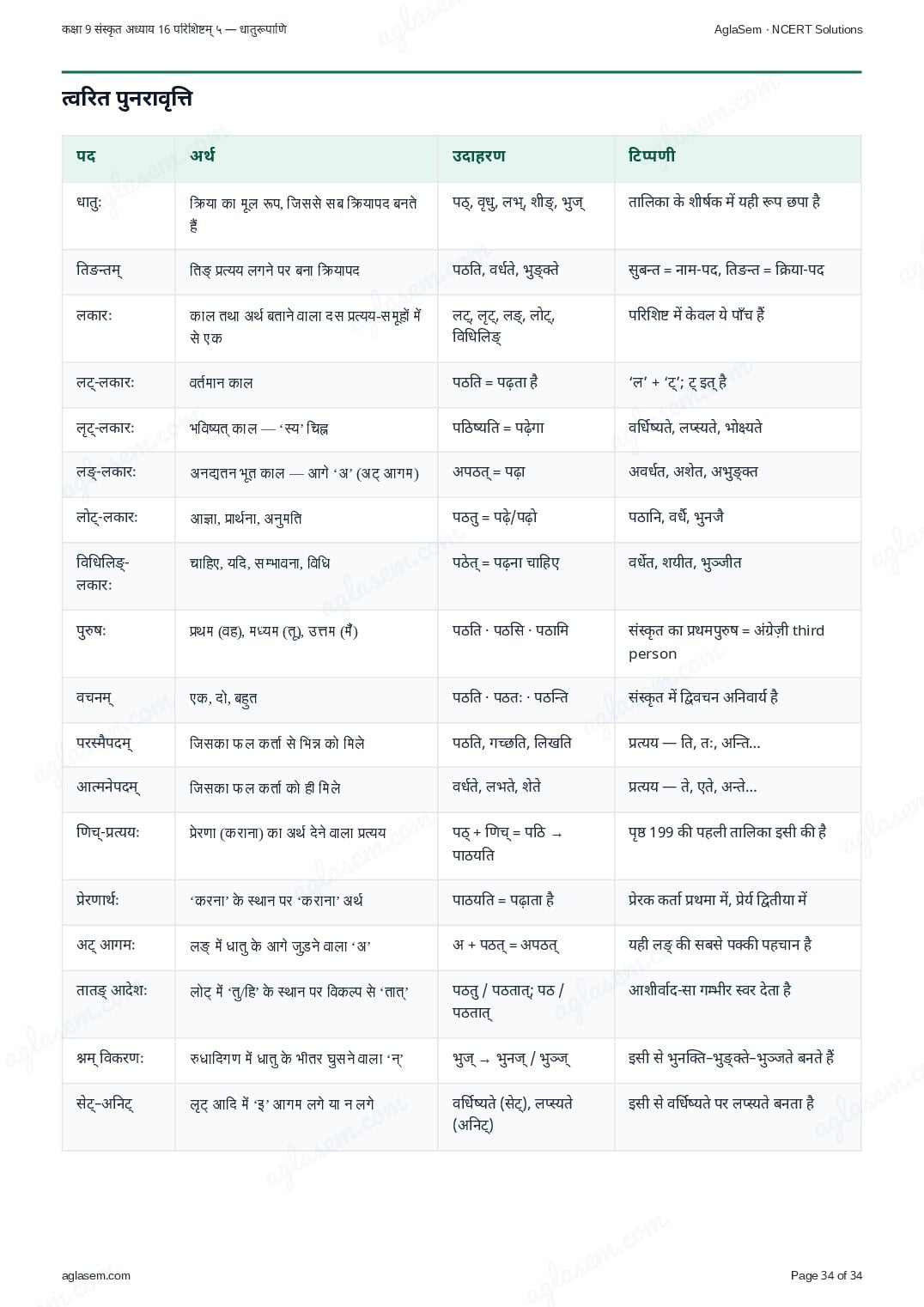
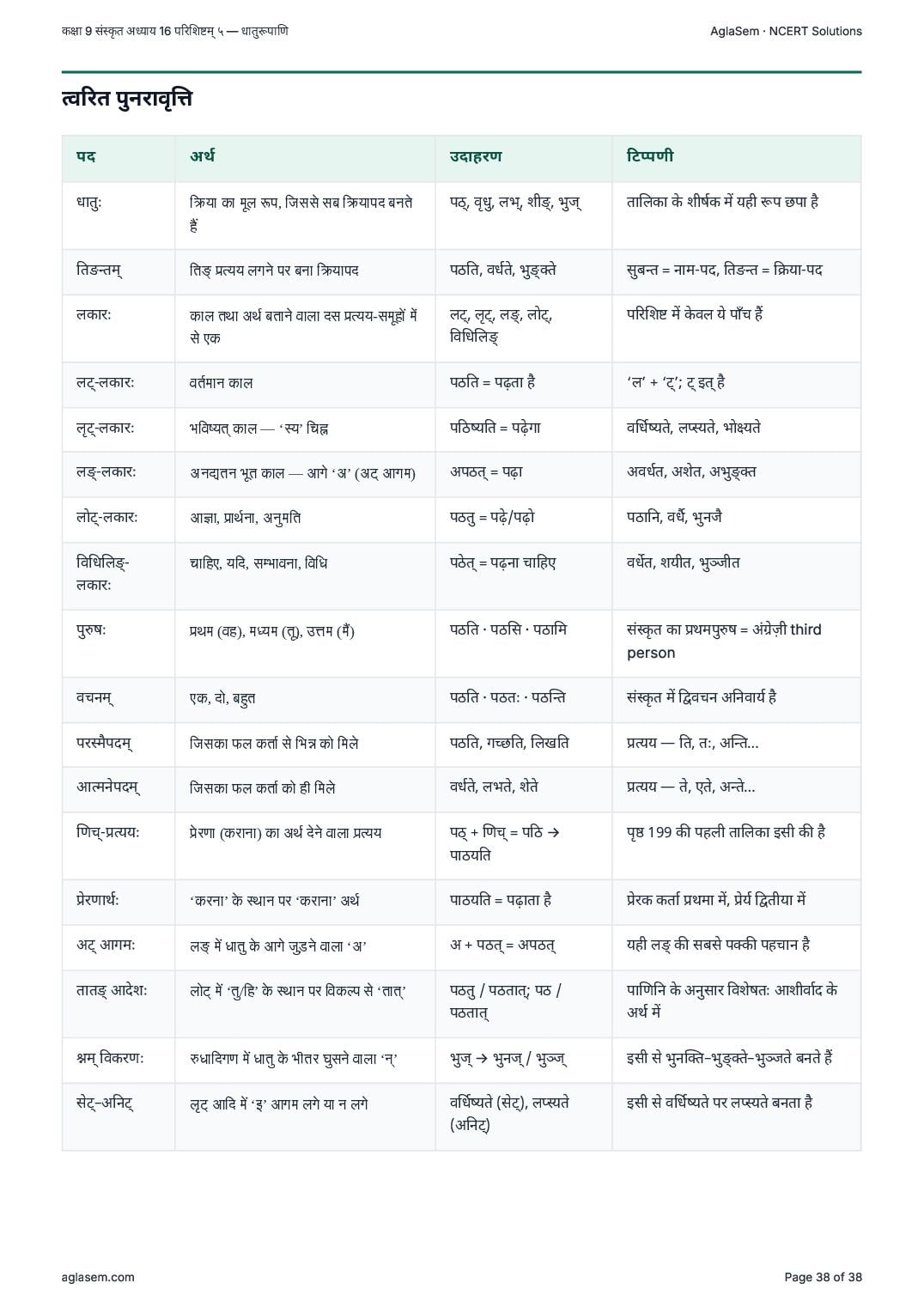
- पाँच लकार, पाँच धातु — पुस्तक जिन पाँच लकारों को लेती है वे हैं लट् (वर्तमान), लृट् (भविष्यत्), लङ् (भूत — अनद्यतन), लोट् (आज्ञा/प्रार्थना) और विधिलिङ् (चाहिए/यदि — विधि, निमन्त्रण, सम्भावना)। लिट्, लुङ्, लृङ्, आशीर्लिङ् यहाँ नहीं हैं। धातुएँ पाँच हैं — पठ् (परस्मैपदी), वृधु और लभ् (आत्मनेपदी), तथा शीङ् और भुज् (विशिष्ट आत्मनेपदी)।
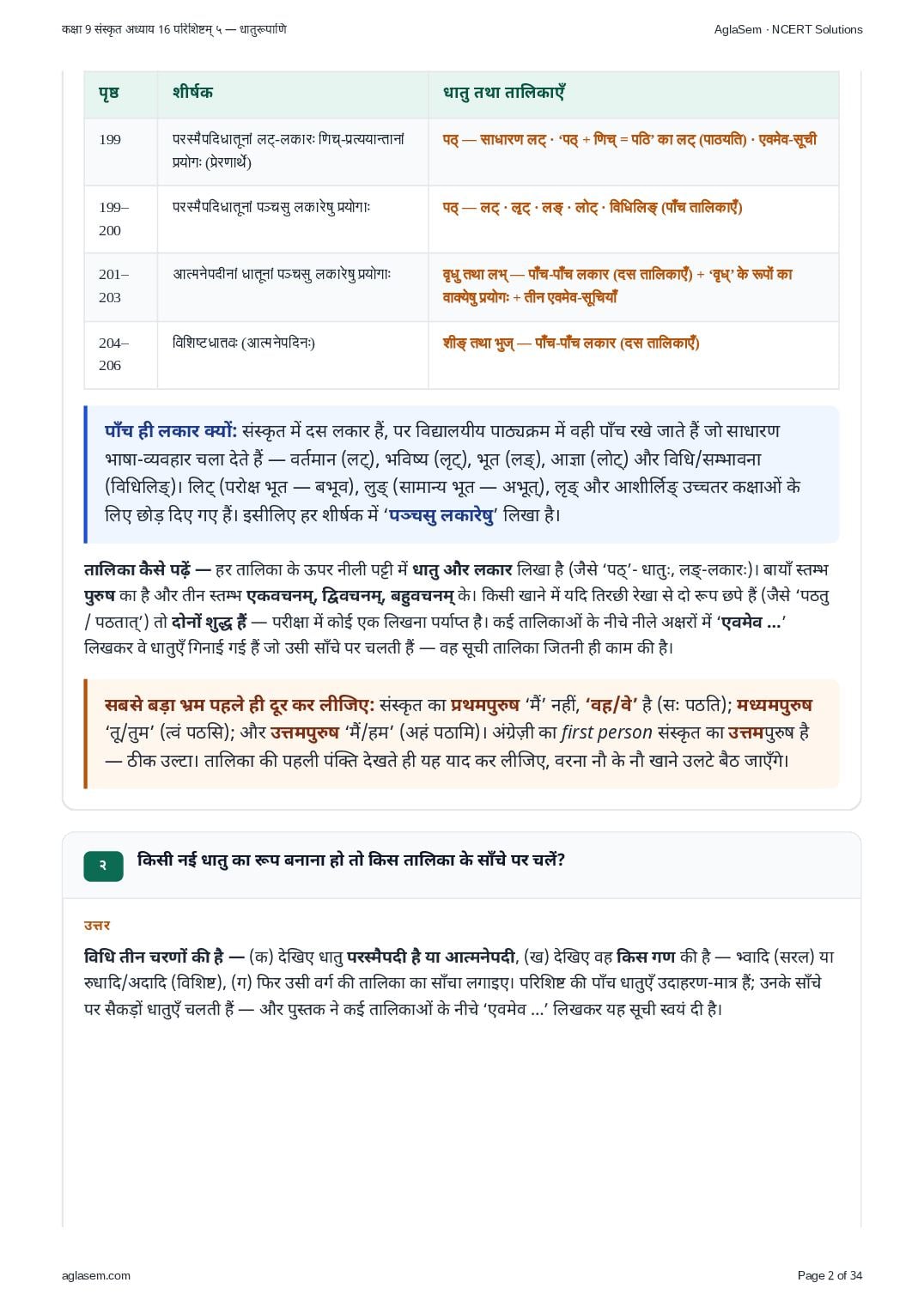
- पुस्तक का क्रम — पहले पृष्ठ 199 पर णिच्-प्रत्ययान्त (प्रेरणार्थक) प्रयोग — ‘पठति’ के सामने ‘पाठयति’ रखकर दिखाया गया है कि प्रेरणा के अर्थ में रूप कैसे बदलता है। फिर परस्मैपदिधातूनां पञ्चसु लकारेषु प्रयोगाः (पृष्ठ 199–200) में पठ् के पाँच लकार। फिर आत्मनेपदीनां धातूनां पञ्चसु लकारेषु प्रयोगाः (पृष्ठ 201–203) में वृधु और लभ् के पाँच-पाँच लकार। अन्त में विशिष्टधातवः (आत्मनेपदिनः) (पृष्ठ 204–206) में शीङ् और भुज्।
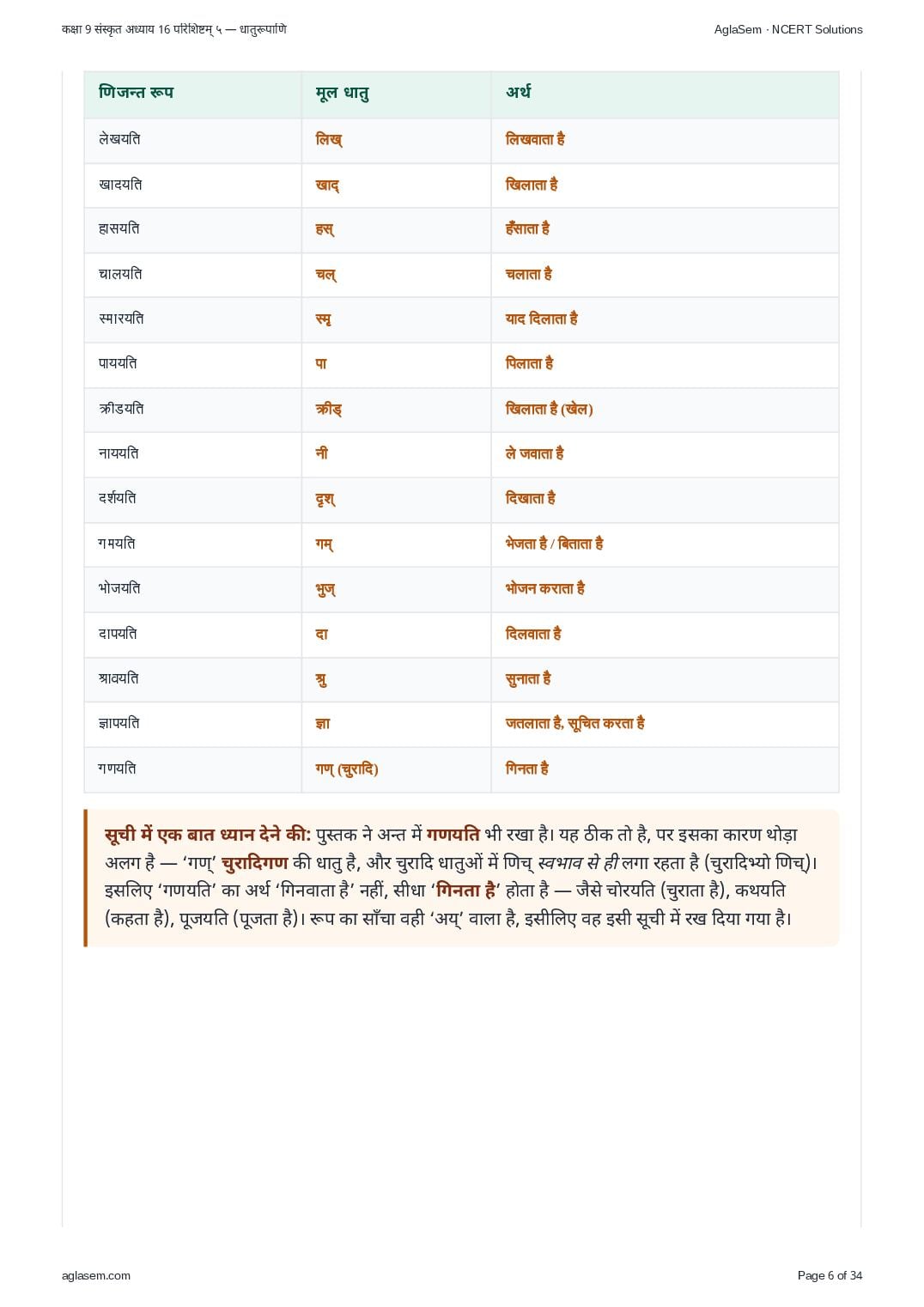
- णिच् = प्रेरणा — धातु के आगे णिच् प्रत्यय लगने पर अर्थ ‘स्वयं करना’ से बदलकर ‘दूसरे से कराना’ हो जाता है — बालकः पठति (बालक पढ़ता है) पर शिक्षकः बालकं पाठयति (शिक्षक बालक को पढ़ाता है)। रूप बनाते समय धातु के स्वर की वृद्धि होती है और ‘अय्’ जुड़ता है : पठ् → पाठि → पाठयति । इसी से ‘लेखयति, खादयति, दर्शयति, श्रावयति, ज्ञापयति’ जैसे रूप बनते हैं, जिनकी सूची पुस्तक ने तालिका के नीचे दी है।
- तीन पुरुष, तीन वचन — हर तालिका में नौ खाने हैं। प्रथमपुरुष = वह/वे (सः, तौ, ते), मध्यमपुरुष = तू/तुम (त्वम्, युवाम्, यूयम्), उत्तमपुरुष = मैं/हम (अहम्, आवाम्, वयम्)। ध्यान रहे — संस्कृत का ‘प्रथमपुरुष’ हिन्दी-अंग्रेज़ी के third person के बराबर है, first person के नहीं; यही सबसे आम भ्रम है।
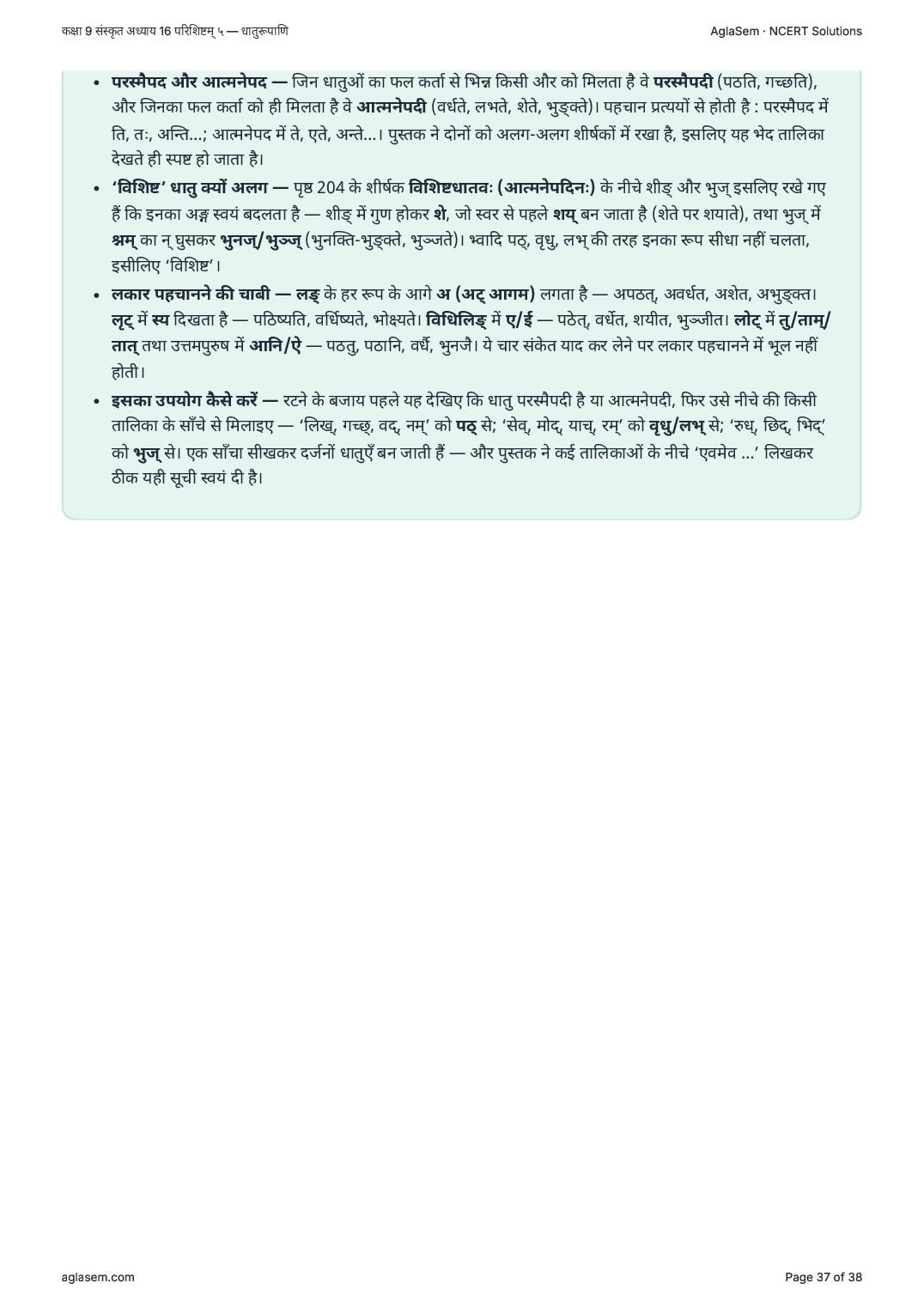
- परस्मैपद और आत्मनेपद — जिन धातुओं का फल कर्ता से भिन्न किसी और को मिलता है वे परस्मैपदी (पठति, गच्छति), और जिनका फल कर्ता को ही मिलता है वे आत्मनेपदी (वर्धते, लभते, शेते, भुङ्क्ते)। पहचान प्रत्ययों से होती है : परस्मैपद में ति, तः, अन्ति…; आत्मनेपद में ते, एते, अन्ते…। पुस्तक ने दोनों को अलग-अलग शीर्षकों में रखा है, इसलिए यह भेद तालिका देखते ही स्पष्ट हो जाता है।
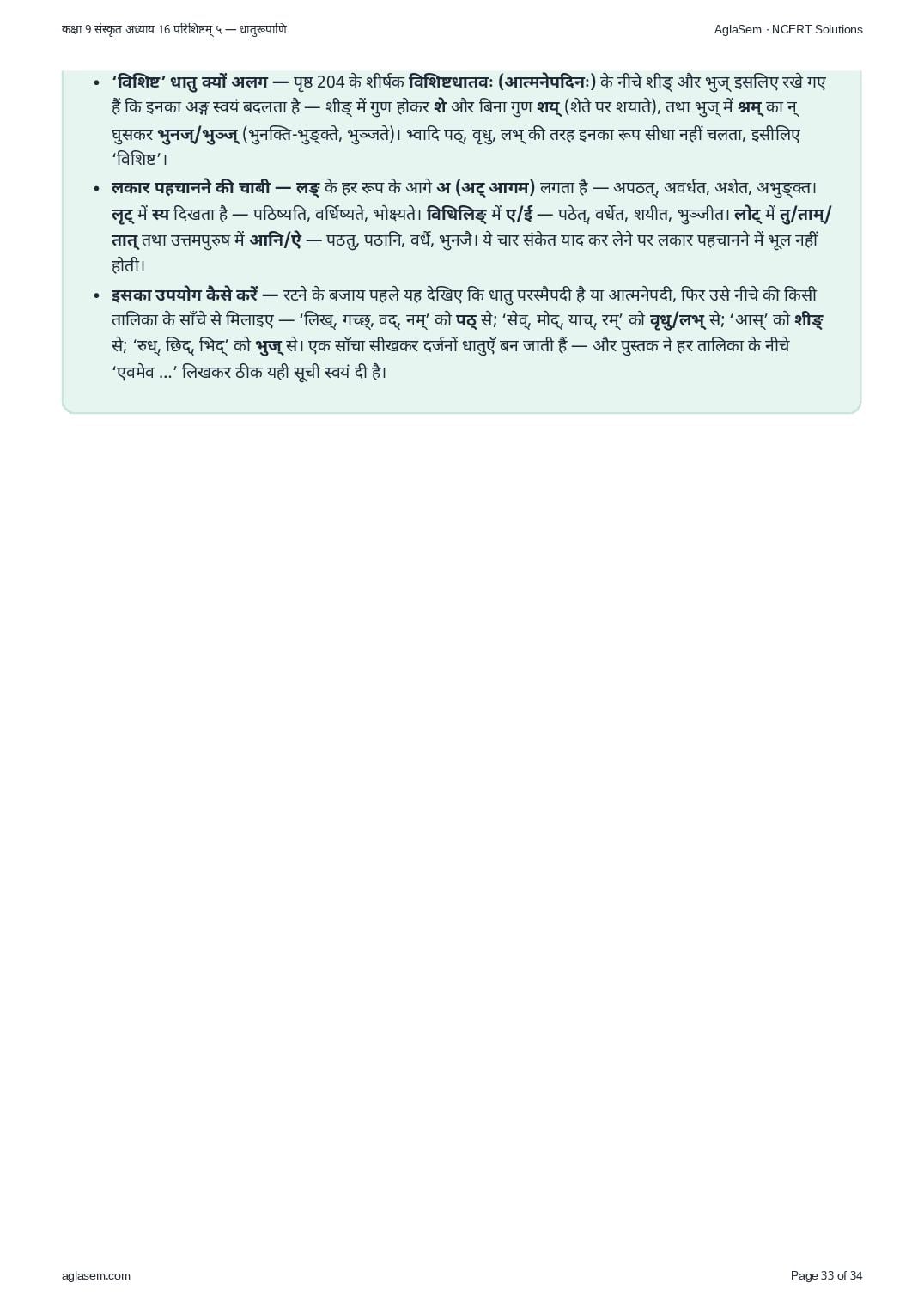
- ‘विशिष्ट’ धातु क्यों अलग — पृष्ठ 204 के शीर्षक विशिष्टधातवः (आत्मनेपदिनः) के नीचे शीङ् और भुज् इसलिए रखे गए हैं कि इनका अङ्ग स्वयं बदलता है — शीङ् में गुण होकर शे और बिना गुण शय् (शेते पर शयाते), तथा भुज् में श्नम् का न् घुसकर भुनज्/भुञ्ज् (भुनक्ति-भुङ्क्ते, भुञ्जते)। भ्वादि पठ्, वृधु, लभ् की तरह इनका रूप सीधा नहीं चलता, इसीलिए ‘विशिष्ट’।
- लकार पहचानने की चाबी — लङ् के हर रूप के आगे अ (अट् आगम) लगता है — अपठत्, अवर्धत, अशेत, अभुङ्क्त। लृट् में स्य दिखता है — पठिष्यति, वर्धिष्यते, भोक्ष्यते। विधिलिङ् में ए/ई — पठेत्, वर्धेत, शयीत, भुञ्जीत। लोट् में तु/ताम्/तात् तथा उत्तमपुरुष में आनि/ऐ — पठतु, पठानि, वर्धै, भुनजै। ये चार संकेत याद कर लेने पर लकार पहचानने में भूल नहीं होती।
- इसका उपयोग कैसे करें — रटने के बजाय पहले यह देखिए कि धातु परस्मैपदी है या आत्मनेपदी, फिर उसे नीचे की किसी तालिका के साँचे से मिलाइए — ‘लिख्, गच्छ्, वद्, नम्’ को पठ् से; ‘सेव्, मोद्, याच्, रम्’ को वृधु/लभ् से; ‘आस्’ को शीङ् से; ‘रुध्, छिद्, भिद्’ को भुज् से। एक साँचा सीखकर दर्जनों धातुएँ बन जाती हैं — और पुस्तक ने हर तालिका के नीचे ‘एवमेव …’ लिखकर ठीक यही सूची स्वयं दी है।
How to Download NCERT Solutions for Class 9 Sanskrit Chapter 16 PDF
Follow these simple steps to get the Parishisht 5 धातुरूपाणि questions-and-answers PDF from शारदा.
- Search NCERT Solutions for Class 9 Sanskrit Chapter 16 aglasem and open this page.
- Read the exercise questions with answers for Parishisht 5 धातुरूपाणि shown above.
- Click the Download PDF link to save the Parishisht 5 धातुरूपाणि solutions to your device.
NCERT Solutions for Class 9 Sanskrit – All Chapters
There are more chapters to study besides Parishisht 5 धातुरूपाणि in Sanskrit. Here are the NCERT Solutions for all chapters of Class 9 Sanskrit.
- Chapter 1 सत्यं शिवं सुन्दरं संस्कृतम्
- Chapter 2 सुखस्य मूलं धर्मः धर्मस्य मूलम् अर्थः
- Chapter 3 आत्मवत्सर्वभूतेषु यः पश्यति सः पण्डितः
- Chapter 4 न खलु वयस्तेजसो हेतुः
- Chapter 5 एषा सा कृतकबुद्धिः मानवबुद्धेः सहकरी
- Chapter 6 मनःपूतं समाचरेत्
- Chapter 7 उपायं चिन्तयेत् प्राज्ञस्तथापायं च चिन्तयेत्
- Chapter 8 अन्नाद् आनन्दं प्रति
- Chapter 9 कृतं प्रतिकृतं भूयादेष धर्मः सनातनः
- Chapter 10 णमो अरिहन्ताणम्
- Chapter 11 वर्णोच्चारण-शिक्षा २
- Chapter 12 Parishisht 1 अन्वयः
- Chapter 13 Parishisht 2 समासः
- Chapter 14 Parishisht 3 वाच्यम्
- Chapter 15 Parishisht 4 शब्दरूपाणि
- Chapter 16 Parishisht 5 धातुरूपाणि
NCERT Solutions for Class 9 – All Subjects
Just like Chapter 16 of Sanskrit, you can get the exercise questions with answers for every other subject of Class 9. Here are the NCERT Solutions for all subjects of Class 9.
NCERT Solutions for Class 9 Sanskrit Chapter 16 – An Overview
The key highlights of this study material are as follows.
| Aspects | Details |
|---|---|
| Class | Class 9 |
| Subject | Sanskrit |
| Chapter Number | Chapter 16 |
| Chapter Name | Parishisht 5 धातुरूपाणि |
| Book Name | शारदा |
| Book By | NCERT (National Council of Educational Research and Training) |
| Educational Resource Here | NCERT Solutions of Class 9 Sanskrit Chapter 16 for all exercises |
| More Questions Answers of This Subject | NCERT Solutions for Class 9 Sanskrit |
| Download Book Chapter | NCERT Book Class 9 Sanskrit |
| All Questions Answers For This Class | NCERT Solutions for Class 9 |
| Complete Solutions | NCERT Solutions |
NCERT Solutions for Class 9 Sanskrit Chapter 16 Parishisht 5 धातुरूपाणि – FAQs
What are the NCERT Solutions for Class 9 Sanskrit Chapter 16 Parishisht 5 धातुरूपाणि?
They are the complete, step-by-step answers to all the exercise and in-text questions of Chapter 16 Parishisht 5 धातुरूपाणि from the NCERT Class 9 Sanskrit textbook शारदा, written by experts as per the latest NCERT syllabus.
How can I download the Class 9 Sanskrit Chapter 16 solutions PDF for free?
Open this page on aglasem, read the Parishisht 5 धातुरूपाणि questions with answers, and click the “Download Solutions PDF” link. The Class 9 Sanskrit Chapter 16 NCERT Solutions PDF is completely free to download.
Are these NCERT Solutions as per the latest 2026-27 syllabus?
Yes. The NCERT Solutions for Class 9 Sanskrit Chapter 16 are based on the latest NCERT textbook शारदा and the current 2026-27 CBSE syllabus, so the questions and answers match what you study in class.
Where can I get NCERT Solutions for the other chapters of Class 9 Sanskrit?
You can find the answers to every chapter on the NCERT Solutions for Class 9 Sanskrit page, and solutions for every subject on the NCERT Solutions for Class 9 page.
How do NCERT Solutions help in exam preparation?
They show the correct method to solve each question, help you write answers the way they are expected in exams, let you check and correct your own work, and save revision time — which together improve your marks in Class 9 Sanskrit.
If you have any queries on NCERT Solutions for Class 9 Sanskrit Chapter 16 Parishisht 5 धातुरूपाणि, then please ask in the comments below.