Download India and Her Neighbours – NCERT Class 7 Social Science Chapter 14 PDF from the new NCERT Class 7 Social Science book Exploring Society: India and Beyond (2026-27). Read the chapter online or download the free PDF. A ‘neighbour’ is more than a country across a land border. By land, India’s neighbours are Pakistan and Afghanistan in the northwest, China’s region of Tibet, Nepal and Bhutan in the north, and Bangladesh and Myanmar in the east. India’s land…
India and Her Neighbours PDF – Chapter 14 of Exploring Society: India and Beyond (Part II)
Read the chapter online or download the PDF.
| Chapter | Download | |
|---|---|---|
| Chapter 14 PDF | India and Her Neighbours | View PDF |
| Full book | NCERT Class 7 Social Science – Exploring Society: India and Beyond | View Book |
Read Online
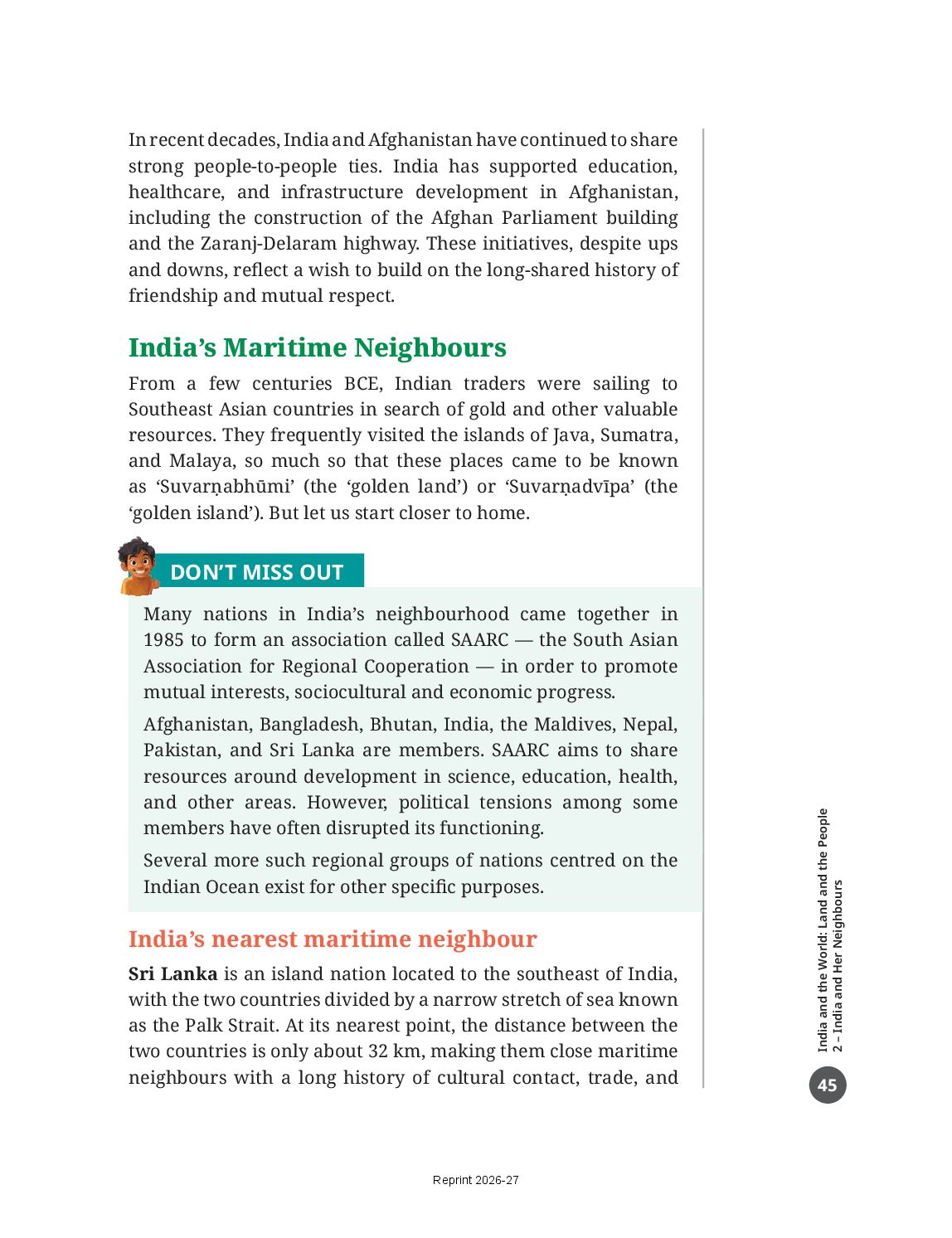
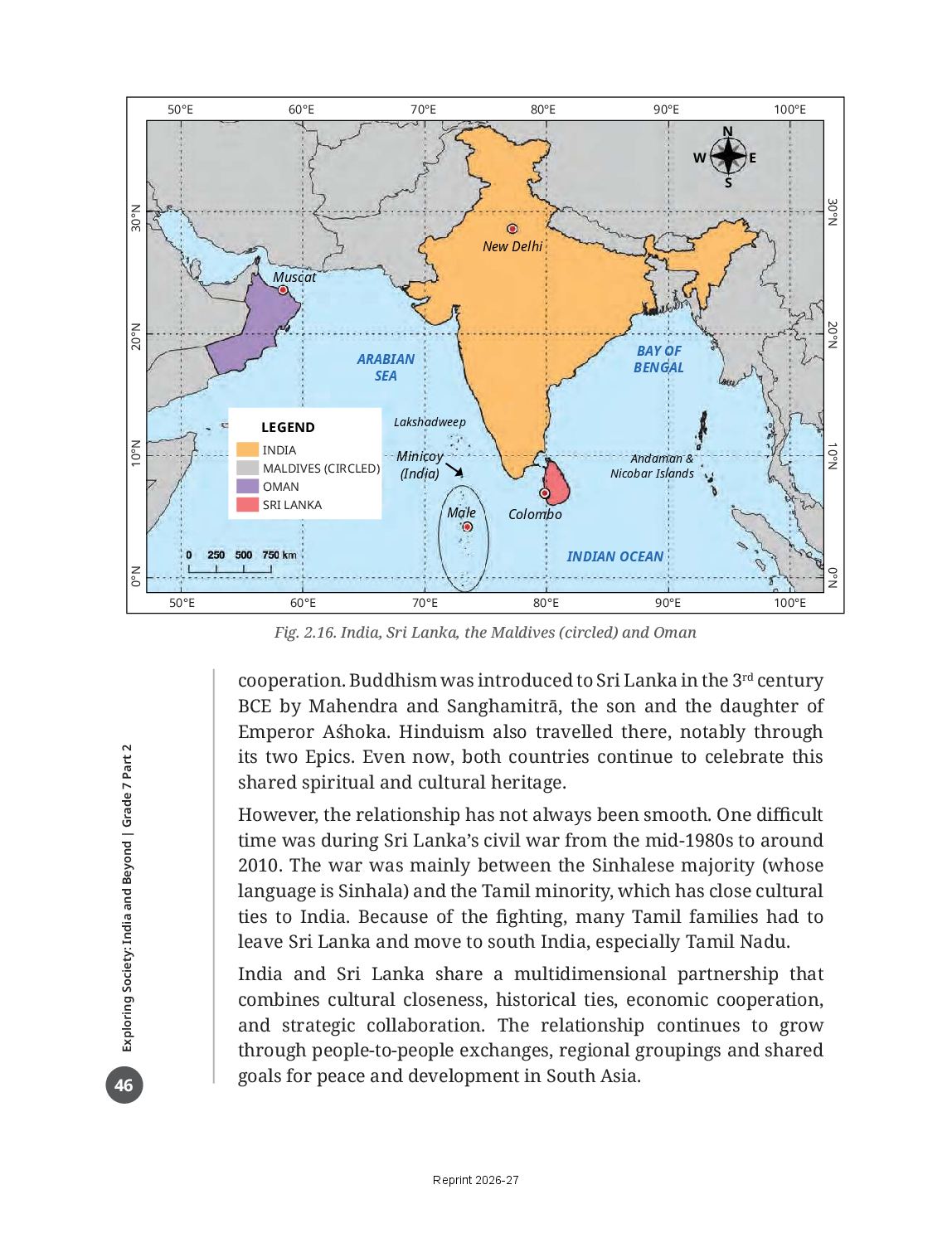
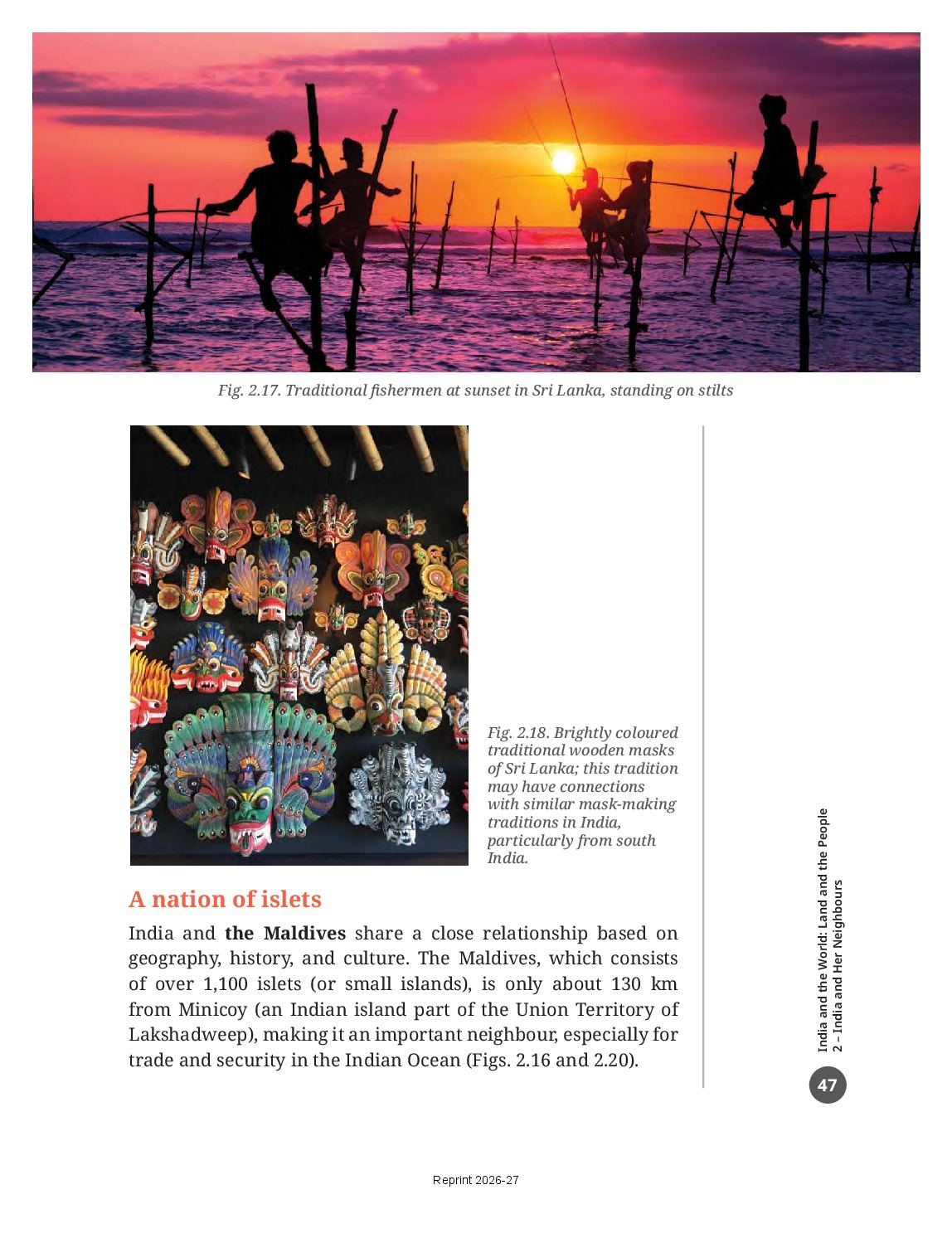
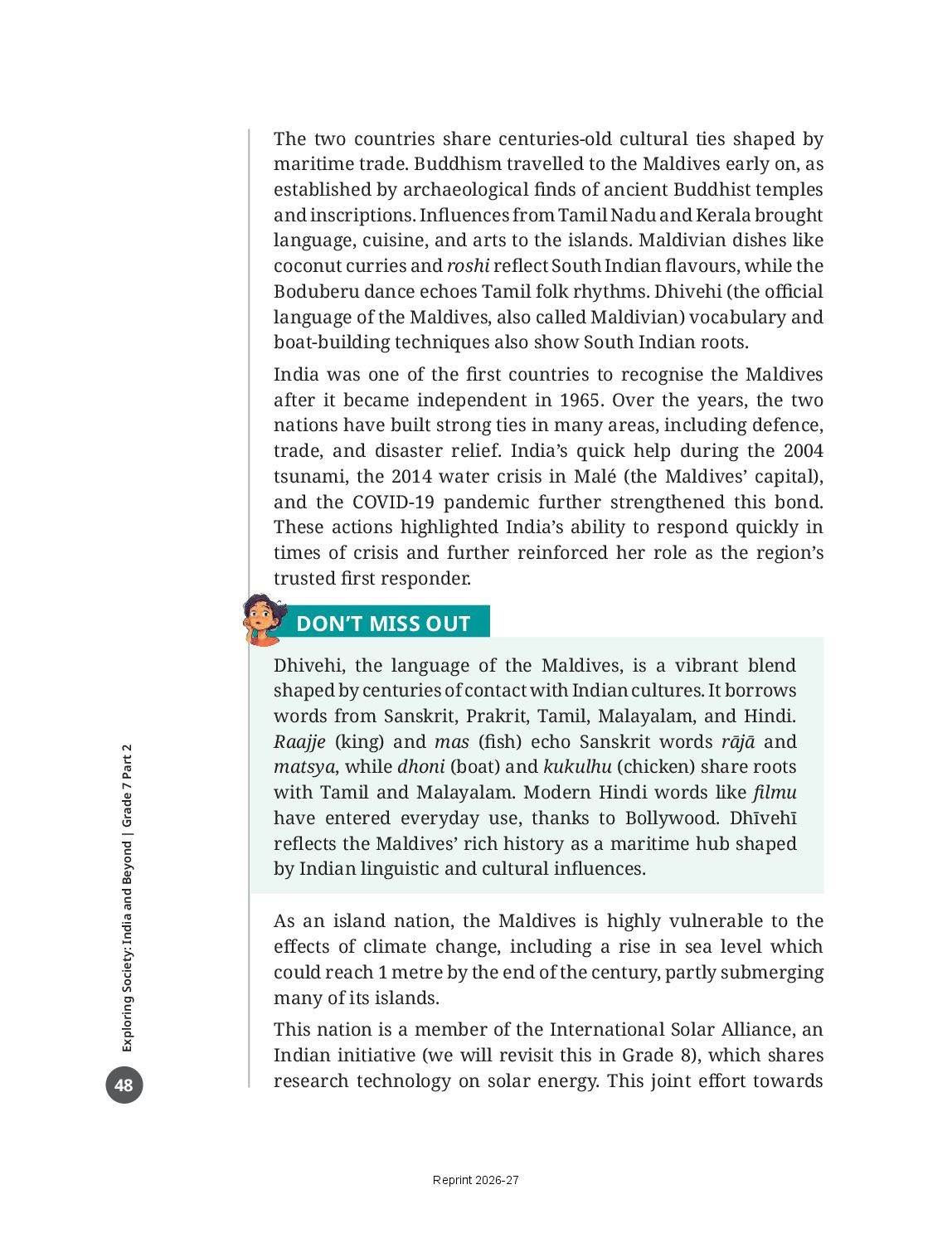
What Is in India and Her Neighbours? (Class 7 Social Science Chapter 14)
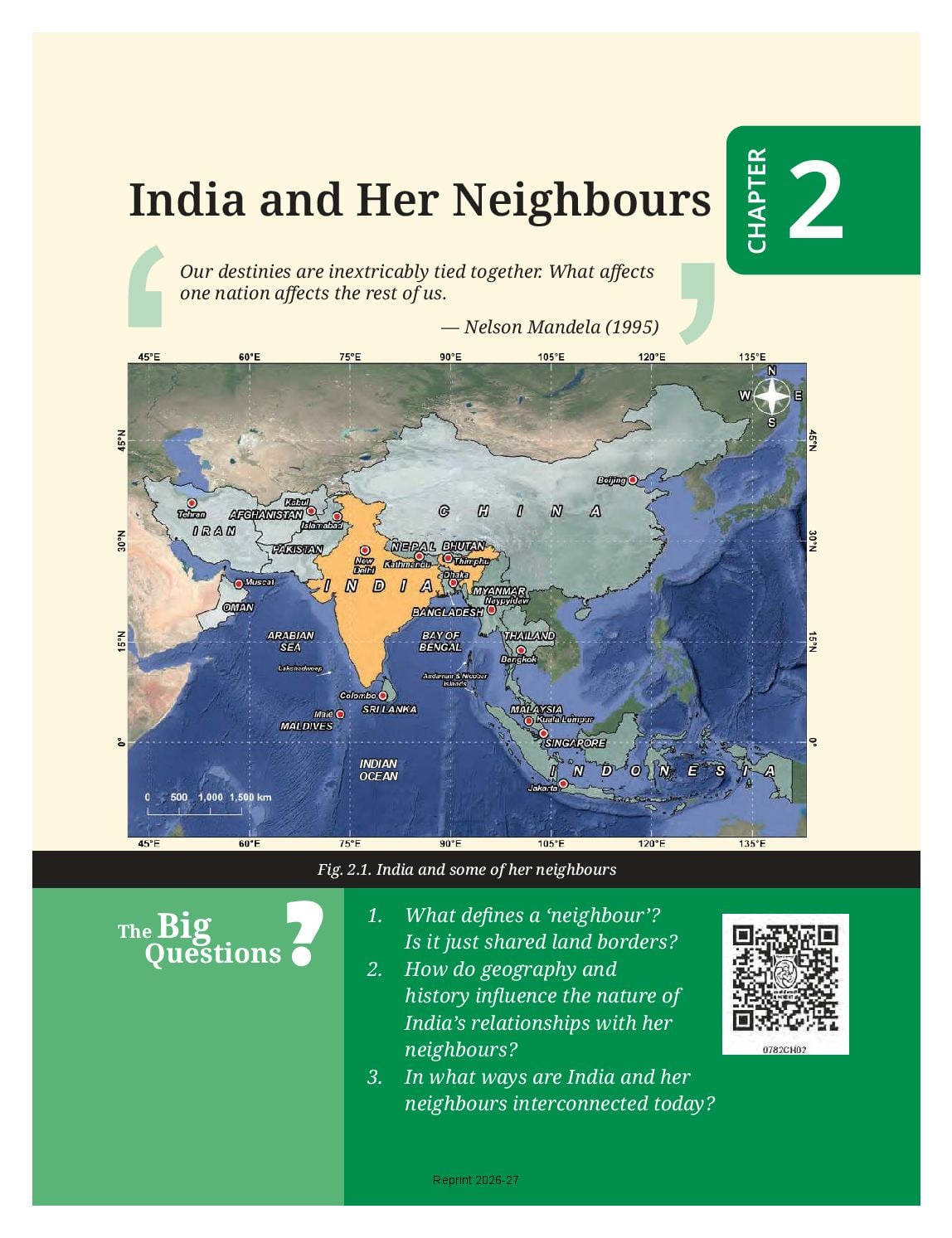
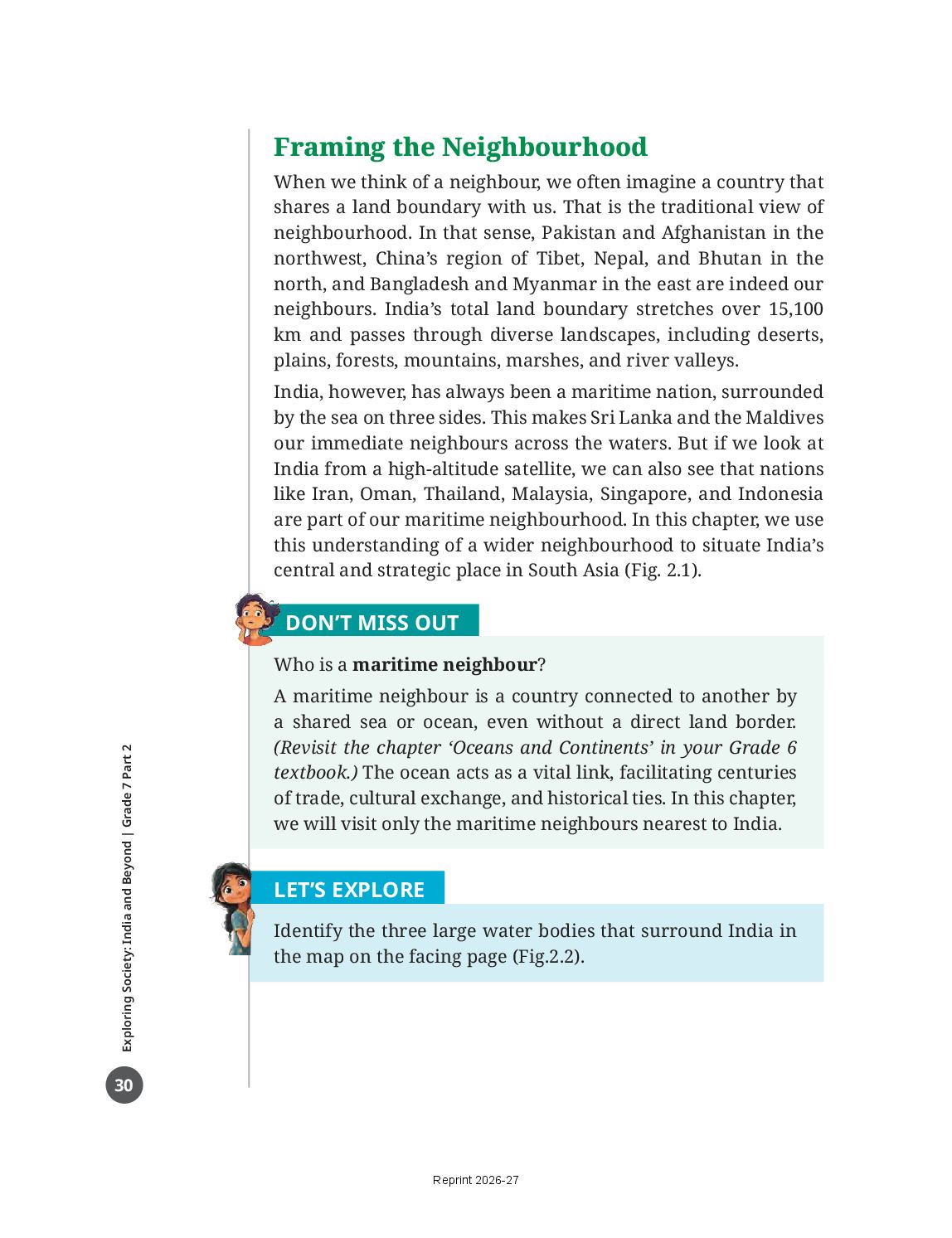
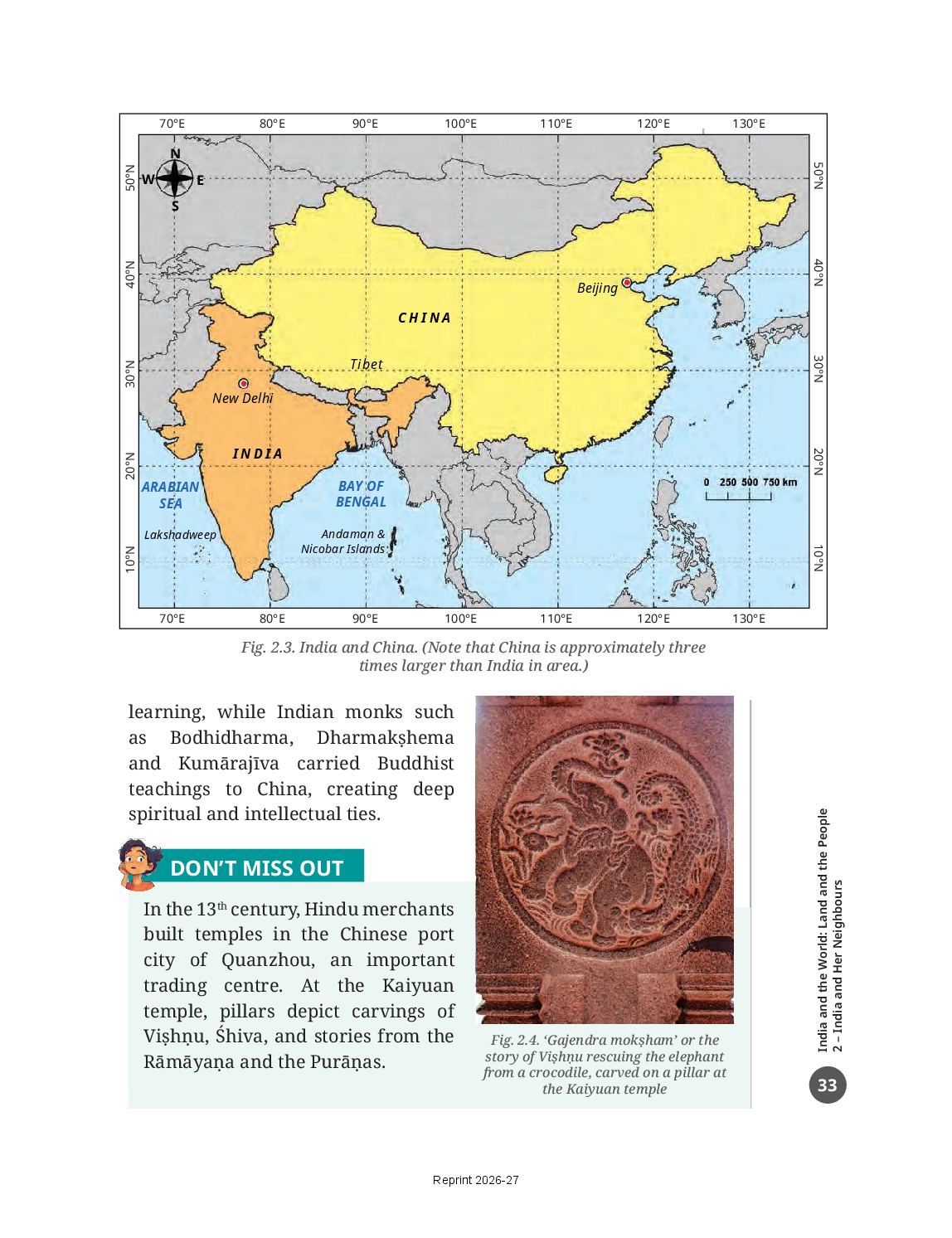
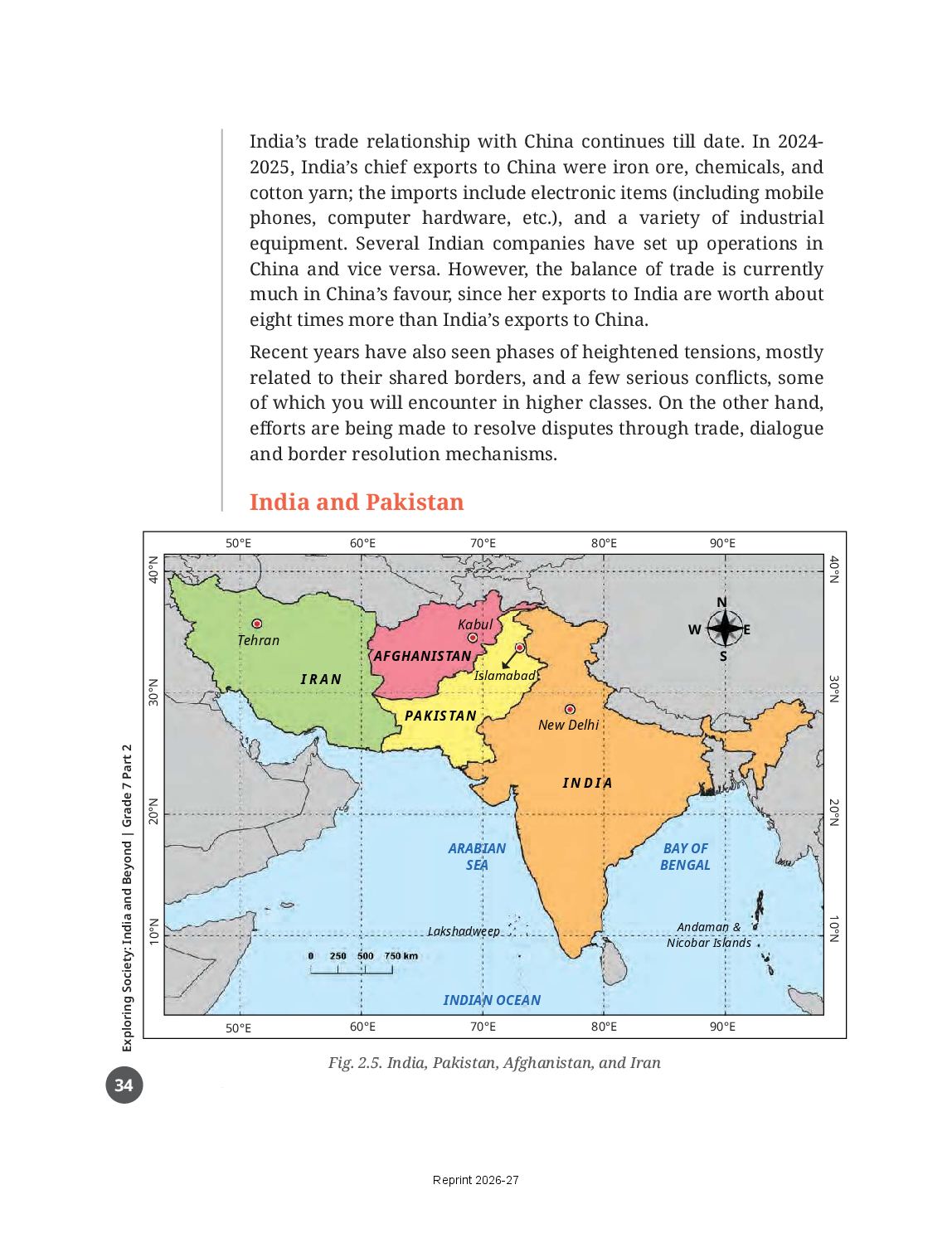
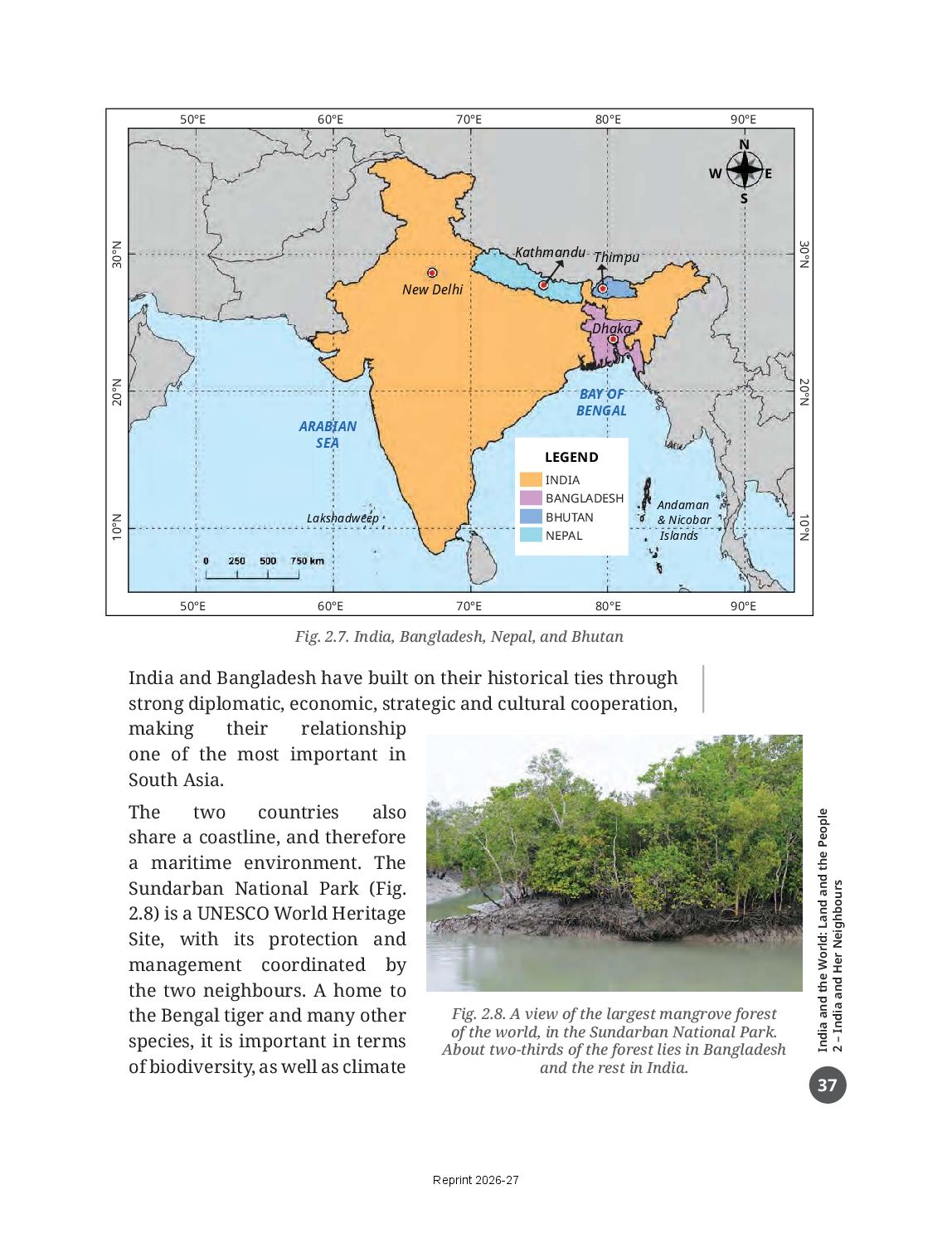
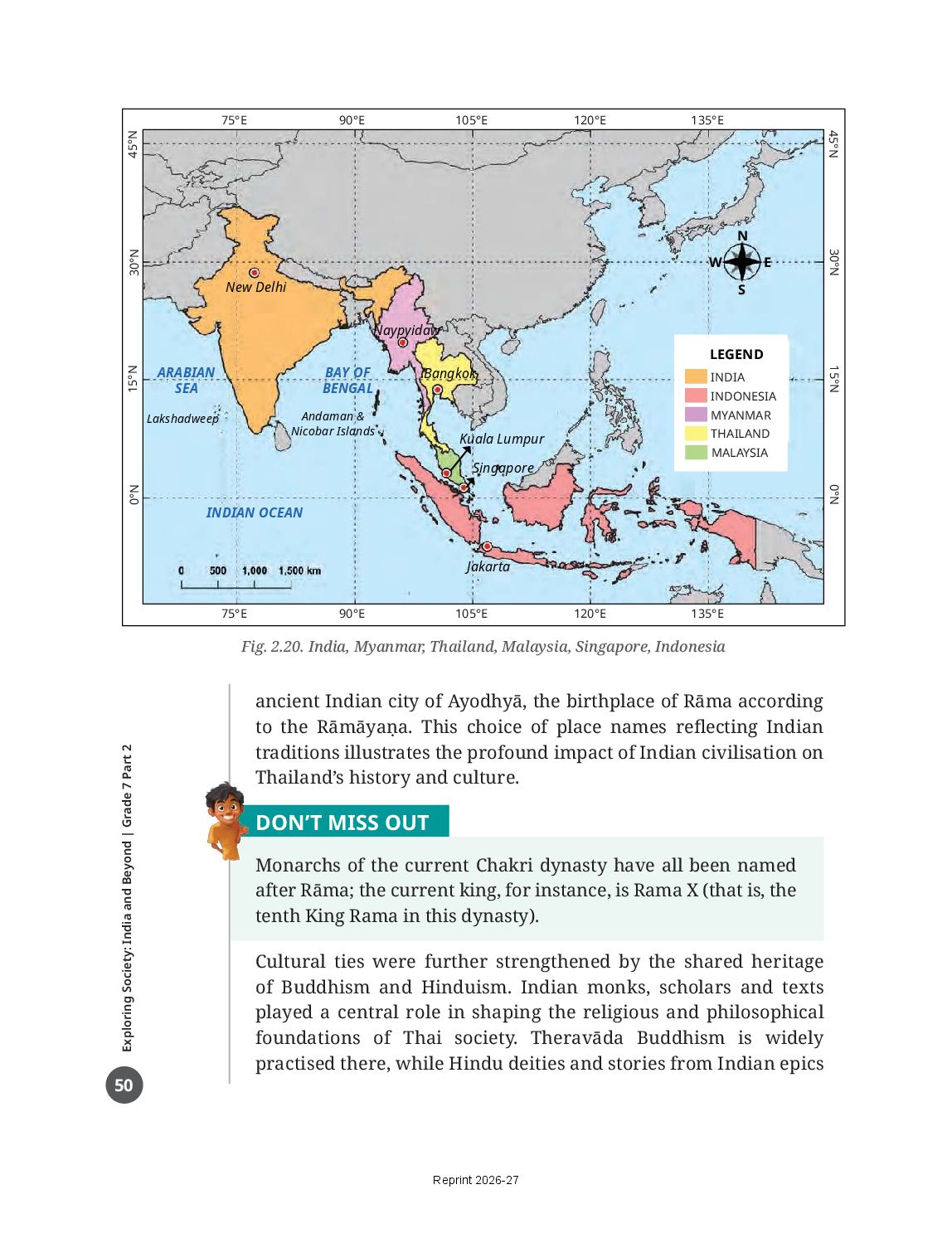
- A ‘neighbour’ is more than a country across a land border. By land, India’s neighbours are Pakistan and Afghanistan in the northwest, China’s region of Tibet, Nepal and Bhutan in the north, and Bangladesh and Myanmar in the east. India’s land boundary stretches over 15,100 km through deserts, plains, forests, mountains, marshes and river valleys. But India has always been a maritime nation, sea on three sides — so Sri Lanka and the Maldives are immediate neighbours across the water, and Iran, Oman, Thailand, Malaysia, Singapore and Indonesia belong to a wider maritime neighbourhood.
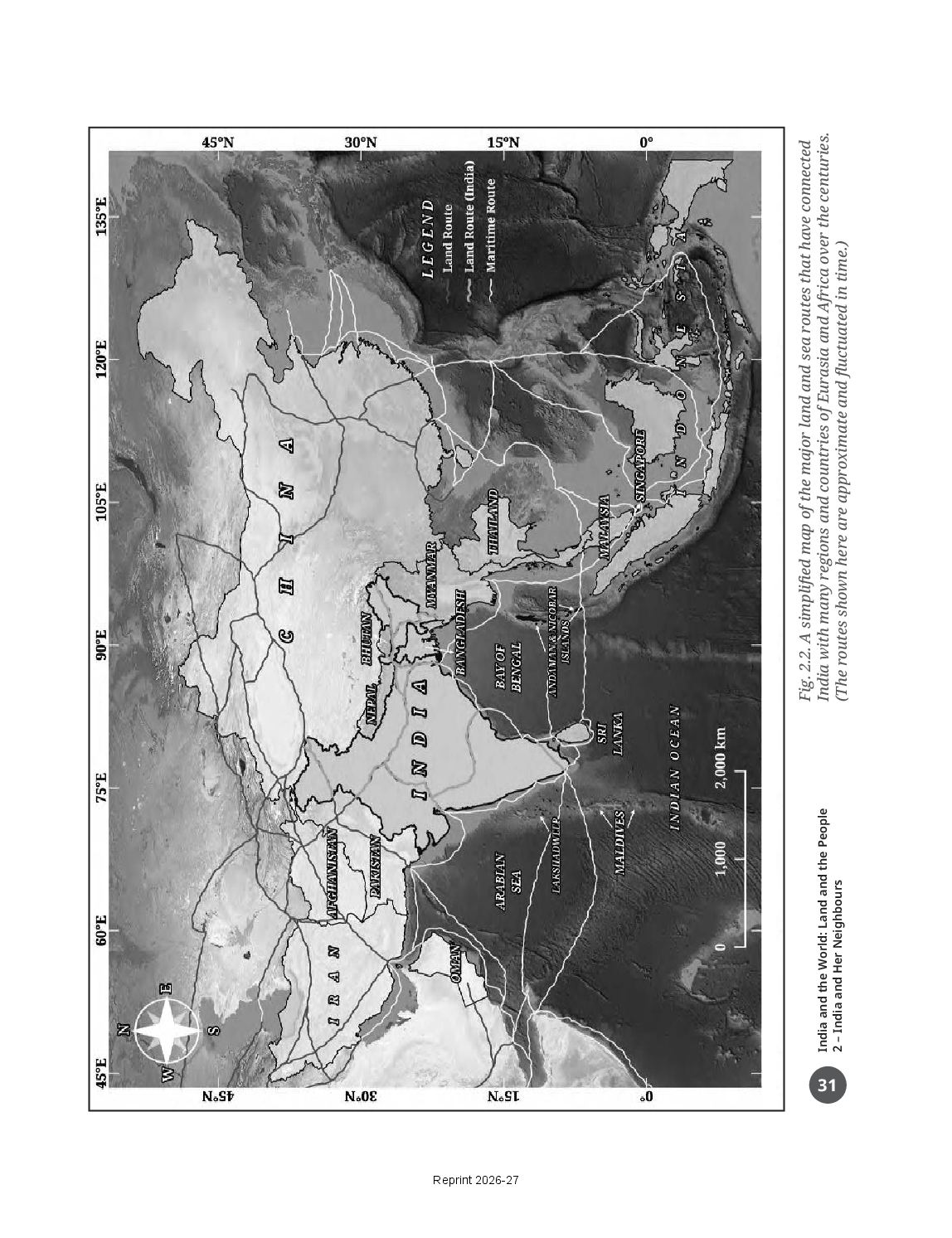
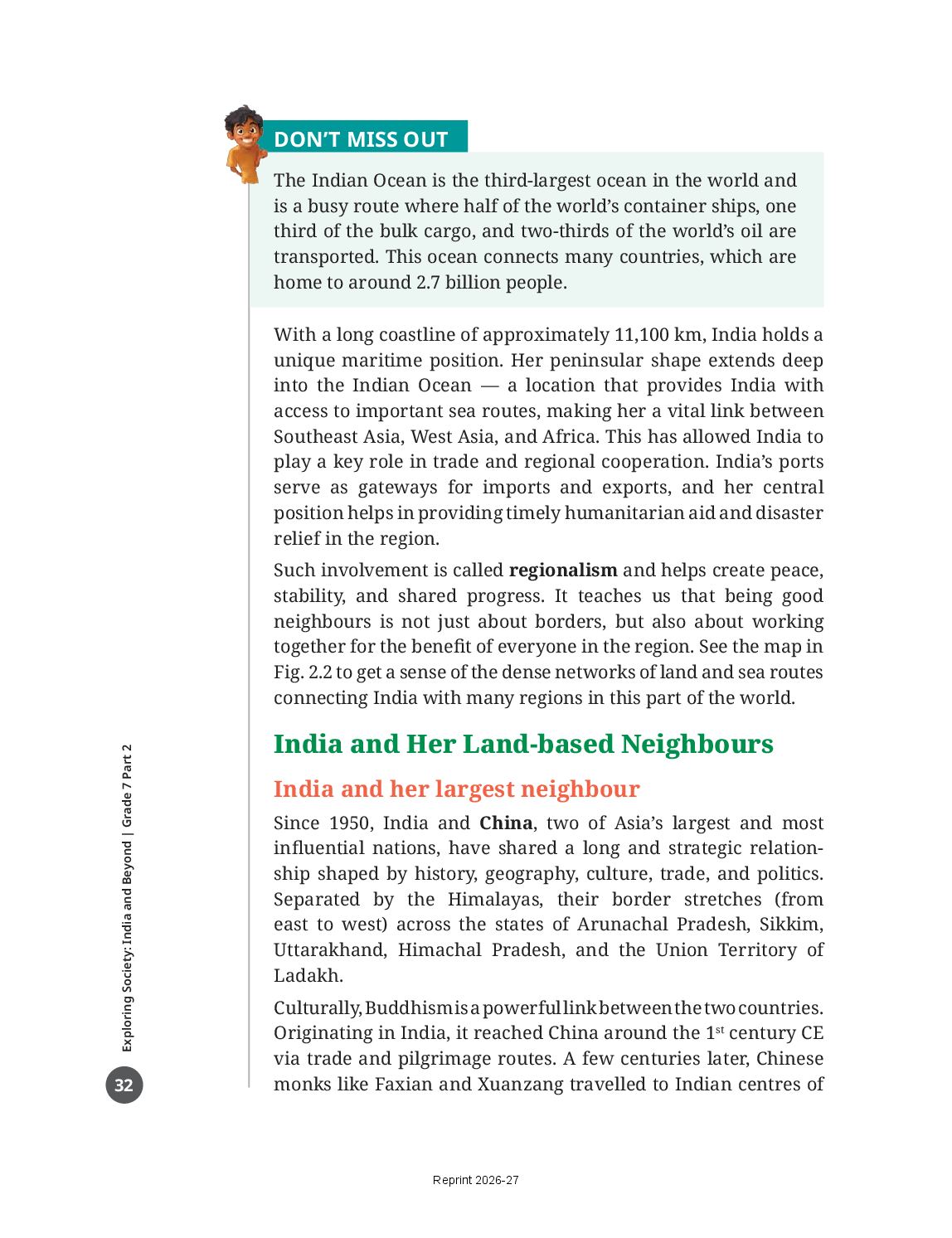
- The sea is India’s oldest highway. With a coastline of about 11,100 km and a peninsula reaching deep into the Indian Ocean, India sits on the routes linking Southeast Asia, West Asia and Africa. The Indian Ocean is the third-largest ocean in the world; half the world’s container ships, one-third of the bulk cargo and two-thirds of the world’s oil move across it, and the countries it connects are home to about 2.7 billion people. Working together in this region is called regionalism.
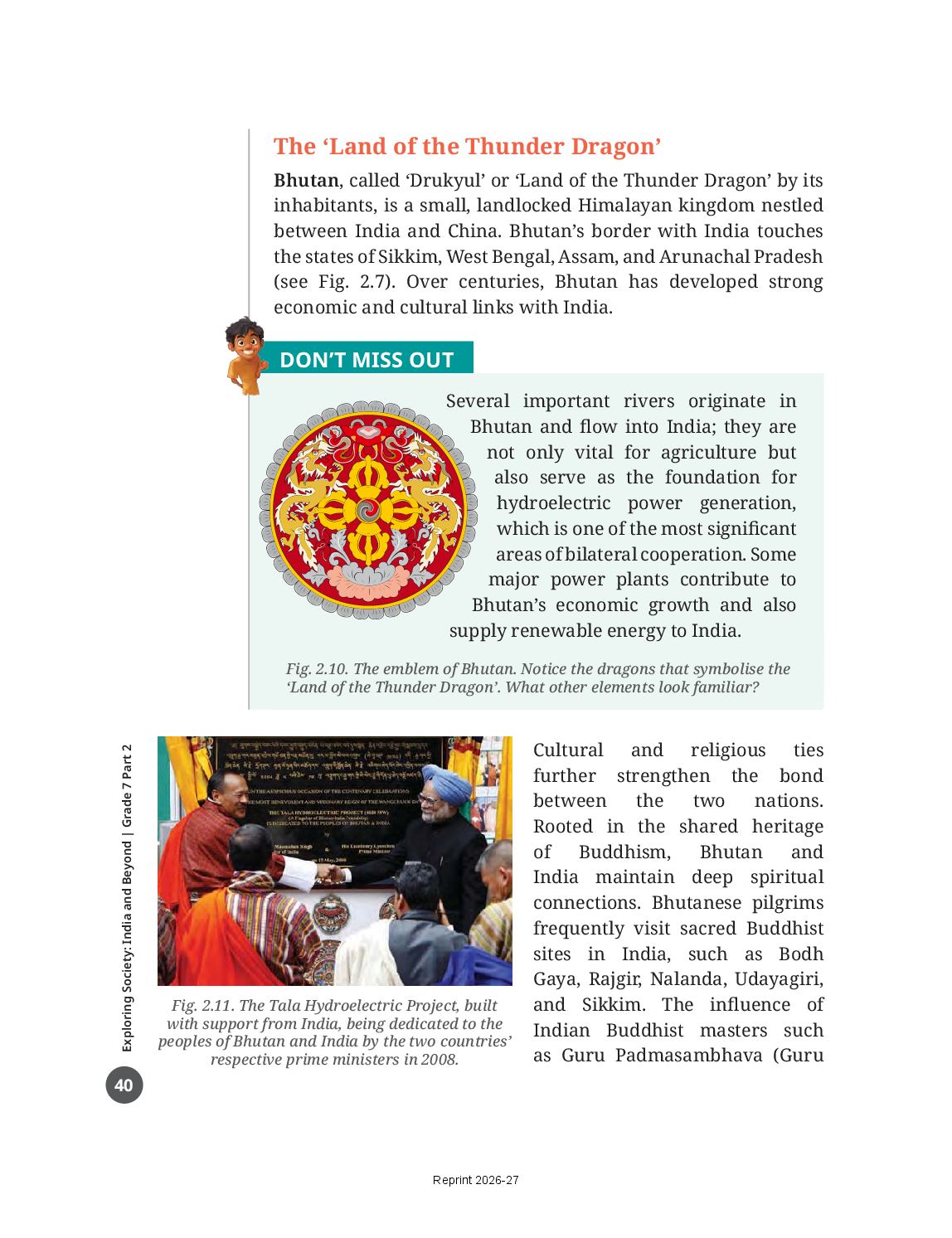
- Buddhism is the single strongest cultural thread. Born in India, it reached China around the 1st century CE, Sri Lanka in the 3rd century BCE through Mahendra and Sanghamitrā, the children of Aśhoka, and Bhutan in the 8th century CE through Guru Padmasambhava. Its three schools — Theravāda (3rd century BCE), Mahāyāna (1st century BCE) and Vajrayāna (6th century CE) — spread to Sri Lanka, Thailand, Myanmar, China, Japan, Korea and Tibet, and are still followed in India’s Himalayan states.
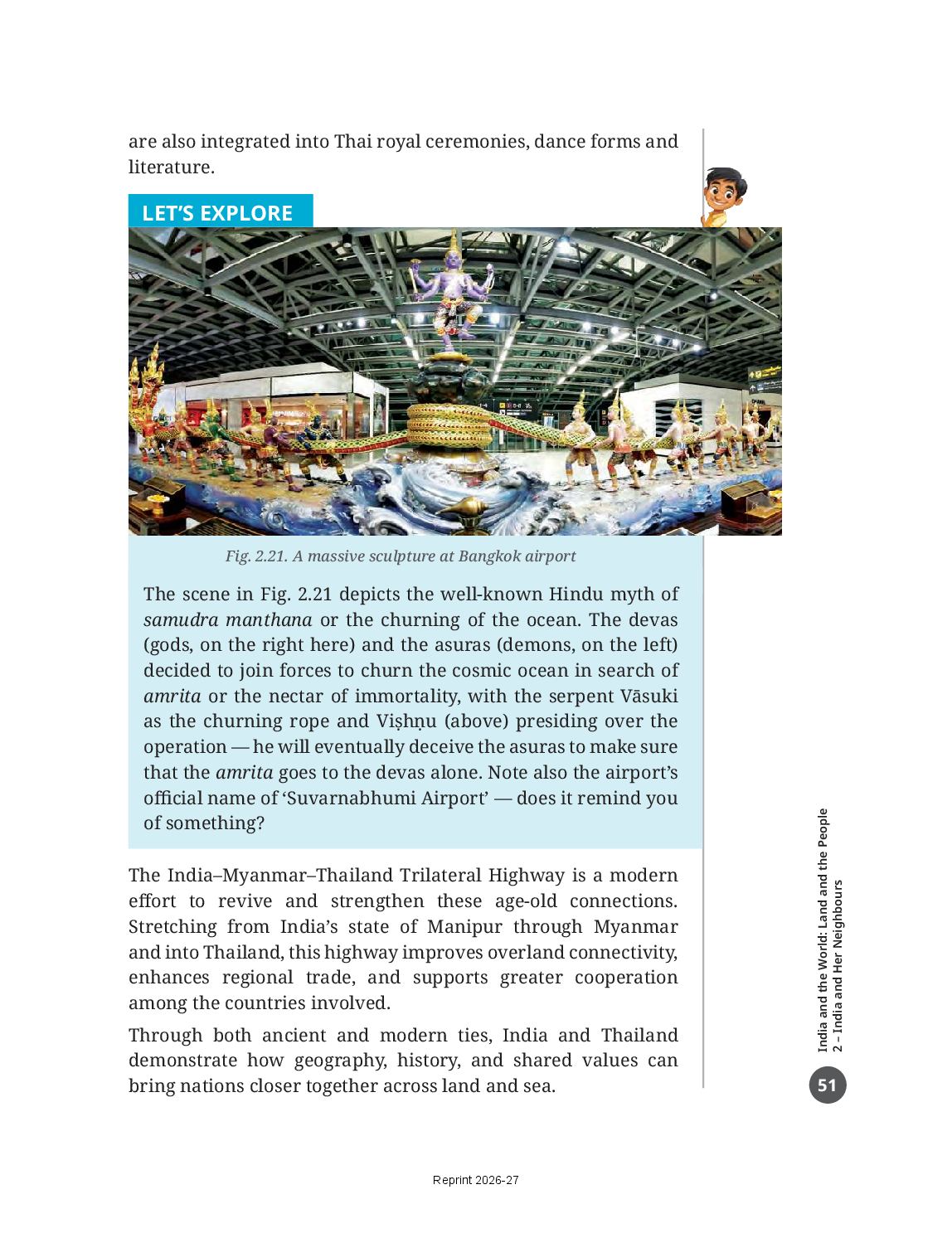
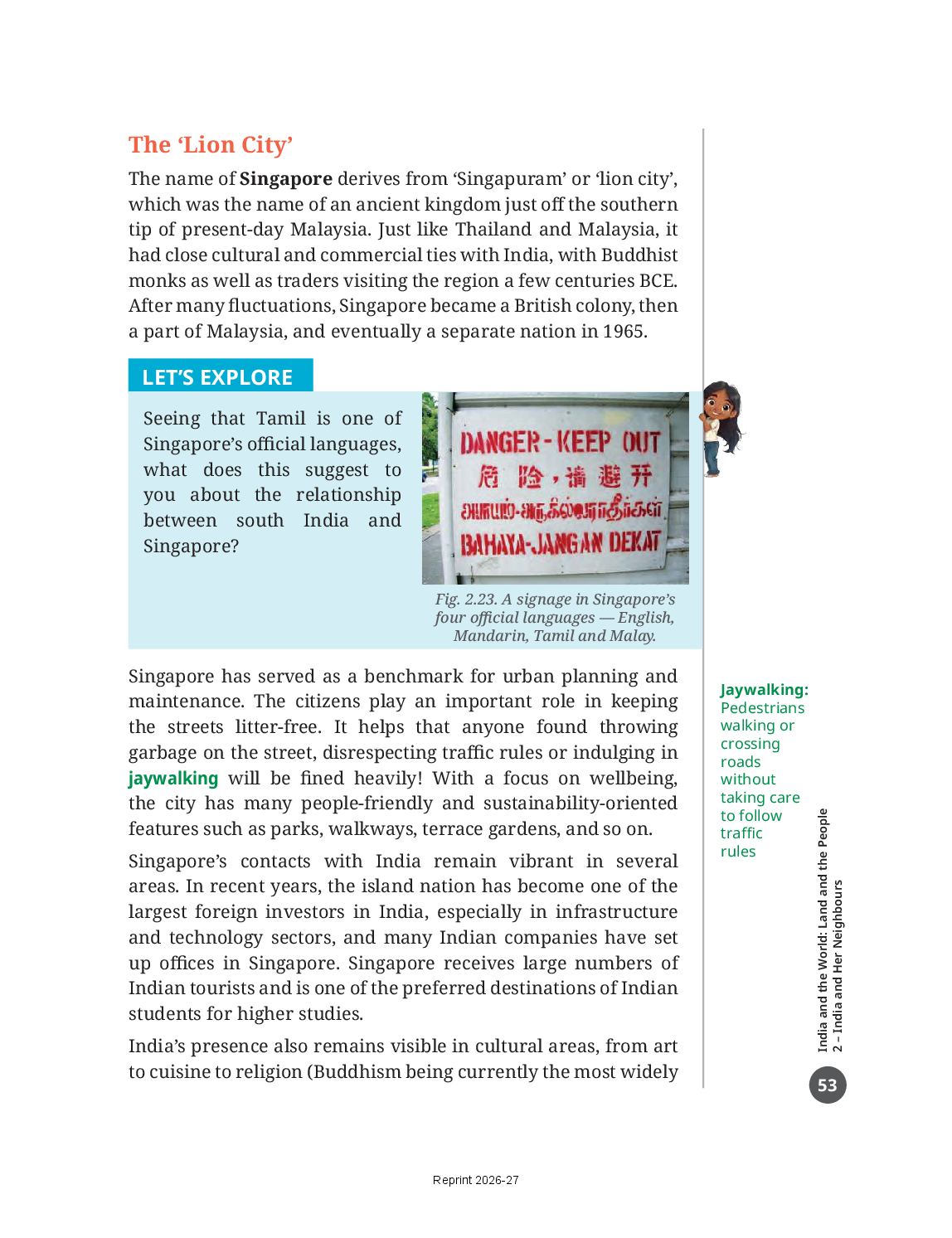
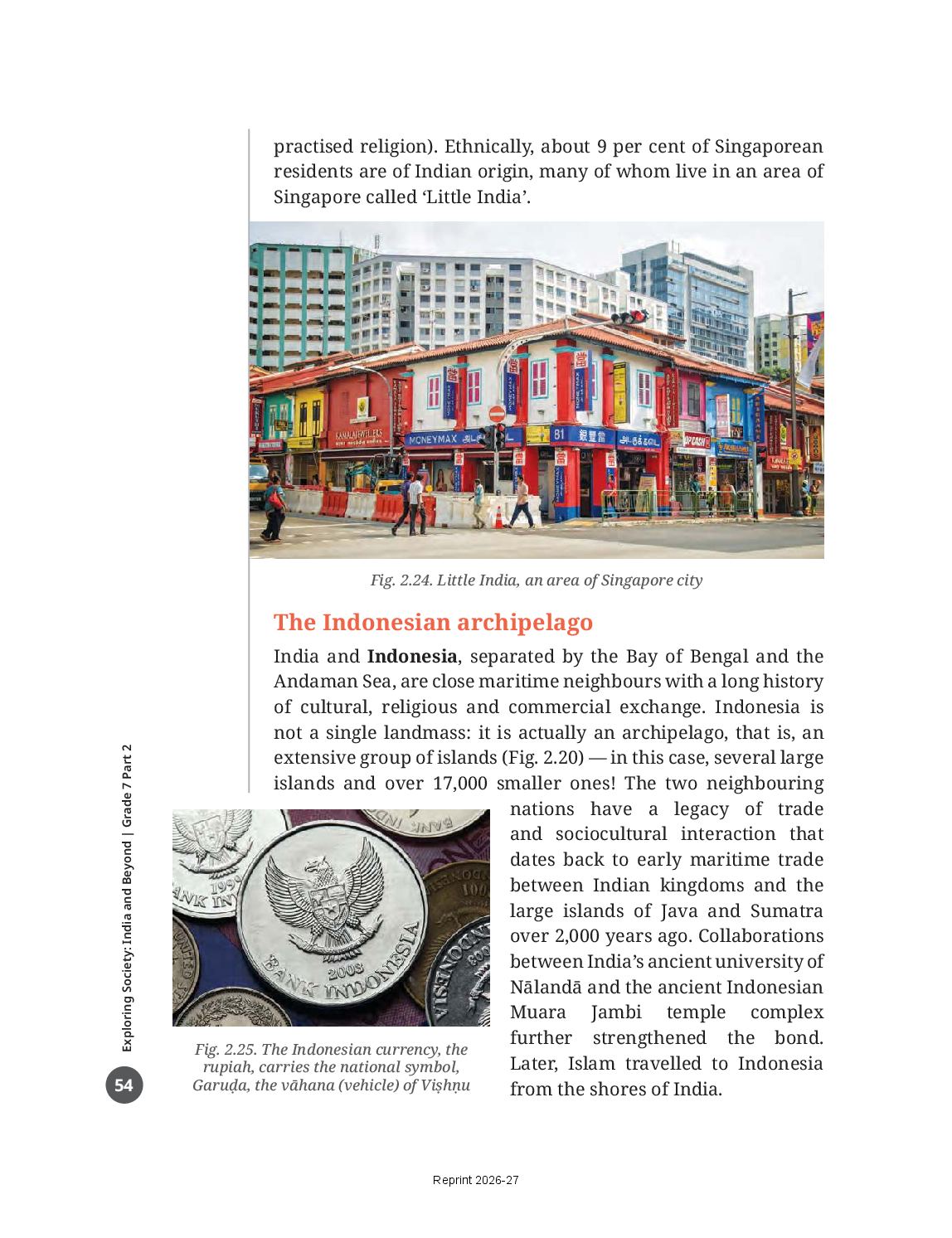
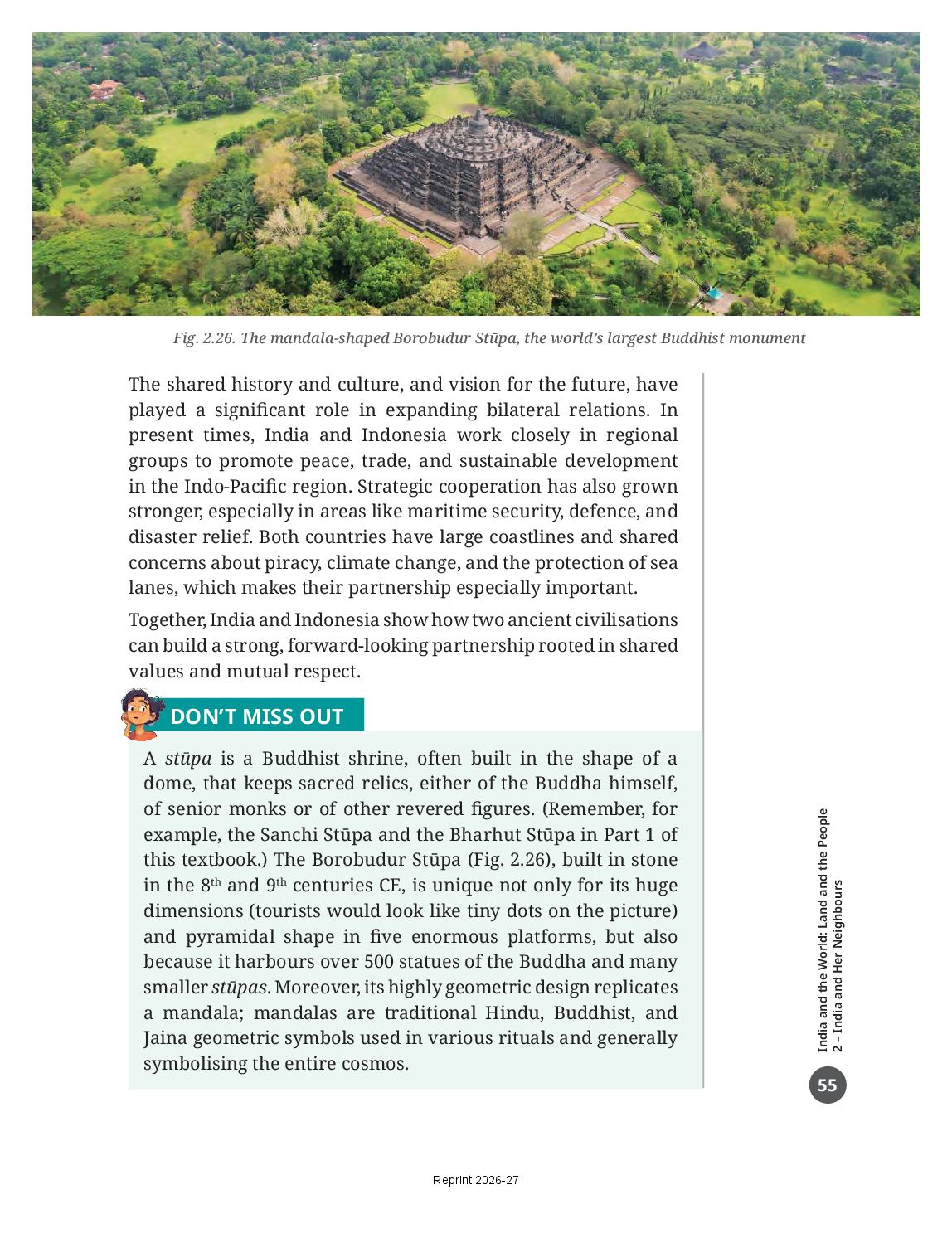
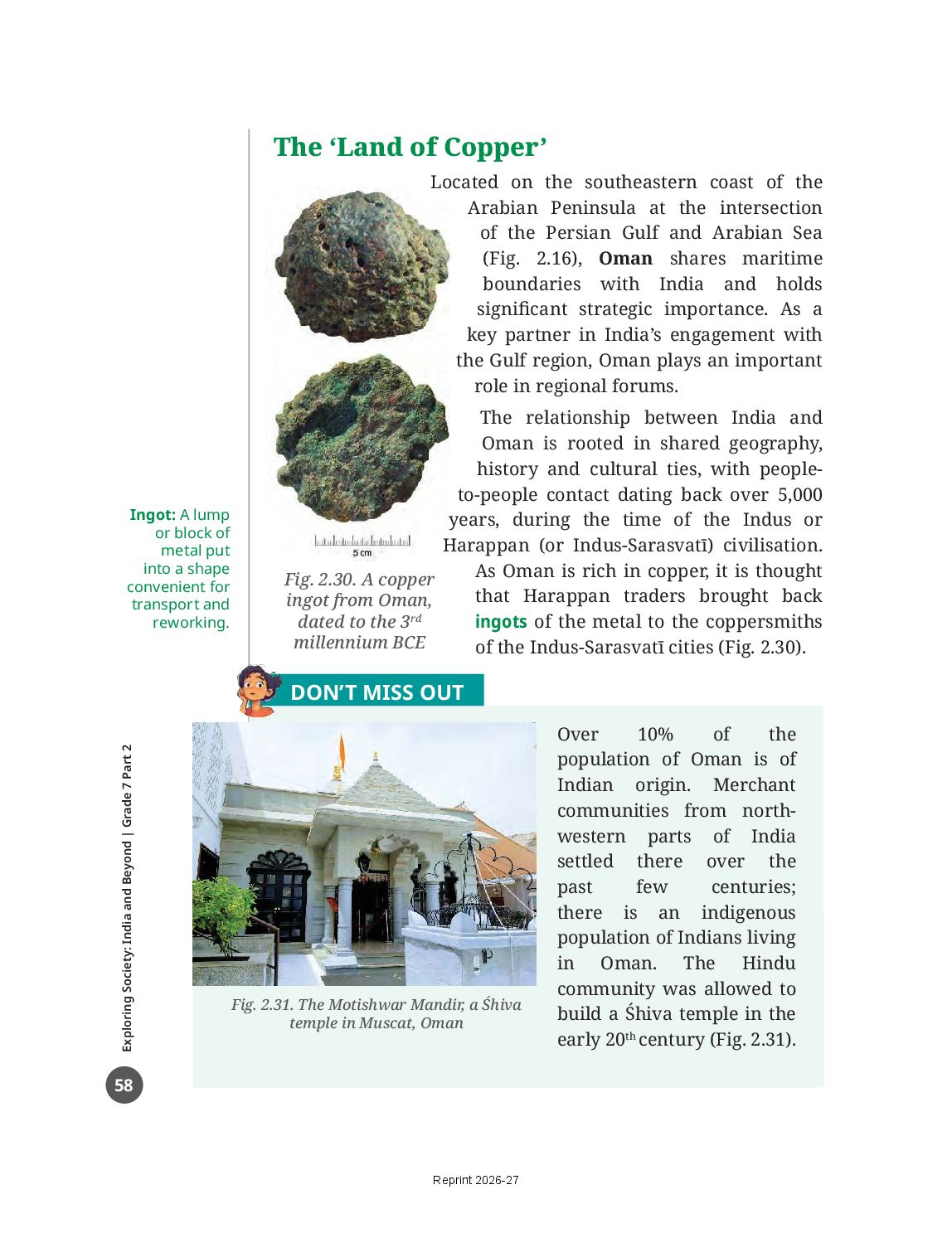
- Ancient names still sit on modern maps. Thailand’s Dvāravatī culture (6th–11th centuries CE) took its name from Dvārakā; the Ayutthayā kingdom, founded in 1351, was named after Ayodhyā; Bangkok’s airport is called Suvarnabhumi, the ‘golden land’ Indian traders sought in Java, Sumatra and Malaya. Singapore comes from ‘Singapuram’, the lion city; Indonesia’s currency carries Garuḍa; and the Borobudur Stūpa is shaped like a mandala.
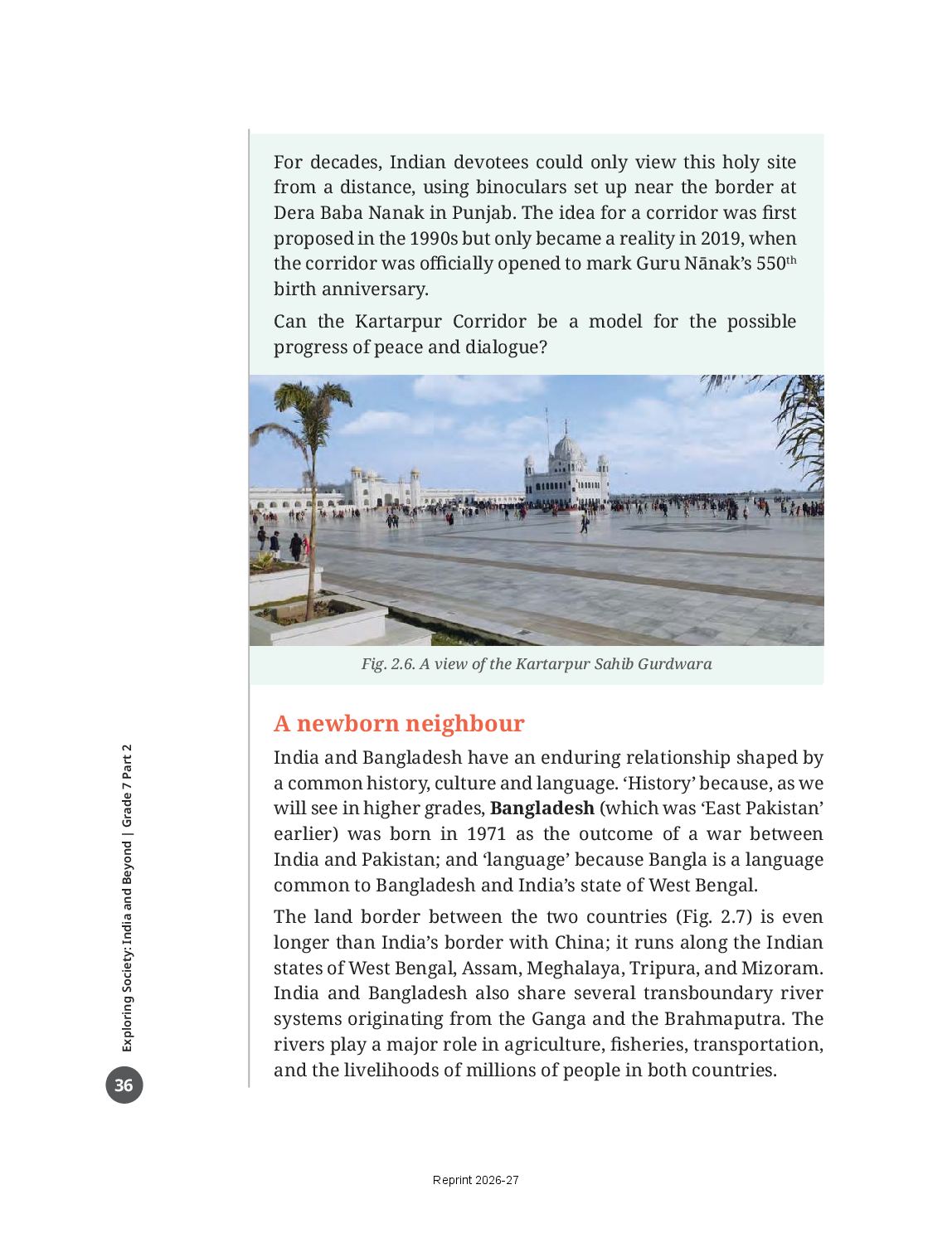
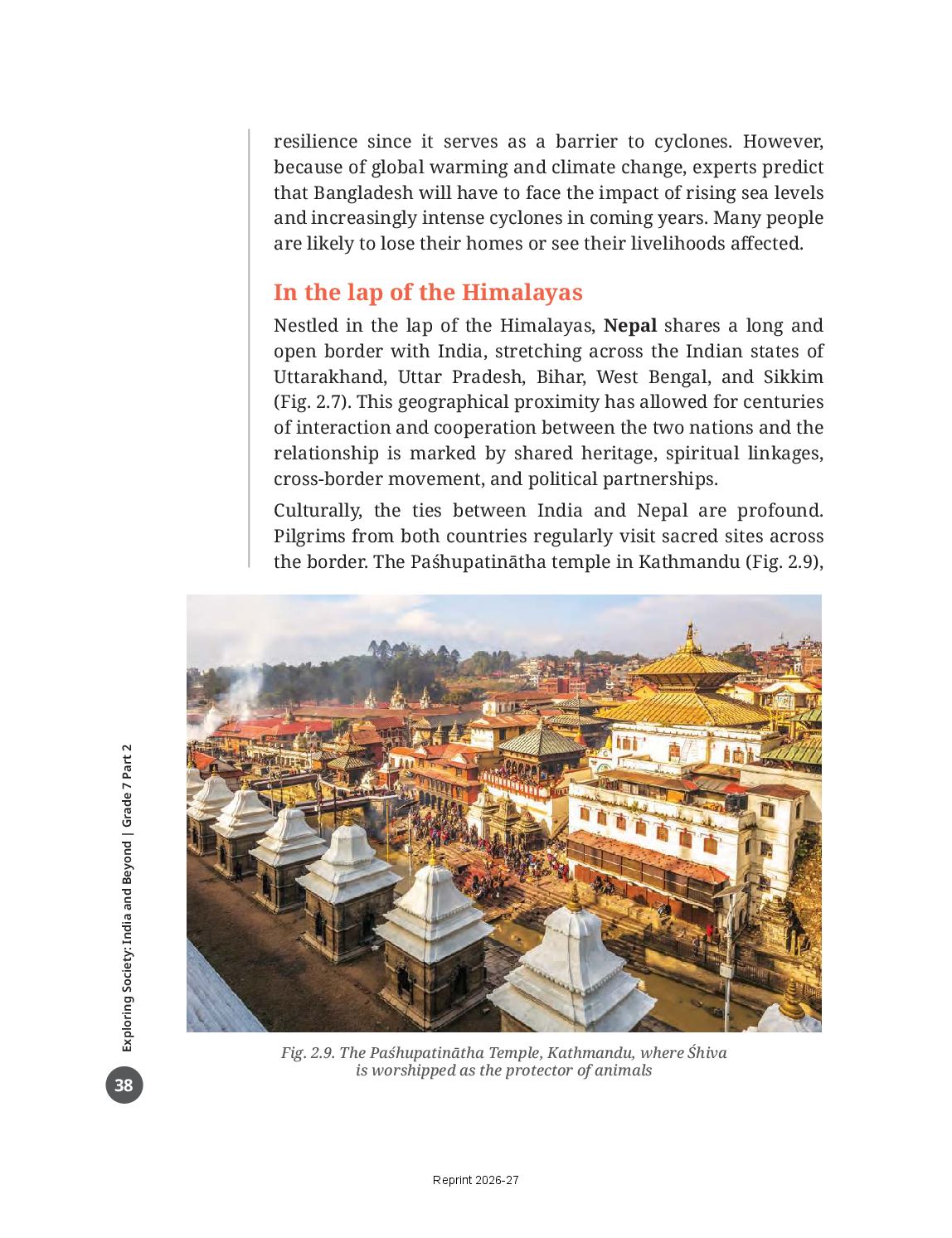
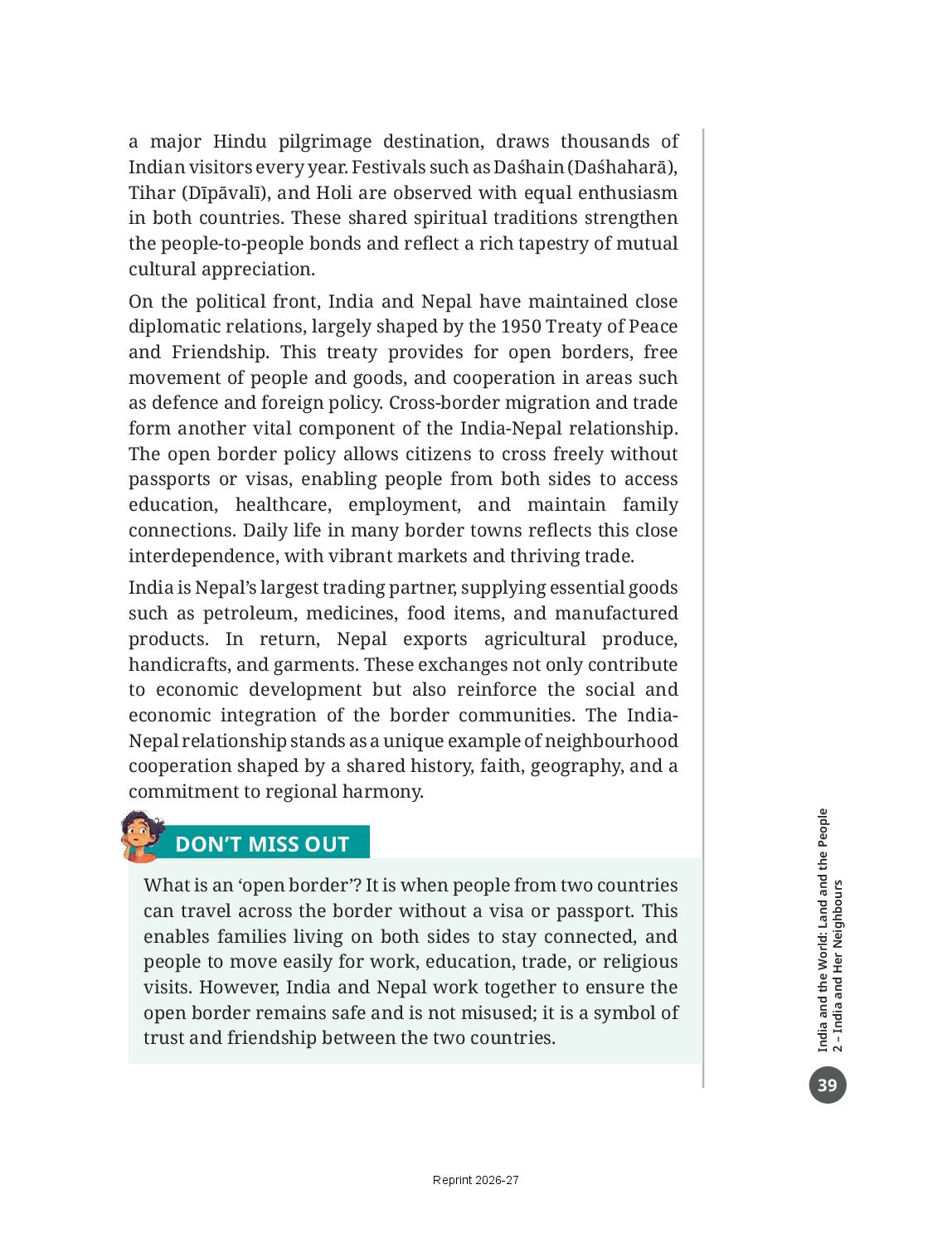
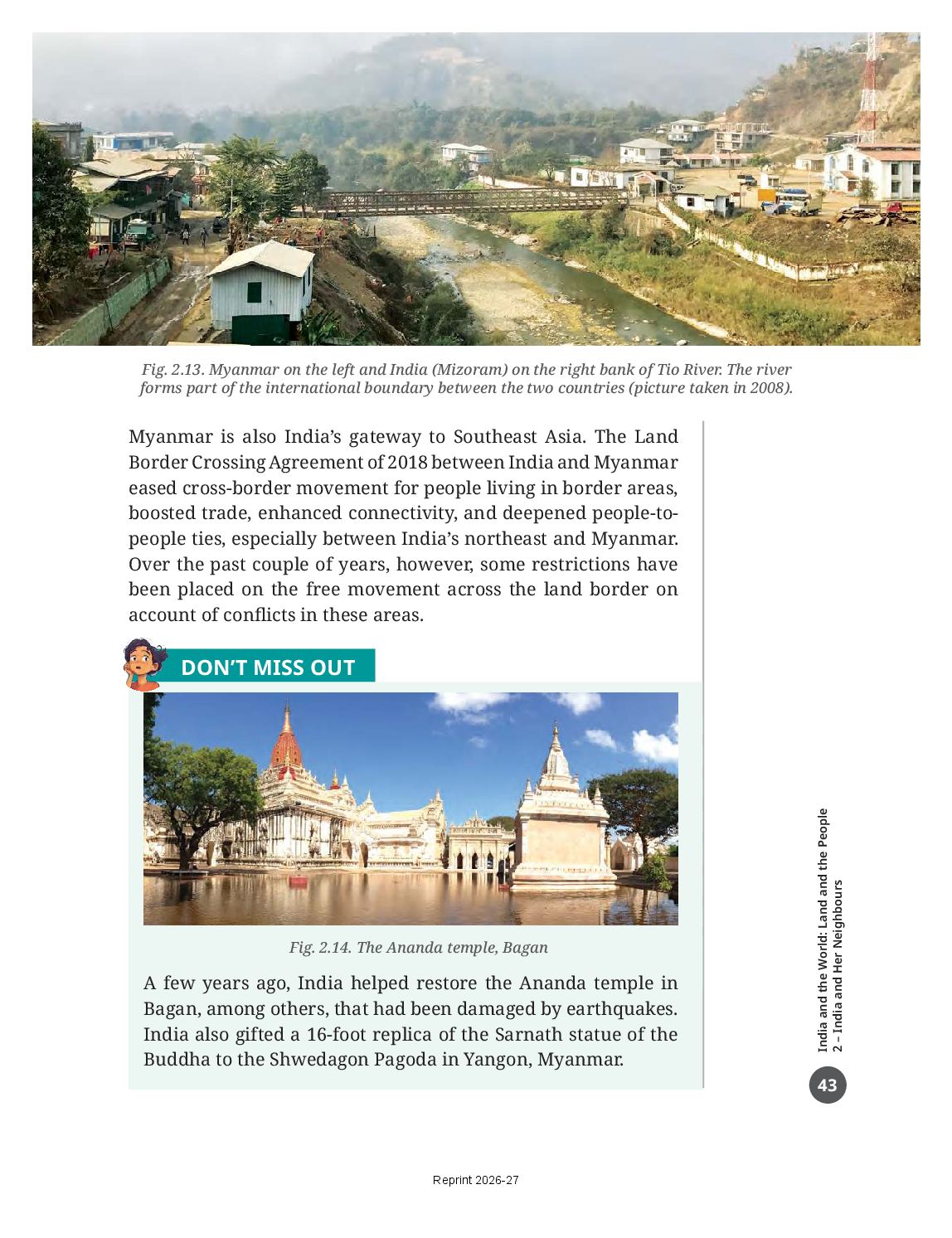
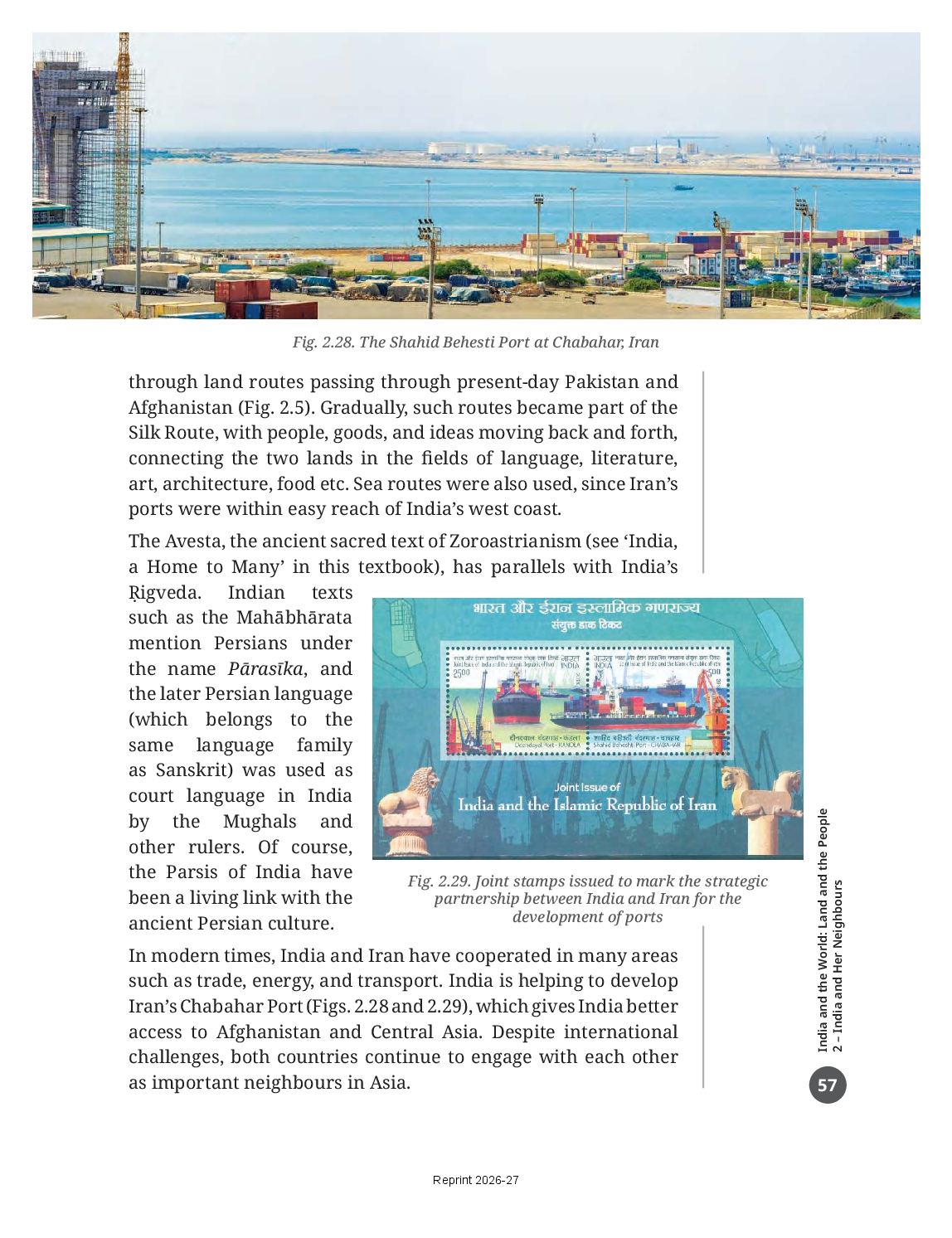
- Modern ties are built on trade, treaties and connectivity. The 1950 Treaty of Peace and Friendship gives India and Nepal an open border; the Kartarpur Corridor (opened 2019) lets Indian pilgrims cross to Pakistan on a permit rather than a visa; the Land Border Crossing Agreement of 2018 eased movement with Myanmar; the India–Myanmar–Thailand Trilateral Highway runs from Manipur; India is helping develop Iran’s Chabahar Port; and SAARC, formed in 1985, brings eight countries of the region together.
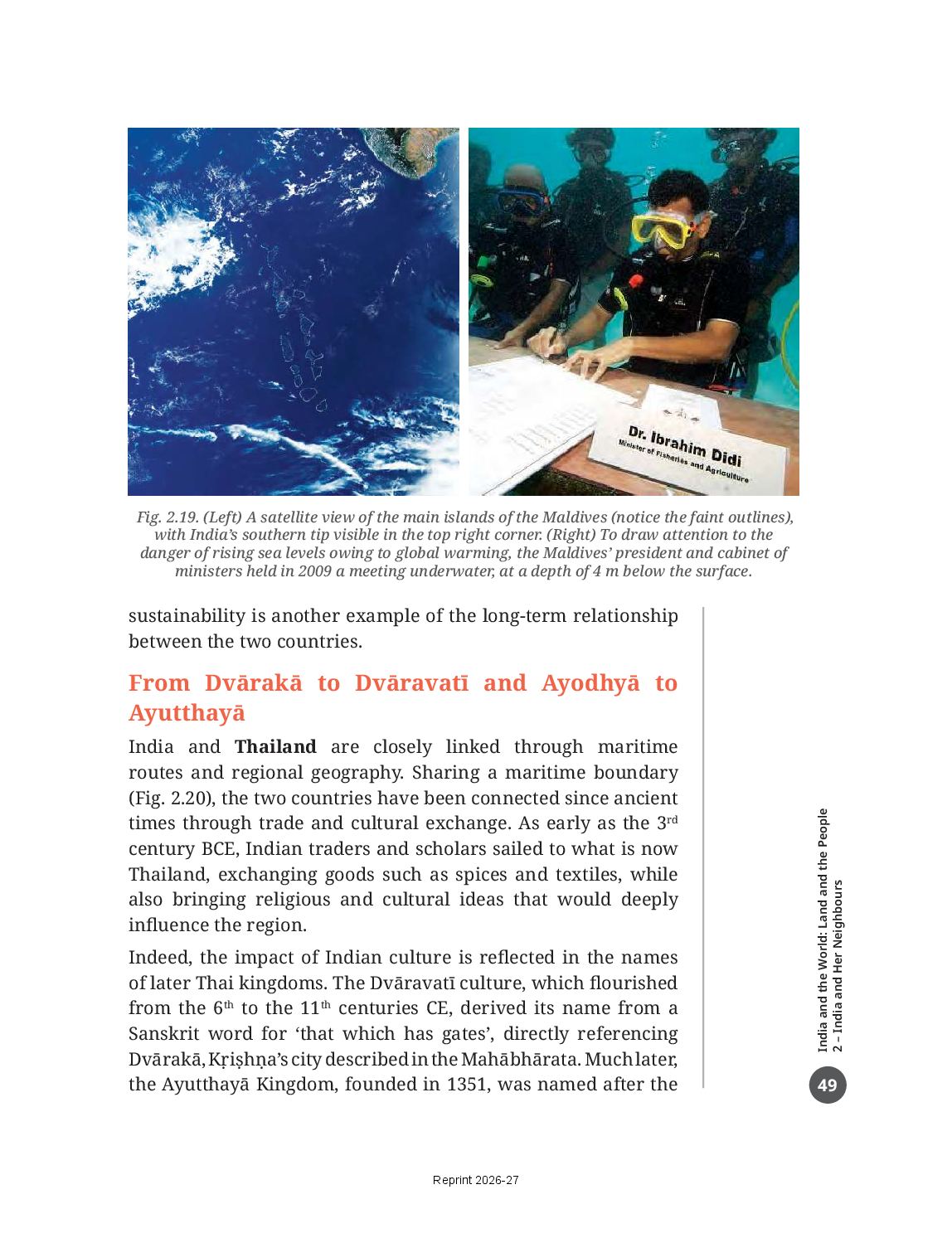
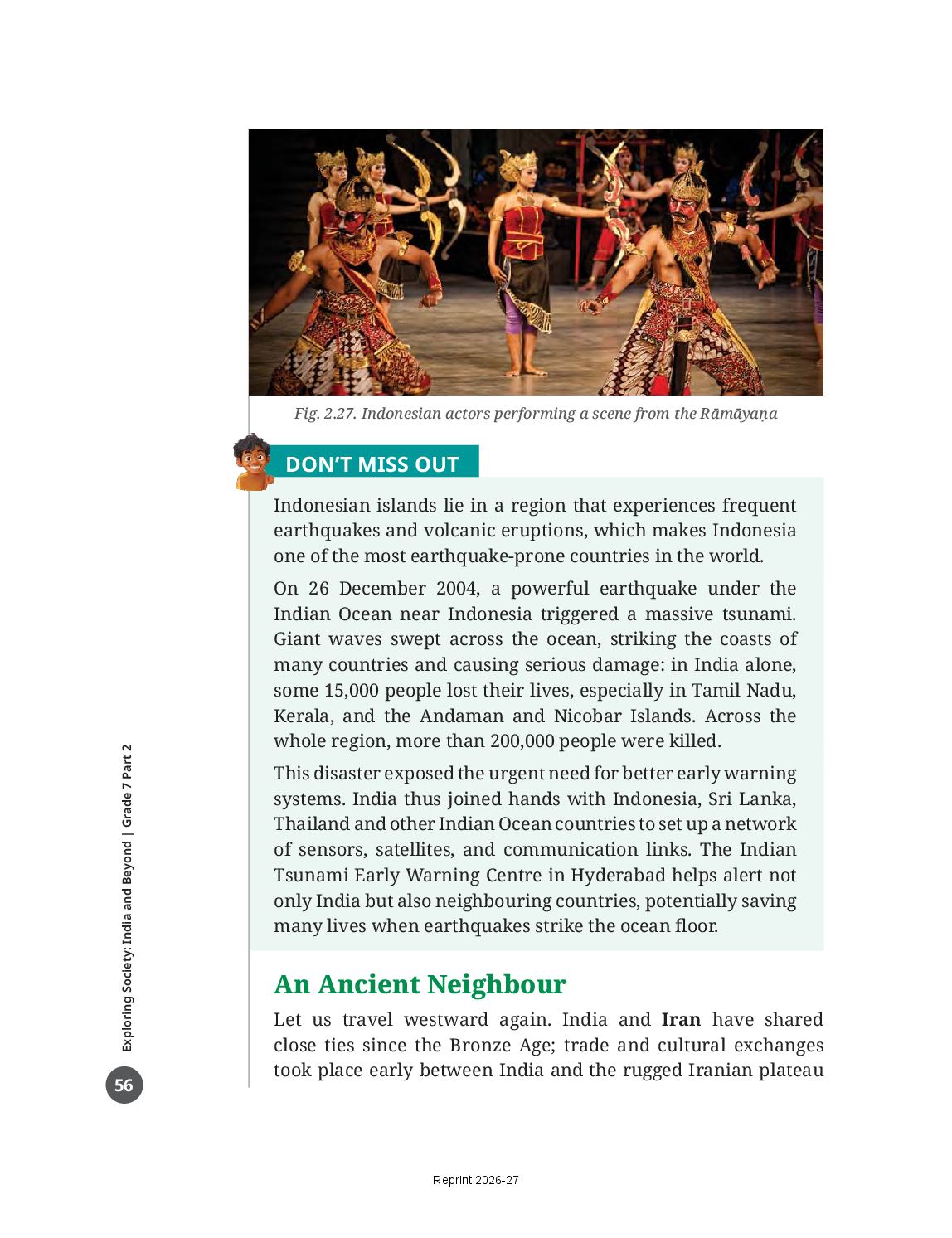
- Shared dangers pull neighbours together. Rising seas threaten Bangladesh and could submerge parts of the Maldives — a rise that could reach 1 metre by the end of the century. The tsunami of 26 December 2004 killed some 15,000 people in India and more than 200,000 across the region; India then joined Indonesia, Sri Lanka, Thailand and others to build a warning network, and the Indian Tsunami Early Warning Centre in Hyderabad now alerts neighbouring countries too. India’s quick help in the 2004 tsunami, the 2014 Malé water crisis and COVID-19 made her the region’s trusted first responder.
Quick revision – India and Her Neighbours
| Term | What it means | Where it appears in the chapter | Worth remembering |
|---|---|---|---|
| Maritime neighbour | A country connected to another by a shared sea or ocean, even without a direct land border | DON’T MISS OUT, page 30 | For India: Sri Lanka, the Maldives, and further out Iran, Oman, Thailand, Malaysia, Singapore, Indonesia |
| Regionalism | Countries of a region working together for peace, stability and shared progress — trade, cooperation, humanitarian aid and disaster relief | Page 32 | “Being good neighbours is not just about borders” — it is about working together |
| Indian Ocean | The world’s third-largest ocean, and a very busy shipping route | DON’T MISS OUT, page 32 | Half the world’s container ships, one-third of bulk cargo, two-thirds of the world’s oil; about 2.7 billion people around it |
| Open border | A border people from two countries can cross without a visa or passport | DON’T MISS OUT, page 39 | India–Nepal, under the 1950 Treaty of Peace and Friendship. Both countries work together to keep it safe and not misused |
| Kartarpur Corridor | A visa-free border crossing (a permit is needed, not a visa) letting Indian pilgrims visit Gurdwara Darbar Sahib, Kartarpur, in Pakistan | DON’T MISS OUT, pages 35–36 | Proposed in the 1990s, opened in 2019 for Guru Nānak’s 550th birth anniversary |
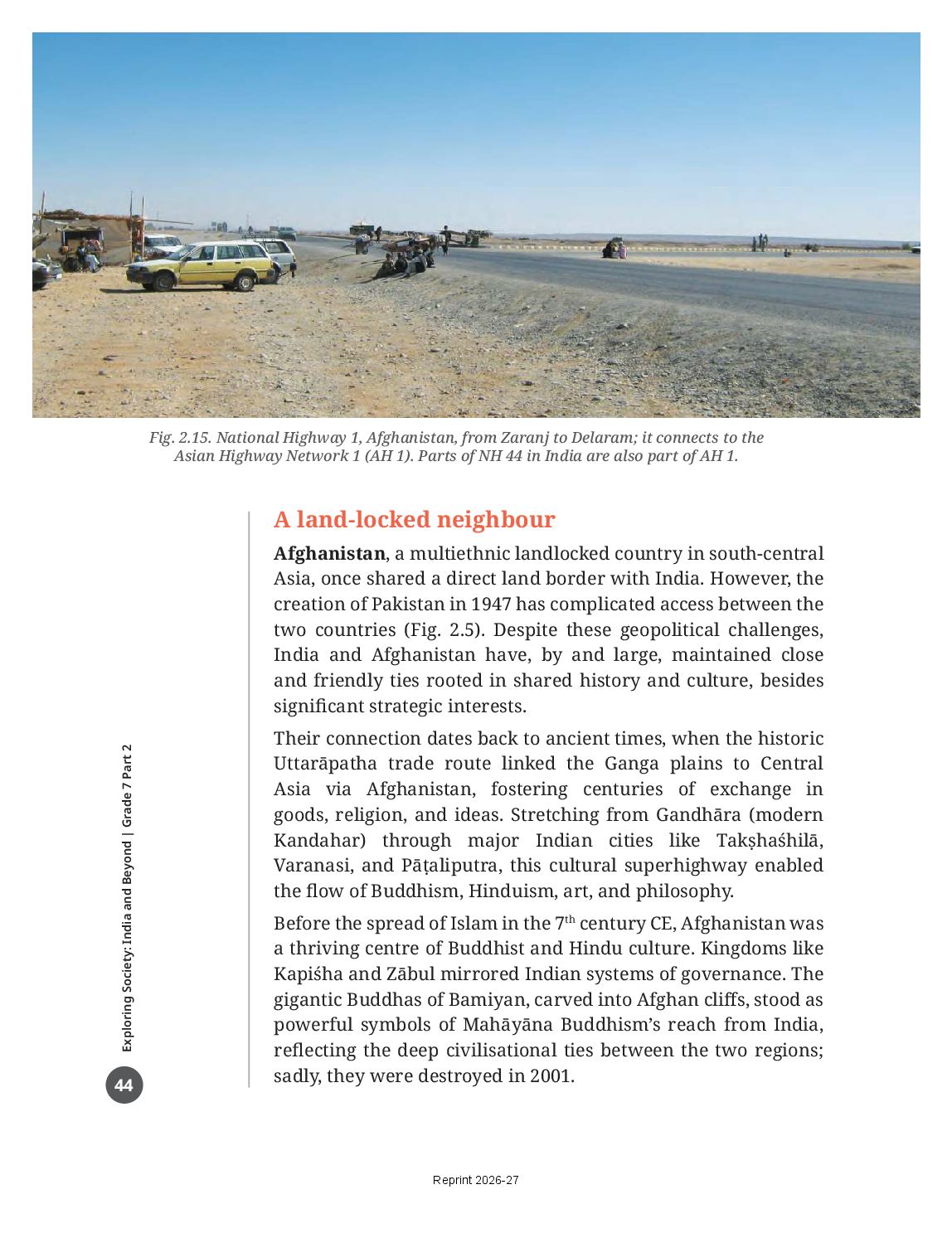
| Uttarāpatha | The ancient trade route linking the Ganga plains to Central Asia through Afghanistan | Page 44 | Ran from Gandhāra through Takṣhaśhilā, Varanasi and Pāṭaliputra — a ‘cultural superhighway’ |
| SAARC | South Asian Association for Regional Cooperation, formed in 1985 to promote mutual interests and sociocultural and economic progress | DON’T MISS OUT, page 45 | Members: Afghanistan, Bangladesh, Bhutan, India, the Maldives, Nepal, Pakistan, Sri Lanka. Political tensions among some members have often disrupted its functioning |
| Theravāda | ‘School of the Elders’, around the 3rd century BCE; considered closest to the Buddha’s original teachings | DON’T MISS OUT, page 41 | Followers mainly in Sri Lanka and Southeast Asia, especially Thailand and Myanmar |
| Mahāyāna | ‘Great Vehicle’, around the 1st century BCE; held that the Buddha had a divine nature and could guide people in many forms | DON’T MISS OUT, page 41 | Travelled to China, Japan, Korea; Zen grew out of it. The Bamiyan Buddhas of Afghanistan were its symbols |
| Vajrayāna | ‘Diamond Vehicle’ or ‘Tantric Buddhism’, around the 6th century CE, an extension of Mahāyāna using mantras, mandalas and visualisations | DON’T MISS OUT, page 41 | Tibetan Buddhism derived from it around the 7th century CE; Guru Padmasambhava took it to Bhutan in the 8th century CE |
| Palk Strait | The narrow stretch of sea dividing India and Sri Lanka | Page 45 | At its nearest point the two countries are only about 32 km apart |
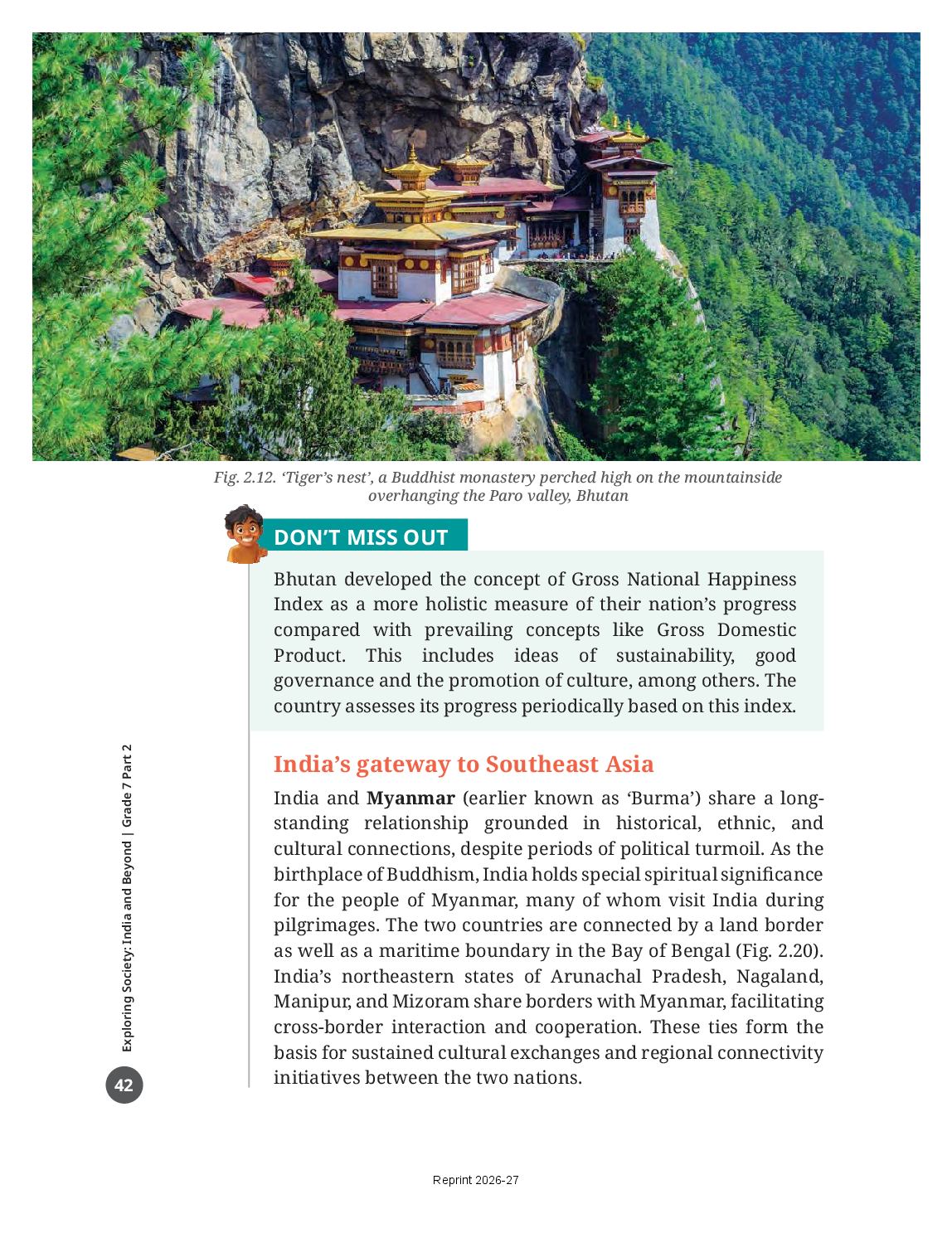
| Gross National Happiness Index | Bhutan’s holistic measure of national progress, compared with Gross Domestic Product | DON’T MISS OUT, page 42 | Includes sustainability, good governance and promotion of culture; assessed periodically |
| Archipelago | An extensive group of islands | Page 54 | Indonesia — several large islands and over 17,000 smaller ones |
| Stūpa | A Buddhist shrine, often dome-shaped, that keeps sacred relics of the Buddha, senior monks or other revered figures | DON’T MISS OUT, page 55 | The Borobudur Stūpa (8th–9th centuries CE), five platforms, over 500 Buddha statues, designed as a mandala |
Old NCERT vs New – Class 7 Social Science
This chapter is from Exploring Society: India and Beyond, the new NCERT Class 7 Social Science book (NCF-SE 2023, used from 2025-26). It replaced the old book “Our Pasts, Our Environment and Social and Political Life”, so chapter numbers and names differ from older PDFs.
Solutions and All Chapters
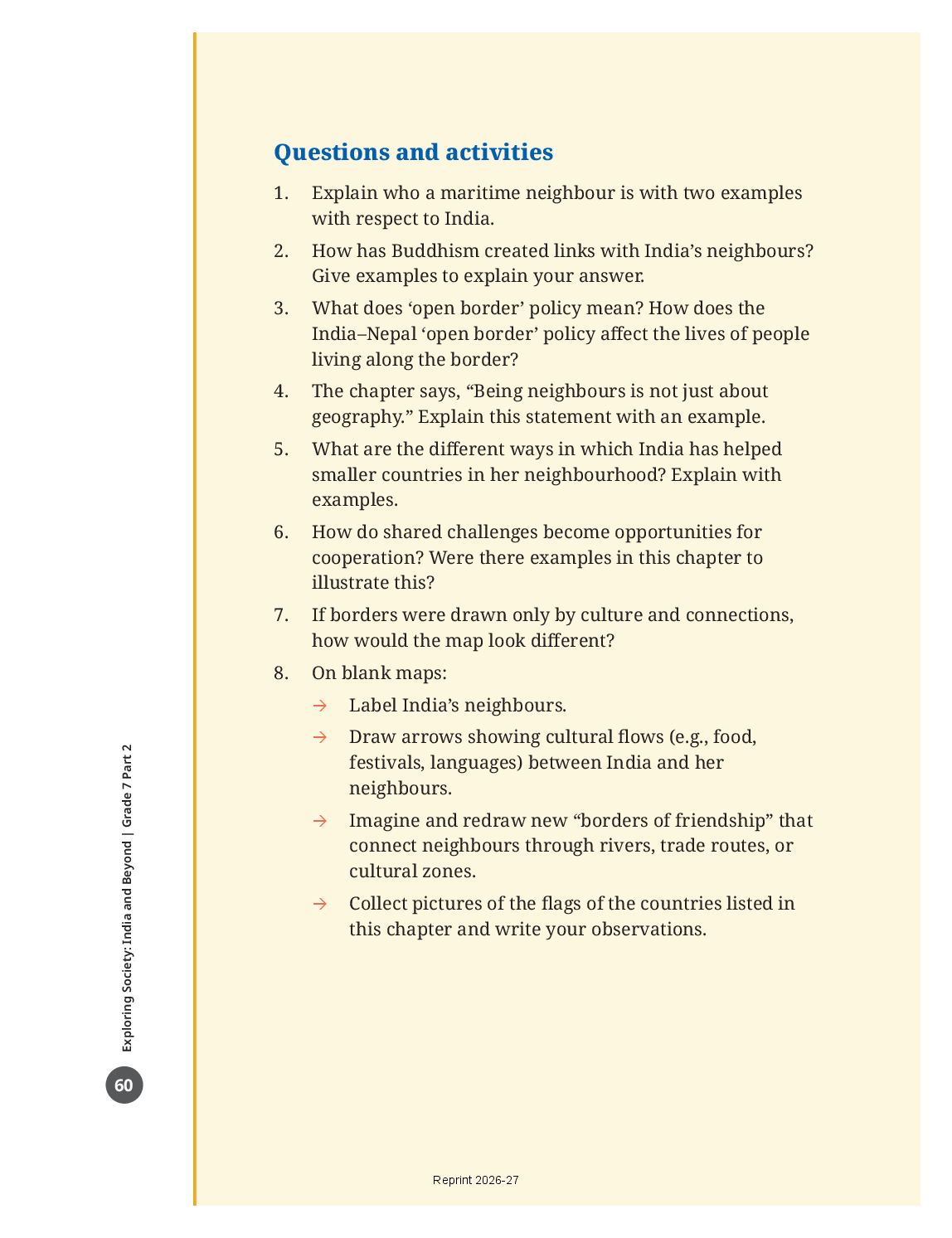
Answers to the exercises and the full chapter list of Exploring Society: India and Beyond:
India and Her Neighbours – Overview
| Class | Class 7 |
| Subject | Social Science |
| Book | Exploring Society: India and Beyond – new NCERT book |
| Part | Part II |
| Chapter | 14 of 20 – India and Her Neighbours |
| Book pages | Part II, 29 – 60 |
| Edition | NCERT Reprint 2026-27 |
| Session | 2026-27 |
| Free – read online or download |
Class 7 Social Science Chapter 14 – FAQs
Where can I download India and Her Neighbours Class 7 PDF?
From the download table on this page – the chapter PDF is free, and the full book is linked too.
What is Class 7 Social Science Chapter 14 about?
A ‘neighbour’ is more than a country across a land border. By land, India’s neighbours are Pakistan and Afghanistan in the northwest, China’s region of Tibet, Nepal and Bhutan in the north, and Bangladesh and Myanmar in the east. India’s land boundary stretches over 15,100 km through deserts, plains, forests, mountains, marshes and river valleys. But India has always been a maritime nation, sea on three sides — so Sri Lanka and the Maldives are immediate neighbours across the water, and Iran, Oman, Thailand, Malaysia, Singapore and Indonesia belong to a wider maritime neighbourhood.
Is India and Her Neighbours from the new NCERT Class 7 Social Science book?
Yes. It is chapter 14 of exploring society: india and beyond (part ii), the new NCERT Class 7 Social Science book for 2026-27.
Is this the latest NCERT edition for 2026-27?
Yes – the PDF is NCERT’s latest edition for the 2026-27 session.
Where are the NCERT Solutions for Class 7 Social Science Chapter 14?
Open the NCERT Solutions link above for answers to the exercise questions.