Download Understanding Markets – NCERT Class 7 Social Science Chapter 12 PDF from the new NCERT Class 7 Social Science book Exploring Society: India and Beyond (2026-27). Read the chapter online or download the free PDF. A market is any place — or platform — where people buy and sell. It is the bazaar, the haat, the mārukatté of Kannada; it can be a weekly cart-market, a mall, a mandī, or an app on a phone. The chapter opens in the Hampi Bazaar of the Vijayanagara…
Understanding Markets PDF – Chapter 12 of Exploring Society: India and Beyond (Part I)
Read the chapter online or download the PDF.
| Chapter | Download | |
|---|---|---|
| Chapter 12 PDF | Understanding Markets | View PDF |
| Full book | NCERT Class 7 Social Science – Exploring Society: India and Beyond | View Book |
Read Online
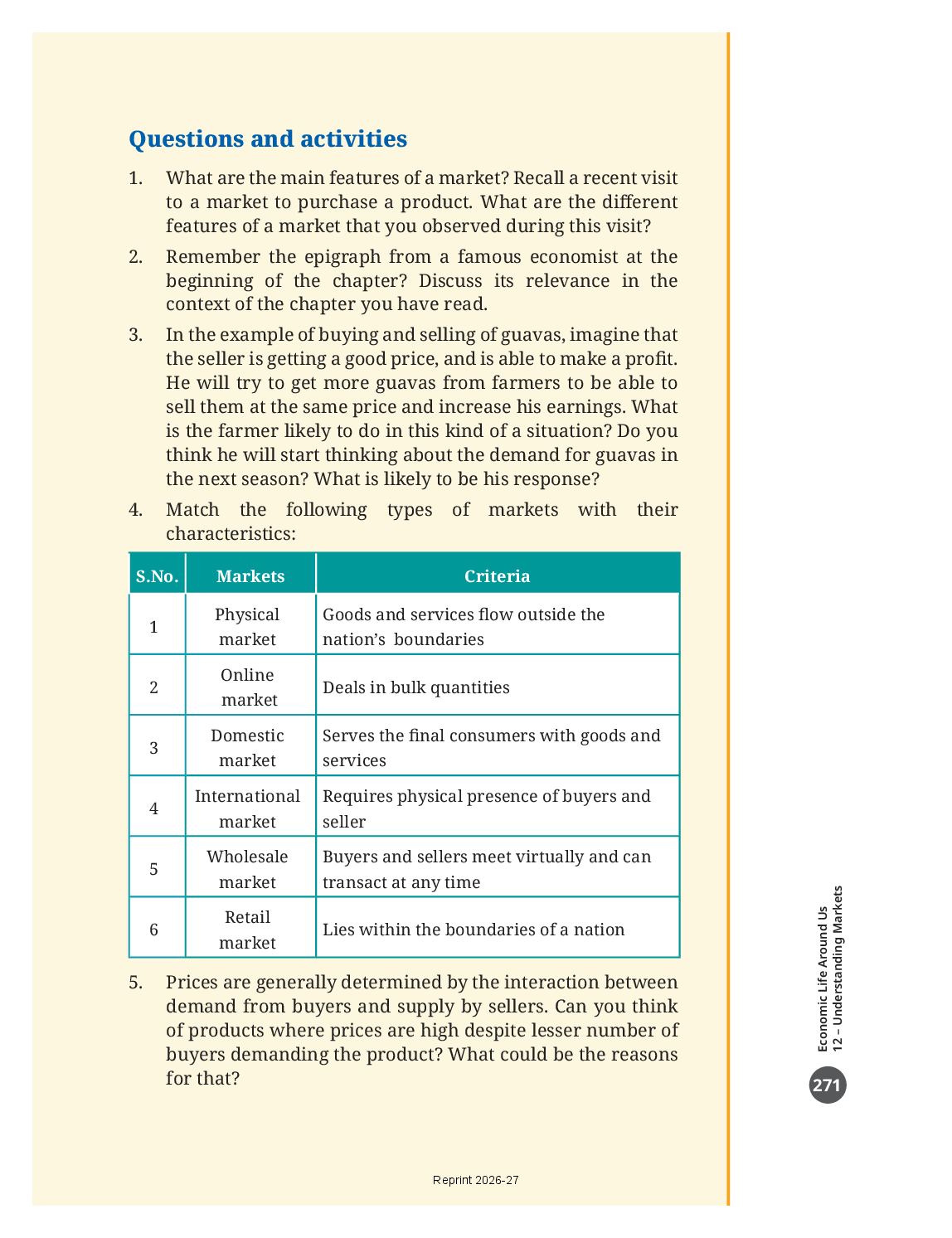
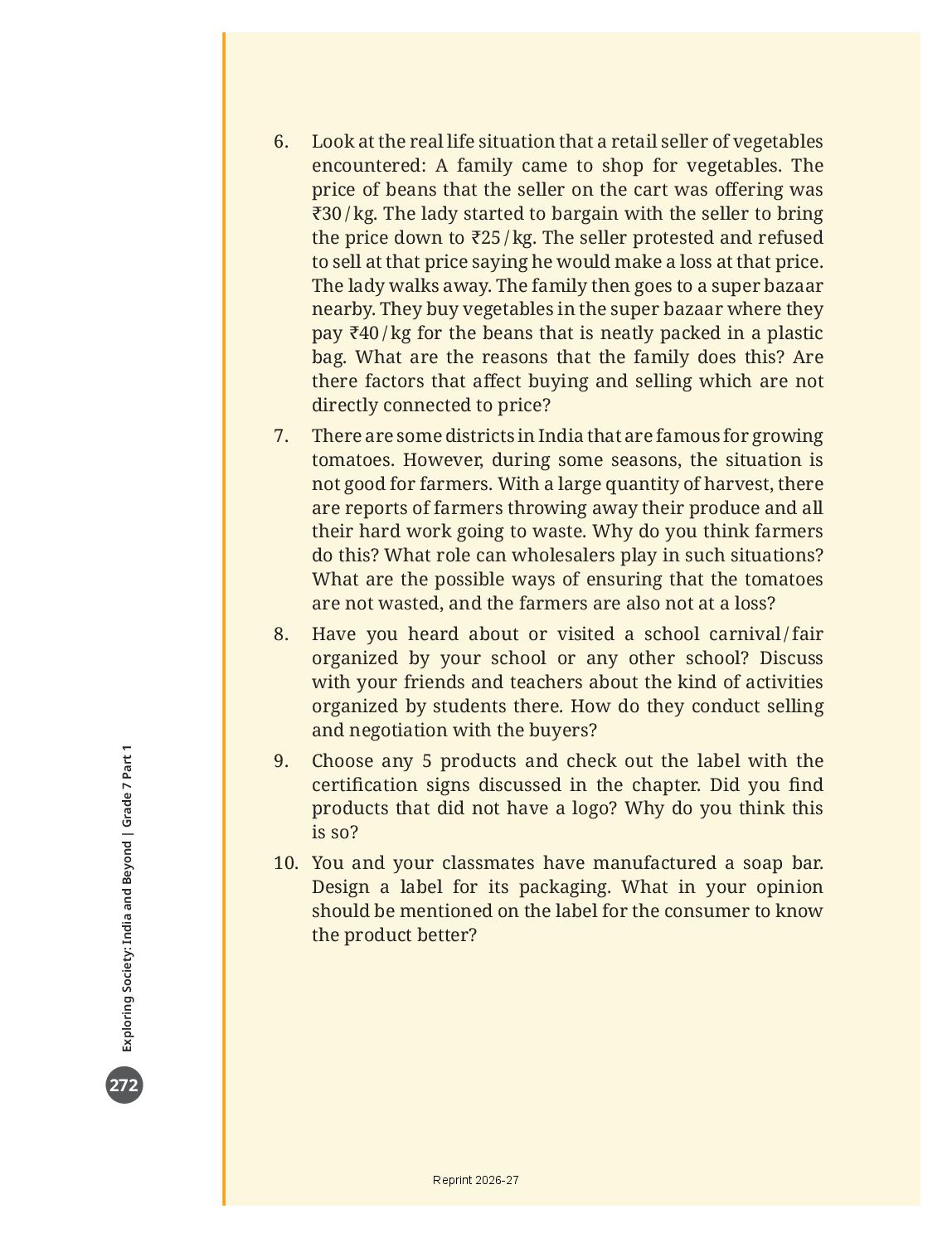
What Is in Understanding Markets? (Class 7 Social Science Chapter 12)
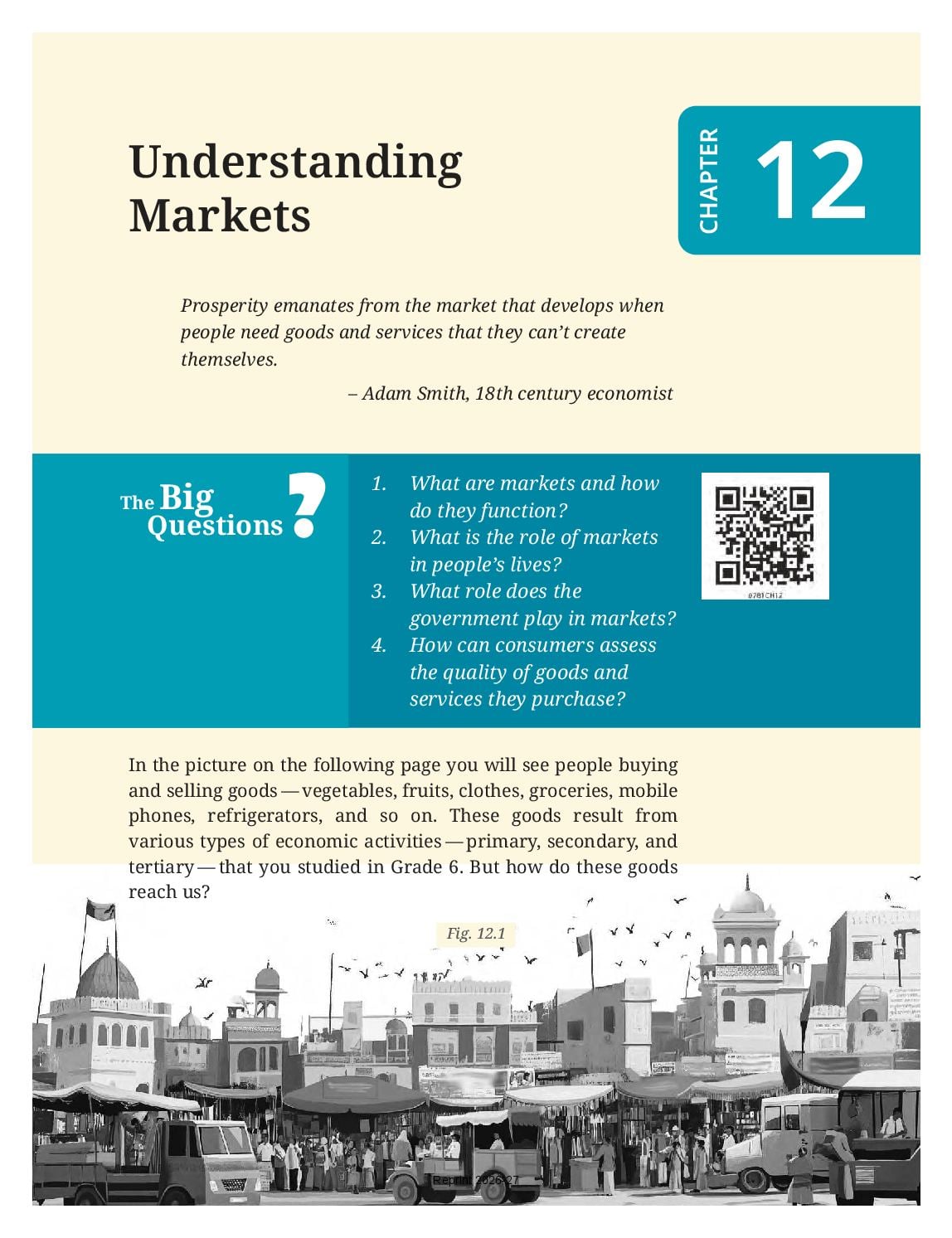
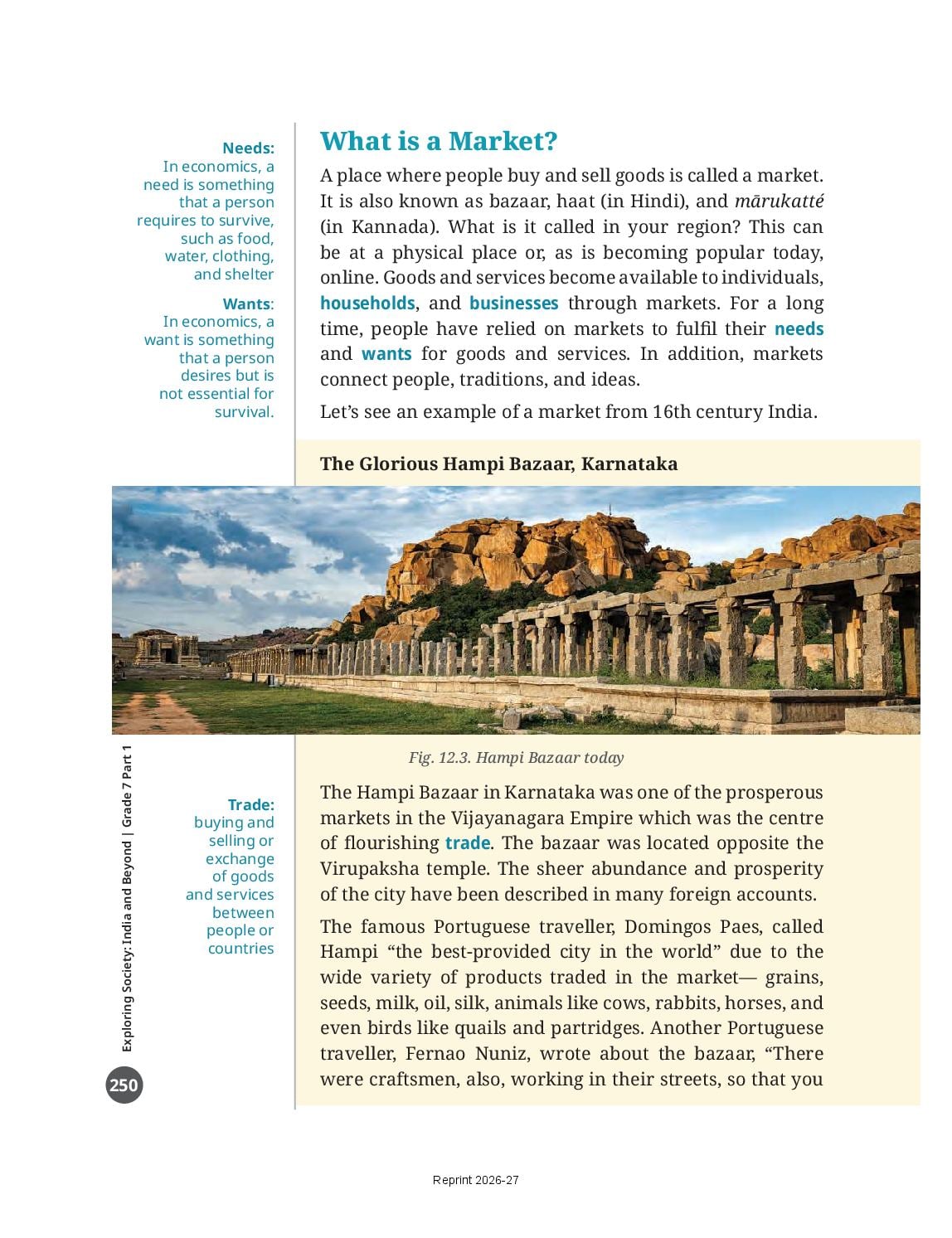
- A market is any place — or platform — where people buy and sell. It is the bazaar, the haat, the mārukatté of Kannada; it can be a weekly cart-market, a mall, a mandī, or an app on a phone. The chapter opens in the Hampi Bazaar of the Vijayanagara Empire, which the Portuguese traveller Domingos Paes called “the best-provided city in the world”.
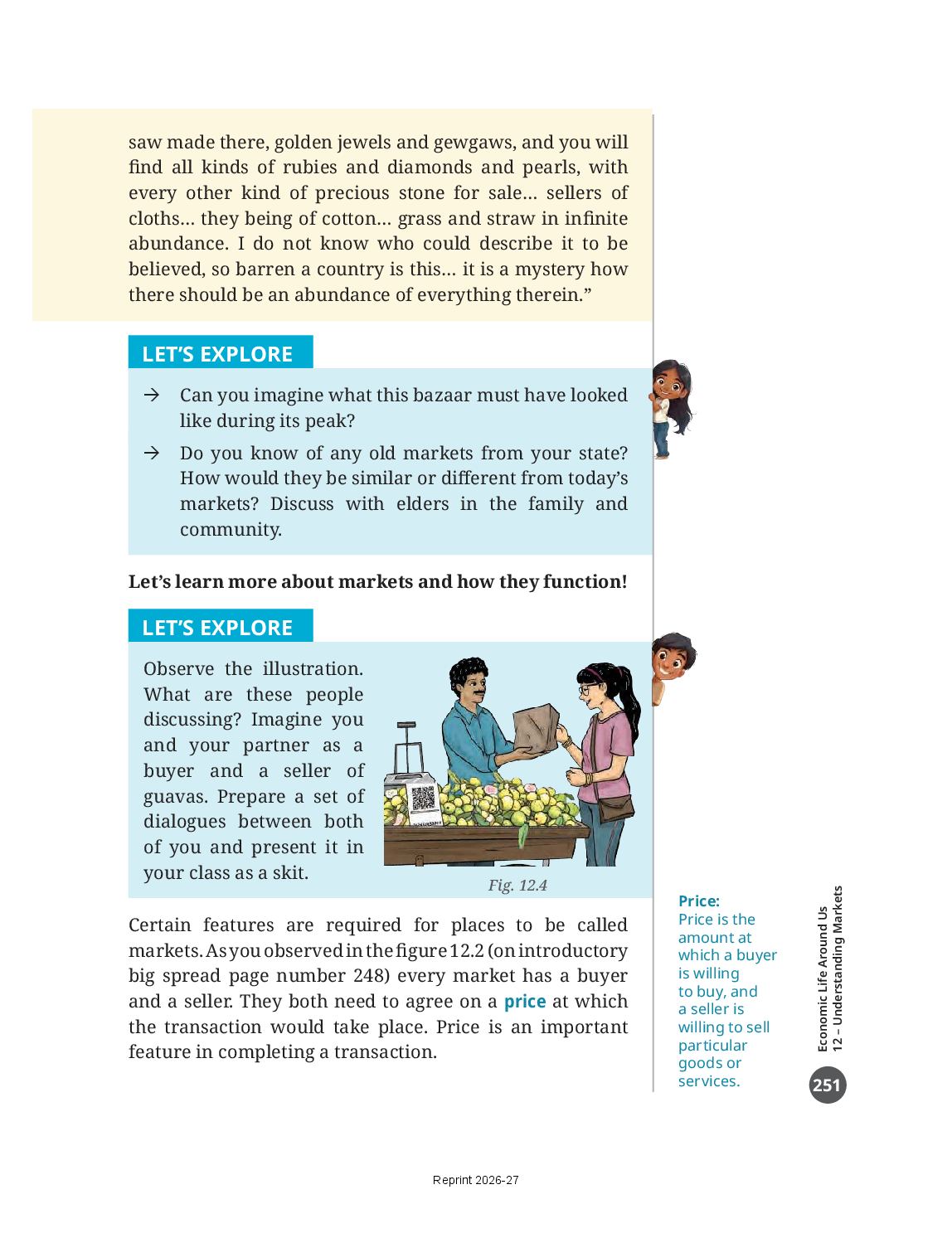
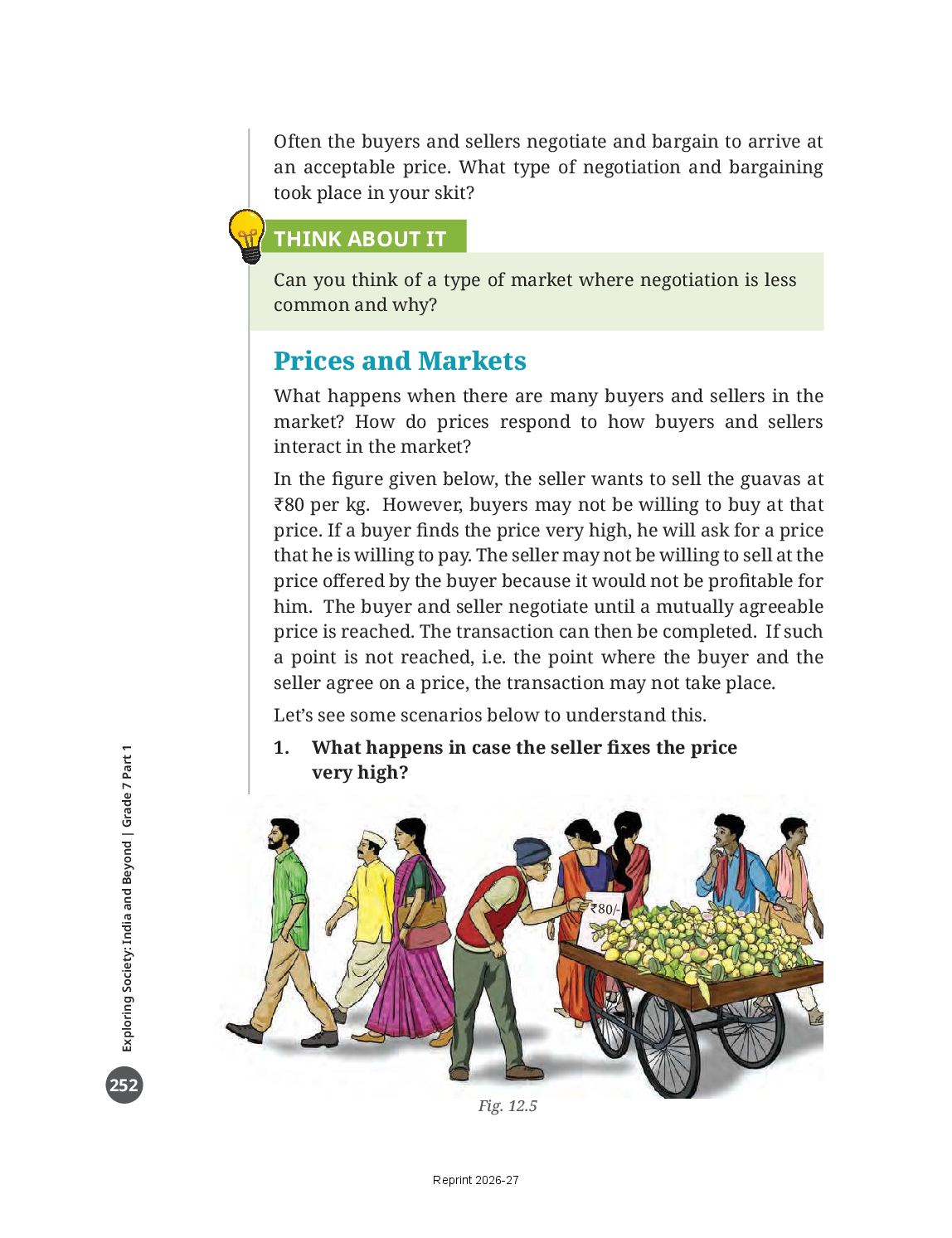
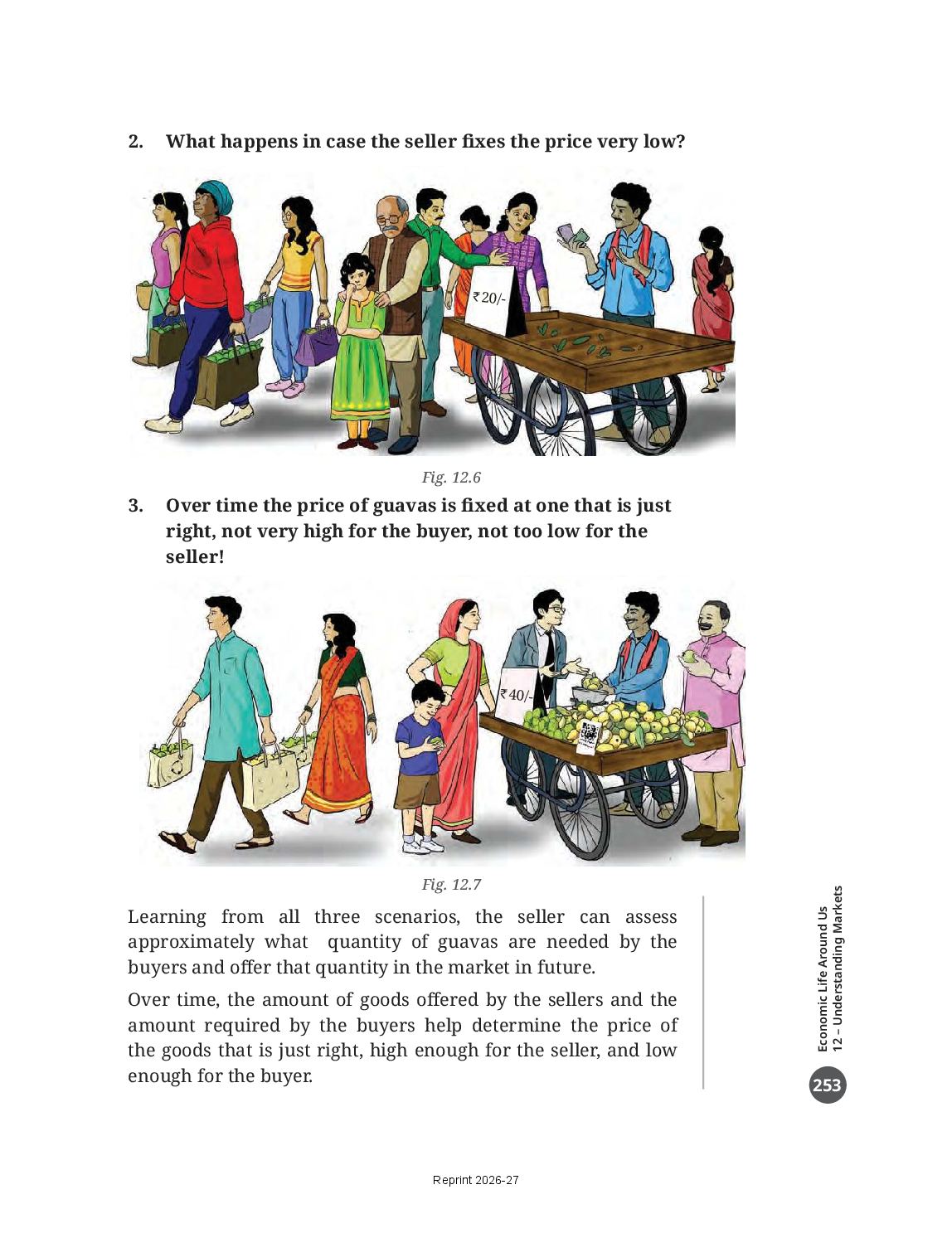
- Every market needs a buyer, a seller and a price they both accept. The guava story makes this concrete: at ₹80/kg the cart stays full and buyers walk away; at ₹20/kg the cart empties at once and buyers are left disappointed; at ₹40/kg everyone is served. Over time, the quantity offered by sellers and the quantity wanted by buyers settle the price.
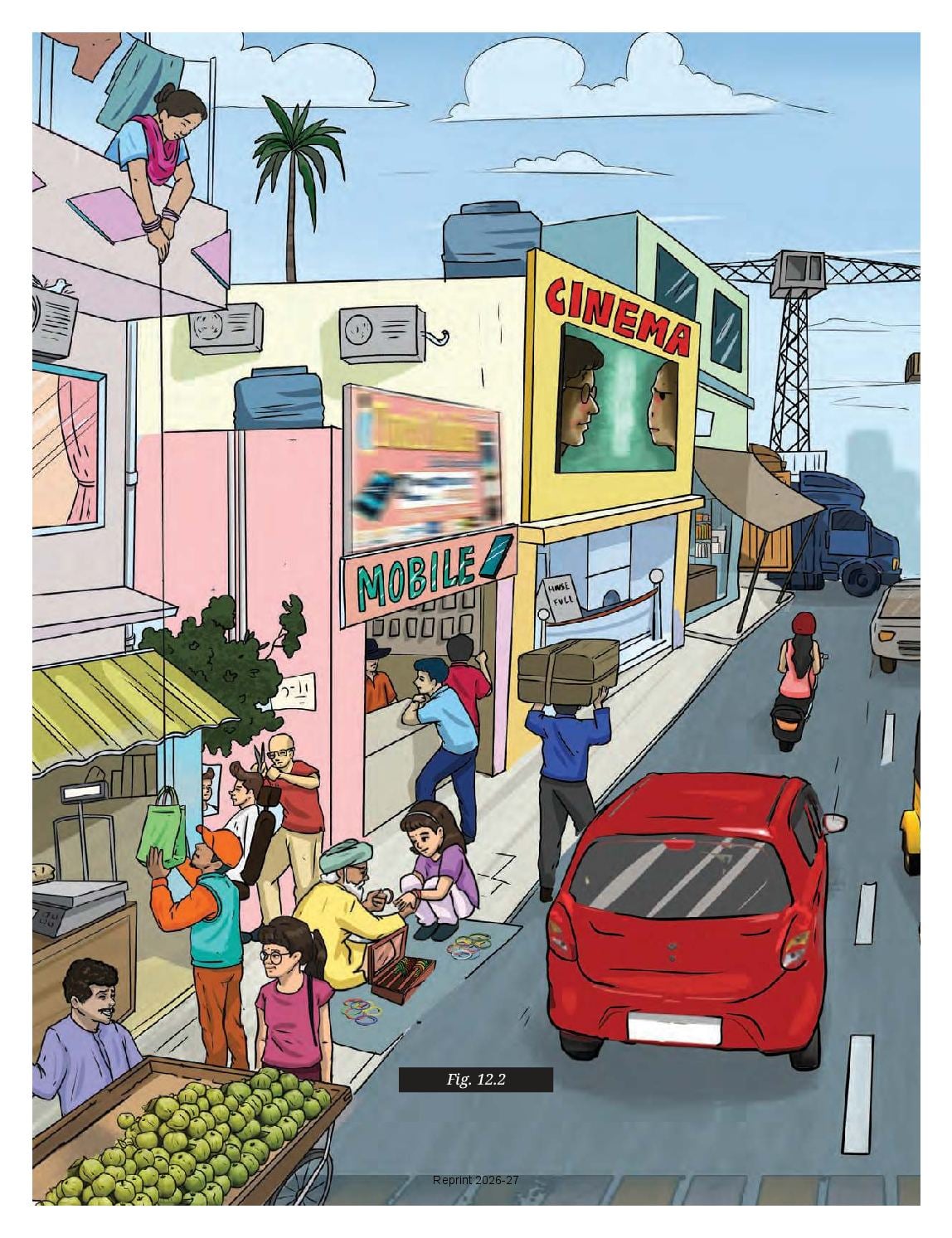
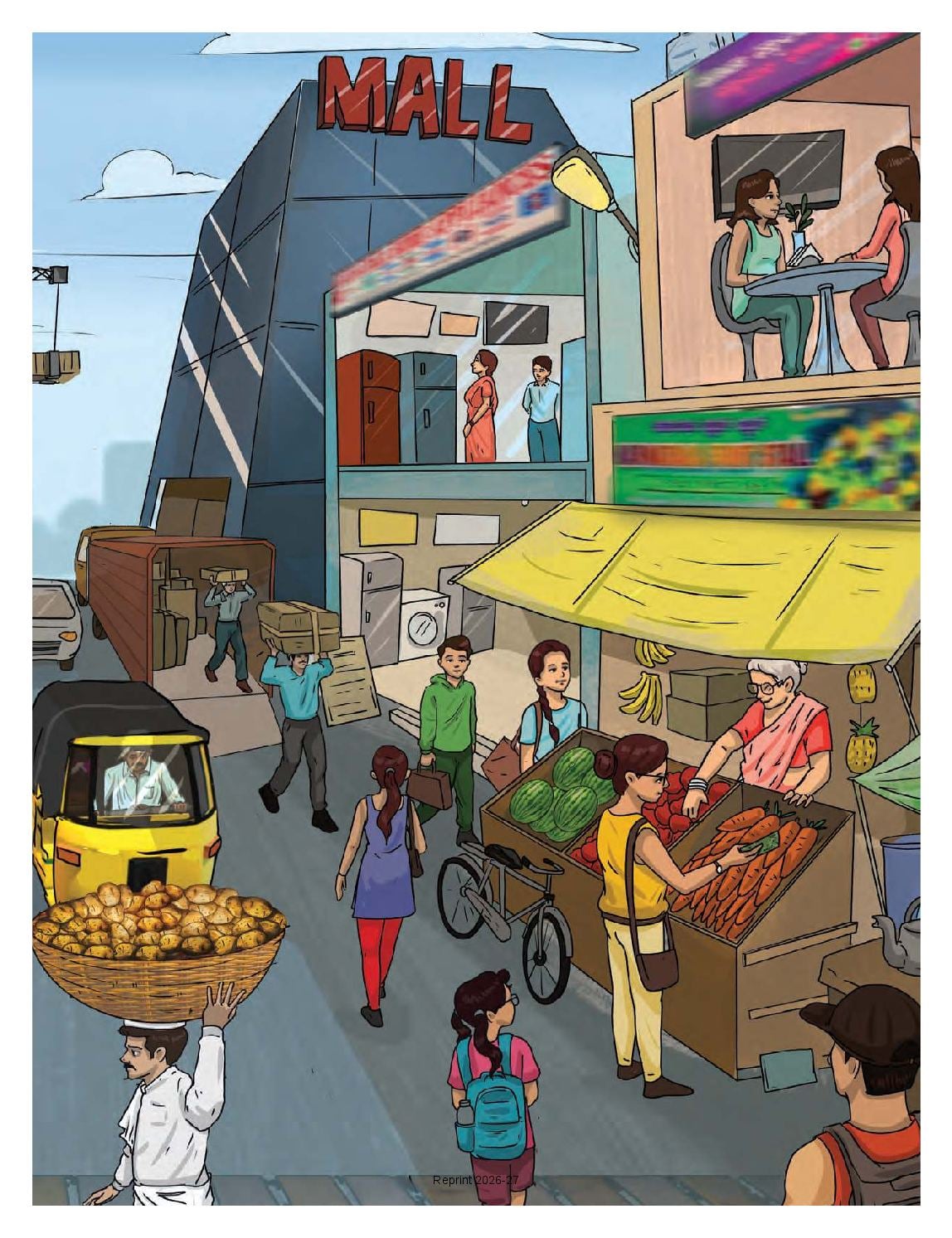
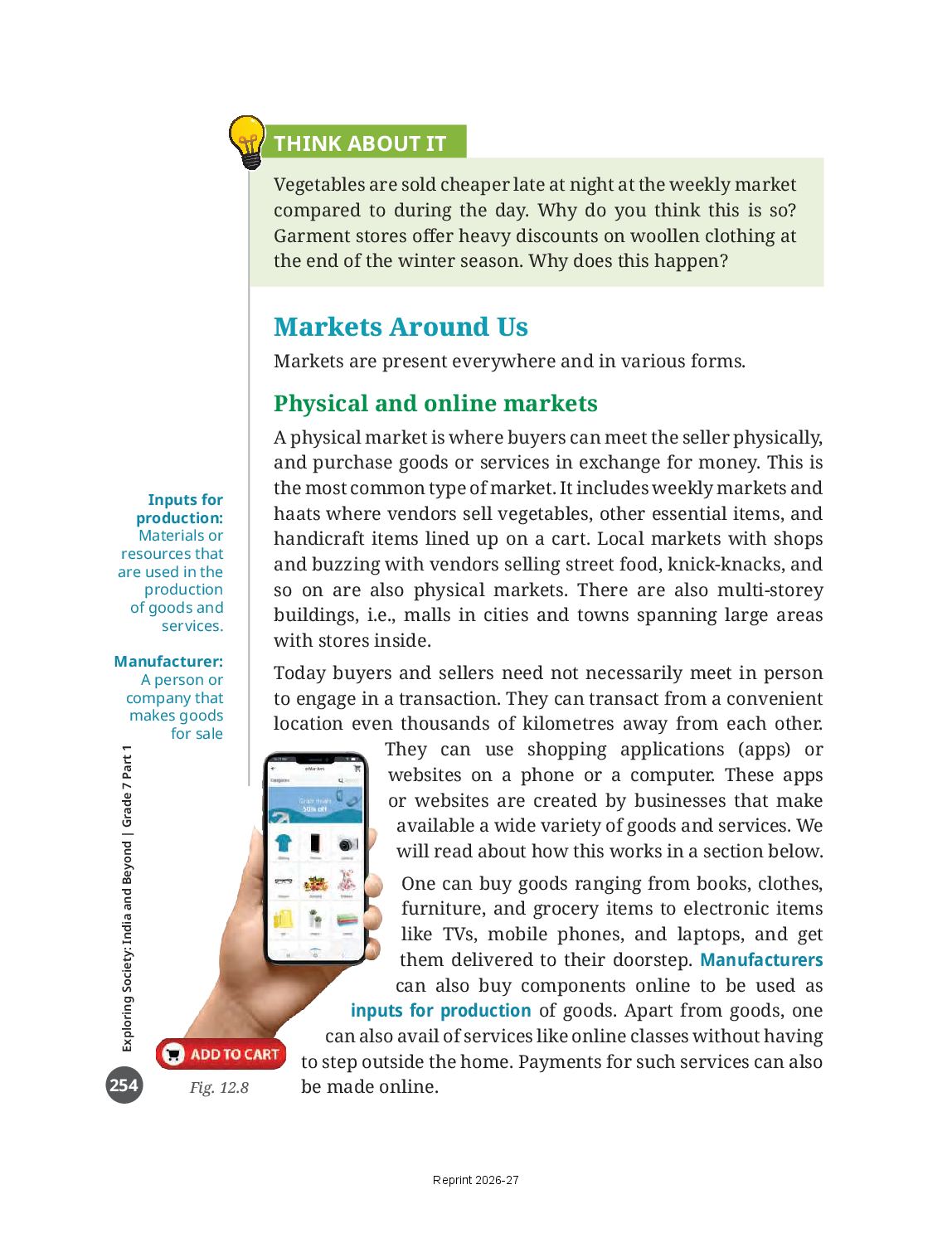
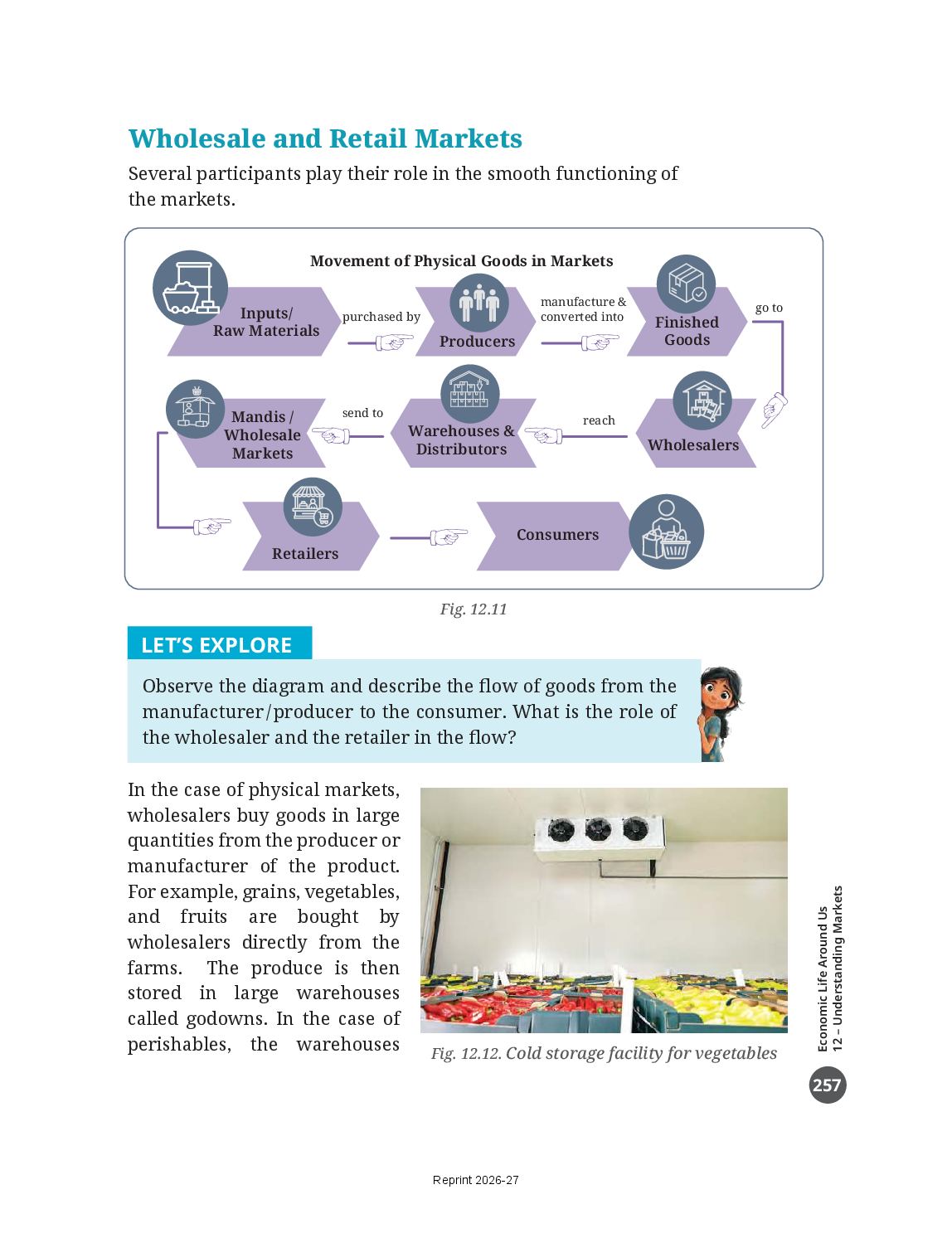
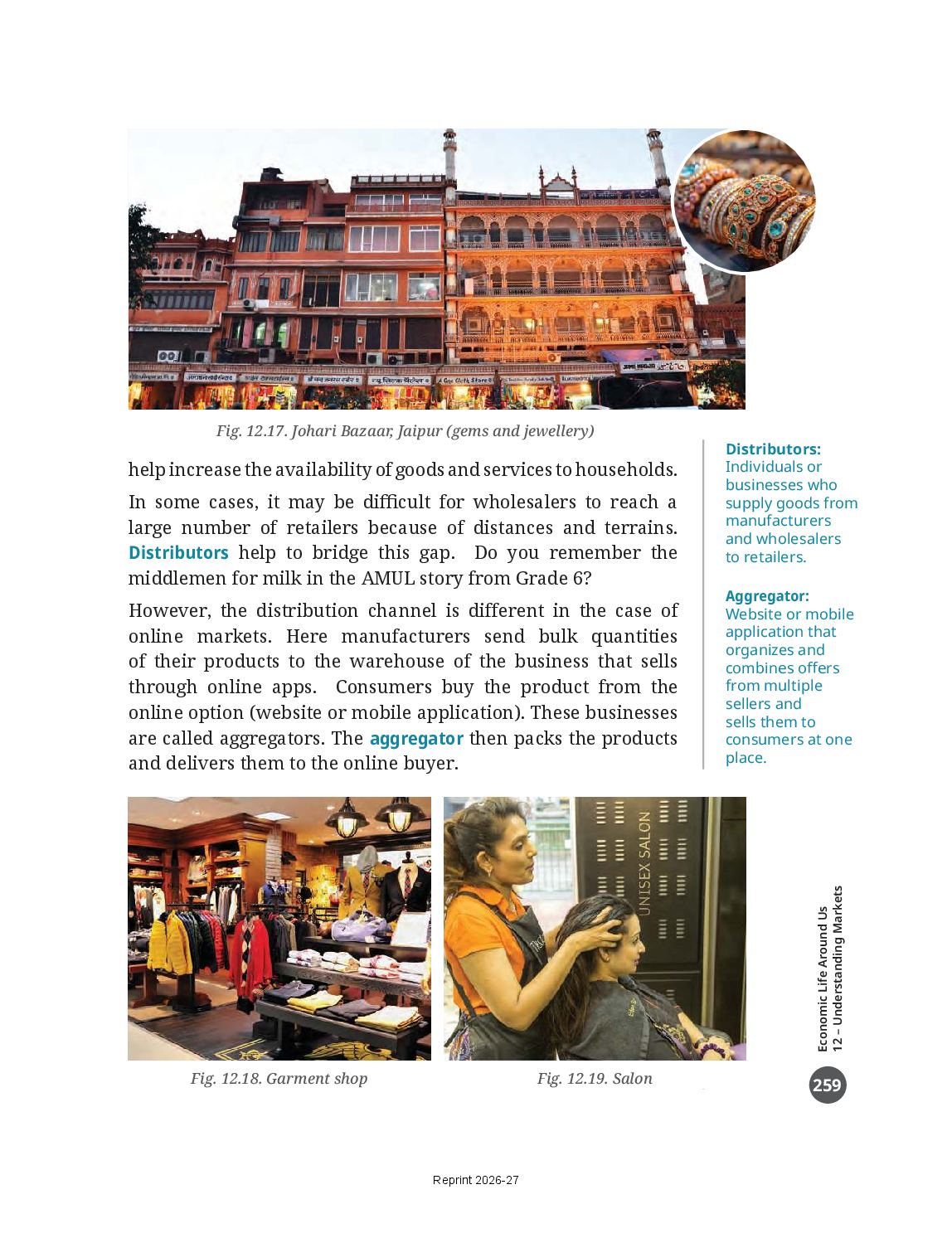
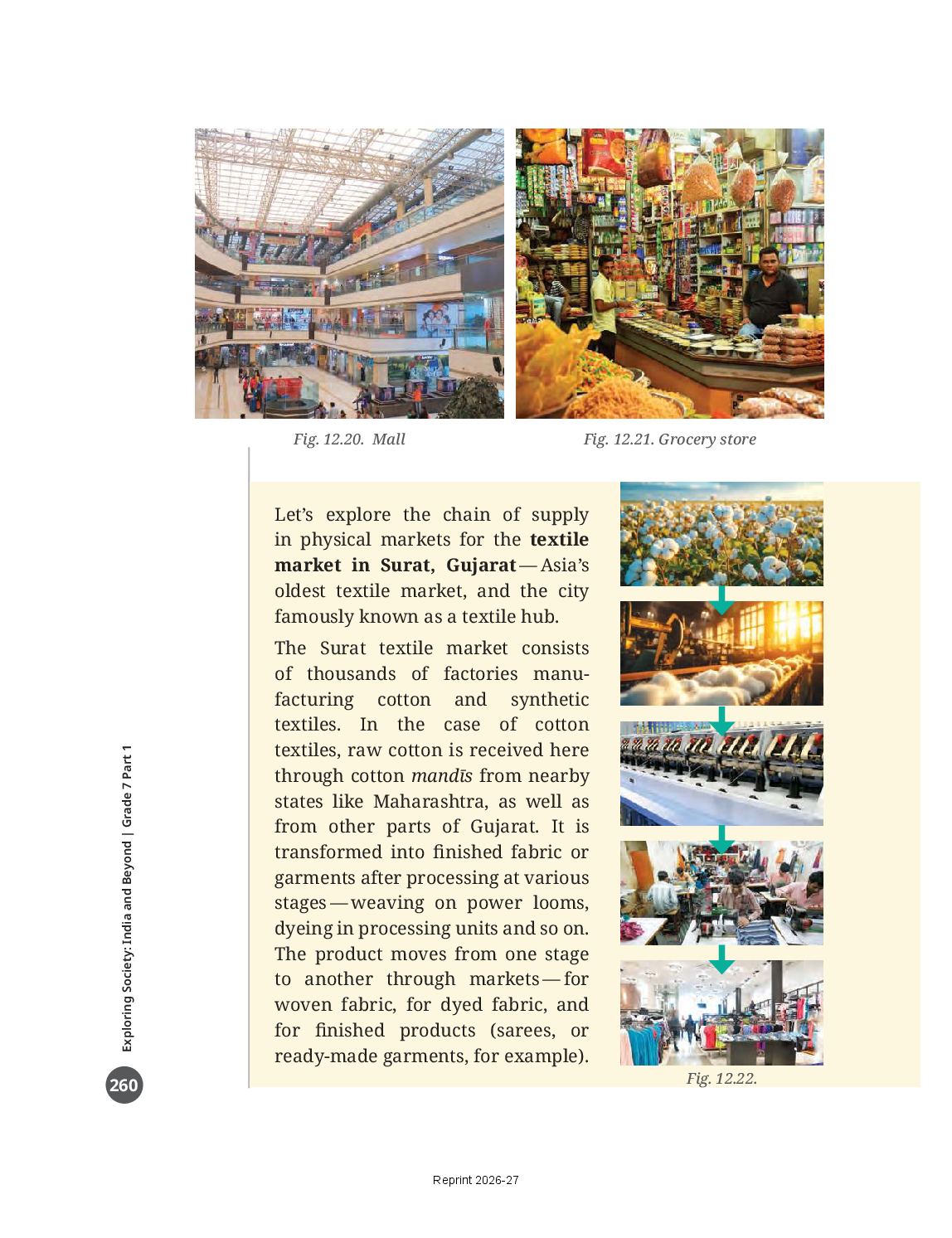
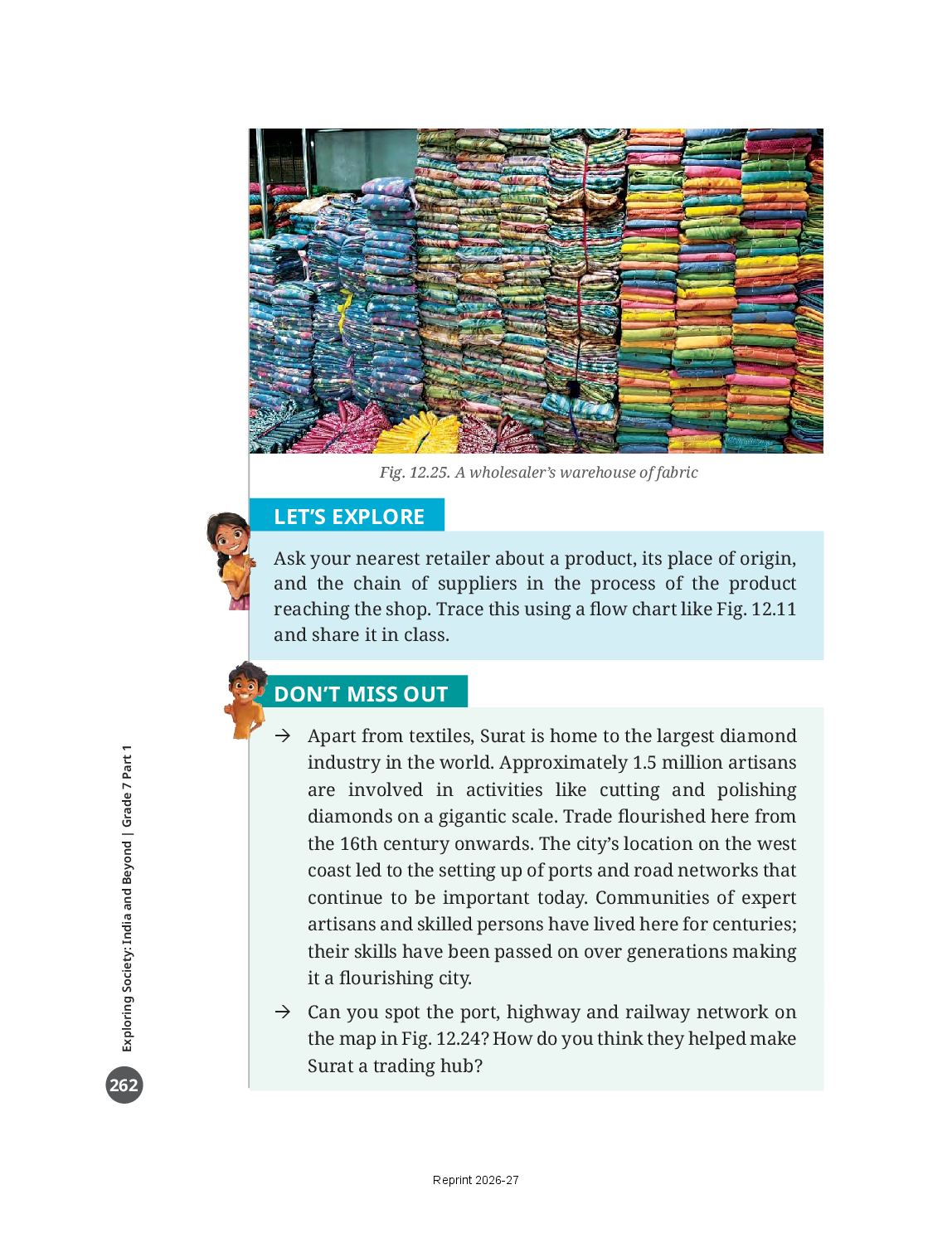
- Markets come in pairs of types. Physical and online; domestic and international; wholesale and retail. Goods travel along a chain — inputs → producers → finished goods → wholesalers → warehouses and distributors → mandīs → retailers → consumers. Online markets short-cut this: manufacturers send bulk stock to an aggregator’s warehouse, which packs and delivers.
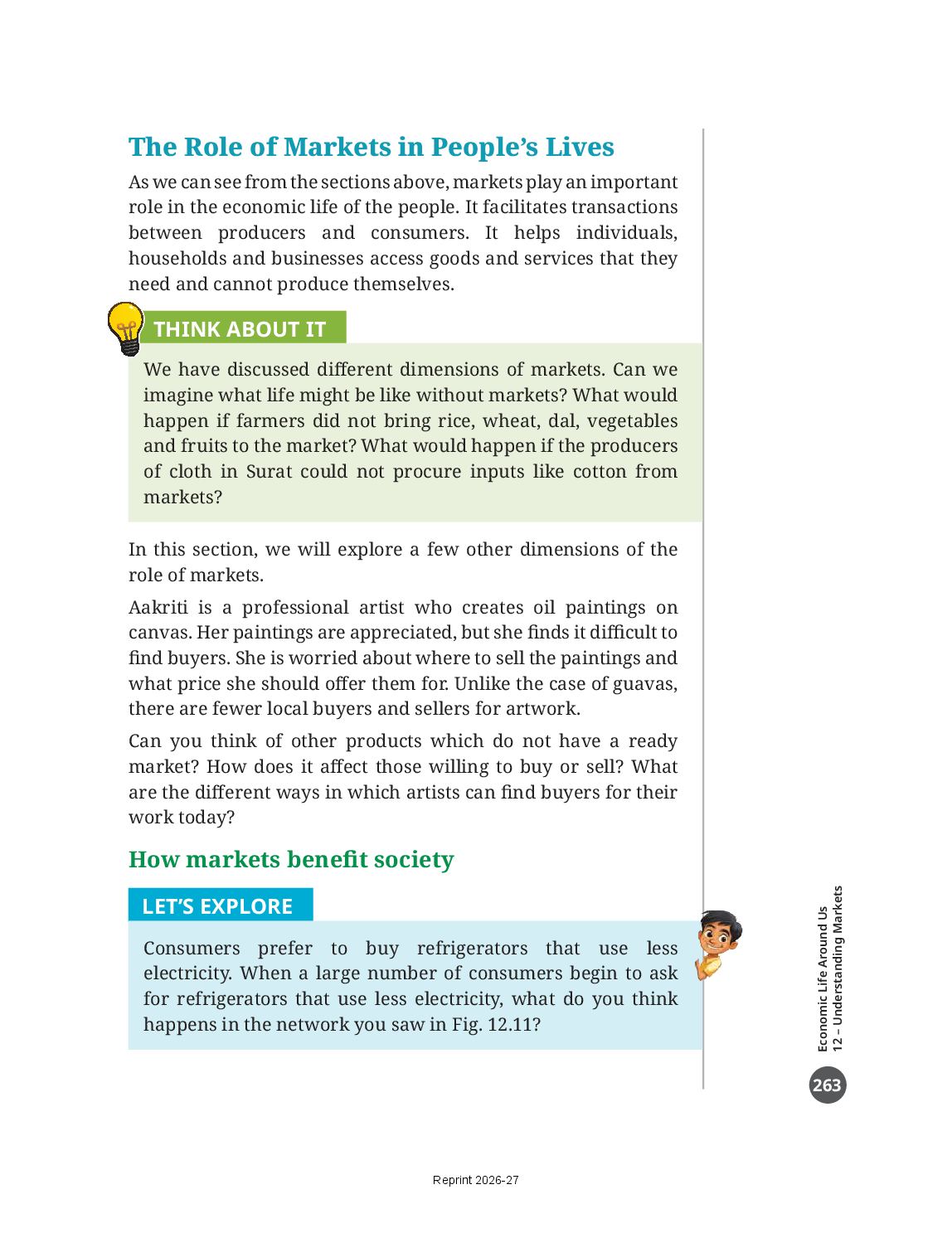
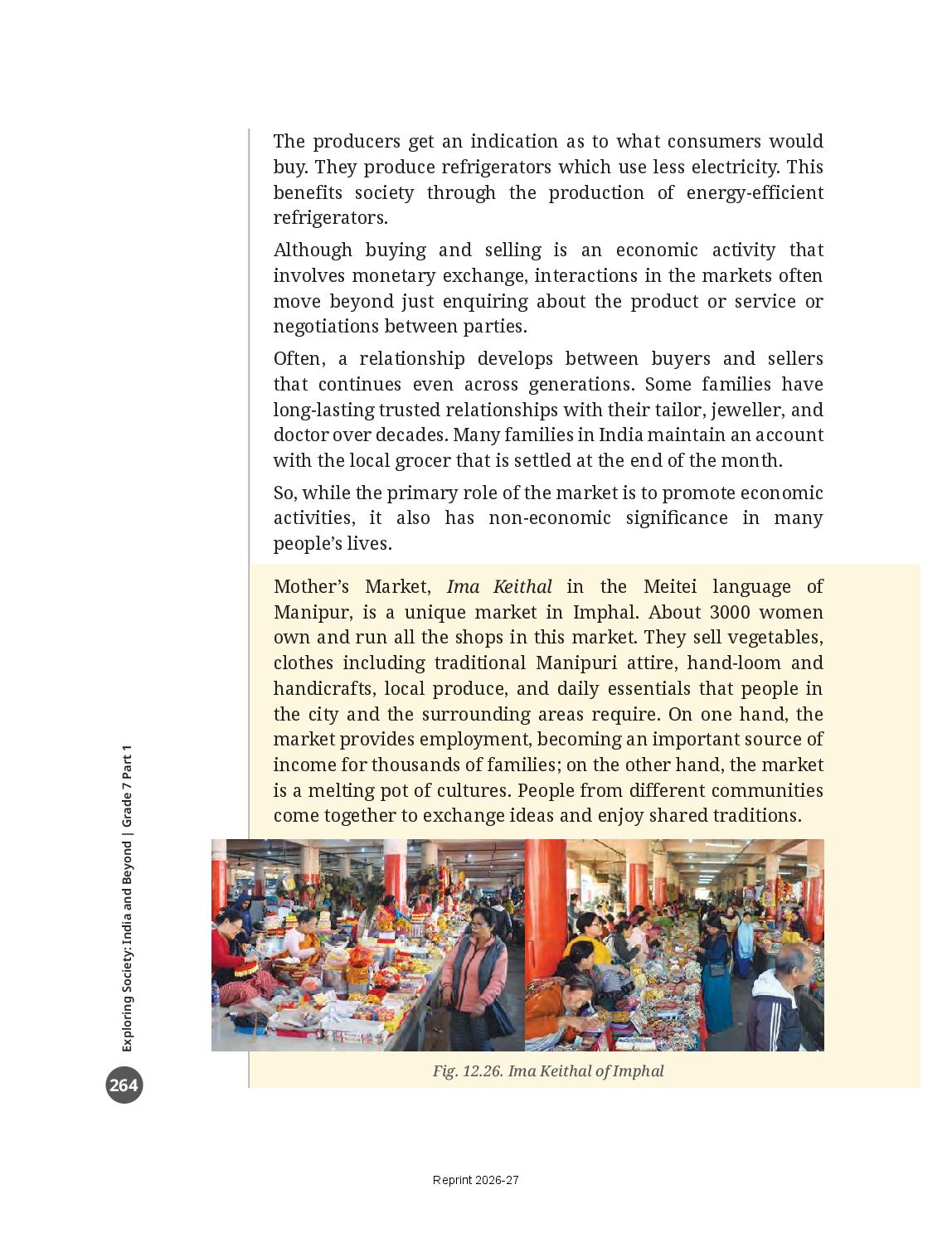
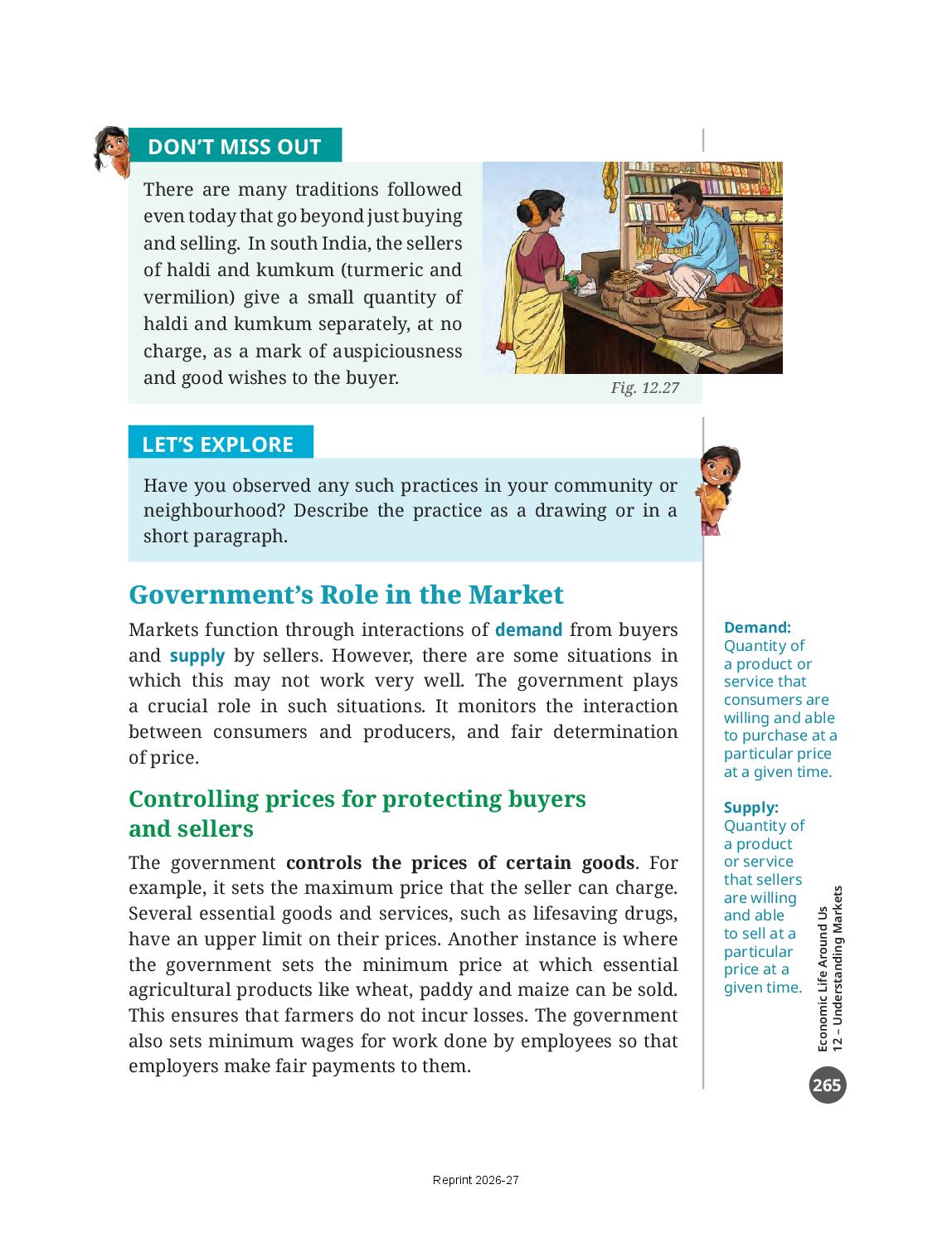
- Markets matter beyond money. They let households get what they cannot make themselves, and they carry trust and culture. Ima Keithal (Mother’s Market) in Imphal is owned and run entirely by about 3,000 women; in south India the seller of haldi and kumkum adds a free pinch as a blessing.
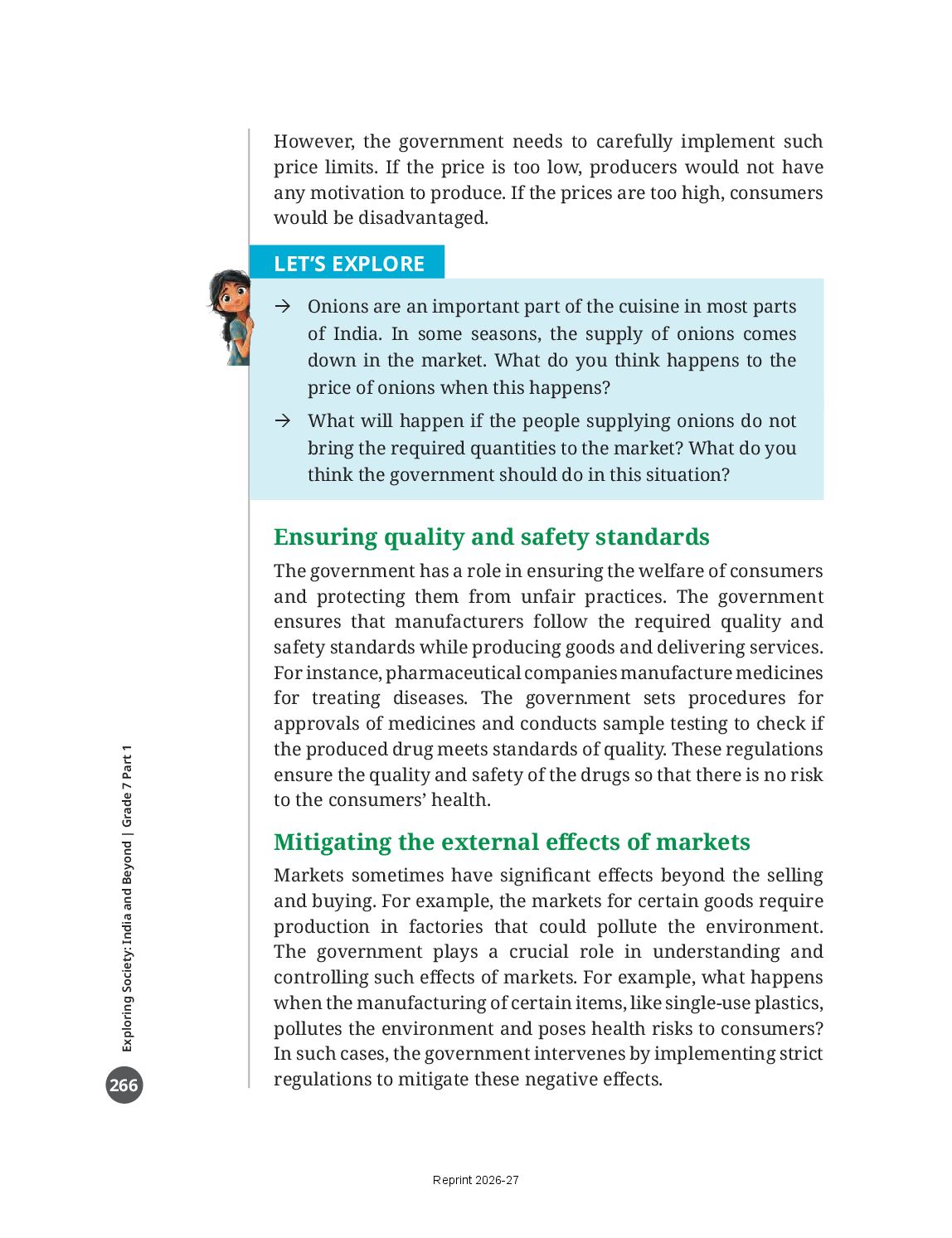
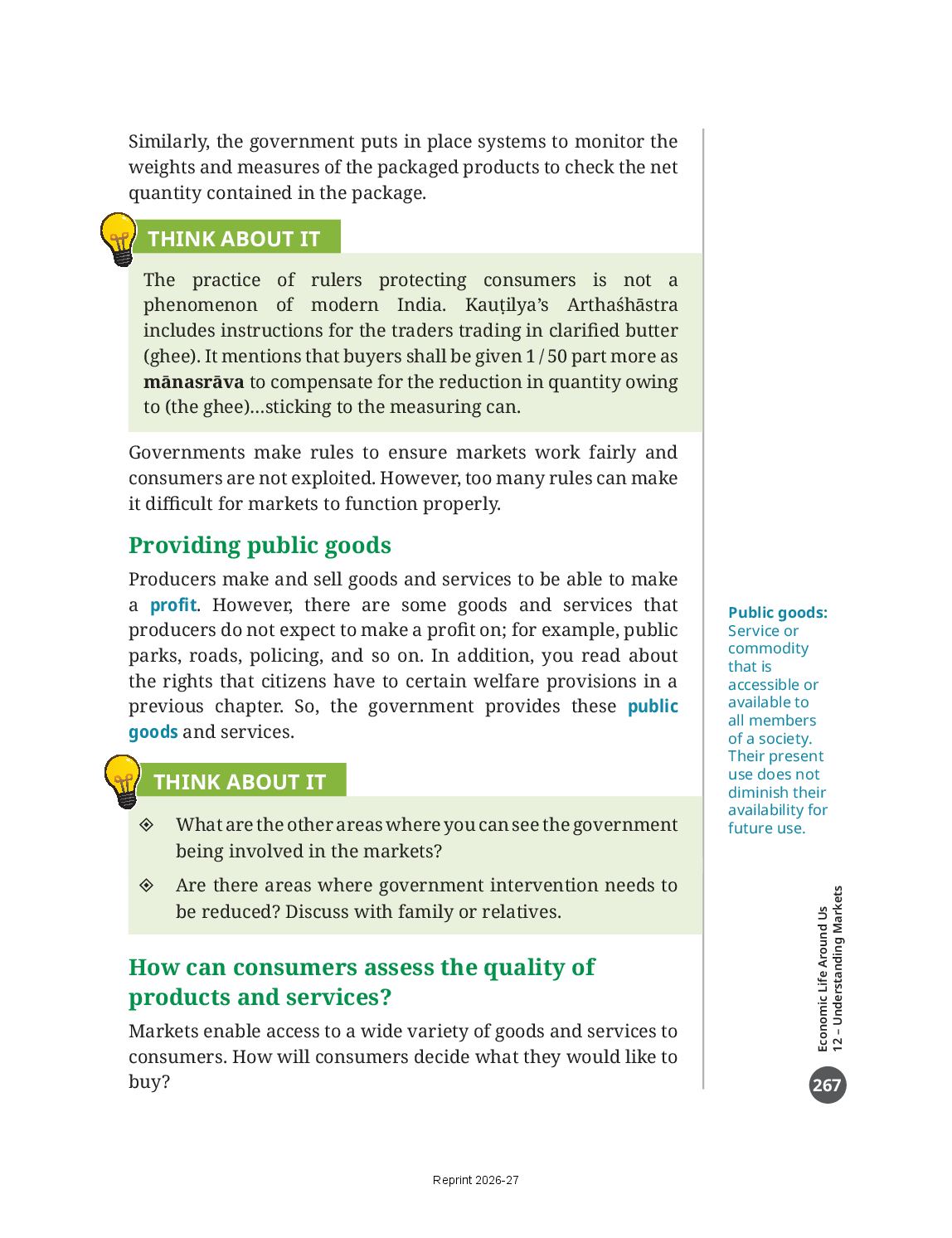
- The government steps in where markets fail. It caps the price of life-saving drugs, fixes a minimum price for wheat, paddy and maize, sets minimum wages, approves and sample-tests medicines, regulates polluting production such as single-use plastics, checks weights and measures, and provides public goods like parks, roads and policing.
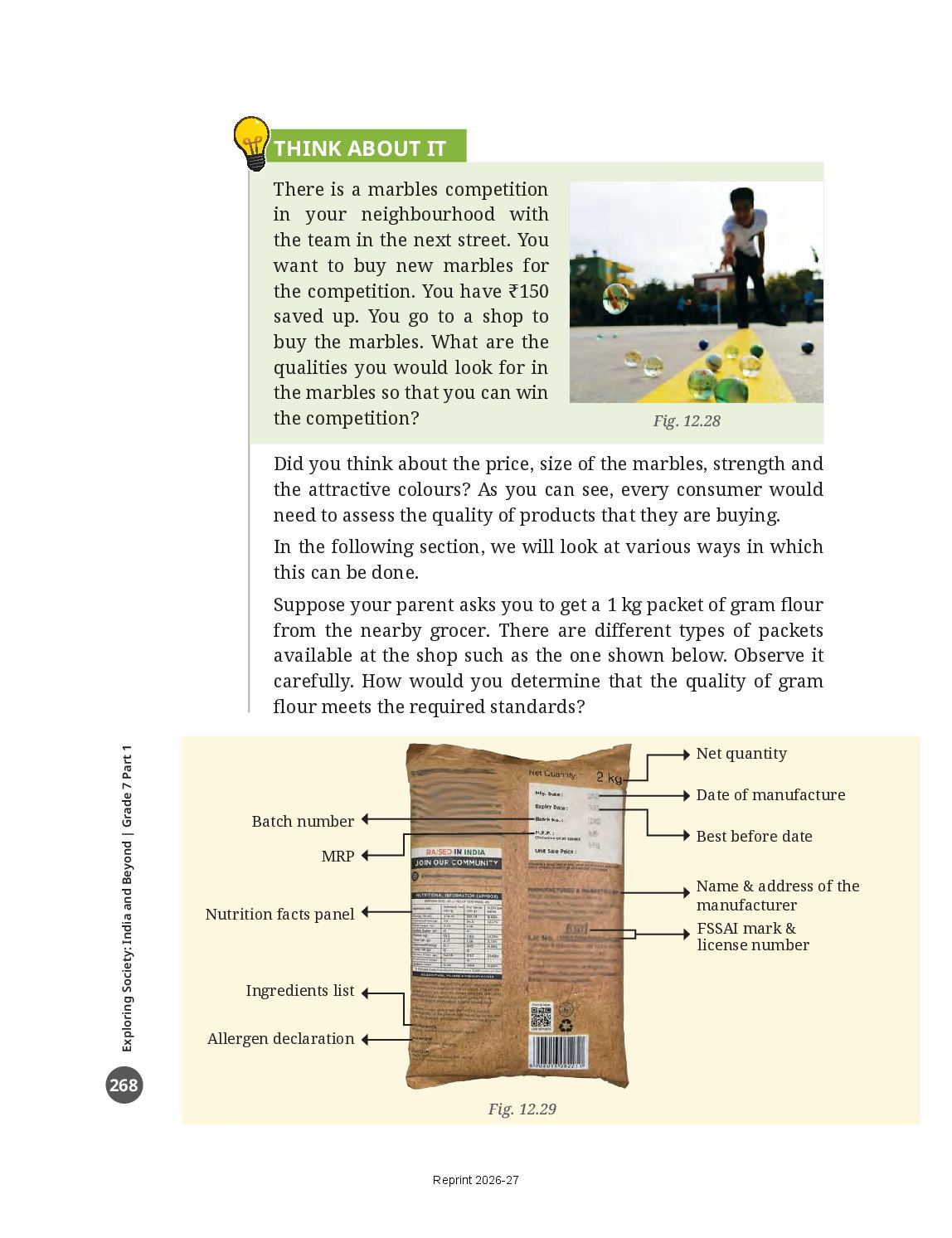
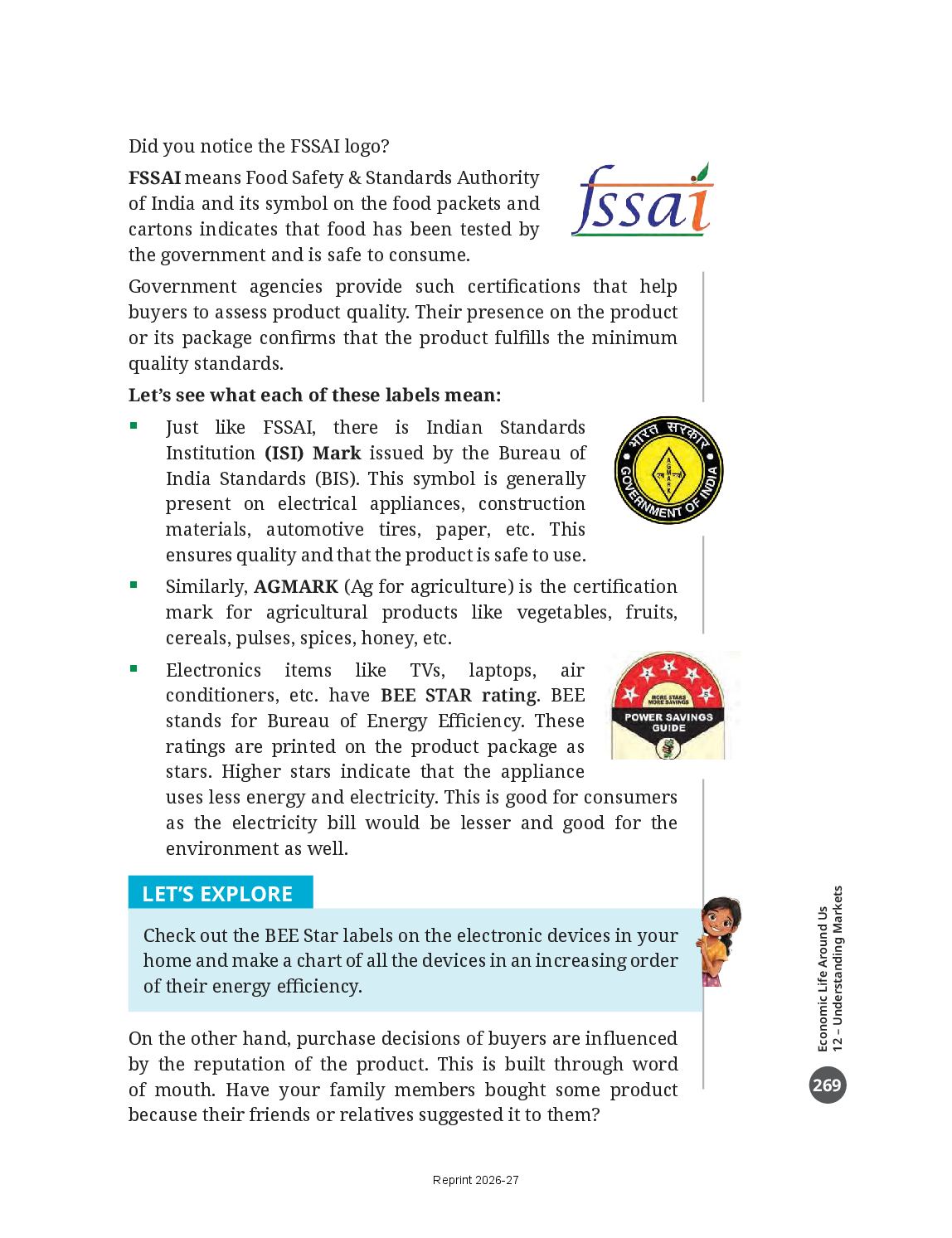
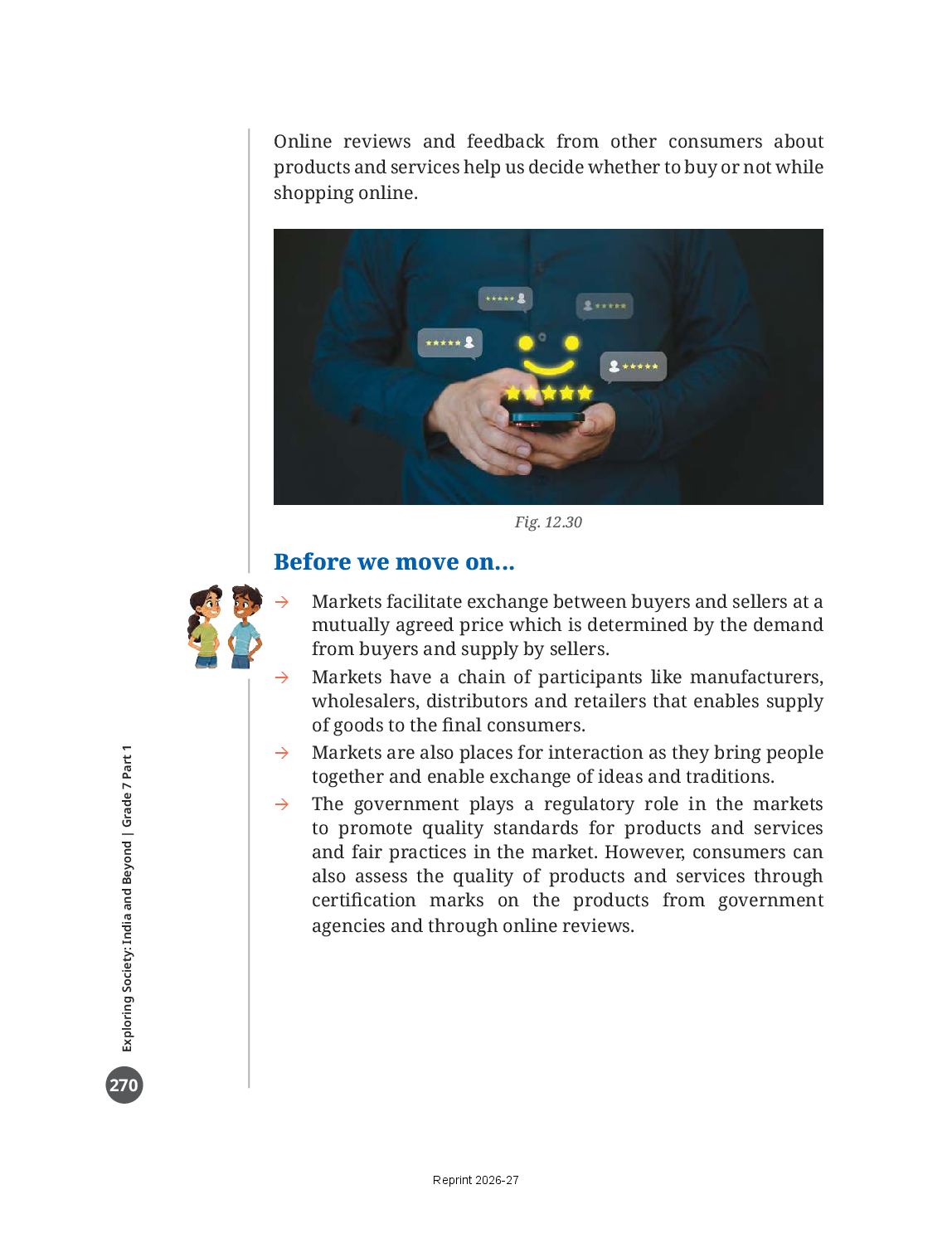
- Consumers can check quality for themselves. Read the label — net quantity, MRP, manufacture and best-before dates, ingredients, allergens, batch number — and look for the government marks: FSSAI (food), ISI from BIS (appliances, tyres, cement), AGMARK (farm produce) and the BEE Star rating (electronics). Word of mouth and online reviews help too.
Quick revision – Understanding Markets
| Term | What it means | Where it appears in the chapter | Worth remembering |
|---|---|---|---|
| Market | A place — physical or online — where people buy and sell goods and services | Page 250, What is a Market? | Also called bazaar, haat, mārukatté (Kannada) |
| Trade | Buying and selling or exchange of goods and services between people or countries | Margin note, page 250 | Trade needs a buyer, a seller and an agreed price |
| Needs | Something a person requires to survive — food, water, clothing, shelter | Margin note, page 250 | Needs keep you alive; wants only make life nicer |
| Wants | Something a person desires but which is not essential for survival | Margin note, page 250 | A mobile phone is a want; drinking water is a need |
| Price | The amount at which a buyer is willing to buy and a seller is willing to sell | Margin note, page 251 | The guavas: ₹80 → ₹20 → ₹40 |
| Manufacturer | A person or company that makes goods for sale | Margin note, page 254 | Surat’s power looms and dyeing units are manufacturers |
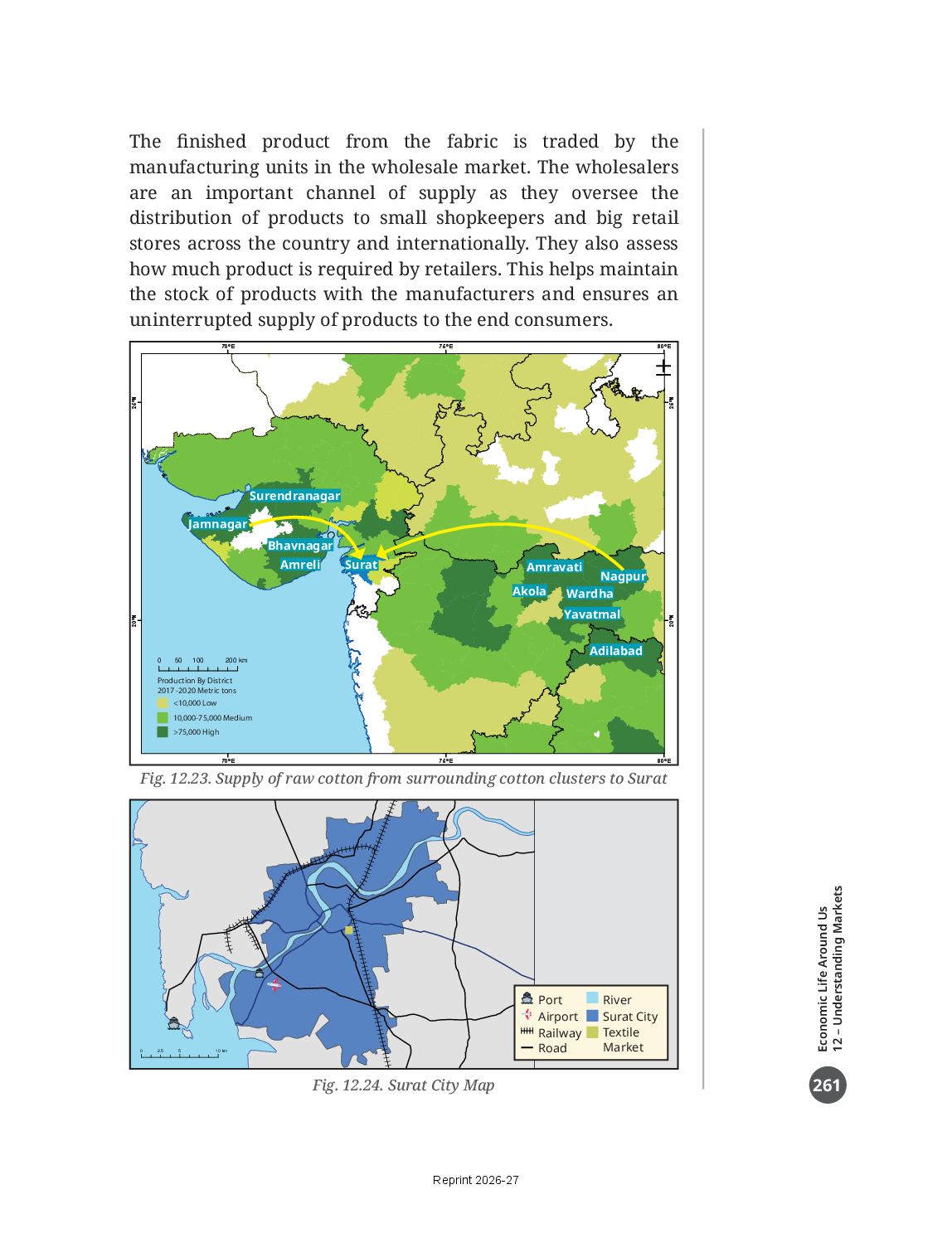
| Inputs for production | Materials or resources used in producing goods and services | Margin note, page 254 | Raw cotton is the input for Surat’s cotton fabric |
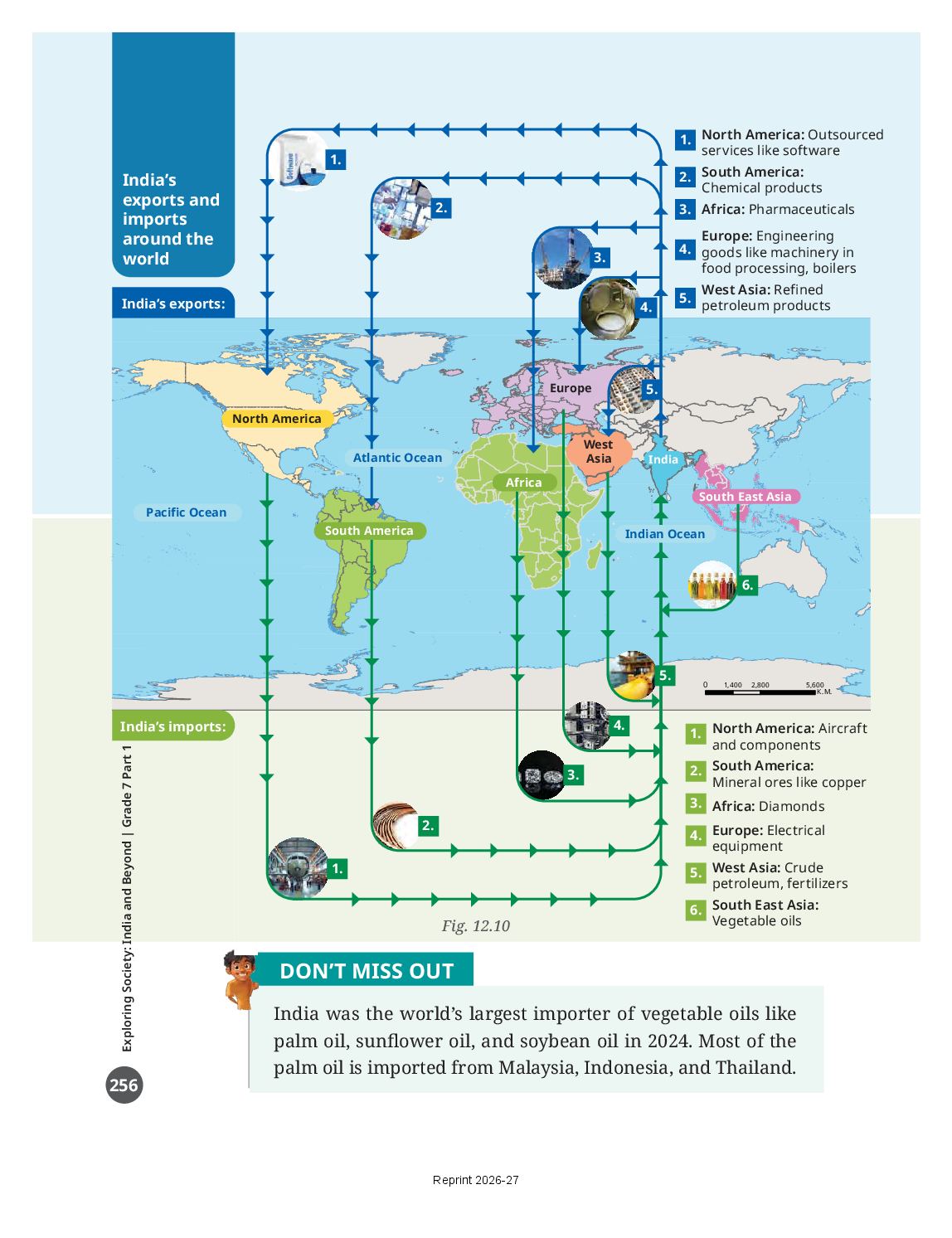
| Import / Export | Buying goods from another country and bringing them in / selling goods produced here to a buyer abroad | Margin notes, page 255; Fig. 12.10 | India exports software services, pharmaceuticals, engineering goods; imports crude petroleum, diamonds, vegetable oils |
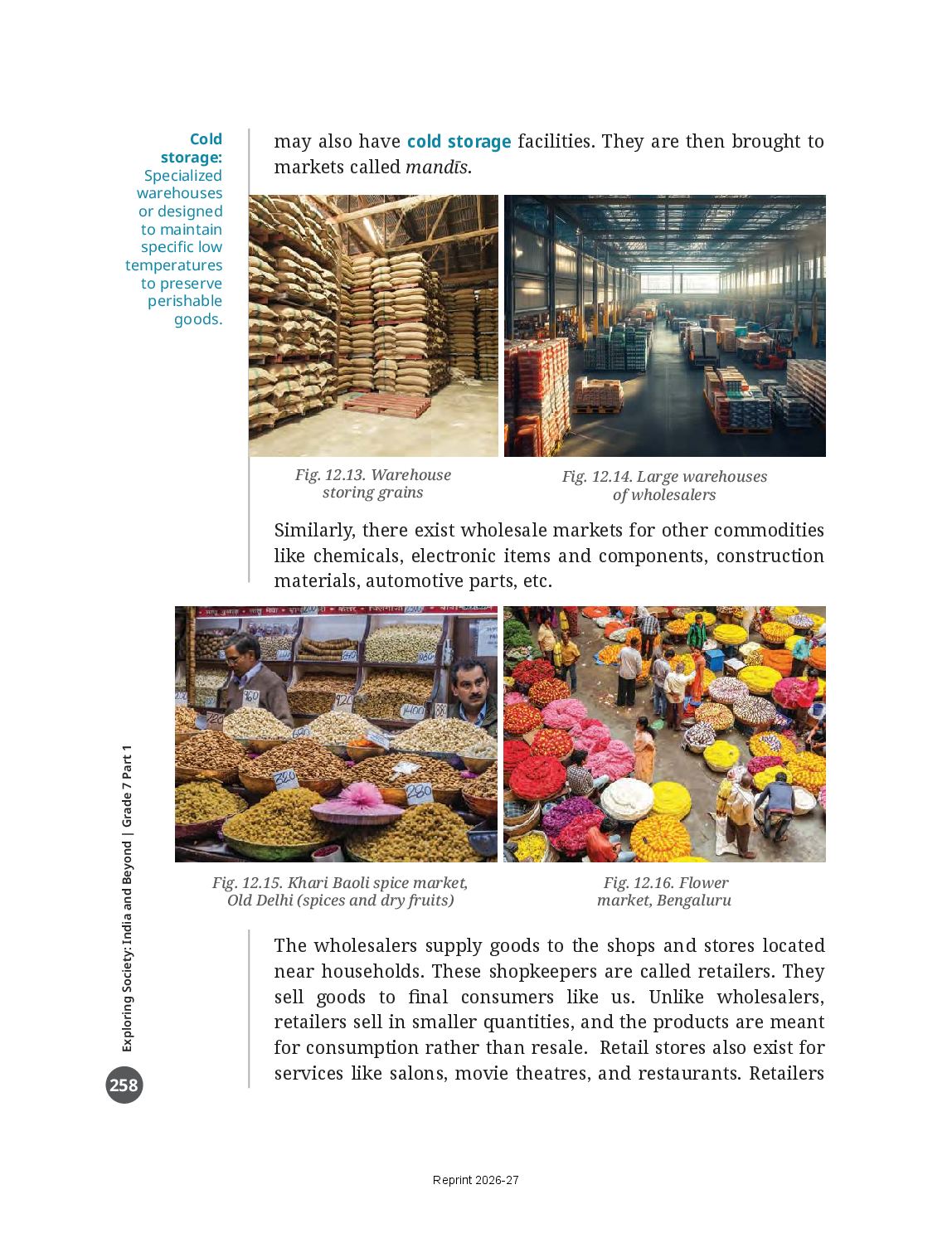
| Cold storage | A specialised warehouse kept at low temperature to preserve perishable goods | Margin note, page 258; Fig. 12.12 | Without it, vegetables and fruit rot before reaching the mandī |
| Distributors | Individuals or businesses who supply goods from manufacturers and wholesalers to retailers | Margin note, page 259 | They bridge distance and difficult terrain — like the milk middlemen in the AMUL story |
| Aggregator | A website or mobile app that combines offers from many sellers and sells them to consumers in one place | Margin note, page 259 | The online market’s substitute for the mandī |
| Demand / Supply | The quantity buyers are willing and able to buy / sellers are willing and able to sell, at a particular price and time | Margin notes, page 265 | Price is settled where the two meet |
| Public goods | A service or commodity available to all members of society, whose present use does not reduce future availability | Margin note, page 267 | Parks, roads, policing — no producer expects a profit from them |
| Certification marks | Government marks that confirm a product meets minimum quality and safety standards | Pages 268–269 | FSSAI food · ISI (BIS) appliances · AGMARK farm produce · BEE Star energy |
Old NCERT vs New – Class 7 Social Science
This chapter is from Exploring Society: India and Beyond, the new NCERT Class 7 Social Science book (NCF-SE 2023, used from 2025-26). It replaced the old book “Our Pasts, Our Environment and Social and Political Life”, so chapter numbers and names differ from older PDFs.
Solutions and All Chapters
Answers to the exercises and the full chapter list of Exploring Society: India and Beyond:
Understanding Markets – Overview
| Class | Class 7 |
| Subject | Social Science |
| Book | Exploring Society: India and Beyond – new NCERT book |
| Part | Part I |
| Chapter | 12 of 20 – Understanding Markets |
| Book pages | 247 – 272 |
| Edition | NCERT Reprint 2026-27 |
| Session | 2026-27 |
| Free – read online or download |
Class 7 Social Science Chapter 12 – FAQs
Where can I download Understanding Markets Class 7 PDF?
From the download table on this page – the chapter PDF is free, and the full book is linked too.
What is Class 7 Social Science Chapter 12 about?
A market is any place — or platform — where people buy and sell. It is the bazaar, the haat, the mārukatté of Kannada; it can be a weekly cart-market, a mall, a mandī, or an app on a phone. The chapter opens in the Hampi Bazaar of the Vijayanagara Empire, which the Portuguese traveller Domingos Paes called “the best-provided city in the world”.
Is Understanding Markets from the new NCERT Class 7 Social Science book?
Yes. It is chapter 12 of exploring society: india and beyond (part i), the new NCERT Class 7 Social Science book for 2026-27.
Is this the latest NCERT edition for 2026-27?
Yes – the PDF is NCERT’s latest edition for the 2026-27 session.
Where are the NCERT Solutions for Class 7 Social Science Chapter 12?
Open the NCERT Solutions link above for answers to the exercise questions.