Download Climates of India – NCERT Class 7 Social Science Chapter 3 PDF from the new NCERT Class 7 Social Science book Exploring Society: India and Beyond (2026-27). Read the chapter online or download the free PDF. Weather is what we feel from hour to hour or day to day; seasons recur every year; climate is the pattern of weather a region has over a long period — at least several decades. Traditionally India divides the year into six ṛitus — vasanta, grīṣhma,…
Climates of India PDF – Chapter 3 of Exploring Society: India and Beyond (Part I)
Read the chapter online or download the PDF.
| Chapter | Download | |
|---|---|---|
| Chapter 3 PDF | Climates of India | View PDF |
| Full book | NCERT Class 7 Social Science – Exploring Society: India and Beyond | View Book |
Read Online
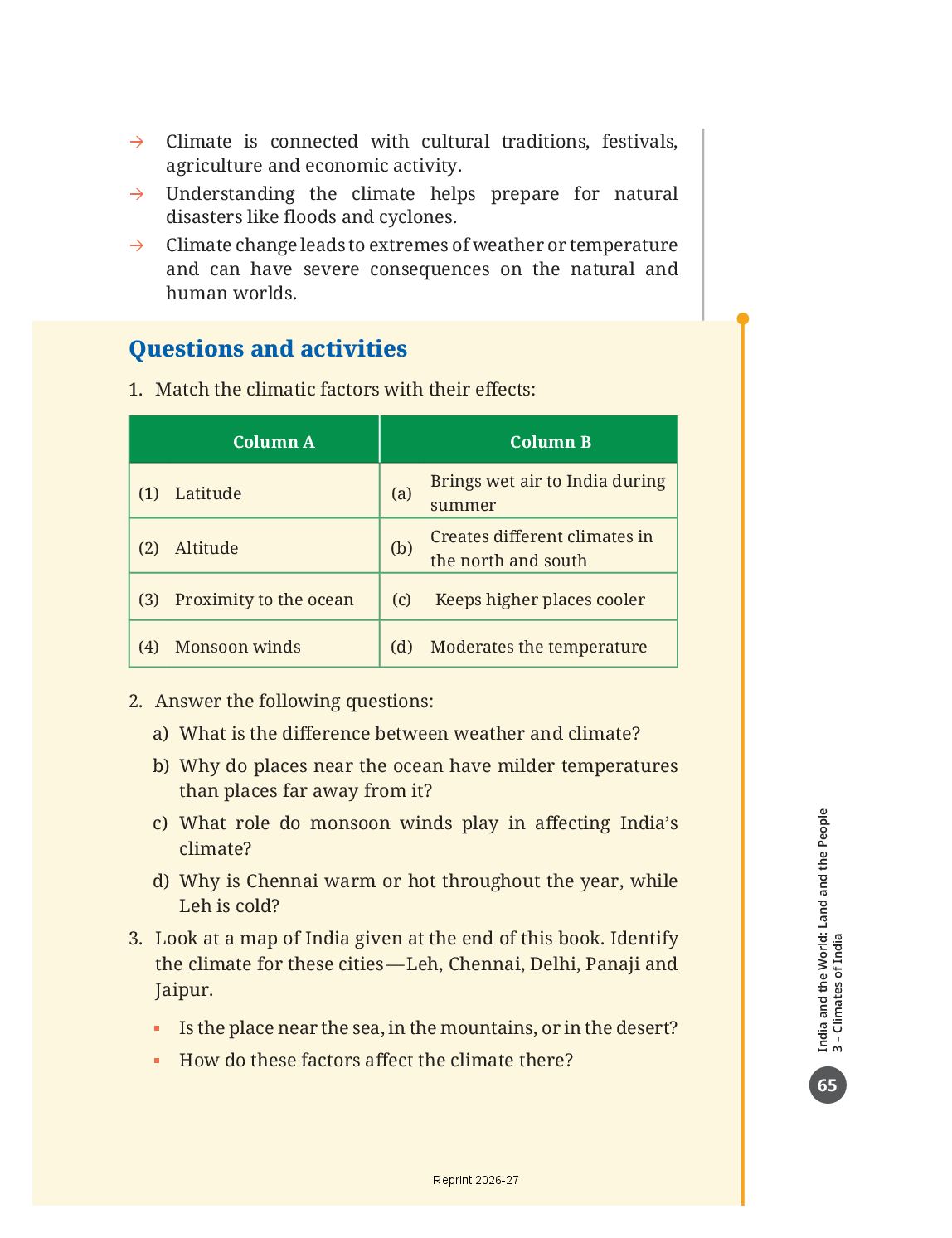
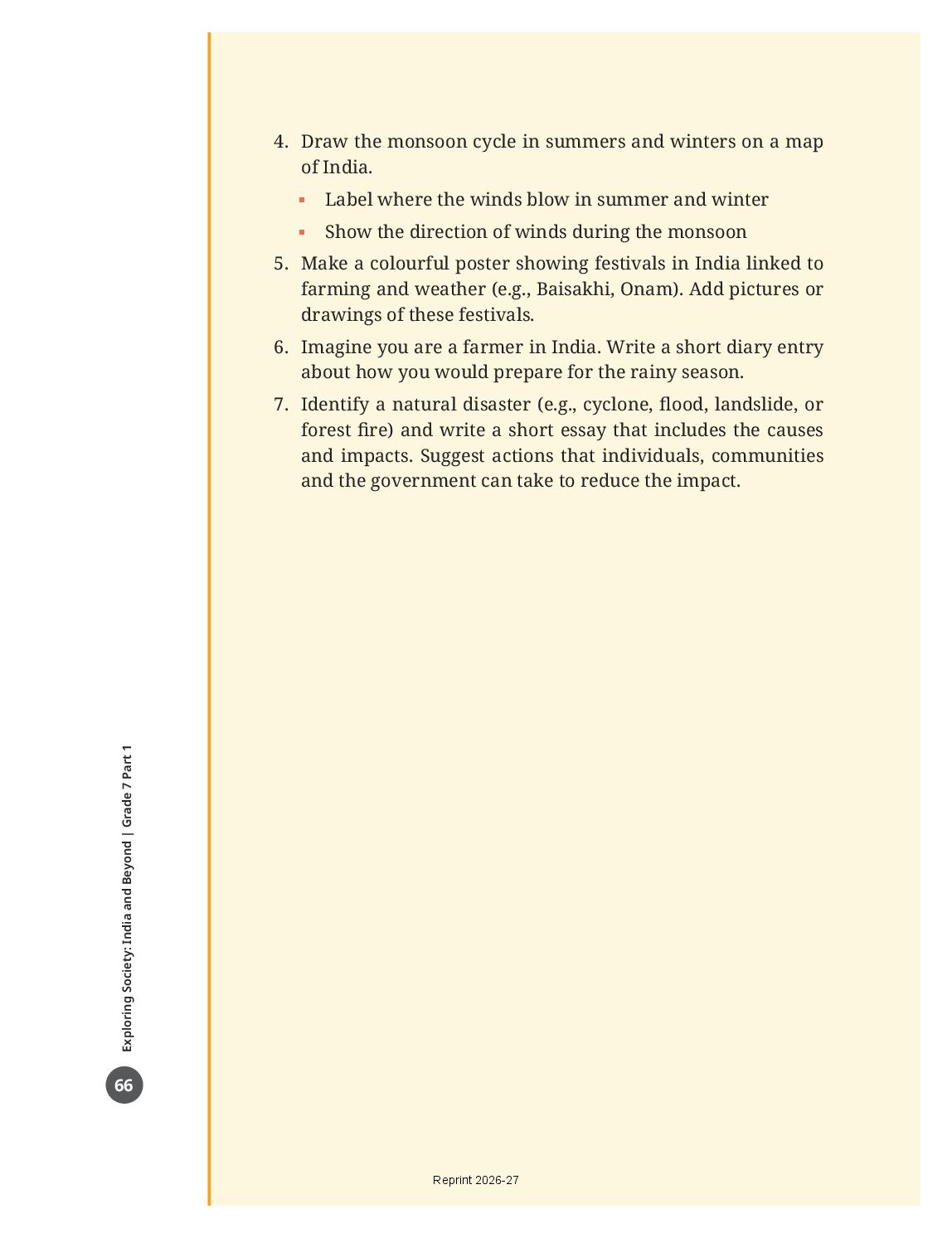
What Is in Climates of India? (Class 7 Social Science Chapter 3)
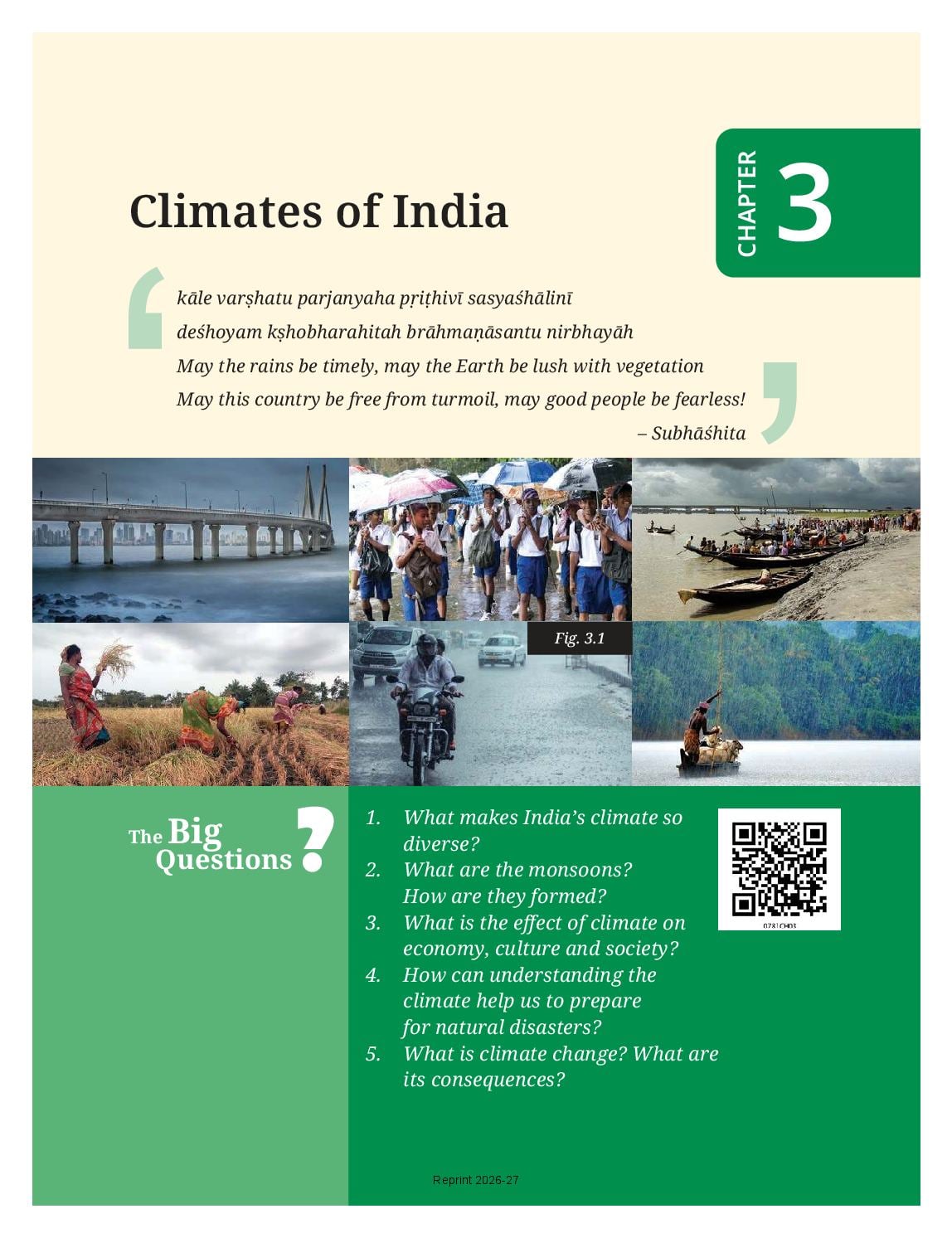
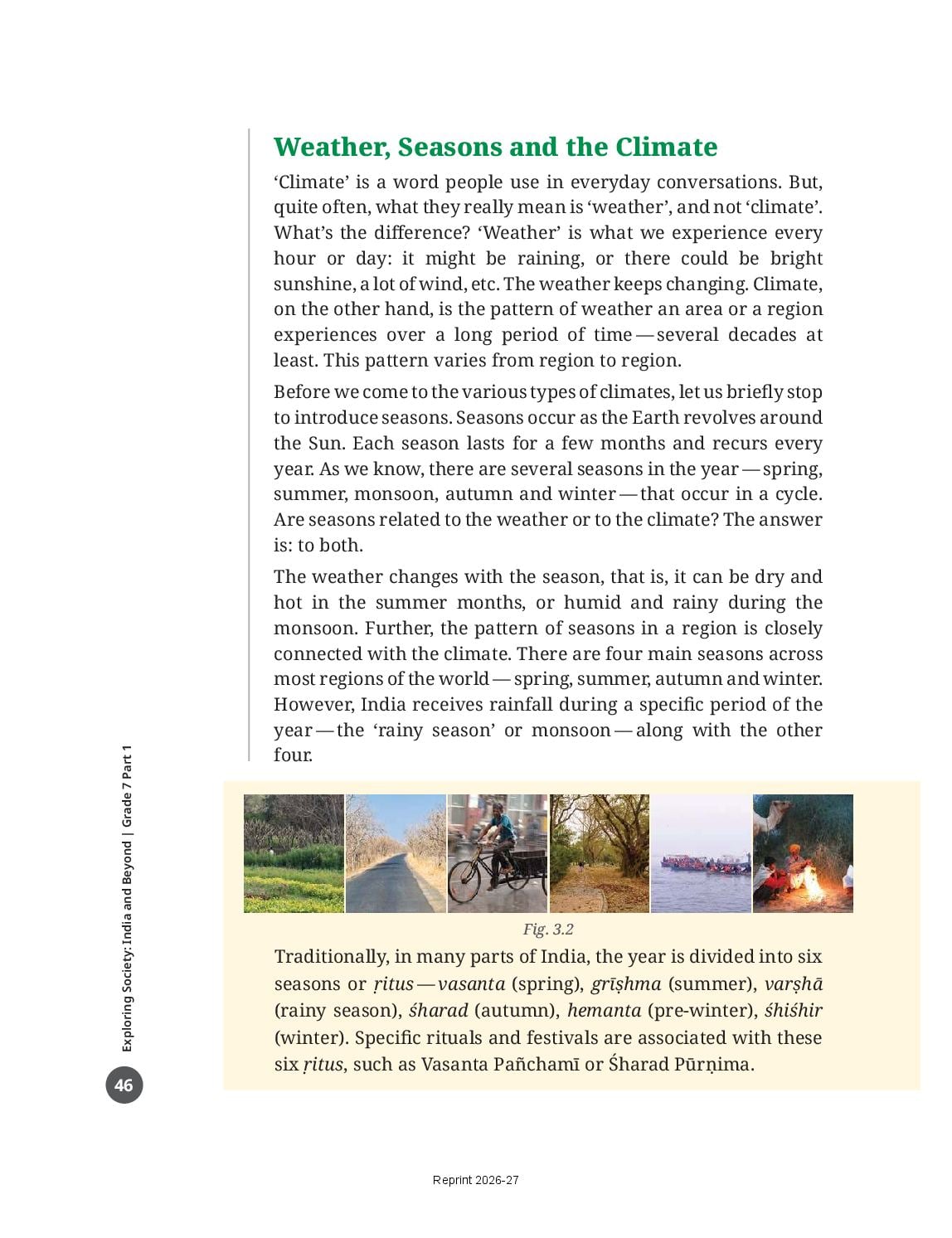
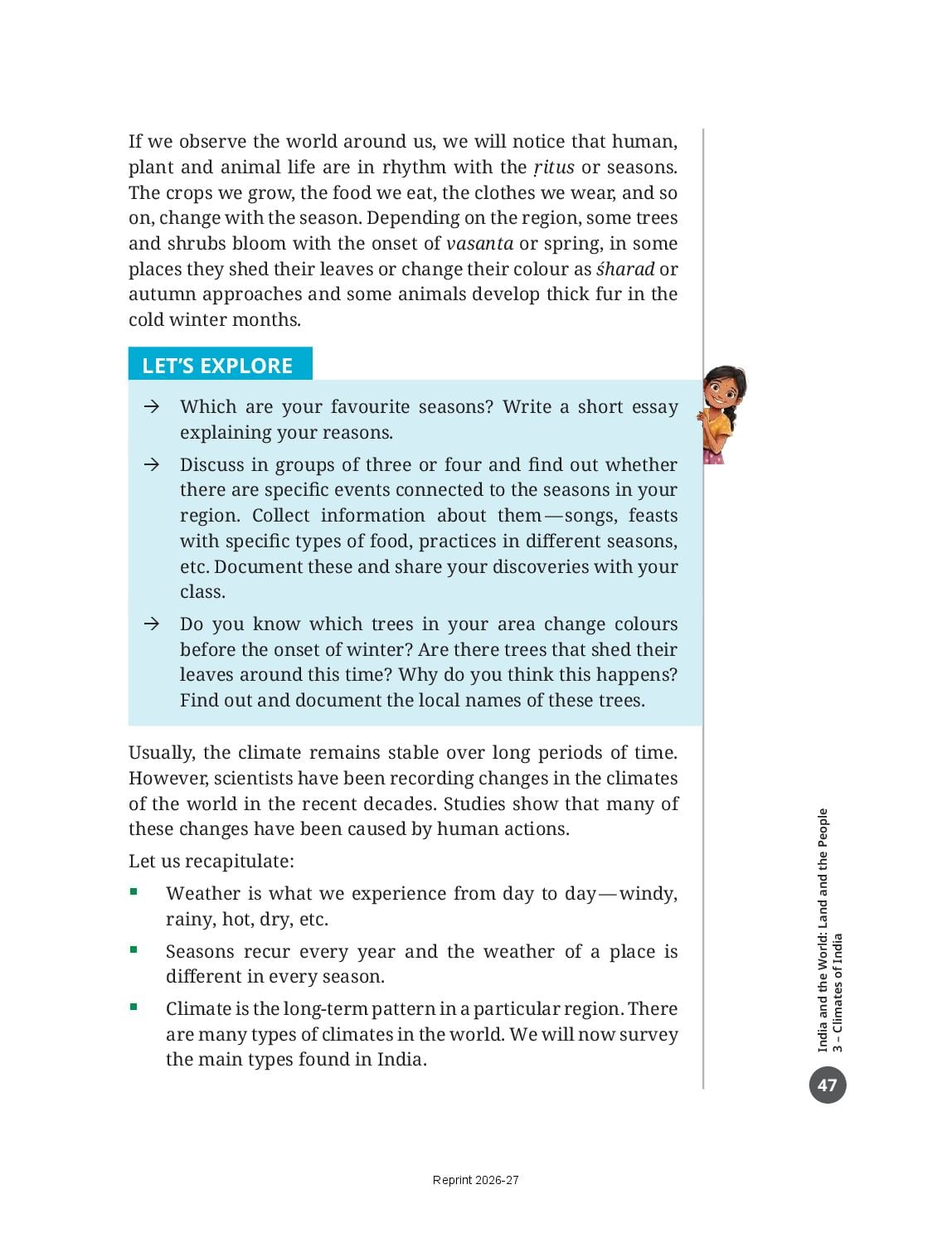
- Weather is what we feel from hour to hour or day to day; seasons recur every year; climate is the pattern of weather a region has over a long period — at least several decades. Traditionally India divides the year into six ṛitus — vasanta, grīṣhma, varṣhā, śharad, hemanta and śhiśhir.
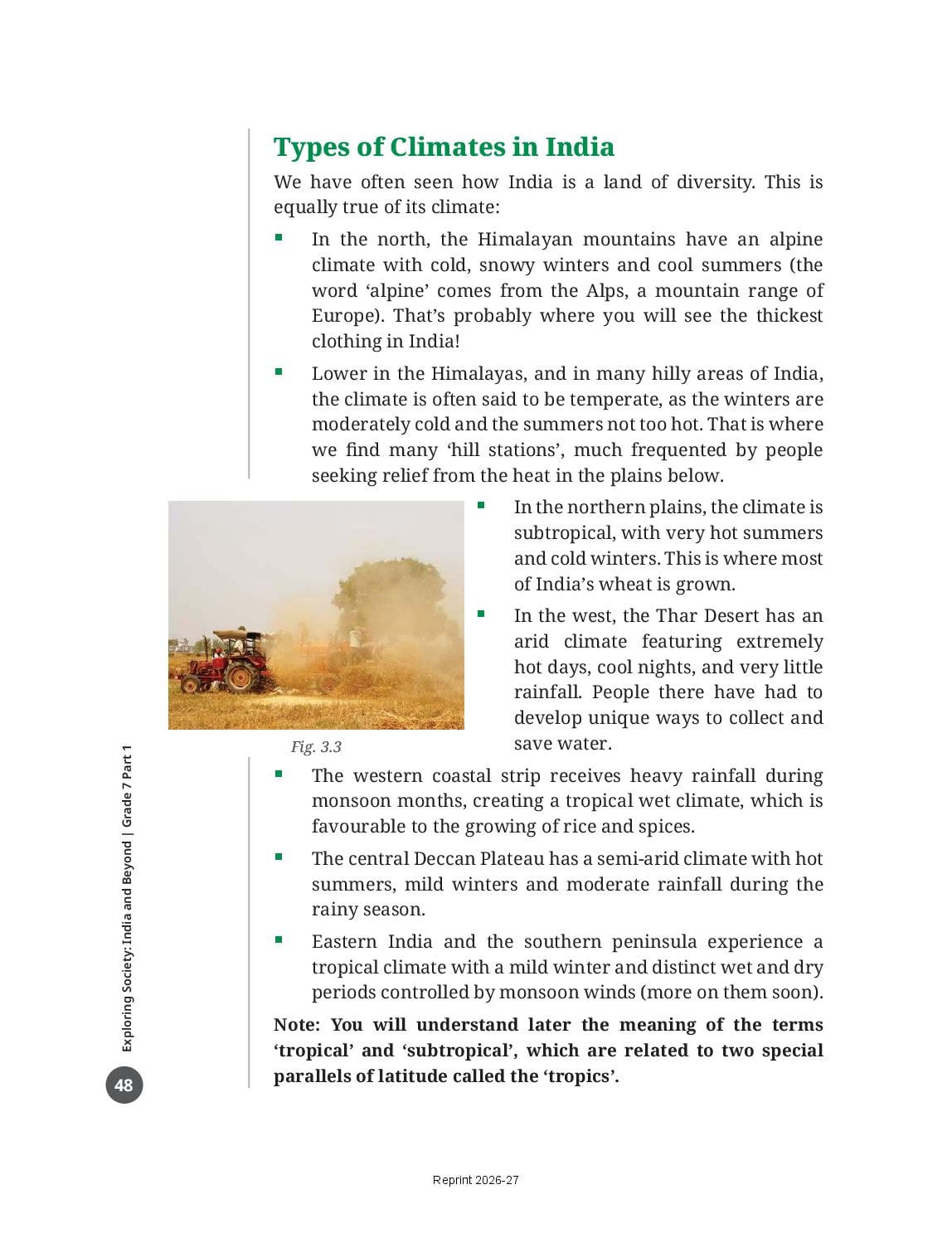
- India has seven kinds of climate in one country: alpine (Himalayas), temperate (lower Himalayas and hill areas), subtropical (northern plains), arid (Thar Desert), tropical wet (western coastal strip), semi-arid (Deccan Plateau) and tropical (eastern India and the southern peninsula).
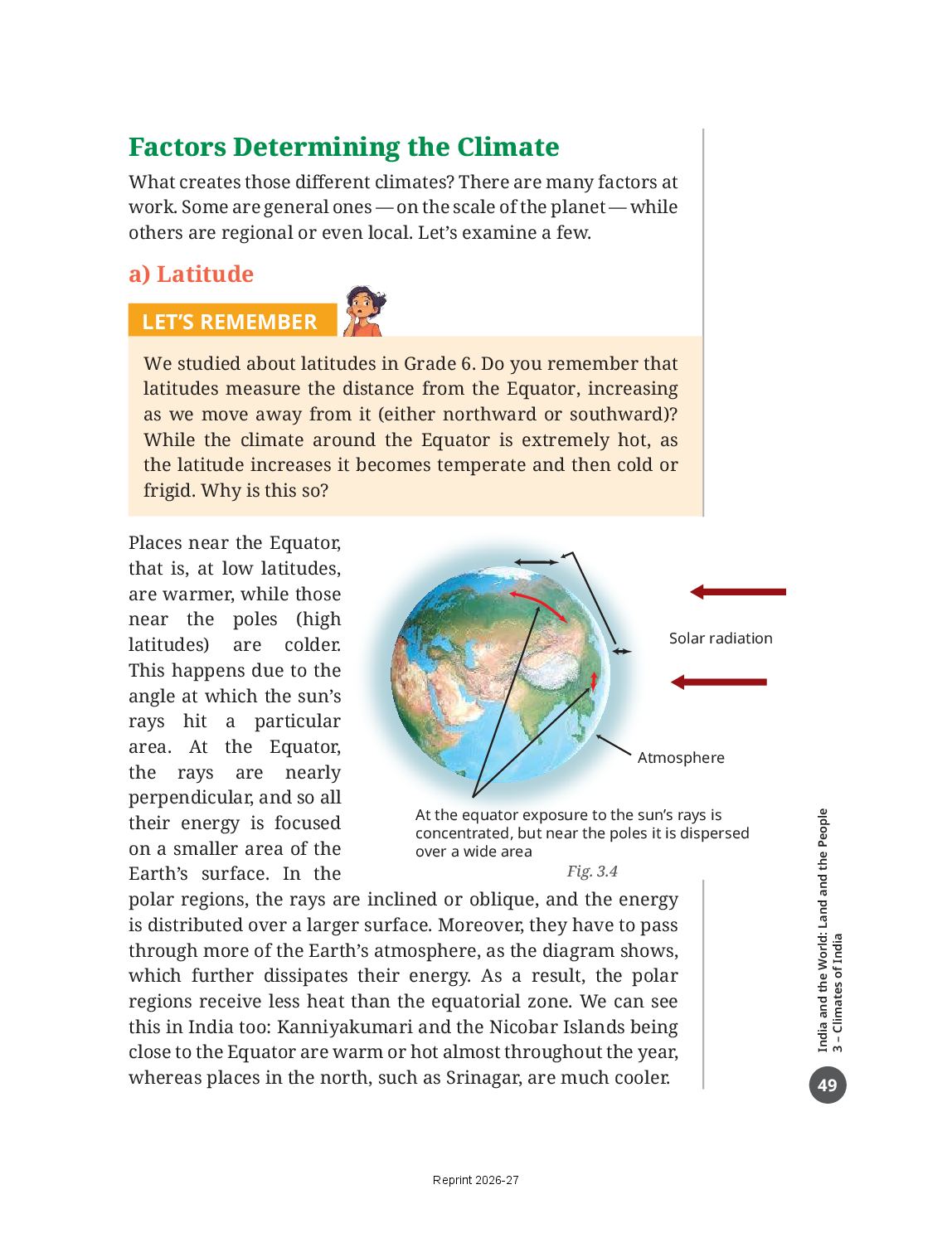
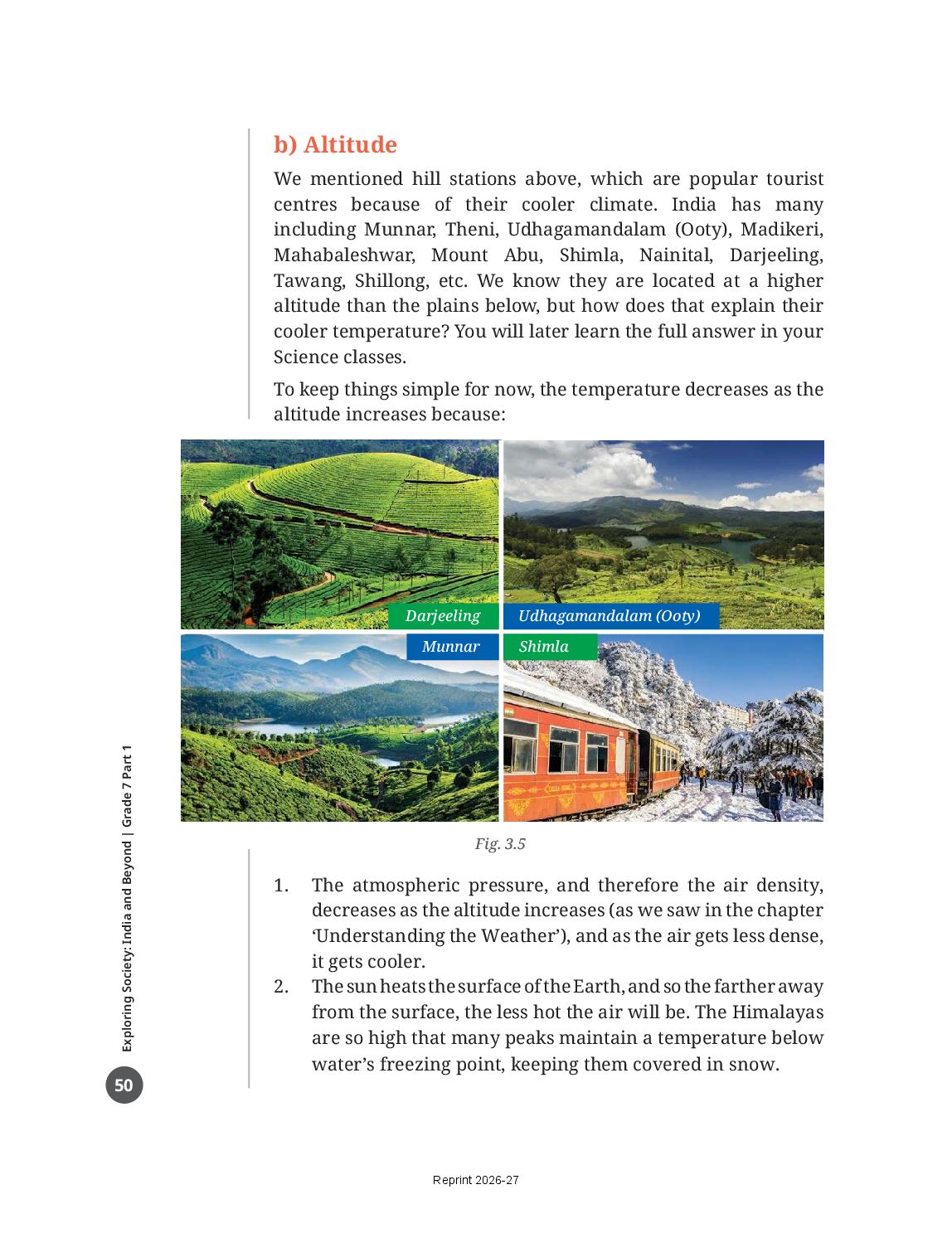
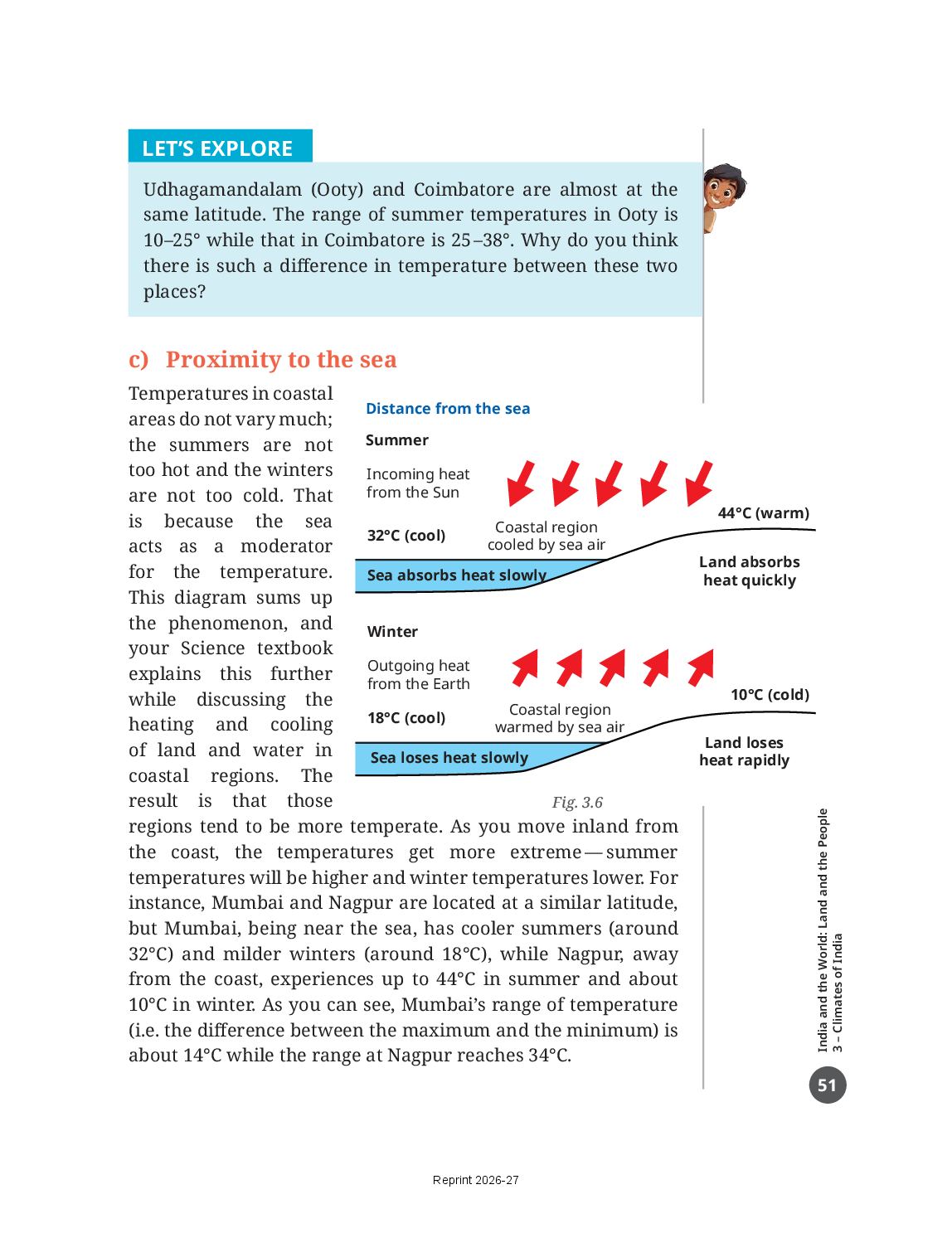
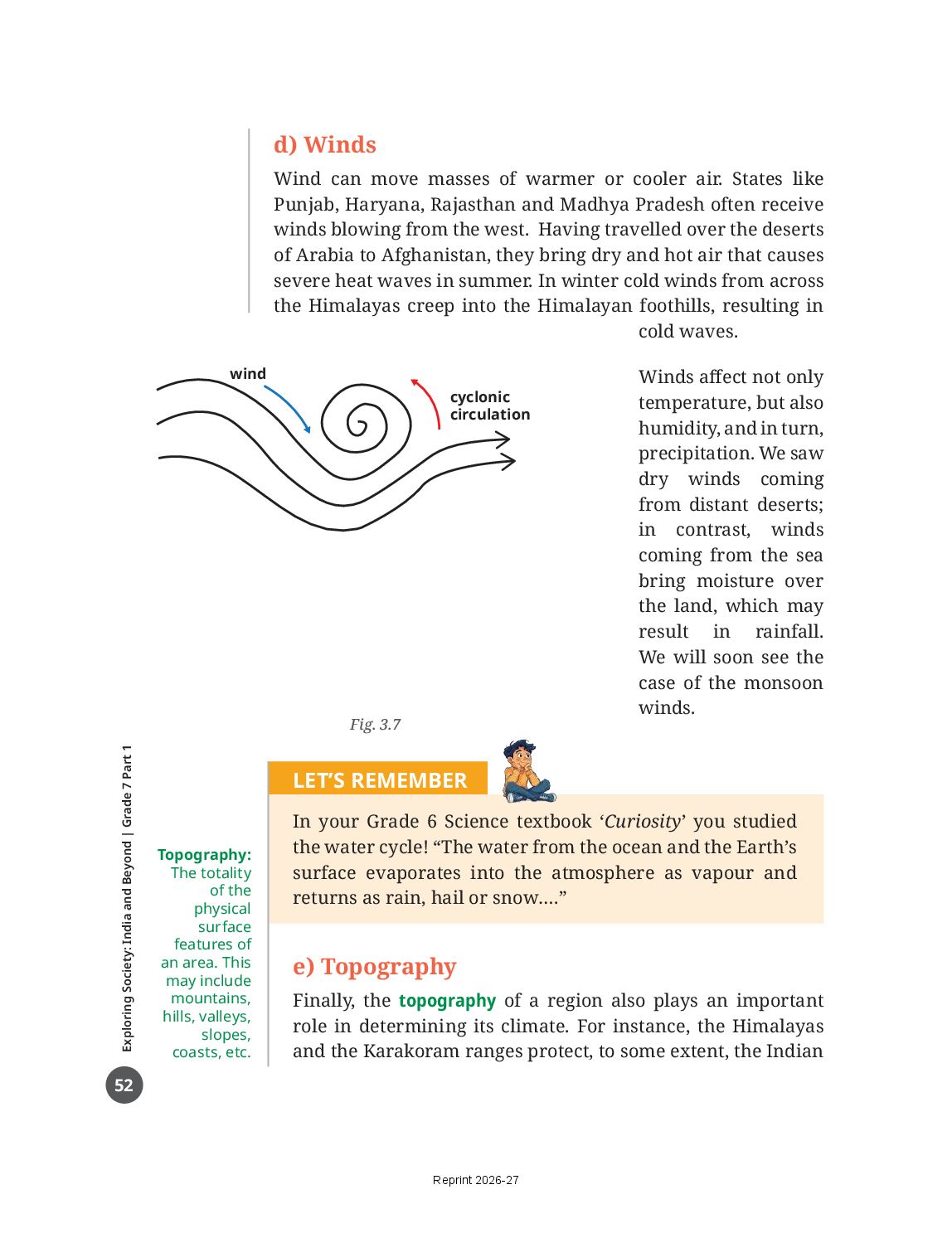
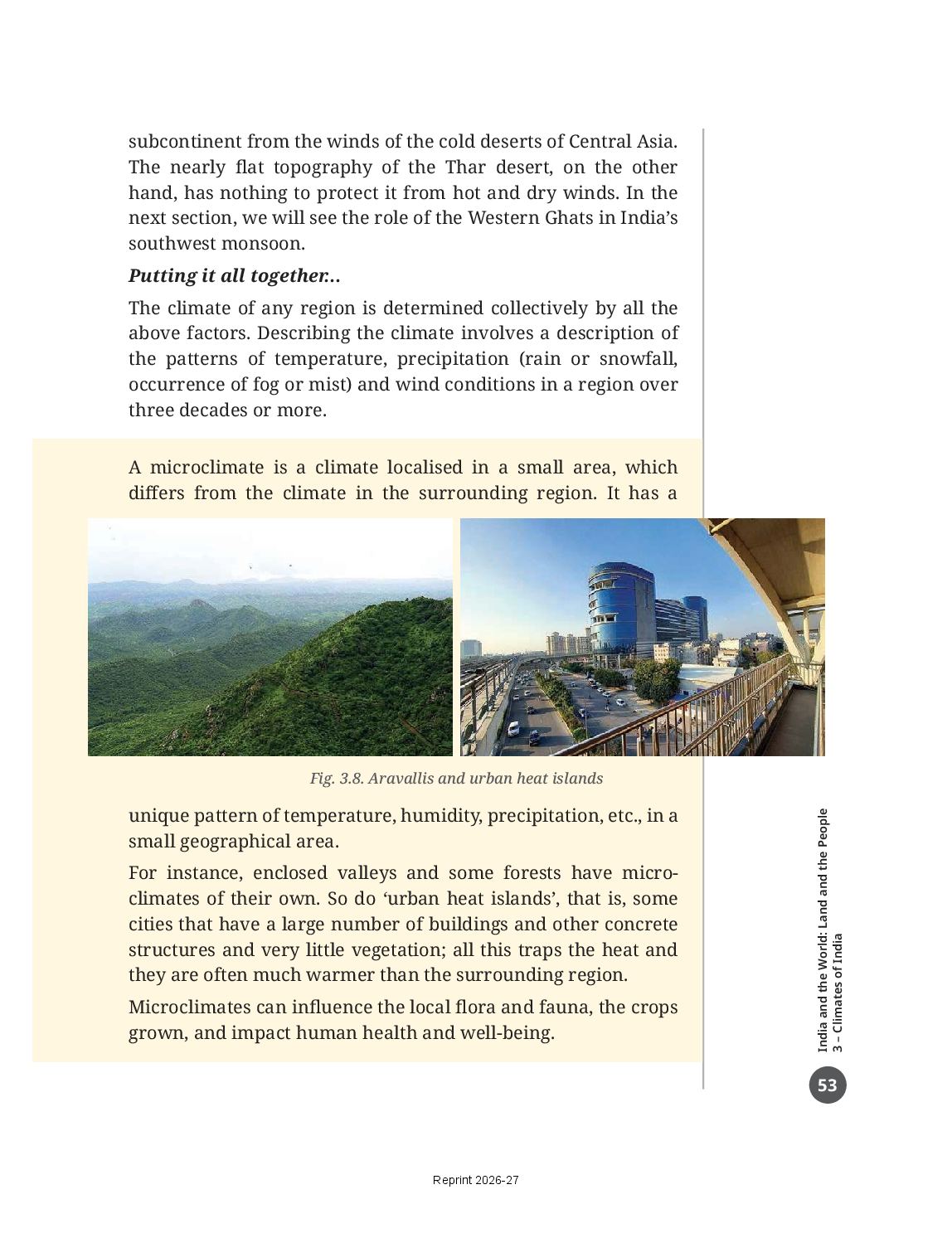
- Five factors decide a region’s climate — latitude (the angle of the sun’s rays), altitude (air thins and cools as you go up), proximity to the sea (the sea moderates temperature), winds (they carry heat and moisture) and topography (mountains block or lift winds). A microclimate is a small local climate of its own, such as an ‘urban heat island’.
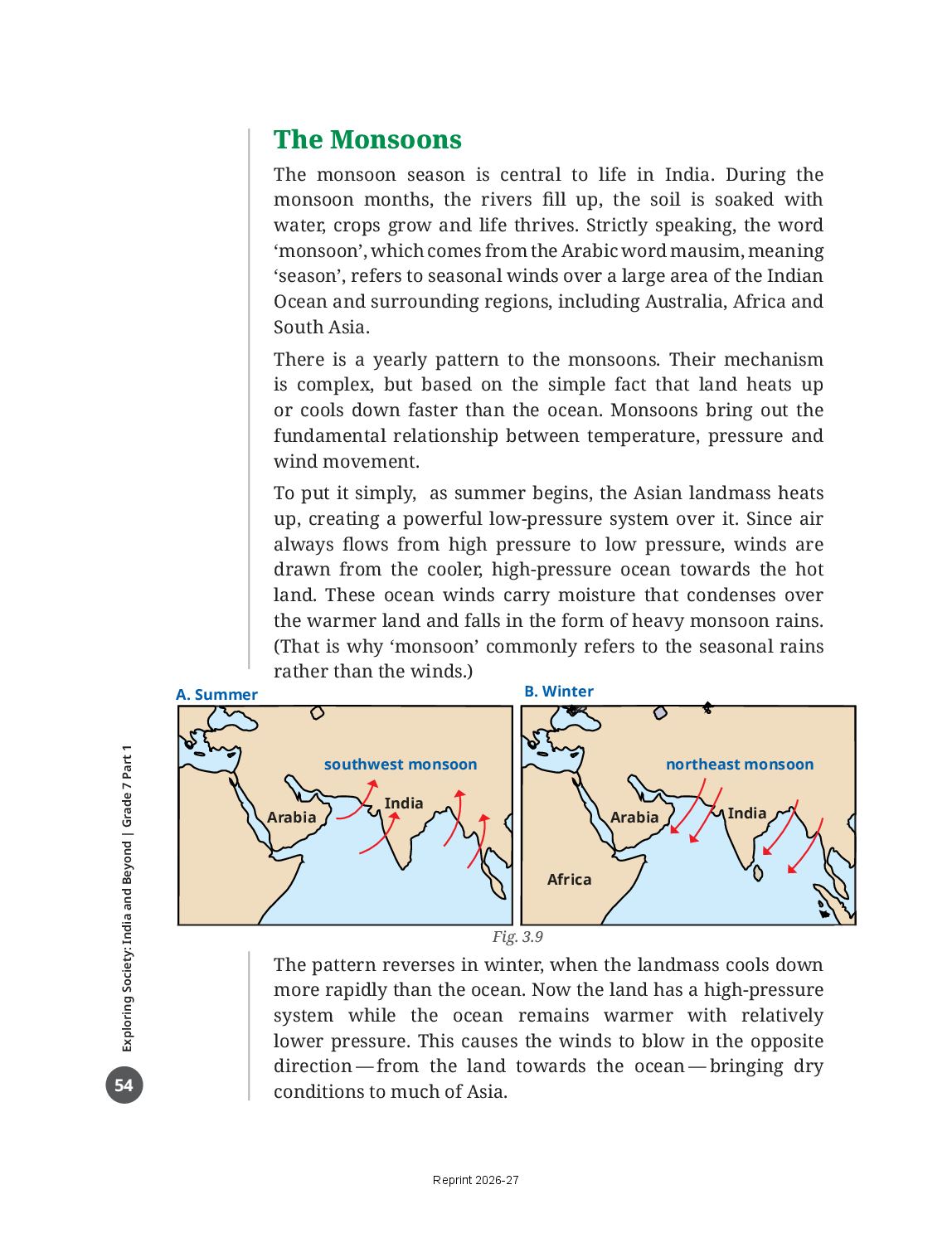
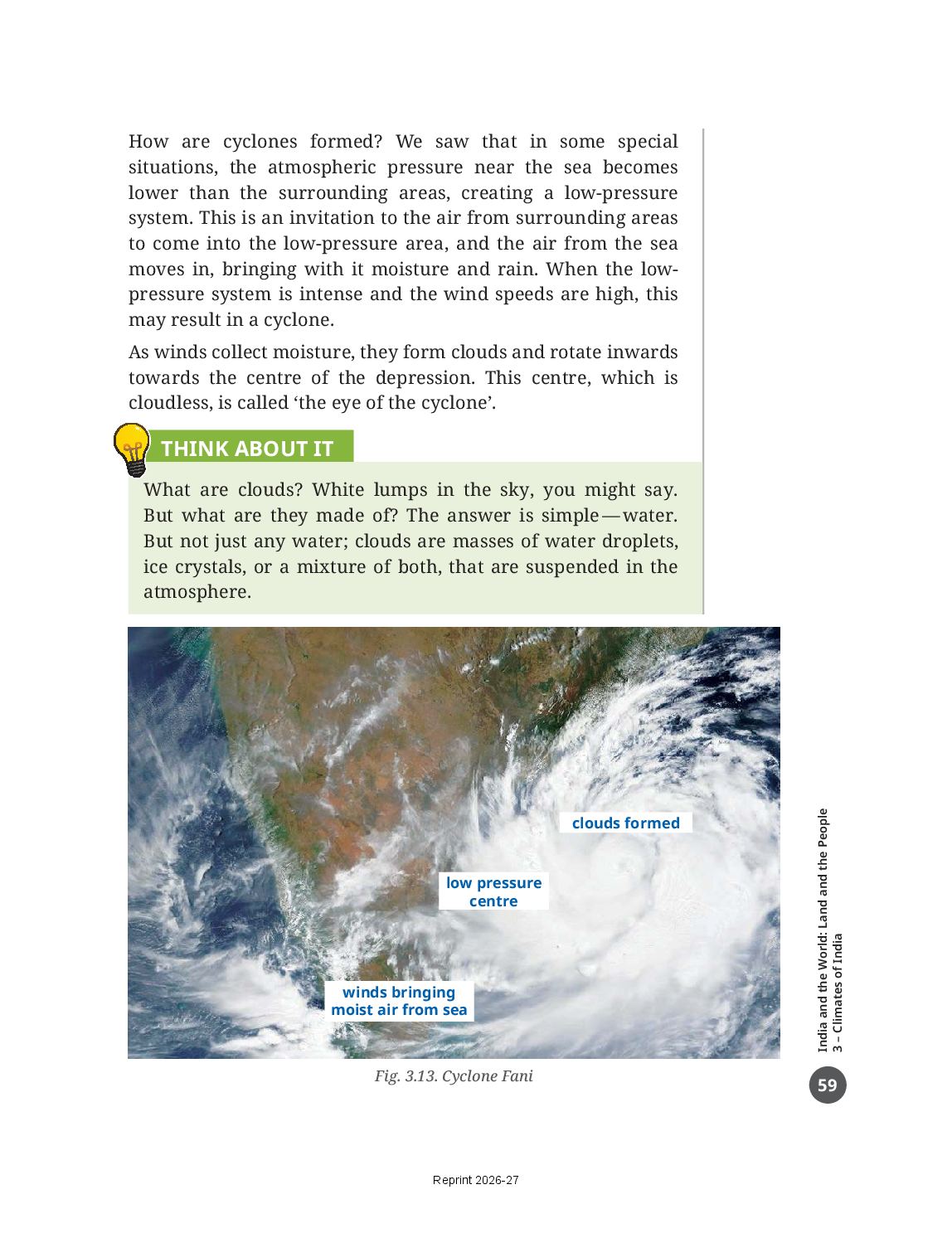
- The monsoon — from the Arabic mausim, ‘season’ — works because land heats and cools faster than the ocean. In summer the hot Asian landmass makes a low-pressure area and moist sea winds rush in: the southwest monsoon, arriving at India’s southern tip in early June and covering the country by mid-July. In winter the flow reverses: the dry northeast monsoon, which still brings rain to parts of east and south India.
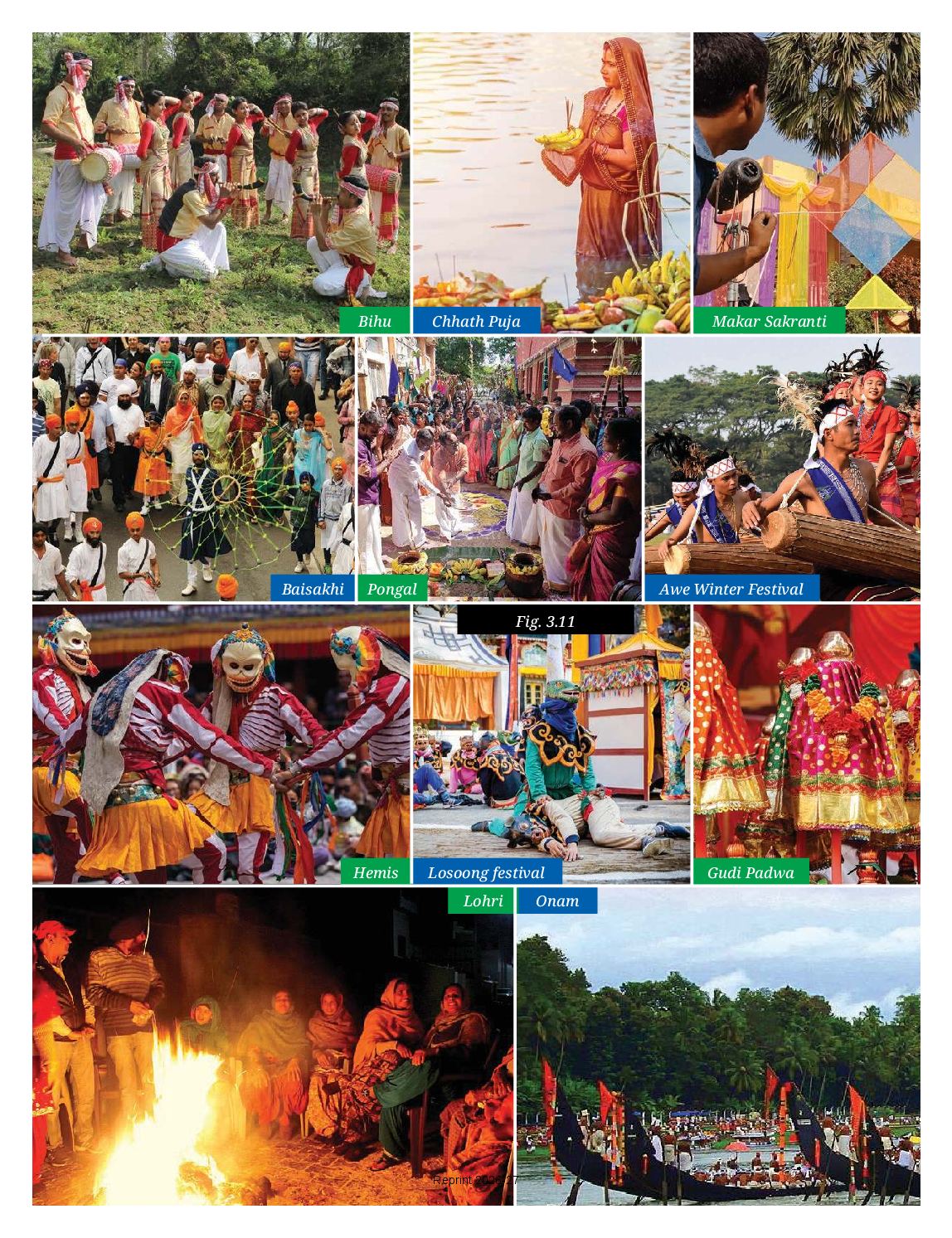
- Climate shapes culture and economy — Bihu, Pongal, Onam, Baisakhi, Lohri, Chhath Puja and other festivals follow the farming year, while a ‘monsoon failure’ means poor harvests, long walks for water, migration to cities and inflation.
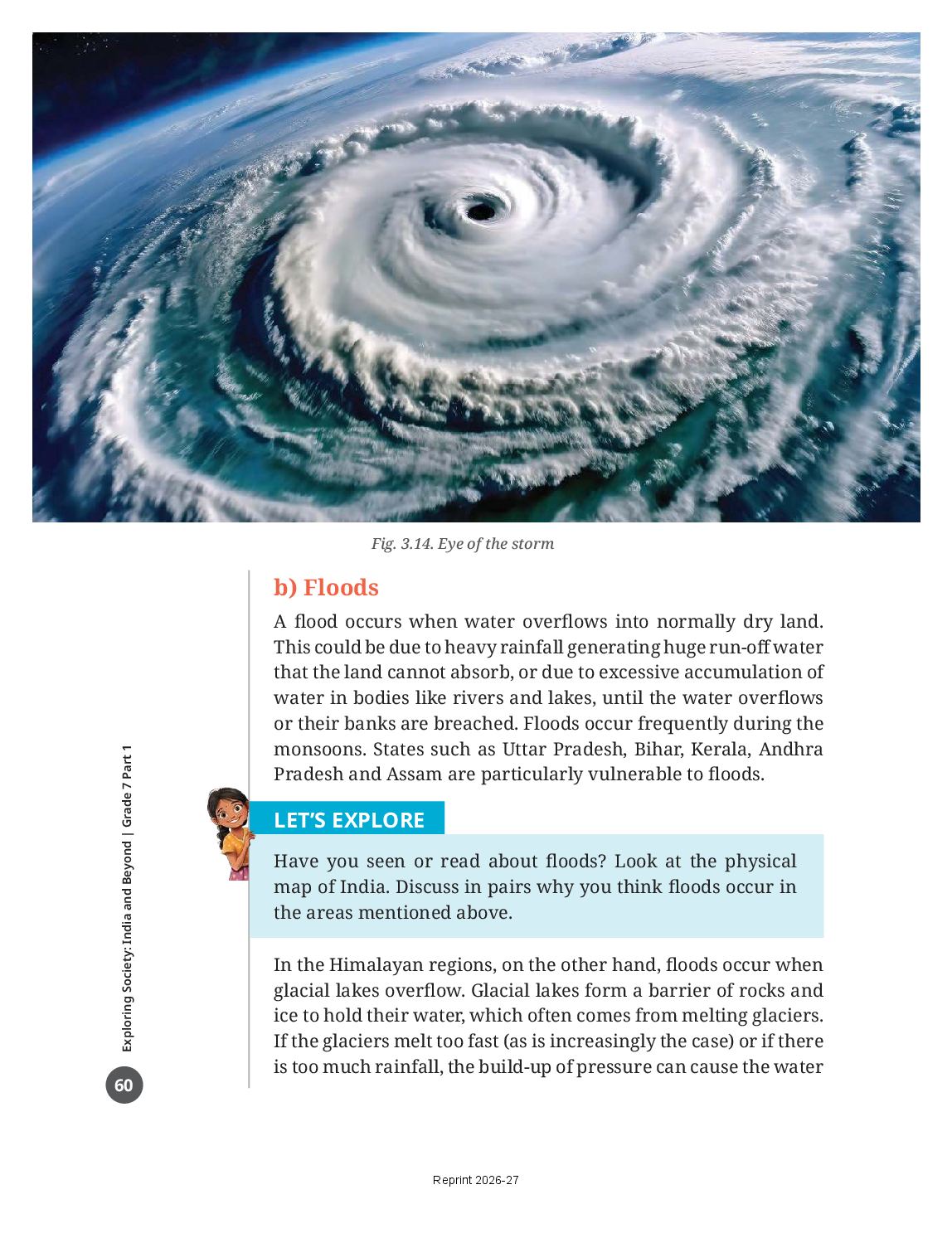
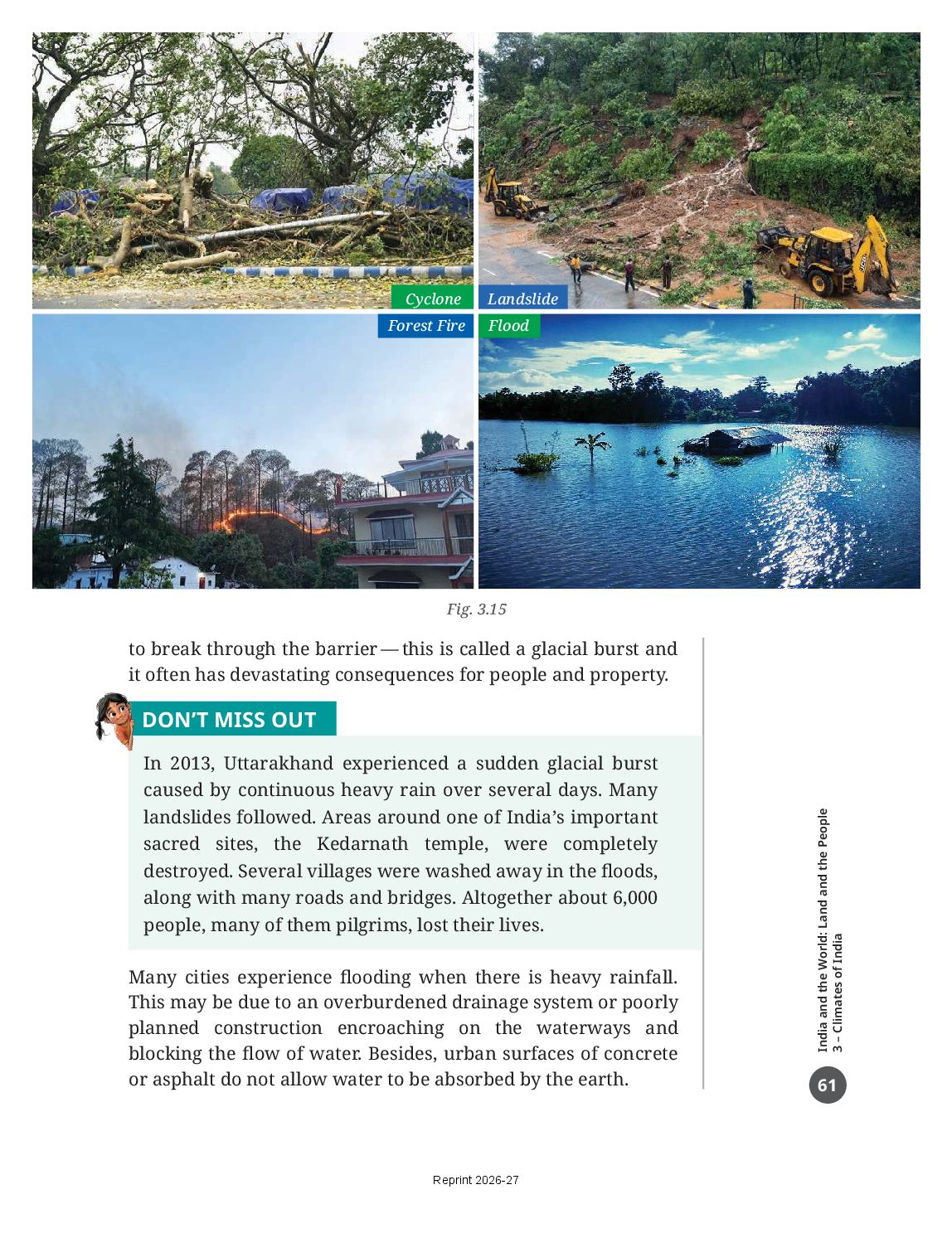
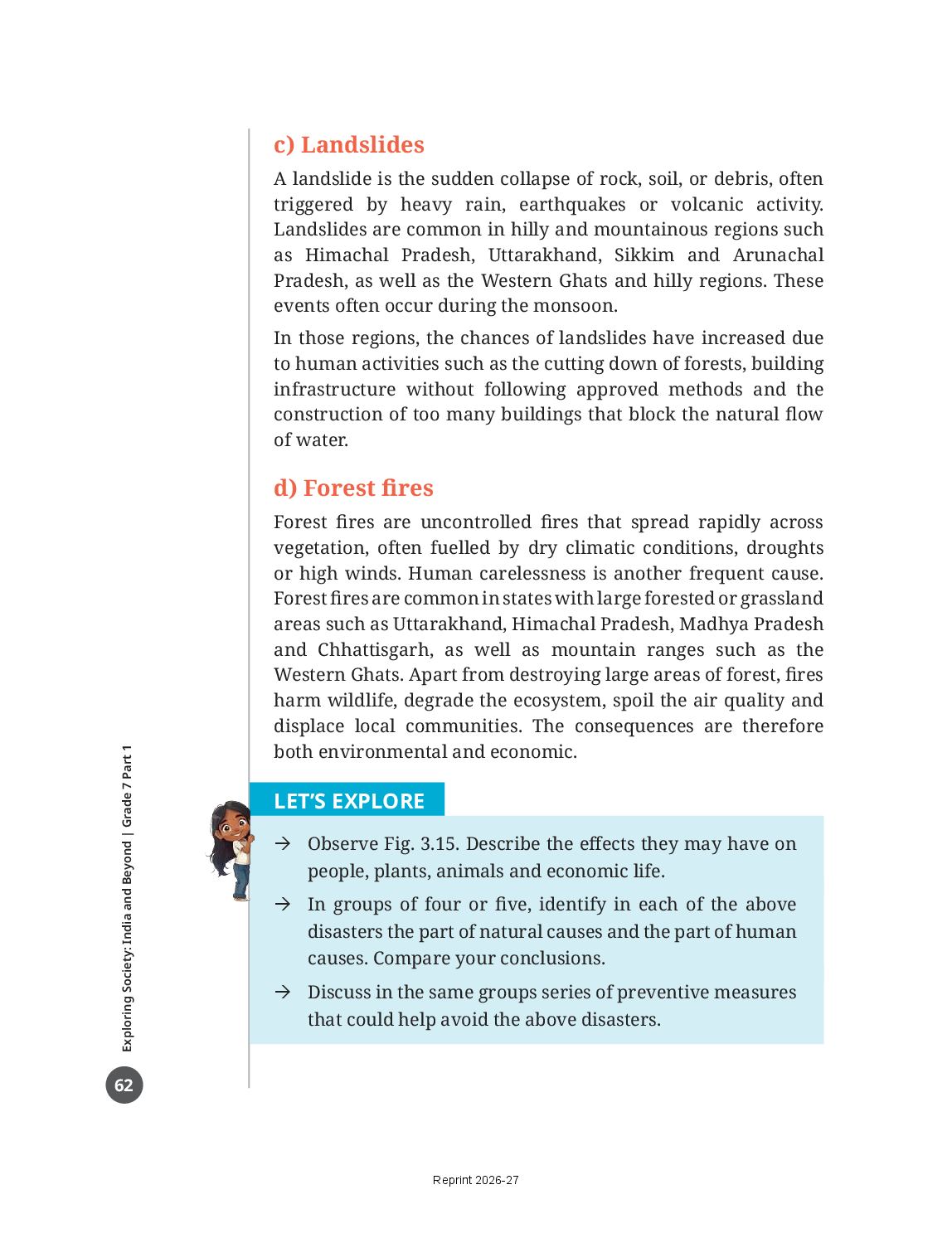
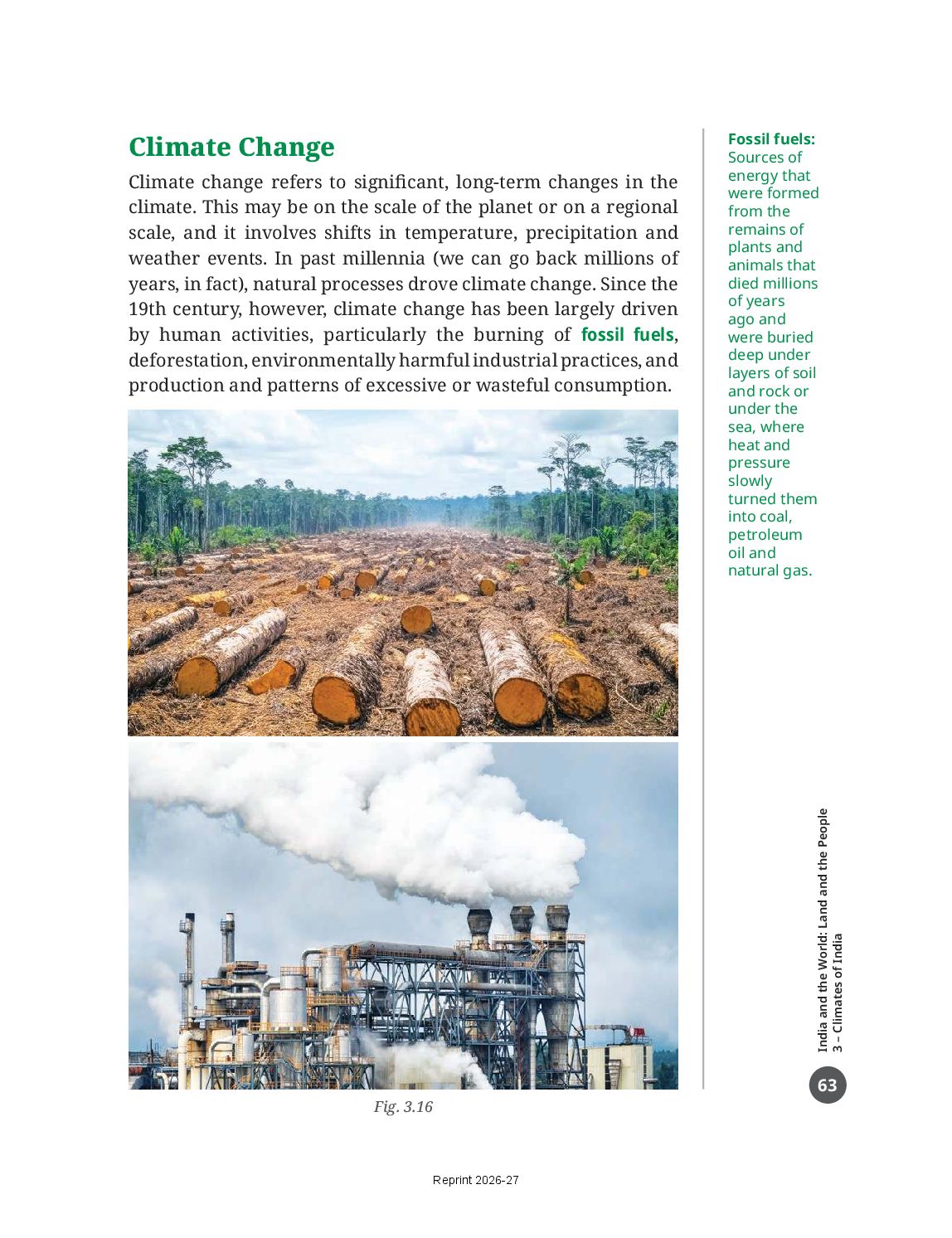
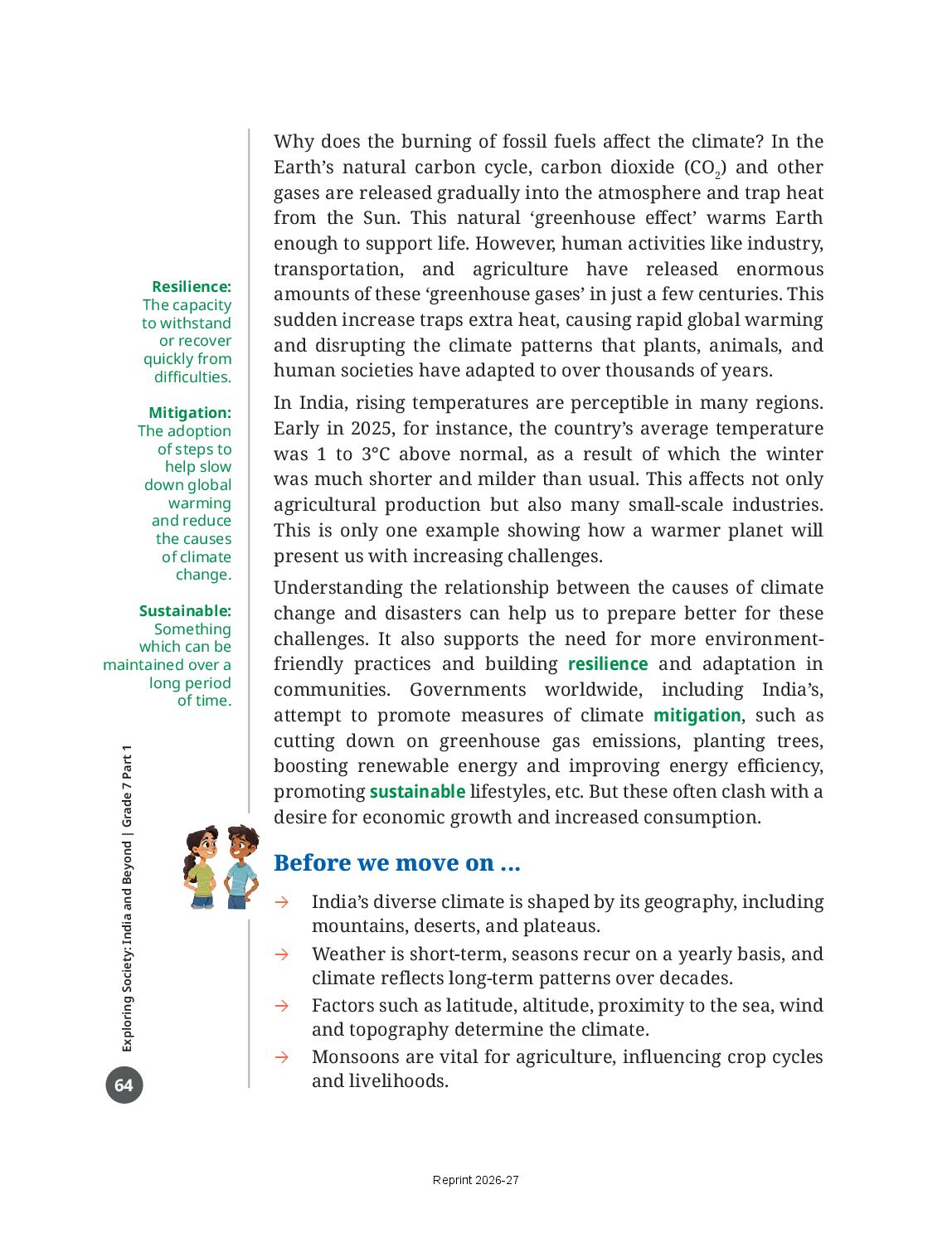
- India’s weather also brings disasters — cyclones (with a cloudless ‘eye’), floods and glacial bursts, landslides and forest fires — many of them worsened by human action. Climate change, driven since the 19th century mostly by fossil fuels and deforestation, is making these extremes worse; the answers are mitigation, resilience and sustainable living.
Quick revision – Climates of India
| Term | What it means | Where it appears in the chapter | Example |
|---|---|---|---|
| Weather | What we experience every hour or day; it keeps changing | Page 46 | Rain, bright sunshine, a lot of wind |
| Climate | The pattern of weather a region has over a long period — several decades at least | Page 46 | The arid climate of the Thar Desert |
| Ṛitu | A season in the traditional Indian six-season year | Page 46 | Vasanta, grīṣhma, varṣhā, śharad, hemanta, śhiśhir |
| Latitude | Distance from the Equator, which fixes the angle of the sun’s rays | Pages 49–50 | Kanniyakumari is hot, Srinagar is cool |
| Altitude | Height above sea level; temperature falls as it rises | Page 50 | Hill stations — Ooty, Shimla, Darjeeling, Munnar |
| Topography | The totality of the physical surface features of an area | Margin note, page 52 | The Himalayas shielding India from Central Asian winds |
| Microclimate | A climate localised in a small area, different from the region around it | Page 53 | An ‘urban heat island’; an enclosed valley |
| Monsoon | Seasonal winds (and the rains they bring) over the Indian Ocean region; from Arabic mausim, ‘season’ | Page 54 | The southwest monsoon reaching Kerala in early June |
| Eye of the cyclone | The cloudless centre of the depression around which the winds rotate | Page 59 | Fig. 3.14, the eye of the storm |
| Glacial burst | Water breaking through the rock-and-ice barrier of a glacial lake | Pages 60–61 | Uttarakhand, 2013 — the Kedarnath disaster |
| Fossil fuels | Energy sources formed from plants and animals buried millions of years ago | Margin note, page 63 | Coal, petroleum oil, natural gas |
| Mitigation | Steps taken to slow global warming and reduce the causes of climate change | Margin note, page 64 | Cutting emissions, planting trees, renewable energy |
| Resilience | The capacity to withstand or recover quickly from difficulties | Margin note, page 64 | Communities rebuilding after a cyclone |
Old NCERT vs New – Class 7 Social Science
This chapter is from Exploring Society: India and Beyond, the new NCERT Class 7 Social Science book (NCF-SE 2023, used from 2025-26). It replaced the old book “Our Pasts, Our Environment and Social and Political Life”, so chapter numbers and names differ from older PDFs.
Solutions and All Chapters
Answers to the exercises and the full chapter list of Exploring Society: India and Beyond:
Climates of India – Overview
| Class | Class 7 |
| Subject | Social Science |
| Book | Exploring Society: India and Beyond – new NCERT book |
| Part | Part I |
| Chapter | 3 of 20 – Climates of India |
| Book pages | 45 – 66 |
| Edition | NCERT Reprint 2026-27 |
| Session | 2026-27 |
| Free – read online or download |
Class 7 Social Science Chapter 3 – FAQs
Where can I download Climates of India Class 7 PDF?
From the download table on this page – the chapter PDF is free, and the full book is linked too.
What is Class 7 Social Science Chapter 3 about?
Weather is what we feel from hour to hour or day to day; seasons recur every year; climate is the pattern of weather a region has over a long period — at least several decades. Traditionally India divides the year into six ṛitus — vasanta, grīṣhma, varṣhā, śharad, hemanta and śhiśhir.
Is Climates of India from the new NCERT Class 7 Social Science book?
Yes. It is chapter 3 of exploring society: india and beyond (part i), the new NCERT Class 7 Social Science book for 2026-27.
Is this the latest NCERT edition for 2026-27?
Yes – the PDF is NCERT’s latest edition for the 2026-27 session.
Where are the NCERT Solutions for Class 7 Social Science Chapter 3?
Open the NCERT Solutions link above for answers to the exercise questions.