Download The Rise of Empires – NCERT Class 7 Social Science Chapter 5 PDF from the new NCERT Class 7 Social Science book Exploring Society: India and Beyond (2026-27). Read the chapter online or download the free PDF. An empire is a collection of smaller kingdoms or territories controlled by one powerful ruler. The word comes from the Latin imperium, ‘supreme power’. The smaller kings kept their thrones but became tributaries — they paid tribute and accepted the…
The Rise of Empires PDF – Chapter 5 of Exploring Society: India and Beyond (Part I)
Read the chapter online or download the PDF.
| Chapter | Download | |
|---|---|---|
| Chapter 5 PDF | The Rise of Empires | View PDF |
| Full book | NCERT Class 7 Social Science – Exploring Society: India and Beyond | View Book |
Read Online
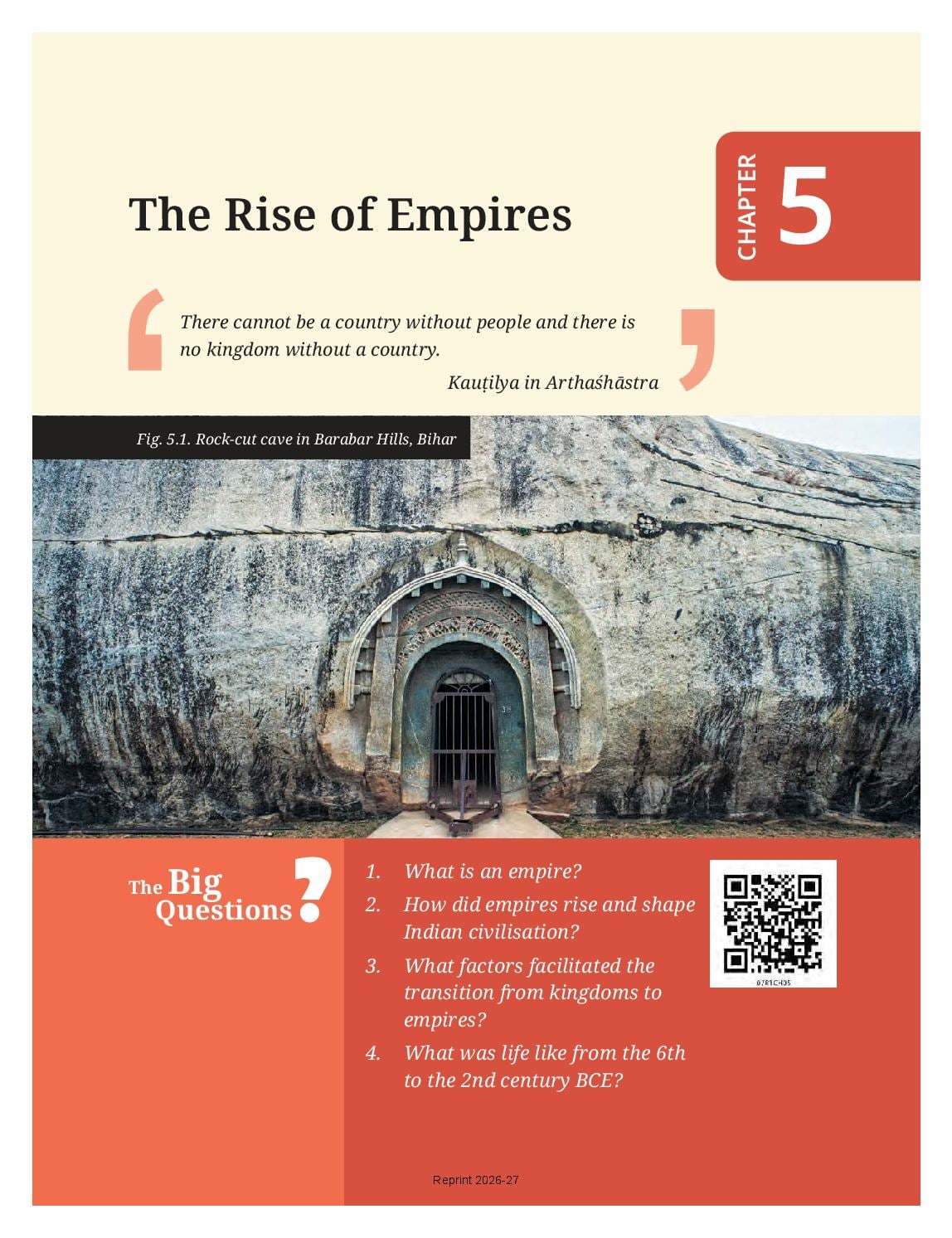
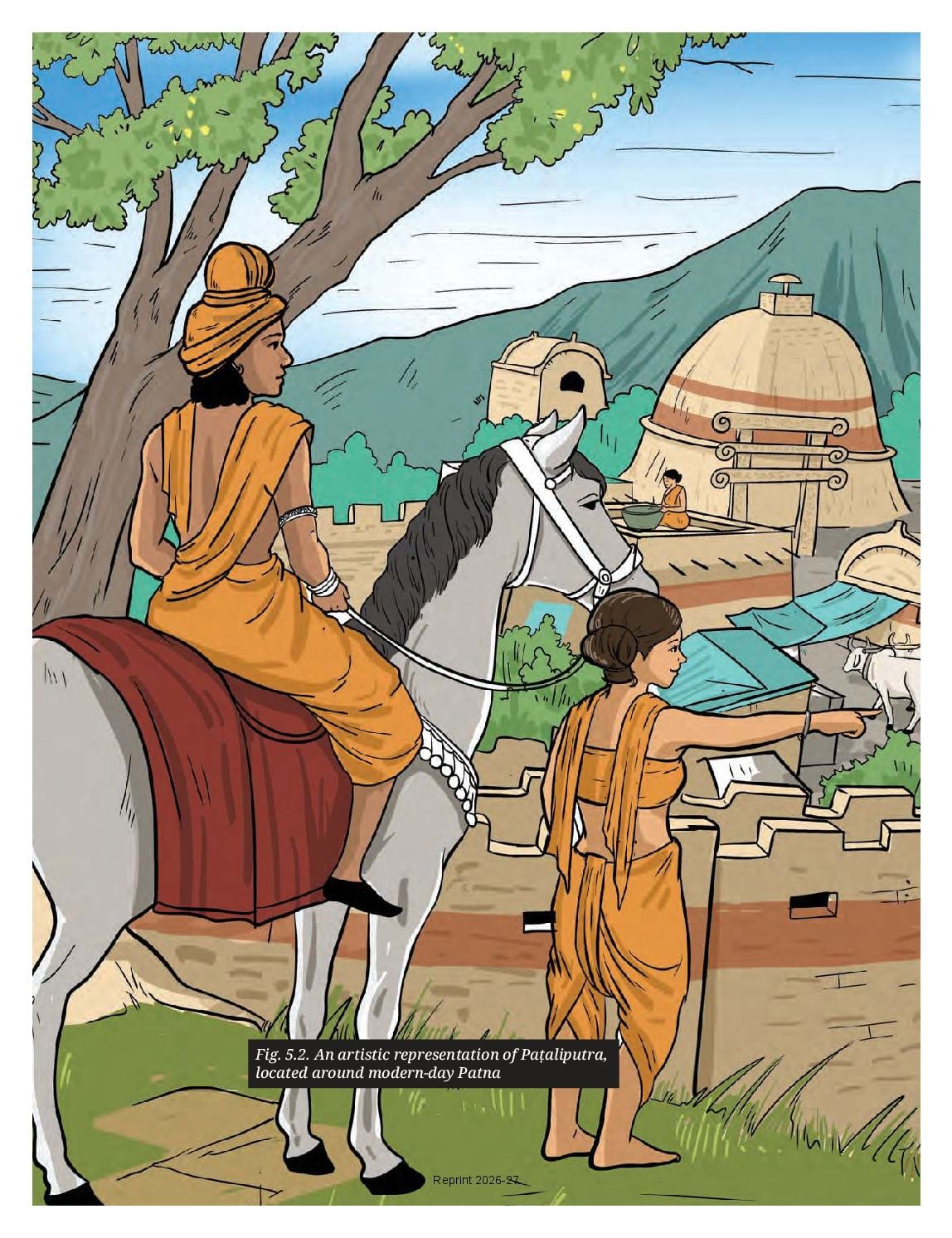
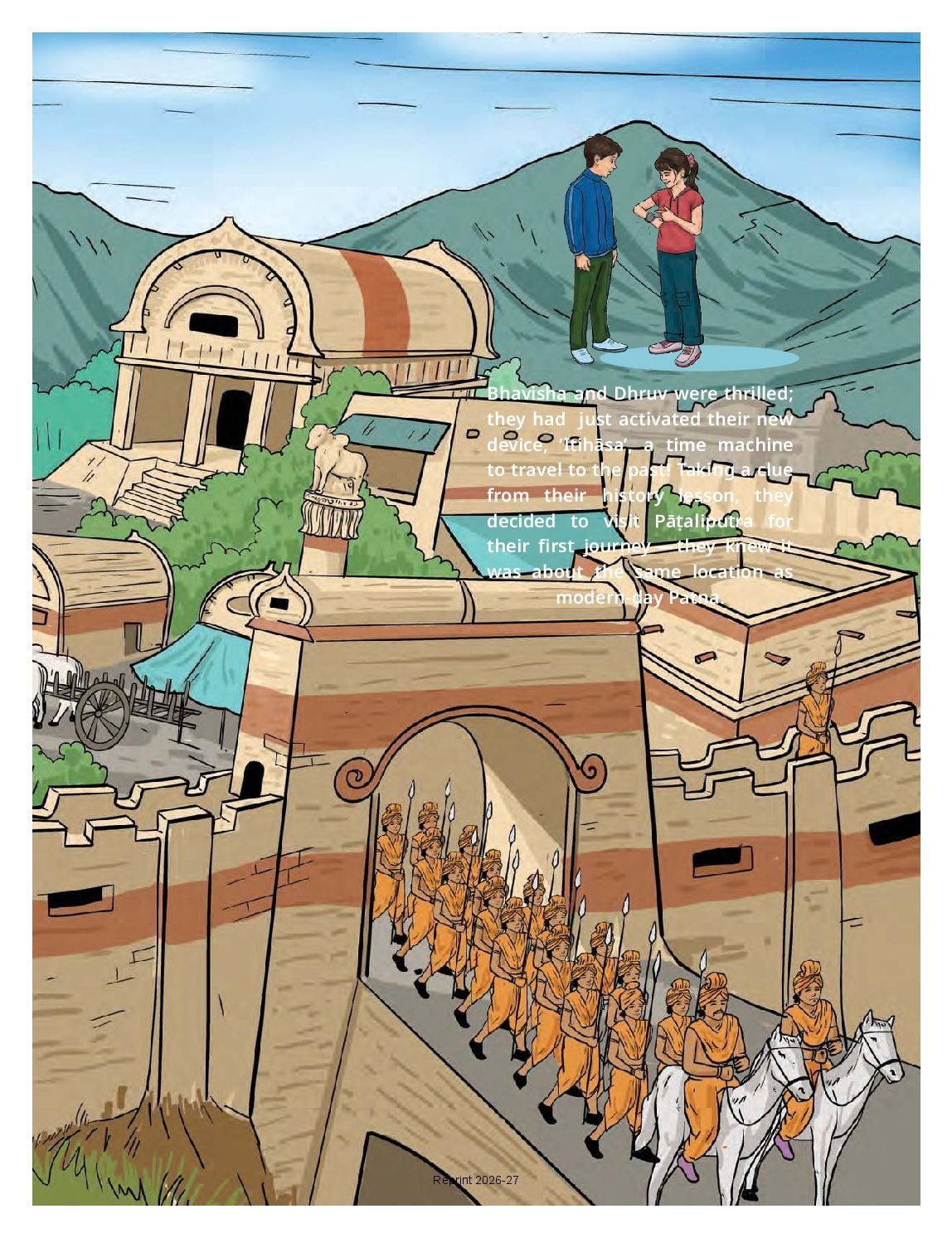
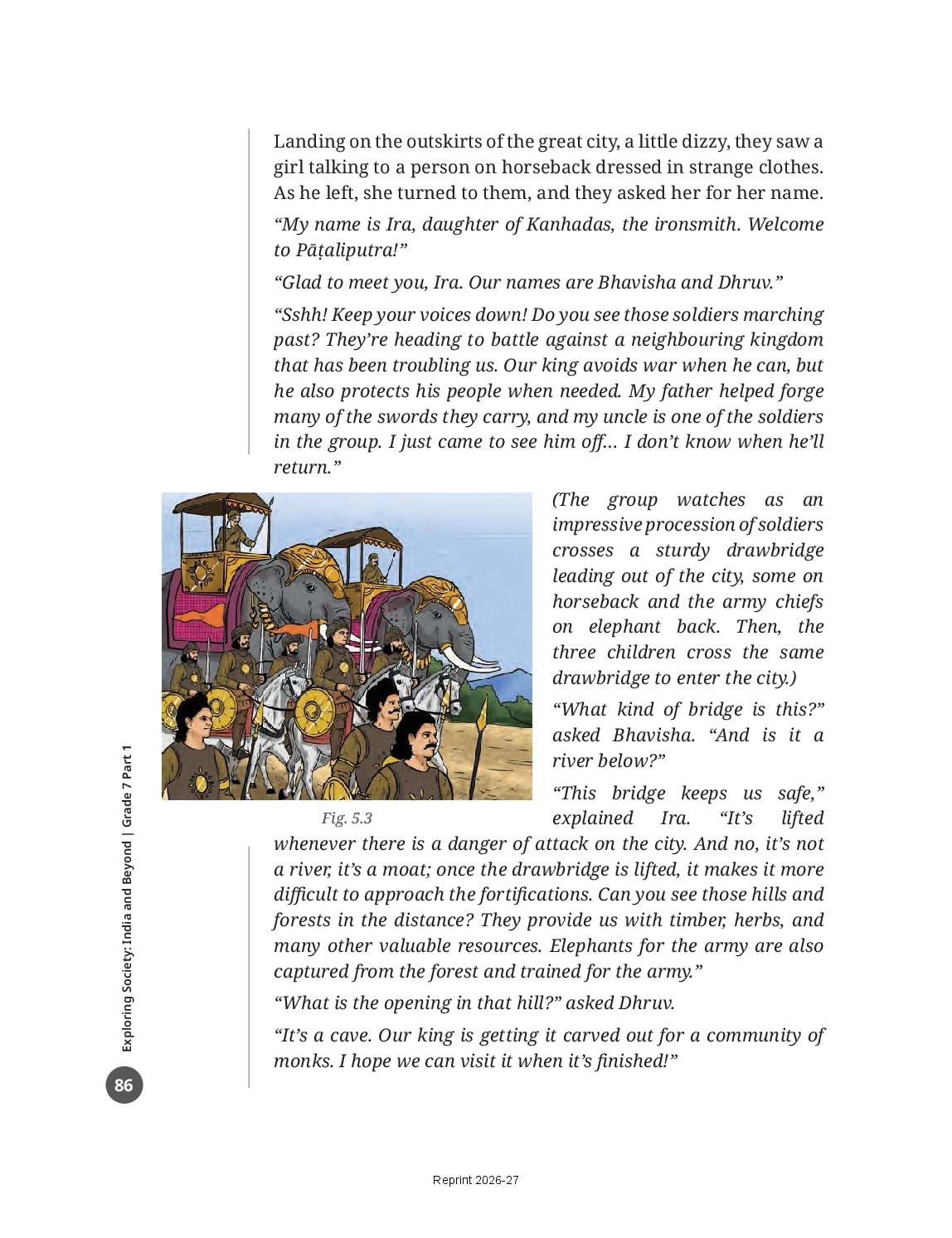
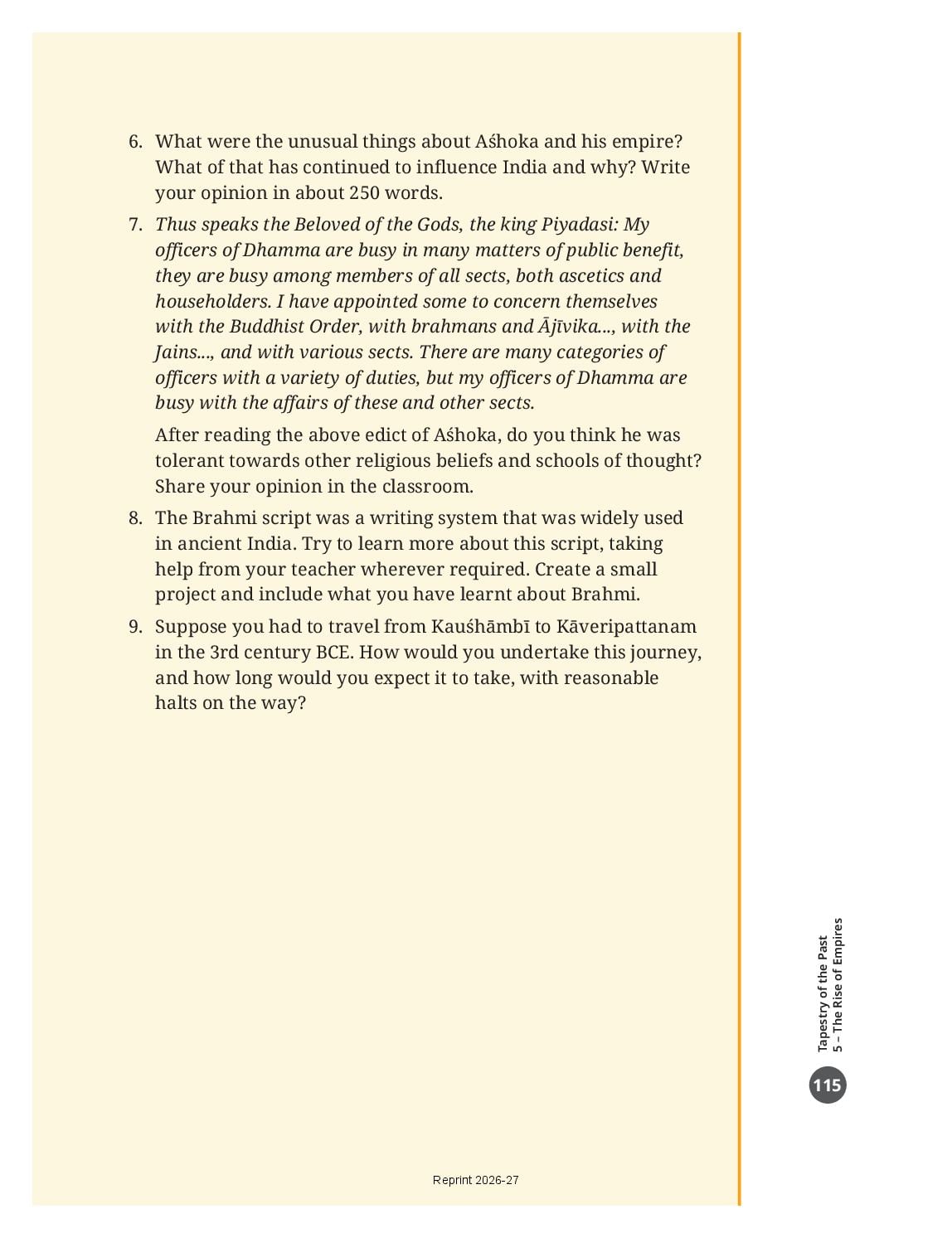
What Is in The Rise of Empires? (Class 7 Social Science Chapter 5)
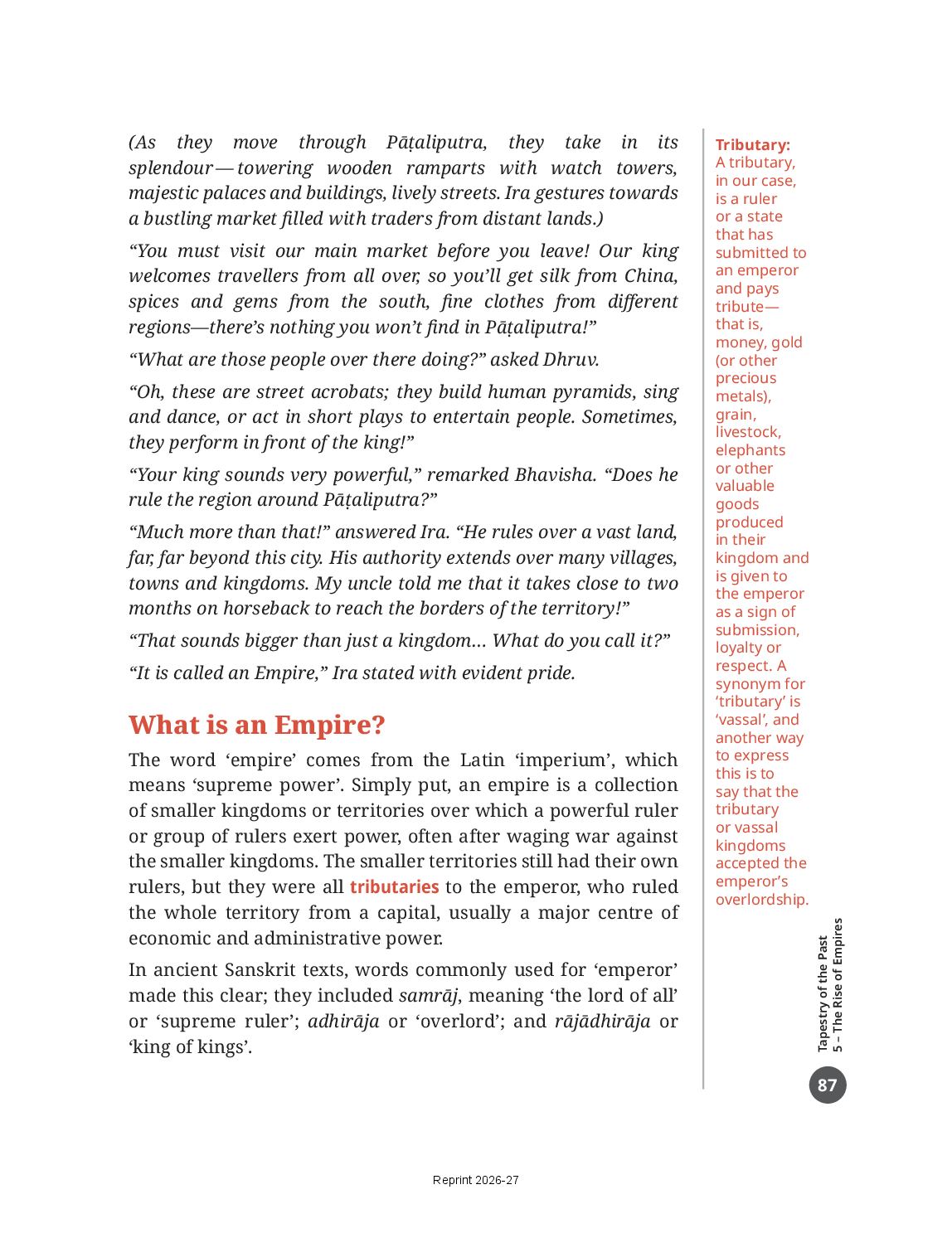
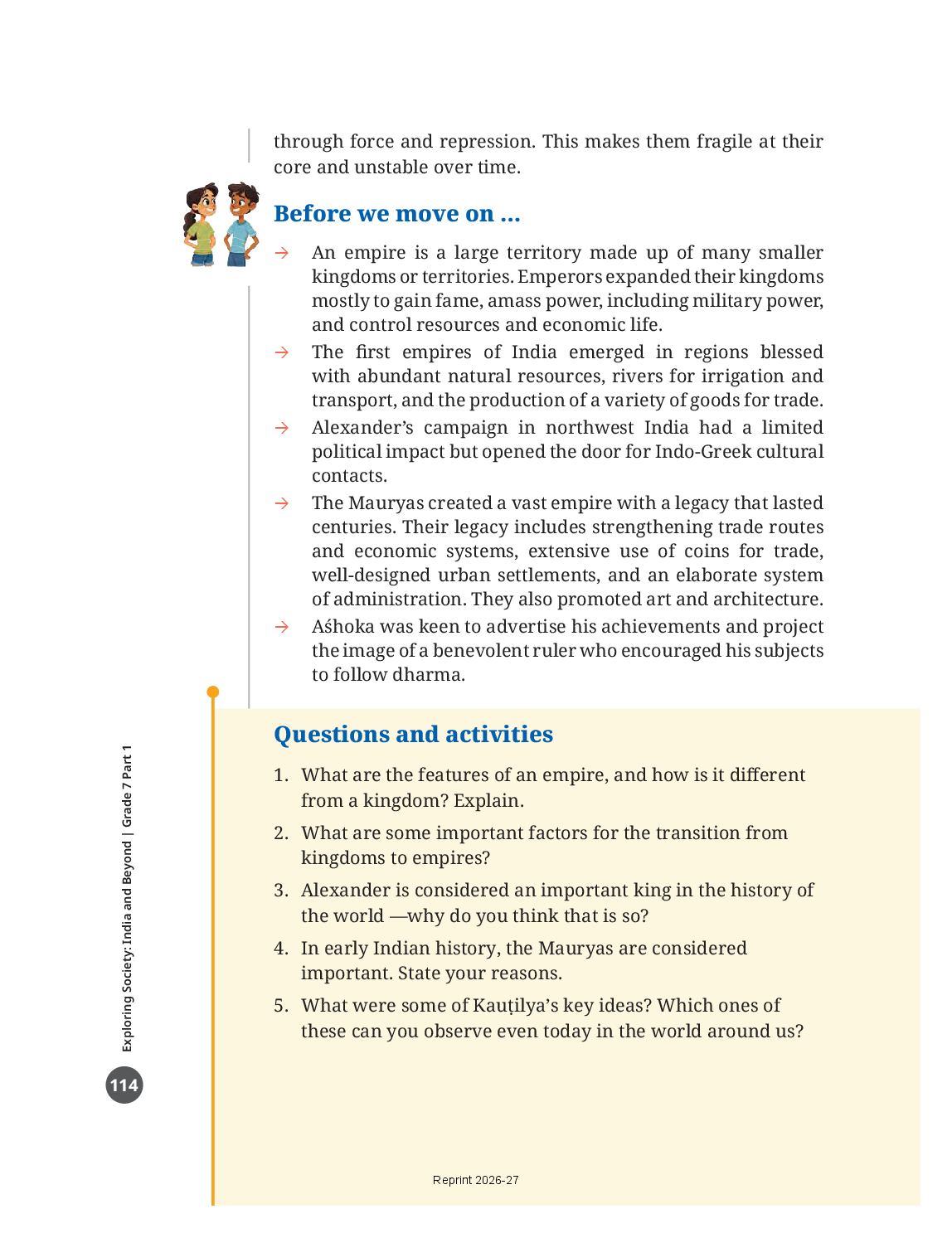
- An empire is a collection of smaller kingdoms or territories controlled by one powerful ruler. The word comes from the Latin imperium, ‘supreme power’. The smaller kings kept their thrones but became tributaries — they paid tribute and accepted the emperor’s overlordship.
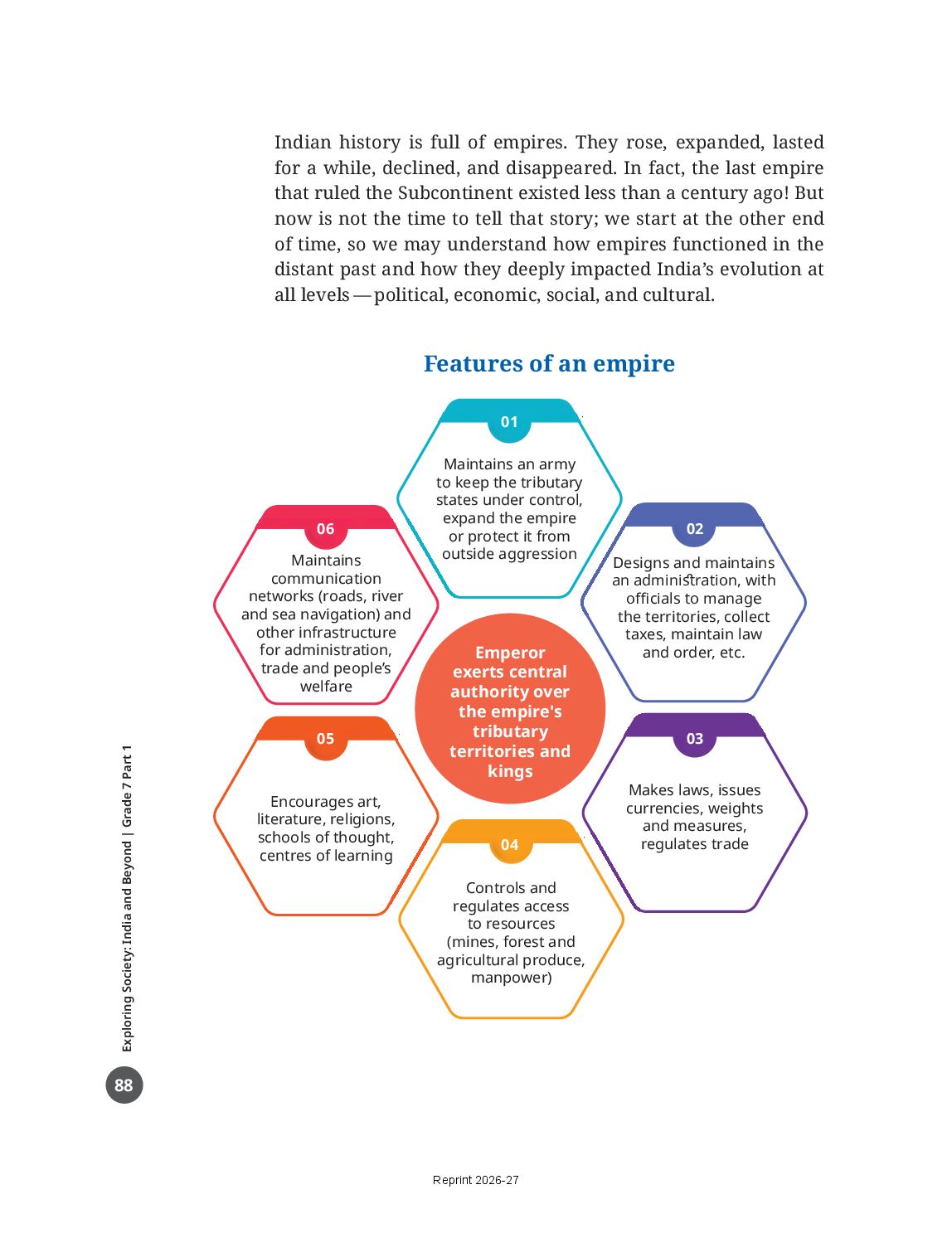
- An empire runs on six things: an army, an administration, laws, coins, weights and measures, control of resources, support for art and learning, and communication networks of roads and waterways.
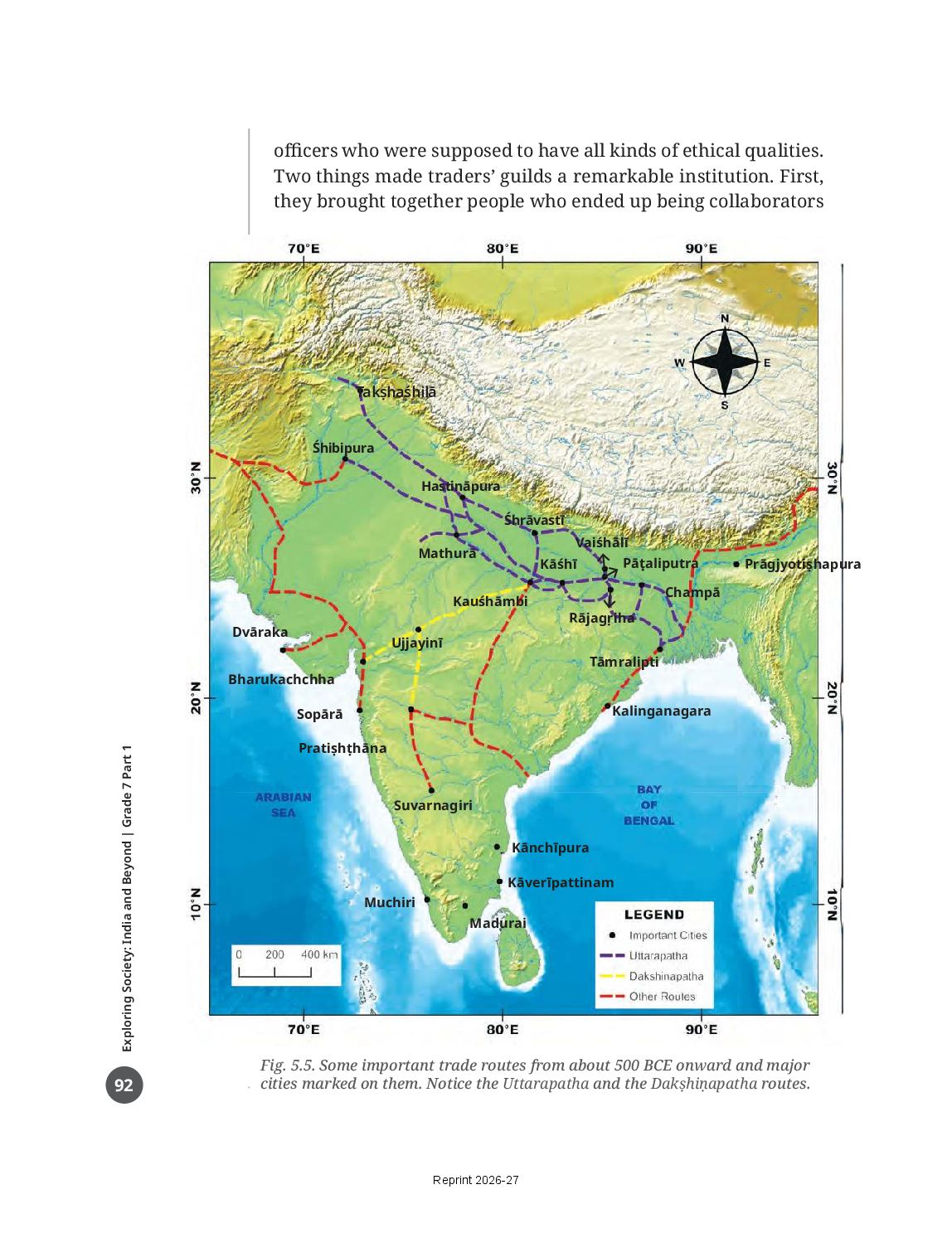
- Trade paid for empire. Traders organised themselves into guilds (śhrenīs) with an elected head and their own internal rules; the king did not interfere. The Uttarapatha and Dakṣhiṇapatha were the two great trade routes.
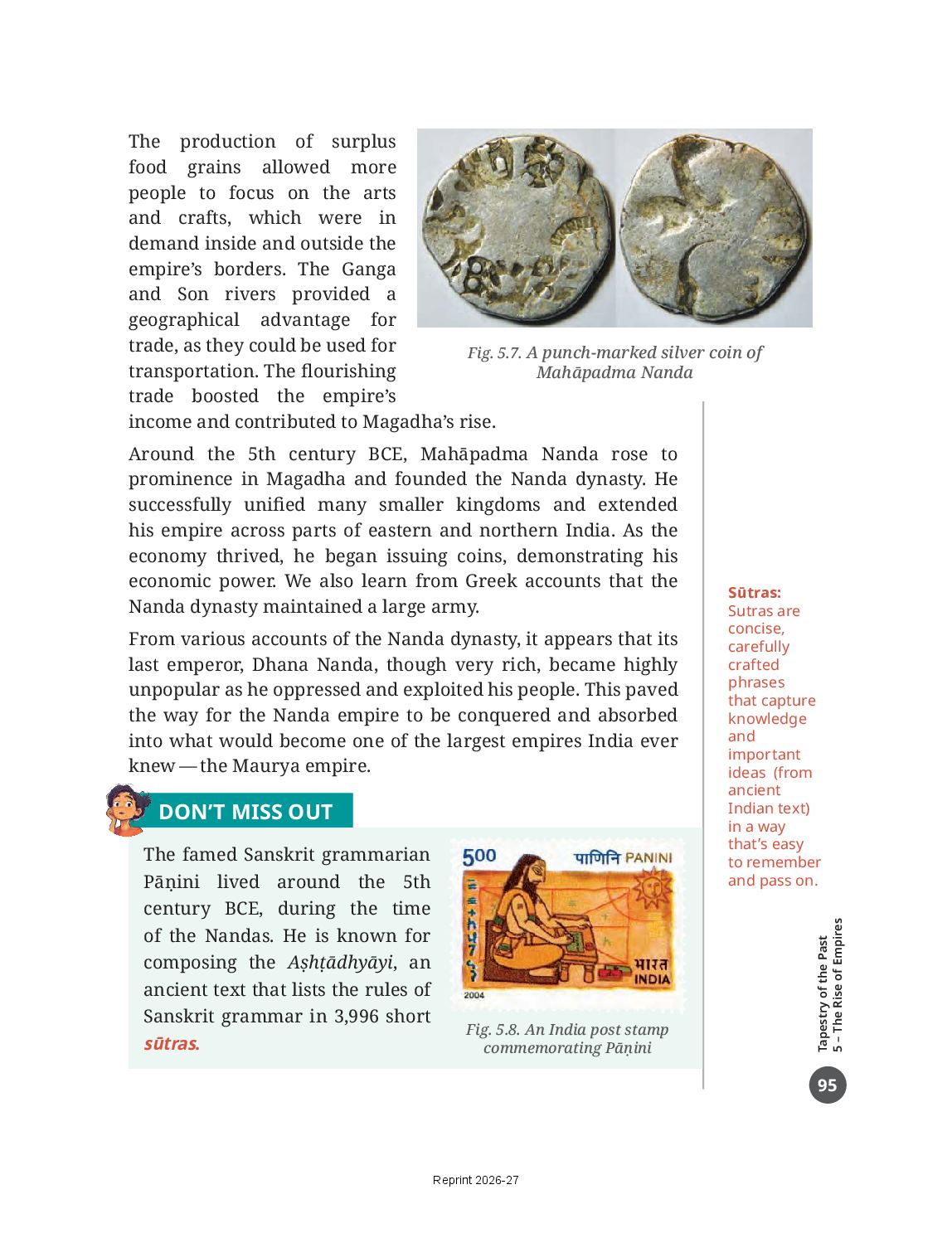
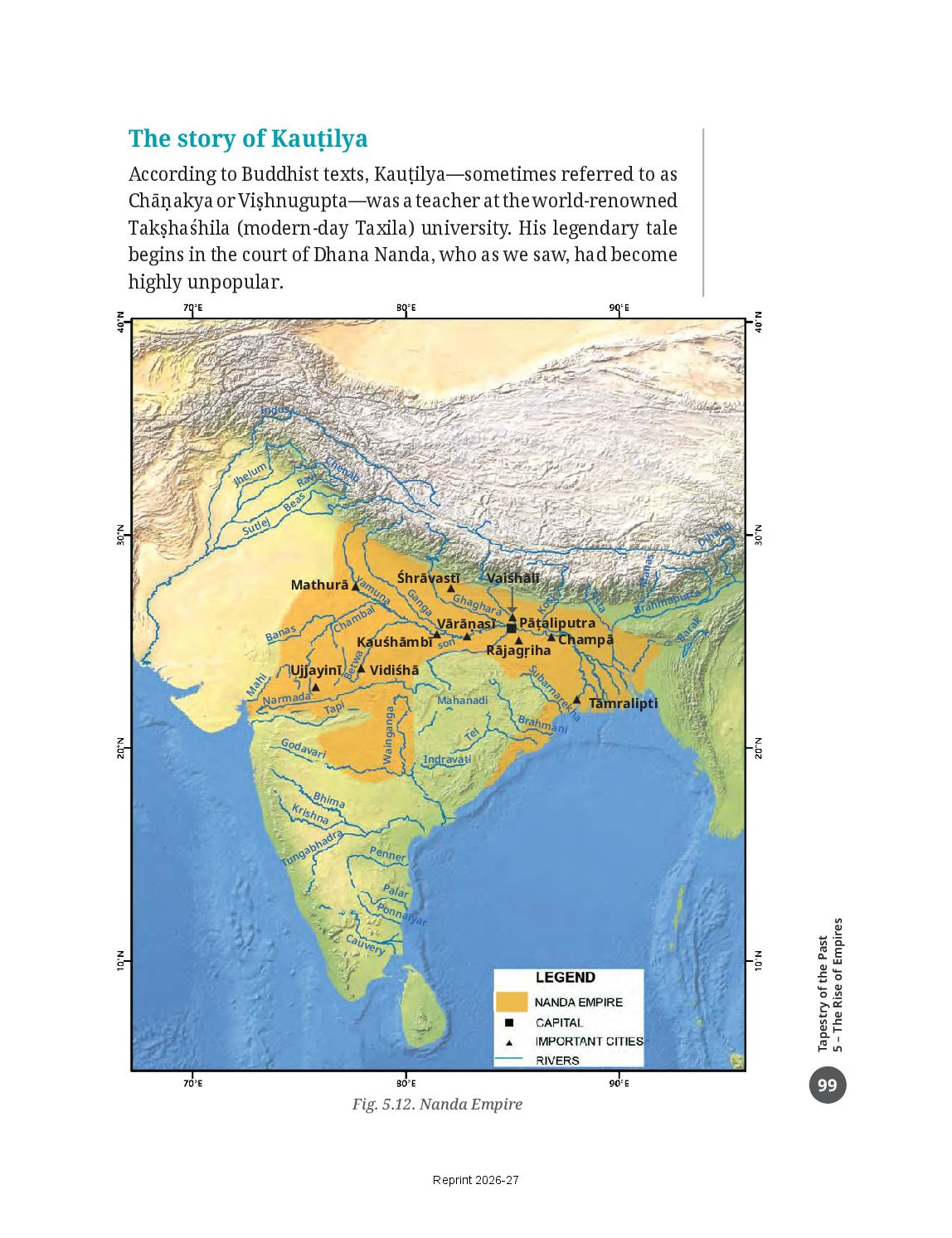
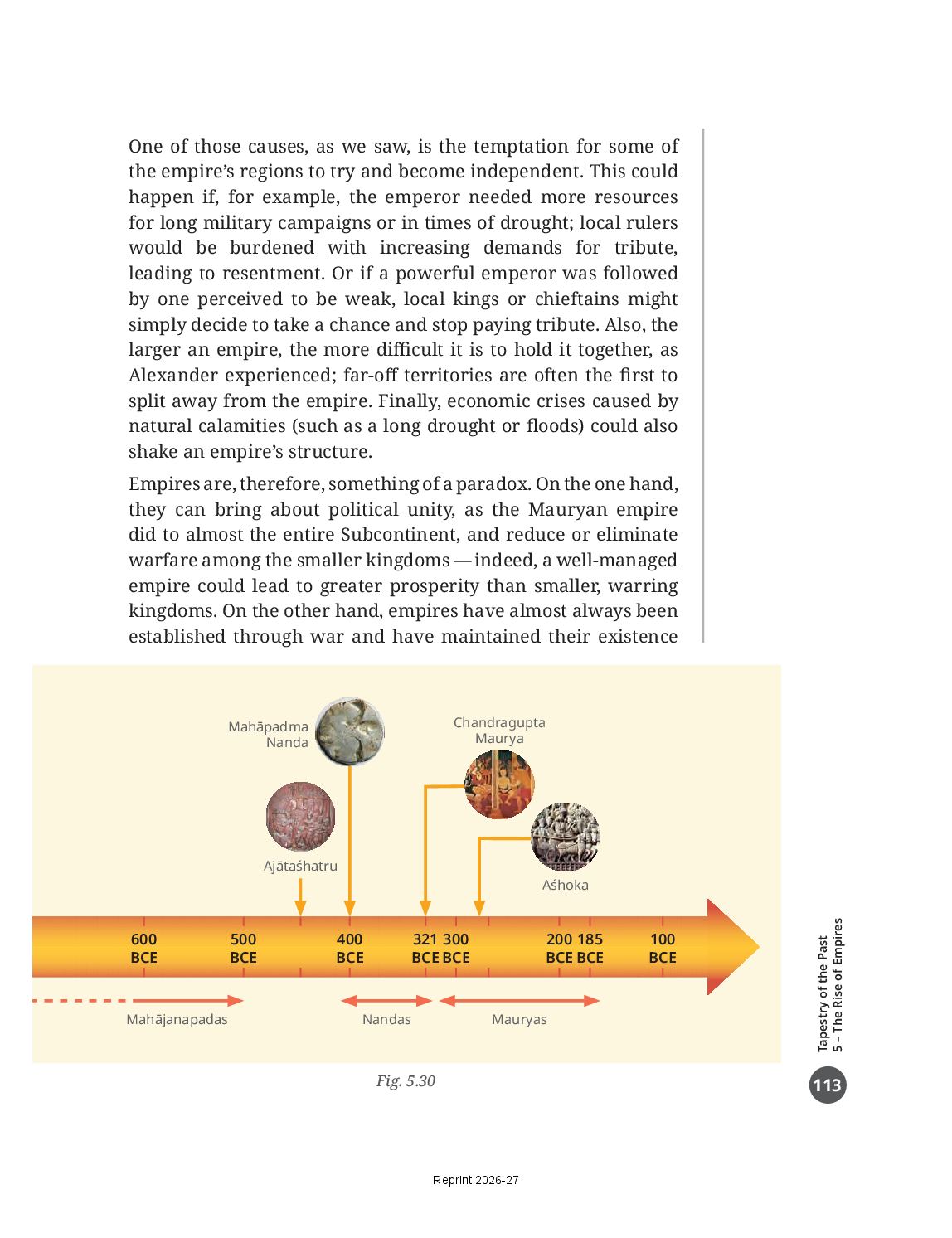
- Magadha rose because of the fertile Ganga plains, forests for timber and elephants, iron ore from nearby hills, and the Ganga and Son rivers for transport. Ajātaśhatru, then Mahāpadma Nanda, built it up; the unpopular Dhana Nanda lost it.
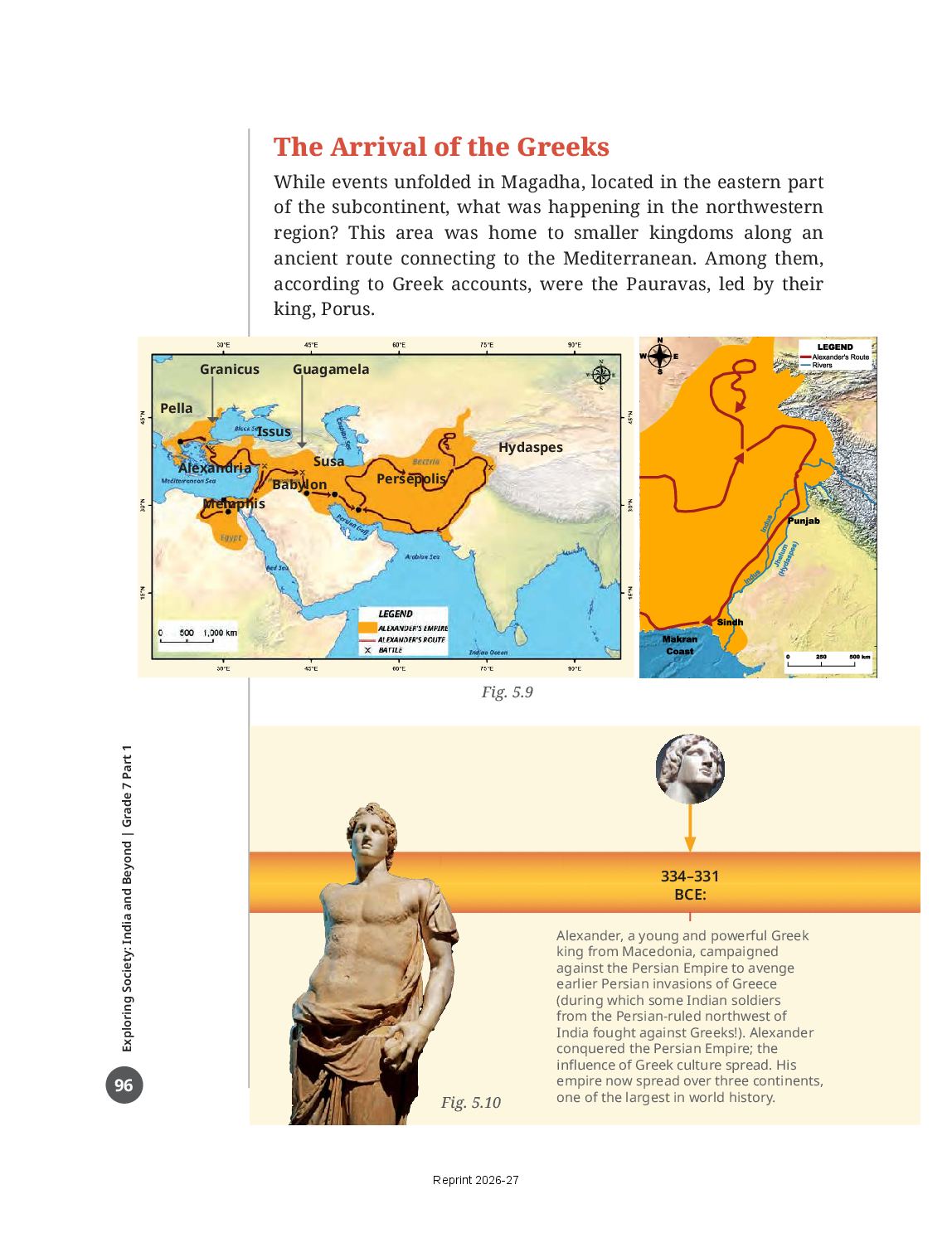
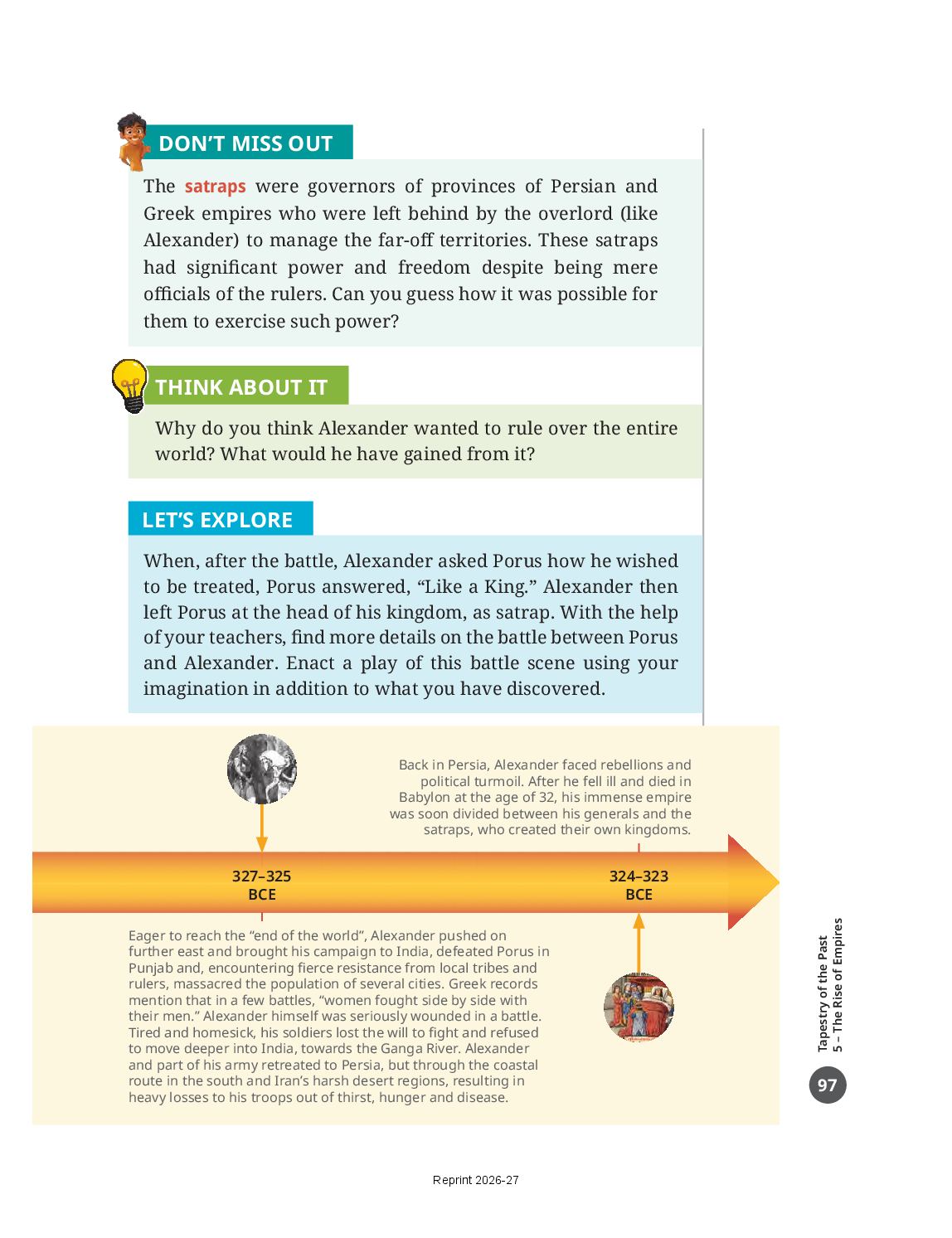
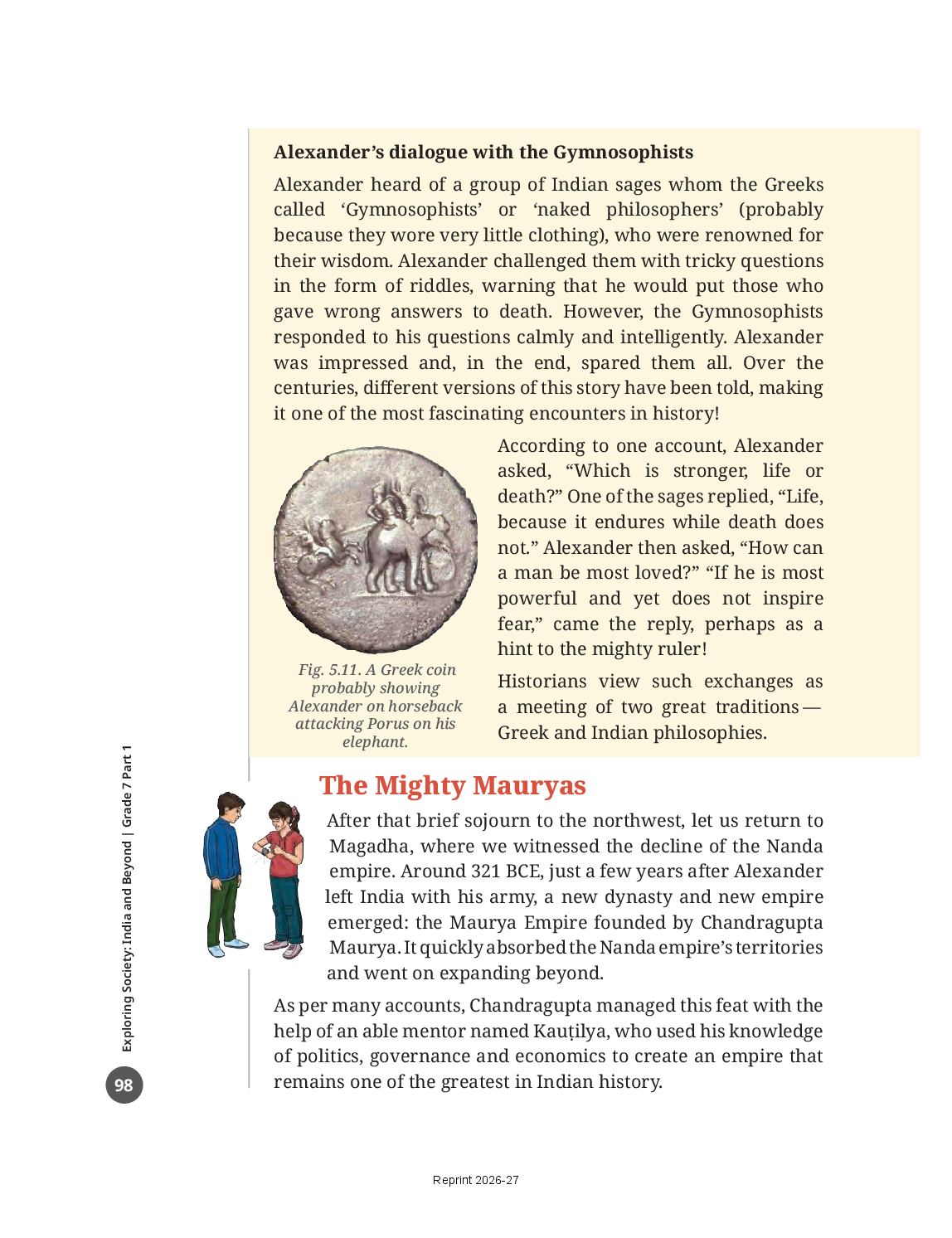
- Alexander reached Punjab in 327–325 BCE, defeated Porus and made him a satrap, but his tired soldiers refused to march to the Ganga. He died at Babylon at 32. His political impact on India was small; the cultural contact mattered more.
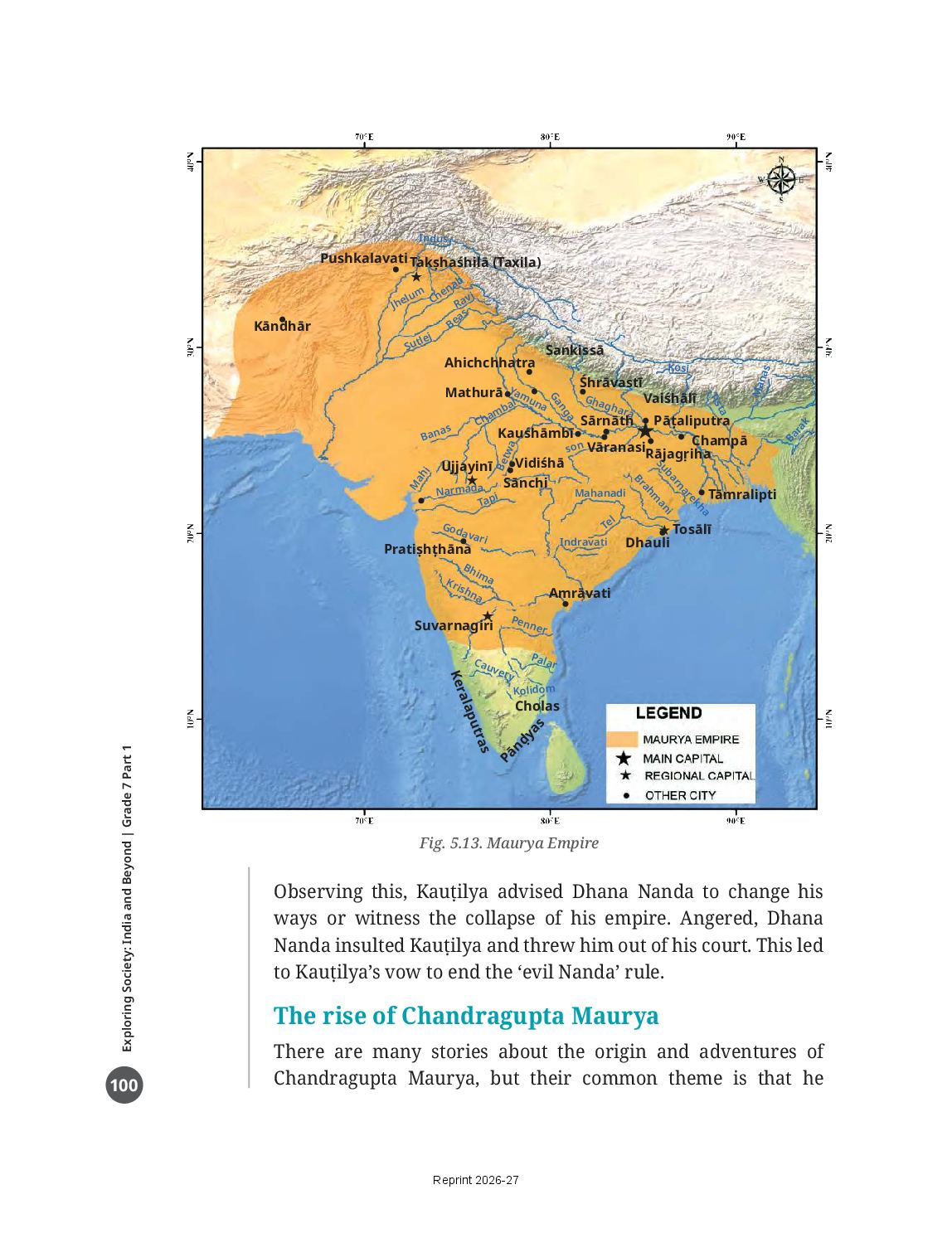
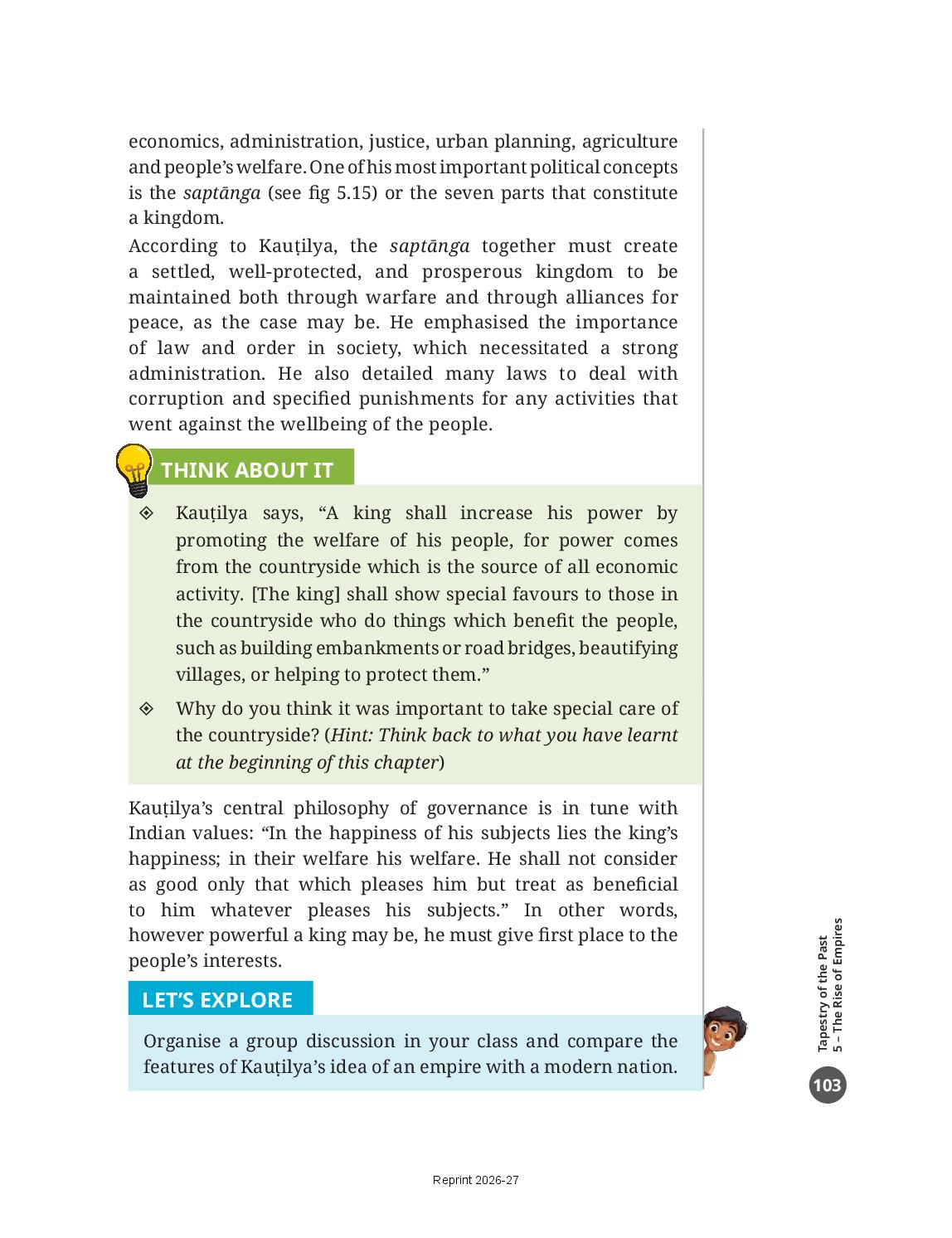
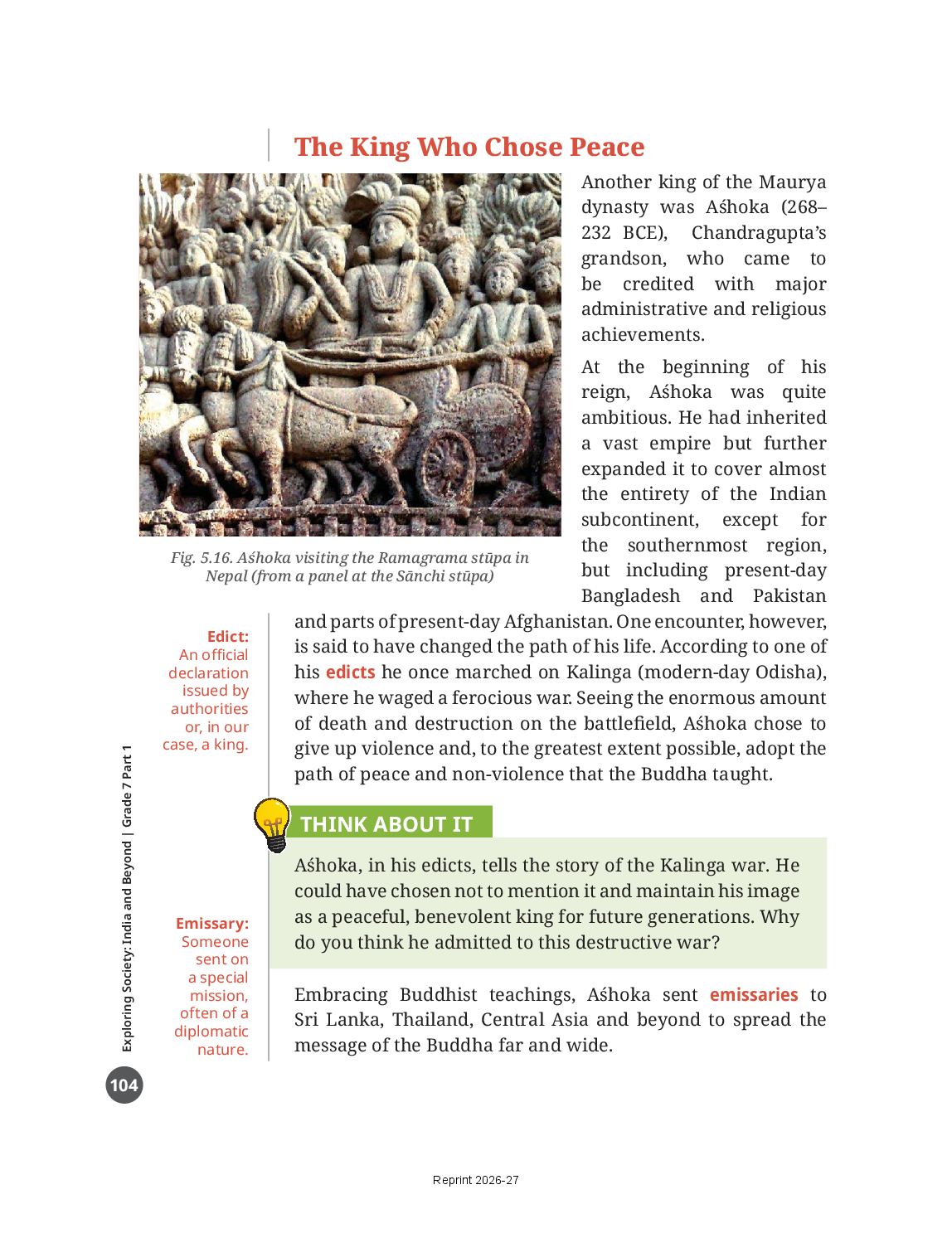
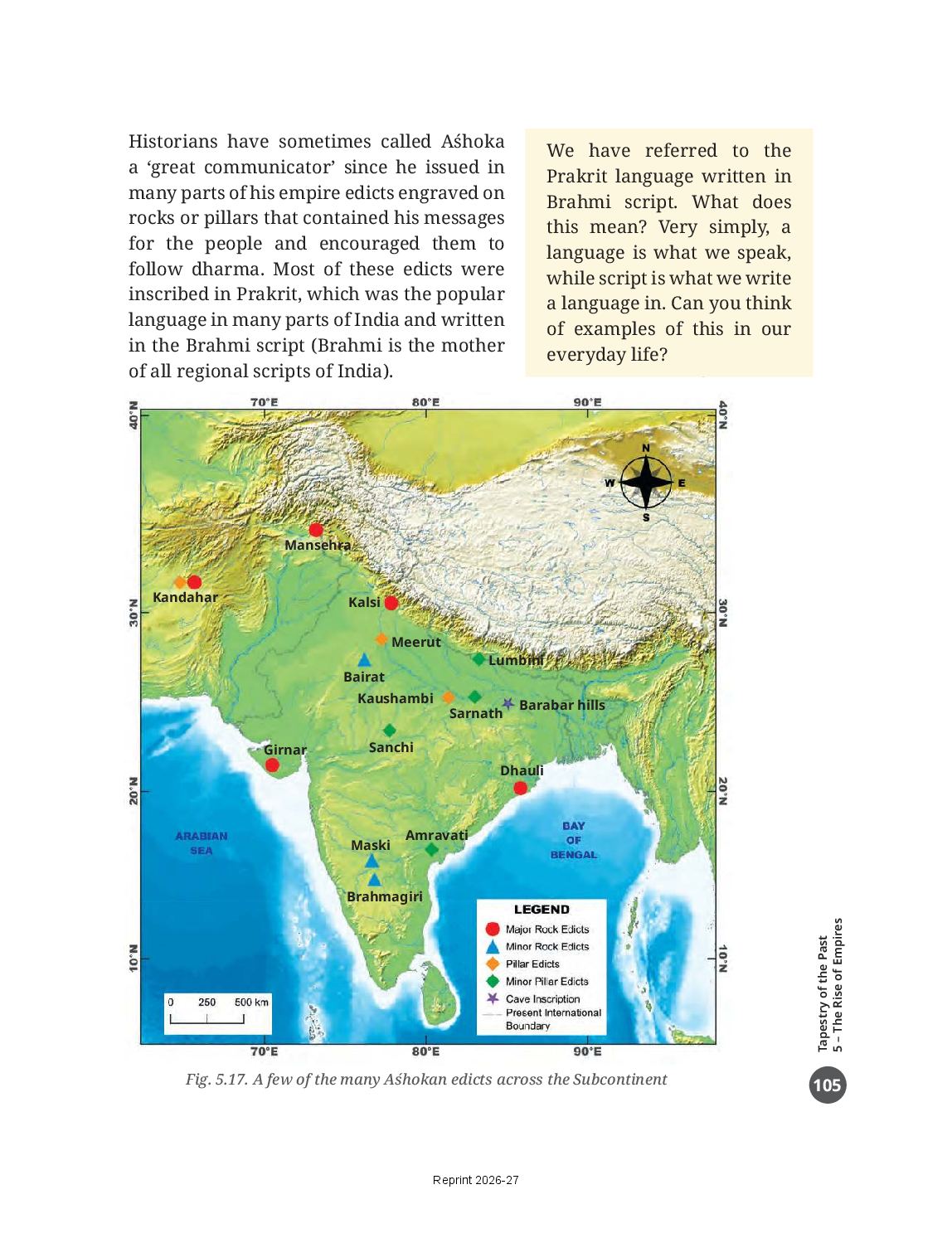
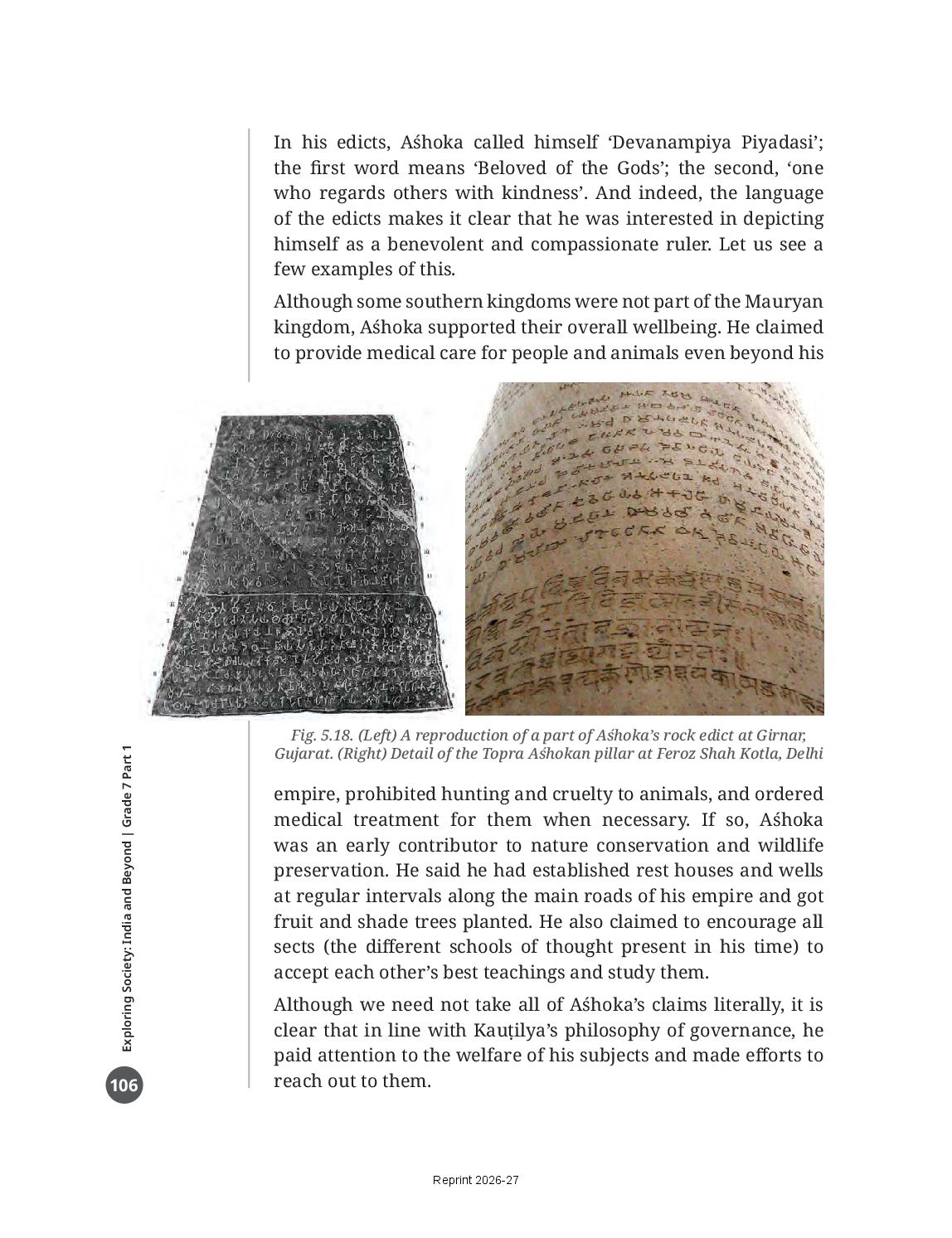
- The Mauryas (c. 321–185 BCE) built India’s first great empire. Kauṭilya’s Arthaśhāstra gave it the saptānga theory and a welfare philosophy; Aśhoka (268–232 BCE) gave up war after Kalinga and spoke to his people through edicts in Prakrit written in the Brahmi script.
- Empires are a paradox — they bring political unity and prosperity, but are built and held by force, which makes them fragile.
Quick revision – The Rise of Empires
| Term | What it means | Where it appears in the chapter | Remember it by |
|---|---|---|---|
| Empire | A collection of smaller kingdoms or territories over which one powerful ruler exerts power, ruled from a capital | ‘What is an Empire?’, page 87 | From Latin imperium = ‘supreme power’ |
| Tributary / vassal | A ruler or state that has submitted to an emperor and pays tribute — gold, grain, livestock, elephants — as a sign of submission | Margin note, page 87 | The small king keeps his throne but loses his independence |
| Samrāj, adhirāja, rājādhirāja | Sanskrit words for ‘emperor’: ‘lord of all’, ‘overlord’, ‘king of kings’ | Page 87 | Three words, one idea — a king above kings |
| Śhrenī (guild) | A powerful association of traders, craftsmen, moneylenders or agriculturists, with an elected head and its own rules | ‘Trade, trade routes and guilds’, pages 91–93 | Collaborators, not competitors |
| Uttarapatha / Dakṣhiṇapatha | The great northern and southern trade routes of the Subcontinent | Fig. 5.5, page 92 | Uttara = north, dakṣhiṇa = south, patha = road |
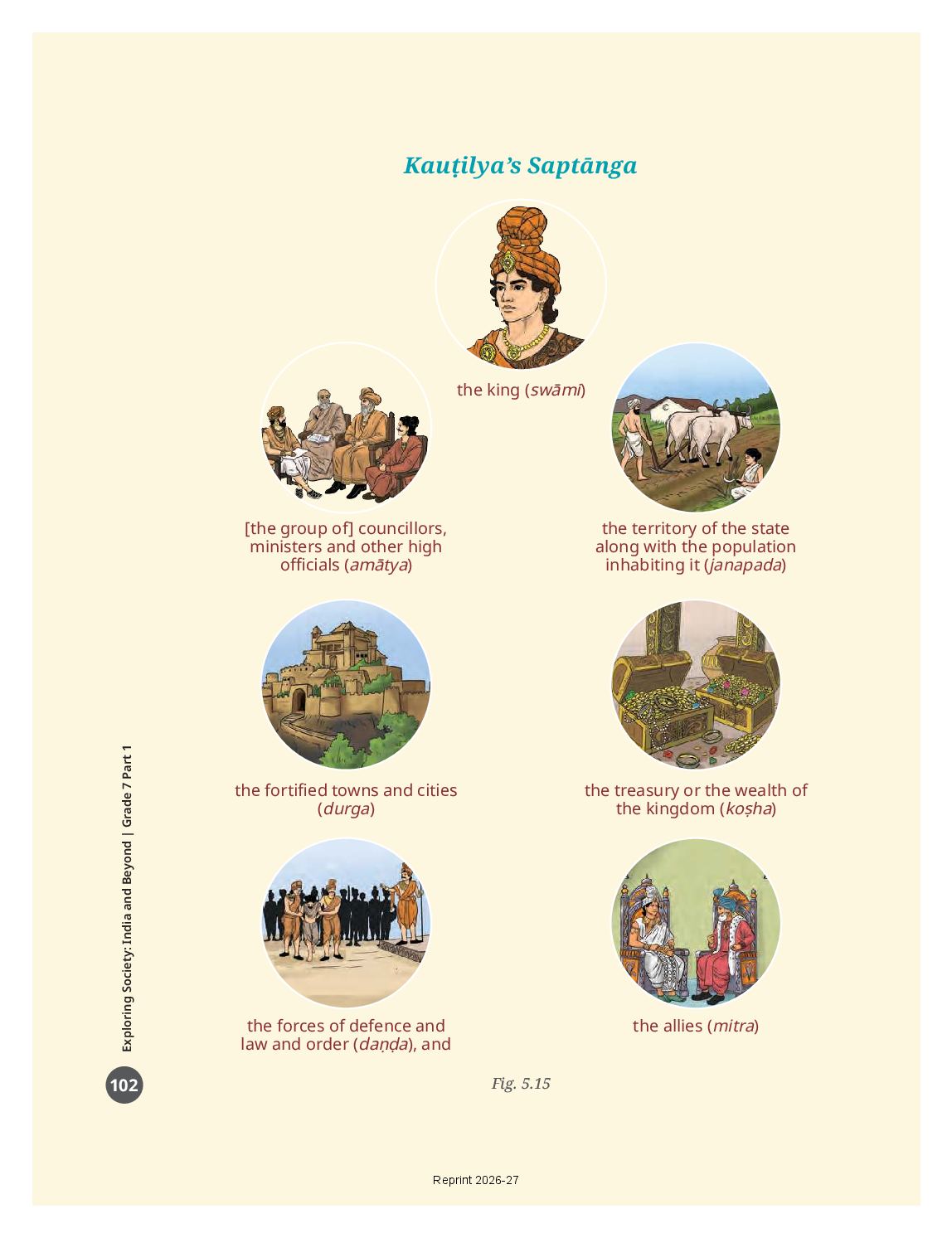
| Saptānga | Kauṭilya’s seven limbs of a kingdom — swāmi, amātya, janapada, durga, koṣha, daṇḍa, mitra | Fig. 5.15, page 102 | Sapta = seven, anga = limb |
| Arthaśhāstra | Kauṭilya’s famous work, literally ‘the science of governance and economics’ | Pages 101–103 | The king’s happiness lies in his subjects’ happiness |
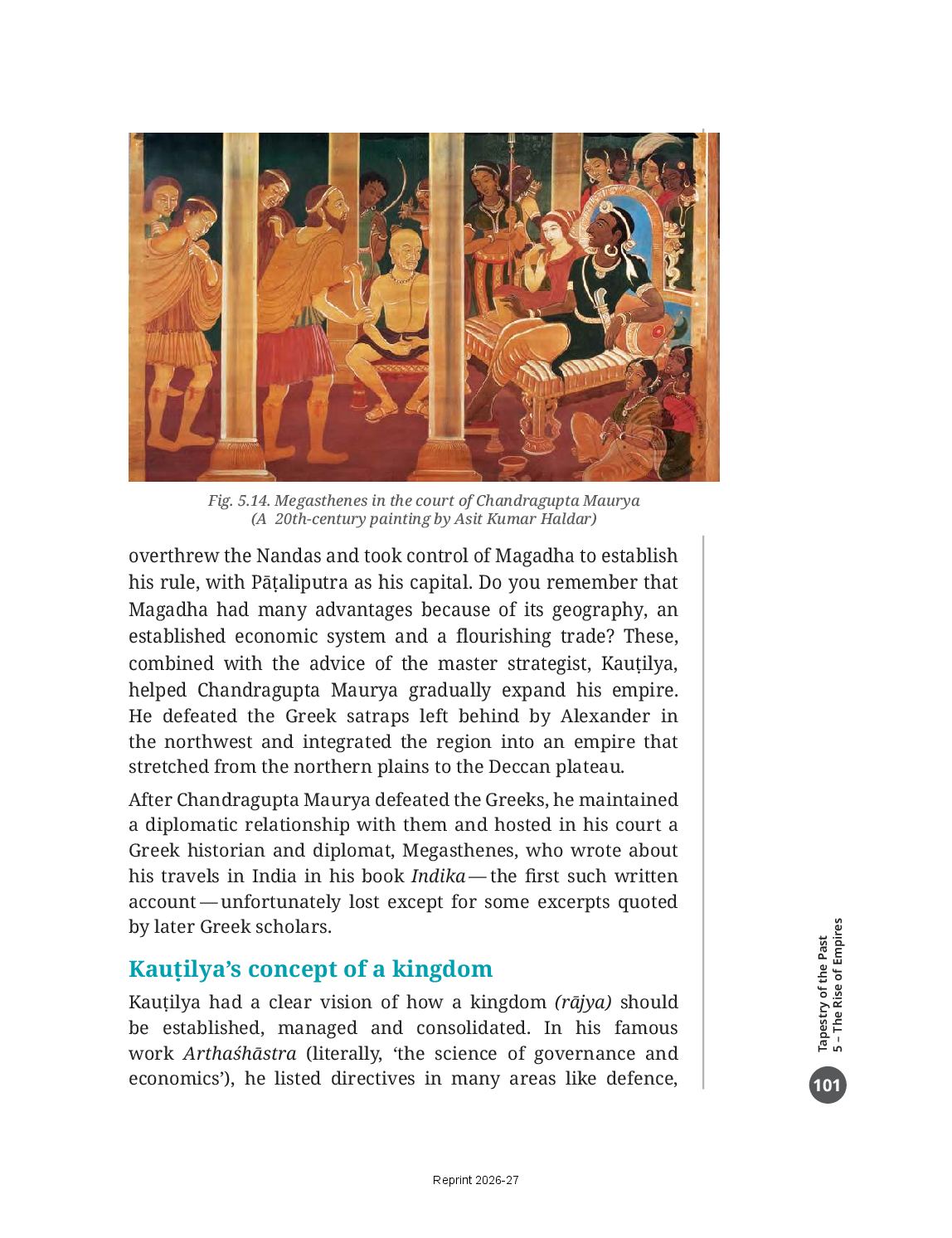
| Satrap | A governor of a province of the Persian and Greek empires, left behind by the overlord | Don’t Miss Out, page 97 | Porus became Alexander’s satrap |
| Edict | An official declaration issued by authorities or, here, by a king | Margin note, page 104 | Aśhoka’s edicts were carved on rocks and pillars |
| Devanampiya Piyadasi | Aśhoka’s name for himself — ‘Beloved of the Gods’ and ‘one who regards others with kindness’ | Page 106 | How a king wanted to be remembered |
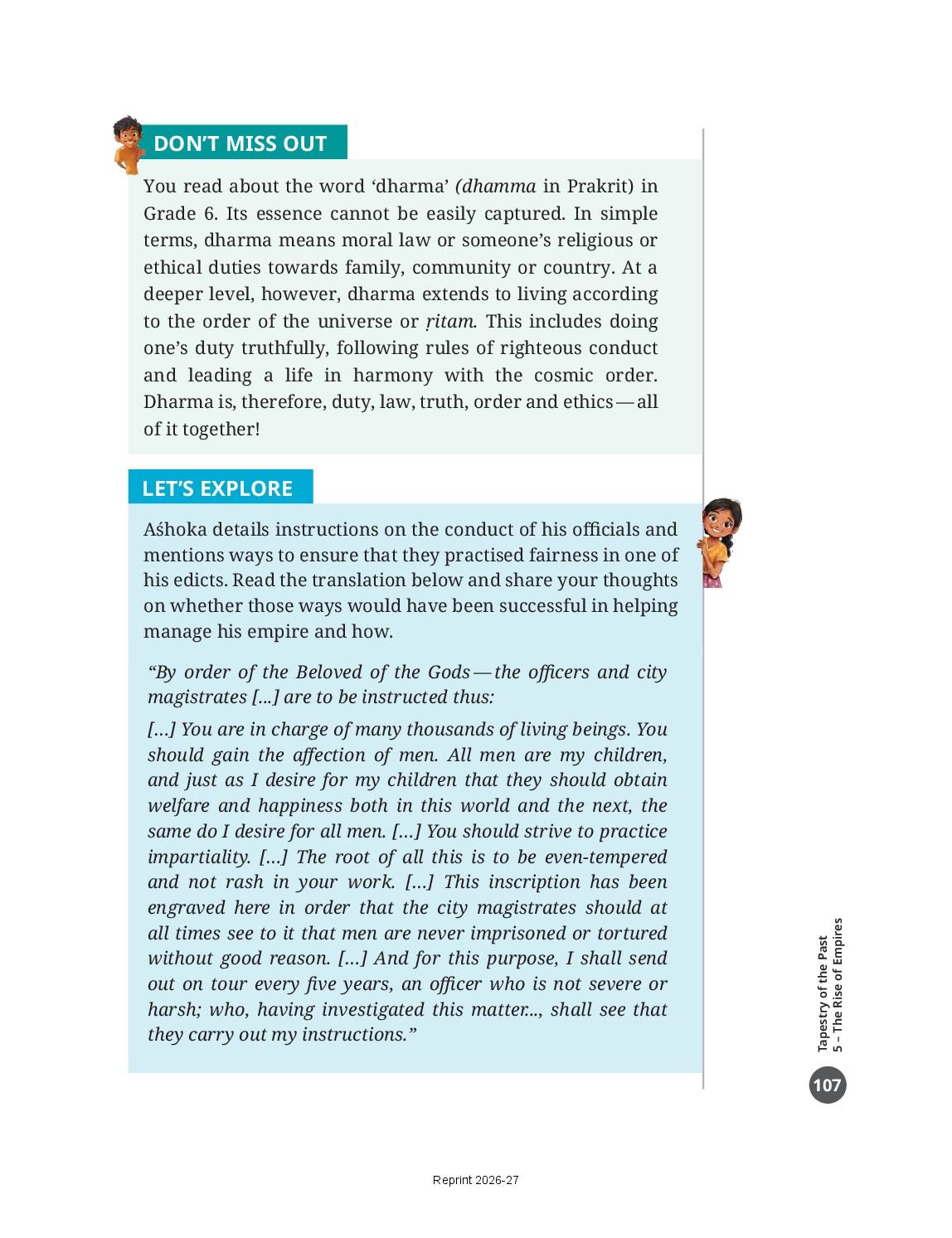
| Dharma (dhamma) | Moral law, one’s duties to family, community and country; at a deeper level, living in harmony with ṛitam, the cosmic order | Don’t Miss Out, page 107 | Duty, law, truth, order and ethics — all together |
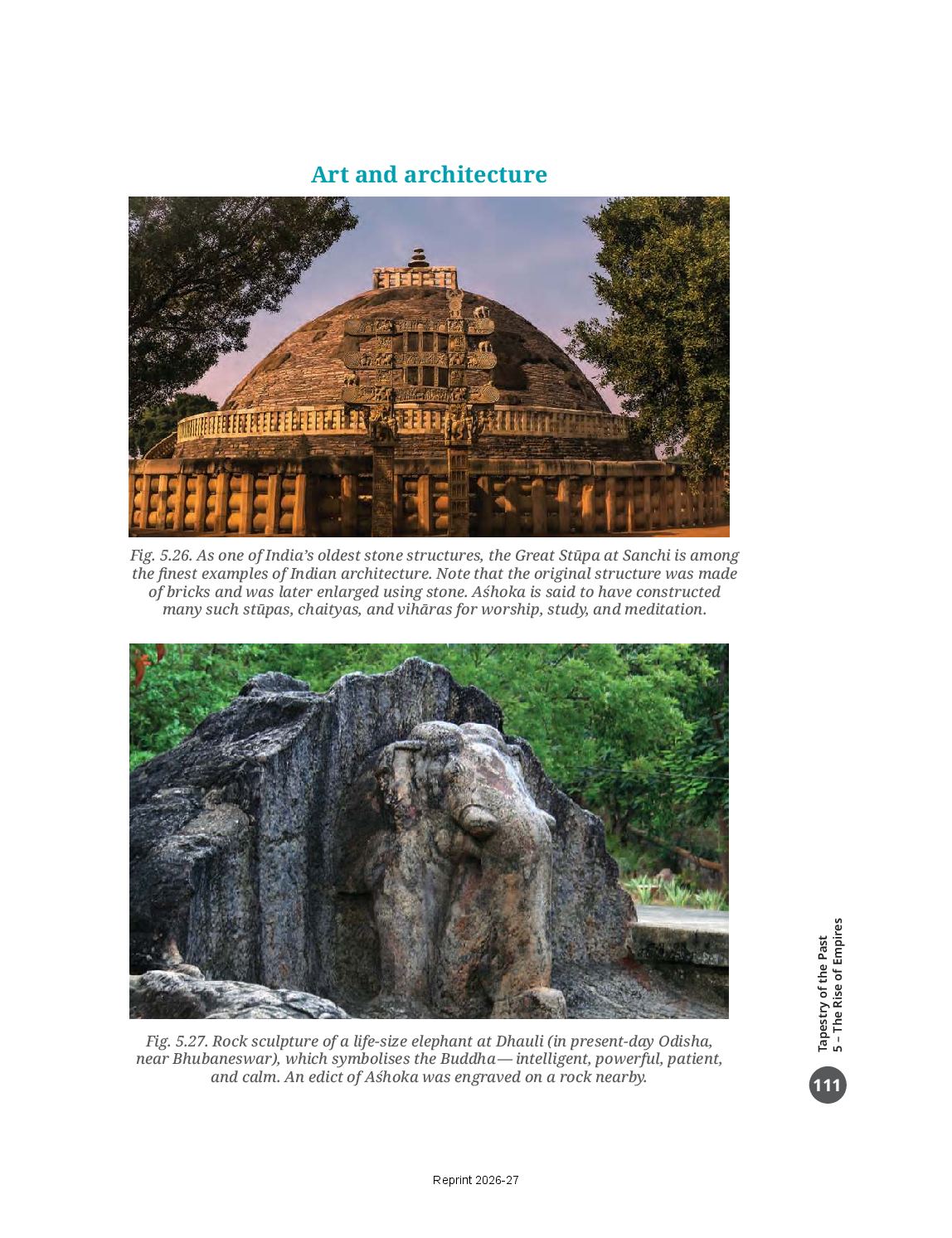
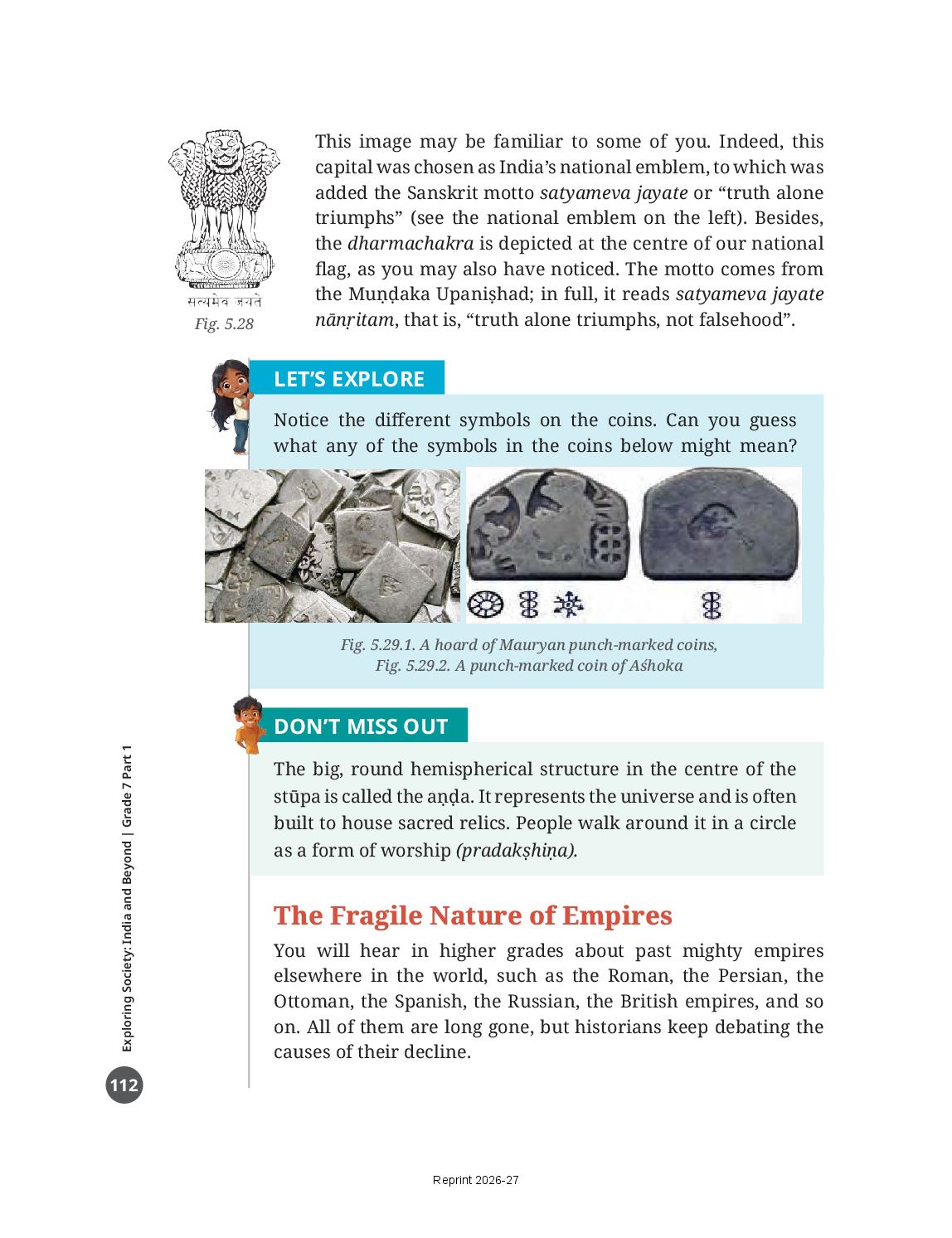
| Aṇḍa | The big round hemispherical structure at the centre of a stūpa; it represents the universe | Don’t Miss Out, page 112 | Devotees walk around it — pradakṣhiṇa |
Old NCERT vs New – Class 7 Social Science
This chapter is from Exploring Society: India and Beyond, the new NCERT Class 7 Social Science book (NCF-SE 2023, used from 2025-26). It replaced the old book “Our Pasts, Our Environment and Social and Political Life”, so chapter numbers and names differ from older PDFs.
Solutions and All Chapters
Answers to the exercises and the full chapter list of Exploring Society: India and Beyond:
The Rise of Empires – Overview
| Class | Class 7 |
| Subject | Social Science |
| Book | Exploring Society: India and Beyond – new NCERT book |
| Part | Part I |
| Chapter | 5 of 20 – The Rise of Empires |
| Book pages | 83 – 116 |
| Edition | NCERT Reprint 2026-27 |
| Session | 2026-27 |
| Free – read online or download |
Class 7 Social Science Chapter 5 – FAQs
Where can I download The Rise of Empires Class 7 PDF?
From the download table on this page – the chapter PDF is free, and the full book is linked too.
What is Class 7 Social Science Chapter 5 about?
An empire is a collection of smaller kingdoms or territories controlled by one powerful ruler. The word comes from the Latin imperium, ‘supreme power’. The smaller kings kept their thrones but became tributaries — they paid tribute and accepted the emperor’s overlordship.
Is The Rise of Empires from the new NCERT Class 7 Social Science book?
Yes. It is chapter 5 of exploring society: india and beyond (part i), the new NCERT Class 7 Social Science book for 2026-27.
Is this the latest NCERT edition for 2026-27?
Yes – the PDF is NCERT’s latest edition for the 2026-27 session.
Where are the NCERT Solutions for Class 7 Social Science Chapter 5?
Open the NCERT Solutions link above for answers to the exercise questions.