Download New Beginnings: Cities and States – NCERT Class 7 Social Science Chapter 4 PDF from the new NCERT Class 7 Social Science book Exploring Society: India and Beyond (2026-27). Read the chapter online or download the free PDF. India’s ‘First Urbanisation’ ended, and city life vanished for a thousand years. In the early 2nd millennium BCE the Indus / Harappan / Sindhu-Sarasvatī civilisation disintegrated. Cities were abandoned or reverted to a village lifestyle, because…
New Beginnings: Cities and States PDF – Chapter 4 of Exploring Society: India and Beyond (Part I)
Read the chapter online or download the PDF.
| Chapter | Download | |
|---|---|---|
| Chapter 4 PDF | New Beginnings: Cities and States | View PDF |
| Full book | NCERT Class 7 Social Science – Exploring Society: India and Beyond | View Book |
Read Online
What Is in New Beginnings: Cities and States? (Class 7 Social Science Chapter 4)
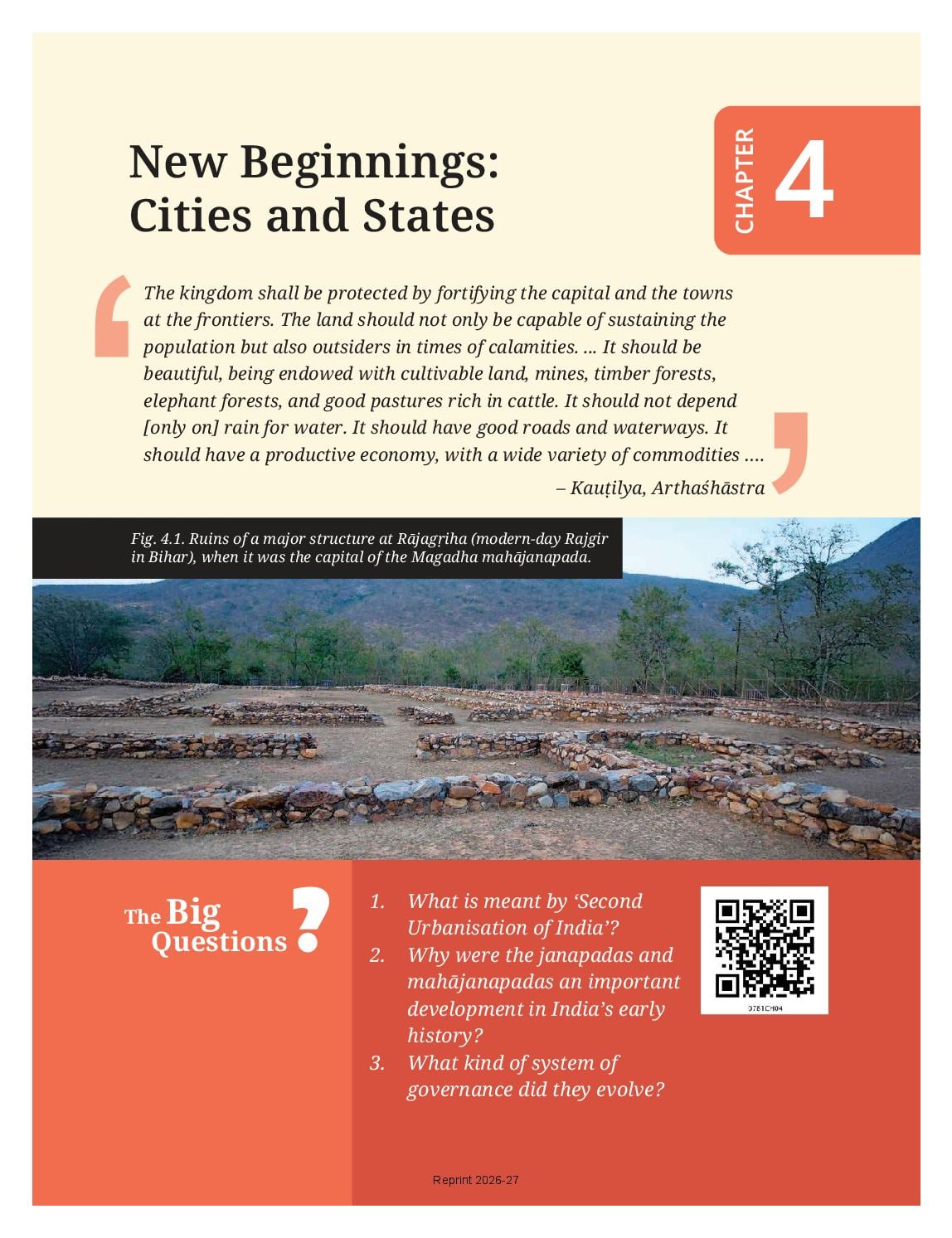
- India’s ‘First Urbanisation’ ended, and city life vanished for a thousand years. In the early 2nd millennium BCE the Indus / Harappan / Sindhu-Sarasvatī civilisation disintegrated. Cities were abandoned or reverted to a village lifestyle, because every part of the Harappan urban order had gone — big private and public structures, crowded streets and busy markets, specialised occupations, a writing system, a sanitation system, an administration and a state structure with a ruling class.
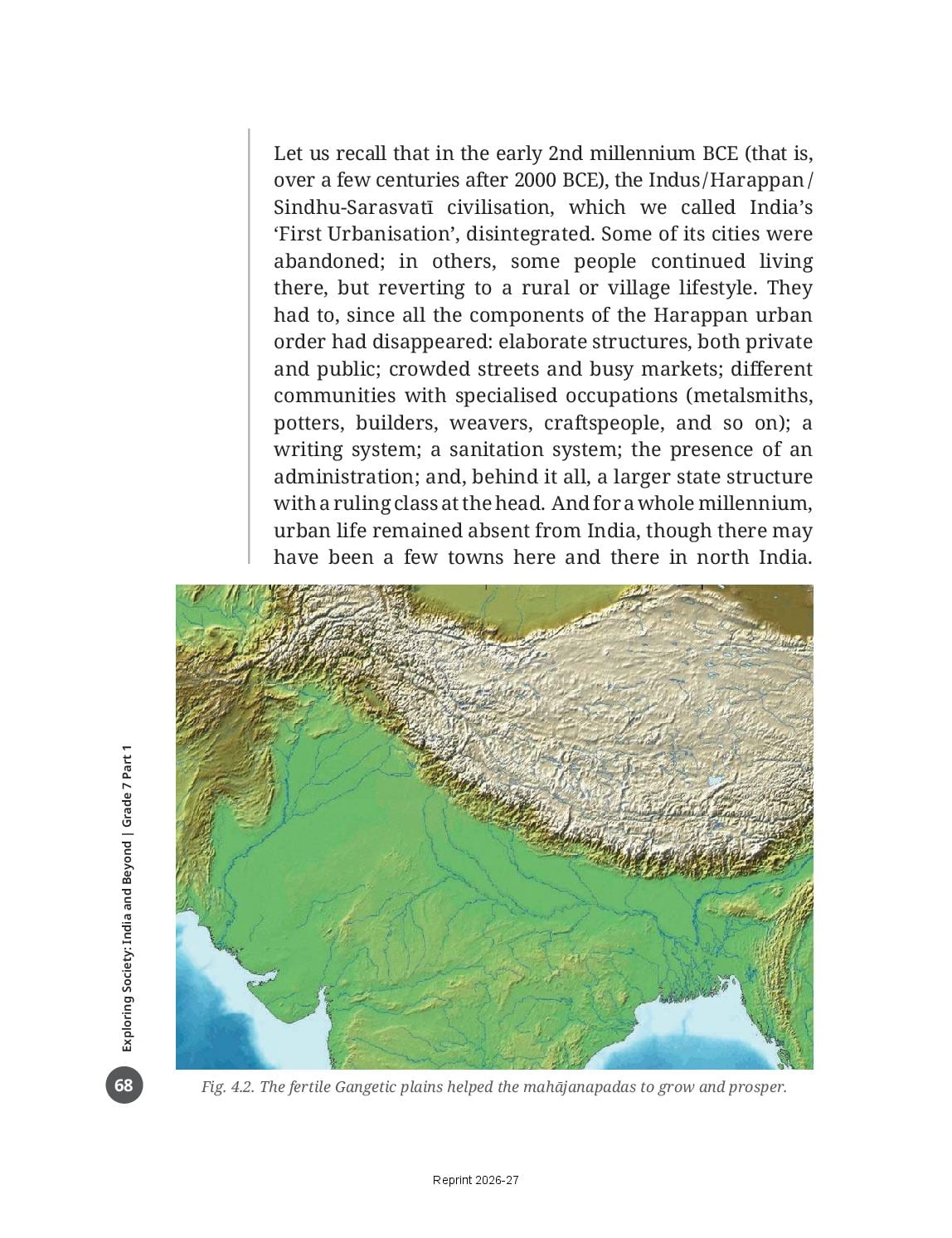
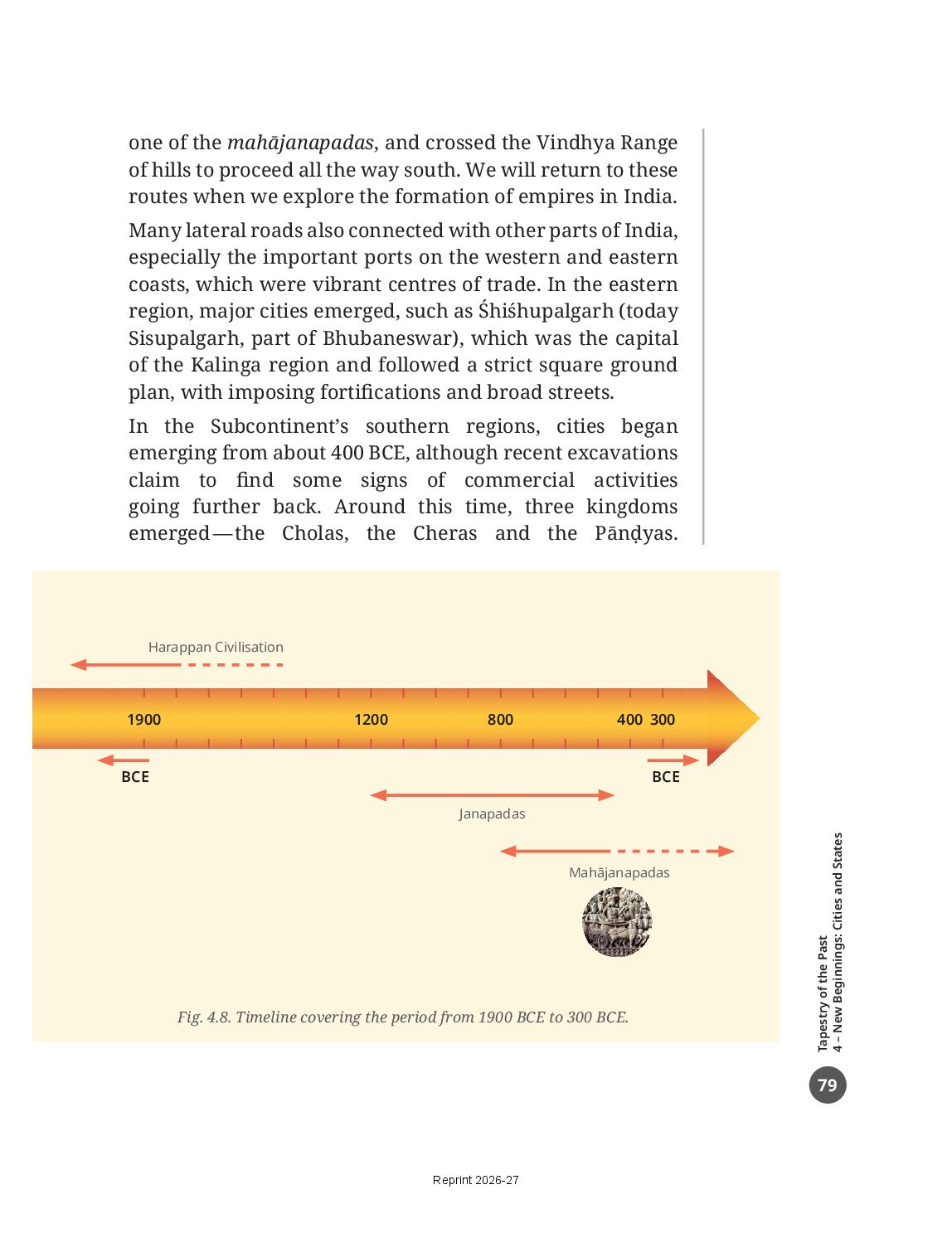
- The ‘Second Urbanisation’ began in the 1st millennium BCE in the Ganga plains, parts of the Indus (Sindhu) basin and neighbouring regions, and spread across the Subcontinent. We know it from two sources: archaeological excavations and ancient literature (late Vedic, Buddhist and Jain). This phase has continued right up to today.
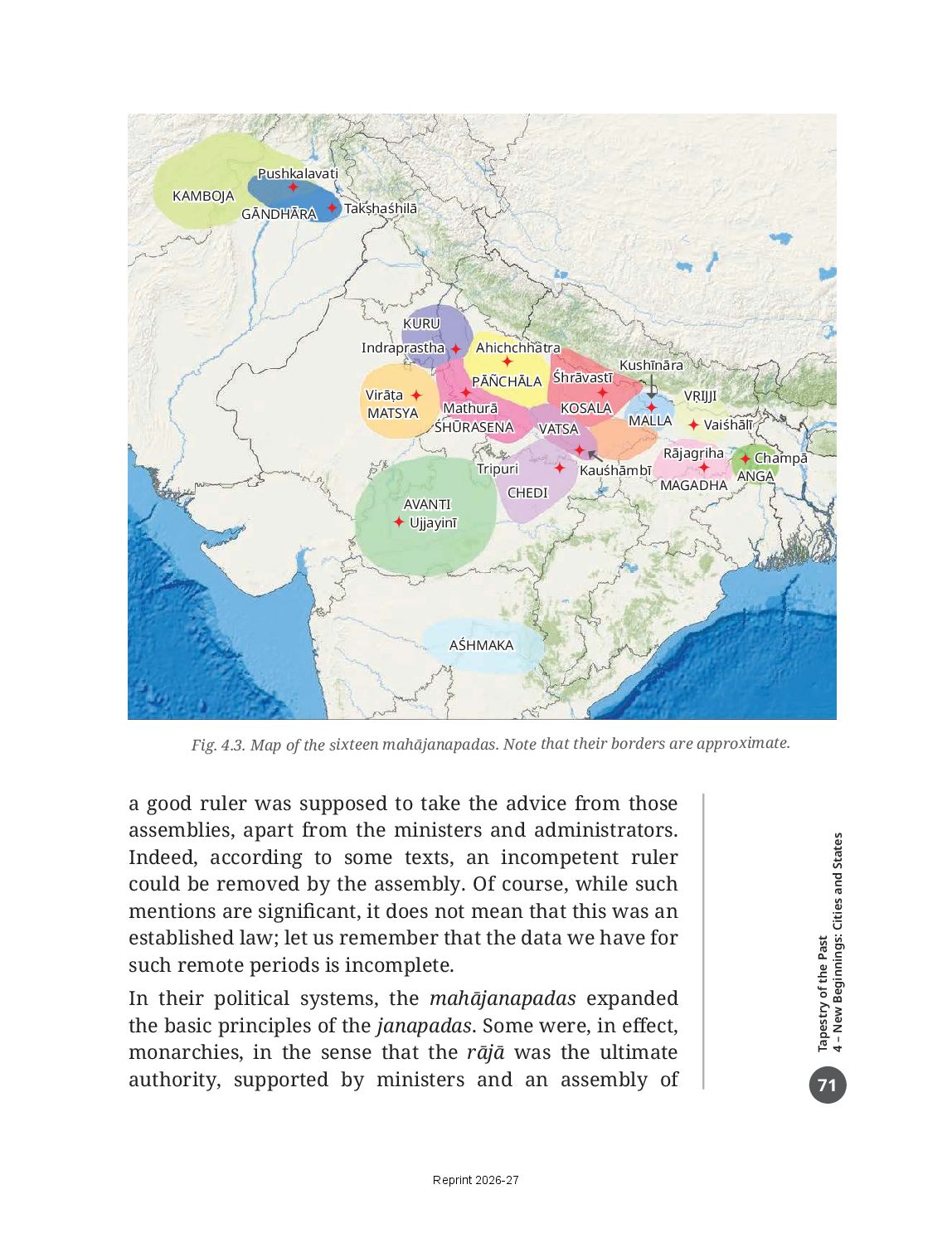
- Janapadas grew into mahājanapadas. Towards the end of the 2nd millennium BCE clans settled in territories called janapadas, each led by a rājā. ‘Janapada’ means ‘where the people (jana) have set foot (pada)’. As trade networks spread, by the 8th–7th centuries BCE some merged into bigger mahājanapadas — the usual list names 16, from Gandhāra in the northwest to Anga in the east and Aśhmaka in central India.
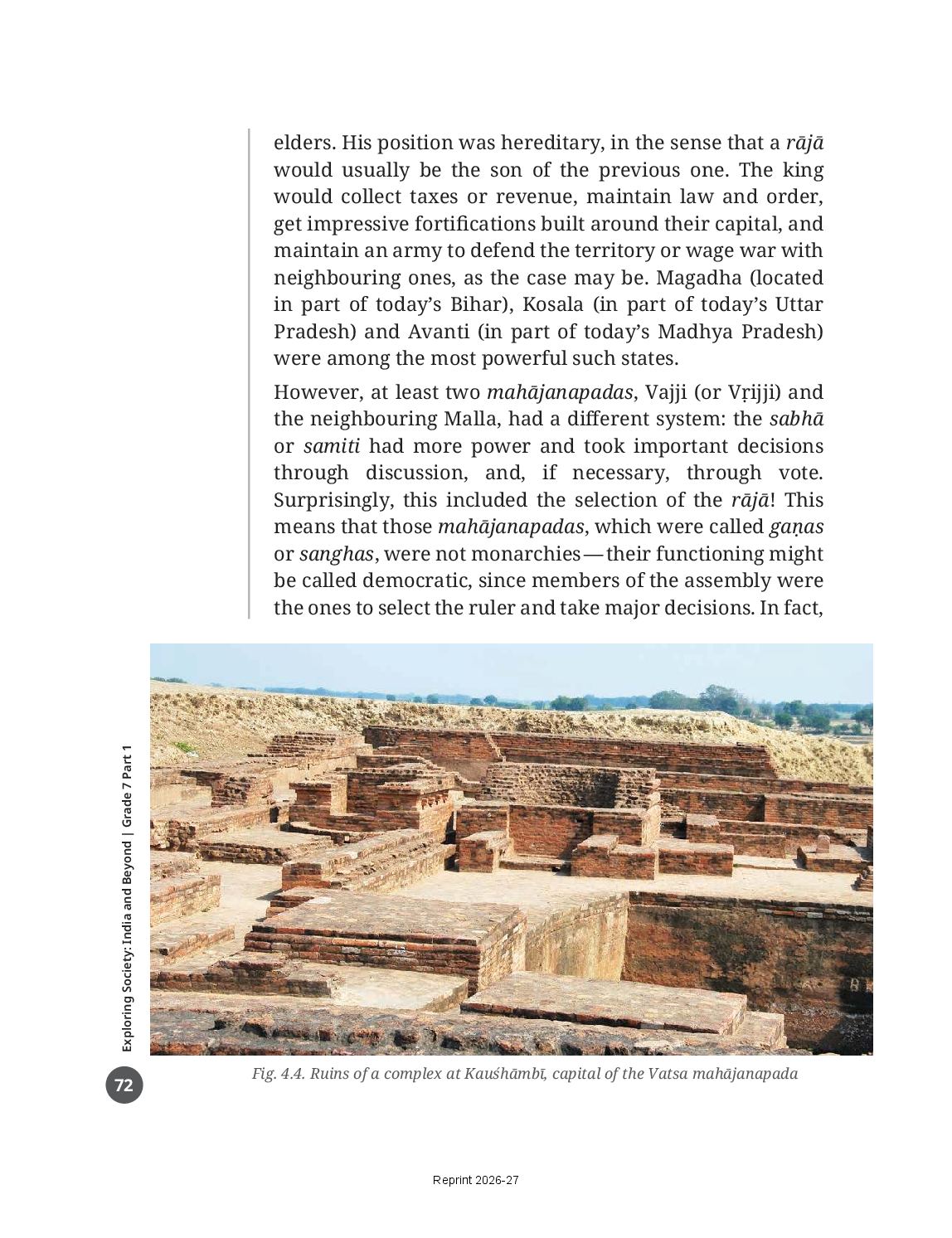
- Governance had a democratic streak. Every janapada had a sabhā or samiti, words that first appear in the Vedas. A good rājā took advice from the assembly, ministers and administrators; some texts say an incompetent ruler could be removed. Most mahājanapadas were hereditary monarchies, but Vajji (Vṛijji) and Malla were gaṇas or sanghas where the assembly voted and even chose the rājā — scholars call them ‘early republics’.
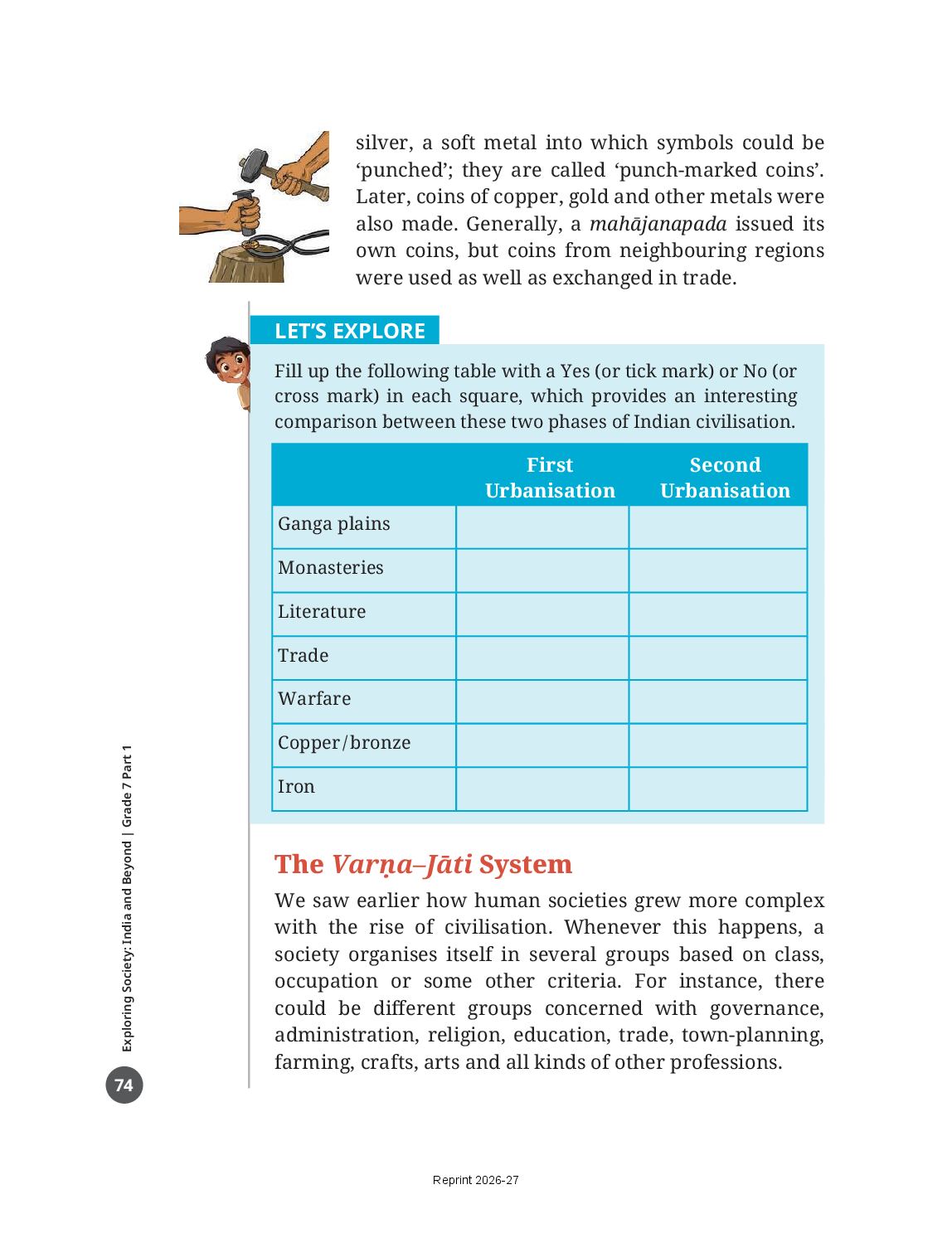
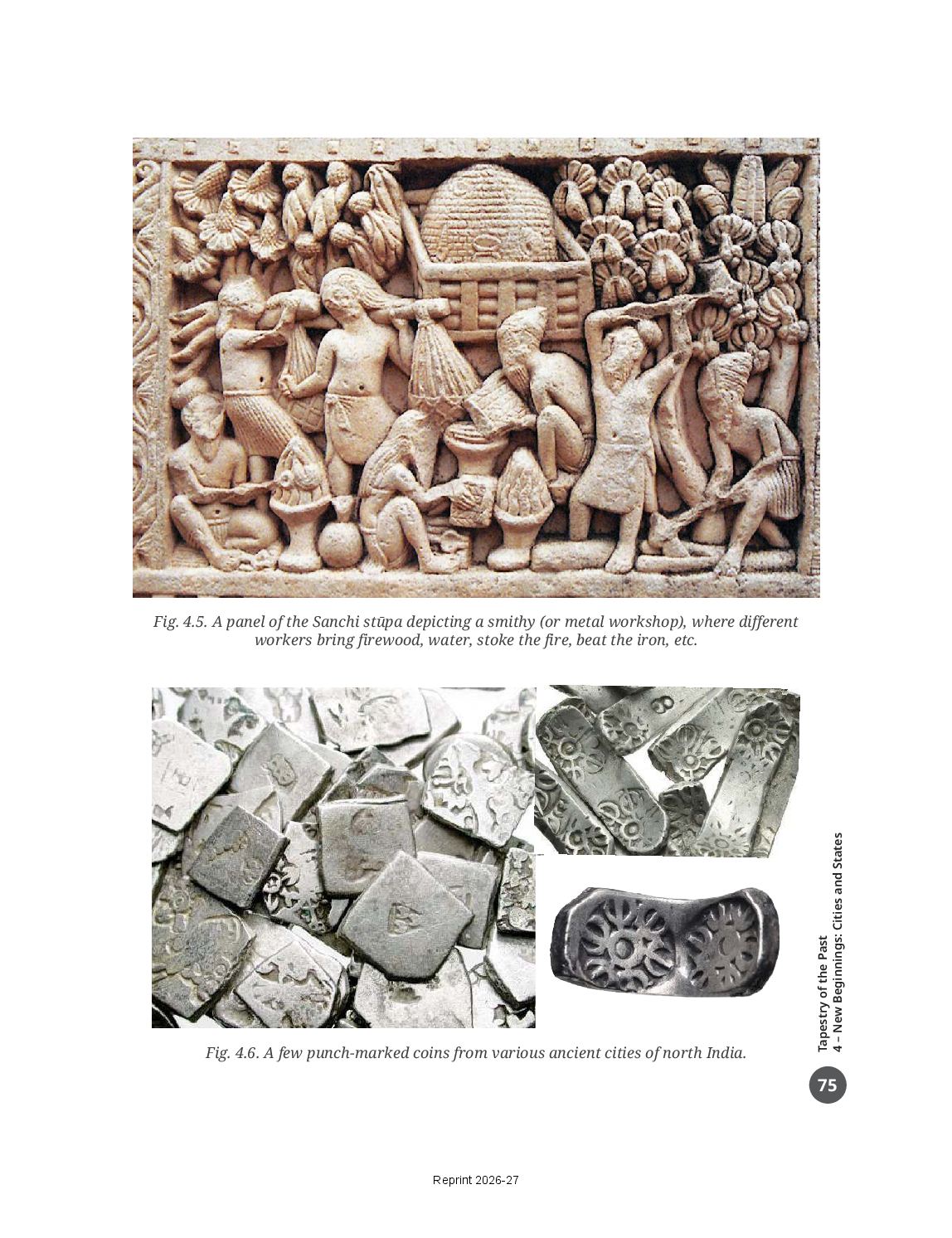
- Iron and coins changed everyday life. Iron metallurgy, perfected from the early 2nd millennium BCE, made tools that allowed farming on a bigger scale and weapons lighter and sharper than bronze. Growing trade brought India’s first coins — silver punch-marked coins, later copper and gold; each mahājanapada generally issued its own.
- Society organised itself as varṇa and jāti, and the whole Subcontinent got connected. Jāti was an occupational community whose skills passed down the generations; varṇa was the fourfold Vedic category. Roads such as the Uttarapatha and Dakṣhiṇapatha, plus lateral roads to the coastal ports, tied north to south. By 300–200 BCE the whole land was one interconnected region — and the mahājanapadas ceased to exist.
Quick revision – New Beginnings: Cities and States
| Term | What it means | Where it appears in the chapter | Example from the book |
|---|---|---|---|
| Second Urbanisation | The fresh wave of city life that began in the 1st millennium BCE | Pages 68–69 | Began in the Ganga plains and the Sindhu basin; “has continued right up to today” |
| Janapada | The territory of a clan, led by a rājā | Page 69 | Sanskrit: ‘where the people (jana) have set foot (pada)’ |
| Mahājanapada | A bigger state formed when early janapadas merged | Page 69 | 16 in the usual list, from Gandhāra to Anga to Aśhmaka |
| Sabhā / samiti | The assembly or council of the clan | Page 70 | The words first appear in the Vedas |
| Gaṇa / sangha | A mahājanapada that was not a monarchy | Page 72 | Vajji (Vṛijji) and Malla — scholars’ ‘early republics’ |
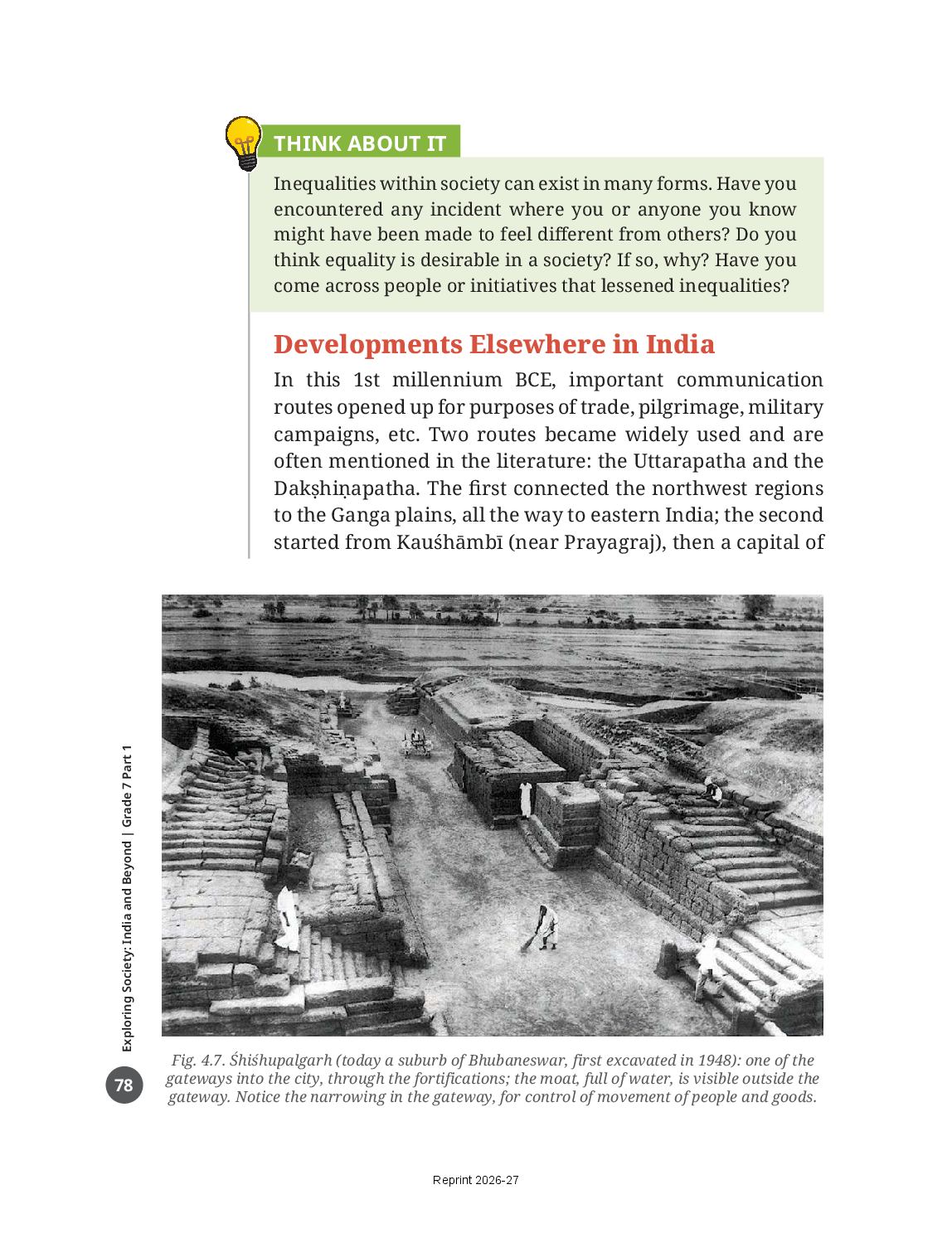
| Moat | A deep, wide ditch round a fort or fortified city, filled with water | Margin note, page 70 | Visible full of water outside the Śhiśhupalgarh gateway (Fig. 4.7) |
| Punch-marked coins | India’s first coins — symbols punched into soft silver | Pages 73–75 | Fig. 4.6, coins from various ancient cities of north India |
| Jāti | A community with a specific occupation tied to its livelihood | Page 76 | Skills in agriculture, metallurgy, commerce or a craft, passed down generations |
| Varṇa | A fourfold category that emerged from Vedic texts | Page 76 | Brahmins, Kshatriyas, Vaishyas, Shudras |
| Caste | English word from Portuguese casta | DON’T MISS OUT, page 77 | Used by Portuguese travellers of the 16th century CE |
| Uttarapatha | Route from the northwest regions to the Ganga plains and eastern India | Page 78 | Used for trade, pilgrimage and military campaigns |
| Dakṣhiṇapatha | Route from Kauśhāmbī across the Vindhya Range to the south | Pages 78–79 | Kauśhāmbī is near today’s Prayagraj |
Old NCERT vs New – Class 7 Social Science
This chapter is from Exploring Society: India and Beyond, the new NCERT Class 7 Social Science book (NCF-SE 2023, used from 2025-26). It replaced the old book “Our Pasts, Our Environment and Social and Political Life”, so chapter numbers and names differ from older PDFs.
Solutions and All Chapters
Answers to the exercises and the full chapter list of Exploring Society: India and Beyond:
New Beginnings: Cities and States – Overview
| Class | Class 7 |
| Subject | Social Science |
| Book | Exploring Society: India and Beyond – new NCERT book |
| Part | Part I |
| Chapter | 4 of 20 – New Beginnings: Cities and States |
| Book pages | 67 – 82 |
| Edition | NCERT Reprint 2026-27 |
| Session | 2026-27 |
| Free – read online or download |
Class 7 Social Science Chapter 4 – FAQs
Where can I download New Beginnings: Cities and States Class 7 PDF?
From the download table on this page – the chapter PDF is free, and the full book is linked too.
What is Class 7 Social Science Chapter 4 about?
India’s ‘First Urbanisation’ ended, and city life vanished for a thousand years. In the early 2nd millennium BCE the Indus / Harappan / Sindhu-Sarasvatī civilisation disintegrated. Cities were abandoned or reverted to a village lifestyle, because every part of the Harappan urban order had gone — big private and public structures, crowded streets and busy markets, specialised occupations, a writing system, a sanitation system, an administration and a state structure with a ruling class.
Is New Beginnings: Cities and States from the new NCERT Class 7 Social Science book?
Yes. It is chapter 4 of exploring society: india and beyond (part i), the new NCERT Class 7 Social Science book for 2026-27.
Is this the latest NCERT edition for 2026-27?
Yes – the PDF is NCERT’s latest edition for the 2026-27 session.
Where are the NCERT Solutions for Class 7 Social Science Chapter 4?
Open the NCERT Solutions link above for answers to the exercise questions.