Download How the Land Becomes Sacred – NCERT Class 7 Social Science Chapter 8 PDF from the new NCERT Class 7 Social Science book Exploring Society: India and Beyond (2026-27). Read the chapter online or download the free PDF. Sacredness, in this chapter, means something of deep religious or spiritual significance — holy, divine, worthy of respect and reverence. That ‘something’ need not be a building. It can be a special location or shrine, a journey of a special kind (a…
How the Land Becomes Sacred PDF – Chapter 8 of Exploring Society: India and Beyond (Part I)
Read the chapter online or download the PDF.
| Chapter | Download | |
|---|---|---|
| Chapter 8 PDF | How the Land Becomes Sacred | View PDF |
| Full book | NCERT Class 7 Social Science – Exploring Society: India and Beyond | View Book |
Read Online
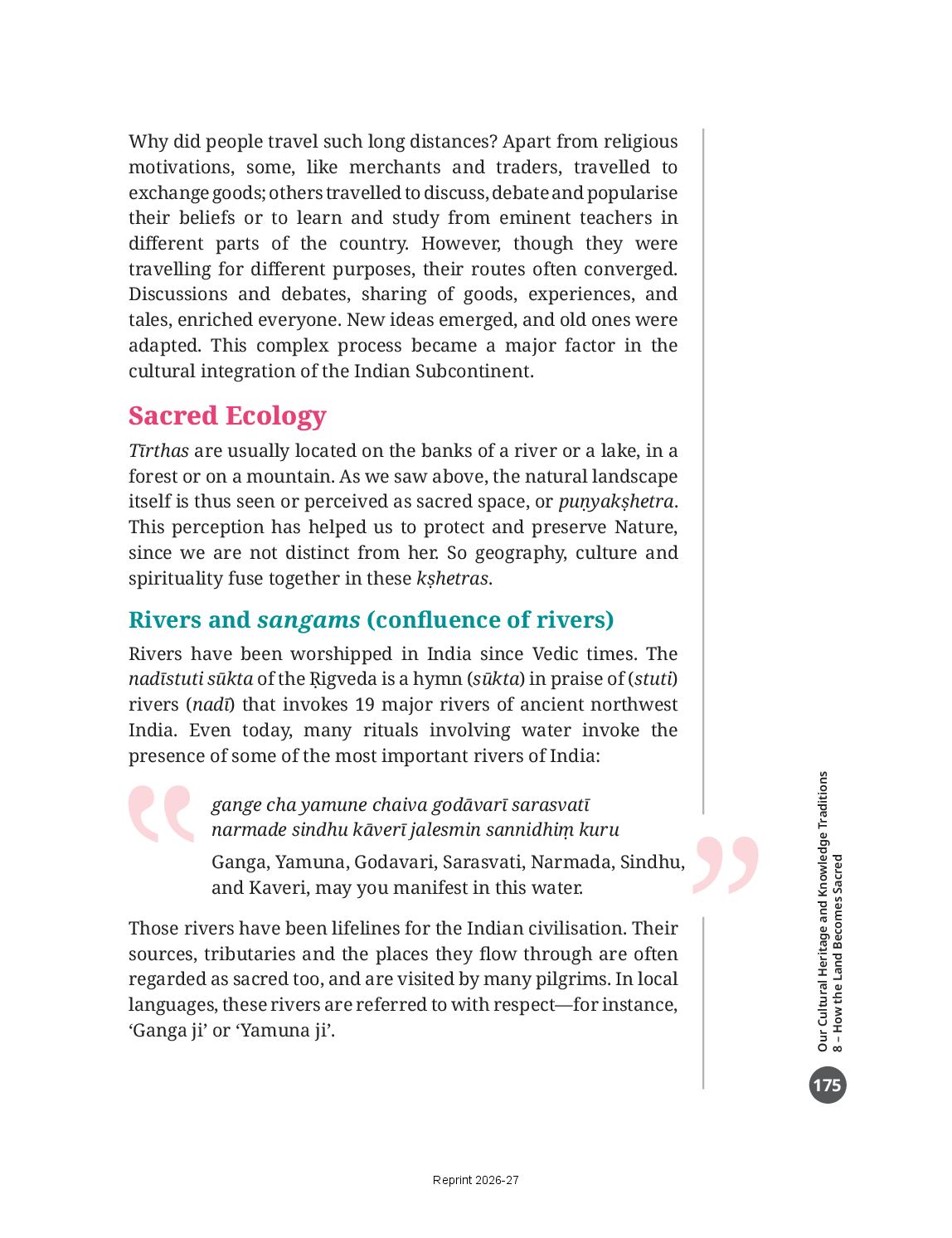
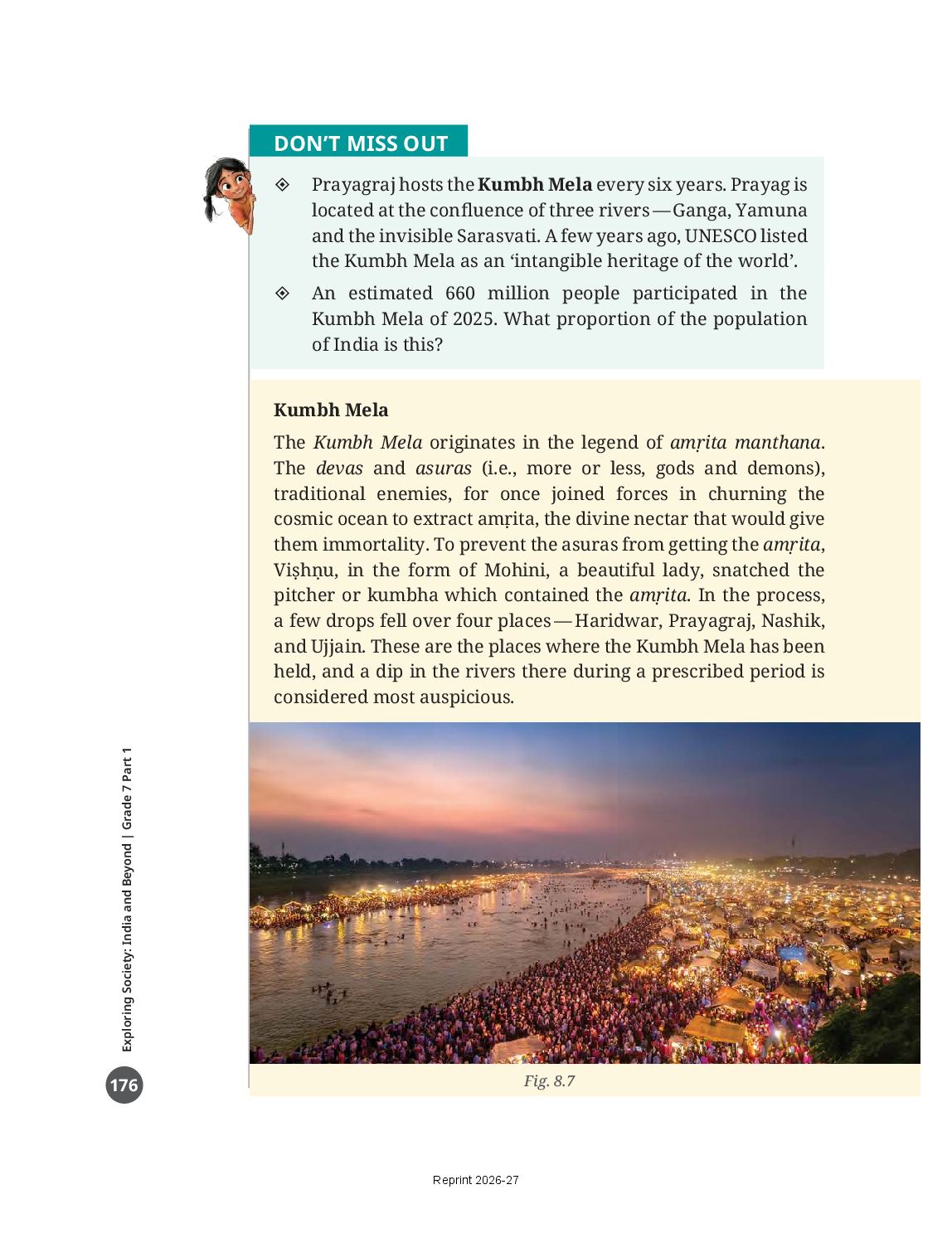
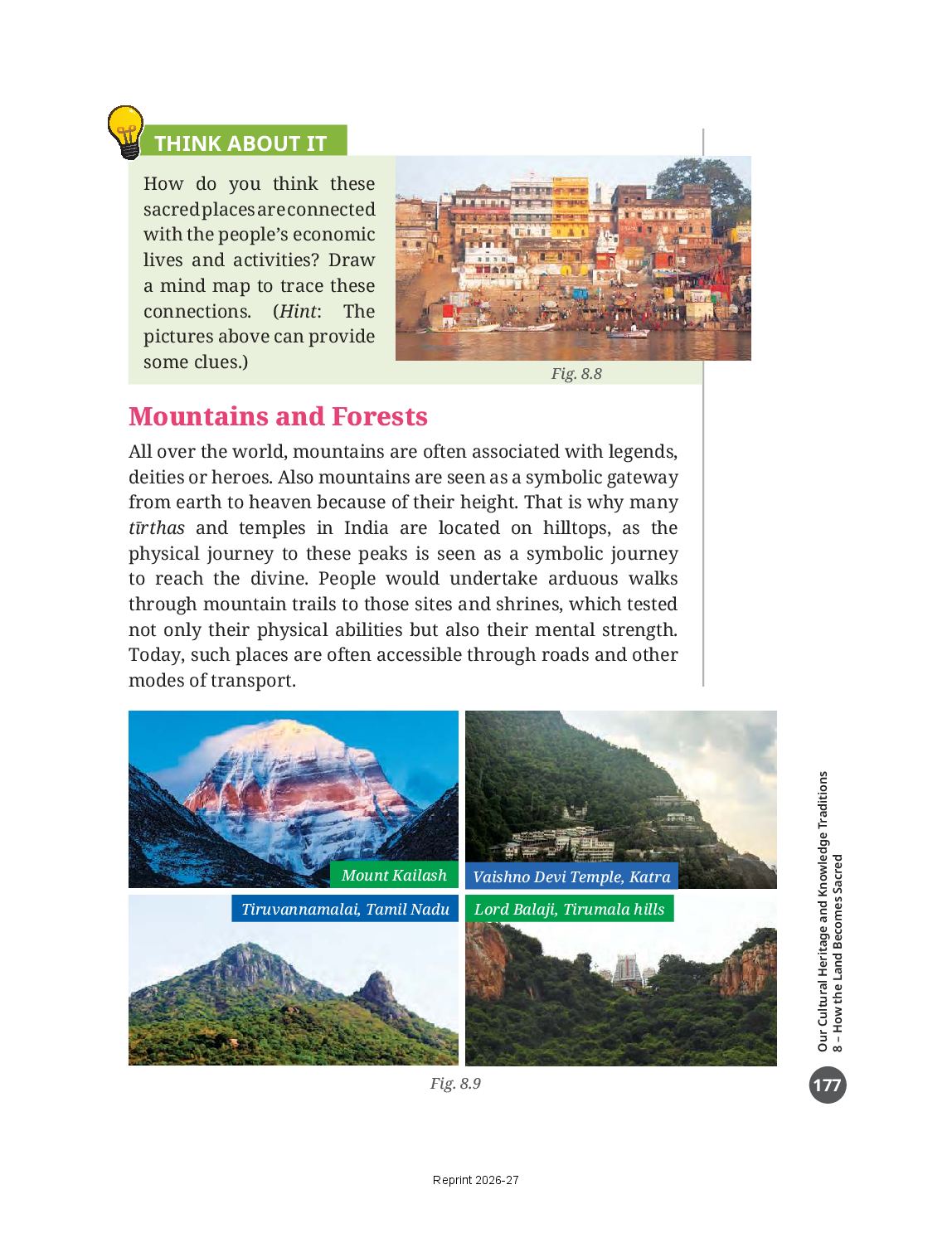
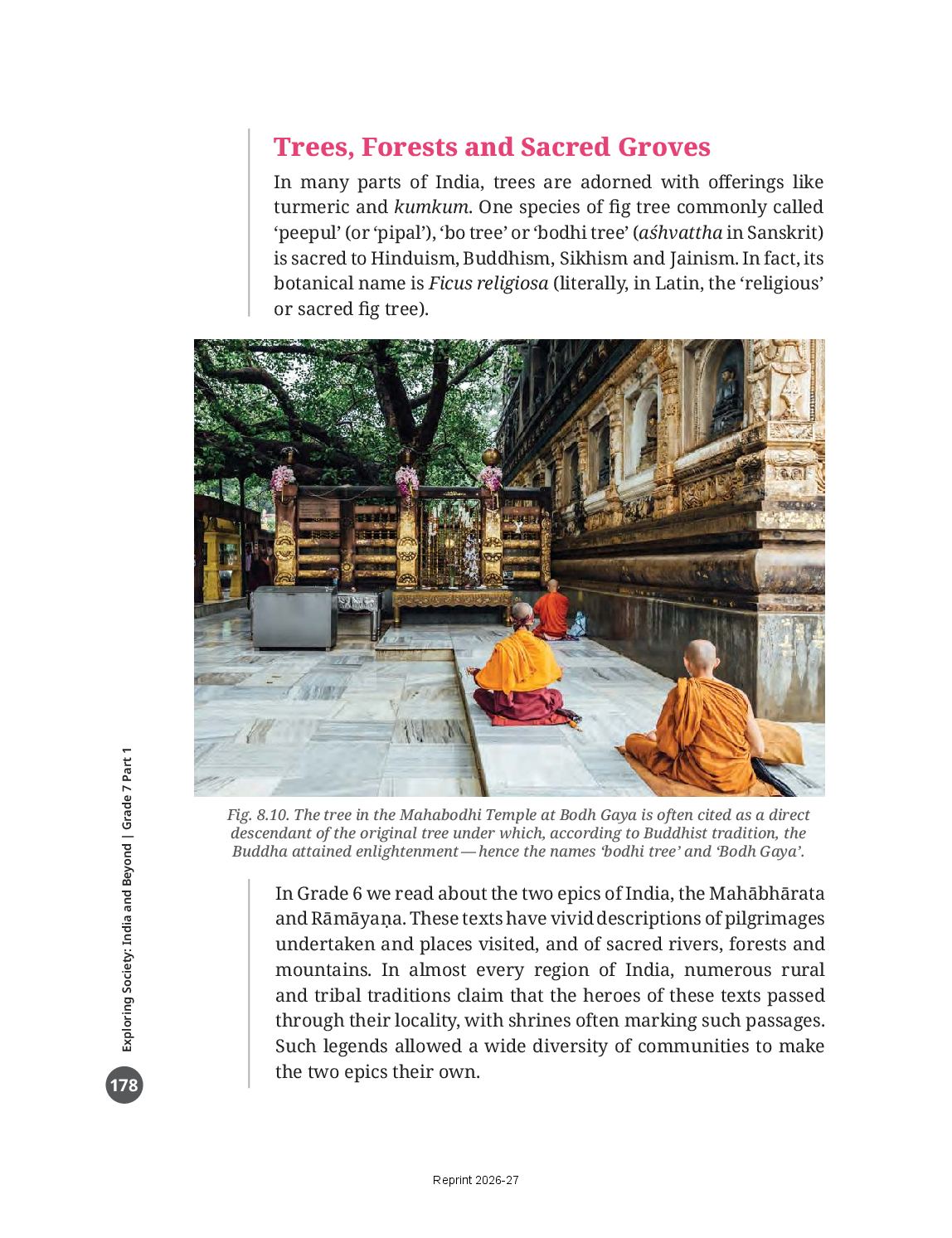
What Is in How the Land Becomes Sacred? (Class 7 Social Science Chapter 8)
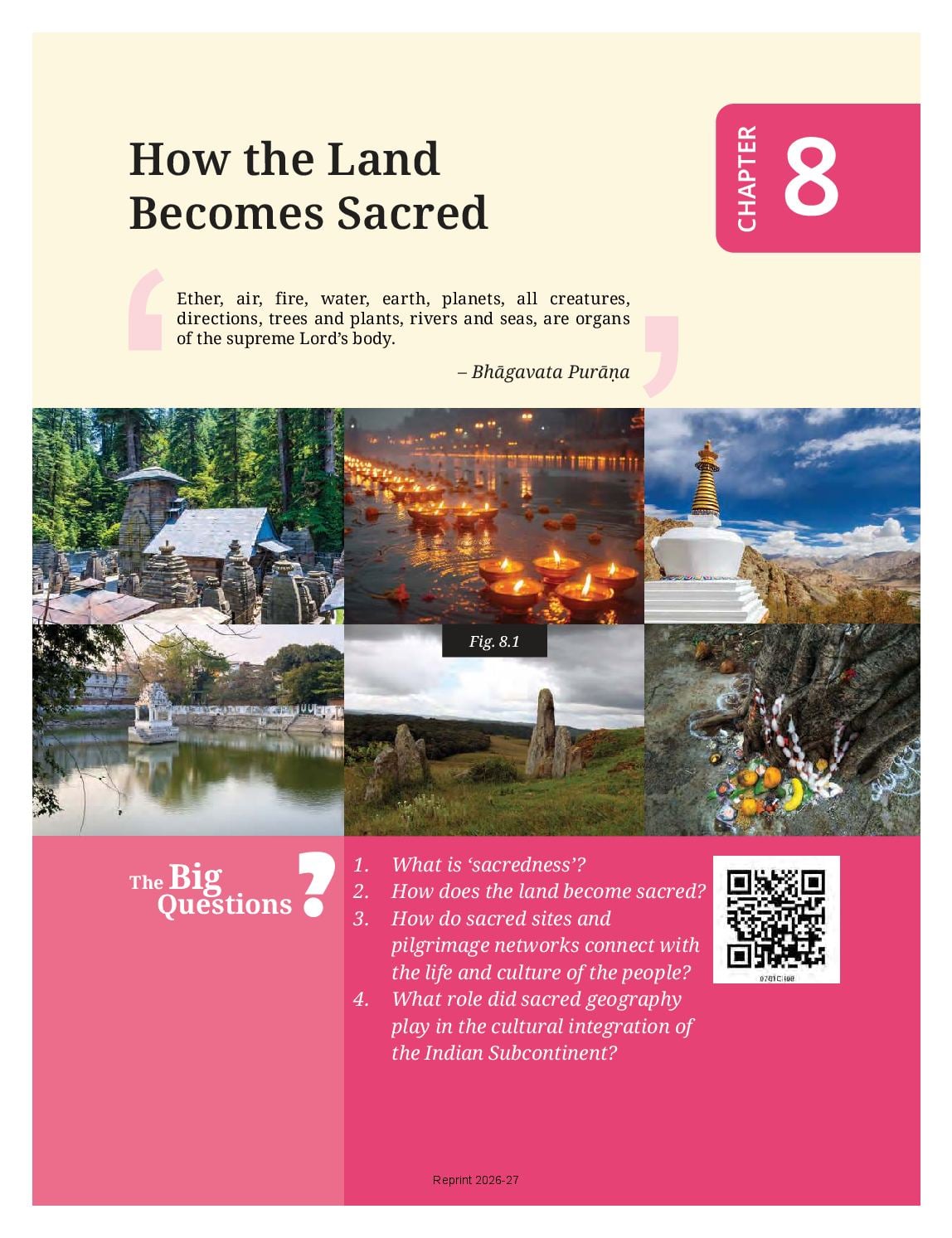
- Sacredness, in this chapter, means something of deep religious or spiritual significance — holy, divine, worthy of respect and reverence. That ‘something’ need not be a building. It can be a special location or shrine, a journey of a special kind (a pilgrimage), the route the journey takes, or even the very land covered. So sacredness is tied not only to religion and spirituality but also to geography and to living traditions.
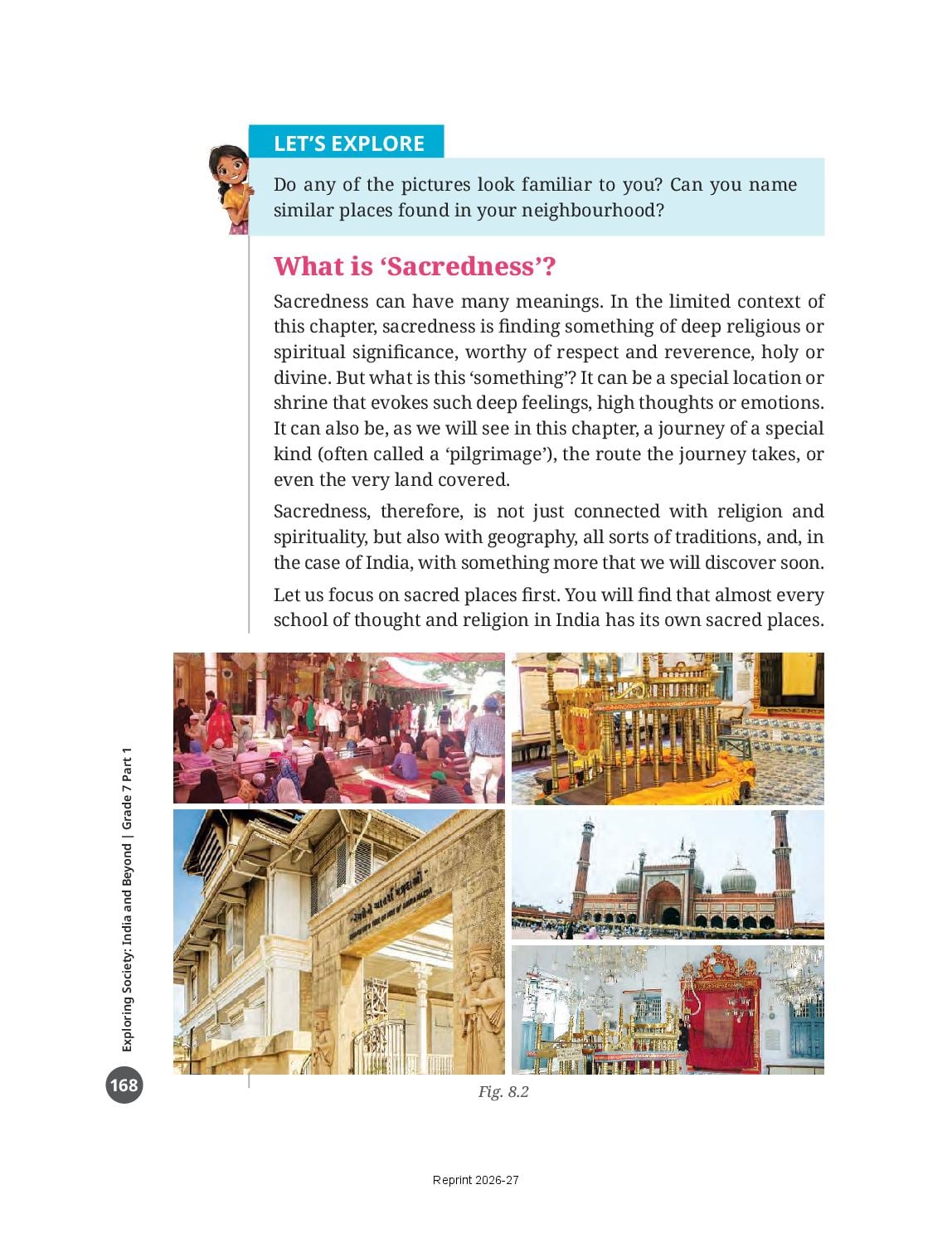
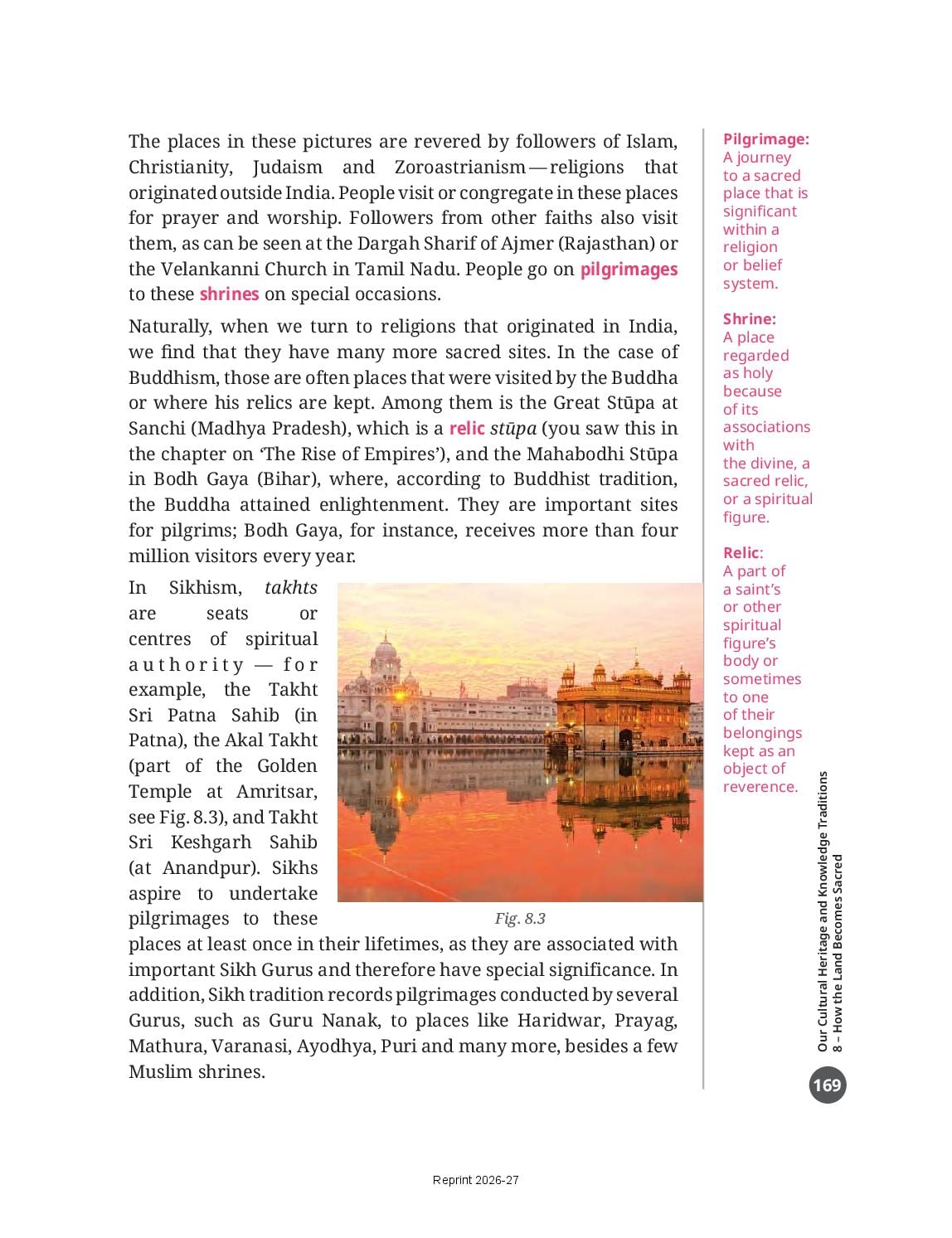
- Every school of thought and religion in India has its own sacred places. Religions that came from outside — Islam, Christianity, Judaism, Zoroastrianism — have shrines like the Dargah Sharif of Ajmer and the Velankanni Church, visited by followers of other faiths too. Buddhism has sites the Buddha visited or where his relics are kept (the Great Stūpa at Sanchi, the Mahabodhi Stūpa at Bodh Gaya, which receives over four million visitors a year). Sikhism has the takhts — Takht Sri Patna Sahib, the Akal Takht at Amritsar, Takht Sri Keshgarh Sahib at Anandpur. Jain tīrthas mark where the Tīrthankaras attained liberation or where events of their lives took place — Mount Abu, Girnar, Śhatruñjaya.
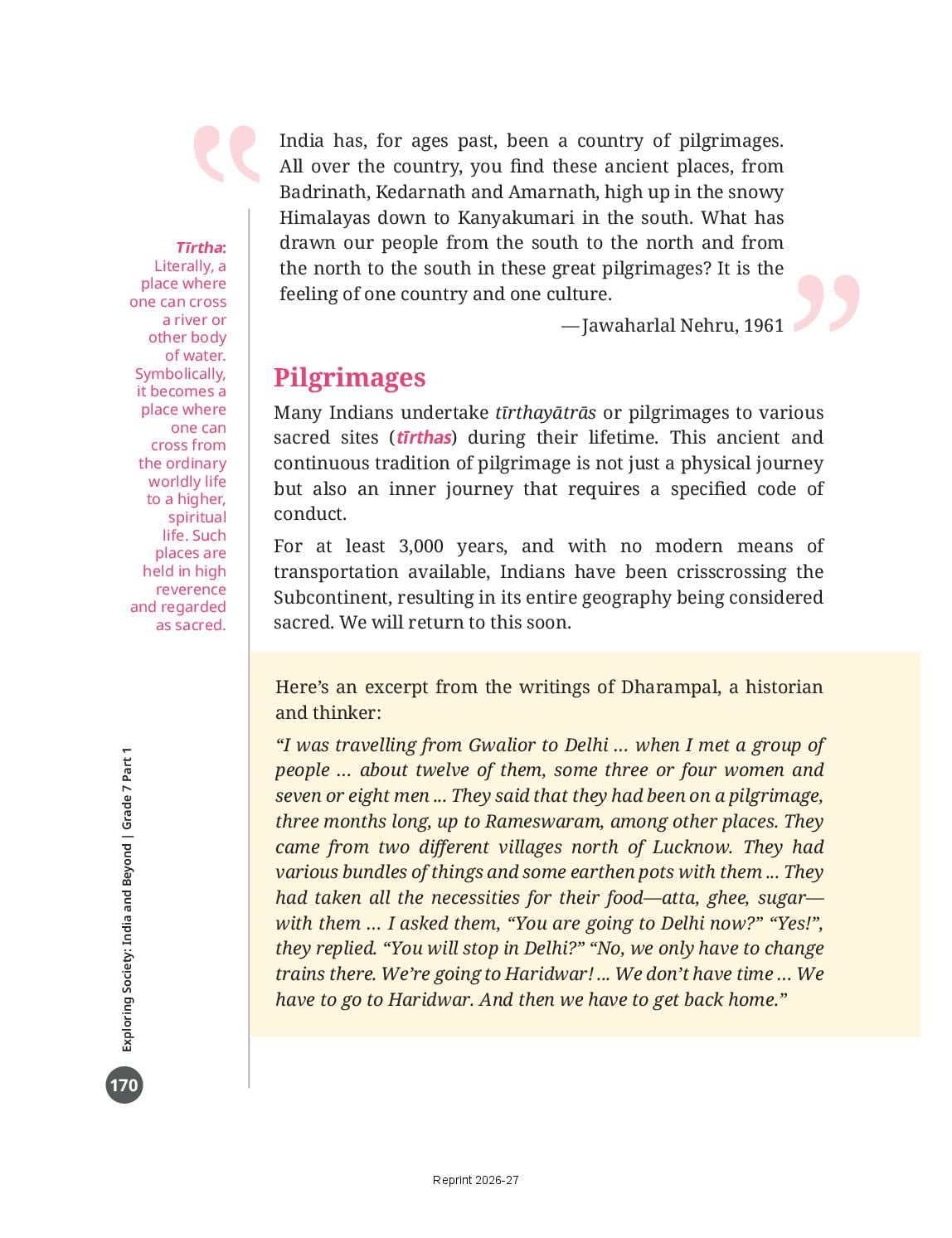
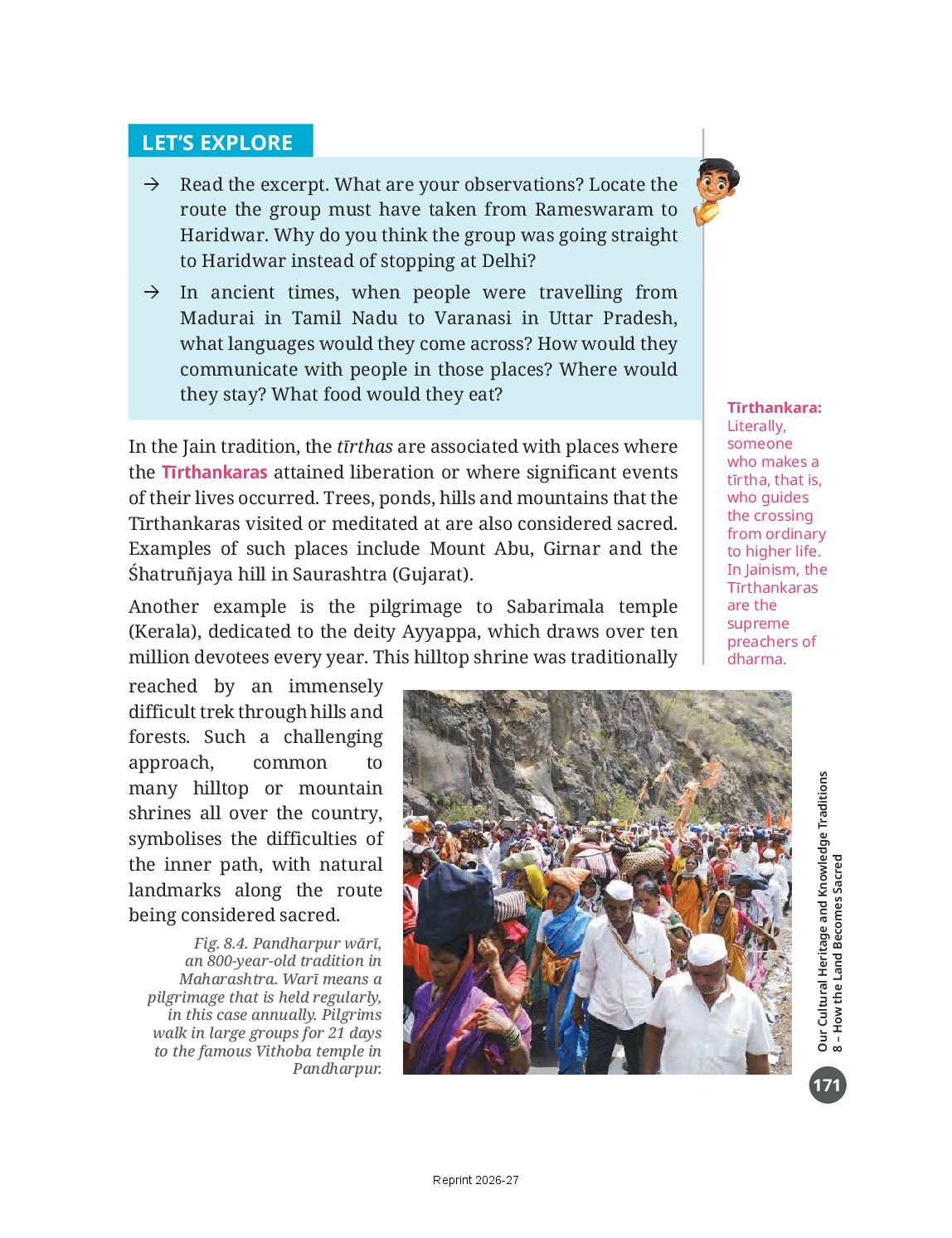
- For at least 3,000 years, with no modern transport, Indians crisscrossed the Subcontinent on tīrthayātrā. A tīrtha is literally a crossing place on a river; symbolically it is where one crosses from ordinary worldly life to a higher, spiritual life. The journey is not only physical but inner, and follows a code of conduct — the Pandharpur wārī, an 800-year-old tradition, still walks 21 days to the Vithoba temple, and Sabarimala draws over ten million devotees a year.
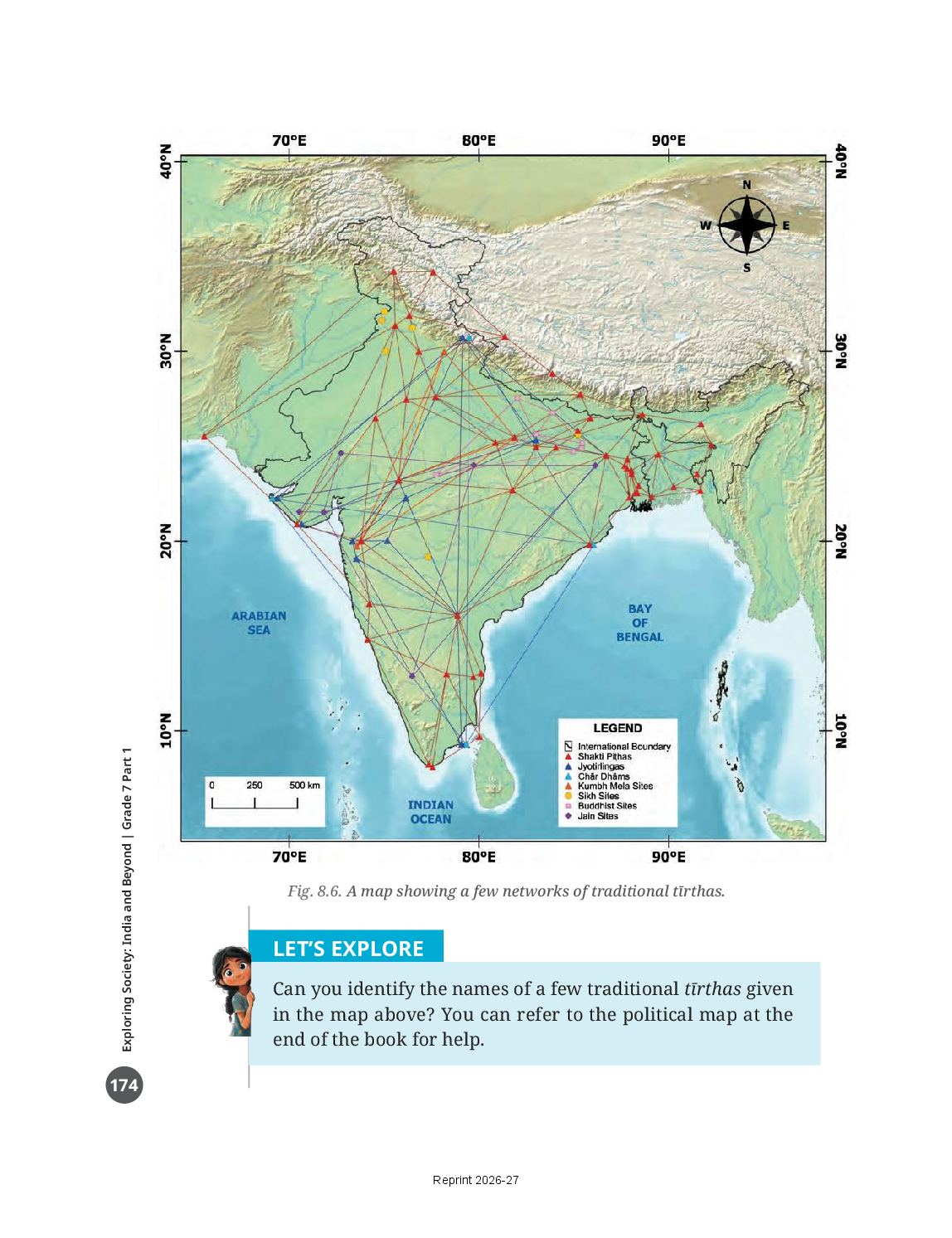
- The networks of tīrthas turn the map itself into sacred geography. The chār dhām stand at the southern, northern, eastern and western corners of India; the 12 jyotirlingas and the 51 Shakti pīṭhas cover the whole Subcontinent. The story of Satī’s body falling in pieces across the land carries a clear symbol — the whole land becomes the body of the divine mother. Travelling those networks, pilgrims met diverse languages, customs, clothes and foods, and noticed the commonalities too. This was a major factor in the cultural integration of the Indian Subcontinent.
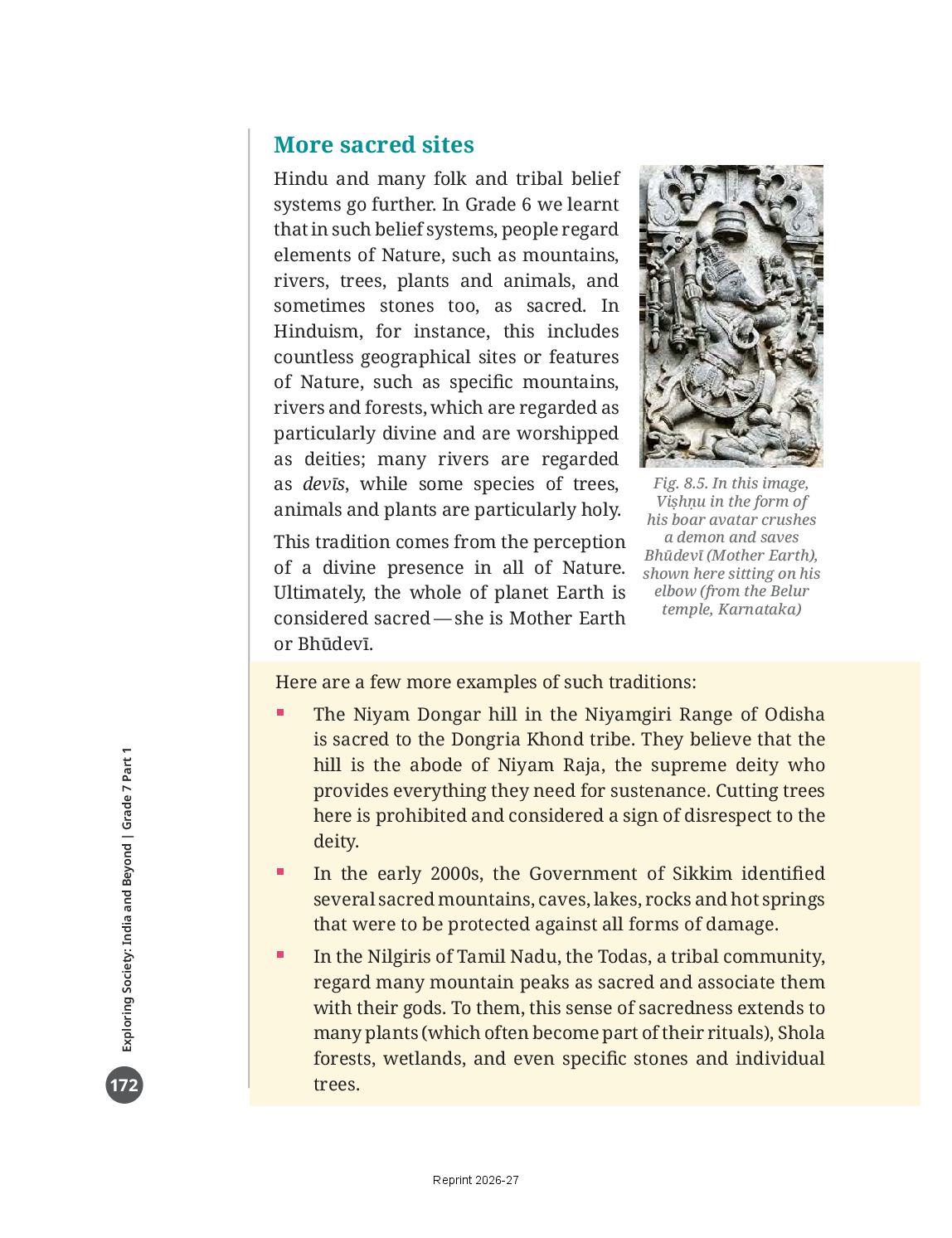
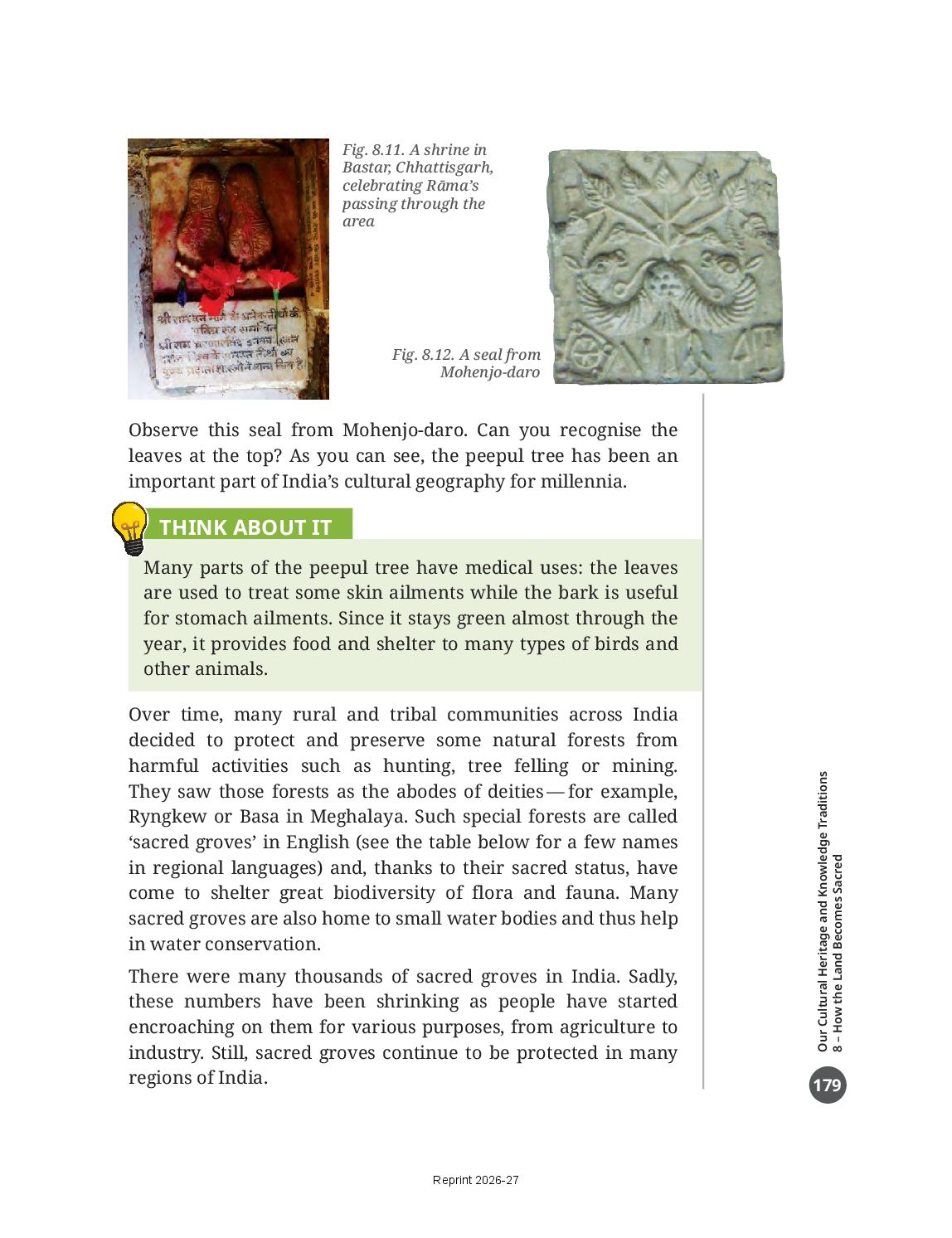
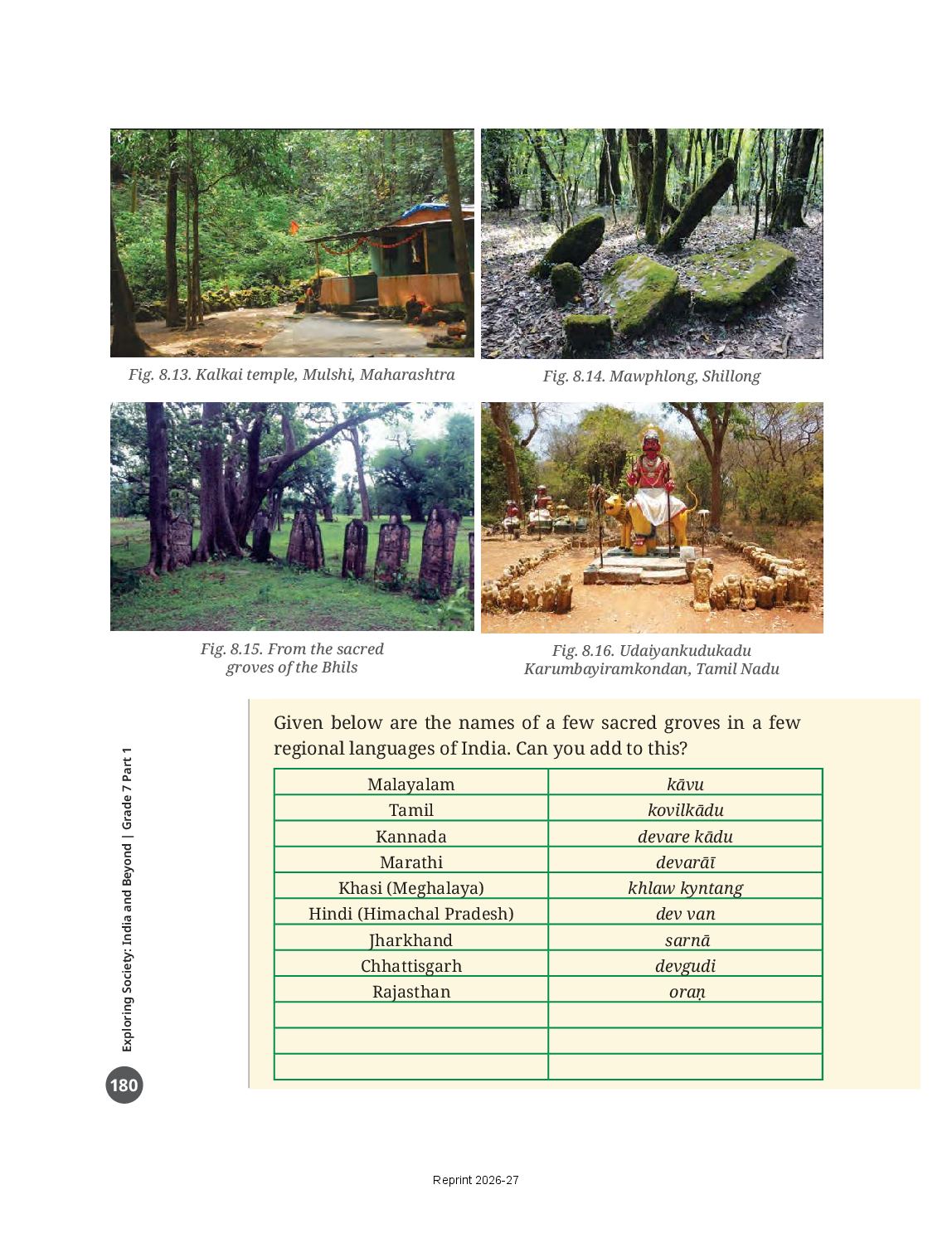
- Sacred ecology: rivers, mountains, trees and groves. Tīrthas sit on riverbanks, lakes, forests and hills, so the natural landscape itself is seen as sacred space, or puṇyakṣhetra. The nadīstuti sūkta of the Ṛigveda praises 19 rivers; the daily invocation still names Ganga, Yamuna, Godavari, Sarasvati, Narmada, Sindhu and Kaveri. The peepul (Ficus religiosa) is sacred to Hinduism, Buddhism, Sikhism and Jainism, and its leaves appear on a Mohenjo-daro seal. Communities protected whole forests as sacred groves — kāvu, devarāī, khlaw kyntang, sarnā, oraṇ — which now shelter great biodiversity.
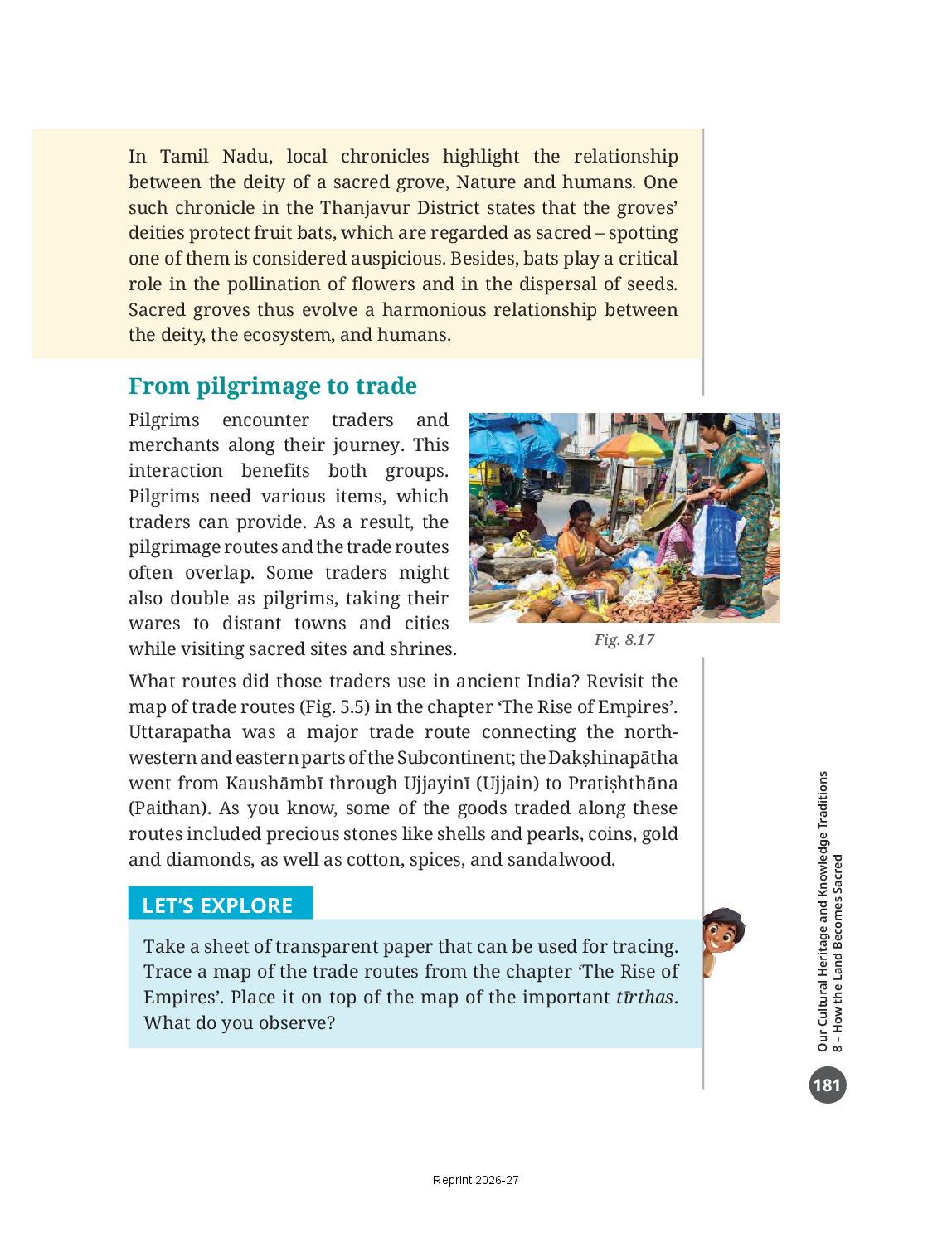
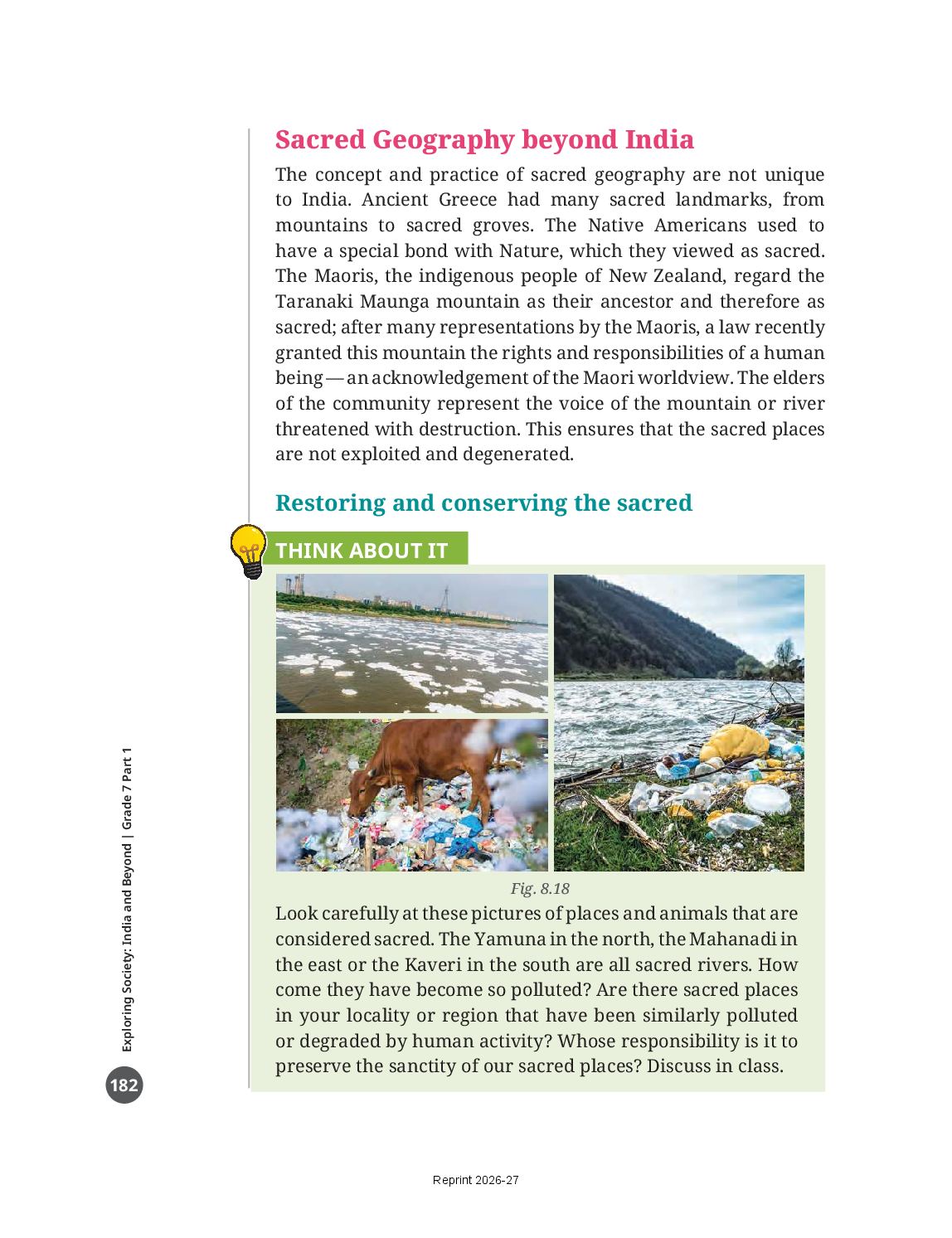
- Pilgrimage routes and trade routes overlapped, and the idea is not India’s alone. Pilgrims needed goods; traders supplied them and sometimes doubled as pilgrims, so the Uttarapatha and Dakṣhinapātha ran past the same towns as the tīrthas. Ancient Greece, the Native Americans and the Maoris of New Zealand — whose Taranaki Maunga was recently granted the rights of a human being — hold similar views. Today our sacred rivers and places are badly polluted; protecting this heritage, as the Constitution reminds us, is our duty.
Quick revision – How the Land Becomes Sacred
| Term | What it means | Where it appears in the chapter | Worth remembering |
|---|---|---|---|
| Sacredness | Finding something of deep religious or spiritual significance, worthy of respect and reverence, holy or divine | Page 168 | It may be a place, a journey, a route, or the land itself |
| Pilgrimage | A journey to a sacred place that is significant within a religion or belief system | Margin note, page 169 | In India, an unbroken tradition for at least 3,000 years |
| Shrine | A place regarded as holy because of its associations with the divine, a sacred relic, or a spiritual figure | Margin note, page 169 | Ajmer Dargah Sharif and Velankanni Church draw people of many faiths |
| Relic | A part of a saint’s or other spiritual figure’s body, or sometimes one of their belongings, kept as an object of reverence | Margin note, page 169 | The Great Stūpa at Sanchi is a relic stūpa |
| Takht | A seat or centre of spiritual authority in Sikhism | Page 169 | Takht Sri Patna Sahib · Akal Takht, Amritsar · Takht Sri Keshgarh Sahib, Anandpur |
| Tīrtha | Literally a place where one can cross a river; symbolically, a place where one crosses from ordinary life to a higher, spiritual life | Margin note, page 170 | The word explains why sacred sites sit on riverbanks and confluences |
| Tīrthankara | Literally, one who makes a tīrtha — who guides the crossing from ordinary to higher life; in Jainism, the supreme preachers of dharma | Margin note, page 171 | Jain tīrthas: Mount Abu, Girnar, Śhatruñjaya |
| Wārī | A pilgrimage held regularly — in Pandharpur’s case, annually | Fig. 8.4, page 171 | An 800-year-old Maharashtra tradition; pilgrims walk 21 days to the Vithoba temple |
| Chār dhām | Four sacred sites that some Hindus aspire to visit, placed at the four corners of India | Page 173, mapped in Fig. 8.6 | Badrinath (N) · Puri (E) · Rameswaram (S) · Dwarka (W) |
| Jyotirlinga / Shakti pīṭha | 12 shrines of Śhiva, each with its own name and mythology; and the 51 places where parts of Satī’s body are said to have fallen | Page 173 and margin note | The Shakti pīṭhas reach even present-day Bangladesh and Pakistan |
| Puṇyakṣhetra | Sacred space — the natural landscape itself perceived as holy | Sacred Ecology, page 175 | Geography, culture and spirituality fuse in these kṣhetras |
| Nadīstuti sūkta | A hymn (sūkta) of the Ṛigveda in praise (stuti) of rivers (nadī) | Page 175 | It invokes 19 major rivers of ancient northwest India |
| Kumbh Mela | A vast gathering at Haridwar, Prayagraj, Nashik and Ujjain, where drops of amṛita are said to have fallen | Page 176, Fig. 8.7 | UNESCO ‘intangible heritage of the world’; 660 million people at the 2025 Kumbh |
| Sacred grove | A natural forest protected by a community as the abode of a deity, safe from hunting, felling and mining | Pages 179–180 | kāvu · kovilkādu · devare kādu · devarāī · khlaw kyntang · dev van · sarnā · devgudi · oraṇ |
Old NCERT vs New – Class 7 Social Science
This chapter is from Exploring Society: India and Beyond, the new NCERT Class 7 Social Science book (NCF-SE 2023, used from 2025-26). It replaced the old book “Our Pasts, Our Environment and Social and Political Life”, so chapter numbers and names differ from older PDFs.
Solutions and All Chapters
Answers to the exercises and the full chapter list of Exploring Society: India and Beyond:
How the Land Becomes Sacred – Overview
| Class | Class 7 |
| Subject | Social Science |
| Book | Exploring Society: India and Beyond – new NCERT book |
| Part | Part I |
| Chapter | 8 of 20 – How the Land Becomes Sacred |
| Book pages | 167 – 184 |
| Edition | NCERT Reprint 2026-27 |
| Session | 2026-27 |
| Free – read online or download |
Class 7 Social Science Chapter 8 – FAQs
Where can I download How the Land Becomes Sacred Class 7 PDF?
From the download table on this page – the chapter PDF is free, and the full book is linked too.
What is Class 7 Social Science Chapter 8 about?
Sacredness, in this chapter, means something of deep religious or spiritual significance — holy, divine, worthy of respect and reverence. That ‘something’ need not be a building. It can be a special location or shrine, a journey of a special kind (a pilgrimage), the route the journey takes, or even the very land covered. So sacredness is tied not only to religion and spirituality but also to geography and to living traditions.
Is How the Land Becomes Sacred from the new NCERT Class 7 Social Science book?
Yes. It is chapter 8 of exploring society: india and beyond (part i), the new NCERT Class 7 Social Science book for 2026-27.
Is this the latest NCERT edition for 2026-27?
Yes – the PDF is NCERT’s latest edition for the 2026-27 session.
Where are the NCERT Solutions for Class 7 Social Science Chapter 8?
Open the NCERT Solutions link above for answers to the exercise questions.