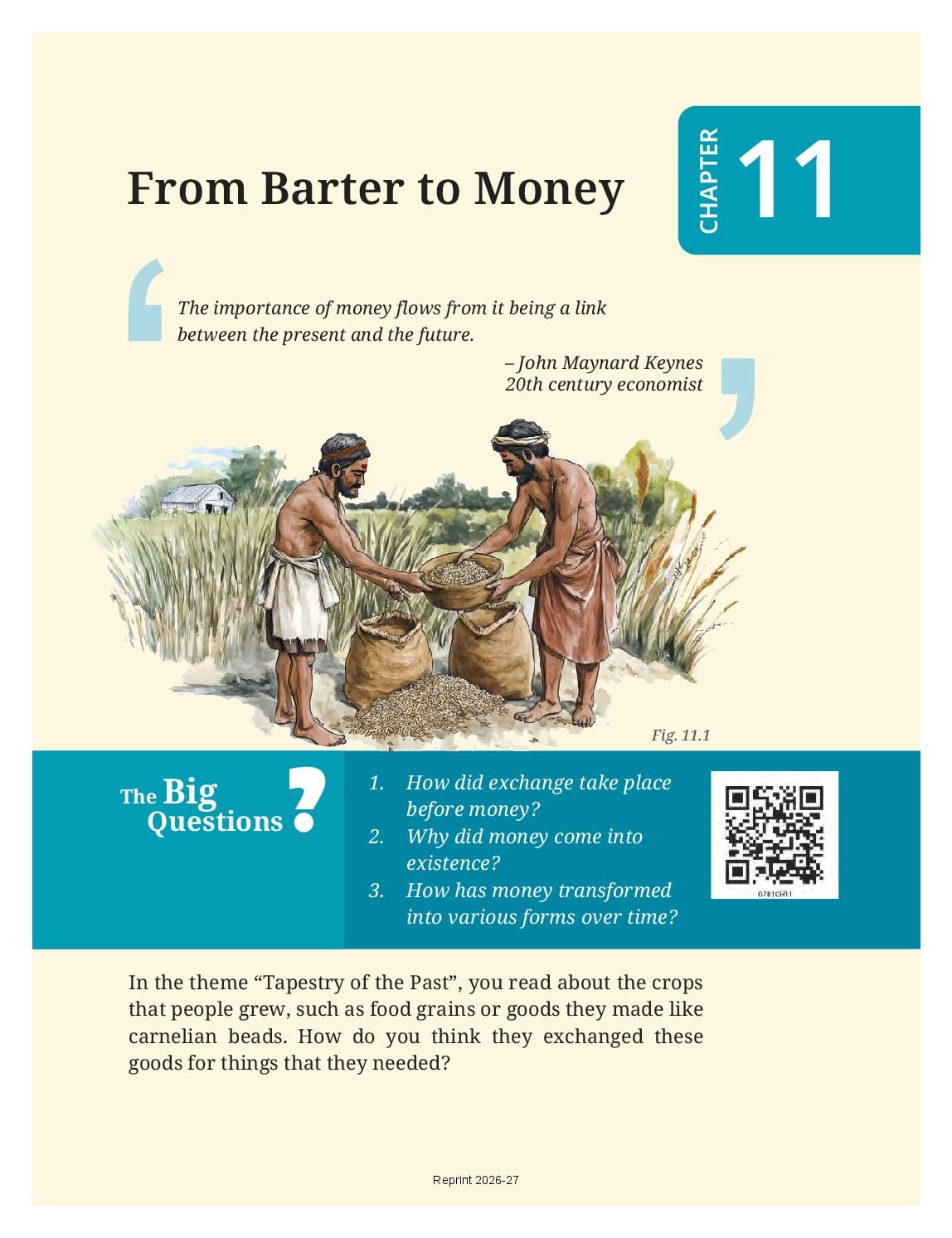
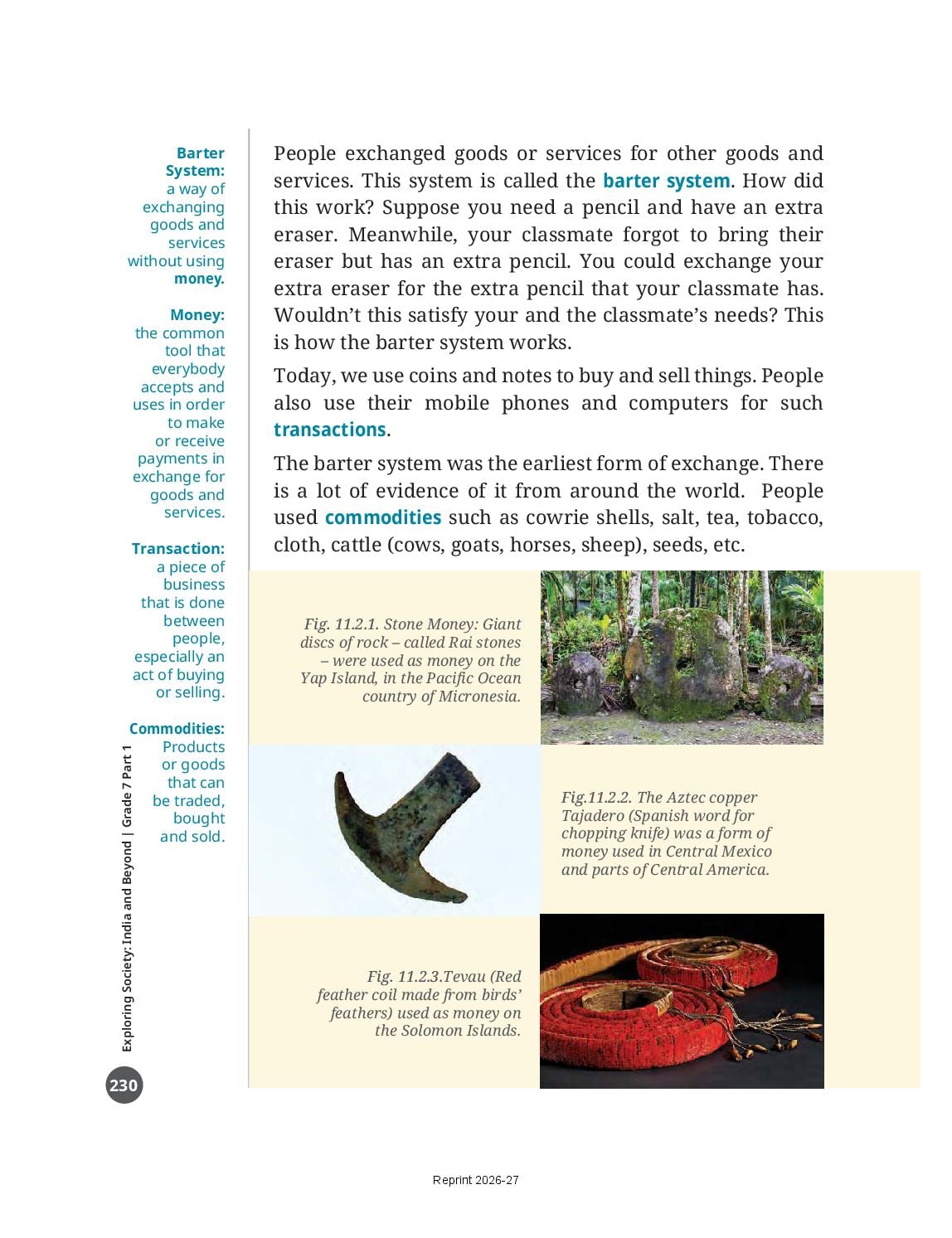
Download From Barter to Money – NCERT Class 7 Social Science Chapter 11 PDF from the new NCERT Class 7 Social Science book Exploring Society: India and Beyond (2026-27). Read the chapter online or download the free PDF. Before money existed, people exchanged goods and services directly for other goods and services. This is the barter system, and cowrie shells, salt, tea, tobacco, cloth, cattle and seeds were among the commodities used.
From Barter to Money PDF – Chapter 11 of Exploring Society: India and Beyond (Part I)
Read the chapter online or download the PDF.
| Chapter | Download | |
|---|---|---|
| Chapter 11 PDF | From Barter to Money | View PDF |
| Full book | NCERT Class 7 Social Science – Exploring Society: India and Beyond | View Book |
Read Online
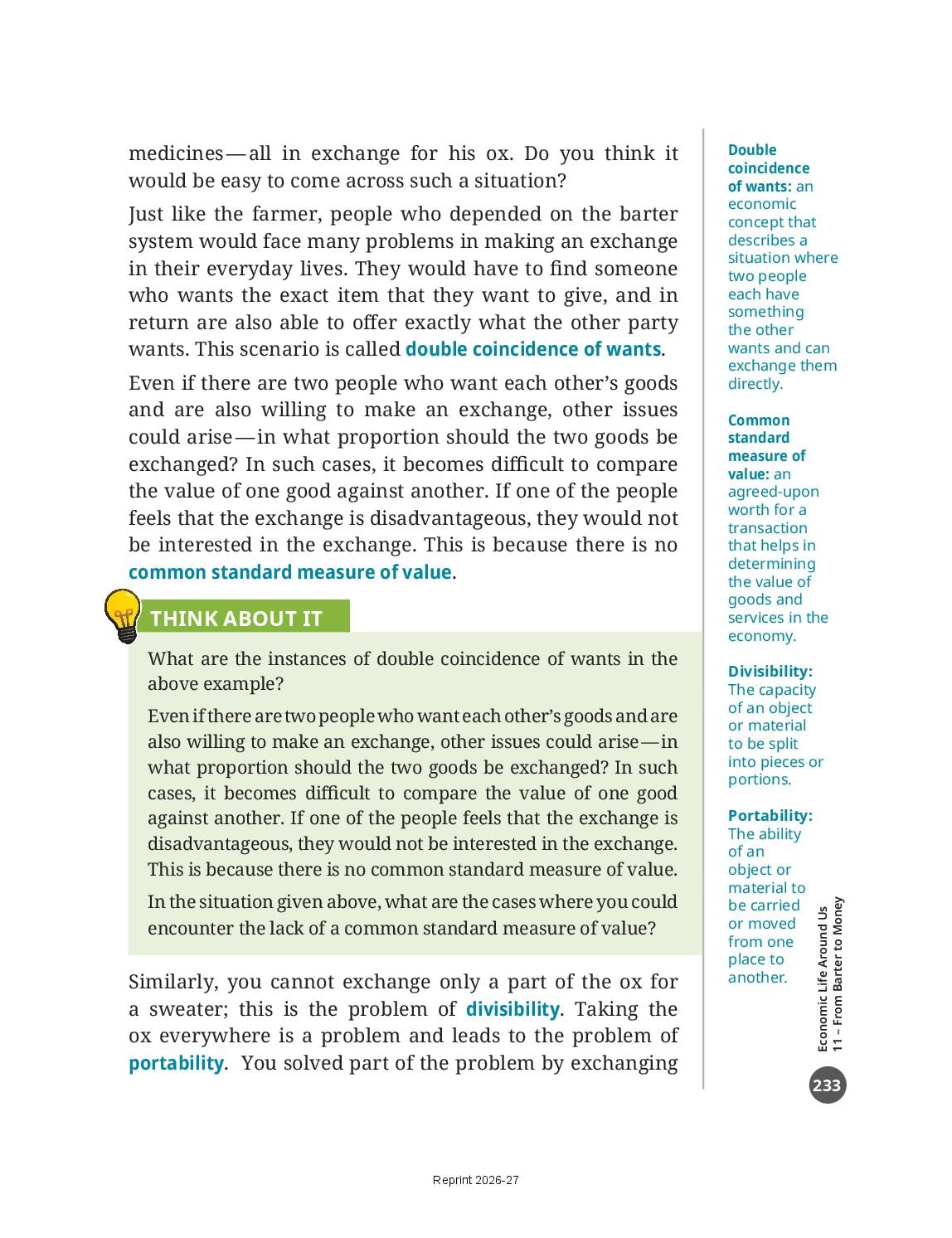
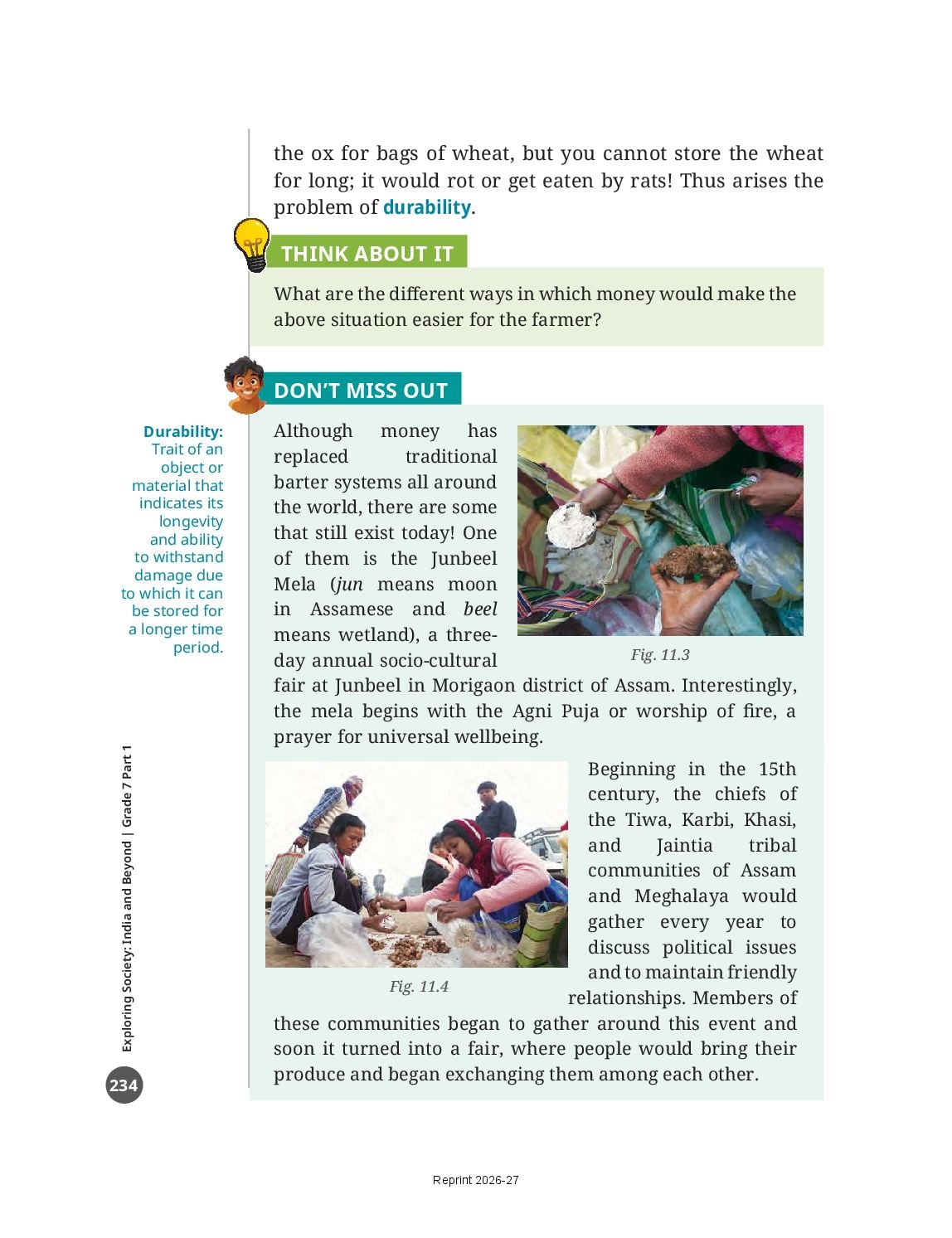
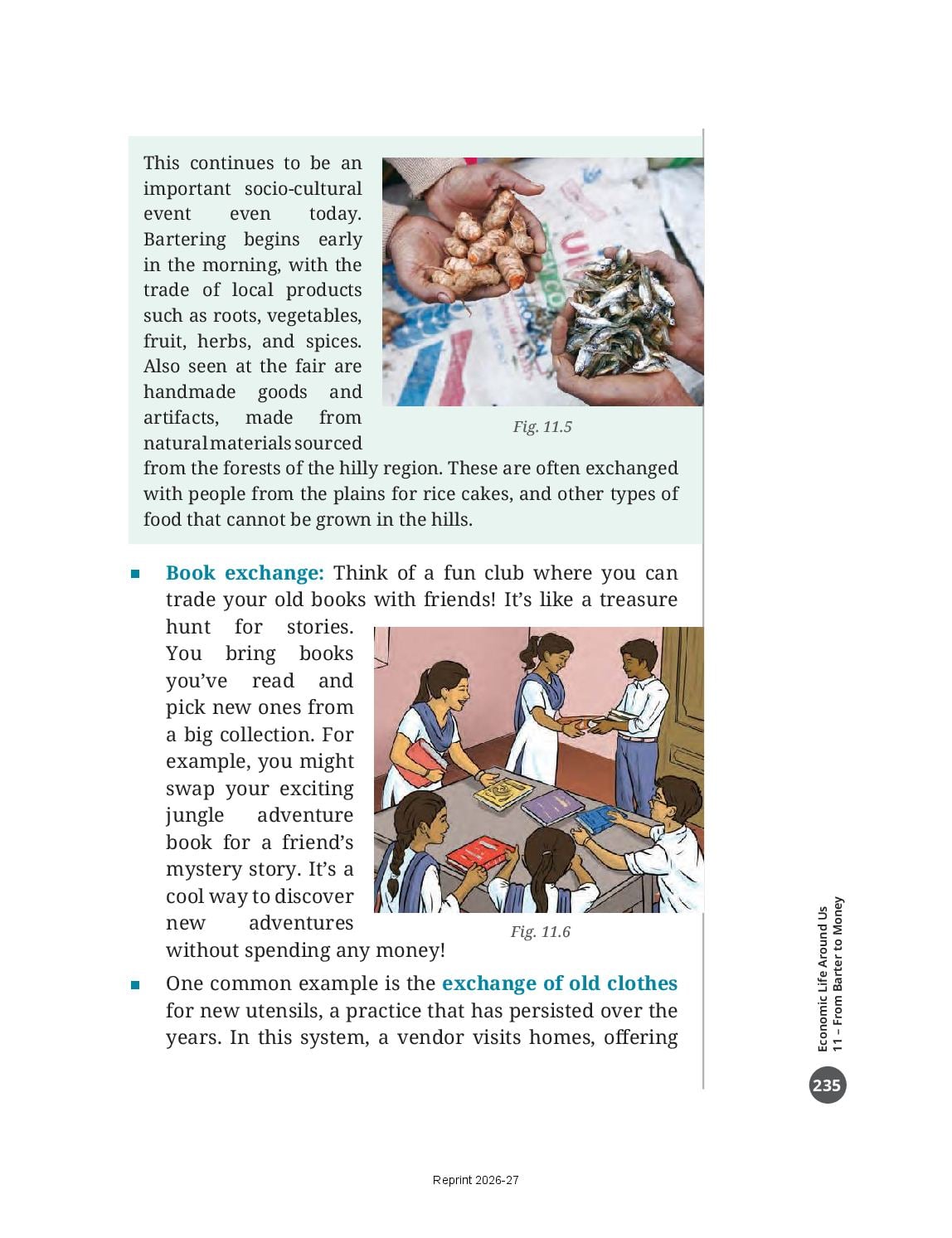
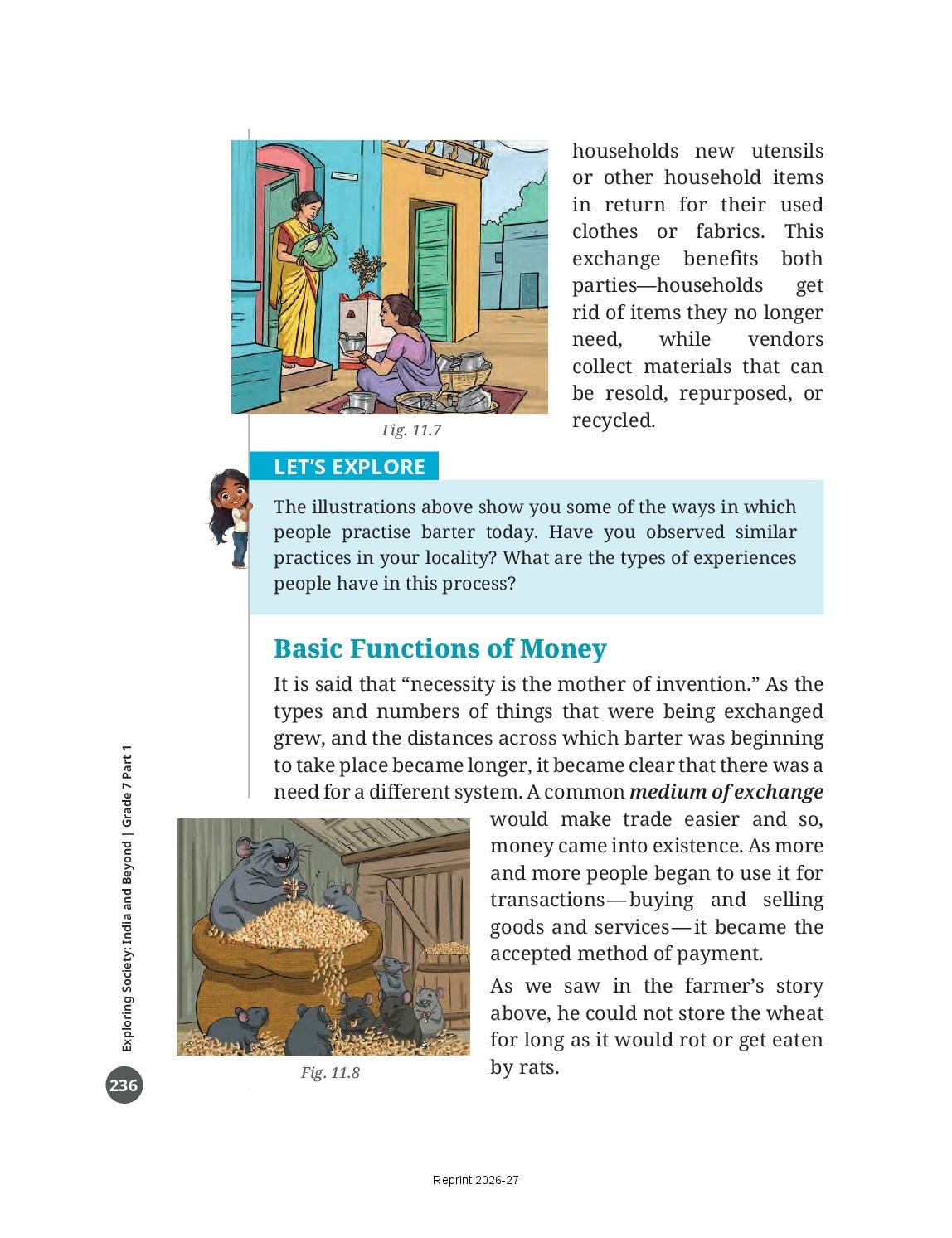
What Is in From Barter to Money? (Class 7 Social Science Chapter 11)
- Before money existed, people exchanged goods and services directly for other goods and services. This is the barter system, and cowrie shells, salt, tea, tobacco, cloth, cattle and seeds were among the commodities used.
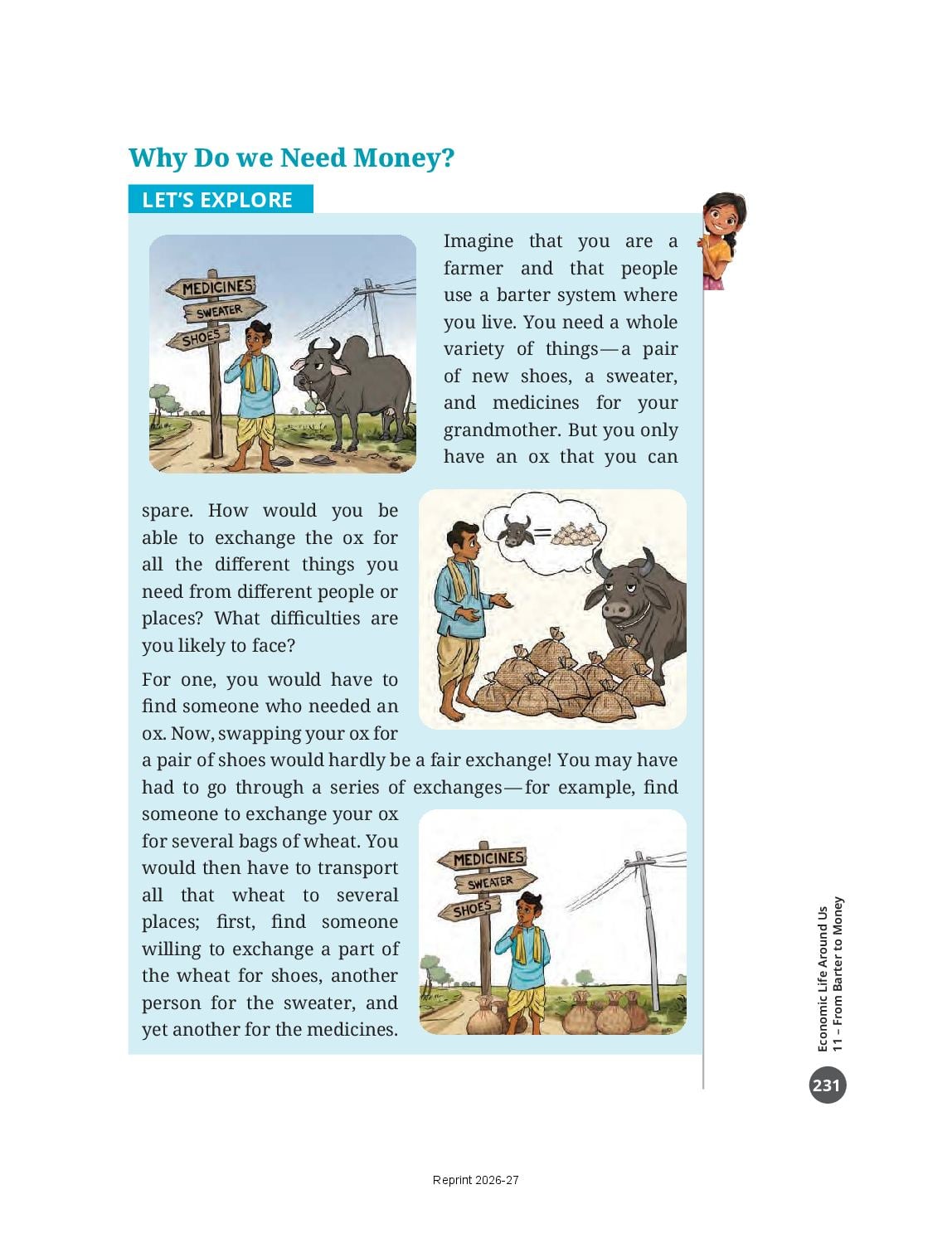
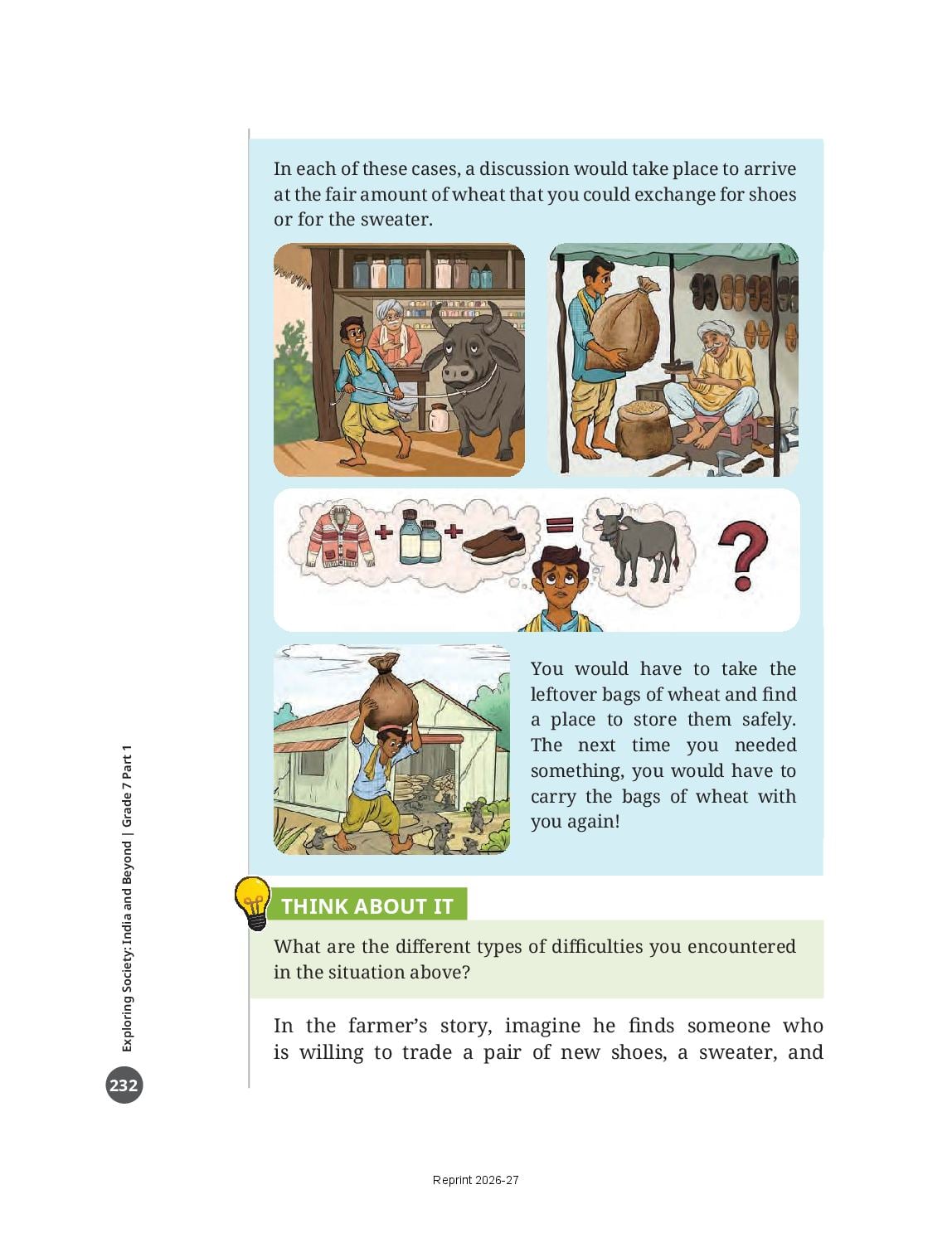
- Barter runs into five problems: the double coincidence of wants, the lack of a common standard measure of value, divisibility, portability and durability.
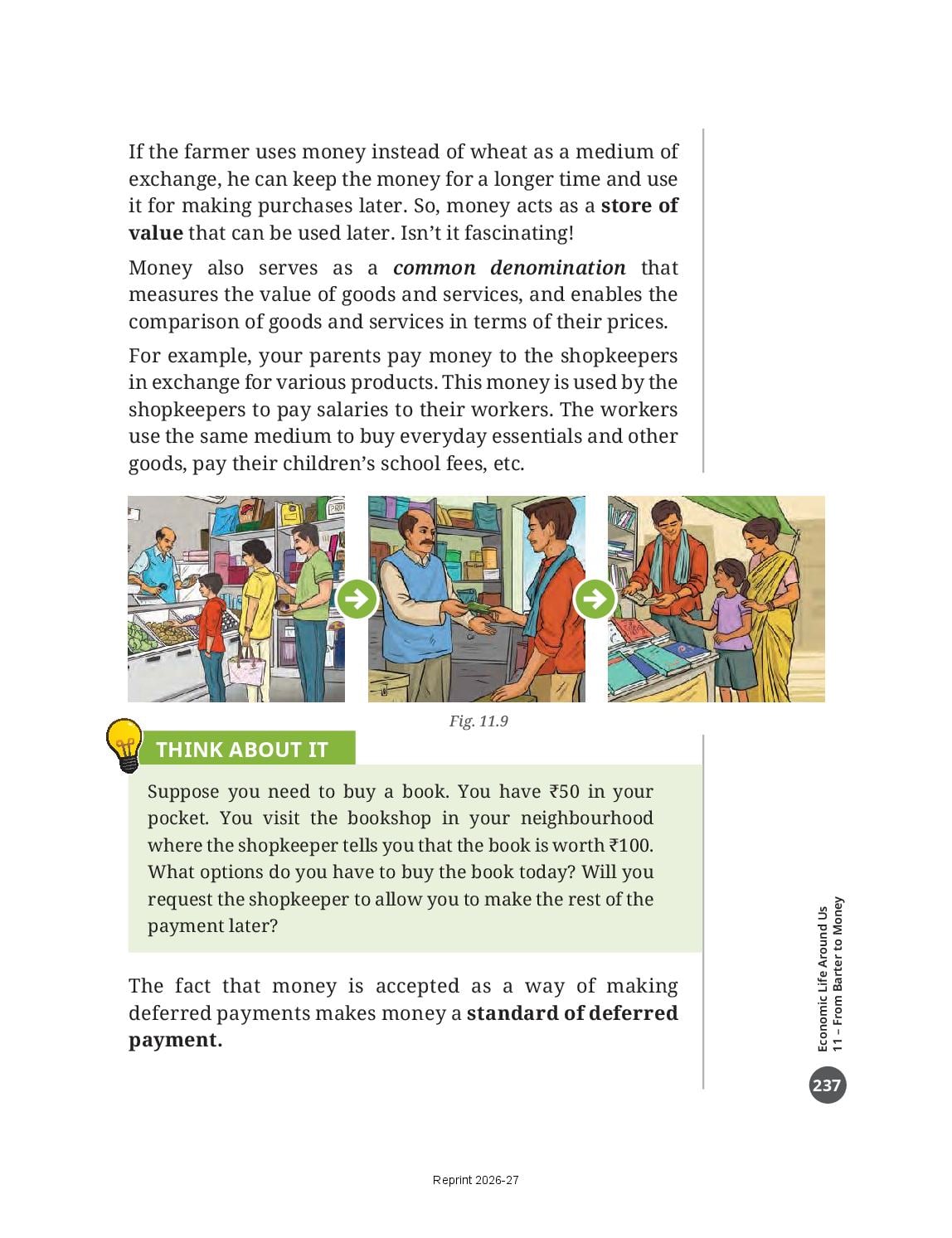
- Money solves all five. It works as a medium of exchange, a common denomination that measures value, a store of value, and a standard of deferred payment.
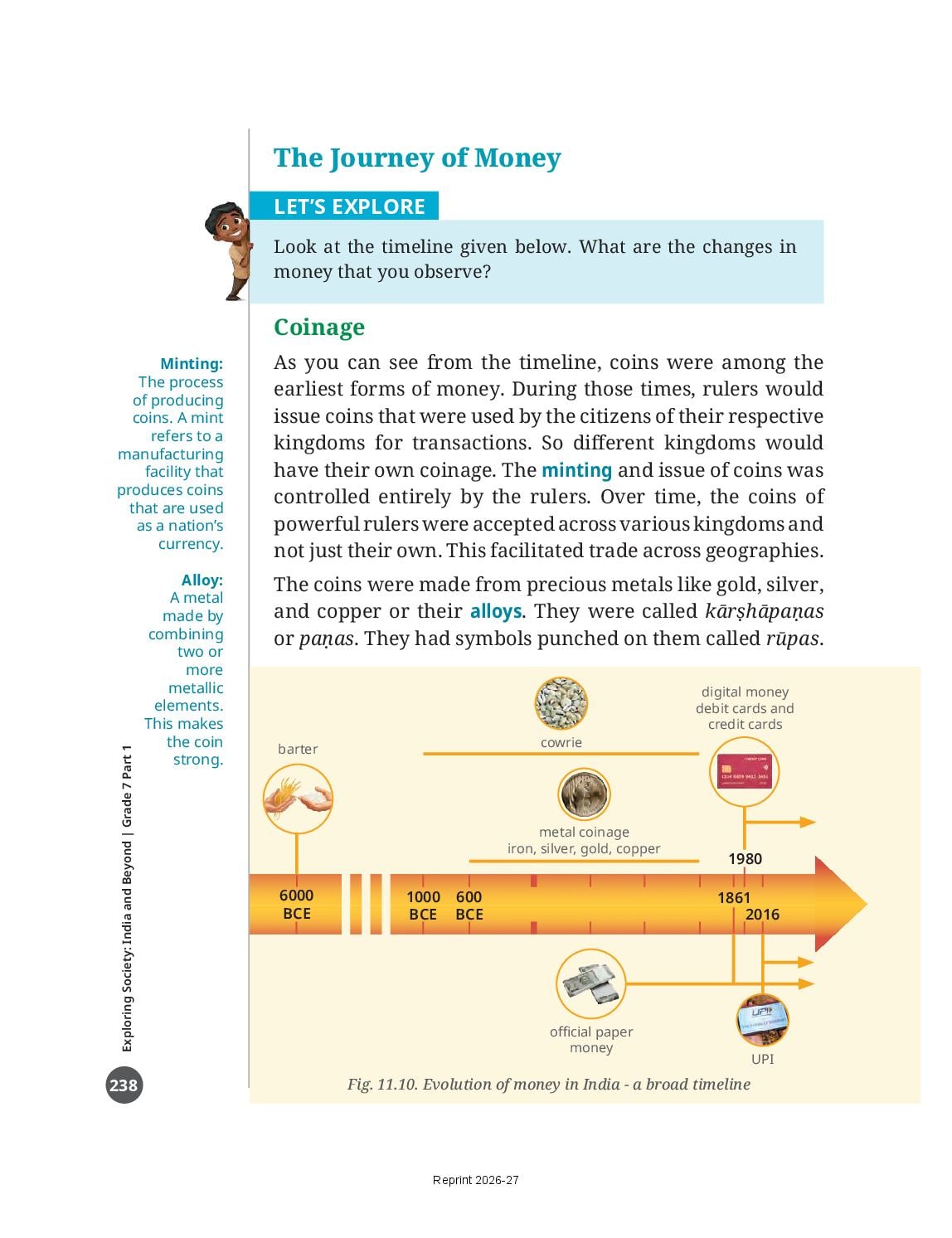
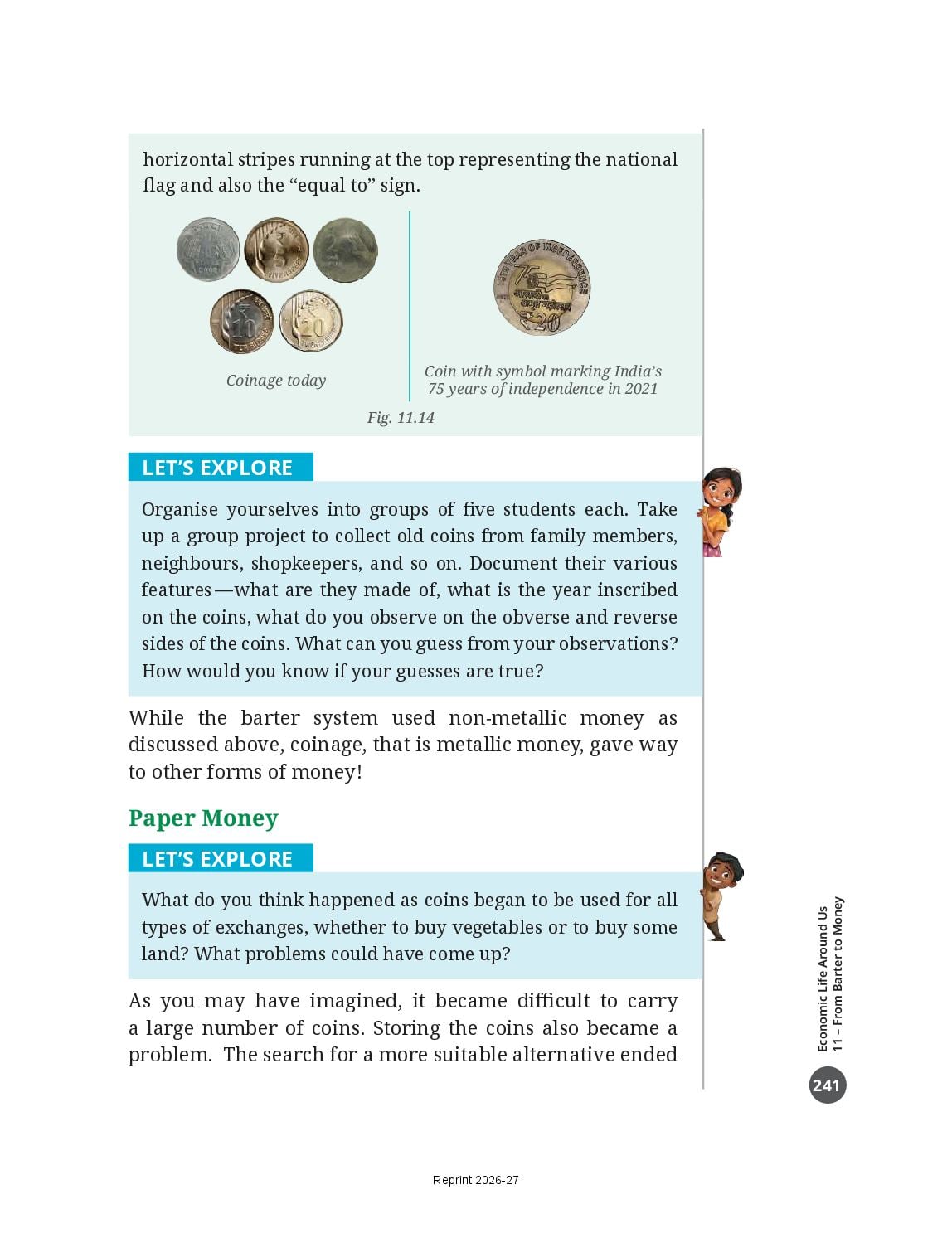
- Ancient Indian coins of gold, silver and copper (or their alloys) were called kārṣhāpaṇas or paṇas and carried punched symbols called rūpas. Rulers alone controlled minting.
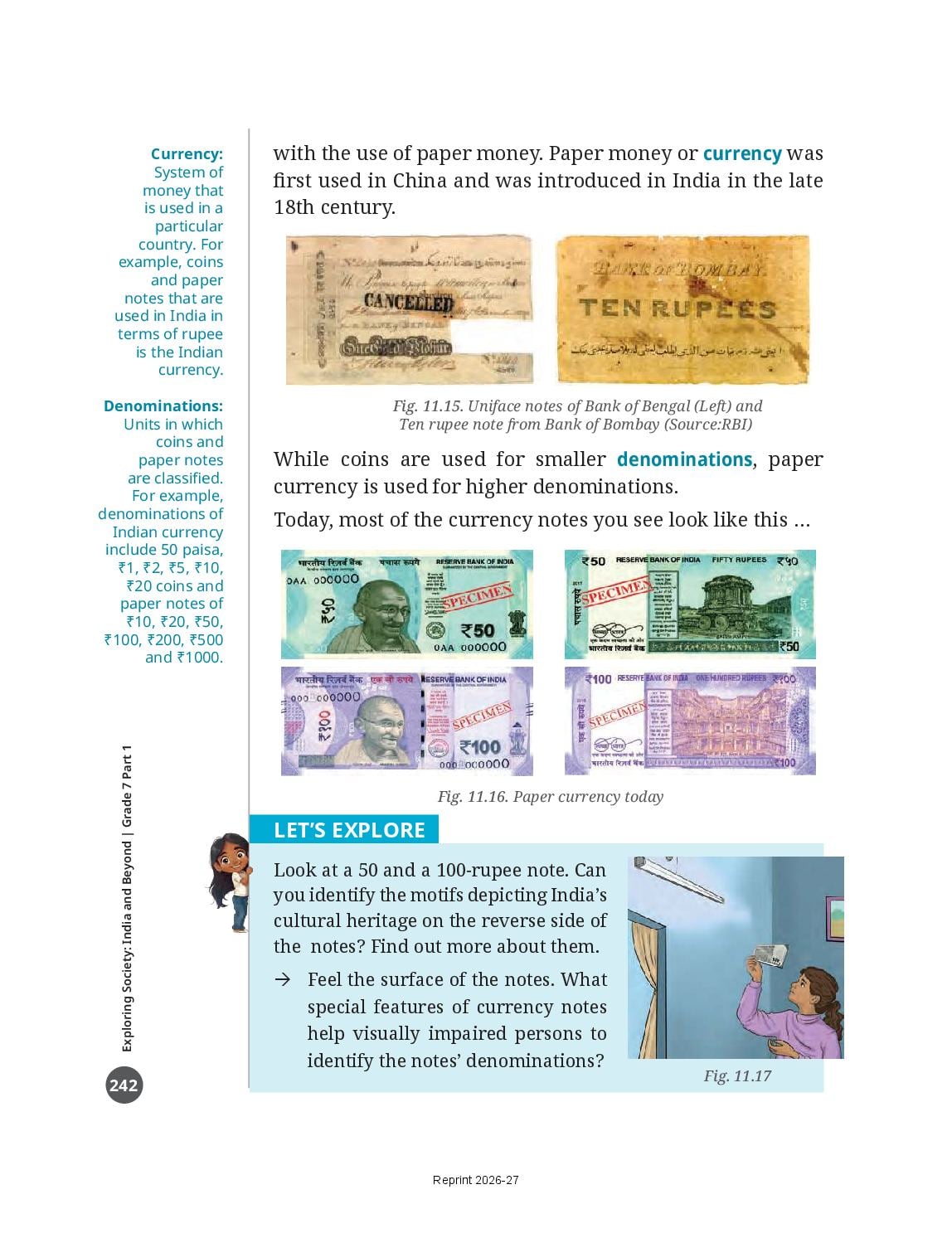
- Paper money was first used in China and came to India in the late 18th century. Today only the Reserve Bank of India may issue currency.
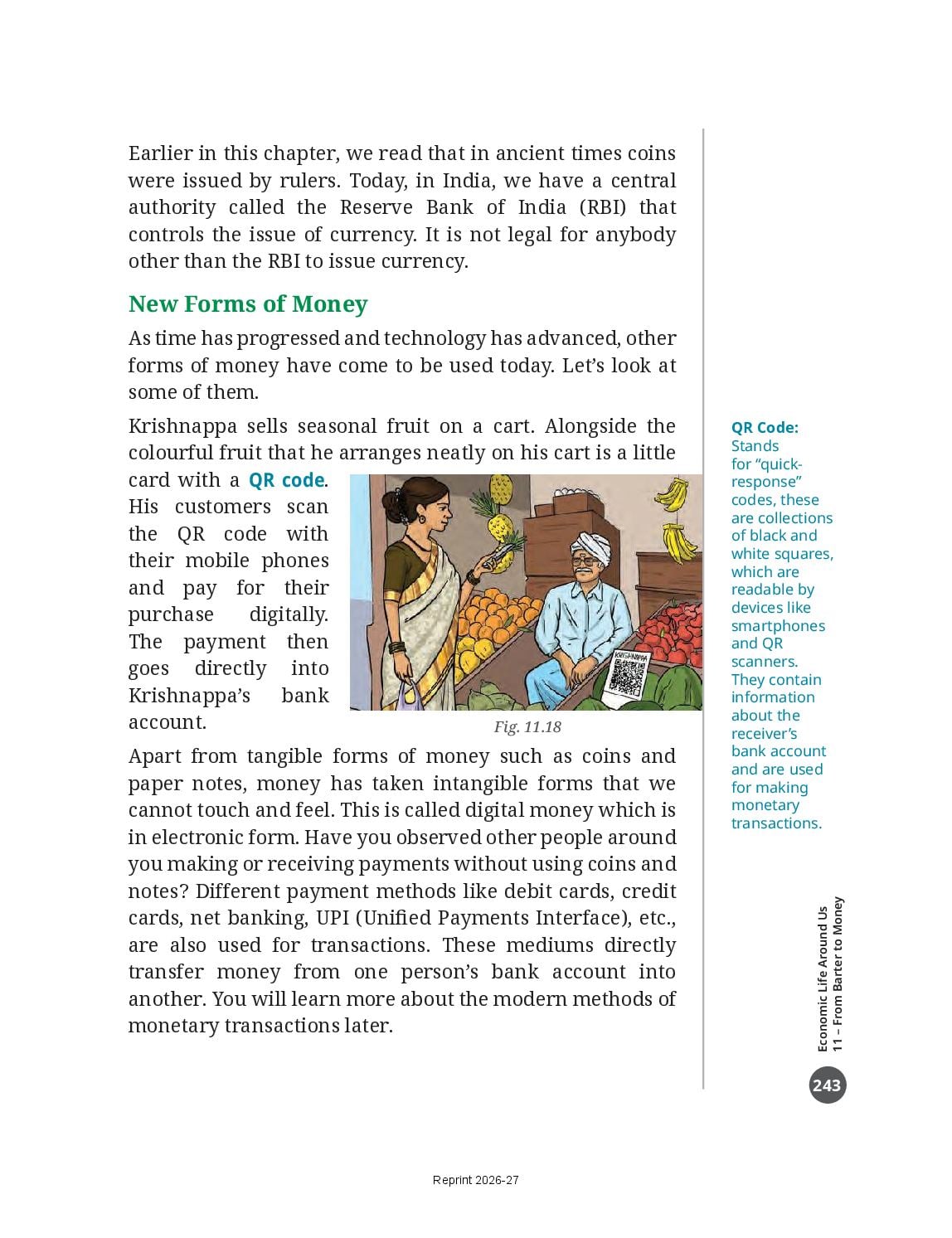
- The journey continues: debit and credit cards from about 1980 and UPI from 2016 have made money intangible — digital money you cannot touch.
Quick revision – From Barter to Money
| Term | What it means | Where it appears in the chapter | Example |
|---|---|---|---|
| Barter system | Exchanging goods and services without using money | Page 230, the very first system of exchange | Your extra eraser for a classmate’s extra pencil |
| Commodities | Products or goods that can be traded, bought and sold | Page 230, list of things used before money | Cowrie shells, salt, tea, tobacco, cloth, cattle, seeds |
| Double coincidence of wants | Two people each have exactly what the other wants and can exchange directly | Page 233, the farmer’s difficulty | The ox-owner must find a shoemaker who wants an ox |
| Common standard measure of value | An agreed-upon worth that lets values be compared | Page 233, why barter deals break down | How many bags of wheat equal one sweater? |
| Divisibility | The capacity of an object to be split into pieces or portions | Page 233, the ox problem | You cannot exchange one leg of an ox for a sweater |
| Portability | The ability of an object to be carried from place to place | Page 233, taking the ox everywhere | Carrying sacks of wheat to three different sellers |
| Durability | The ability to withstand damage and be stored for a long time | Page 234, wheat rots or is eaten by rats | Grain spoils; a coin does not |
| Minting | The process of producing coins; a mint is the facility that makes them | Page 238, Coinage | Rulers alone controlled minting in ancient India |
| Alloy | A metal made by combining two or more metallic elements | Page 238, what coins are made of | Today’s coins are largely iron with chromium, silicon and carbon |
| Kārṣhāpaṇa / paṇa | Ancient Indian coins of gold, silver, copper or their alloys | Page 238, Coinage | Survives as paṇaṁ in Tamil, Telugu, Malayalam and haṇa in Kannada |
| Rūpa | The symbol punched on an ancient coin | Page 238 | The likely ancestor of the word rupee |
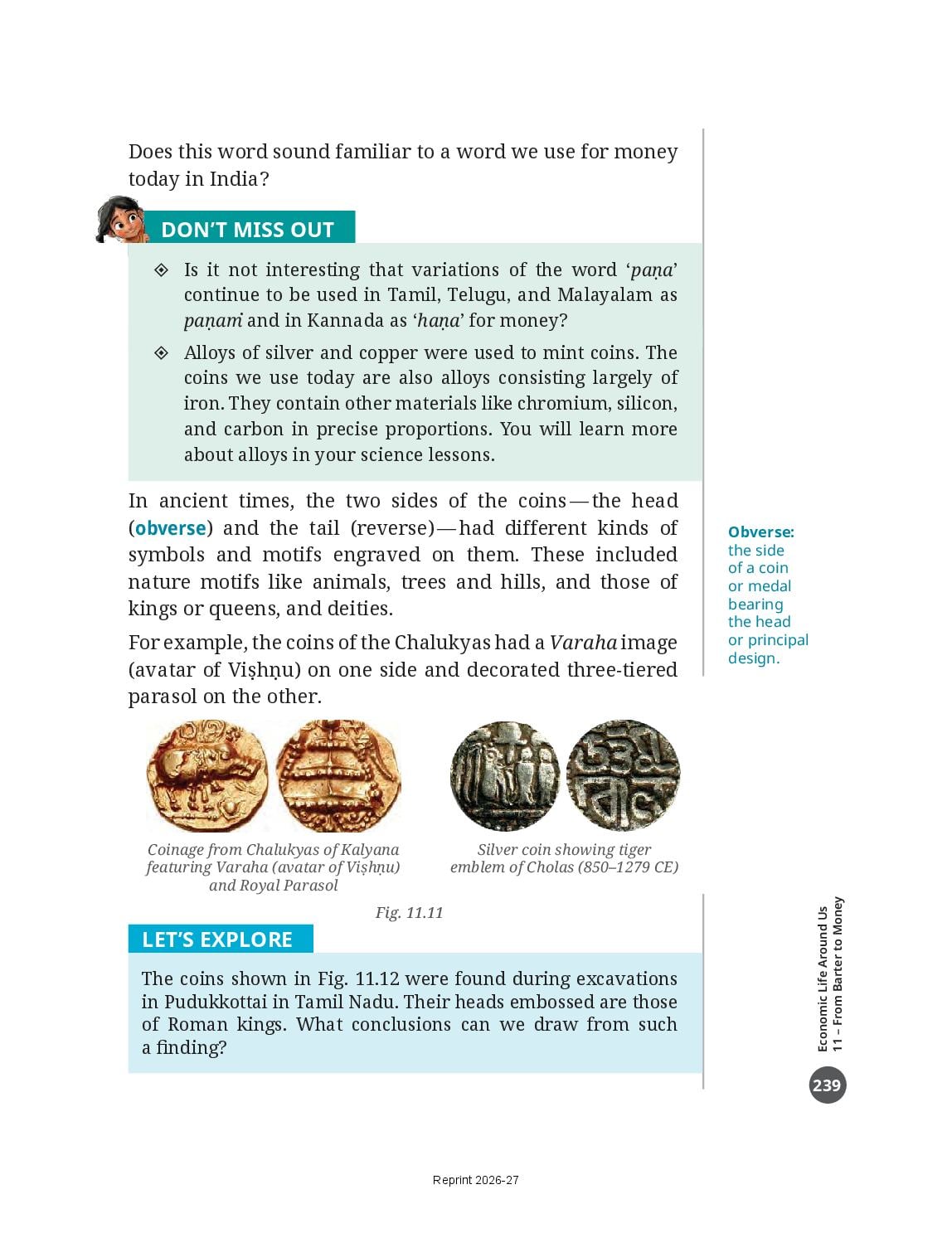
| Obverse / Reverse | The head side and the tail side of a coin | Page 239 | Chalukya coins: Varaha on one side, three-tiered parasol on the other |
| Currency | The system of money used in a particular country | Page 242 | Indian rupee coins and notes |
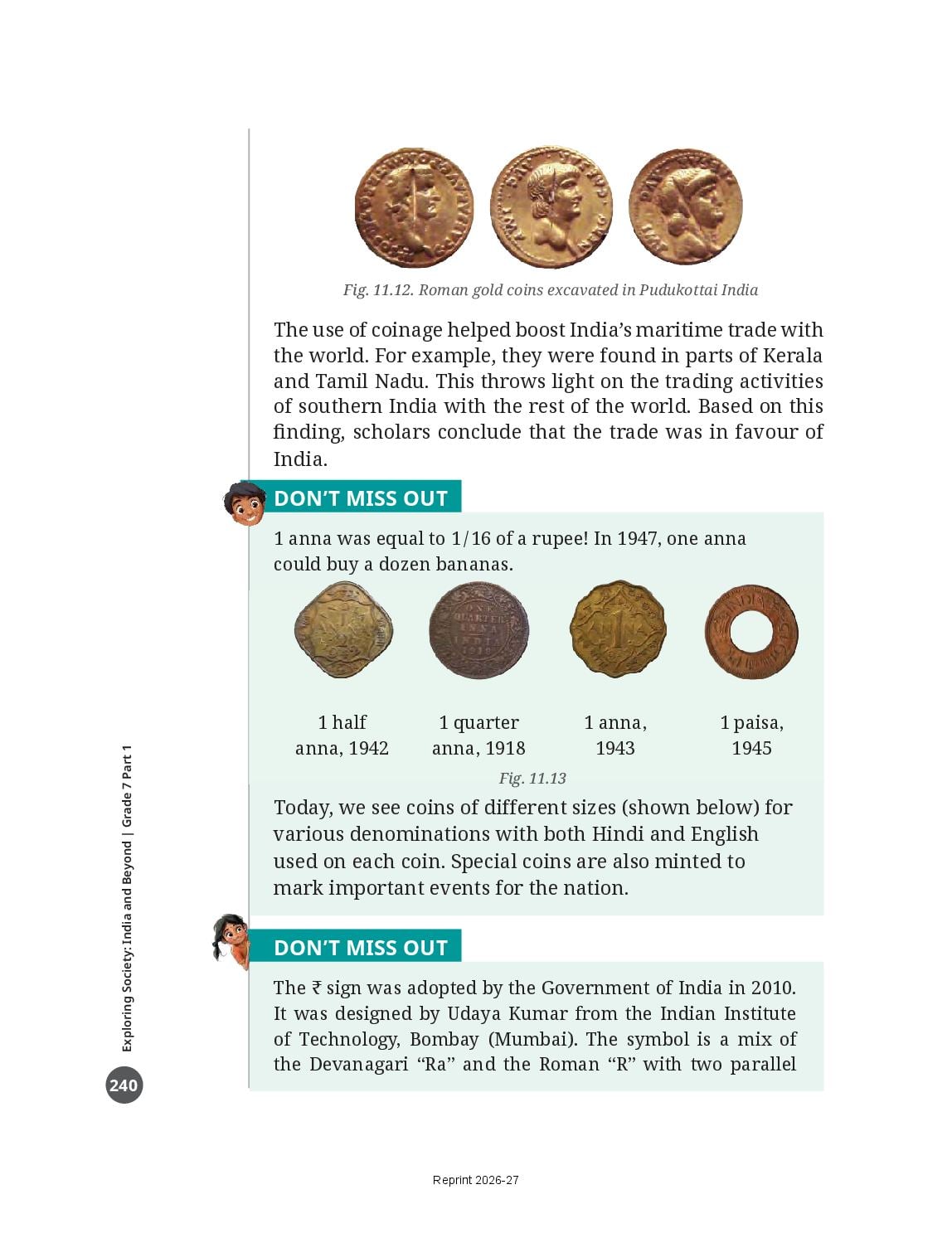
| Denominations | Units in which coins and notes are classified | Page 242 | 50 paisa, ₹1, ₹2, ₹5, ₹10, ₹20 coins; ₹10 to ₹1000 notes |
Old NCERT vs New – Class 7 Social Science
This chapter is from Exploring Society: India and Beyond, the new NCERT Class 7 Social Science book (NCF-SE 2023, used from 2025-26). It replaced the old book “Our Pasts, Our Environment and Social and Political Life”, so chapter numbers and names differ from older PDFs.
Solutions and All Chapters
Answers to the exercises and the full chapter list of Exploring Society: India and Beyond:
From Barter to Money – Overview
| Class | Class 7 |
| Subject | Social Science |
| Book | Exploring Society: India and Beyond – new NCERT book |
| Part | Part I |
| Chapter | 11 of 20 – From Barter to Money |
| Book pages | 229 – 246 |
| Edition | NCERT Reprint 2026-27 |
| Session | 2026-27 |
| Free – read online or download |
Class 7 Social Science Chapter 11 – FAQs
Where can I download From Barter to Money Class 7 PDF?
From the download table on this page – the chapter PDF is free, and the full book is linked too.
What is Class 7 Social Science Chapter 11 about?
Before money existed, people exchanged goods and services directly for other goods and services. This is the barter system, and cowrie shells, salt, tea, tobacco, cloth, cattle and seeds were among the commodities used.
Is From Barter to Money from the new NCERT Class 7 Social Science book?
Yes. It is chapter 11 of exploring society: india and beyond (part i), the new NCERT Class 7 Social Science book for 2026-27.
Is this the latest NCERT edition for 2026-27?
Yes – the PDF is NCERT’s latest edition for the 2026-27 session.
Where are the NCERT Solutions for Class 7 Social Science Chapter 11?
Open the NCERT Solutions link above for answers to the exercise questions.