Download Empires and Kingdoms: 6th to 10th Centuries – NCERT Class 7 Social Science Chapter 15 PDF from the new NCERT Class 7 Social Science book Exploring Society: India and Beyond (2026-27). Read the chapter online or download the free PDF. The Guptas are gone, but India is not empty — it is crowded. This chapter covers roughly 600 CE to 1200 CE (with the next chapter), six centuries that historians have called ‘post-classical’, ‘late classical’ or ‘early medieval’. Instead of one…
Empires and Kingdoms: 6th to 10th Centuries PDF – Chapter 15 of Exploring Society: India and Beyond (Part II)
Read the chapter online or download the PDF.
| Chapter | Download | |
|---|---|---|
| Chapter 15 PDF | Empires and Kingdoms: 6th to 10th Centuries | View PDF |
| Full book | NCERT Class 7 Social Science – Exploring Society: India and Beyond | View Book |
Read Online
What Is in Empires and Kingdoms: 6th to 10th Centuries? (Class 7 Social Science Chapter 15)
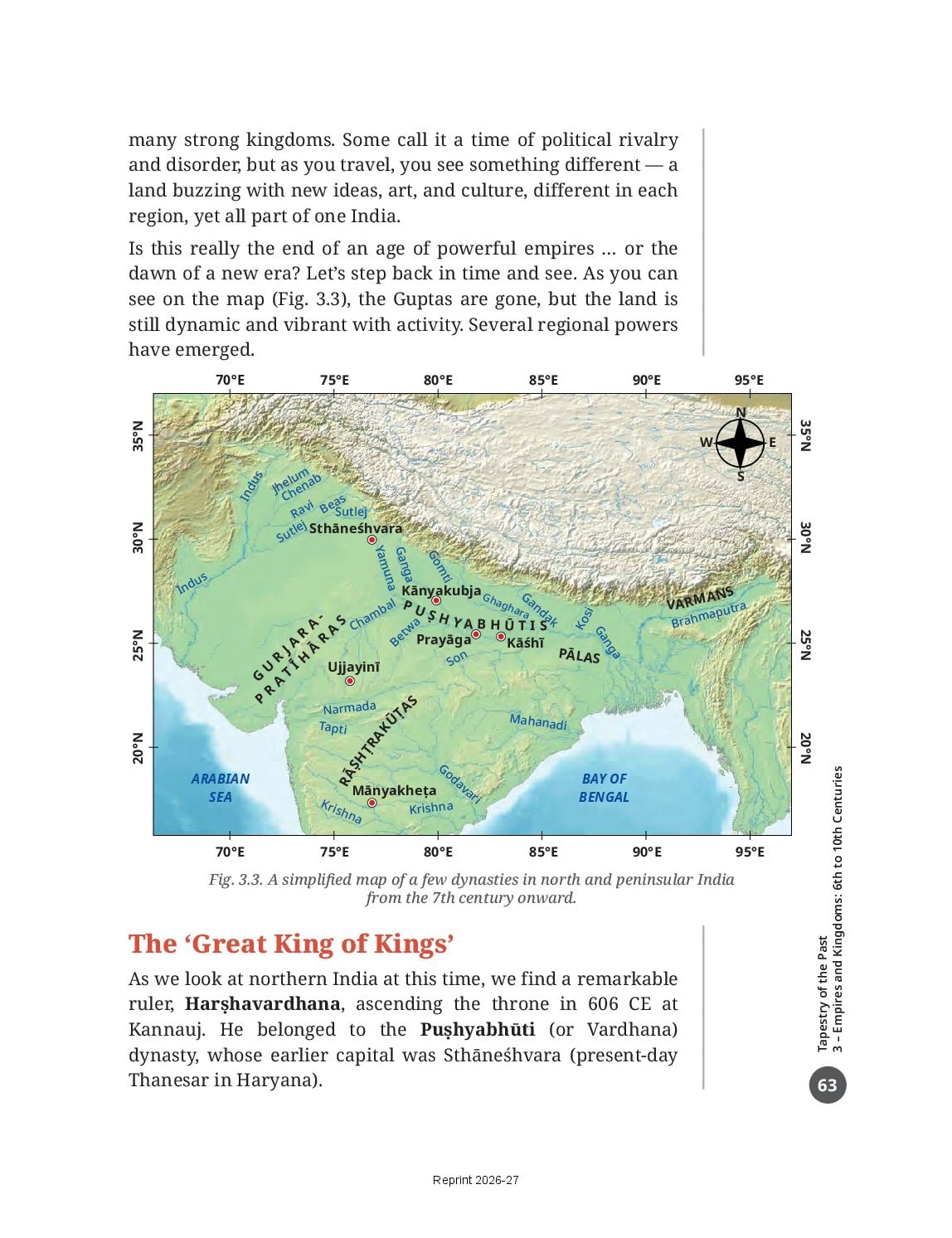
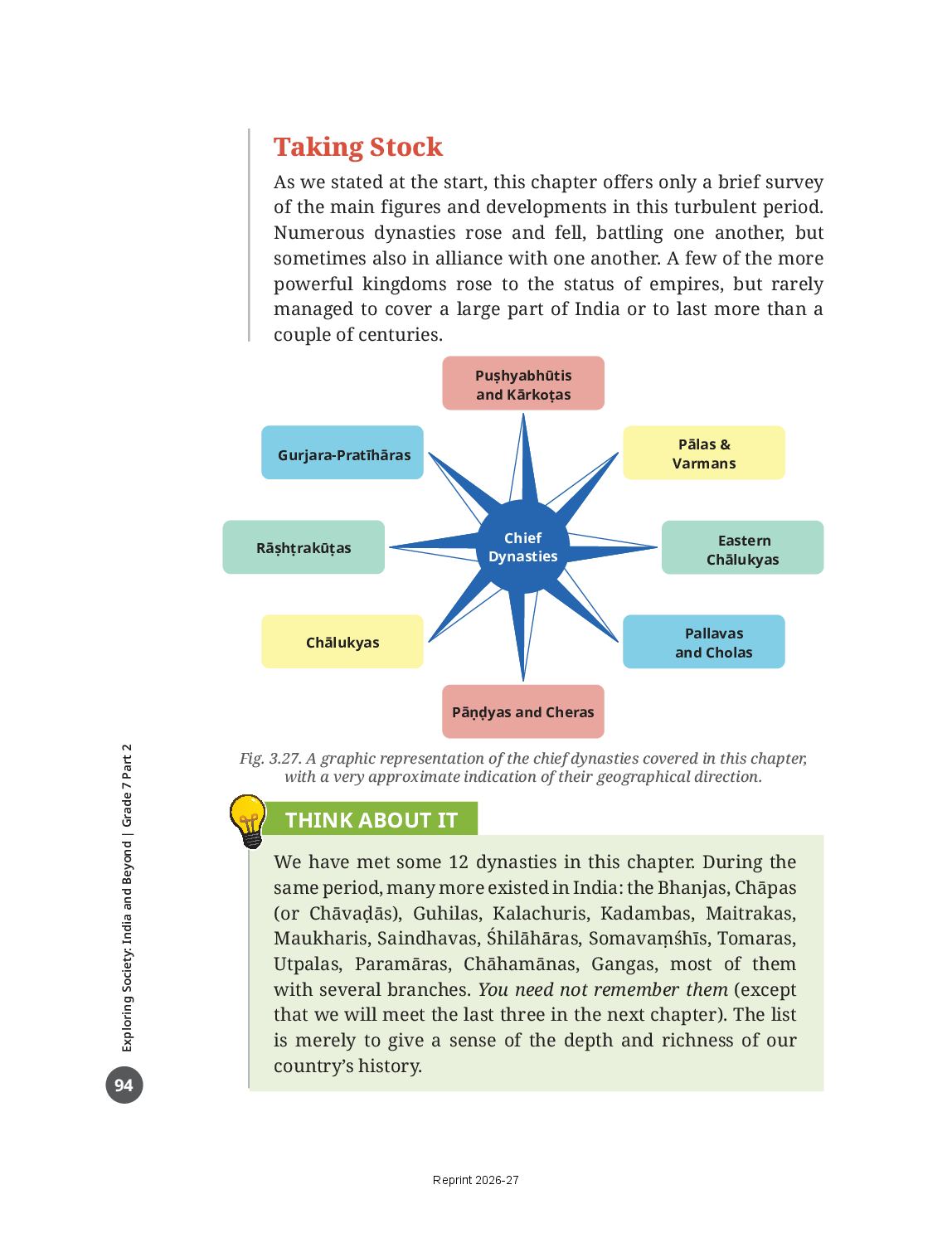
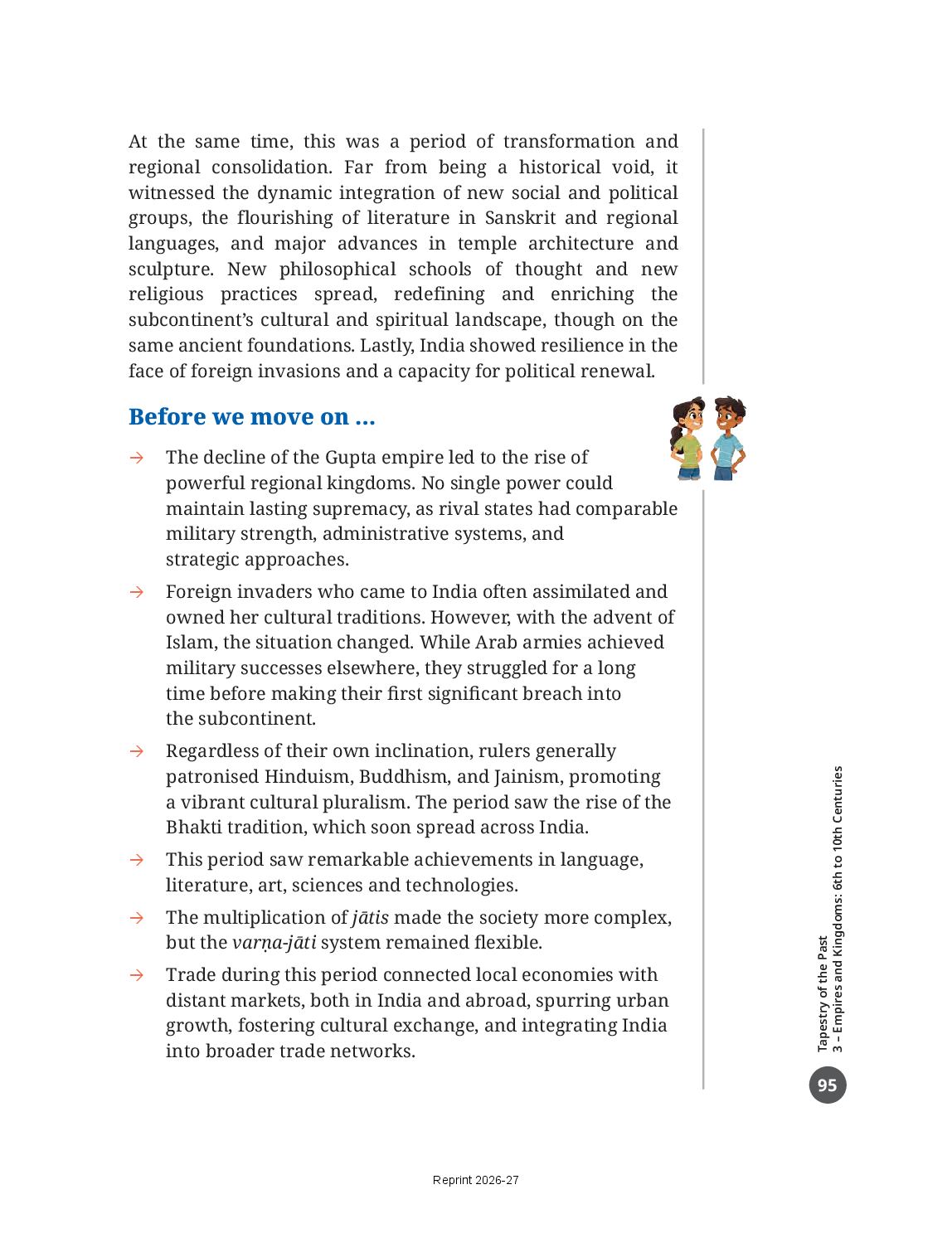
- The Guptas are gone, but India is not empty — it is crowded. This chapter covers roughly 600 CE to 1200 CE (with the next chapter), six centuries that historians have called ‘post-classical’, ‘late classical’ or ‘early medieval’. Instead of one great empire there are many strong regional kingdoms. Some call this a time of rivalry and disorder; the chapter asks you to look again and see “a land buzzing with new ideas, art, and culture, different in each region, yet all part of one India.”
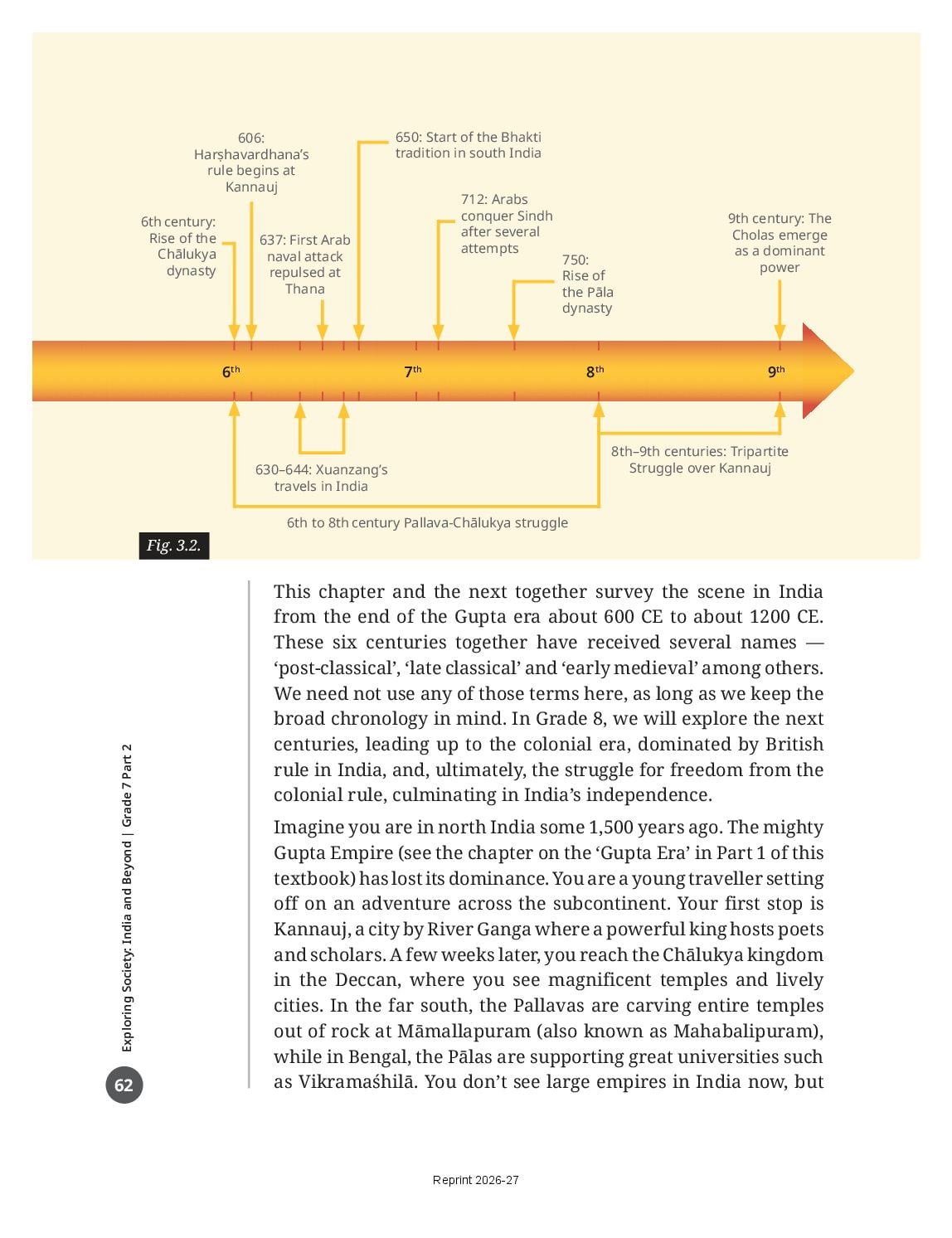
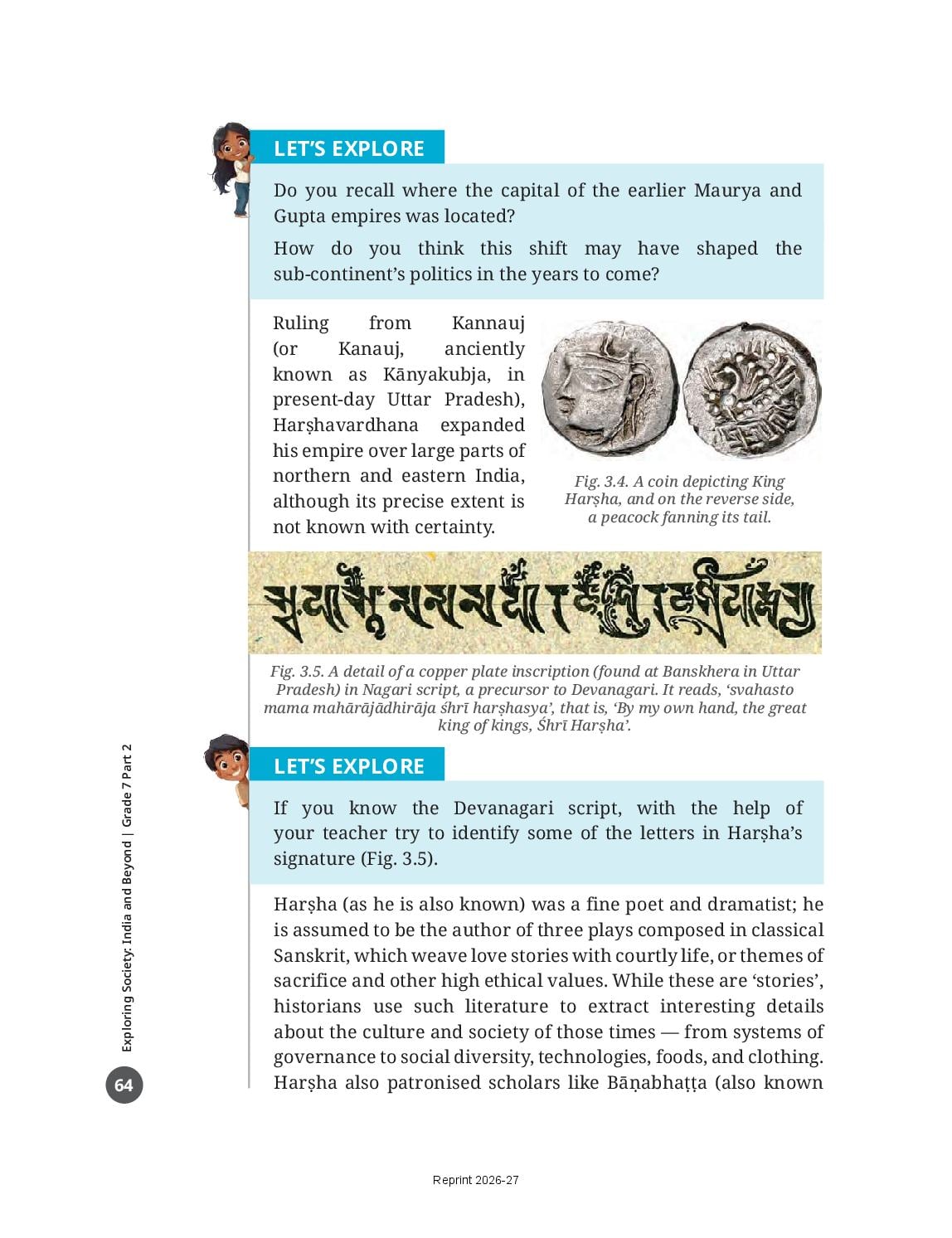
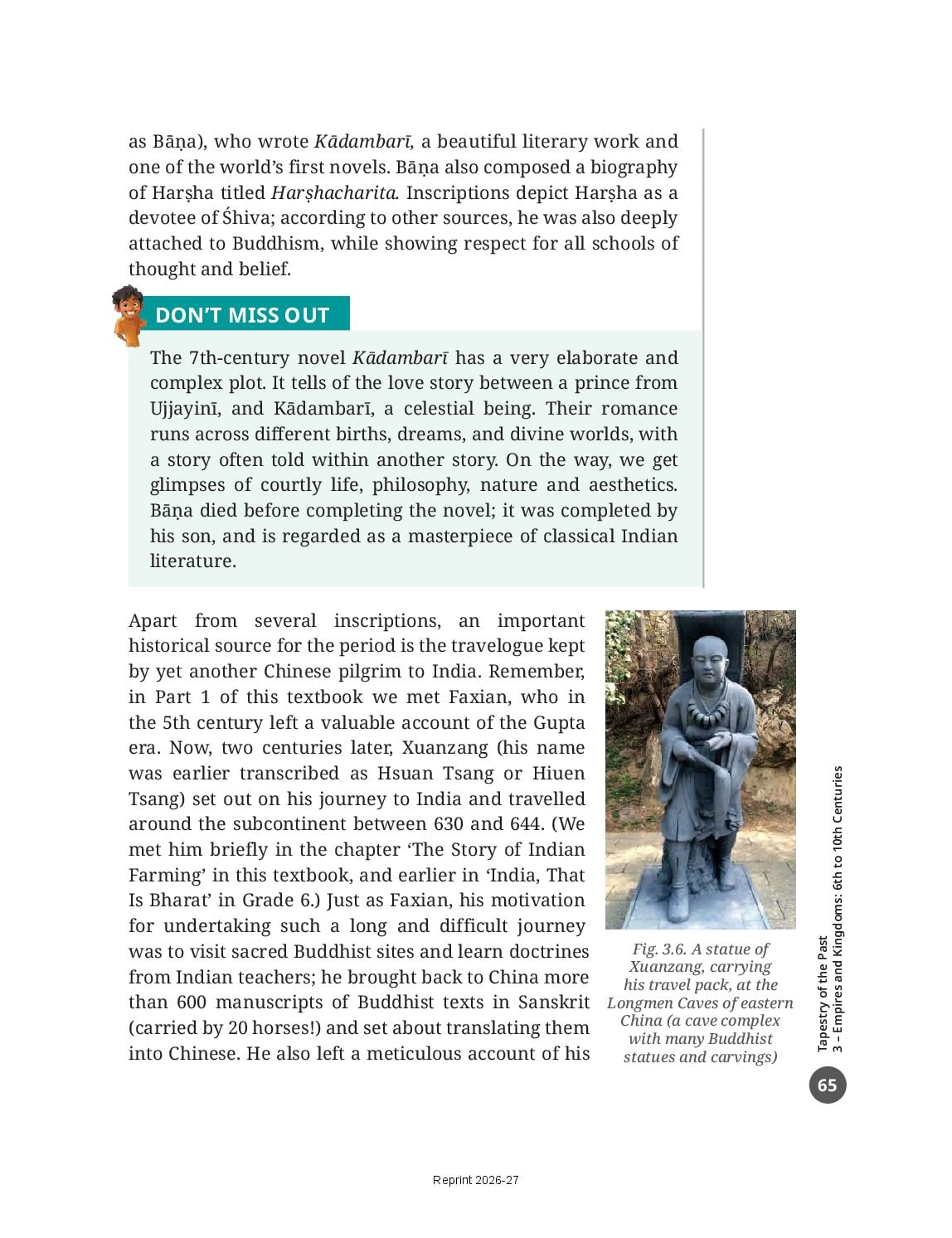
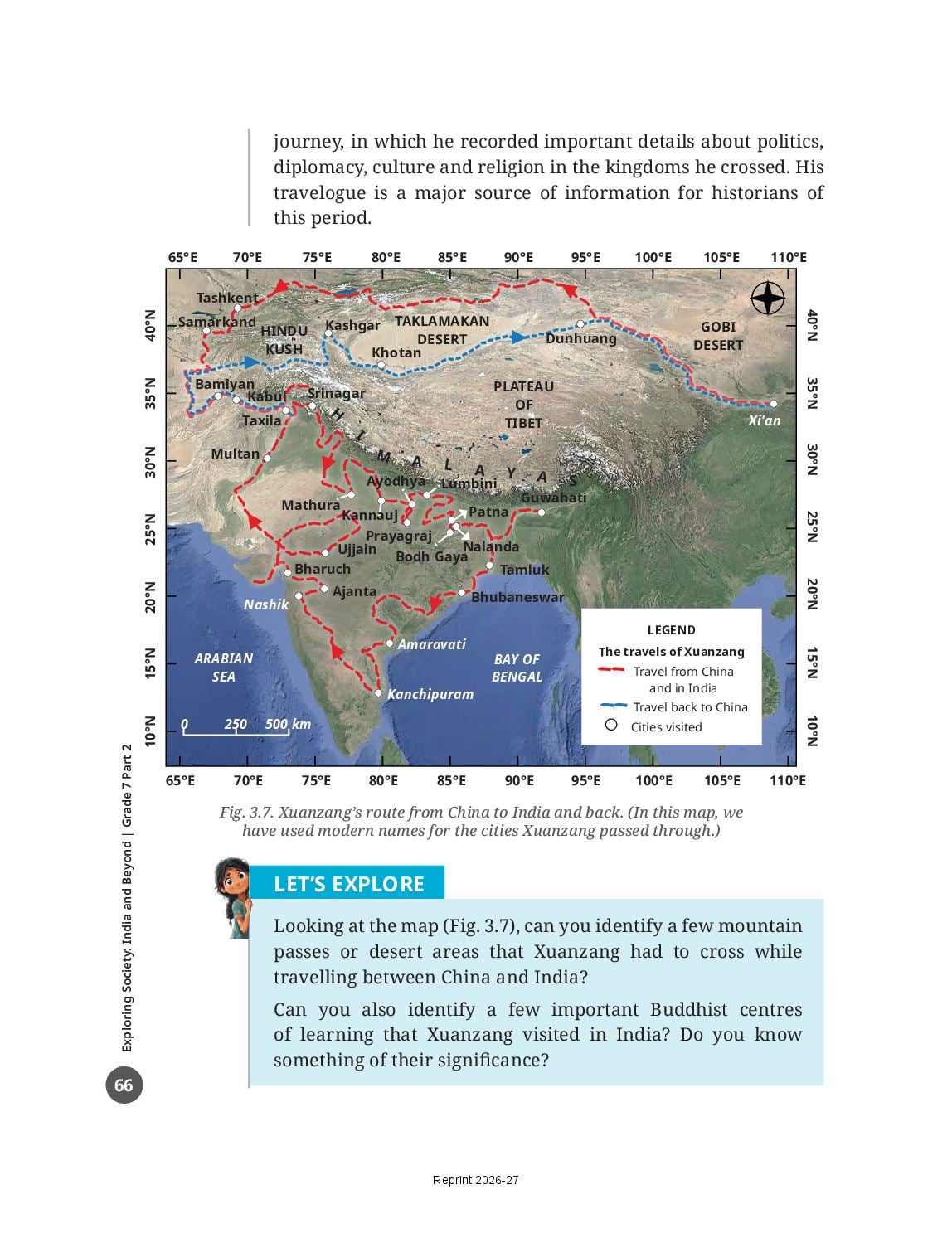
- Harṣhavardhana is the last great north Indian emperor of the age. He came to the throne at Kannauj in 606 CE, from the Puṣhyabhūti (Vardhana) dynasty whose earlier capital was Sthāneśhvara. He was a poet and dramatist, patronised Bāṇabhaṭṭa, welcomed the Chinese pilgrim Xuanzang (in India 630–644), and gave away his wealth at Prayāga every five years. He was stopped at the Narmada by Pulakeśhin II of the Chālukyas, and died in 647.
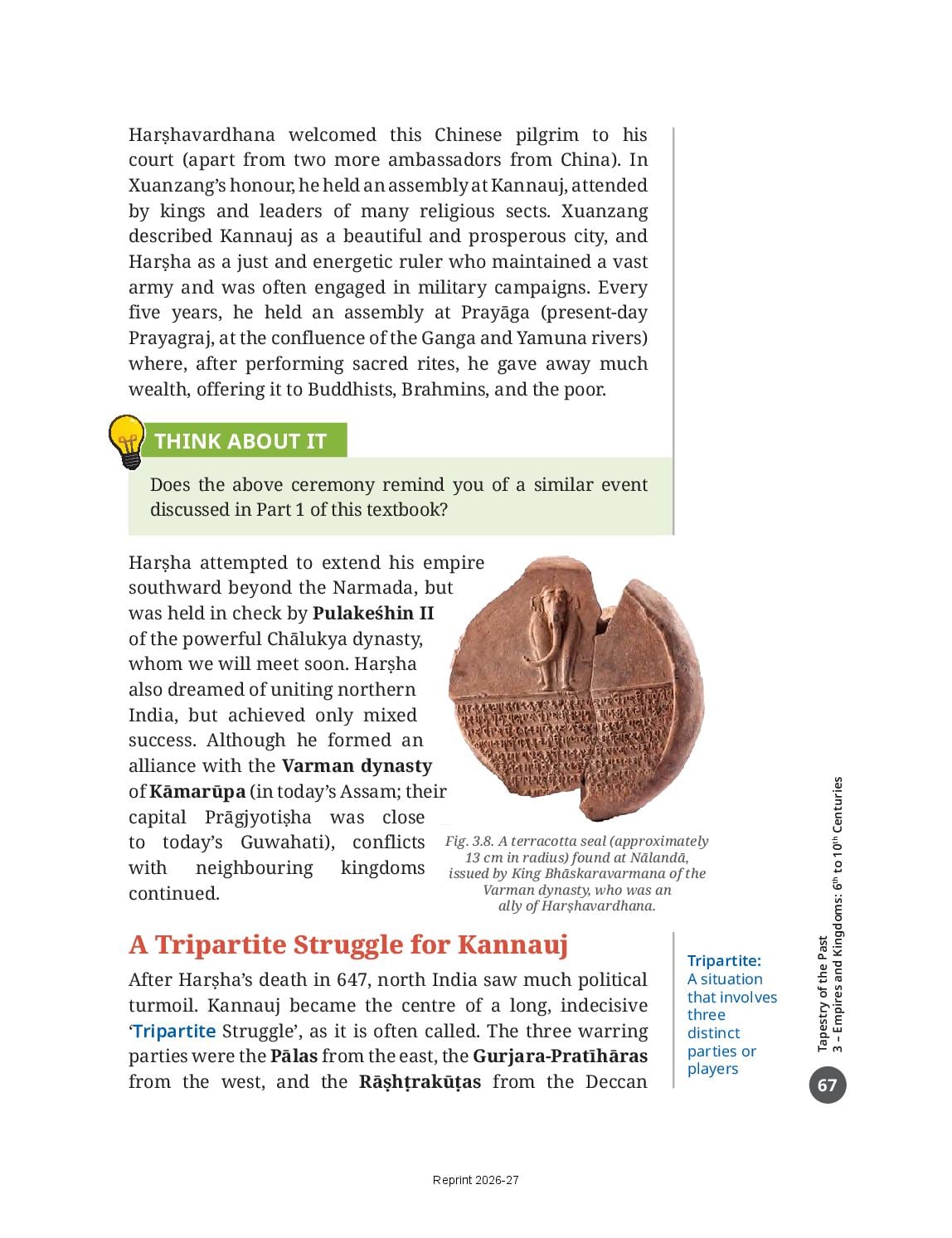
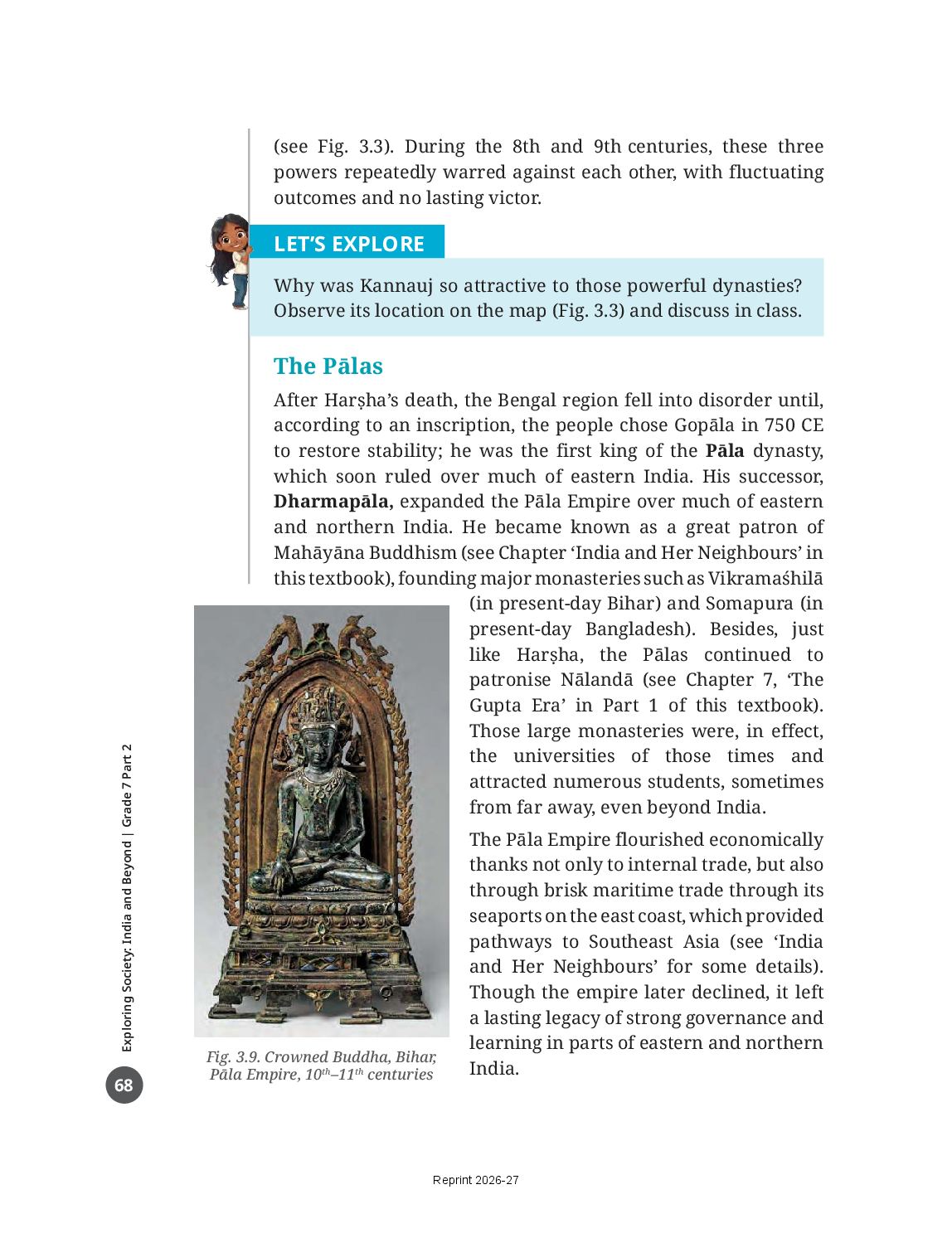
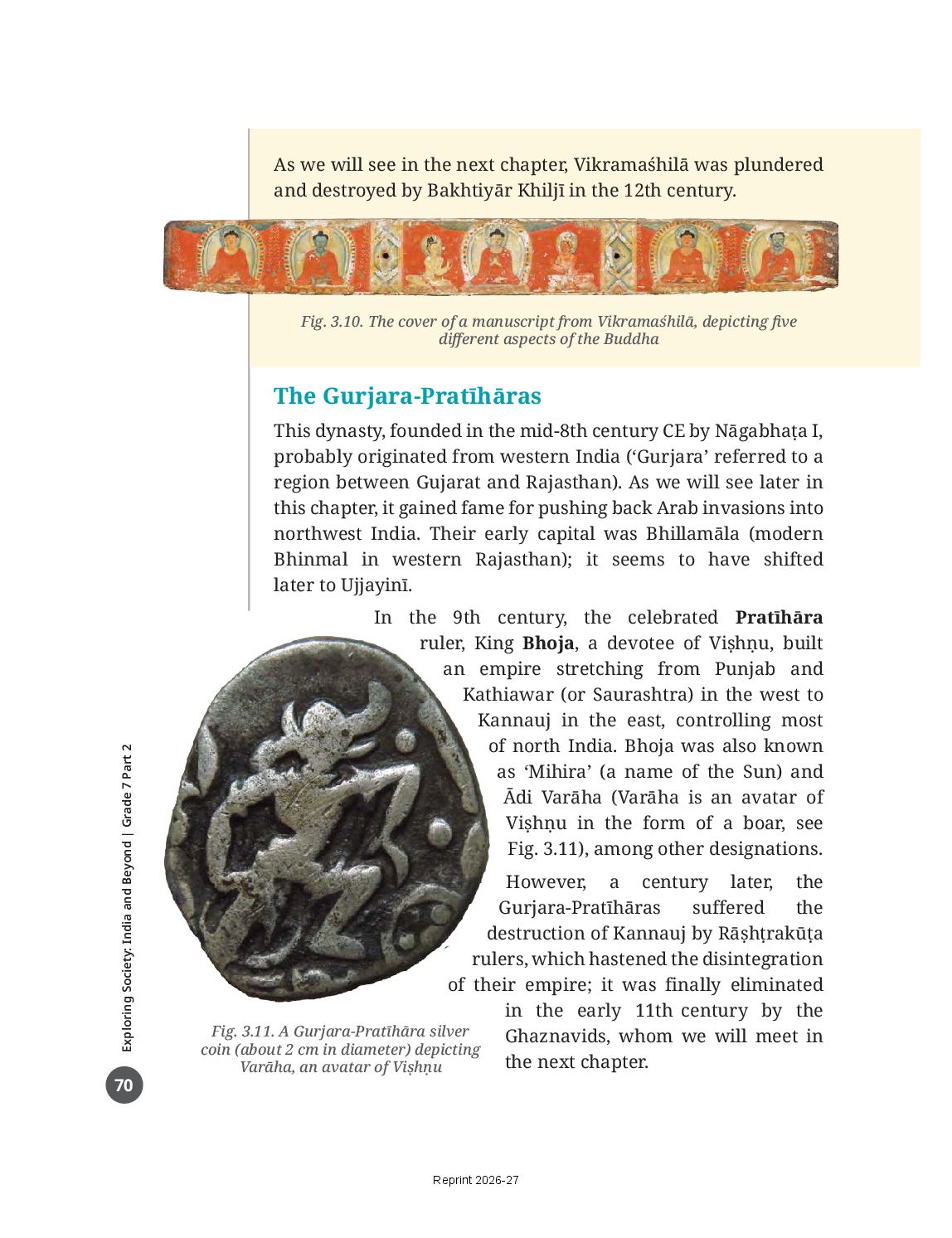
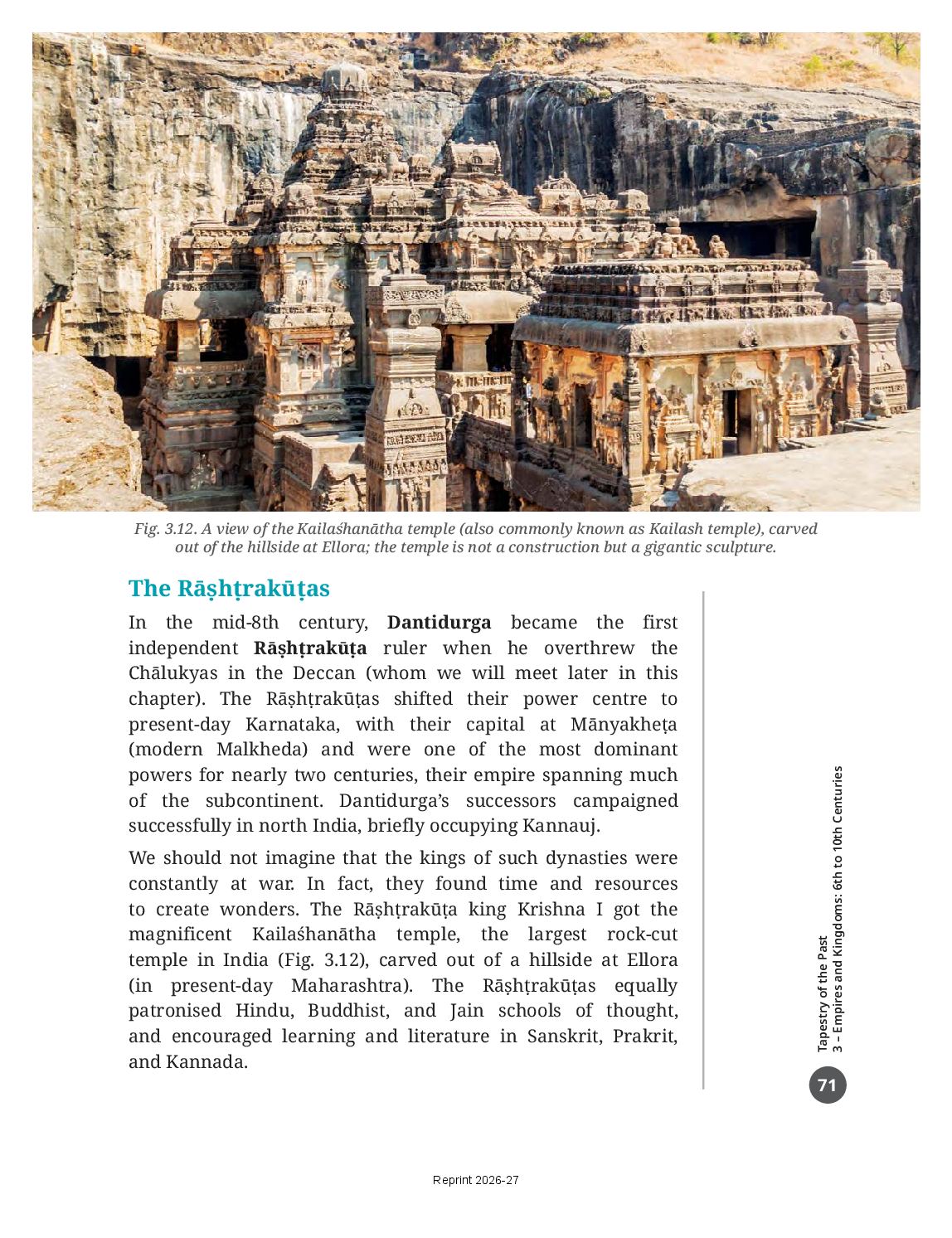
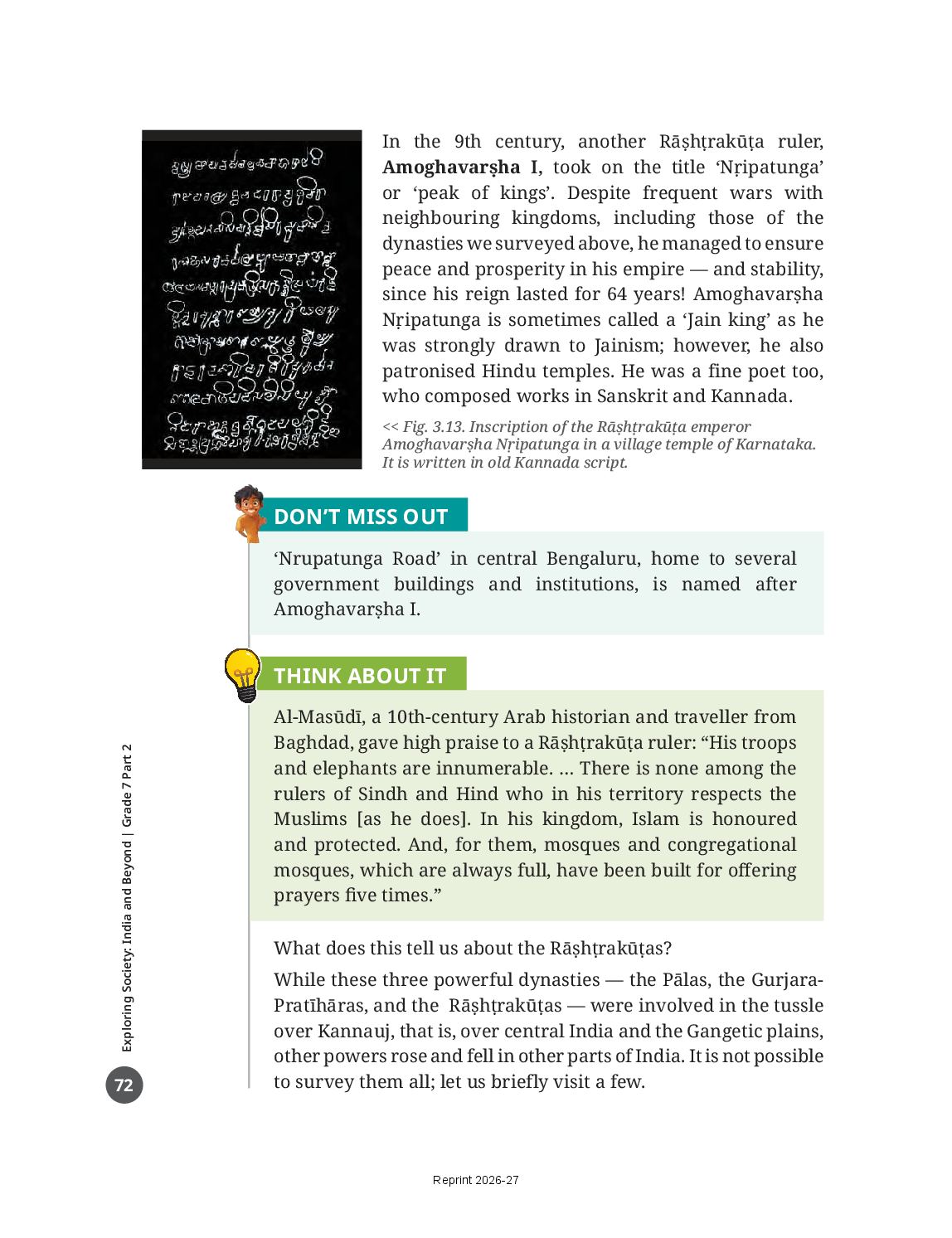
- After Harṣha, three powers fight over Kannauj for two hundred years. The Pālas from the east (Gopāla chosen in 750 CE; Dharmapāla founded Vikramaśhilā), the Gurjara-Pratīhāras from the west (Nāgabhaṭa I; King Bhoja) and the Rāṣhṭrakūṭas from the Deccan (Dantidurga; Krishna I who carved the Kailaśhanātha temple at Ellora; Amoghavarṣha I ‘Nṛipatunga’) fought this indecisive Tripartite Struggle — with no lasting victor.
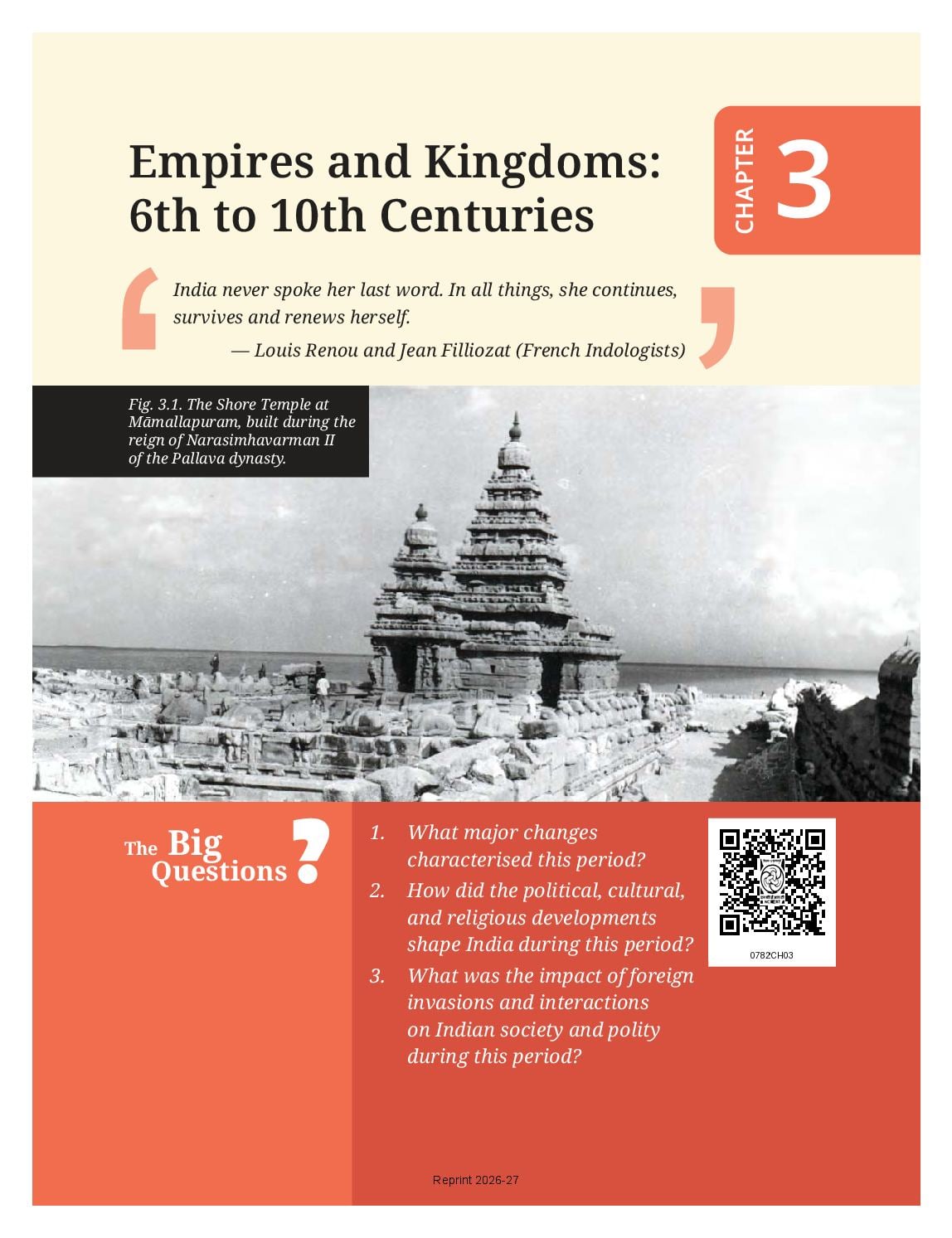
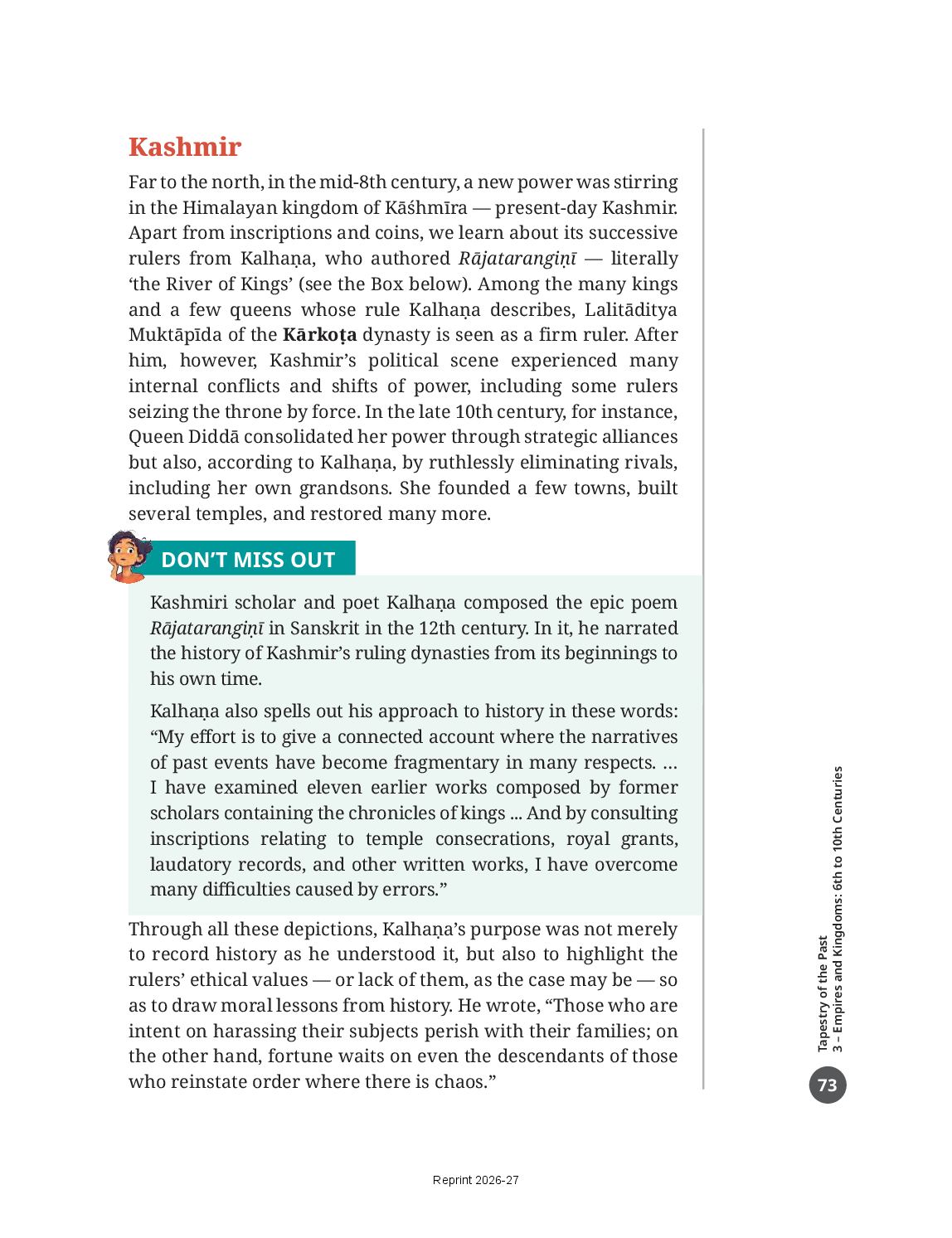
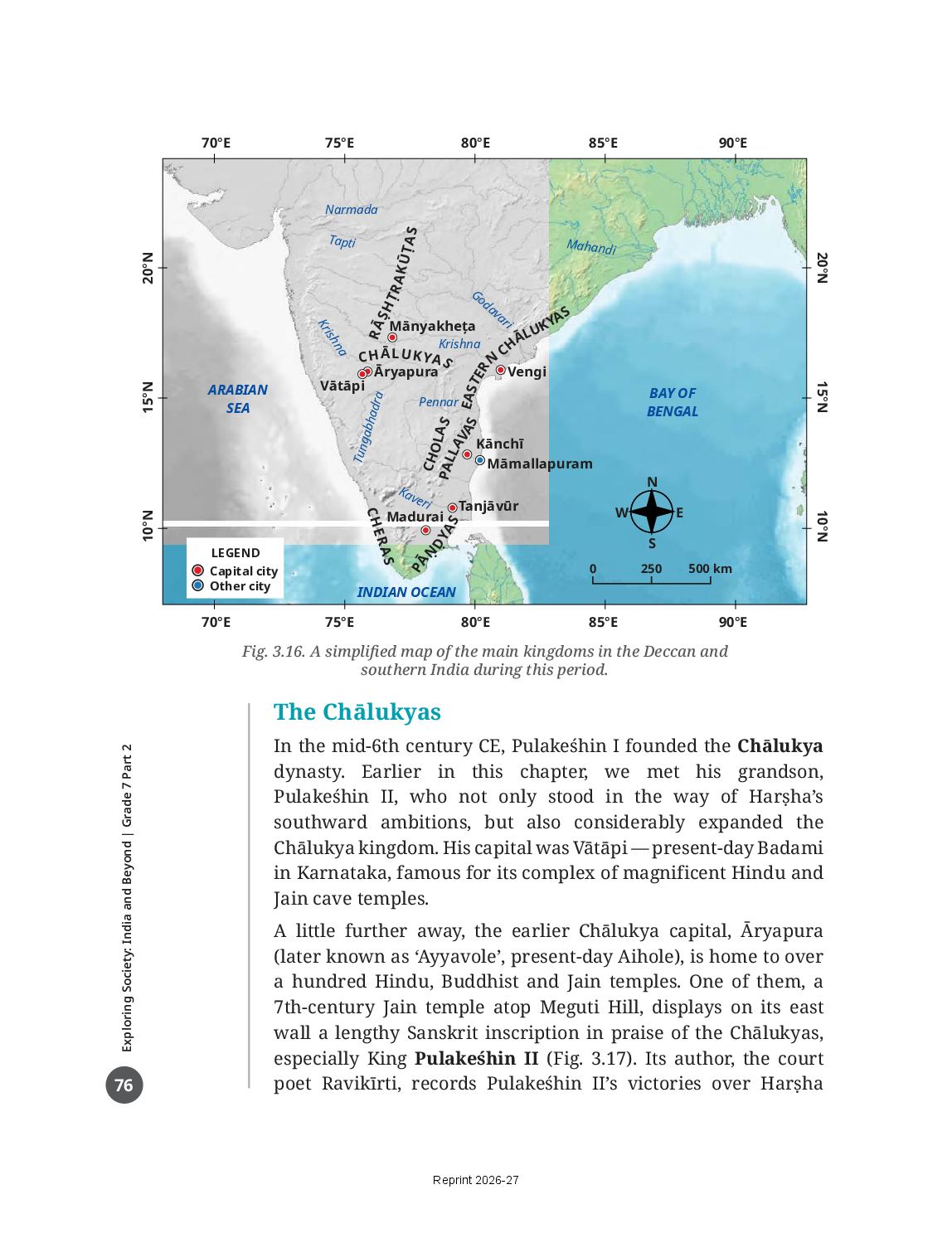
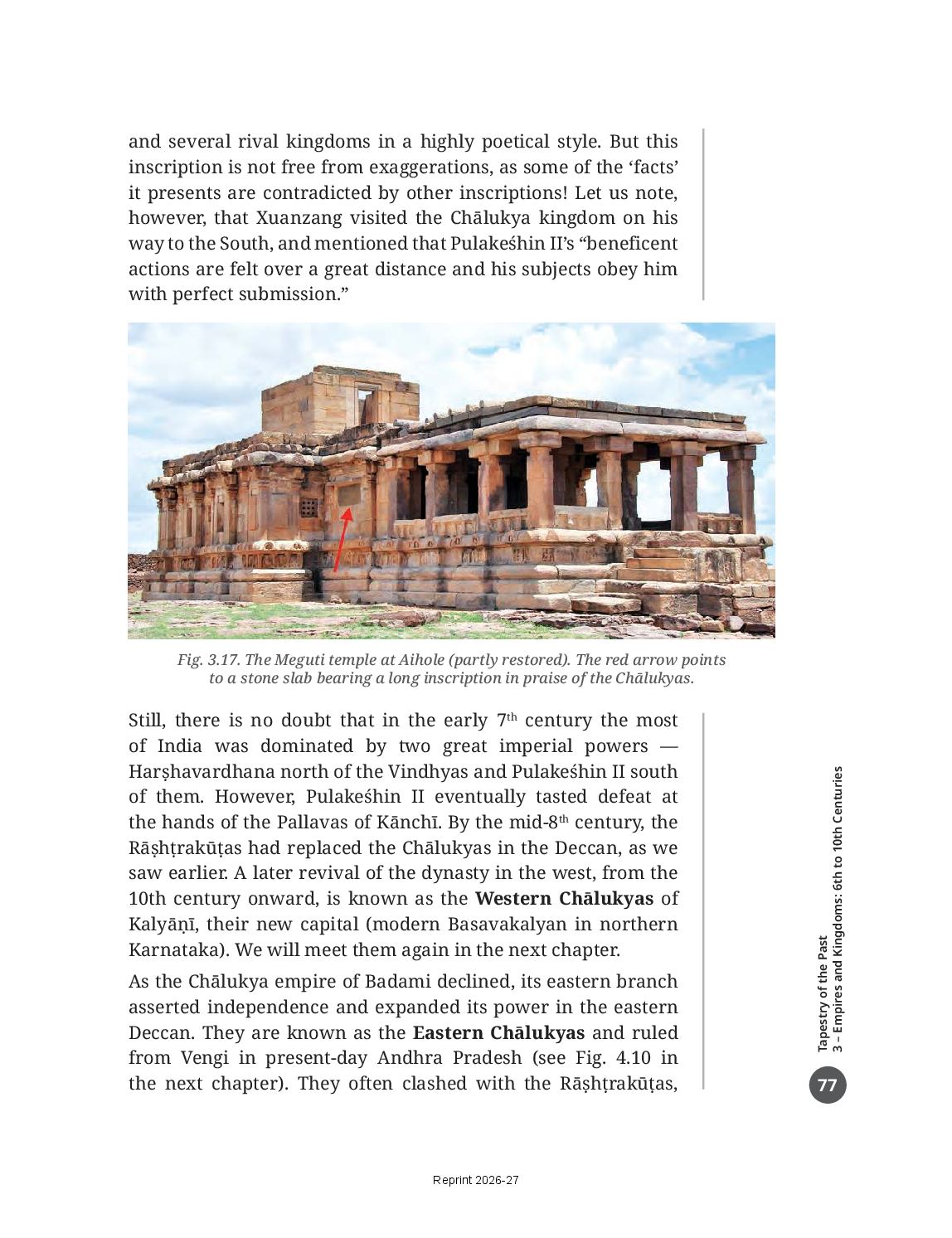
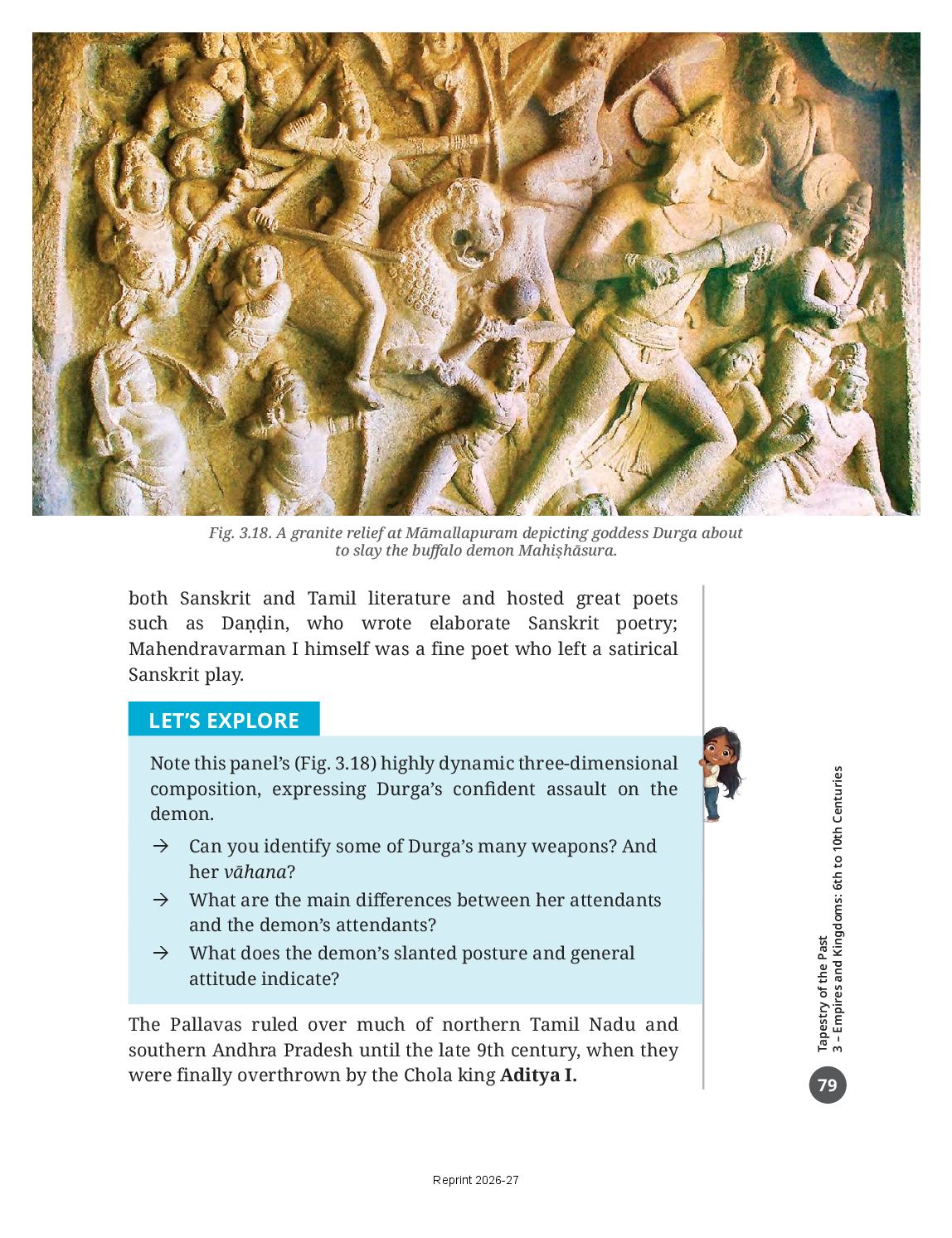
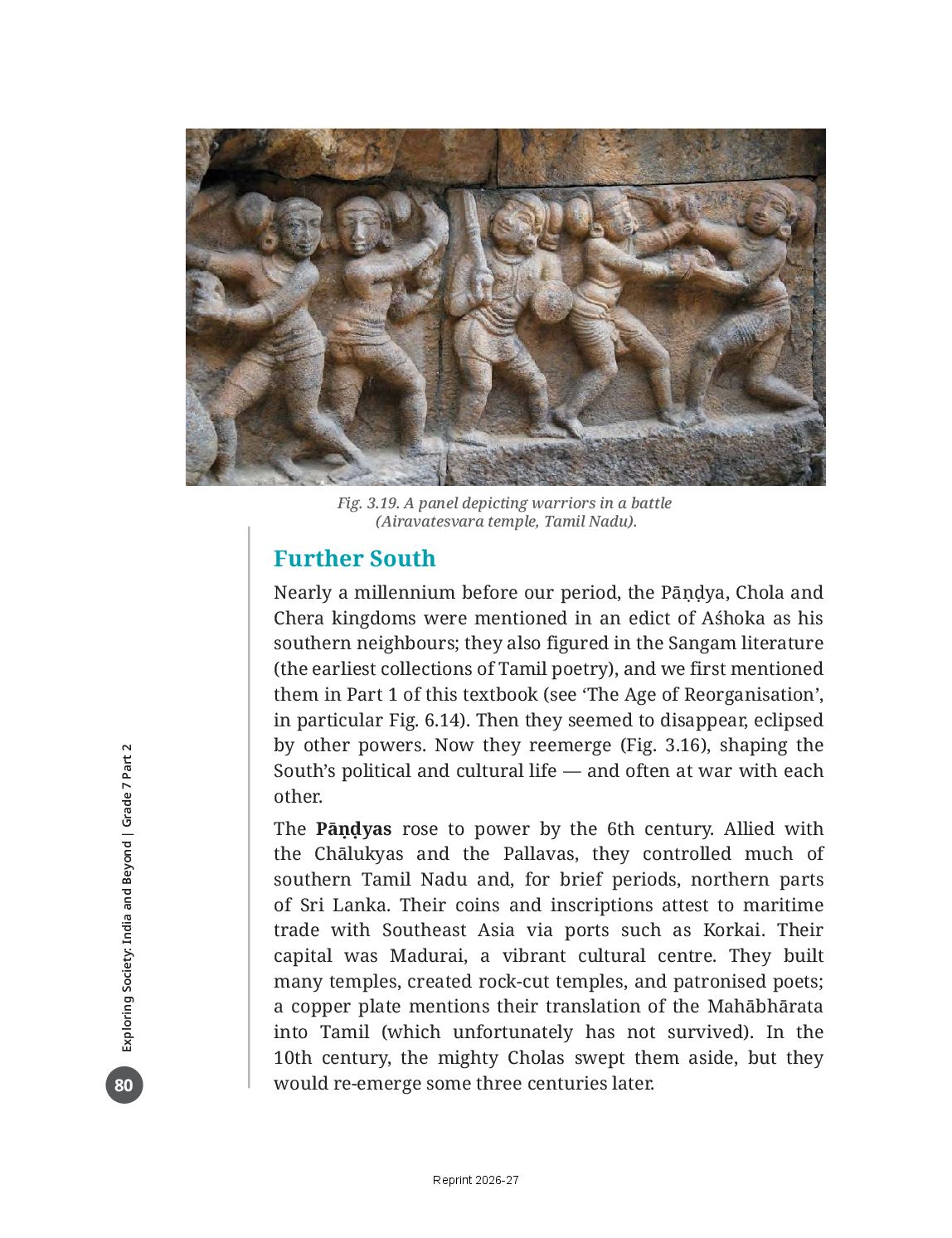
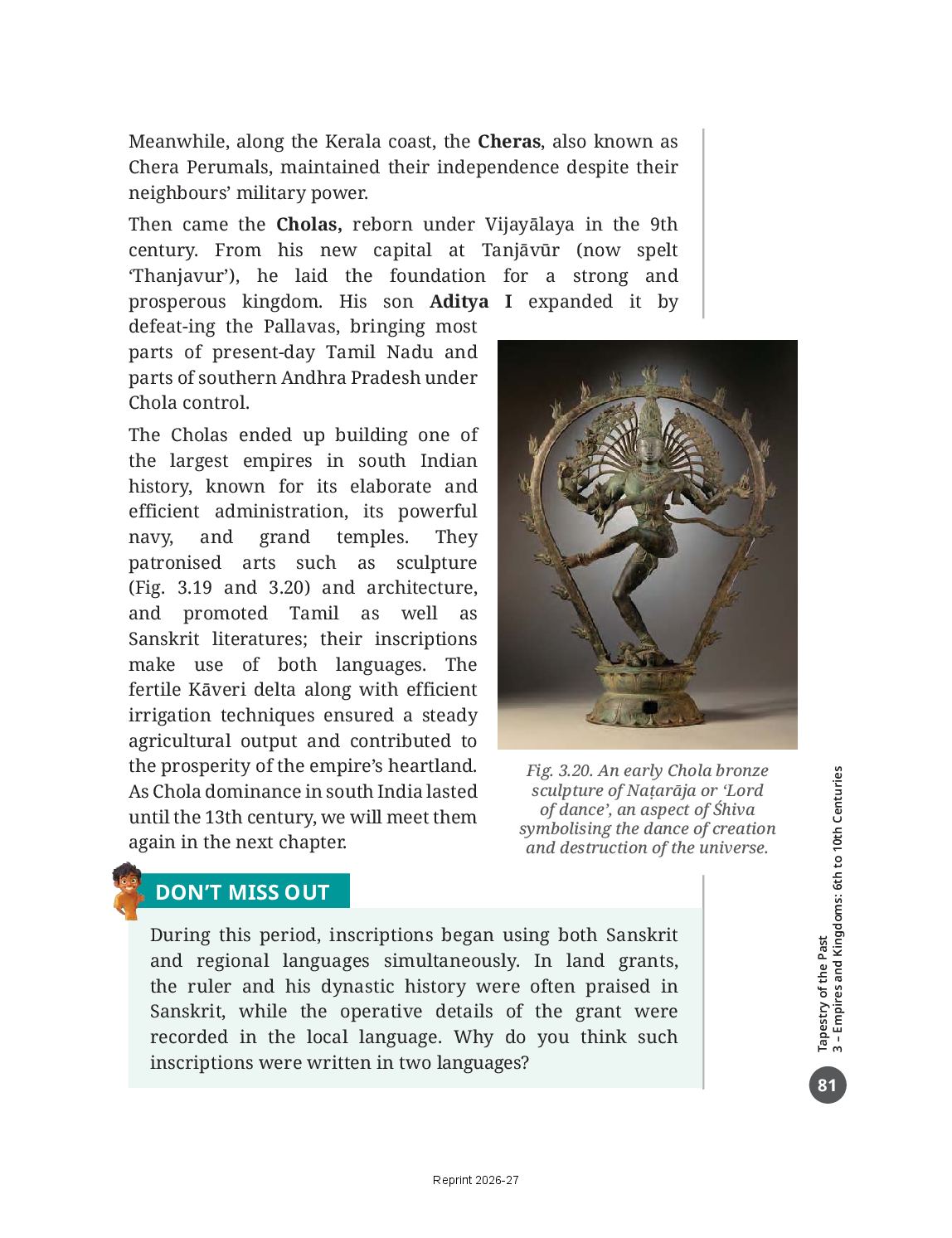
- The Deccan and the South are just as alive. The Chālukyas of Vātāpi, the Pallavas of Kānchī who carved Māmallapuram, the Pāṇḍyas of Madurai, the Cheras of the Kerala coast and the Cholas reborn under Vijayālaya at Tanjāvūr — all rise, clash and build. In the north, the history of Kashmir — Lalitāditya of the Kārkoṭa dynasty, Queen Diddā — comes to us from Kalhaṇa’s 12th-century Rājatarangiṇī, India’s great chronicle of kings.
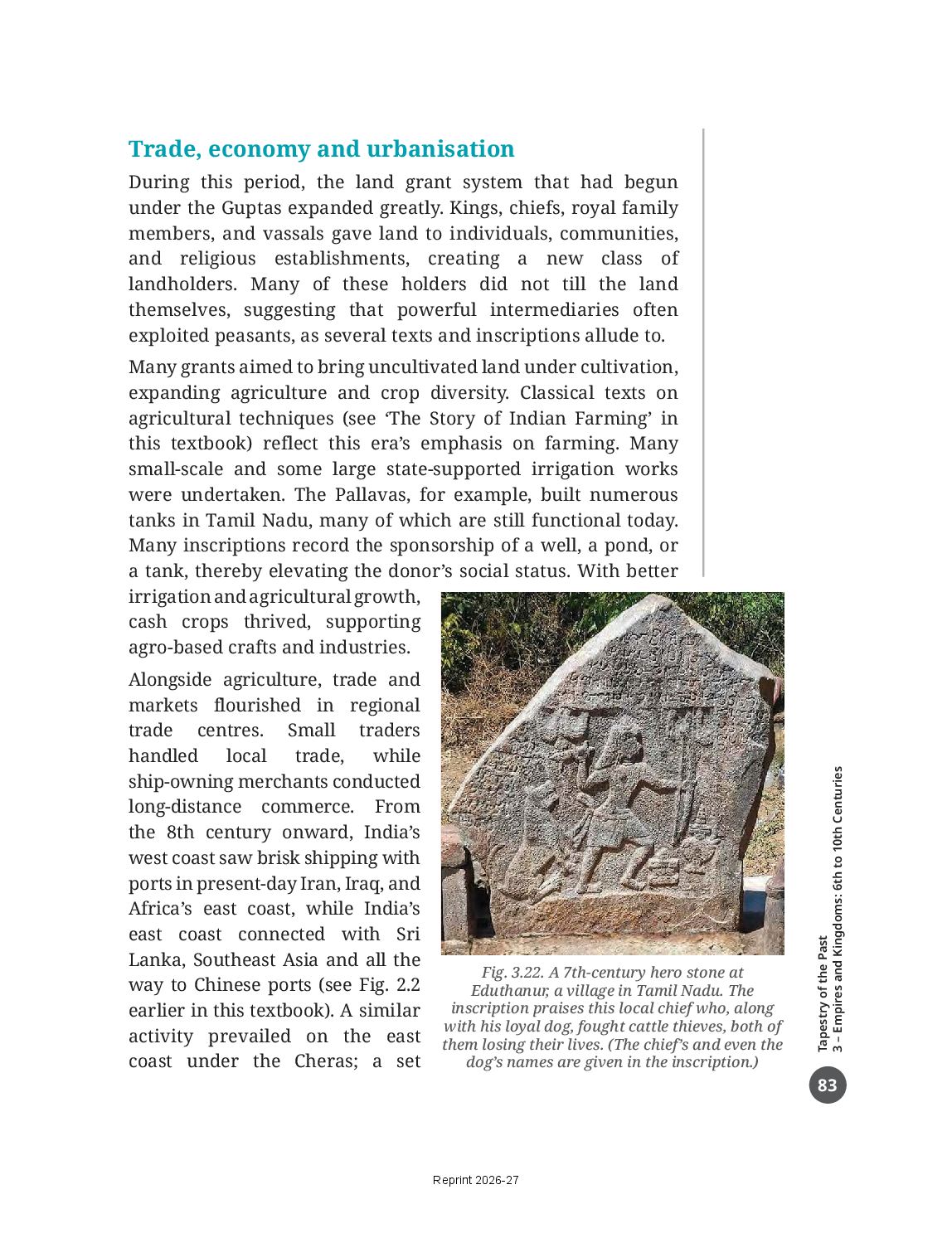
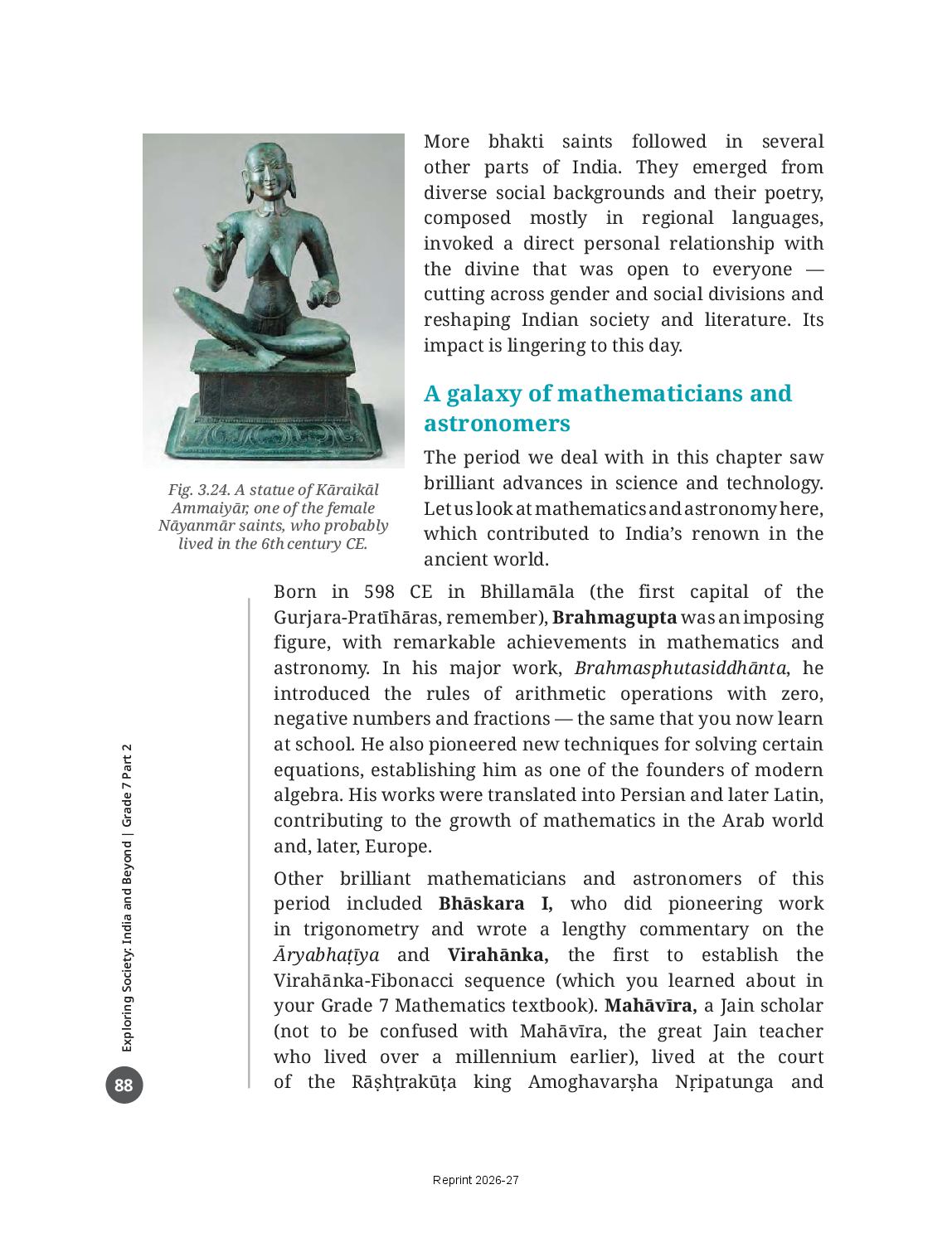
- Under the wars, society keeps changing. Empires ruled their core directly and the rest through sāmantas; villages stayed self-governed and south India built village sabhās. Land grants spread cultivation; trade ran from Iraq and Africa to China. Jātis multiplied but stayed flexible, the Bhakti tradition spread from the Tamil Ālvārs and Nāyanmārs across all social layers, and Brahmagupta, Bhāskara I, Virahānka and Mahāvīra pushed mathematics forward.
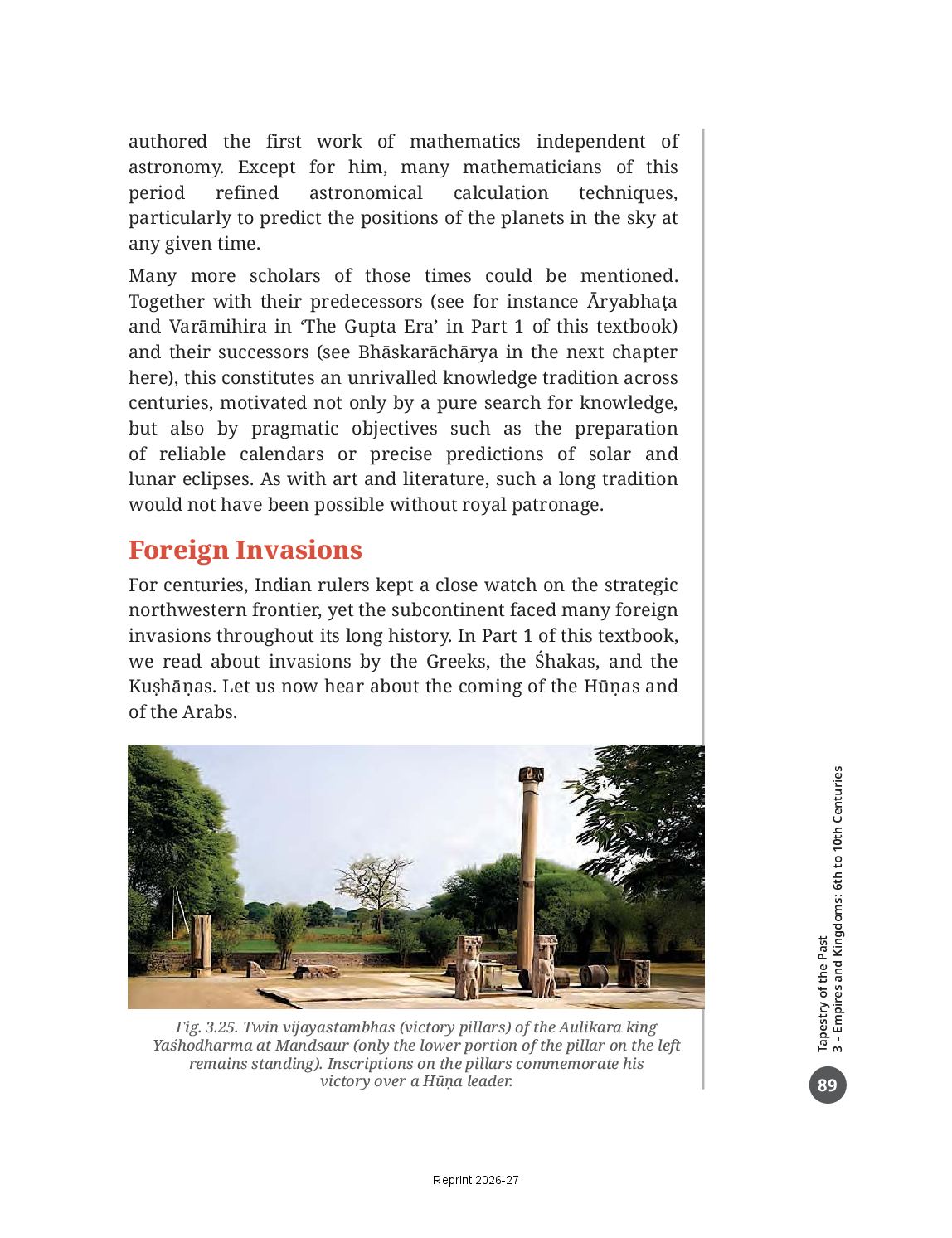
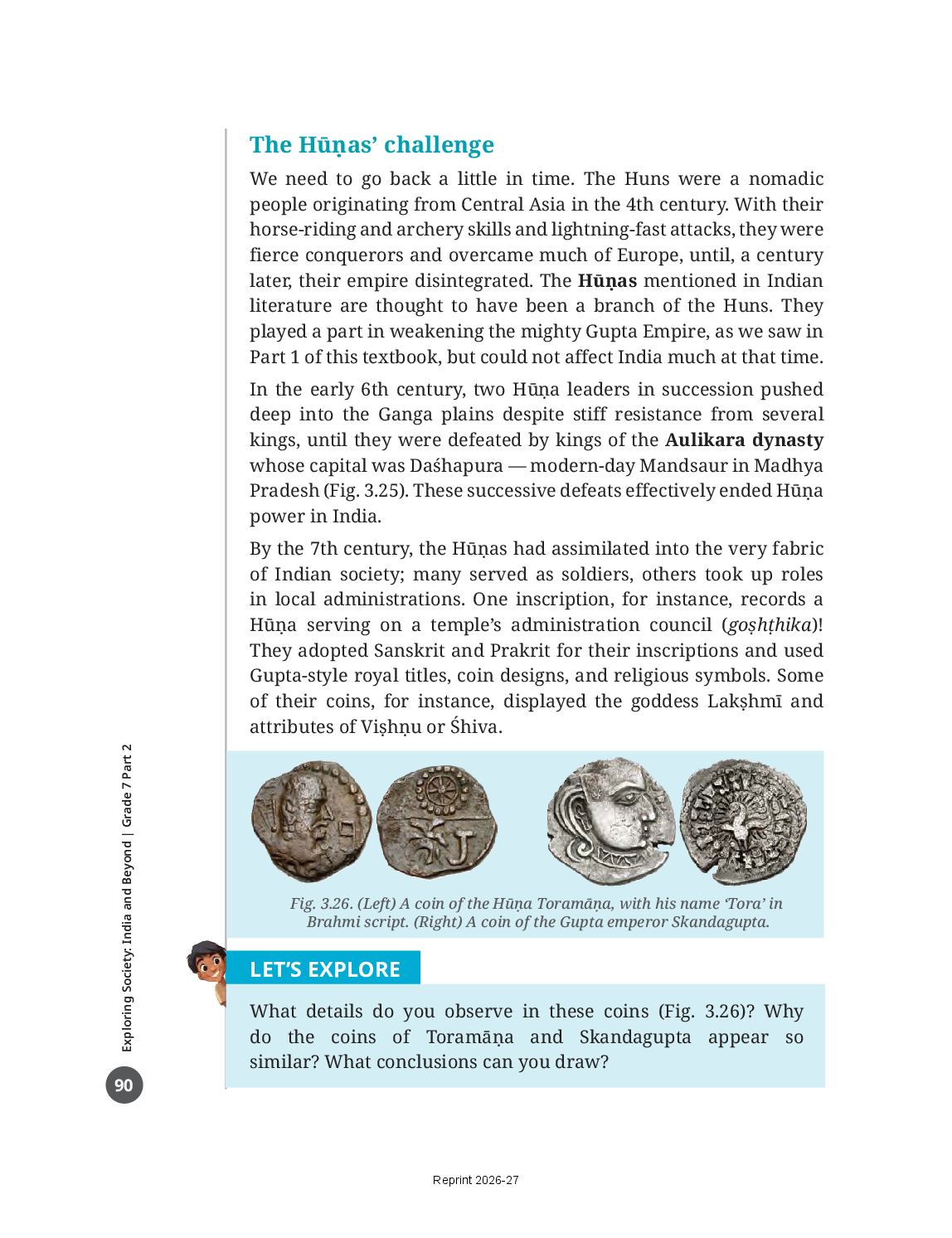
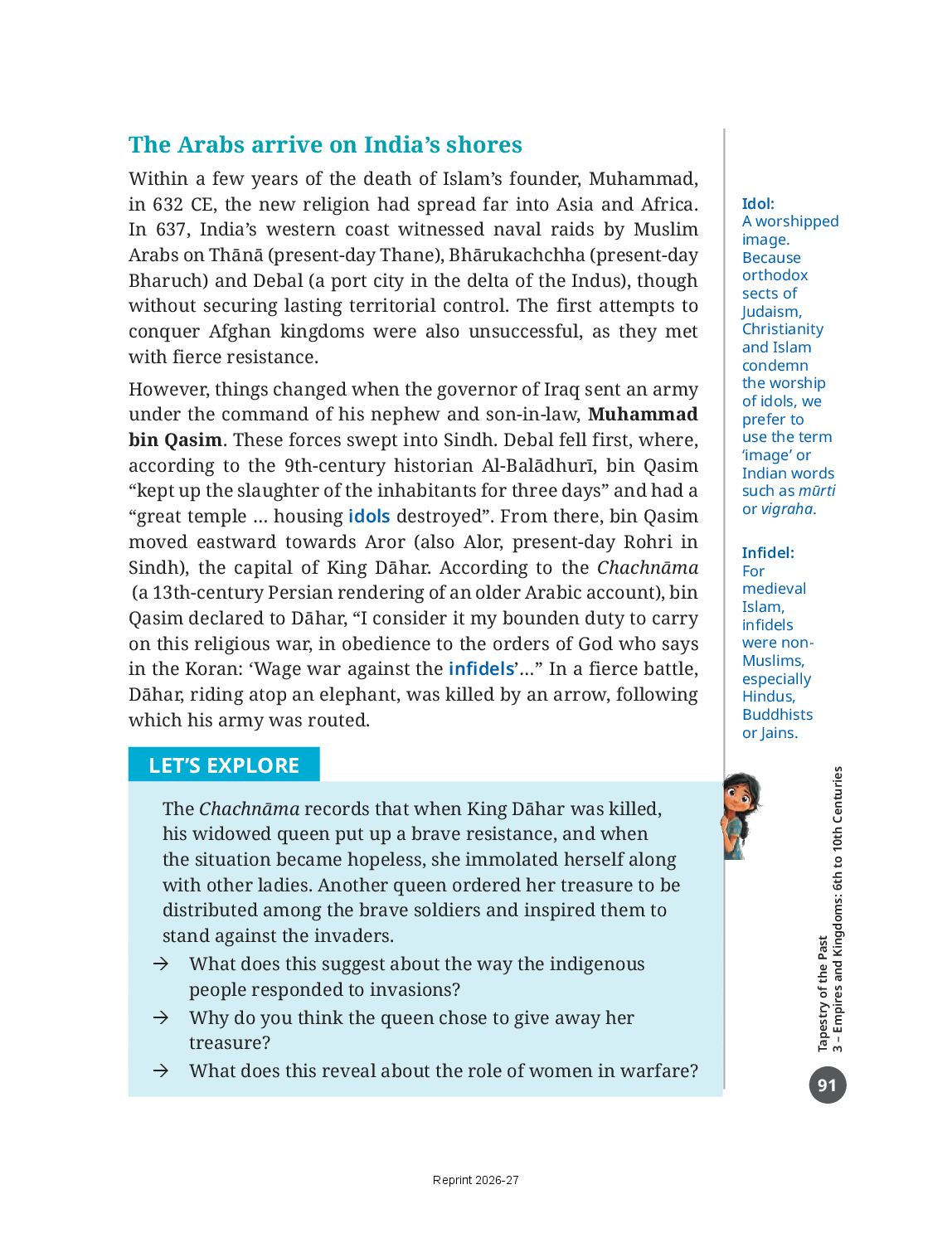
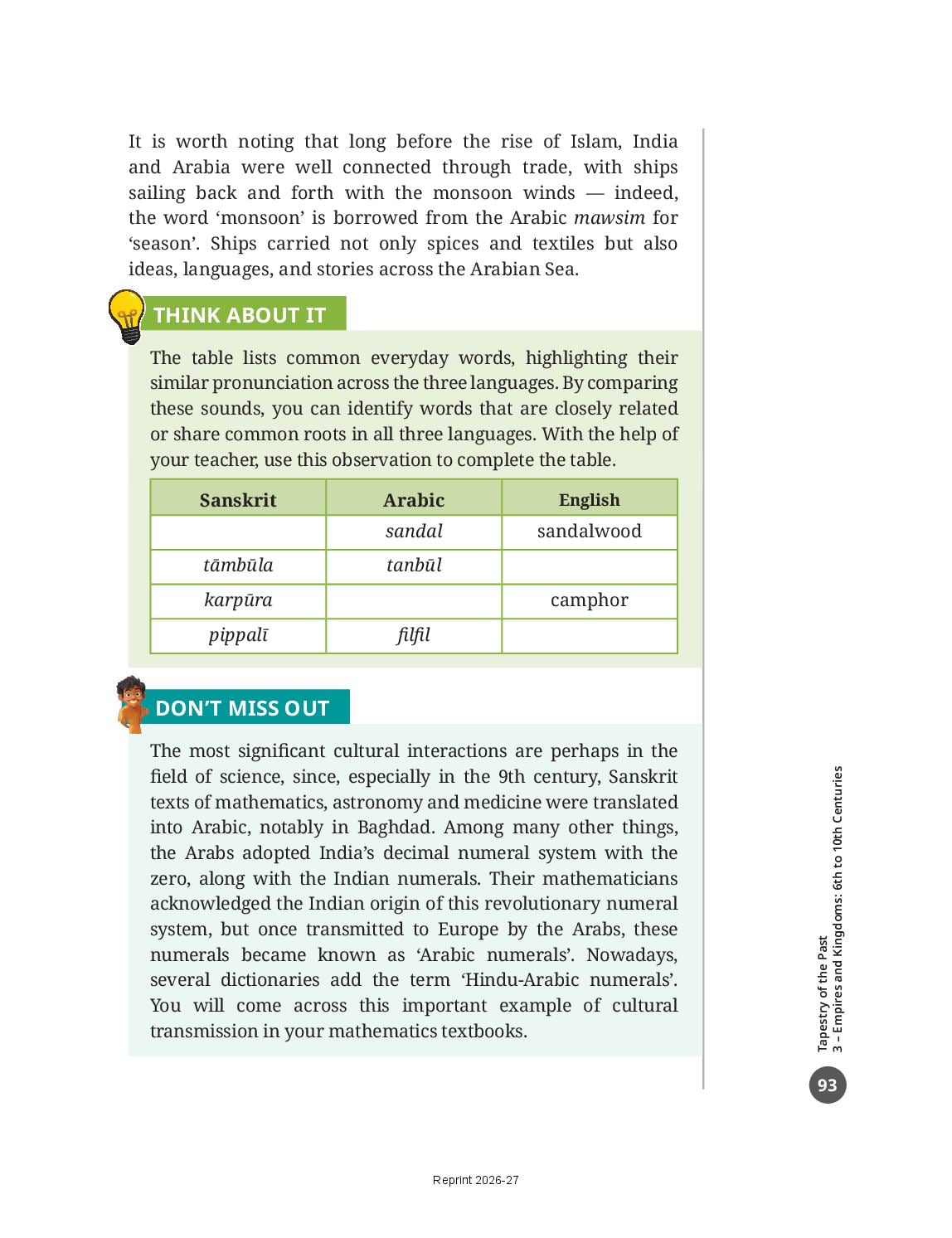
- Two waves of invaders arrive — and are answered very differently. The Hūṇas were beaten by the Aulikaras of Daśhapura and, within a century, had assimilated: they used Sanskrit, Gupta-style titles and Gupta-style coins. The Arabs raided the coast in 637 and conquered Sindh under Muhammad bin Qasim in 712, but were held back for three centuries by Indian resistance, and their political and religious impact stayed limited.
Quick revision – Empires and Kingdoms: 6th to 10th Centuries
| Term | What it means | Where it appears in the chapter | Worth remembering |
|---|---|---|---|
| Tripartite | A situation that involves three distinct parties or players | Word box, page 67 | The Pālas, Gurjara-Pratīhāras and Rāṣhṭrakūṭas fought over Kannauj through the 8th and 9th centuries — no lasting victor |
| Sāmanta | A subordinate ruler — the equivalent of a tributary or vassal | ‘Polity and administration’, page 82 | They led armies and ran local administration, but their loyalty could be fragile; the Rāṣhṭrakūṭas were once sāmantas of the Chālukyas and overthrew them |
| Bhukti / rāṣhṭra, maṇḍala | Province and district — the units of directly-ruled territory | Page 82 | Below them came villages, the lowest units, run by headmen, accountants and local committees |
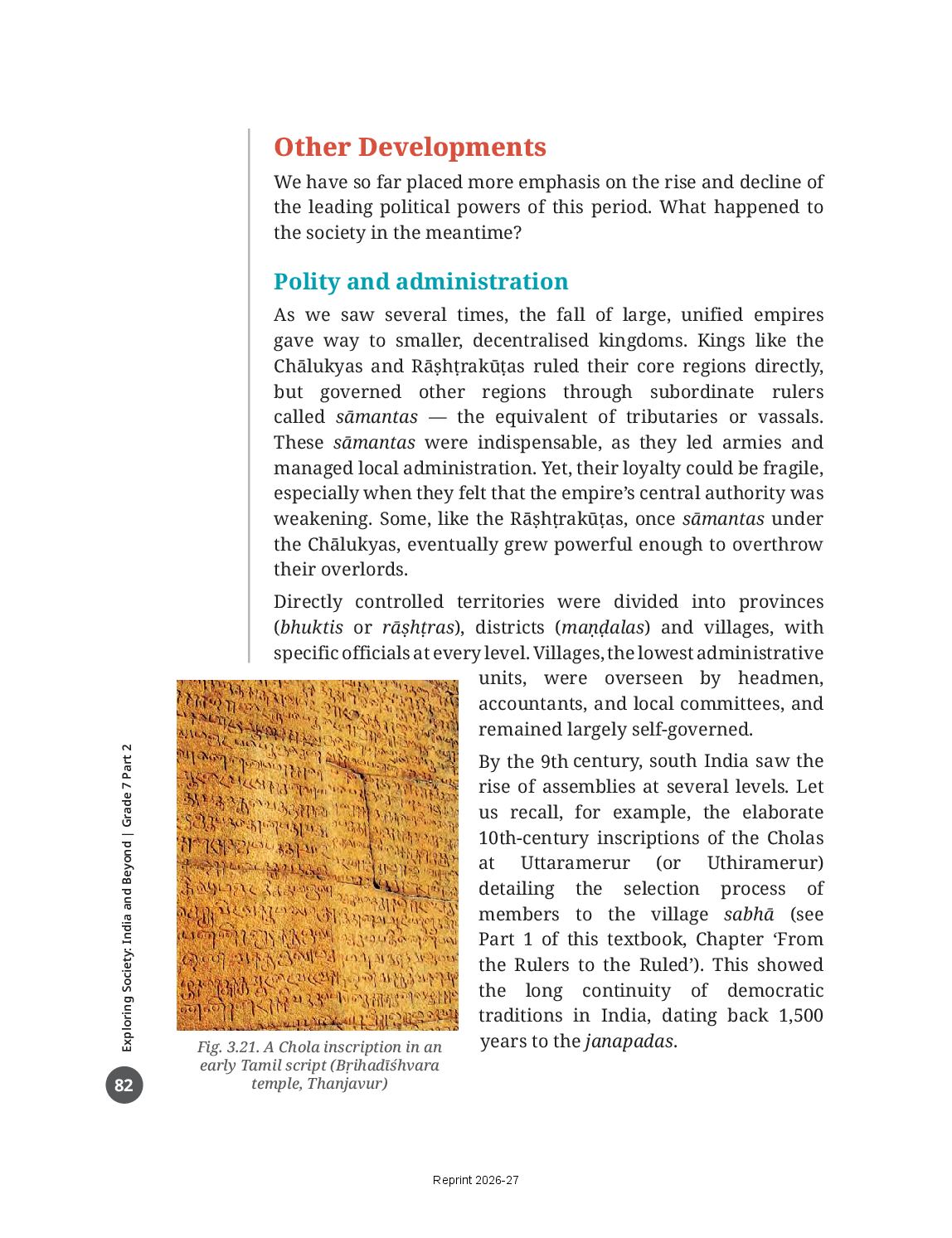
| Sabhā | A village assembly, its members chosen by a set process | Page 82 | The 10th-century Chola inscriptions at Uttaramerur record the selection process — a democratic tradition reaching back 1,500 years to the janapadas |
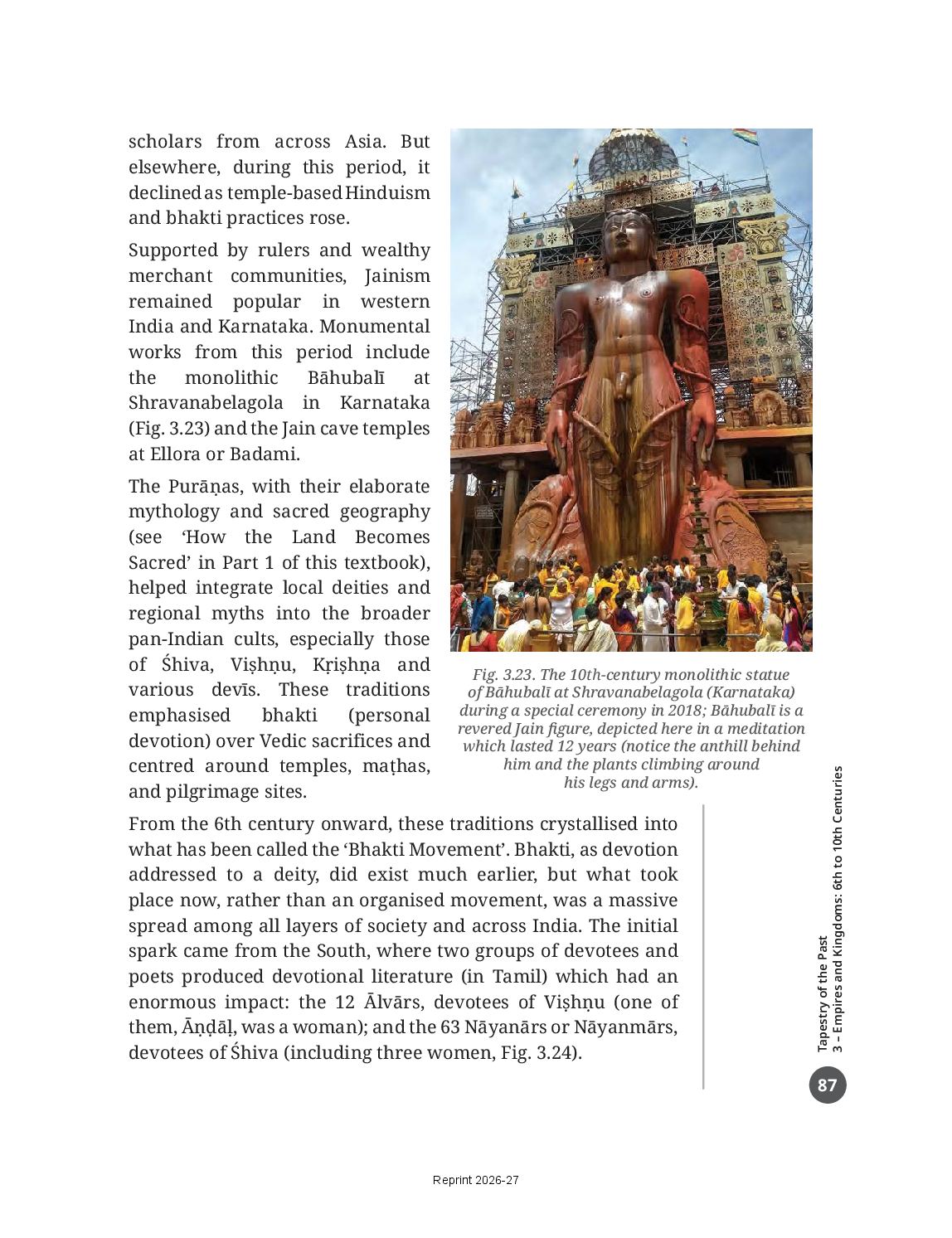
| Monolithic | Made of a single (‘mono’) stone or rock (‘lithic’) | Word box, page 78 | The Pallava temples of Māmallapuram, the Kailaśhanātha temple at Ellora, and the 10th-century Bāhubalī at Shravanabelagola |
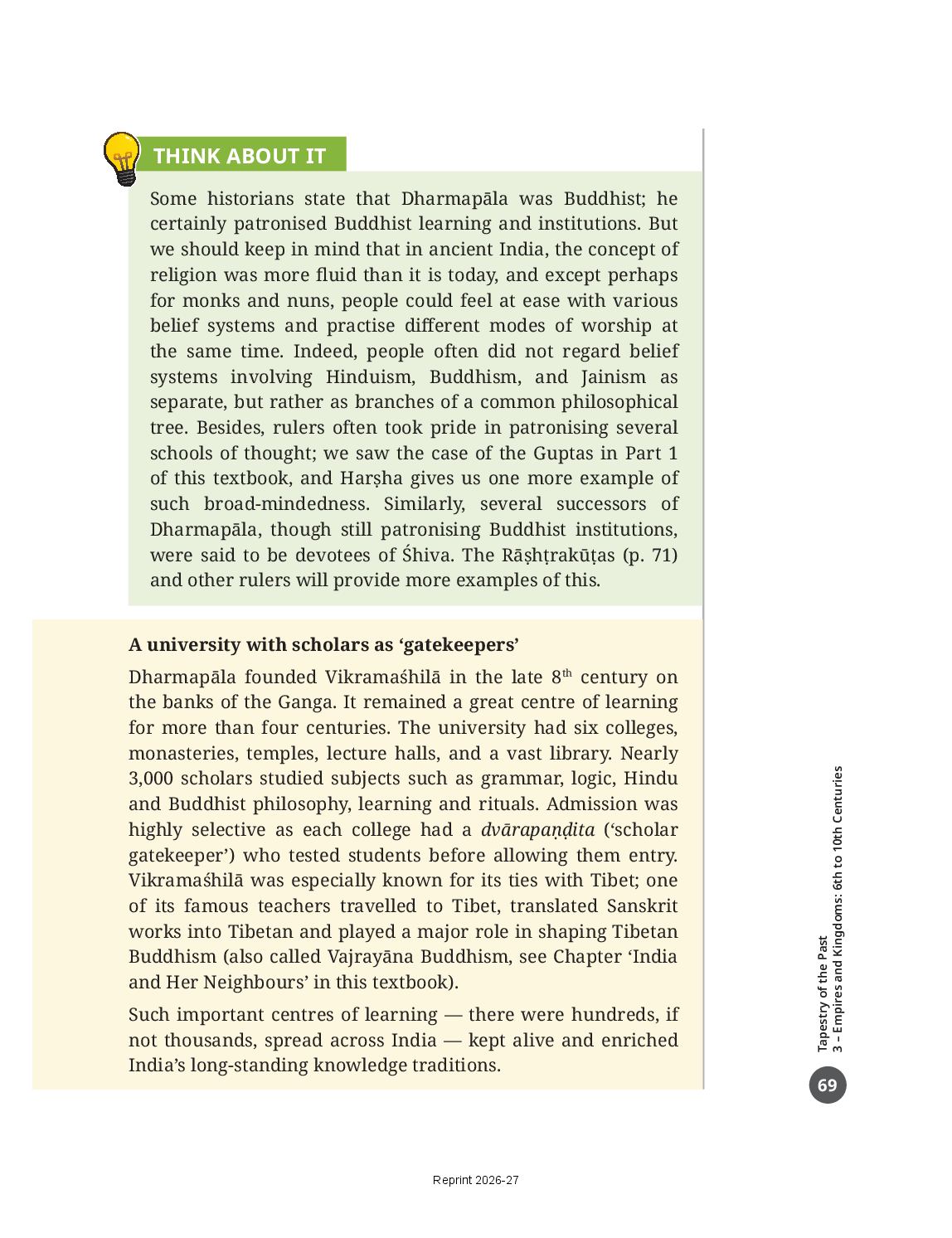
| Dvārapaṇḍita | ‘Scholar gatekeeper’ — the teacher who tested every student seeking admission | Vikramaśhilā, page 69 | Each of Vikramaśhilā’s six colleges had one; nearly 3,000 scholars studied there |
| Mlechchha | Originally, those who did not speak clearly or follow Vedic culture; later, foreigners | Word box, page 92 | The Gwalior inscription says Nāgabhaṭa I “crushed the large army of the powerful Mlechchha king” |
| Idol / image | A worshipped image. The chapter prefers ‘image’, mūrti or vigraha | Word box, page 91 | The book explains why it changes the word — ‘idol’ carries the disapproval of those who condemned image-worship |
| Infidel | For medieval Islam, non-Muslims — especially Hindus, Buddhists or Jains | Word box, page 91 | Quoted from the Chachnāma’s report of bin Qasim’s message to King Dāhar |
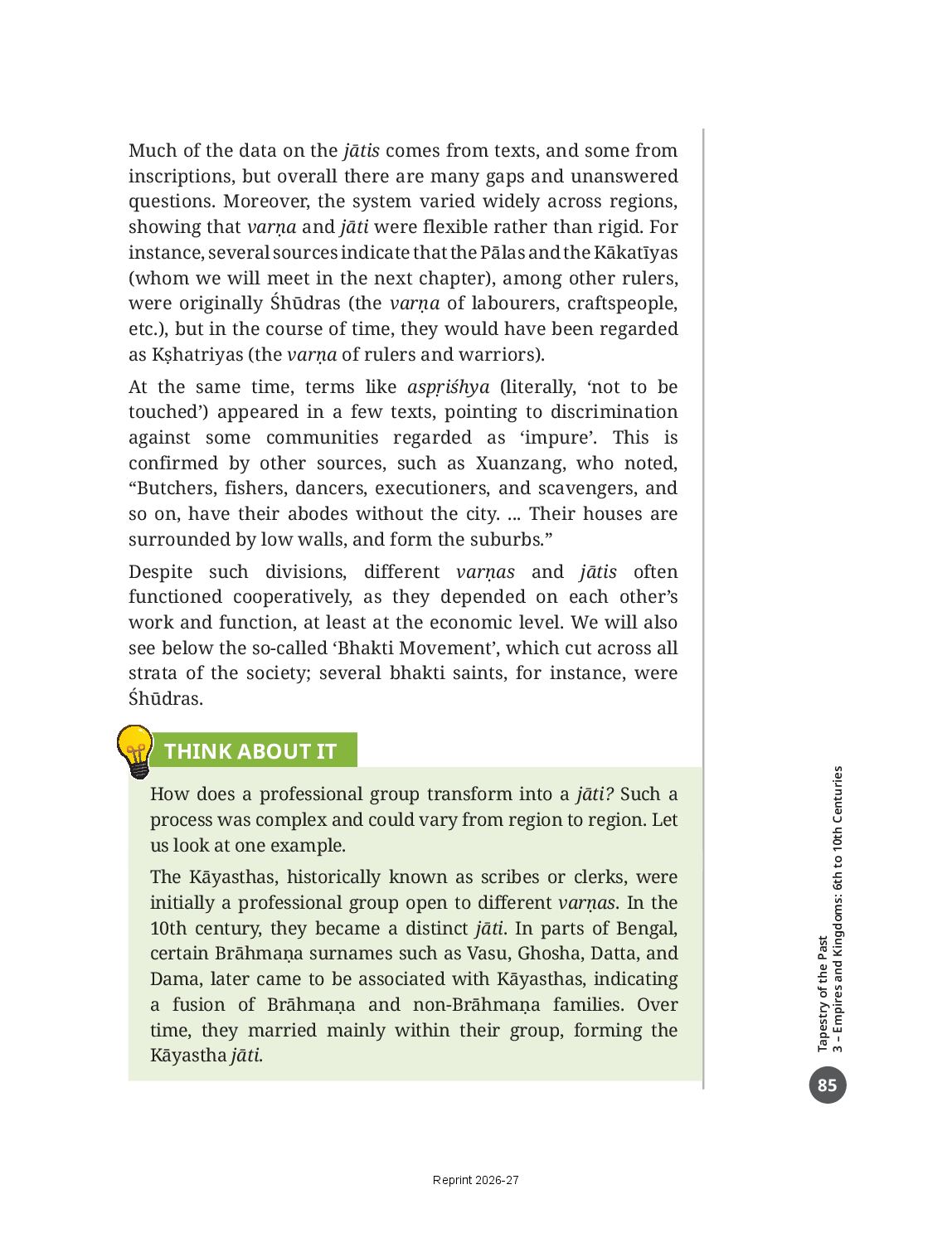
| Aspṛiśhya | Literally ‘not to be touched’ | ‘Social life’, page 85 | The term appears in a few texts and points to discrimination against communities regarded as ‘impure’; Xuanzang describes such groups living outside the city |
| Jāti | A community, usually based on occupation or region, in which most people married within the group | Pages 84–85 | Jātis multiplied in this period, but stayed flexible — the Pālas and Kākatīyas were said to be originally Śhūdras and later regarded as Kṣhatriyas |
| Rājatarangiṇī | ‘The River of Kings’ — Kalhaṇa’s 12th-century Sanskrit epic history of Kashmir | Pages 73–74 | He consulted eleven earlier works plus inscriptions, grants and records — and wanted history to teach moral lessons |
| Bhakti | Personal devotion to a deity, placed above Vedic sacrifice | Pages 87–88 | From the 6th century it spread massively across India; the spark came from the Tamil 12 Ālvārs (Viṣhṇu) and 63 Nāyanmārs (Śhiva) |
| Merchant guilds | Associations of traders, artisans and moneylenders | LET’S REMEMBER, page 84 | They supported religious and charitable activities; in south India one guild was active in coastal and inland trade, the other became the largest inter-regional merchant association |
Old NCERT vs New – Class 7 Social Science
This chapter is from Exploring Society: India and Beyond, the new NCERT Class 7 Social Science book (NCF-SE 2023, used from 2025-26). It replaced the old book “Our Pasts, Our Environment and Social and Political Life”, so chapter numbers and names differ from older PDFs.
Solutions and All Chapters
Answers to the exercises and the full chapter list of Exploring Society: India and Beyond:
Empires and Kingdoms: 6th to 10th Centuries – Overview
| Class | Class 7 |
| Subject | Social Science |
| Book | Exploring Society: India and Beyond – new NCERT book |
| Part | Part II |
| Chapter | 15 of 20 – Empires and Kingdoms: 6th to 10th Centuries |
| Book pages | Part II, 61 – 96 |
| Edition | NCERT Reprint 2026-27 |
| Session | 2026-27 |
| Free – read online or download |
Class 7 Social Science Chapter 15 – FAQs
Where can I download Empires and Kingdoms: 6th to 10th Centuries Class 7 PDF?
From the download table on this page – the chapter PDF is free, and the full book is linked too.
What is Class 7 Social Science Chapter 15 about?
The Guptas are gone, but India is not empty — it is crowded. This chapter covers roughly 600 CE to 1200 CE (with the next chapter), six centuries that historians have called ‘post-classical’, ‘late classical’ or ‘early medieval’. Instead of one great empire there are many strong regional kingdoms. Some call this a time of rivalry and disorder; the chapter asks you to look again and see “a land buzzing with new ideas, art, and culture, different in each region, yet all part of one India.”
Is Empires and Kingdoms: 6th to 10th Centuries from the new NCERT Class 7 Social Science book?
Yes. It is chapter 15 of exploring society: india and beyond (part ii), the new NCERT Class 7 Social Science book for 2026-27.
Is this the latest NCERT edition for 2026-27?
Yes – the PDF is NCERT’s latest edition for the 2026-27 session.
Where are the NCERT Solutions for Class 7 Social Science Chapter 15?
Open the NCERT Solutions link above for answers to the exercise questions.