Download Turning Tides: 11th and 12th Centuries – NCERT Class 7 Social Science Chapter 16 PDF from the new NCERT Class 7 Social Science book Exploring Society: India and Beyond (2026-27). Read the chapter online or download the free PDF. Two centuries in which the tide turns. The previous chapter ended with Arab incursions that “had little overall impact on India”. The 11th and 12th centuries “tell a different story: invasions by Turkic powers penetrated much deeper into north…
Turning Tides: 11th and 12th Centuries PDF – Chapter 16 of Exploring Society: India and Beyond (Part II)
Read the chapter online or download the PDF.
| Chapter | Download | |
|---|---|---|
| Chapter 16 PDF | Turning Tides: 11th and 12th Centuries | View PDF |
| Full book | NCERT Class 7 Social Science – Exploring Society: India and Beyond | View Book |
Read Online
What Is in Turning Tides: 11th and 12th Centuries? (Class 7 Social Science Chapter 16)
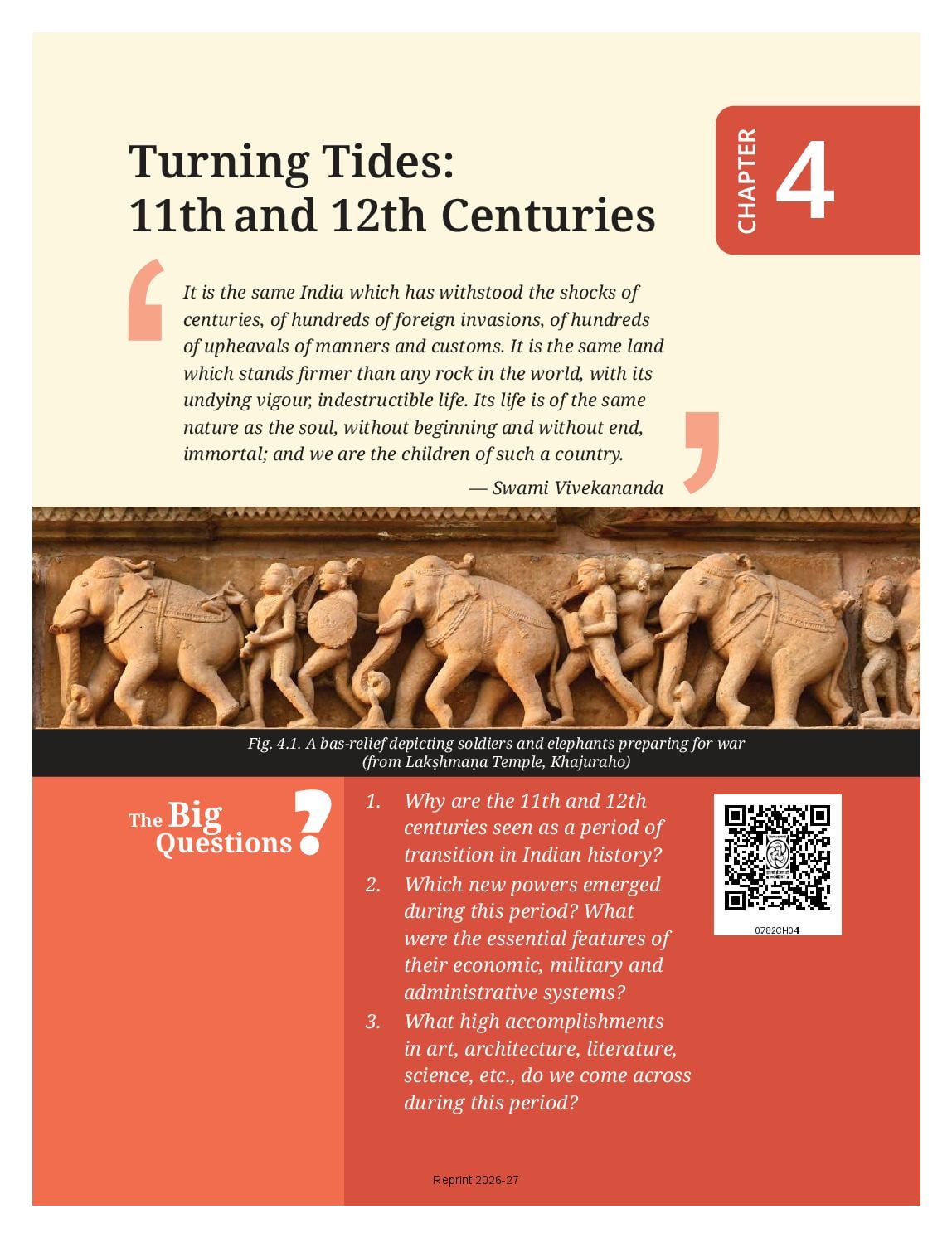
- Two centuries in which the tide turns. The previous chapter ended with Arab incursions that “had little overall impact on India”. The 11th and 12th centuries “tell a different story: invasions by Turkic powers penetrated much deeper into north India, despite stubborn resistance from native kingdoms.” The chapter opens with one invasion (Mahmūd of Ghazni) and closes with another (Muhammad Ghūrī and his generals).
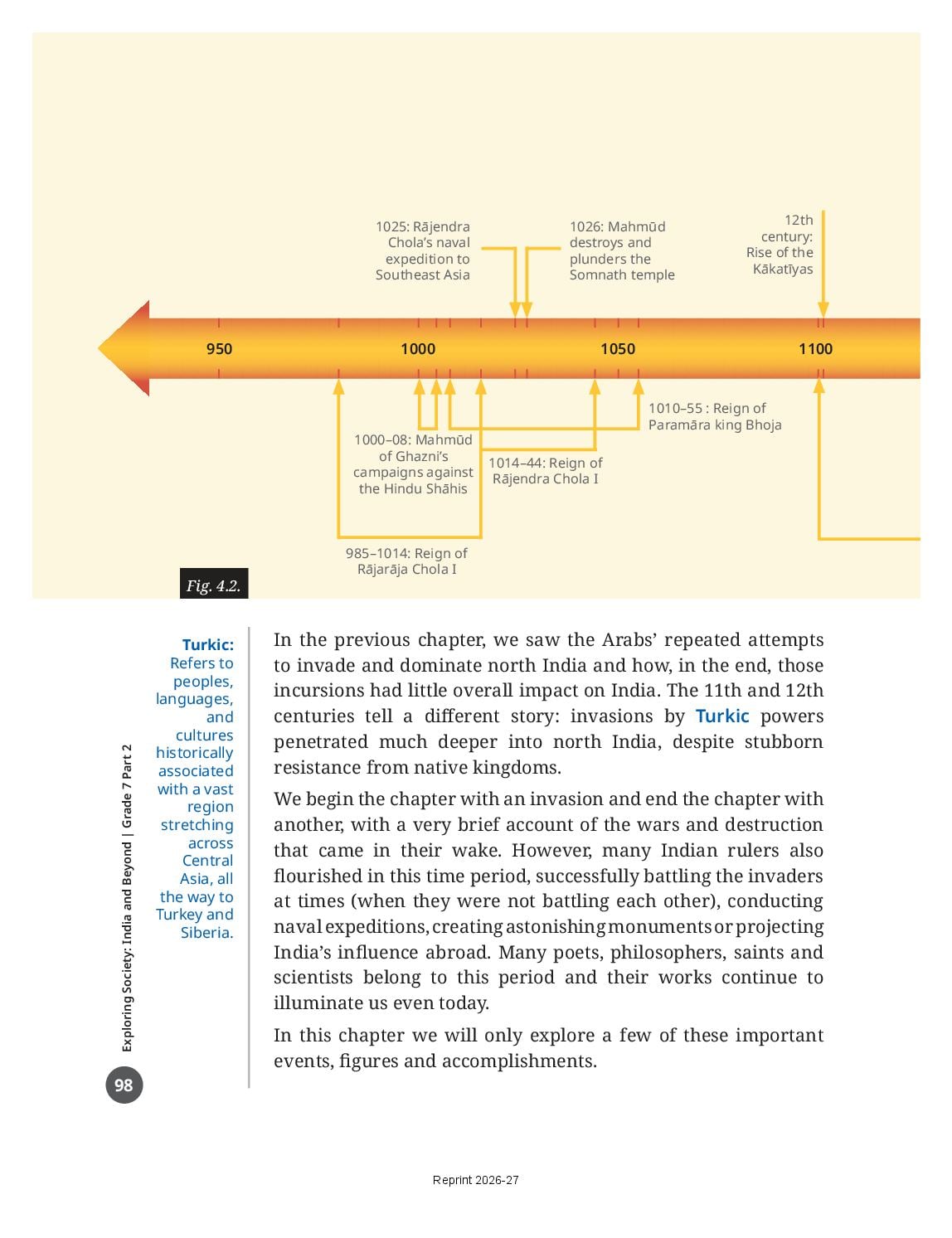
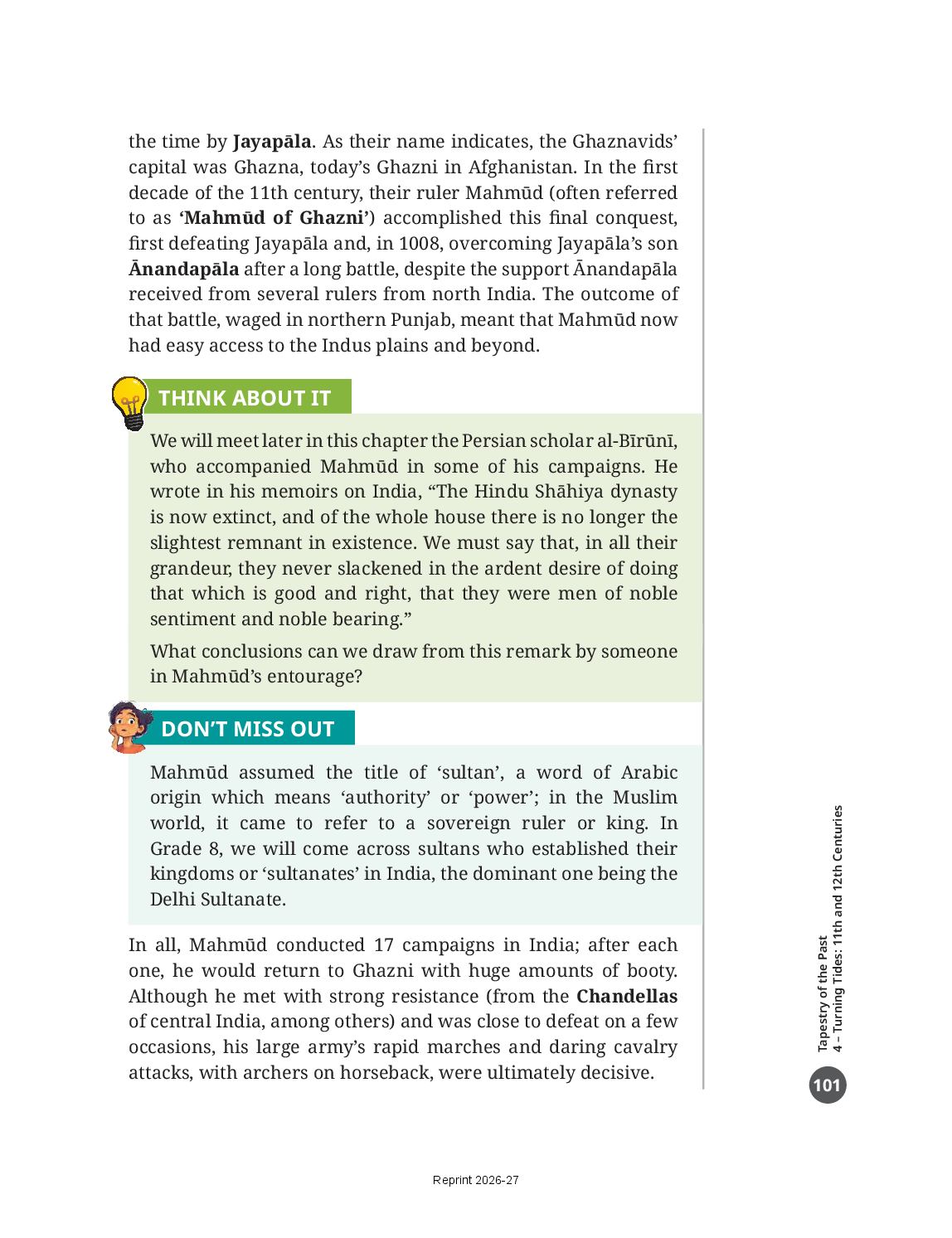
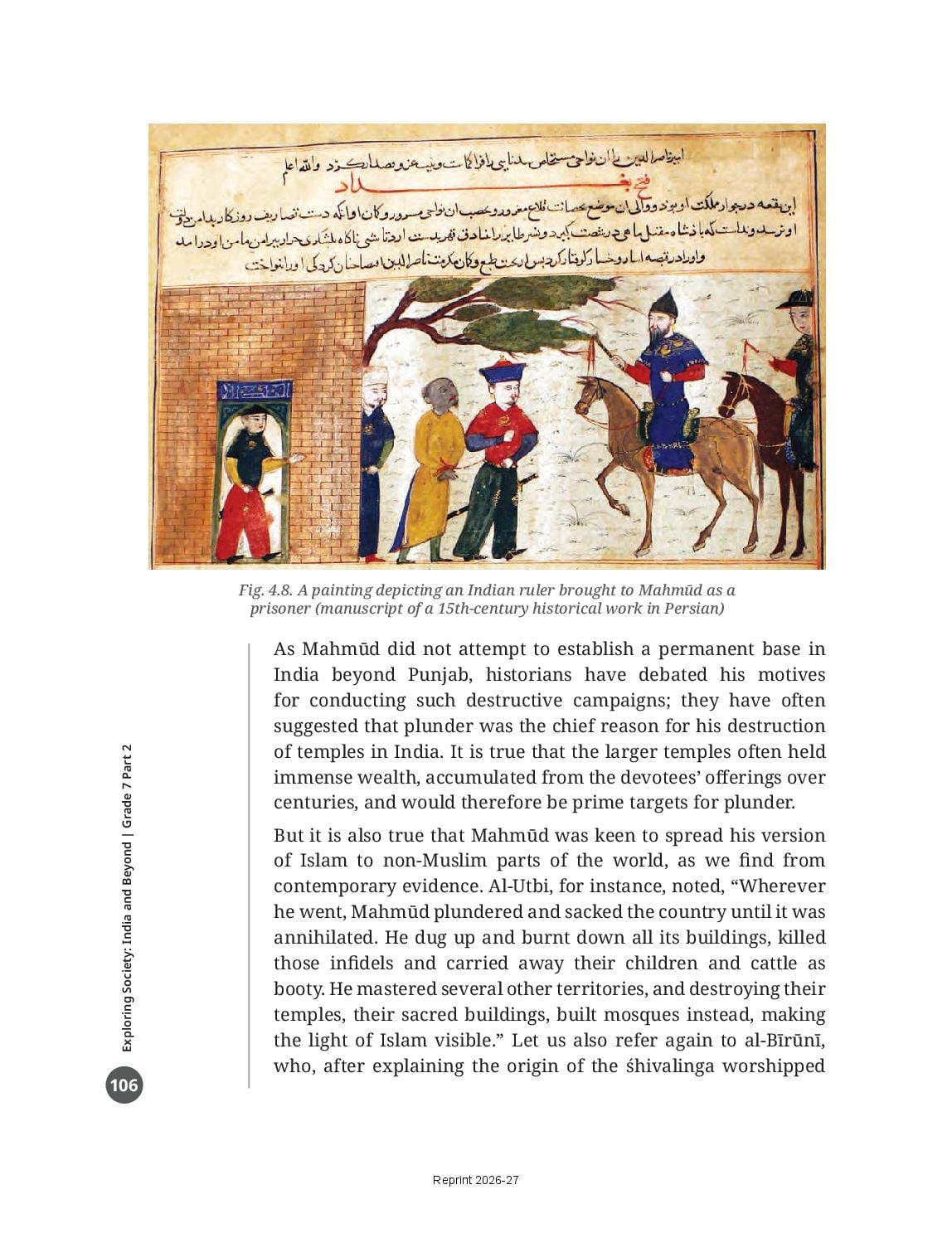
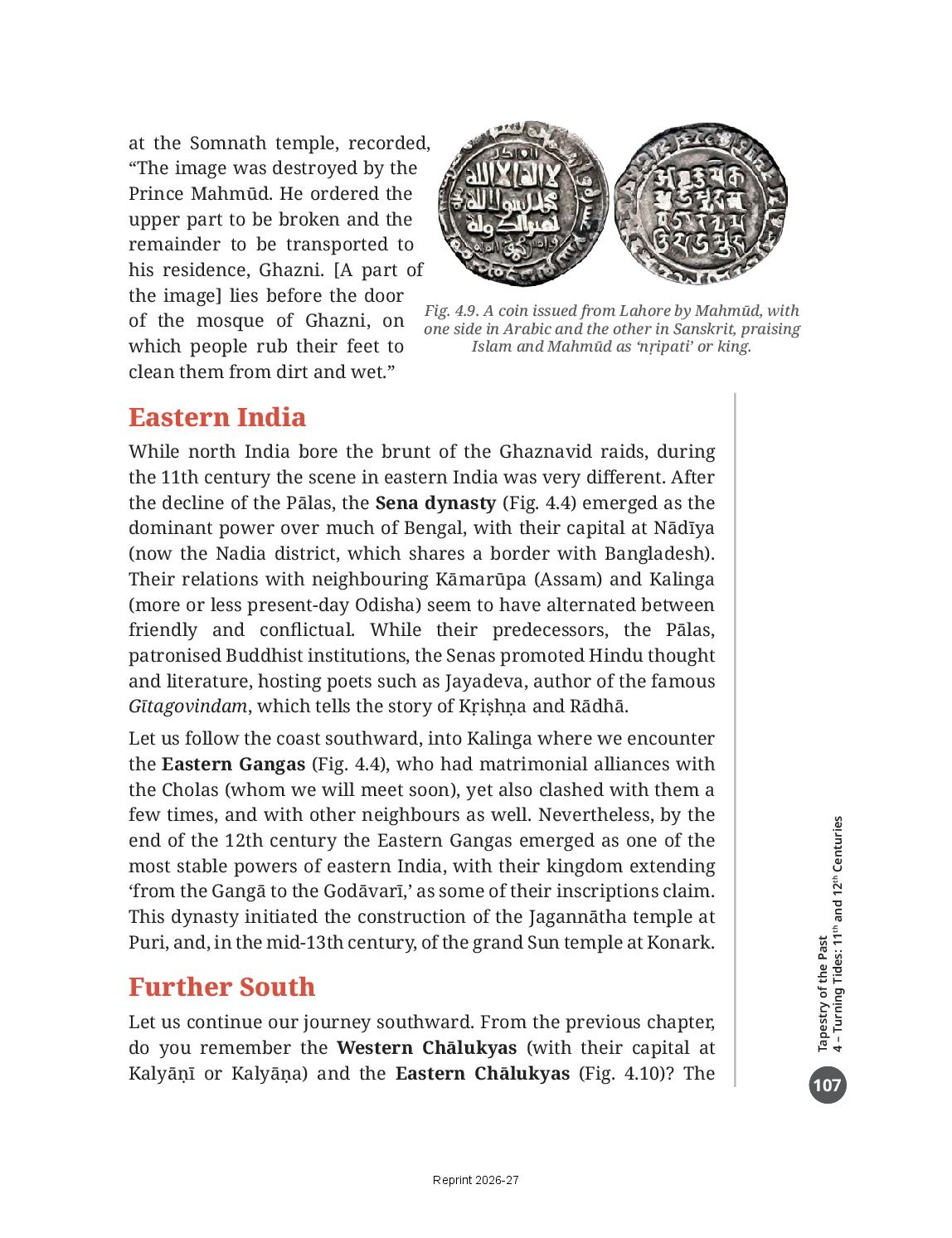
- Mahmūd of Ghazni: 17 campaigns, no kingdom. The Ghaznavids overran the Hindu Shāhis, who had held the Khyber Pass; Mahmūd defeated Jayapāla and, in 1008, Ānandapāla. He raided Mathura (1018), Kannauj and Somnath (1026), destroying temples and carrying off treasure, prisoners and children. He “did not attempt to establish a permanent base in India beyond Punjab”, and died in 1030 at 58.
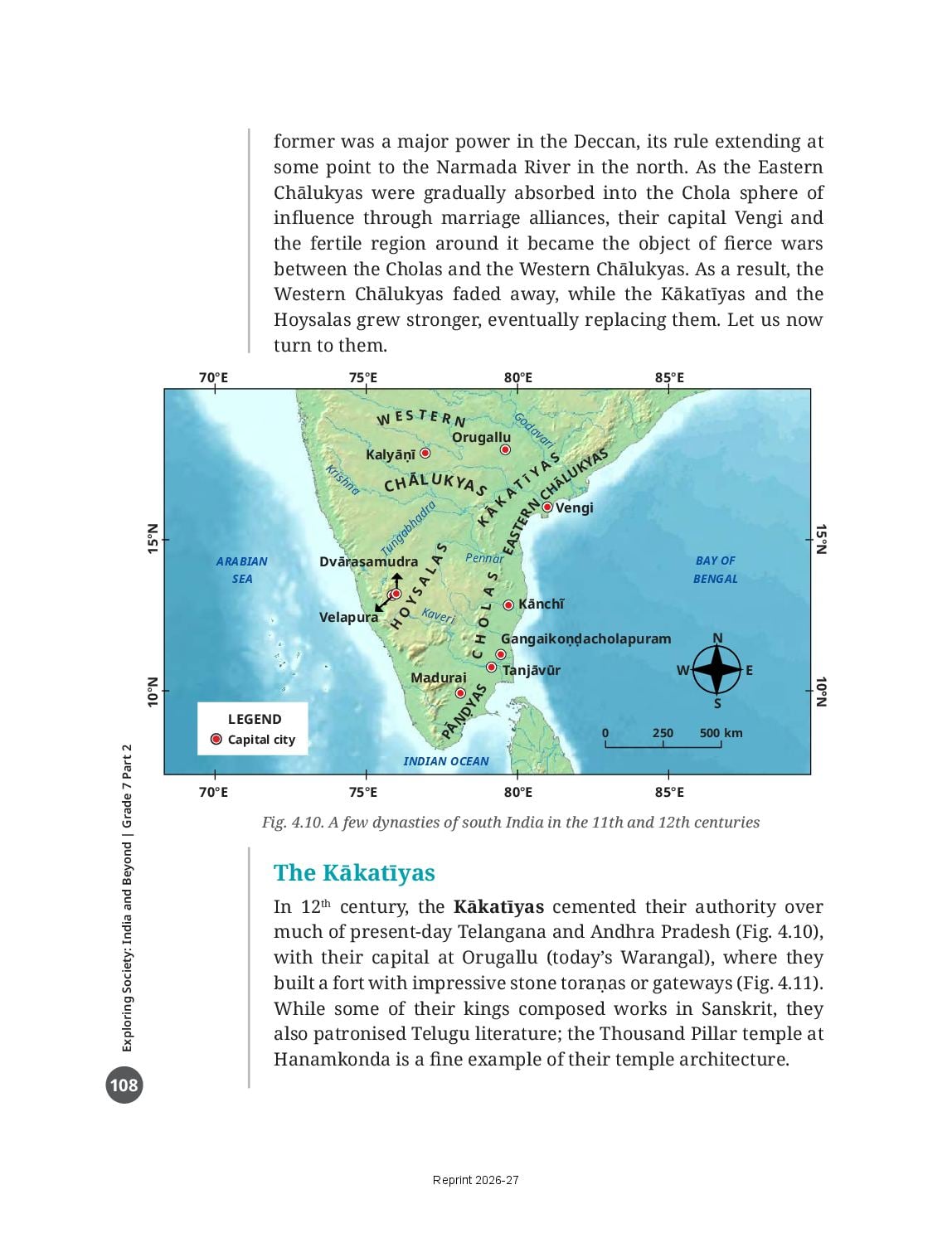
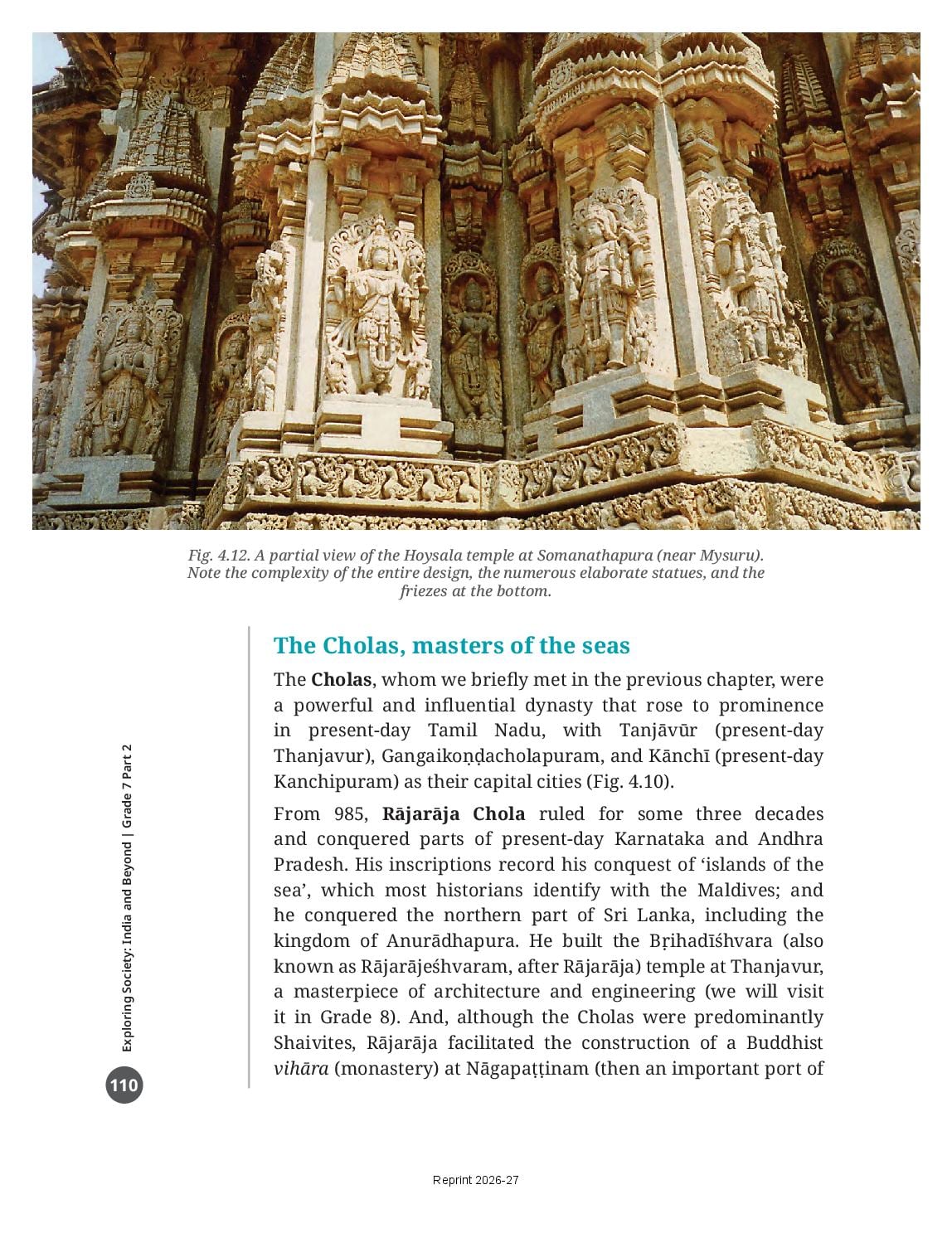
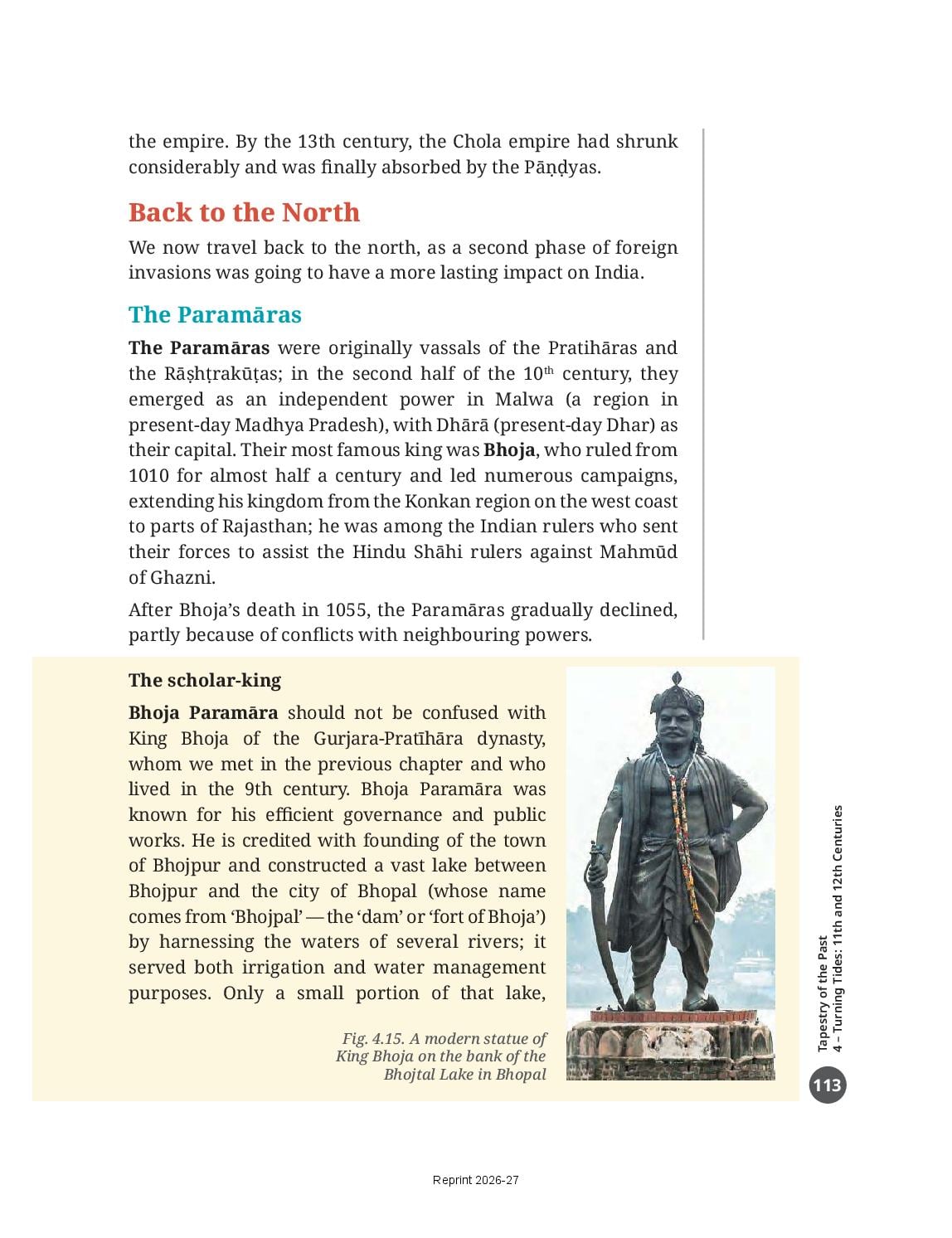
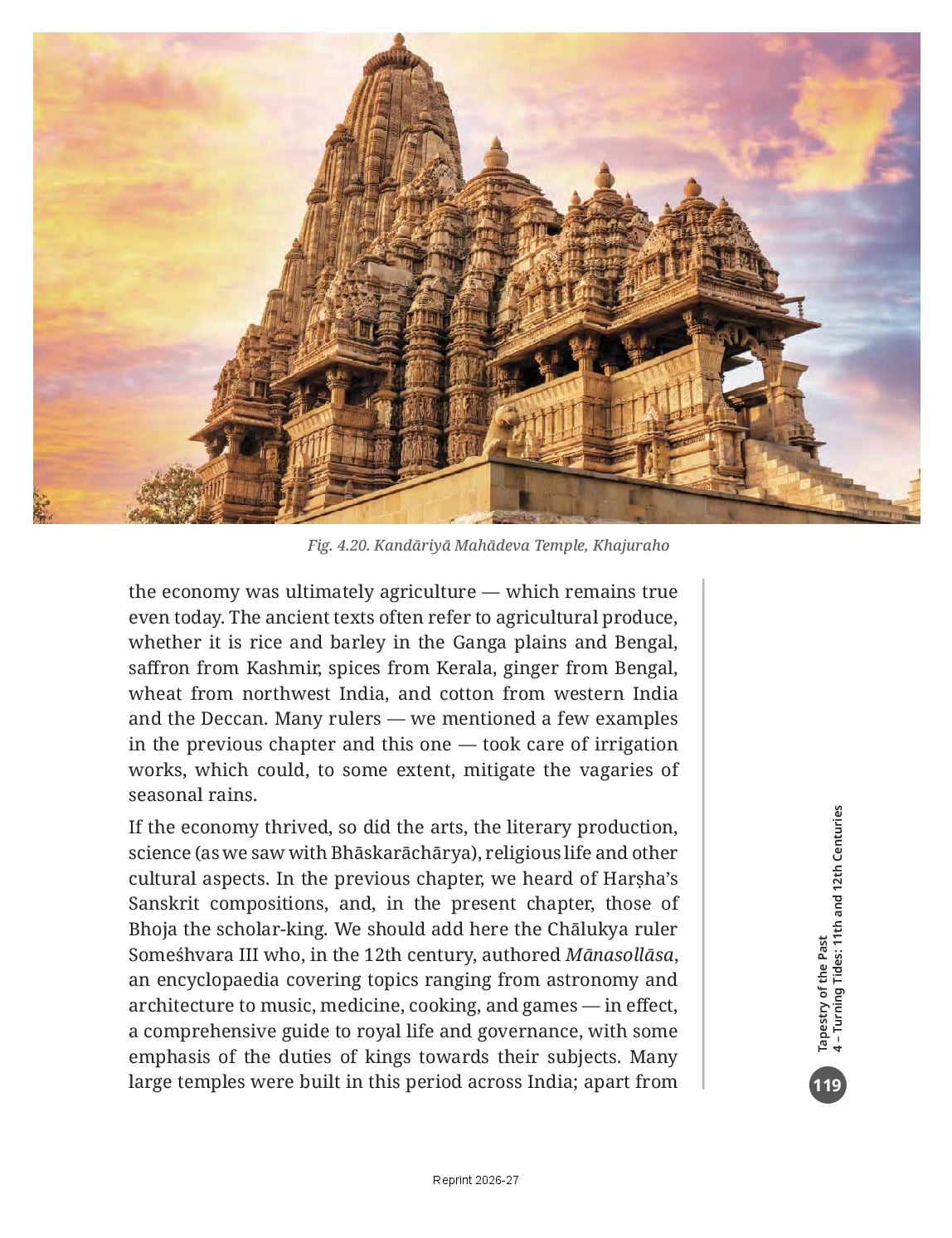
- Meanwhile, Indian kingdoms flourish. The Senas in Bengal host Jayadeva of the Gītagovindam; the Eastern Gangas begin the Jagannātha temple at Puri; the Kākatīyas at Orugallu build village self-governance and irrigation; the Hoysalas at Belur and Halebidu carve their famous temples; the Paramāra king Bhoja (r. 1010–55) builds a vast lake and writes on architecture, poetics, yoga and medicine.
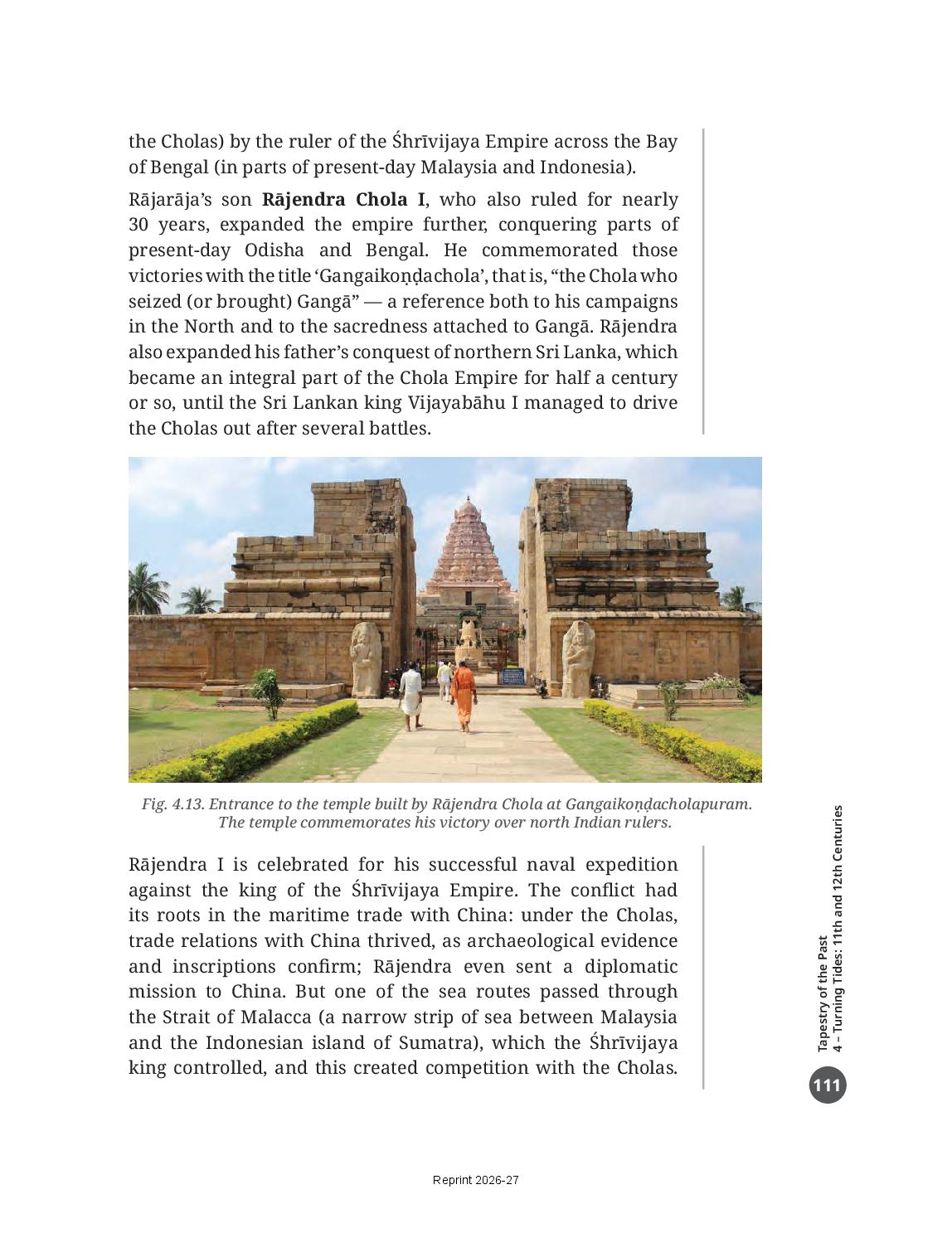
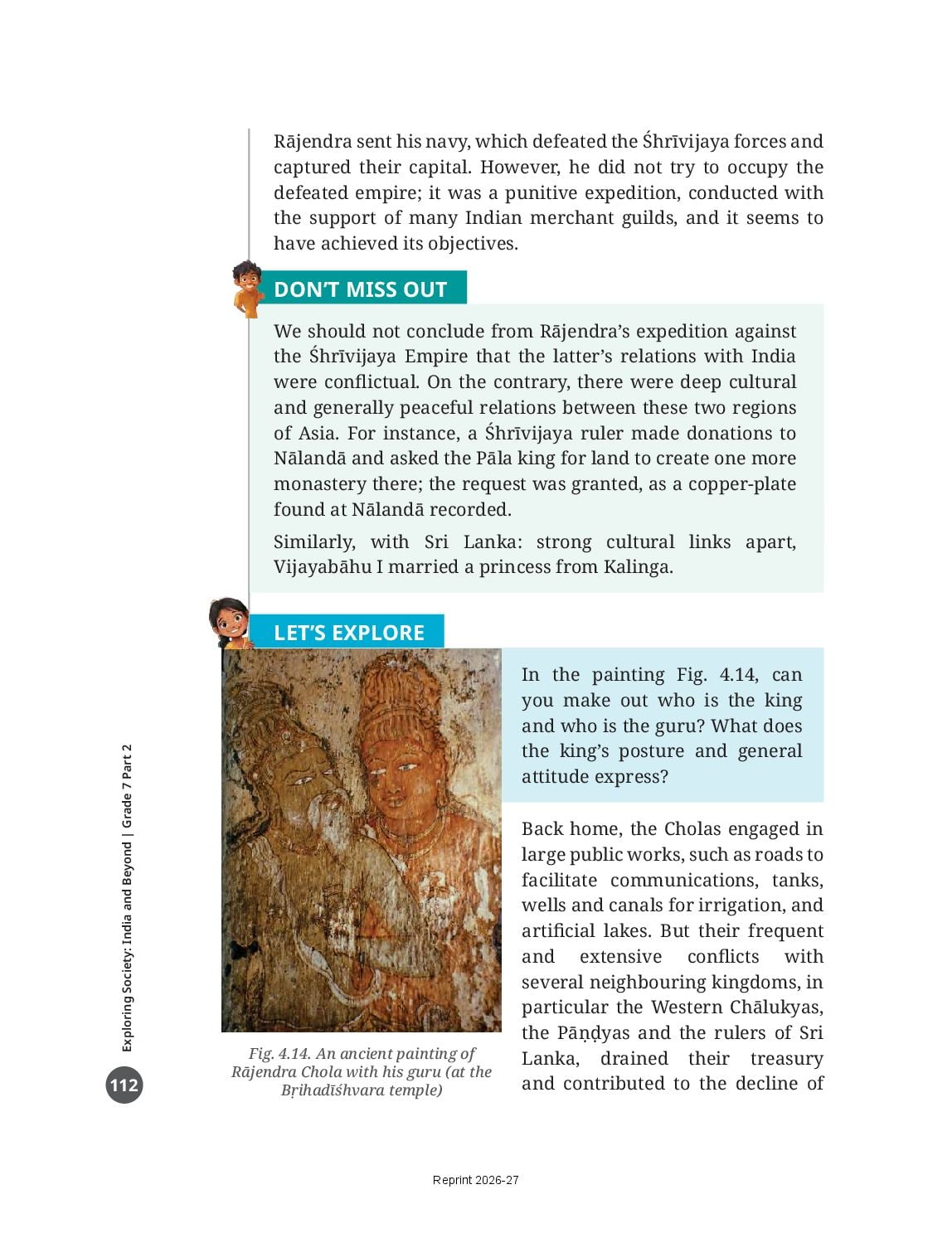
- The Cholas, masters of the seas. Rājarāja I (from 985) took the ‘islands of the sea’ and northern Sri Lanka and built the Bṛihadīśhvara temple at Thanjavur. His son Rājendra I (1014–44) won the title ‘Gangaikoṇḍachola’ and in 1025 sent a navy against Śhrīvijaya over the trade route through the Strait of Malacca — a punitive expedition, not a conquest.
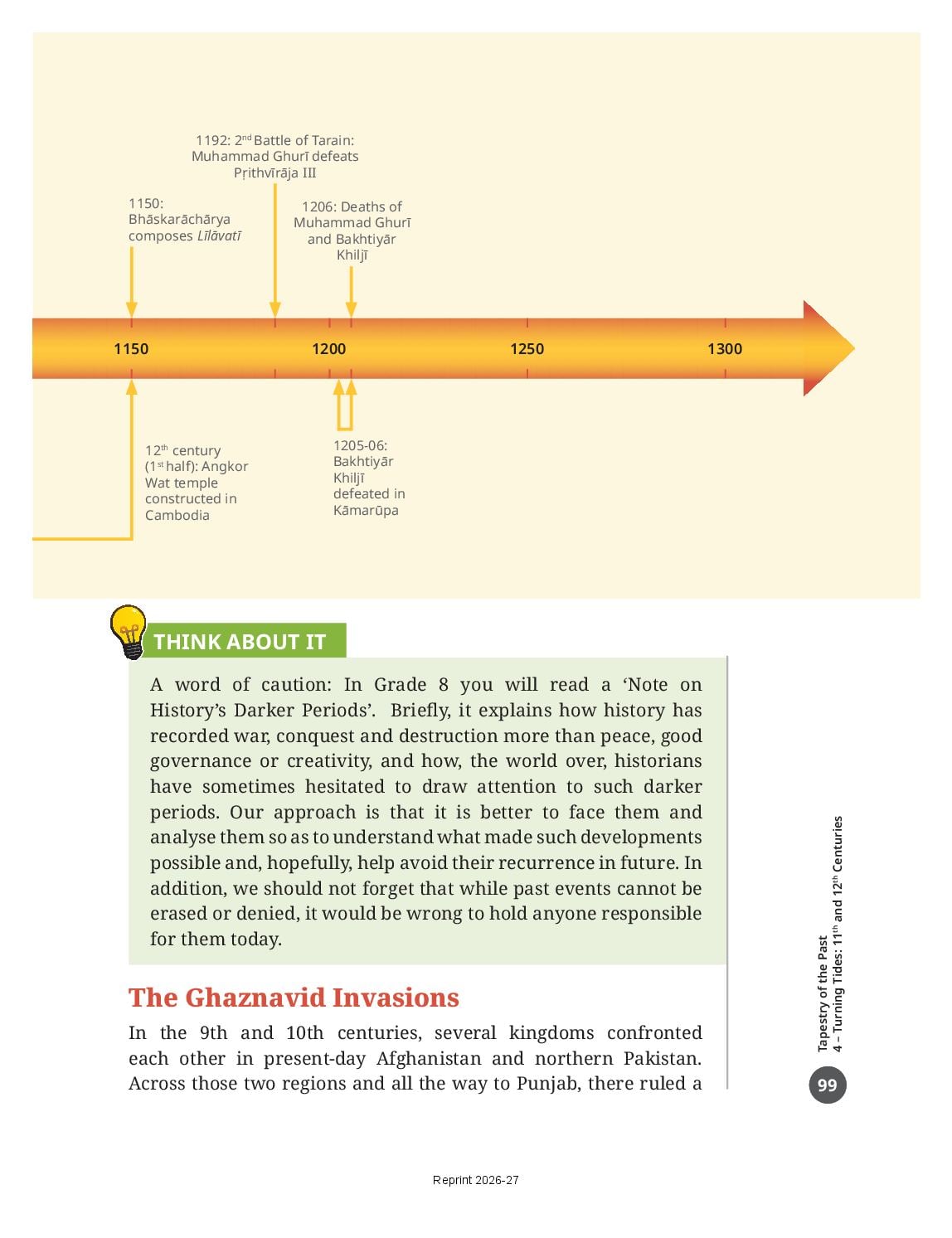
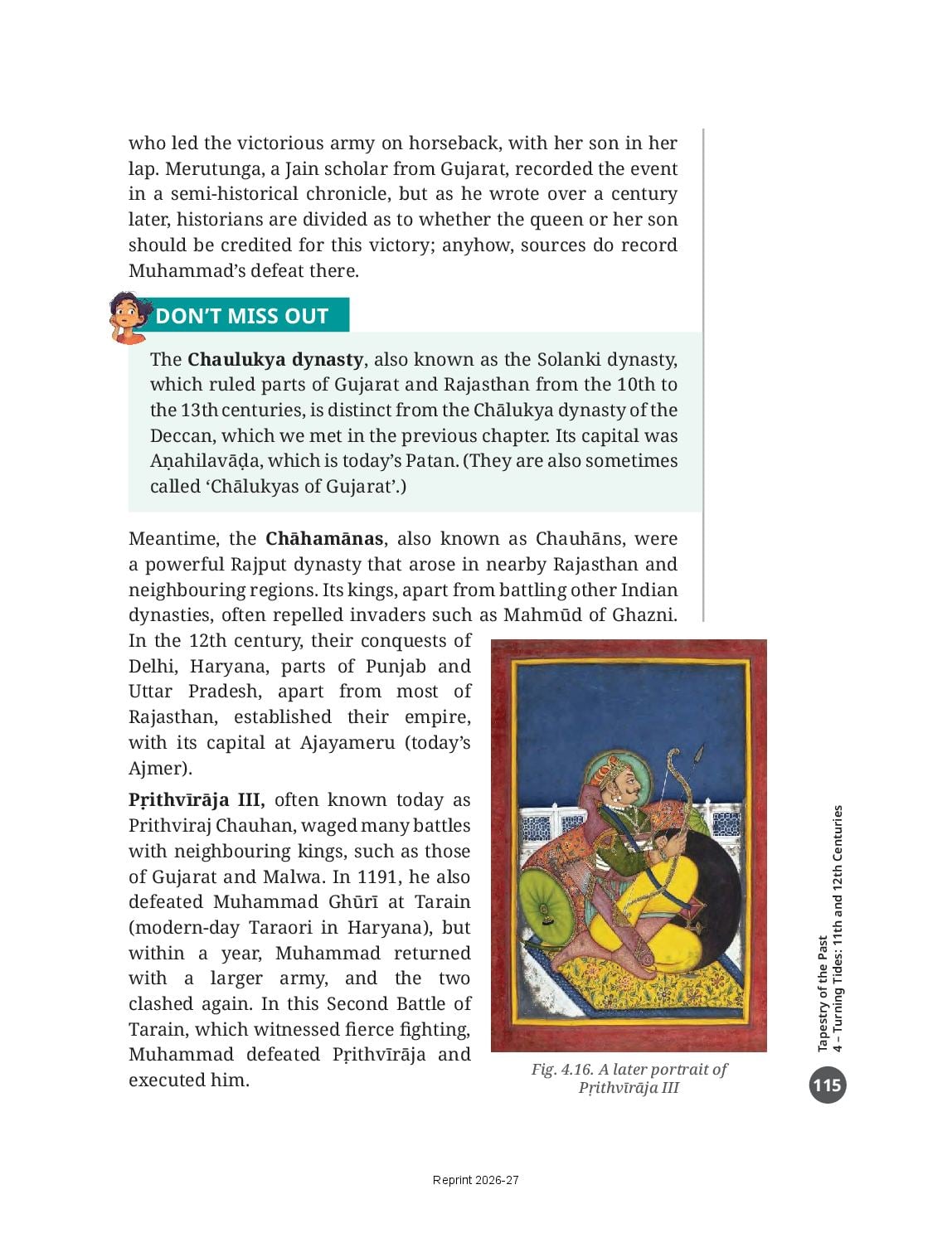
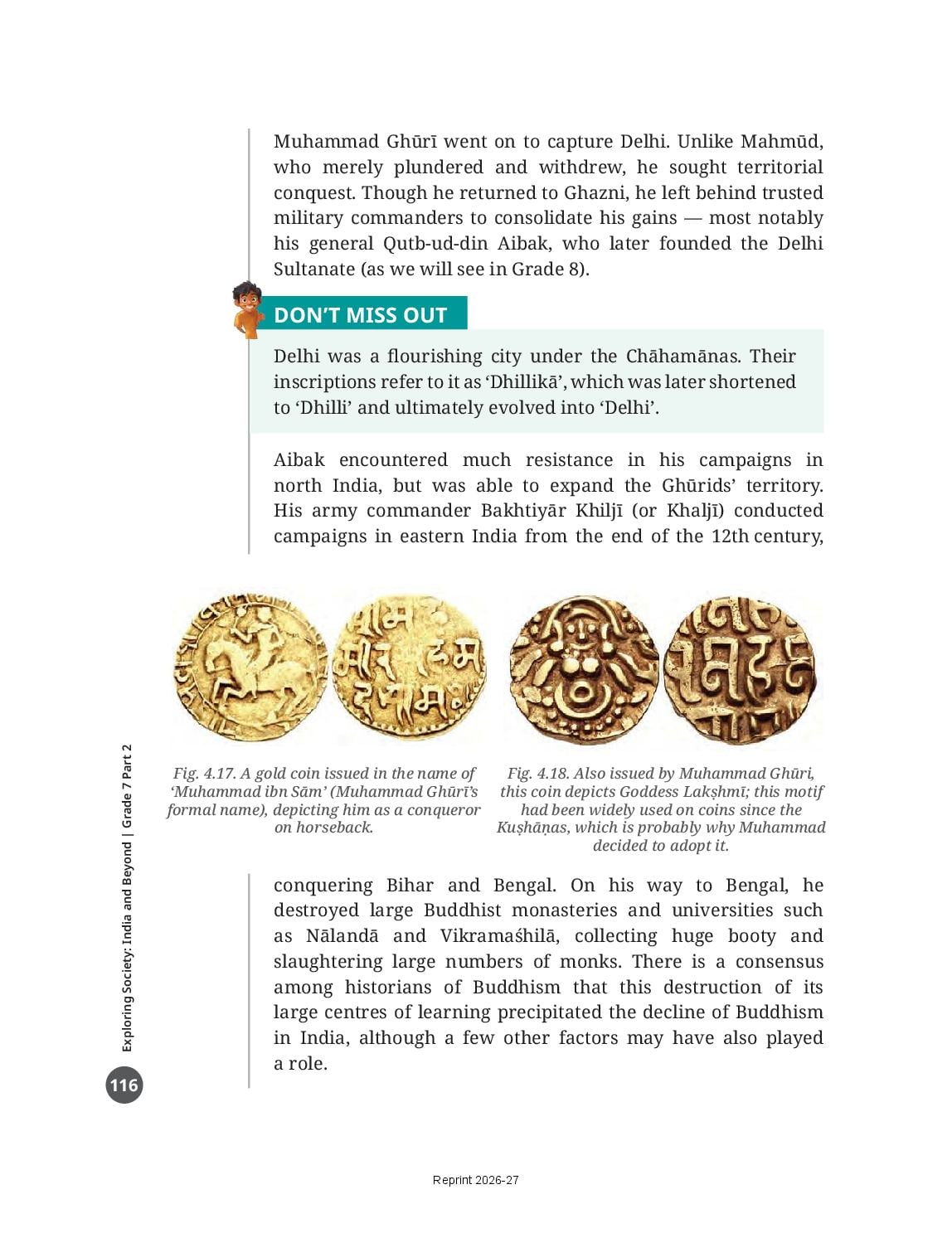
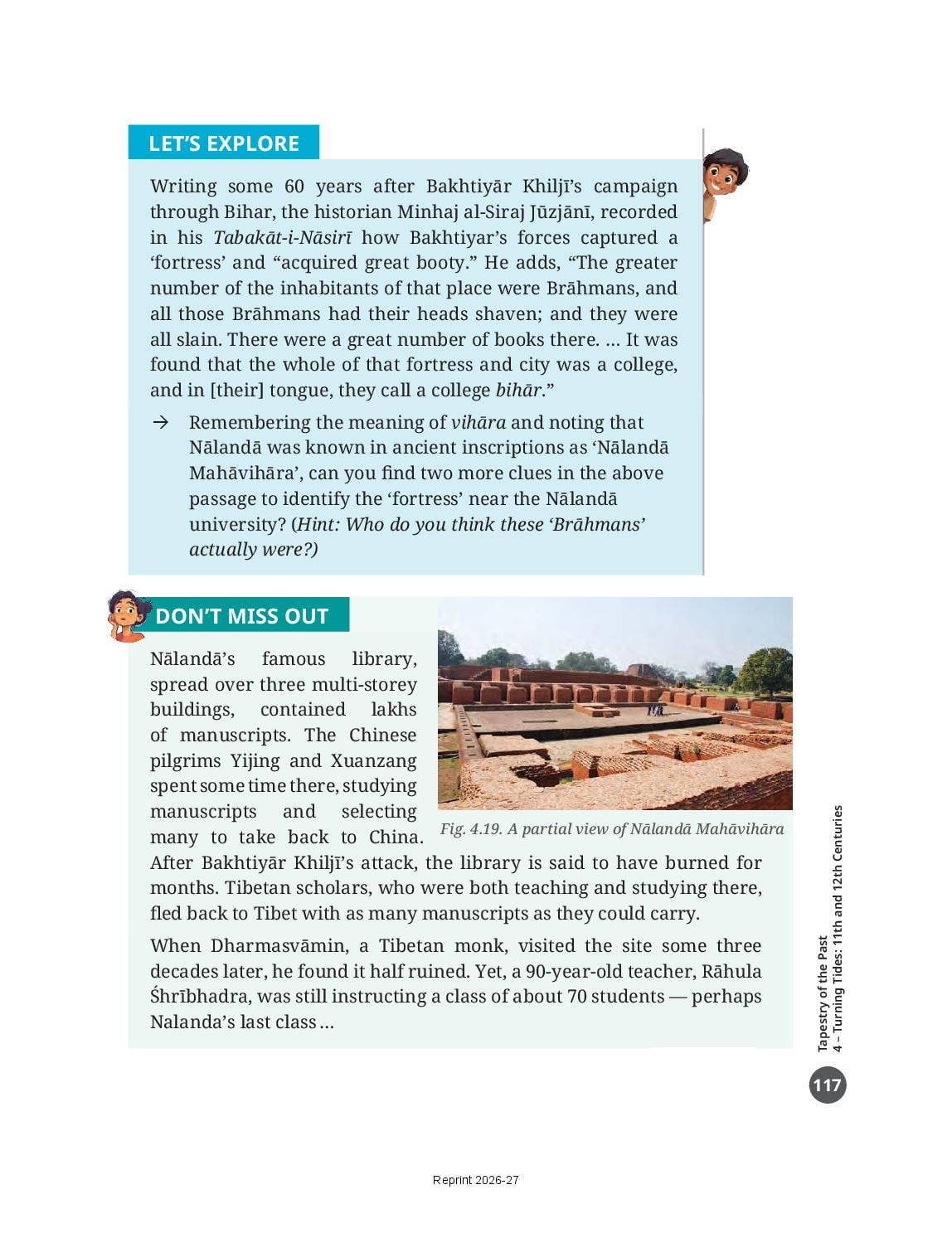
- The Ghūrids: raiding gives way to ruling. Muhammad Ghūrī was beaten in 1178 by the Chaulukyas and by Pṛithvīrāja III at Tarain in 1191, but won the Second Battle of Tarain in 1192 and took Delhi. “Unlike Mahmūd, who merely plundered and withdrew, he sought territorial conquest.” His general Qutb-ud-din Aibak stayed on; Aibak’s commander Bakhtiyār Khiljī took Bihar and Bengal and destroyed Nālandā and Vikramaśhilā, but was defeated in Kāmarūpa in 1205.
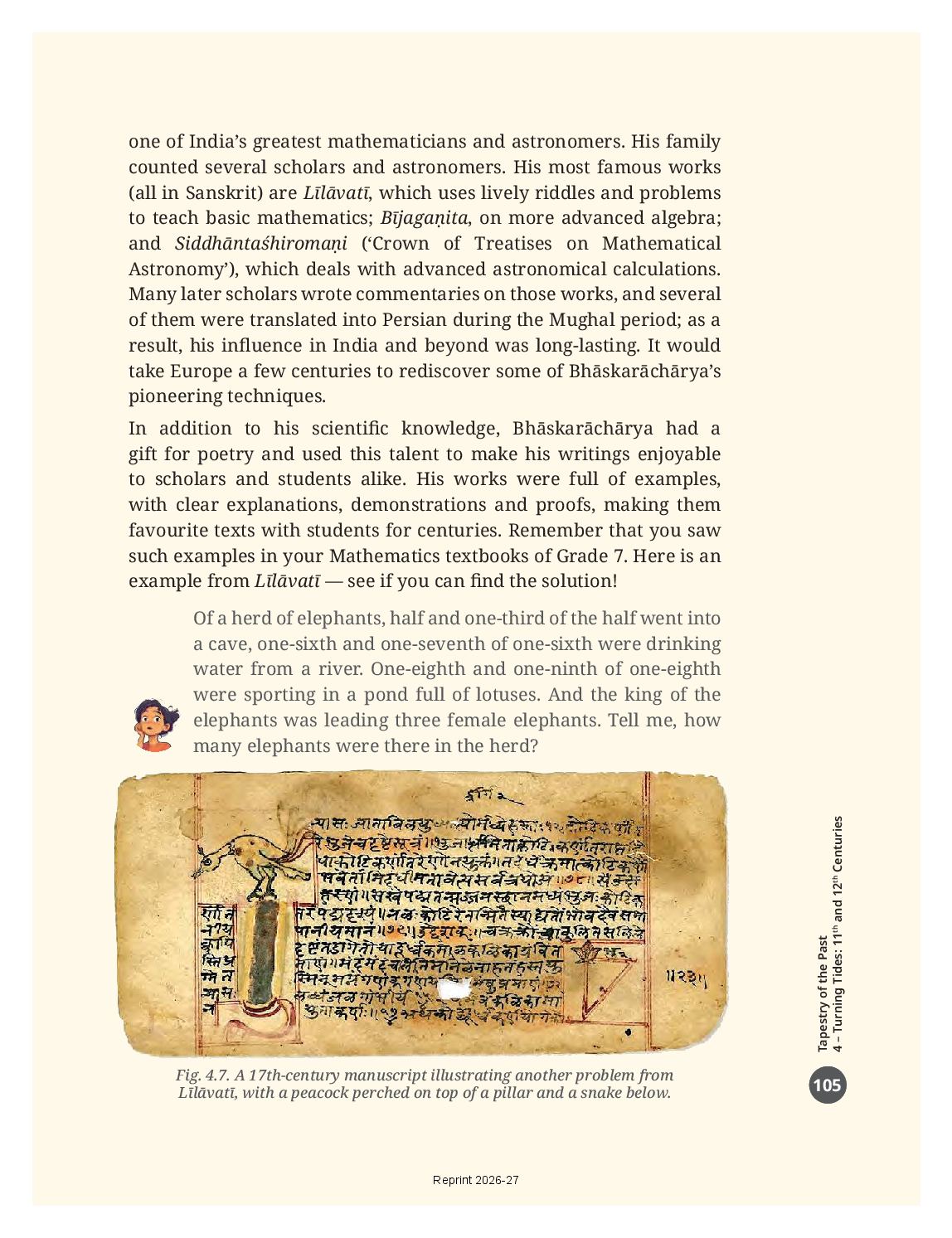
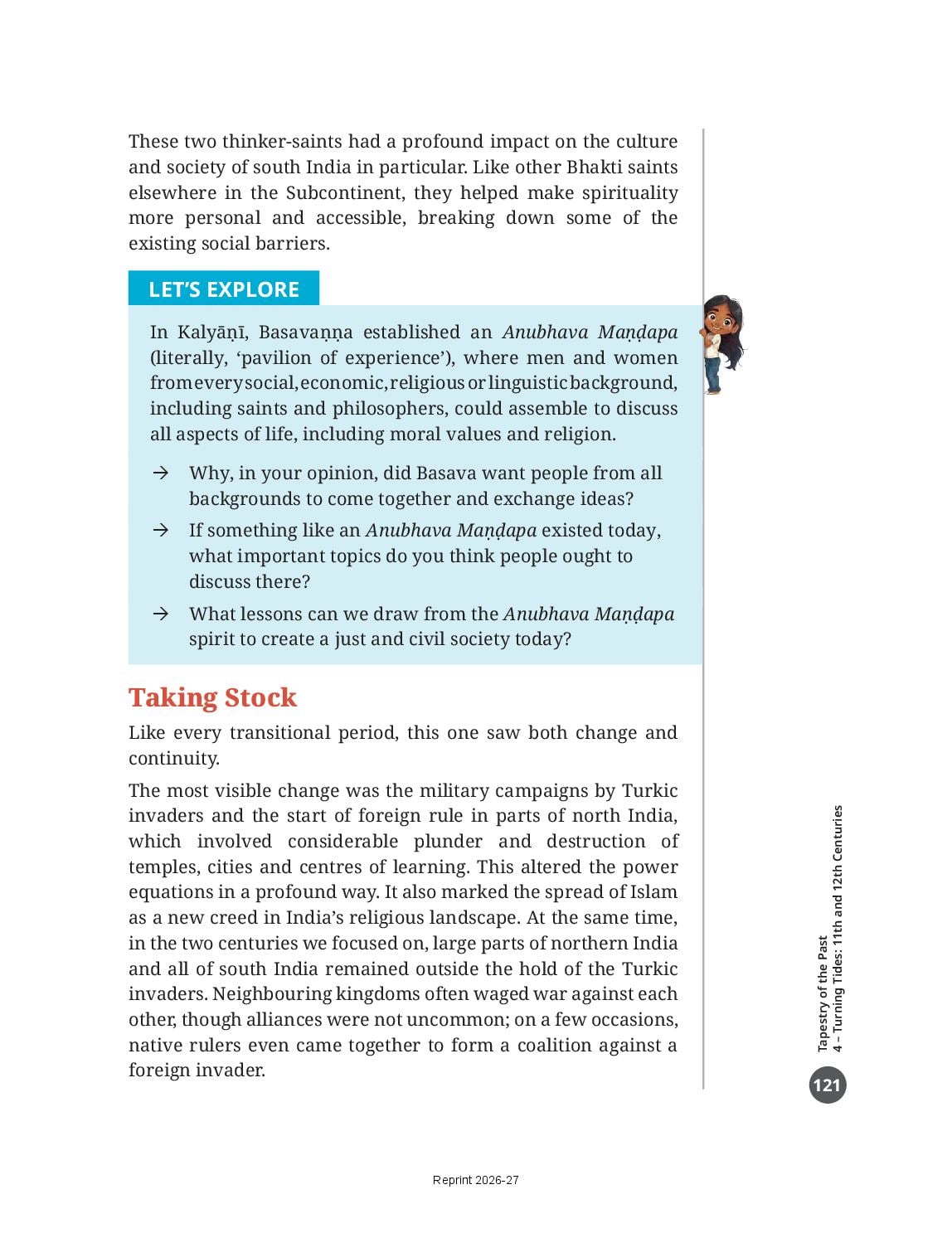
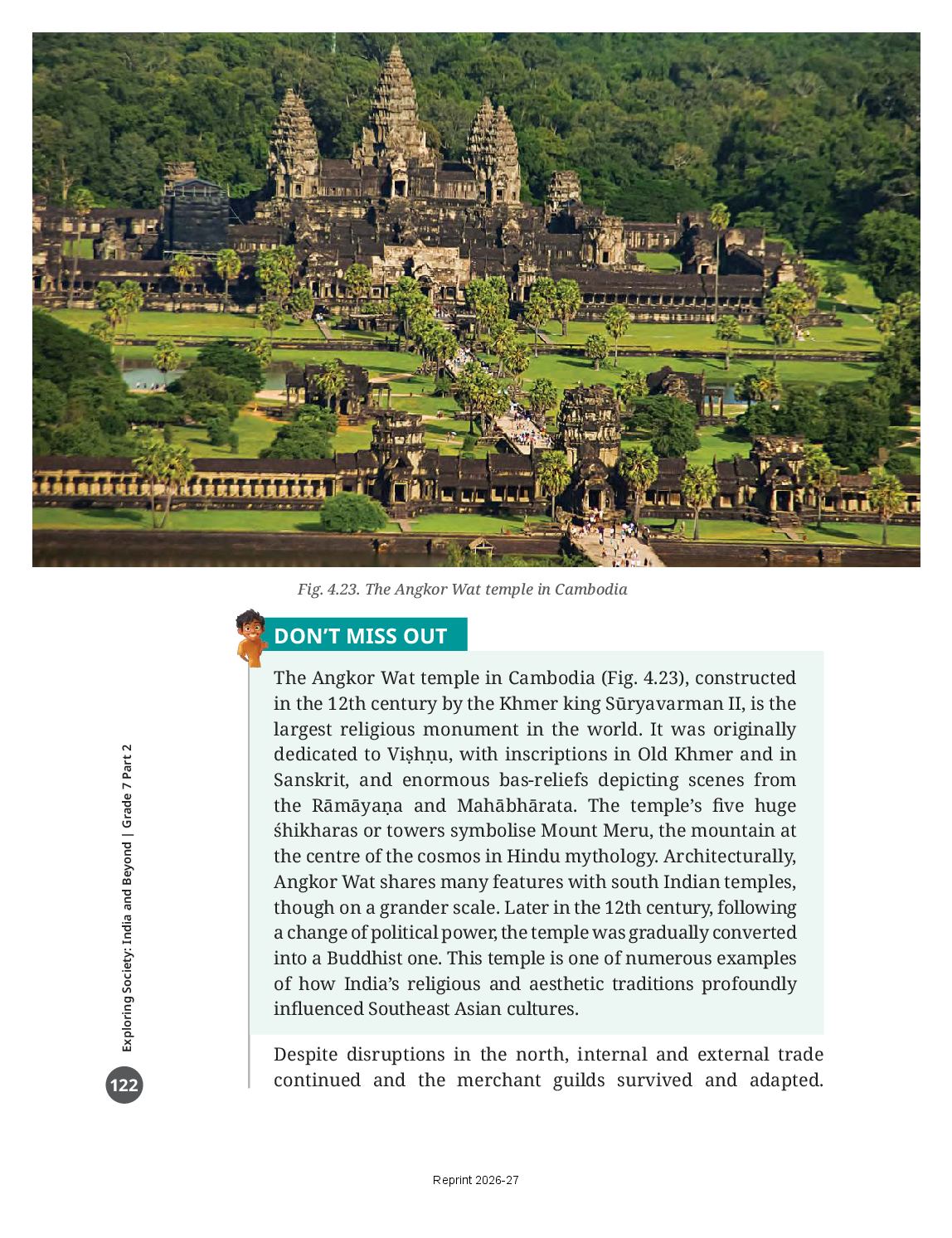
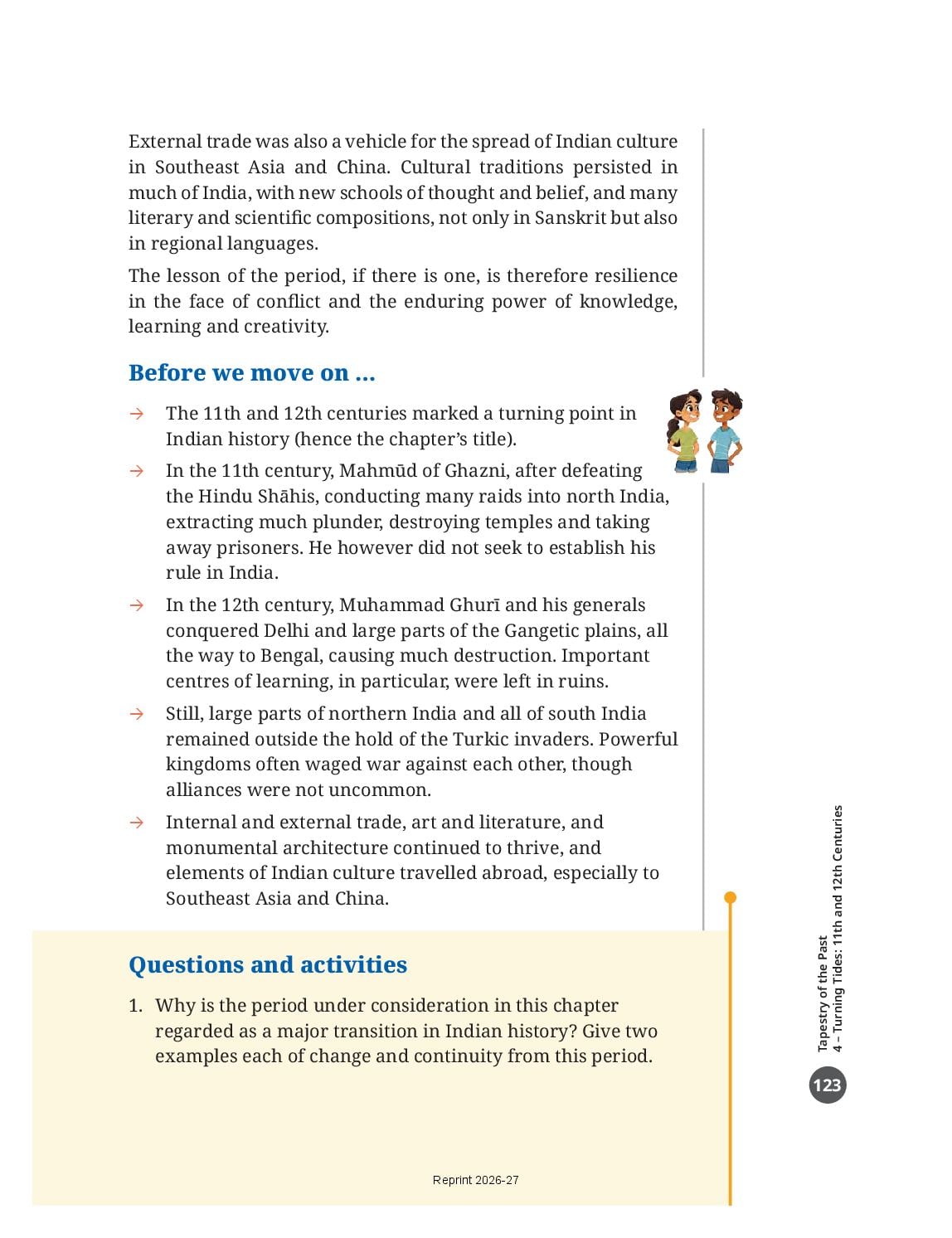
- Yet the period’s lesson is resilience. Trade with China and Southeast Asia kept growing; agriculture stayed “the mainstay of the economy”; Bhāskarāchārya composed the Līlāvatī (1150); Someśhvara III wrote the Mānasollāsa; Rāmānujāchārya and Basaveśhvara reshaped religious life; and Angkor Wat rose in Cambodia. “Large parts of northern India and all of south India remained outside the hold of the Turkic invaders.”
Quick revision – Turning Tides: 11th and 12th Centuries
| Term | What it means | Where it appears in the chapter | Worth remembering |
|---|---|---|---|
| Turkic | Peoples, languages and cultures historically associated with a vast region stretching across Central Asia, all the way to Turkey and Siberia | Word box, page 98 | Both the Ghaznavids and the Ghūrids were Turkic powers based in present-day Afghanistan — not Arabs, who were the invaders of the previous chapter |
| Sultan | A word of Arabic origin meaning ‘authority’ or ‘power’; in the Muslim world it came to mean a sovereign ruler or king | DON’T MISS OUT, page 101 | Mahmūd was the first to assume the title in this story; the ‘sultanates’ it gave its name to — above all the Delhi Sultanate — come in Grade 8 |
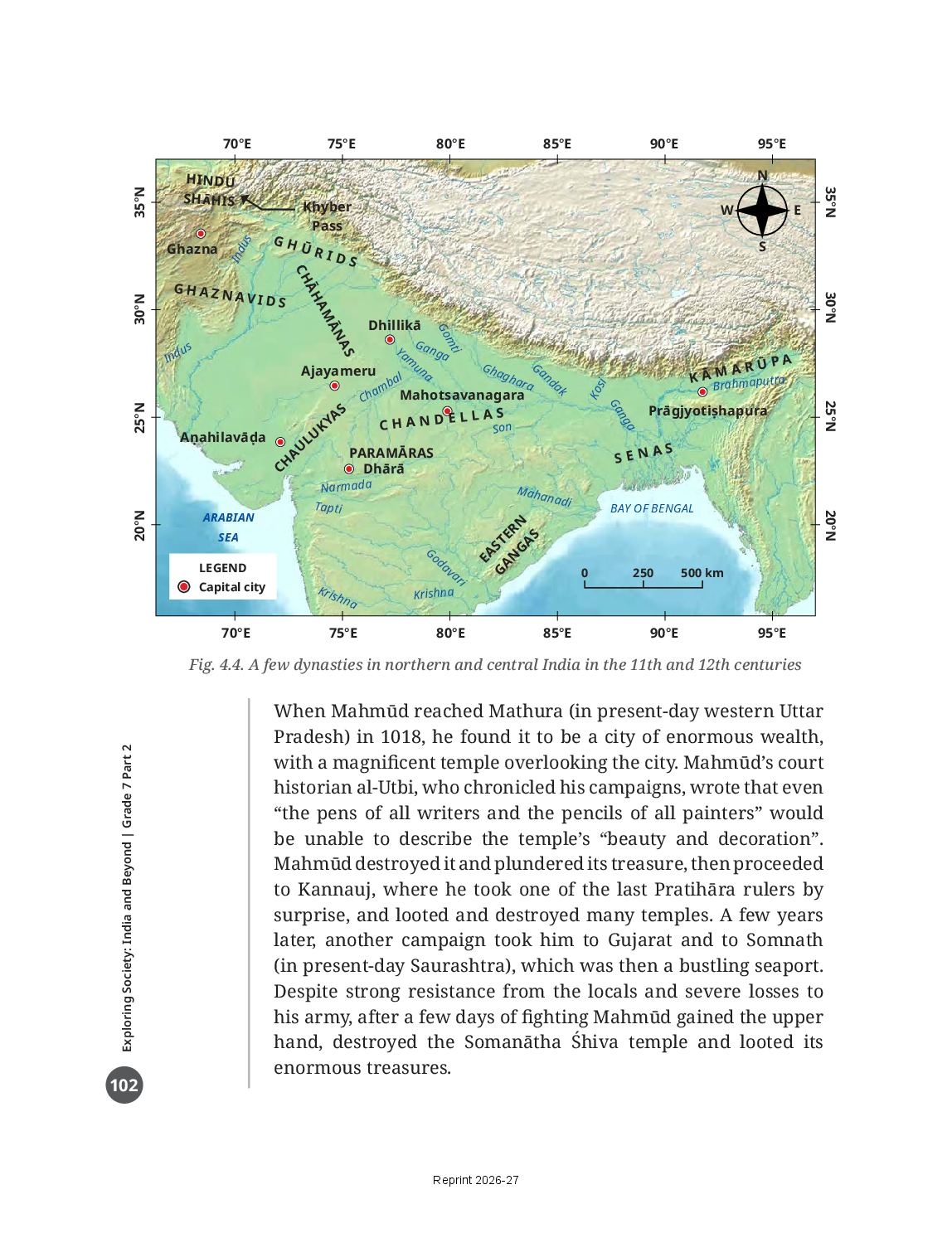
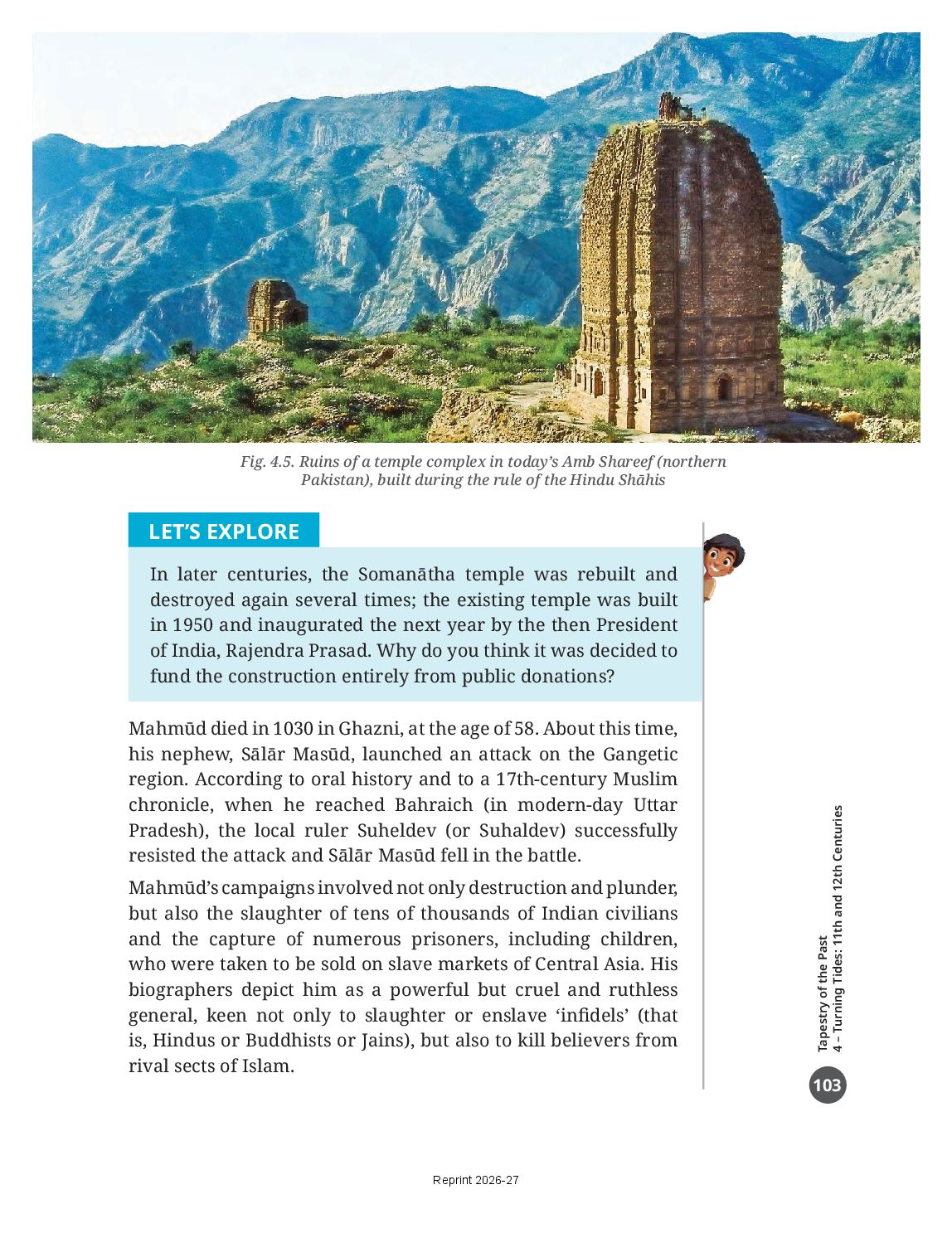
| Hindu Shāhis | The dynasty ruling across present-day Afghanistan, northern Pakistan and up to Punjab in the 9th–10th centuries | ‘The Ghaznavid Invasions’, pages 99–101 | They held the Khyber Pass, and “with the help of several other Indian rulers, they resisted several attempted invasions”. Jayapāla and his son Ānandapāla were the last to fight Mahmūd |
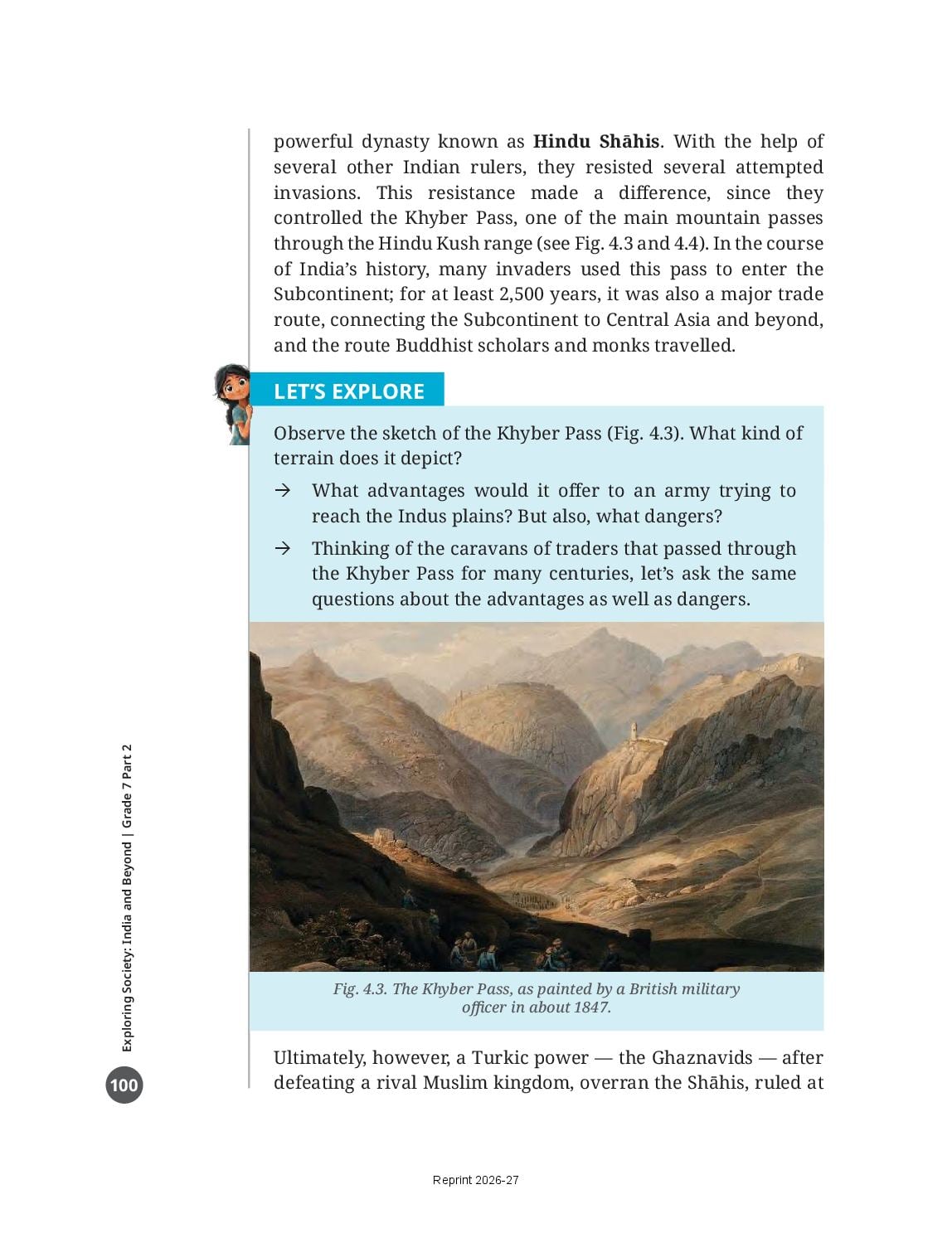
| Khyber Pass | One of the main mountain passes through the Hindu Kush range, linking the Subcontinent to Central Asia | Page 100 and Fig. 4.3, Fig. 4.4 | For at least 2,500 years a major trade route and the road Buddhist scholars and monks travelled — and the road many invaders took |
| Booty / plunder | Goods, treasure, cattle and captives seized by an army after a victory | Pages 101–103, 117 | Mahmūd “would return to Ghazni with huge amounts of booty” after each of his 17 campaigns; Bakhtiyār Khiljī “acquired great booty” at the ‘fortress’ near Nālandā |
| Vihāra / bihār / mahāvihāra | A Buddhist monastery; a mahāvihāra is a great monastery that is also a university | Pages 110, 117 and the LET’S EXPLORE on page 117 | Jūzjānī records that “in [their] tongue, they call a college bihār” — the word behind the name Bihar. Nālandā’s own name in ancient inscriptions was Nālandā Mahāvihāra |
| Punitive expedition | A military expedition sent to punish, not to occupy | Page 112, on Rājendra I and Śhrīvijaya | Rājendra’s navy defeated Śhrīvijaya and captured its capital, but “he did not try to occupy the defeated empire”; it was backed by Indian merchant guilds |
| Gangaikoṇḍachola | “The Chola who seized (or brought) Gangā” | Page 111 | Rājendra I’s title after his northern campaigns — a reference both to those campaigns and to the sacredness attached to the Gangā. His new capital was named Gangaikoṇḍacholapuram |
| Land assignment (Ghūrid system) | Temporary grants of land to officers in return for revenue collection and military service | ‘Governance, Trade and Cultural Life’, page 118 | This is the one real administrative change of the period: Muhammad Ghūrī’s system was “more centralised”, and it would be developed further under the Delhi Sultanate |
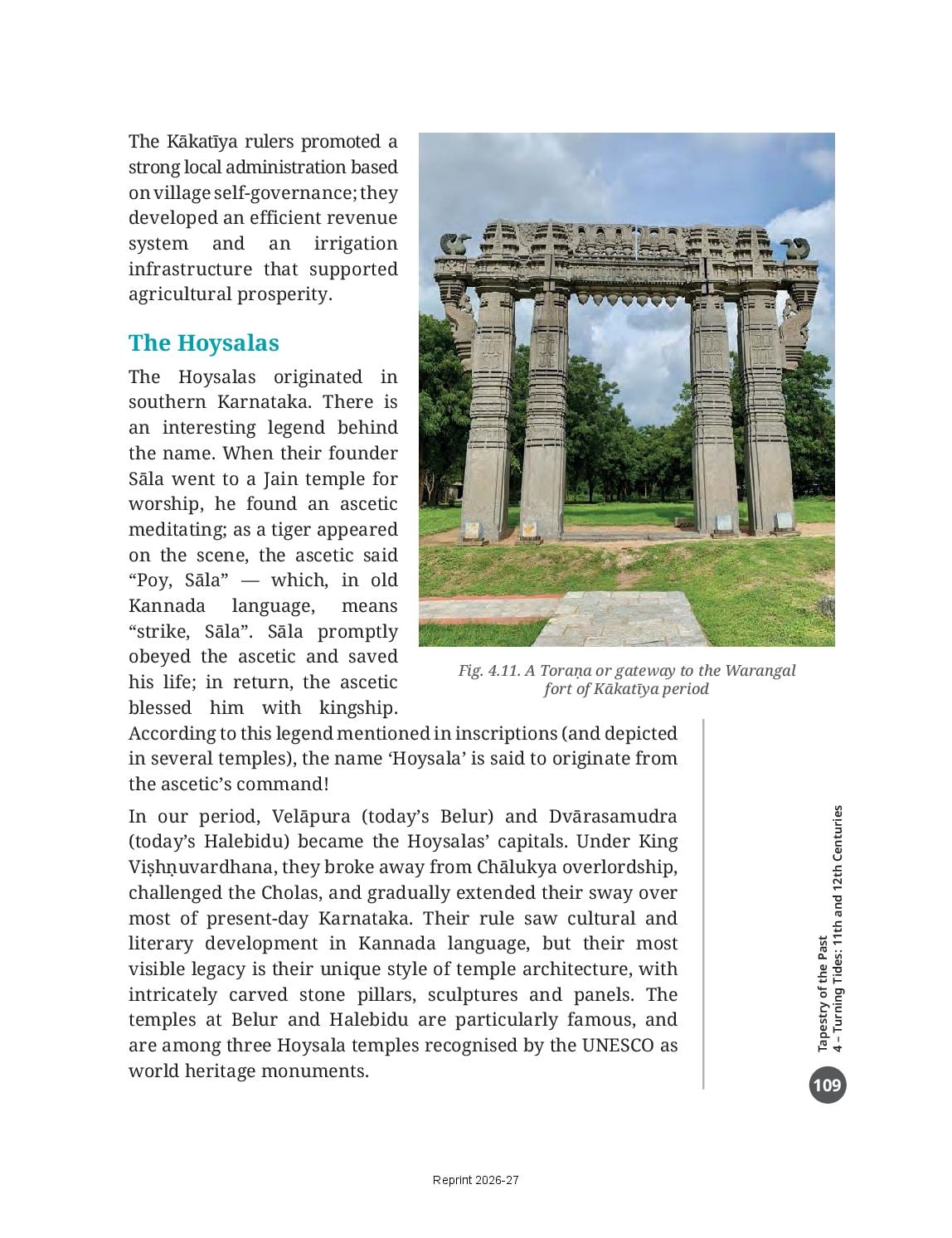
| Toraṇa | A gateway | Page 108 and Fig. 4.11 | The Kākatīyas built a fort at Orugallu (today’s Warangal) with impressive stone toraṇas; their Thousand Pillar temple stands at Hanamkonda |
| Vachana | A short poem in Kannada | Page 120, on Basaveśhvara | Basavaṇṇa’s vachanas “strikingly convey his spiritual and ethical vision as well as his firm devotion to his Lord” |
| Anubhava Maṇḍapa | Literally, ‘pavilion of experience’ | LET’S EXPLORE, page 121 | Basavaṇṇa’s assembly at Kalyāṇī, open to men and women “from every social, economic, religious or linguistic background”, to discuss all aspects of life |
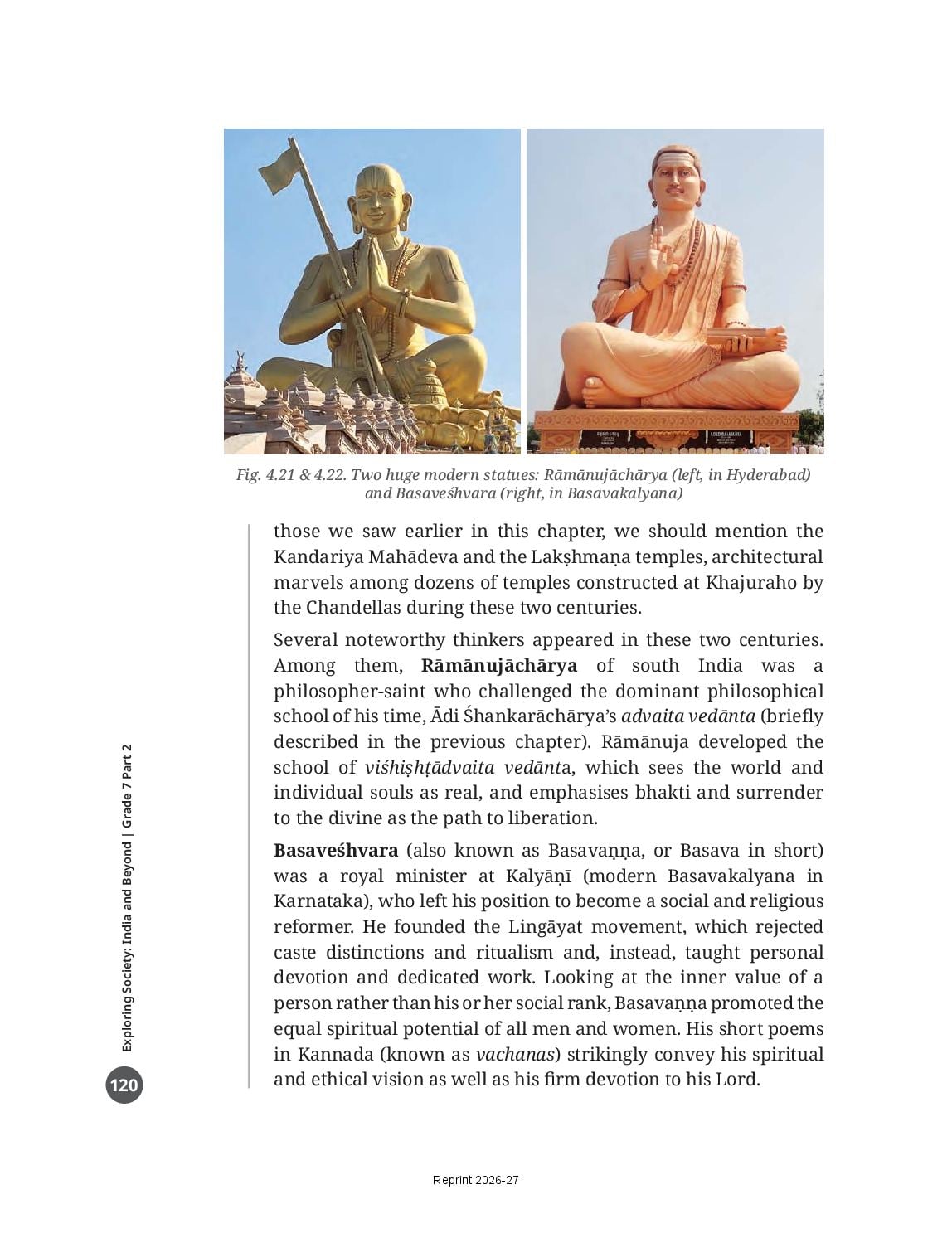
| Viśhiṣhṭādvaita vedānta | The school of Rāmānujāchārya, which “sees the world and individual souls as real, and emphasises bhakti and surrender to the divine as the path to liberation” | Page 120 | He challenged the then-dominant advaita vedānta of Ādi Śhankarāchārya, met in the previous chapter |
| Lingāyat movement | The movement founded by Basaveśhvara, which “rejected caste distinctions and ritualism and, instead, taught personal devotion and dedicated work” | Page 120 | He “promoted the equal spiritual potential of all men and women”, looking at a person’s inner value rather than social rank |
Old NCERT vs New – Class 7 Social Science
This chapter is from Exploring Society: India and Beyond, the new NCERT Class 7 Social Science book (NCF-SE 2023, used from 2025-26). It replaced the old book “Our Pasts, Our Environment and Social and Political Life”, so chapter numbers and names differ from older PDFs.
Solutions and All Chapters
Answers to the exercises and the full chapter list of Exploring Society: India and Beyond:
Turning Tides: 11th and 12th Centuries – Overview
| Class | Class 7 |
| Subject | Social Science |
| Book | Exploring Society: India and Beyond – new NCERT book |
| Part | Part II |
| Chapter | 16 of 20 – Turning Tides: 11th and 12th Centuries |
| Book pages | Part II, 97 – 124 |
| Edition | NCERT Reprint 2026-27 |
| Session | 2026-27 |
| Free – read online or download |
Class 7 Social Science Chapter 16 – FAQs
Where can I download Turning Tides: 11th and 12th Centuries Class 7 PDF?
From the download table on this page – the chapter PDF is free, and the full book is linked too.
What is Class 7 Social Science Chapter 16 about?
Two centuries in which the tide turns. The previous chapter ended with Arab incursions that “had little overall impact on India”. The 11th and 12th centuries “tell a different story: invasions by Turkic powers penetrated much deeper into north India, despite stubborn resistance from native kingdoms.” The chapter opens with one invasion (Mahmūd of Ghazni) and closes with another (Muhammad Ghūrī and his generals).
Is Turning Tides: 11th and 12th Centuries from the new NCERT Class 7 Social Science book?
Yes. It is chapter 16 of exploring society: india and beyond (part ii), the new NCERT Class 7 Social Science book for 2026-27.
Is this the latest NCERT edition for 2026-27?
Yes – the PDF is NCERT’s latest edition for the 2026-27 session.
Where are the NCERT Solutions for Class 7 Social Science Chapter 16?
Open the NCERT Solutions link above for answers to the exercise questions.