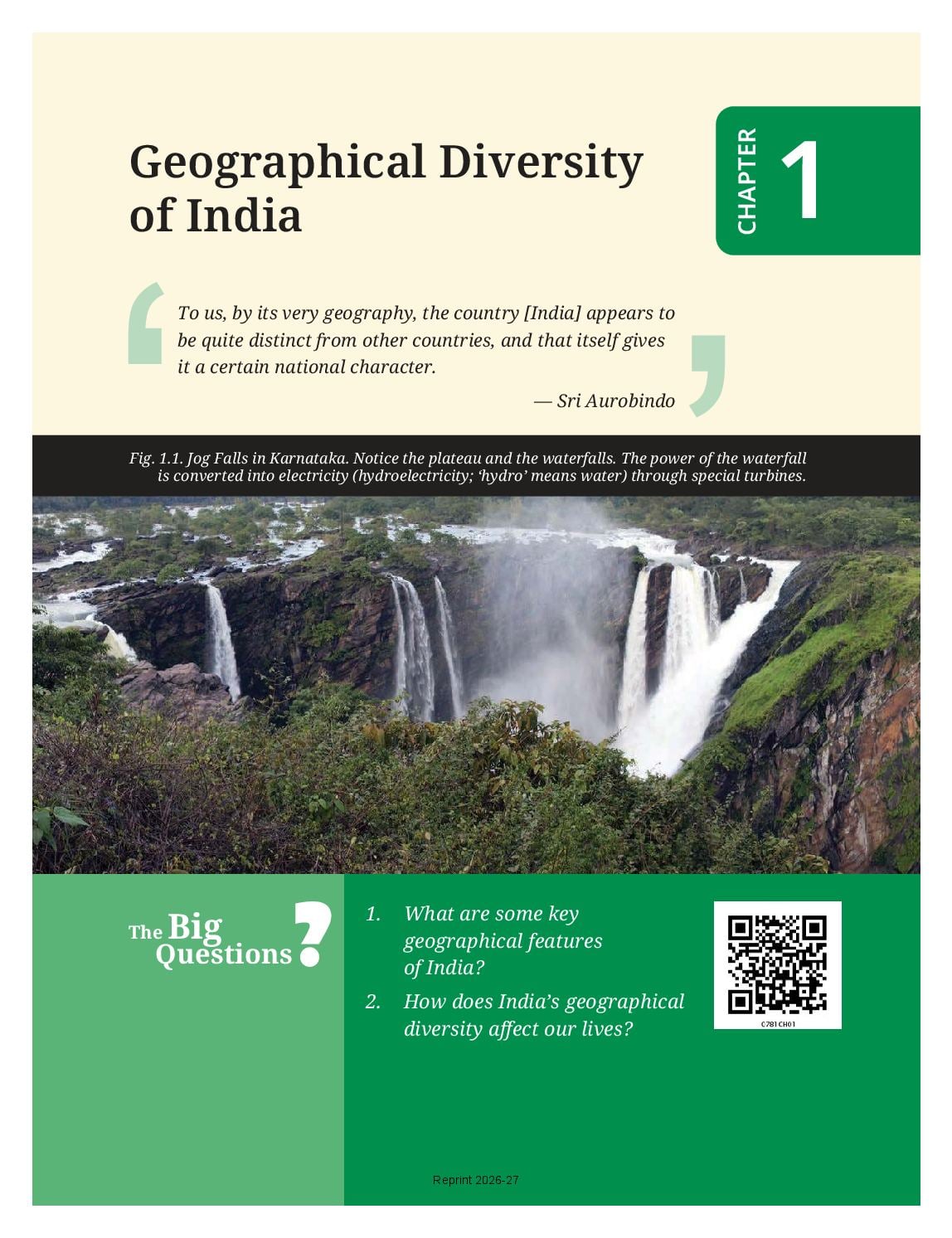
Download Geographical Diversity of India – NCERT Class 7 Social Science Chapter 1 PDF from the new NCERT Class 7 Social Science book Exploring Society: India and Beyond (2026-27). Read the chapter online or download the free PDF. India is the seventh-largest country in the world and part of Asia. With Pakistan, Bangladesh, Nepal, Bhutan, Sri Lanka and Myanmar it forms the Indian Subcontinent.
Geographical Diversity of India PDF – Chapter 1 of Exploring Society: India and Beyond (Part I)
Read the chapter online or download the PDF.
| Chapter | Download | |
|---|---|---|
| Chapter 1 PDF | Geographical Diversity of India | View PDF |
| Full book | NCERT Class 7 Social Science – Exploring Society: India and Beyond | View Book |
Read Online
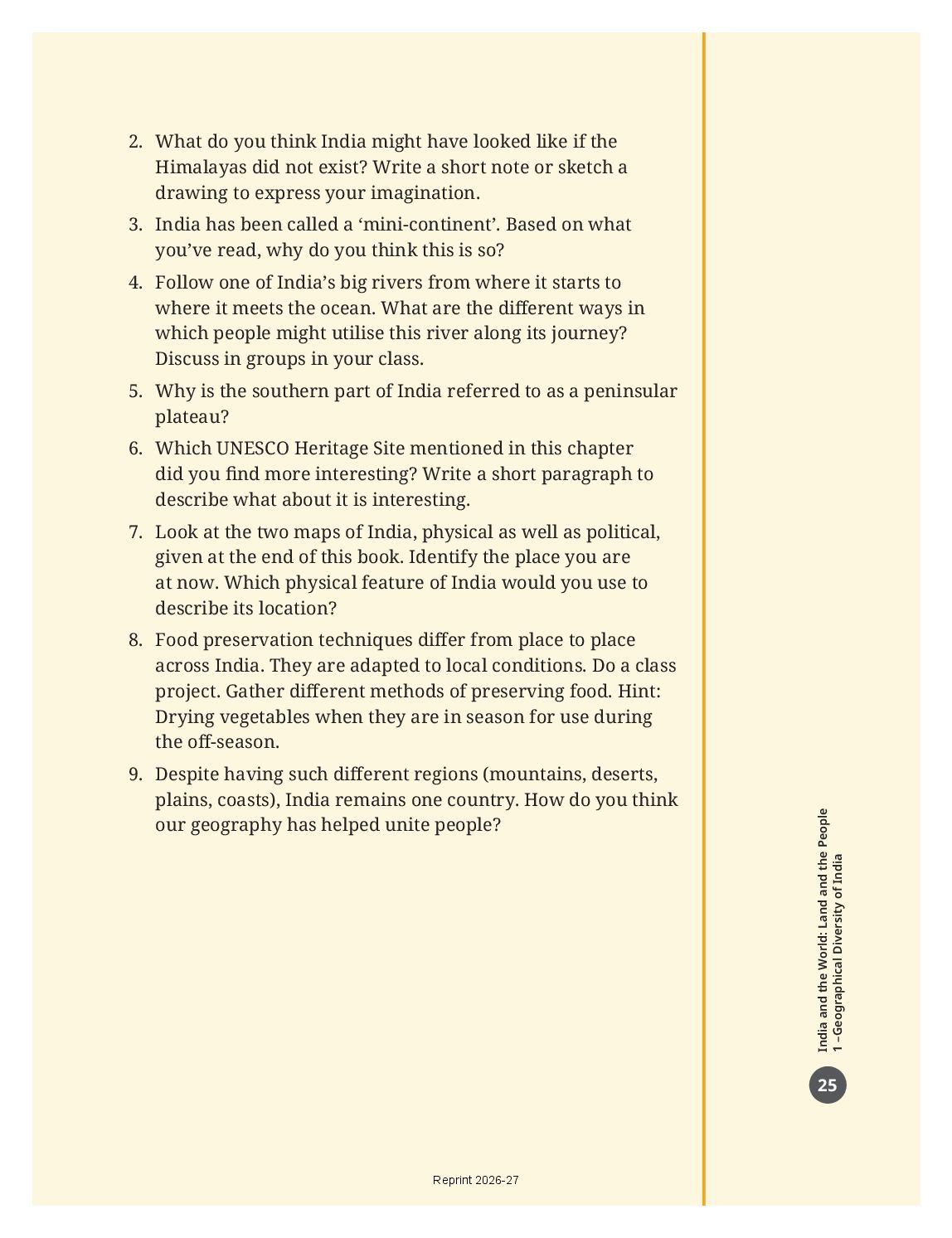
What Is in Geographical Diversity of India? (Class 7 Social Science Chapter 1)
- India is the seventh-largest country in the world and part of Asia. With Pakistan, Bangladesh, Nepal, Bhutan, Sri Lanka and Myanmar it forms the Indian Subcontinent.
- For study the land is grouped into five regions — the great mountain zone, the plains of the Ganga and the Indus, the desert region, the southern peninsula, and the islands.
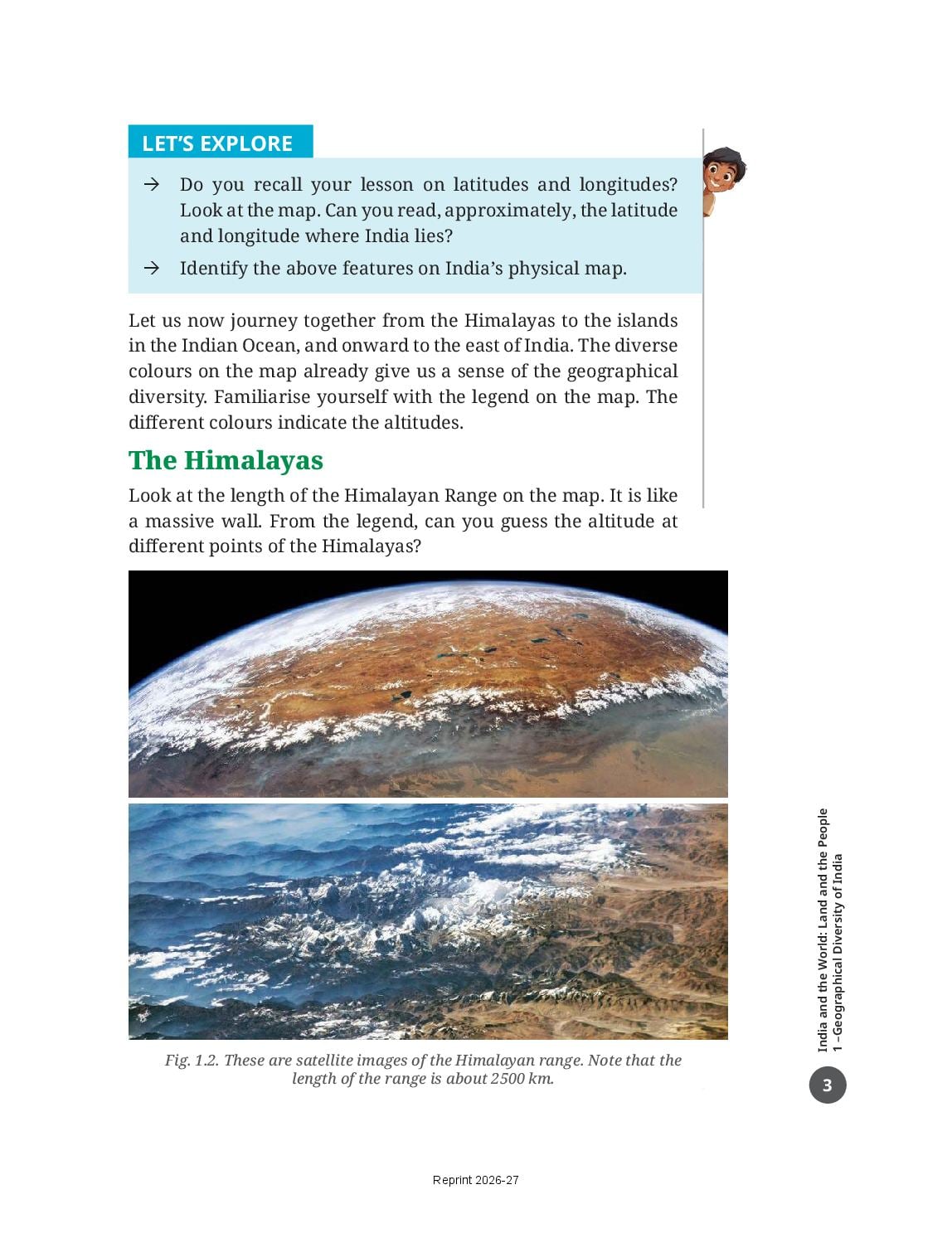
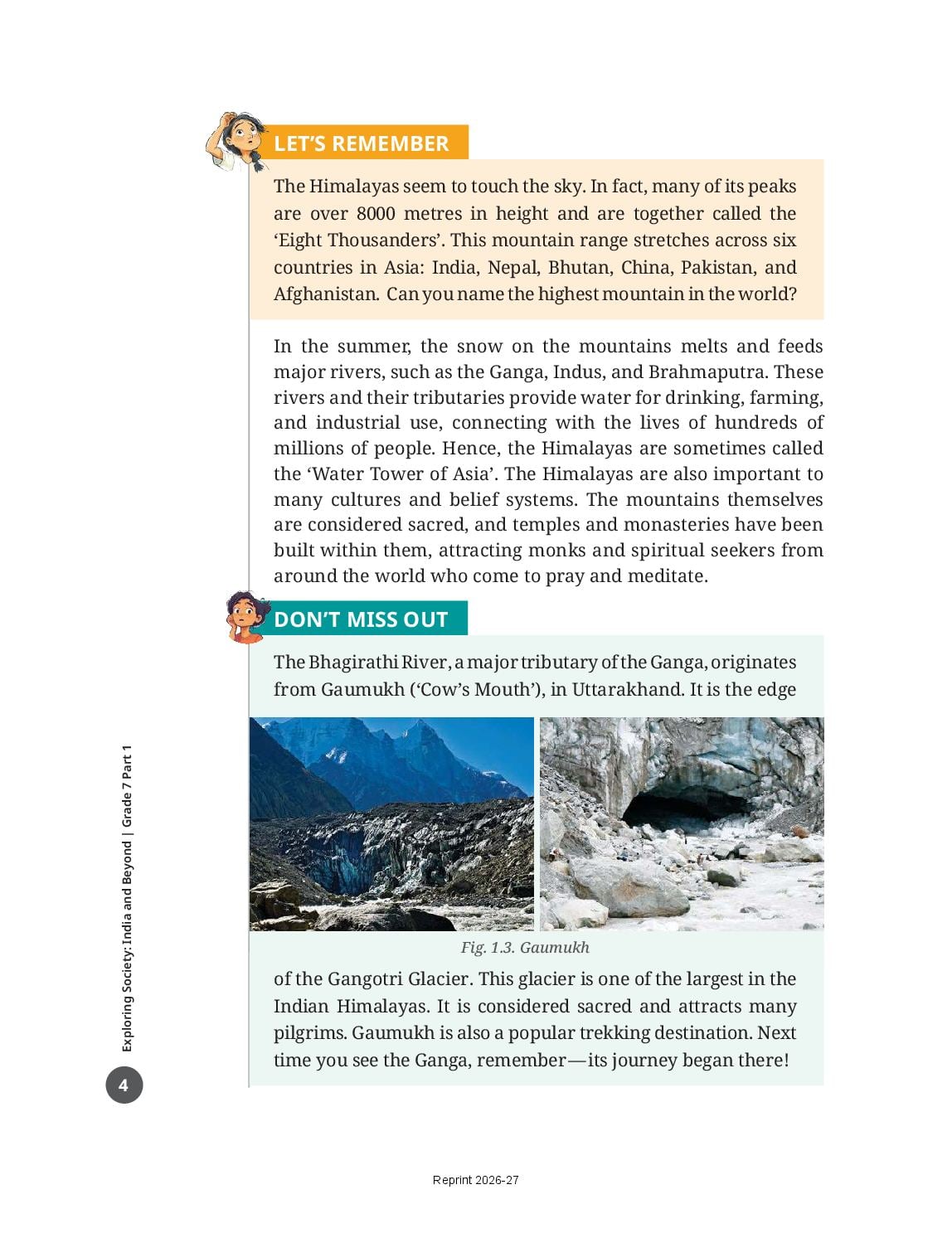
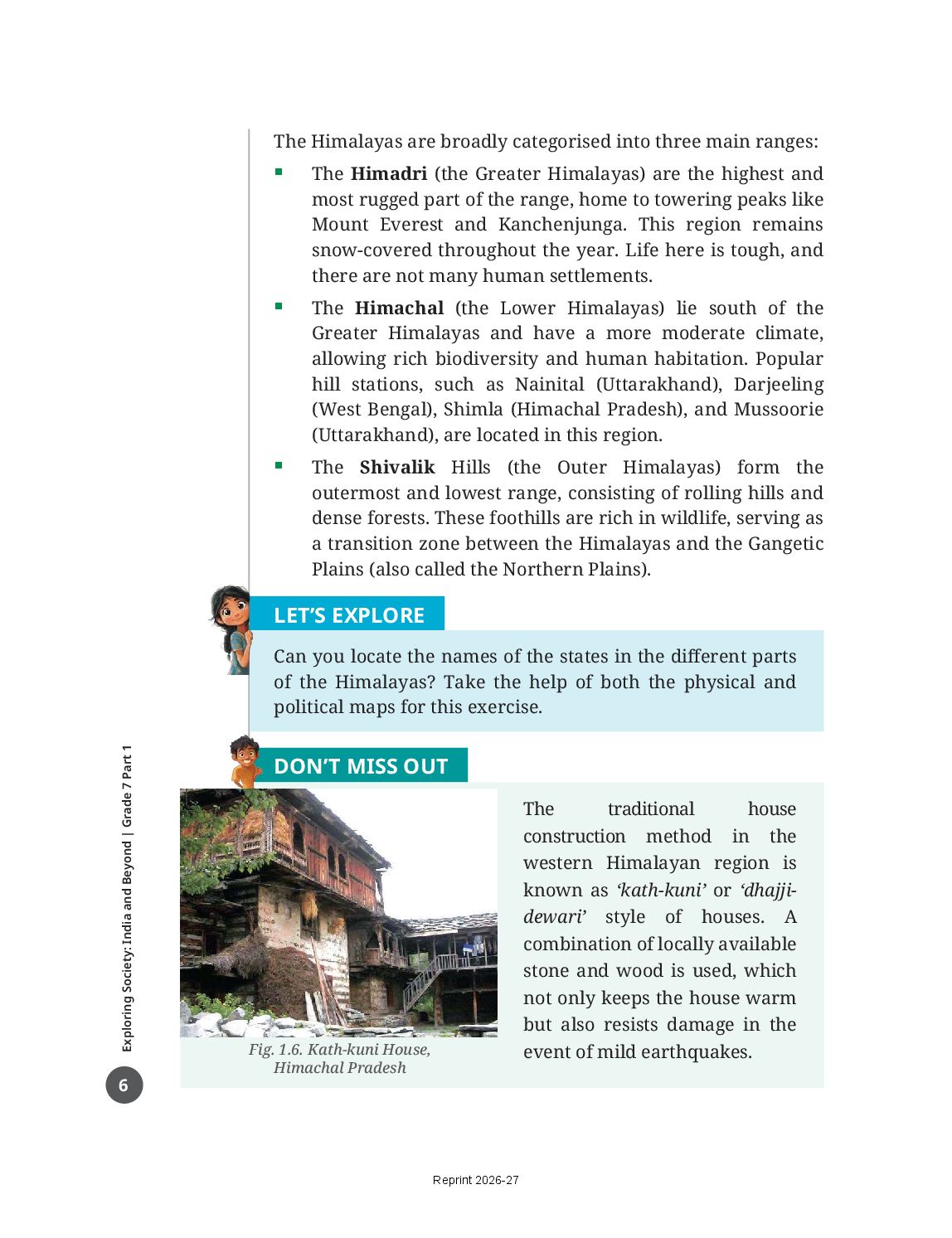
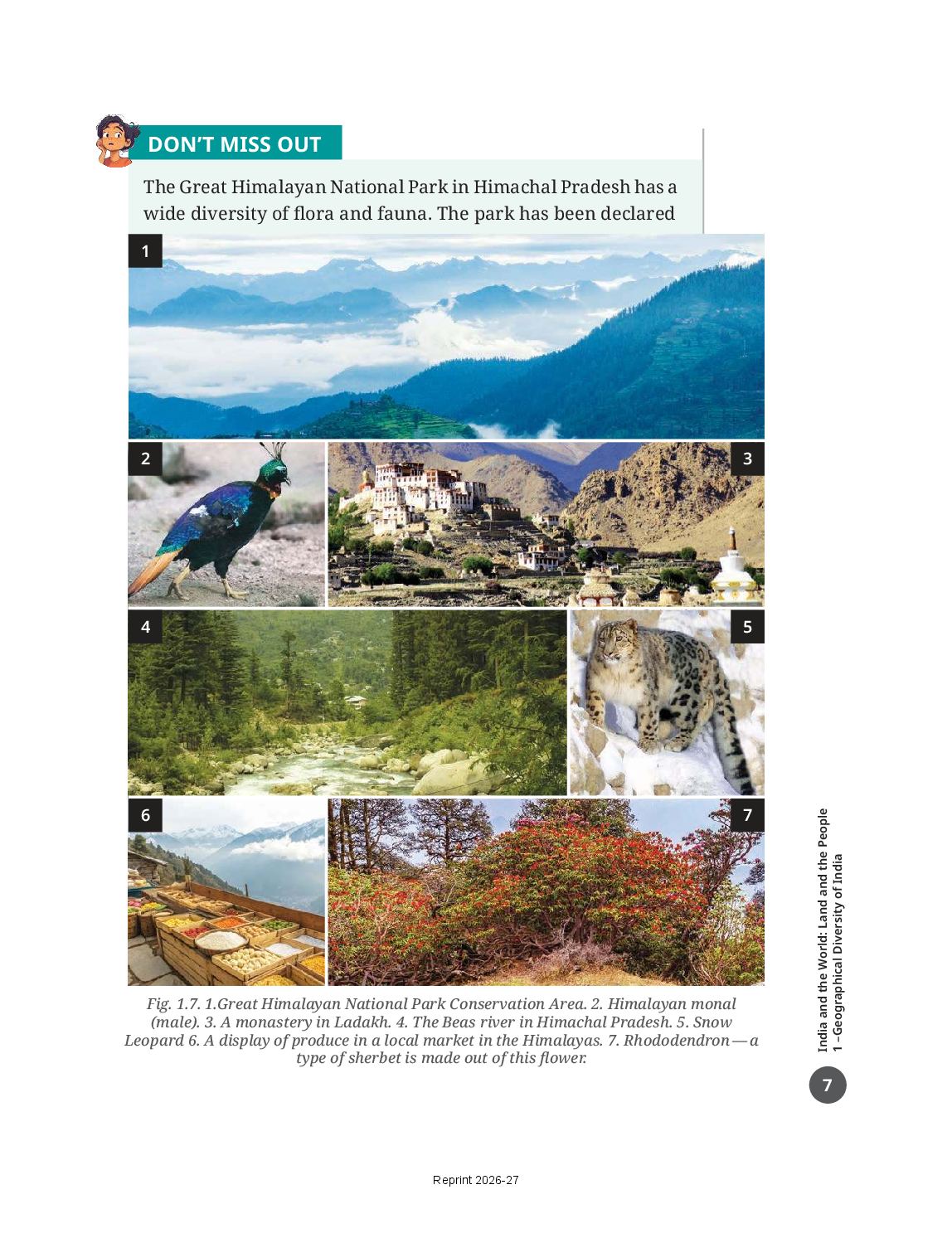
- The Himalayas run about 2500 km like a wall in the north. Many peaks cross 8000 m (the ‘Eight Thousanders’). The range has three parts — Himadri (Greater), Himachal (Lower) and the Shivalik Hills (Outer). Melting snow feeds the Ganga, Indus and Brahmaputra, so the range is called the ‘Water Tower of Asia’.
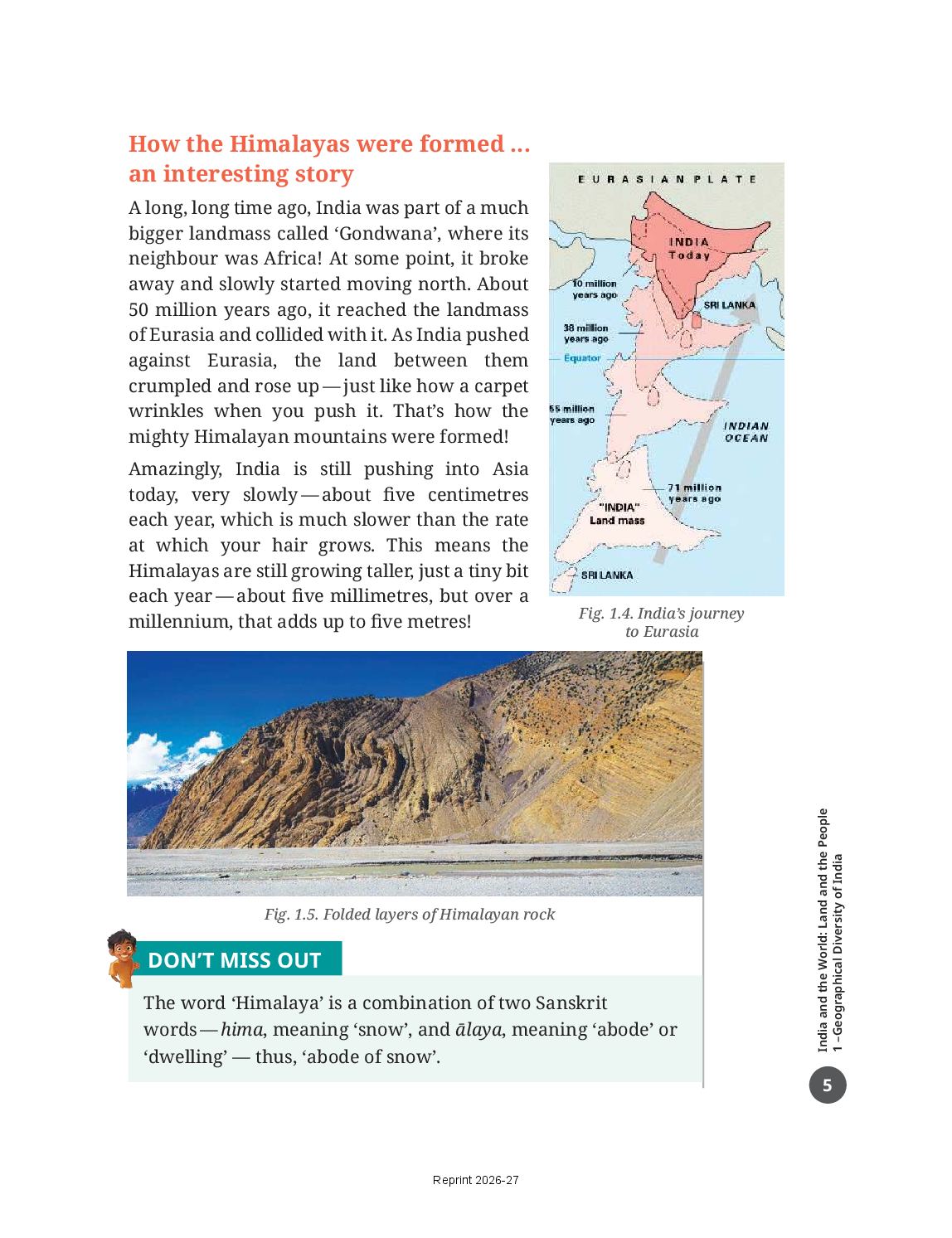
- The Himalayas rose when the Indian landmass broke away from Gondwana, drifted north and collided with Eurasia about 50 million years ago. India still pushes north about 5 cm a year, and the mountains still rise about 5 mm a year.
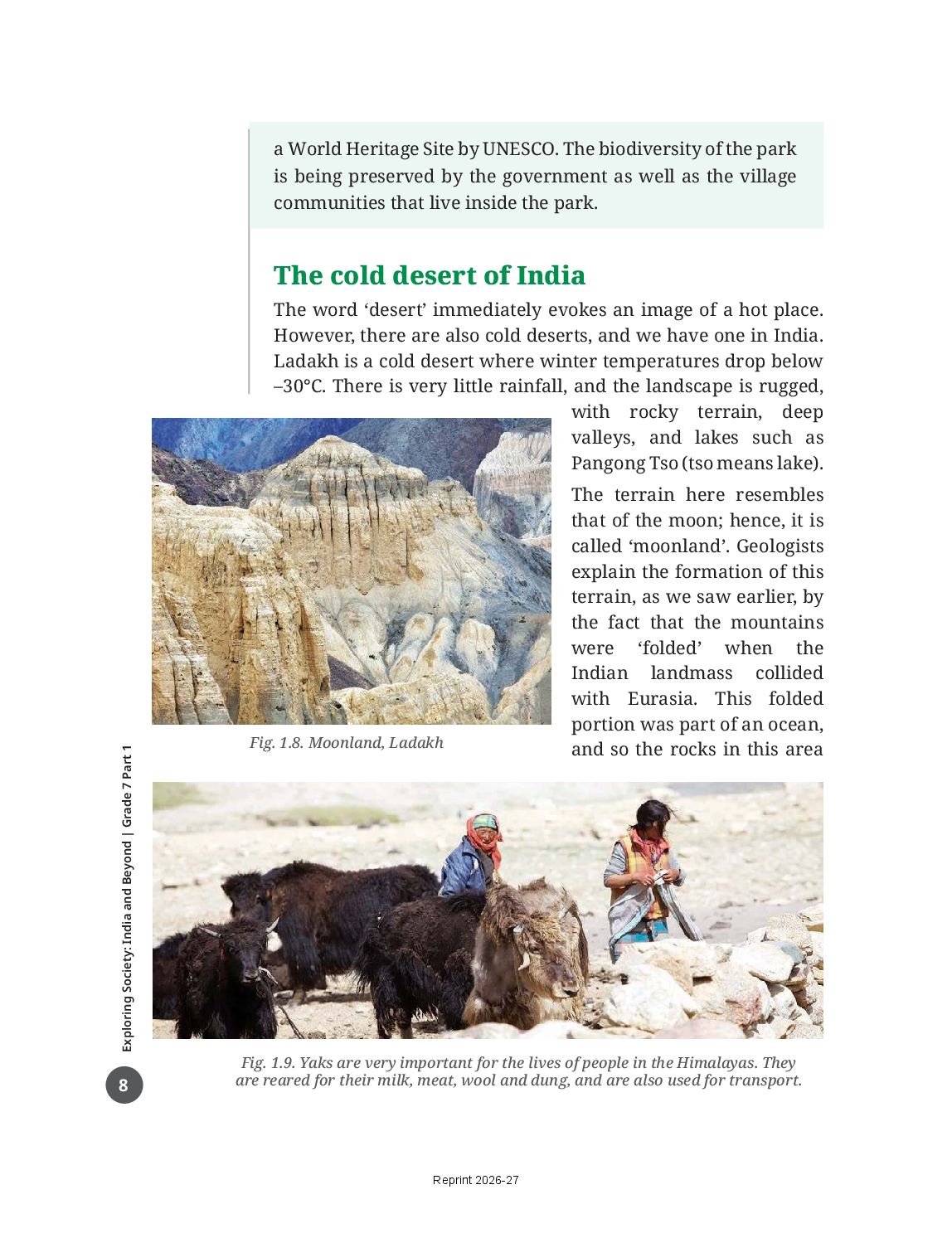
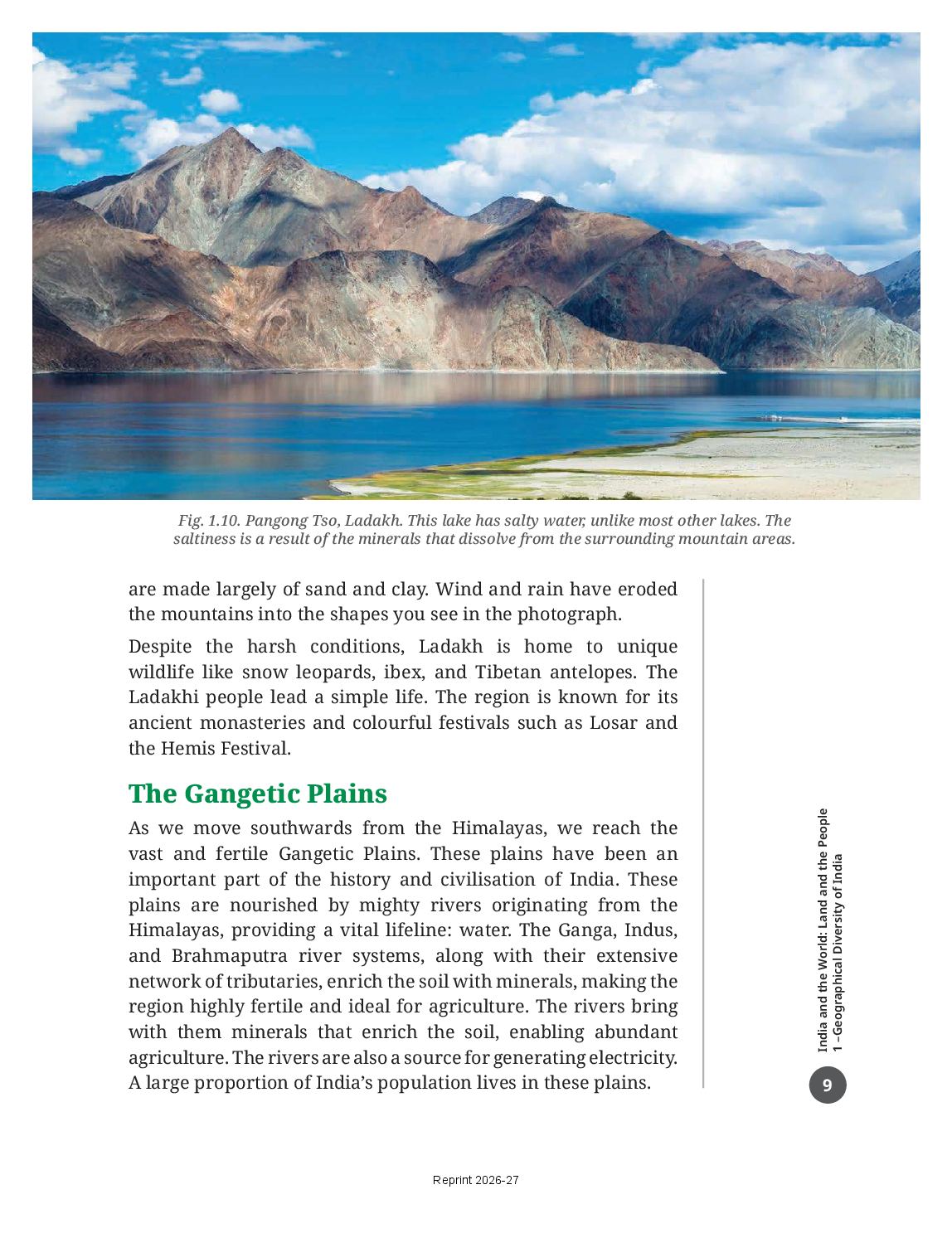
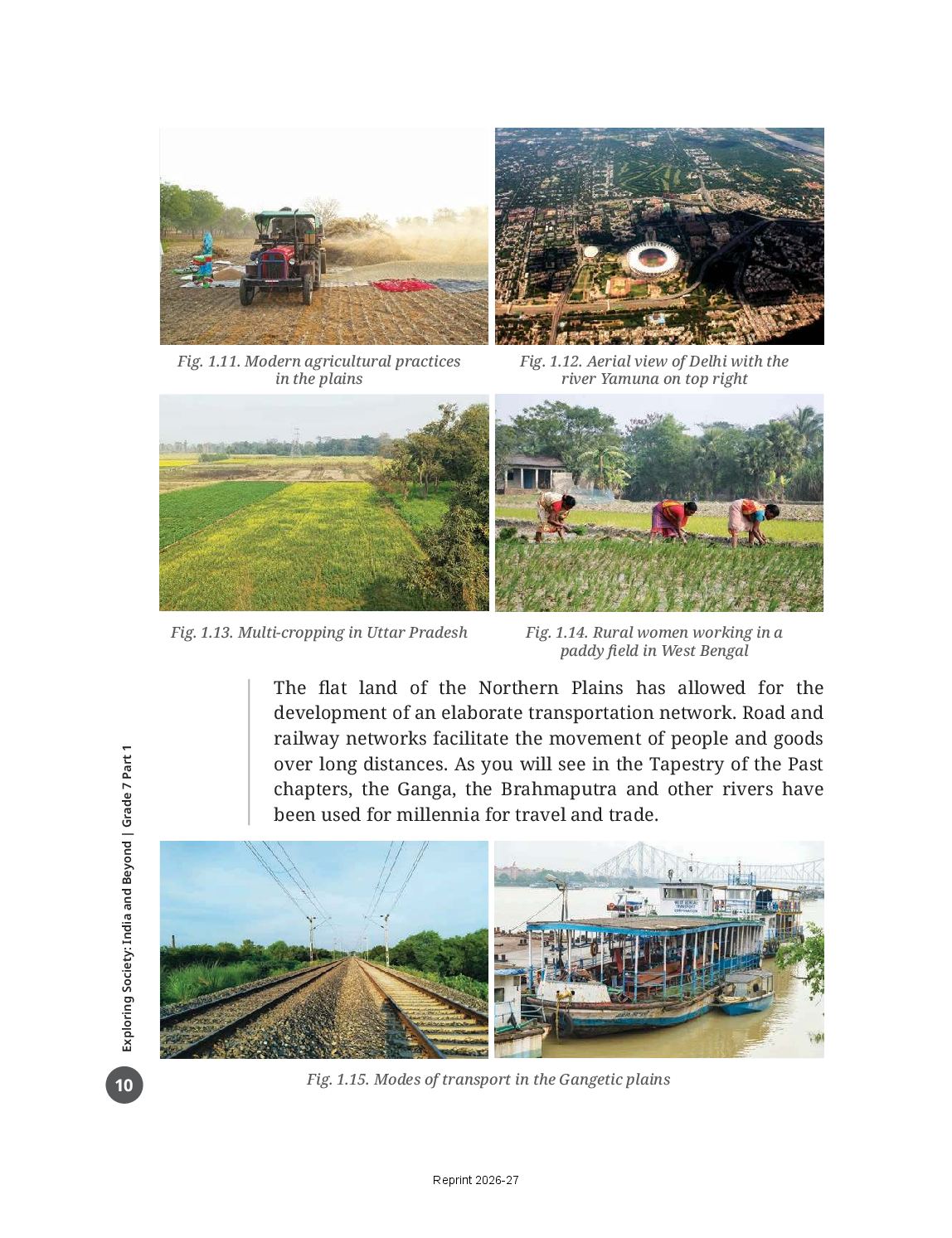
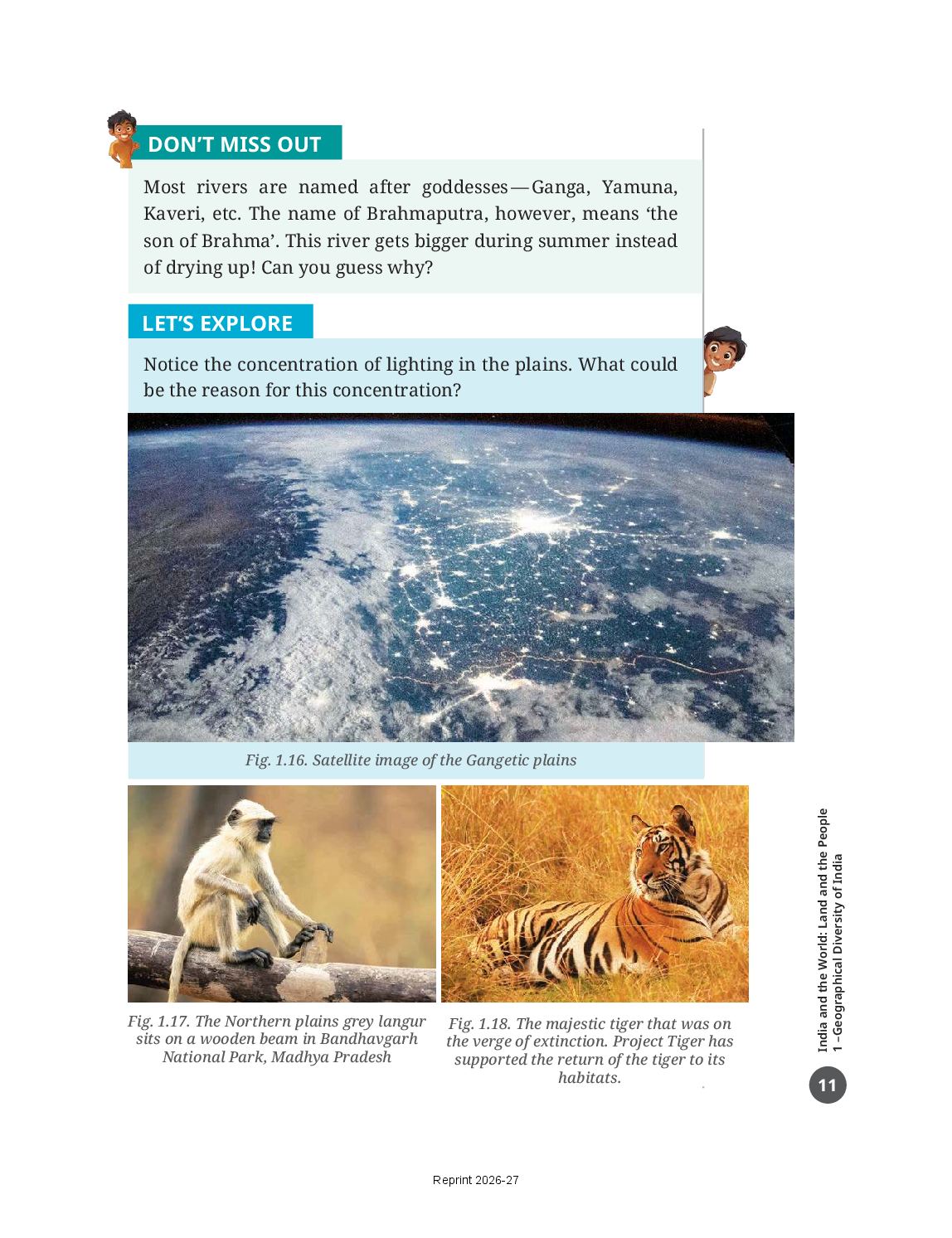
- Ladakh is India’s cold desert — winter below –30°C, very little rain, ‘moonland’ terrain and the salty lake Pangong Tso. South of the mountains lie the fertile Gangetic Plains, home to a very large share of India’s people.
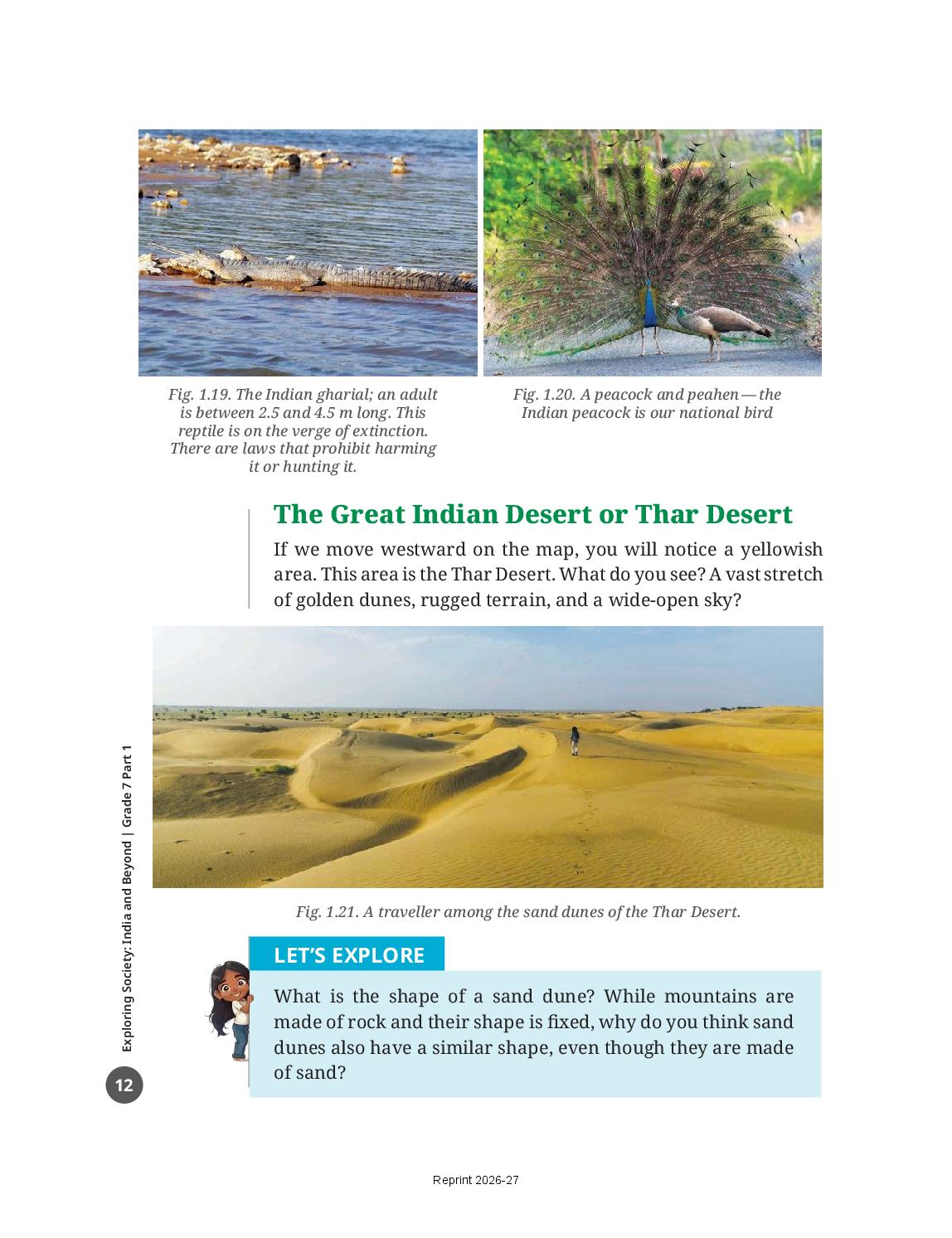
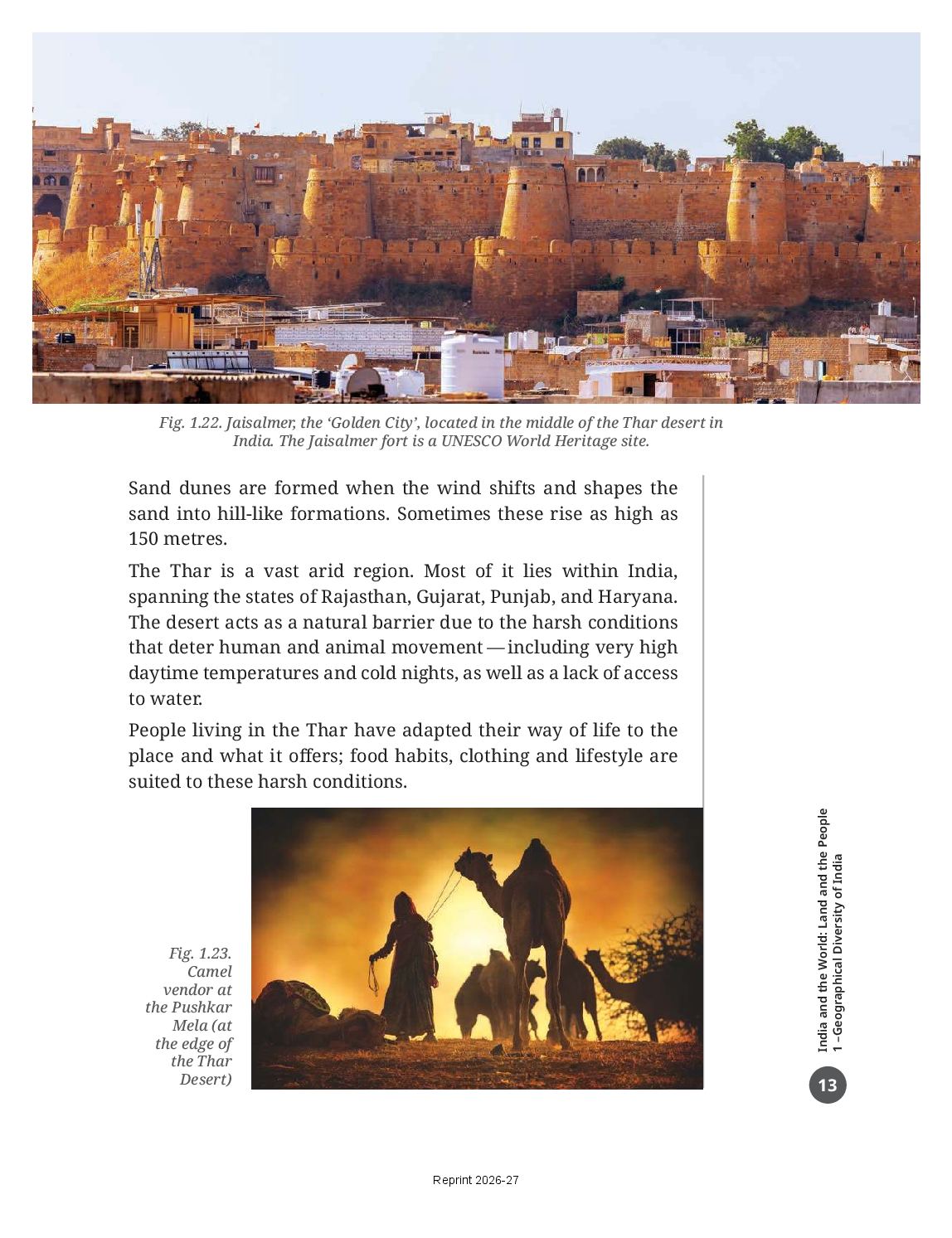
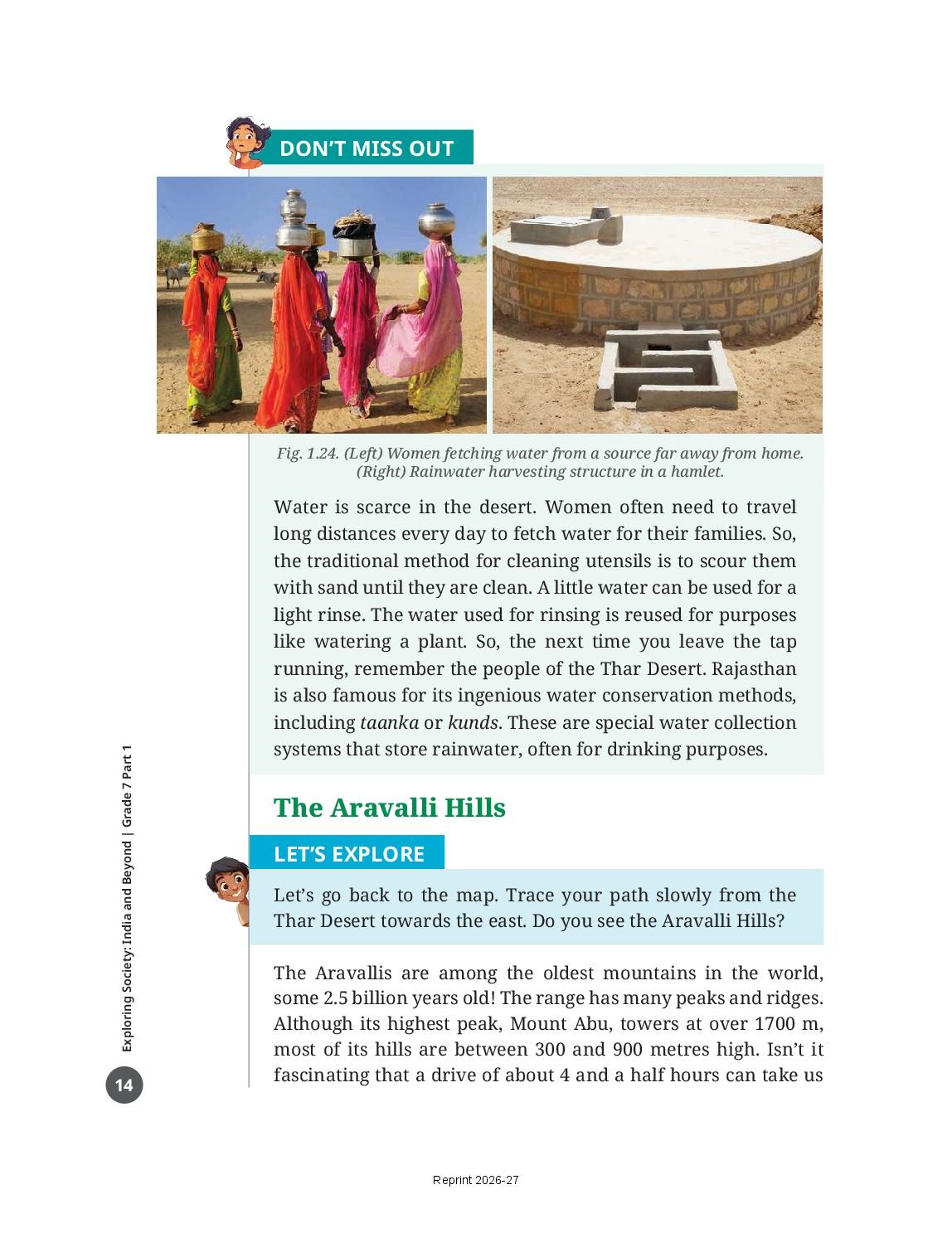
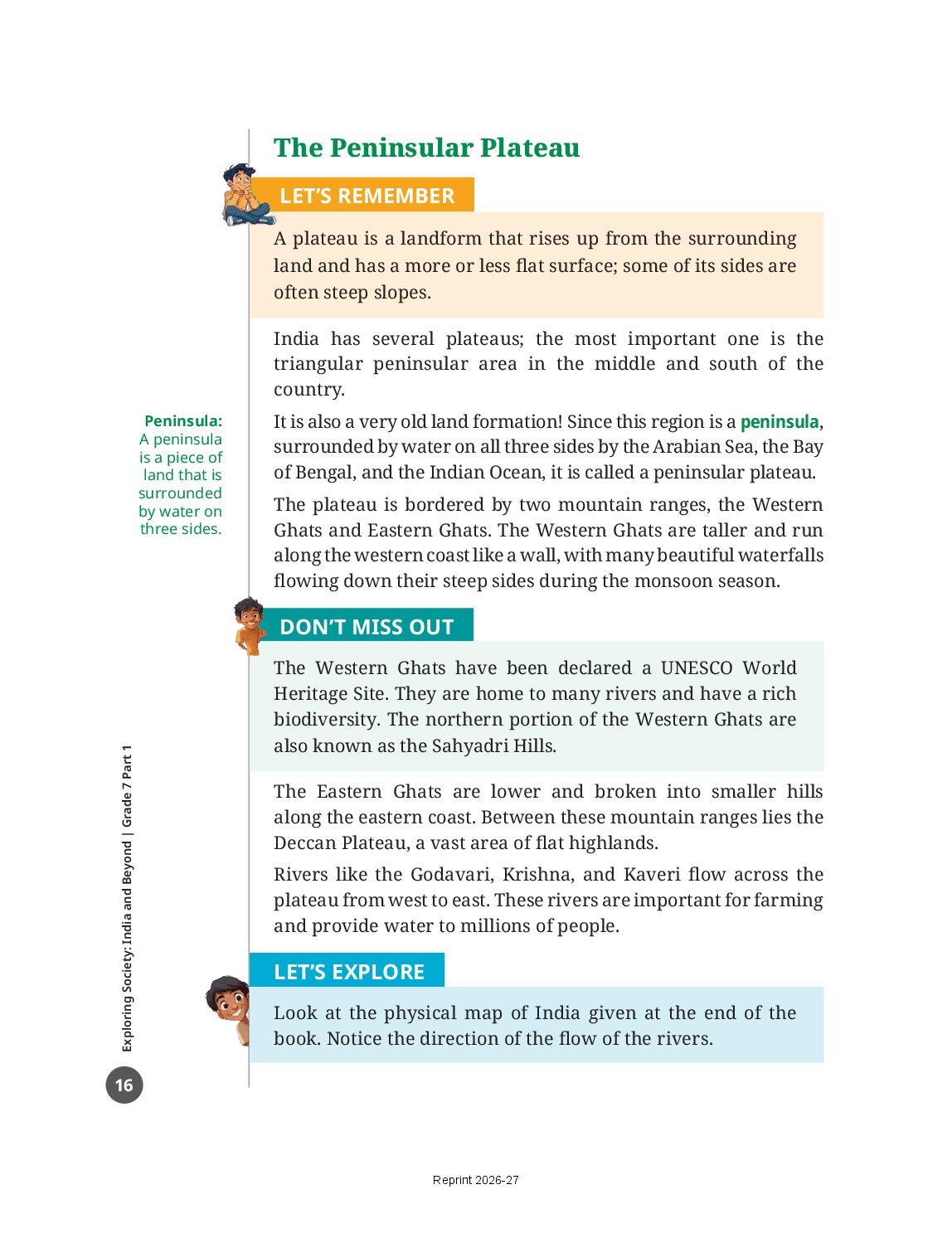
- The Thar Desert spreads over Rajasthan, Gujarat, Punjab and Haryana; its sand dunes can rise 150 m. The Aravallis, about 2.5 billion years old, act as a natural barrier that stops the desert moving east.
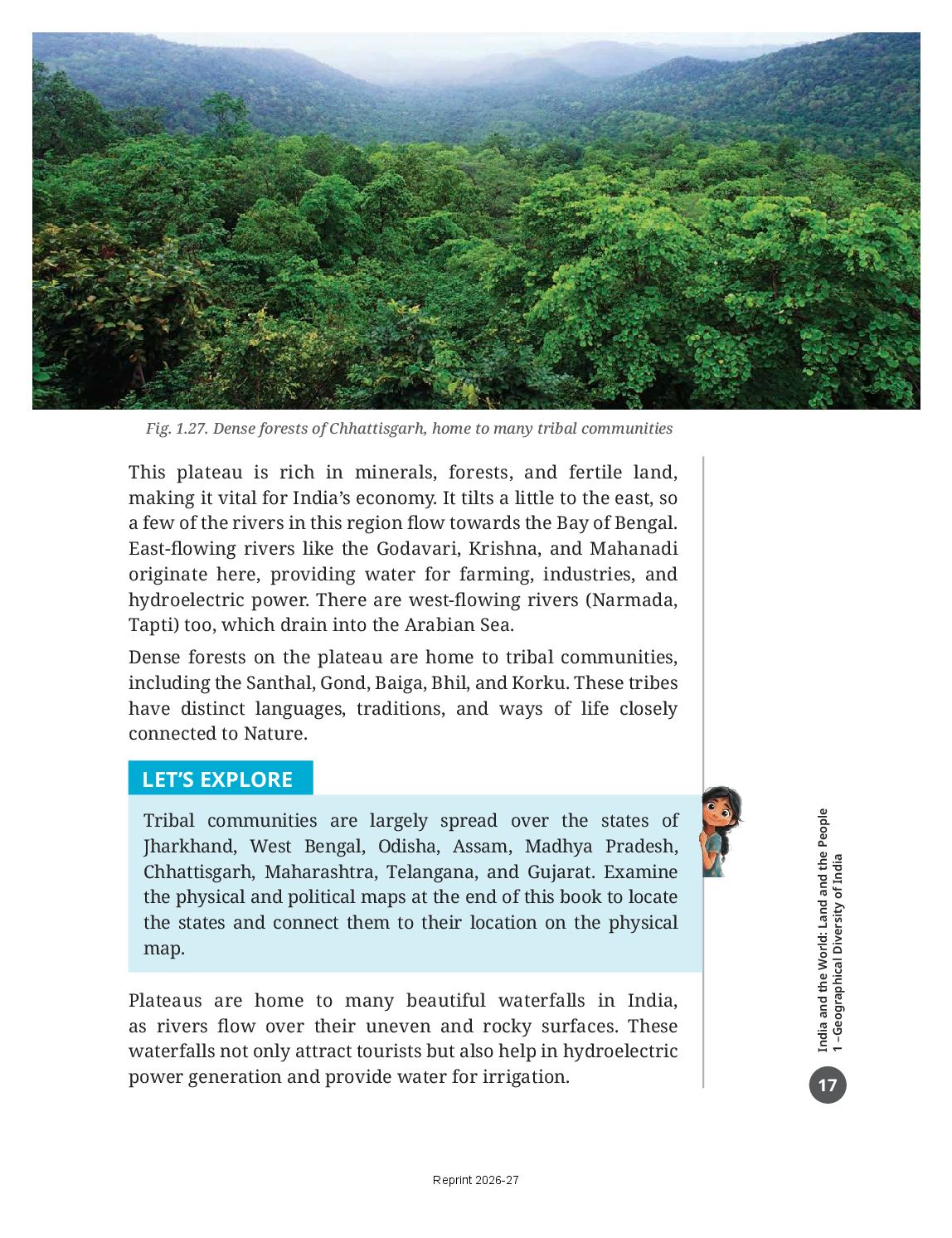
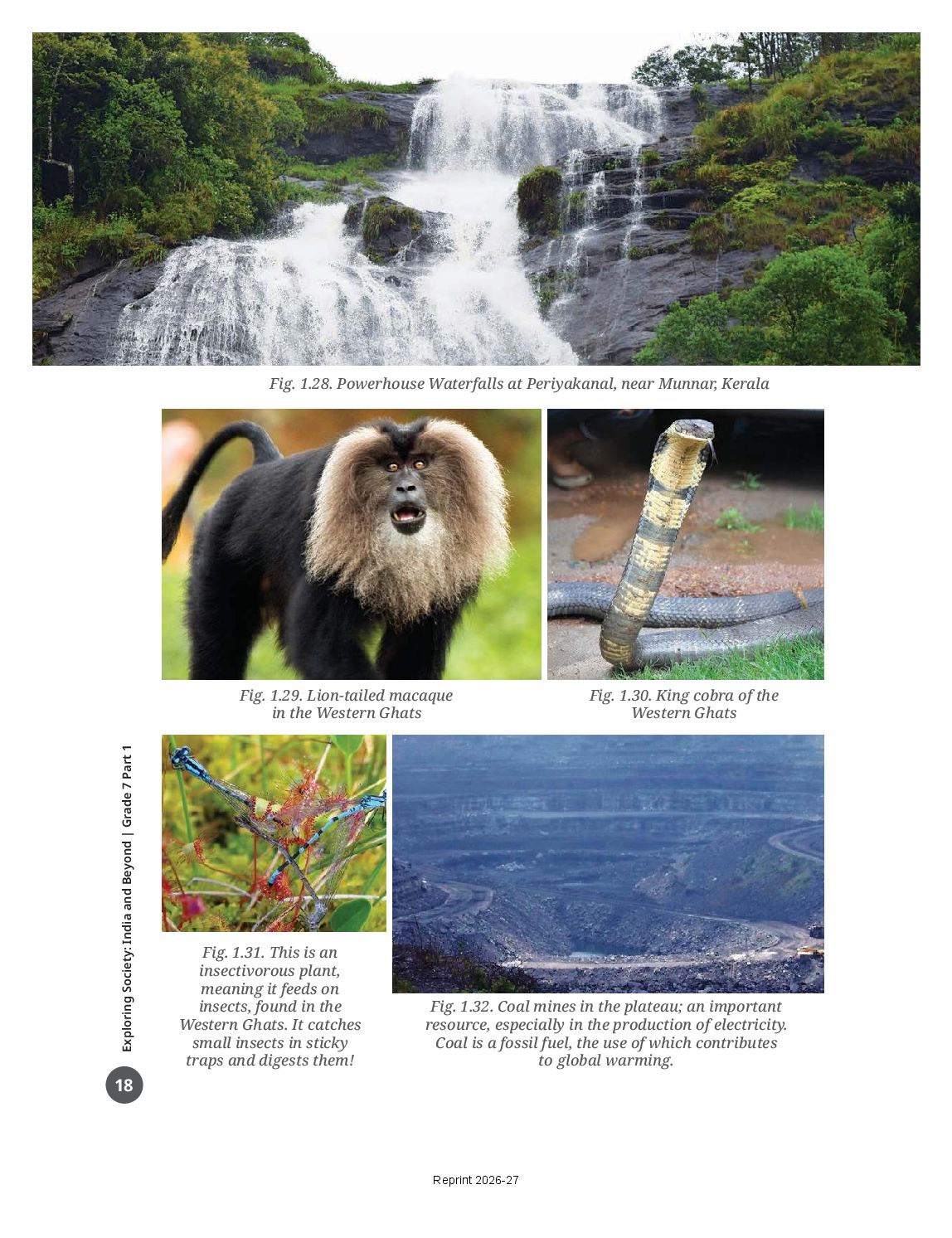
- The Peninsular Plateau is bordered by the Western Ghats (a UNESCO World Heritage Site) and the lower Eastern Ghats, with the Deccan Plateau between them. It tilts eastward, so the Godavari, Krishna, Kaveri and Mahanadi flow east while the Narmada and Tapti flow west.
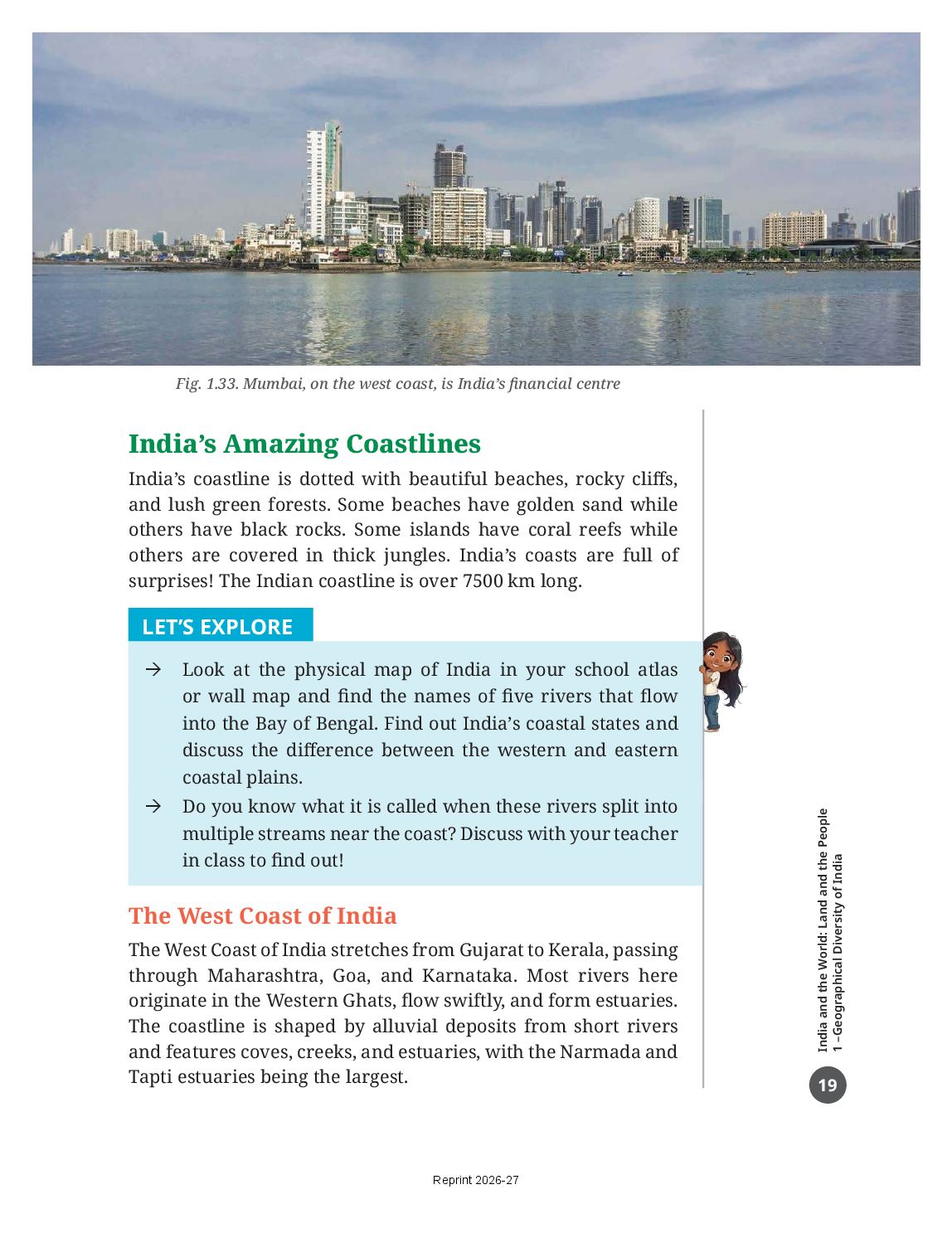
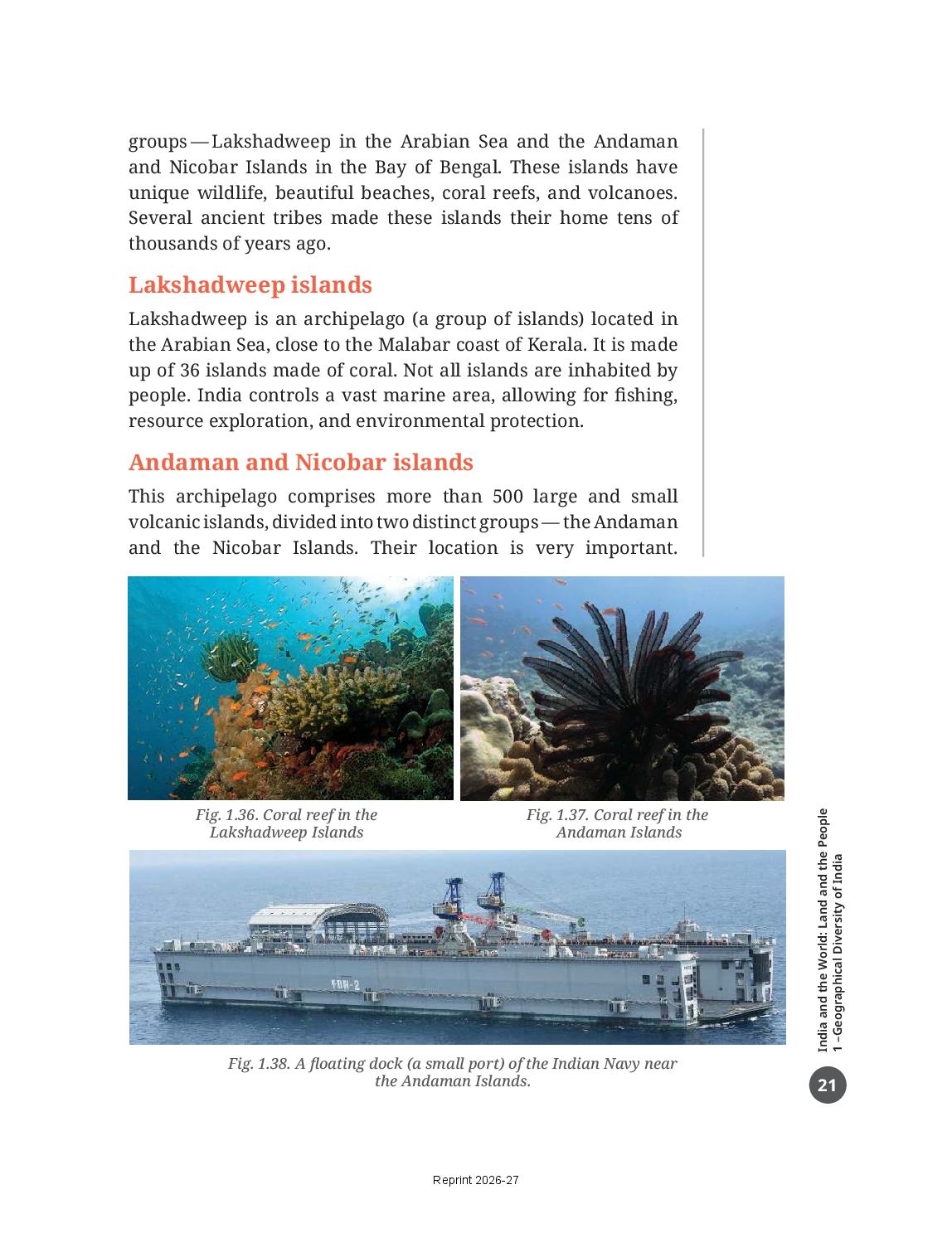
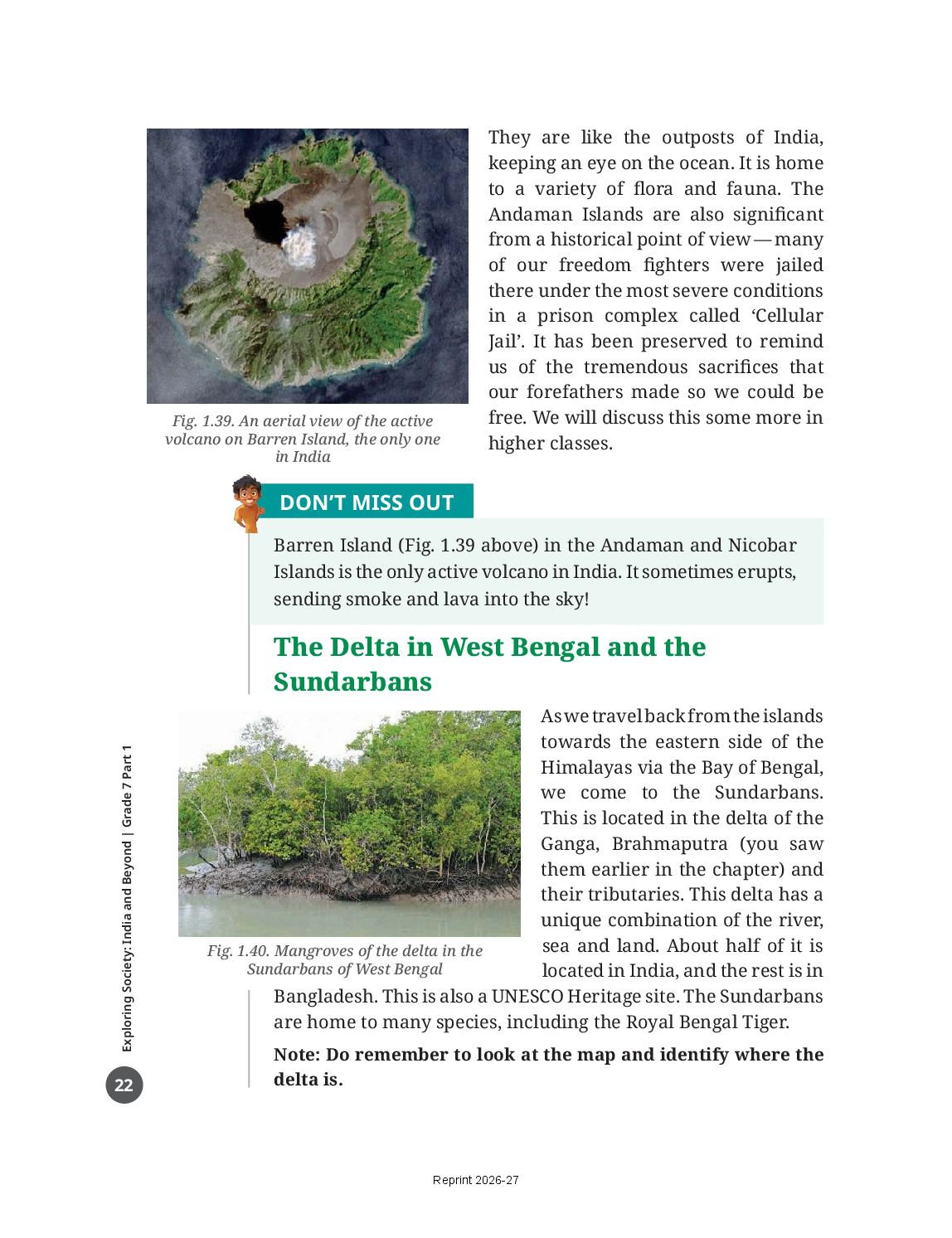
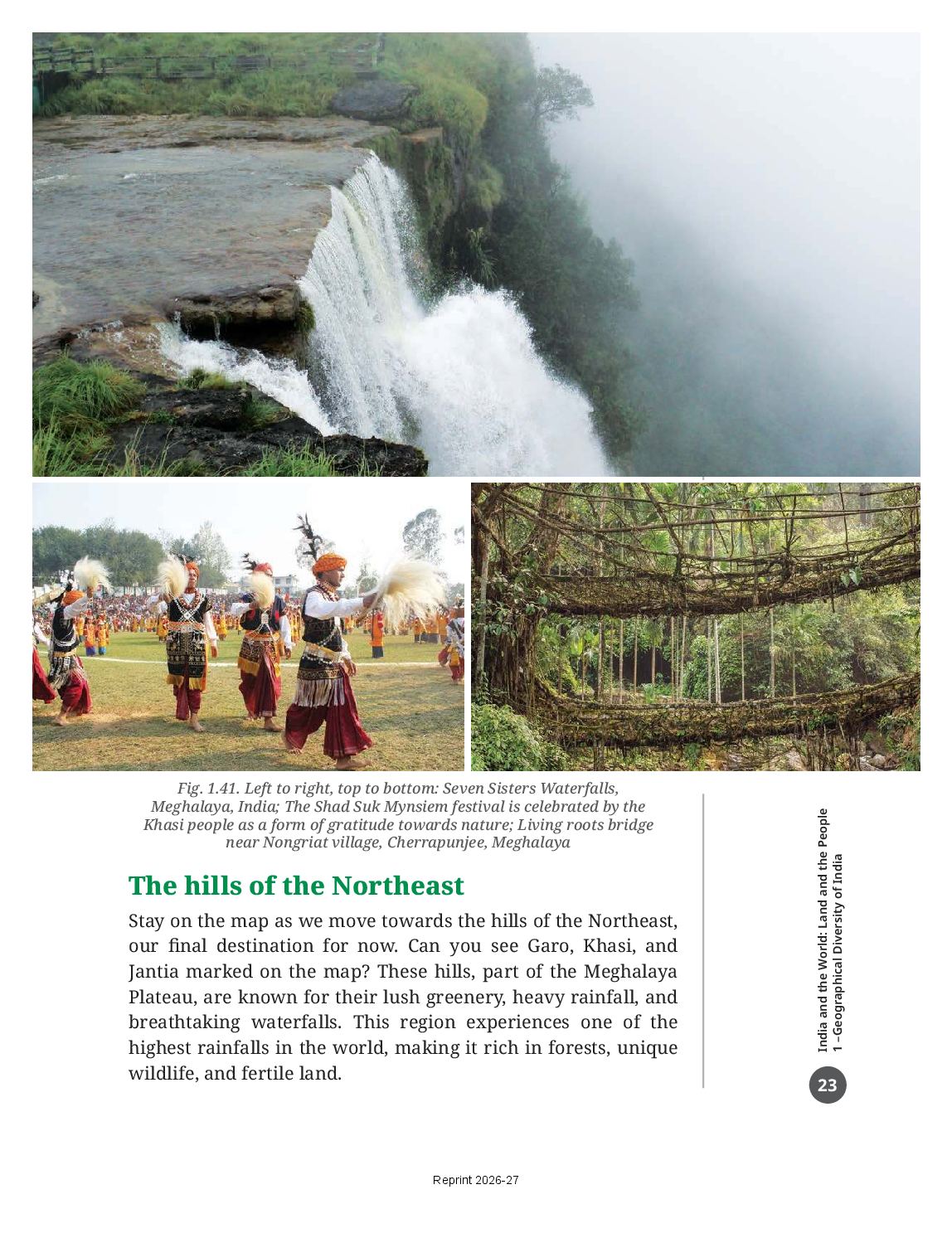
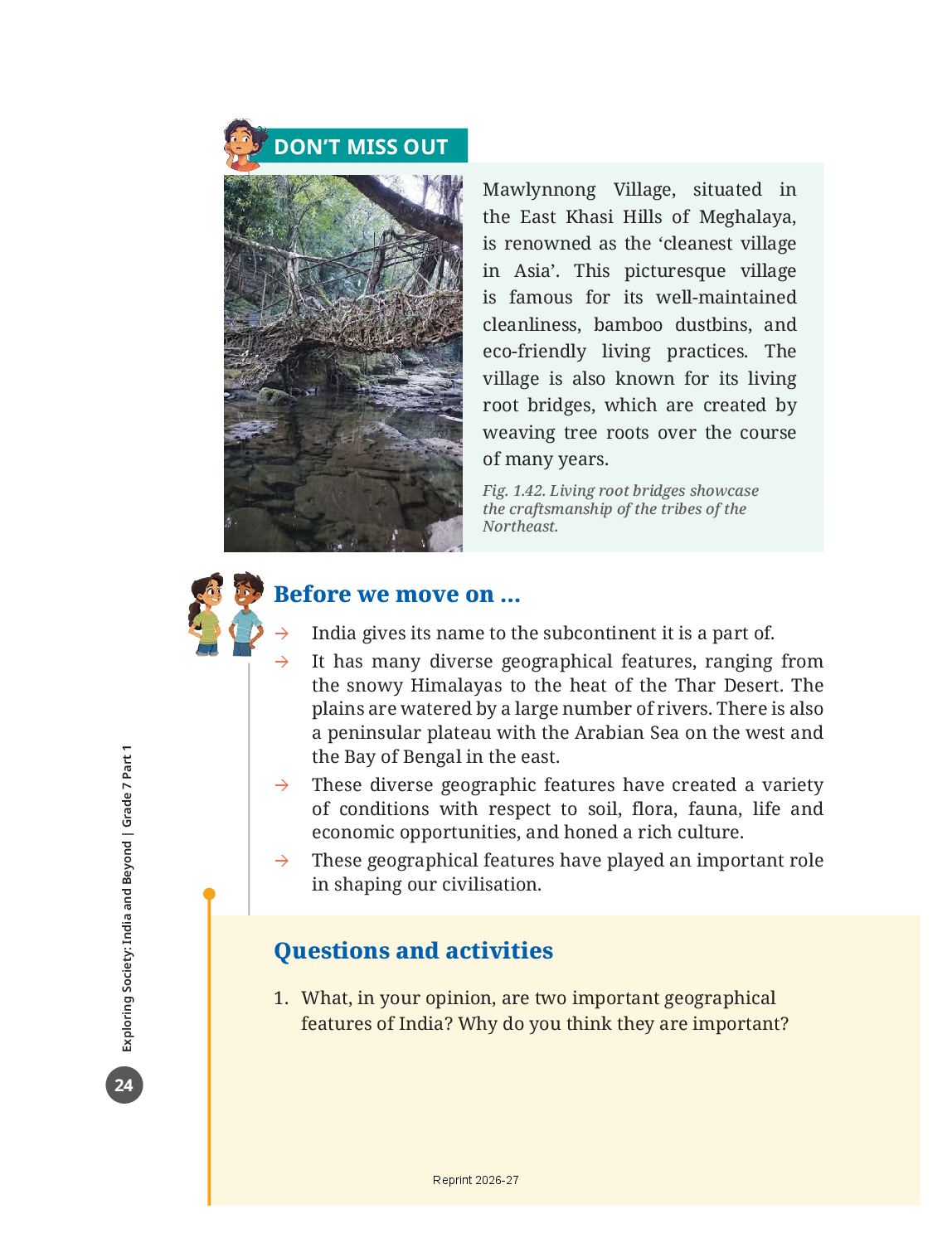
- India’s coastline is over 7500 km long. It has two island groups — Lakshadweep (36 coral islands) in the Arabian Sea and the Andaman and Nicobar Islands (over 500 volcanic islands) in the Bay of Bengal — and ends in the northeast with the rain-drenched Garo, Khasi and Jaintia hills of the Meghalaya Plateau.
Quick revision – Geographical Diversity of India
| Term | What it means | Where it appears in the chapter | Example / detail |
|---|---|---|---|
| Subcontinent | A large landmass that is part of a continent but stands somewhat apart from it | Page 2 — India and its neighbours | India, Pakistan, Bangladesh, Nepal, Bhutan, Sri Lanka, Myanmar |
| Himadri | The Greater Himalayas — the highest, most rugged range, snow-covered all year | Page 6 — the three ranges | Mount Everest, Kanchenjunga |
| Himachal | The Lower Himalayas, with a moderate climate and rich biodiversity | Page 6 | Nainital, Darjeeling, Shimla, Mussoorie |
| Shivalik Hills | The Outer Himalayas — rolling hills and dense forest, a transition zone | Page 6 | Between the Himalayas and the Gangetic Plains |
| Gondwana | The huge ancient landmass India was once part of, next to Africa | Page 5 — how the Himalayas formed | India broke away and drifted north |
| Cold desert | A desert that is cold, not hot — very little rain, rugged rocky land | Page 8 — Ladakh | Winter below –30°C; Pangong Tso; ‘moonland’ |
| Sand dune | A hill-like heap of sand piled and shaped by the wind | Pages 12–13 — the Thar | Sometimes as high as 150 metres |
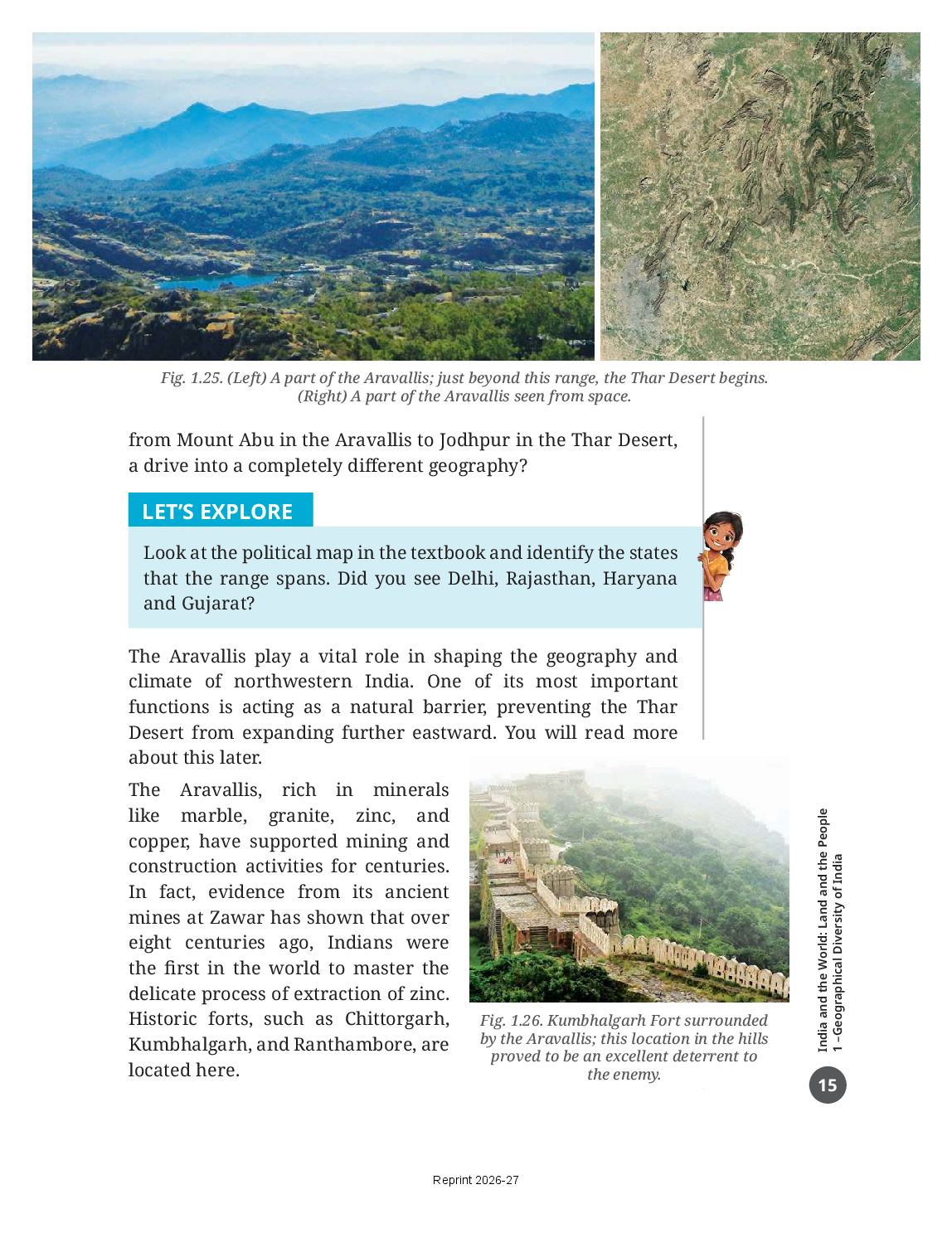
| Taanka / kund | Traditional Rajasthani tanks that store rainwater, often for drinking | Page 14 — DON’T MISS OUT | Ingenious water conservation in the Thar |
| Plateau | A landform that rises above the land around it and has a more or less flat top | Page 16 — LET’S REMEMBER | The Deccan Plateau |
| Peninsula | A piece of land surrounded by water on three sides | Page 16 — margin note | Peninsular India — Arabian Sea, Bay of Bengal, Indian Ocean |
| Estuary | The wide mouth of a river where it meets the sea | Page 19 — the West Coast | Narmada and Tapti estuaries, the largest on the west coast |
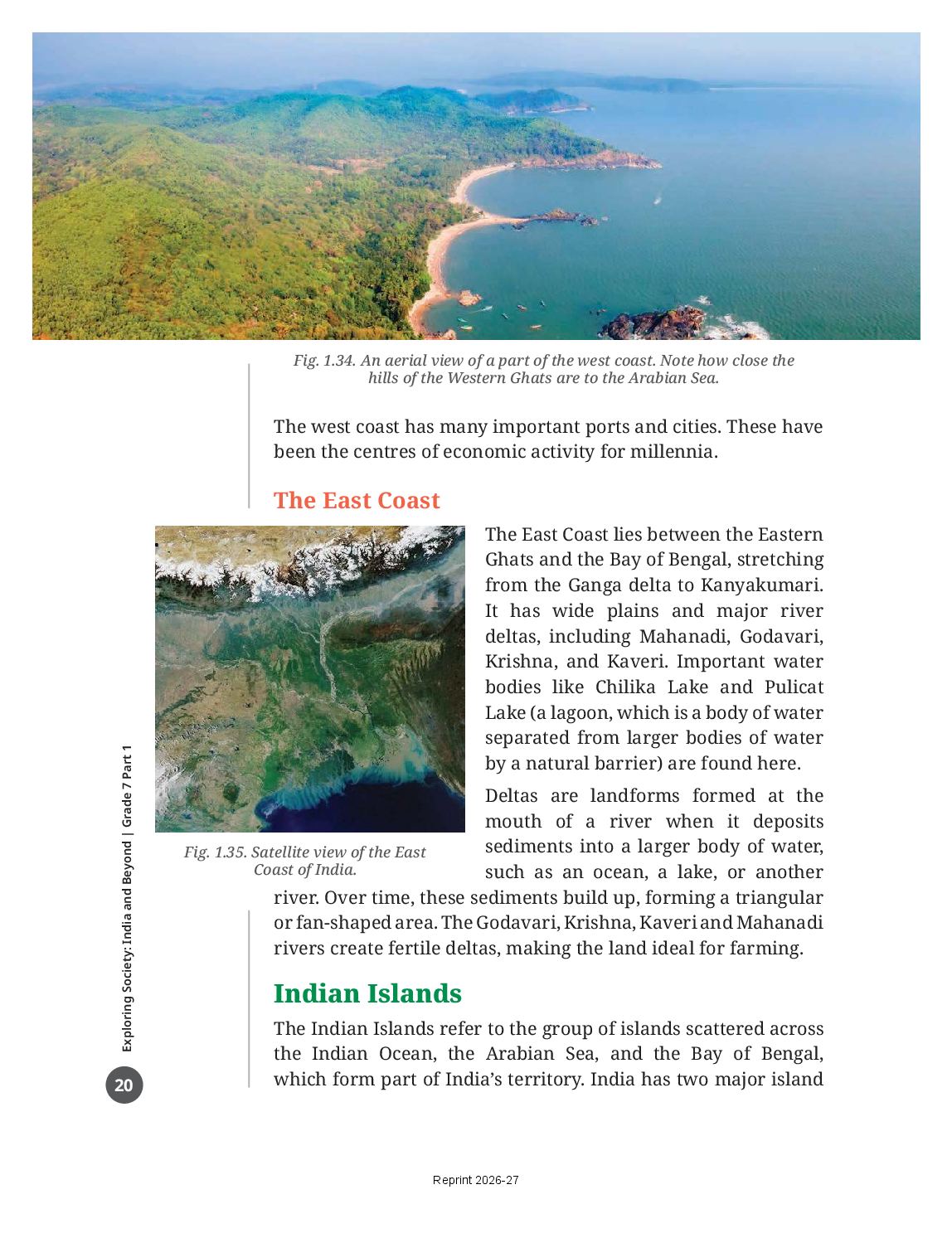
| Delta | A triangular or fan-shaped landform built of sediment at a river’s mouth | Page 20 — the East Coast | Mahanadi, Godavari, Krishna, Kaveri; the Sundarbans delta |
| Lagoon | A body of water separated from a larger water body by a natural barrier | Page 20 | Pulicat Lake; Chilika Lake |
| Archipelago | A group of islands | Page 21 — Lakshadweep | 36 coral islands close to the Malabar coast |
Old NCERT vs New – Class 7 Social Science
This chapter is from Exploring Society: India and Beyond, the new NCERT Class 7 Social Science book (NCF-SE 2023, used from 2025-26). It replaced the old book “Our Pasts, Our Environment and Social and Political Life”, so chapter numbers and names differ from older PDFs.
Solutions and All Chapters
Answers to the exercises and the full chapter list of Exploring Society: India and Beyond:
Geographical Diversity of India – Overview
| Class | Class 7 |
| Subject | Social Science |
| Book | Exploring Society: India and Beyond – new NCERT book |
| Part | Part I |
| Chapter | 1 of 20 – Geographical Diversity of India |
| Book pages | 1 – 25 |
| Edition | NCERT Reprint 2026-27 |
| Session | 2026-27 |
| Free – read online or download |
Class 7 Social Science Chapter 1 – FAQs
Where can I download Geographical Diversity of India Class 7 PDF?
From the download table on this page – the chapter PDF is free, and the full book is linked too.
What is Class 7 Social Science Chapter 1 about?
India is the seventh-largest country in the world and part of Asia. With Pakistan, Bangladesh, Nepal, Bhutan, Sri Lanka and Myanmar it forms the Indian Subcontinent.
Is Geographical Diversity of India from the new NCERT Class 7 Social Science book?
Yes. It is chapter 1 of exploring society: india and beyond (part i), the new NCERT Class 7 Social Science book for 2026-27.
Is this the latest NCERT edition for 2026-27?
Yes – the PDF is NCERT’s latest edition for the 2026-27 session.
Where are the NCERT Solutions for Class 7 Social Science Chapter 1?
Open the NCERT Solutions link above for answers to the exercise questions.