Download India, a Home to Many – NCERT Class 7 Social Science Chapter 17 PDF from the new NCERT Class 7 Social Science book Exploring Society: India and Beyond (2026-27). Read the chapter online or download the free PDF. A second kind of migrant. In Grade 6 we read that “many Indians may be called migrants, in the sense of people not living near their birthplace or with their original community.” This chapter looks at the other kind — “people who came to India from…
India, a Home to Many PDF – Chapter 17 of Exploring Society: India and Beyond (Part II)
Read the chapter online or download the PDF.
| Chapter | Download | |
|---|---|---|
| Chapter 17 PDF | India, a Home to Many | View PDF |
| Full book | NCERT Class 7 Social Science – Exploring Society: India and Beyond | View Book |
Read Online
What Is in India, a Home to Many? (Class 7 Social Science Chapter 17)
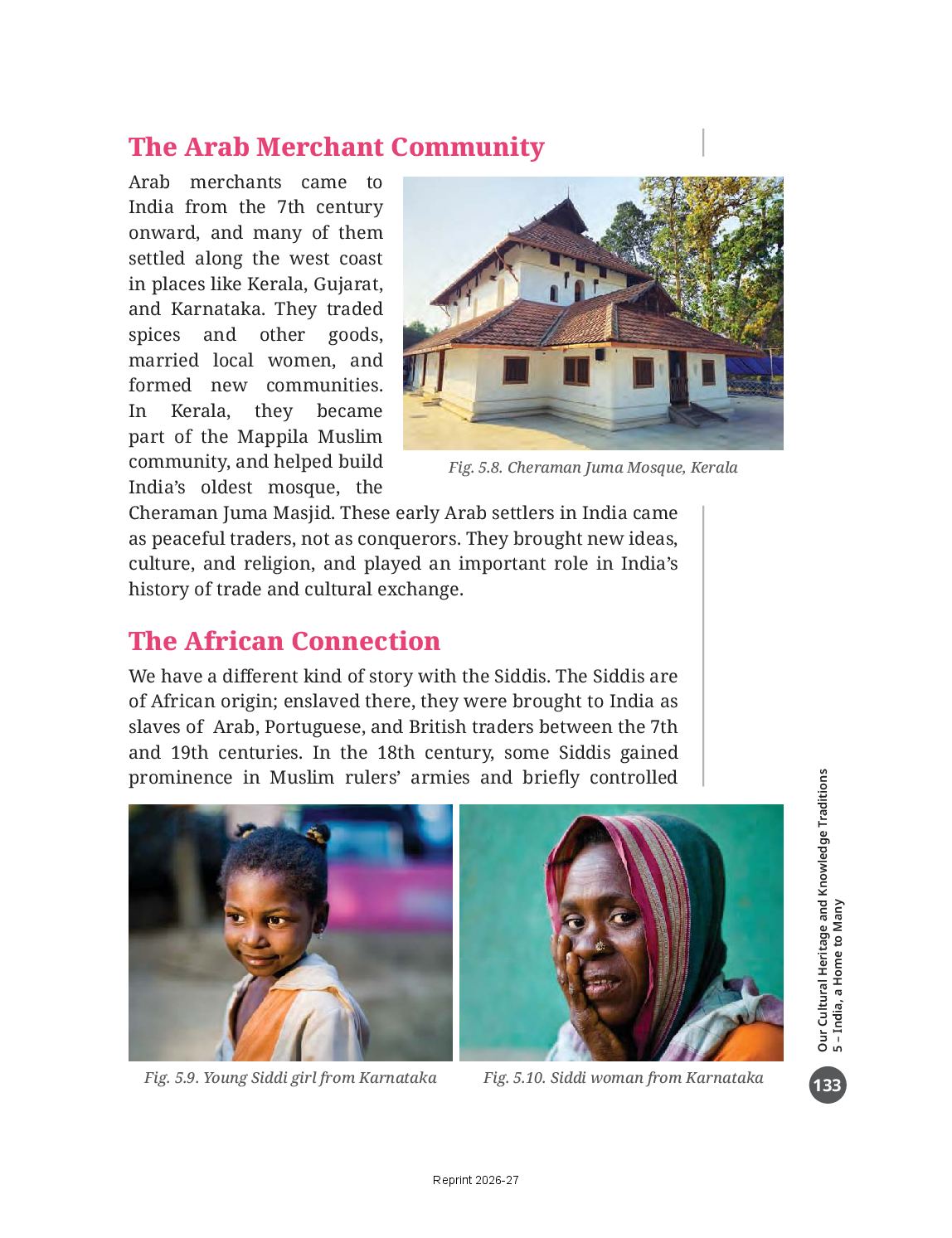
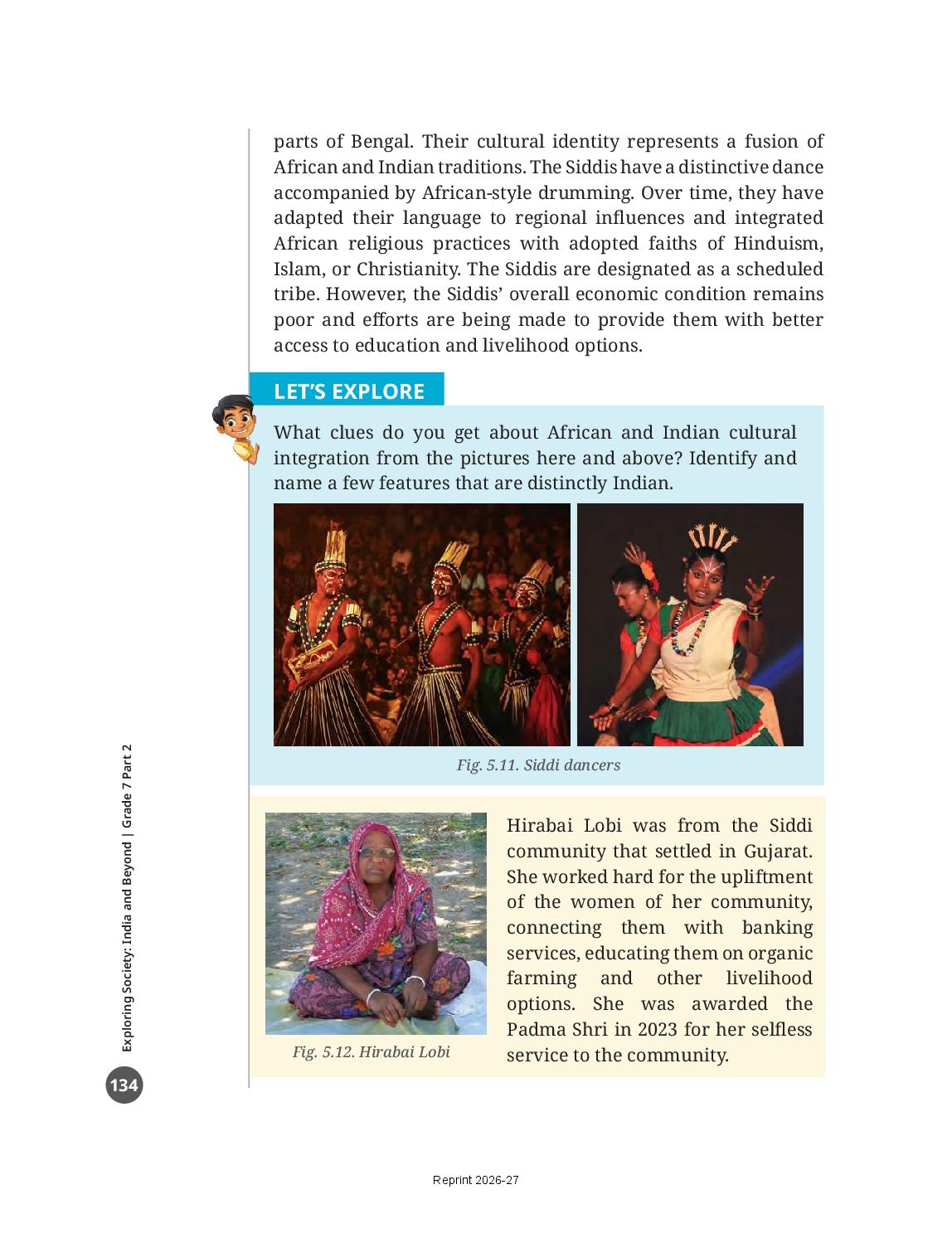
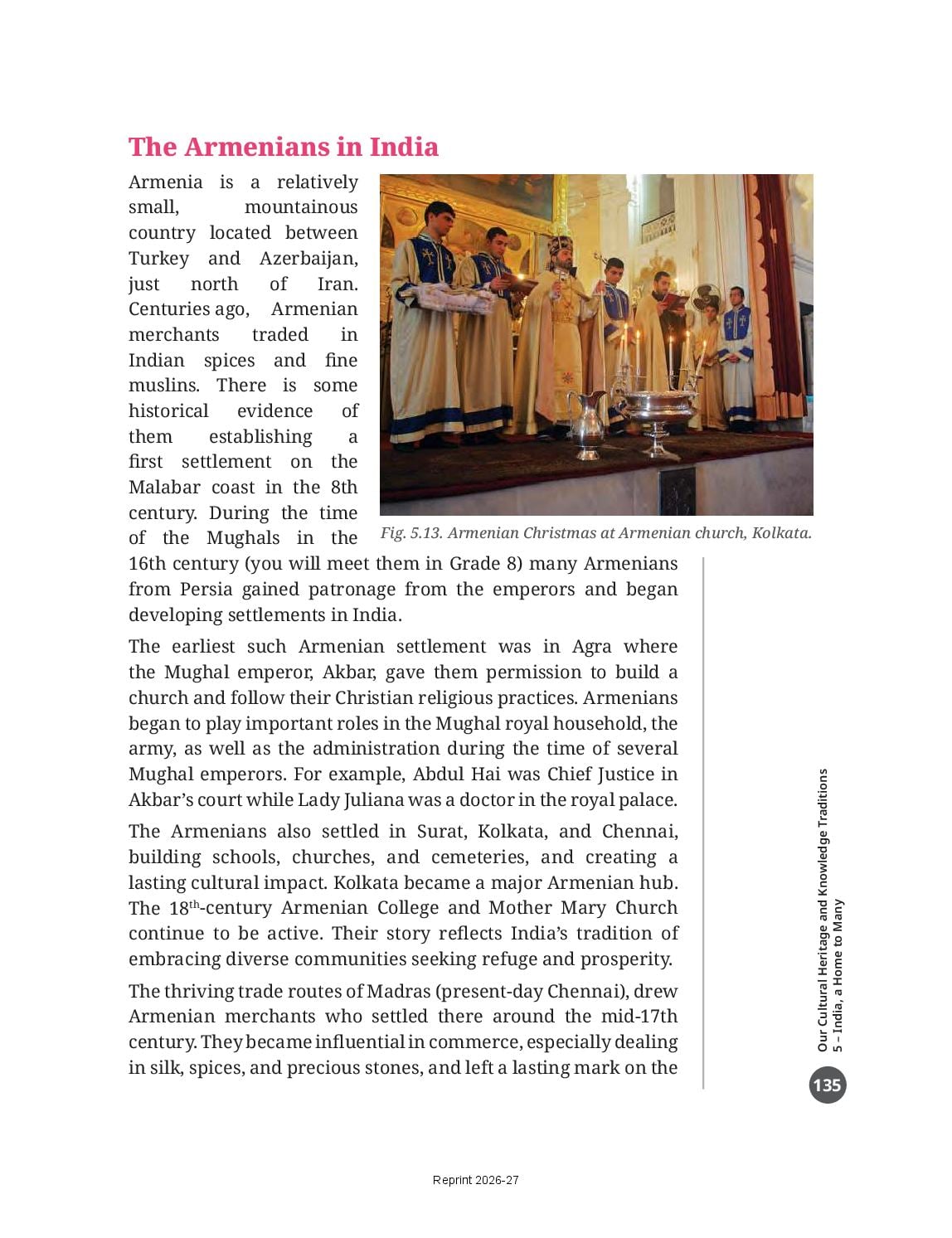
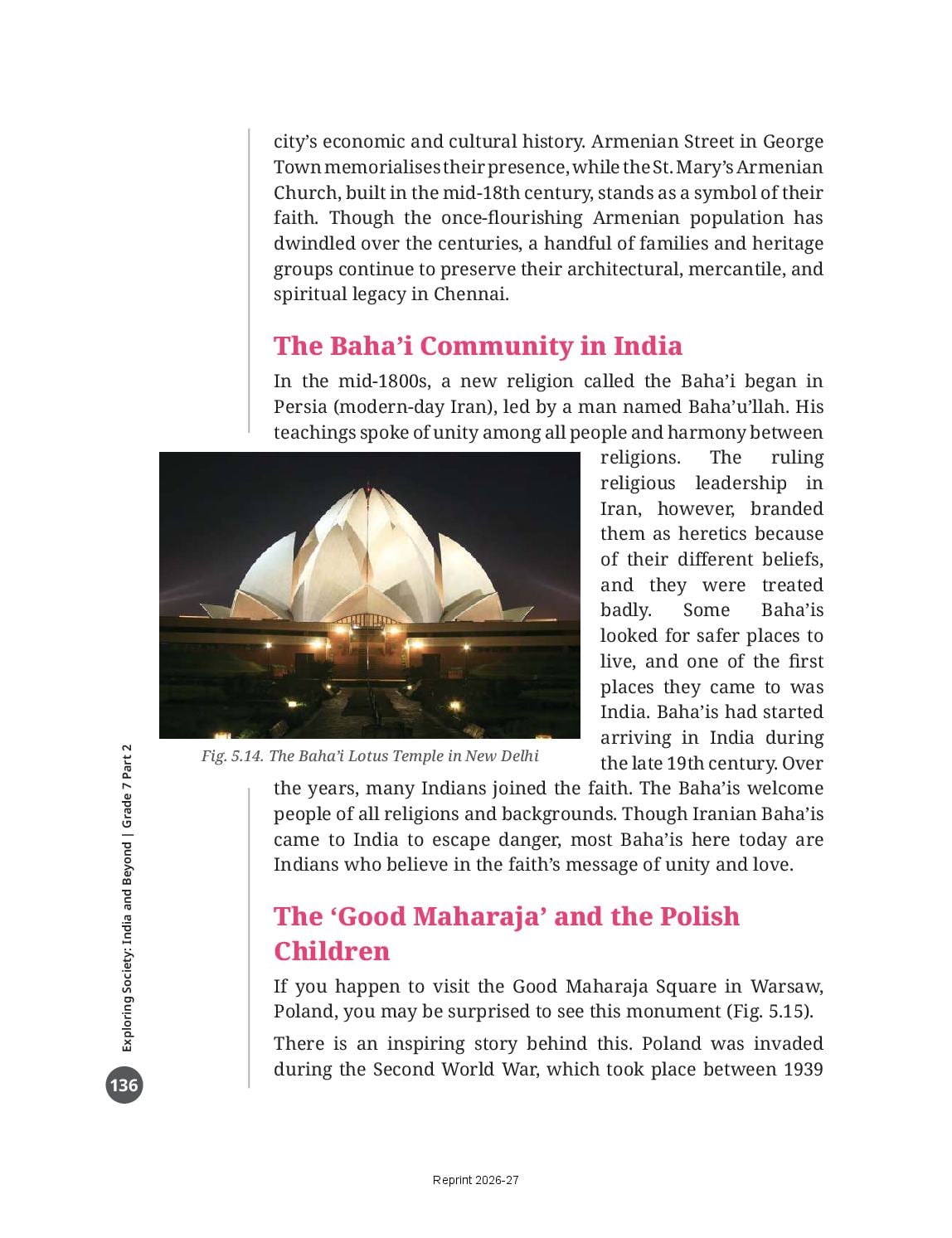
- A second kind of migrant. In Grade 6 we read that “many Indians may be called migrants, in the sense of people not living near their birthplace or with their original community.” This chapter looks at the other kind — “people who came to India from other parts of the world and settled here, adding another dimension to the diversity.” The book is clear that it cannot cover them all and has “selected only a few representative examples.”
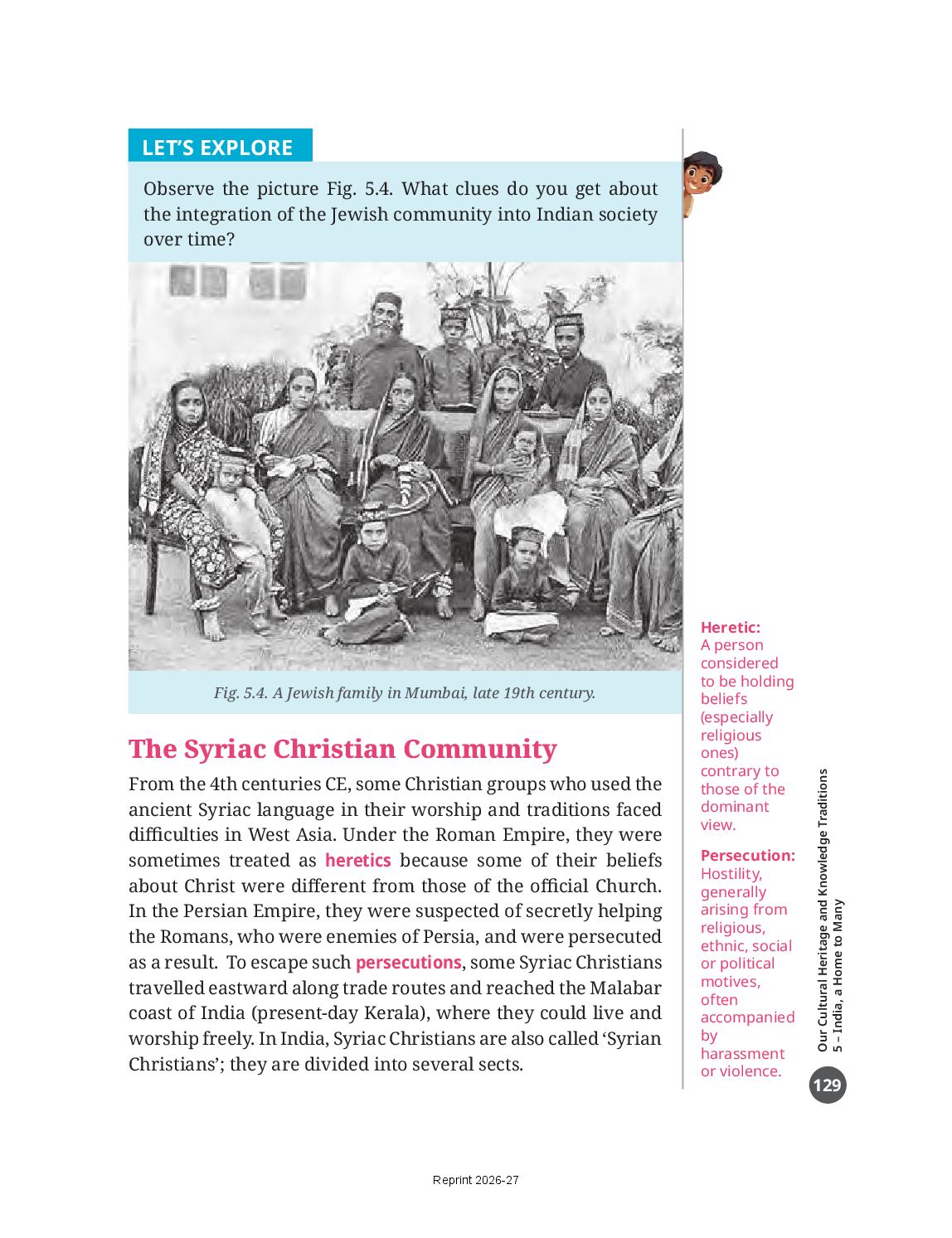
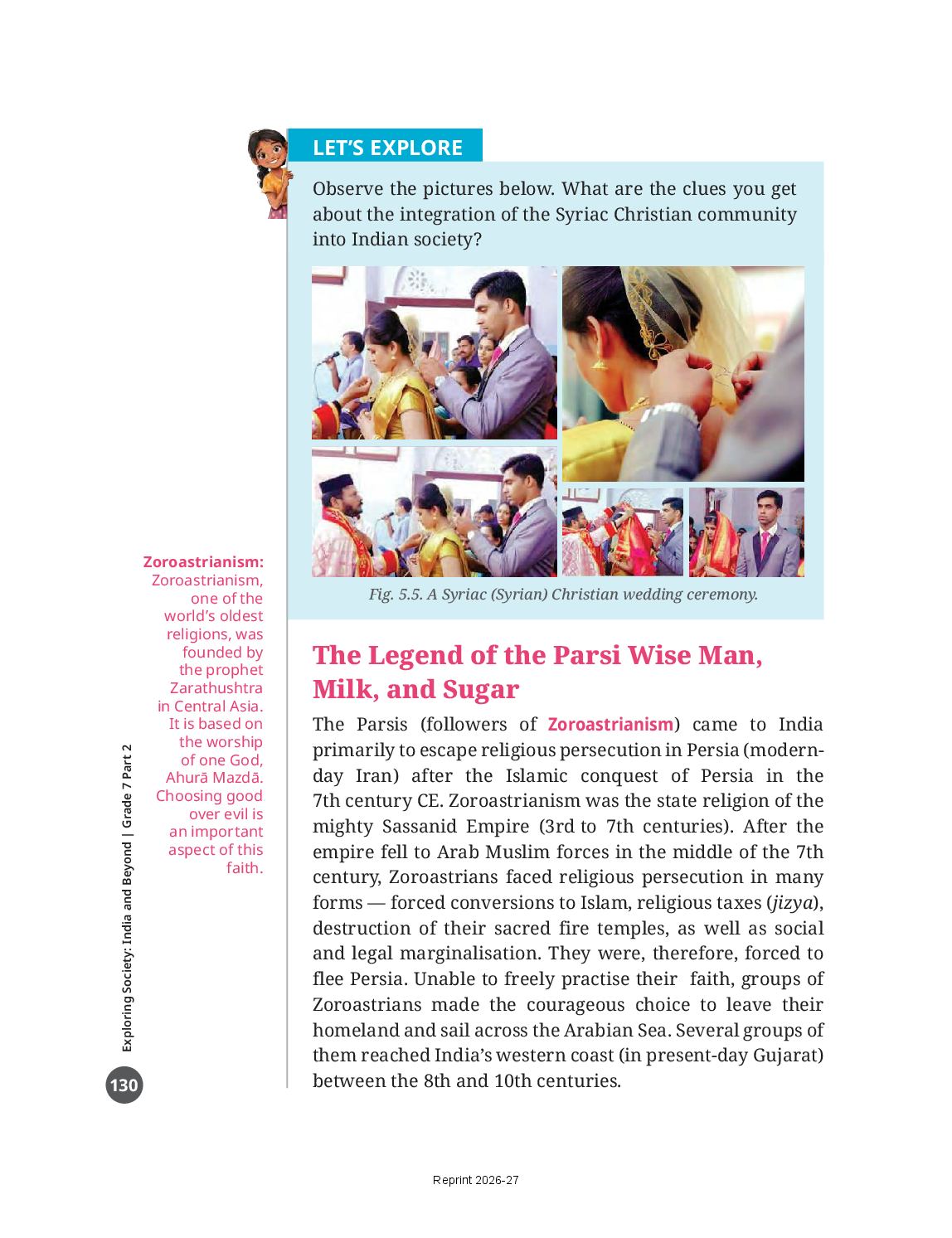
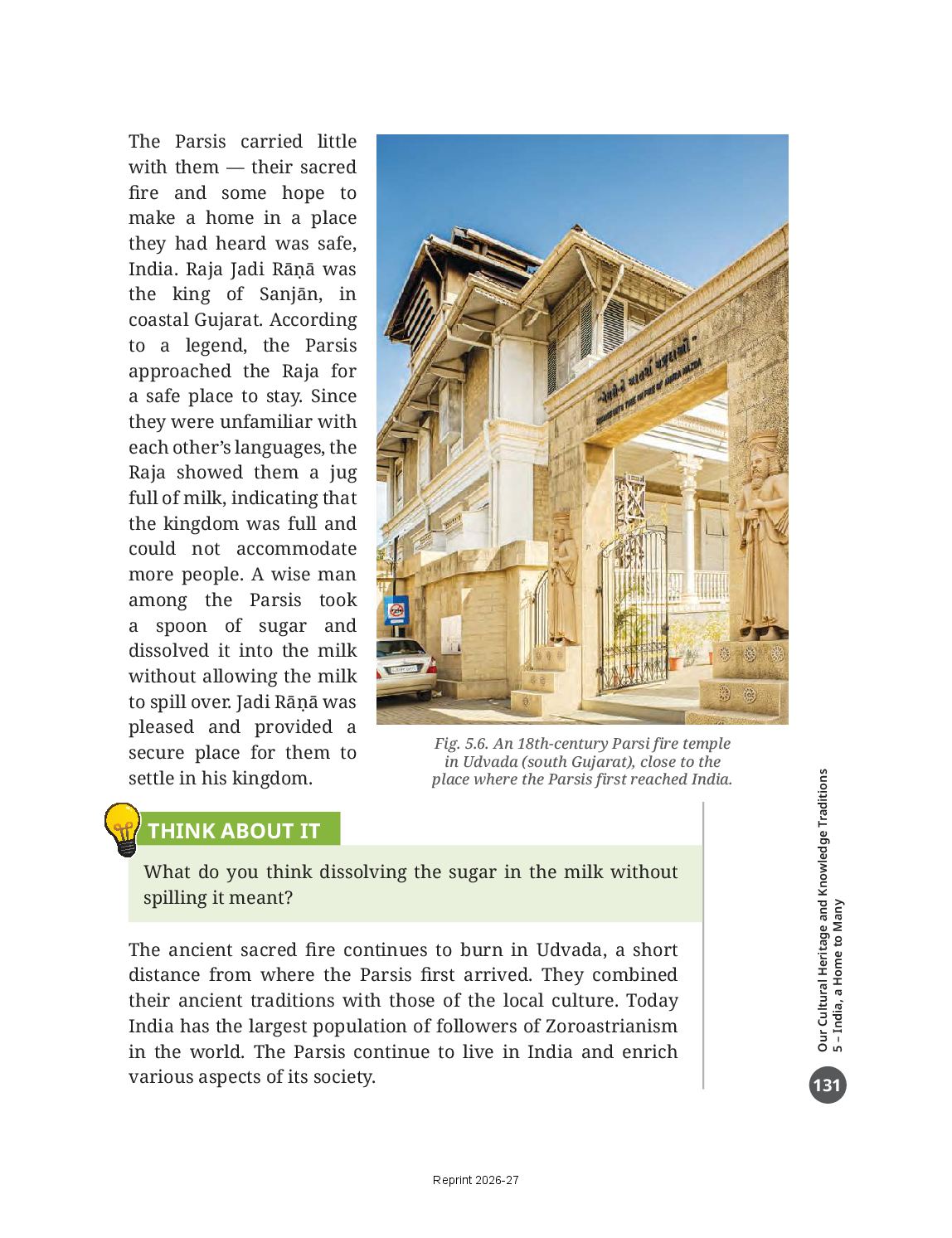
- Those who came fleeing persecution. Jews arrived “in several waves” — the Bene Israel on the Konkan coast (around 175 BCE, according to some scholars) and later groups near Cochin between the 12th and 19th centuries. Syriac Christians reached the Malabar coast from the 4th century CE. Parsis reached the Gujarat coast between the 8th and 10th centuries. Baha’is came from the late 19th century. Polish orphans came during the Second World War, and Tibetans from 1959.
- Those who came for trade — and those brought by force. Arab merchants came from the 7th century as “peaceful traders, not as conquerors”, and in Kerala “became part of the Mappila Muslim community”. Armenian merchants traded in Indian spices and fine muslins and later gained Mughal patronage. The Siddis, however, “were brought to India as slaves of Arab, Portuguese, and British traders between the 7th and 19th centuries” — a different kind of story, as the chapter says.
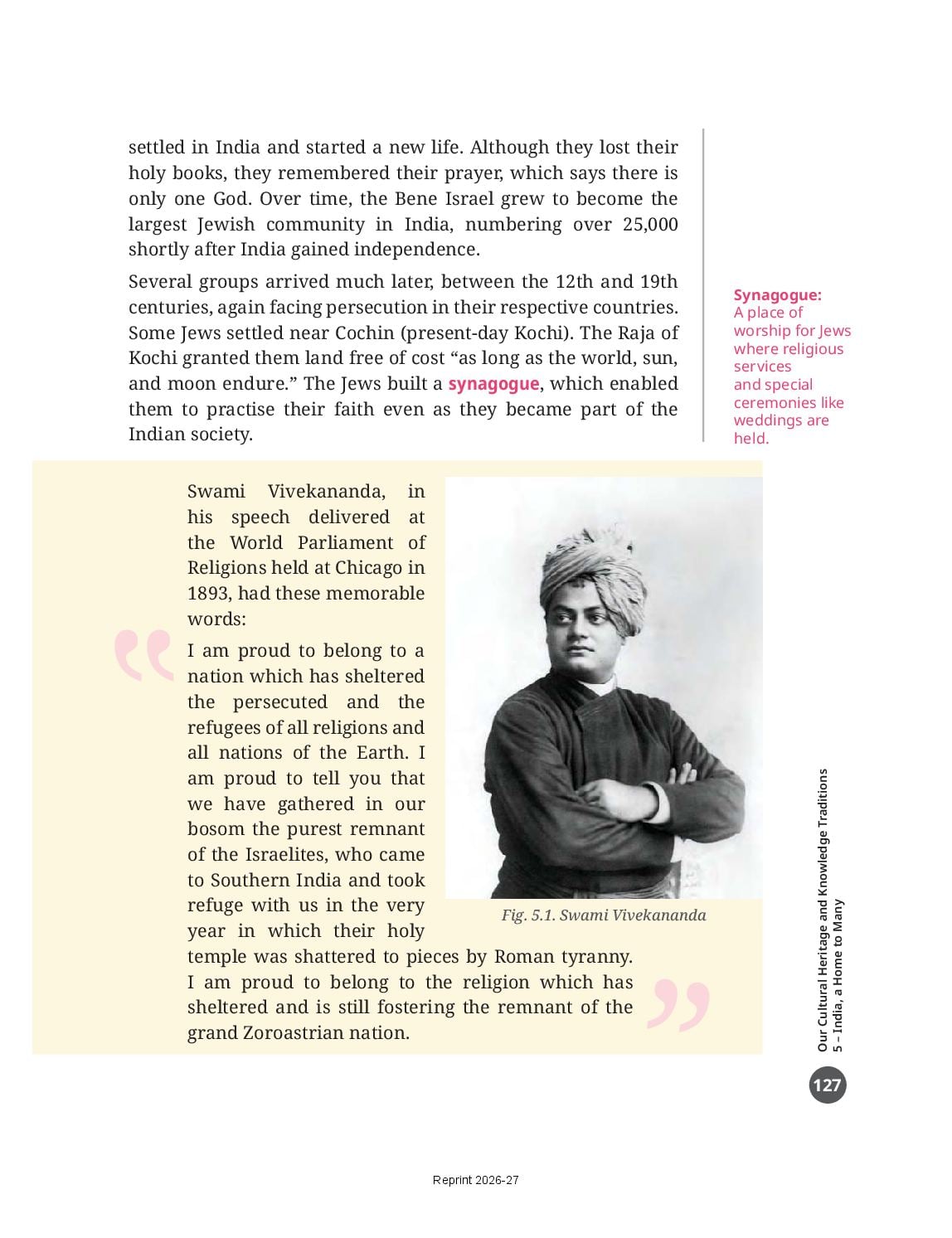
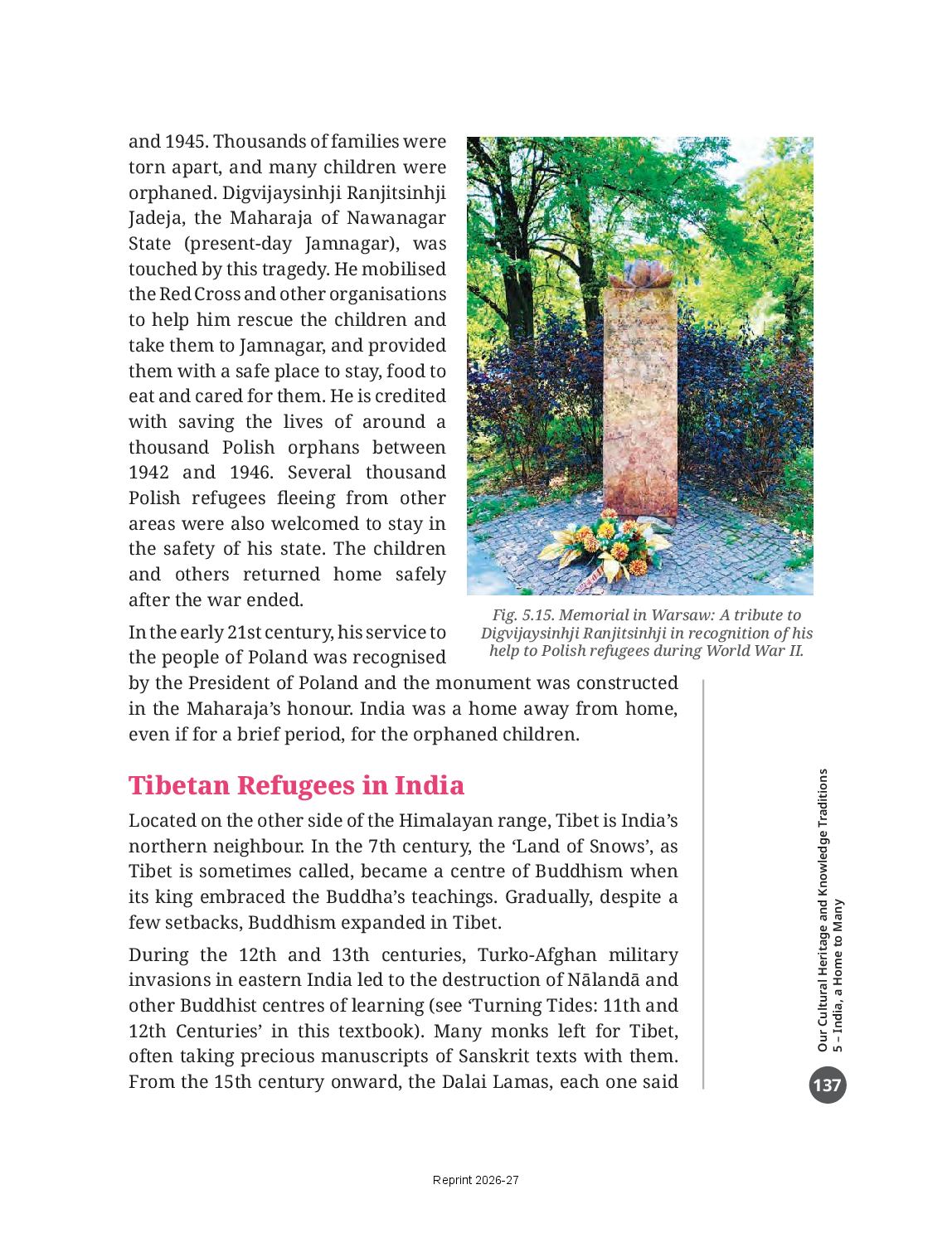
- Rulers who made room. The Raja of Kochi granted the Jews land free of cost “as long as the world, sun, and moon endure”; Raja Jadi Rāṇā of Sanjān gave the Parsis “a secure place”; Akbar allowed the Armenians to build a church at Agra; Maharaja Digvijaysinhji Ranjitsinhji Jadeja of Nawanagar saved “around a thousand Polish orphans between 1942 and 1946”; and in 1959 the government granted the 14th Dalai Lama asylum.
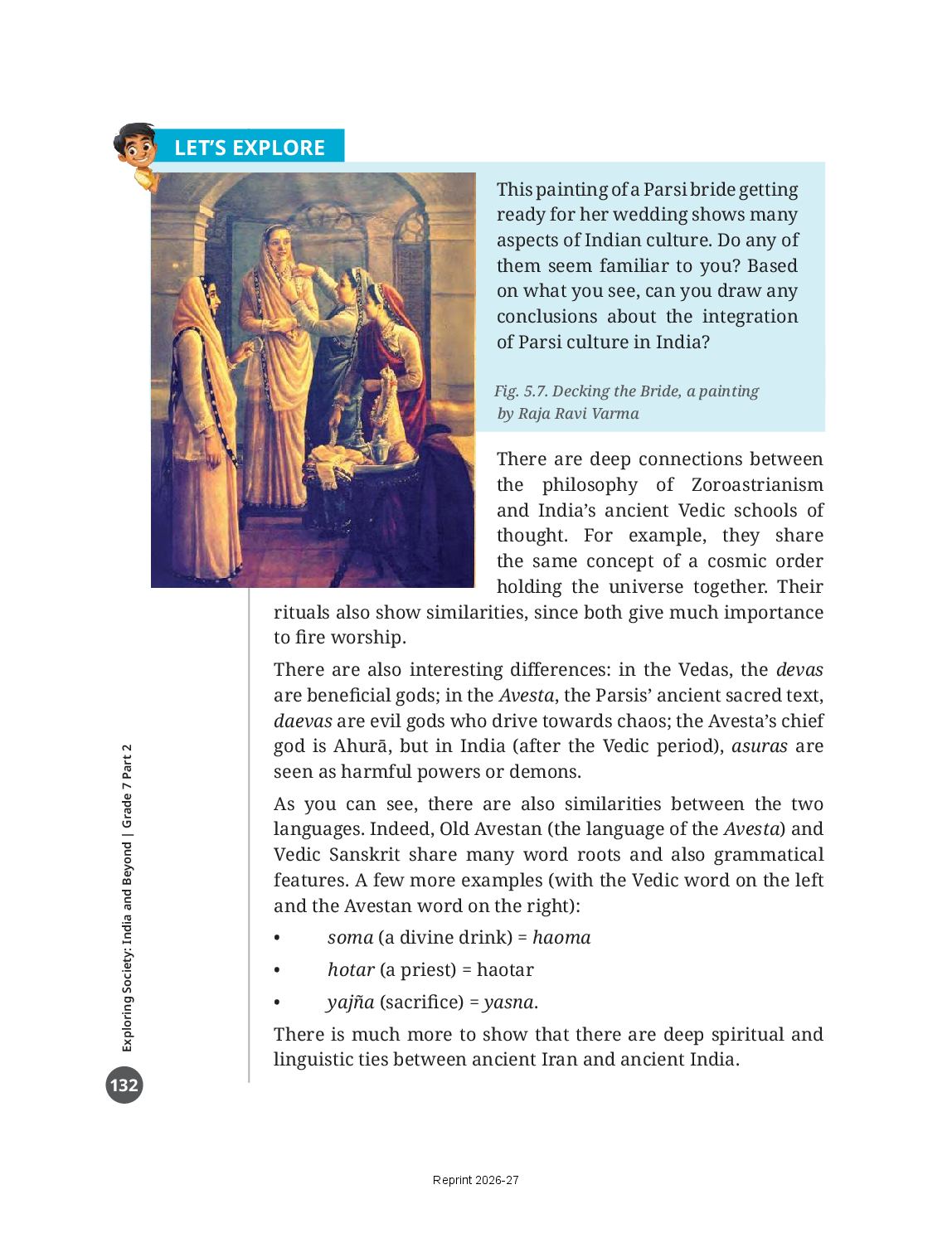
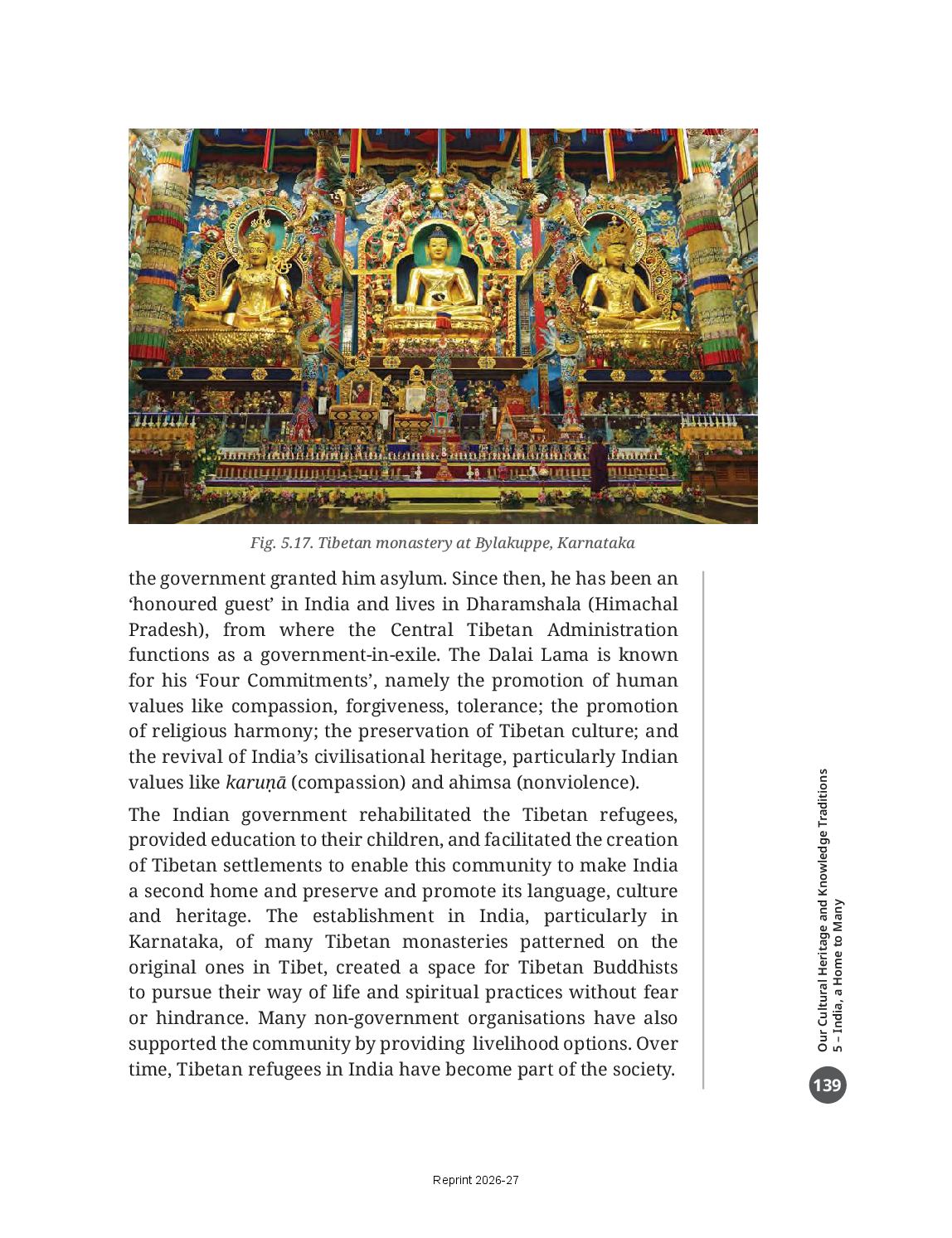
- What integration looked like. Nobody was asked to give up their faith. The Bene Israel “remembered their prayer”; the sacred Parsi fire “continues to burn in Udvada”; the 18th-century Armenian College and Mother Mary Church in Kolkata “continue to be active”; Tibetan monasteries in Karnataka were “patterned on the original ones in Tibet”. At the same time the Parsis “combined their ancient traditions with those of the local culture”, and Siddi identity “represents a fusion of African and Indian traditions”.
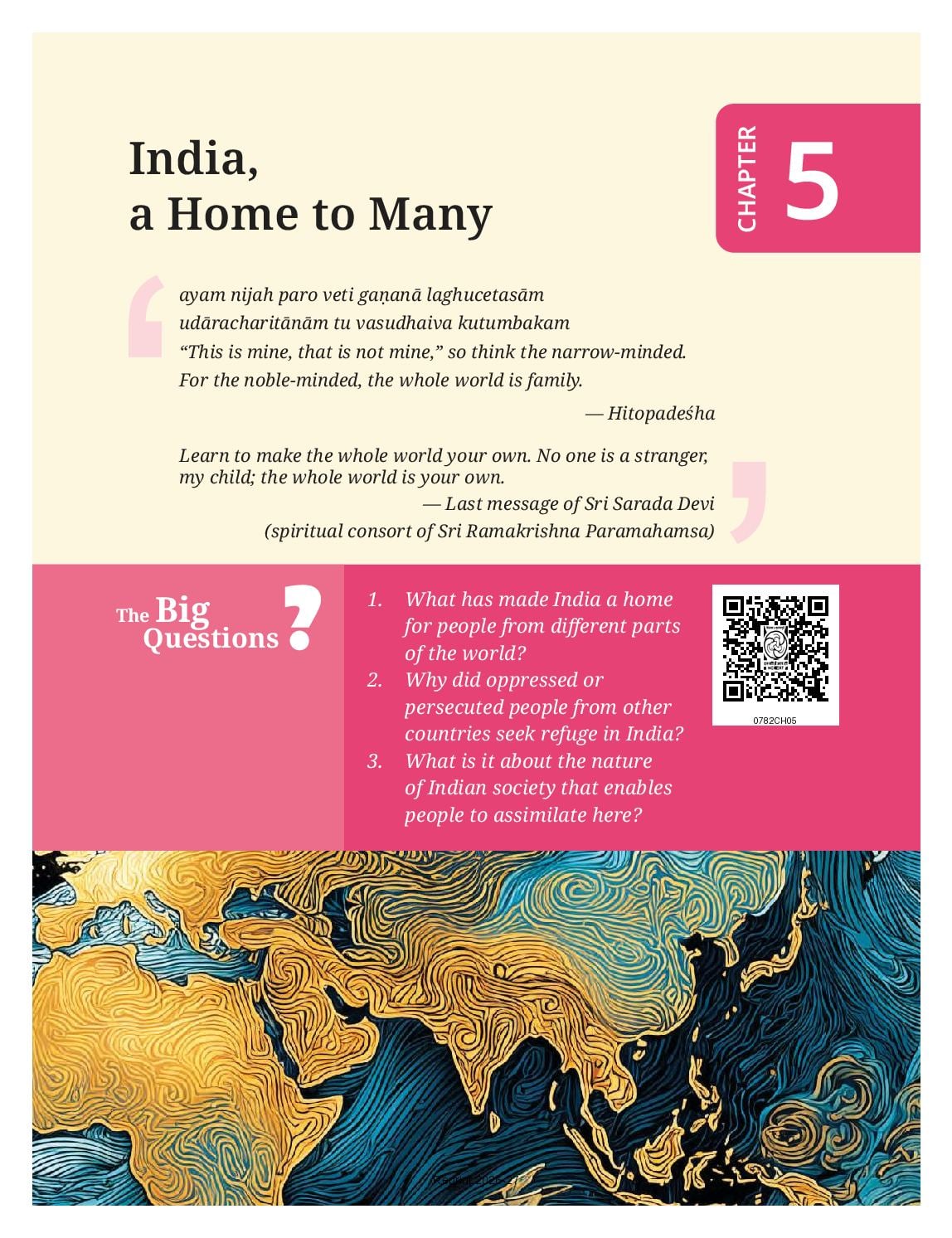
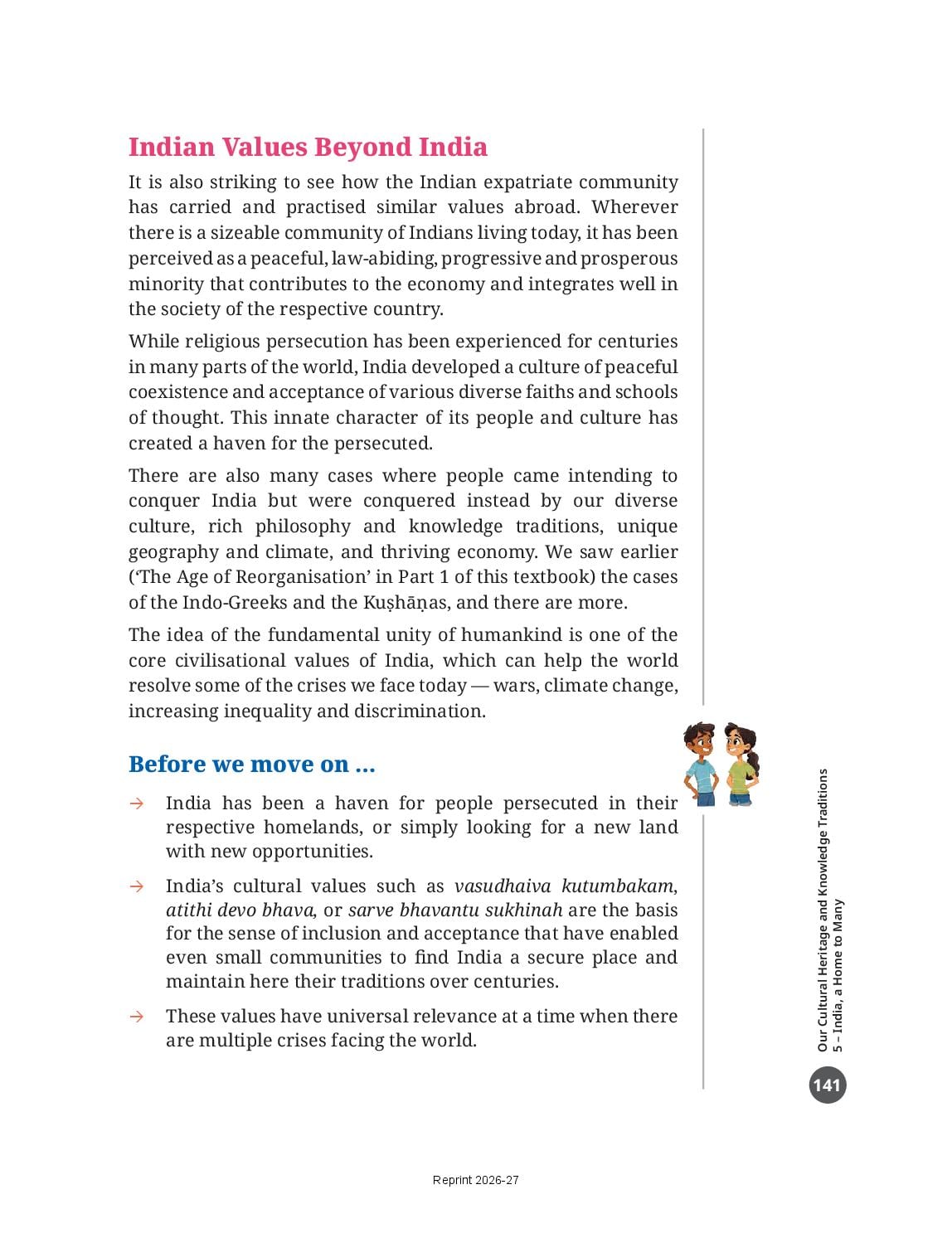
- The idea behind it all. vasudhaiva kutumbakam, “the whole world is family”, from the Hitopadeśha verse that opens the chapter — together with atithi devo bhava, sarve bhavantu sukhinah and the Buddhist Karaṇīya Mettā Sutta. The chapter’s claim is that this “is not just a slogan but has been a practice for millennia”, and that “the idea of the fundamental unity of humankind… can help the world resolve some of the crises we face today — wars, climate change, increasing inequality and discrimination.”
Quick revision – India, a Home to Many
| Term | What it means | Where it appears in the chapter | Worth remembering |
|---|---|---|---|
| Vasudhaiva kutumbakam | “The whole world is family” | The Hitopadeśha verse on the opening page, and the section “The Whole World is Family”, page 140 | The full verse says: “‘This is mine, that is not mine,’ so think the narrow-minded. For the noble-minded, the whole world is family.” The chapter argues it “is not just a slogan but has been a practice for millennia” |
| Persecution | “Hostility, generally arising from religious, ethnic, social or political motives, often accompanied by harassment or violence” | Word box, page 129 | This is the single reason the chapter gives for most of these migrations — Jews, Syriac Christians, Parsis and Baha’is all left homes where they were persecuted |
| Heretic | “A person considered to be holding beliefs (especially religious ones) contrary to those of the dominant view” | Word box, page 129 | The same charge is made twice in this chapter, centuries apart — against Syriac Christians under the Roman Empire, and against the Baha’is in 19th-century Iran |
| Jews | “Members of the people and the cultural community originating from the ancient Hebrews of Israel and traditionally linked to the religion of Judaism” | Word box, page 126 | A Jew “may be identified either by descent from Jewish ancestry or through conversion”, so Jewish identity “may be defined on the basis of religion, culture, history, or ethnicity” |
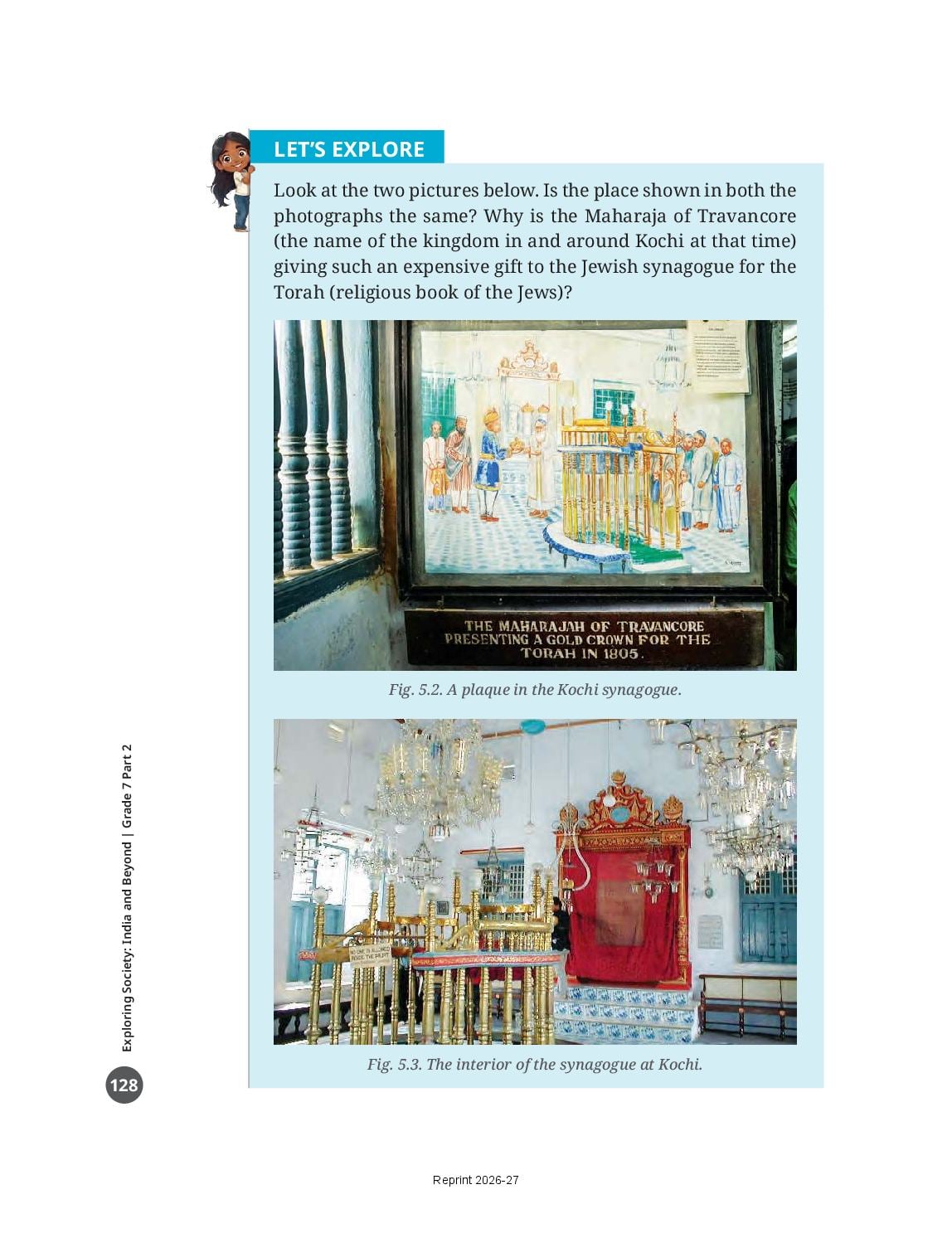
| Synagogue | “A place of worship for Jews where religious services and special ceremonies like weddings are held” | Word box, page 127 | The Jews near Cochin “built a synagogue, which enabled them to practise their faith even as they became part of the Indian society”. Figs. 5.2 and 5.3 show its interior |
| Bene Israel | The Jewish community that lived on the Konkan coast, just south of Mumbai | “The Story of Indian Jews”, pages 126–127 | According to some scholars they came around 175 BCE from the ancient Kingdom of Israel, shipwrecked near the coast. They lost their holy books but “remembered their prayer, which says there is only one God”, and grew to over 25,000 shortly after Independence |
| Syriac (Syrian) Christians | Christian groups who used the ancient Syriac language in their worship and traditions | “The Syriac Christian Community”, page 129 | They came to the Malabar coast from the 4th century CE — treated as heretics under Rome, suspected of helping Rome in Persia. In India they “are divided into several sects” |
| Zoroastrianism | “One of the world’s oldest religions… founded by the prophet Zarathushtra in Central Asia. It is based on the worship of one God, Ahurā Mazdā. Choosing good over evil is an important aspect of this faith” | Word box, page 130 | Its followers in India are the Parsis. Today “India has the largest population of followers of Zoroastrianism in the world” |
| Jizya | A religious tax | “The Legend of the Parsi Wise Man, Milk, and Sugar”, page 130 | One of the forms persecution took in Persia after the Arab conquest, along with “forced conversions to Islam… destruction of their sacred fire temples, as well as social and legal marginalisation” |
| Avesta | “The Parsis’ ancient sacred text”; its language is Old Avestan | Page 132 | Old Avestan and Vedic Sanskrit “share many word roots and also grammatical features”: soma = haoma, hotar = haotar, yajña = yasna. But devas are good in the Vedas while daevas are evil in the Avesta |
| Mappila Muslim community | The community in Kerala that Arab merchants became part of, after settling and marrying local women | “The Arab Merchant Community”, page 133 | They “helped build India’s oldest mosque, the Cheraman Juma Masjid” (Fig. 5.8). The chapter is careful to say these settlers “came as peaceful traders, not as conquerors” |
| Siddi | A community of African origin, brought to India as slaves between the 7th and 19th centuries | “The African Connection”, pages 133–134 | Their identity “represents a fusion of African and Indian traditions” — a distinctive dance with African-style drumming, language adapted to regional influences, African religious practices integrated with Hinduism, Islam or Christianity. They are “designated as a scheduled tribe”, and their “overall economic condition remains poor” |
| Hirabai Lobi | A Siddi woman from the community settled in Gujarat | Fig. 5.12 and its box, page 134 | She connected the women of her community with banking services and taught them organic farming and other livelihood options, and was awarded the Padma Shri in 2023 |
| Baha’i | A religion begun in Persia in the mid-1800s, led by Baha’u’llah, whose teachings “spoke of unity among all people and harmony between religions” | “The Baha’i Community in India”, page 136 | Branded heretics in Iran, some came to India from the late 19th century. “Most Baha’is here today are Indians who believe in the faith’s message of unity and love.” The Lotus Temple in New Delhi is theirs (Fig. 5.14) |
Old NCERT vs New – Class 7 Social Science
This chapter is from Exploring Society: India and Beyond, the new NCERT Class 7 Social Science book (NCF-SE 2023, used from 2025-26). It replaced the old book “Our Pasts, Our Environment and Social and Political Life”, so chapter numbers and names differ from older PDFs.
Solutions and All Chapters
Answers to the exercises and the full chapter list of Exploring Society: India and Beyond:
India, a Home to Many – Overview
| Class | Class 7 |
| Subject | Social Science |
| Book | Exploring Society: India and Beyond – new NCERT book |
| Part | Part II |
| Chapter | 17 of 20 – India, a Home to Many |
| Book pages | Part II, 125 – 142 |
| Edition | NCERT Reprint 2026-27 |
| Session | 2026-27 |
| Free – read online or download |
Class 7 Social Science Chapter 17 – FAQs
Where can I download India, a Home to Many Class 7 PDF?
From the download table on this page – the chapter PDF is free, and the full book is linked too.
What is Class 7 Social Science Chapter 17 about?
A second kind of migrant. In Grade 6 we read that “many Indians may be called migrants, in the sense of people not living near their birthplace or with their original community.” This chapter looks at the other kind — “people who came to India from other parts of the world and settled here, adding another dimension to the diversity.” The book is clear that it cannot cover them all and has “selected only a few representative examples.”
Is India, a Home to Many from the new NCERT Class 7 Social Science book?
Yes. It is chapter 17 of exploring society: india and beyond (part ii), the new NCERT Class 7 Social Science book for 2026-27.
Is this the latest NCERT edition for 2026-27?
Yes – the PDF is NCERT’s latest edition for the 2026-27 session.
Where are the NCERT Solutions for Class 7 Social Science Chapter 17?
Open the NCERT Solutions link above for answers to the exercise questions.