Download The State, the Government, and You – NCERT Class 7 Social Science Chapter 18 PDF from the new NCERT Class 7 Social Science book Exploring Society: India and Beyond (2026-27). Read the chapter online or download the free PDF. A state is not the same thing as a government. A state “is a political organisation that has the authority to govern a defined territory and its population”, and it has four parts — people, land, government and sovereignty. The government is only…
The State, the Government, and You PDF – Chapter 18 of Exploring Society: India and Beyond (Part II)
Read the chapter online or download the PDF.
| Chapter | Download | |
|---|---|---|
| Chapter 18 PDF | The State, the Government, and You | View PDF |
| Full book | NCERT Class 7 Social Science – Exploring Society: India and Beyond | View Book |
Read Online
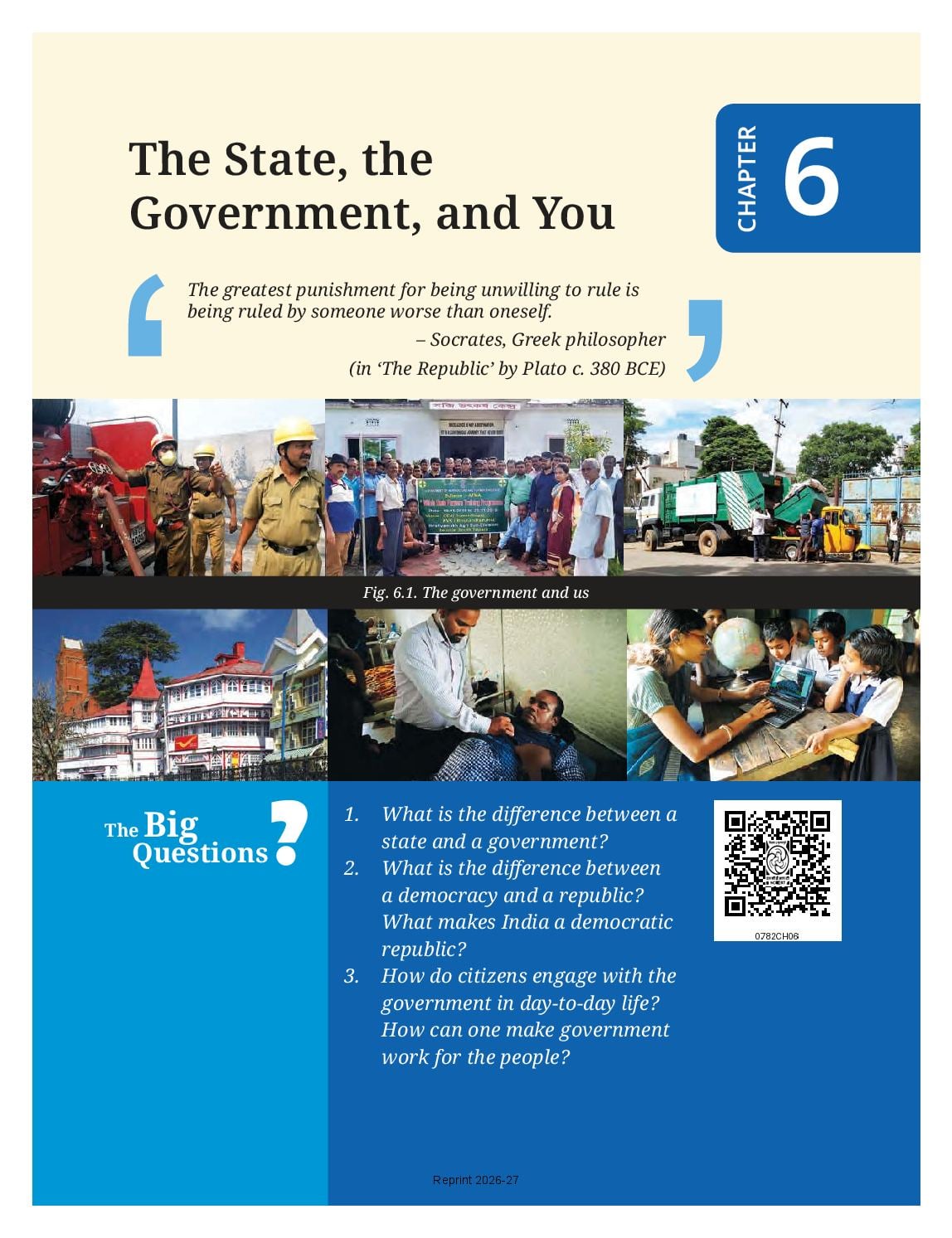
What Is in The State, the Government, and You? (Class 7 Social Science Chapter 18)
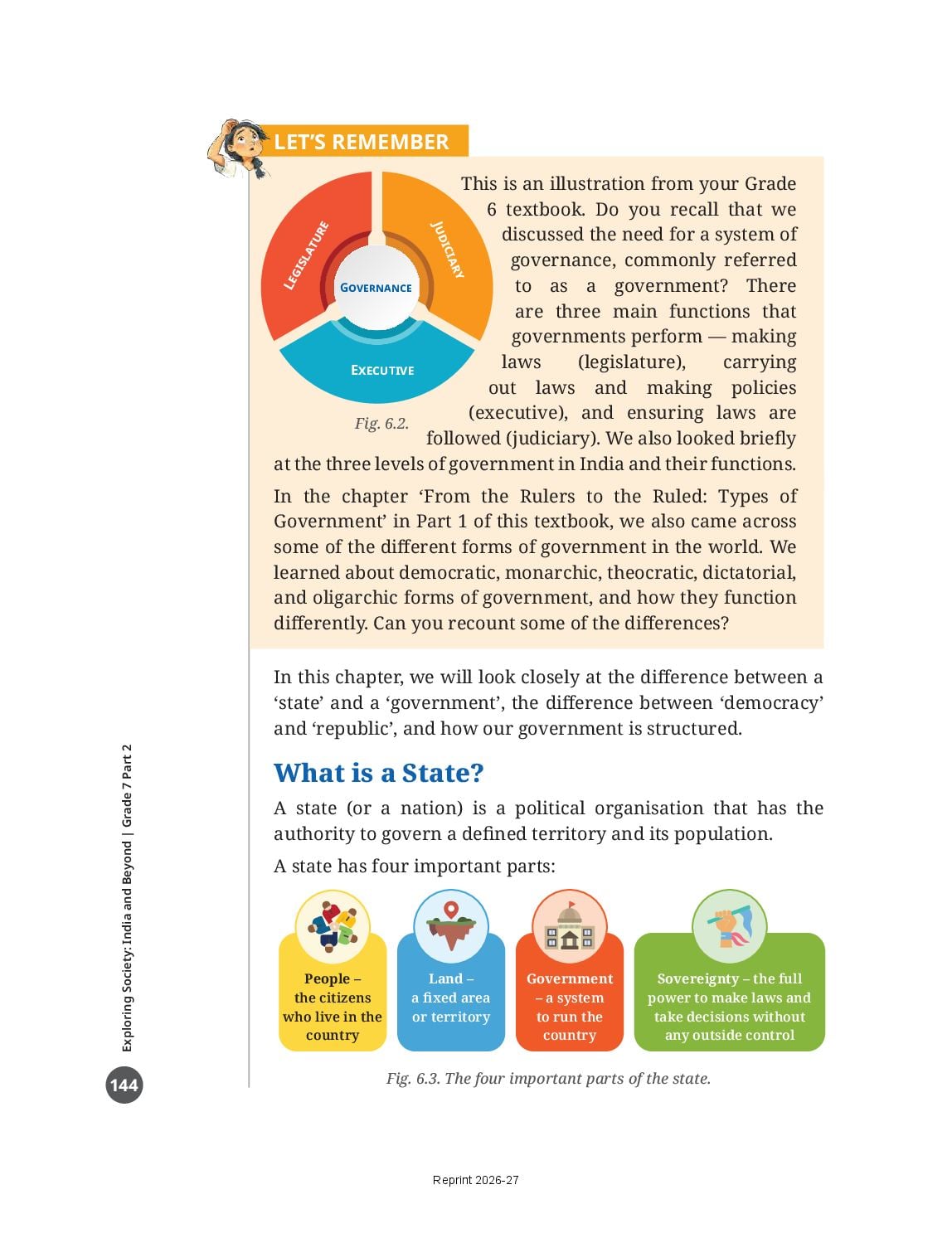
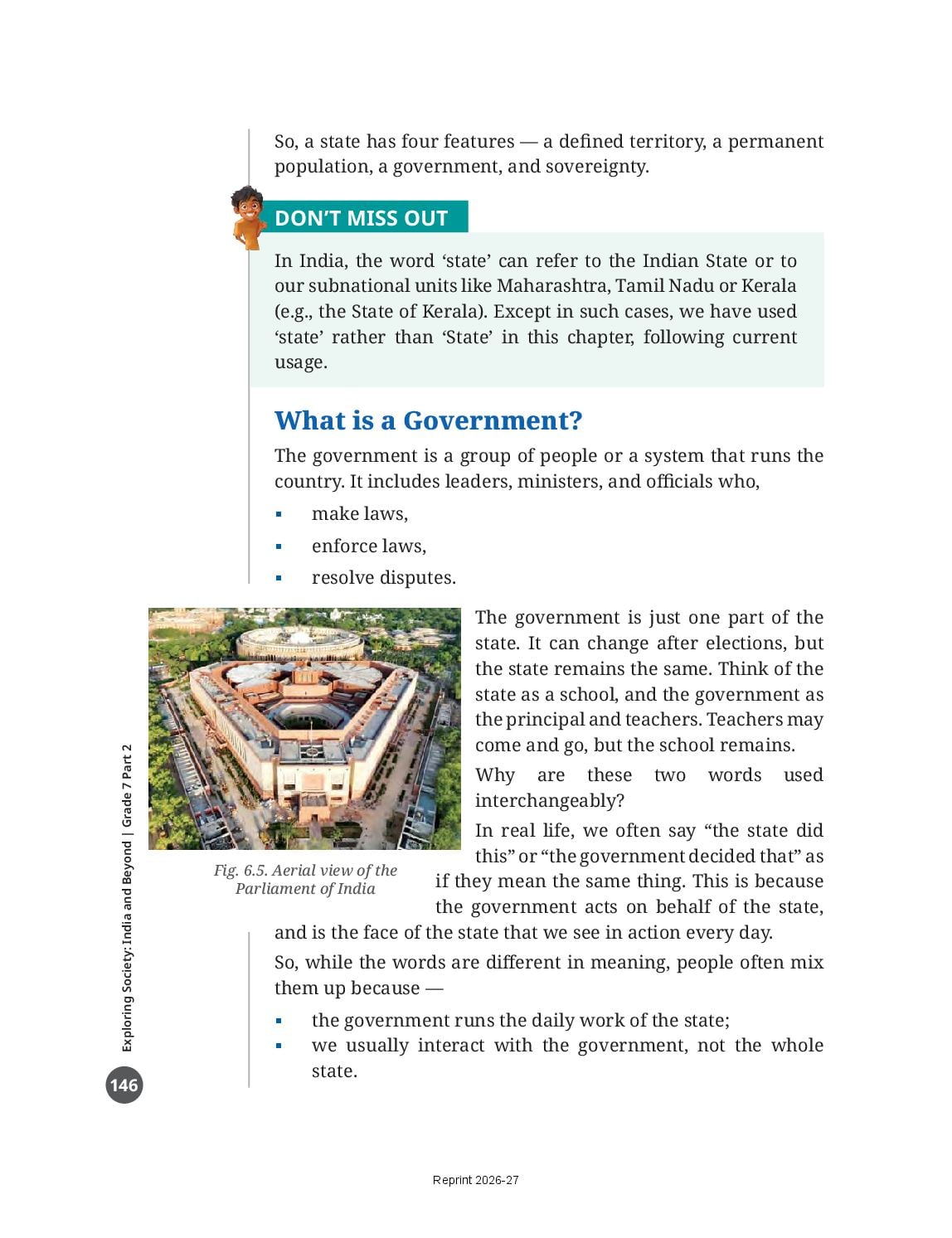
- A state is not the same thing as a government. A state “is a political organisation that has the authority to govern a defined territory and its population”, and it has four parts — people, land, government and sovereignty. The government is only one of those four. As the chapter puts it: “Think of the state as a school, and the government as the principal and teachers. Teachers may come and go, but the school remains.”
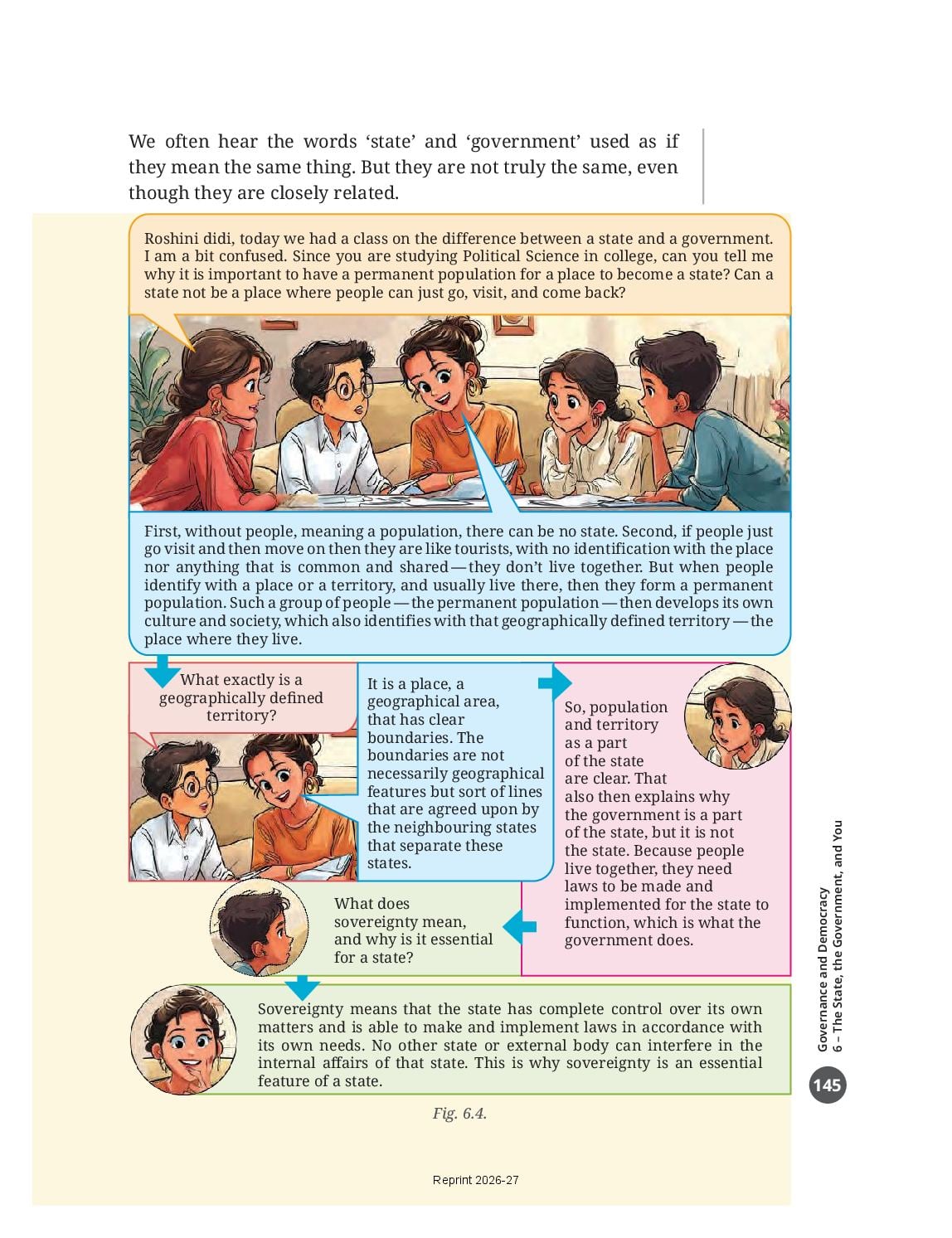
- Sovereignty is what makes a state a state. It “means that the state has complete control over its own matters and is able to make and implement laws in accordance with its own needs. No other state or external body can interfere in the internal affairs of that state.” A permanent population matters too — tourists “have no identification with the place”, but a permanent population “develops its own culture and society”.
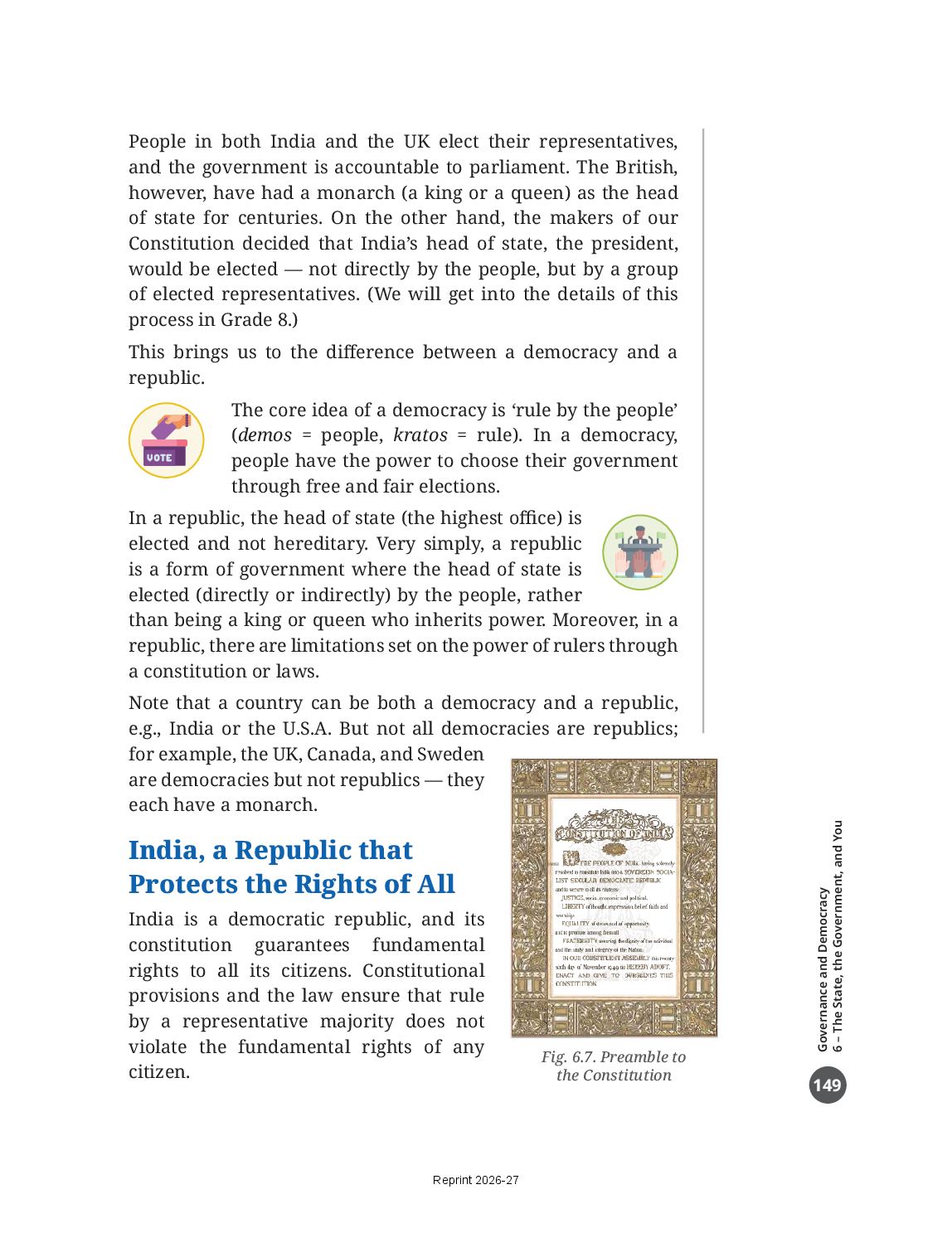
- Democracy and republic are two different ideas. Democracy is “rule by the people” (demos = people, kratos = rule) — people choose the government through free and fair elections. In a republic “the head of state (the highest office) is elected and not hereditary”, and the ruler’s powers are limited by a constitution. India and the U.S.A. are both; the UK, Canada and Sweden are democracies but not republics, because each has a monarch.
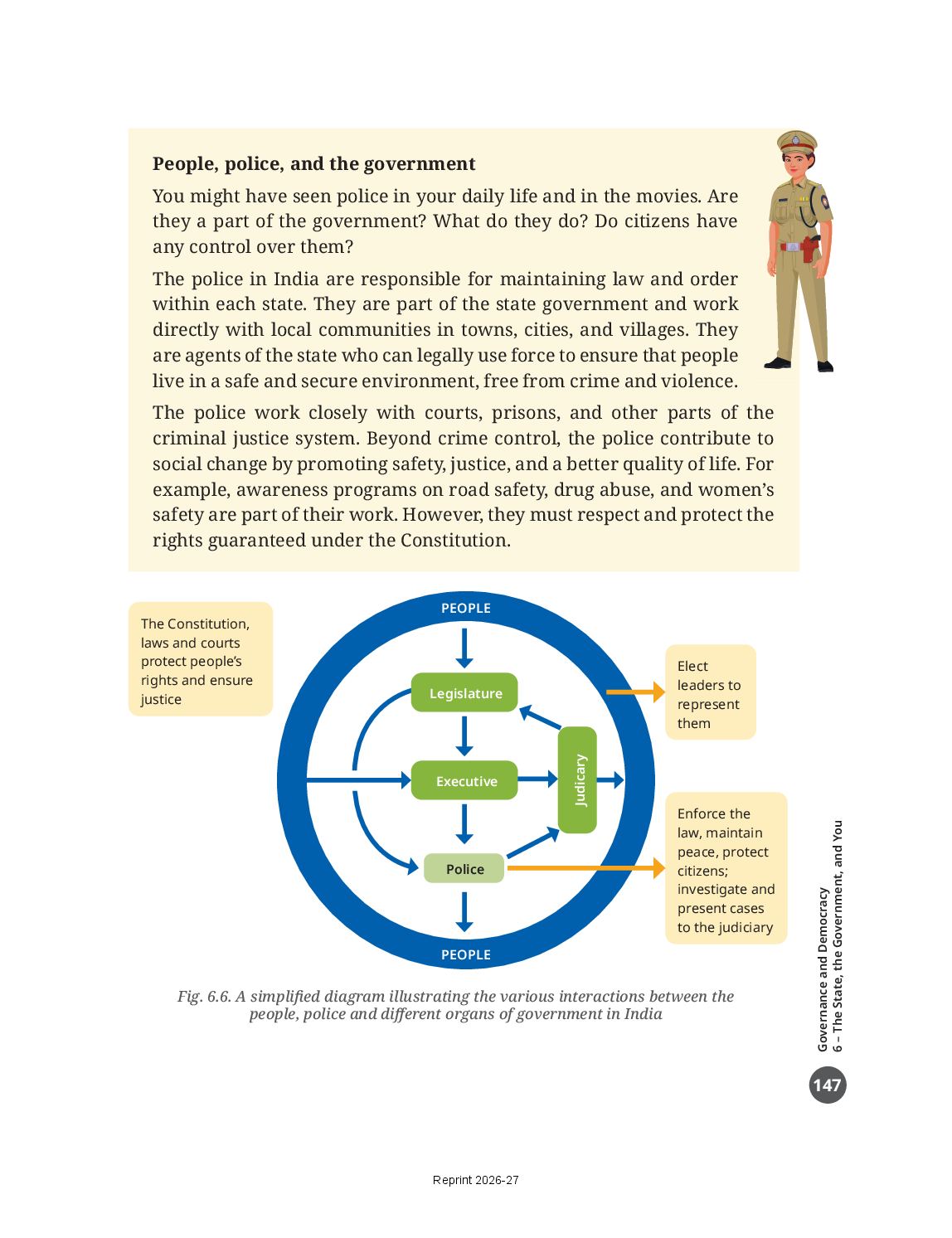
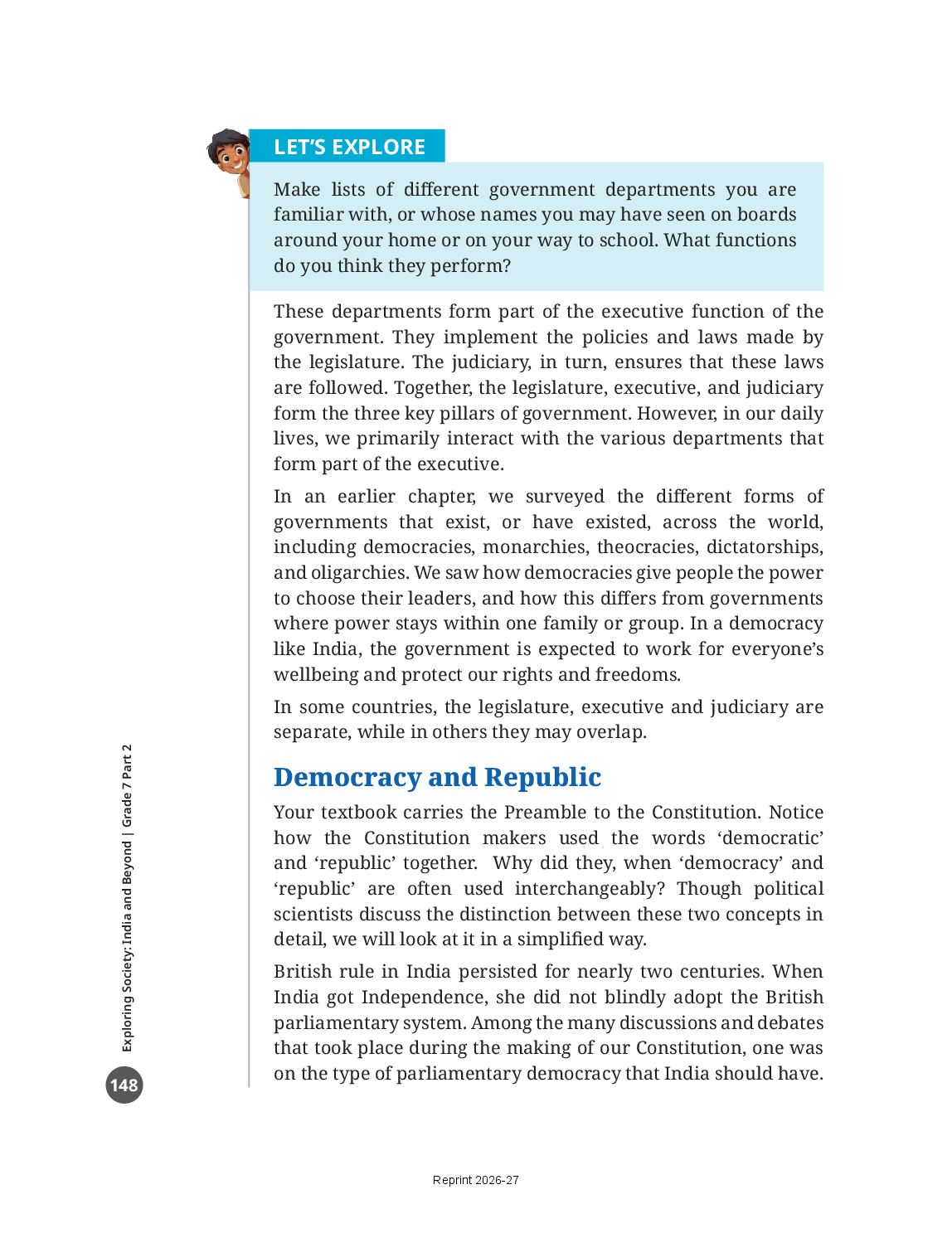
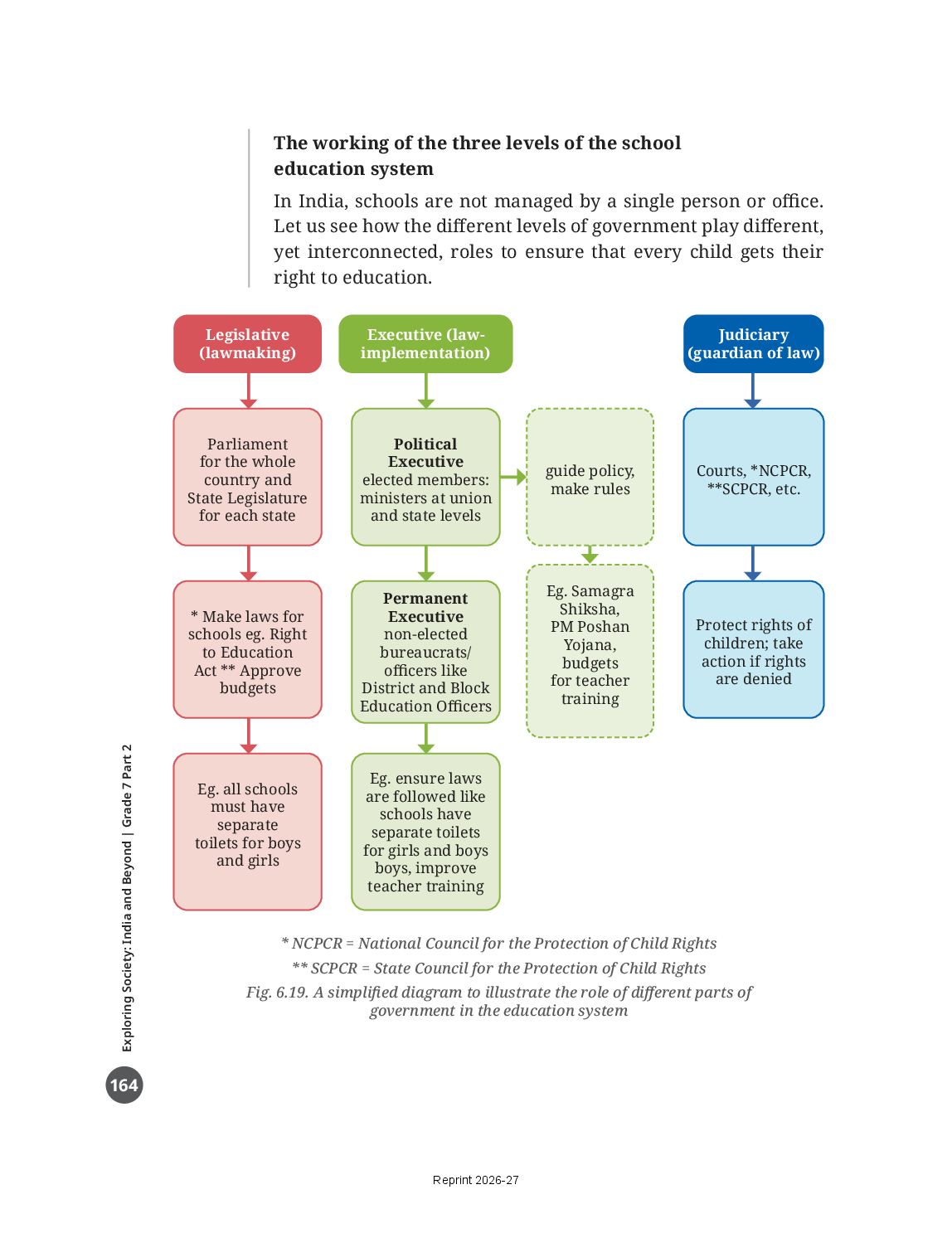
- Three organs, and the Constitution above them. The legislature makes laws, the executive implements them and makes policy, the judiciary makes sure they are followed and protects our rights. The executive has two halves — the political executive (elected: prime minister, chief ministers, ministers) and the permanent executive (selected through examinations such as the UPSC: the IAS, IPS, IFS, IRS, IFoS and every officer below them). The Constitution “ensures that no part of the government becomes too powerful”.
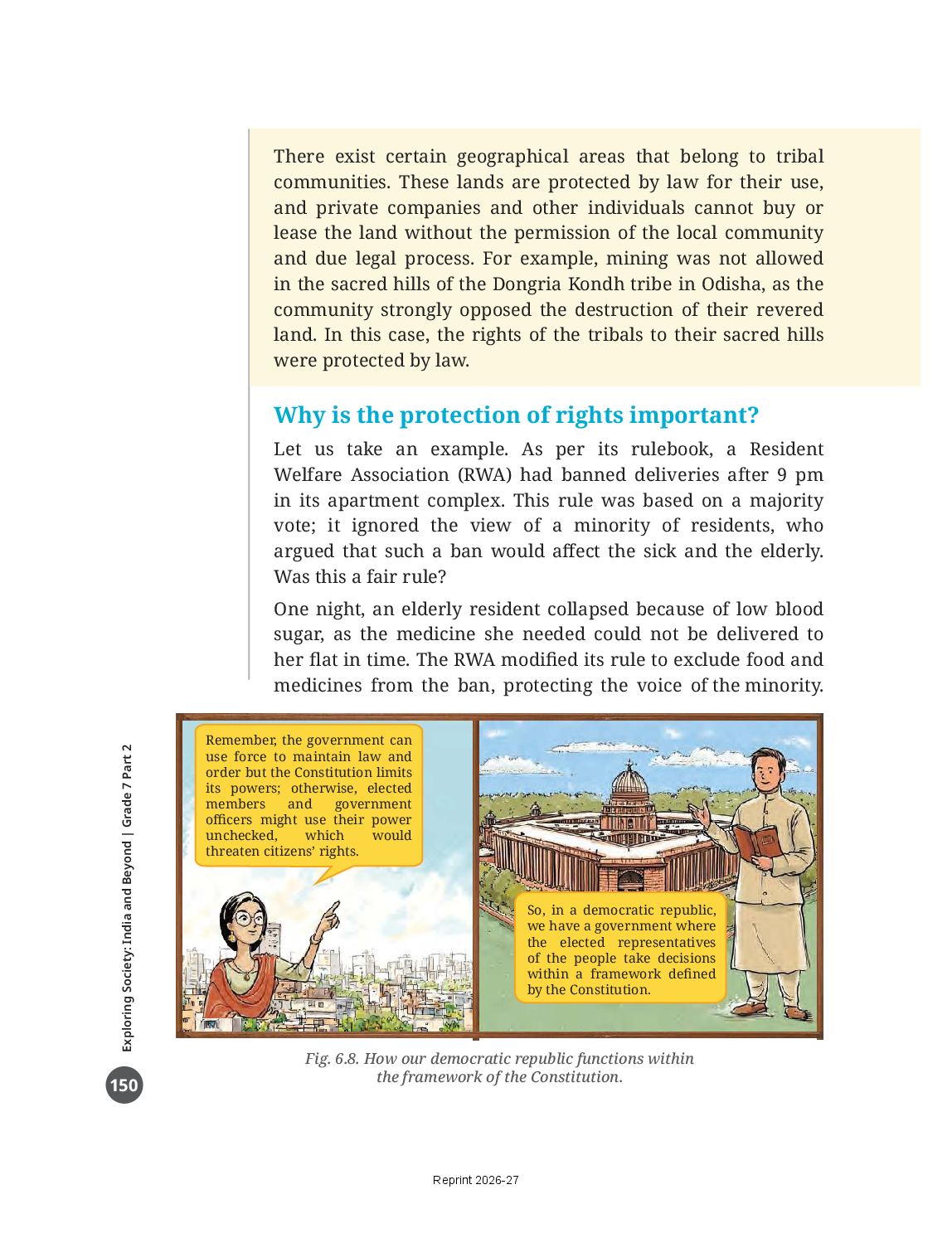
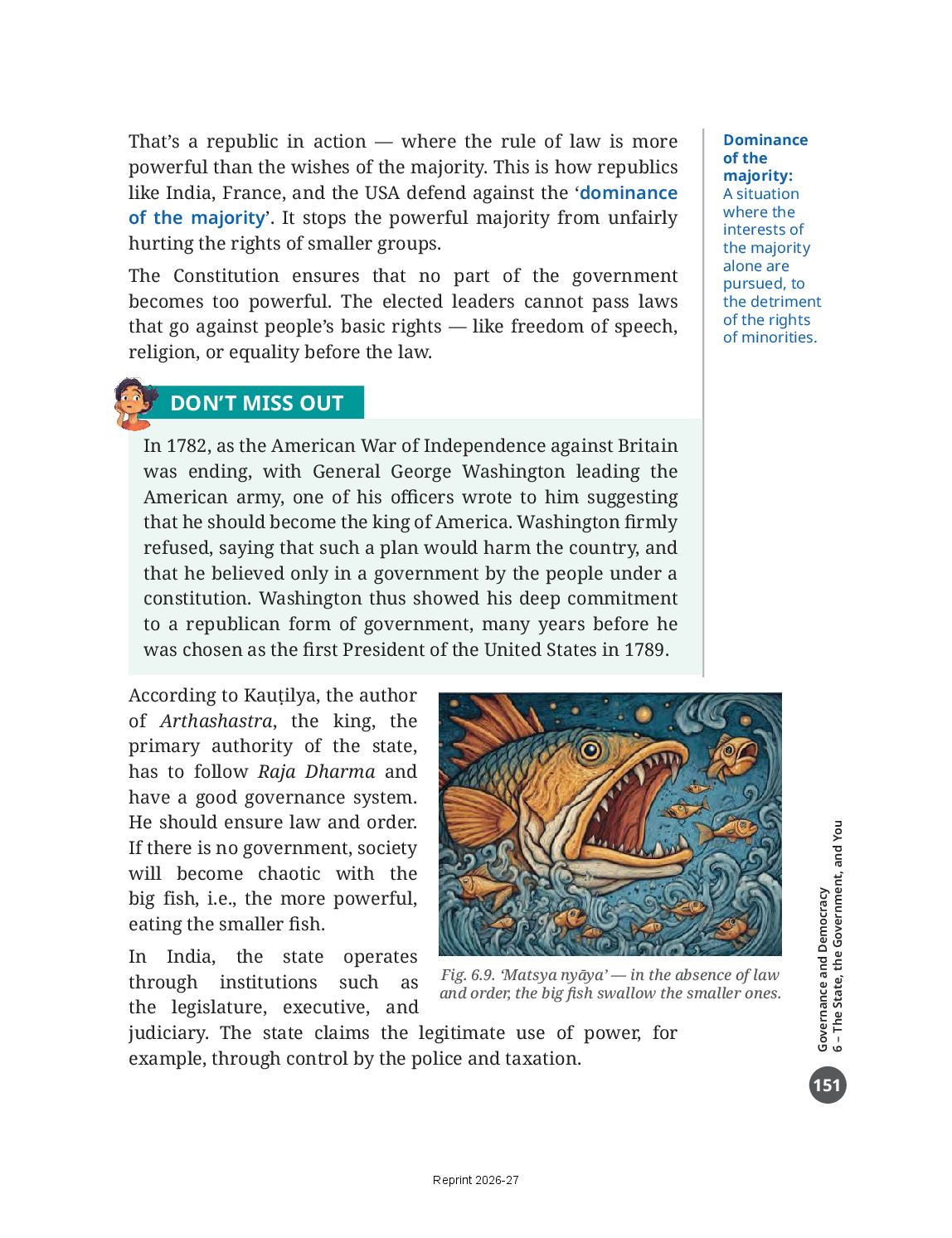
- Rights are protected even against a majority. The chapter’s RWA story — a rule passed by majority vote that kept an elderly resident from getting her medicine in time — is its example of the dominance of the majority, “a situation where the interests of the majority alone are pursued, to the detriment of the rights of minorities”. In a republic “the rule of law is more powerful than the wishes of the majority”, which is why mining was stopped in the Dongria Kondh’s sacred hills in Odisha.
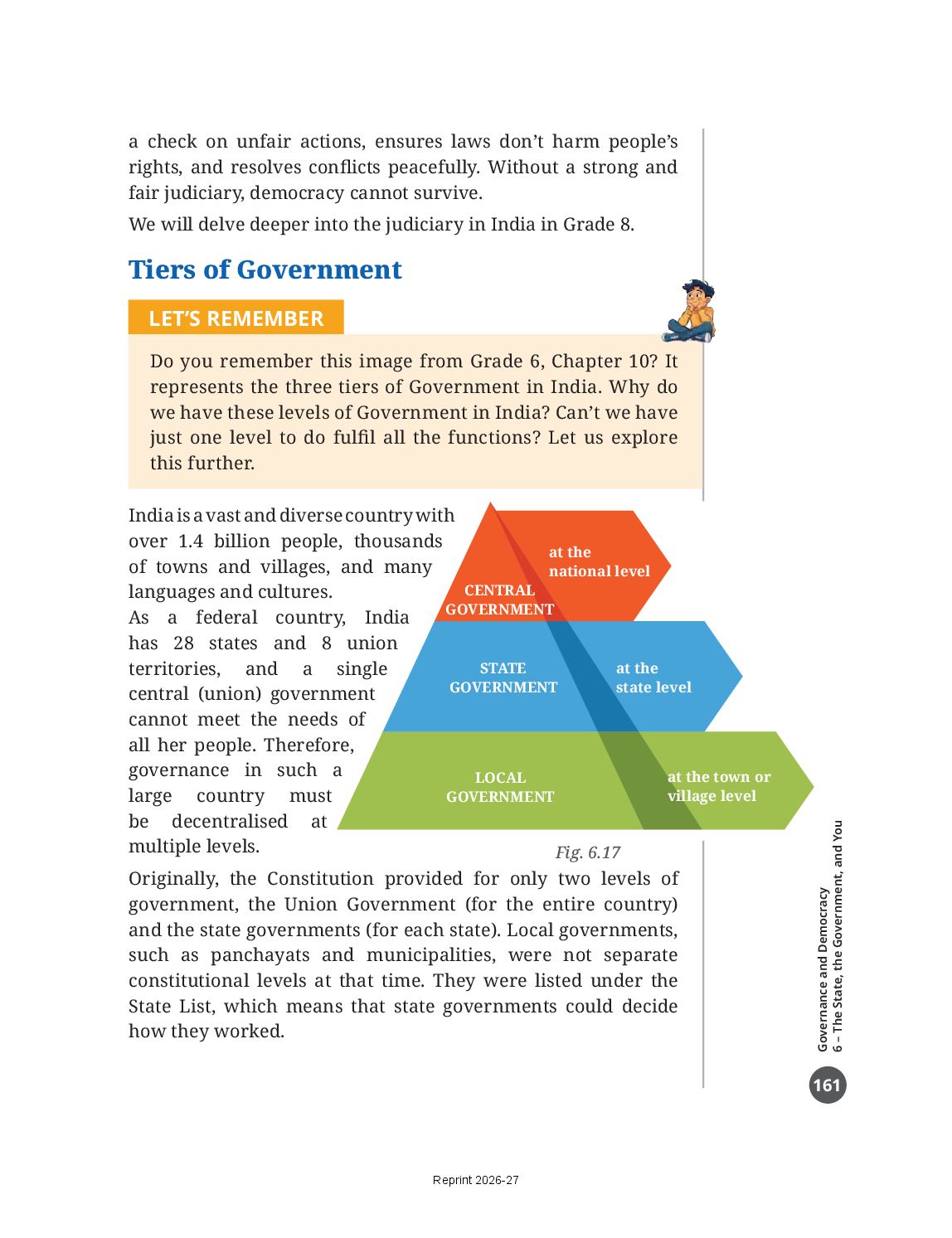
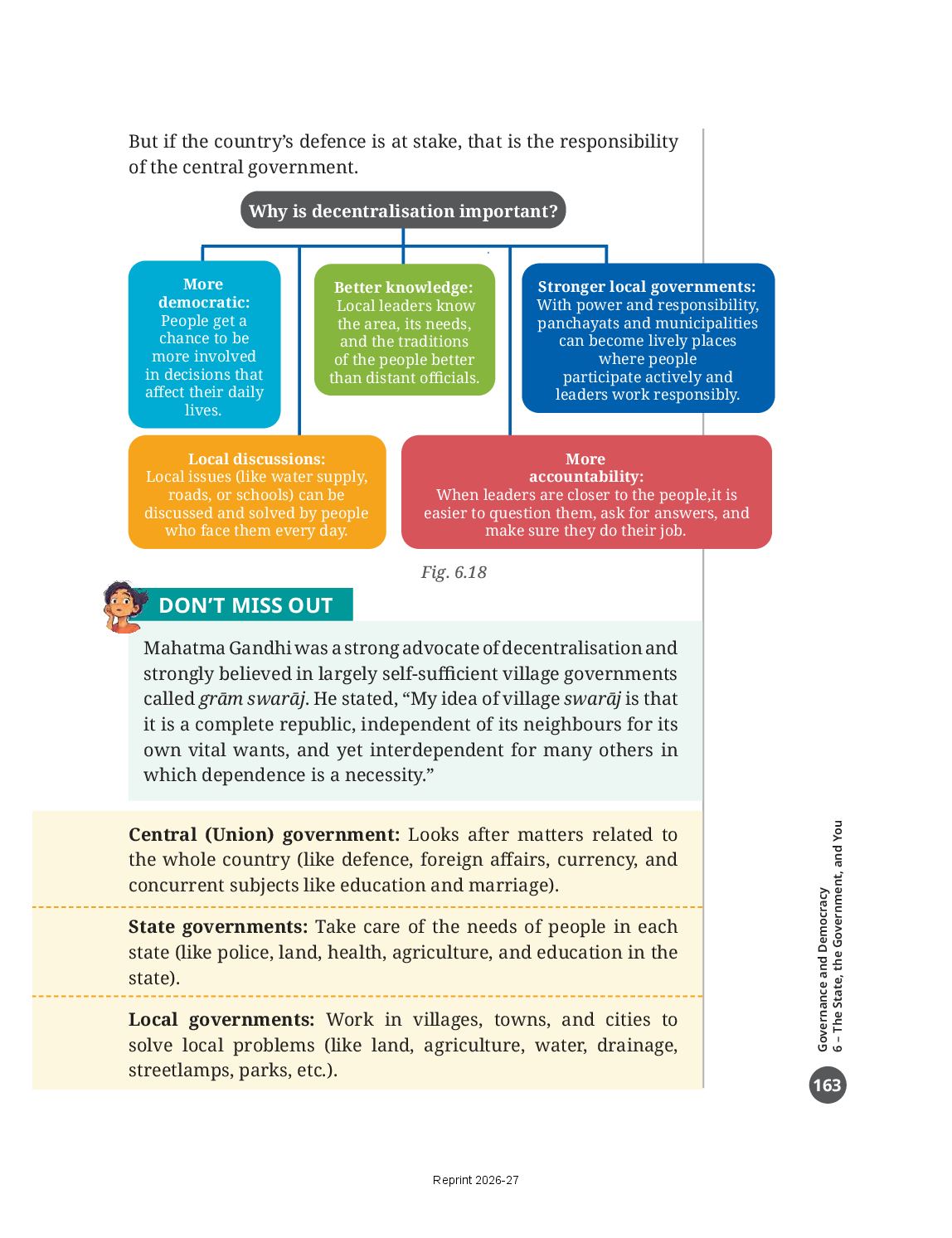
- Three tiers, because India is too big for one. India has “over 1.4 billion people”, 28 states and 8 union territories, so governance “must be decentralised at multiple levels”. The Constitution first provided only two levels; in the early 1990s it was amended to create the panchayati raj system and municipalities as the third tier. Decentralisation is about deciding local things locally — “the local municipal body can do it faster”.
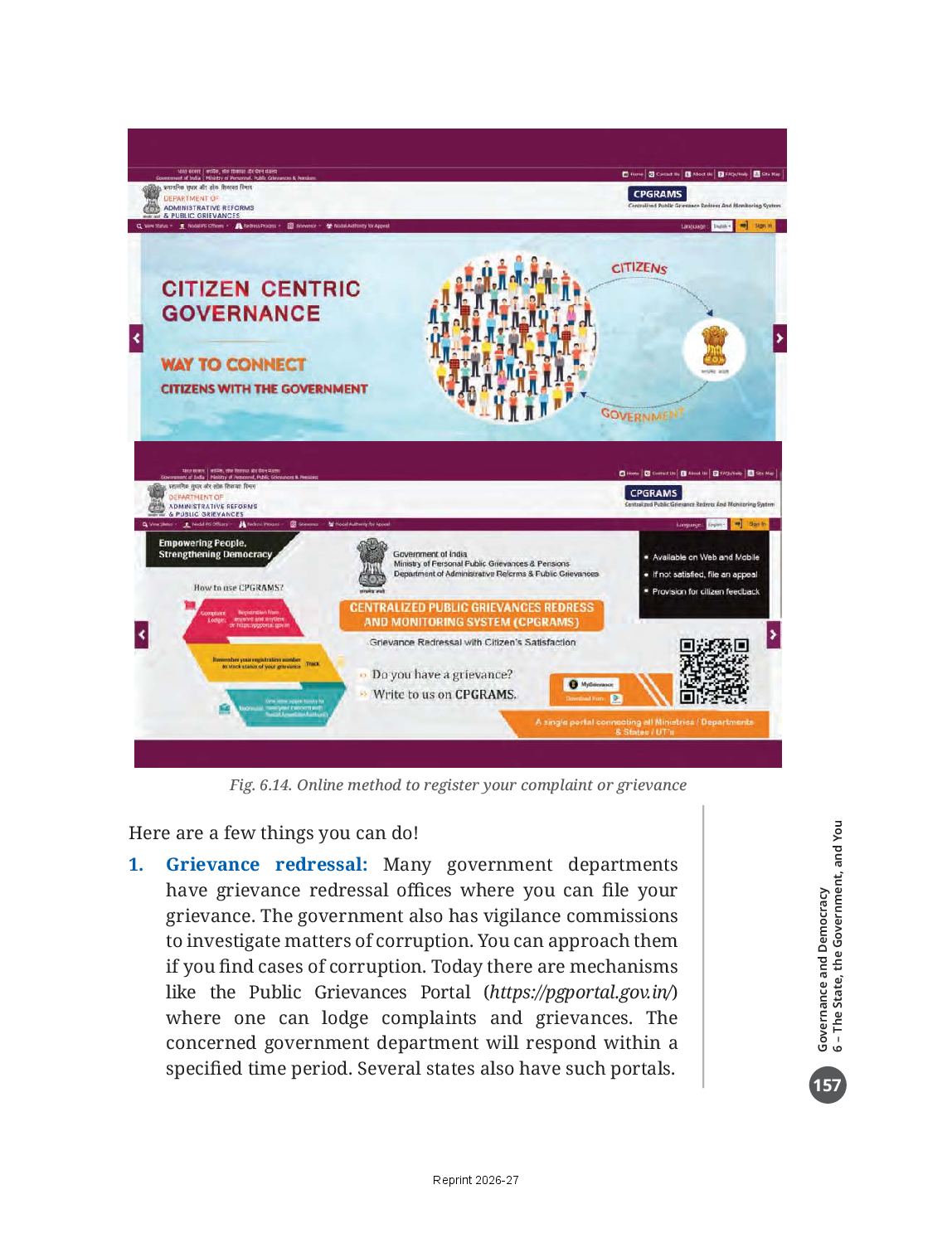
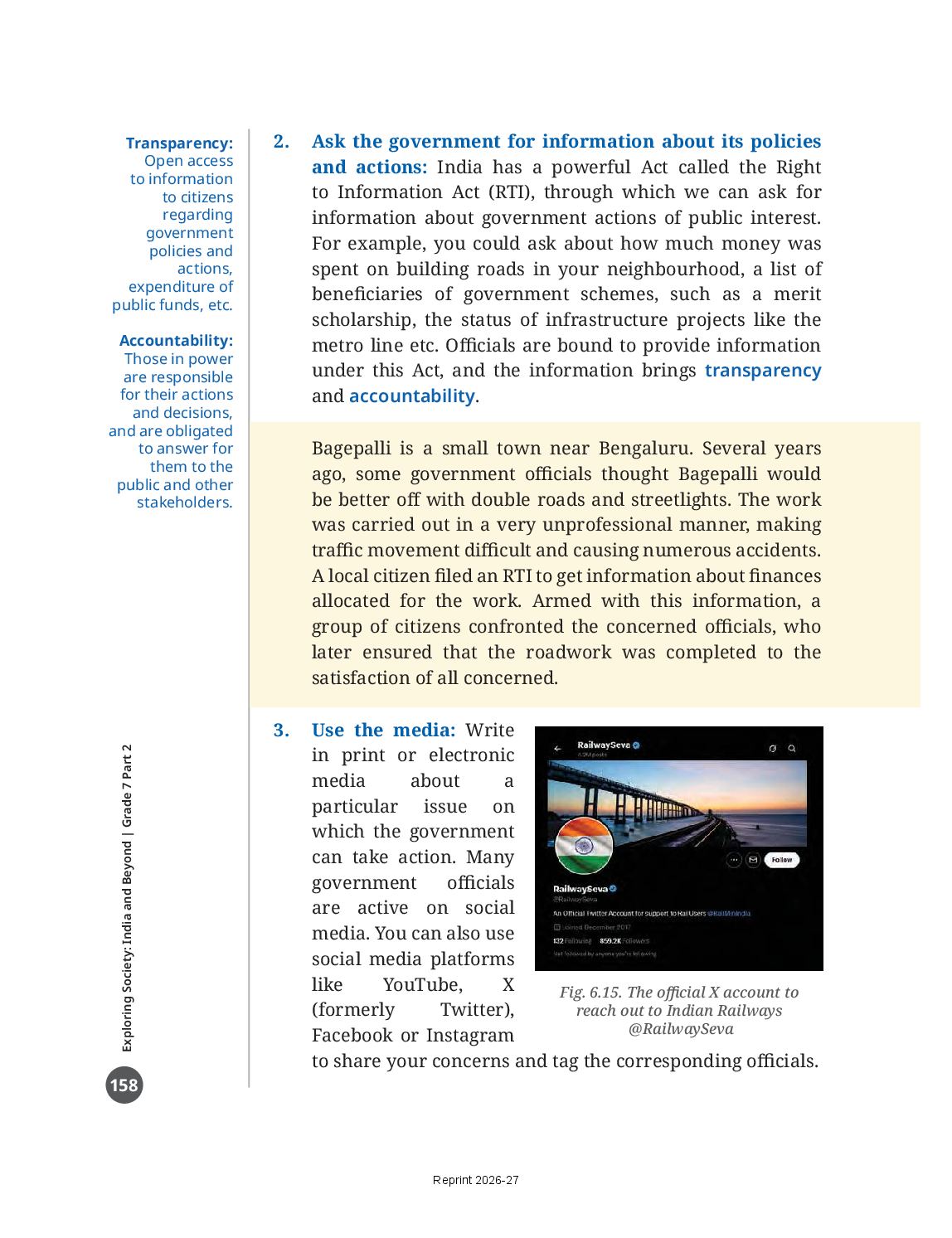
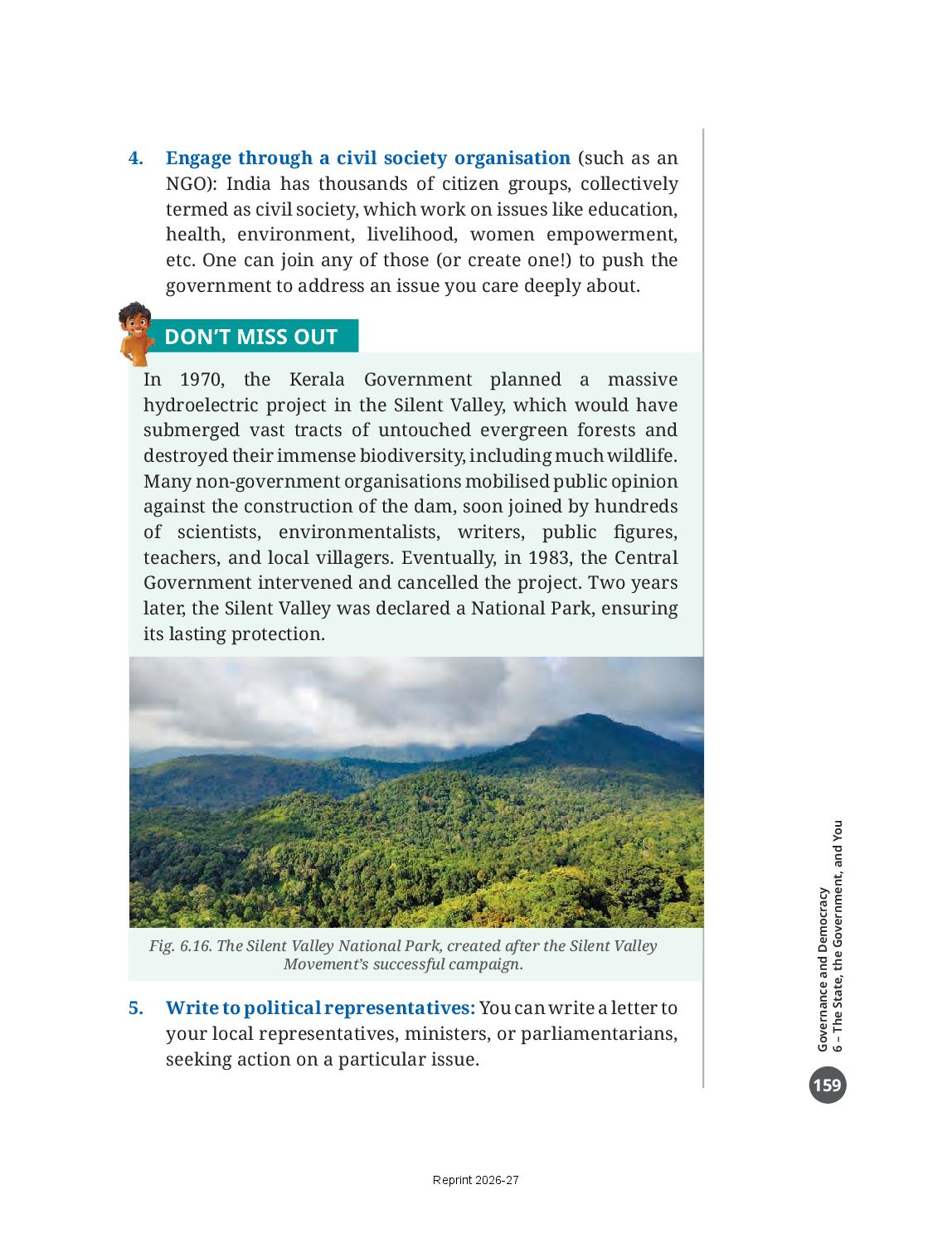
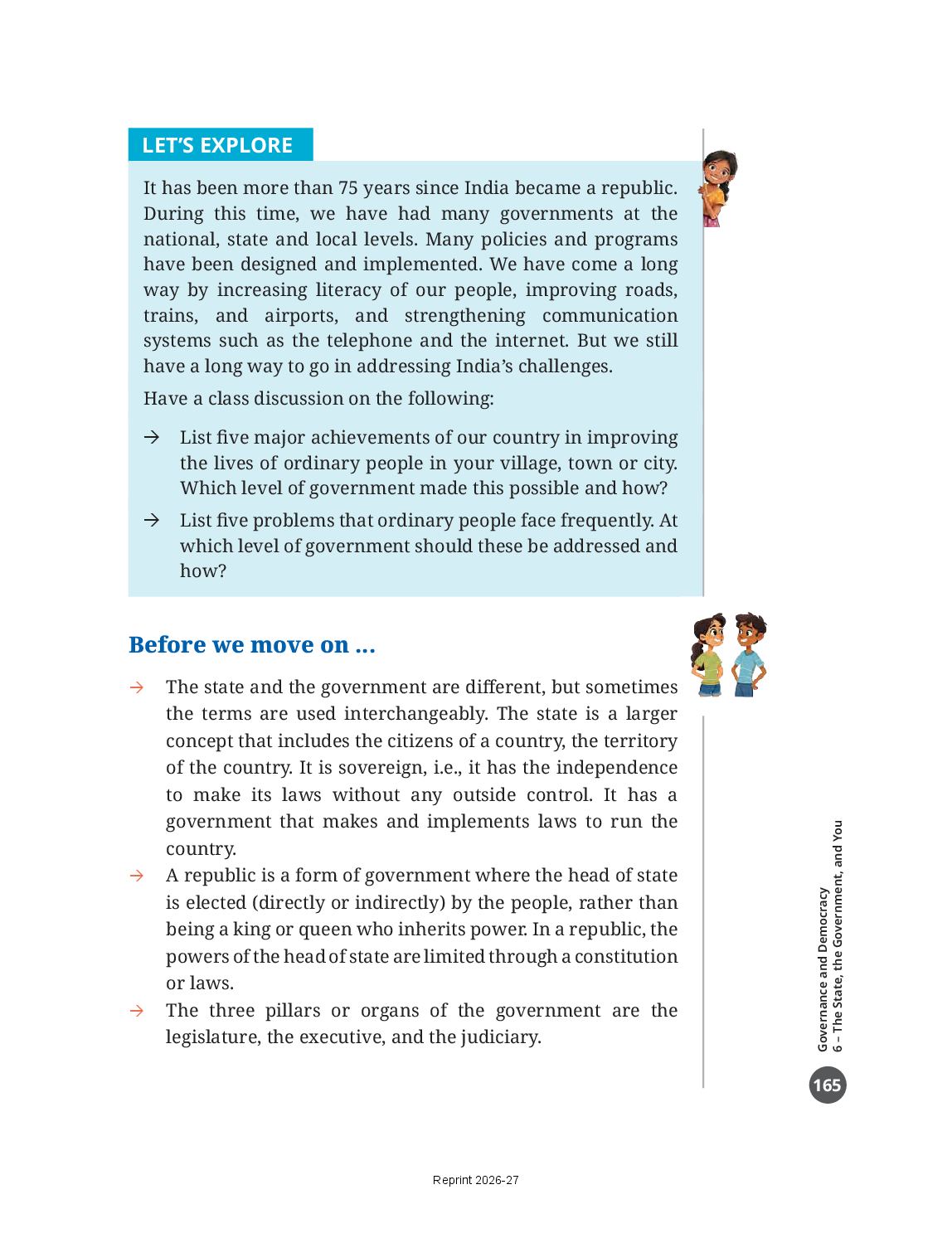
- And you are not a spectator. The chapter lists six things a citizen can actually do: file a grievance (the Public Grievances Portal, pgportal.gov.in), use the Right to Information Act (as the citizens of Bagepalli did), use the media, join a civil society organisation (as in the Silent Valley campaign), write to your representatives, and, once old enough, vote. Two words hold this together — transparency and accountability.
Quick revision – The State, the Government, and You
| Term | What it means | Where it appears in the chapter | Worth remembering |
|---|---|---|---|
| State | “A political organisation that has the authority to govern a defined territory and its population” | “What is a State?”, page 144, and Fig. 6.3 | It has four parts — people, land, government and sovereignty. Note the DON’T MISS OUT on page 146: in India ‘state’ can mean the Indian State or a unit like Kerala, so the book writes ‘state’ in lower case except in cases such as “the State of Kerala” |
| Government | “A group of people or a system that runs the country… leaders, ministers, and officials” who make laws, enforce laws and resolve disputes | “What is a Government?”, page 146 | It is one part of the state, not the state itself: “It can change after elections, but the state remains the same” |
| Sovereignty | “The full power to make laws and take decisions without any outside control” | Fig. 6.3, page 144, and Roshini didi’s answer, page 145 | “No other state or external body can interfere in the internal affairs of that state. This is why sovereignty is an essential feature of a state” |
| Permanent population | People who identify with a territory and usually live there — not visitors | Fig. 6.4 dialogue, page 145 | Tourists “go visit and then move on… they don’t live together”. A permanent population “develops its own culture and society” |
| Geographically defined territory | “A place, a geographical area, that has clear boundaries” | Fig. 6.4 dialogue, page 145 | The boundaries “are not necessarily geographical features but sort of lines that are agreed upon by the neighbouring states” |
| Democracy | “Rule by the people” — demos = people, kratos = rule; people choose the government through free and fair elections | “Democracy and Republic”, page 149 | A democracy answers the question who chooses the government? |
| Republic | “A form of government where the head of state is elected (directly or indirectly) by the people, rather than being a king or queen who inherits power” | Page 149 | It answers a different question — how does one become head of state? In a republic there are also “limitations set on the power of rulers through a constitution or laws” |
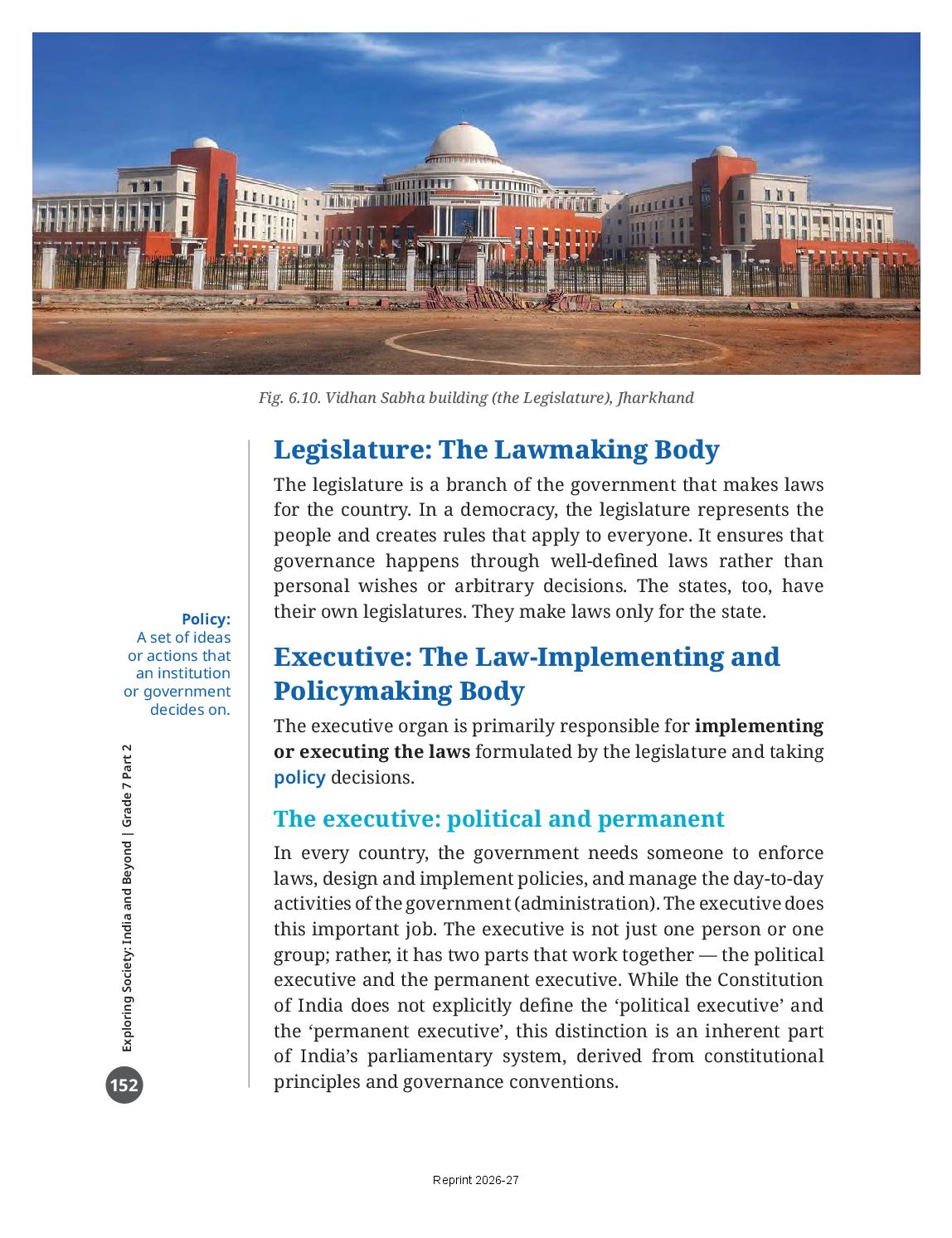
| Legislature | The organ that makes laws | “Legislature: The Lawmaking Body”, page 152, and Fig. 6.10 | “It ensures that governance happens through well-defined laws rather than personal wishes or arbitrary decisions.” States have their own legislatures, which “make laws only for the state” |
| Executive | The organ that implements laws and takes policy decisions | Page 152 | It has two halves — the political executive and the permanent executive. The Constitution “does not explicitly define” these terms; the distinction comes from India’s parliamentary system and its conventions |
| Political executive | Leaders elected by the people — prime minister, chief ministers and their ministers, plus the president and governors (“mostly formal or symbolic roles”) | Page 153 | They stay “for a fixed time — usually five years”. “Their power depends on the trust and support of the people” |
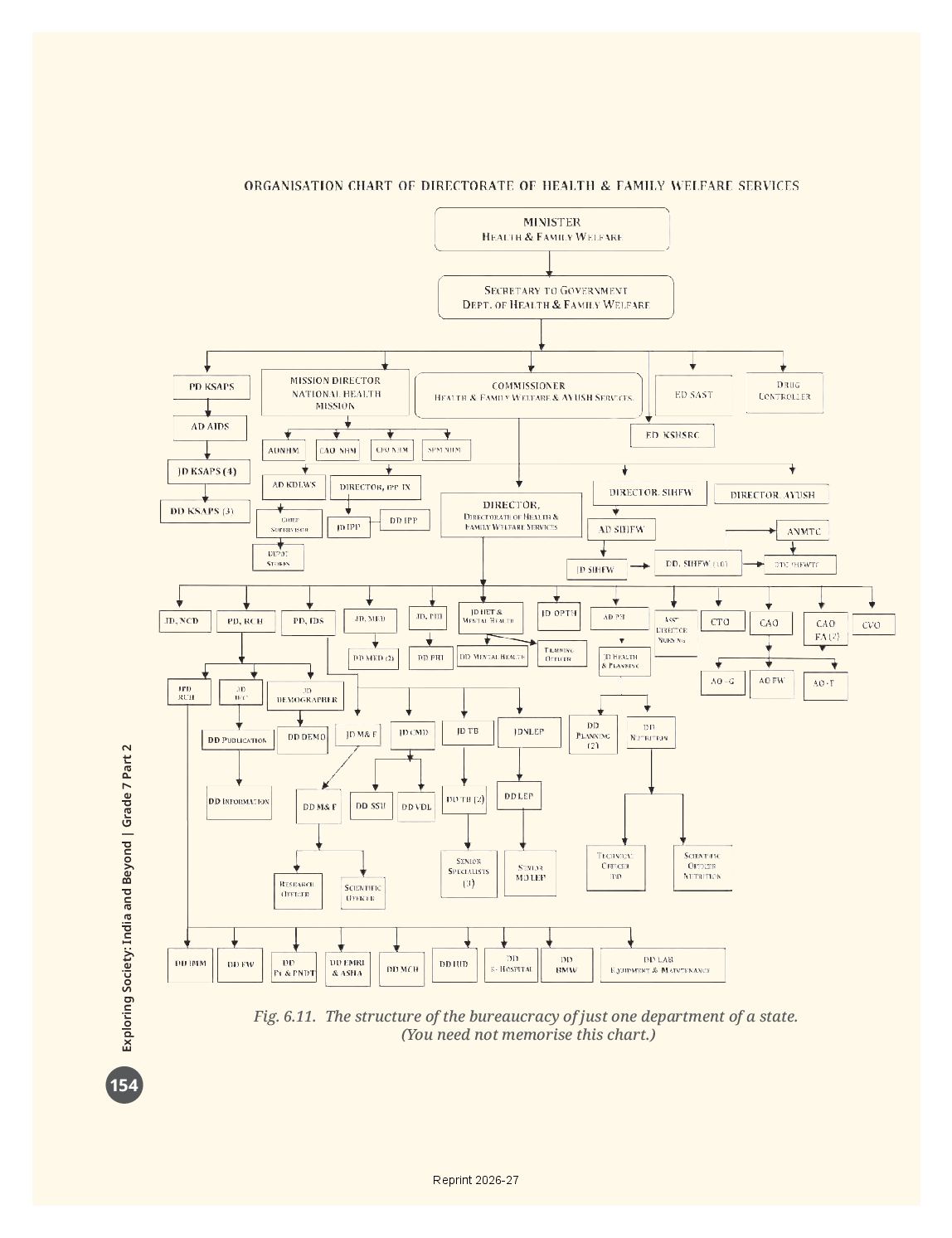
| Permanent executive | Officers who are “not elected but are selected through examinations like those conducted by the Union Public Service Commission (UPSC)” — bureaucrats or civil servants | Page 153 | They “are not removed or replaced after every election”. Best-known services: IFS, IAS, IPS, IRS, IFoS. Fig. 6.11 shows the hierarchy of just one department of one state |
| Judiciary | The organ that “makes sure everyone follows the law”, settles disputes and protects rights | “Judiciary: Guardian of the Constitution”, page 160 | It is independent — “not controlled by the government or politicians”. Its four listed jobs: protect the laws, interpret the laws, protect rights and liberty, and safeguard the Constitution through judicial review |
| Policy | “A set of ideas or actions that an institution or government decides on” | Word box, page 152 | Making policy is the executive’s job; making law is the legislature’s |
| Dominance of the majority | “A situation where the interests of the majority alone are pursued, to the detriment of the rights of minorities” | Word box, page 151 | The RWA delivery-ban story is the chapter’s example. Republics like India, France and the USA “defend against” it — “the rule of law is more powerful than the wishes of the majority” |
Old NCERT vs New – Class 7 Social Science
This chapter is from Exploring Society: India and Beyond, the new NCERT Class 7 Social Science book (NCF-SE 2023, used from 2025-26). It replaced the old book “Our Pasts, Our Environment and Social and Political Life”, so chapter numbers and names differ from older PDFs.
Solutions and All Chapters
Answers to the exercises and the full chapter list of Exploring Society: India and Beyond:
The State, the Government, and You – Overview
| Class | Class 7 |
| Subject | Social Science |
| Book | Exploring Society: India and Beyond – new NCERT book |
| Part | Part II |
| Chapter | 18 of 20 – The State, the Government, and You |
| Book pages | Part II, 143 – 168 |
| Edition | NCERT Reprint 2026-27 |
| Session | 2026-27 |
| Free – read online or download |
Class 7 Social Science Chapter 18 – FAQs
Where can I download The State, the Government, and You Class 7 PDF?
From the download table on this page – the chapter PDF is free, and the full book is linked too.
What is Class 7 Social Science Chapter 18 about?
A state is not the same thing as a government. A state “is a political organisation that has the authority to govern a defined territory and its population”, and it has four parts — people, land, government and sovereignty. The government is only one of those four. As the chapter puts it: “Think of the state as a school, and the government as the principal and teachers. Teachers may come and go, but the school remains.”
Is The State, the Government, and You from the new NCERT Class 7 Social Science book?
Yes. It is chapter 18 of exploring society: india and beyond (part ii), the new NCERT Class 7 Social Science book for 2026-27.
Is this the latest NCERT edition for 2026-27?
Yes – the PDF is NCERT’s latest edition for the 2026-27 session.
Where are the NCERT Solutions for Class 7 Social Science Chapter 18?
Open the NCERT Solutions link above for answers to the exercise questions.