Download From the Rulers to the Ruled: Types of Governments – NCERT Class 7 Social Science Chapter 9 PDF from the new NCERT Class 7 Social Science book Exploring Society: India and Beyond (2026-27). Read the chapter online or download the free PDF. Government does three things, and every type of government does them somehow. Making the rules is the legislative function, carrying them out and administering the country is the executive function, and making sure the rules are followed is the…
From the Rulers to the Ruled: Types of Governments PDF – Chapter 9 of Exploring Society: India and Beyond (Part I)
Read the chapter online or download the PDF.
| Chapter | Download | |
|---|---|---|
| Chapter 9 PDF | From the Rulers to the Ruled: Types of Governments | View PDF |
| Full book | NCERT Class 7 Social Science – Exploring Society: India and Beyond | View Book |
Read Online
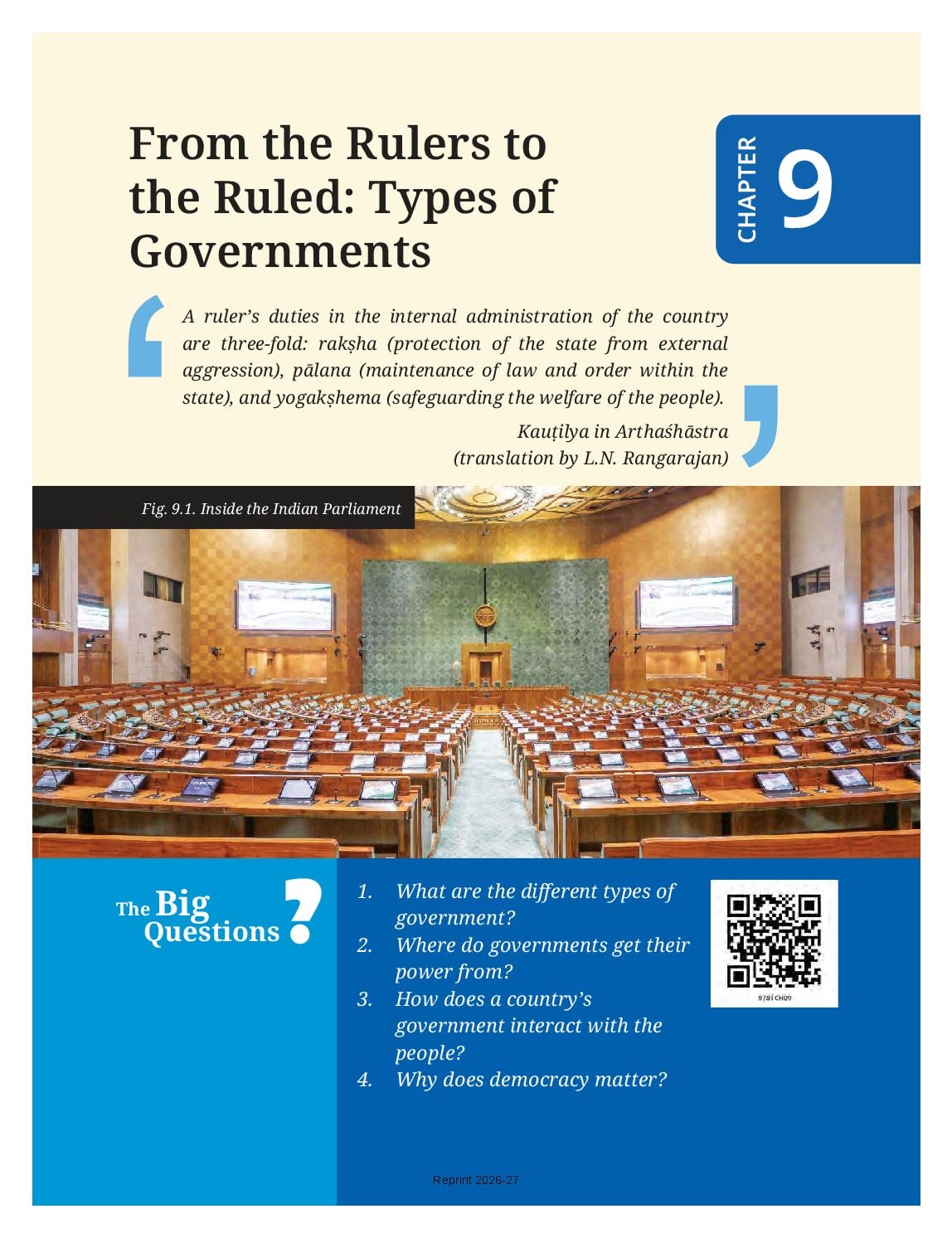
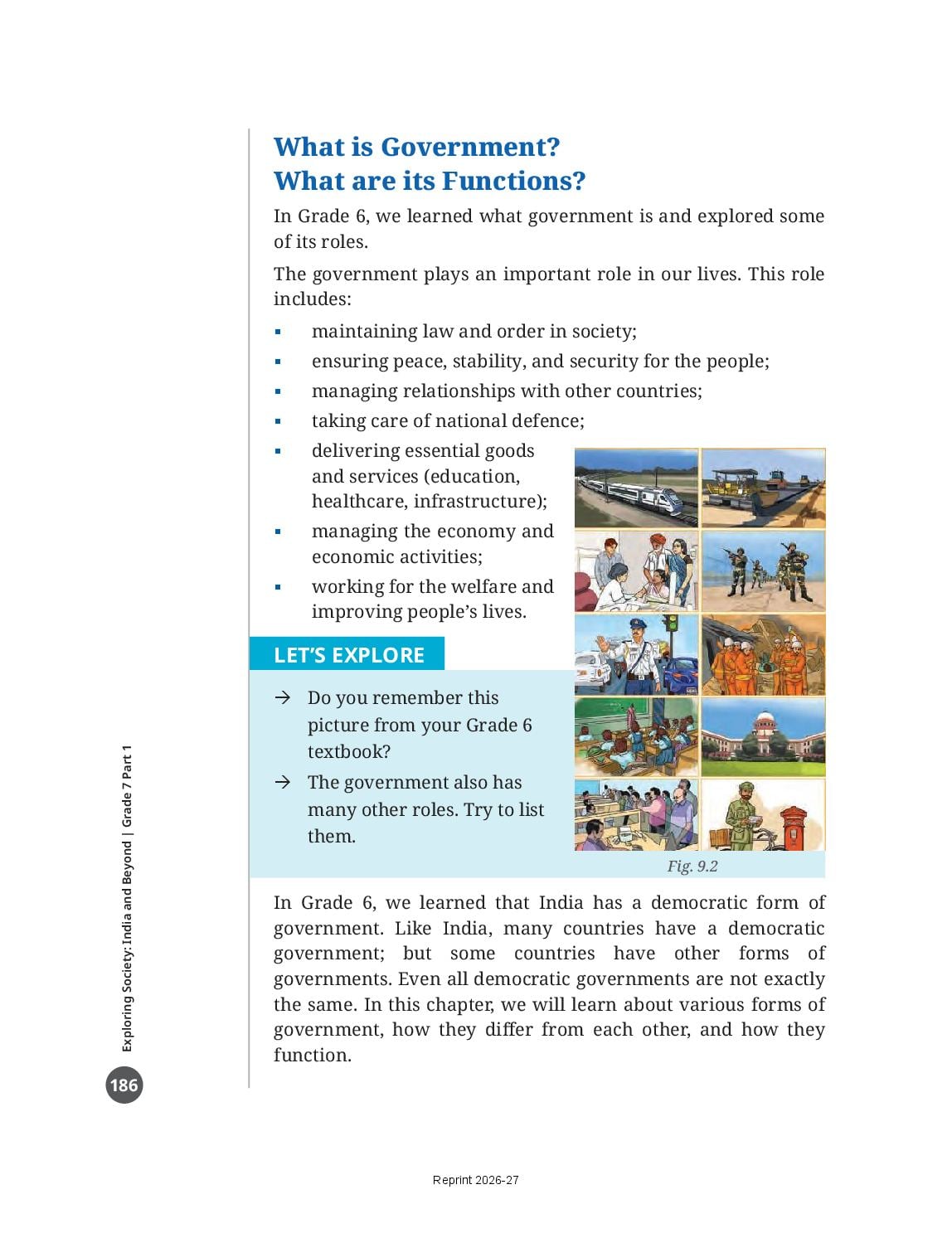
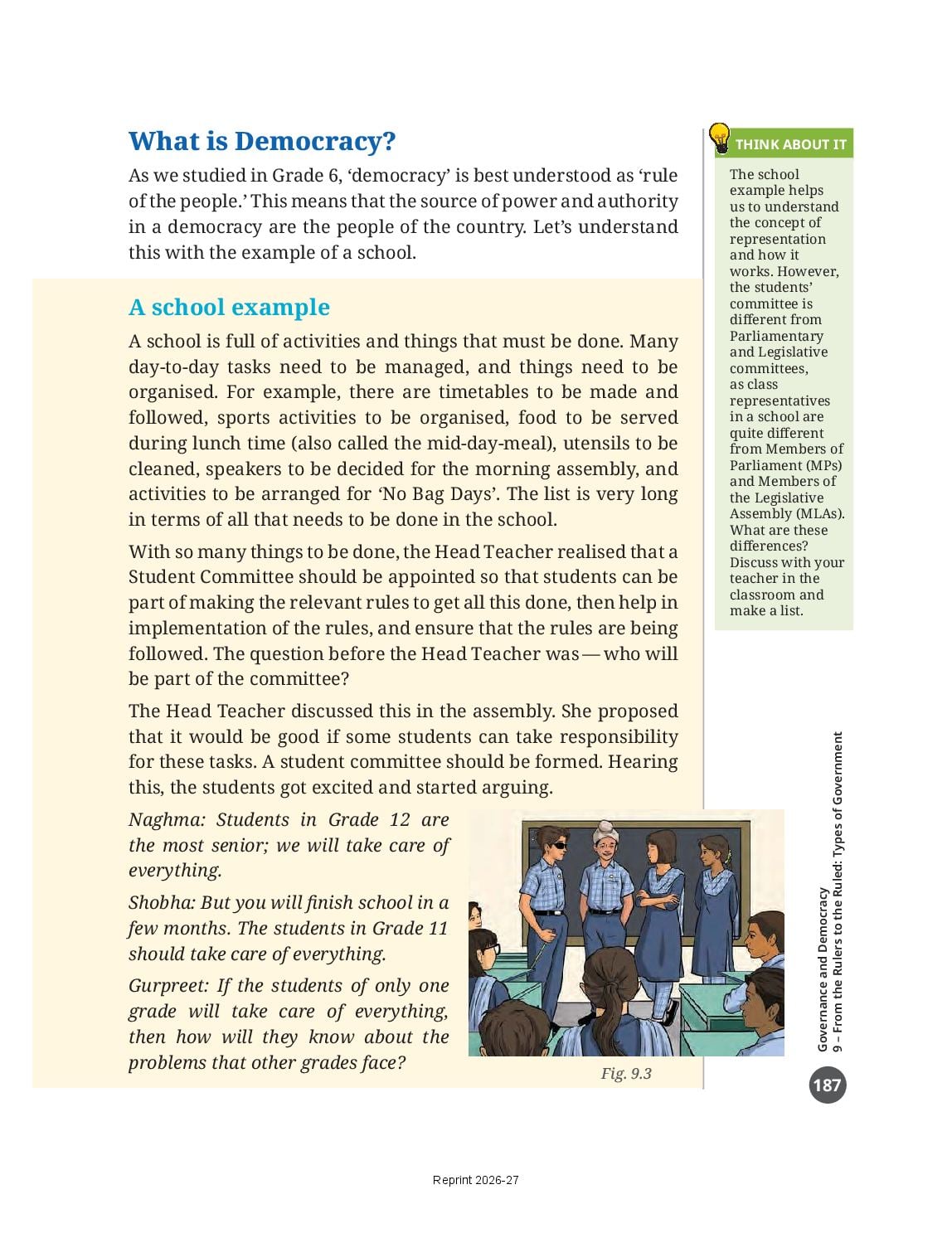
What Is in From the Rulers to the Ruled: Types of Governments? (Class 7 Social Science Chapter 9)
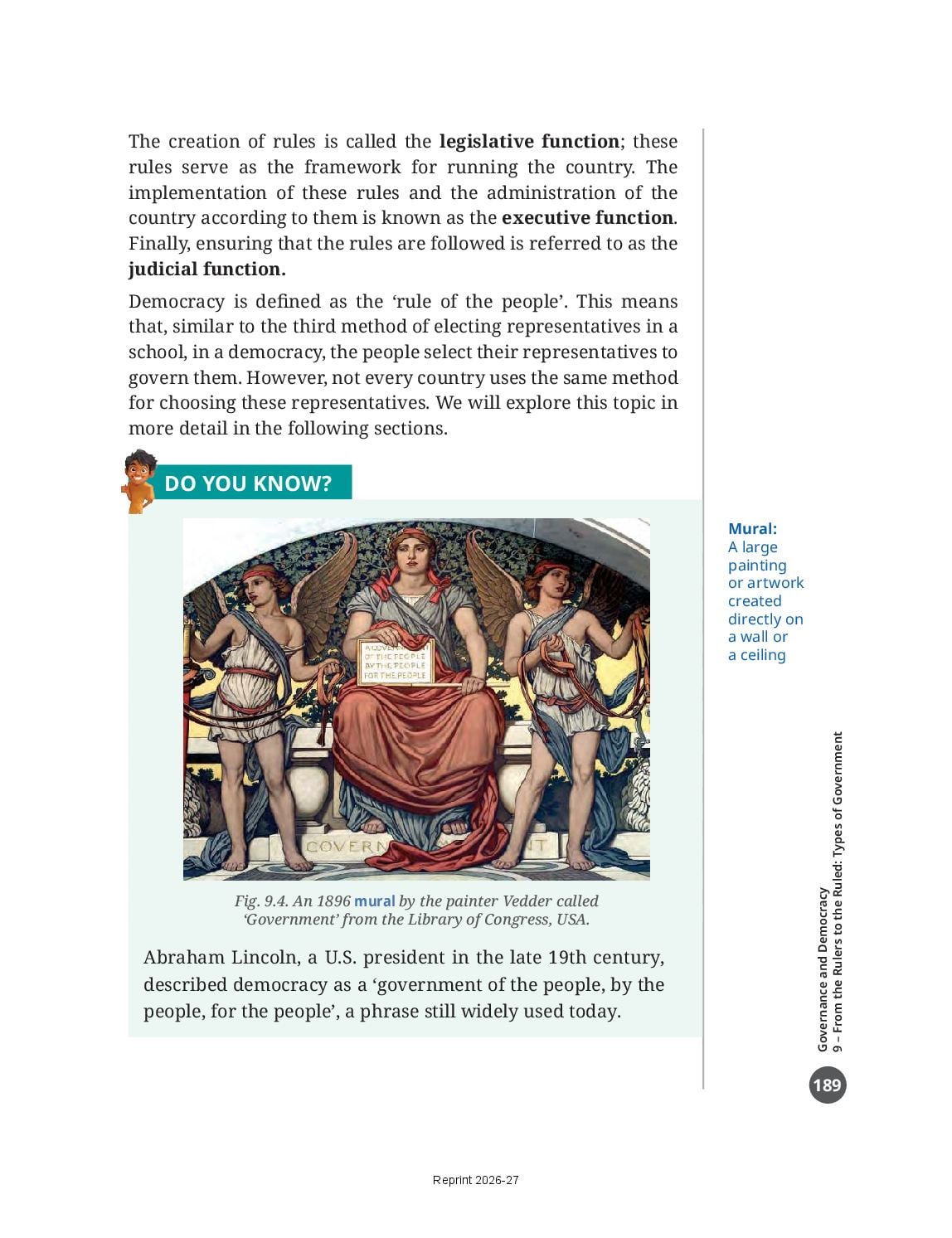
- Government does three things, and every type of government does them somehow. Making the rules is the legislative function, carrying them out and administering the country is the executive function, and making sure the rules are followed is the judicial function. What changes from country to country is who performs them and who gave them the authority.
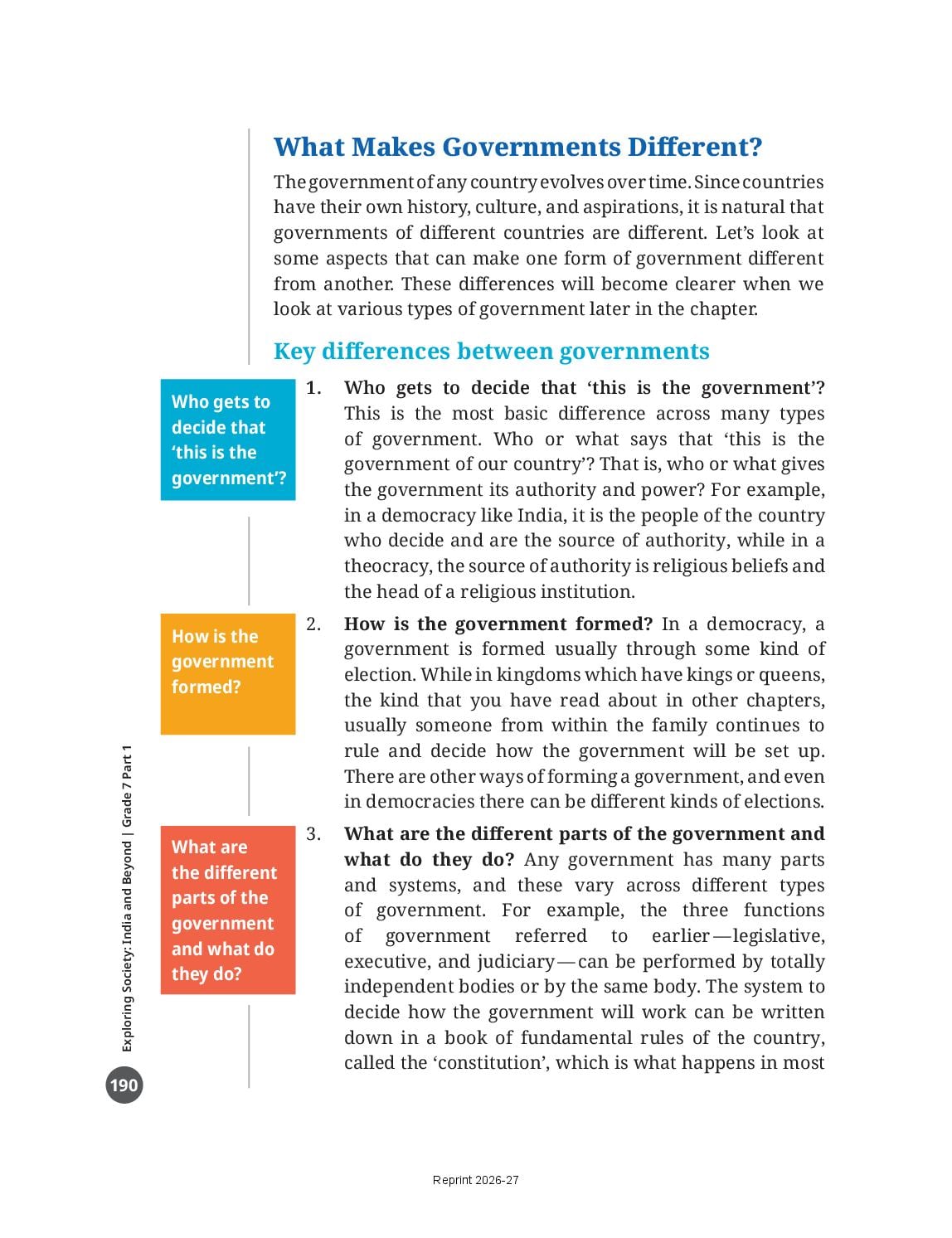
- Four questions tell one government apart from another. Who gets to decide that ‘this is the government’? How is the government formed? What are its different parts and what do they do? What is the government working for? Answer those four and you have described a form of government.
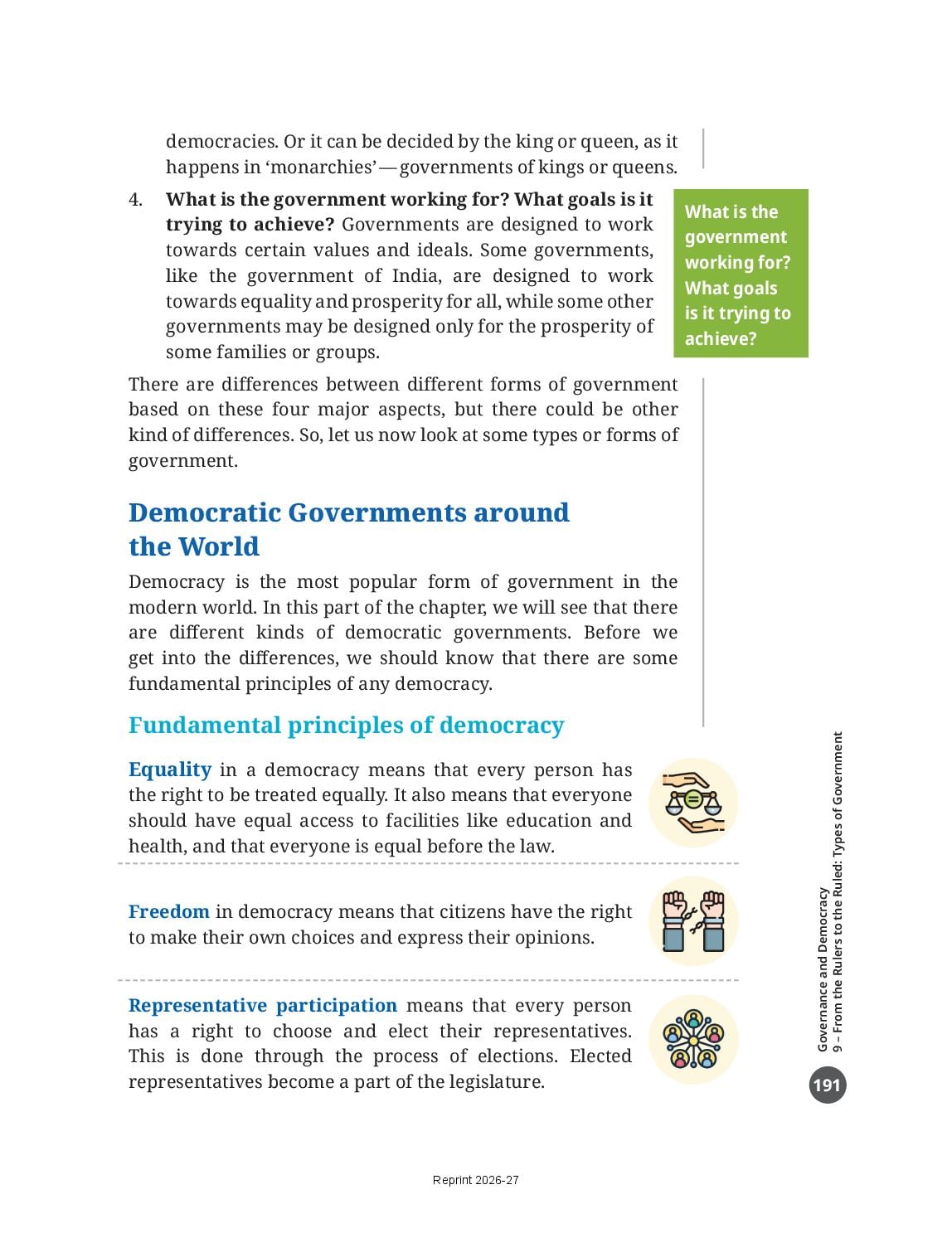
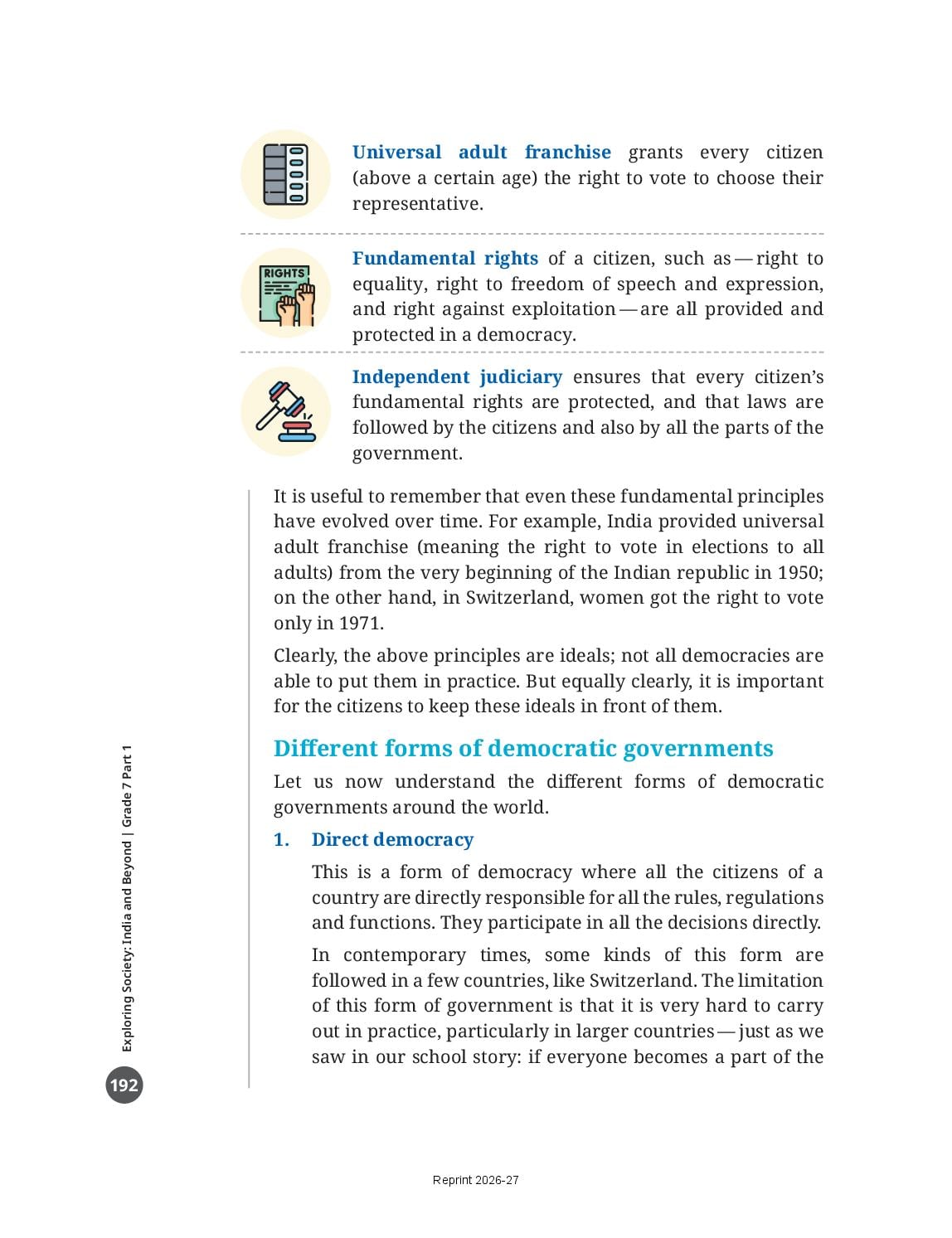
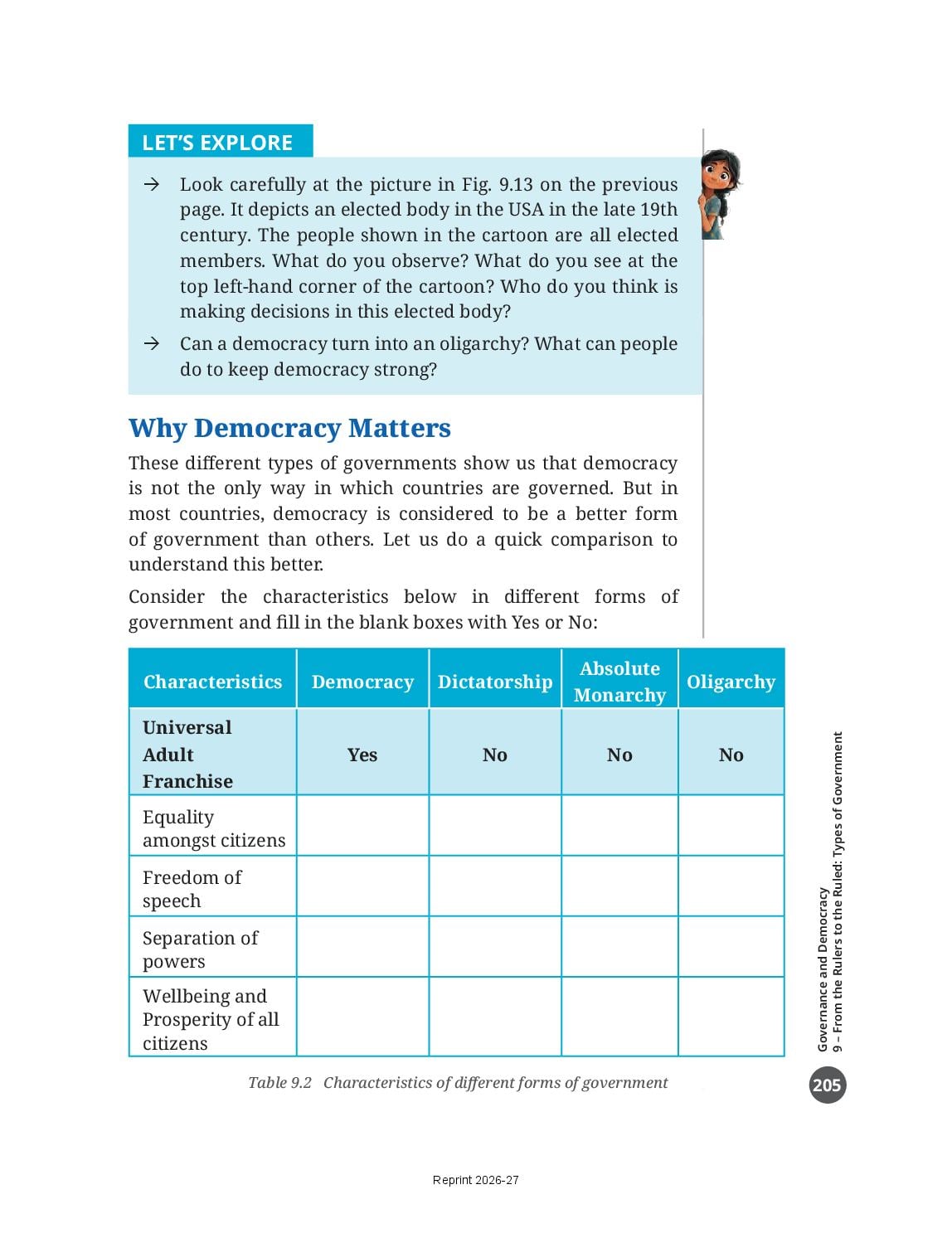
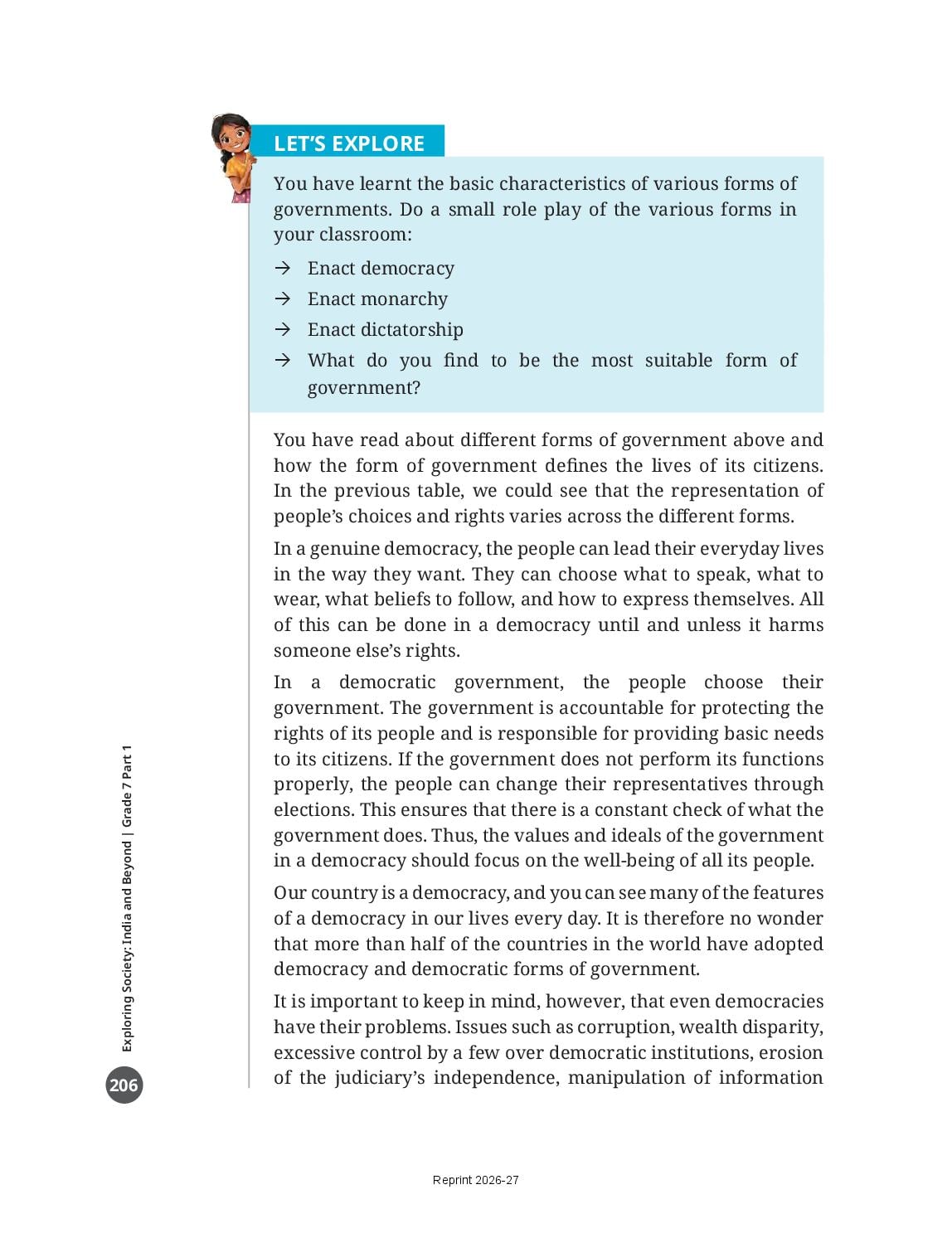
- Democracy is ‘rule of the people’. Its fundamental principles are equality, freedom, representative participation, universal adult franchise, fundamental rights and an independent judiciary. These are ideals — the chapter is clear that not every democracy achieves them, which is exactly why citizens must keep them in view.
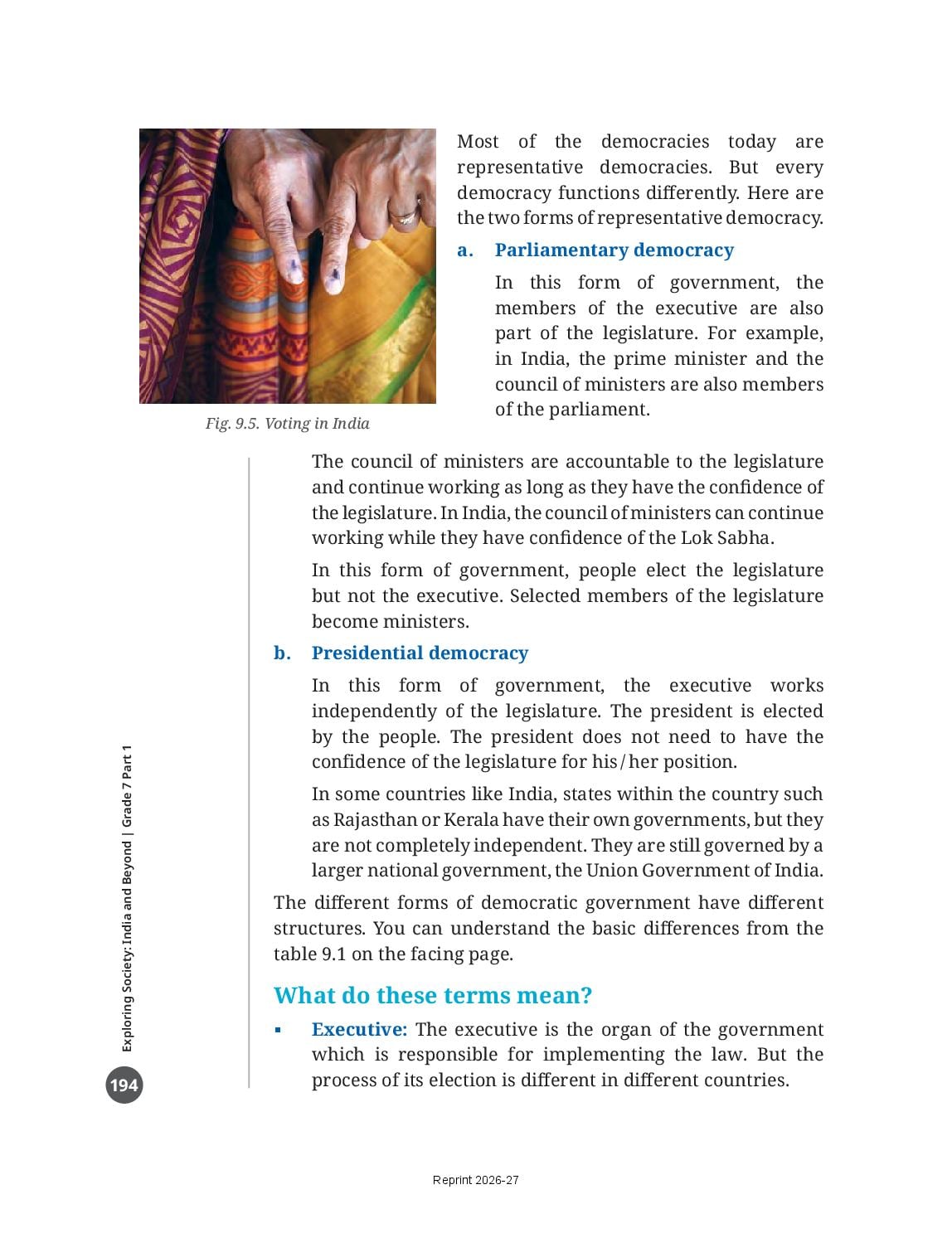
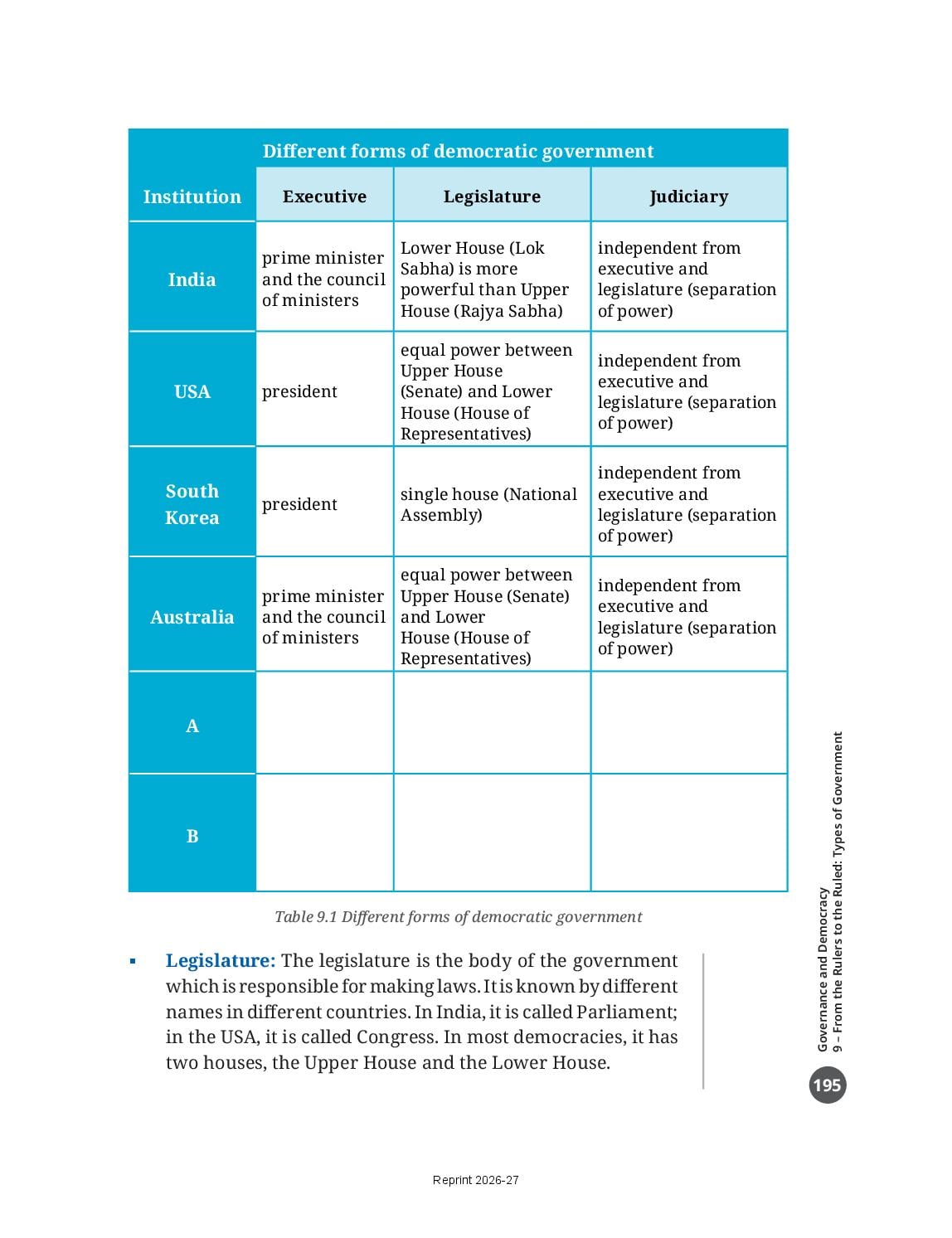
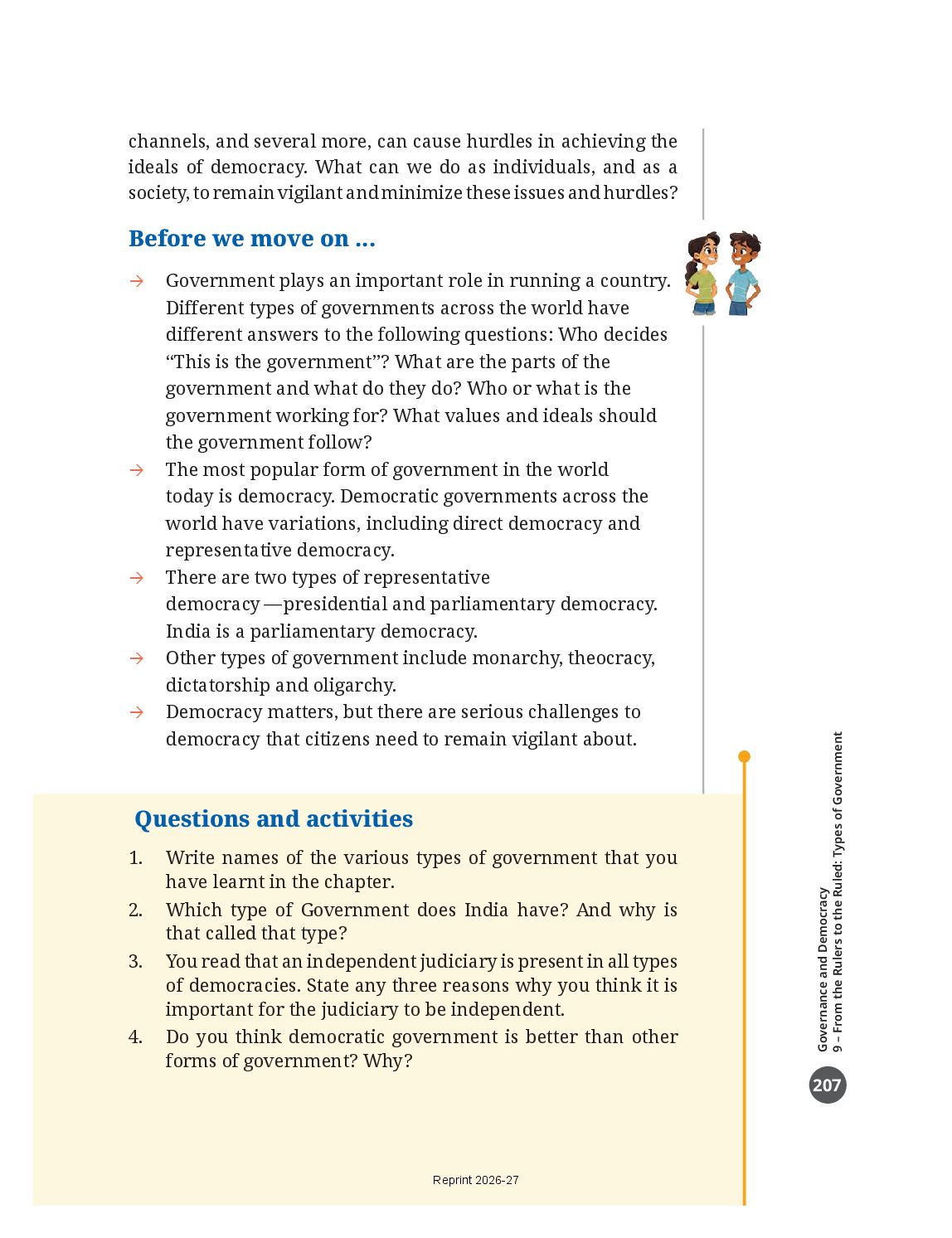
- Democracies come in different shapes. In a direct democracy citizens decide everything themselves (hard beyond a small scale). In a representative democracy people elect representatives — parliamentary, where the executive sits inside the legislature and needs its confidence (India, Australia), or presidential, where a directly elected president works independently of it (USA, South Korea).
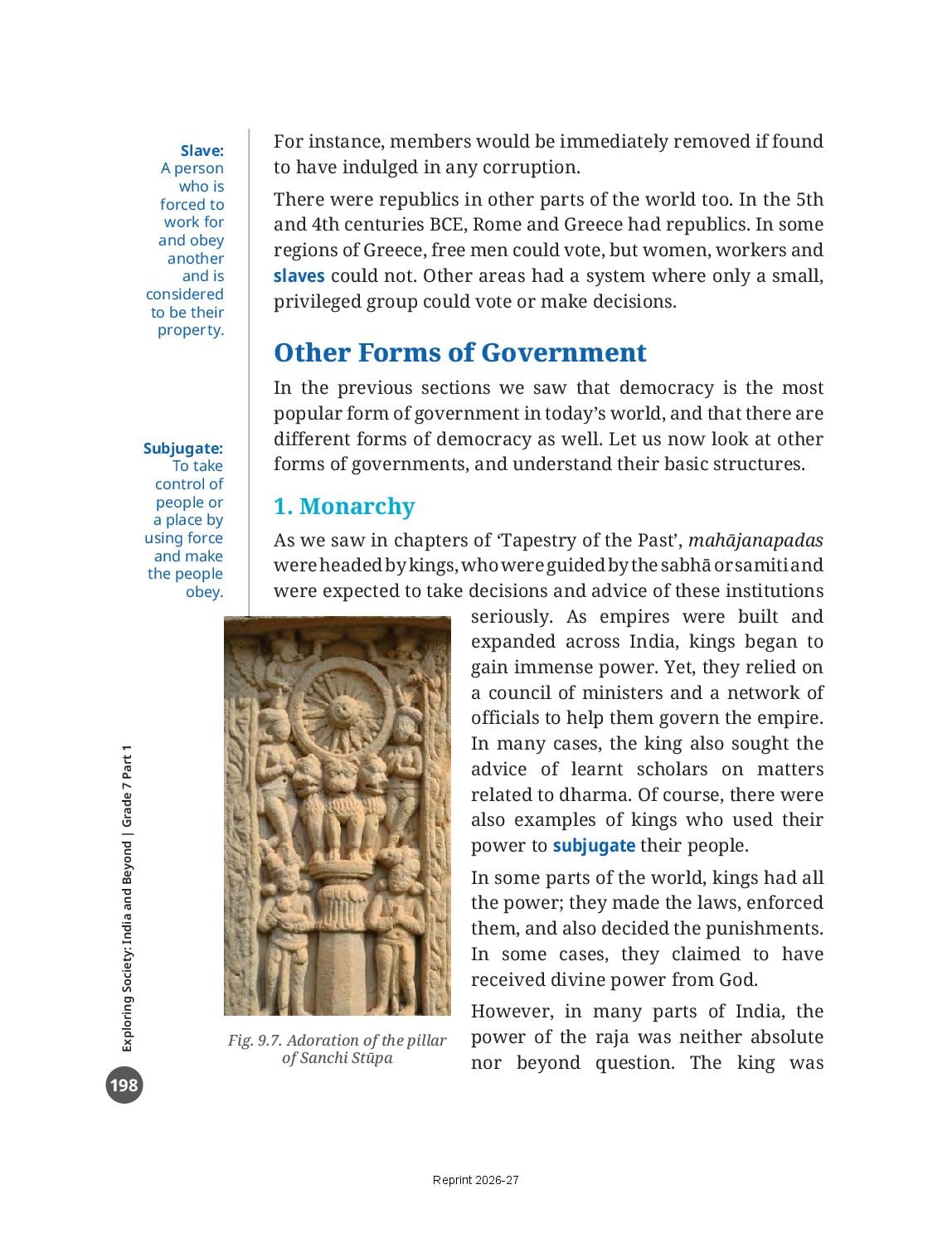
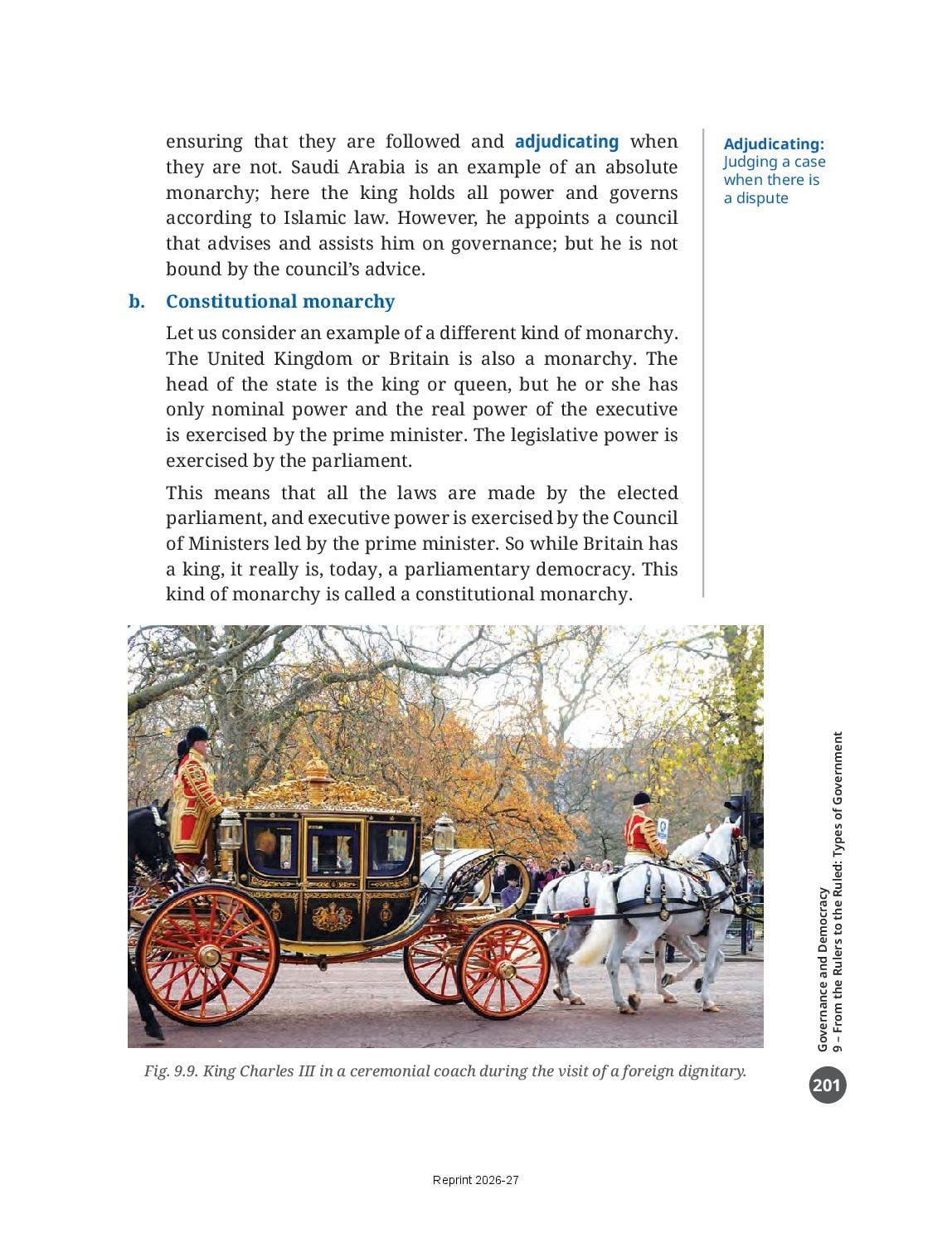
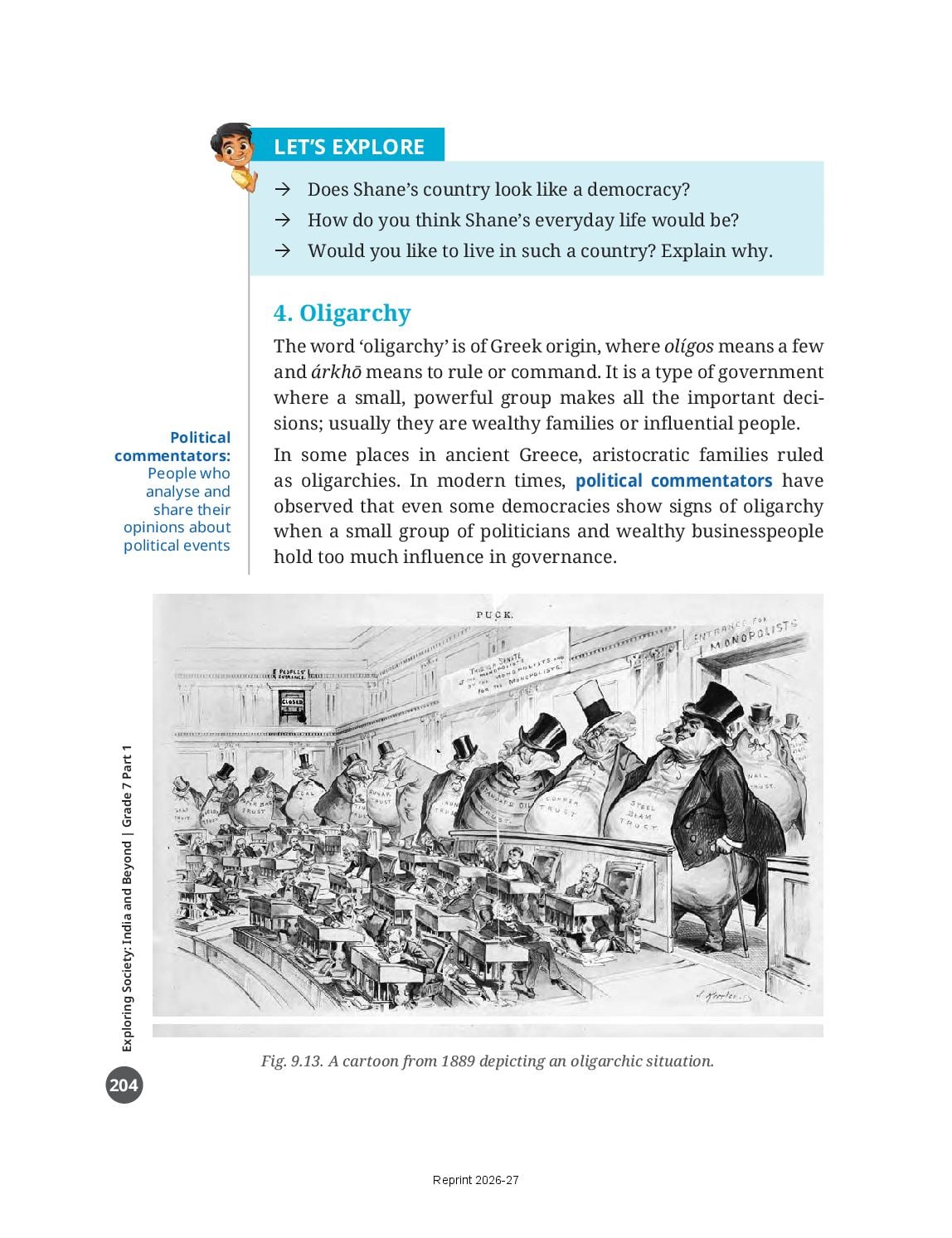
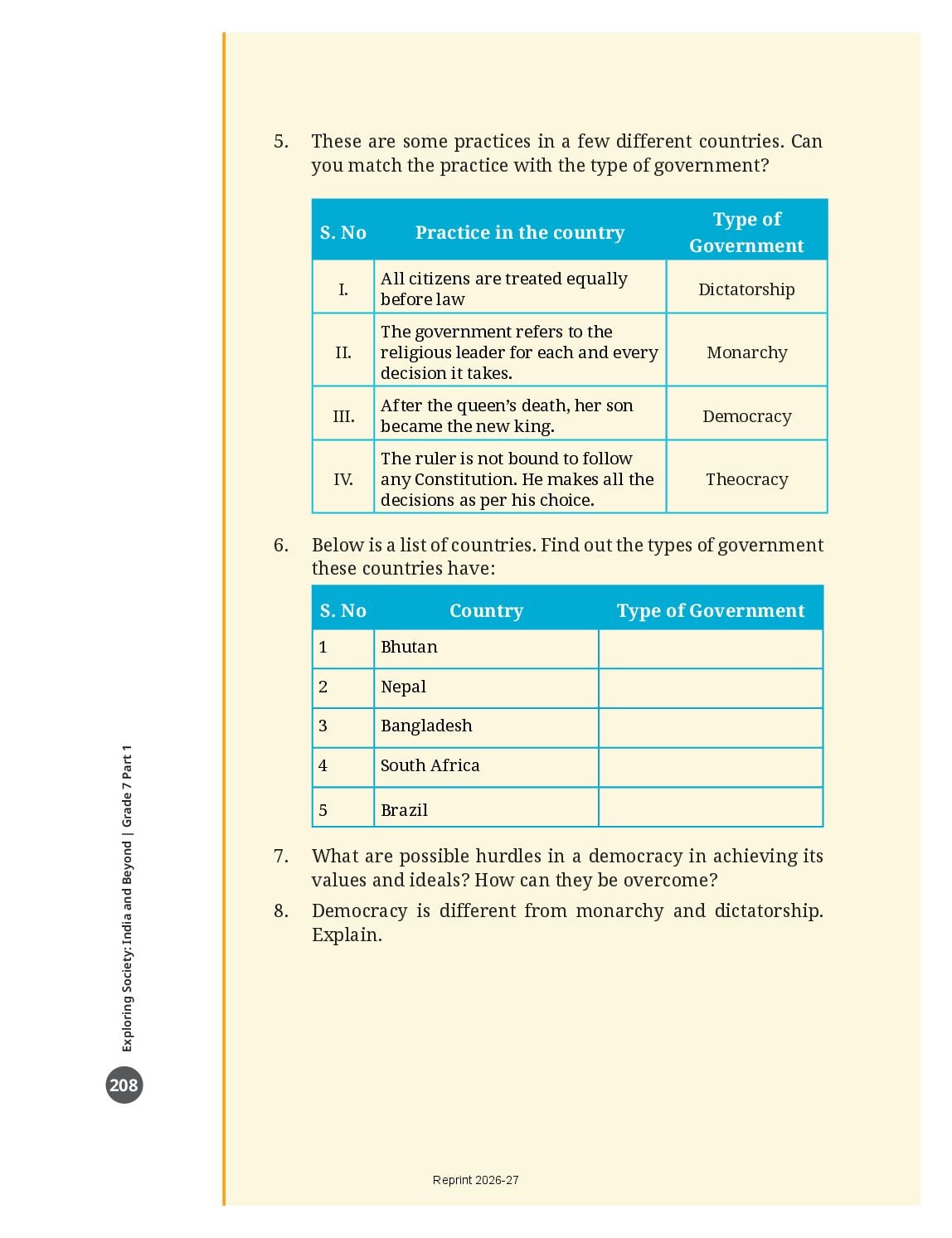
- Other forms: monarchy, theocracy, dictatorship, oligarchy. A monarchy may be absolute (Saudi Arabia) or constitutional (the United Kingdom, which is really a parliamentary democracy). A theocracy is run by religious rules and religious leaders; a dictatorship puts unlimited power in one person or a small group; an oligarchy leaves the real decisions with a few wealthy or influential families.
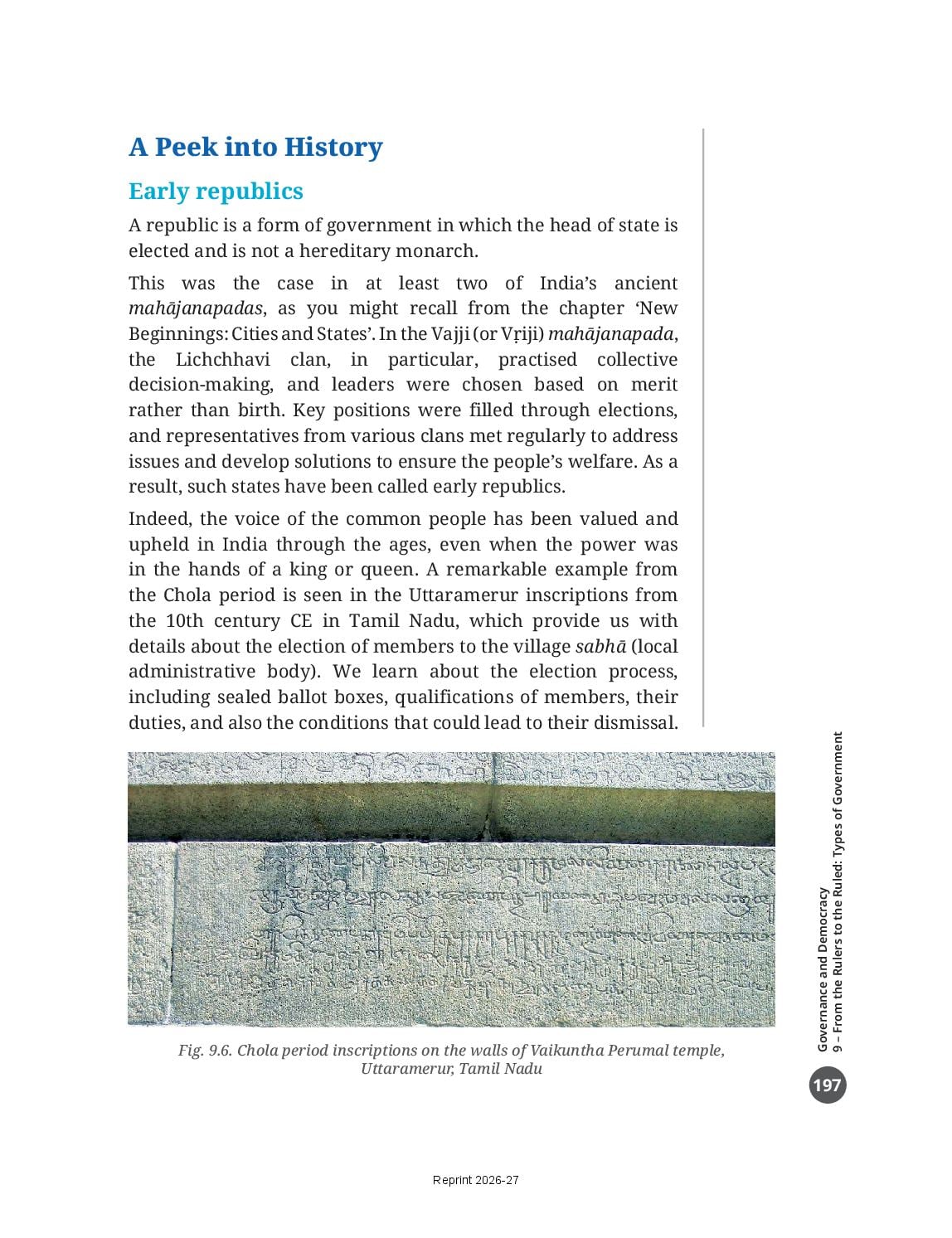
- India’s own past holds early experiments in collective rule. The Lichchhavi clan of the Vajji mahājanapada chose leaders by merit, not birth; the 10th-century Uttaramerur inscriptions of the Cholas record sealed ballot boxes, qualifications for candidates and instant removal for corruption. Rome and Greece had republics too, though voting there was limited to a privileged few.
Quick revision – From the Rulers to the Ruled: Types of Governments
| Term | What it means | Where it appears in the chapter | Worth remembering |
|---|---|---|---|
| Representative | A person who is chosen to act or make decisions on behalf of another person or group of people | Margin note, page 188 | The school story turns on this word — one student speaks for a whole grade |
| Legislative function | The making of rules that serve as the framework for running the country | Page 189 | Done by the legislature — Parliament in India, Congress in the USA |
| Executive function | Implementing the rules and administering the country according to them | Page 189 | In India the prime minister and the council of ministers |
| Judicial function | Ensuring that the rules are followed, and judging when they are not | Page 189 | Done by an independent judiciary in every democracy |
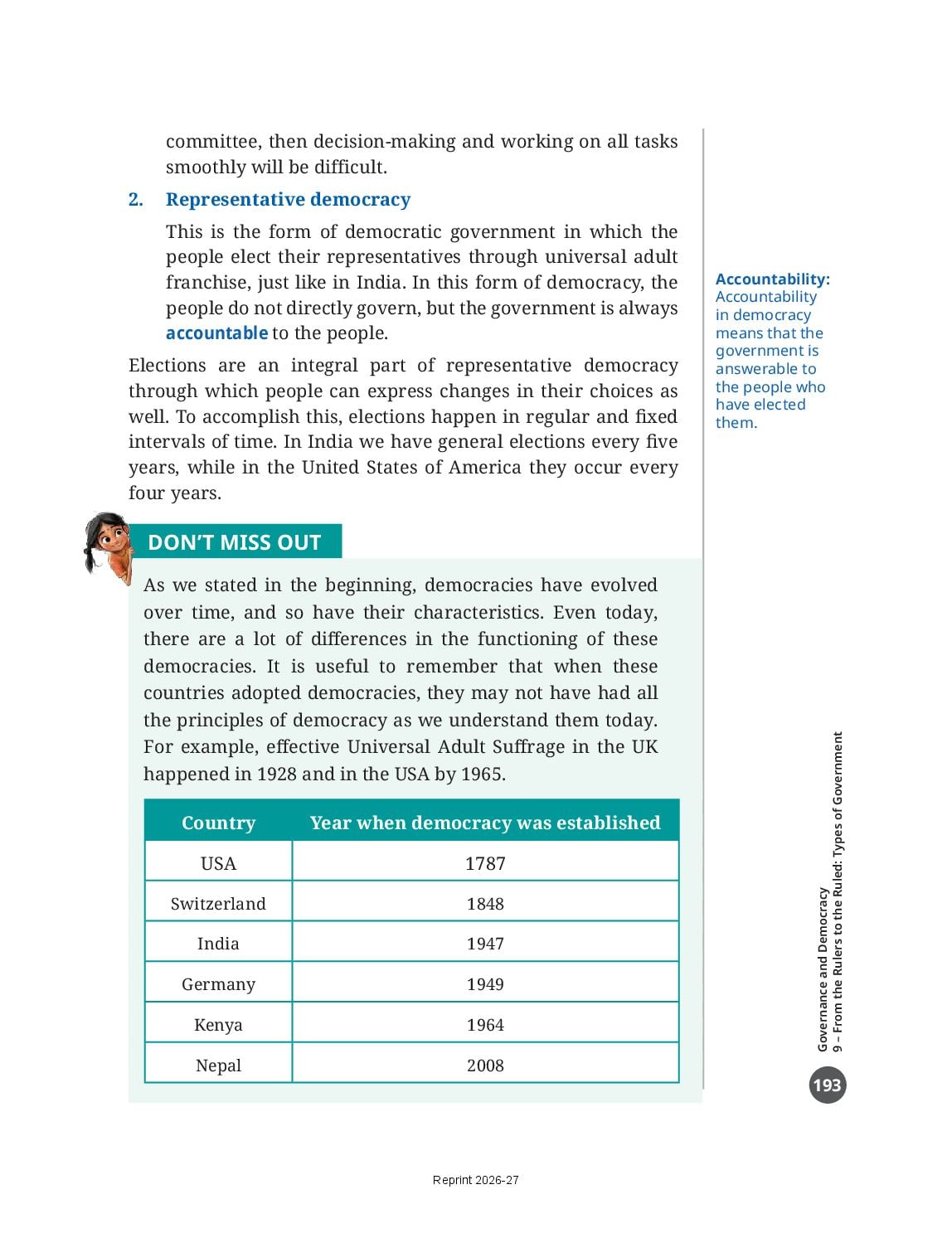
| Universal adult franchise | The right to vote given to every citizen above a certain age | Page 191 | India had it from 1950; Switzerland gave it to women only in 1971 |
| Accountability | The government being answerable to the people who have elected them | Margin note, page 193 | The reason elections are held at regular, fixed intervals |
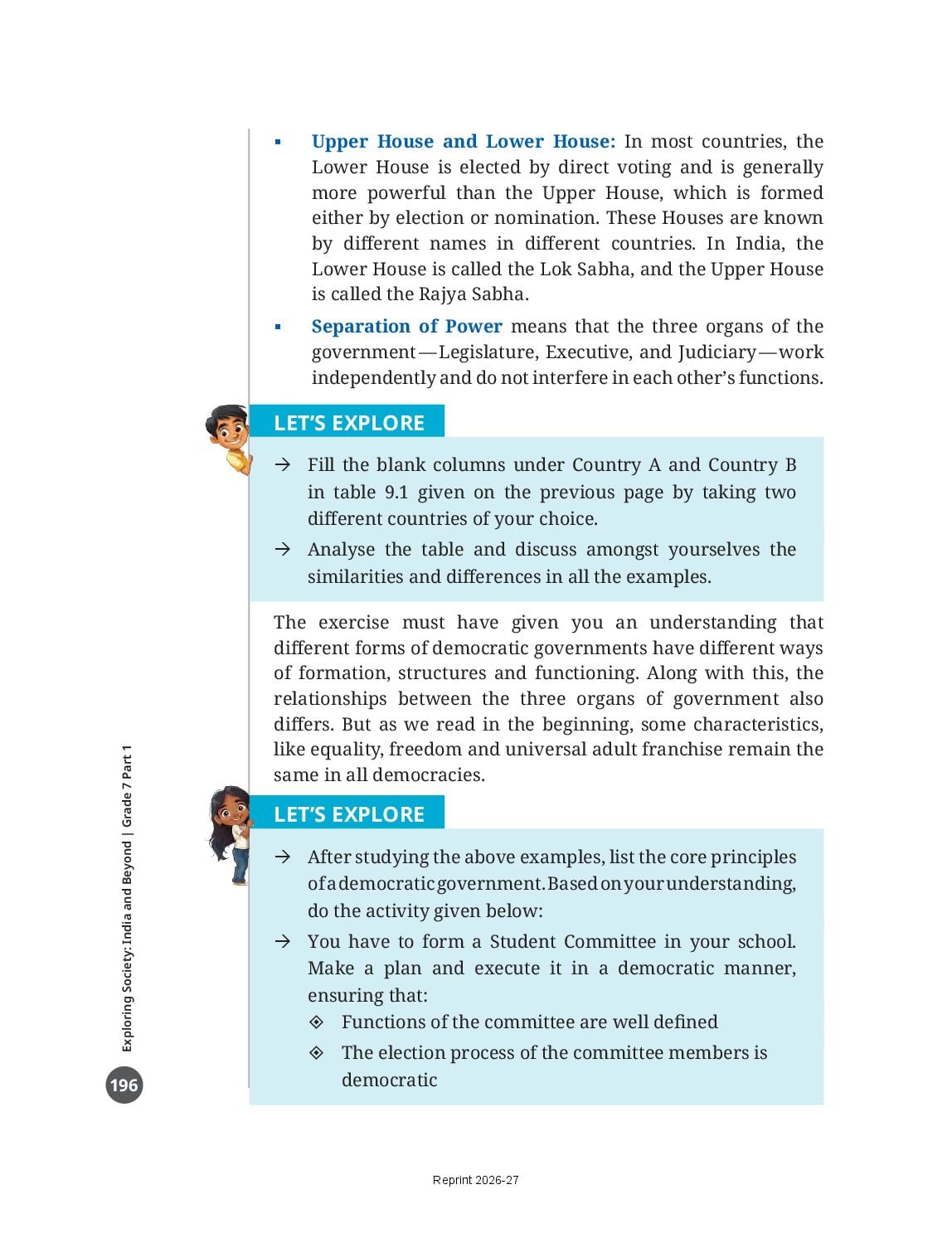
| Separation of power | Legislature, executive and judiciary working independently, without interfering in each other’s functions | Page 196 | The last column of Table 9.1 — true of all four countries listed |
| Republic | A form of government in which the head of state is elected and is not a hereditary monarch | Page 197 | The Vajji mahājanapada and the Chola village sabhā are Indian examples |
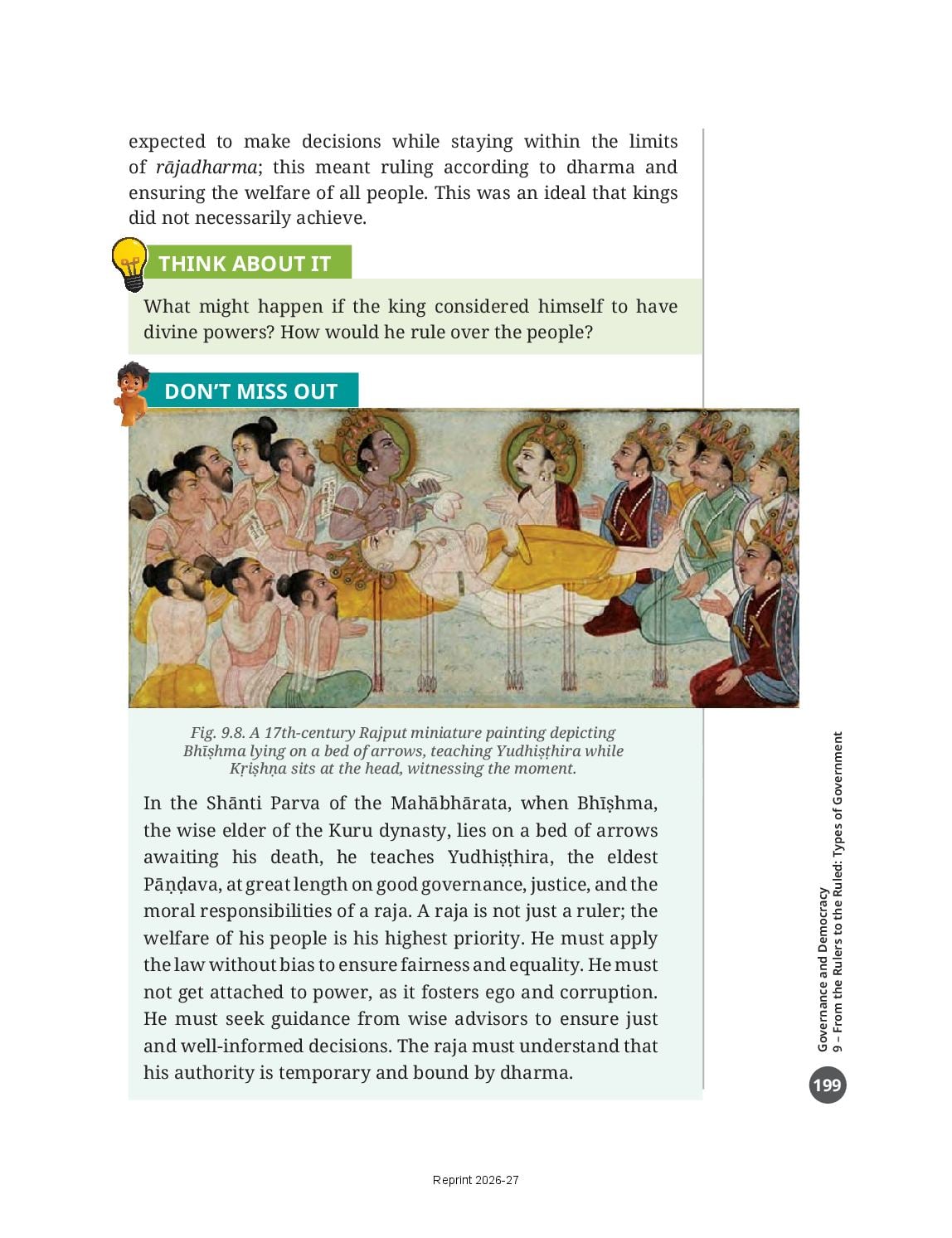
| Rājadharma | Ruling according to dharma and ensuring the welfare of all people — the limit within which a raja was expected to decide | Pages 198–199 | Bhīṣhma teaches it to Yudhiṣṭhira in the Shānti Parva |
| Sovereign | That the source of power of a country is independent from external influence | Margin note, page 200 | Monarchs are said to exercise sovereign power |
| Absolute monarchy | A monarchy in which the monarch makes the laws, enforces them and judges those who break them | Pages 200–201 | Saudi Arabia; the king appoints an advisory council but is not bound by it |
| Constitutional monarchy | A monarchy in which the king or queen has only nominal power and the real power lies with an elected parliament and the prime minister | Page 201 | The United Kingdom — a monarchy in form, a parliamentary democracy in fact |
| Theocracy | A form of government where the country is ruled by the rules of religion and religious leaders | Page 202 | Iran (which also has an elected president and parliament), Afghanistan, Vatican City |
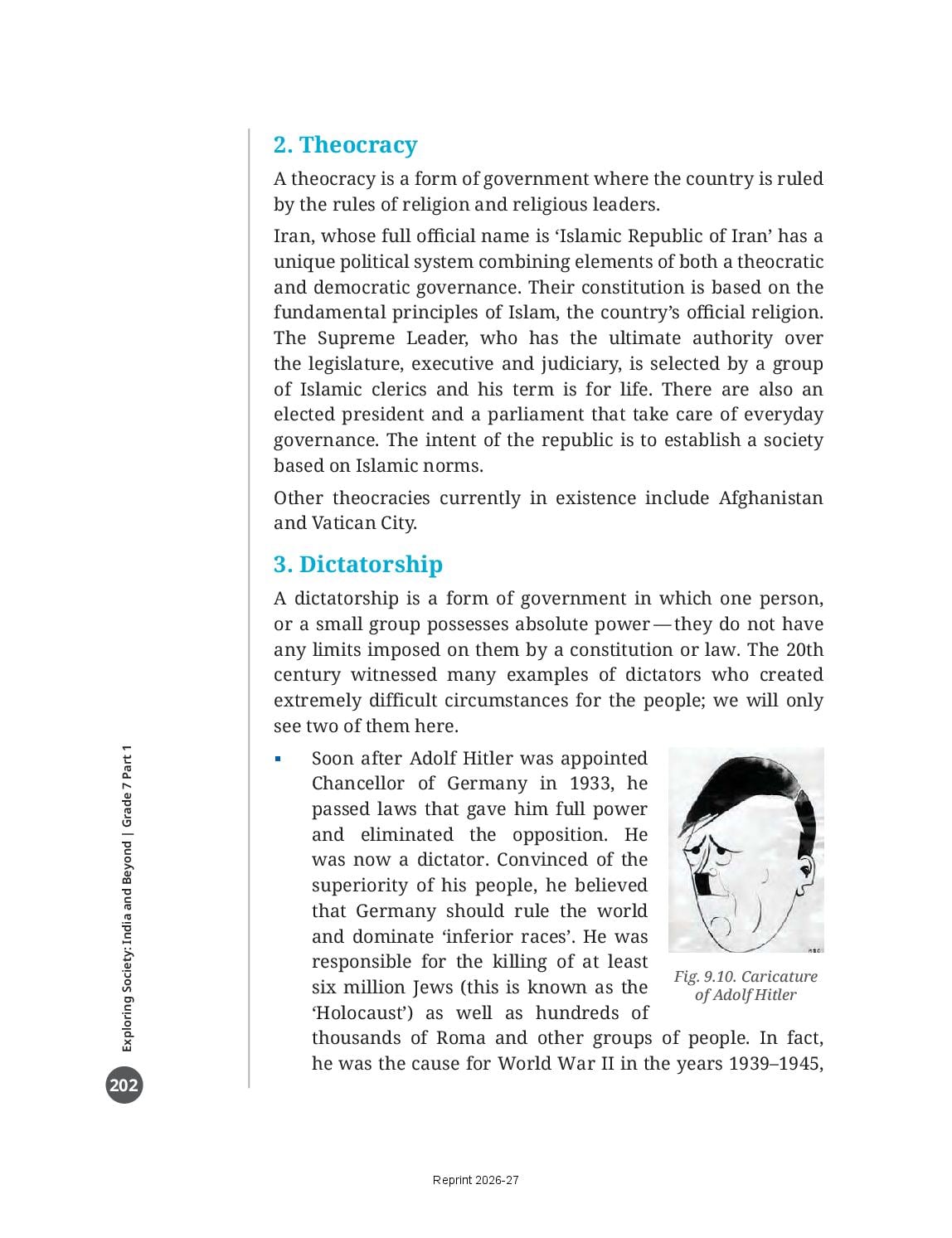
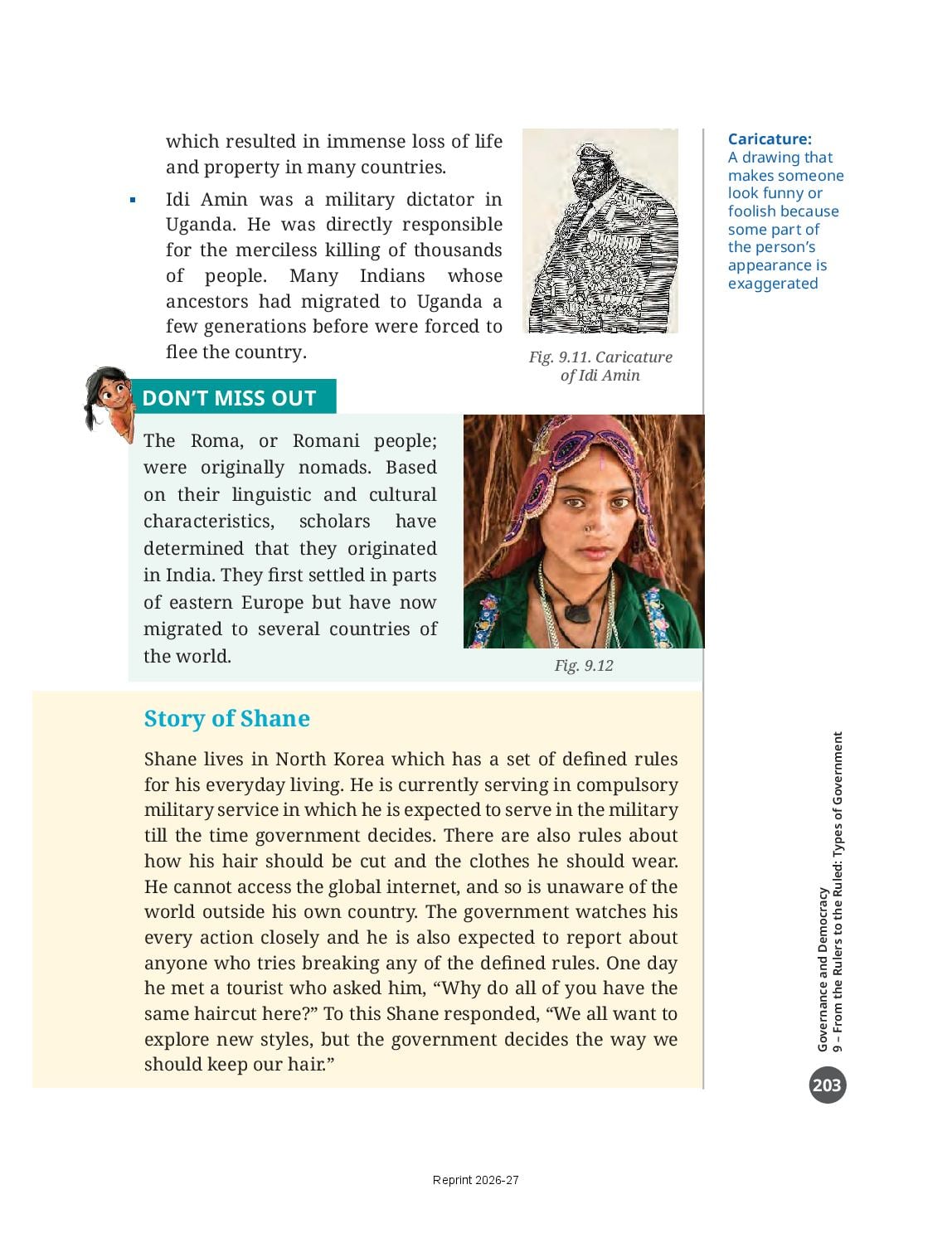
| Dictatorship | A government in which one person or a small group has absolute power, with no limits from a constitution or law | Pages 202–203 | Adolf Hitler in Germany, Idi Amin in Uganda |
Old NCERT vs New – Class 7 Social Science
This chapter is from Exploring Society: India and Beyond, the new NCERT Class 7 Social Science book (NCF-SE 2023, used from 2025-26). It replaced the old book “Our Pasts, Our Environment and Social and Political Life”, so chapter numbers and names differ from older PDFs.
Solutions and All Chapters
Answers to the exercises and the full chapter list of Exploring Society: India and Beyond:
From the Rulers to the Ruled: Types of Governments – Overview
| Class | Class 7 |
| Subject | Social Science |
| Book | Exploring Society: India and Beyond – new NCERT book |
| Part | Part I |
| Chapter | 9 of 20 – From the Rulers to the Ruled: Types of Governments |
| Book pages | 185 – 208 |
| Edition | NCERT Reprint 2026-27 |
| Session | 2026-27 |
| Free – read online or download |
Class 7 Social Science Chapter 9 – FAQs
Where can I download From the Rulers to the Ruled: Types of Governments Class 7 PDF?
From the download table on this page – the chapter PDF is free, and the full book is linked too.
What is Class 7 Social Science Chapter 9 about?
Government does three things, and every type of government does them somehow. Making the rules is the legislative function, carrying them out and administering the country is the executive function, and making sure the rules are followed is the judicial function. What changes from country to country is who performs them and who gave them the authority.
Is From the Rulers to the Ruled: Types of Governments from the new NCERT Class 7 Social Science book?
Yes. It is chapter 9 of exploring society: india and beyond (part i), the new NCERT Class 7 Social Science book for 2026-27.
Is this the latest NCERT edition for 2026-27?
Yes – the PDF is NCERT’s latest edition for the 2026-27 session.
Where are the NCERT Solutions for Class 7 Social Science Chapter 9?
Open the NCERT Solutions link above for answers to the exercise questions.