NCERT Solutions for Class 7 Social Science Chapter 4 New Beginnings Cities and States provide clear, step-by-step answers to every exercise and in-text question from the chapter New Beginnings Cities and States of the NCERT textbook Exploring Society India and Beyond. Prepared by subject experts as per the latest NCERT (CBSE) syllabus for 2026-27, these NCERT Solutions for Class 7 Social Science help you understand each concept, write exam-ready answers, and check your own solutions. You can read them online below or download the free Class 7 Social Science Chapter 4 question-answer PDF.
NCERT Solutions for Class 7 Social Science Chapter 4 New Beginnings Cities and States
- Class: Class 7
- Subject: Social Science
- Chapter: Chapter 4 – New Beginnings Cities and States
- Textbook: Exploring Society India and Beyond (NCERT)
- Study material: NCERT Solutions – questions with answers, free PDF
These solutions answer all the exercise questions of Chapter 4 New Beginnings Cities and States — including the in-text questions, short-answer and long-answer questions, and activities — with complete explanations so you can follow the method, not just the final answer. Read the full solutions below.
NCERT Solutions Class 7 Social Science Chapter 4 New Beginnings Cities and States View Download
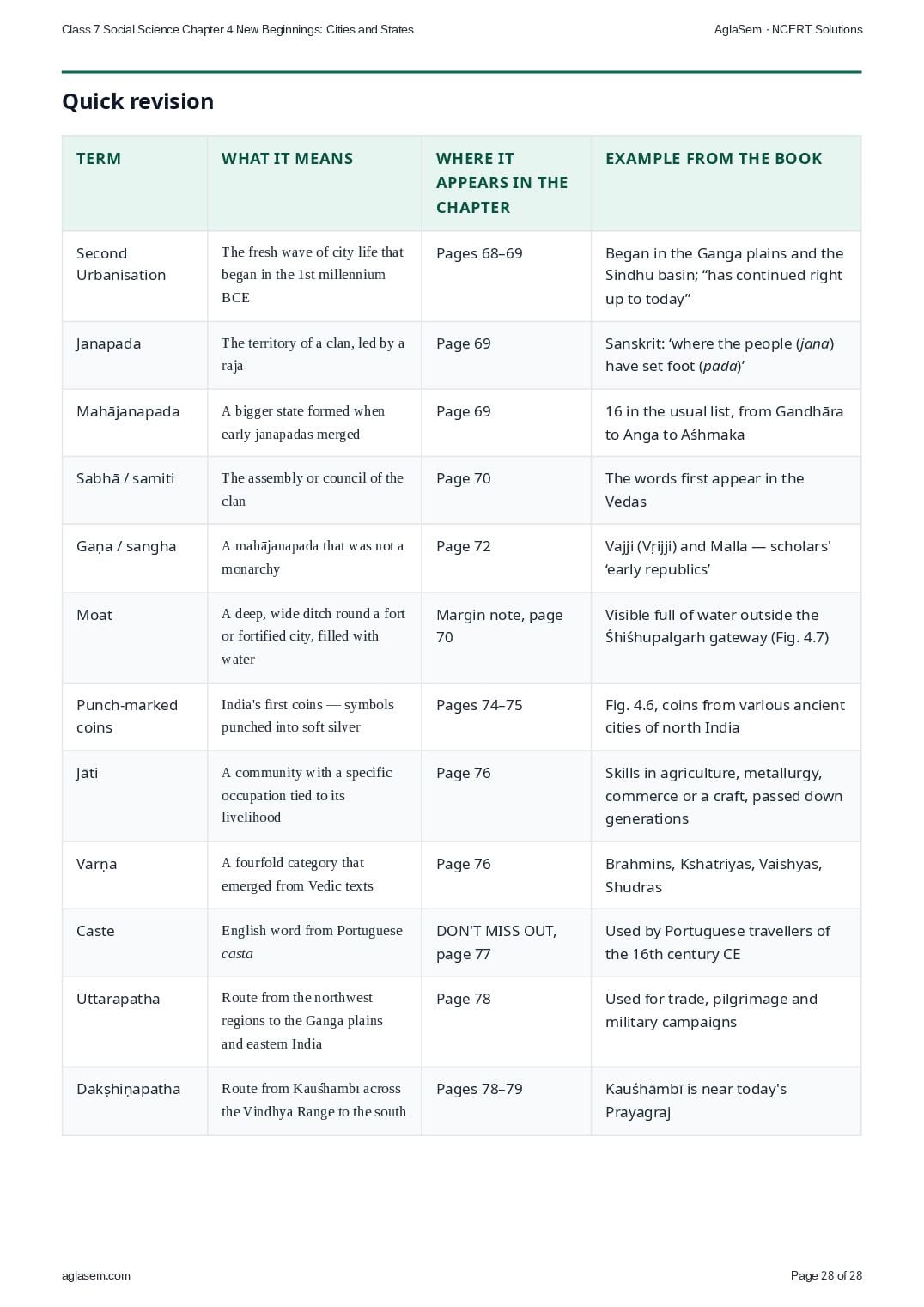
NCERT Solutions for Class 7 Social Science Chapter 4 PDF Download
You can read the NCERT Solutions for Class 7 Social Science Chapter 4 online above, or download the complete question-answer PDF to study New Beginnings Cities and States offline at any time.
NCERT Solutions for Class 7 Social Science Chapter 4 PDF Download Link – Click Here to Download Solutions PDF
Questions Covered in This Chapter
These NCERT Solutions answer all 19 questions of this chapter. The questions solved are:
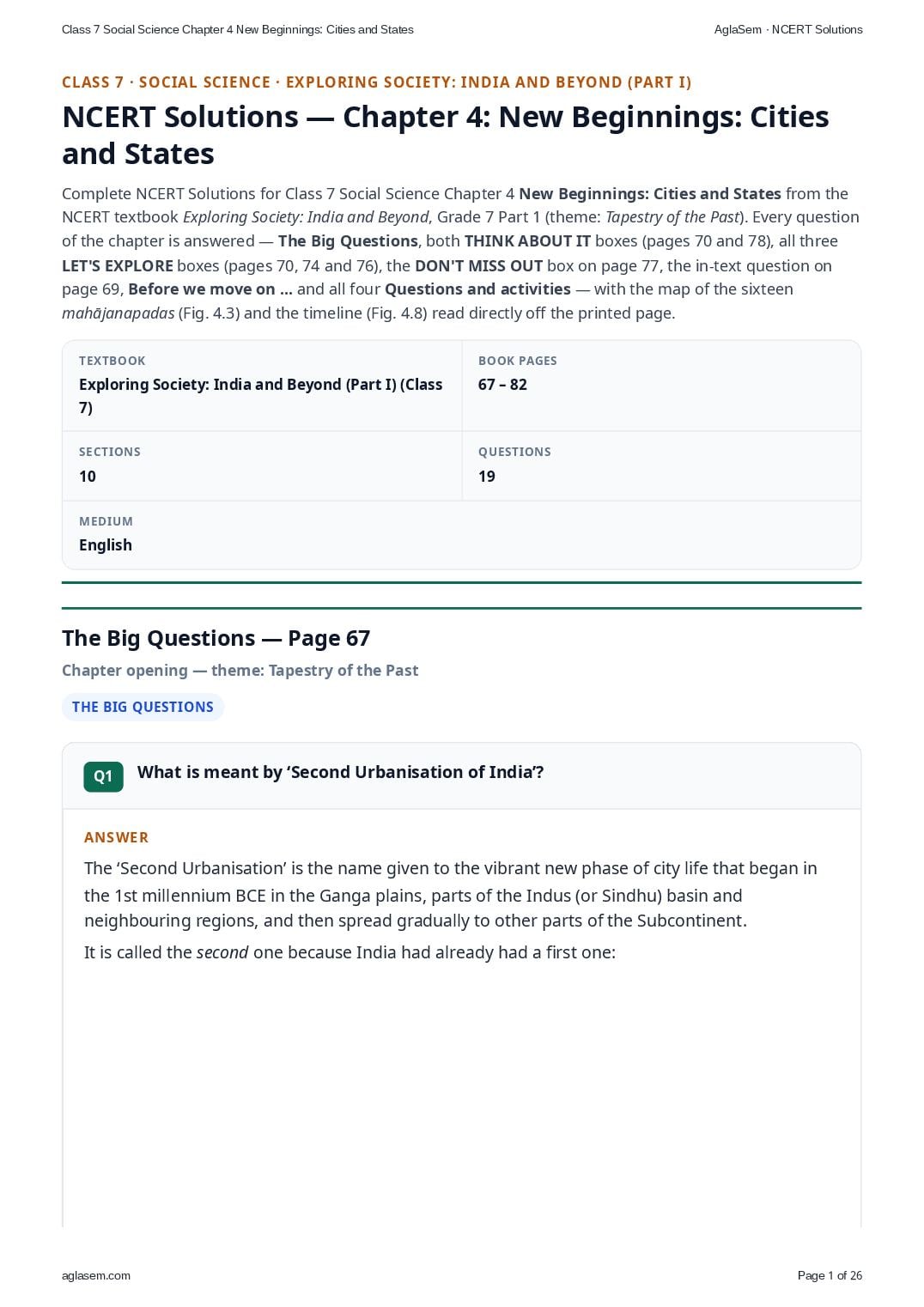
- What is meant by ‘Second Urbanisation of India’?
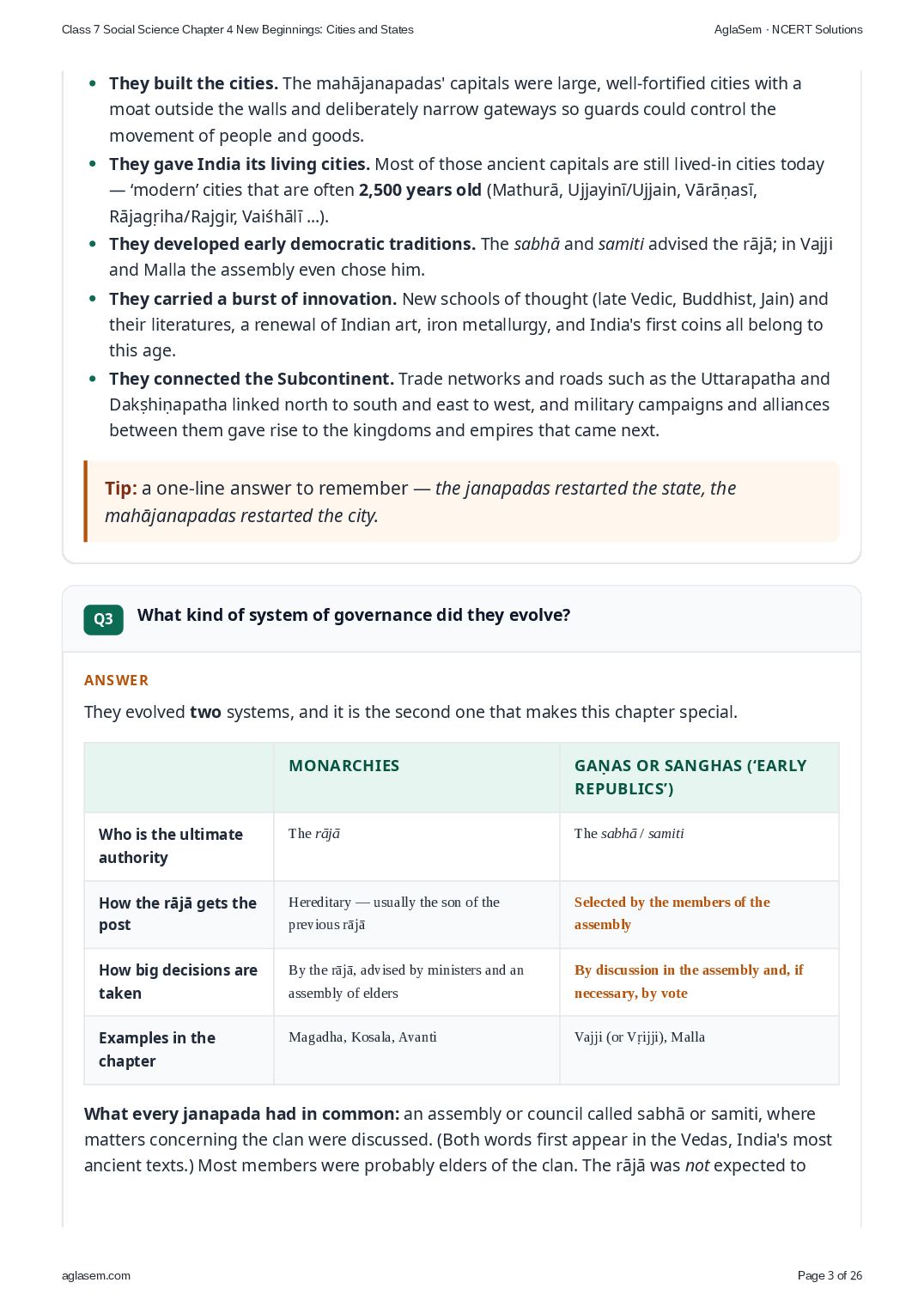
- Why were the janapadas and mahājanapadas an important development in India’s early history?
- What kind of system of governance did they evolve?
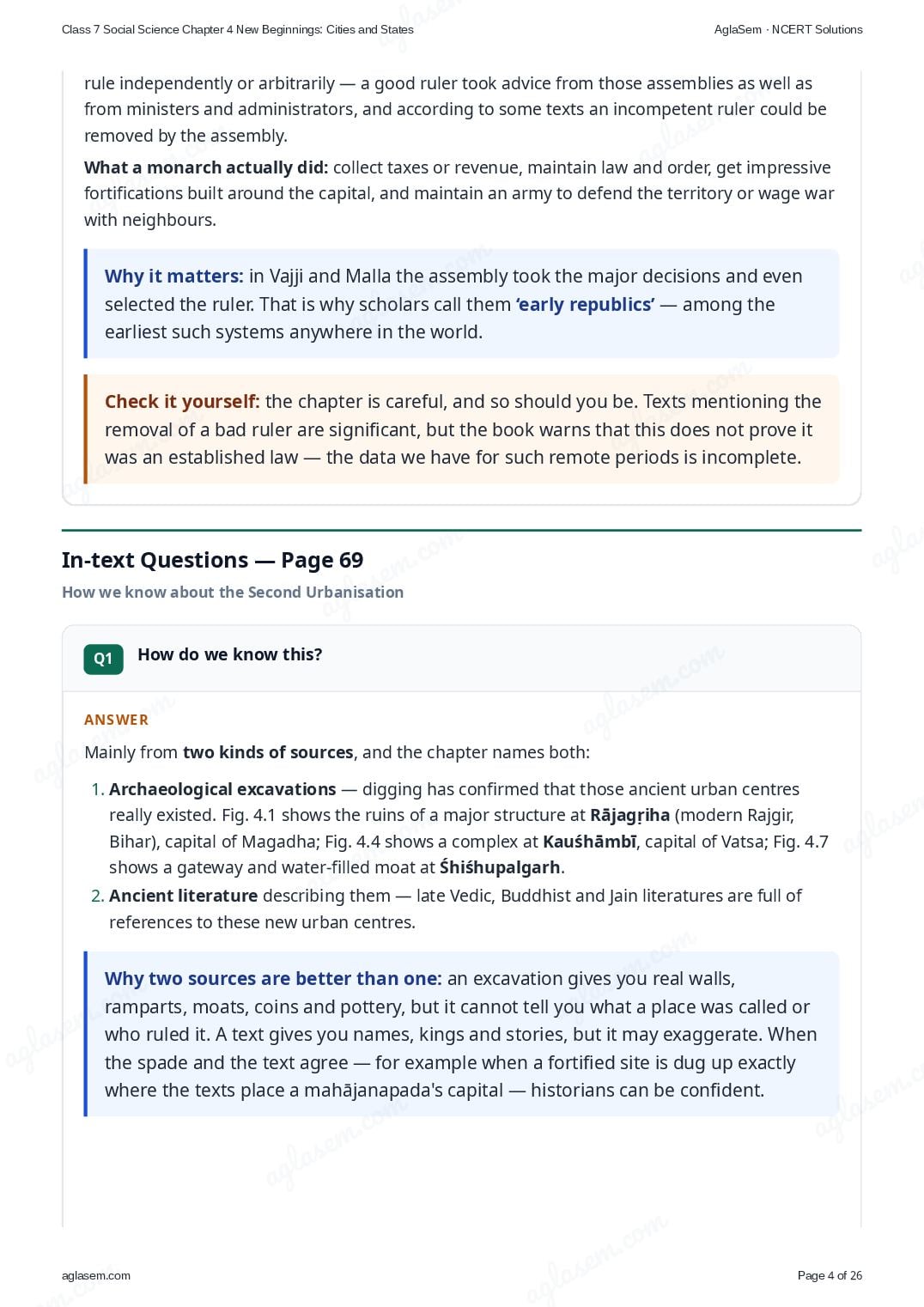
- How do we know this?
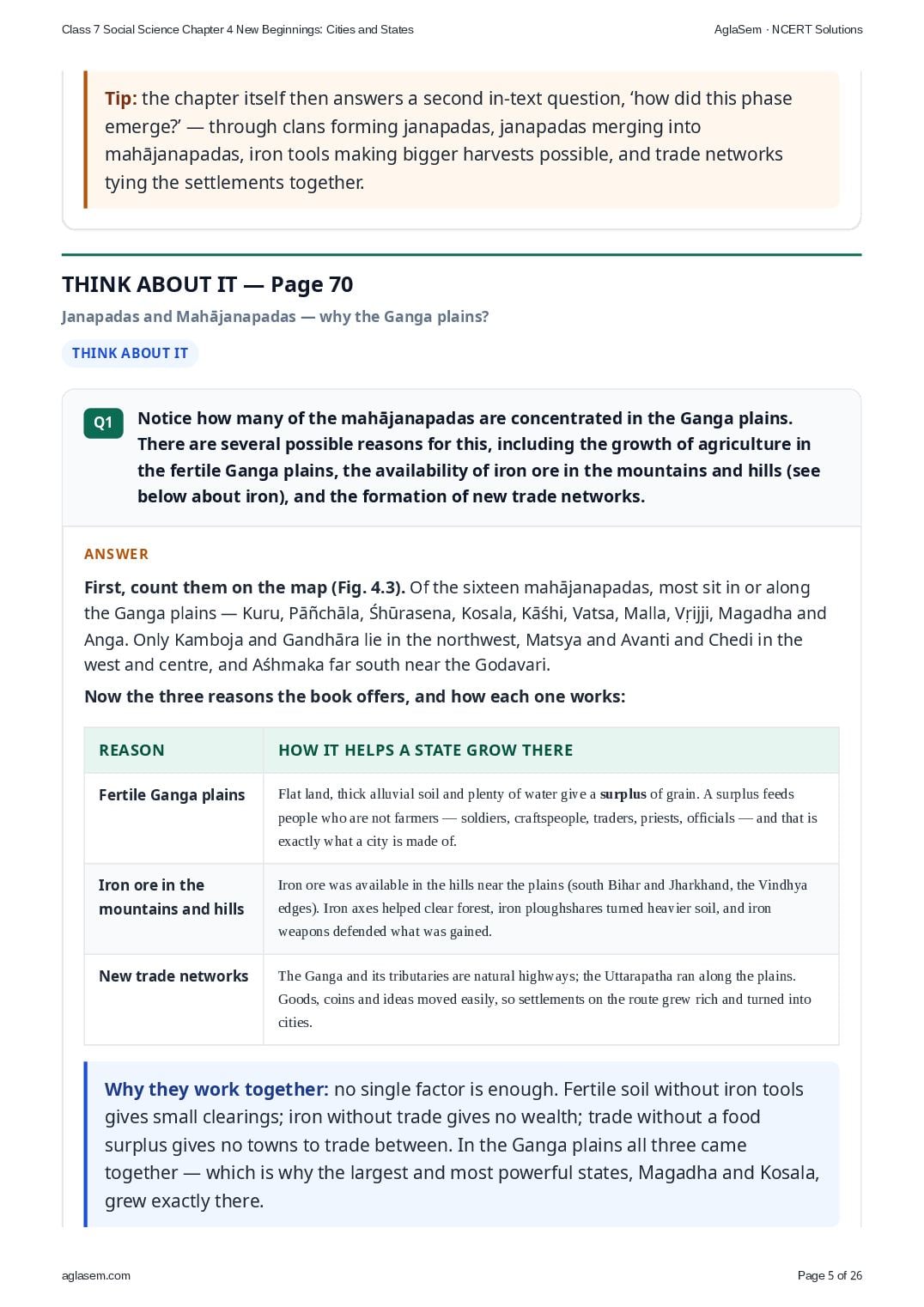
- Notice how many of the mahājanapadas are concentrated in the Ganga plains. There are several possible reasons for this, including the growth of agriculture in the fertile Ganga plains, the availability of iron ore in the mountains and hills (see below about iron), and the formation of new trade networks.
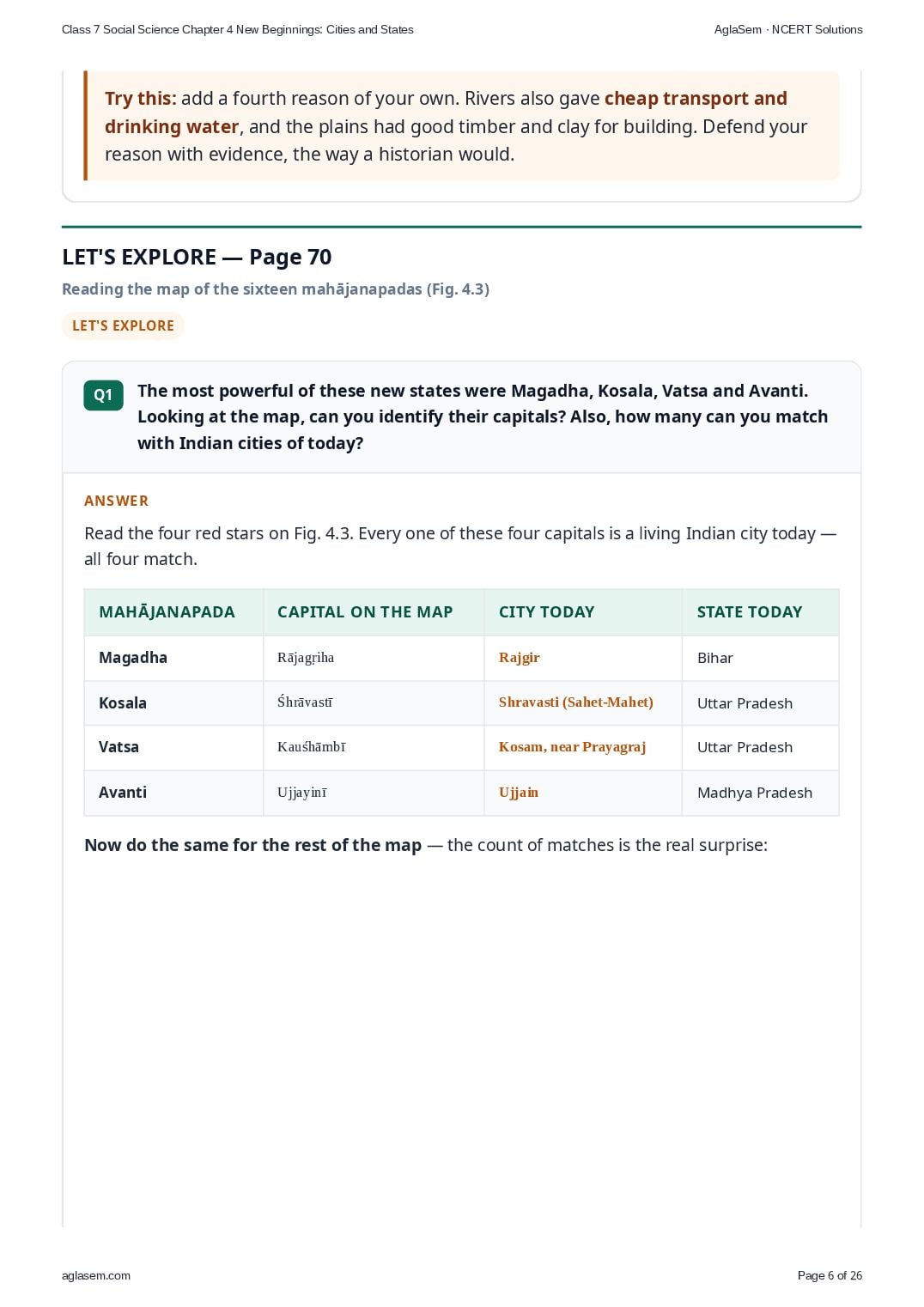
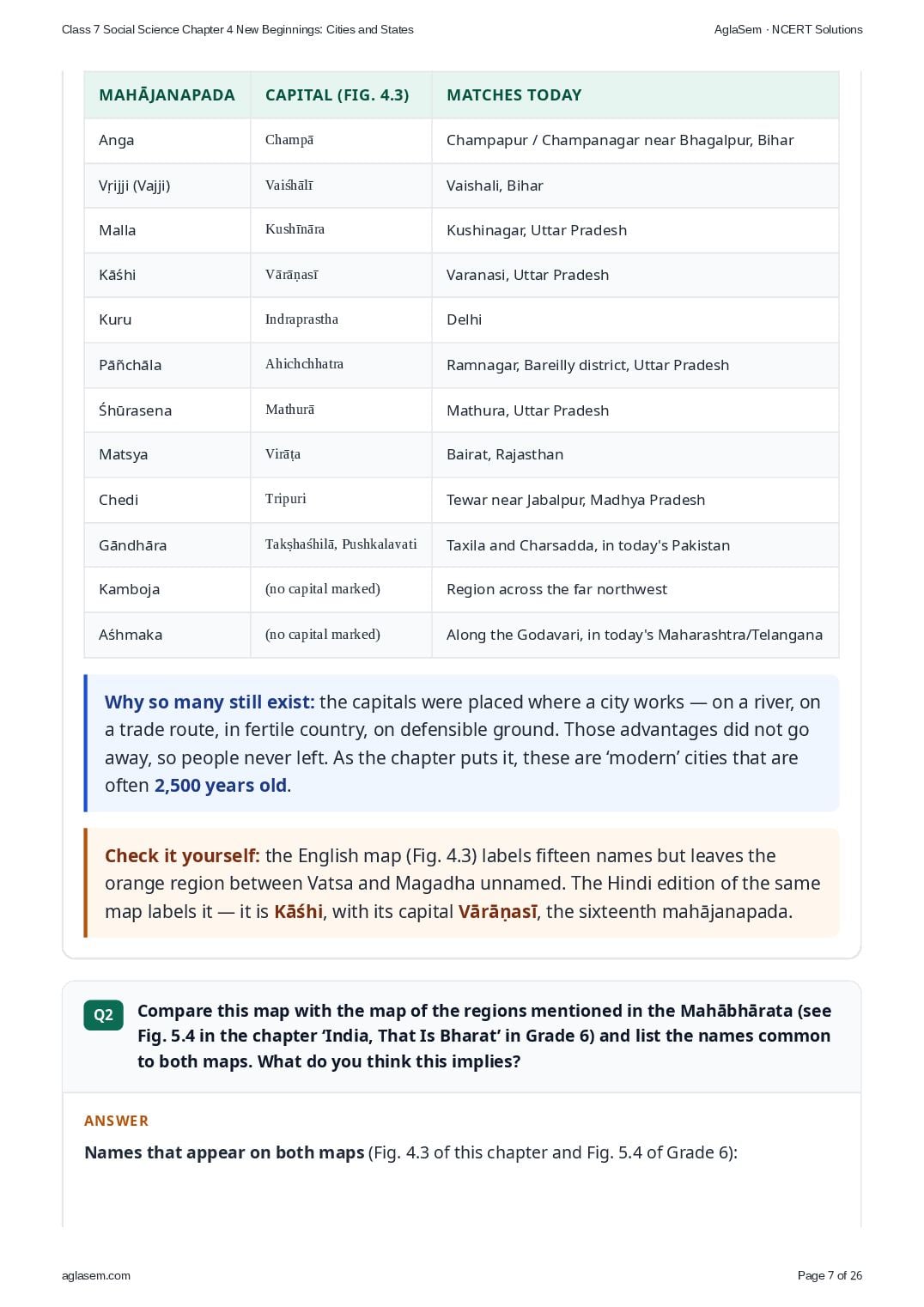
- The most powerful of these new states were Magadha, Kosala, Vatsa and Avanti. Looking at the map, can you identify their capitals? Also, how many can you match with Indian cities of today?
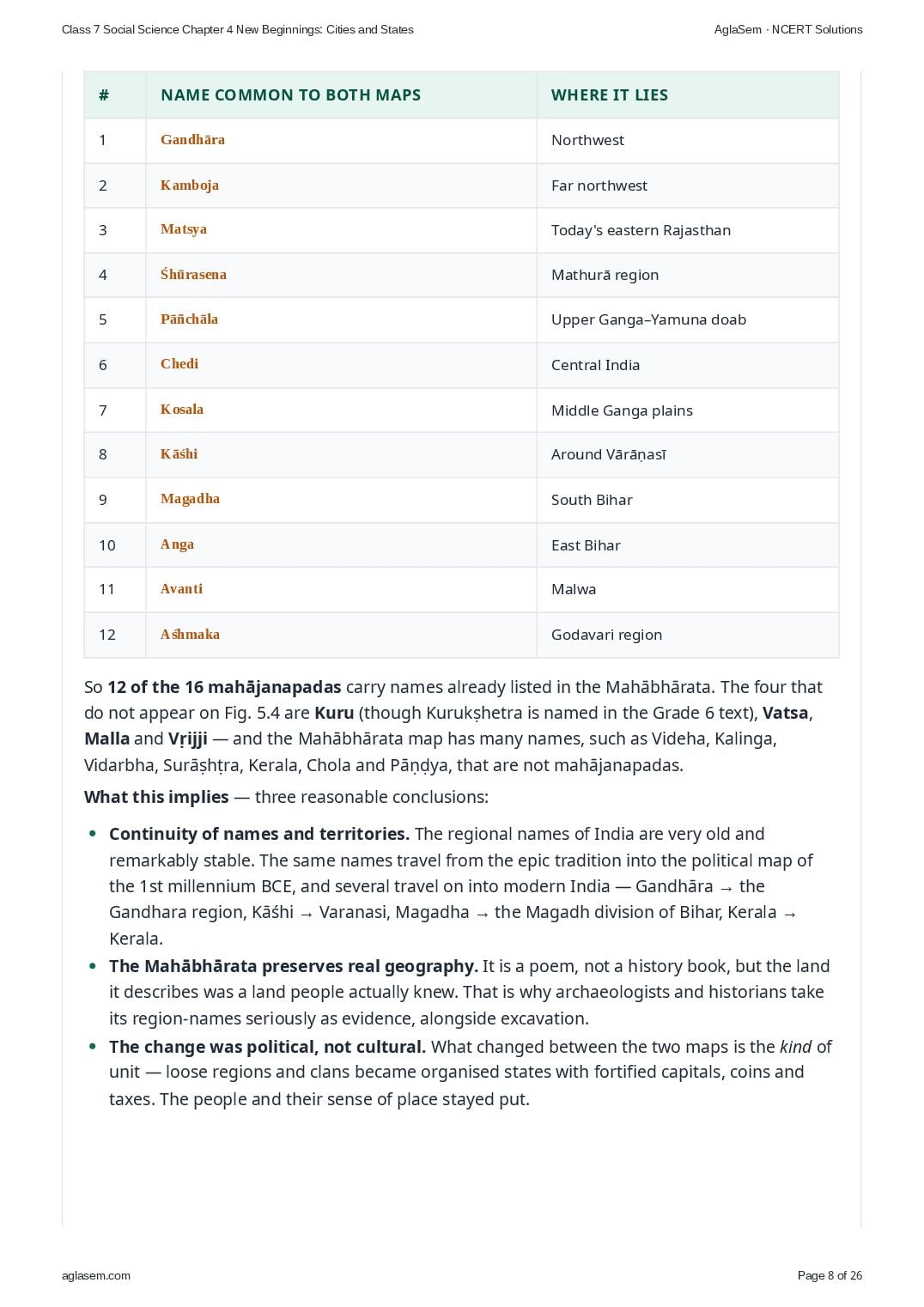
- Compare this map with the map of the regions mentioned in the Mahābhārata (see Fig. 5.4 in the chapter ‘India, That Is Bharat’ in Grade 6) and list the names common to both maps. What do you think this implies?
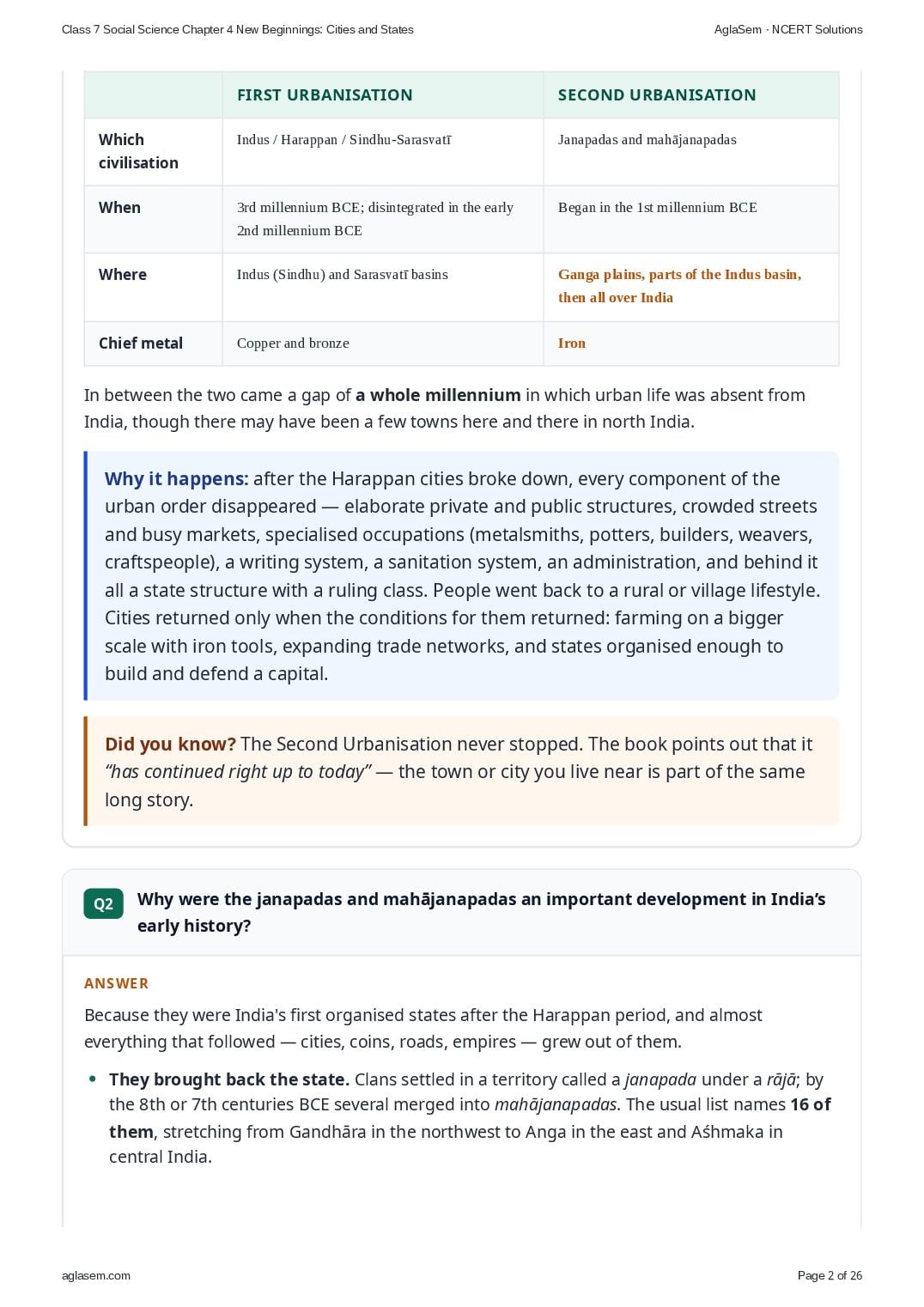
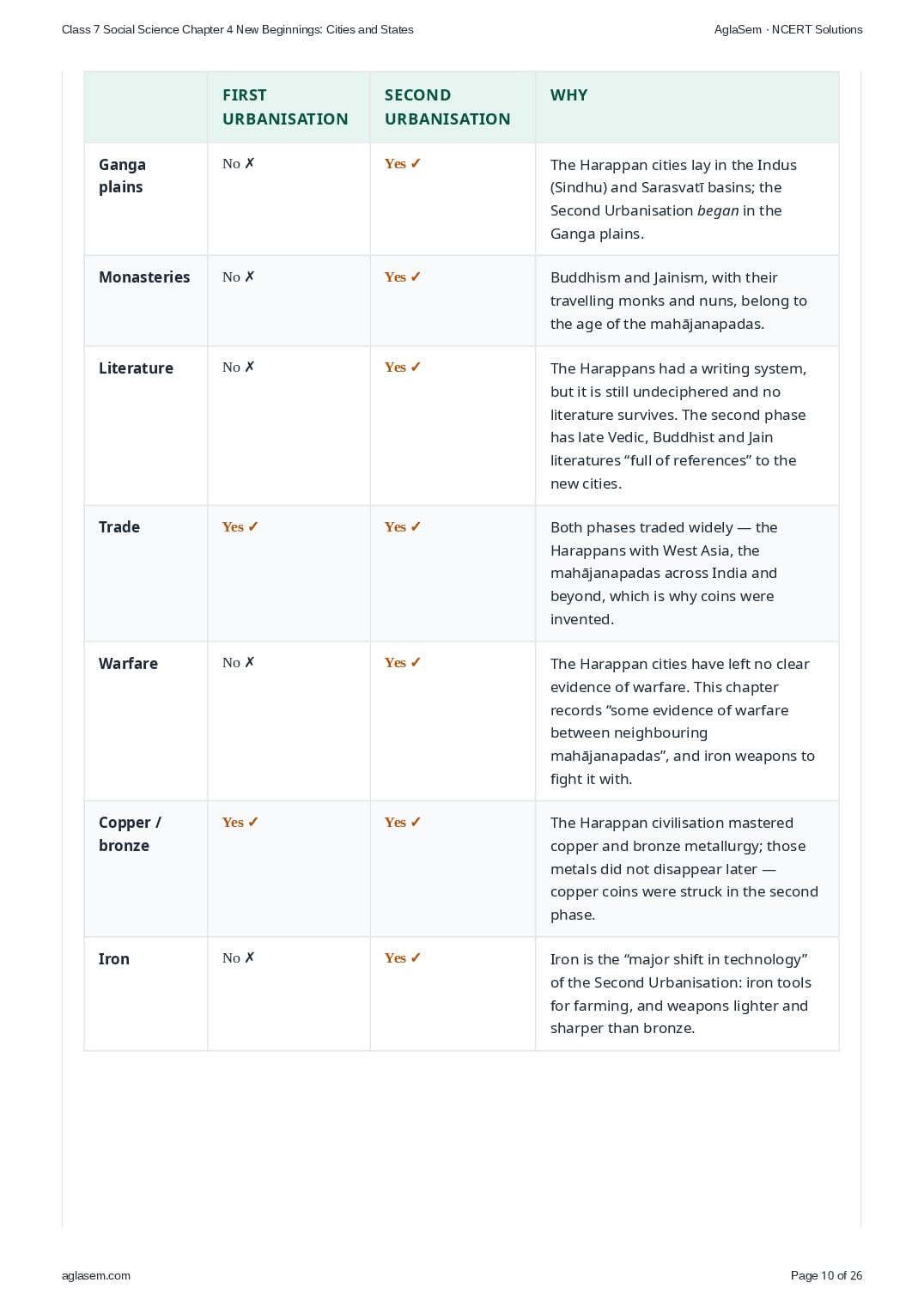
- Fill up the following table with a Yes (or tick mark) or No (or cross mark) in each square, which provides an interesting comparison between these two phases of Indian civilisation.
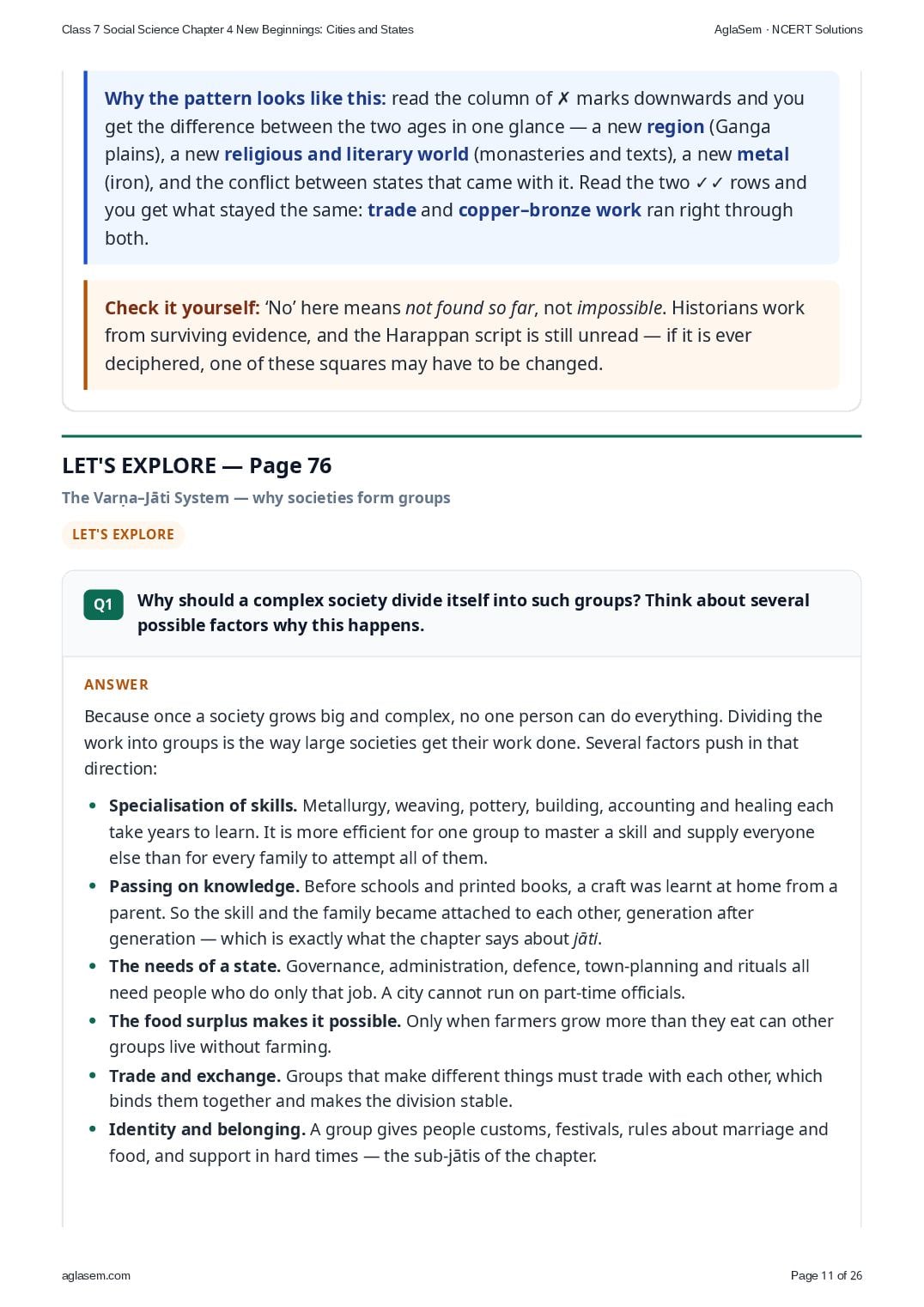
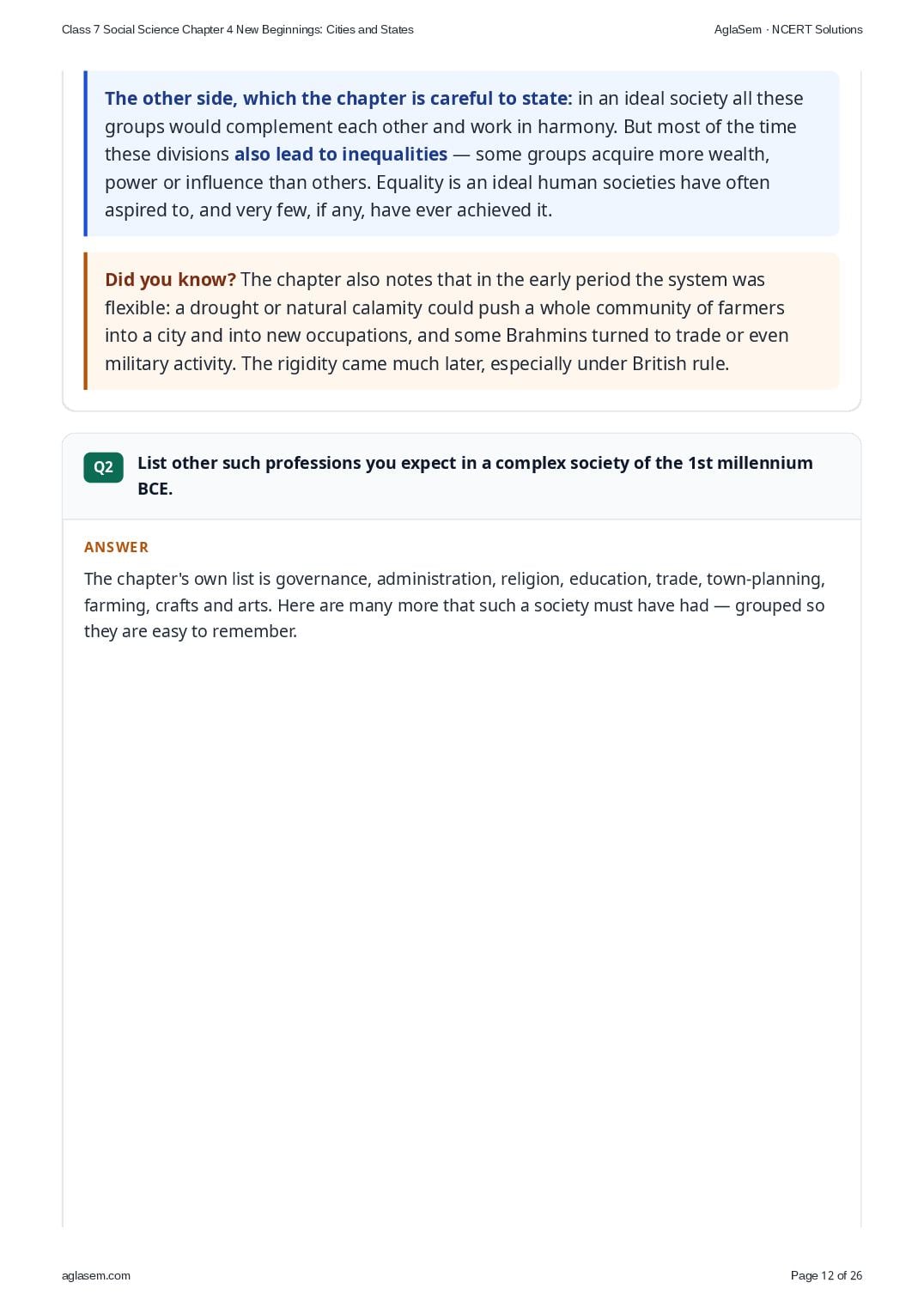
- Why should a complex society divide itself into such groups? Think about several possible factors why this happens.
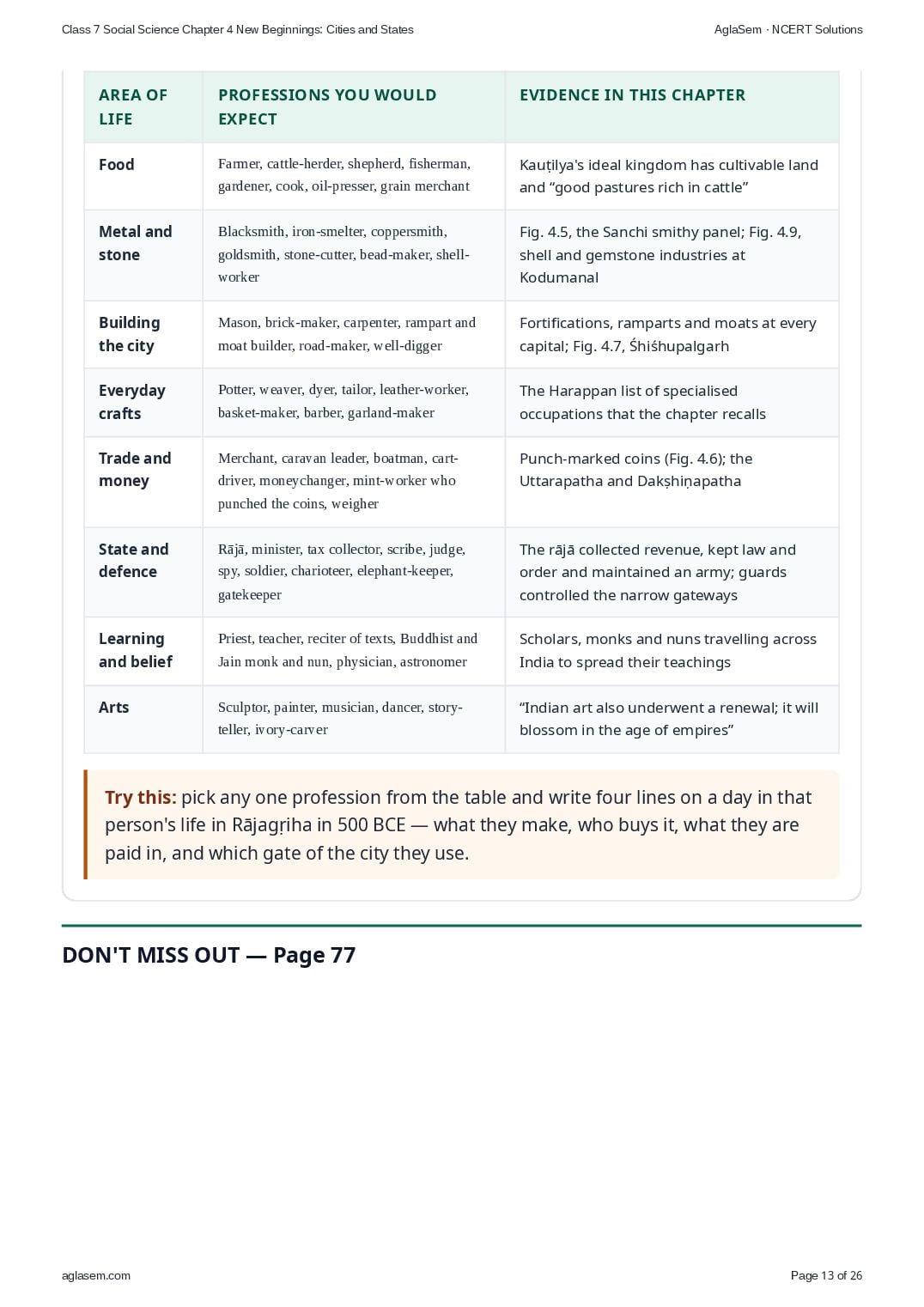
- List other such professions you expect in a complex society of the 1st millennium BCE.
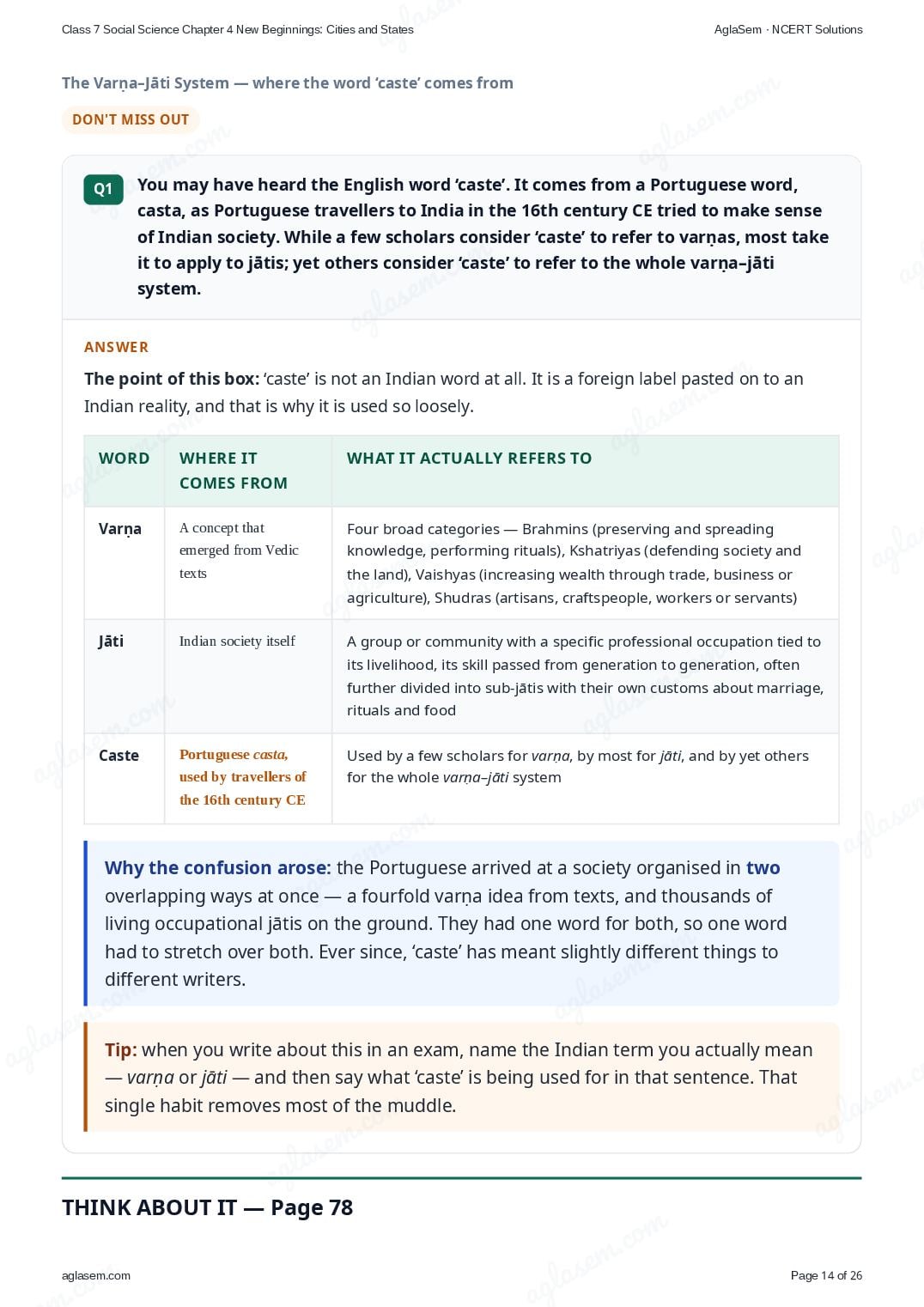
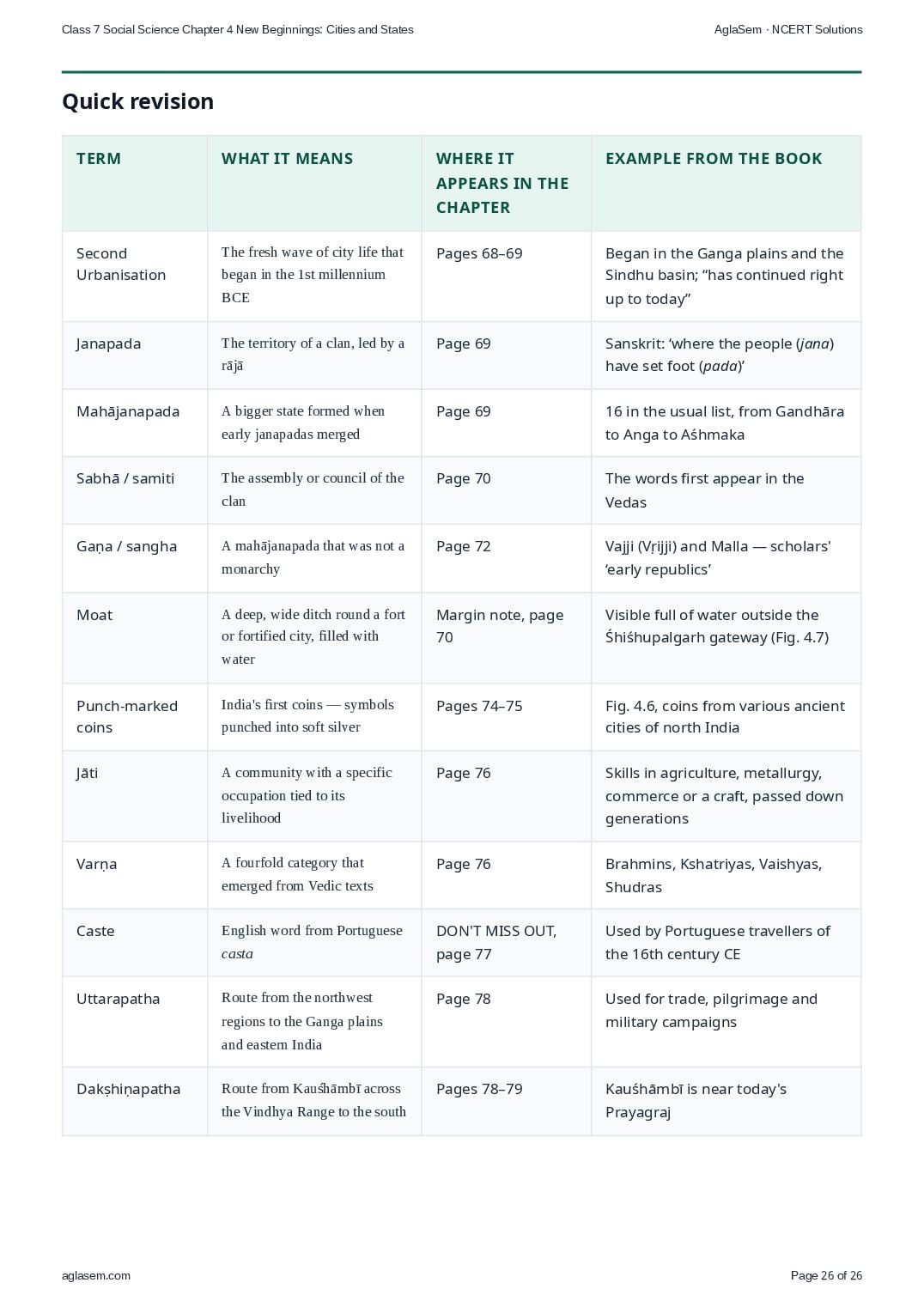
- You may have heard the English word ‘caste’. It comes from a Portuguese word, casta, as Portuguese travellers to India in the 16th century CE tried to make sense of Indian society. While a few scholars consider ‘caste’ to refer to varṇas, most take it to apply to jātis; yet others consider ‘caste’ to refer to the whole varṇa–jāti system.
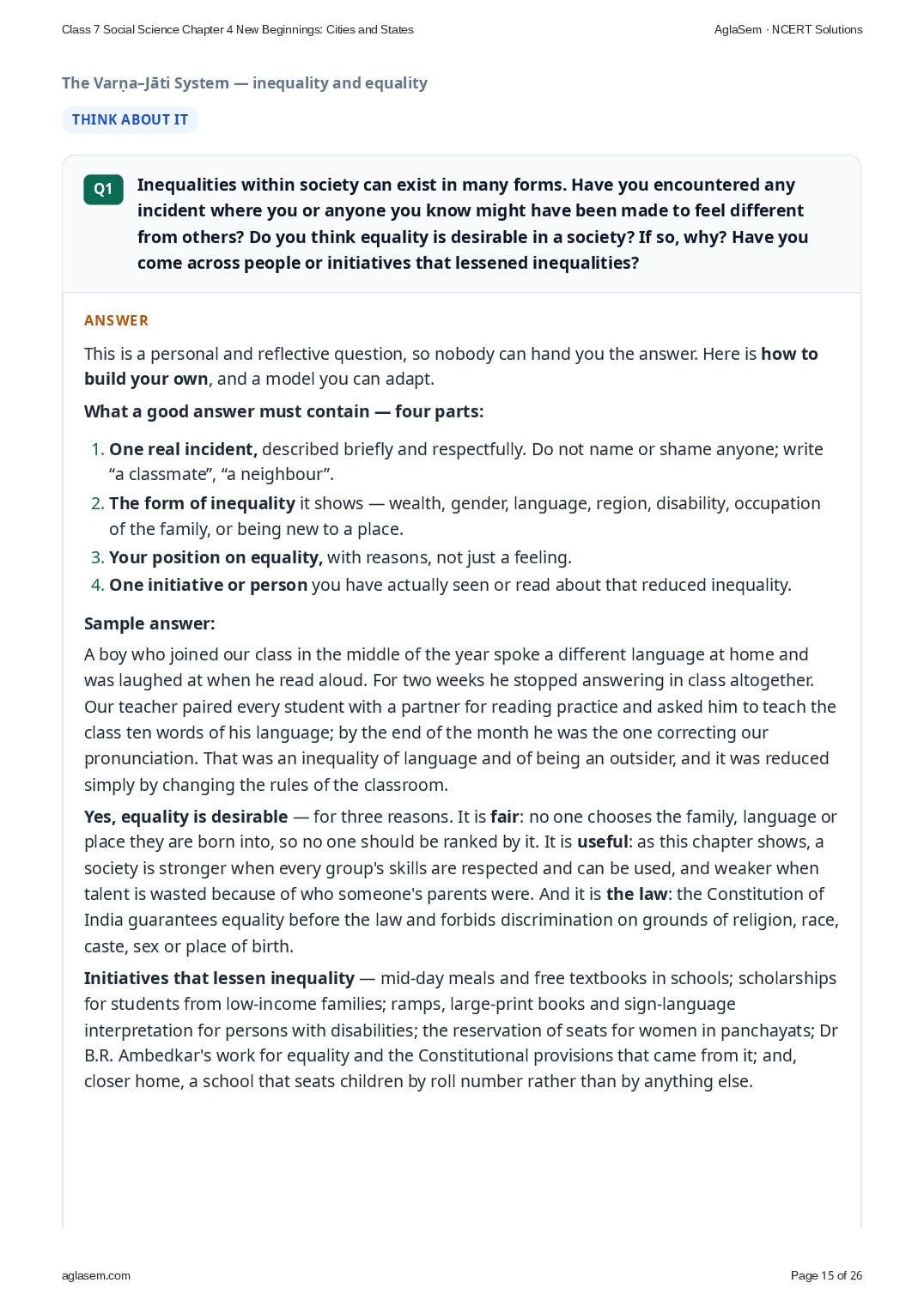
- Inequalities within society can exist in many forms. Have you encountered any incident where you or anyone you know might have been made to feel different from others? Do you think equality is desirable in a society? If so, why? Have you come across people or initiatives that lessened inequalities?
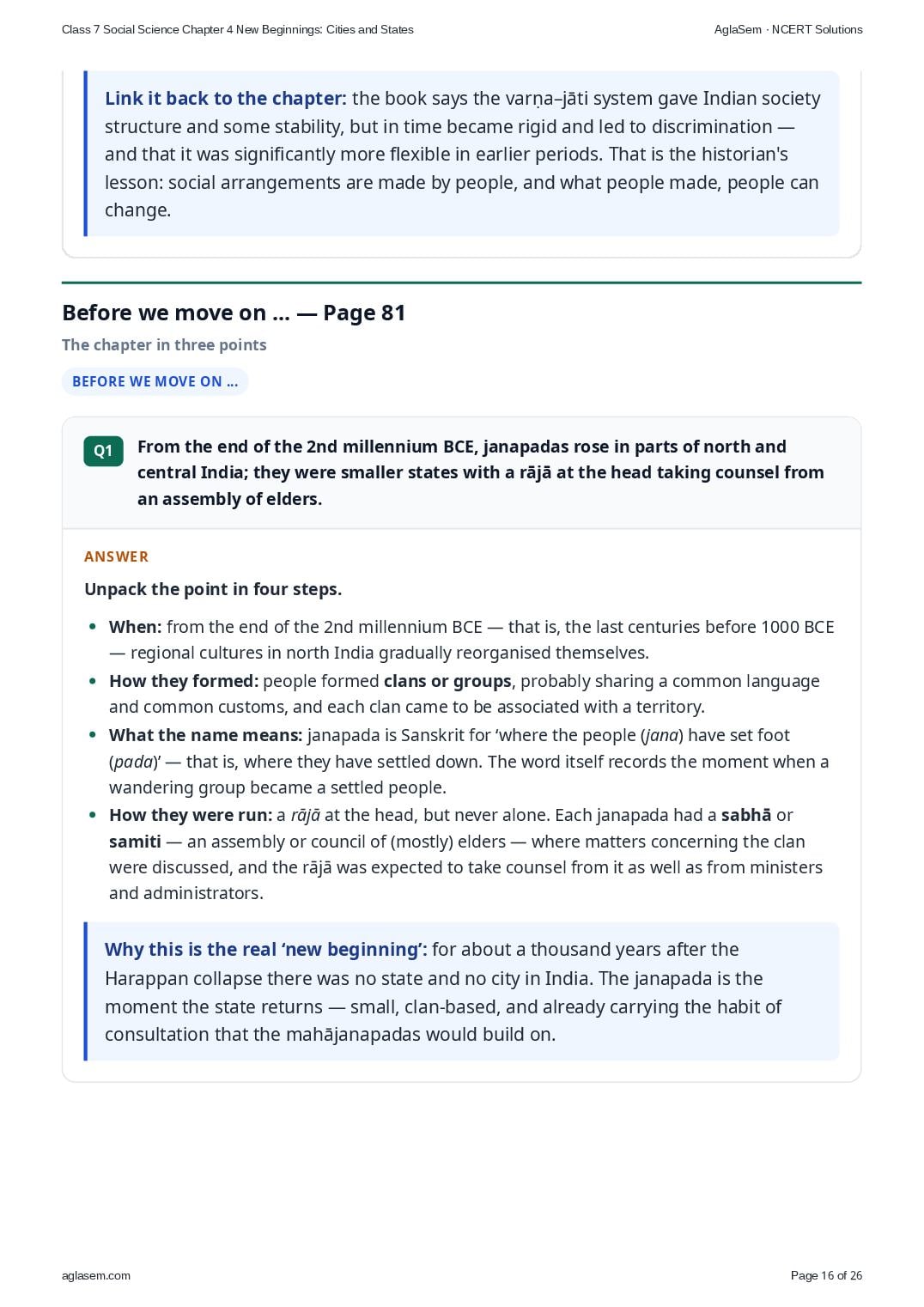
- From the end of the 2nd millennium BCE, janapadas rose in parts of north and central India; they were smaller states with a rājā at the head taking counsel from an assembly of elders.
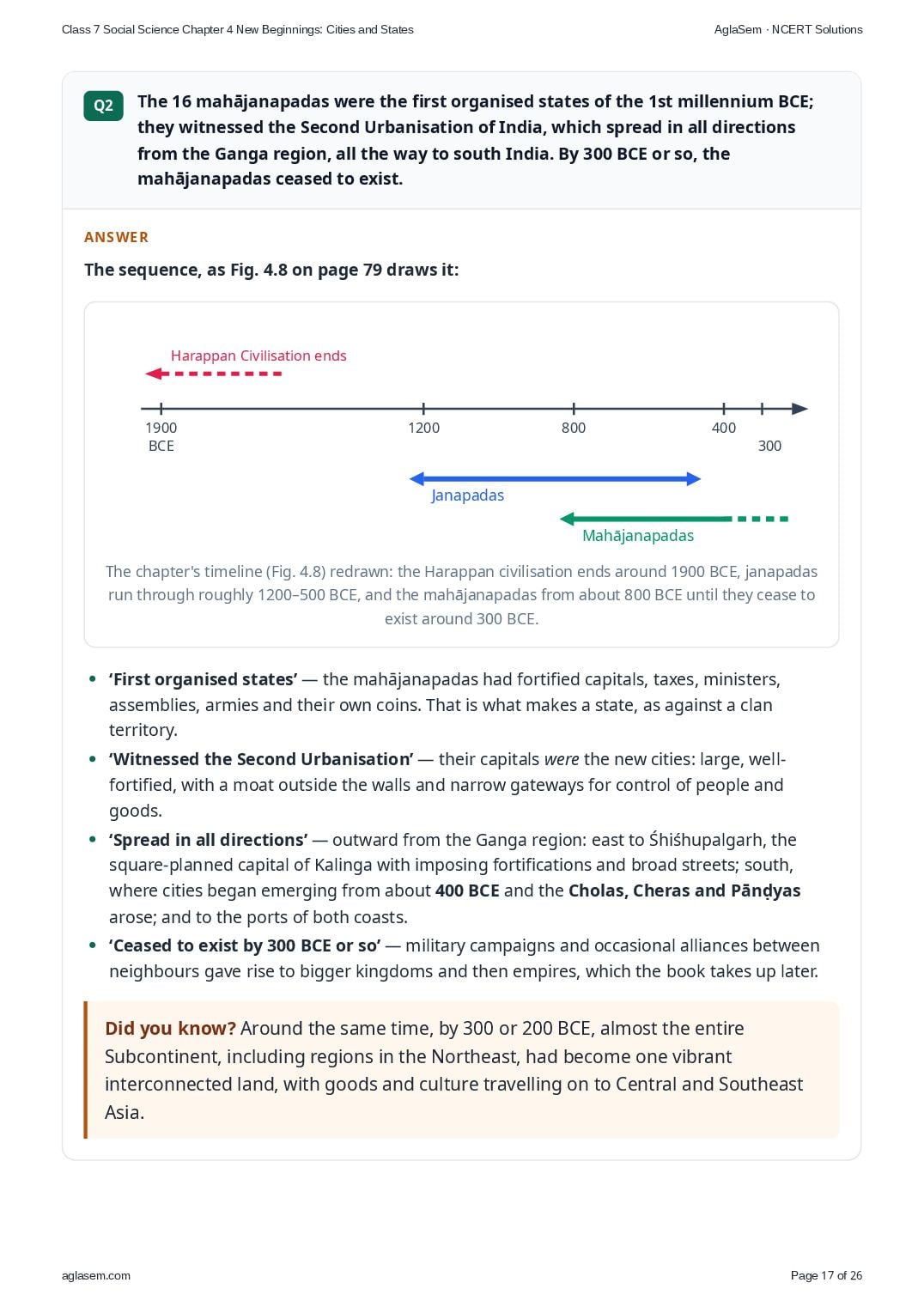
- The 16 mahājanapadas were the first organised states of the 1st millennium BCE; they witnessed the Second Urbanisation of India, which spread in all directions from the Ganga region, all the way to south India. By 300 BCE or so, the mahājanapadas ceased to exist.
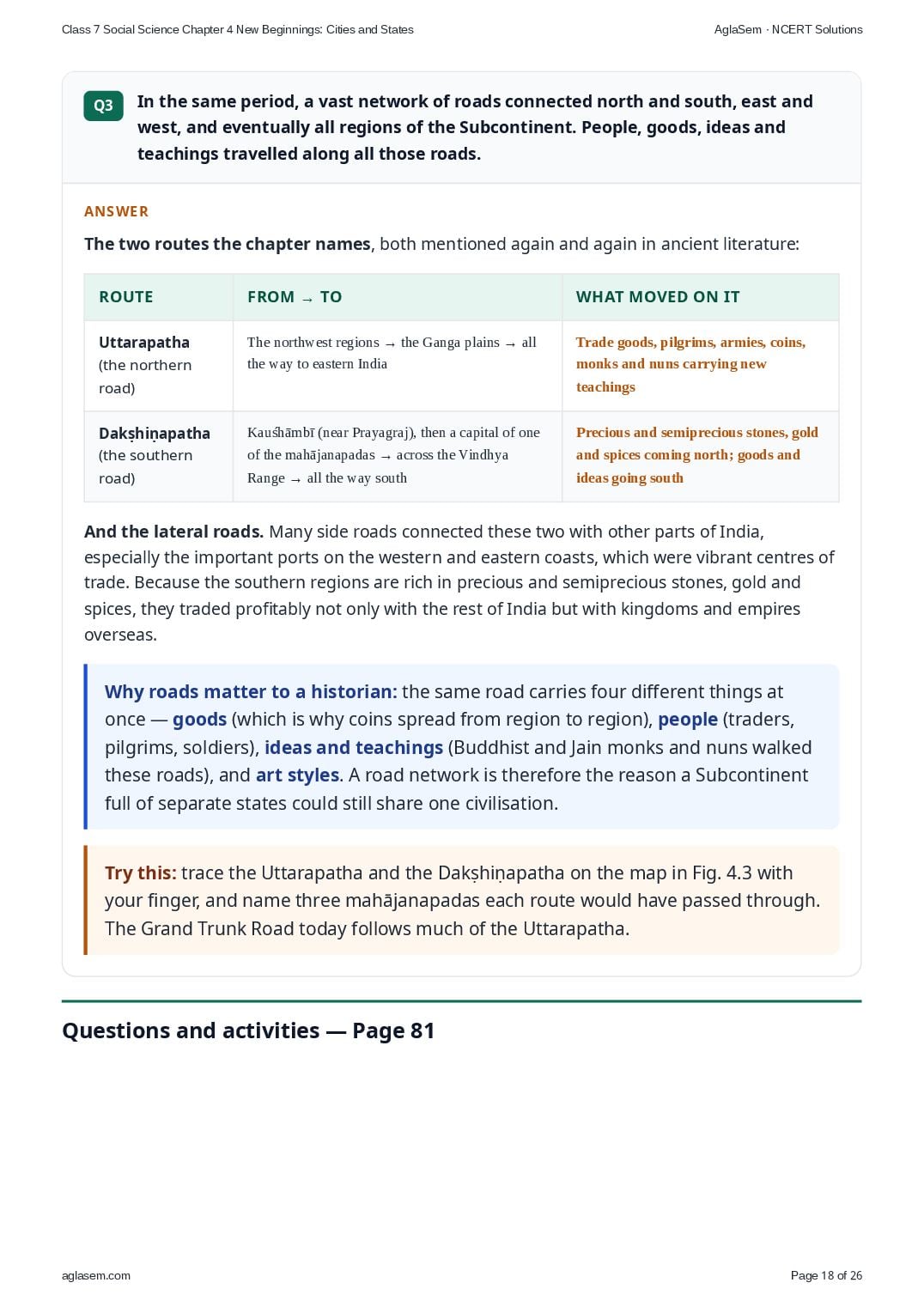
- In the same period, a vast network of roads connected north and south, east and west, and eventually all regions of the Subcontinent. People, goods, ideas and teachings travelled along all those roads.
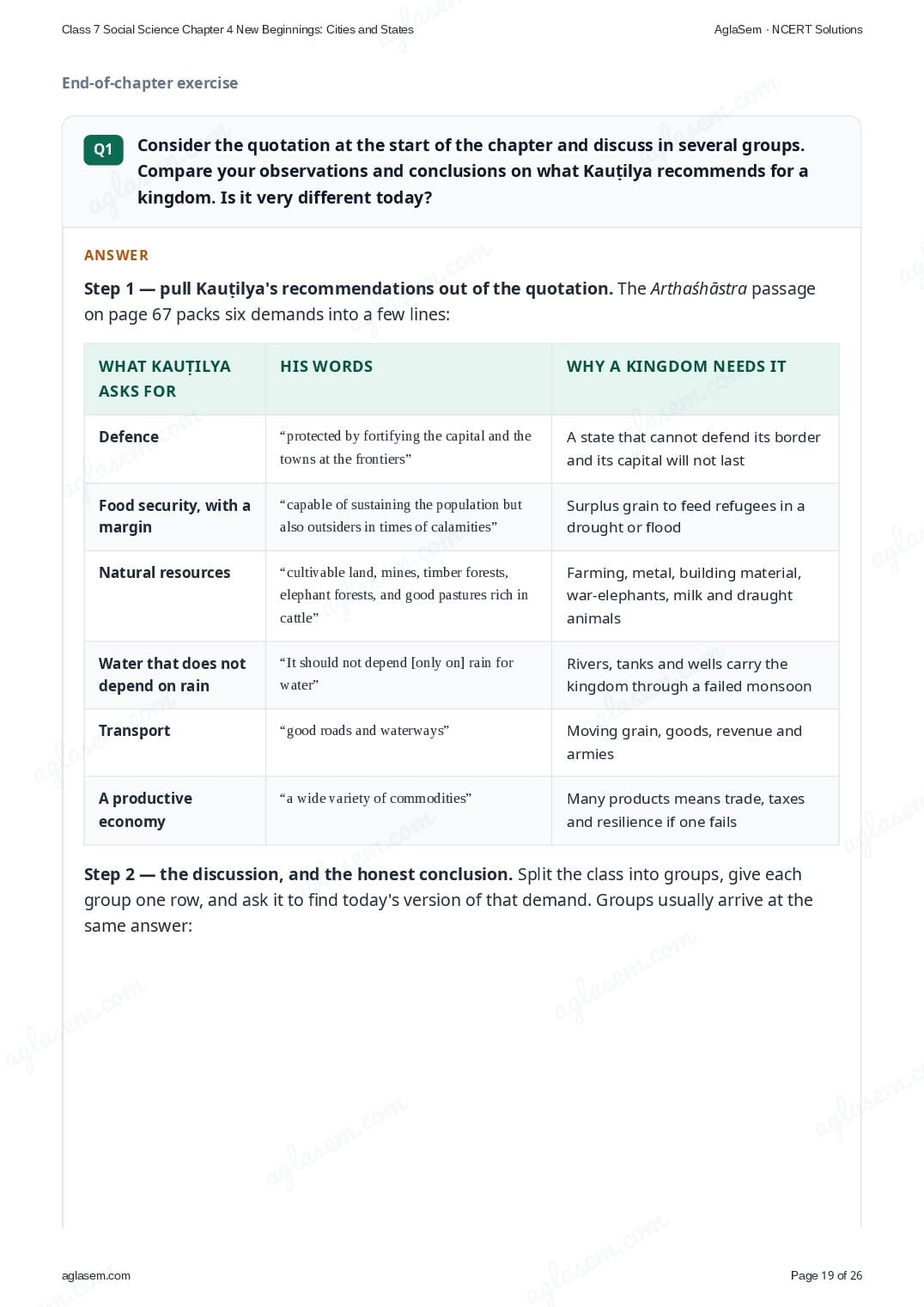
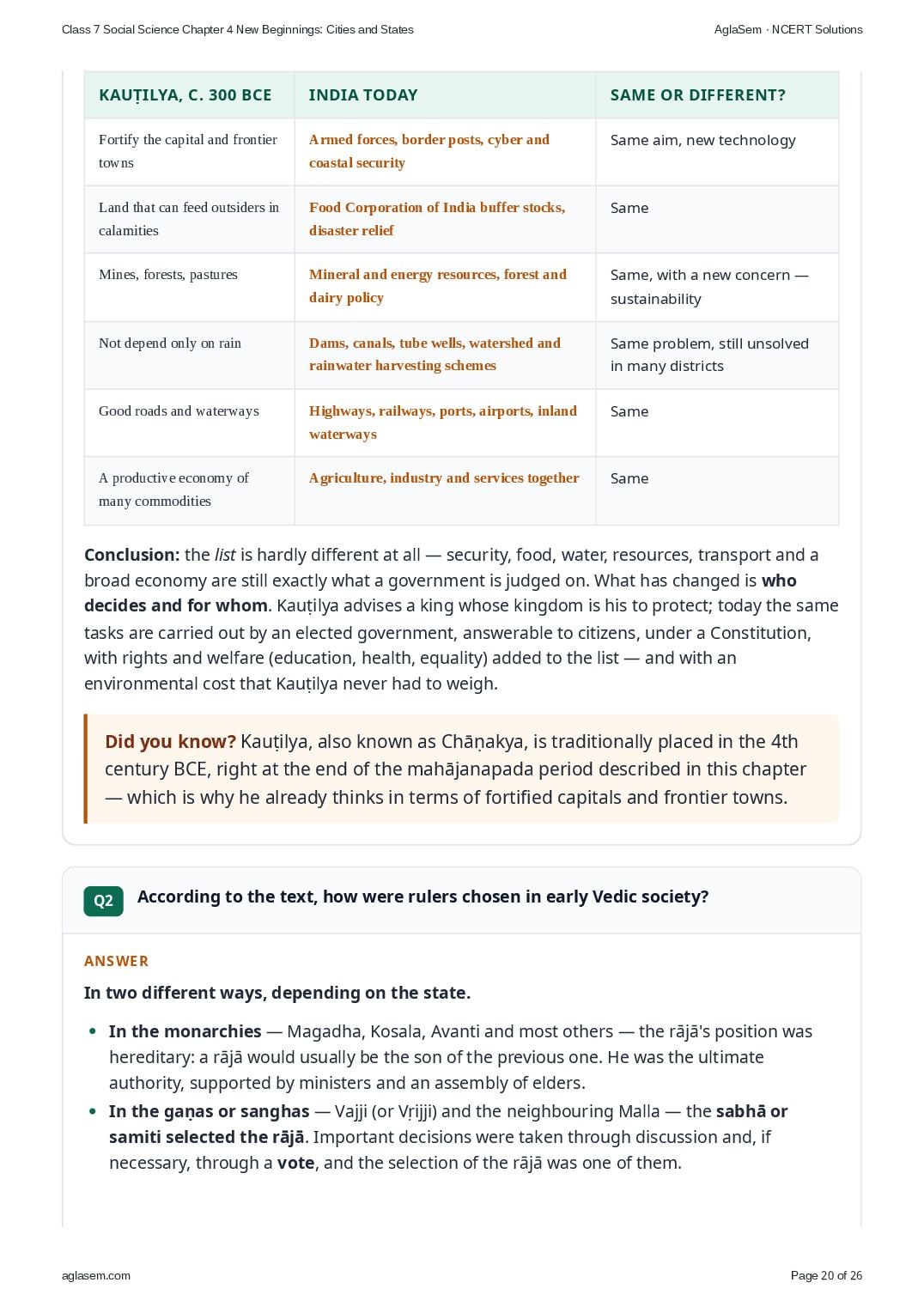
- Consider the quotation at the start of the chapter and discuss in several groups. Compare your observations and conclusions on what Kauṭilya recommends for a kingdom. Is it very different today?
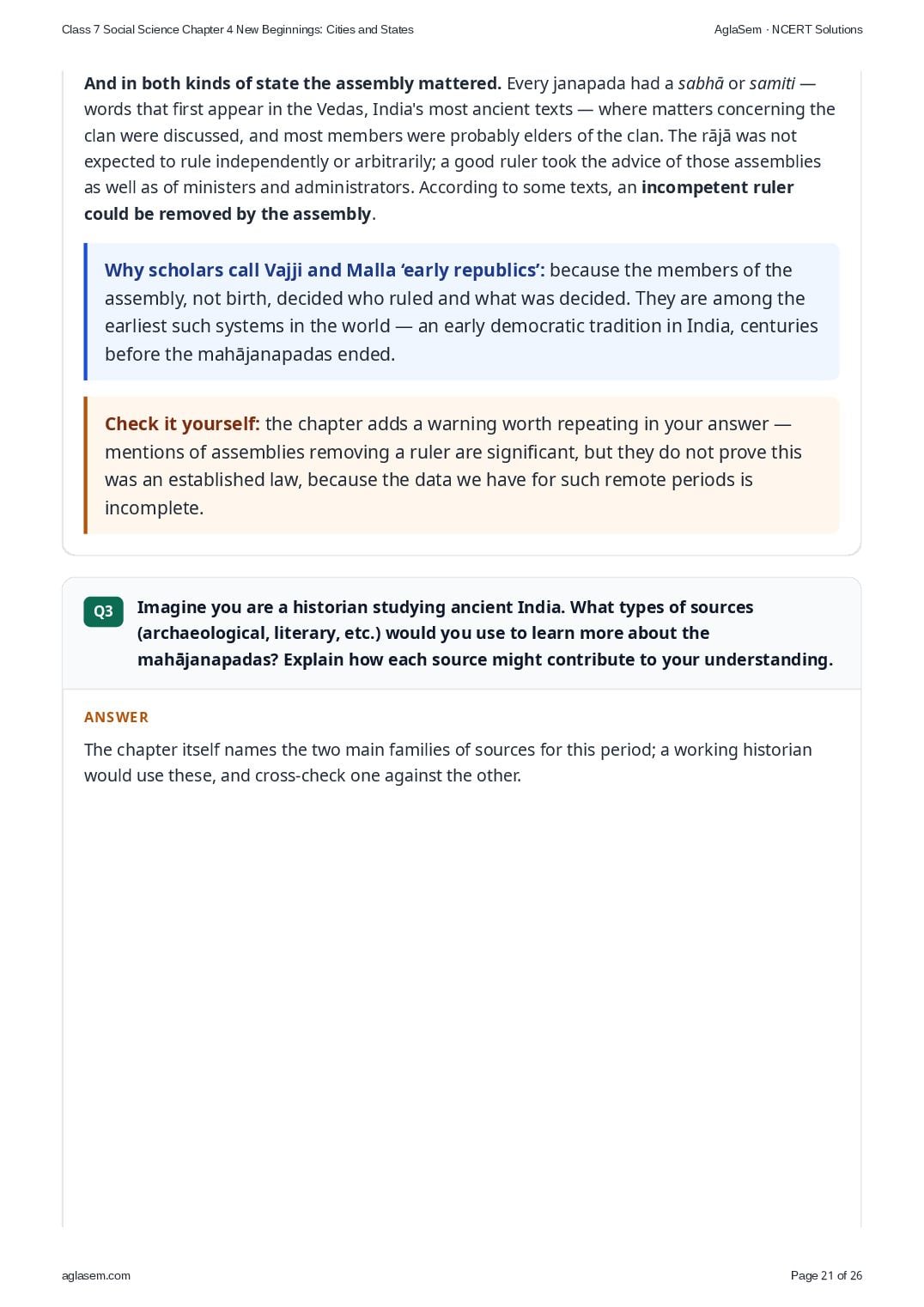
- According to the text, how were rulers chosen in early Vedic society?
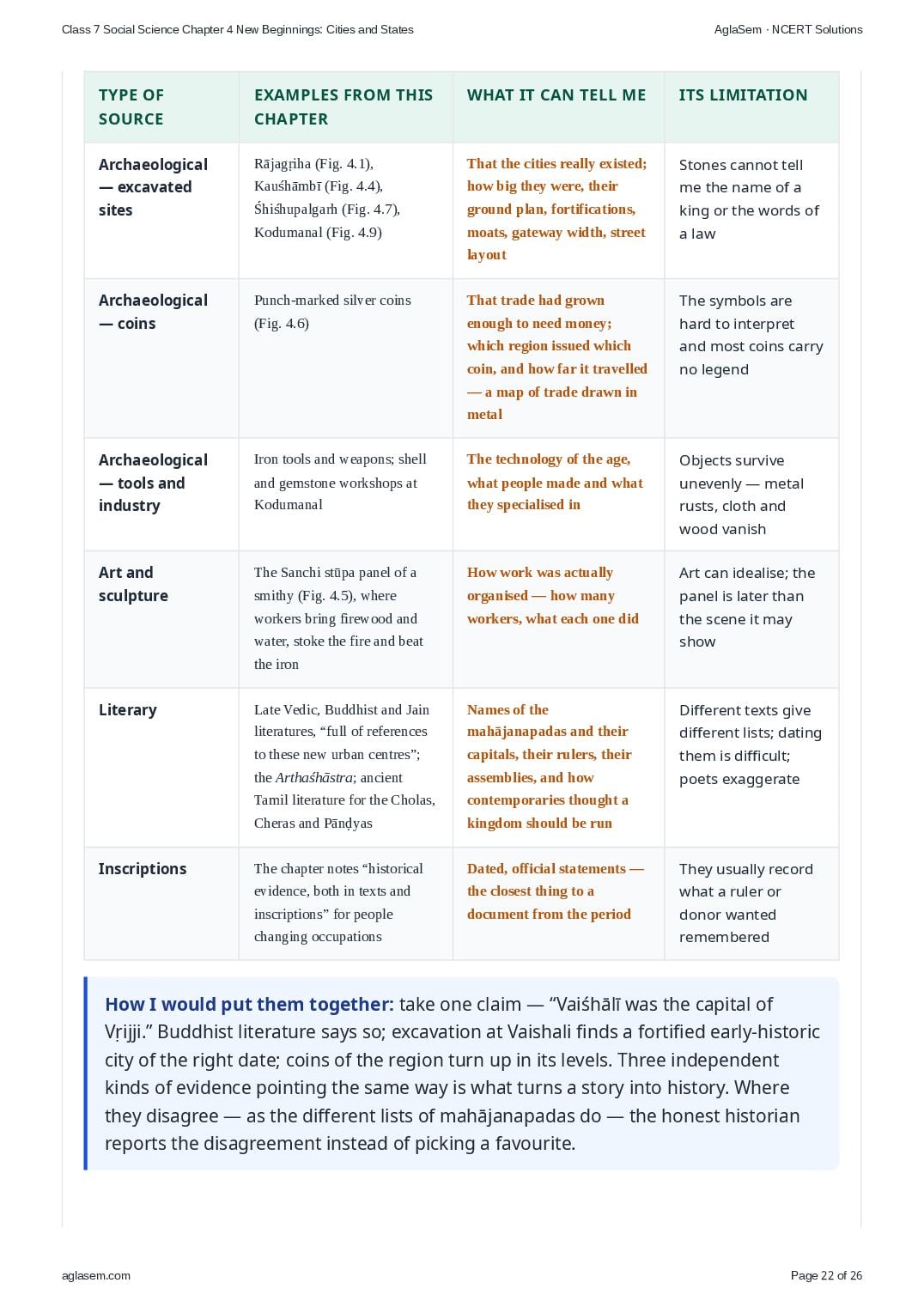
- Imagine you are a historian studying ancient India. What types of sources (archaeological, literary, etc.) would you use to learn more about the mahājanapadas? Explain how each source might contribute to your understanding.
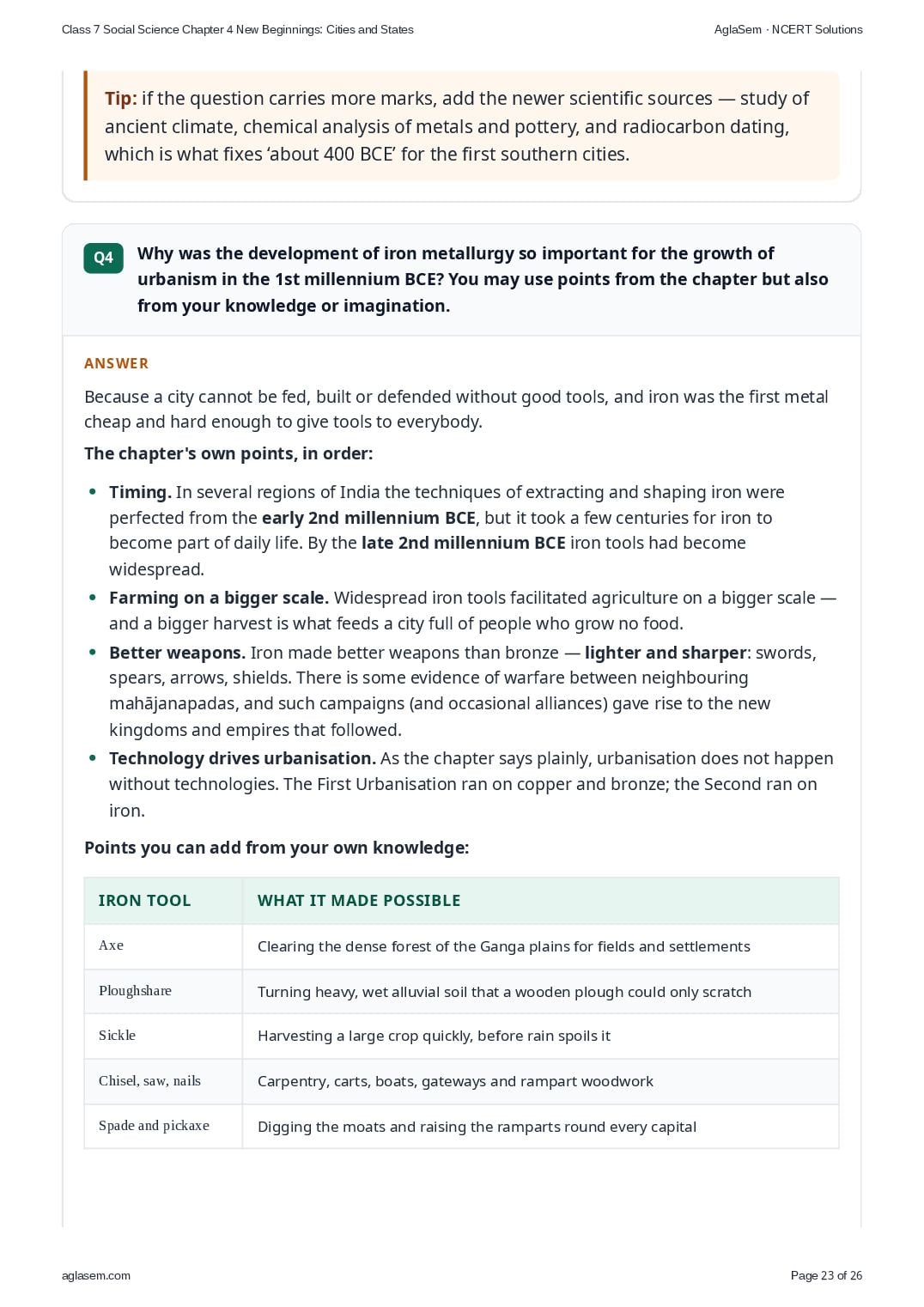
- Why was the development of iron metallurgy so important for the growth of urbanism in the 1st millennium BCE? You may use points from the chapter but also from your knowledge or imagination.
Chapter at a Glance
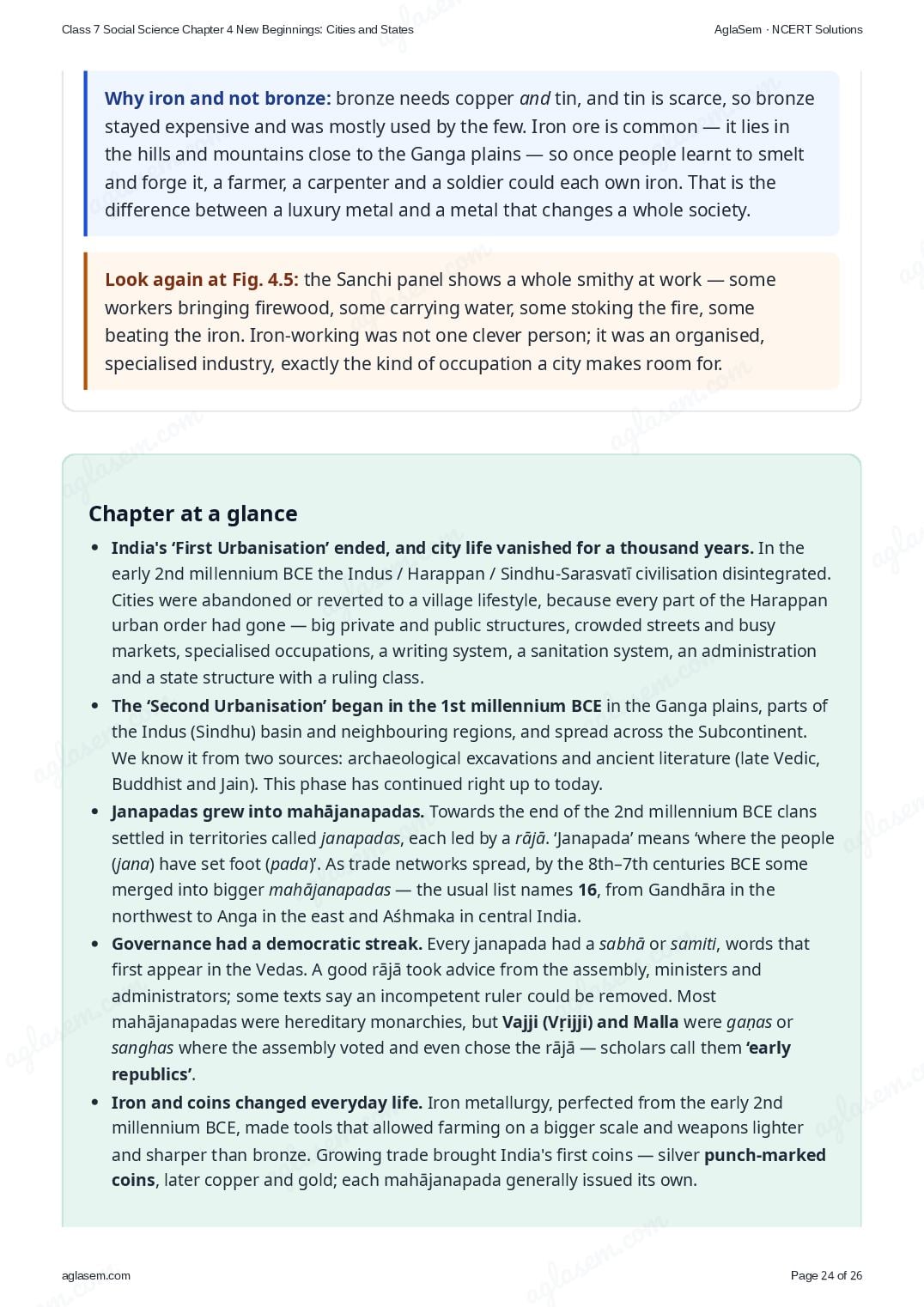
- India's ‘First Urbanisation’ ended, and city life vanished for a thousand years. In the early 2nd millennium BCE the Indus / Harappan / Sindhu-Sarasvatī civilisation disintegrated. Cities were abandoned or reverted to a village lifestyle, because every part of the Harappan urban order had gone — big private and public structures, crowded streets and busy markets, specialised occupations, a writing system, a sanitation system, an administration and a state structure with a ruling class.
- The ‘Second Urbanisation’ began in the 1st millennium BCE in the Ganga plains, parts of the Indus (Sindhu) basin and neighbouring regions, and spread across the Subcontinent. We know it from two sources: archaeological excavations and ancient literature (late Vedic, Buddhist and Jain). This phase has continued right up to today.
- Janapadas grew into mahājanapadas. Towards the end of the 2nd millennium BCE clans settled in territories called janapadas , each led by a rājā . ‘Janapada’ means ‘where the people ( jana ) have set foot ( pada )’. As trade networks spread, by the 8th–7th centuries BCE some merged into bigger mahājanapadas — the usual list names 16 , from Gandhāra in the northwest to Anga in the east and Aśhmaka in central India.
- Governance had a democratic streak. Every janapada had a sabhā or samiti , words that first appear in the Vedas. A good rājā took advice from the assembly, ministers and administrators; some texts say an incompetent ruler could be removed. Most mahājanapadas were hereditary monarchies, but Vajji (Vṛijji) and Malla were gaṇas or sanghas where the assembly voted and even chose the rājā — scholars call them ‘early republics’ .
- Iron and coins changed everyday life. Iron metallurgy, perfected from the early 2nd millennium BCE, made tools that allowed farming on a bigger scale and weapons lighter and sharper than bronze. Growing trade brought India's first coins — silver punch-marked coins , later copper and gold; each mahājanapada generally issued its own.
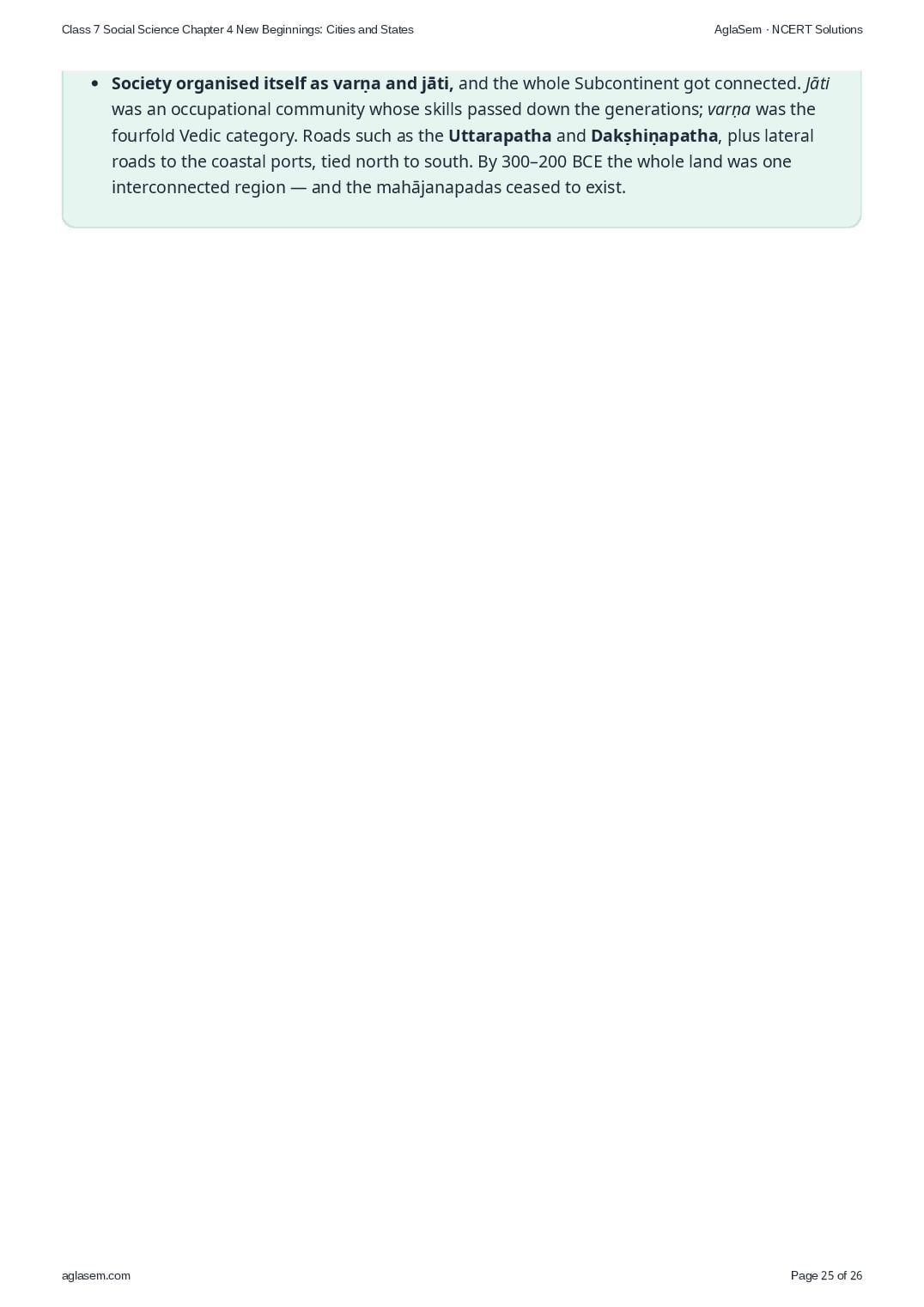
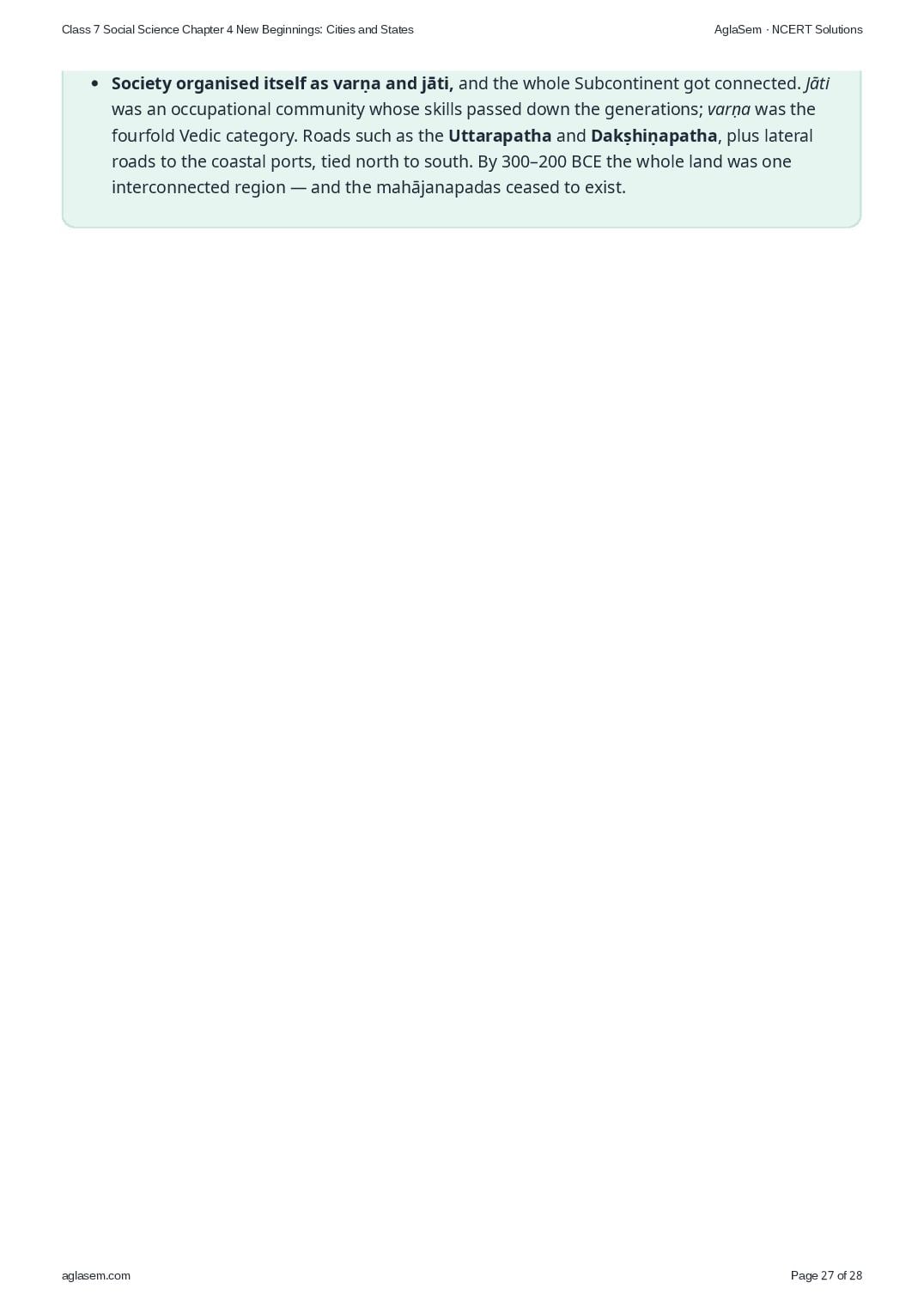
- Society organised itself as varṇa and jāti, and the whole Subcontinent got connected. Jāti was an occupational community whose skills passed down the generations; varṇa was the fourfold Vedic category. Roads such as the Uttarapatha and Dakṣhiṇapatha , plus lateral roads to the coastal ports, tied north to south. By 300–200 BCE the whole land was one interconnected region — and the mahājanapadas ceased to exist.
How to Download NCERT Solutions for Class 7 Social Science Chapter 4 PDF
Follow these simple steps to get the New Beginnings Cities and States questions-and-answers PDF from Exploring Society India and Beyond.
- Search NCERT Solutions for Class 7 Social Science Chapter 4 aglasem and open this page.
- Read the exercise questions with answers for New Beginnings Cities and States shown above.
- Click the Download PDF link to save the New Beginnings Cities and States solutions to your device.
NCERT Solutions for Class 7 Social Science – All Chapters
There are more chapters to study besides New Beginnings Cities and States in Social Science. Here are the NCERT Solutions for all chapters of Class 7 Social Science.
- Chapter 1 Geographical Diversity of India
- Chapter 2 Understanding the Weather
- Chapter 3 Climates of India
- Chapter 4 New Beginnings Cities and States
- Chapter 5 the Rise of Empires
- Chapter 6 the Age of Reorganisation
- Chapter 7 the Gupta Era an Age of Tireless Creativity
- Chapter 8 How the Land Becomes Sacred
- Chapter 9 From the Rulers to the Ruled Types of Governments
- Chapter 10 the Constitution of India an Introduction
- Chapter 11 From Barter to Money
- Chapter 12 Understanding Markets
NCERT Solutions for Class 7 – All Subjects
Just like Chapter 4 of Social Science, you can get the exercise questions with answers for every other subject of Class 7. Here are the NCERT Solutions for all subjects of Class 7.
NCERT Solutions for Class 7 Social Science Chapter 4 – An Overview
The key highlights of this study material are as follows.
| Aspects | Details |
|---|---|
| Class | Class 7 |
| Subject | Social Science |
| Chapter Number | Chapter 4 |
| Chapter Name | New Beginnings Cities and States |
| Book Name | Exploring Society India and Beyond |
| Book By | NCERT (National Council of Educational Research and Training) |
| Educational Resource Here | NCERT Solutions of Class 7 Social Science Chapter 4 for all exercises |
| More Questions Answers of This Subject | NCERT Solutions for Class 7 Social Science |
| Download Book Chapter | NCERT Book Class 7 Social Science |
| All Questions Answers For This Class | NCERT Solutions for Class 7 |
| Complete Solutions | NCERT Solutions |
NCERT Solutions for Class 7 Social Science Chapter 4 New Beginnings Cities and States – FAQs
What are the NCERT Solutions for Class 7 Social Science Chapter 4 New Beginnings Cities and States?
They are the complete, step-by-step answers to all the exercise and in-text questions of Chapter 4 New Beginnings Cities and States from the NCERT Class 7 Social Science textbook Exploring Society India and Beyond, written by experts as per the latest NCERT syllabus.
How can I download the Class 7 Social Science Chapter 4 solutions PDF for free?
Open this page on aglasem, read the New Beginnings Cities and States questions with answers, and click the “Download Solutions PDF” link. The Class 7 Social Science Chapter 4 NCERT Solutions PDF is completely free to download.
Are these NCERT Solutions as per the latest 2026-27 syllabus?
Yes. The NCERT Solutions for Class 7 Social Science Chapter 4 are based on the latest NCERT textbook Exploring Society India and Beyond and the current 2026-27 CBSE syllabus, so the questions and answers match what you study in class.
Where can I get NCERT Solutions for the other chapters of Class 7 Social Science?
You can find the answers to every chapter on the NCERT Solutions for Class 7 Social Science page, and solutions for every subject on the NCERT Solutions for Class 7 page.
How do NCERT Solutions help in exam preparation?
They show the correct method to solve each question, help you write answers the way they are expected in exams, let you check and correct your own work, and save revision time — which together improve your marks in Class 7 Social Science.
If you have any queries on NCERT Solutions for Class 7 Social Science Chapter 4 New Beginnings Cities and States, then please ask in the comments below.
