NCERT Solutions for Class 7 Social Science Chapter 6 the Age of Reorganisation provide clear, step-by-step answers to every exercise and in-text question from the chapter the Age of Reorganisation of the NCERT textbook Exploring Society India and Beyond. Prepared by subject experts as per the latest NCERT (CBSE) syllabus for 2026-27, these NCERT Solutions for Class 7 Social Science help you understand each concept, write exam-ready answers, and check your own solutions. You can read them online below or download the free Class 7 Social Science Chapter 6 question-answer PDF.
NCERT Solutions for Class 7 Social Science Chapter 6 the Age of Reorganisation
- Class: Class 7
- Subject: Social Science
- Chapter: Chapter 6 – the Age of Reorganisation
- Textbook: Exploring Society India and Beyond (NCERT)
- Study material: NCERT Solutions – questions with answers, free PDF
These solutions answer all the exercise questions of Chapter 6 the Age of Reorganisation — including the in-text questions, short-answer and long-answer questions, and activities — with complete explanations so you can follow the method, not just the final answer. Read the full solutions below.
NCERT Solutions Class 7 Social Science Chapter 6 the Age of Reorganisation View Download
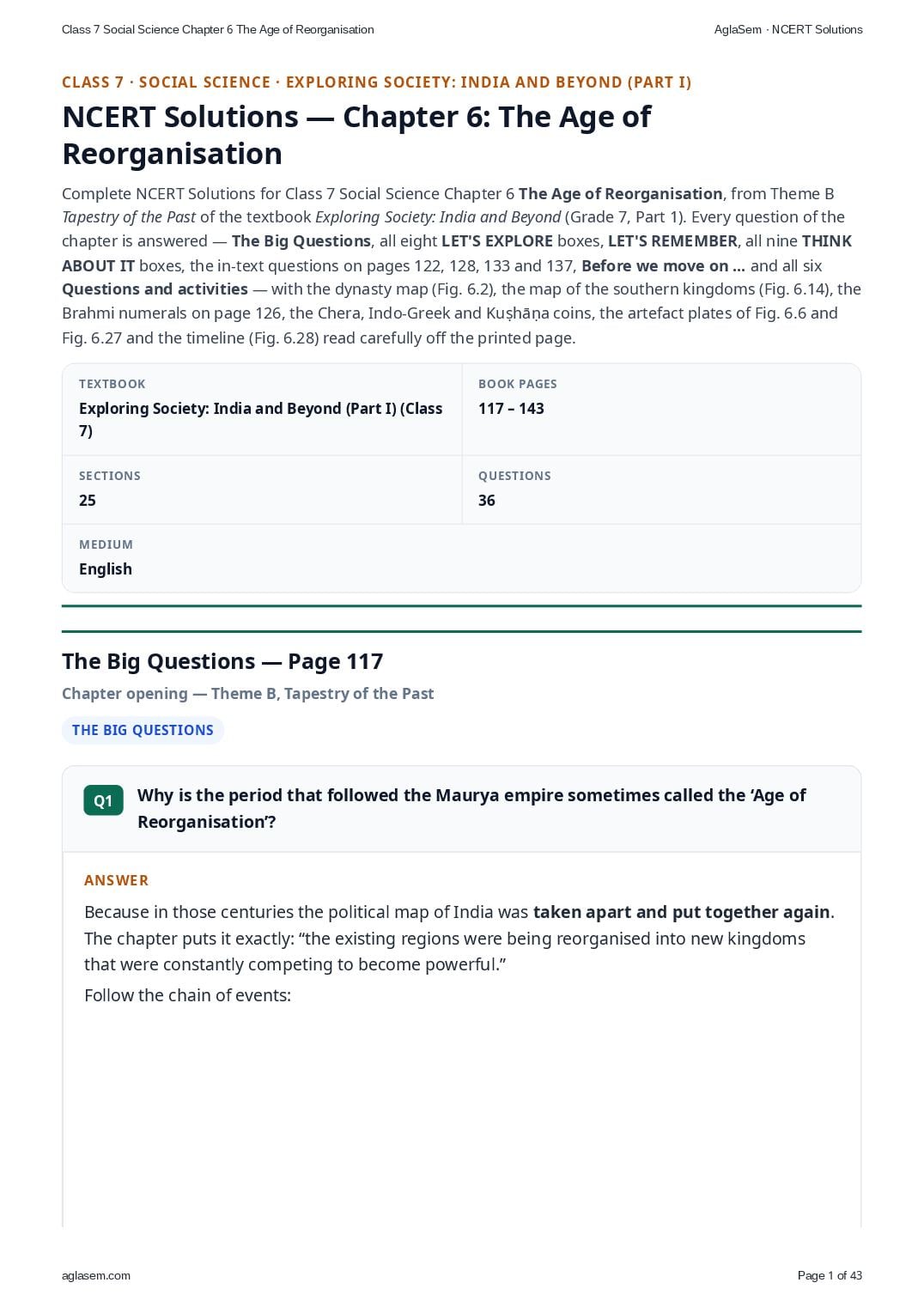
NCERT Solutions for Class 7 Social Science Chapter 6 PDF Download
You can read the NCERT Solutions for Class 7 Social Science Chapter 6 online above, or download the complete question-answer PDF to study the Age of Reorganisation offline at any time.
NCERT Solutions for Class 7 Social Science Chapter 6 PDF Download Link – Click Here to Download Solutions PDF
Questions Covered in This Chapter
These NCERT Solutions answer all 36 questions of this chapter. The questions solved are:
- Why is the period that followed the Maurya empire sometimes called the ‘Age of Reorganisation’?
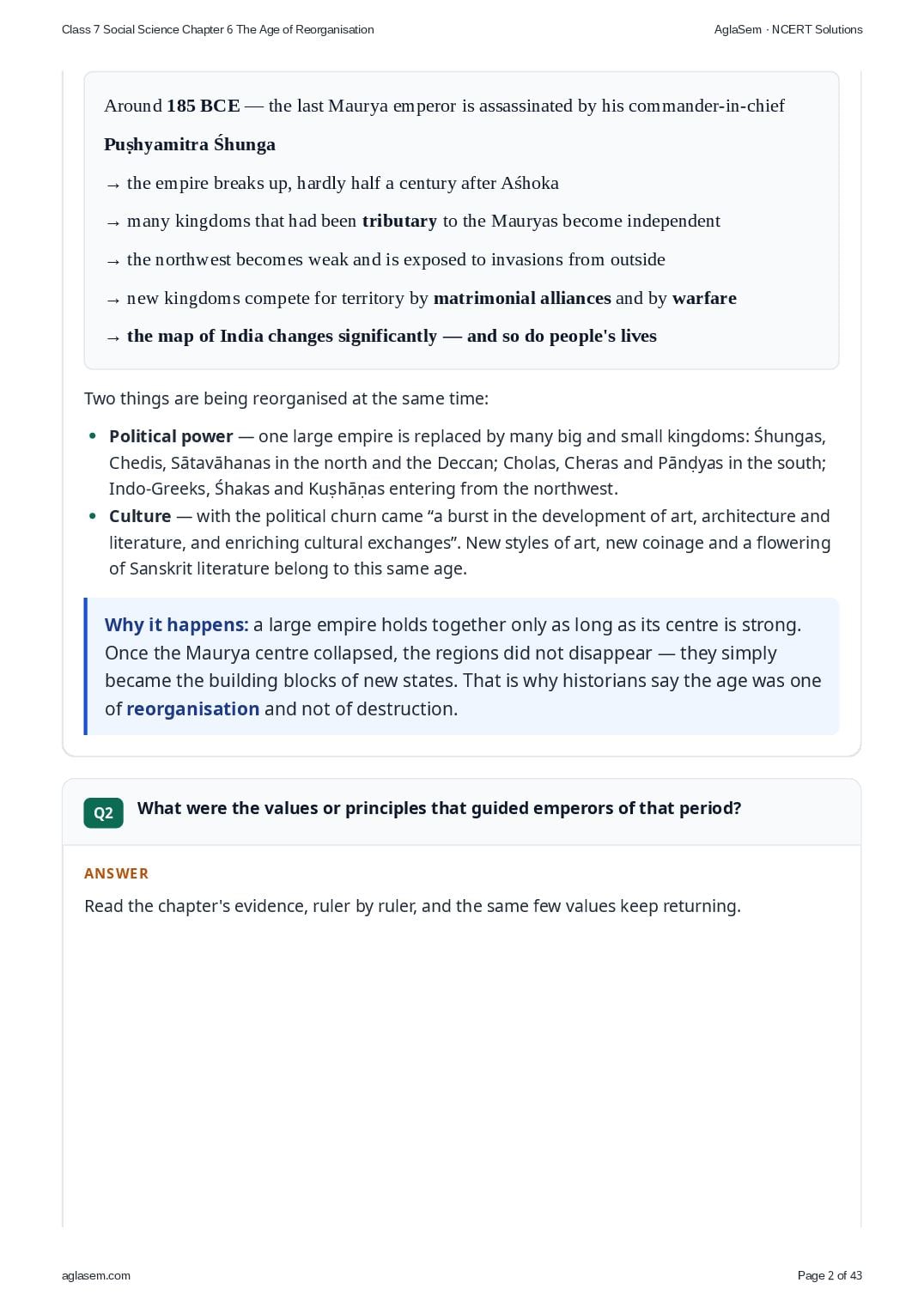
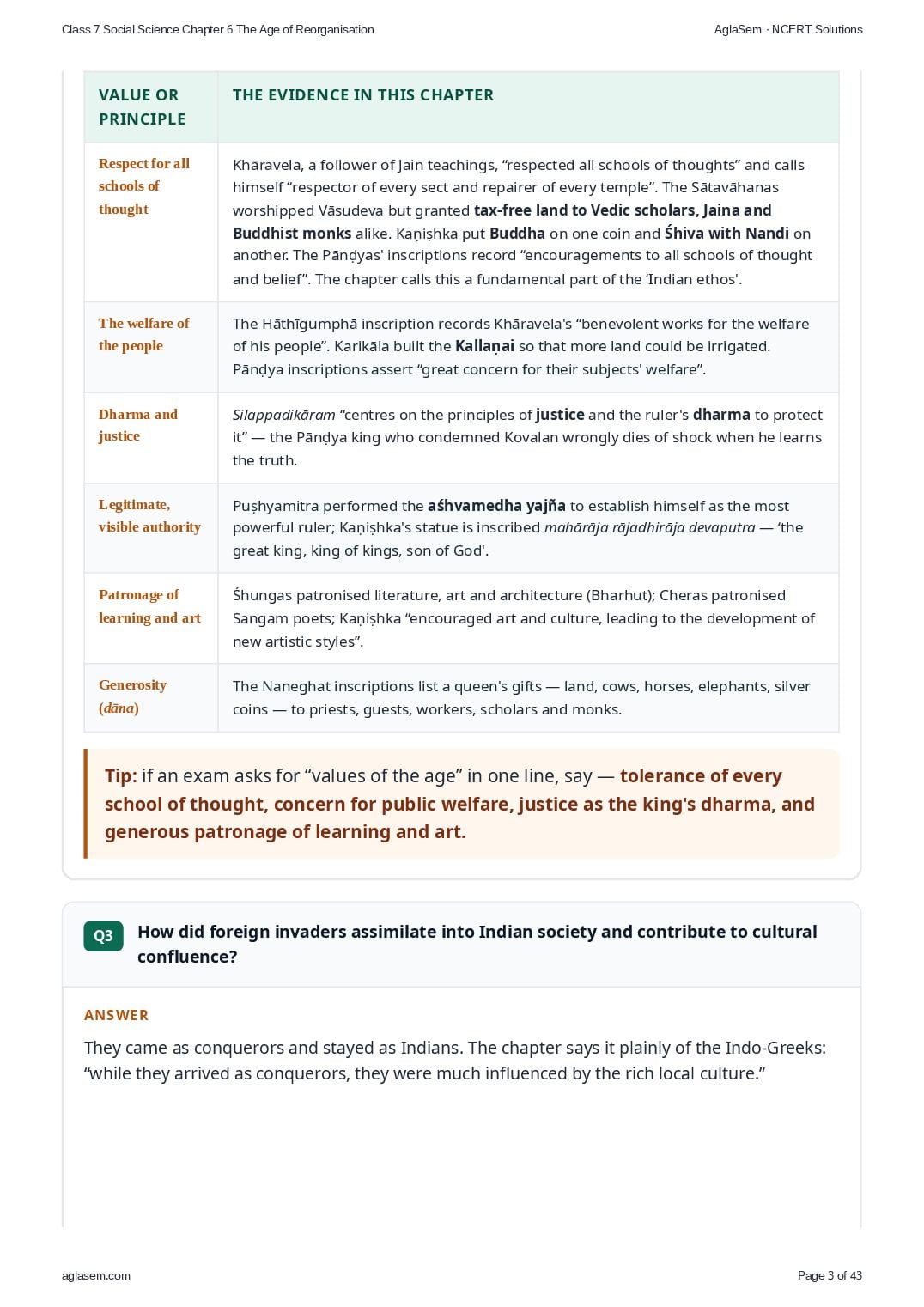
- What were the values or principles that guided emperors of that period?
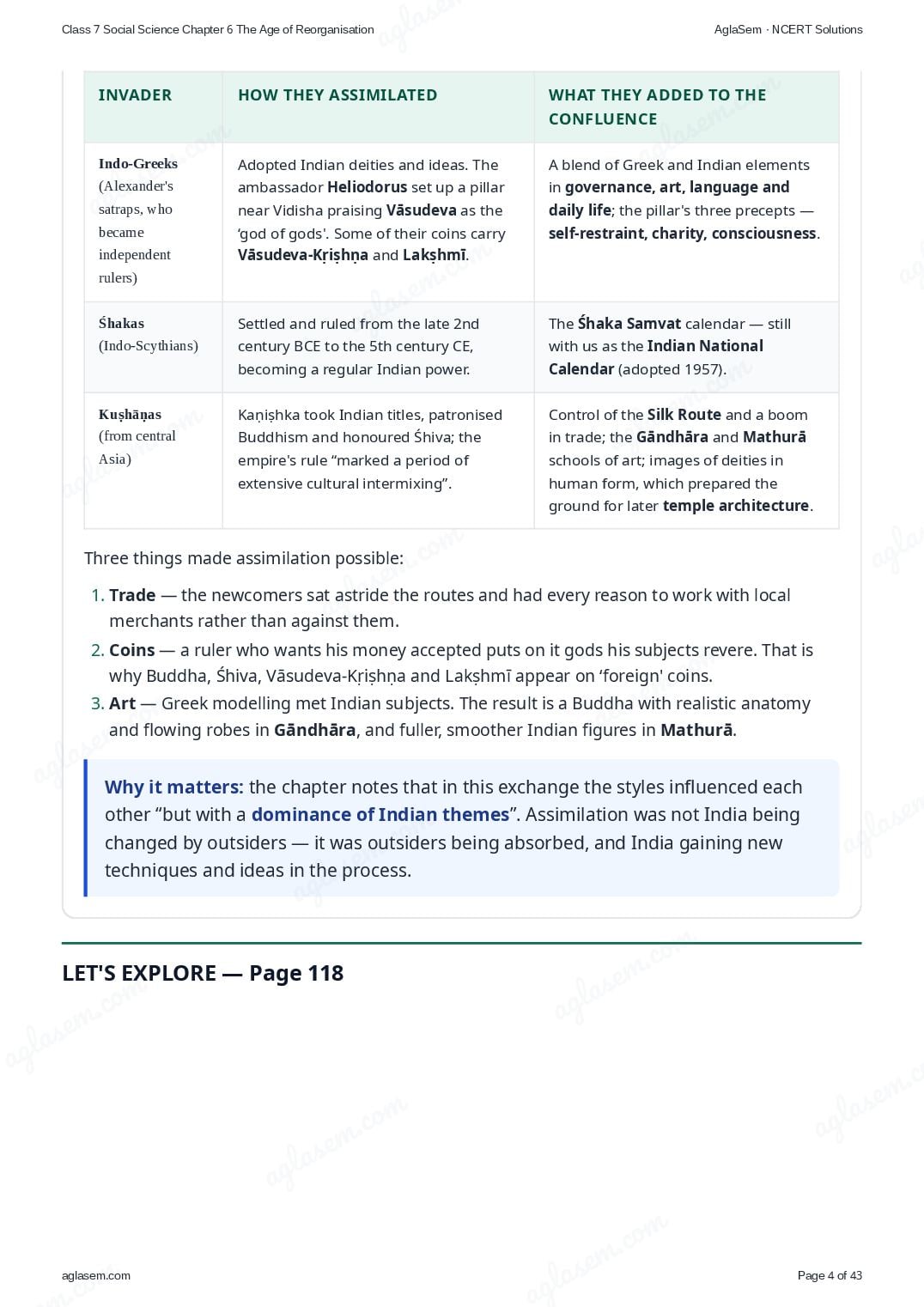
- How did foreign invaders assimilate into Indian society and contribute to cultural confluence?
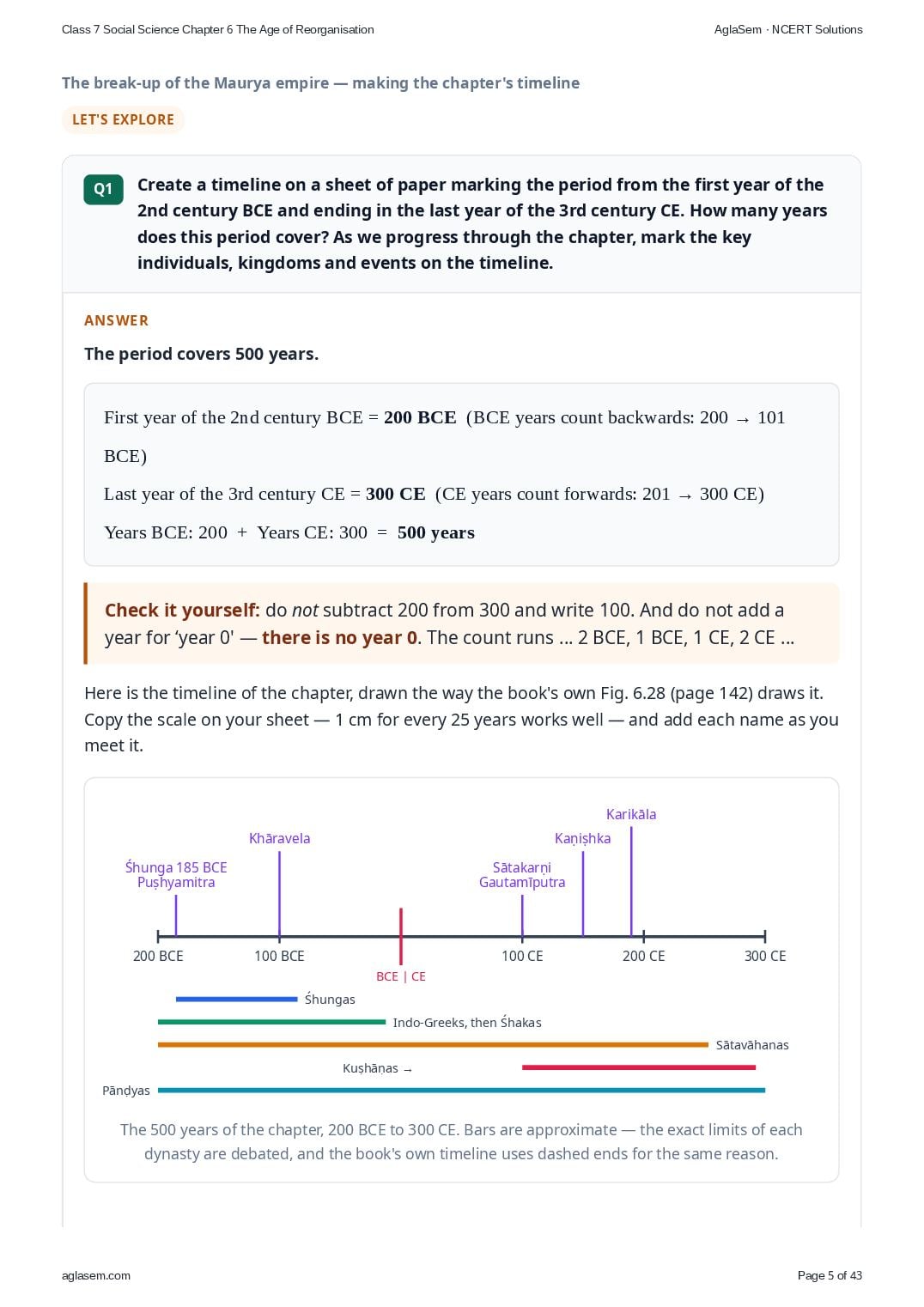
- Create a timeline on a sheet of paper marking the period from the first year of the 2nd century BCE and ending in the last year of the 3rd century CE. How many years does this period cover? As we progress through the chapter, mark the key individuals, kingdoms and events on the timeline.
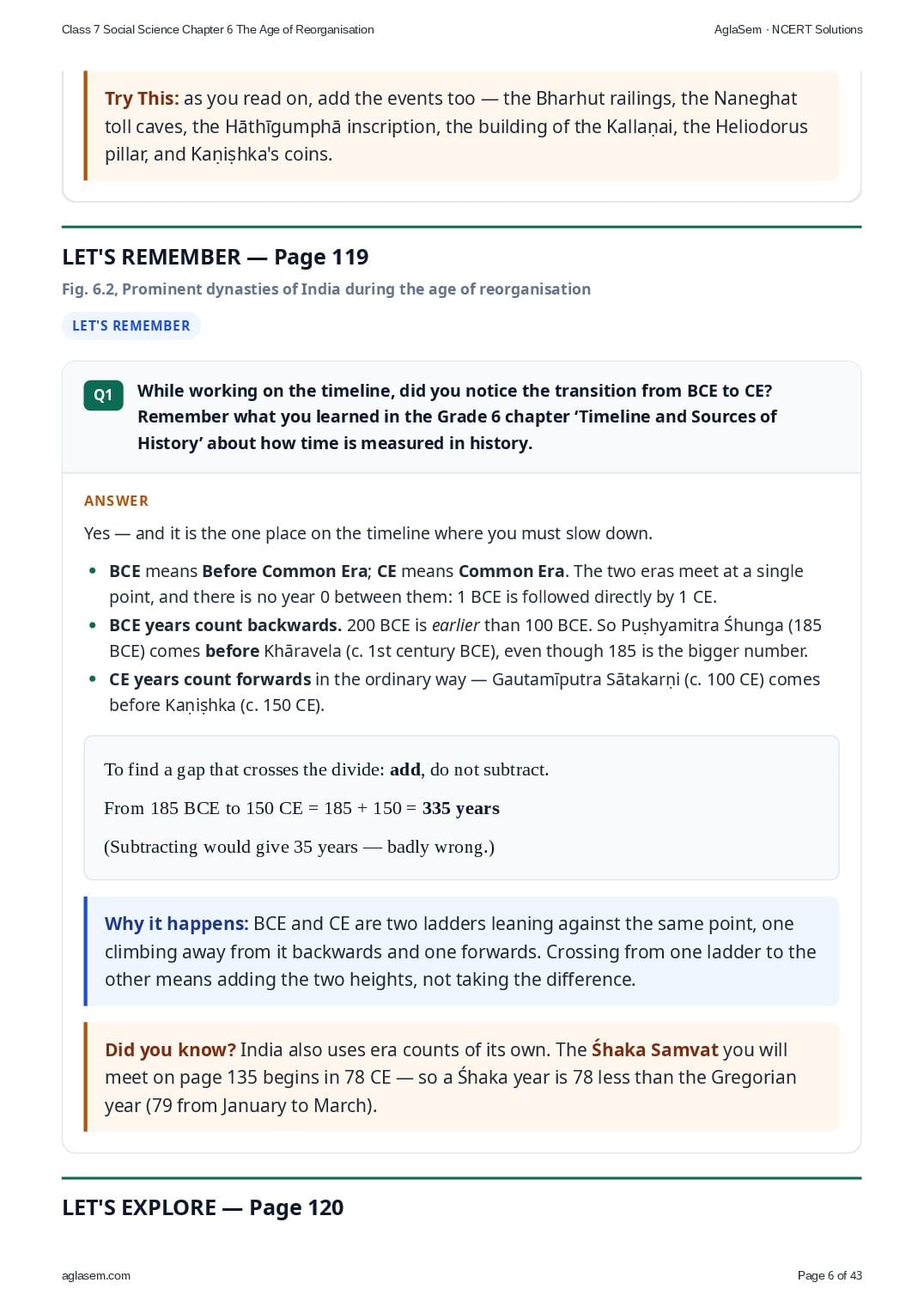
- While working on the timeline, did you notice the transition from BCE to CE? Remember what you learned in the Grade 6 chapter ‘Timeline and Sources of History’ about how time is measured in history.
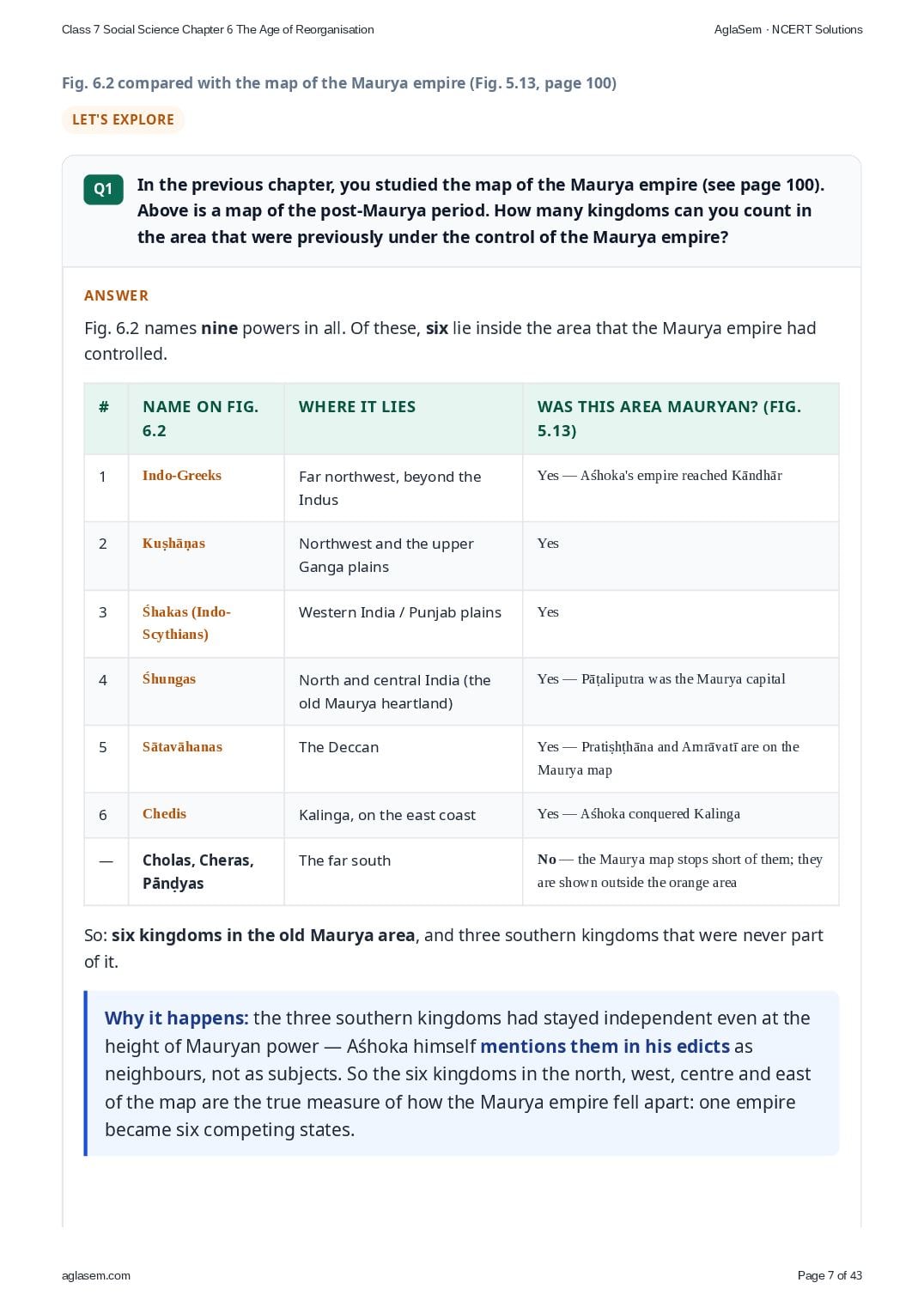
- In the previous chapter, you studied the map of the Maurya empire (see page 100). Above is a map of the post-Maurya period. How many kingdoms can you count in the area that were previously under the control of the Maurya empire?
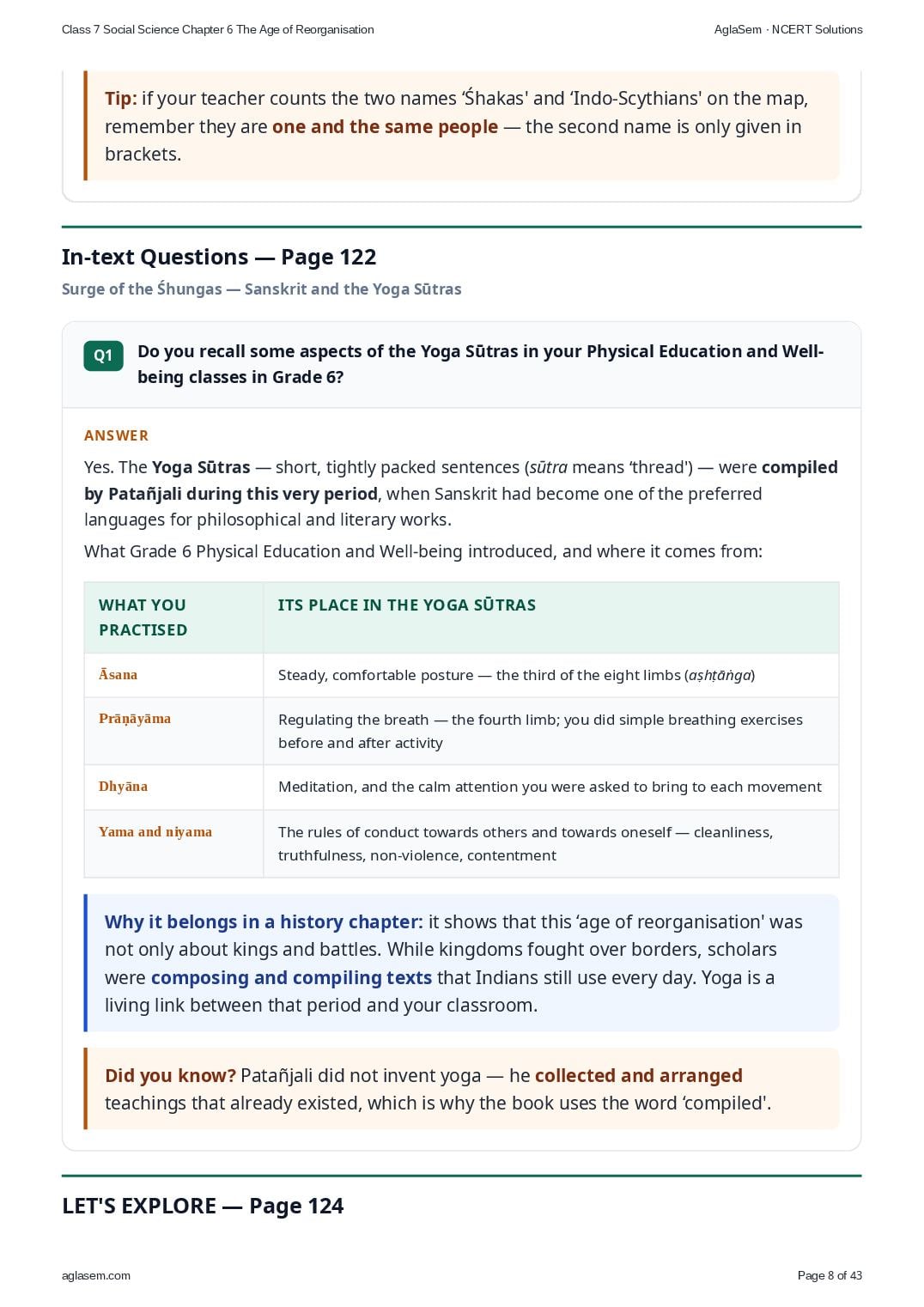
- Do you recall some aspects of the Yoga Sūtras in your Physical Education and Well-being classes in Grade 6?
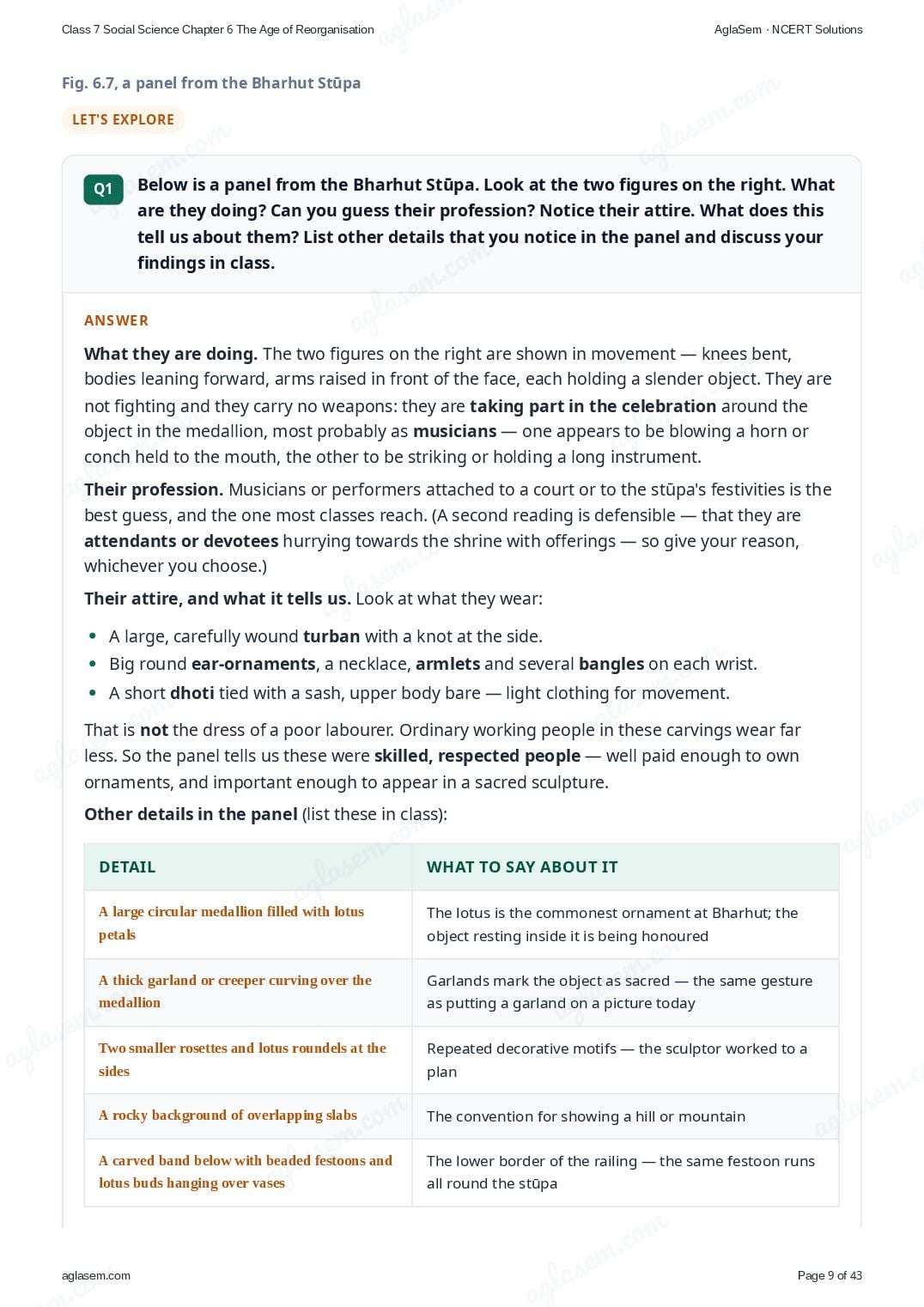
- Below is a panel from the Bharhut Stūpa. Look at the two figures on the right. What are they doing? Can you guess their profession? Notice their attire. What does this tell us about them? List other details that you notice in the panel and discuss your findings in class.
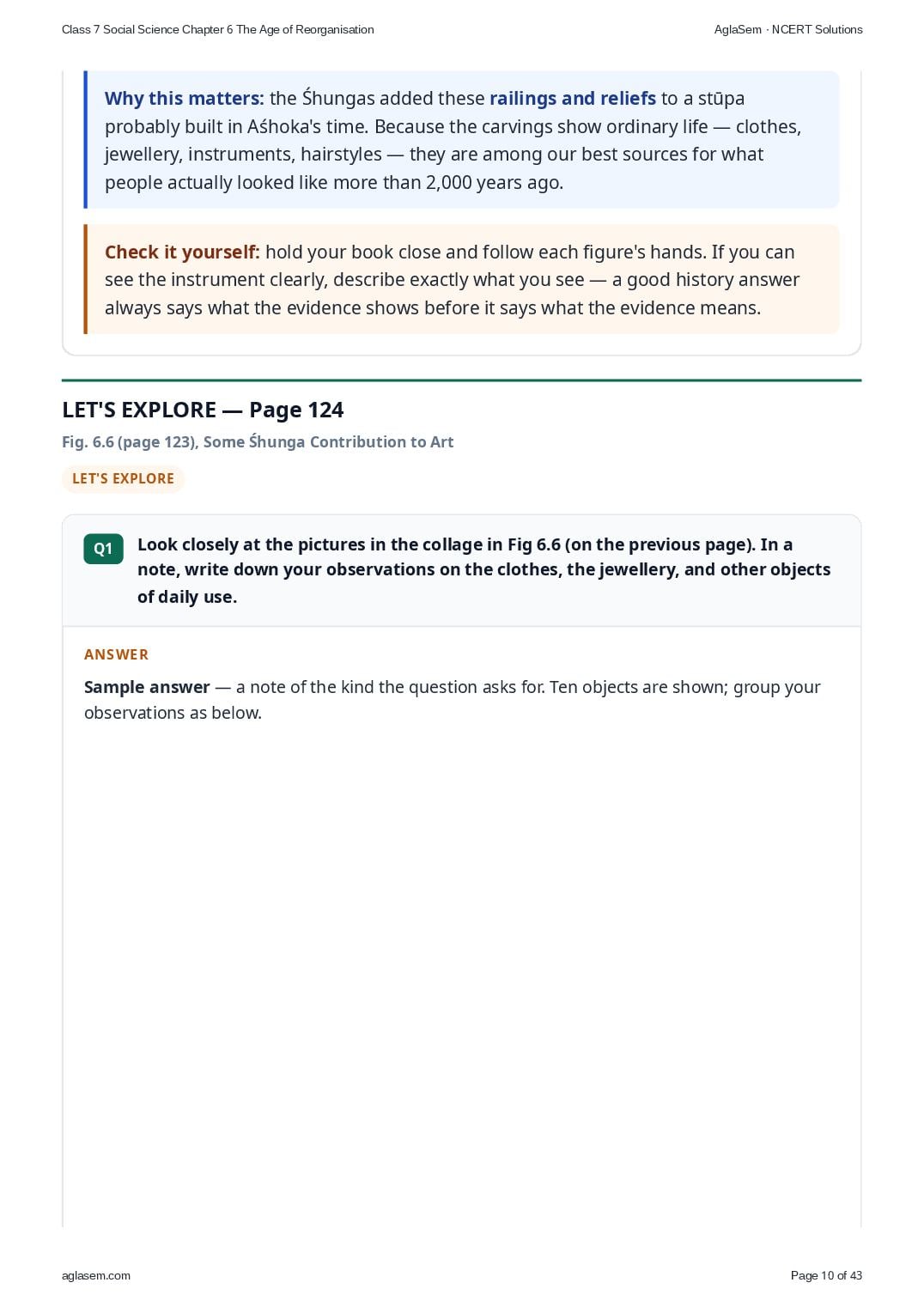
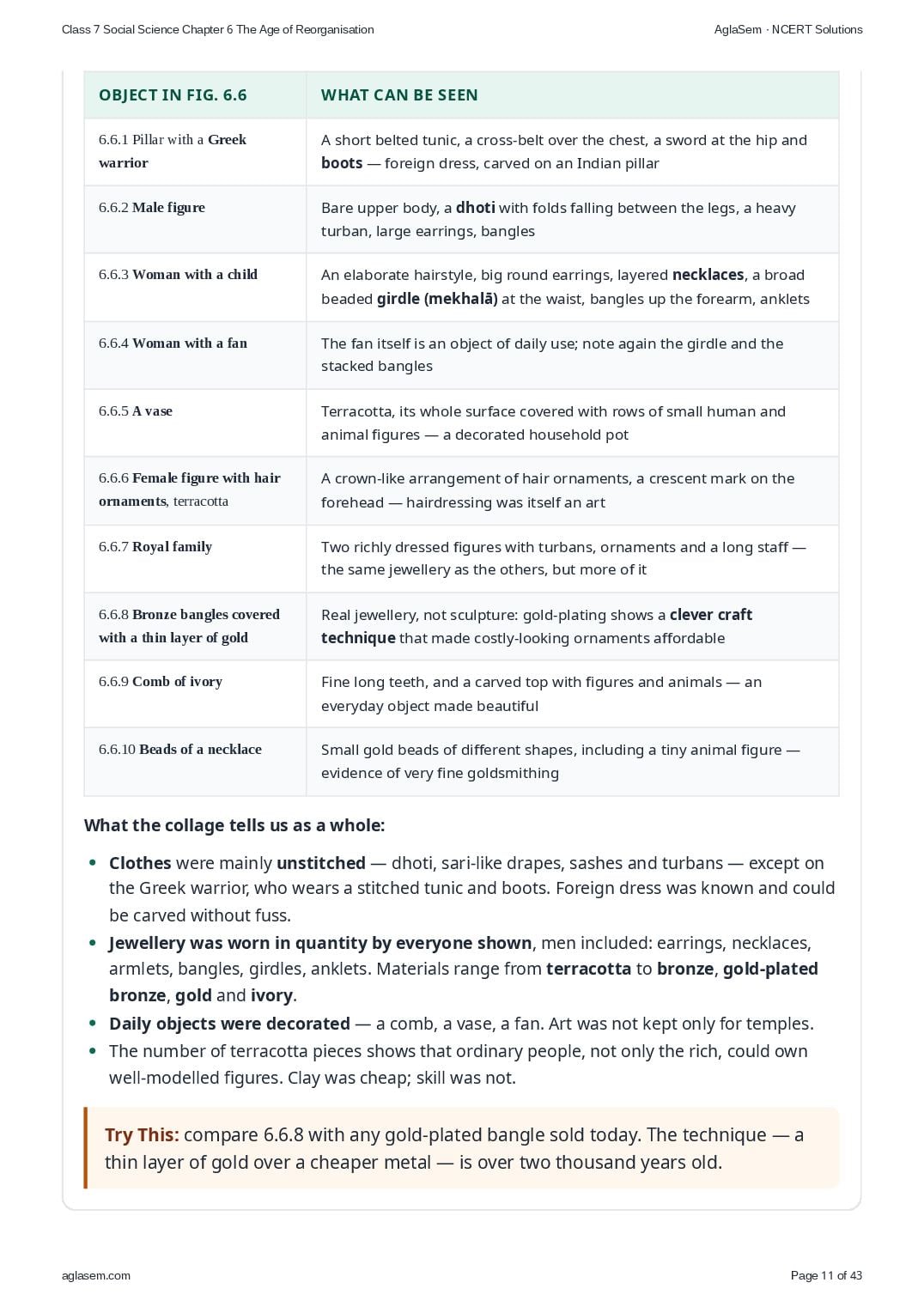
- Look closely at the pictures in the collage in Fig 6.6 (on the previous page). In a note, write down your observations on the clothes, the jewellery, and other objects of daily use.
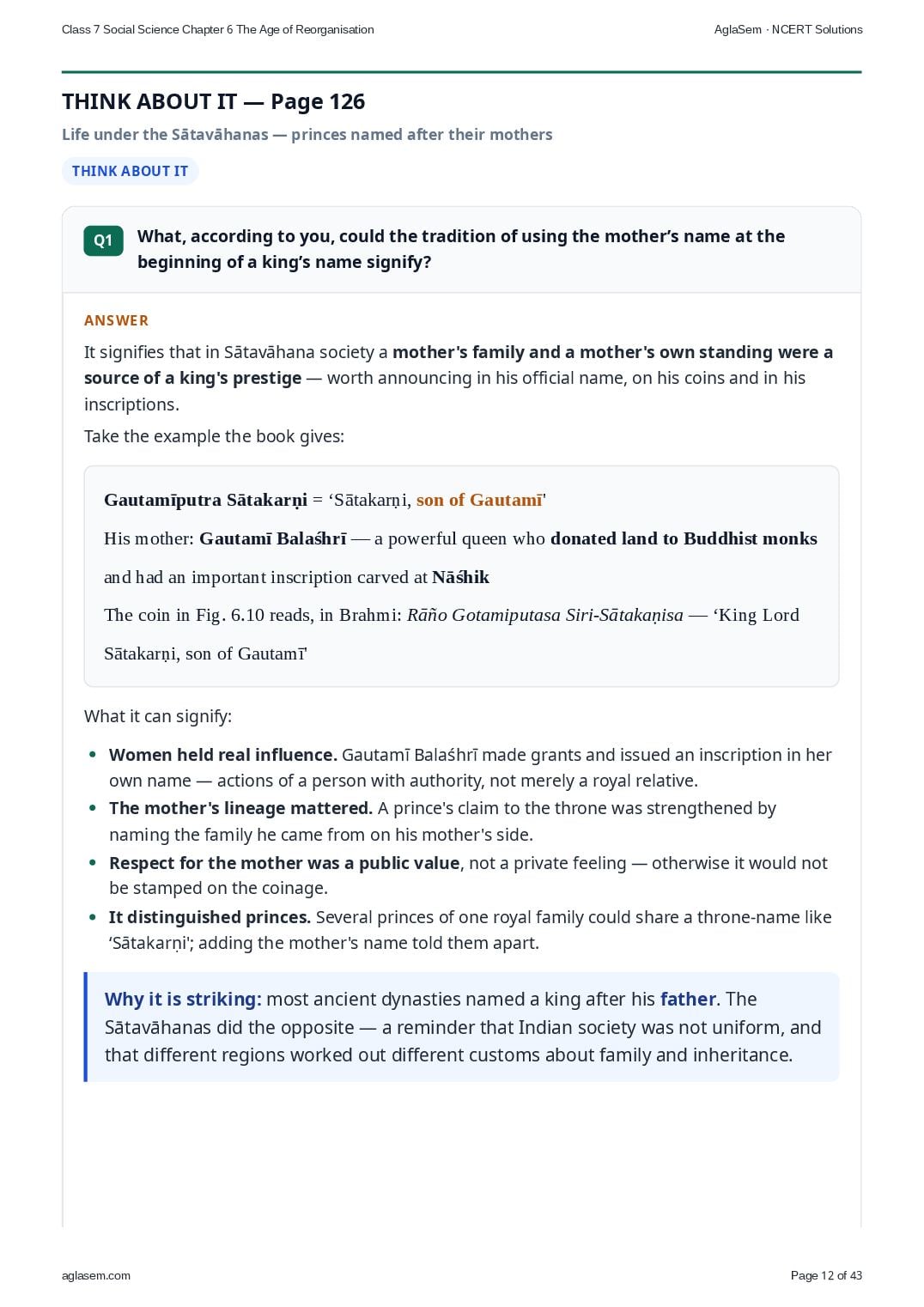
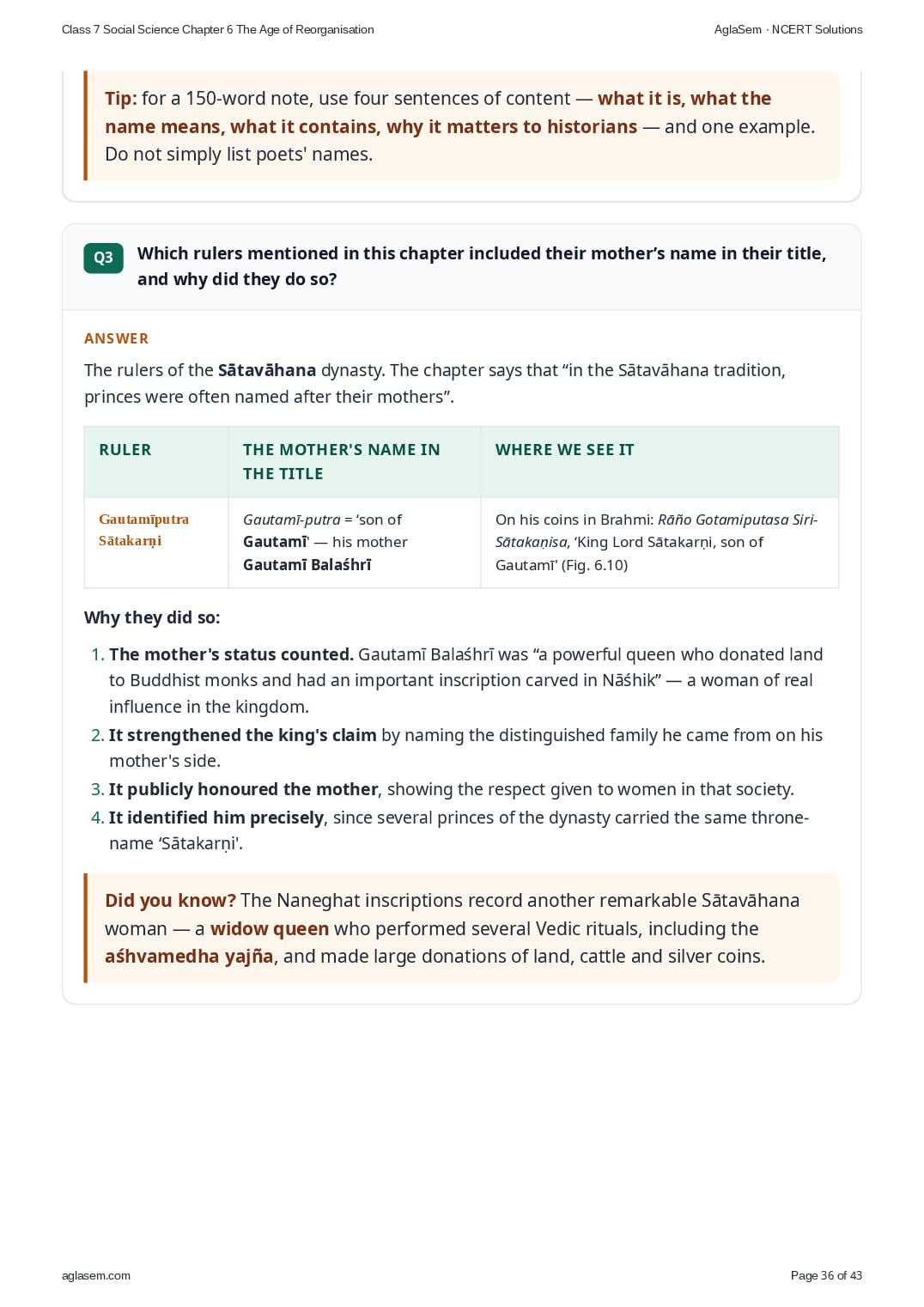
- What, according to you, could the tradition of using the mother’s name at the beginning of a king’s name signify?
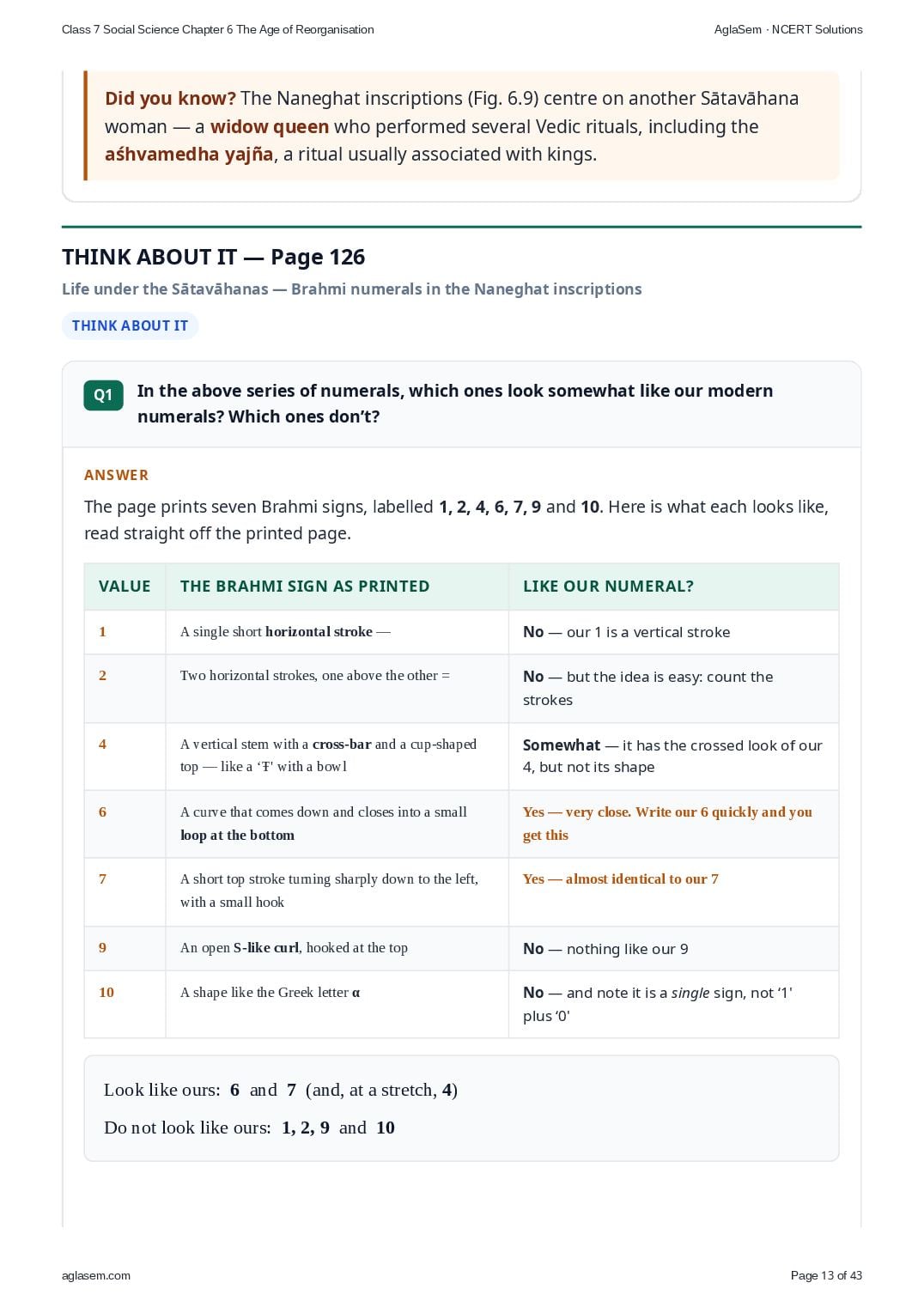
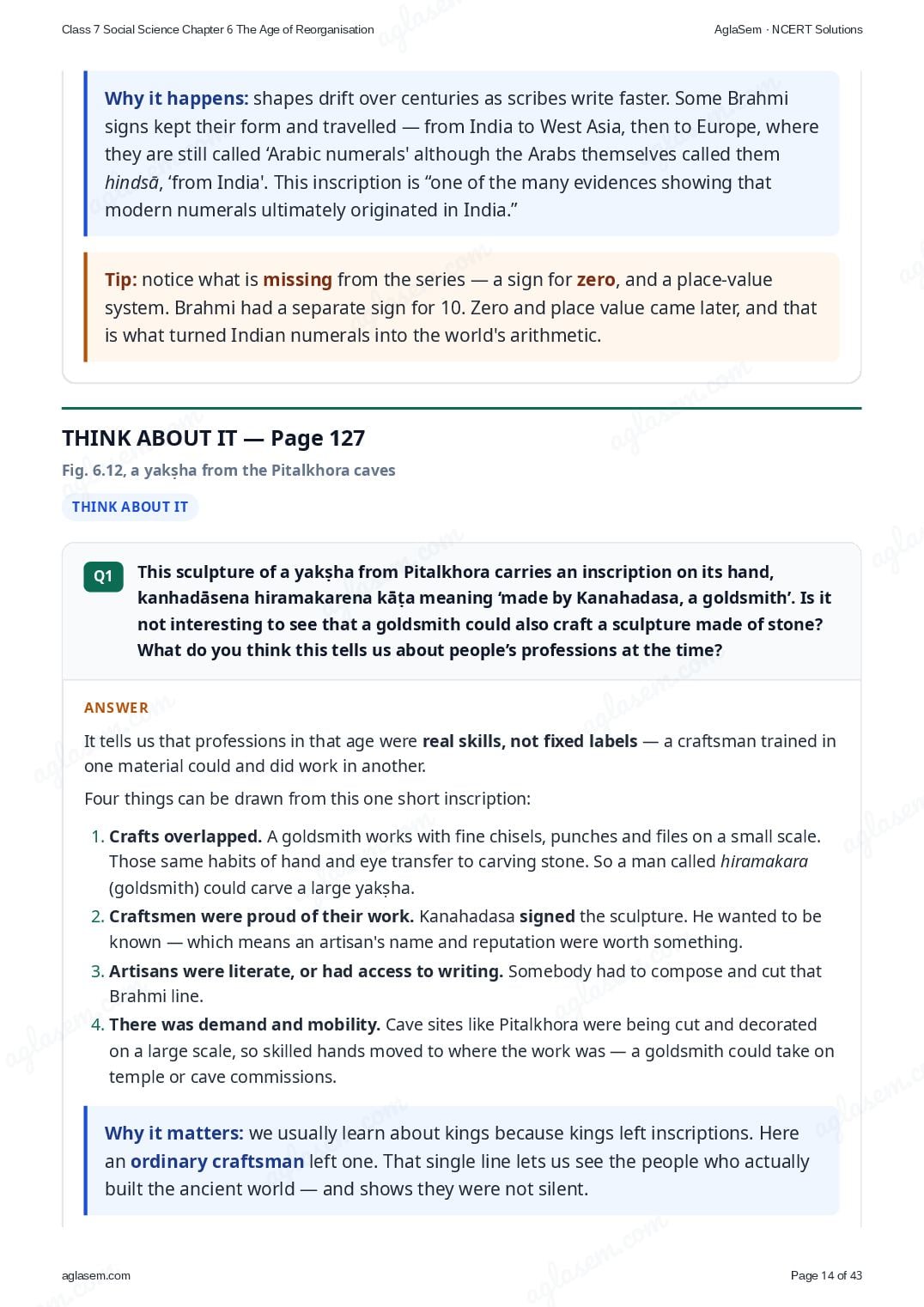
- In the above series of numerals, which ones look somewhat like our modern numerals? Which ones don’t?
- This sculpture of a yakṣha from Pitalkhora carries an inscription on its hand, kanhadāsena hiramakarena kāṭa meaning ‘made by Kanahadasa, a goldsmith’. Is it not interesting to see that a goldsmith could also craft a sculpture made of stone? What do you think this tells us about people’s professions at the time?
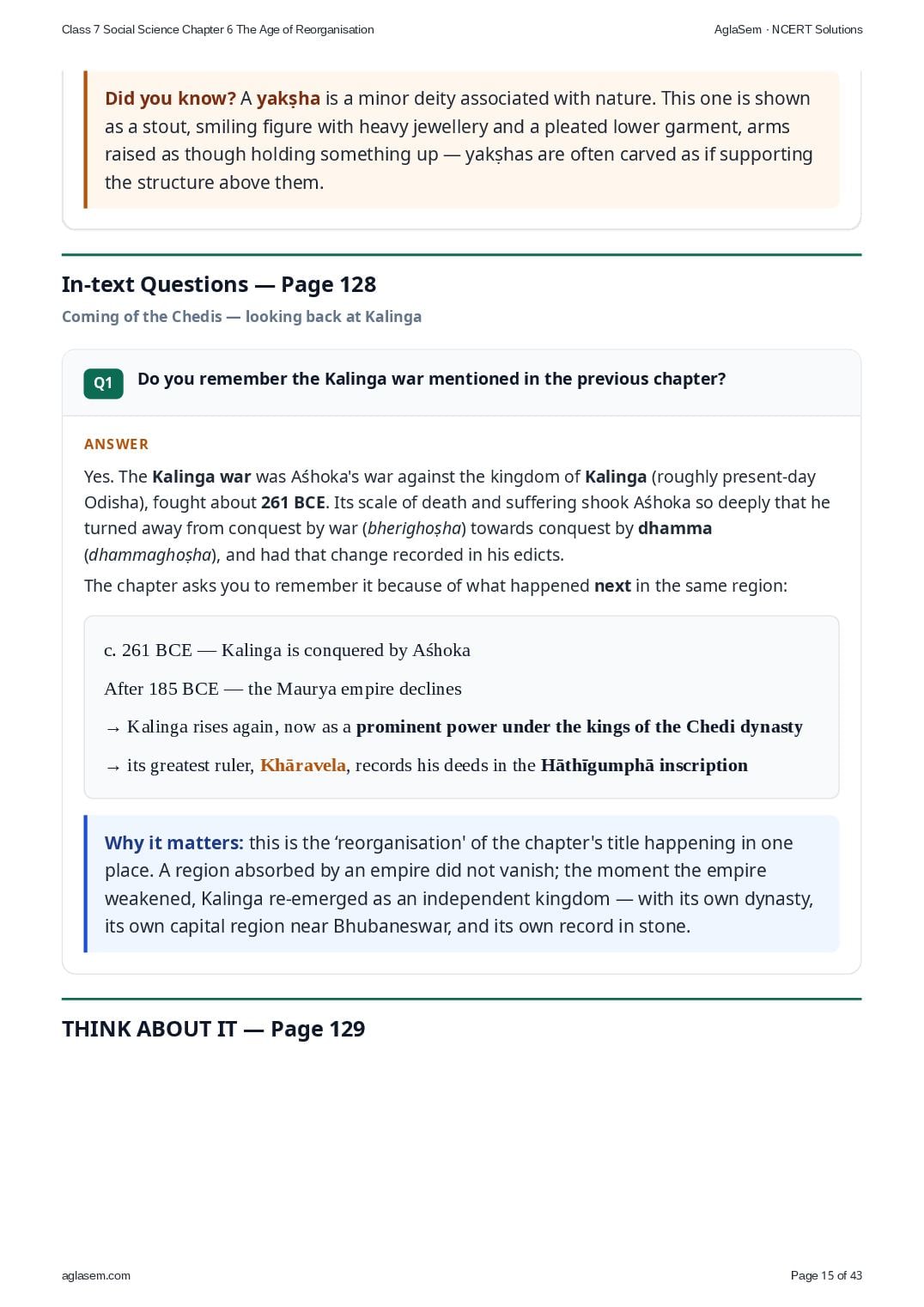
- Do you remember the Kalinga war mentioned in the previous chapter?
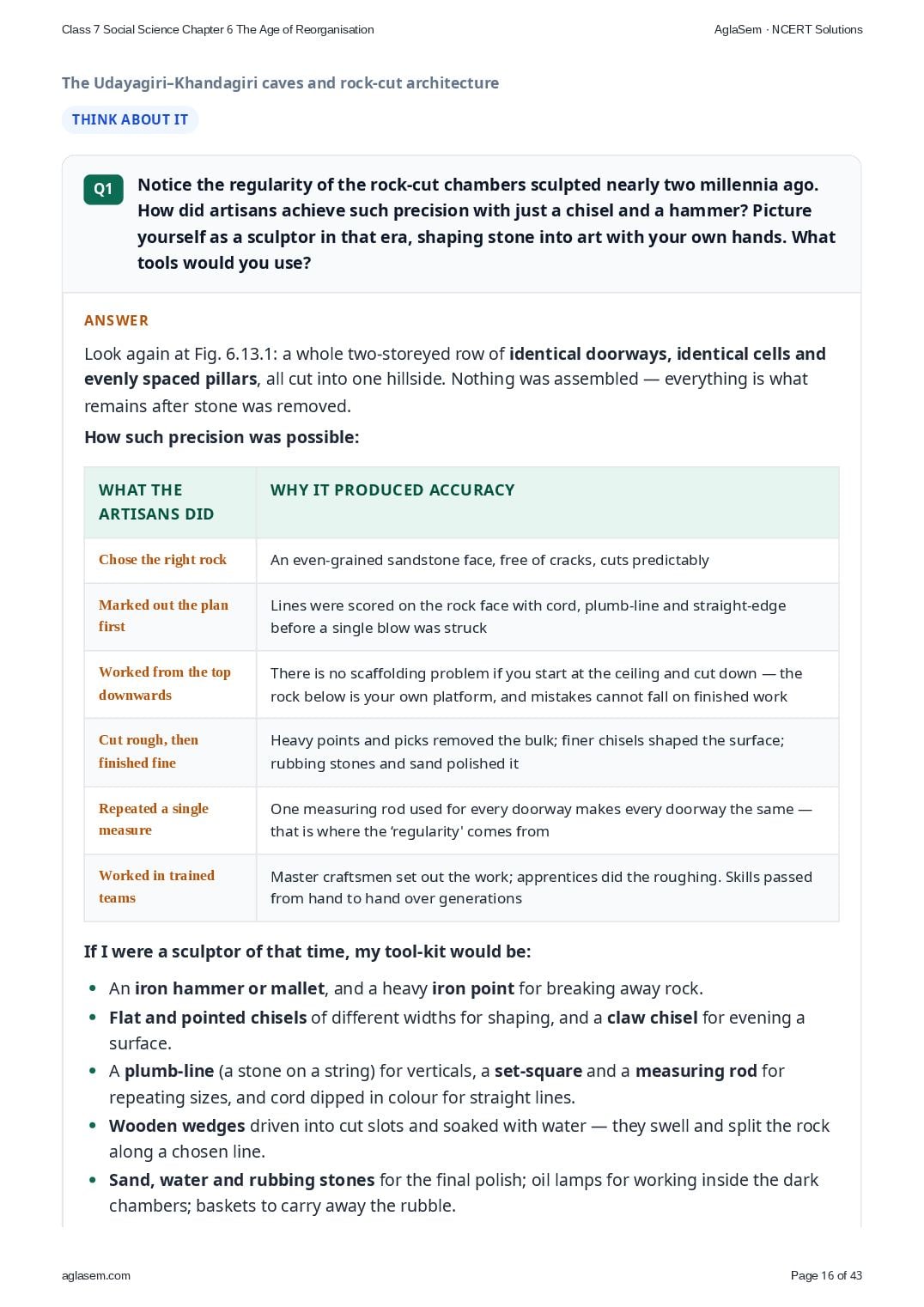
- Notice the regularity of the rock-cut chambers sculpted nearly two millennia ago. How did artisans achieve such precision with just a chisel and a hammer? Picture yourself as a sculptor in that era, shaping stone into art with your own hands. What tools would you use?
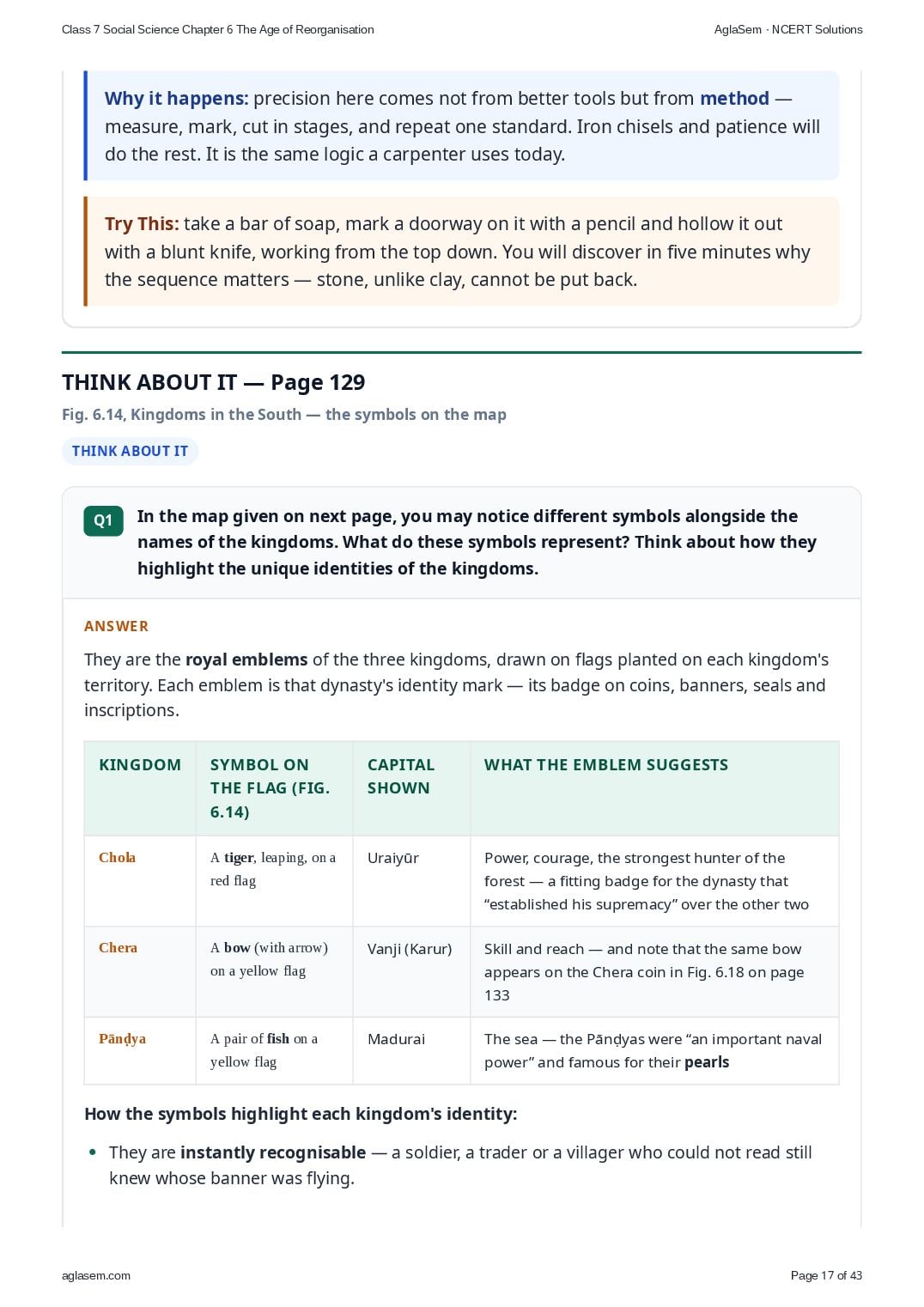
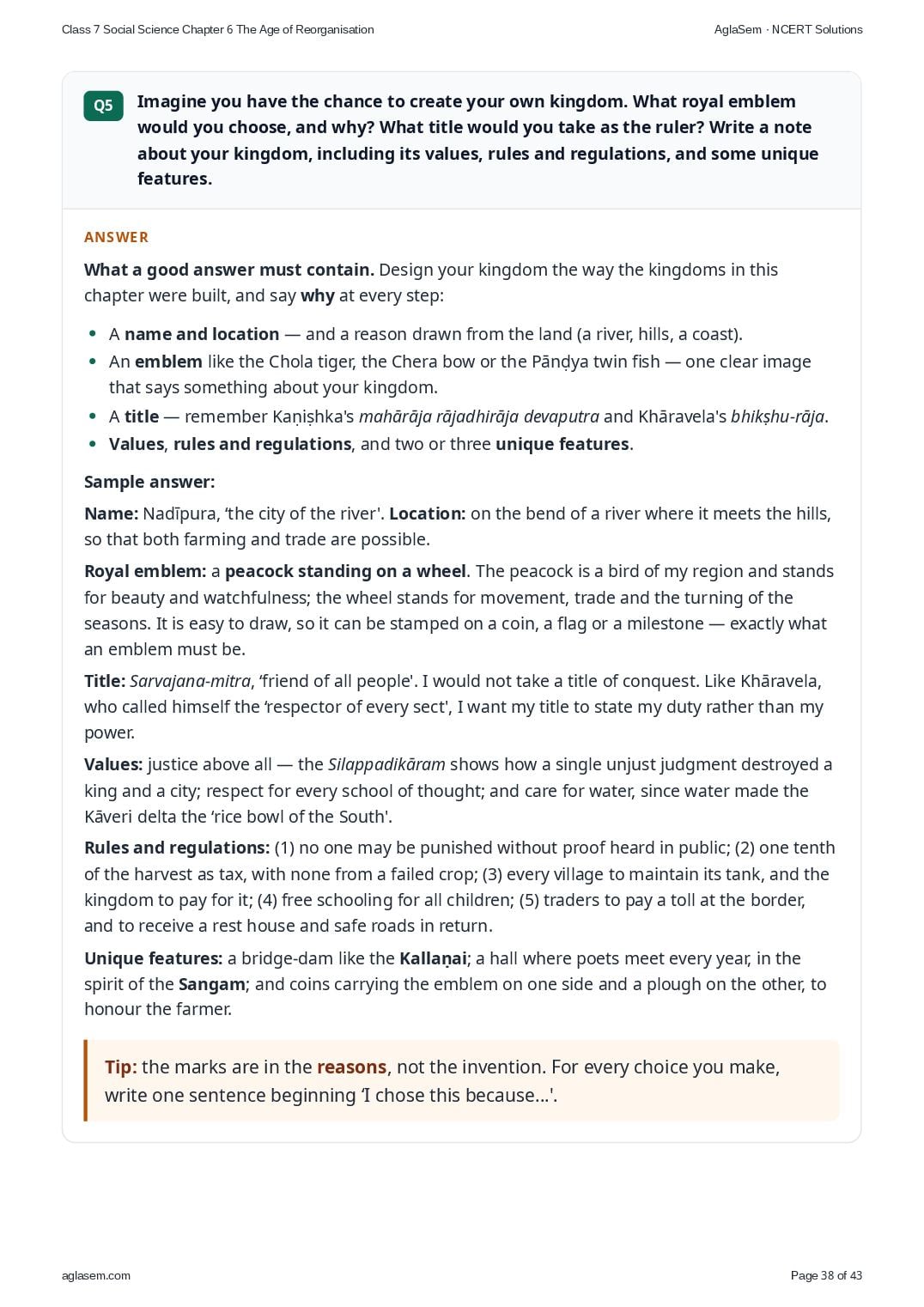
- In the map given on next page, you may notice different symbols alongside the names of the kingdoms. What do these symbols represent? Think about how they highlight the unique identities of the kingdoms.
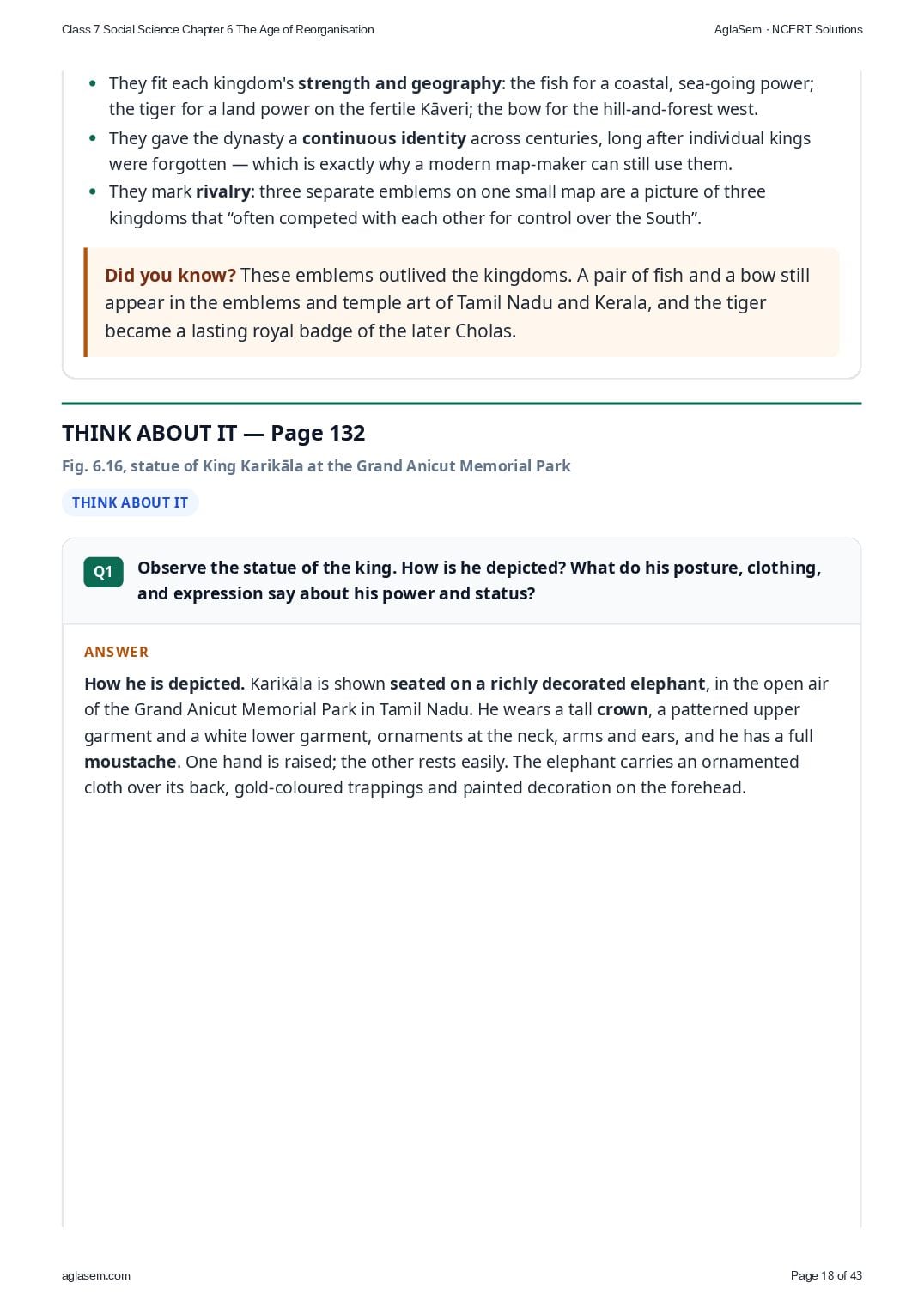
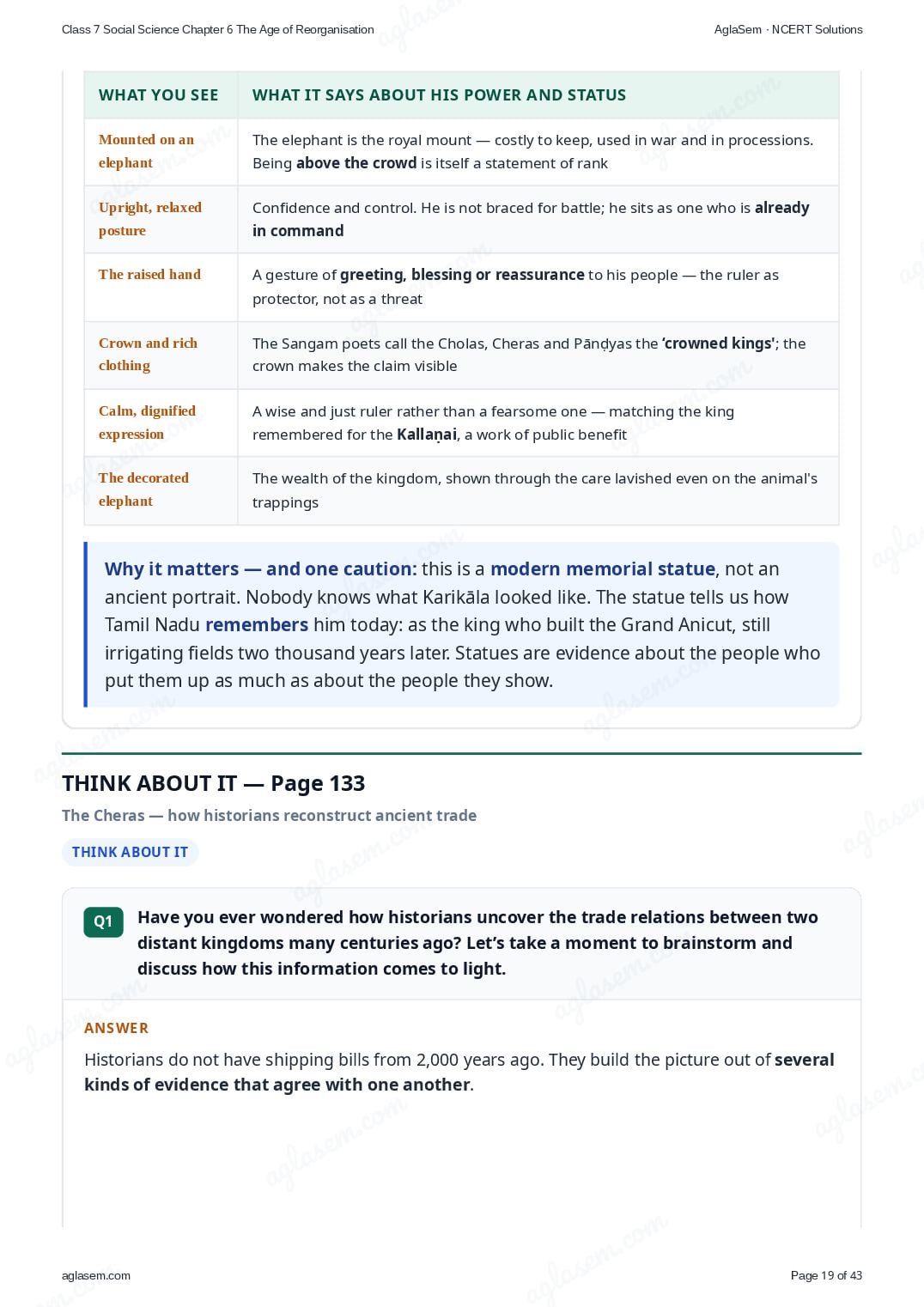
- Observe the statue of the king. How is he depicted? What do his posture, clothing, and expression say about his power and status?
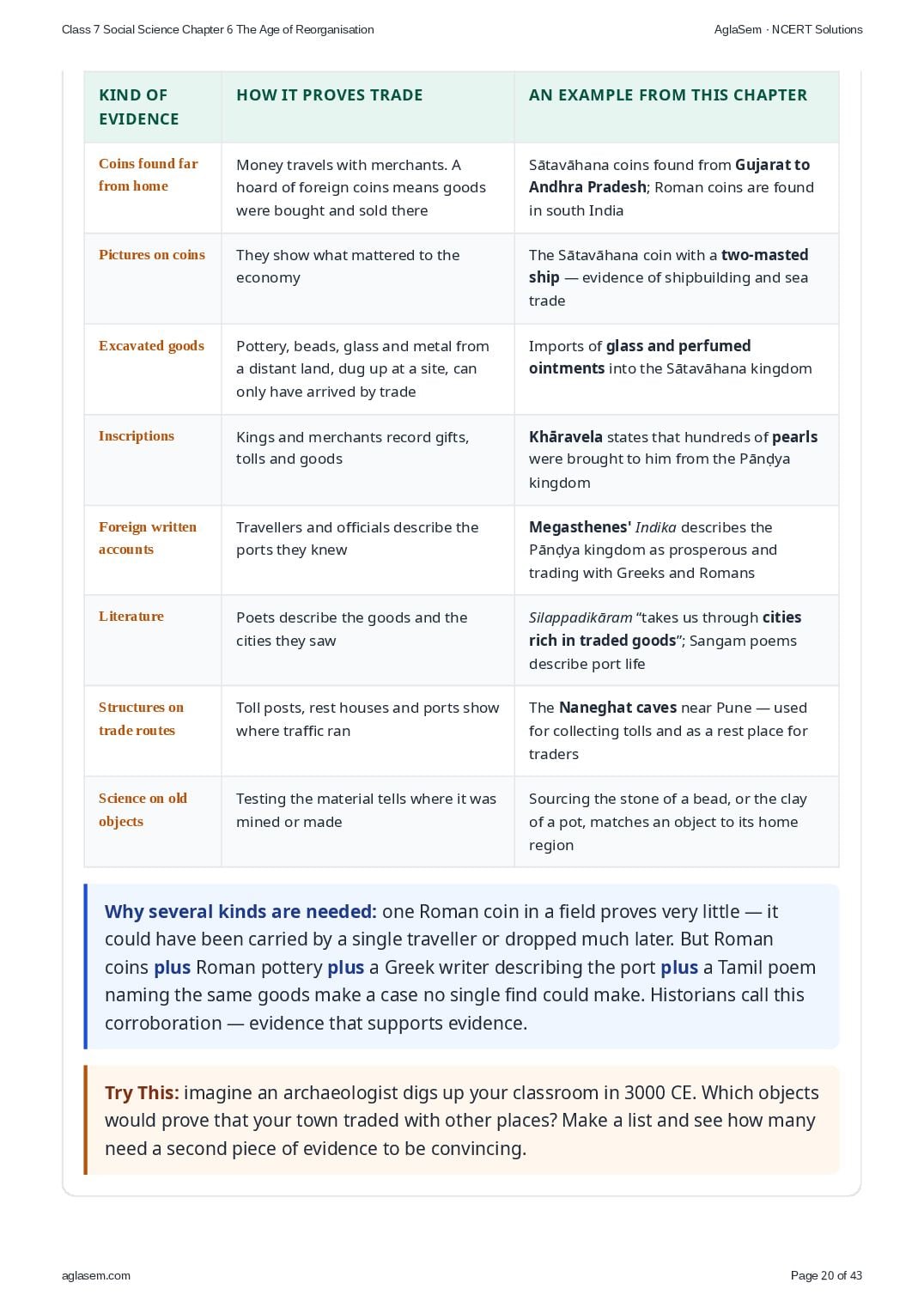
- Have you ever wondered how historians uncover the trade relations between two distant kingdoms many centuries ago? Let’s take a moment to brainstorm and discuss how this information comes to light.
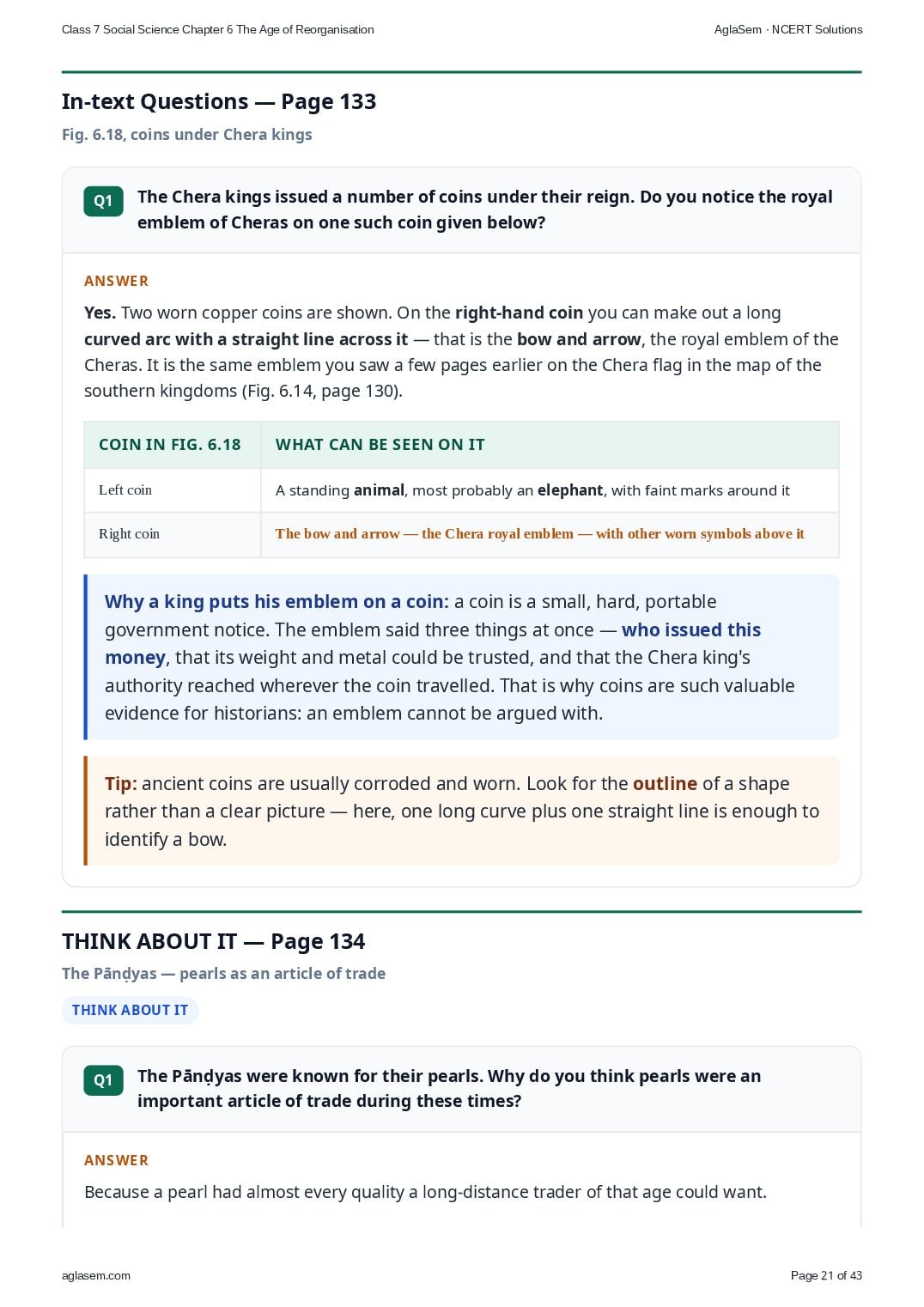
- The Chera kings issued a number of coins under their reign. Do you notice the royal emblem of Cheras on one such coin given below?
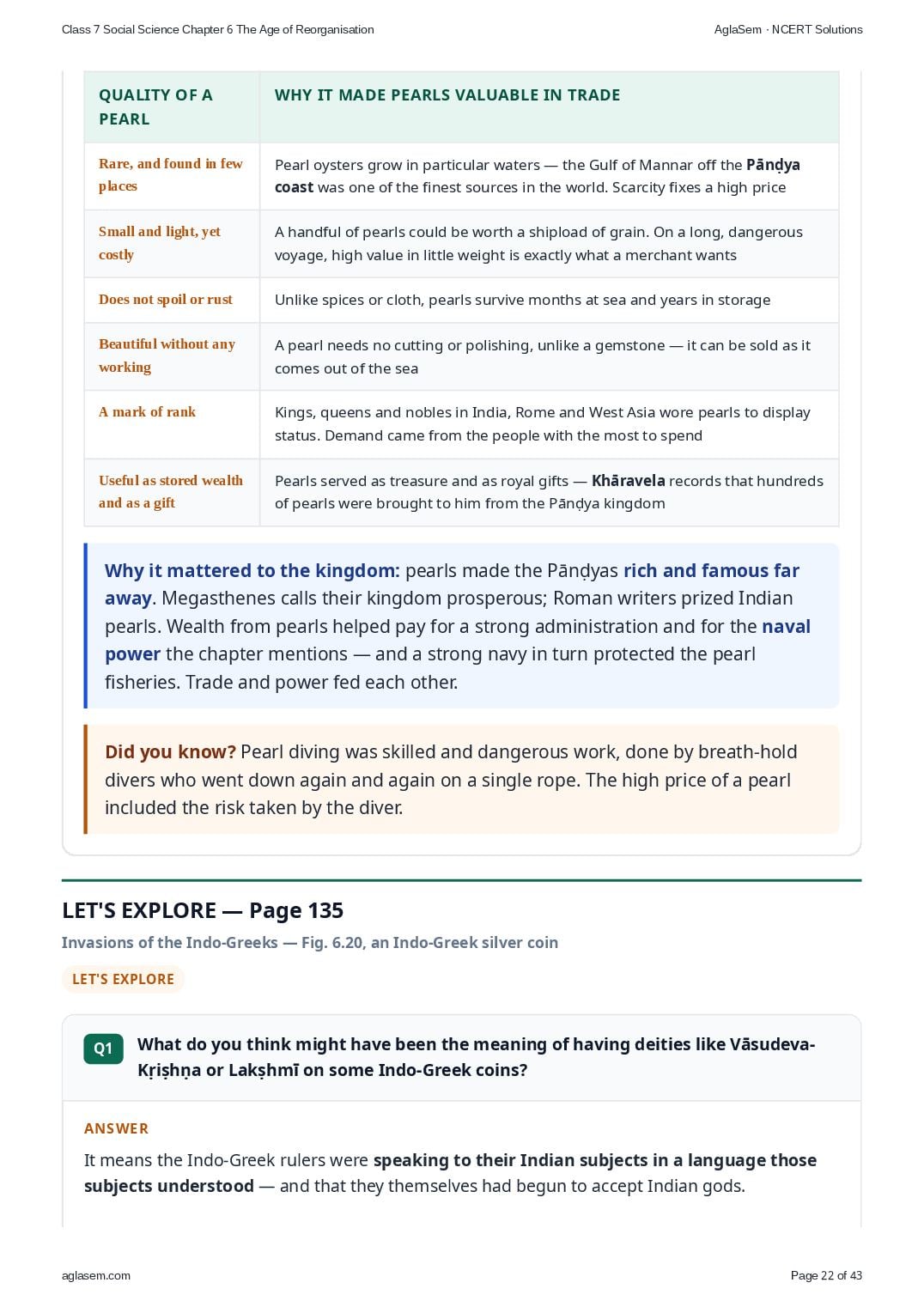
- The Pānḍyas were known for their pearls. Why do you think pearls were an important article of trade during these times?
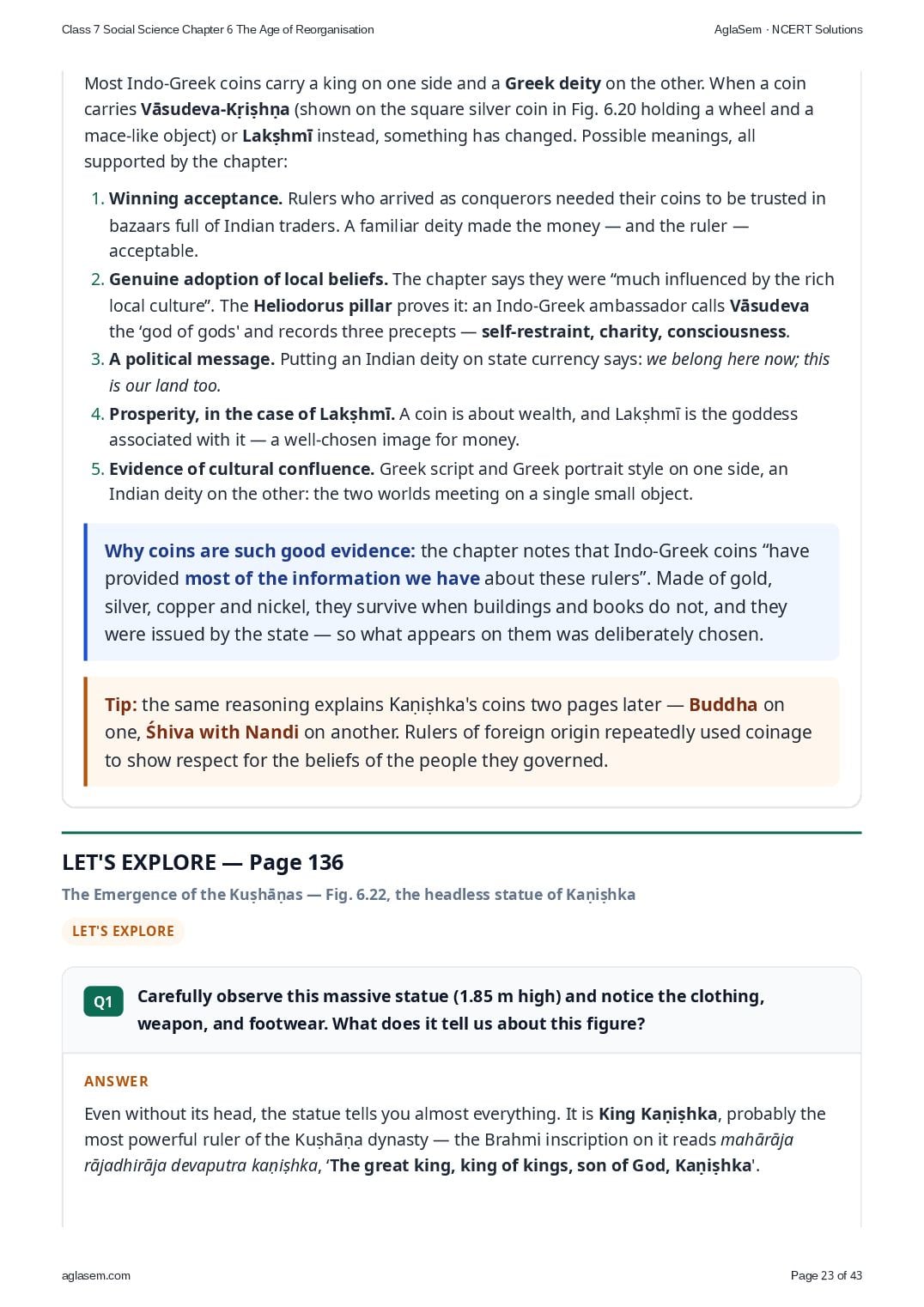
- What do you think might have been the meaning of having deities like Vāsudeva-Kṛiṣhṇa or Lakṣhmī on some Indo-Greek coins?
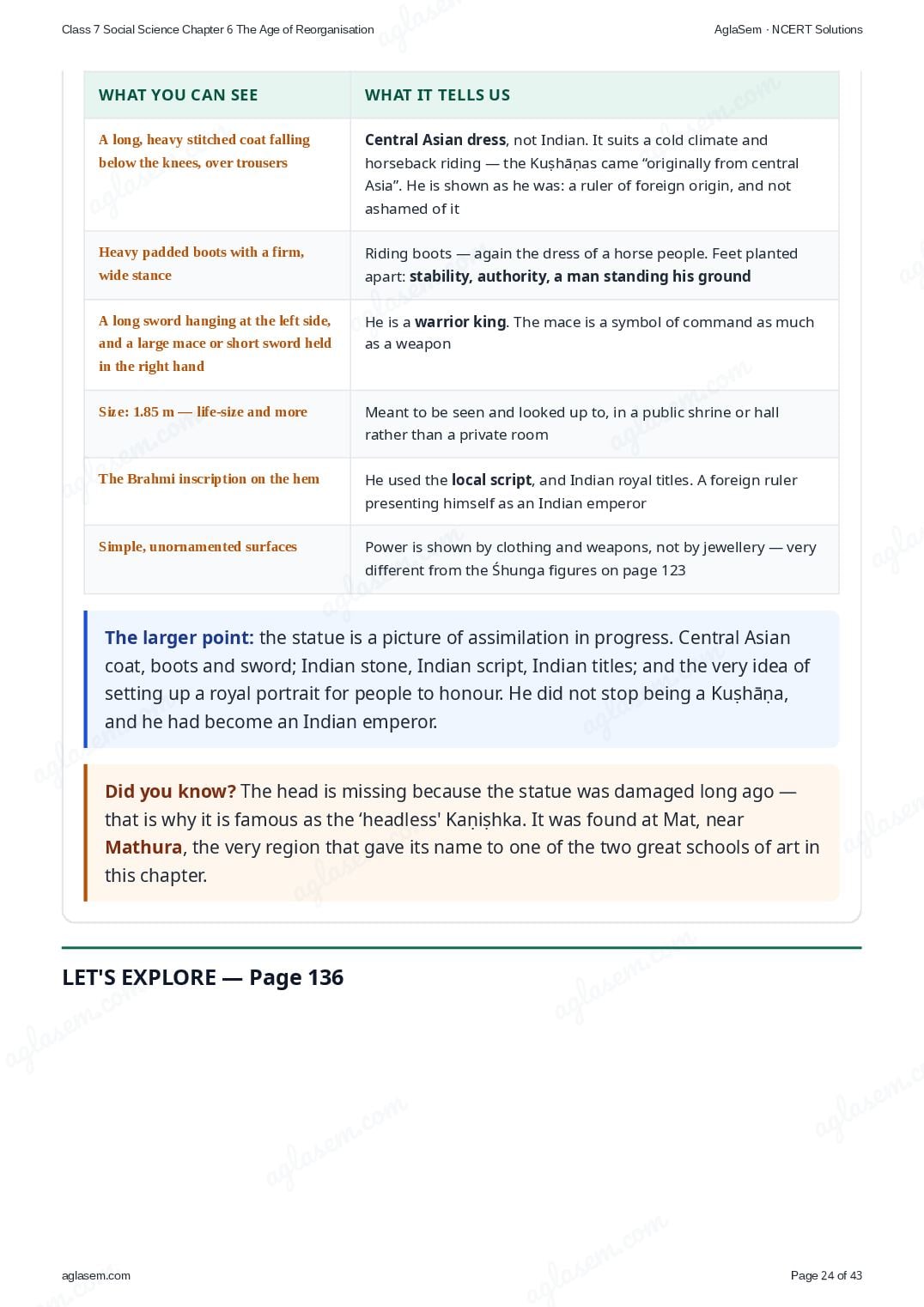
- Carefully observe this massive statue (1.85 m high) and notice the clothing, weapon, and footwear. What does it tell us about this figure?
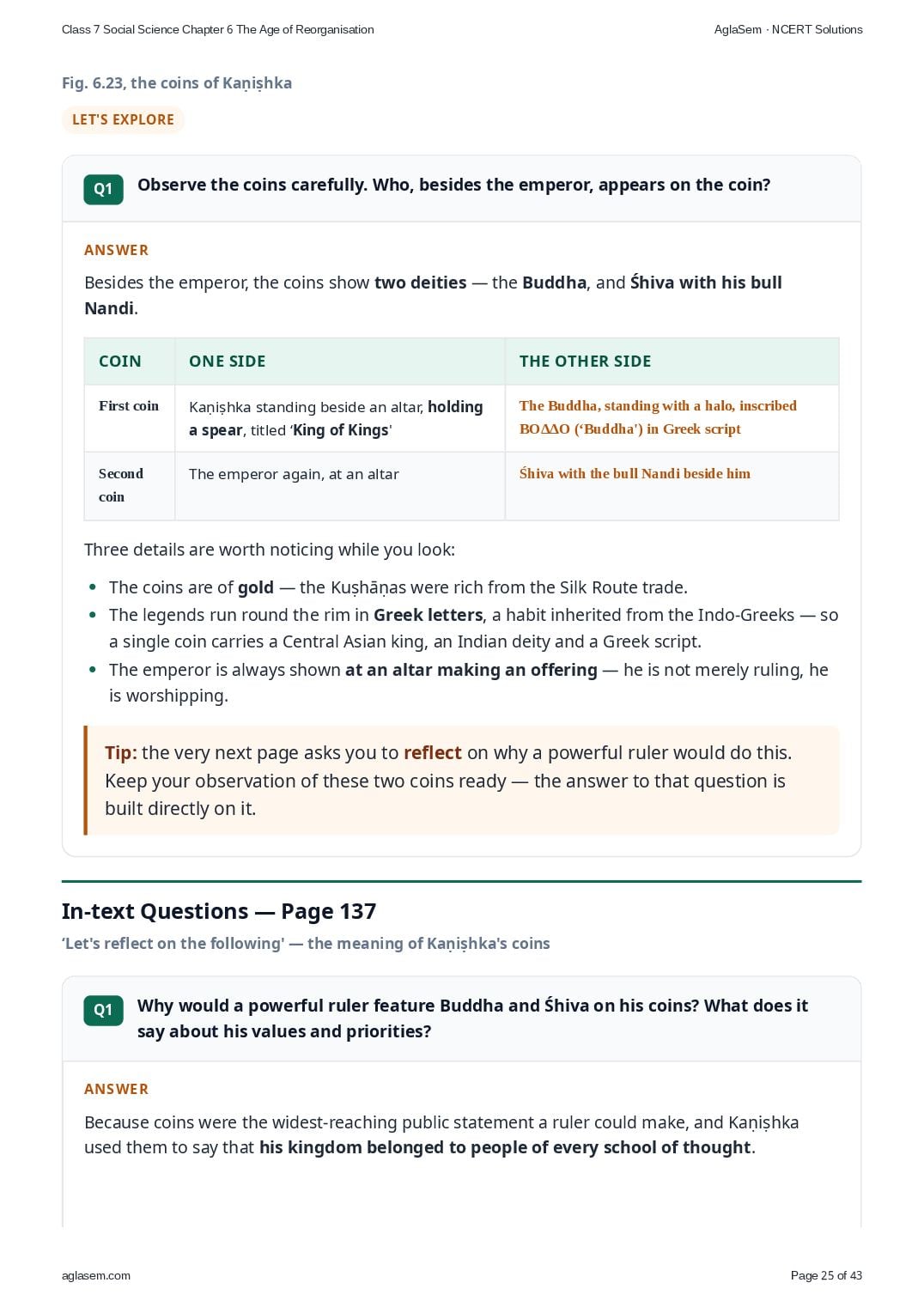
- Observe the coins carefully. Who, besides the emperor, appears on the coin?
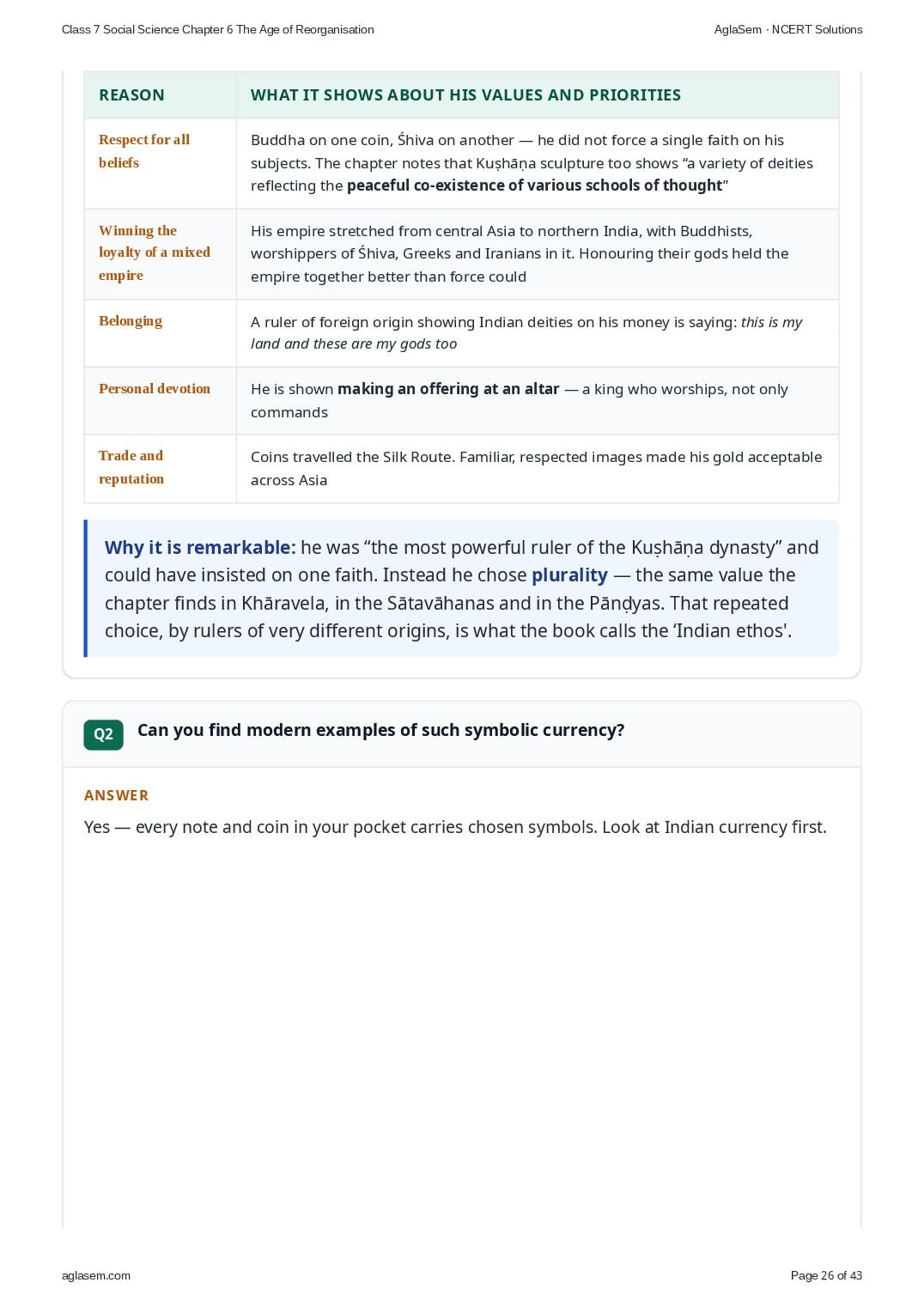
- Why would a powerful ruler feature Buddha and Śhiva on his coins? What does it say about his values and priorities?
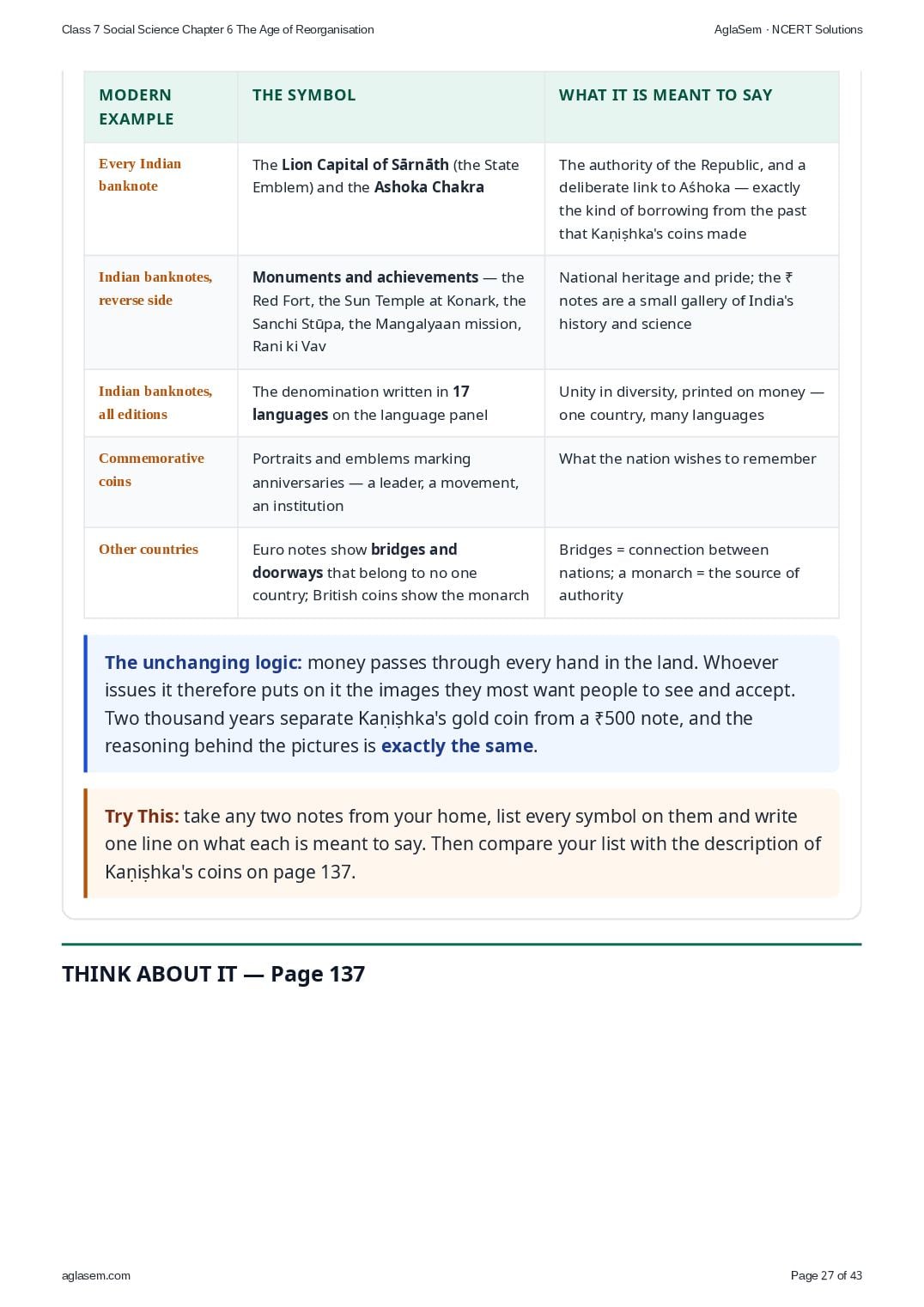
- Can you find modern examples of such symbolic currency?
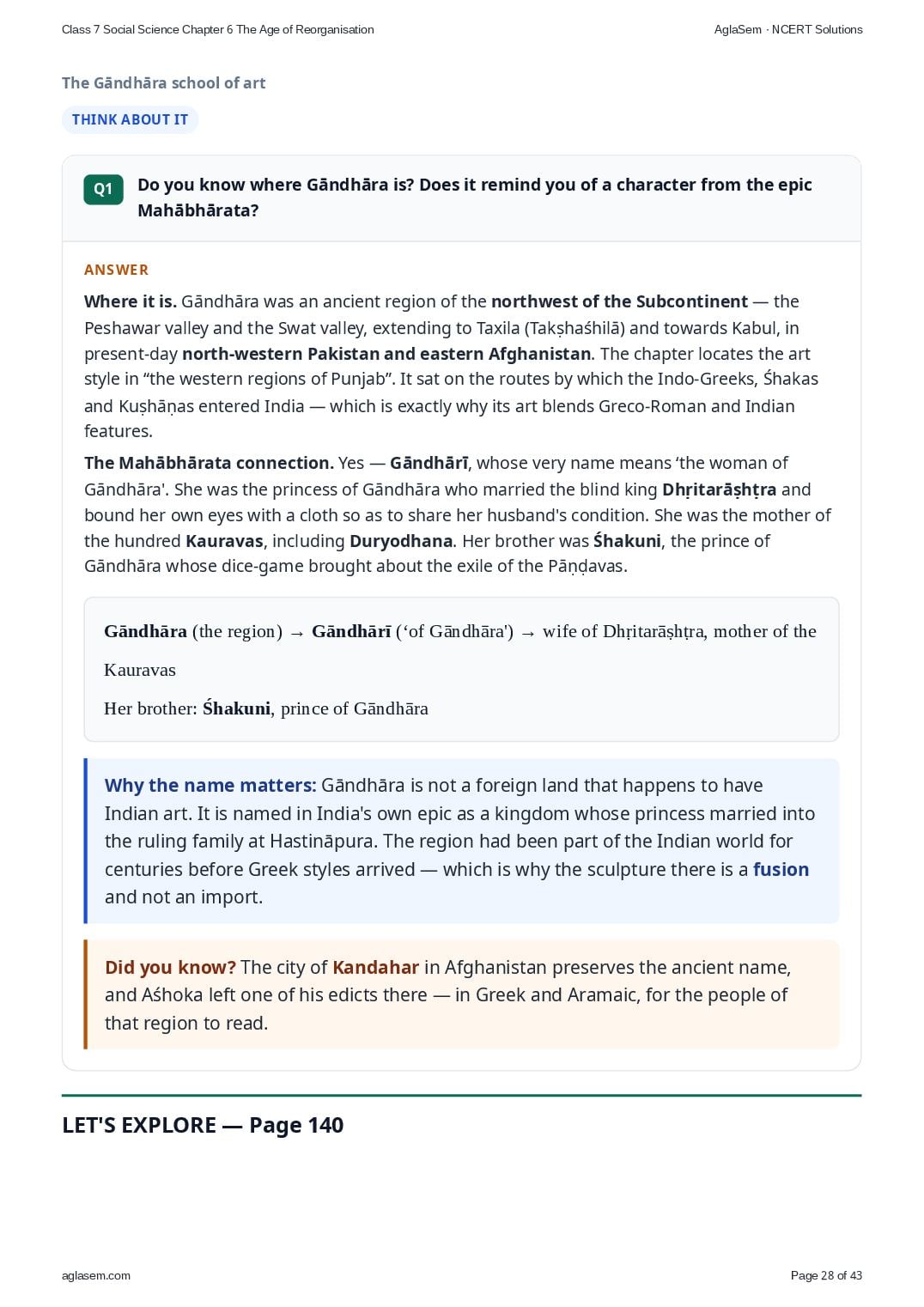
- Do you know where Gāndhāra is? Does it remind you of a character from the epic Mahābhārata?
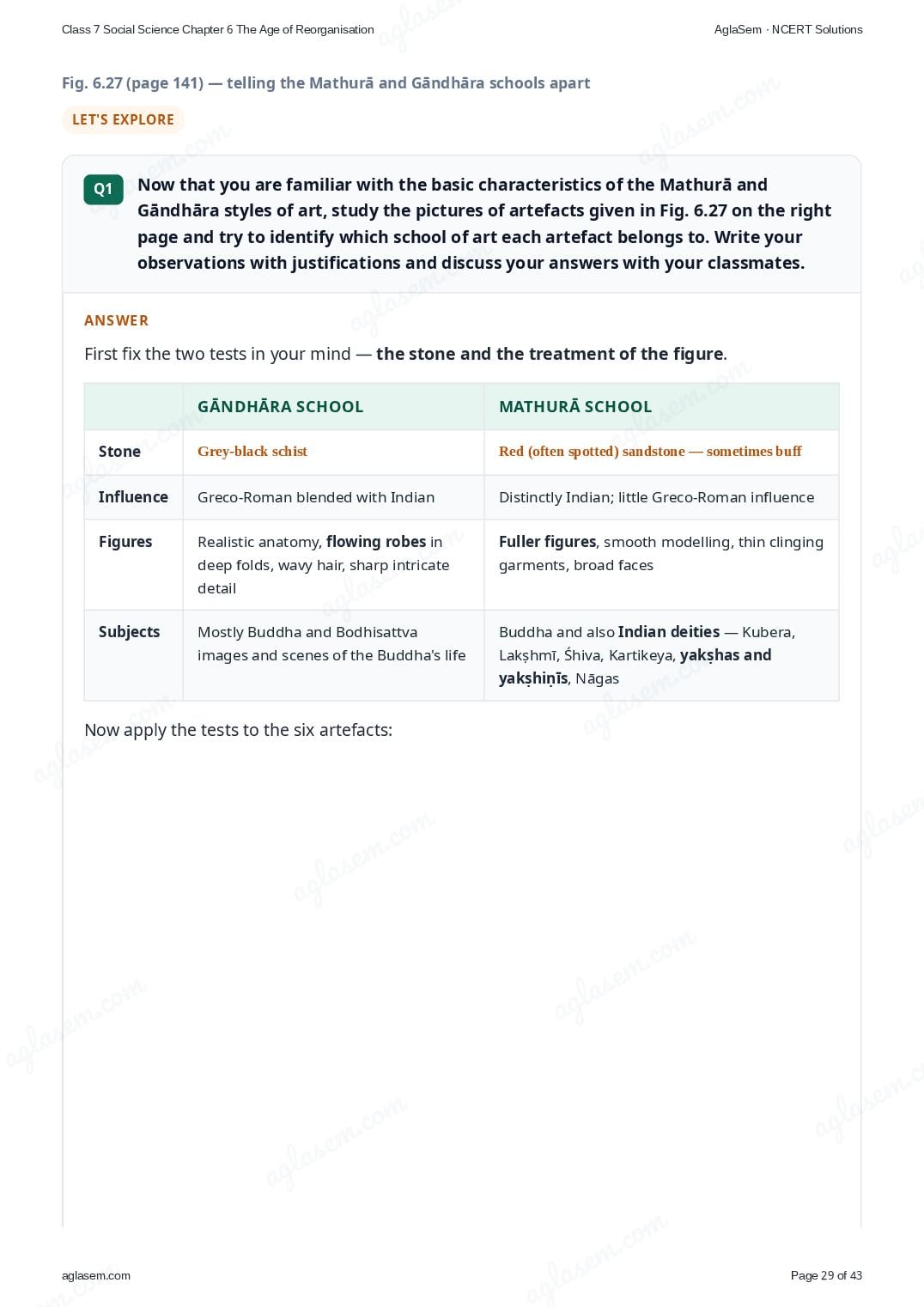
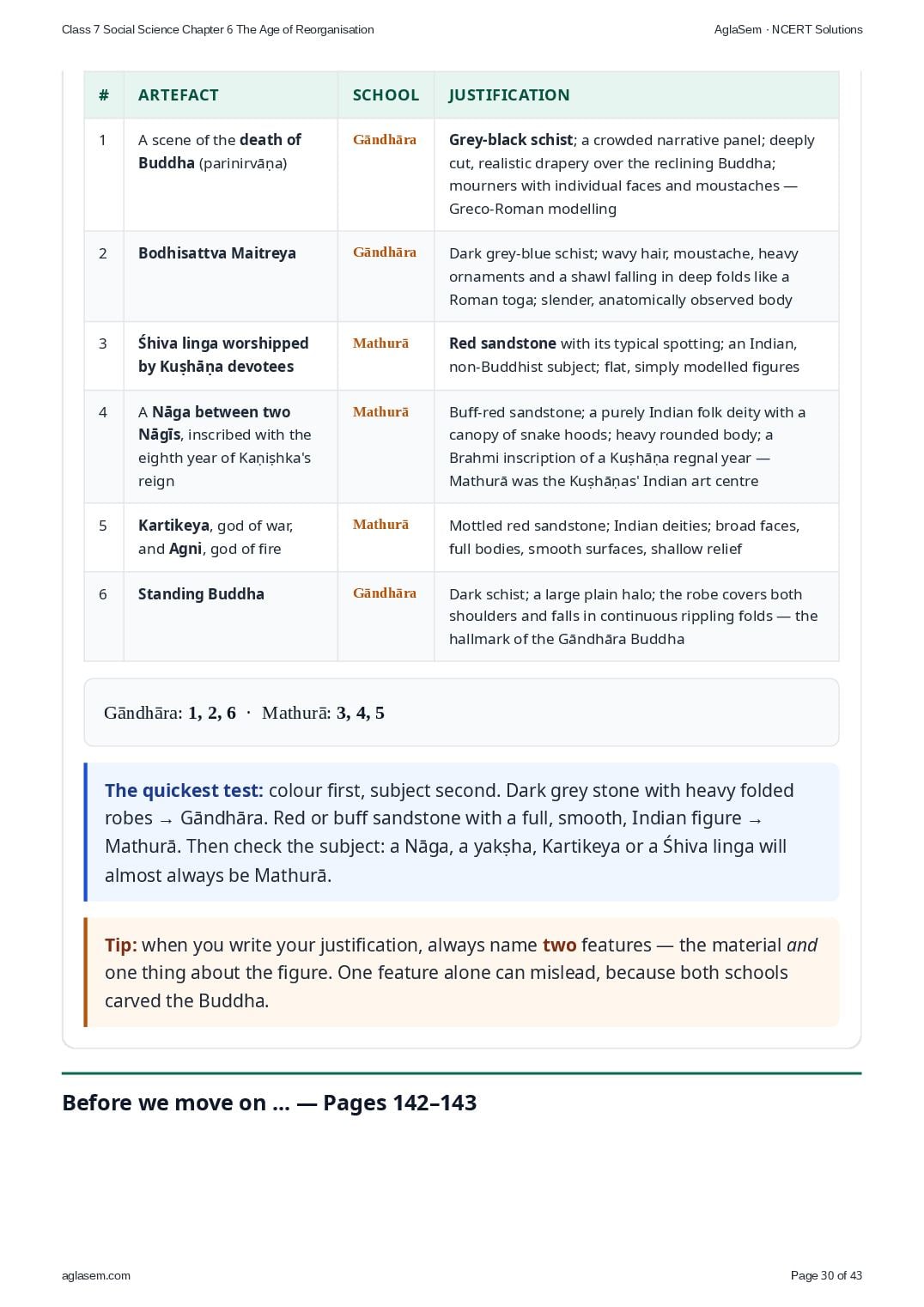
- Now that you are familiar with the basic characteristics of the Mathurā and Gāndhāra styles of art, study the pictures of artefacts given in Fig. 6.27 on the right page and try to identify which school of art each artefact belongs to. Write your observations with justifications and discuss your answers with your classmates.
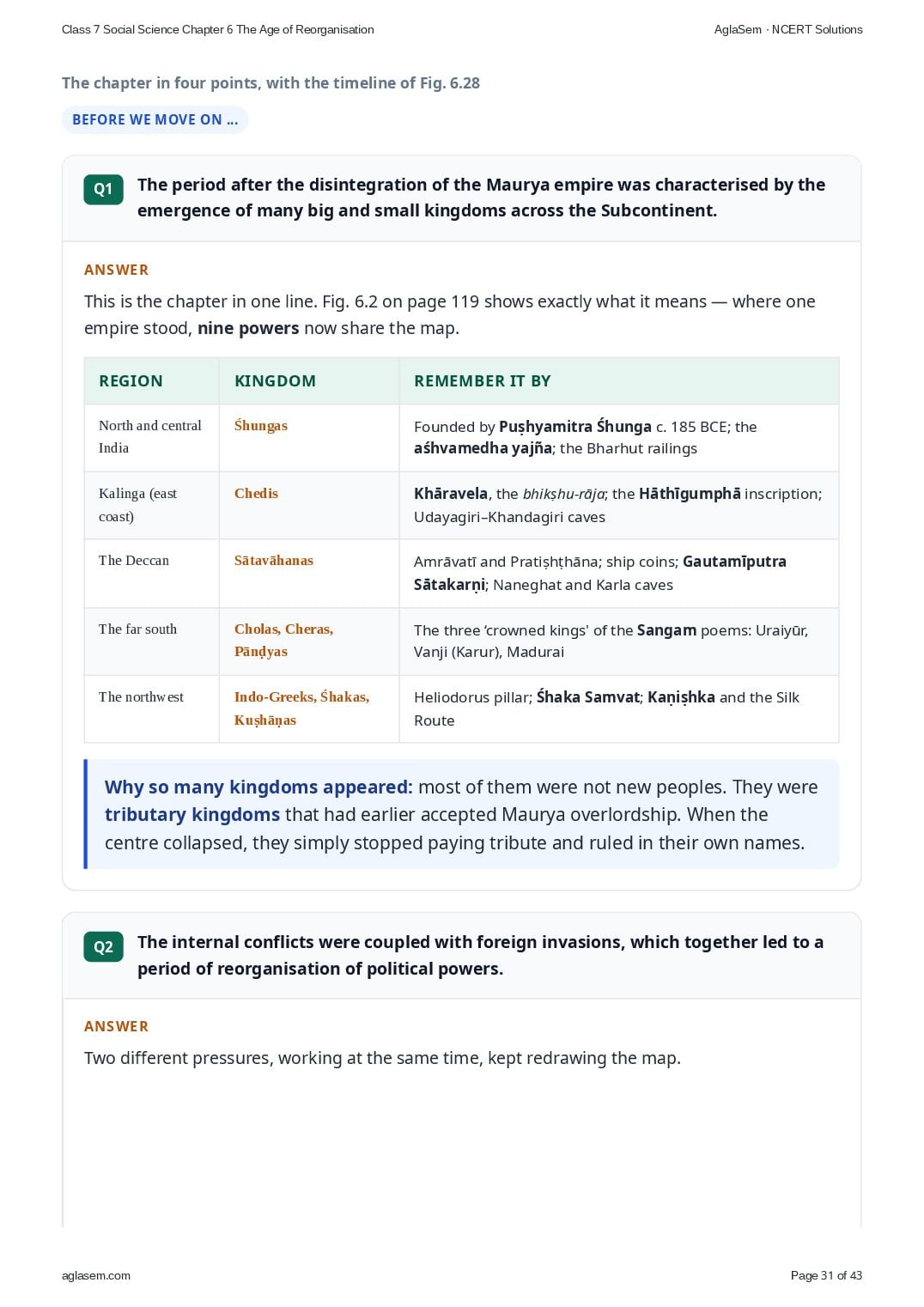
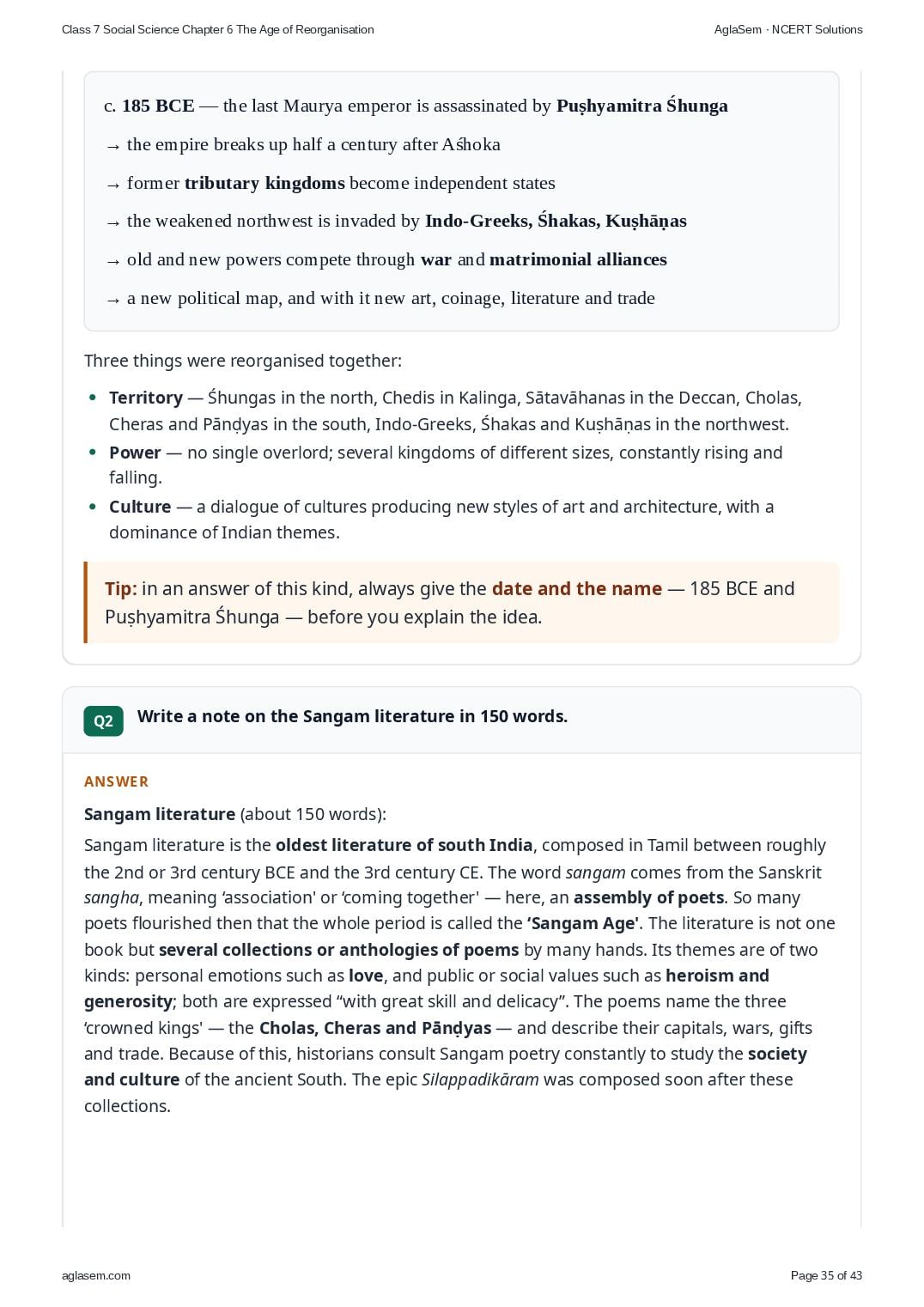
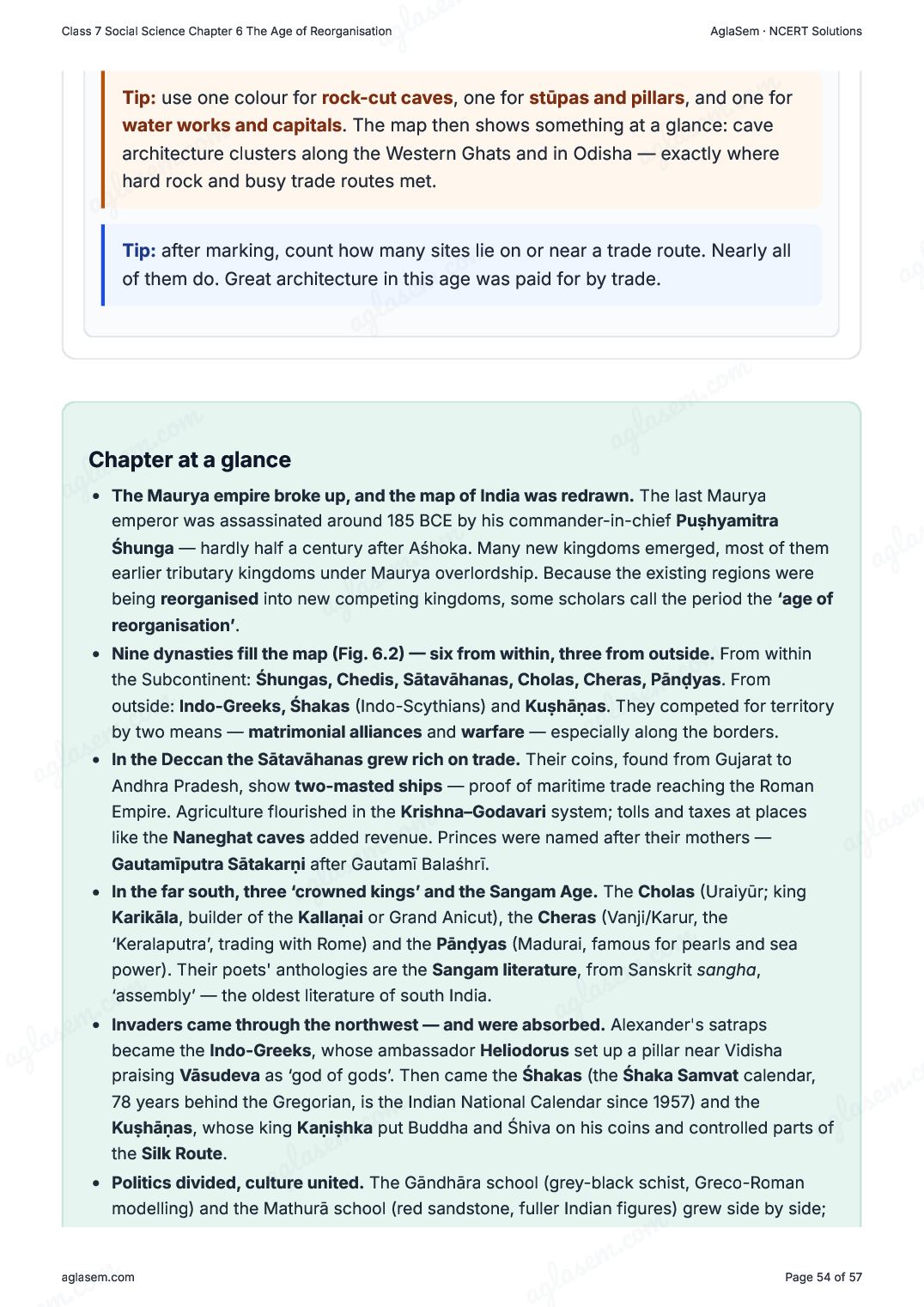
- The period after the disintegration of the Maurya empire was characterised by the emergence of many big and small kingdoms across the Subcontinent.
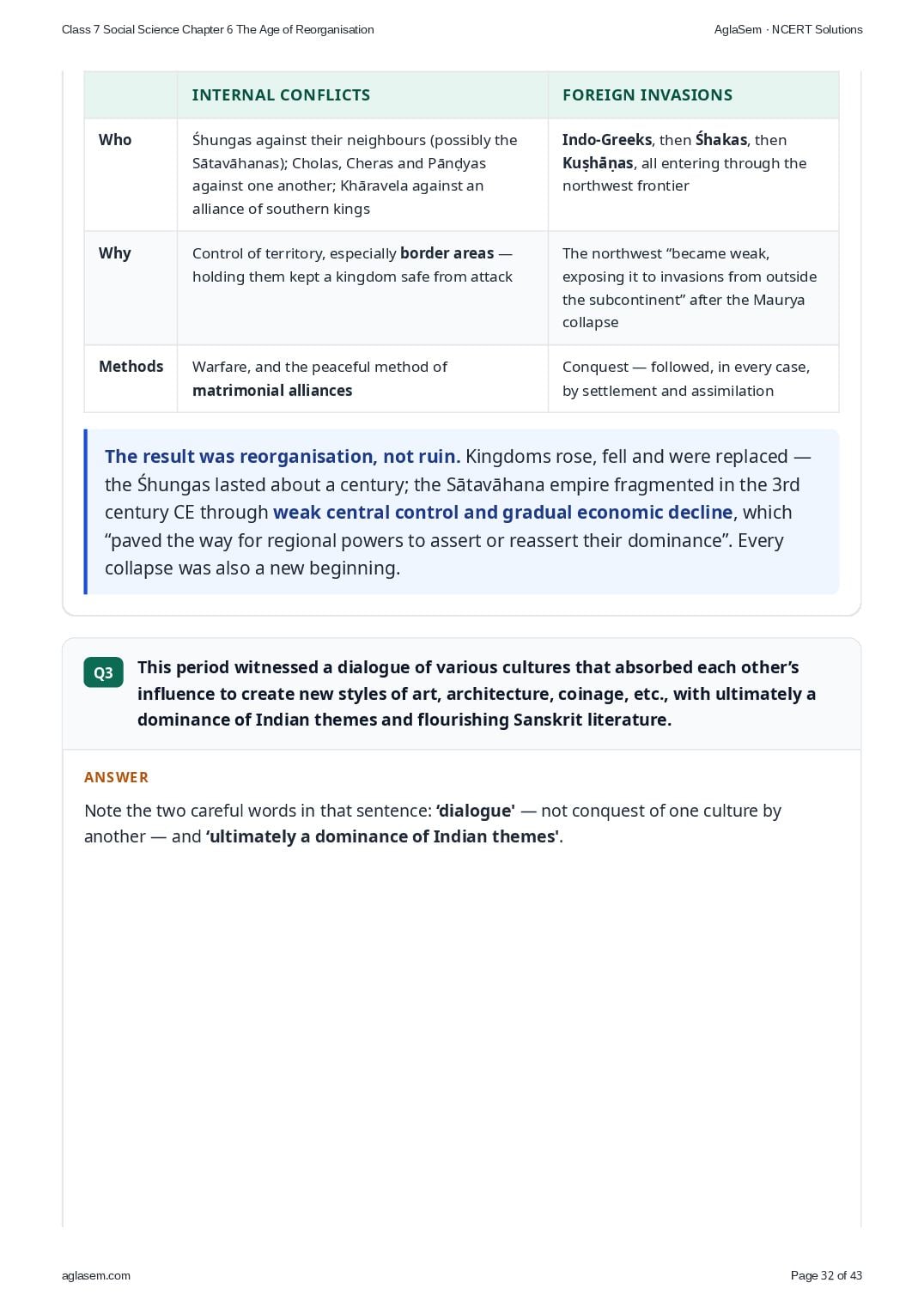
- The internal conflicts were coupled with foreign invasions, which together led to a period of reorganisation of political powers.
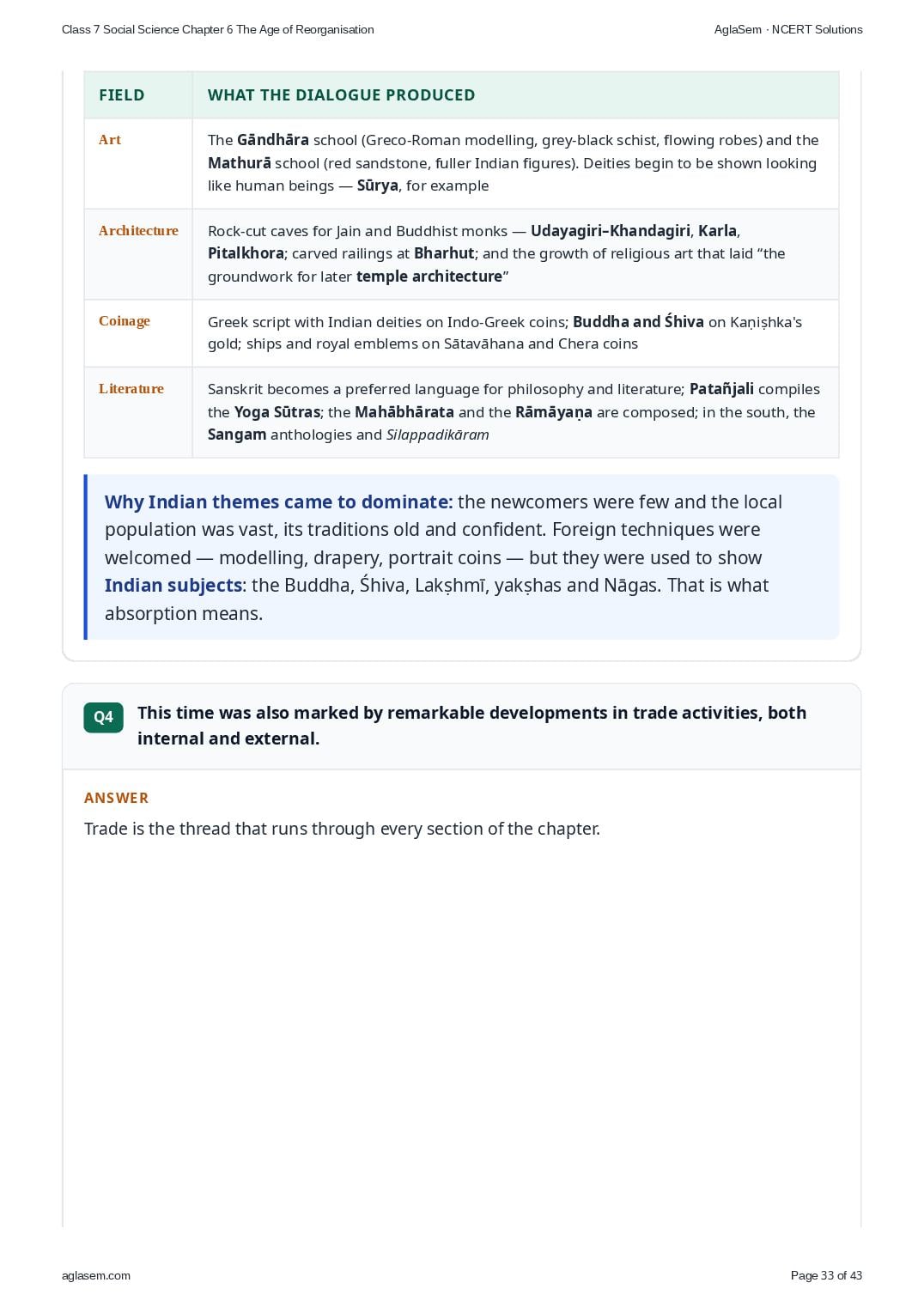
- This period witnessed a dialogue of various cultures that absorbed each other’s influence to create new styles of art, architecture, coinage, etc., with ultimately a dominance of Indian themes and flourishing Sanskrit literature.
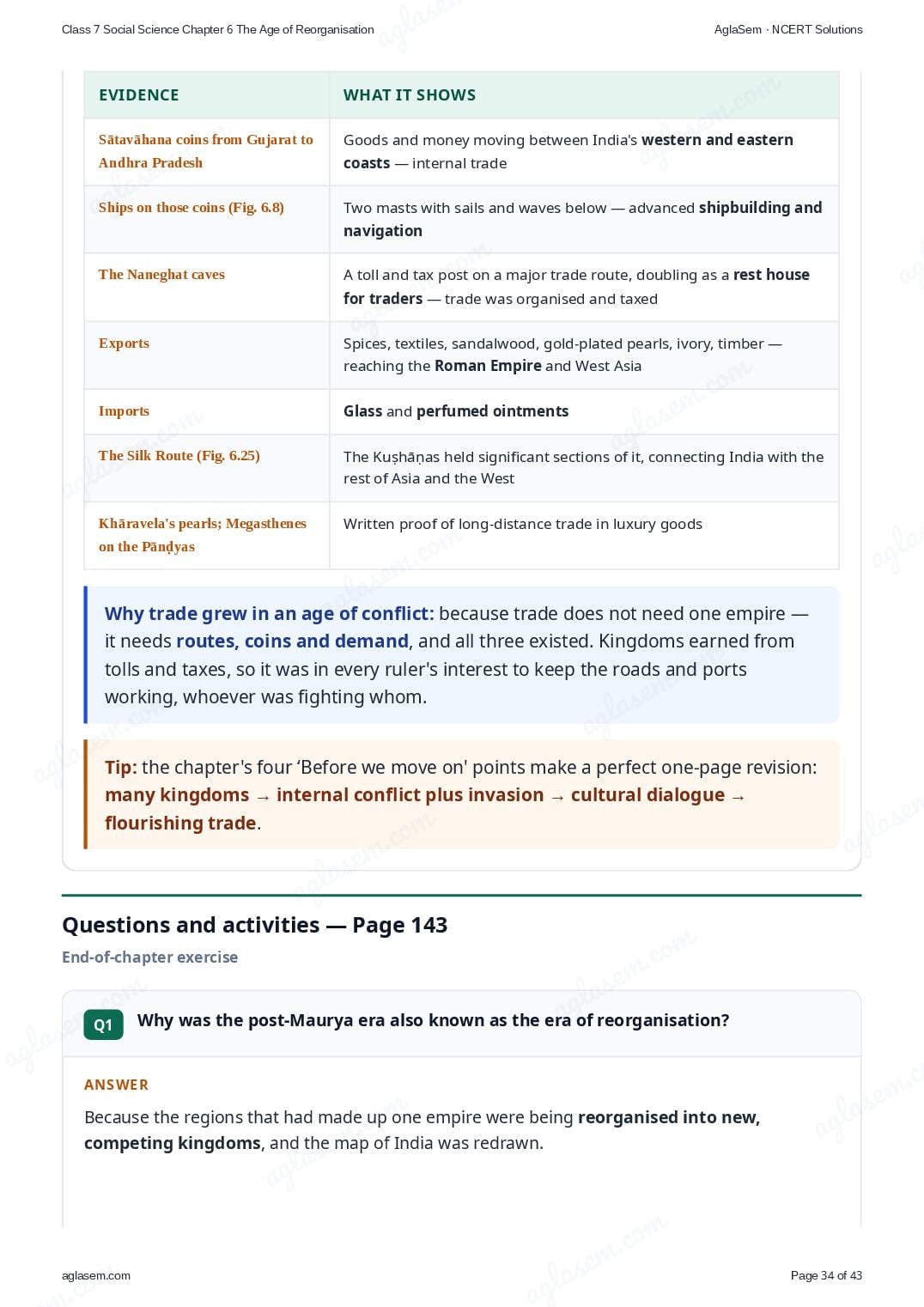
- This time was also marked by remarkable developments in trade activities, both internal and external.
- Why was the post-Maurya era also known as the era of reorganisation?
- Write a note on the Sangam literature in 150 words.
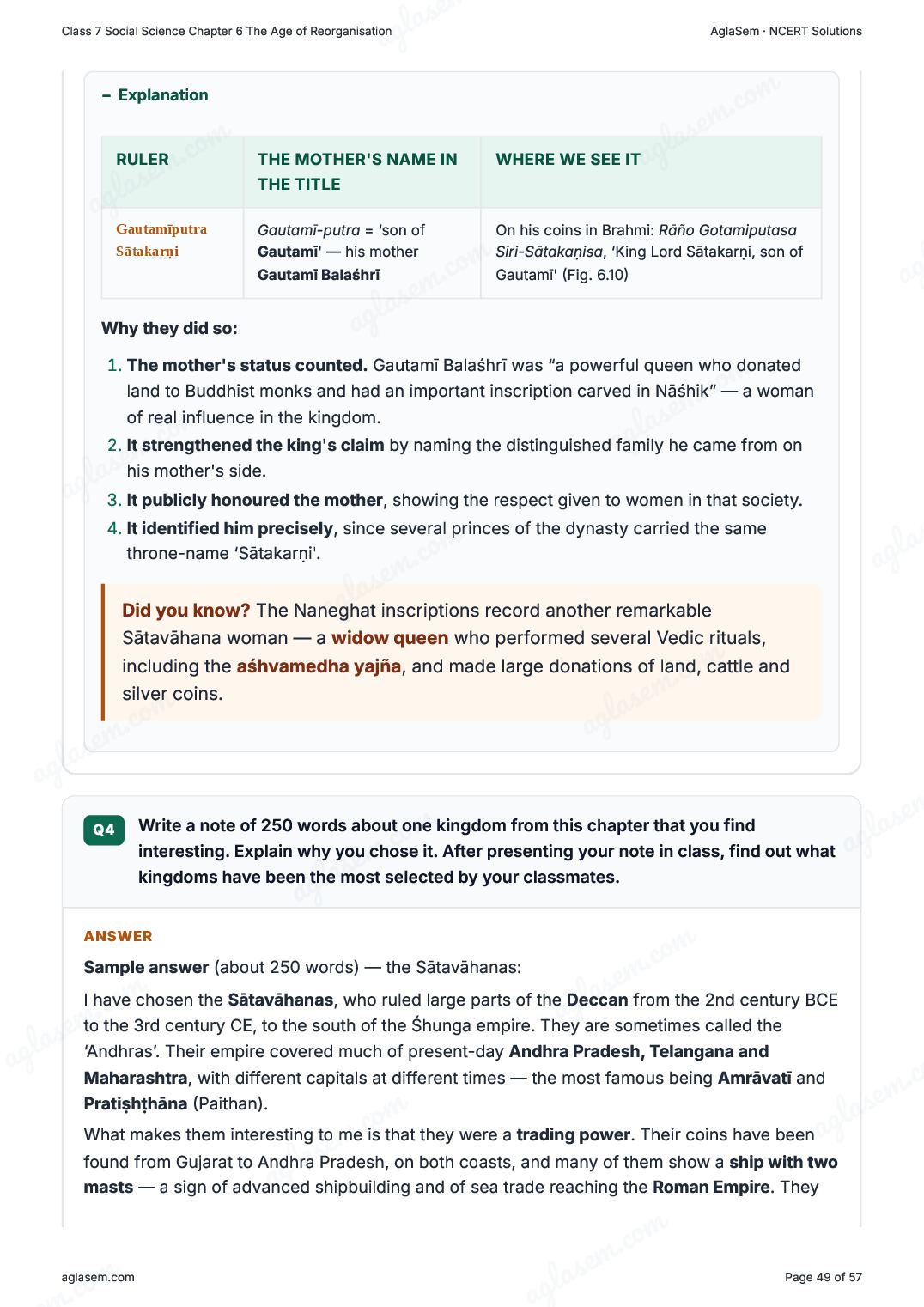
- Which rulers mentioned in this chapter included their mother’s name in their title, and why did they do so?
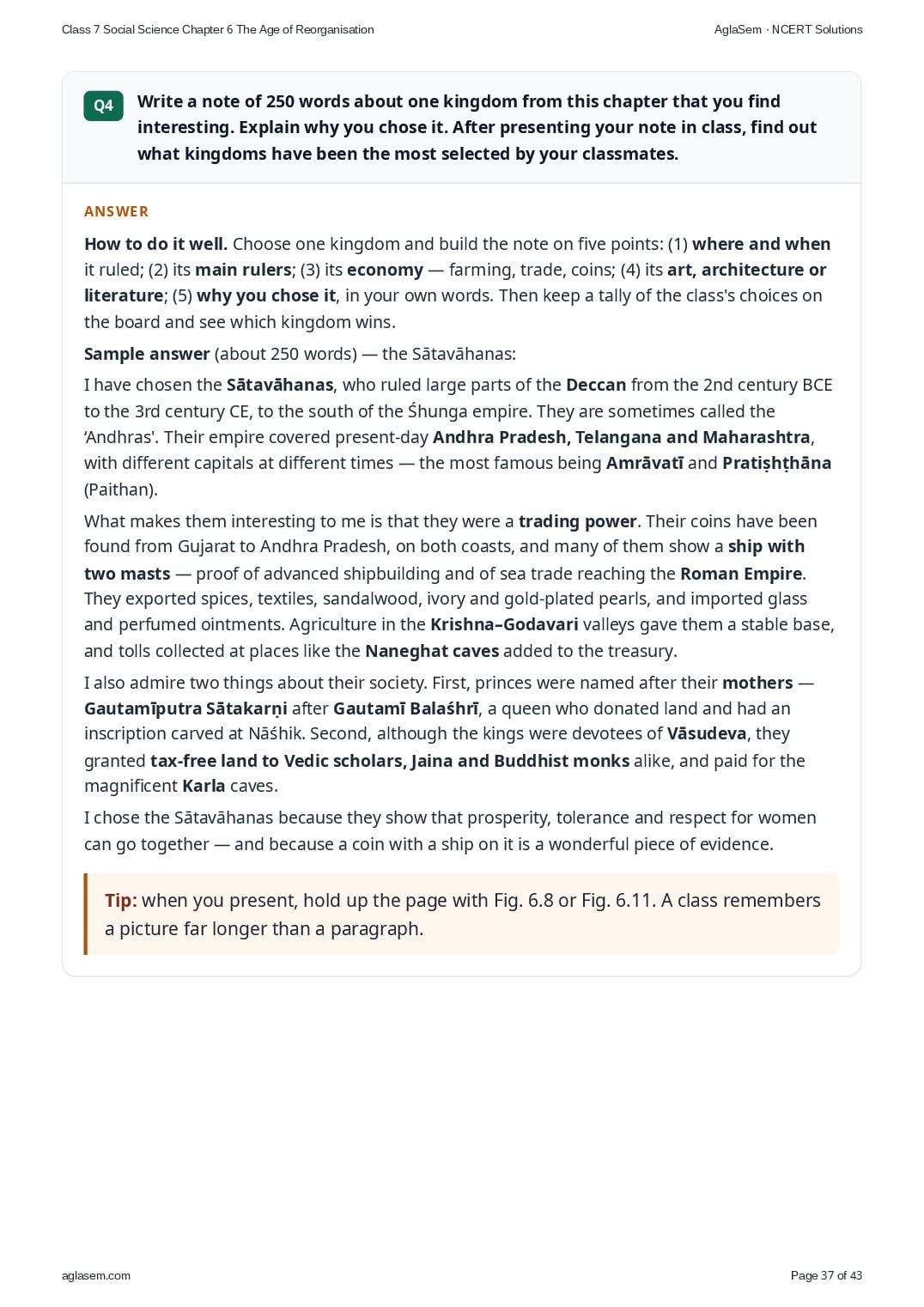
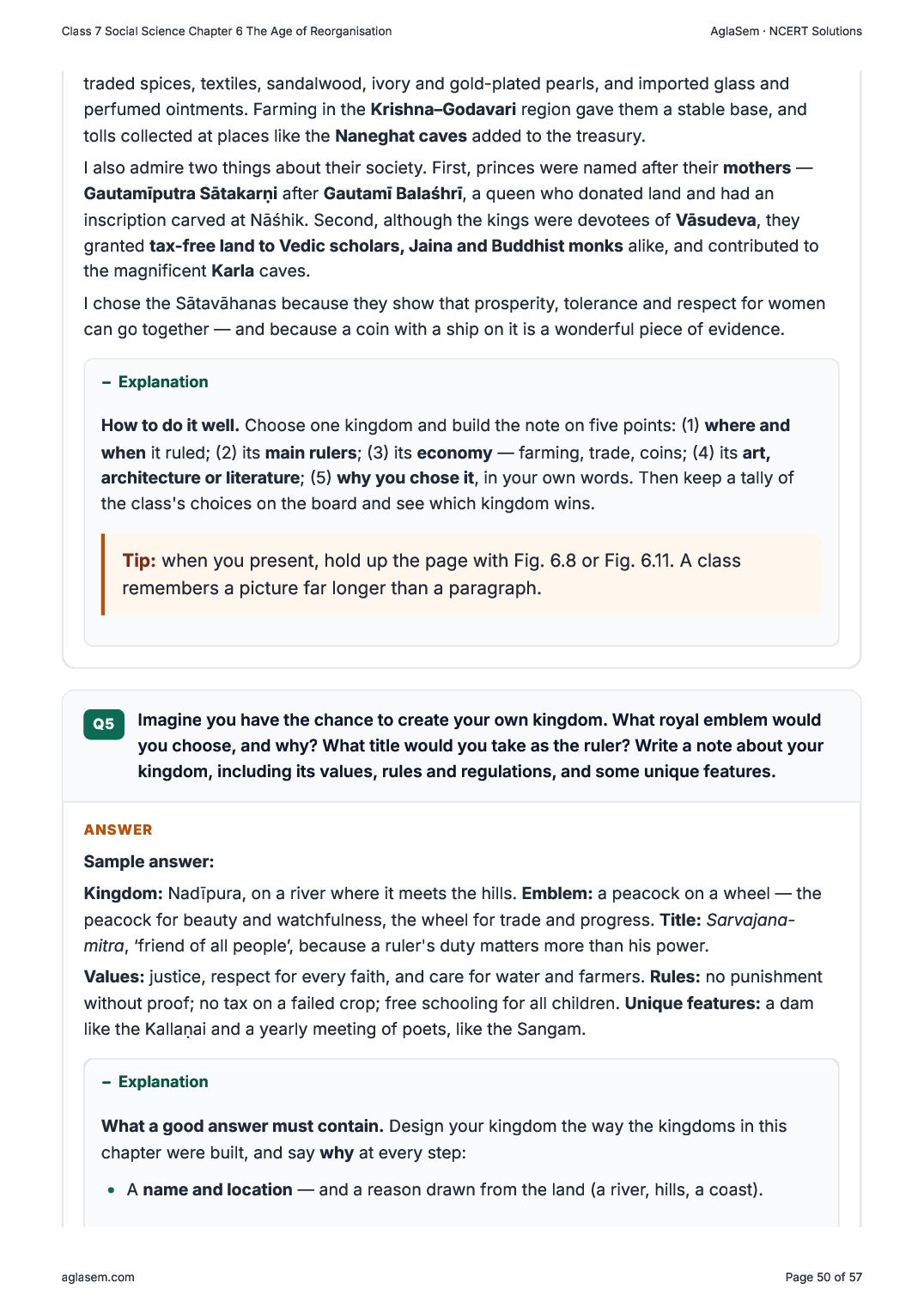
- Write a note of 250 words about one kingdom from this chapter that you find interesting. Explain why you chose it. After presenting your note in class, find out what kingdoms have been the most selected by your classmates.
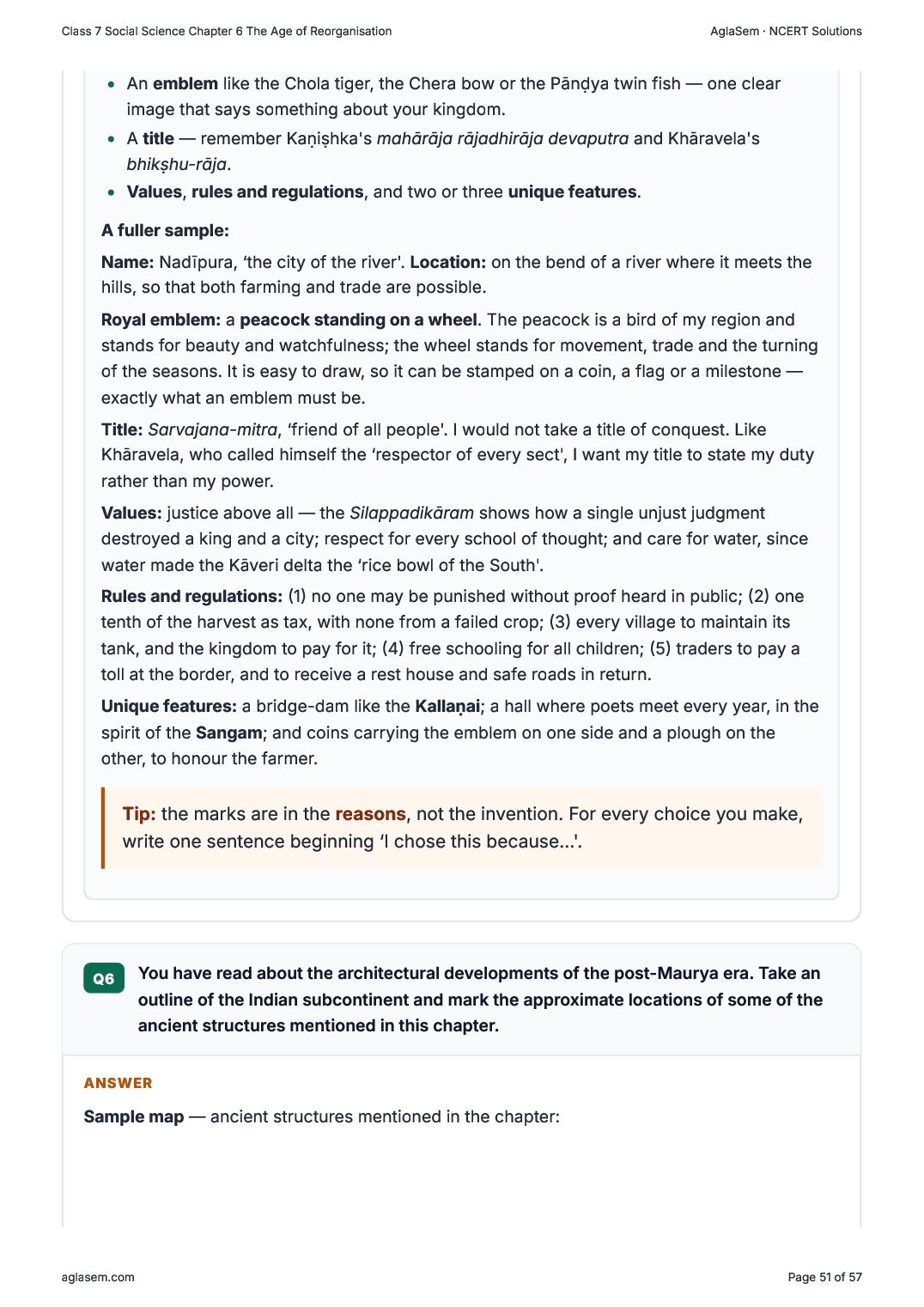
- Imagine you have the chance to create your own kingdom. What royal emblem would you choose, and why? What title would you take as the ruler? Write a note about your kingdom, including its values, rules and regulations, and some unique features.
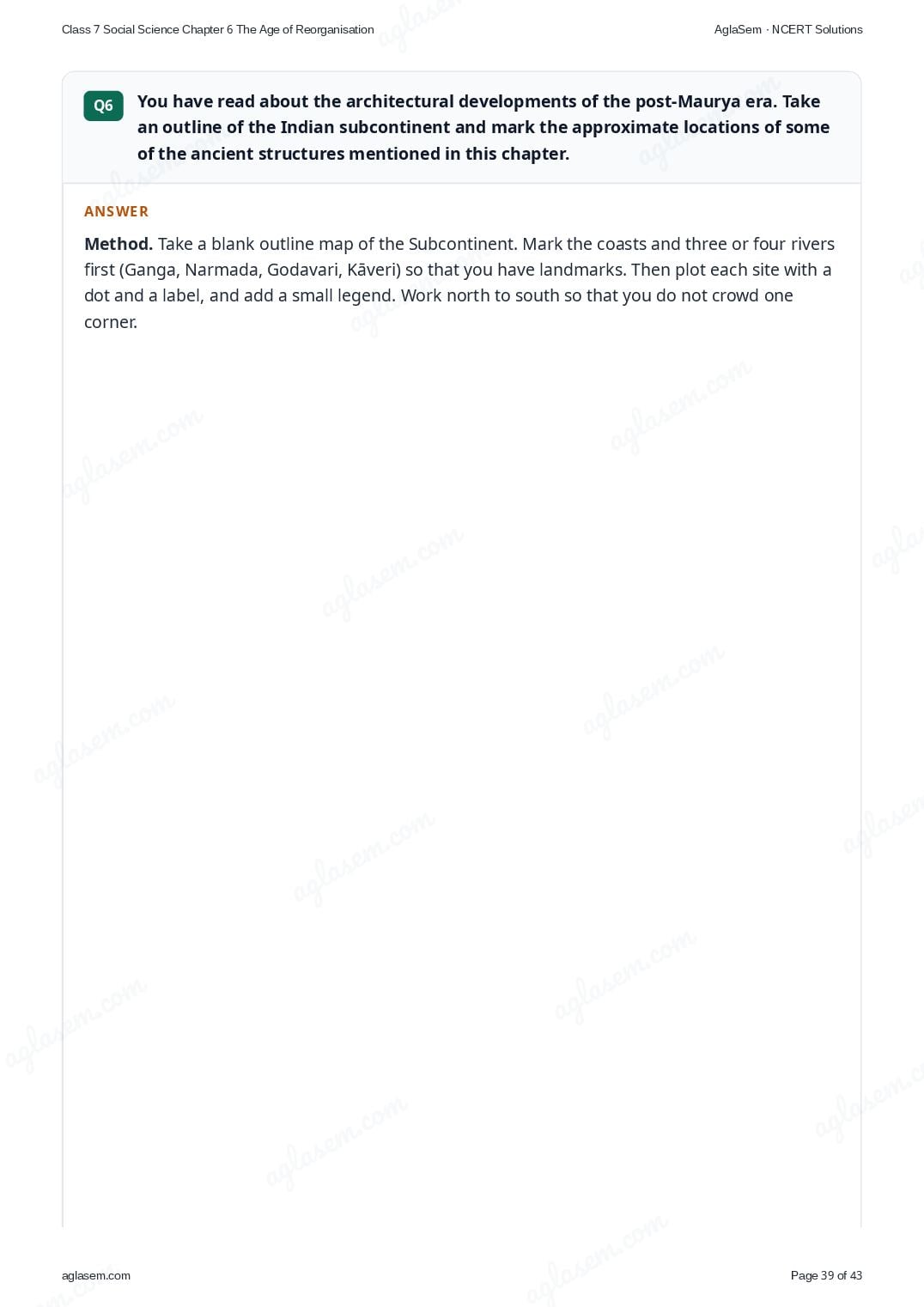
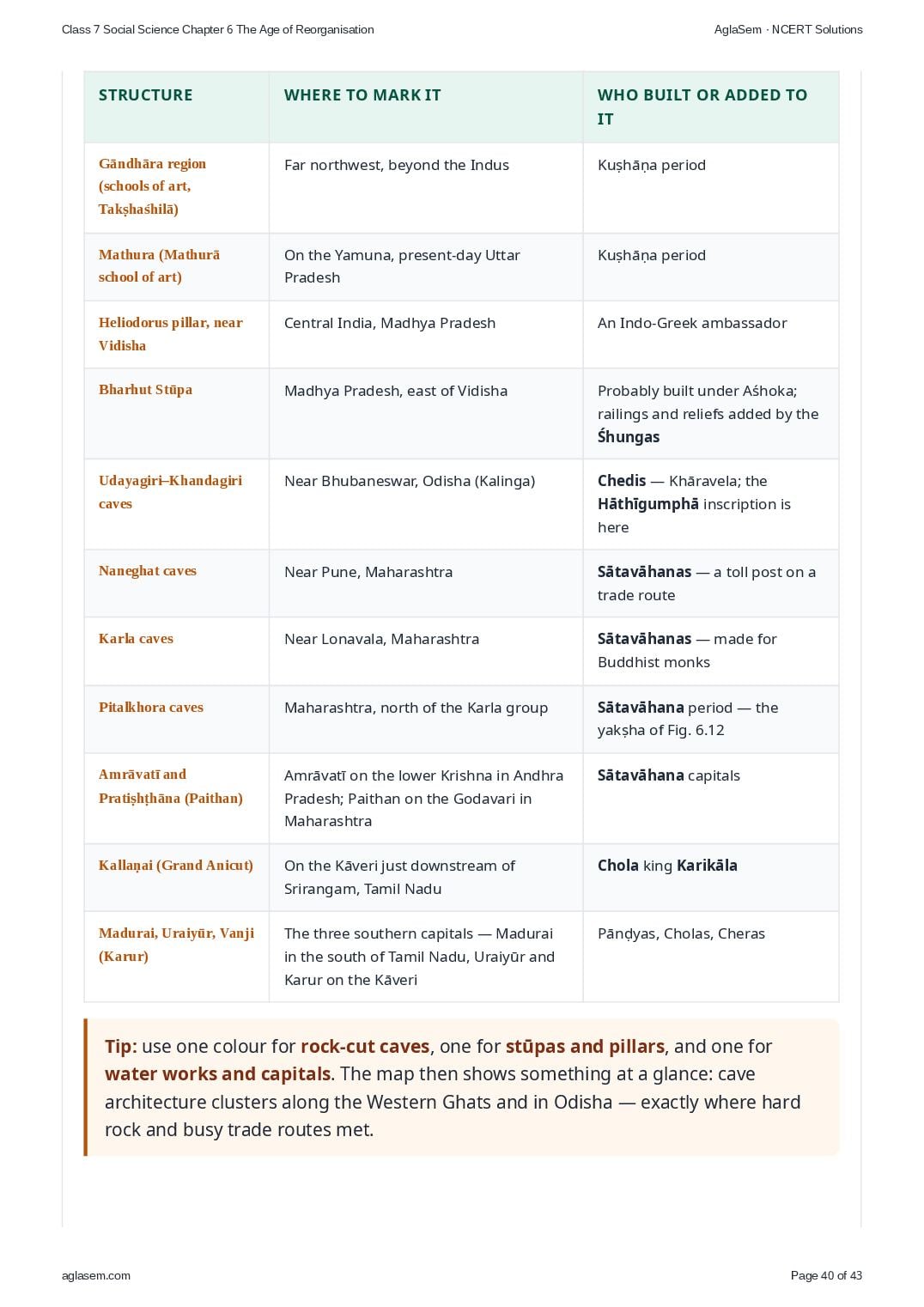
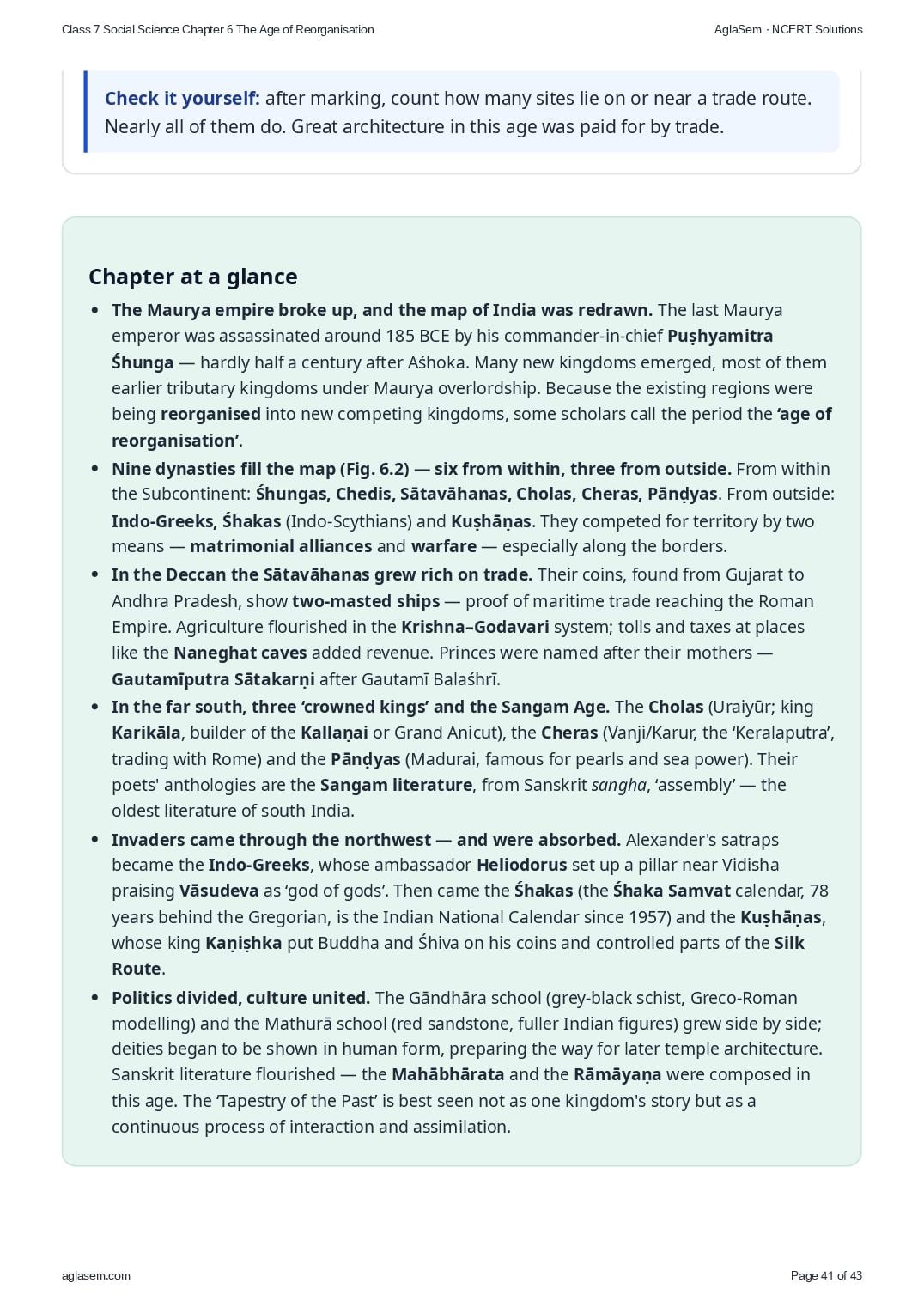
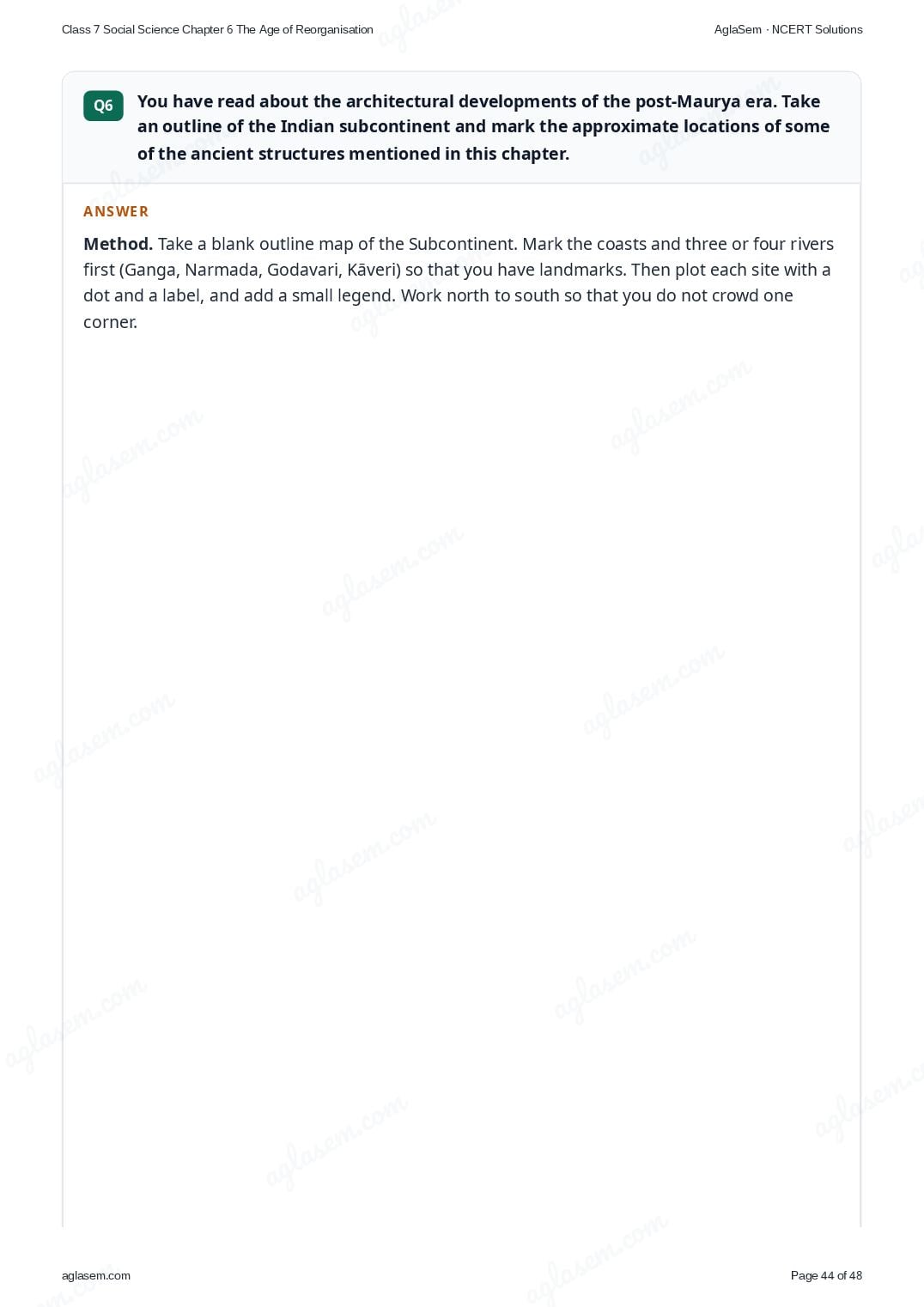
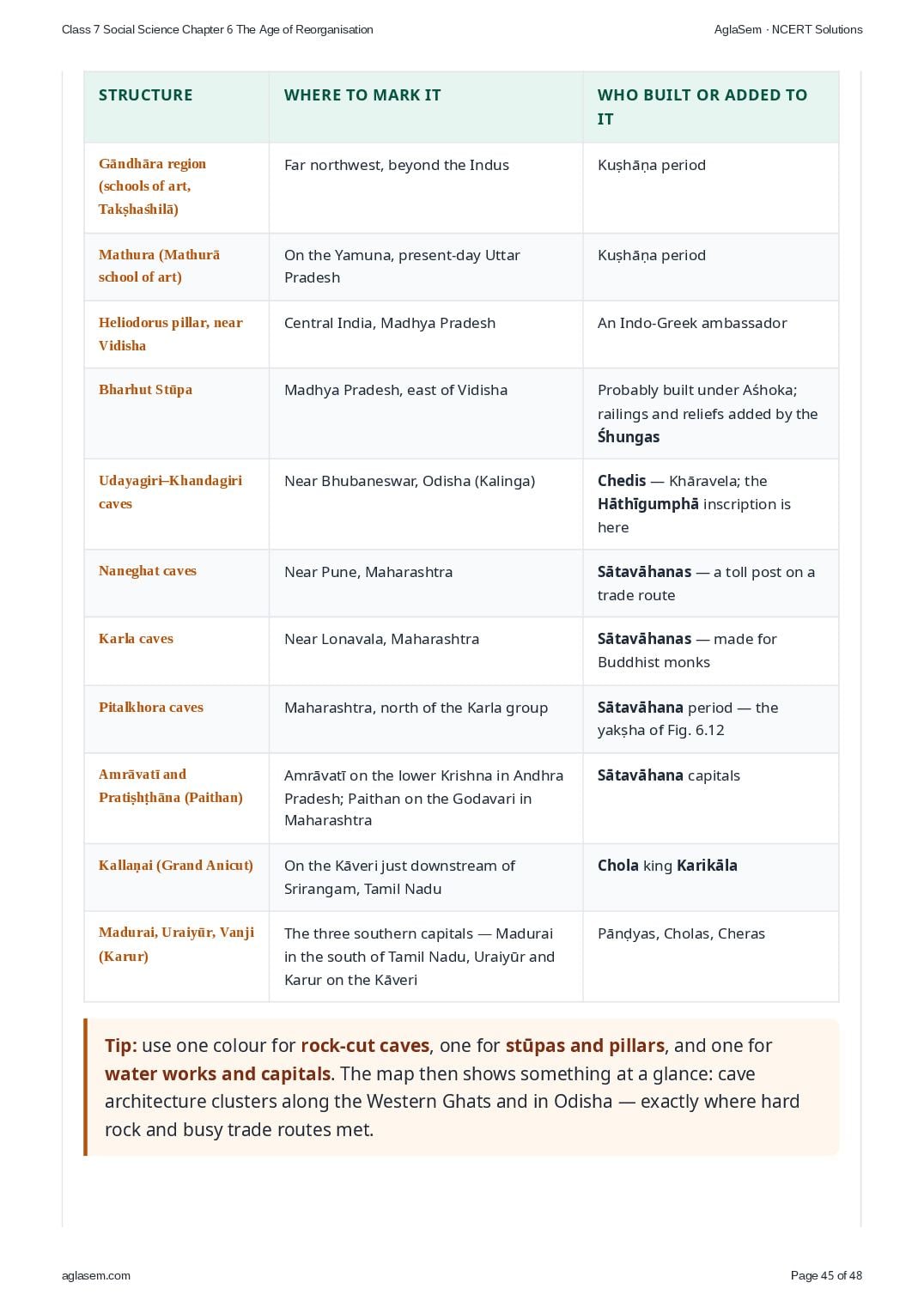
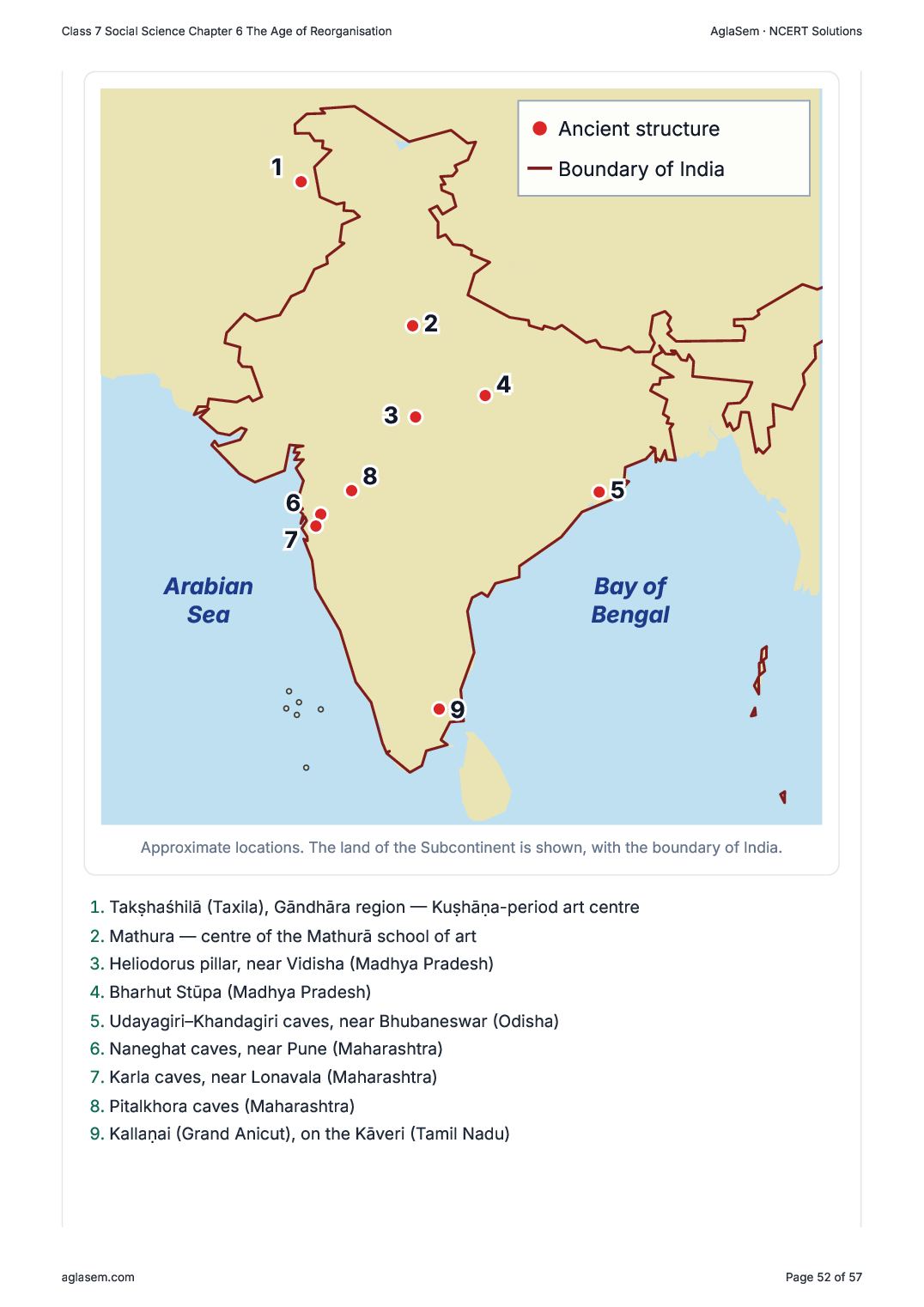
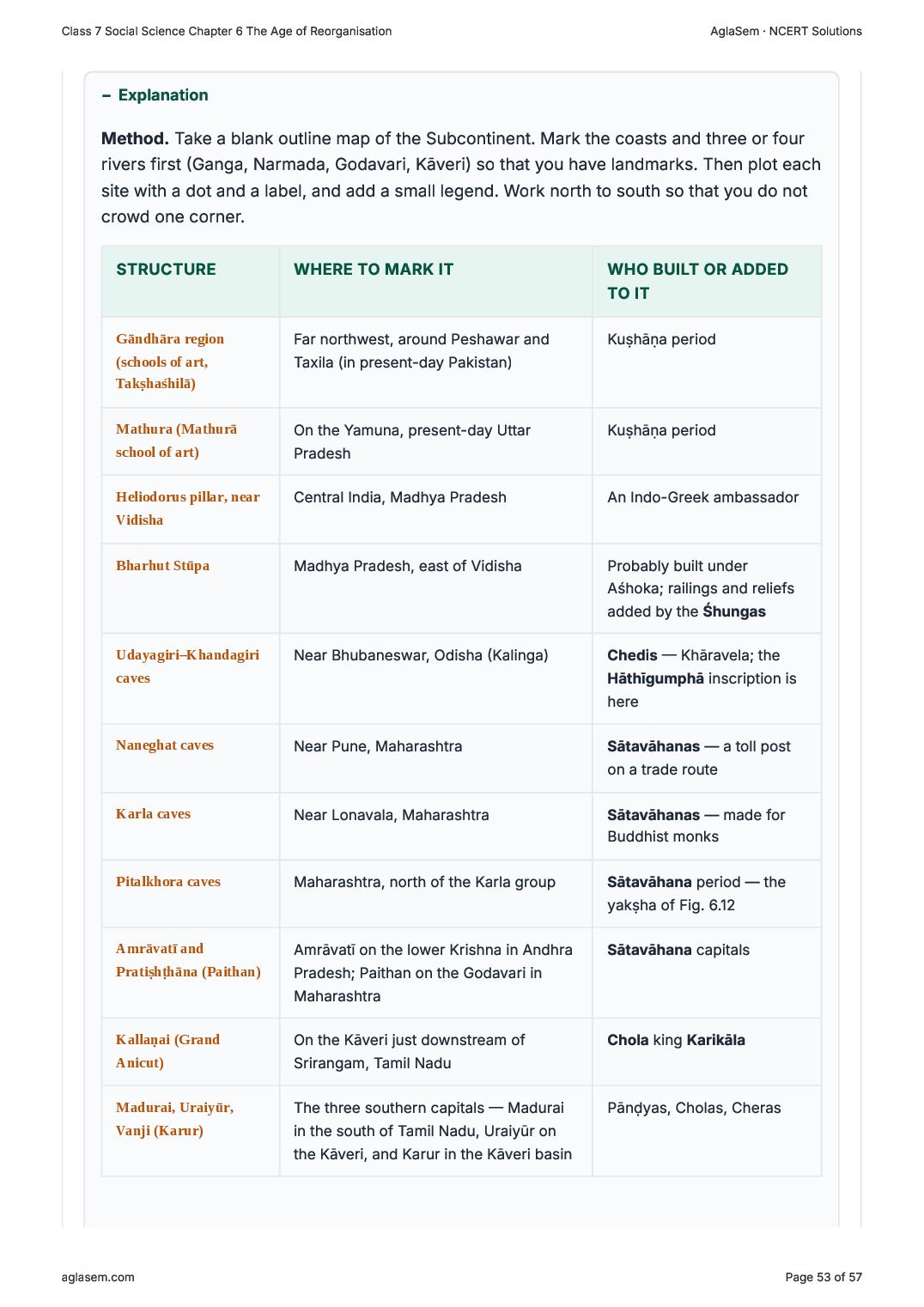
- You have read about the architectural developments of the post-Maurya era. Take an outline of the Indian subcontinent and mark the approximate locations of some of the ancient structures mentioned in this chapter.
Chapter at a Glance
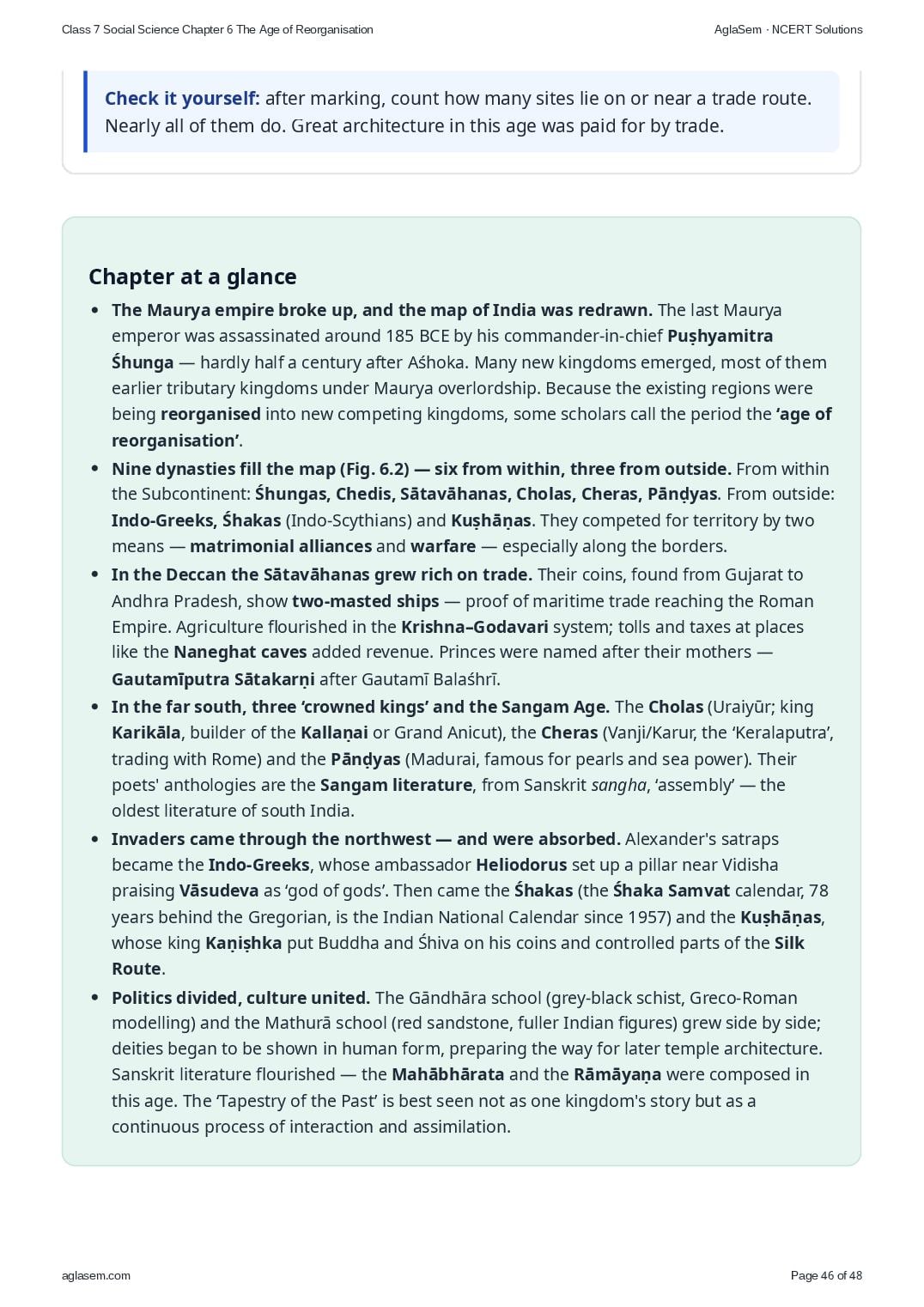
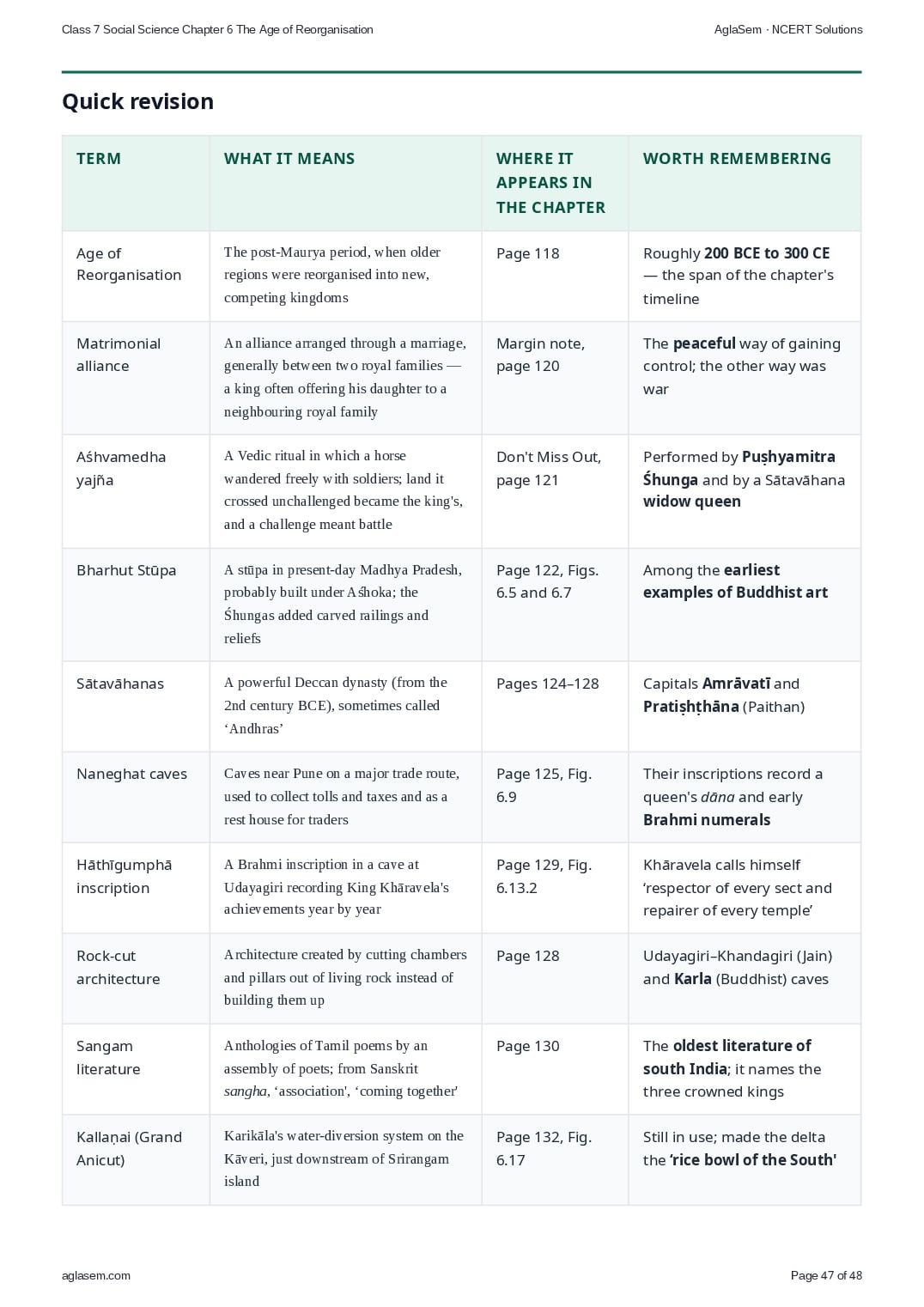
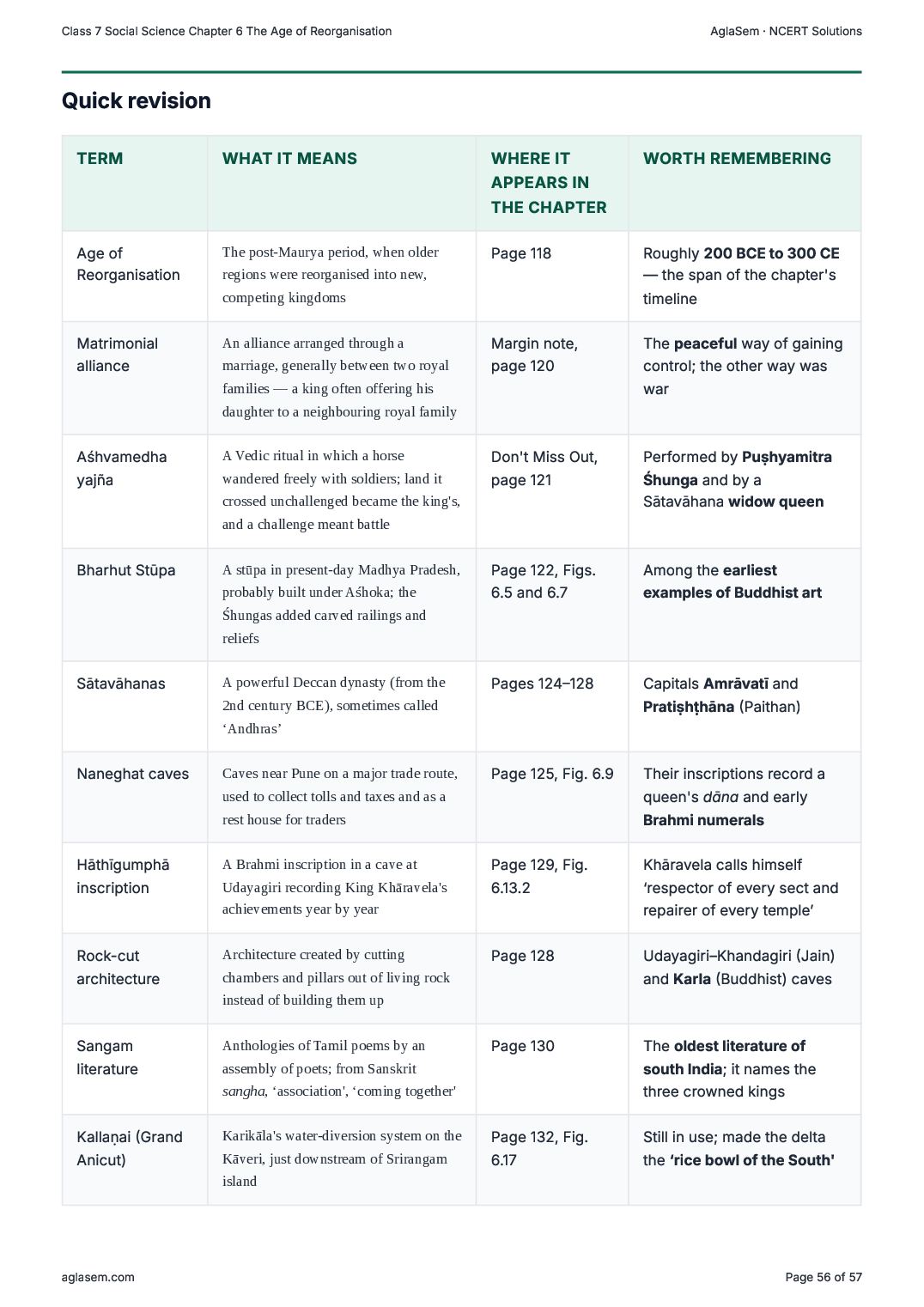
- The Maurya empire broke up, and the map of India was redrawn. The last Maurya emperor was assassinated around 185 BCE by his commander-in-chief Puṣhyamitra Śhunga — hardly half a century after Aśhoka. Many new kingdoms emerged, most of them earlier tributary kingdoms under Maurya overlordship. Because the existing regions were being reorganised into new competing kingdoms, some scholars call the period the ‘age of reorganisation’ .
- Nine dynasties fill the map (Fig. 6.2) — six from within, three from outside. From within the Subcontinent: Śhungas, Chedis, Sātavāhanas, Cholas, Cheras, Pānḍyas . From outside: Indo-Greeks, Śhakas (Indo-Scythians) and Kuṣhāṇas . They competed for territory by two means — matrimonial alliances and warfare — especially along the borders.
- In the Deccan the Sātavāhanas grew rich on trade. Their coins, found from Gujarat to Andhra Pradesh, show two-masted ships — proof of maritime trade reaching the Roman Empire. Agriculture flourished in the Krishna–Godavari system; tolls and taxes at places like the Naneghat caves added revenue. Princes were named after their mothers — Gautamīputra Sātakarṇi after Gautamī Balaśhrī.
- In the far south, three ‘crowned kings’ and the Sangam Age. The Cholas (Uraiyūr; king Karikāla , builder of the Kallaṇai or Grand Anicut), the Cheras (Vanji/Karur, the ‘Keralaputra’, trading with Rome) and the Pānḍyas (Madurai, famous for pearls and sea power). Their poets' anthologies are the Sangam literature , from Sanskrit sangha , ‘assembly’ — the oldest literature of south India.
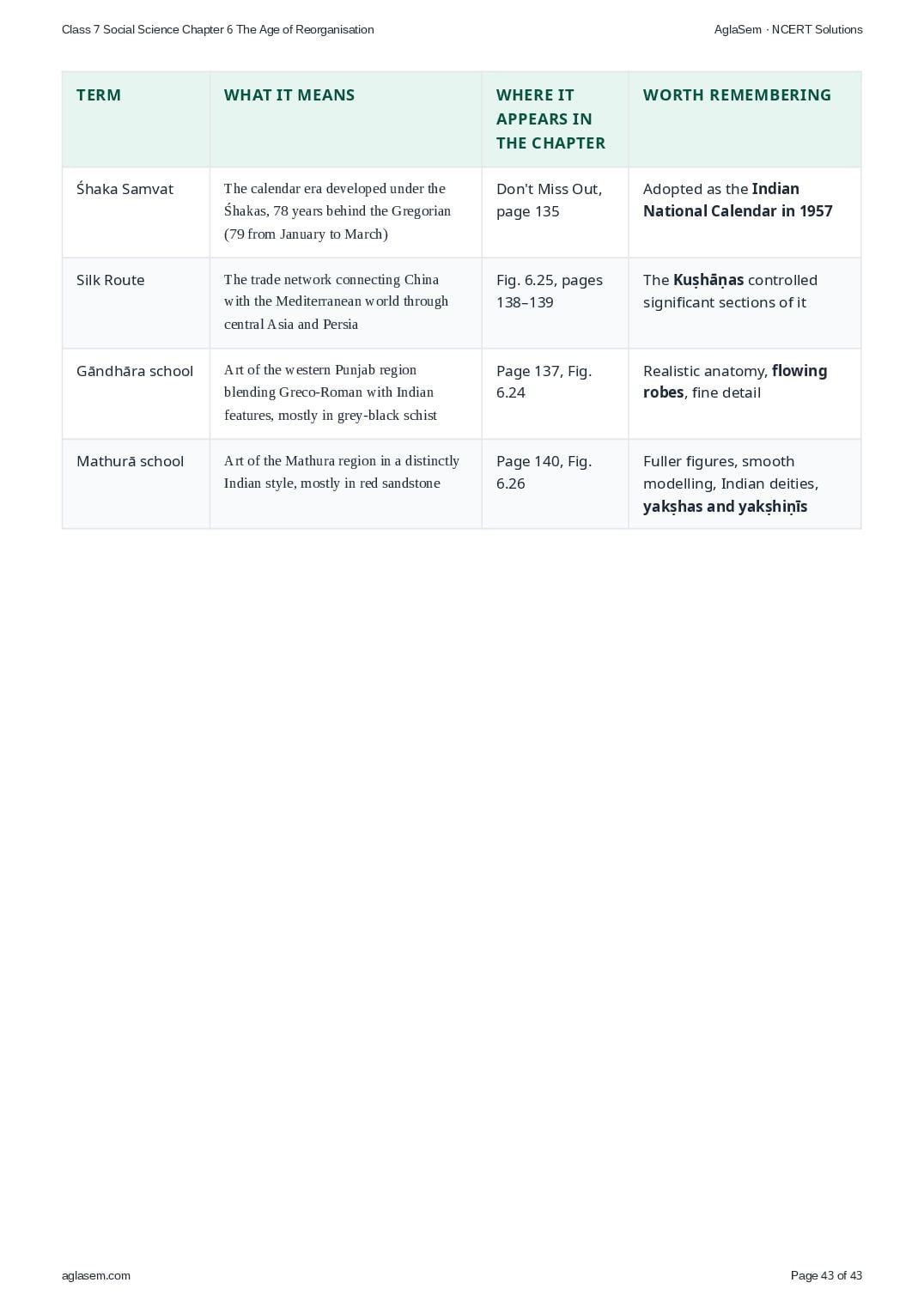
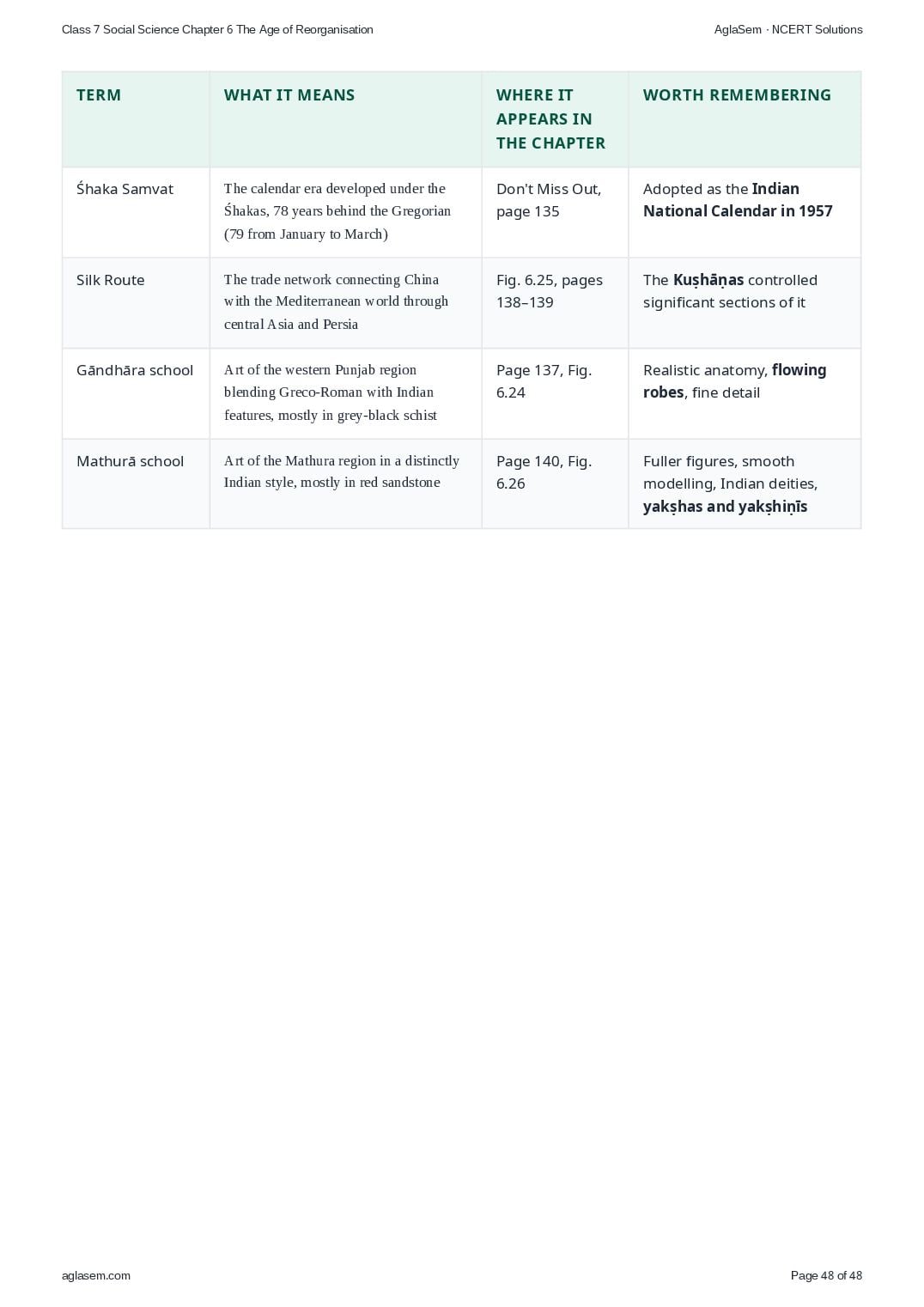
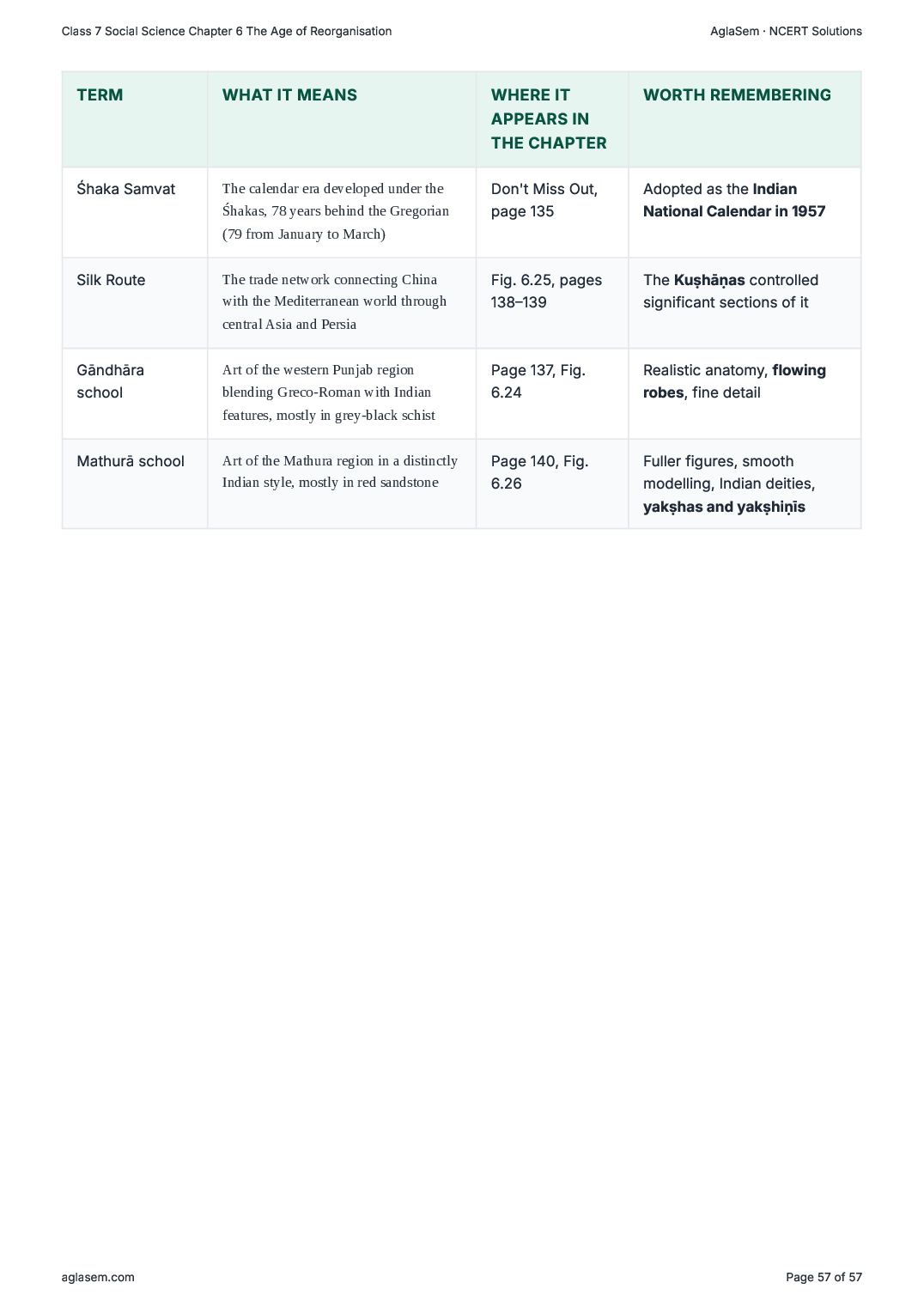
- Invaders came through the northwest — and were absorbed. Alexander's satraps became the Indo-Greeks , whose ambassador Heliodorus set up a pillar near Vidisha praising Vāsudeva as ‘god of gods’. Then came the Śhakas (the Śhaka Samvat calendar, 78 years behind the Gregorian, is the Indian National Calendar since 1957) and the Kuṣhāṇas , whose king Kaṇiṣhka put Buddha and Śhiva on his coins and controlled parts of the Silk Route .
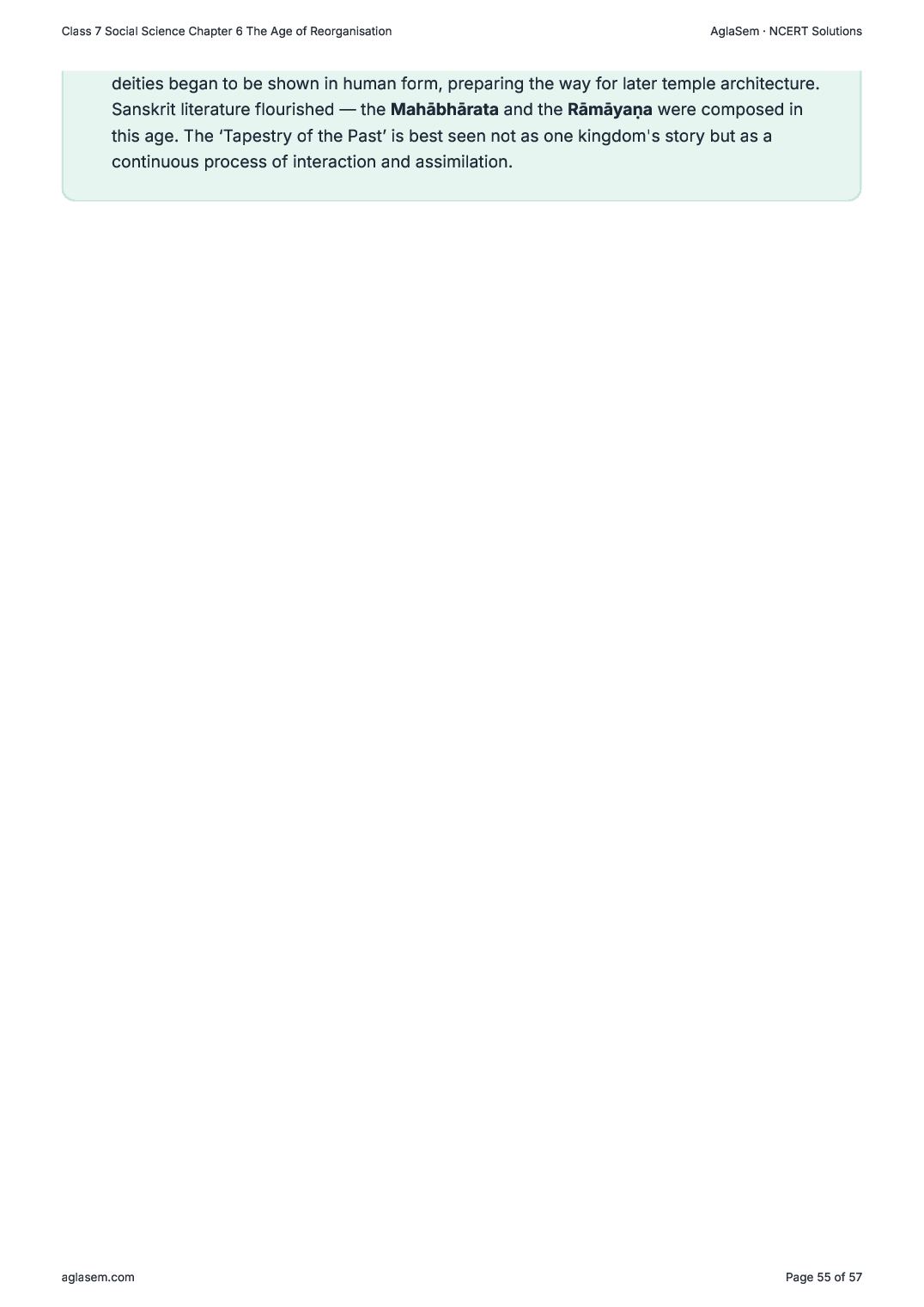
- Politics divided, culture united. The Gāndhāra school (grey-black schist, Greco-Roman modelling) and the Mathurā school (red sandstone, fuller Indian figures) grew side by side; deities began to be shown in human form, preparing the way for later temple architecture. Sanskrit literature flourished — the Mahābhārata and the Rāmāyaṇa were composed in this age. The ‘Tapestry of the Past’ is best seen not as one kingdom's story but as a continuous process of interaction and assimilation .
How to Download NCERT Solutions for Class 7 Social Science Chapter 6 PDF
Follow these simple steps to get the the Age of Reorganisation questions-and-answers PDF from Exploring Society India and Beyond.
- Search NCERT Solutions for Class 7 Social Science Chapter 6 aglasem and open this page.
- Read the exercise questions with answers for the Age of Reorganisation shown above.
- Click the Download PDF link to save the the Age of Reorganisation solutions to your device.
NCERT Solutions for Class 7 Social Science – All Chapters
There are more chapters to study besides the Age of Reorganisation in Social Science. Here are the NCERT Solutions for all chapters of Class 7 Social Science.
- Chapter 1 Geographical Diversity of India
- Chapter 2 Understanding the Weather
- Chapter 3 Climates of India
- Chapter 4 New Beginnings Cities and States
- Chapter 5 the Rise of Empires
- Chapter 6 the Age of Reorganisation
- Chapter 7 the Gupta Era an Age of Tireless Creativity
- Chapter 8 How the Land Becomes Sacred
- Chapter 9 From the Rulers to the Ruled Types of Governments
- Chapter 10 the Constitution of India an Introduction
- Chapter 11 From Barter to Money
- Chapter 12 Understanding Markets
NCERT Solutions for Class 7 – All Subjects
Just like Chapter 6 of Social Science, you can get the exercise questions with answers for every other subject of Class 7. Here are the NCERT Solutions for all subjects of Class 7.
NCERT Solutions for Class 7 Social Science Chapter 6 – An Overview
The key highlights of this study material are as follows.
| Aspects | Details |
|---|---|
| Class | Class 7 |
| Subject | Social Science |
| Chapter Number | Chapter 6 |
| Chapter Name | the Age of Reorganisation |
| Book Name | Exploring Society India and Beyond |
| Book By | NCERT (National Council of Educational Research and Training) |
| Educational Resource Here | NCERT Solutions of Class 7 Social Science Chapter 6 for all exercises |
| More Questions Answers of This Subject | NCERT Solutions for Class 7 Social Science |
| Download Book Chapter | NCERT Book Class 7 Social Science |
| All Questions Answers For This Class | NCERT Solutions for Class 7 |
| Complete Solutions | NCERT Solutions |
NCERT Solutions for Class 7 Social Science Chapter 6 the Age of Reorganisation – FAQs
What are the NCERT Solutions for Class 7 Social Science Chapter 6 the Age of Reorganisation?
They are the complete, step-by-step answers to all the exercise and in-text questions of Chapter 6 the Age of Reorganisation from the NCERT Class 7 Social Science textbook Exploring Society India and Beyond, written by experts as per the latest NCERT syllabus.
How can I download the Class 7 Social Science Chapter 6 solutions PDF for free?
Open this page on aglasem, read the the Age of Reorganisation questions with answers, and click the “Download Solutions PDF” link. The Class 7 Social Science Chapter 6 NCERT Solutions PDF is completely free to download.
Are these NCERT Solutions as per the latest 2026-27 syllabus?
Yes. The NCERT Solutions for Class 7 Social Science Chapter 6 are based on the latest NCERT textbook Exploring Society India and Beyond and the current 2026-27 CBSE syllabus, so the questions and answers match what you study in class.
Where can I get NCERT Solutions for the other chapters of Class 7 Social Science?
You can find the answers to every chapter on the NCERT Solutions for Class 7 Social Science page, and solutions for every subject on the NCERT Solutions for Class 7 page.
How do NCERT Solutions help in exam preparation?
They show the correct method to solve each question, help you write answers the way they are expected in exams, let you check and correct your own work, and save revision time — which together improve your marks in Class 7 Social Science.
If you have any queries on NCERT Solutions for Class 7 Social Science Chapter 6 the Age of Reorganisation, then please ask in the comments below.