CBSE Class 12 Economics Syllabus 2027 (Subject Code 030) has been released by the Central Board of Secondary Education for the 2026-27 academic session. It is a 100-mark course – 80 marks theory across a 3-hour exam plus 20 marks Project Work. The theory paper is split equally between Part A: Introductory Macroeconomics (40 marks) and Part B: Indian Economic Development (40 marks). Download the official CBSE Class 12 Economics Syllabus PDF and see the full unit-wise breakdown below.
CBSE Class 12 Economics Syllabus 2027 PDF
The complete curriculum is as follows.
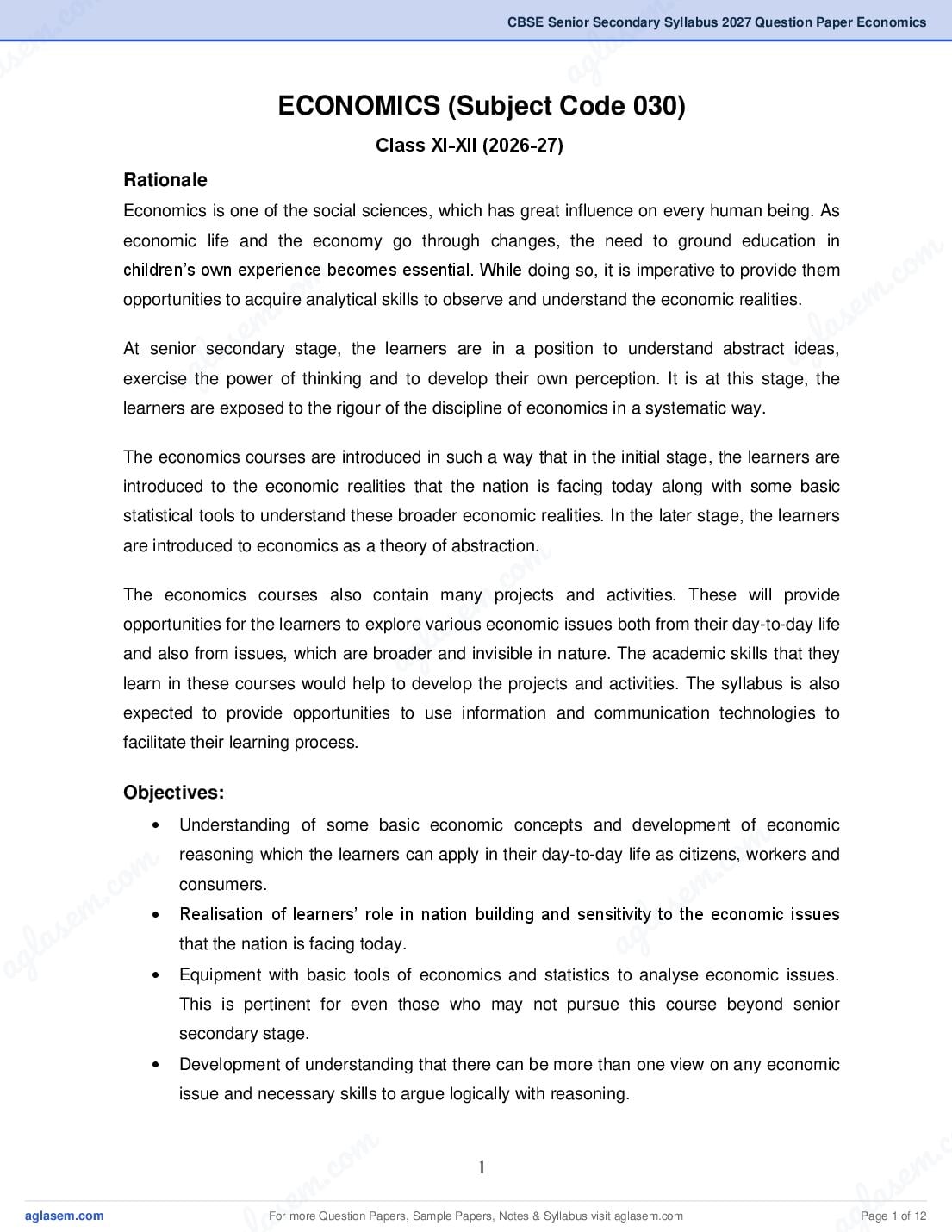
CBSE Senior Secondary Syllabus 2027 Economics View Download
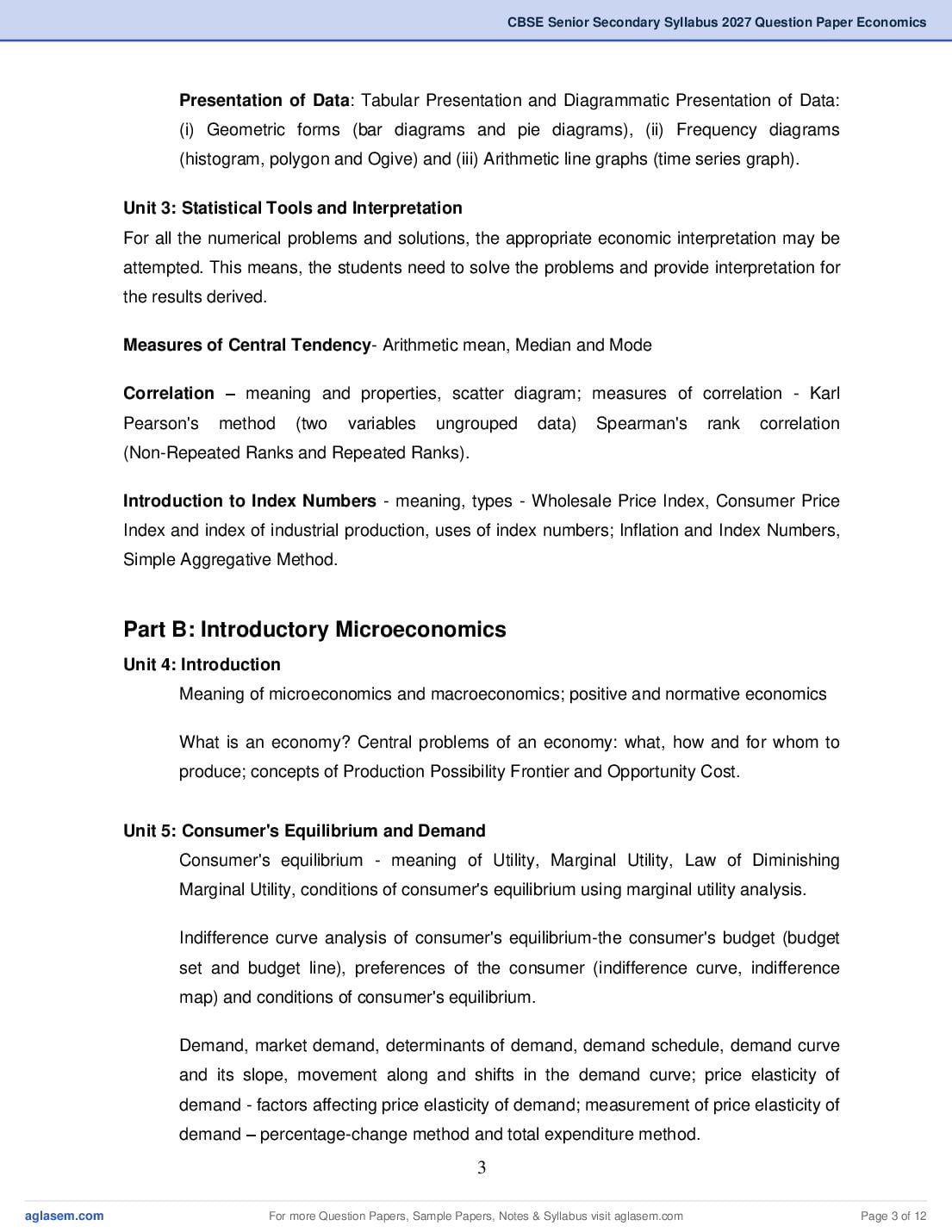
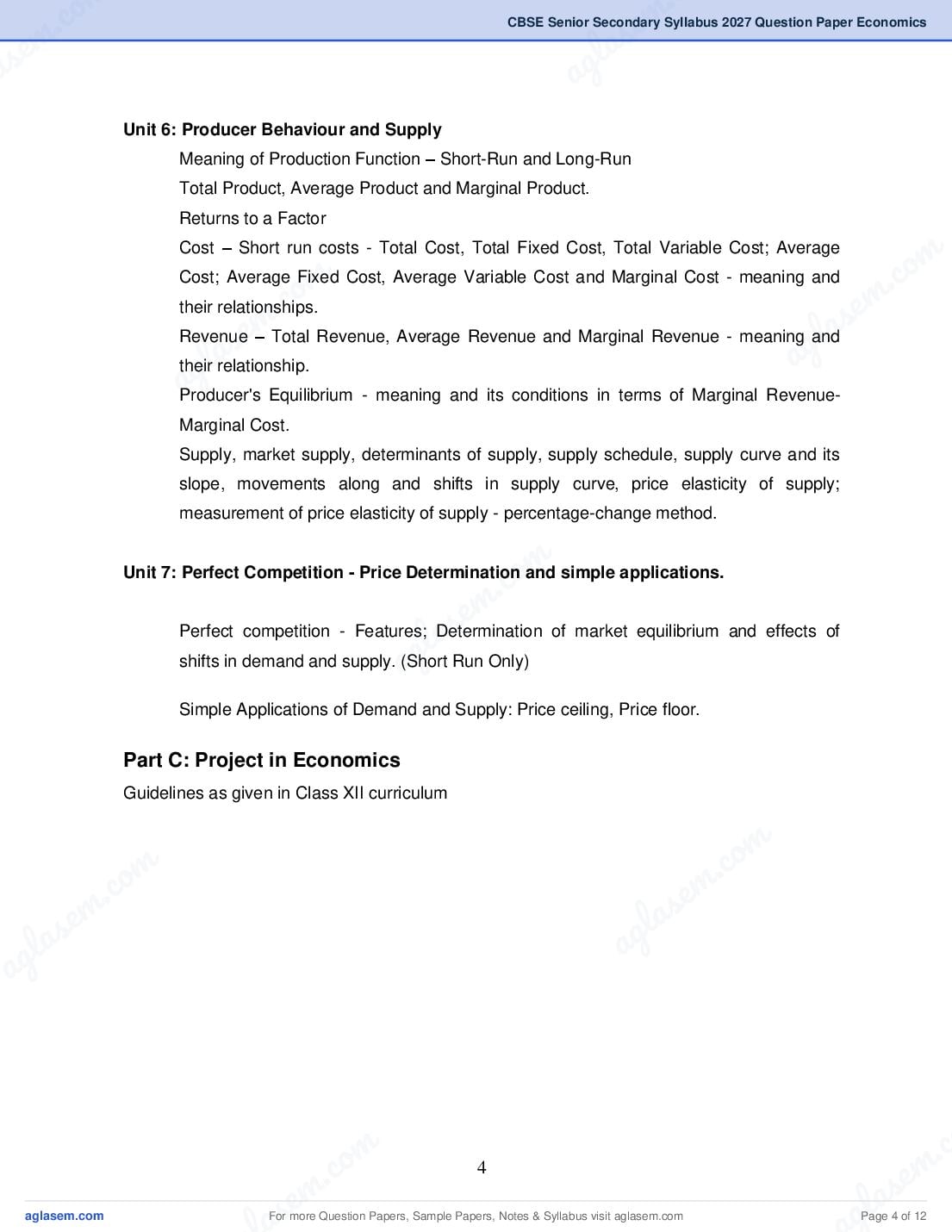
CBSE Class 12 Economics Syllabus 2027 – Marks Weightage (Unit-wise)
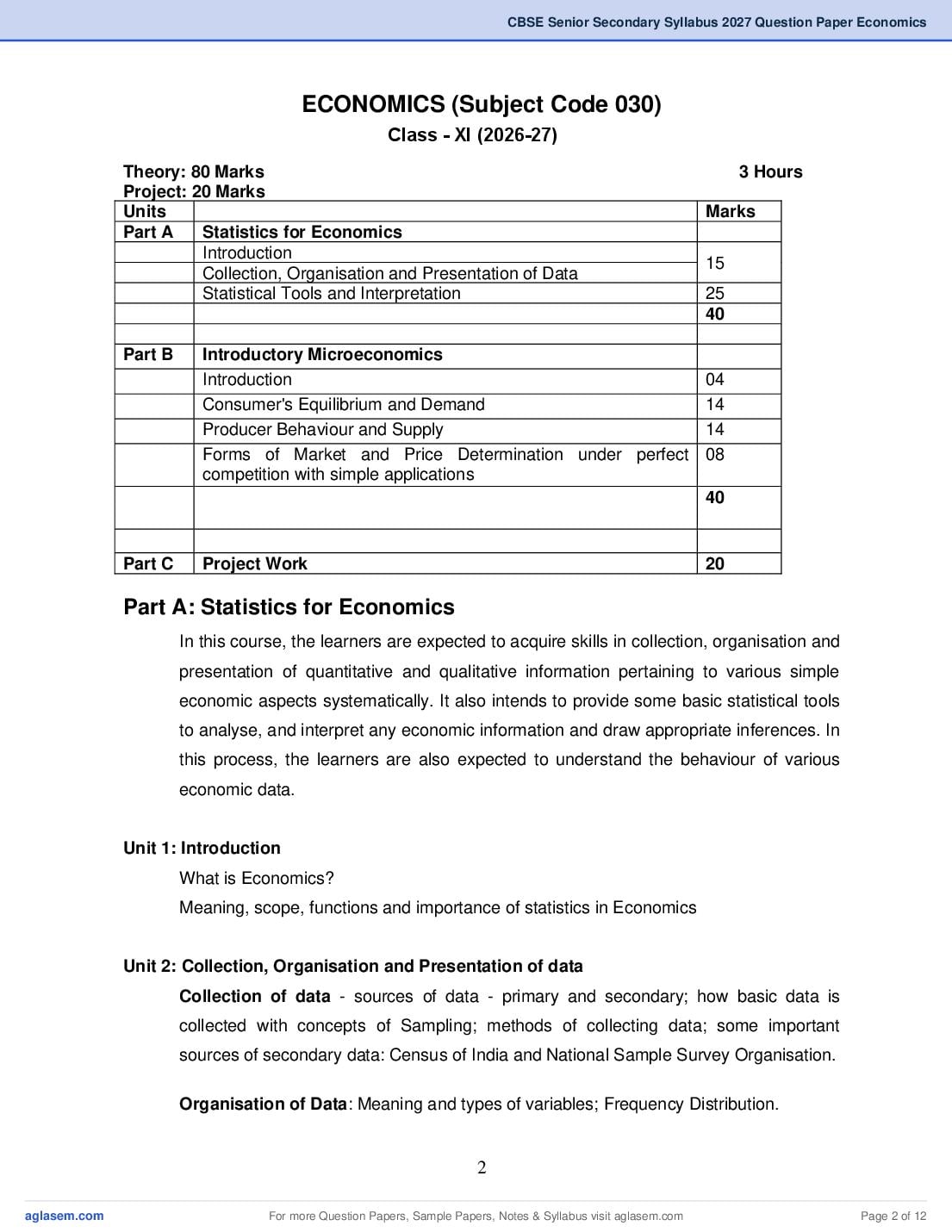
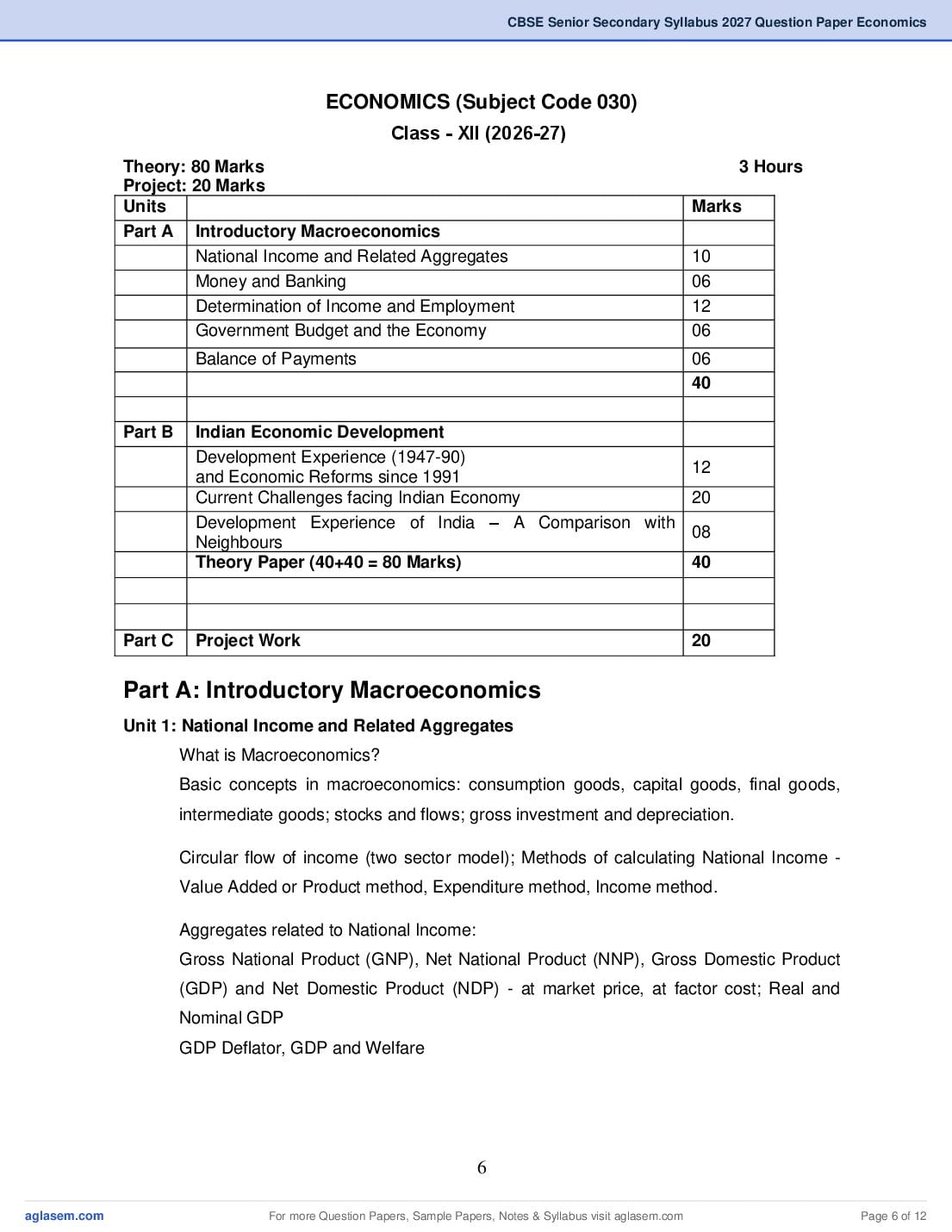
The CBSE Class 12 Economics exam carries 100 total marks – 80 for the theory paper (40 marks Part A plus 40 marks Part B) and 20 for Project Work. The unit-wise weightage is as follows.
| Part | Unit | Marks |
|---|---|---|
| A – Introductory Macroeconomics | National Income and Related Aggregates | 10 |
| A – Introductory Macroeconomics | Money and Banking | 06 |
| A – Introductory Macroeconomics | Determination of Income and Employment | 12 |
| A – Introductory Macroeconomics | Government Budget and the Economy | 06 |
| A – Introductory Macroeconomics | Balance of Payments | 06 |
| B – Indian Economic Development | Development Experience (1947-90) and Economic Reforms since 1991 | 12 |
| B – Indian Economic Development | Current Challenges facing Indian Economy | 20 |
| B – Indian Economic Development | Development Experience of India – A Comparison with Neighbours | 08 |
| C – Project Work | Project in Economics | 20 |
| Total | 100 |
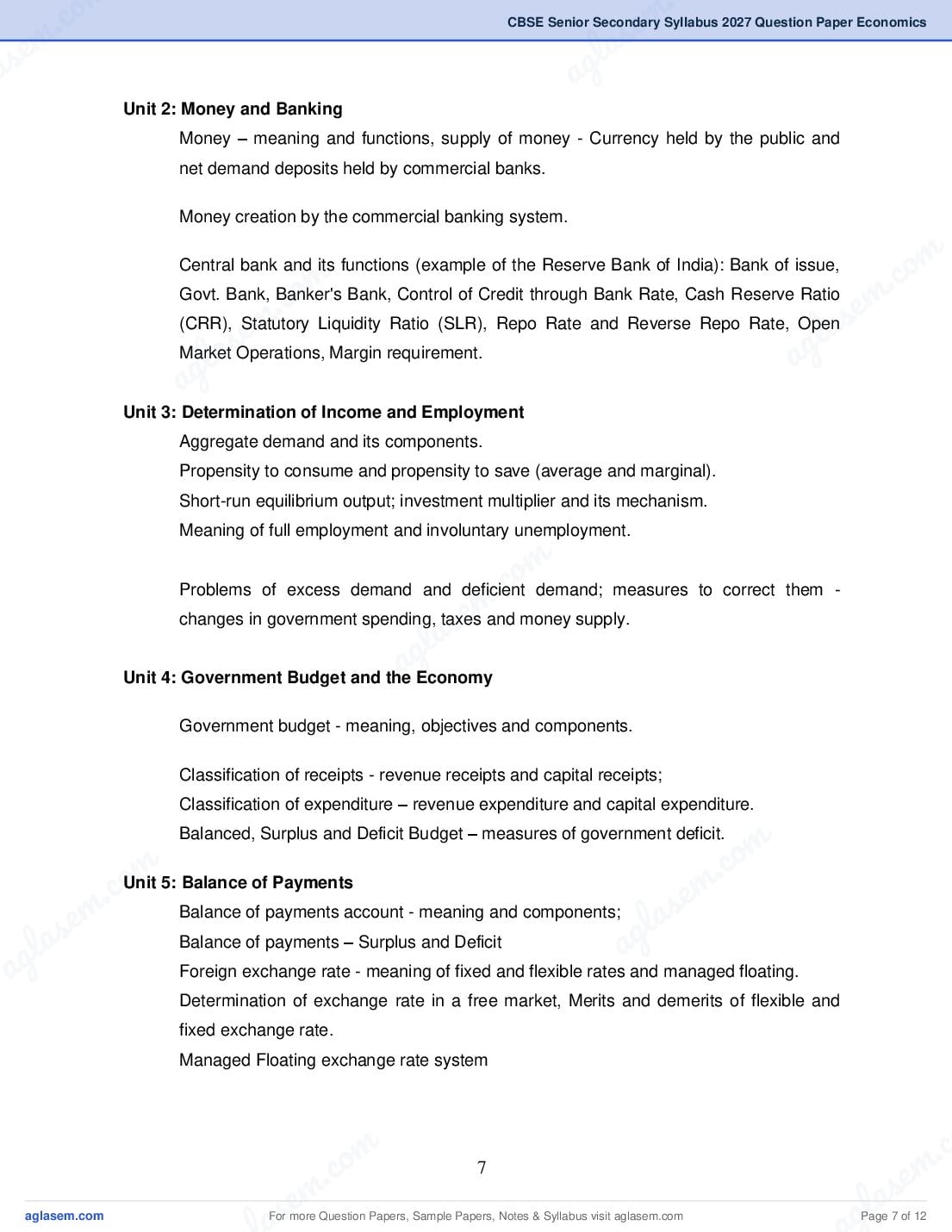
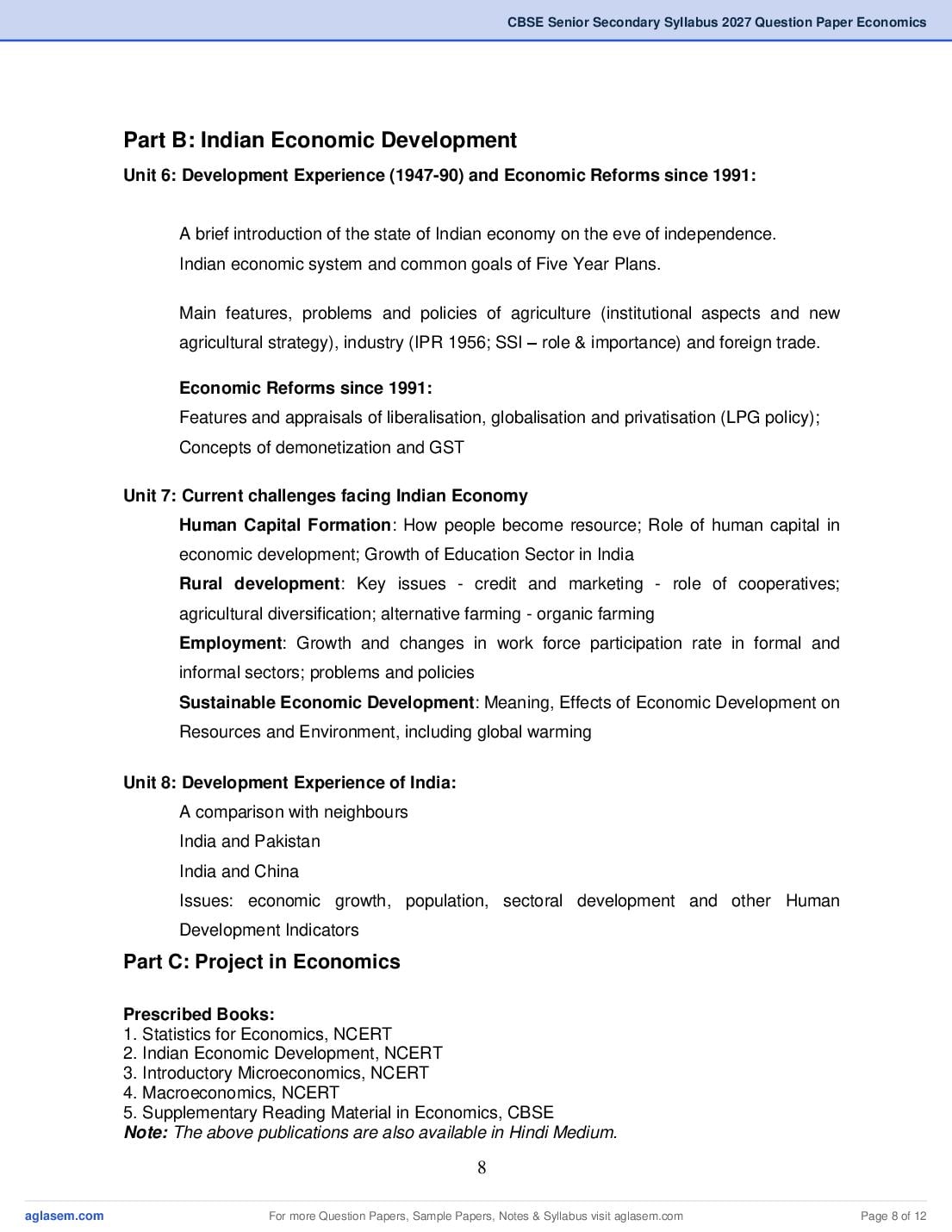
CBSE Class 12 Economics Syllabus 2027 – Unit-wise Topics
The CBSE Class 12 Economics course is organised into two theory parts – Introductory Macroeconomics and Indian Economic Development. The prescribed units are as follows.
CBSE Class 12 Economics Syllabus 2027 – Prescribed Textbook & Chapters
The CBSE Class 12 Economics theory paper is built on two NCERT textbooks – one for each part of the course. The unit and chapter distribution is as follows.
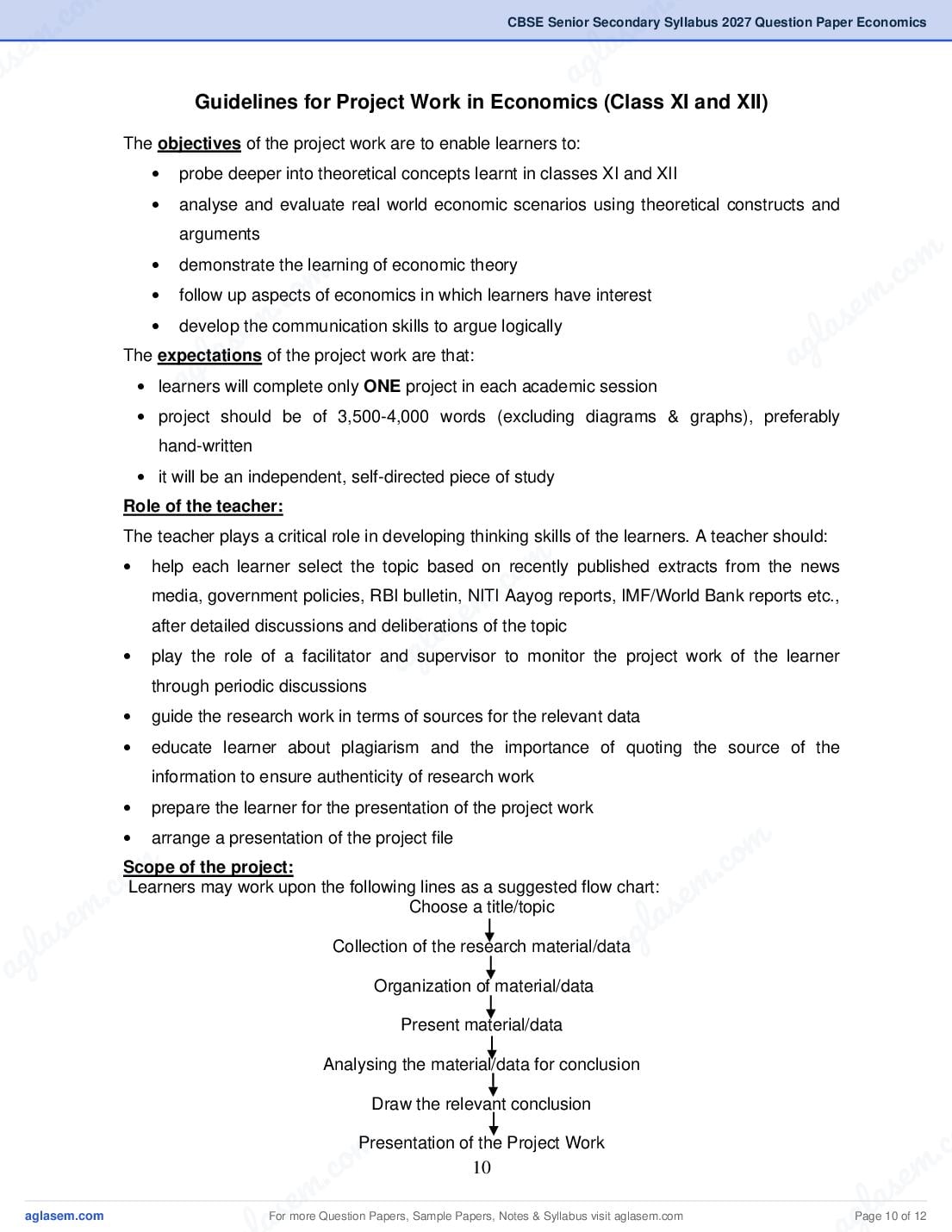
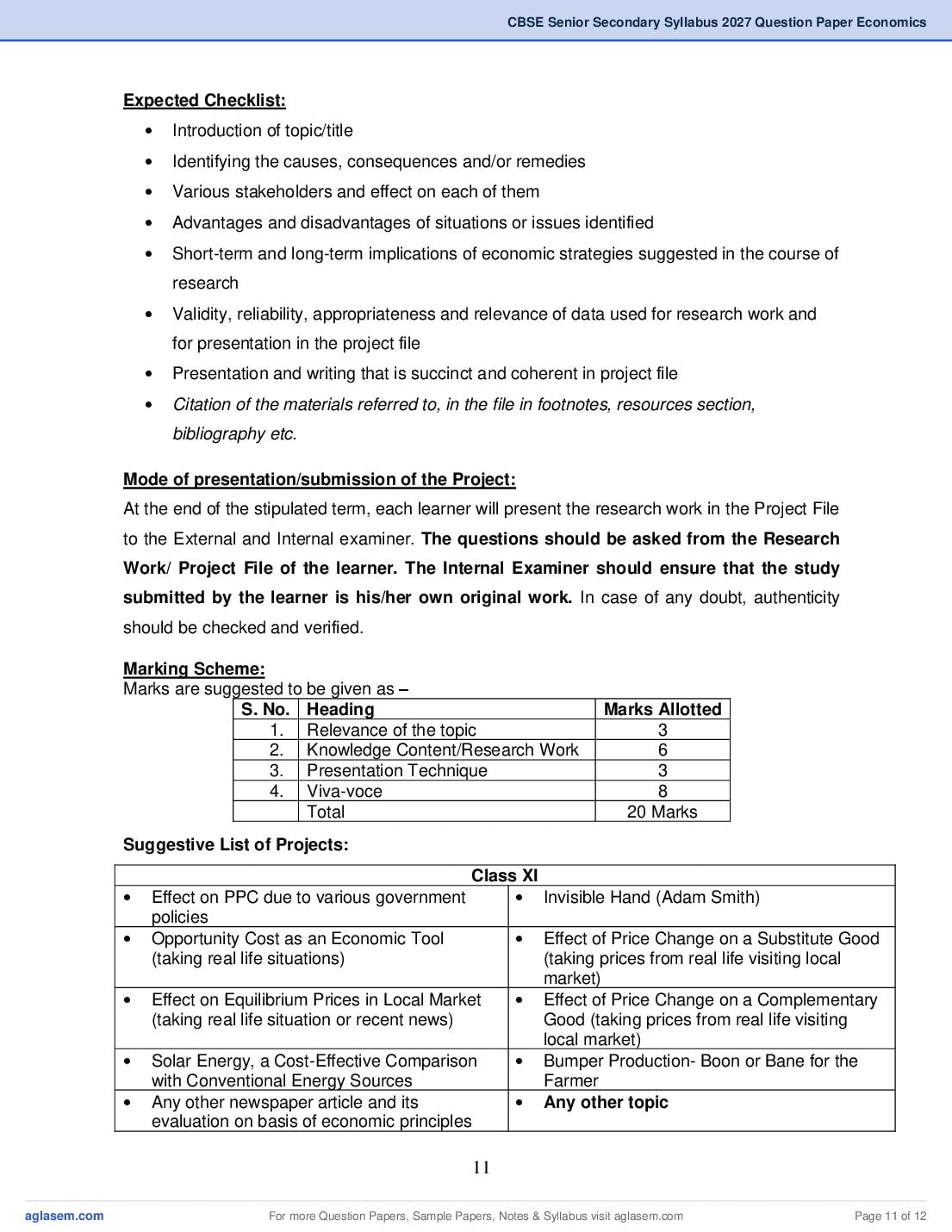
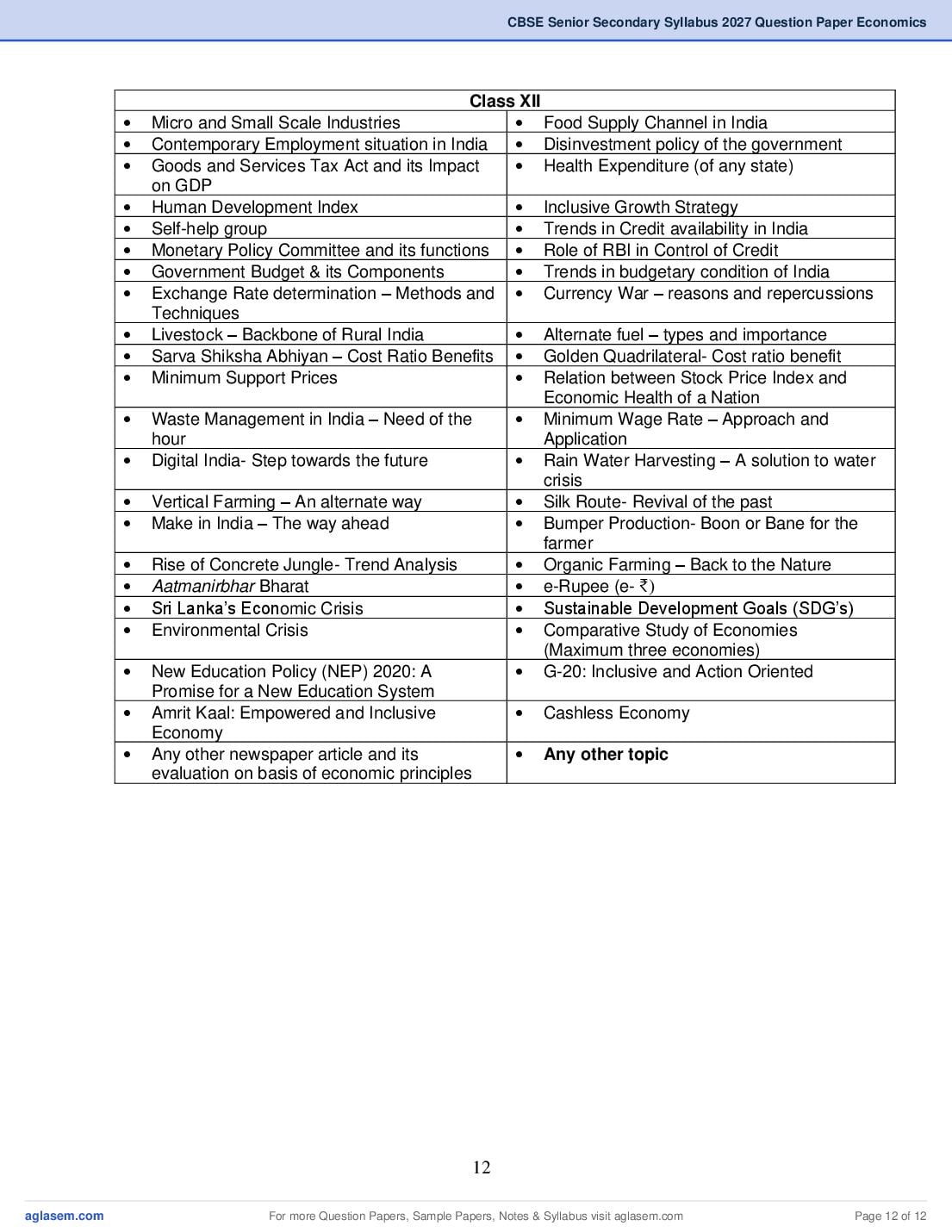
Prescribed Textbooks: Introductory Macroeconomics, NCERT (for Part A) and Indian Economic Development, NCERT (for Part B). These NCERT publications are also available in Hindi Medium. Part C Project Work follows the CBSE guidelines – a single independent, self-directed project of 3,500–4,000 words carrying 20 marks.
CBSE Class 12 Economics Syllabus 2027 – Exam Pattern (Question-wise Breakdown)
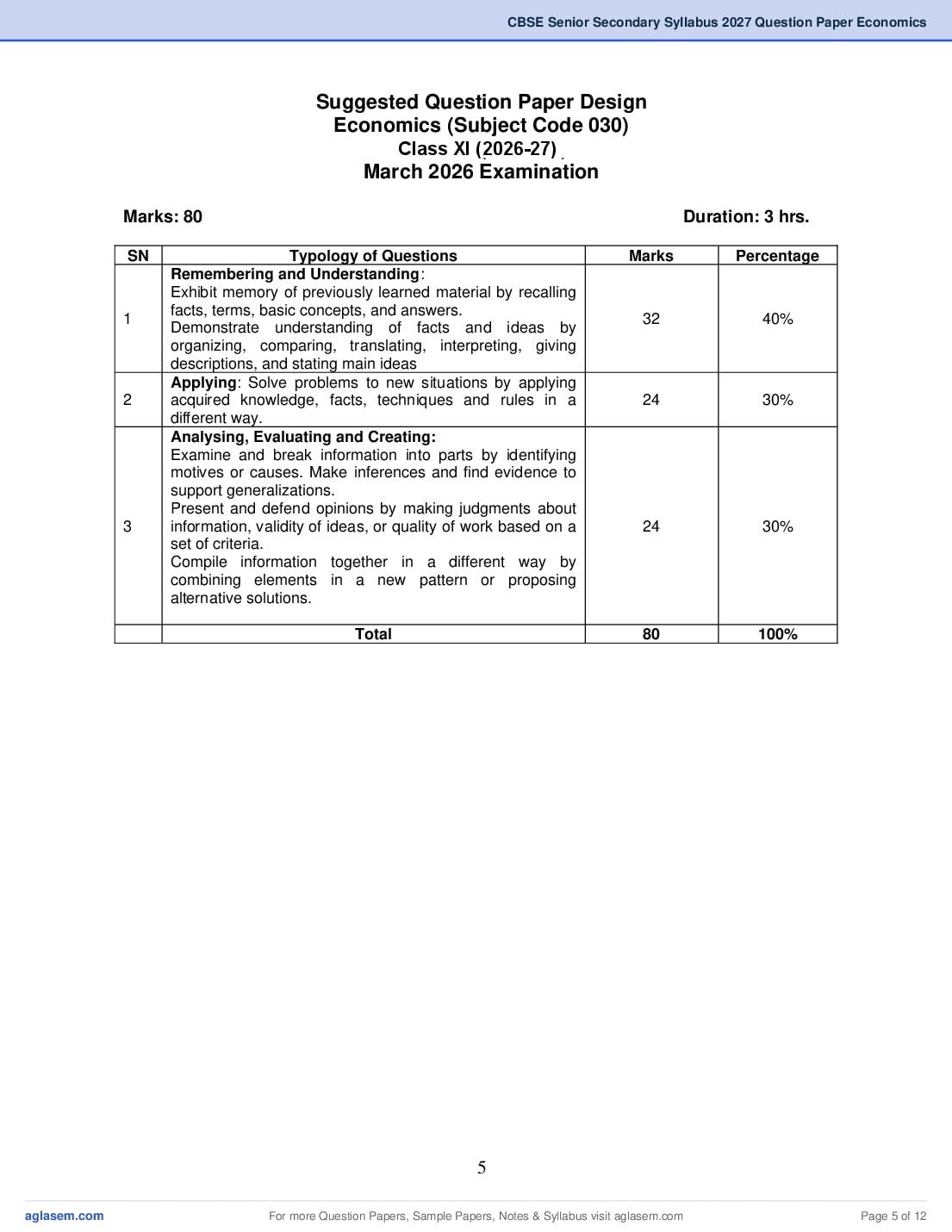
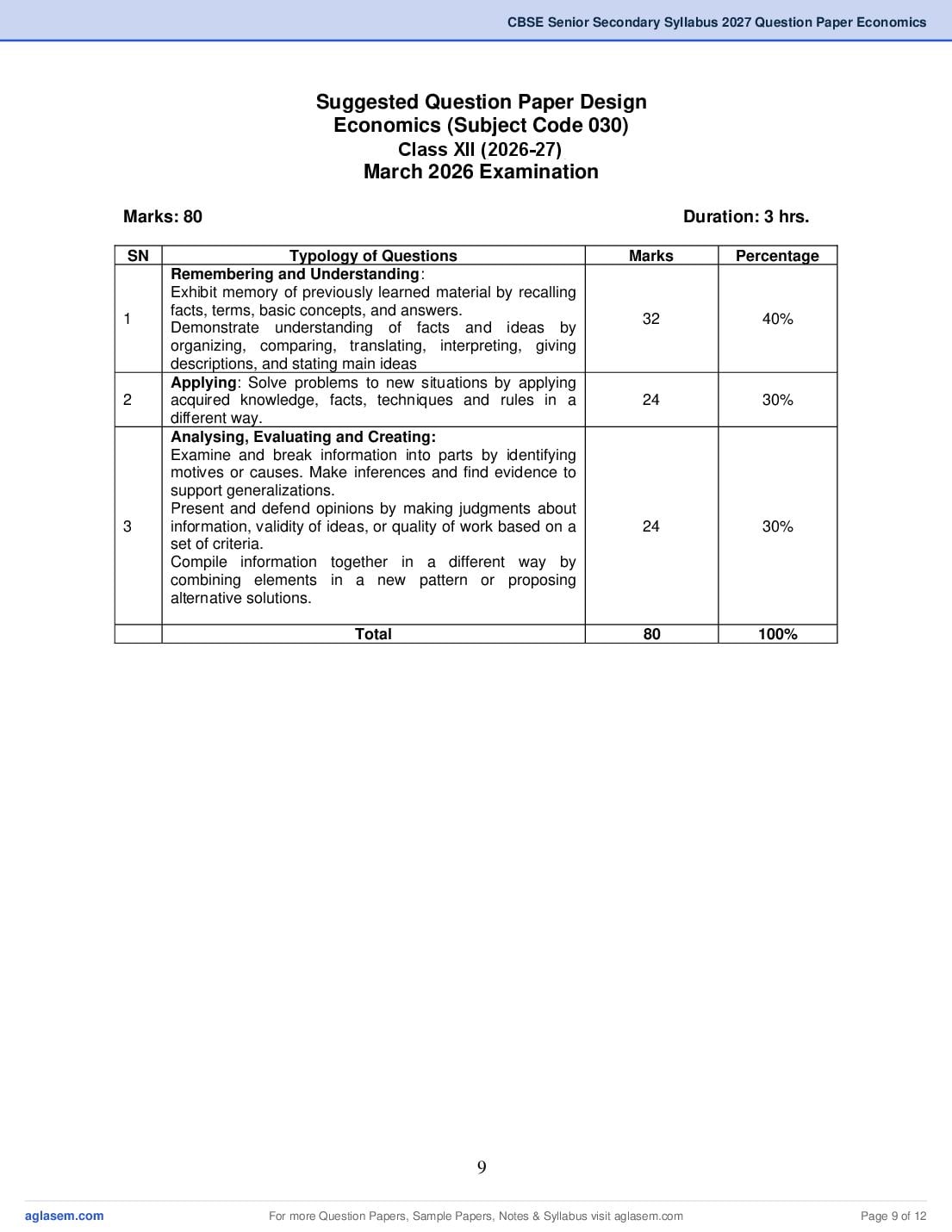
The CBSE Class 12 Economics theory paper is of 80 marks and 3 hours duration. The suggested question paper design distributes marks across three cognitive levels as follows.
| S.No. | Typology of Questions | Marks | Percentage |
|---|---|---|---|
| 1 | Remembering and Understanding – recall facts, terms and basic concepts; demonstrate understanding by organizing, comparing, interpreting and stating main ideas | 32 | 40% |
| 2 | Applying – solve problems in new situations by applying acquired knowledge, facts, techniques and rules in a different way | 24 | 30% |
| 3 | Analysing, Evaluating and Creating – break information into parts, make inferences, defend opinions and combine elements into a new pattern or solution | 24 | 30% |
| Total | 80 | 100% |
CBSE Class 12 Economics Syllabus 2027 – Continue Your Preparation
Once you have reviewed the syllabus, practice with the CBSE Class 12 Economics Sample Paper and previous years’ CBSE Class 12 Question Papers, and study using NCERT Books and NCERT Solutions to prepare for your board exam.
Frequently Asked Questions
The CBSE Class 12 Economics Syllabus 2027 (Subject Code 030) is the official curriculum released by CBSE for the 2026-27 academic session. It covers Part A: Introductory Macroeconomics and Part B: Indian Economic Development, for a total of 100 marks (80 theory plus 20 Project Work).
The subject code for Economics in CBSE Class 12 is 030.
The CBSE Class 12 Economics theory exam is of 80 marks (3 hours) – 40 marks for Introductory Macroeconomics and 40 marks for Indian Economic Development – plus 20 marks for Project Work, making a total of 100 marks.
Current Challenges facing Indian Economy carries the highest weightage at 20 marks, followed by Determination of Income and Employment and Development Experience & Economic Reforms at 12 marks each.
The prescribed textbooks are Introductory Macroeconomics (NCERT) for Part A and Indian Economic Development (NCERT) for Part B. Both are also available in Hindi Medium.
CBSE Class 12 Syllabus 2026-27 (All Subjects)
You study more subjects besides Economics in 12th class. The subject-wise syllabus for CBSE Class 12 students is as follows.
CBSE Syllabus 2026-27 (Class-wise)
The class-wise syllabus for CBSE board students is as follows.
CBSE Class 12 Economics Syllabus 2027 – An Overview
The important things to know about this curriculum are as follows.
| Aspects | Details |
|---|---|
| Education Board | CBSE |
| Class | Class 12 |
| Subject | Economics |
| Subject Code | 030 |
| Study Material Here | CBSE Syllabus for Class 12 Economics |
| All Curriculum for This Class | CBSE Syllabus for Class 12 |
| All Curriculum for This Board | CBSE Syllabus |
| Full Name of CBSE | Central Board of Secondary Education |
| NCERT Books | NCERT Books for Class 12 |
| NCERT Solutions | NCERT Solutions for Class 12 |
If you have any queries on CBSE Class 12 Economics Syllabus 2027, then please ask in comments below.